TopPodcast.com
Menu
  • Home
  • Top Charts
  • Top Networks
  • Top Apps
  • Top Independents
  • Top Podfluencers
  • Top Picks
    • Top Business Podcasts
    • Top True Crime Podcasts
    • Top Finance Podcasts
    • Top Comedy Podcasts
    • Top Music Podcasts
    • Top Womens Podcasts
    • Top Kids Podcasts
    • Top Sports Podcasts
    • Top News Podcasts
    • Top Tech Podcasts
    • Top Crypto Podcasts
    • Top Entrepreneurial Podcasts
    • Top Fantasy Sports Podcasts
    • Top Political Podcasts
    • Top Science Podcasts
    • Top Self Help Podcasts
    • Top Sports Betting Podcasts
    • Top Stocks Podcasts
  • Podcast News
  • About Us
  • Podcast Advertising
  • Contact
Not in our directory?
Add Show Here
Podcast Equipment
Center

toppodcastlogoOur TOPPODCAST Picks

  • Comedy
  • Crypto
  • Sports
  • News
  • Politics
  • True Crime
  • Business
  • Finance

Follow Us

toppodcastlogoStay Connected

    View Top 200 Chart
    Back to Rankings Page
    News & Politics

    Global Dispatches — World News That Matters

    The longest running independent international affairs podcast features in-depth interviews with policymakers, journalists and experts around the world who discuss global news, international relations, global development and key trends driving world affairs.

    Named by The Guardian as “a podcast to make you smarter,” Global Dispatches is a podcast for people who crave a deeper understanding of international news.

    Advertise
    • Apple Podcasts
    • Google Play
    • Spotify

    Latest Episodes:
    Palestinian Refugees are about to Face Yet Another Crisis Mar 29, 2018
    Show notes

    The United Nations Relief and Works Agency, known as UNRWA, is facing a crisis. This is the humanitarian agency that provides relief for Palestinian refugees in the West Bank, Gaza, Lebanon, Jordan and Syria. This includes running hospitals and schools that serve about half a million children.

    Typically, the United States has provided about one third of UNRWA's overall budget, judging the organization to be a source of stability in an otherwise volatile region. The Trump administration, however, has frozen US payments to the humanitarian agency. It did so in retaliation to a vote at the UN General Assembly in which member states overwhelmingly condemned the Trump administration's decision to formally recognize Jerusalem as the capitol of Israel and move its embassy there. Withholding promised funding for humanitarian relief for Palestinian refugees was the Trump administration's payback for this vote.

    On the line with me to discuss what this budget crisis means on the ground for Palestinian refugees is Peter Mulrean, Director of UNRWA's Representative Office in New York. We also discuss the history of UNRWA, the role is serves in Palestinian society and in the politics of the region, and how it might overcome this funding crisis imposed by the Trump administration.

    Links:

    Become a premium subscriber

    Leave a review!


    I Started My Career as a Journalist Covering John Bolton. Here is What I have Learned (special episode) Mar 27, 2018
    Show notes

    I got my start in journalism covering John Bolton when he was the US Ambassador to the United Nations. At the time, I was a reporter for the political monthly The American Prospect. I sometimes quip that I owe my career to Bolton because covering his time at the UN was my entry point into covering the United Nations more broadly.

    My reporting at the time culminated in a cover story that was published in January 2006 that detailed Bolton's tenure thus far at the UN and broke a few scoops about his conduct.

    In this special episode of the podcast I am going to share a few anecdotes from my reporting at the time that might shed some light on how he will conduct himself as the National Security Advisor to Donald Trump. I'll also survey some key issues around the world, including North Korea, Iran, Trans-Atlantic Relations and the United Nations to see what Bolton's past interactions with these issues might suggest for the future of US policy. I'll also explain the position of National Security Advisor to help you understand where, exactly, Bolton will fit in in the bureaucratic politics of US foreign policy making.

    That this is a different kind of Global Dispatches episode. This podcast is typically an interview-based show in which I have conversations with experts about topical issues, or I have longer discussions with people who have had interesting careers in foreign policy. In these conversations, I'll occasionally interject my own views. But for the most the other person is talking.

    But this time around, I am something of the expert. And I think other people see me as such, based on my past reporting. I was on BBC's Nightly News program last Friday after the news about Bolton broke. And I also had a piece up on The Daily Beast.

    So this episode is just me talking.

    Links:

    Become a premium subscriber

    Leave a review!

    My Iran Deal episode with Spencer Ackerman

    My Daily Beast piece on Bolton


    Episode 187: Wanjira Mathai Mar 23, 2018
    Show notes

    Wanjira Mathai is a Kenyan environmental and civic leader. She is the chair of the Wangari Mathai Foundation, which is named after her mother who won the 2004 Nobel Peace Prize. Much of Wanjira's work focuses on the intersection of women's empowerment and environmental sustainability. We kick off with a discussion about her work with a group called the Partnership on Women's Entrepreneurship in Renewables (wPOWER). Much of our conversation discusses the challenges and opportunities around renewable energy in the developing world.

    We also discuss the work of her mother, the environmental justice pioneer who founded the Green Belt Movement.

    This episode is presented in partnership with the Global Challenges Foundation, whose aim is to contribute to reducing the main global problems and risks that threaten humanity. Last year, the Global Challenges Foundation held an open call to find new models of global cooperation better capable of handling the most pressing global risks. In May this year at the New Shape Forum in Stockholm, the top proposals will be presented publicly and further refined through discussions with key thought leaders and experts. US$5 million will be awarded to the best ideas that re-envision global governance for the 21st century. Wanjira Mathai is a Global Challenges Foundation ambassador and in the conversation we discuss this prize and why new ideas for global governance are important for the future of environmental sustainability.

    Links

    Global Challenges Foundation

    Become a Premium Subscriber


    A Successful End to the UN Peacekeeping Mission in Liberia Mar 20, 2018
    Show notes

    By the end of this month the United Nations Peacekeeping Mission in Liberia will no longer exist. The mission, known as UNMIL, is closing shop after nearly 15 years in operation, and its closing this is a major milestone and success for both Liberia and the United Nations.

    In 2003, it was hard to imagine this day would ever come. Around 250,000 people had been killed in a singularly brutal civil war, the infrastructure that existed in the country was decimated and most Liberians who had the opportunity to leave country had fled.

    Fifteen years later, thanks in large part to this UN Peacekeeping Force, Liberia is a stable democracy with a rapidly developing economy.

    In 2006 it was the first country in Africa to elect a female head of State, Ellen Johnson Sirleaf, and after serving two terms she stepped down peacefully and ceded power to her political rival, George Weah. To be sure, Liberia is still a very poor country. But these last 15 years have seen tremendous progress.

    On the line with me to discuss how UNMIL was able to work itself out of a job is retired Col. Christopher Holshek. Col. Holshek was one of the few Americans to serve in UNMIL and he explains just how the UN's role in Liberia transitioned from peace keeping to peace building. And because there are so few American military officers who serve in UN peacekeeping missions, his perspective on this question is very unique.

    The folding of the UN Mission in Liberia is a good news story coming out of the UN and I am glad to share it with you.


    Episode 186: Maggy Barankitse saved thousands of children in the wake of a genocide Mar 18, 2018
    Show notes

    Maggy Barankitse is the founder of Maison Shalom, an orphanage and school that was created in Burundi in the wake of the Civil War there in the 1990s. Like in neighboring Rwanda, the conflict in Burundi involved acts of genocide pitting ethnic groups against each other.

    The conflict came to Maggy's town on October 24th 1993. At the time, Maggy was working as a secretary in the local catholic diocese in her hometown of Ruyigi, Burundi. What happened was an act of unspeakable cruelty and I am going to read directly the description of events from the website of Maison Shalom. "In the autumn of 1993, an atmosphere of uneasiness had settled over the country. In Ruyigi, disaster struck on 24 October. To exact vengeance for the killing of members of their ethnic group, the Tutsi hunted the town's Hutus, who were hiding in the diocese buildings. Maggy was also there. She tried to reason with the group of Tutsi driven mad by hatred. She tried to convince them not to use violence. Her efforts were in vain. To punish her for what they considered a betrayal on the part of a Tutsi "sister", they decided to strip her and tie her to a chair. They forced her to remain in that position and watch as they first set fire to the diocese building to force those hiding there to come out, then as they mercilessly hacked her friends to death with machetes." As Maggy tells me, it was this experience that lead her to create an oasis of peace and hope in the midst of such conflict and tumult. Maison Shalom has served tens of thousands of children since its founding. Unfortunately, Maggy today lives as a refugee in Rwanda. She was forced to flee the country after she spoke out against an illegal power-grab by the country's president. But even from Rwanda, Maggy is continuing her mission and has established a Maison Shalom to serve refugees and others in Rwanda. For her work, Maggy was awarded the Aurora Prize for Awakening Humanity, which is a $1 million prize awarded to individuals who commit extraordinary acts of humanity. The prize is awarded by the Aurora Humanitarian Initiative, which was founded by the decedents of the survivors of the Armenian Genocide and a few weeks ago I published my conversation with Noubar Afeyan who is one of the co-founders of this initiative.

    Meet Mike Pompeo Mar 14, 2018
    Show notes

    I am still catching my breath over the news that Rex Tillerson was fired and CIA Director Mike Pompeo has been nominated as his replacement as Secretary of State. That happened, of course, just days after a South Korean diplomat announced a summit between Donald Trump and Kim Jong Un, scheduled for May.

    I was just getting my head around that news and its broader implications when, of course, the firing-by-tweet occurred. Fortunately for all of us, I had on my schedule an interview with Uri Friedman, a staff writer at the Atlantic who covers global affairs and US foreign policy. He has written extensively about US diplomacy and North Korea and in this episode he and I just talk through this news. I think you will find this conversation useful. I know I did. I learned some interesting things about Pompeo's background and also the implications of having a Secretary of State who, unlike Rex Tillerson, is personally close and more on the same page as the President. Uri recently published an article on Pompeo and North Korea, which we reference in this conversation and I'll post a link to that on the website. Remember to leave a review of the podcast, my people! I'll mail you a sticker in return!

    Episode 185: Joseph Kaifala Mar 11, 2018
    Show notes

    Joseph Kaifala was just a child when civil war broke out in Liberia and Sierra Leone. The war came to his town in 1989 and as a seven-year-old was imprisoned with his father. They were eventually released and Joseph and his family spent much of the next decade on the run from a brutal civil war that seemed to follow them everywhere.

    Kaifala recently published a memoir of these experiences titled Adamalui: A Survivor's Journey from Civil Wars in Africa to Life in America. He is also the subject of a documentary film titled Retracing Jeneba: The Story of a Witness, which is poised to debut at film festivals.

    Joseph Kaifala is a Humanity in Action Senior Fellow and the story of how he went from that prison in Liberia to this prestigious fellowship, and then onto law school in the United States is truly extraordinary.

    We kick off discussing an NGO he started long with another Humanity in Action Senior Fellow Liat Krawczyk called The Jeneba Project. This is an organization dedicated to providing high quality education for children in Sierra Leone. Liat Krawczyk is also the co-director and co-executive producer of the documentary film, along with Anthony Mancilla.

    This is a very powerful episode. We discuss Joseph's unique personal journey and have digressions about the causes and effects of the civil wars in Sierra Leone and Liberia.


    How Democracies Can Defend Themselves from Disinformation Campaigns Mar 07, 2018
    Show notes

    As the United States enters its next election cycle, our democracy is still extremely vulnerable to disinformation campaigns from Russia. Other democracies, particularly in Europe, are also vulnerable to this kind of threat and, indeed, have also been the target of Russian meddling. A new report from The Atlantic Council identifies some concrete ways that the United States and Europe can better protect themselves against propaganda, disinformation, and election related hacking. On the line with me to discuss this report and its findings is one of the report's co-authors, Ambassador Daniel Fried. He was a longtime US diplomatic who's career largely focused Russia and central and eastern Europe. The report was co-authored by Alina Polyakova of the Brookings Institute The report provides a useful heuristic for understanding the problem: it breaks down and categorizes the various kinds of election meddling we've seen thus far. Also what makes this report unique is that the authors' propose that countering this kind of election meddling can be a platform for transatlantic cooperation; that is, in response to this Russian meddling Europe and the United States have an opportunity to form a new kind of strategic alliance. It can be a catalyst for cooperation.


    Episode 184: Noubar Afeyan Mar 02, 2018
    Show notes

    Noubar Afeyan is a business leader, entrepreneur and philanthropist. In 2015, along with other decedents of survivors of the 1915 Armenian genocide, he co-founded the Aurora Humanitarian Initiative. This initiative, as Noubar explains, seeks to empower modern day survivors of genocide and mass atrocities through a variety of projects the most high profile of which is a $1 million prize for individuals who are saving lives and promoting humanitarian values in the face of extreme adversity.

    Noubar's own family history and life story is one of survival. He was born in Beirut in the early 1960s, but his family took a circuitous route to get there, escaping the genocide and then subsequent persecution. Much of this history was relayed to him by his great aunt,with whom he lived growing up in Beirut. This is a very interesting conversation not only about Noubar's life journey and that of his family, but also how communities remember and honor historic atrocities visited upon them.

    Why We Lie About Aid Feb 28, 2018
    Show notes

    My podcast guest today Pablo Yanguas is a research fellow at the Global Development Institute at the University of Manchester. He is the author of the new book "Why We Lie About Aid: Development and the Messy Politics of Change."

    In this conversation we discuss the central thesis of his book which is that there is a profound gap between the politics of development, and how economic development is actually achieved on the ground in the developing world. And the book is provocative for arguing that the former causes us to misrepresent the latter. This thesis rings true to my experience covering global development as a journalist for over a decade now. And I must say I found this conversation very clarifying--he identifies and ascribes political motives to trends that I have certainly seen covering these issues. And even if you are not a global development nerd, I think you will find this conversation very useful. I have a fun little announcement to make. I just some ordered stickers with the podcast logo on it and I would love to send one to you. But first I need you to do something for the show, which is to tell everyone why you listen to the show in a review on iTunes. Leave a review, then send me an email using the contact button on GlobalDispatchesPodcast.com and I will mail you a sticker. To leave a review go here. If you are using the podcast app, follow these steps
    1. Launch Apple's Podcast app.
    2. Tap the Search tab.
    3. Enter the name of the podcast you want to rate or review.
    4. Tap the blue Search key at the bottom right.
    5. Tap the album art for the podcast.
    6. Tap the Reviews tab.
    7. Tap Write a Review at the bottom

    Previous 1 84 85 86 87 88 119 Next

    Related Podcasts

    Crimetown

    1

    Crimetown News
    Up and Vanished

    2

    Up and Vanished News & Politics
    The Joe Rogan Experience

    3

    The Joe Rogan Experience Comedy
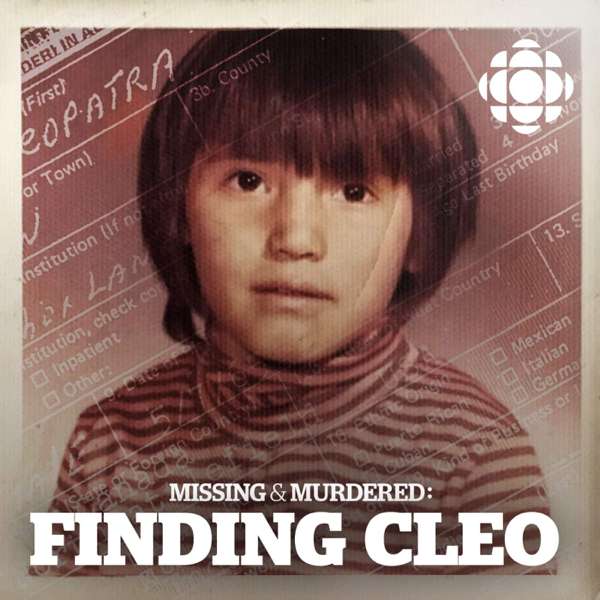
    Missing & Murdered: Finding Cleo

    4

    Missing & Murdered: Finding Cleo News & Politics
    Casefile True Crime

    5

    Casefile True Crime Games & Hobbies
    Code Switch

    6

    Code Switch News
    footer-logo

    Contact Us

    Toll Free: 844-670-7747

    Links

    • Home
    • Top Charts
    • Networks
    • Apps
    • Independents Podcasts
    • Podcast Advertising
    • Podcast News
    • Contact Us
    • About Us
    • Analytics & Insights

    Stay Connected

      Privacy, Terms of Use & Our Code of Ethics Protecting Content Creators Copyrights