TopPodcast.com
Menu
  • Home
  • Top Charts
  • Top Networks
  • Top Apps
  • Top Independents
  • Top Podfluencers
  • Top Picks
    • Top Business Podcasts
    • Top True Crime Podcasts
    • Top Finance Podcasts
    • Top Comedy Podcasts
    • Top Music Podcasts
    • Top Womens Podcasts
    • Top Kids Podcasts
    • Top Sports Podcasts
    • Top News Podcasts
    • Top Tech Podcasts
    • Top Crypto Podcasts
    • Top Entrepreneurial Podcasts
    • Top Fantasy Sports Podcasts
    • Top Political Podcasts
    • Top Science Podcasts
    • Top Self Help Podcasts
    • Top Sports Betting Podcasts
    • Top Stocks Podcasts
  • Podcast News
  • About Us
  • Podcast Advertising
  • Contact
Not in our directory?
Add Show Here
Podcast Equipment
Center

toppodcastlogoOur TOPPODCAST Picks

  • Comedy
  • Crypto
  • Sports
  • News
  • Politics
  • True Crime
  • Business
  • Finance

Follow Us

toppodcastlogoStay Connected

    View Top 200 Chart
    Back to Rankings Page
    Professional

    Finding Your Summit

    Mark Pattison is a former NFL player, entrepreneur, philanthropist and mountaineer who is now climbing the Seven Summits. Through his life’s journey, business, sports & charity work, Mark has been fortunate to meet some of the world’s most incredible people who share their stories of how they overcame obstacles to succeed and what their driving force was.

    Advertise
    • Apple Podcasts
    • Google Play
    • Spotify

    Latest Episodes:
    Patrick Sweeney: Fear Guru, Keynote Speaker, Author, and TEDx Speaker helping companies create a culture of courage, shares how he managed to go from overcoming an exhaustive work-over-everything mentality and being consumed by fear to aligning his life w Dec 06, 2019
    Show notes

    128: Patrick Sweeney: Fear Guru, Keynote Speaker, Author, and TEDx Speaker helping companies create a culture of courage, shares how he managed to go from overcoming an exhaustive work-over-everything mentality and being consumed by fear to aligning his life with balance, family, and courage.

    Patrick Sweeney

    Patrick Sweeney, who grew up in Boston, Massachusetts, and was diagnosed with leukemia. "I was born first generation Irish immigrants in Boston, blue-collar neighborhood. My parents didn't go to college or anything like that. My dad is working three jobs. I had a really rough time growing up. But I had a bunch of trauma events as a child that planted this seed of terror in me." In order to create an image to protect himself with when he was younger, Patrick trained for the Olympics for six years, coming in second in the Olympic trials, 10th in the world, rowed the World Cup for three years, and started three technology companies, raising over $50 million dollars.

    On this episode of Finding Your Summit Podcast, we talk with Patrick Sweeney, Fear Guru, Keynote Speaker, Author, and TEDx Speaker who is helping companies create a culture of courage. Patrick discusses the importance of seeing what is on the other side of fear and embracing the things that we are depriving ourselves of. "I learned that if I was going to live life, I had to choose courage instead of succumbing to fear all the time."

    What You Will Learn:

    Patrick Sweeney discusses the book he has been writing about fear. "As I started to learn more about courage and that sort of thing, I've interviewed now over 36 neuroscientists over the past five years for this book Fear is Fuel, which is coming out in January (2020). And during that time, one thing that is clear to me is that we all have something I call a 'fear frontier.' So, before you are 10 or 12 years old, you have an event or a series of events that you have to create a defense mechanism to."

    What was the root of all of his fear as he sees it? "I saw a plane crash when I was 7 years old and that planted that seed of terror inside me and so, two things happen when a traumatic event occurs. First, you create what is called a semantic memory, and those are just the facts. That gets written into your internal database. For me it was Delta, DC9, 100 people died, Logan Airport, rainy day, and that was it."

    "The second thing you get is the emotional memory. Death, dismemberment, I might have lost my parents. It could of been me. And at the same time too, I had a grandfather who felt that the way to make me stronger was to take his belt off and put me over the bed and beat me with it." The way Patrick would respond to all of this was with a fear-based mechanism that prompted him to run away.

    Having a supportive wife, of 20 years now, and being a father has been a significant part of Patrick Sweeney's stability and drive to fight his fears face-to-face. "Uniquely enough, I decided I was going to get over that fear of flying. So, I started taking flying lessons. I got to tell you. The first one, I think I peed four times before I made it out to the plane." Patrick Sweeney actually fell in love with flying by the third or fourth lesson and got his private pilot license, his commercial license, and even started competing in aerobatics.

    Patrick discusses the advice he learned about his fears of not constantly working. "You've got to embrace that little boy in you. When you do something like go out and play on the rock or go and play on the ski slope or whatever, you've got to let go of this fact that you feel guilty that you should be working."

    Another Way to Live Life

    What was the common reaction when Patrick Sweeney decided to live a new way? "If you can imagine at that time, being a part of this whole high-tech community and venture community where your identity is an entrepreneur/venture CEO and people saying, 'What are you talking about you are going to move to Europe?' 'What are you talking about you are going to start adventuring and start doing the summits and buy a bike? That is ridiculous.'"

    Find More Fear

    If the common cliche is to get over our fears, why does Patrick Sweeney recommend that we find more fear? "We have to find more fear everyday. Scare ourselves everyday, and it doesn't have to be jumping out of a plane. It can be getting up and making a toast at lunch because you are afraid of public speaking. It can be taking a cold shower because everyone says, 'You can't take a cold shower.'" Hear how you can jumpstart something good to happen in your life by working through fears during this episode of Finding Your Summit Podcast with Patrick Sweeney.

    Links to Additional Resources:

    • Patrick Sweeney: Linkedin Twitter Instagram
    • Patrick Sweeney's Website: PJSweeney.com and TheFearGuru.com
    • Laird Superfood – Code: Markp20 [Sponsor]
    • Cascade Mountain Tech [Sponsor]

    Chris Waddell: American Paralympic Sit-Skier and Wheelchair Track Athlete, and Founder of One Revolution shares how he went from being paralysed from the waist and found his summit of inner strength and determination to win 13 Paralympic medals. Nov 29, 2019
    Show notes

    127: Chris Waddell: American Paralympic Sit-Skier and Wheelchair Track Athlete, and Founder of One Revolution shares how he went from being paralysed from the waist and found his summit of inner strength and determination to win 13 Paralympic medals.

    Chris Waddell

    Chris Waddell, who grew up in Western Massachusetts, an hour and a half from Boston, experienced his life-changing accident while ski racing with his brother while on break from Middlebury College. Chris said that, 'In the middle of a turn, my ski popped off. It was as freak as things go. There was no reason. It was a warm day. It was soft. I fell in the middle of the trail. I didn't hit anything but the ground. But whatever I did, I must have done it in a weird way. So I broke two vertebrae, damaged the spinal cord. I don't remember anything after losing my ski.' Learn how Chris Waddell went from this traumatic injury to earning 13 Paralympic medals as well as getting inducted into the Paralympic Hall of Fame.

    On this episode of Finding Your Summit Podcast, we talk with Chris Waddell, American Paralympic Sit-Skier and Wheelchair Track Athlete, and Founder of One Revolution. The chat takes place in Squaw Valley during the Spartan World Championships Media Fest. Chris was parlyized in college from the waist down, and currently gets around in a wheelchair. "Actually when I was leaving the hospital the doctor called me into his office and he said, 'You are not ready to leave because you haven't been depressed,' which is perplexing. But he was worried that I was in denial. For me, I was like, I will be depressed later. But right now, I need all my energy going into getting better. It was the most powerful I have ever been."

    What You Will Learn:

    One key thing that radiates from Chris Waddell is that he has a positive bright outlook on life. "Goals are easy to set when everything is going great. What really becomes challenging and meaningful is when everything is against you." How did he change to such a strong mindset? With his body losing weight and not being able to be independently mobile, he became mentally strong to realize what is possible and maintain hope to give his body the best opportunity to heal.

    "The first thing I needed to accomplish? Wow. The first thing was getting out of bed. Getting into the wheelchair." He had to learn a process from a nurse to get himself up by putting his hands in his pockets and using his elbows. After being bed-ridden for such an extensive time, his weight had dropped down to about 125 pounds at this point.

    What did it take to have the courage to get back out skiing and learning to do so with one ski? Seeing a woman who was a one-legged skier was a great model for what was possible. He accepted an offer from a friend to be in a documentary about adaptive skiing. Friends of Middlebury Skiing bought Chris his first monoski. "I wanted to do things that were impossible. I wanted to stretch their imaginations."

    Aside from have extremely supportive parents that helped to provide him strength, Chris Waddell's Middlebury coach was a huge mentor that never gave up on him, and told Chris why he was so abiment to assist him, "There are times that you just want to do the right thing. There are times in your life where you are required to do the right thing, and this was the right thing to do."

    How was Chris Waddell subsidizing his life during this period? "Back then, it was a matter of getting sponsors. I was lucky. I had some sponsors that came onboard. Swissy Army, a friend of mine's father was the owner of Swiss Army of watches and knives and stuff like that." Chris Waddell never got paid to train and compete directly. But he also got a $2000 sponsorship from Kodak and had to live from couch to couch while he competed. He got paid to tell his story.

    The Leap to the Paralympics

    "There are three classes of mono skiers and I was in the most disabled of the three. So, to basically have the muscles right underneath the sternum, corresponding muscles on the back. So not a lot of torso balance. There were guys in the other classes that were double amputees that had the muscles all the way down to their knees." Chris was committed to beat these other guys, even when he was told that it would never happen. In Lillehammer, Norway during the 1994 Winter paralympics, Chris Waddell beat all of the mono skiers in the world in the down-hill race.

    Climbing Kilimanjaro in a Wheelchair

    During this episode of Finding Your Summit Podcast, Chris Waddell also talks about how on September 30th, 2009 he became the first paraplegic to climb Mount Kilimanjaro. He also named the 2010 Shining Star of Perseverance Honoree by the WillReturn Council how honor those who overcome disabilities to succeed in the workplace and society. Also, hear all about his organization "One Revolution" that aims to create positive change through the use of "Nametags" that define oneself.

    Links to Additional Resources:

    • Chris Waddell: Linkedin Facebook
    • Chris Waddell's Website: chriswaddellspeaking.com
    • Laird Superfood – Code: Markp20 [Sponsor]
    • Cascade Mountain Tech [Sponsor]

    Peter Cetera: American singer, songwriter, bassist, and an original member of the superstar rock group Chicago who has found his summit from his humble beginnings in the south side of Chicago to an award-winning career, including 17 albums with Chica Nov 22, 2019
    Show notes

    126: Peter Cetera: American singer, songwriter, bassist, and an original member of the superstar rock group Chicago who has found his summit from his humble beginnings in the south side of Chicago to an award-winning career, including 17 albums with Chicago and 8 solo albums.

    Peter Cetera

    Did you know that Peter Cetera also had the desire to be an athlete? But what was it that pushed this shining star to follow the guiding light of a magical music career? "I think when people ask me about singing, to me it was the emotion I think is the thing I gave, that I tried to give to everything I sang. Emotion. Feeling. I may not be the best scat singer or whatever. But, I try to sing from the heart, from the feeling. And I think that comes through to a lot of people."

    On this episode of Finding Your Summit Podcast, we talk with Peter Cetera, American singer, songwriter, bassist, an original member of the legendary rock group Chicago. What was it like for Peter Cetera during the early years of performing? "I was a reluctant performer let's just say. You know, I never walked on stage with that, 'I'm going to slay 'em.' I always walked on stage with, 'Oh my God. I can't breathe.' Really. Seriously. And it is just like sports. It takes you a couple of plays to get into the game."

    What You Will Learn:

    Peter Cetera started his band in high school, never went to college, and never turned back from music. But what sparked that occupational inspiration? "These two older guys, older maybe 19 or 20, took me to this teenaged rock 'n roll club. It looked like a real thing, except no booze. This group comes on, The Rebel Rockets, from Mattoon, Illinois, and both guitar players stood on top of the amps. The lead singer wore sunglasses. And it was about the coolest thing I ever seen or heard. And that right there, I just went, 'I want to do that.'"

    What was the music grind like for Peter Cetera, making the transition from Chicago to Los Angeles, where Chicago went on to play hundreds and hundreds of shows in night clubs and colleges? "It took a little while. But we all drove out from Chicago. I drove out in my '67 Volkswagen, pulling a trailer, and we all went on to L.A. We lived in the same house. Eight guys in a house, seven of us and a road manager. We just started working clubs."

    Peter Cetera shares the electric excitement of opening up for Jimi Hendrix? "There is a knock on the door and it's our road manager and he walks in and his eyes are bulging and he goes, 'Jimi Hendrix wants to come see you guys.' So, Hendrix walks in the room and the door opens, and there he is with that black kind of flat brimmed hat and all the accoutrements...he walks in and goes, 'You cats are mother f**kers.' Just like that. I was like, 'Whoa!' So he came in and he sat and talked with us the whole set and he goes, 'God, you guys are so good.' And sure enough, shortly after that his manager got a hold of us and says, 'He wants to take you as his opening act.' What? Let's go!"

    Peter Cetera talks about the process of contributing music to major movies, such as "Glory of Love" for The Karate Kid II that was originally written for Rocky IV. "In the case of that one, they sent me a tape. Not of the whole movie. Just a VHS tape and the script and I sat there and watched it for a couple things and, 'Let's see, fighting. Hmm.' You know? And I had this chord track and I started singing and, 'We did it all...hmmm...oh...the glory of love. Hey, wait a minute, what if it is like knights in shining armor.' I just came along that thing...I finished it and I thought, It's the first and only song where I thought… 'That's a hit. It's got to be a hit. They got to love this. We took it back and they turned it down. Stallone turned it down."

    How did Peter Cetera's work with Chicago come to an end? "The big thing about the whole group was drinking and drugs. I mean, that was the big downfall. Let's state that clearly. Big downfall. And we all did it. Some of us got burned out more than the others and some of us quit. That was the downfall of it. Because nobody around you ever said, 'Hey man, could you knock off doing that blow?' You know? Nobody ever said that."

    Partnership with David Foster

    David Foster is the mega-successful record producer that Peter Cetera considers the best piano player he ever worked with. What exactly is it that Peter feels David brings to the table in the studio? "Foster, he brought positiveness. He brought musicianship. And he just went, 'No, those songs stinks. He was magical to work with. I loved working with the guy, and we had a good string of things and then he went on to bigger and better things"

    Working with Madonna

    During this episode of Finding Your Summit Podcast, Peter Cetera also talks about the interest he has had in mountain climbing, as well as the many talented singers and musicians he has collaborated with, from The Beach Boys, Chaka Khan, to even Madonna. "When everyone gets behind that mic, all of a sudden they turn into a real person. They don't have that, 'Look at me mother f**ker.' No, no, no. That goes all away. They are just as nervous as I am and they get over it. What was shocking to me was, Madonna was the most fun. She was great. She pulled up in her own car. Came in. Laughed. Talk. Joke. Learned the part. Sang. It was great."

    Links to Additional Resources:

    • Pete Cetera: petercetera.com
    • Laird Superfood – Code: Markp20 [Sponsor]
    • Cascade Mountain Tech [Sponsor]

    Leigh Steinberg: CEO and Chairman of the Board at Steinberg Sports and Entertainment in Orange County, California Area talks about reaching his summit as a professional sports agent of over 300 athletes, sliding down the valley of alcoholism, and cli Nov 15, 2019
    Show notes

    125: Leigh Steinberg: CEO and Chairman of the Board at Steinberg Sports and Entertainment in Orange County, California Area talks about reaching his summit as a professional sports agent of over 300 athletes, sliding down the valley of alcoholism, and climbing up a new summit of sobriety and success.

    Leigh Steinberg

    Leigh Steinberg is an extremely successful man who has managed to walk the tightrope between the lucrative business of being a sports agent and paying it forward along the way. Not only has he looked for organic ways to get athletes to prepare for their futures during retirement, he has helped to guide them towards giving back to their communities that have given them so much.

    On this episode of Finding Your Summit Podcast, we talk with Leigh Steinberg, CEO and Chairman of the Board at Steinberg Sports and Entertainment in Orange County, California. Leigh Steinberg has had many highly impressive achievements along the way in his career. He has had the most amount of overall #1 NFL draft picks with a total of eight, and 60 first-rounders. Leigh has been the agent for basketball, baseball, boxing, and Olympic sports players, over 300 athletes all together. But he also has managed to score big in his win against alcoholism.

    What You Will Learn:

    What was it like for Leigh Steinberg to start off with Warren Moon? "At the time Warren (Moon) was the MVP of the Rose Bowl and a really talented quarterback from the University of Washington. He aspired to be a quarterback. But at that time in the NFL the so-called thinking positions, which were centers, quarterbacks, safety were thought by many in the NFL fraternity to be not a great launching pad for African American athletes." Warren spent 6 years in Edmonton as a part of the Canadian league and proved himself to the NFL. Just how well did Warren Moon do? He ended up being the first pure free agent and wasn't even the starter and was still the MVP. "At the end he signed the biggest contract yet for an NFL player with the then, Houston Oilers. He ended up playing 23 years, six in the CFL and 17 in the NFL." Leigh Steinberg also went on to become best friends with Warren Moon.

    Leigh Steinberg was voted most likely to succeed in his high school class. He was also essentially played by Tom Cruise in the movie Jerry Maguire, the hit movie that Leigh also served as technical advisor on. "I took Cuba Gooding Jr. down to the Super Bowl and made him pretend he was a wide receiver because he had gone to NYU and there was no football there." Leigh also wrote a New York Times bestselling book called Winning With Integrity.

    Even though both of Leigh Steinberg's parents attended UCLA for college, Leigh ended up choosing to go to Berkley for college during the counterculture times of the 1960s. "I had been raised by parents that emphasized two values, one was to treasure relationships, especially family. Are you a good son? Are you a good father? Are you good to your friends? There at critical times when they really need you? And the second was to make a difference in the world. So I was always judged by, did I help people that couldn't help themselves?"

    Who was the first professional athlete client that Leigh Steinberg added up representing? "Steve Bartkowski was drafted in January. They had the draft in January then of 1975 and he had had another agent but he wasn't happy and he asked me to represent him. So there I was, brimming with legal experience. So, I wasn't sure when I did the Bartkowski negotiation that this was going to be a career. But, I had an epiphany."

    Leigh has had the foresight and understanding to see that athletes have the transferal skills to become successful in business. "To be a successful athlete you have to have self-discipline, you have to have an understanding that you may be suffering now and putting work in that is not the most pleasant for future success. You turn down present gratification for future success. You have to take a complex set of information and use it in real time. You have to exhibit courage and ultimate performance under high pressure and teamwork is also a key."

    Show Me the Money

    Leigh realises that it is more important to use the Internet to create new forms of income instead of the friction stemming from the fight between labor and management in professional sports. "Every time we have a collective bargaining agreement that pits billionaires against millionaires, how much empathy do you think that somebody who has a median income of $60,000 is going to have for either party? So, what we need to do is build the brand."

    Winning with Sobriety

    During this episode of Finding Your Summit Podcast, Leigh Steinberg also opens up about his past struggle with alcoholism, how it impacted his life negativity, and how he turned it all around and fought back to become sober for the last 10 years. "I shut down everything. Gave my practice to the younger agents. Shut down my house, my condo, my business, and went into sober living. And I said, if nothing else in this world, I will be a sober person and I will be a good parent."

    Links to Additional Resources:

    • Leigh Steinberg: Linkedin Twitter
    • Steinberg Sports and Entertainment: steinbergsports.com
    • Laird Superfood – Code: Markp20 [Sponsor]
    • Cascade Mountain Tech [Sponsor]

    Floyd Landis: Former Tour de France cyclist winner who was stripped of doping overcame this widely reported setback and reestablished himself in the CBD business Nov 08, 2019
    Show notes

    124: Floyd Landis Former Tour de France cyclist winner who was stripped of doping overcame this widely reported setback and reestablished himself in the CBD business by starting Floyd's On The Go and Floyd's Of Leadville.

    Floyd Landis

    Floyd Landis, grew up in an insular Mennonite community in Pennsylvania, where participating in politics and the broader economy wasn't a part of life. Somehow even inside this tightknit community without many outside influences Floyd Landis managed to come across a passion for cycling. "When you are a kid, you are only exposed to so much. But you find something that you enjoy doing. I happened to be talented at it, right? And I happened to pick it up at right about the time that mountain biking sort of became a thing. Really, it was probably the early 90s when mountain biking became a term."

    On this episode of Finding Your Summit Podcast, we talk with Floyd Landis, Cyclist Winner of the 2006 Tour de France, and Founder of Floyd's of Leadville, a CBD business. What was it about riding bikes that got Floyd sucked into it? "I liked riding my bike. For me, initially, it was kind of therapy. You know, just riding and thinking about life. To some extent, that is what a lot of endurance sports are, right?" Find out how this led to the Tour de France and a world of controversy with his cyclist team leader Lance Armstong.

    What You Will Learn:

    Floyd's father didn't see bike riding or professional sports as something that represented work and a way to live your life. "Life is long right? I think that both of my parents have watched everything happen and sort of changed as well and learned a lot about the world and the way it works. But, back then, yeah, he just saw it as sort of, ok, great, you want to ride your bike from time to time or use it to get around, that's one thing. But, if that is all you think about and that is all you do, that probably isn't a healthy way to live."

    Does Floyd still practice the Mennonite ways? "No. I wouldn't classify myself as religious at all at this point...They are great parents and it is not a bad religion or at least doesn't have a lot of negative outcomes. Their belief system and the way they treat me is great and I think there is a lot to be said for that. But I don't practice. I don't go to church. I'm not part of that community anymore."

    How much of cycling is talent and how much is training? "You can train for years and years. But you have to have some underlying innate talent that you don't really have any control over and you have to be born with right? There are a few people in the world given the right circumstances and training in any given year could win the Tour de France. And then there are billions of people that simply don't have that, for lack of a better word, talent."

    What were the early days of cycling like for Floyd Landis? "I did well on the mountain bike side of things where it didn't require a team. So it wasn't prohibitively expensive to go and race your bike. So I got to a certain point where I realized that my skills were better suited for road racing. So, I started doing some of that and I got picked up by a small American team. Well, at the time it was the biggest American continental team, it was sponsored by Mercury the car company. And I was on that team for two and a half years and we won a lot of the U.S. races."

    How widely used were enhancement drugs among cycling teams? "It was out in the open once you were on the team. And even on a smaller team when you are in the sport, performance-enhancing drugs were generally talked about and it was more or less an open secret." Floyd said that he didn't have to use big amounts of these drugs because cyclists aren't trying to get bigger muscles.

    After Winning the Tour de France

    What was Floyd's life like after getting in trouble for enhancement drugs four days after winning the Tour de France with his team leader Lance Armstrong? He didn't have a team of public relations people to advise him on how to handle the situation. "It was probably the worst thing I ever felt. It took me years to recover from it. I was conflicted so I wasn't as good at being defiant as Lance (Armstrong) was. I mean look, he had years of being famous before he ever had to address this. I was on this team. So, I had some attention from the press. But really they didn't care about me."

    Floyd's On The Go

    During this episode of Finding Your Summit Podcast, Floyd Landis also talks about starting Floyd's On The Go and the bigger company Floyd's Of Leadville. "We have four dispensaries in Oregon. Three in Portland, on the I-5 near the Washington border. And we have one in Colorado as well. That is probably half of our time, that side of the business. Then the other half is growing hemp, we grow it now in Pennsylvania. The CBD side, as long as it is derived from hemp, it is not required to be sold through dispensaries and there is a much bigger market right? We can send it to any state."

    Links to Additional Resources:

    • Floyd Landis: Linkedin
    • Floyd's of Leadville: floydsofleadville.com
    • Laird Superfood – Code: Markp20 [Sponsor]
    • Cascade Mountain Tech [Sponsor]

    E-Learning Course

    Be sure to check out Mark's new e-learning course here. Mark has a free PDF that gets you started. He's also got an assessment tool designed to help you achieve your goals.

    Free 10 Question Assessment: https://www.findingyoursummit.net/assessment/test?id=1


    Aaron Hale: Former War Hero who was blown up by IED bomb and went blind in Afghanistan discusses his journey of recovery, extraordinary achievement, and now operating a thriving Fudge business. Nov 01, 2019
    Show notes

    123: Aaron Hale: Former War Hero who was blown up by IED bomb and went blind in Afghanistan discusses his journey of recovery, extraordinary achievement, and now operating a thriving Fudge business.

    Aaron Hale

    Aaron Hale, before he joined the military, he never saw that lifestyle for himself. "I grew up living a good life, I was a patriot. I loved my country. But didn't see the military as a career path for me. But a disastrous showing in college, pretty much just living Animal House life. I realised I needed to find direction. I needed discipline and I needed to earn my tuition money back." Watching friends move beyond him in their progress pushed Aaron towards signing up for military duty. "The problem with natural ability is that eventually it fails you. At some point, your peers in whatever you are doing, surpass you."

    On this episode of Finding Your Summit Podcast, we talk with Aaron Hale, Former War Hero and Owner of EOD fudge and confections company, discusses the many ways military service pushed him to move beyond his limitations: "Joining the Navy, going into basic training, and the very first thing they said at basic training, it was the instructors, said, 'Who here has some college experience?' Only two people, me included, raised their hand. And he pointed at me and said, 'OK, you are in charge of these 80 recruits.' On one side of his military experience he learned valuable leadership skills and was able to pursue his passion for cooking. On a more painful level, Aaron lost his eye sight from an IED bomb blast.

    What You Will Learn:

    Aaron Hale talks about cooking on a Navy ship while being a military leader and traveling to Italy: "I would be stationed on-shore in Italy. And when I got off the plane and met my command, I said, 'Where am I going to be cooking?' And they didn't tell me this in school. But, in the Navy, they looked at cooks as the civilian equivalent of hotel restaurant management. They said, 'No, No, No, on shore we don't do the cooking. Civilians do that.' 'What am I going to be doing?' 'You are going to be running the barracks, our version of the hotel.'"

    In 2006, what direction did he want to go to? "I volunteered to be an individual augmentee, basically AirForce and Navy personnel filling in Army roles in Afghanistan. So, I would be cooking, but this time I would be running an Army town hall for a base...So, now instead of the admiral staff of about 25 or so, I was running a huge kitchen of 400, 500, 600, 700 NATO troops."

    What was it like getting involved in the EOD, Explosive Ordnance Disposal? "The EOD technicians are the military's bomb squad…I was instantly hooked. The tight-knit brotherhood, the technical aspect of it. The fact that we are first responders. We are there to take hazards off the battlefield. Anything that goes BOOM from bullets to nuclear weapons, we are the first responders." He was deployed to Iraq, a year later to Afghanistan as an EOD team leader.

    IEDs are explosives are put in the ground with the intention of blowing up vehicles that drive over them, and potentially killing the passengers inside them. Aaron Hale discusses the horrific moment when he was hit with an explosive blast. "It punted me into the sky. I landed on my knees and elbow. Still conscious, but the lights went out. I was tossed into pitch black. Of course, first things first, I wiggled fingers and toes, did a systems, functions check. My knees and elbows seemed to be all intact. The only thing was I couldn't see a thing."

    Aaron Hale shares that the IED bomb only hit him in the head. "From the neck down I was virtually unscathed. But, it cracked my skull. I was leaking spinal fluid right out my nose. Blew up both of my ear drums. My right eardrum far worse than my left. There were scars, burns. When an explosion goes off, there is secondary fragmentation, rocks and dirt and everything. That just melted my face. I was pulling rocks out of my gums for days."

    Learning to be Blind

    How long was Aaron in a place of recovery and did he experience a state of depression? "I thank the powers that be every single day that I didn't bring back PTSD or depression or those severely traumatic internal wounds of war. And also, in relation to other injuries, I got off pretty easily."

    Strong family, a lot of support, and being naturally wired to be resistant to depression helped Aaron fight back for his life. He and went to blind school for six months, learning living and manual skills, as well as computer and phone technologies.

    Bacterial Meningitis to EOD Fudge and Confections

    Also during this episode of Finding Your Summit Podcast, Aaron shares how hard it was to overcome bacterial meningitis, "It is a horrible bug. It attacks the brain. To me, it felt like just pouring acid right into your brain. Like it was getting squeezed by a vice. Like an alligator was crushing my head. It was a horrible experience. Far worse than the IED. I was out for four days." He had hallucinations, confusion, and between high doses of antibiotics and the bacteria itself, it took was was left of his hearing and quite a bit of his vestibular balance. Learn more from Aaron Hale about his company located at EODFudge.com, where Aaron Hale sells handcrafted confections, using his love of cooking. The name itself incorporates the life-altering experience he had with explosive ordnance disposal.

    Links to Additional Resources:

    • Aaron Hale (EOD Confections): Instagram Twitter Facebook
    • EOD Fudge: EODFudge.com
    • Laird Superfood – Code: Markp20 [Sponsor]
    • Cascade Mountain Tech [Sponsor]

    E-Learning Course

    Be sure to check out Mark's new e-learning course here. Mark has a free PDF that gets you started. He's also got an assessment tool designed to help you achieve your goals.

    Free 10 Question Assessment: https://www.findingyoursummit.net/assessment/test?id=1


    Conrad Anker: Legendary Mountaineer, Filmmaker of Meru, and Discovered George Mallory on Mt Everest Oct 24, 2019
    Show notes

    122: Conrad Anker: Legendary Mountaineer, Filmmaker of Meru, and Discovered George Mallory on Mt Everest

    Conrad Anker

    Host Mark Pattison opens up the show with a quote from his guest Conrad Anker, "We don't just measure greatest by the peaks that we climb, or the heights we reach, but rather by the positive impact that we create for ourselves, our communities, and our planet. Our goodness to reach each other is what makes us whole, and what endures for generations beyond our physical feats and achievements."

    On this episode of Finding Your Summit Podcast, we talk with Conrad Anker, RLegendary Mountaineer, Filmmaker of Meru, and discovered the body of George Mallory on Mt Everest. Conrad shares his experiences as a mountaineer hand-picked to be sponsored by the North Face outdoor apparel company, how he met his wife, Jennifer, making the mountaineering documentary Meru, and his dedication to helping human beings during his eventful journey:

    "Throughout the world, the amount of time that women spend getting water is something that if you had an economist tabulate all of the hours and how much time that they have spent there, there is a lot of time that could be spent educating their children or working on their garden, doing needlework, or just relaxing, and enjoying life, rather than carrying water."

    What You Will Learn:

    Conrad speaks highly of the work his wife Jennifer does and how they connected as a couple: "My own connection to Nepal is through my spouse Jennifer, with the Khumbu Climbing Center and its vocational training for high altitude workers, and that's based in the Khumbu region in Nepal. So, it's in Nepali hands now. They are taking over it."

    Conrad Anker has been with North Face for the last 25-30 for sponsorship. How often exactly has Conrad Anker climbed Mount Everest? "I've been to Everset three times. In 1999, and then again in 2007 and then 2012. Each of them was a different experience."

    Where did he get the desire to get involved in mountaineering? Conrad's father's side of the family is from Tuolumne County in California. It is part of the northern half of Yosemite National Park. His mother was from Germany and she had family members that were climbers. "Living in Salt Lake (City) in the 80s, moving there in '81 onwards was a big opportunity because there is a great place to train for alpine climbing."

    Conrad Anker guides his own hand-picked crew. In 1999 he was tasked with finding the body of Geroge Mallory, the first British explorer on Mount Everest who was carrying a Kodak camera.

    "He had seven layers of clothing on. Nylon wasn't invented until about the Second World War, thereabouts. They were just into down feathers as insulation. The earliest down jackets were as a result of those pioneering British expeditions. As long as they were moving they were OK.

    In 1999, Conrad experienced avalanche that he was partially buried in. "There was a release of an avalanche up there and we had a moment of awareness and then we started running. We went from a sort of cognitive decision-making mindset to autonomic, where you are at the most reptilian part of your brain where survival sets in and you are like, 'How can I save my life?'"

    The Movie Meru

    Meru is the documentary Conrad Anker helped create that was released in 2015, featuring the struggle to climb Mount Meru in the Himalayas. "It was a long process and so the first time I had a go at it was 2003 and got totally schooled and then came back in 2008 with Jimmy Chin and Renan Ozturk and we got about 100 meters or so from the summit. We were just too risky. A small mistake getting large and becoming epic was very real. So we came back in 2011."

    Conrad's Affinity for Antarctica

    Conrad also discusses his enjoyment of Antarctica "In the Ellsworth range, there are seven principle summits within it that kind of form the spine of that." During this episode of Finding Your Summit Podcast, learn more about how Conrad continues to evolve in his life, reducing his personal climbing range down to about 5,000 meters since his heart attack: "Life is a linear experience. You don't have to go back to something. You have done that and find something new to do and find out what that next opportunity in life is."

    Links to Additional Resources:

    • Mark Pattison:: markpattisonnfl.com
    • Conrad Anker: conradanker.com
    • Conrad Anker Social Media: Linkedin Facebook Instagram
    • Laird Superfood – Code: Markp20 [Sponsor]
    • Cascade Mountain Tech [Sponsor]

    E-Learning Course

    Be sure to check out Mark's new e-learning course here. Mark has a free PDF that gets you started. He's also got an assessment tool designed to help you achieve your goals.

    Free 10 Question Assessment: https://www.findingyoursummit.net/assessment/test?id=1


    Coach Jim Johnson: Retired High School Basketball Coach and Teacher at Greece Athena High School, Motivational Speaker, Professional Speaker, Author of A Coach and a Miracle, and Organizational Culture, Employee Engagement and Leadership Expert Oct 18, 2019
    Show notes

    121: Coach Jim Johnson: Retired High School Basketball Coach and Teacher at Greece Athena High School, Motivational Speaker, Professional Speaker, Author of A Coach and a Miracle, and Organizational Culture, Employee Engagement and Leadership Expert, has bounced back from losing his coaching job after a difficult first season to winning six championships.

    Coach Jim Johnson

    Host Mark Pattison opens up the show with a quote from the actor and comedian Jim Carrey: "If you are not in the moment, you are either looking forward to uncertainty or back to pain and regret." The guest that Mark feels fits this quote is Coach Jim Johnson from Rochester, New York. Determination and resilience have played a huge role in his career. He began his role as high school head basketball coach by losing his position after a first season where his team lost 17 consecutive games out of the 19-game season. But Coach Johnson's bounced back and became much greater than that fall.

    On this episode of Finding Your Summit Podcast, we talk with Coach Jim Johnson, Retired High School Basketball Coach and Teacher at Greece Athena High School, Motivational Speaker, Professional Speaker, Author of A Coach and a Miracle, and Organizational Culture, Employee Engagement and Leadership Expert. His father was his role model for coaching and he even played high school basketball for his dad. Fast forward to Jim Johnson becoming a head coach after three years as an assistant, and witnessing, as he describes, "a miracle" on the basketball court.

    What You Will Learn:

    Imagine the amount of passion for coaching Jim Johnson needed after his first season had a losing record of 1-18 record and they let him go as a coach. "It was an extremely humbling experience. But it ended up being, in reflection, one of the best experiences from my professional career because of two reasons. Number One, it made me realize I had a lot to learn about leadership and coaching. And Number Two, is it really motivated me when you have a setback like that I wanted to prove that school wrong for letting me go."

    Coach Jim Johnson's motto of "Think bigger, lead better and win more" helped him lead his Greece Athena High School basketball team to 428 career victories. "My first 10 years it was quite a struggle in coaching. But fortunately I kept working at it and things started to get better. The last 23 years of my coaching career we never had a losing season and we ended up winning a number of championships."

    How did Jason McElwain get his famed nickname J-Mac? "In 2003-2004, a young man came into our program. He is on the autism spectrum and he is also learning disabled. And he was a little guy back then. He is much bigger now. But he was about 5'5", maybe about 100 pounds. He tried out for our JV basketball team and I knew very little about the autism spectrum at that point and his name was Jason McElwain. I actually tagged him the name J-Mac, which stuck because I could not pronounce his last name."

    What J-Mac may have lacked in basketball talent he more than made up for with his big passionate heart and commitment to the basketball team. He worked as a JV manager and even stayed for the varsity games. "Between his sophomore and junior year and his junior and senior year he tried out for the varsity team, I coached for two consecutive years and did not make the team. But he was so loyal and what was so amazing is he would come to everything, all our offseason workouts, our league play. He was just a big part of this."

    On J-Mac's third possession in that incredibly special basketball game, Jason got the ball behind the three-point arc and he let it go and scored, gaining a huge triumphant response from the cheering crowd. What was Coach Jim Johnson thinking at this moment? "Jason's boyhood idol is Kobe Bryant. And literally, he turned into Kobe for the next three minutes and he started making shot after shot. And when the smoke had cleared, He had scored about 20 points in about three minutes, including six three-pointers. He tied our school record for three-pointers. "

    Earning Your Victories

    What contributed to Jason McElwain's amazing record-tying performance on the basketball court? "In deserving victory, one of the things we always talk about is are we working as hard as we possibly can and the one thing that I am very proud to share with you about Jason is he was very diligent in trying to be the best that he could be. In any way that he could help the team."

    6 Keys to Make Your Dreams Come True

    Coach Jim Johnson created his own personal mission statement to be crystal clear about the type of person he aims to be. He also established the team mission statement of: develop winners on and off the court. During this episode of Finding Your Summit Podcast, Coach Jim Johnson discusses elements of his 6 keys to making your dreams come true: "The first thing is really finding your passion, because when you discover that passion, what I found is when you really love something, although there is certainly a lot of work involved, it doesn't feel as much like work because you have such joy and you are so driven to have success."

    Links to Additional Resources:

    • Mark Pattison:: markpattisonnfl.com
    • Coach Jim Johnson: coachjimjohnson.com
    • Coach Jim Johnson: Linkedin Twitter Facebook
    • Laird Superfood – Code: Markp20 [Sponsor]
    • Cascade Mountain Tech [Sponsor]

    E-Learning Course

    Be sure to check out Mark's new e-learning course here. Mark has a free PDF that gets you started. He's also got an assessment tool designed to help you achieve your goals.

    Free 10 Question Assessment: https://www.findingyoursummit.net/assessment/test?id=1


    Luis Benitez: Challenge yourself and change your world! Pro Mountaing guide, Climbed the 7 Summits multiple times & involved in multiple non-profits Tracking for Kids. What a life... Oct 11, 2019
    Show notes

    120: Luis Benitez: Professional Mountain Guide has balanced his life between two countries, Ecuador and the United States, and between mountaineering and being of service to military veterans.

    Luis Benitez

    Host Mark Pattison sums up his new guest Luis Benitez with the quote: "The only thing that isn't ok is to quit trying." Luis Benitez grew up in Ecuador and the United States with asthma. But that breathing complication didn't prevent him from going up the famous Cotopaxi mountain, the second highest summit in Ecuador, which reaches a height of over 19,000 feet: "Spending time in altitude really helps your lungs get stronger. The air is thinner, cleaner, and it forces you to breathe hard."

    On this episode of Finding Your Summit Podcast, we talk with Luis Benitez, Professional Mountain Guide in Colorado, who takes his role in mountaineering seriously: "You got to put in the work. The thing I love about mountaineering is that it doesn't matter how big of a check you write to work with a guide in some remote corner of the world, if you are not prepared, and if you haven't put in the work, it is going to be the biggest waste of money you have ever put on the table. I think one of the things that is so rewarding about mountaineering is, you can't fake it."

    What You Will Learn:

    The love of the great outdoors and mountaineering itself began at a young age. It was also connected to his fight against the restrictions of asthma: "The higher we would go, the calmer it would make me. Because those were the things that really kept my breathing in check and kept me calm during an asthma attack as a kid...When I really started getting into mountaineering, it think it was like any other professional athlete that really finds that passion at a young age. It is all consuming. You sleep it, eat it, drink it, live it."

    Luis Benitez lives up to his own quote: "Challenge yourself and change your world." But what was it in his life that was the driver behind this message? Luis discusses the importance of human evolution, the need to challenge ourselves to exceed our perceived limitations. "The more advanced we are from a technology standpoint, the more complacent we are with stepping out of our mental and physical comfort zones. It is one of those unique things where technology has brought us so much and has helped so much. But then there is still this thing of human vs. nature."

    Luis talks about examples of going beyond his limits by talking about his first time on Mount Everest, a mountain he has now been on seven times, with the first blind man to climb it, Erik Weihenmayer. "It was the experience of a lifetime for sure. Thank God for all of us. We said a quiet prayer everyday that, Erik was and is an incredibly capable teammate. So he is not somebody who showed up and expected to be dragged somewhere. He was a very competent and safe climber. Which, we never would have been able to get it done without his level skill."

    Luis Benitez gets into what it has been like becoming a professional mountain guide who was a part of Adventure Consultants, founded by Rob Hall Into Thin Air who passed away on the top of Mount. Everest. Luis met the successor of the company, Guy Cotter, as well. Into Thin Air is the 1997 bestselling non-fiction book written by Jon Krakauer that covers the 1996 Mount Everest disaster, in which eight climbers were killed on an expedition led by guide Rob Hall.

    Luis Benitez has done the seven summits 32 times. What was the most challenging mountain out of all of them? Find out when he shares it along with picking his hardest trip. He also talks about how no one summited in 2010. "What can makes a mountain challenging varies. The terrain can be great but the team can be awful, and vice-versa."

    Consulting and Green Space

    Learn about how the consulting side of mountaineering has been like for Luis Benitez, along with his interest in politics and economic development: "I have been lucky enough to grow up within the outdoor industry. I was an outward bound instructor starting when I was 19. My American grandfather owed a sporting goods store. I got into mountaineering in high school, and later on in life, which became my professional career. As you know when you are a guide, you have to be a doctor, lawyer, engineer, priest, rabbi, politician all rolled into one." Find out how green space can impact are health and daily lives: "Green space does something to your chemical makeup. In your brain and in your body. There is actually direct causality and health benefits to spending time outside. To the point where doctors now in four countries and in three states are legally allowed to prescribe time outside instead of prescribing a course of medication."

    Warriors to Summits

    Luis Benitez talks about starting his non profit organization Warriors to Summits: "We wanted to help create an organization that not only gave back to the veteran community, but do it in our own way. This wasn't just about sitting under a tree and trying to reconnect with nature and heal a little. This was about going out and stepping out of your comfort zone." Don't miss a moment of mountaineering passion with this episode of the Finding Your Summit Podcast with guest Luis Benitez.

    Links to Additional Resources:

    • Luis Benitez: LuisBenitez.info
    • Luis Benitez: Twitter
    • Step by Step Journey: stepbystepjourney.com
    • Laird Superfood – Code: Markp20 [Sponsor]
    • Cascade Mountain Tech [Sponsor]

    E-Learning Course

    Be sure to check out Mark's new e-learning course here. Mark has a free PDF that gets you started. He's also got an assessment tool designed to help you achieve your goals.

    Free 10 Question Assessment: https://www.findingyoursummit.net/assessment/test?id=1


    Pastor Richard Dahstrom: His faith was renewed while hiking in the Alps. Now an inspirational Pastor at Bethany Church in Seattle. Big believer of taking care of yourself so you can help others. The role of life: Service, Pilgrimage, Hospitality, Trut Oct 03, 2019
    Show notes

    119: Pastor Richard Dahlstrom: Senior Pastor at Bethany Community Church, Author of "The Colors of Hope," "The Map is not the Journey," "Breathing New Life into Faith," and Torchbearer Bible Teacher for Timberline Ministries went from losing his dad at a young age to merging mountains with his ministry.

    Pastor Richard Dahlstrom

    How exactly did Pastor Richard Dahlstrom develop a love of the mountains? Pastor Richard Dahlstrom grew up right outside of Yosemite in Fresno, California. When he was young, his father experienced severe pneumonia and bronchitis, ultimately taking his life at only 53-years-old. By the time Richard's father was 40, he had really weak lungs, even after being athletic in his youth and never being a smoker. When he was living, he struggled to elevate beyond 3000 feet without breathing complications. After losing his dad when Richard was only 17, self-care and connecting to the outdoors became even more crucial to him.

    On this episode of Finding Your Summit Podcast, we talk with Pastor Richard Dahlstrom, Senior Pastor at Bethany Community Church, Author of "The Colors of Hope," "The Map is not the Journey," "Breathing New Life into Faith," and Torchbearer Bible Teacher for Timberline Ministries. In fact, "The Map is not the Journey" is about Richard and his wife of 40 years hiking through The Alps for 40 days. He met his wife in a speech class after he relocated to Seattle to study music. "Hiking, rock climbing, and mountaineering are the best teachers of what it means to live a whole life. I really feel like when I'm out there I am learning lessons that can't be learned anywhere else."

    What You Will Learn:

    "My wife and I we started a program, and the best way to describe it would be a blend of bible school and outward bound, where we were integrating bible teaching with rock climbing." They continued to do this for six years and it just clarified for Pastor Richard Dahlstrom the importance of getting out in the world and directly encountering what God has to say to them through creation and not just by studying text.

    "When God made us, He made us as whole people. We are not just brains. We are not just spirit. We are spirits and we have souls, like a mind and an emotional being and we have a body, and all of those things work together as an ecosystem." By ignoring the maintenance of either the mind, emotions, or the body, all the others may suffer. We can't be any good to others if our body is in poor shape. His dad's death really weighed in on the priority he takes in his health and making the most of each moment.

    "As a pastor, I go, 'man, both the Jewish tradition and the Christian tradition are filled with passages in the bible that say, 'we are learning the goodness of God and the glory of God through creation.' So, that everytime I'm taking a breath it's gratitude." He discusses how he has witnessed people skiing that are surrounded by the beauty of nature that God created for us to enjoy. But they were too busy arguing or cursing to allow their spirit to be moved by the experience.

    Pastor Richard Dahlstrom talks about self-care and how he incorporates it into his teachings. "I believe that we are designed to live our life out from a full cup. So, if I have a full cup, and I see you by the side of the road and you are thirsty, then I have the resources to say, 'Hey Mark, come over here man. There is plenty in my cup. Let me share with you.' That whole mindset, it creates a mentality of abundance where I go, 'there is not just enough, there is more than enough.'" In order to live with a full cup with the ability to share requires that we have to live with a full cup emotionally, bodily, and spiritually.

    Richard and Mark discuss how they have followed the Everest tragedies that have occurred in 2019. Mark shares a personal story of someone he knew that lost fingers and toes, and then eventually died on Mount Everest. Pastor Richard Dahlstrom addresses the importance of being prepared for challenging tasks, but also having the willingness to back away and recognize when you are in over your head and not letting pride and ego force you to forge onward into a dangerous situation.

    Becoming a Preacher

    Pastor Richard Dahlstrom talks about how he got reacquainted with God on a ski retreat after letting the words of a motivational speaker sink in. The speaker's theme for the weekend was Knowing God. "He said, 'I'm just here to tell you guys that none of you are ever going to live the life for which you created unless you make knowing God a central goal." At this point in Richard's life, he had stepped away from God, and this speech left a strong enough impression that he enrolled in Alaska Bible College and started helping other people get to know God.

    Have Flexible Goals

    Richard Dahlstrom believes that it is important to not just have goals but to have goals that are flexible enough to adjust and adapt when need be to ensure that you evolve and change towards being where you are most needed. He was preaching to a small group in the mountains and was told by a guy he met in India who was from Seattle that he should go apply to a big church in Seattle. Pastor Richard Dahlstrom reluctantly did so and was hired by a unanimous vote. In hindsight, Richard believes that moving to Seattle to preach was the best decision he and his wife have made together.

    Links to Additional Resources:

    • Pastor Richard Dahlstrom: Linkedin Twitter
    • Bethany Community Church: churchbcc.org
    • Step by Step Journey: stepbystepjourney.com
    • Laird Superfood – Code: Markp20 [Sponsor]
    • Cascade Mountain Tech [Sponsor]

    E-Learning Course

    Be sure to check out Mark's new e-learning course here. Mark has a free PDF that gets you started. He's also got an assessment tool designed to help you achieve your goals.

    Free 10 Question Assessment: https://www.findingyoursummit.net/assessment/test?id=1


    Previous 1 7 8 9 10 Next

    Related Podcasts

    The Bill Simmons Podcast

    1

    The Bill Simmons Podcast Professional
    The Herd with Colin Cowherd – iHeartPodcasts and The Volume

    2

    The Herd with Colin Cowherd – iHeartPodcasts and The Volume Basketball
    Road Trippin’

    3

    Road Trippin’ Basketball
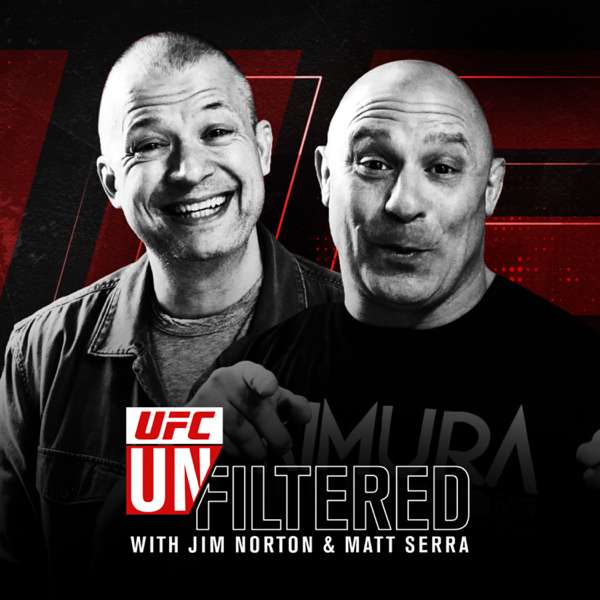
    UFC Unfiltered with Jim Norton and Matt Serra

    4

    UFC Unfiltered with Jim Norton and Matt Serra Government & Organizations
    Hang Up and Listen

    5

    Hang Up and Listen Professional
    The Jonah Keri Podcast

    6

    The Jonah Keri Podcast Professional
    footer-logo

    Contact Us

    Toll Free: 844-670-7747

    Links

    • Home
    • Top Charts
    • Networks
    • Apps
    • Independents Podcasts
    • Podcast Advertising
    • Podcast News
    • Contact Us
    • About Us
    • Analytics & Insights

    Stay Connected

      Privacy, Terms of Use & Our Code of Ethics Protecting Content Creators Copyrights