TopPodcast.com
Menu
  • Home
  • Top Charts
  • Top Networks
  • Top Apps
  • Top Independents
  • Top Podfluencers
  • Top Picks
    • Top Business Podcasts
    • Top True Crime Podcasts
    • Top Finance Podcasts
    • Top Comedy Podcasts
    • Top Music Podcasts
    • Top Womens Podcasts
    • Top Kids Podcasts
    • Top Sports Podcasts
    • Top News Podcasts
    • Top Tech Podcasts
    • Top Crypto Podcasts
    • Top Entrepreneurial Podcasts
    • Top Fantasy Sports Podcasts
    • Top Political Podcasts
    • Top Science Podcasts
    • Top Self Help Podcasts
    • Top Sports Betting Podcasts
    • Top Stocks Podcasts
  • Podcast News
  • About Us
  • Podcast Advertising
  • Contact
Not in our directory?
Add Show Here
Podcast Equipment
Center

toppodcastlogoOur TOPPODCAST Picks

  • Comedy
  • Crypto
  • Sports
  • News
  • Politics
  • True Crime
  • Business
  • Finance

Follow Us

toppodcastlogoStay Connected

    View Top 200 Chart
    Back to Rankings Page
    Professional

    Finding Your Summit

    Mark Pattison is a former NFL player, entrepreneur, philanthropist and mountaineer who is now climbing the Seven Summits. Through his life’s journey, business, sports & charity work, Mark has been fortunate to meet some of the world’s most incredible people who share their stories of how they overcame obstacles to succeed and what their driving force was.

    Advertise
    • Apple Podcasts
    • Google Play
    • Spotify

    Latest Episodes:
    Amanda Russell: Model and fitness expert who had to figure it out. She came from a small town in Canada where one person told her the secret to getting out which ultimately let to becoming a PhD at University of Texas. Jun 19, 2020
    Show notes

    156: Amanda Russell: Chief Marketing Officer at Valeo Technologies, Professor of Marketing, and Author opens up about overcoming the injury that interrupted her Olympic career to her expansion into the worlds of fitness and marketing.

    Amanda Russell

    Amanda Russell explained the importance a mentor played early in her life while growing up without a lot of financial resources and opportunities in a small town in Canada. "I had a high school gym teacher. She told me about this life-changing thing, this word 'scholarship.' I had never heard the word before. I didn't know what it meant, and she explained to me that it meant that you could go after high school, instead of going to work, you could actually continue to go to school and get another degree that will put you in a much higher-paying job, and that the United States of America would actually pay you to do it, as long as you could do a sport. My family didn't have a lot of money."

    On this episode of Finding Your Summit Podcast, we talk with Amanda Russell about her vigorous drive, ingenuity, and dedication to expand on her former Olympic running pursuits into fitness and marketing. "I look at sports differently now. It took being seen. So, when you look at sports like baseball, or football, or dance, these guys get seen, and it is slightly subjective, in terms of you actually have to be good enough for somebody to physically go see you and determine that you are good enough. She (Amanda Russell's high school gym teacher) told me I should look at running, because running was a sport that, first of all, it was free. It required no equipment, and the time on track was the time on track anywhere in the world, and if I could run these certain times, I could write my ticket."

    What You Will Learn:

    How did she manage to work her way into her athletic track success without even liking to run at all? "I don't run anymore, and when I see people running, they make it look even more painful and I don't understand why anyone would want to take that up. I think that is an important point because it has affected me in some many other ways, because I think there is a big mentality of like, 'follow your passion, follow your passion.' Well, first of all, if I followed that advice, I would have never done it, because it wasn't fun. It was a lot of work and there were a lot of obstacles. Having gone through that, I thought, after training like that, and doing that for so many years in a sport that at the end of the day I didn't love, made me realise that there is probably nothing that I wouldn't do if I wanted the end-goal."

    Amanda Russell was 21 living in the United States preparing to run in the Olympics when she experienced a career-ending injury, a broken femur, and was facing deportation. "I feel like I'm the go-to person for a lot of friends whenever a crisis happens in their lives because you become very resourceful, when you don't have anything left you become very, very resourceful and you find a way to do it. I'm a hustler in any way. So, I thought, I can't go back to the pinnacle of what I feel like is the athletic world in running, the Olympics, then I still had this dream, which was really my dream, was New York City. I didn't know what that meant. But I just knew that I just really, really wanted to live there and I wanted to grow a career there and it was like the epicenter of my universe. I had a few challenges though, well many, four actually. Four that stand out. One, I had no money, no connections, no work experience, and no U.S visa."

    Amanda shares a story about her innovative and genuine strategy that landed her an American employment sponsor to begin her life in New York City as a Canadian. "You can't compete on what you don't have. I don't have experience, and I knew in order to get the job, it wasn't like I just had to be the best candidate for the job. To get sponsored with no experience, you have to prove in some way, you are better than every other American applying for the job. One thing I did have a lot of, not money, but shoes. I had a lot of Nike running shoes, because that was my sponsor. So, I sent out a pair of used, worn out Nike running shoes to who I found out was the gatekeeper of each of these three firms, with this whole personal spiel in a box about how I had all of this work ethic and dedication and perseverance that I can now give solely to your company because I was no longer going to run. That got me the interview. That got me all three interviews actually."

    How did business school play a pivotal role in fulfilling Amanda's desire to live and work in New York City? "My plan was to work there for a couple of years, go to business school. Business school requires at least two or three years of experience. I saved everything I possibly could when I was working. I was making pretty good money. But, I could also write a book probably on how to live on $20 a day in New York because I put everything away just to save up for my first semester of business school. I thought, if I could just get one semester, I will figure the rest out, and I know I was going to use this time, doing business school meant that I could full-time pursue something else while still maintaining a student visa."

    Amanda recalls back to when she started using YouTube in business school when it was still in its early days as a social media platform. "I started watching these YouTubers, not because I loved the shows, but because I was so enamored by how these people had these cult followings, and this was back when YouTube was only dumb and dumber entertainment and a little bit of music, and you are seeing these teenaged kids or young adults in the Midwest doing these ridiculous things and they have this cult following. That to me was like, oh my God. All of these brands are putting the cart before the horse and they're creating these products and services. But, if you can create an audience like that, they will tell you what they want or you can sell them anything."

    Fitness Model to Fitness Business

    Her father was not too happy about the thought of his daughter modeling and preferred that she pursue her education. Being that modeling was financially lucrative at the time, Amanda Russell signed a contract with the Wilhelmina modeling agency, leading to her online fitness subscription business. "I became one of the very first fitness models. Wilhelmina opened the very first category in fitness, and when I say fitness, I don't mean muscle and fitness like how they are seen back in the day. This was the first category in fitness that was like Cosmopolitan magazine or Self magazine, very lifestyle-y...Every time that I was on a shoot, they called you talent, and I hated that and it made me feel very insecure. I would try to hyper-compensate by being like, no I'm in business school. I'm going to have my own company, and started pitching every editor, every brand that you can think of."

    Business in the New Normal

    During this episode of Finding Your Summit Podcast, the discussion with Amanda Russell also moves into how business has been rapidly changing before and after the COVID-19 pandemic. "The world is changing so fast, and it is just getting faster and faster. So, you have to be agile. You can't teach anymore the way that we used to teach. We can't teach platform-specific. That platform will change. Algorithms change. The way we do business will change daily. So, you have to teach how to think, not a how-to. When you look at big companies hiring, especially graduate students and undergraduates, their biggest complaint across corporate America is that they don't know how to critically think."

    Links to Additional Resources:

    • Mark Pattison: markpattisonnfl.com
    • Emilia's Everest for the Epilepsy Foundation: markpattisonnfl.com/philanthropy-wb/
    • Amanda Russell on social media: Linkedin Instagram Twitter
    • Amanda Russell's website: amandarussell.co

    Amanda Russell: Model and fitness expert who had to figure it out. She came from a small town in Canada where one person told her the secret to getting out which ultimately let to becoming a PhD at University of Texas. Jun 19, 2020
    Show notes

    156: Amanda Russell: Chief Marketing Officer at Valeo Technologies, Professor of Marketing, and Author opens up about overcoming the injury that interrupted her Olympic career to her expansion into the worlds of fitness and marketing.

    Amanda Russell

    Amanda Russell explained the importance a mentor played early in her life while growing up without a lot of financial resources and opportunities in a small town in Canada. "I had a high school gym teacher. She told me about this life-changing thing, this word 'scholarship.' I had never heard the word before. I didn't know what it meant, and she explained to me that it meant that you could go after high school, instead of going to work, you could actually continue to go to school and get another degree that will put you in a much higher-paying job, and that the United States of America would actually pay you to do it, as long as you could do a sport. My family didn't have a lot of money."

    On this episode of Finding Your Summit Podcast, we talk with Amanda Russell about her vigorous drive, ingenuity, and dedication to expand on her former Olympic running pursuits into fitness and marketing. "I look at sports differently now. It took being seen. So, when you look at sports like baseball, or football, or dance, these guys get seen, and it is slightly subjective, in terms of you actually have to be good enough for somebody to physically go see you and determine that you are good enough. She (Amanda Russell's high school gym teacher) told me I should look at running, because running was a sport that, first of all, it was free. It required no equipment, and the time on track was the time on track anywhere in the world, and if I could run these certain times, I could write my ticket."

    What You Will Learn:

    How did she manage to work her way into her athletic track success without even liking to run at all? "I don't run anymore, and when I see people running, they make it look even more painful and I don't understand why anyone would want to take that up. I think that is an important point because it has affected me in some many other ways, because I think there is a big mentality of like, 'follow your passion, follow your passion.' Well, first of all, if I followed that advice, I would have never done it, because it wasn't fun. It was a lot of work and there were a lot of obstacles. Having gone through that, I thought, after training like that, and doing that for so many years in a sport that at the end of the day I didn't love, made me realise that there is probably nothing that I wouldn't do if I wanted the end-goal."

    Amanda Russell was 21 living in the United States preparing to run in the Olympics when she experienced a career-ending injury, a broken femur, and was facing deportation. "I feel like I'm the go-to person for a lot of friends whenever a crisis happens in their lives because you become very resourceful, when you don't have anything left you become very, very resourceful and you find a way to do it. I'm a hustler in any way. So, I thought, I can't go back to the pinnacle of what I feel like is the athletic world in running, the Olympics, then I still had this dream, which was really my dream, was New York City. I didn't know what that meant. But I just knew that I just really, really wanted to live there and I wanted to grow a career there and it was like the epicenter of my universe. I had a few challenges though, well many, four actually. Four that stand out. One, I had no money, no connections, no work experience, and no U.S visa."

    Amanda shares a story about her innovative and genuine strategy that landed her an American employment sponsor to begin her life in New York City as a Canadian. "You can't compete on what you don't have. I don't have experience, and I knew in order to get the job, it wasn't like I just had to be the best candidate for the job. To get sponsored with no experience, you have to prove in some way, you are better than every other American applying for the job. One thing I did have a lot of, not money, but shoes. I had a lot of Nike running shoes, because that was my sponsor. So, I sent out a pair of used, worn out Nike running shoes to who I found out was the gatekeeper of each of these three firms, with this whole personal spiel in a box about how I had all of this work ethic and dedication and perseverance that I can now give solely to your company because I was no longer going to run. That got me the interview. That got me all three interviews actually."

    How did business school play a pivotal role in fulfilling Amanda's desire to live and work in New York City? "My plan was to work there for a couple of years, go to business school. Business school requires at least two or three years of experience. I saved everything I possibly could when I was working. I was making pretty good money. But, I could also write a book probably on how to live on $20 a day in New York because I put everything away just to save up for my first semester of business school. I thought, if I could just get one semester, I will figure the rest out, and I know I was going to use this time, doing business school meant that I could full-time pursue something else while still maintaining a student visa."

    Amanda recalls back to when she started using YouTube in business school when it was still in its early days as a social media platform. "I started watching these YouTubers, not because I loved the shows, but because I was so enamored by how these people had these cult followings, and this was back when YouTube was only dumb and dumber entertainment and a little bit of music, and you are seeing these teenaged kids or young adults in the Midwest doing these ridiculous things and they have this cult following. That to me was like, oh my God. All of these brands are putting the cart before the horse and they're creating these products and services. But, if you can create an audience like that, they will tell you what they want or you can sell them anything."

    Fitness Model to Fitness Business

    Her father was not too happy about the thought of his daughter modeling and preferred that she pursue her education. Being that modeling was financially lucrative at the time, Amanda Russell signed a contract with the Wilhelmina modeling agency, leading to her online fitness subscription business. "I became one of the very first fitness models. Wilhelmina opened the very first category in fitness, and when I say fitness, I don't mean muscle and fitness like how they are seen back in the day. This was the first category in fitness that was like Cosmopolitan magazine or Self magazine, very lifestyle-y...Every time that I was on a shoot, they called you talent, and I hated that and it made me feel very insecure. I would try to hyper-compensate by being like, no I'm in business school. I'm going to have my own company, and started pitching every editor, every brand that you can think of."

    Business in the New Normal

    During this episode of Finding Your Summit Podcast, the discussion with Amanda Russell also moves into how business has been rapidly changing before and after the COVID-19 pandemic. "The world is changing so fast, and it is just getting faster and faster. So, you have to be agile. You can't teach anymore the way that we used to teach. We can't teach platform-specific. That platform will change. Algorithms change. The way we do business will change daily. So, you have to teach how to think, not a how-to. When you look at big companies hiring, especially graduate students and undergraduates, their biggest complaint across corporate America is that they don't know how to critically think."

    Links to Additional Resources:

    • Mark Pattison: markpattisonnfl.com
    • Emilia's Everest for the Epilepsy Foundation: markpattisonnfl.com/philanthropy-wb/
    • Amanda Russell on social media: Linkedin Instagram Twitter
    • Amanda Russell's website: amandarussell.co

    Amanda Russell: Model and fitness expert who had to figure it out. She came from a small town in Canada where one person told her the secret to getting out which ultimately let to becoming a PhD at University of Texas. Jun 19, 2020
    Show notes

    156: Amanda Russell: Chief Marketing Officer at Valeo Technologies, Professor of Marketing, and Author opens up about overcoming the injury that interrupted her Olympic career to her expansion into the worlds of fitness and marketing.

    Amanda Russell

    Amanda Russell explained the importance a mentor played early in her life while growing up without a lot of financial resources and opportunities in a small town in Canada. "I had a high school gym teacher. She told me about this life-changing thing, this word 'scholarship.' I had never heard the word before. I didn't know what it meant, and she explained to me that it meant that you could go after high school, instead of going to work, you could actually continue to go to school and get another degree that will put you in a much higher-paying job, and that the United States of America would actually pay you to do it, as long as you could do a sport. My family didn't have a lot of money."

    On this episode of Finding Your Summit Podcast, we talk with Amanda Russell about her vigorous drive, ingenuity, and dedication to expand on her former Olympic running pursuits into fitness and marketing. "I look at sports differently now. It took being seen. So, when you look at sports like baseball, or football, or dance, these guys get seen, and it is slightly subjective, in terms of you actually have to be good enough for somebody to physically go see you and determine that you are good enough. She (Amanda Russell's high school gym teacher) told me I should look at running, because running was a sport that, first of all, it was free. It required no equipment, and the time on track was the time on track anywhere in the world, and if I could run these certain times, I could write my ticket."

    What You Will Learn:

    How did she manage to work her way into her athletic track success without even liking to run at all? "I don't run anymore, and when I see people running, they make it look even more painful and I don't understand why anyone would want to take that up. I think that is an important point because it has affected me in some many other ways, because I think there is a big mentality of like, 'follow your passion, follow your passion.' Well, first of all, if I followed that advice, I would have never done it, because it wasn't fun. It was a lot of work and there were a lot of obstacles. Having gone through that, I thought, after training like that, and doing that for so many years in a sport that at the end of the day I didn't love, made me realise that there is probably nothing that I wouldn't do if I wanted the end-goal."

    Amanda Russell was 21 living in the United States preparing to run in the Olympics when she experienced a career-ending injury, a broken femur, and was facing deportation. "I feel like I'm the go-to person for a lot of friends whenever a crisis happens in their lives because you become very resourceful, when you don't have anything left you become very, very resourceful and you find a way to do it. I'm a hustler in any way. So, I thought, I can't go back to the pinnacle of what I feel like is the athletic world in running, the Olympics, then I still had this dream, which was really my dream, was New York City. I didn't know what that meant. But I just knew that I just really, really wanted to live there and I wanted to grow a career there and it was like the epicenter of my universe. I had a few challenges though, well many, four actually. Four that stand out. One, I had no money, no connections, no work experience, and no U.S visa."

    Amanda shares a story about her innovative and genuine strategy that landed her an American employment sponsor to begin her life in New York City as a Canadian. "You can't compete on what you don't have. I don't have experience, and I knew in order to get the job, it wasn't like I just had to be the best candidate for the job. To get sponsored with no experience, you have to prove in some way, you are better than every other American applying for the job. One thing I did have a lot of, not money, but shoes. I had a lot of Nike running shoes, because that was my sponsor. So, I sent out a pair of used, worn out Nike running shoes to who I found out was the gatekeeper of each of these three firms, with this whole personal spiel in a box about how I had all of this work ethic and dedication and perseverance that I can now give solely to your company because I was no longer going to run. That got me the interview. That got me all three interviews actually."

    How did business school play a pivotal role in fulfilling Amanda's desire to live and work in New York City? "My plan was to work there for a couple of years, go to business school. Business school requires at least two or three years of experience. I saved everything I possibly could when I was working. I was making pretty good money. But, I could also write a book probably on how to live on $20 a day in New York because I put everything away just to save up for my first semester of business school. I thought, if I could just get one semester, I will figure the rest out, and I know I was going to use this time, doing business school meant that I could full-time pursue something else while still maintaining a student visa."

    Amanda recalls back to when she started using YouTube in business school when it was still in its early days as a social media platform. "I started watching these YouTubers, not because I loved the shows, but because I was so enamored by how these people had these cult followings, and this was back when YouTube was only dumb and dumber entertainment and a little bit of music, and you are seeing these teenaged kids or young adults in the Midwest doing these ridiculous things and they have this cult following. That to me was like, oh my God. All of these brands are putting the cart before the horse and they're creating these products and services. But, if you can create an audience like that, they will tell you what they want or you can sell them anything."

    Fitness Model to Fitness Business

    Her father was not too happy about the thought of his daughter modeling and preferred that she pursue her education. Being that modeling was financially lucrative at the time, Amanda Russell signed a contract with the Wilhelmina modeling agency, leading to her online fitness subscription business. "I became one of the very first fitness models. Wilhelmina opened the very first category in fitness, and when I say fitness, I don't mean muscle and fitness like how they are seen back in the day. This was the first category in fitness that was like Cosmopolitan magazine or Self magazine, very lifestyle-y...Every time that I was on a shoot, they called you talent, and I hated that and it made me feel very insecure. I would try to hyper-compensate by being like, no I'm in business school. I'm going to have my own company, and started pitching every editor, every brand that you can think of."

    Business in the New Normal

    During this episode of Finding Your Summit Podcast, the discussion with Amanda Russell also moves into how business has been rapidly changing before and after the COVID-19 pandemic. "The world is changing so fast, and it is just getting faster and faster. So, you have to be agile. You can't teach anymore the way that we used to teach. We can't teach platform-specific. That platform will change. Algorithms change. The way we do business will change daily. So, you have to teach how to think, not a how-to. When you look at big companies hiring, especially graduate students and undergraduates, their biggest complaint across corporate America is that they don't know how to critically think."

    Links to Additional Resources:

    • Mark Pattison: markpattisonnfl.com
    • Emilia's Everest for the Epilepsy Foundation: markpattisonnfl.com/philanthropy-wb/
    • Amanda Russell on social media: Linkedin Instagram Twitter
    • Amanda Russell's website: amandarussell.co

    Joe Kelly: Former first round draft pick and teammate of mine, Joe Kelly speaks up about Black Lives Matter. Very powerful convo including former Head Coach Jim Mora on the pod. Joe details what it has been like to be black in America. Jun 12, 2020
    Show notes

    155: Joe Kelly: Former NFL Linebacker and and All-Star Player, gives his take on the murder of George Floyd, the Black Lives Matter response, his own experiences with racial profiling as an African American professional athlete, and the systemic biases that need to change.

    Joe Kelly

    Host Mark Pattison met Joe Kelly at the University of Washington. Since then, Joe Kelly has had an 11-year NFL career with the Cincinnati Bengals, New York Jets, Los Angeles Raiders, Los Angeles Rams, Green Bay Packers, and Philadelphia Eagles. But Jim's success on the field didn't protect him from racial discrimination off of the field as an African American man. "This isn't something that is new for the African American community. It is just now that it is being taped. If we can go back to what half of America thought was very controversial with Colin Kaepernick taking a knee. We as African Americans understood it was never about the flag. That is a discussion that needs to be had as well because it wasn't about disrespecting the flag, disrespecting the national anthem. His focus was on what you saw in Minneapolis 7 days ago with Mr. Floyd. We are talking about the things that we as African Americans deal with, regardless of your financial status. Still, when you walk out of that door, you are black. When you come out of that locker room, you're black. When you cash that $1 million check, you're black."

    On this episode of Finding Your Summit Podcast, we talk with Joe Kelly about how history keeps repeating itself with racial oppression and what Joe Kelly has experienced with his own eyes. "In my own neighborhoods, I didn't really have that problem growing up. But it wasn't until I got to the NFL and I was making money that I started personally dealing with being racially profiled, being stopped and not getting a ticket, but having a gun put to my head. That happened to me 6-7 times. I never got a ticket. But I fit the description. So, what we're talking about here, regardless of what Mr. Floyd did 10 minutes prior to the video. For 9 minutes, for 9 minutes the police had their knee on his neck and basically murdered the guy. But this isn't anything new to us."

    What You Will Learn:

    Joe highlights the economic inequities that exist against African Americans. "When you talk about generational wealth, the African American community has never really been allowed, for years, to be able to be put in that category because they weren't initially allowed to own homes and the banks wouldn't allow them or loan money to them to buy the homes. They started businesses. They couldn't get loans to start businesses. So, you always stay at a point where you are always below the poverty level."

    Equality and change takes people of all races. "This thing has galvanized. Even with the Civil Rights movement we had pockets of the United States, cities. There are countries. We have countries right now, and you have 50% of the people out there protesting are caucasian. So, when we made the changes in the Civil Rights, it wasn't just because of us protesting and rioting, because at the end of the day we didn't have power with the politicians. We had to get out there and vote. You have to vote for people that are going to change policies."

    There has been a long-wronging history of police brutality against African Americans. "Here, being a first-round pick, being racially profiled and having guns put to my head at routine stops. We're trying to let everybody understand that plight of police brutality, and they don't have to have a reason. You've seen the caucasian kid that went in and murdered wonderful African Americans in South Carolina. When they caught him, they eventually got Burger King for him. He wasn't thrown to the grown. He wasn't brutally maimed."

    Joe Kelly explains white privilege and how he has had to carry himself out in public in order to deal with it safely. "White Americans need to understand, not just White Supremacy because those are people way on the right, white privilege. You know, there is white privilege. Me being an African American man, I've been in the elevator, being the only African American in the elevator and I have to purposely make other people, other white people on the elevator feel comfortable because I don't want them to think that I'm this angry black man and that they have to worry about getting robbed. That is ingrained."

    Black Lives Matter is about African Americans having equal opportunities, equal legal and justice treatment, and equal economic equity. "Understand that when we say Black Lives Matter, we're not saying that your life doesn't matter, my life is more important than yours. We want to be equal. We're not hollering because we want to be superior to you. We've been trying to fight for 400 years to say that we are your equal. We want to have equal access to housing. We want to have equal access to jobs. What we're talking about here is being able to open up a business, getting a bank loan, the judicial system. Talking about black-on-black crime, when black folks kill black folks, they go to jail for a long time. It is working in that aspect. But it is not working when a black person is killed at the hands of a police officer."

    Unequal Education Systems

    There is a huge disparity between schools in poverty-stricken black inner city neighborhoods and wealthy white neighborhoods. "When you are growing up with an educational system that is so inferior to a school that is probably five minutes away. Those kids have better teachers. They have better resources. They have better extra-curricular activities. Where here, kids are coming to school in inner city areas, they come to school hungry. My kids, I've been doing group homes since I retired and my kids go to school and the books they bring home. They had this book in the 80s when I was in school. It starts there. It starts with the educational system, getting to some point where it is fair."

    Change is Needed

    During this episode of Finding Your Summit Podcast, the discussion with Joe Kelly also delves into the importance of true racial change and unity around this issue. "The African American community can in no way do this by ourselves systemically. This has been part of our society since the beginning, before slavery. It isn't changing overnight. You would think after Martin Luther King and the Civil Rights that we wouldn't be discussing what happened to Floyd. That should be so far from reality. But that is our reality."

    Links to Additional Resources:

    • Mark Pattison: markpattisonnfl.com
    • Emilia's Everest for the Epilepsy Foundation: markpattisonnfl.com/philanthropy-wb/
    • Joe Kelly's website for K.E.L.L.Y. Youth Services: kellyyouthservices.com

    Yogi Roth + Hugh Millen : Pac 12 analyst Yogi Roth + 10 year NFL QB Hugh Millen break down what college football might look like when the pandemic lifts... Jun 05, 2020
    Show notes

    154: Yogi Roth: Analyst on the Pac-12 Network, Creator of the Life Without Limits podcast, Author and Filmmaker, and Hugh Millen: Ex-NFL Player and Football Analyst at Seattle's Sports Radio 950 KJR talk about ways that football teams, players, coaches, and conference are adapting to COVID-19.

    Yogi Roth and Hugh Millen

    How does returning guest to the show Yogi Roth feel about the word 'limits?' "To me I never believed in limits, right? You can't play major college football? Screw you, I'm going to play it. You can't coach at SC. Yeah, I can, watch me. You can't call big games. Watch me. Like, that was always a mindset. But, now it's like, well if our 5-year-old is like, 'Hey, I want to go bombing down the street on my bike at rush hour.' There are limits around that, dude. That's not allowed."

    On this episode of Finding Your Summit Podcast, we talk with Yogi Roth, Analyst on the Pac-12 Network, Creator of the Life Without Limits podcast, Author and Filmmaker, as well as Hugh Millen, Ex-NFL Player and Football Analyst at Seattle's Sports Radio 950 KJR. Hugh Millen shares his opinion on both of his athletic sons' coping with the restrictions that have emerged in response to COVID-19. "You control the controllables, and we don't know what is going to happen with this pandemic, and the one thing we can control is our response to it, our attitude about it. Whether it is a few months like we have had or a few more months, whatever it is, it is our choice."

    What You Will Learn:

    Yogi Roth talks about growing up in a small town in Pennsylvania with his mom's parents being holocaust survivor's and how that pushed him to be strong, resilient, and to never give up. "The harder it was, the more obstacles that came in front of me, the more joy I would get out of it and it wasn't healthy at first because it became about proving others wrong. But, eventually as an adult, it has turned into proving myself right. That is a challenge I think every athlete and competitor probably goes through in some form. Most of us deal with that later in life. I try to tell high school kids, deal with that now because it is much more of an enjoyable process."

    How is Hugh Millen controlling his attitude as a dad around his kids losing a season or even playing amid the pandemic? "It is two-fold in different ways. My oldest son at Oregon, it is actually somewhat of a blessing for us selflessly that he is home now, and so, what I'm doing I'm out there throwing with him, coaching him up and he is coming off an injury, a shoulder surgery. So, we're making sure his mechanics are where he needs to be."

    Hugh Millen discusses talking about sports careers with his kids. "First of all I say, 'What is your goal?' If they just tell me one time, hey, I don't want to be an NFL quarterback, then I change. When they say I want to be an NFL quarterback, my first response is, get in line. Right, Yogi? You aren't going to talk it into existence. You are going to work it into existence, and it is going to get into how do you prepare and how do you perform. Very simple. It is as simple as that and that will declare whether or not you have that opportunity. But, the message I try to say is, let your work ethic match your goals."

    What is Yogi Roth hearing as the path for college football after the pandemic? "I interviewed every head coach last week in the conference. Talking to a bunch of people. Everybody is optimistic. Like, there is this narrative out there that, yes the SEC is going to play. They don't care. They're going to put fans in the stands. You're in Texas, fans in the stands. But in the Pac-12, they're not going to play, and that is the furthest thing from the truth. The truth is, is that everyday the conference commissioners get on the phone, along with their liaisons, with their support staff, medical representatives, etc, and everyday the people leading the conversation around the medical side of COVID-19 and college football are the people on the west coast. It is the Pac-12 conference."

    Hugh Millen makes an insightful point about convenience versus fatality as it pertains to COVID-19 by using flu season deaths as an example. "If we really cared about cutting those deaths down, we could have said our entire lives, none of us grew up wearing masks on an airplane. But it could have been. There is another universe that we could have lived in where all of our lives we were used to wearing masks during flu season, because we want to say, wait a minute, 40,000 deaths is not tolerable for the flu. We have to try to cut that done."

    Post-Pandemic Sports Fans

    Yogi Roth talks about what college football stadiums might look like in the fall. "Fans in the stands? Packed? I don't know how many fans are going to want to be in the stands, packed. I don't know. I'm sure conferences will make those decisions as we get closer. But, I don't see that decision being made until two weeks prior to the first game."

    High School Football

    During this episode of Finding Your Summit Podcast, the discussion with Yogi Roth and Hugh Millen also delves into high school football fans and players. Hugh Millen says "Our head coach doesn't know anything in terms of what is going to transpire because the people above him don't know. The principal doesn't know, the superintendents of the schools. Again, it is going to be above the paygrade of any football people I would assume. But, what I do hope is, and I do have a little bit of concern,. But it is an unfounded concern. Then maybe in a few months I will gain more wisdom and I will say, hey, I should have not been concerned."

    Links to Additional Resources:

    • Mark Pattison: markpattisonnfl.com
    • Emilia's Everest for the Epilepsy Foundation: markpattisonnfl.com/philanthropy-wb/
    • Yogi Roth on social media: Linkedin Instagram Twitter
    • Yogi Roth's website: yogiroth.com
    • Life Without Limits podcast: yogiroth.com/podcast
    • Hugh Millen on Sports Radio KJR: sportsradiokjr.iheart.com/featured/hugh-millen

    Scott Mellin: How the Global GM of North Face has navigated the Coronavirus as this amazing brand continues to flourish... May 29, 2020
    Show notes

    153: Scott Mellin: Global General Manager of Performance Sports and Global General Manager of Mountain Sports at The North Face talks about the adjustments that a company as massive as this outdoor equipment and apparel staple has been able to make during the midst of the COVID-19 pandemic.

    Scott Mellin

    How does guest Scott Mellin go about running the mega huge brand The North Face? "It is an interesting role that I have in the company. We basically operate with two business territories. So, if you thought about the larger $3 billion The North Face brand, it is split into the mountain sports, which I manage and then into lifestyle, which I have a contemporary that manages that side of the business. So, when you see our products show up on Hypebeast or with a Supreme collab, he manages that. When you see it on the back of an athlete on Losity or Everest or Meru, I manage that part of the business."

    On this episode of Finding Your Summit Podcast, we talk with Scott Mellin, Global General Manager of Performance Sports and Global General Manager of Mountain Sports at The North Face. He talks about the role he holds at the company. "Quite honestly, the role is mostly specific to product innovation, and so my focus day-to-day is to develop products that help our athlete team, push the limits of exploration, and those technologies that we develop through our innovation process ultimately find their way into products that end up at Dick's Sporting Goods."

    What You Will Learn:

    Scott Mellin talks about what it is like being in Aspen and the assumptions that people commonly make about it. "This place has a unique gravity to it. These mountains are largely unexplored. People think of Aspen as a posh fur and champagne place. We have 14 14ers in our backyard with some of the most hairiest skiing you'll ever imagine and so the benefit of that is that I'm able to attract our global athlete team here into Aspen, to stay in my house, to spend time with my family and I, and we spend a lot of time in the mountains together just talking. Those conversations vary from what do you want to do in your life to what is your next big objective, to what are we not making that is servicing your needs in the Alpine?"

    The North Face has the resources and opportunity to create powerfully durable fabrics to handle the great outdoors. "Typically, what we are trying to solve for our markets is total white space, and so, I will use Futurelight as an example. This is a textile that we introduced in Fall '19 we thought would really radically change the marketplace. The reason that came to fruition was because we tapped into an unsolved need for the athlete team."

    Scott Mellin understands the importance of having experience on your side when tackling the challenges of mountain climbing. "The reality of experience is so powerful because you are able to read the weather. You are able to read the snow. You are able to read the rock. You are able to read your teammates. All of those factors come into your system of dress because you don't want to get hypothermic. You don't want to get wet at the base layer level. You don't want to get cold because it is really hard to recover, especially at the altitude that you're working at. So, it is a constant mindgame of reading the mountain, the weather, your team, and the speed that you are moving at in order to not only achieve your objective, but to come out safely."

    How has COVID-19 affected Scott's love of the mountains? "We've been kind of lucky during COVID. Slight pivot here on your topic. The mountain towns like Sun Valley also basically emptied out. There is nobody in the mountains, and I've spent more time in the mountains in the last two months than I probably did all of last year. I travel a lot. I'm in mills and I'm in factories and so forth to bring these innovations to fruition. But, to be home for two straight months, just working in the mountains has been a blessing in disguise from COVID quite honestly."

    Scott Mellin talks about the ways in which The North Face has managed their physical brick and mortar storefronts during the quarantine spawned on by the coronavirus. "It is an interesting moment that obviously none of us have experienced before in our professional careers. We operate, as a brand, about 1200 stores around the world and the vast majority of those are shuttered right now. E-commerce makes up a percentage of our business. But, it is not driving enough gross margin and net income to pay for the entire operation. But, we are fortunate to be owned by a much larger entity, VF Corp. VF Corp had going into this an extremely strong balance sheet with a very high level of liquidity, and they have pledged, really a people-first approach. So, even though our stores have been closed around the world for the better part of 6 weeks now, we continue to pay all of our retail associates."

    Snowboarding vs. Skiing

    Scott Mellin talks about how skiing has pulled away from snowboarding in popularity. "Today, snowboarding, based on all of our data points, represents about 25% of participation on the mountains, resort access. So, it's definitely cooled off significantly. I think at the same time, ski equipment has gotten significantly better in terms of shaped skis, fat skis. Boots have gotten significantly more comfortable, which was an early allure to snowboarding, which was the comfort of the boots."

    Getting Back to Work

    During this episode of Finding Your Summit Podcast, Scott Mellin also discusses how he sees the changes caused by the COVID-19 pandemic rolling out for him at The North Face in terms of bringing his employees back to work. "It is kind of a complex, layered strategy because stores are dispersed around the world and you drop from like a federal country level and their mandates down to cantons, to provinces, to counties, or in our case in the U.S. to states and counties. Everyone has a different policy. Fortunately, the way that our retail environments or our retail org designs are stacked is you have store associates, store managers, district managers, that can manage all of the individuality."

    Links to Additional Resources:

    • Mark Pattison: markpattisonnfl.com
    • Emilia's Everest for the Epilepsy Foundation: markpattisonnfl.com/philanthropy-wb/
    • Scott Mellin on social media: Linkedin Instagram

    Laurie Adami: This SuperGirl came back from cancer 7 times before overcoming with new treatments. Now she wants to bring dollars and awareness with plans of climbing to Everest base camp so she can help others. What an inspiration... May 22, 2020
    Show notes

    152: Laurie Adami: 13-year Cancer Survivor, Software Company President, CAR-T Trial Patient, and Immunotherapy Fundraiser talks about overcoming cancer after the struggle of relapsing seven times.

    Laurie Adami

    Laurie Adami not only a 13-year cancer survivor, but she fought and overcame 7 cancer relapses during the course of that fight for her life. Before this tumultuous experience began, she unfortunately had her gut feelings ignored by doctors. "I was 46-years-old and, as you said, I was running a company. It was a financial services company, traveling a lot. Every month, on the road, London, New York, Boston, wherever. I had a little kid who was 4-5-years-old, and I just started to get really tired. I just thought something was really wrong. I couldn't get the doctors to take me seriously. I think it was a combination of the fact that I have blonde hair and maybe there are hypochondriacs out there or something. But, definitely my concerns were dismissed, over and over and over again."

    On this episode of Finding Your Summit Podcast, we talk with Laurie Adami, 13-year Cancer Survivor, Software Company President, CAR-T Trial Patient, and Immunotherapy Fundraiser. Laurie wisely trusted her instincts and worked with a doctor that finally diagnosed her with the source of her bad feelings. "I just knew in my heart that something was really wrong with me. Come to find out, I had to finally get rid of the doctors I was seeing who would not listen to me and go to a whole new set of people, who finally send me in for a CT scan, and come to find out, I had a mass the size of a grapefruit in my abdomen, and I was stage 4 cancer. It was throughout my body, in my lungs, on my scalp, in my teardrop ducks, in organs. It was everywhere."

    What You Will Learn:

    What exactly was this rare form of cancer that Laurie Adami was dealing with? "Here I am, whoa, wait, I'm not ok. Come to find out, it's an incurable type of cancer. So, it was a form of blood cancer, Non-Hodgkin lymphoma, that I was told, 'look on the bright side, it is treatable.' And I would say, 'yeah, but it is not curable.' 'No, it is not curable, but it is treatable.' Well, that is all fine and good. But, if the treatment works, and you can get a break, and you can be well."

    Which type of treatment did Laurie proceed with? "But unfortunately for me, the story was, I would get a treatment, and then it would come right back. So, I was what they call, a frequent relapser. This diagnosis back in 2006 was something, at the time, that had a brute force chemotherapy treatment and a bunch of other things that they were trying. But nothing was really that effective yet. So, that's when I learned that it wasn't such a pretty picture."

    Laurie Adami opens up about what it was like to be a mother facing the potentially fatal dilemma of stage 4 cancer. "I just lost it. I immediately thought of my kid, right? My little boy who was 5 at the time, and immediately thought, oh my God, he is not going to have a mom, because one of the things that were being painted to me as a possibility was fatal in a month. Like no treatments. That was like, boom, you're done. So, that is of course where my brain starts to go."

    At the time, physically speaking, did Laurie feel worse having this form of cancer infested all over her body or chemotherapy drips that are like poisoning herself to cure herself? "I didn't feel that rotten on chemotherapy. Now, there are so many things that they can give you to prevent side effects. So, for example, I never got nauseous. So, that to me, you know, I didn't feel great. I was tired. That was probably my biggest complaint was the exhaustion. But, I quickly decided if I kept moving I would feel better physically."

    Laurie talks about some of the nightmare scares that occurred during her cancer battle. "I had some scary stuff happen. Like the day after my chemotherapy, I developed a urinary blockage and I had to go to the ER, and then a couple of weeks later I got a blood clot in my lung and I had to go to the ER. So, there was stuff that I had to deal with. But, I kind of looked at it like, you know what, this is really like a bump in the road. This is going to end, and even if I feel crappy, it is going to end.

    Never Giving Up

    Laurie Adami shares her personal passion and motivation to survive and overcome the painful grips of cancer. "Bottom line, I kept thinking about my son, you know? I kept thinking. I had someone say to me, 'oh, kids lose their moms all the time and they are fine.' And I was like, that's not ok. That is not ok. My thoughts just keep coming back to my son, and my husband would say, 'Well, what about me? You aren't worried about me?' I was like, you will find another wife. But a child can't get another mom. They have one."

    CAR T Immunotherapy

    During this episode of Finding Your Summit Podcast, Laurie Adami also talks about the treatment that she was able to benefit from, which is being currently looked at as a direction to go in for potentially helping those being stricken by COVID-19. "It is CAR T Immunotherapy. It stands for Chimeric Antigen Receptor T-cell therapy. They are calling it like the discovery of penicillin, or the development of the polio vaccine. It is amazing. I heard about this first in 2011 and I told my oncologist at the time, 'you have to keep me alive so I can live to get CAR T, because I had such a different feeling about it. Because, it is taking your actual immune system, making your immune system smarter, putting it back in your body and having it attack the cancer, and only the cancer. So, I have no long-term side effects from CAR T."

    Links to Additional Resources:

    • Mark Pattison: markpattisonnfl.com
    • Emilia's Everest for the Epilepsy Foundation: markpattisonnfl.com/philanthropy-wb/
    • Help Laurie Adami Raise Money for Immunotherapies: bit.ly/cartsupergirl
    • Laurie Adami on Twitter: Twitter

    Jim Mora: Former NFL and College Head Coach Jim Mora talks about putting yourself in the best position for life after Covid-19 when we all emerge out of this virus May 15, 2020
    Show notes

    151: Jim Mora: 25-Year NFL Former Head Coach, Assistant Coach, and Defensive Coordinator talks about overcoming the challenges of changing teams, finding the inner motivation and inspiration when times feel bleek, and having the flexibility to keep moving forward.

    Jim Mora

    Jim Mora opens up this episode by addressing the COVID-19 pandemic that has impacted all of our lives, and he shares some advice on how to manage our expectations while staring ahead into the unknown. "I believe as human beings there is a strength to us that allows us to overcome and I think this concept of embracing uncertainty is very difficult. It runs counter to who we are and what we believe. But, it is so important right now, because if you don't embrace uncertainty and look for the good in what is happening, you are going to spiral, and I see so many great things happening."

    On this episode of Finding Your Summit Podcast, we talk with Jim Mora, 25-Year NFL Former Head Coach, Assistant Coach, and Defensive Coordinator. Jim Mora talks about how adverse situations reveal who we are when we come face-to-face with them. "Adversity turns weak people into victims and strong people into competitors. We all are going to go through adversity, different types in our lives, different levels. But weak people shrivel, you know, lay on their couch and watch TV, or hide or look for an out, and it takes a strength of character to compete in adverse times."

    What You Will Learn:

    Jim Mora believes that our attitude and mindset are key factors when it comes to experiencing hard things. "I think I'm like everybody. I have some really good days and I have some really challenging days. The fight is to always work through those challenging days and make sure the next day is a better day, and I have always been a 'glass is half full' guy. But sometimes that is hard when you get fired. I got fired at UCLA."

    Why is coaching so important to Jim Mora in his life? "I don't know what is up next for me. I hope that it is coaching. The reason I love to coach is that I love to have an effect on people. But if it isn't coaching, it will be something else where I can influence people."

    Jim Mora explains the way that he differentiates between sacrifices and commitments and investments."If you want to get somewhere, you have to make an investment. You have to make a commitment. It is not a sacrifice. A sacrifice to me is not a positive word. It is a negative word, where investment and commitment are powerful, positive words. I am going to make a commitment."

    Opportunity and preparation are two key components to the success of any champion. But, they both aren't things that we can personally guarantee. Jim Mora walks us through how we can approach opportunity and preparation. "You don't always control opportunity. But you do control preparation. You can always be ready. You can always be learning. You can always be trying to get better. You know, for me as a coach, I've always, as you know, stored a lot of information. I always had a plan in place.

    How did the NFL superstar of the San Francisco 49ers Ron Lott's champion-level approach to playing football transition over to his approach to life? "I will say this about Ronnie, I got the great pleasure of meeting Ronnie when I was in high school. My dad was recruiting him at the University of Washington and he ended up going to USC. As we all know, great career there, great career in the NFL, Hall of Famer, now a great businessman. You know Ronnie. Ronnie never compromises his standards, and I think that is one of the things that makes him so successful. That doesn't mean he can't be fluid and he can't be flexible. But, he doesn't compromise what he believes in, and what he believes in has worked for him. He treats people with great respect, with dignity. He is always honest."

    Pressure is a Privilege

    What is Jim Mora's key advice to people that are making the transition from high school to college? "It is still considered a game. But you have just entered into the world of business, and the expectations and the demands that are going to be put on you are far greater than any you have ever had in your athletic career, and I say, embrace that. I say, it is a lot of pressure. But, pressure is a privilege. You have attained something through your work ethic, through your talent, through your attitude, your mindset, that has allowed you to get a scholarship to go play college football, and there is a lot of pressure with that. But, man, what a privilege it is to be in that situation."

    30 Hall of Fame Players

    During this episode of Finding Your Summit Podcast, Jim Mora also talks about the commonalities he noticed that the greatest NFL football players hold dear. "In my NFL career, I was fortunate enough to be around. I believe it is 30 members of the Pro Football Hall of Fame, and they were all talented. Everyone in the NFL is talented, has physical gifts. But what made the great ones great and what made the great ones Hall of Famers, was their mindset, the standards they held themselves to, and the standards they held other people to, the work ethic that was beyond reproach, that once again, they never compromised. It was just part of their being."

    Links to Additional Resources:

    • Mark Pattison: markpattisonnfl.com
    • Emilia's Everest for the Epilepsy Foundation: markpattisonnfl.com/philanthropy-wb/
    • Jim Mora: Linkedin

    Ed Rush: Ed Rush is a former Top Gun pilot who now speaks to milions on what he learned about vision, clarity & mission. Great conversation as we deal with the Coronavirus and what we can all do... May 08, 2020
    Show notes

    150: Ed Rush: CEO of Ed Rush & Associates, Speaker, Advisor, Author of The 21-Day Miracle, Speaker, and Marine Corp Fighter Pilot from the Top Gun program talks about overcoming early struggles in elementary school to becoming a successful F-18 pilot and entrepreneur.

    Ed Rush

    Where did Ed Rush's qualities of vision, clarity, and mission really begin to kick in? "My number one goal in life is to fulfill the calling that I feel like GOD has put me on this earth to do, and so I wake up in the morning with 'mission' on my mind. That is why I think that the military was functionally such a good place for me. It wasn't always easy. I failed kindergarten. I don't like admitting that fact, frankly. But, it is a fact that I wasn't always the sharpest tool in the shed growing up. Got in trouble quite a bit. But, I found my way into the marine corp, found my way into the cockpit of the F-18. So, something went right. Yeah, mission was really, and still is really, a big part of the driving focus behind my life."

    On this episode of Finding Your Summit Podcast, we talk with Ed Rush, CEO of Ed Rush & Associates, Speaker, Advisor, Author of The 21-Day Miracle, Speaker, and Marine Corp Fighter Pilot from the Top Gun program. Ed Rush opens up about two of the most important mentors in his life, his father who was a basketball referee in the NBA, and his mother, who is in the Basketball Hall of Fame as a basketball coach. "1972, the year that I was born, she (Ed's mom) was coaching a small Catholic university in Pennsylvania, their girls basketball team, and they were awful until my mom showed up. The year she showed up they went to the national championship, and the next year they went to the national championship and won, and that was the year she was pregnant with me. She went on to win three national championships."

    What You Will Learn:

    How did the Marine Corp prepare Ed Rush for the fly that he is able to live right now? "I went into the Marine Corp and had this amazing group of mentors, starting with drill instructors, who I thought hated me. But, I found out later on that they were training me to live. Like, they were teaching me not to die, you know? Then I had flight instructors, who I thought hated me and I found out that they didn't hate me, they loved me, to the point of which they weren't going to let me make mistakes. Really, all those things put together, turned me into a good human being, and a good dad, and a good husband, and a good pilot, and a good speaker."

    What is Ed's perspective on making mistakes and gaining an acute sense of focus? "The interesting thing about flying airplanes, and it is true for life, is that it is not so much about not making mistakes. Pilots, by no means, are not flawless. It is just what you do with those mistakes. I think that most pilots would admit that every flight is a constant adjustment, every little move. When you are dogfighting for example, you are turning at about 60 degrees-per-second. Every single move, every twitch, requires a second adjustment after that."

    You will get to hear Ed Rush share personal stories of what it took to learn how to fly and land airplanes during his Top Gun flight training. "I landed, and as I rolled out of the aircraft carrier I breathed this big sigh of relief and realized that I was alive. Now, I would love to tell you that I was alive because I was the second coming of Iceman, Val Kilmer from Top Gun. But the truth is, I'm alive because of a really great idea taken into implementation, and the truth is, I'm alive because of training. We were talking about just the pure discipline of just getting it done. Sometimes training is nothing more than repetition."

    Ed Rush offers a great comparison between seeing the reflection of stars and the curve balls that life can throw you every day. "When you fly out over the ocean, especially if the ocean is fairly calm, the stars actually reflect off of the ocean and it gives you this parallax that you, for a moment, your brain thinks, man, I must be pointed directly up. So, there is a lot of pilots that actually push their airplanes down, thinking that the ocean that they are looking at are actually stars."

    Ed looks at the down time during the global coronavirus quarantine as an opportunity for people to either get lazier or get better, and why some of the best growth opportunities take place when you are terrified. "I remember when I was a freshman in high school, I showed up and there were all these seniors there, and I'm like, you got to be kidding me. I'm going to smash into all of these guys? Pushing through that terror is what made you catch that ball in that big game. People think, oh man, you must feel a lot of pressure when you are out there on the big stage. No, you don't feel the pressure when you are out on the big stage. You feel the pressure when you are getting your nose slammed by a guy that weighs a hundred pounds more than you in the first practice."

    Life After the Marine Corp

    What made Ed Rush change his mind about flying airlines after being a fighter pilot? "Most fighter pilots end up flying for the airlines. It is easily one of the strangest transitions that I can imagine. You have these guys and gals that are the tip of the spear, trained at the super high level, massive reactions, incredible discipline and training, and then they go off and basically fly a bus for the next 20 years. I don't mean to be disparaging about that. But, I will just tell you, a lot of thanks goes to my wife. I was getting out of the Marine Corp in 2006, and I was sitting on the couch and I had already put in applications for UPS, and FedEx, and some other airlines, were on the way to try and get an airline job, because that is basically what everybody did. In the middle of a movie that my wife and I were watching she stops the movie and she looks at me and says, is this really what you want to do? I had actually never thought about that question until she asked me, and I go, actually 'no.'"

    Life is like a Missile

    During this episode of Finding Your Summit Podcast, Ed Rush also explains why he believes that the changes we have to make in life and in business are similar to a missile: "When you watch a sidewinder missile, it actually moves, it is always turning on its way to the target, making smaller and smaller corrections as it gets closer. But, as it is in business, in life, in achieving your goals, two things happen. Number one, you never start the right way. You always start in some direction on the way. But, it is never the right way. The second thing is, the target begins to move."

    Links to Additional Resources:

    • Mark Pattison: markpattisonnfl.com
    • Emilia's Everest for the Epilepsy Foundation: markpattisonnfl.com/philanthropy-wb/
    • Ed Rush's Website: EdRush.com
    • Ed Rush's Book: EdRushBook.com

    Tracy Perlman: Tracy is the SVP of NFL Communications and Marketing. She has been a huge part of developing the NFL Legends community while becoming a force within a male dominated sport. This is all about Girl Empowerment... May 01, 2020
    Show notes

    149: Tracy Perlman: NFL Senior Vice President of Football Communications and Marketing, working in football operations, talks about her over 27 years of NFL experience as a woman in a male-dominated multi-billion dollar arena and building the NFL Legends Community.

    Tracy Perlman

    Tracy Perlman has had multi-facilitated and invigorating career in the National Football League. She talks about her navigation process, going from college to the NFL. "I started at the NFL the day after I graduated from college. It was literally my 22nd birthday and it was the day after graduation and I walked into an office. It felt very 'mom-and-pop.' I say that meaning, it felt like I walked into a family atmosphere. When you start at the NFL working where I did, I worked in HR, and people say, you worked in HR? But the job was called a 'floater.' So, I was able to work in every department at the NFL over a span of 10 months to try and really understand it, and a floater was essentially a temp. So, whenever someone was out I would sit in that department and work in that department for however long necessary. So, for me, it was a learning experience and I got to really understand the NFL, the way that it functioned, what all the departments are."

    On this episode of Finding Your Summit Podcast, we talk with Tracy Perlman about the expansion of her career at the NFL for over 27 years, in such a massive economic ecosystem. "I don't think people understand how much it takes to put on the National Football League. You've got a PR department. You have a media department. You have NFL Films. We didn't have the network or the website at the time, because it was so long ago. You have an HR department. You have a broadcasting department. So, I was able to work in all of these areas and sort out where I really wanted to be. The thing about the NFL is, if you are passionate about what you do, and you really care about it, and you are learning every day, there is a way forward all the time."

    What You Will Learn:

    What made Tracy Perlman zoom in on the marketing department? "After working for NFL Films for a while, working for NFL Enterprises, I ended up working in the Marketing and Sponsorship department and working on a lot of different things. I started to aggregate all of these things that no one was handling. So, we took over some of the promotional stuff. All of a sudden, who is doing all of the player appearances? Wait a minute, who is doing all the hospitality? We started to build this entertainment marketing area, and within entertainment marketing, I got to do everything from product-place merchandise in movies, to running the Draft Day movie, to the Broadway show Lombardi. But, I also started to work a lot with NFL players, both current and legend. As I started to do that, I realized, that is really where my passion was and working with players that inspire people every day. People don't understand, a player is fighting for his job every single day."

    Tracy Perlman talks about the reverence she feels about working to create the NFL Legends Community. "The thing that I am most proud of is building the Legends Community. Not booking YouTube for Super Bowl Halftime or any of those other things. It is really building a program where I got to work with legends, where the NFL started to build a partnership with players, because we should be celebrating and honoring the men who built the game."

    What are some of the elements that make up Tracy Perlman's sense of mission and purpose at the NFL these days? "I now run the entire player vertical so that once you have an engagement with the NFL, regardless of how old you, we want to make sure that you always have the best experience you can ever have, and that means, whether you are 6-years-old or 60-years-old. So, we want to make sure that when you start playing the game, being a fan of the game, that your engagement with the game is inspirational and something that you are always proud of."

    What is the focus behind the NFL Legends Community? "What we wanted to do is make sure there was continuity. We never wanted a guy to feel like the door closed. Our thought was, 'once a player, forever a legend,' and we decided that we couldn't just create something. So, we brought 24 people who played the game to New York, including Chad Pennington, and Leonard Wheeler, and John Randle, and we sat in a room for six hours trying to sort out, what is this? The more we began to talk, the more it became completely apparent that the NFL's relationship with legends was transactional. At the time, I think we were calling everybody 'former players.' It was transactional. It was, I have an appearance. Do you want to do it. Here is money, and then we probably wouldn't talk to you for quite some time."

    From 'Former Players' to 'Legends'

    Tracy Perlman defines what makes the members of the NFL Legends Community elite. "The way we structured it was really to celebrate, engage, embrace, and communicate with every former player we could talk to, and the reason why we called it The Legends Community is simply because every player who has ever played this game at the highest level, is the top 1% . So, if you think about 100 years of NFL football, and only about 14,000 guys who played two or more seasons, and maybe 25,000 guys who played total, that is the top 1%. So, we wanted to make sure guys felt special. Which is why the word 'legend' is where we ended up."

    Exceeding Expectations

    During this episode of Finding Your Summit Podcast, Tracy Perlman also explains the ways in which the growth of the NFL Legends Community truly exceeded her expectations. "We are actually at 10,300 registered legends in the community, and the thing about that that is important is they are actually engaging. Meaning, we send out a newsletter monthly; 70% open rate on the newsletter. Anybody who sends out emails and newsletters will tell you that is extraordinary. Last year 4300 legends went back to team events, 4300 guys. So, we are seeing the guys really engage. All of the use of every program has gone up. So, again, for us the idea is to help the transition out of the game to make sure that you understand the information, to make sure that you know that you can engage however you want, and to ensure that once you are engaged with us, we keep giving you relevant information and that it is clear."

    Links to Additional Resources:

    • Mark Pattison: markpattisonnfl.com
    • Emilia's Everest for the Epilepsy Foundation: markpattisonnfl.com/philanthropy-wb/
    • Tracy Perlman's Linkedin: Linkedin
    • NFL Legends Community: players.nfl.com

    Previous 1 4 5 6 7 8 10 Next

    Related Podcasts

    The Bill Simmons Podcast

    1

    The Bill Simmons Podcast Professional
    The Herd with Colin Cowherd – iHeartPodcasts and The Volume

    2

    The Herd with Colin Cowherd – iHeartPodcasts and The Volume Basketball
    Road Trippin’

    3

    Road Trippin’ Basketball
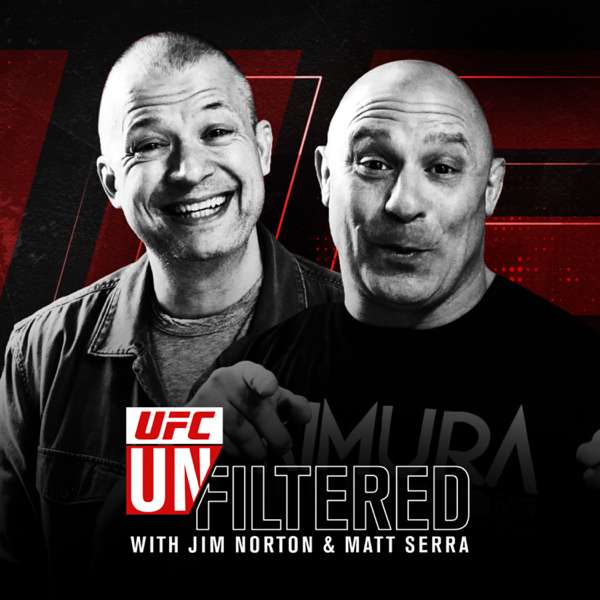
    UFC Unfiltered with Jim Norton and Matt Serra

    4

    UFC Unfiltered with Jim Norton and Matt Serra Government & Organizations
    Hang Up and Listen

    5

    Hang Up and Listen Professional
    The Jonah Keri Podcast

    6

    The Jonah Keri Podcast Professional
    footer-logo

    Contact Us

    Toll Free: 844-670-7747

    Links

    • Home
    • Top Charts
    • Networks
    • Apps
    • Independents Podcasts
    • Podcast Advertising
    • Podcast News
    • Contact Us
    • About Us
    • Analytics & Insights

    Stay Connected

      Privacy, Terms of Use & Our Code of Ethics Protecting Content Creators Copyrights