TopPodcast.com
Menu
  • Home
  • Top Charts
  • Top Networks
  • Top Apps
  • Top Independents
  • Top Podfluencers
  • Top Picks
    • Top Business Podcasts
    • Top True Crime Podcasts
    • Top Finance Podcasts
    • Top Comedy Podcasts
    • Top Music Podcasts
    • Top Womens Podcasts
    • Top Kids Podcasts
    • Top Sports Podcasts
    • Top News Podcasts
    • Top Tech Podcasts
    • Top Crypto Podcasts
    • Top Entrepreneurial Podcasts
    • Top Fantasy Sports Podcasts
    • Top Political Podcasts
    • Top Science Podcasts
    • Top Self Help Podcasts
    • Top Sports Betting Podcasts
    • Top Stocks Podcasts
  • Podcast News
  • About Us
  • Podcast Advertising
  • Contact
Not in our directory?
Add Show Here
Podcast Equipment
Center

toppodcastlogoOur TOPPODCAST Picks

  • Comedy
  • Crypto
  • Sports
  • News
  • Politics
  • True Crime
  • Business
  • Finance

Follow Us

toppodcastlogoStay Connected

    View Top 200 Chart
    Back to Rankings Page
    Professional

    Finding Your Summit

    Mark Pattison is a former NFL player, entrepreneur, philanthropist and mountaineer who is now climbing the Seven Summits. Through his life’s journey, business, sports & charity work, Mark has been fortunate to meet some of the world’s most incredible people who share their stories of how they overcame obstacles to succeed and what their driving force was.

    Advertise
    • Apple Podcasts
    • Google Play
    • Spotify

    Latest Episodes:
    Hilaree Nelson is a world class adventurer, mountaineer & high altitude ski who has been the first woman to climb Mt Everest + Lhotse within Nov 20, 2020
    Show notes

    178: Hilaree Nelson: Professional Ski Mountaineer for North Face, National Geographic Live Speaker, and TNF Athlete Team Captain who has had over 40 expeditions and has been voted National Geographic person of the decade discusses how she evolved from someone who enjoyed mountaineering to making it the focal point of her professional life. Hilaree Nelson Hilaree Nelson talks about her hometown of Seattle and how it informed her appreciation of being outdoors. “Ironically, it took me leaving Seattle to find my way as a mountaineer and really discover what that was, and a sky mountaineer at that. I skied from a super young age at Stevens Pass in Washington. I skied at Crystal and I skied a few times at Baker. There are amazing mountain ranges surrounding Seattle, and a lot of people I know who discovered mountains have moved to Seattle for that reason.” On this episode of Finding Your Summit Podcast, we talk with Hilaree Nelson, Professional Ski Mountaineer for North Face, National Geographic Live Speaker, and TNF Athlete Team Captain about how she fell in love with climbing mountains. “I ended up leaving to go to Colorado to go to university. I think it was there that I first started going uphill with my skis instead of just downhill and really fell in love with it. But, I would say my real connection to wanting to do this for the rest of my life was after living in Cheminée in France, and experiencing the Alps and the history that they have. What You Will Learn: How has Hilaree Nelson transformed mountaineering from a passionate hobby into a successful career? “When I first started down this path I didn’t think it would actually be a career. I was working three different jobs. I was also a Hally Ski Guide. I was doing everything I could to make ends meet and really just following a passion, a love, something that I found myself to be really good at.” Where has Hilaree’s motivation for mountain climbing come from? “I wanted to see how far that could take me I guess, where I go, and sort of learning my physical and mental boundaries within the sport of ski mountaineering. As I progressed I had a lot of doors open for me, partly because I was a female in a fairly male-dminated world, the world of mountaineering in general.” How long did it take Hilaree Nelson to start going pro? “It probably wasn’t until I was 5, 6, 7, years into this path, I had a sponsorship from North Face that I started focusing solely on being a pro athlete in that regard and letting go of some of the other jobs and starting to make some money enough to support what I wanted to do, what I love to do.” What have been the elements of mountaineering that have excited Hilaree Nelson? “I found myself really drawn to really remote places. I have a really mathematical brain. So, places that really required a lot of logistical planning, places that despite the logistical planning things often were a mystery. Things would totally go awry and it was all about thinking on your feet. It was all about adjusting, adversity, all things that really go back to that initial experiential passion of knowing my boundaries, blasting through them. How can I do better? How can I be more? How can I do more? Ironically, a lot of those things weren’t even on the mountain. They were traveling to get to the mountain or traveling to get back.” How has she developed her strong, unflappable mindset? “I grew up in a very family-orientated way, a very protected sheltered home. I was the youngest. I had the big brother that looked out for me all of the time. I had the same group of friends that I played basketball with. That was a huge part of my life as a kid was playing basketball. I played basketball with the same group of girls from the age of 8 to 18. So, for me to step away from that and go out on my own to a state that I had never been to and didn’t know anyone there, and I immediately found friends that got me into rock climbing and ski touring. I think that the question mark that I always had about myself growing up was, I can do all of these things with all of this help and all of this familiarity. But, I want to see who I am when I am by myself and I am forging my own path.” Enjoy the Great Outdoors “No matter where you live, if you can just take 10 minutes in a day and find a park or find a way to walk around the block and be outside. It has always been my go-to place to scream at the top of my lungs or to let out whatever type of frustrations I have in life. Again, I am really fortunate to live here. But, gosh, I hope everyone can just find that space wherever you live to just manage the things that we are going through and just life in general.” Common Mistakes During this episode of Finding Your Summit Podcast, Hilaree Nelson mentions the most typical mistake that she notices amateur climbers making. “Part of these lines...


    Former Heisman Trophy winner, Danny Wuerffel was not only an amazing quarterback for Florida back in the day but has taken that same drive a Nov 13, 2020
    Show notes

    178: Danny Wuerffel: Former Heisman Trophy Winner and Executive Director of Desire Street Ministries shares his path to going from being an amazing quarterback in Florida and transformed that energetic drive and desire into making a meaningful impact in the lives of those less fortunate. Danny Wuerffel also is the force behind the Wuerffel Trophy which recognizes the top college player in the United States who is also involved in community service efforts. Danny Wuerffel Danny Wuerffel discusses growing up with his family in Florida as one of the top quarterback recruits. “I definitely have to thank my family and sort of the foundation of my parents. I remember being young winning something, bragging about it. My dad, I will never forget a look he gave me in fourth grade when he found out I was bragging in a sense. He was like, ‘That is not how we do things.’ So, there was this tension of always wanting to win. But at the same time trying to be humble about it and recognize that it is not all about you.” On this episode of Finding Your Summit Podcast, we talk with Danny Wuerffel, Former Heisman Trophy Winner and Executive Director of Desire Street Ministries, who also emphasizes the role his spiritual faith has had in his life. “A lot of my understanding of the world and not seeing yourself as the center comes from my faith, and there is a long line of Christian faith in my family. My dad was an Airforce Champlain, and a lot of other folks and families. So, a part of the way that we understand our faith is to live it in a way that really impacts other people. So, I think that was very foundational for me. At different points as I got older, kind of recognizing that and embracing it for myself.” What You Will Learn: Danny Wuerffel talks about how humility has continued to be important to himself and his family. “You never want to be around somebody who thinks that they are better than you are. My son is on a soccer team and there is a couple kids on the team that are really good. But, he just struggles because they walk around like they know they are good. So, he immediately doesn’t feel connected to them. So, I think the ability to be honest, and to be real, and share your own struggles, and to walk with people, and to listen, you know? I was going to write a book. It was kind of a joke. Sometimes when you are successful, it can stunt your growth as a human being.” Danny Wuerffel discusses getting involved in Desire Street Ministries as the executive director. “I was drafted by the Saints and I felt like I wanted to be a part of something to help people. So, I was kind of looking around and I didn’t have anything specific that I was looking for. Just a unique coincidence if you will, or perhaps divine intervention if you believe that led me to a small organization in the 9th Ward of New Orleans working in the Desire Housing Project called Desire Street Ministries. It was working with families and kids in the neighborhood trying to raise up leaders with the goal really, it sounds insane, but to help transform at one time the worst neighborhood in the country to a desirable, wonderful place to live.” What is the moment that pushed him towards the work that he does? “As I drove by these empty buildings, I saw a girl walk out with a doll, a little girl, and then I realised that she was living there. That ever so often in these projects you see an air conditioner and there were people living in these neighborhoods. My heart was broken. I definitely wanted to be a part of helping and making something better. So, Desire Street is very holistic. At the time we started an after school program and then we started a school. We had started building houses. We had started helping people get into jobs and businesses. We started a health clinic and a church.” How long has Danny Wuerffel been the director of Desire Street Ministries? “In the years since (Hurricane) Katrina, I became the director in 2005, and we moved our headquarters to Atlanta to expand. What we do now is we basically, instead of starting and running new Desire Streets, we found that there are already heroes living and working in neighborhoods all over the country. But, so often they don’t have the resources they need, the training, the support. So, rather than these heroes having an incredible effect on their neighborhood, they are often burning out or just hanging on.” How does Desire Street Ministries expand their reach? “Really what Desire Street does now is we partner with leaders to establish thriving and sustainable works in the inner city. Our new mission is to develop 20 sustainable ministries in the next five years and we are really excited about how that works and the things that we can do to support them.” African American Leaders Danny Wuerffel talks about being committed to work hand in hand with African American leaders...


    Derek Abby is the CEO and President of Project Recover. He is a badass Marine who combined his service with education to get his PhD in lea Nov 06, 2020
    Show notes

    176: Derek Abby: Former U.S. Marine with three deployments to Iraq and one deployment to Afghanistan and the President and CEO of Project Recover talks about making the transition from being a young military member at age 18 to the role that education has played in his current work in locating missing military members. Derek Abby How did Derek Abby deal with his parents divorcing early on in his life and his mother dying when he was only 13? “As a 13-year-old, you don’t usually deal with it very well. You don’t have the tools for it. There is no rule book you can read or anything like that, especially back then, and it was completely unexpected. My mom was there, healthy one day, and then had a brain aneurysm and was gone the following day. So, my life was turned upside down. I was 13, completely lost my rotor and sail, didn’t really know what direction I was going to go in. I ended up going and living with my aunt and uncle.” On this episode of Finding Your Summit Podcast, we talk with Derek Abby, Former U.S. Marine with three deployments to Iraq and one deployment to Afghanistan and the President and CEO of Project Recover about how he ended up joining the Marine Corp. “I never really had aspirations of joining the military. Although, when I was young I kind of looked up to men that had served in the military and they were these role models to me in some ways. In most ways they were fantasies because they weren’t really people to me. But, I ran away to the Marine Corp. Honestly, I needed a place to go.” What You Will Learn: Even though Derek Abby didn’t grow up dreaming about being a soldier, it looked like the best option to get his life situated for success. “I was looking at the military because it was an escape. It was something to get me out of where I was. I looked to the military, and I saw the Marine Corp., and honestly like so many young people, they had the best uniforms, and it seemed like the hardest. It seemed like the biggest challenge. I found myself in the recruiters office, and that was an easy sell. Not too long after that I was in boot camp.” What was going on in the world when Derek Abby joined the military? “There was another thing that was going on. When I signed up Saddam Hussein had crossed the border into Kuwait, and we were dealing with him with Desert Storm and Desert Shield. So, he invaded on August 2nd, and on August 30th was when I signed the papers. That was kind of the extra motivation, a way to prove myself, a way to go on and play my part, do something of value, really.” Derek Abby describes what his career trajectory in the Marine Corp. was like. “I was a successful young Marine and I invested in the Marine Corp. I truly gave my heart and soul to it. In turn they invested in me. So, I got an education. I ended up getting a commission and then was commissioned to Ground Officer, actually. All Marines have to go through a six-month school called the Basic School where you learned basic infantry tactics and company-level officer stuff. While I was there, I was selected for Flight School and ended up getting sent to Flight School and became a Marine Aviator.” What exactly is a Plank Holder in the military? “It is an original member. So, when they establish a unit, the very first people in that unit are considered ‘plank holders.’ It comes from the nautical tradition, the Navy tradition of the Marine Corp., the planks of the ships. I was part of the First Battalion, which is now the First Raider Battalion. It was First Marines Special Operations Battalion when it started, and the first Delta Company over there. I started as a First Battalion Air Officer while we were building out the battalion. Then when we started Delta Company I became the Air Officer for Delta Company, and ultimately the X of Delta Company and deployed to Afghanistan.” In what way did Derek Abby connect his education to his military experience? “I wanted to examine what was the thing that was causing all of this friction for military members when they are separating, and it turns out, for the most part, beyond injuries and things like that, both mental and physical injuries. It is these intangible pieces. So it is that perceived loss of identity and exploring what other identities you hold, having those intimate relationships that you gain and maintain through shared experience, through shared hardship. All of those things going on, deployment, depending on others. Same thing growing up as an athlete, committing your life to it. Then you step out of that system and now you have to find what that new legacy is going to be. What is that new impact or what is your new purpose?” Project Recover in Action Derek Abby defines what Project Recover is and the objectives that they have as part of their overall mission. “Project Recover is a non-profit organization and we search for Americans...


    Never Give Up, Never Quit... Army Staff Sergeant Travis Mills was sure that he would become another statistic when, during his third tour o Oct 30, 2020
    Show notes

    175: Travis Mills: Former U.S Army Staff Sergeant, President of Travis Mills Group, Travis Mills Foundation, New York Times Best-Selling Author, Veterans Advocate, and Public Speaker discusses his triumphant recovery and successful life after becoming an amputee during combat. Travis Mills Did today’s guest Travis Mills grow up with his glass-is-half-full positive mentality? “Yeah, I’m pretty sure my parents called it stubbornness. It got me in trouble a lot. But I’ve always been the same way that I am today, going forward with life after everything that happened to me. The best compliment that I get and the most organic one that they give me is, ‘Wow Travis. You are the same person. I didn’t think you were going to come out of it the same.” On this episode of Finding Your Summit Podcast, we talk with Travis Mills, Former U.S Army Staff Sergeant, President of Travis Mills Group, Travis Mills Foundation, New York Times Best-Selling Author, Veterans Advocate, and Public Speaker, about his unwavering desire to achieve his goals. “I was always on sports teams. So there was that camaraderie. You had to go that extra mile, and do that extra rep, and go the extra hour, and workouts, and things like that just to achieve the goal. How my motto came around, I was actually doing recovery at the hospital and the occupational therapist asked me if I wanted to take a break, and I said, ‘I am never going to stop. I’m never going to quit.’ She said, ‘That was a silly question, wasn’t it?,’ and I said, ‘Yes it was.” What You Will Learn: What was the drive for Travis Mills to go into the military? “I realised I didn’t like school. It wasn’t for me. My dad was in the Army. My grandpa was in the Navy. A lot of my family members were in the service, and I thought, let me take a look at this. Then I got talking more and more, and I got really excited about the idea of the Army and the Airborne Infantry, and the signing bonus, and all of that. I had bills to pay. I also had to try something different. I didn’t want to live at home. No offense to my parents. I love them very much. But I want to get out and do my own thing.” What is the whole objective when you sign up for the Airborne Infantry? “Airbourne was started in World War II. It was you can basically be anywhere in the world in 18 hours. We are supposed to be anywhere in the world and then you are supposed to be ready to jump into combat so that you can get behind enemy lines or do whatever and jump, and hit the ground running and they called it Light Infantry because you are not in tanks. You are not in vehicles. You jump in with a rucksack and your weapon and you just go into the battle.” Travis Mills explains what happened on the day of his accident in Afghanistan. “I set my backpack down on an IED. It was about a 120-pound backpack and it set off the bomb and when it went off it took my right arm and right leg off automatically.They actually never found those pieces of me. Then the left side of my body, my left arm and my left leg were kind of there, and I don’t know. I got thrown to the ground, rolled over, and saw the aftermath of what happened. My metic and my platoon sergeant started working on me and I told them don’t worry about it. You are not going to save me. They went ahead and worked on me.” What was going through Travis Mills’ mind after sustaining his injury? “Actually I watched a lot of war movies. I still do to this day. I love them. The only thing I saw in my head was the movie Saving Private Ryan, when the medic gets shot in the stomach and he cries out for his mom and he begs not to die, and says, ‘I don’t want to die.’ He starts yelling for his mom, you know? I’m like, my guys will never see that. I always exuded confidence. I led from the front. never showed fear. So, when I got blown up, I was just like, it is what it is. Whatever happens, happens. I realised, nothing I was going to do right in that moment was going to change the outcome of what was going to happen.” What “The only reason I woke up in the middle of the night sweating is because I had the meat sweats from smoking meat. I ate too much. No, I don’t suffer from PTSD. People always wonder if I am lying or how can that be. I have shot people. I have killed people. I have blown people up with grenades. I have watched buddies die. I couldn’t tell you why it hasn’t affected me. It doesn’t bother me. I think the more crude sense of humor is, the first thing you feel when you shoot somebody is the recoil of your rifle, and that is just kind of how it is. I was there to do a job. I did my job, and I can separate the two. I can separate Afghanistan from my home life. I have a wife and two kids, and life goes on.” Life After the Injury What “Nope, I had 19 months recovery at Walter Reade, and then they...


    Josh Pelland is a former British Marine Commando and Special Opps who lived a life of adventure until he took a 65 foot fall, became paralyz Oct 23, 2020
    Show notes

    174: Josh Pelland: Professional Speaker and previously a Climber, Adventurer, ParaAthlete, and in Britain’s Elite Royal Marine Commando and Special Ops talks about what life has been like overcoming the struggles in becoming a commando and then overcoming a life-altering 65-foot fall. Josh Pelland How did Josh Pelland end up in Britain’s Elite Royal Marine Commando and Special Ops? “I grew up in Canada, lived all over Canada. Eighteen I went across and just took a big bite out of adventure and joined the Royal Marines. Main reason for that was the challenge. They have the longest basic training out of any NATO country, eight months. The end product, you know, was to close with and kill the enemy in any environment around the world. All of that sort of stuff I was enthralled with.” On this episode of Finding Your Summit Podcast, we talk with Josh Pelland, Professional Speaker and previously a Climber, Adventurer, ParaAthlete, and in Britain’s Elite Royal Marine Commando and Special Ops talks about how his sense of adventure began. “Sixteen I went over to Kenya with family friends of ours that were originally from there. I was pretty grateful for that you know and my family being so free to kind of roam around. And they let me cut about by myself at times when I was there. So, I went into ghettos, slums I met and befriended local lads who took me around to their families in the cities in small rural villages. All of these crazy places.” What You Will Learn: Josh Pelland sets the scene for a suspenseful situation that occurred when he was heading to the Massai Mara Game Reserve to see the elephants and giraffes in a taxi: “There was all of these goats in the road and they belong to the Massai. They were quite shy, these herders, nomadic people, tribesmen. It was really rare to see them and they would run away and hide behind their huts or whatever, the bushes. We didn’t really see any of these guys. But when we pulled down into this wati, some of the goats kind of split like the Red Sea and the driver is honking his horn and all of this. As he is pulling up from the right side of the wati to get out of it, I saw this guy from the corner of my eye sprinting across the top and down into the front of the vehicle yelling and screaming and he had his sword out. Then more men came.” What was running through Josh’s mind when he was mixed up in this life-threatening event? “There is this language barrier even between the African people I was with and this guy picked up this goat that was in the road, that I could gather at that time was that we hit this goat or something and they were obviously really mad about it. This is their livelihood. Oh no, they are going to extort us for money or they are going to kill this guy or whatever. Then out of nowhere, it just kind of all stopped, and all of the guys that were ahead of the vehicle holding these stones, maybe about 20-30 guys all just started laughing and dusted off the driver. He was visibly shaken. These just threw him back in the vehicle and off we went.” Was there anything that he learned from this intense experience in Kenya that informed his life later? “That whole time in Kenya and the freedom that I have and really seeing the beauty and the brutality of the world at such a young age, when I got put back into school amongst my peers I felt very different from them, a lot more mature. In a sense, I could hold my own already now through these experiences. It just seemed very boring to me, the world that I had come back to, home in Canada, and I knew that there was so much more out there already, and I experienced a huge bite of it and I just wanted more. That kind of thrust me into that adventure.” What did Josh Pelland’s time in the Special Ops teach him? “It really taught me to face my fear with courage. So, recognizing the fear within, yet still moving forward, embracing that adversity, especially in that environment and the places I went and the people I worked with. It was a tough environment and I had to embrace it. The cold, the wet, the hunger, that fear. Also, having cheerfulness in that adversity. That is one of the key things is just laugh at whatever is coming down the pike, or that you know is going to come. Dark humor within that environment is a big thing.” After moving out of the Special Ops and into the private sector helping some of the maritime companies down in Somalia, did he have any difficult run-ins? “Our main thing was to build that deterrent. We did that by running rows and rows and rows of razor wire along the outside, having hoses going. So there were times when we did have skiffs approaching. Whether they were there to put in an attack or just probing where we would get weapons out and kind of have a show of force. That abruptly got them to spin around and turn around. We gave the crews, which some of them were very fearful as they had...


    Butch is a former 11 year Army Apache helicopter pilot who helped to protect the ground forces in Iraq and Afghanistan. He went from the Ba Oct 16, 2020
    Show notes

    On this episode of Finding Your Summit Podcast, we talk with Butch Whiting, CEO of Kryptek Outdoor Group, talks about his grandfather’s influence in his pursuit not just the military, but also his education


    Tom Arnold is an American actor with over 100+ movies and TV shows in addition to working with the USO whom Bob Hope exposed him to years ag Oct 09, 2020
    Show notes

    On this episode of Finding Your Summit Podcast, we talk with Tom Arnold, actor and comedian.


    Joe is a former NFL player that after 8 years decided to retire, give away all this stuff, buy a Van, get a dog named Freedom and got hit th Oct 02, 2020
    Show notes

    On this episode of Finding Your Summit Podcast, we talk with Joe Hawley, Former NFL Football Player with the Atlanta Falcons and Tampa Bay Buccaneers, Founder The Hart Collective and Man Van Dog Blog. Joe Hawley shares what he learned after playing for two NFL teams.


    MJ was one of the first venture capitalist in Silicon Valley. What a resilient story of overcoming the odds of being a woman in a men-domina Sep 25, 2020
    Show notes

    170: MJ Elmore: Angel Investor at Broadway Angels, Advisor, Limited Partner, and Former General Partner at Institutional Venture Partners (IVP), and Fellow at Stanford Distinguished Careers Institute talks about rising up to excellence as a woman in the overwhelming male investment industry. MJ Elmore MJ Elmore discusses how growing up, her older sister, who also attended Purdue University, was an early mentor figure for her. “In my family, we were five kids. My dad was a school teacher, and the likelihood was that we were going to go to the school at Indiana State University, not to Purdue. My sister sort of blaze the trail of no, I’m going to go away to school. She saved her money and worked during high school and did that, and I sort of thought, I can do that too. So she was the one who motivated me to go to Purdue and earn my way through college.” On this episode of Finding Your Summit Podcast, we talk with MJ Elmore, Angel Investor at Broadway Angels, Advisor, Limited Partner, and Former General Partner at Institutional Venture Partners (IVP), and Fellow at Stanford Distinguished Careers Institute who shares insight into her journey into the prestigious Stanford University. “When I first got out of Purdue, I worked for Hallmark cards in Kansas City, Missouri, which was a cool experience, and then I moved to California in 1977 and began working for Intel. I was going to business school at night at Santa Clara and not finding that a great experience and got the opportunity to go full-time to Stanford to get my MBA, and that was in 1980.” What You Will Learn: At what point in time did MJ Elmore start working for IVP? “I had been in marketing at Intel, and I really expected after I got my MBA, I would go back into marketing in Silicon Valley. But along the way, there was sort of a booming time for venture capital firms. They were really growing, really looking for more personnel. I was one of the few people in my class at Stanford who had Silicon Valley tech experience. So, since most venture companies pursue those kinds of investments, I got some interviews.” MJ Elmore explains what makes a company typically do better business from an investment standpoint than others in their space. “We were really looking for ten times our money, and that would have been considered a hit. That was our goal, ten times our money in any one deal. So, then if you make ten investments, what you hope is that 3 of them make ten times your money, another 3 or 4 make five times your money or 2-5 times, or the rest of them return the money or lose. We have a saying, ‘you can only lose all your money,’ which sounds like a crazy thing to say. But if you think about it, if you have ten deals and one of them, you lost all of your money, but the other ones return somewhere between 2-10 times your money you didn’t really care you didn’t really care that you lost all of your money.” How did she work her way up into being a partner one year after she joined and not just a worker? “We didn’t really have a lot of associates in those days. We were really just a group of partners. But in terms of how I made my way, he and I hired everybody else in the firm. Some of those people who we hired, well, they were all men, and a lot of them were more older than me and more senior than me and maybe even had a bigger equity stake than I did. It was an interesting position, but I was still trying to find my way. I was still a newbie in the venture business. I was in my mid-20s.” What was it like for MJ Elmore being the only woman partner? “The way you become successful in a venture partnership is to make your partners a lot of money. If you make good investments, they like you a lot. My mode was to kind of try to find great investments, and so it was going to be that the success would be the great equalizer for them to accept me, and truly I think they actually didn’t think of me that much as a woman. I had some of my partners say after they read the Alpha Girl book, they were like, and I think one of them even says this in the book, ‘MJ, I just thought you were one of the guys.’ And he meant that in a good way.” What does MJ Elmore look for in companies with her over 38 years of experience? “What problem are you trying to solve? How big is the problem? How are you going to reach these people? I tended to focus on those kinds of marketing things. Is there a real market here? Will the dogs eat the dog food? What proof do you have that there is a market? How big is the market? How are you going to reach the customer?” Mentors for Women In today’s environment, is MJ Elmore seeing more women coming to the table feeling more empowered? “There has been a big push over the last few years. There is an organization that was formed called All Raise, and it was a group of women, some of the younger women in the venture business. It...


    Andrew Hughes has been chasing mountains around the world in his attempt to climb the Seven Summits. Despite being pushed back on a few of h Sep 18, 2020
    Show notes

    On this episode of Finding Your Summit Podcast, we talk with Andrew Hughes, Mountain Climber, Explorer, Writer, and Speaker. Like Mark Pattison, Andrew Hughes was also all set to travel to Mount Everest until the COVID-19 pandemic disrupted the world. Andrew talks about the adversity that he overcame.


    Previous 1 13 14 15 16 17 33 Next

    Related Podcasts

    The Bill Simmons Podcast

    1

    The Bill Simmons Podcast Professional
    The Herd with Colin Cowherd – iHeartPodcasts and The Volume

    2

    The Herd with Colin Cowherd – iHeartPodcasts and The Volume Basketball
    Road Trippin’ Show

    3

    Road Trippin’ Show Basketball
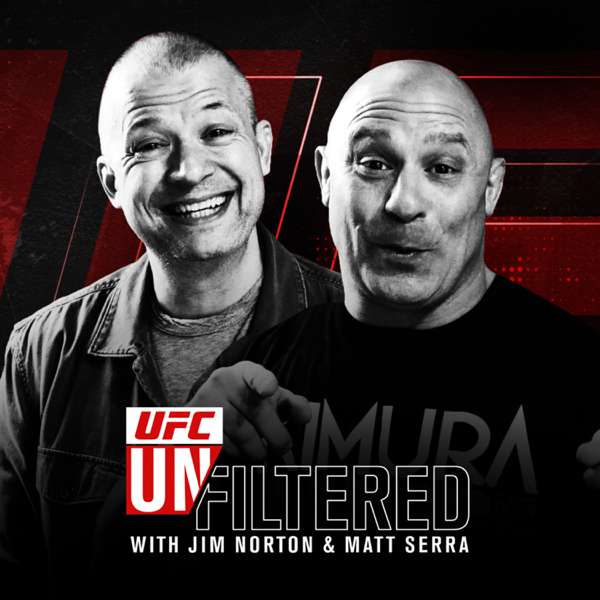
    UFC Unfiltered with Jim Norton and Matt Serra

    4

    UFC Unfiltered with Jim Norton and Matt Serra Government & Organizations
    Hang Up and Listen

    5

    Hang Up and Listen Professional
    The Jonah Keri Podcast

    6

    The Jonah Keri Podcast Professional
    footer-logo

    Contact Us

    Toll Free: 844-670-7747

    Links

    • Home
    • Top Charts
    • Networks
    • Apps
    • Independents Podcasts
    • Podcast Advertising
    • Podcast News
    • Contact Us
    • About Us
    • Analytics & Insights

    Stay Connected

      Privacy, Terms of Use & Our Code of Ethics Protecting Content Creators Copyrights