TopPodcast.com
Menu
  • Home
  • Top Charts
  • Top Networks
  • Top Apps
  • Top Independents
  • Top Podfluencers
  • Top Picks
    • Top Business Podcasts
    • Top True Crime Podcasts
    • Top Finance Podcasts
    • Top Comedy Podcasts
    • Top Music Podcasts
    • Top Womens Podcasts
    • Top Kids Podcasts
    • Top Sports Podcasts
    • Top News Podcasts
    • Top Tech Podcasts
    • Top Crypto Podcasts
    • Top Entrepreneurial Podcasts
    • Top Fantasy Sports Podcasts
    • Top Political Podcasts
    • Top Science Podcasts
    • Top Self Help Podcasts
    • Top Sports Betting Podcasts
    • Top Stocks Podcasts
  • Podcast News
  • About Us
  • Podcast Advertising
  • Contact
Not in our directory?
Add Show Here
Podcast Equipment
Center

toppodcastlogoOur TOPPODCAST Picks

  • Comedy
  • Crypto
  • Sports
  • News
  • Politics
  • True Crime
  • Business
  • Finance

Follow Us

toppodcastlogoStay Connected

    View Top 200 Chart
    Back to Rankings Page
    Christianity

    Discerning Hearts – Catholic Podcasts

    Trusted Catholic spirituality podcasts offering spiritual formation, prayer, and guidance for the interior life.

    Advertise

    Copyright: Discerning Hearts © 2010-2020 All Rights Reserved.

    • Apple Podcasts
    • Google Play
    • Spotify

    Latest Episodes:
    Exaltation of the Holy Cross – Building a Kingdom of Love with Msgr. John Esseff – Discerning Hearts Podcast Sep 13, 2026
    Show notes

    Exaltation of the Holy Cross – Building a Kingdom of Love with Msgr. John Esseff

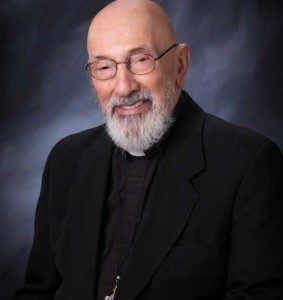
    Msgr. John Esseff reflects on the Feast of the Exaltation of the Holy Cross. He explains how, for the first centuries of Christianity, the cross was not the central symbol of the faith, since crucifixion was still a horrifying reality in the Roman world. Instead, the fish served as the identifying sign. Over time, the Church came to embrace the cross as the true sign of salvation, recognizing that Jesus’ death was not merely an execution but a free offering of His life. Msgr. Esseff vividly describes the brutality of scourging and crucifixion, noting the suffering Christ endured in body and spirit. Yet, the mystery of His death lies not only in the horror of the method but in His triumph over death itself. By laying down His life, Jesus revealed that the Father’s will—not human power—was the reason for His sacrifice.

    Msgr. Esseff then connects the cross to baptism, teaching that in baptism we are joined to Christ’s suffering, death, and resurrection. Death no longer has mastery over the baptized, for we share in His victory. The cross, once a symbol of shame, becomes a sign of triumph and eternal life. Drawing on the Old Testament account of the bronze serpent raised by Moses, he highlights how Christ’s lifting up on the cross brings healing and redemption. The sign of the cross itself carries deep spiritual power in prayer, blessings, and daily life. For this reason, he encourages keeping a crucifix present in homes and reverencing it as the sign of our salvation, union with Christ, and assurance of eternal life.

    Discerning Hearts Reflection Questions

    1. How does understanding the brutality of crucifixion deepen my appreciation for Christ’s sacrifice on the cross?
    2. In what ways does baptism connect me personally to Jesus’ suffering, death, and resurrection?
    3. How do I experience freedom from the fear of death through Christ’s victory over it?
    4. When I make the sign of the cross, do I truly recognize its power as a proclamation of redemption?
    5. How can I allow my daily sufferings to be united with Christ’s passion for the sake of my salvation and the salvation of others?
    6. Do I keep the cross present in my home and heart as a reminder of Christ’s triumph and my eternal destiny?
    7. How does the image of the bronze serpent lifted up by Moses help me understand the meaning of Christ lifted on the cross?
    8. In what ways am I called to witness to the cross publicly, even when it may cause discomfort or hesitation?

    Msgr. John A. Esseff is a Roman Catholic priest in the Diocese of Scranton. He served as a retreat director and confessor to St. Teresa of Calcutta. He continues to offer direction and retreats for the sisters of the missionaries of charity around the world. Msgr. Esseff encountered St. Padre Pio, who would become a spiritual father to him. He has lived in areas around the world, serving in the Pontifical missions, a Catholic organization established by Pope St. John Paul II to bring the Good News to the world especially to the poor. He continues to serve as a retreat leader and director to bishops, priests and sisters and seminarians, and other religious leaders.

    The post Exaltation of the Holy Cross – Building a Kingdom of Love with Msgr. John Esseff – Discerning Hearts Podcast appeared first on Discerning Hearts Catholic Podcasts.


    St. Hildegard von Bingen Novena – Day 6 Sep 13, 2026
    Show notes


    Day 6

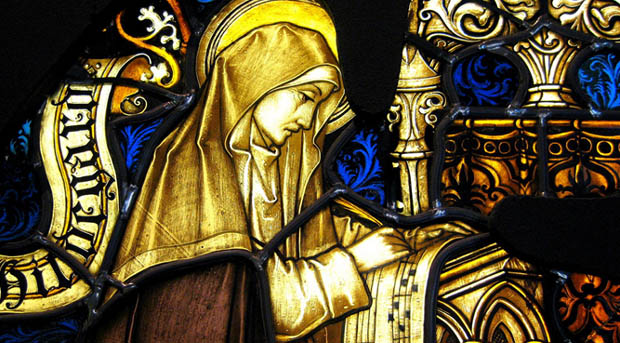
    Museum - Hildegard von Bingen

    St. Hildegard you have said:

    Sometimes when we hear a song we breathe deeply and sigh. This reminds the prophet that the soul arises from heavenly harmony. In thinking about this, he was aware that the soul itself has something in itself of this music…

    O glorious St. Hildegard, abbess of the order of St. Benedict and doctor of the universal Church, we now join in the prayer you taught us….

    God is the foundation for everything
    This God undertakes, God gives.
    Such that nothing that is necessary for life is lacking.
    Now humankind needs a body that at all times honors and praises God.
    This body is supported in every way through the earth.
    Thus the earth glorifies the power of God.

    O God, by whose grace your servant Hildegard, kindled with the Fire of your love, became a burning and shining light in your Church: Grant that we also may be aflame with the spirit of love and discipline, and walk before you as children of light; through Jesus Christ our Lord, who lives and reigns with you, in the unity of the Holy Spirit, one God, now and forever. Amen.
    St. Hildegard von Bingen, pray for us

    For the Discerning Hearts 9-Day Novena to St. Hildegard von Bingen page

    Musical excerpt: Ave generosa, by Hildegard von Bingen (1089 – 1179)
    Laurence Ewashko, conductor
    30 January 2000, St. Matthew’s Church, Ottawa, Ontario, Canada
    http://www.cantatasingersottawa.ca/listen.php

    The post St. Hildegard von Bingen Novena – Day 6 appeared first on Discerning Hearts Catholic Podcasts.


    Sunday of the Twenty-Fourth Week in Ordinary Time – A Time of Lectio Divina for the Discerning Heart Podcast Sep 13, 2026
    Show notes

    Sunday of the Twenty-Fourth Week in Ordinary Time – A Time of Lectio Divina for the Discerning Heart Podcast

    As you begin, take a deep breath and exhale slowly. For at least the next few moments, surrender all the cares and concerns of this day to the Lord.

    Say slowly from your heart “Jesus, I Trust In You…You Take Over”

    Become aware that He is with you, looking upon you with love, wanting to be heard deep within in your heart…

    From the Holy Gospel According to St. Matthew 18:21-35

    Peter went up to Jesus and said, ‘Lord, how often must I forgive my brother if he wrongs me? As often as seven times?’ Jesus answered, ‘Not seven, I tell you, but seventy-seven times.
    ‘And so the kingdom of heaven may be compared to a king who decided to settle his accounts with his servants. When the reckoning began, they brought him a man who owed ten thousand talents; but he had no means of paying, so his master gave orders that he should be sold, together with his wife and children and all his possessions, to meet the debt. At this, the servant threw himself down at his master’s feet. “Give me time” he said “and I will pay the whole sum.” And the servant’s master felt so sorry for him that he let him go and cancelled the debt. Now as this servant went out, he happened to meet a fellow servant who owed him one hundred denarii; and he seized him by the throat and began to throttle him. “Pay what you owe me” he said. His fellow servant fell at his feet and implored him, saying, “Give me time and I will pay you.” But the other would not agree; on the contrary, he had him thrown into prison till he should pay the debt. His fellow servants were deeply distressed when they saw what had happened, and they went to their master and reported the whole affair to him. Then the master sent for him. “You wicked servant,” he said “I cancelled all that debt of yours when you appealed to me. Were you not bound, then, to have pity on your fellow servant just as I had pity on you?” And in his anger the master handed him over to the torturers till he should pay all his debt. And that is how my heavenly Father will deal with you unless you each forgive your brother from your heart.’

    What word made this passage come alive for you?

    What did you sense the Lord saying to you?

    Once more give the Lord an opportunity to speak to you:

    Peter went up to Jesus and said, ‘Lord, how often must I forgive my brother if he wrongs me? As often as seven times?’ Jesus answered, ‘Not seven, I tell you, but seventy-seven times.
    ‘And so the kingdom of heaven may be compared to a king who decided to settle his accounts with his servants. When the reckoning began, they brought him a man who owed ten thousand talents; but he had no means of paying, so his master gave orders that he should be sold, together with his wife and children and all his possessions, to meet the debt. At this, the servant threw himself down at his master’s feet. “Give me time” he said “and I will pay the whole sum.” And the servant’s master felt so sorry for him that he let him go and cancelled the debt. Now as this servant went out, he happened to meet a fellow servant who owed him one hundred denarii; and he seized him by the throat and began to throttle him. “Pay what you owe me” he said. His fellow servant fell at his feet and implored him, saying, “Give me time and I will pay you.” But the other would not agree; on the contrary, he had him thrown into prison till he should pay the debt. His fellow servants were deeply distressed when they saw what had happened, and they went to their master and reported the whole affair to him. Then the master sent for him. “You wicked servant,” he said “I cancelled all that debt of yours when you appealed to me. Were you not bound, then, to have pity on your fellow servant just as I had pity on you?” And in his anger the master handed him over to the torturers till he should pay all his debt. And that is how my heavenly Father will deal with you unless you each forgive your brother from your heart.’

    What did your heart feel as you listened?

    What did you sense the Lord saying to you?

    Once more, through Him, with Him and in Him listen to the Word:

    Peter went up to Jesus and said, ‘Lord, how often must I forgive my brother if he wrongs me? As often as seven times?’ Jesus answered, ‘Not seven, I tell you, but seventy-seven times.
    ‘And so the kingdom of heaven may be compared to a king who decided to settle his accounts with his servants. When the reckoning began, they brought him a man who owed ten thousand talents; but he had no means of paying, so his master gave orders that he should be sold, together with his wife and children and all his possessions, to meet the debt. At this, the servant threw himself down at his master’s feet. “Give me time” he said “and I will pay the whole sum.” And the servant’s master felt so sorry for him that he let him go and cancelled the debt. Now as this servant went out, he happened to meet a fellow servant who owed him one hundred denarii; and he seized him by the throat and began to throttle him. “Pay what you owe me” he said. His fellow servant fell at his feet and implored him, saying, “Give me time and I will pay you.” But the other would not agree; on the contrary, he had him thrown into prison till he should pay the debt. His fellow servants were deeply distressed when they saw what had happened, and they went to their master and reported the whole affair to him. Then the master sent for him. “You wicked servant,” he said “I cancelled all that debt of yours when you appealed to me. Were you not bound, then, to have pity on your fellow servant just as I had pity on you?” And in his anger the master handed him over to the torturers till he should pay all his debt. And that is how my heavenly Father will deal with you unless you each forgive your brother from your heart.’

    What touched your heart in this time of prayer?

    What did your heart feel as you prayed?

    What do you hope to carry with you from this time with the Lord?

    Our Father, who art in heaven,

    hallowed be thy name.

    Thy kingdom come.

    Thy will be done on earth, as it is in heaven.

    Give us this day our daily bread,

    and forgive us our trespasses,

    as we forgive those who trespass against us,

    and lead us not into temptation,

    but deliver us from evil.

    Amen

    Excerpt from THE JERUSALEM BIBLE, copyright (c) 1966 by Darton, Longman & Todd, Ltd. and Doubleday, a division of Penguin Random House, Inc. Reprinted by Permission.

    The post Sunday of the Twenty-Fourth Week in Ordinary Time – A Time of Lectio Divina for the Discerning Heart Podcast appeared first on Discerning Hearts Catholic Podcasts.


    St. Hildegard von Bingen Novena – Day 5 Sep 12, 2026
    Show notes


    Day 5

    St. Hildegard you have said:hildegard

    Dare to declare who you are. It is not far from the shores of silence to the boundaries of speech. The path is not long, but the way is deep. You must not only walk there, you must be prepared to leap.

    The mystery of God hugs you in its all-encompassing arms.

    O glorious St. Hildegard, abbess of the order of St. Benedict and doctor of the universal Church, we now join in the prayer you taught us….

    God is the foundation for everything
    This God undertakes, God gives.
    Such that nothing that is necessary for life is lacking.
    Now humankind needs a body that at all times honors and praises God.
    This body is supported in every way through the earth.
    Thus the earth glorifies the power of God.

    O God, by whose grace your servant Hildegard, kindled with the Fire of your love, became a burning and shining light in your Church: Grant that we also may be aflame with the spirit of love and discipline, and walk before you as children of light; through Jesus Christ our Lord, who lives and reigns with you, in the unity of the Holy Spirit, one God, now and forever. Amen.
    St. Hildegard von Bingen, pray for us

    For the Discerning Hearts 9-Day Novena to St. Hildegard von Bingen page

    Musical excerpt: Ave generosa, by Hildegard von Bingen (1089 – 1179)
    Laurence Ewashko, conductor
    30 January 2000, St. Matthew’s Church, Ottawa, Ontario, Canada
    http://www.cantatasingersottawa.ca/listen.php

    The post St. Hildegard von Bingen Novena – Day 5 appeared first on Discerning Hearts Catholic Podcasts.


    Saturday of the Twenty-Third Week in Ordinary Time – A Time of Lectio Divina for the Discerning Heart Podcast Sep 12, 2026
    Show notes


    Saturday of the Twenty-Third Week in Ordinary Time – A Time of Lectio Divina for the Discerning Heart Podcast

    As you begin, take a deep breath and exhale slowly. For at least the next few moments, surrender all the cares and concerns of this day to the Lord.

    Say slowly from your heart “Jesus, I Trust In You…You Take Over”

    Become aware that He is with you, looking upon you with love, wanting to be heard deep within in your heart…

    From the Holy Gospel According to St. Luke 6:43-49

    Jesus said to his disciples:
    ‘There is no sound tree that produces rotten fruit, nor again a rotten tree that produces sound fruit. For every tree can be told by its own fruit: people do not pick figs from thorns, nor gather grapes from brambles. A good man draws what is good from the store of goodness in his heart; a bad man draws what is bad from the store of badness. For a man’s words flow out of what fills his heart.
    ‘Why do you call me, “Lord, Lord” and not do what I say?
    ‘Everyone who comes to me and listens to my words and acts on them – I will show you what he is like. He is like the man who when he built his house dug, and dug deep, and laid the foundations on rock; when the river was in flood it bore down on that house but could not shake it, it was so well built. But the one who listens and does nothing is like the man who built his house on soil, with no foundations: as soon as the river bore down on it, it collapsed; and what a ruin that house became!’

    What word made this passage come alive for you?

    What did you sense the Lord saying to you?

    Once more give the Lord an opportunity to speak to you:

    Jesus said to his disciples:
    ‘There is no sound tree that produces rotten fruit, nor again a rotten tree that produces sound fruit. For every tree can be told by its own fruit: people do not pick figs from thorns, nor gather grapes from brambles. A good man draws what is good from the store of goodness in his heart; a bad man draws what is bad from the store of badness. For a man’s words flow out of what fills his heart.
    ‘Why do you call me, “Lord, Lord” and not do what I say?
    ‘Everyone who comes to me and listens to my words and acts on them – I will show you what he is like. He is like the man who when he built his house dug, and dug deep, and laid the foundations on rock; when the river was in flood it bore down on that house but could not shake it, it was so well built. But the one who listens and does nothing is like the man who built his house on soil, with no foundations: as soon as the river bore down on it, it collapsed; and what a ruin that house became!’

    What did your heart feel as you listened?

    What did you sense the Lord saying to you?

    Once more, through Him, with Him and in Him listen to the Word:

    Jesus said to his disciples:
    ‘There is no sound tree that produces rotten fruit, nor again a rotten tree that produces sound fruit. For every tree can be told by its own fruit: people do not pick figs from thorns, nor gather grapes from brambles. A good man draws what is good from the store of goodness in his heart; a bad man draws what is bad from the store of badness. For a man’s words flow out of what fills his heart.
    ‘Why do you call me, “Lord, Lord” and not do what I say?
    ‘Everyone who comes to me and listens to my words and acts on them – I will show you what he is like. He is like the man who when he built his house dug, and dug deep, and laid the foundations on rock; when the river was in flood it bore down on that house but could not shake it, it was so well built. But the one who listens and does nothing is like the man who built his house on soil, with no foundations: as soon as the river bore down on it, it collapsed; and what a ruin that house became!’

    What touched your heart in this time of prayer?

    What did your heart feel as you prayed?

    What do you hope to carry with you from this time with the Lord?

    Our Father, who art in heaven,

    hallowed be thy name.

    Thy kingdom come.

    Thy will be done on earth, as it is in heaven.

    Give us this day our daily bread,

    and forgive us our trespasses,

    as we forgive those who trespass against us,

    and lead us not into temptation,

    but deliver us from evil.

    Amen

    Excerpt from THE JERUSALEM BIBLE, copyright (c) 1966 by Darton, Longman & Todd, Ltd. and Doubleday, a division of Penguin Random House, Inc. Reprinted by Permission.

    The post Saturday of the Twenty-Third Week in Ordinary Time – A Time of Lectio Divina for the Discerning Heart Podcast appeared first on Discerning Hearts Catholic Podcasts.


    IP#509 Dr. Robert D. Enright – Forgiving as Unity with Christ on Inside the Pages with Kris McGregor – Discerning Hearts Podcast Sep 11, 2026
    Show notes


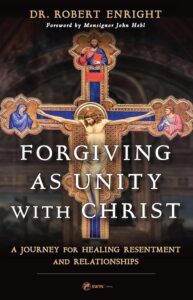
    Dr. Robert D. Enright – Forgiving as Unity with Christ on Inside the Pages with Kris McGregor

    Dr. Robert Enright speaks with Kris McGregor about his book Forgiving as Unity with Christ: A Journey for Healing, Resentment, and Relationships. He shares how an epiphany in 1985 redirected his academic career toward the study of forgiveness, which had previously been neglected in psychological research. Forgiveness, as a moral virtue, can transform the heart by healing the effects of injustice such as anger, resentment, and mistrust. Drawing from Aristotle and Aquinas, forgiveness does not excuse wrongdoing, demand forgetfulness, require reconciliation, or negate the pursuit of justice. Rather, it involves offering goodness to one who has acted unfairly, allowing a person to reclaim peace and dignity while also maintaining boundaries and seeking fairness where needed.

    Dr. Enright outlines forgiveness as a deliberate, grace-filled path that must often be walked slowly, with self-awareness and even journaling. He discusses its spiritual dimensions, particularly its unity with Christ’s suffering and love on the cross, which brings healing not only to the individual but potentially to the offender and their relationship. He touches on the need for forgiveness education, especially within Catholic contexts, to help children and adults alike cope with life’s inevitable wounds. Dr. Enright also speaks on self-forgiveness, highlighting its importance in embracing one’s worth before God, especially through confession and sincere restitution. His research in diverse settings—from survivors of incest to prison inmates—demonstrates the transformative power of forgiveness on emotional, relational, and even physical well-being.

    Discerning Hearts Reflection Questions:

    1. How does unhealed resentment affect your relationship with God and others?
    2. In what areas of your life might God be inviting you to forgive, even if the other person hasn’t repented?
    3. How can uniting your suffering with Christ on the cross transform your experience of injustice?
    4. Are there ways you’ve misunderstood forgiveness—as excusing, forgetting, or reconciling—that need to be corrected?
    5. How might your pursuit of justice be more Christ-like if it flows from a forgiving heart?
    6. Who in your life do you need to forgive not just for their sake, but for your own healing and freedom?
    7. How do you see the Sacrament of Reconciliation supporting both seeking and offering forgiveness?
    8. What role does prayer and grace play in your ability to forgive someone who deeply wounded you?
    9. How can cultivating forgiveness in your family or community reflect the mercy of Christ more fully?
    10. In what ways have you struggled with self-forgiveness, and how can God’s mercy reshape your self-understanding?

    From the book’s description:

    Dr. Robert D. Enright, founder of the International Forgiveness Institute, invites you to travel with him down the road from alienation to forgiveness to possible reconciliation. His cathartic exercises will enliven your relationship with Jesus and provide a healing balm that will deepen your empathy and dispose you to forgiving others.

    Similar to The Imitation of Christ, this work is divided into three books comprising short chapters with brief points to consider. The first book lays out forgiveness in general and includes biblical stories of forgiveness; the second approaches forgiveness from the Catholic perspective, including loving others through our intimate connection with Christ and seeking forgiveness ourselves; the third discusses skeptical views of forgiveness as well as self-forgiveness, forgiveness within communities, and what legacy you will leave behind.

    These powerful exercises will help you understand what forgiveness actually is and why it is beneficial, including scientific studies of those who were suffering physically, psychologically, or emotionally and experienced healing.

    You will learn answers to soul-searching questions and discover:

    • How to embrace your littleness with the humility of a beloved child of God
    • The Process Model of Forgiveness to aid you in becoming “forgivingly fit”
    • Seven forgiveness lessons in the Old Testament story of Joseph and his brothers
    • The three Rs that help complete the triangle of forgiveness and rebuild trust
    • Seven aspects of “forgiveness as redemptive suffering”
    • The importance of forgiveness in God’s design for our peace and joy

    As you contemplate God’s love for you in these extraordinary pages, you will grow deeper in your faith through journaling prompts and transformative meditations, including penetrating questions to guide you on your path to freedom. The book has been given an imprimatur by Bishop Donald Hying of the Catholic Diocese of Madison, Wisconsin.

    About the Author

    Dr. Robert Enright is a member of the Catholic Church. He is a licensed psychologist and the founder of the International Forgiveness Institute, a nonprofit organization dedicated to disseminating knowledge about forgiveness and community renewal through forgiveness. In 2020, he was awarded the Aristotelian Professorship in Forgiveness Science in the Department of Educational Psychology at University of Wisconsin-Madison. He is the first to publish a scientific study on the topic of person-to-person forgiving (1989). He is a popular speaker on forgiveness, and his work has appeared in such outlets as Time magazine, the Los Angeles Times, and the Chicago Tribune and on ABC’s 20/20. His International Forgiveness Institute organized the Jerusalem Conference on Forgiveness for the Renewal of Individuals, Families, and Communities at the Notre Dame of Jerusalem Center, 2017; the Rome Conference on Forgiveness at the University of Santa Croce, 2018; and the International Educational Conference on Agape Love and Forgiveness in Madison, Wisconsin, 2022. For his innovative research on forgiveness, he received in 2022 what the American Psychological Association calls “psychology’s highest awards:” the APF Gold Medal Award for Impact in Psychology..

    The post IP#509 Dr. Robert D. Enright – Forgiving as Unity with Christ on Inside the Pages with Kris McGregor – Discerning Hearts Podcast appeared first on Discerning Hearts Catholic Podcasts.


    St. Hildegard von Bingen Novena – Day 4 Sep 11, 2026
    Show notes


    Day 4img_69492-715x1024

    St. Hildegard you have said:

    Listen: there was once a king sitting on his throne. Around Him stood great and wonderfully beautiful columns ornamented with ivory, bearing the banners of the king with great honour. Then it pleased the king to raise a small feather from the ground, and he commanded it to fly. The feather flew, not because of anything in itself but because the air bore it along. Thus am I, a feather on the breath of God.

    O glorious St. Hildegard, abbess of the order of St. Benedict and doctor of the universal Church, we now join in the prayer you taught us….

    God is the foundation for everything
    This God undertakes, God gives.
    Such that nothing that is necessary for life is lacking.
    Now humankind needs a body that at all times honors and praises God.
    This body is supported in every way through the earth.
    Thus the earth glorifies the power of God.

    O God, by whose grace your servant Hildegard, kindled with the Fire of your love, became a burning and shining light in your Church: Grant that we also may be aflame with the spirit of love and discipline, and walk before you as children of light; through Jesus Christ our Lord, who lives and reigns with you, in the unity of the Holy Spirit, one God, now and forever. Amen.
    St. Hildegard von Bingen, pray for us

    For the Discerning Hearts 9-Day Novena to St. Hildegard von Bingen page

    Musical excerpt: Ave generosa, by Hildegard von Bingen (1089 – 1179)
    Laurence Ewashko, conductor
    30 January 2000, St. Matthew’s Church, Ottawa, Ontario, Canada
    http://www.cantatasingersottawa.ca/listen.php

    The post St. Hildegard von Bingen Novena – Day 4 appeared first on Discerning Hearts Catholic Podcasts.


    Friday of the Twenty-Third Week in Ordinary Time – A Time of Lectio Divina for the Discerning Heart Podcast Sep 11, 2026
    Show notes


    Friday of the Twenty-Third Week in Ordinary Time- A Time of Lectio Divina for the Discerning Heart Podcast


    As you begin, take a deep breath and exhale slowly. For at least the next few moments, surrender all the cares and concerns of this day to the Lord.

    Say slowly from your heart “Jesus, I Trust In You…You Take Over”

    Become aware that He is with you, looking upon you with love, wanting to be heard deep within in your heart…

    From the Holy Gospel According to Luke 6:39-42

    Jesus told a parable to the disciples: ‘Can one blind man guide another? Surely both will fall into a pit? The disciple is not superior to his teacher; the fully trained disciple will always be like his teacher. Why do you observe the splinter in your brother’s eye and never notice the plank in your own? How can you say to your brother, “Brother, let me take out the splinter that is in your eye,” when you cannot see the plank in your own? Hypocrite! Take the plank out of your own eye first, and then you will see clearly enough to take out the splinter that is in your brother’s eye.’

    What word made this passage come alive for you?

    What did you sense the Lord saying to you?

    Once more give the Lord an opportunity to speak to you:

    Jesus told a parable to the disciples: ‘Can one blind man guide another? Surely both will fall into a pit? The disciple is not superior to his teacher; the fully trained disciple will always be like his teacher. Why do you observe the splinter in your brother’s eye and never notice the plank in your own? How can you say to your brother, “Brother, let me take out the splinter that is in your eye,” when you cannot see the plank in your own? Hypocrite! Take the plank out of your own eye first, and then you will see clearly enough to take out the splinter that is in your brother’s eye.’

    What did your heart feel as you listened?

    What did you sense the Lord saying to you?

    Once more, through Him, with Him and in Him listen to the Word:

    Jesus told a parable to the disciples: ‘Can one blind man guide another? Surely both will fall into a pit? The disciple is not superior to his teacher; the fully trained disciple will always be like his teacher. Why do you observe the splinter in your brother’s eye and never notice the plank in your own? How can you say to your brother, “Brother, let me take out the splinter that is in your eye,” when you cannot see the plank in your own? Hypocrite! Take the plank out of your own eye first, and then you will see clearly enough to take out the splinter that is in your brother’s eye.’

    What touched your heart in this time of prayer?

    What did your heart feel as you prayed?

    What do you hope to carry with you from this time with the Lord?

    Our Father, who art in heaven,

    hallowed be thy name.

    Thy kingdom come.

    Thy will be done on earth, as it is in heaven.

    Give us this day our daily bread,

    and forgive us our trespasses,

    as we forgive those who trespass against us,

    and lead us not into temptation,

    but deliver us from evil.

    Amen

    Excerpt from THE JERUSALEM BIBLE, copyright (c) 1966 by Darton, Longman & Todd, Ltd. and Doubleday, a division of Penguin Random House, Inc. Reprinted by Permission.

    The post Friday of the Twenty-Third Week in Ordinary Time – A Time of Lectio Divina for the Discerning Heart Podcast appeared first on Discerning Hearts Catholic Podcasts.


    St. Hildegard von Bingen Novena – Day 3 Sep 10, 2026
    Show notes


    Day 3

    St. Hildegard you have said:258_bingen8

    Holy Spirit, the life that gives life: You are the cause of all movement. You are the breath of all creatures. You are the salve that purifies our souls. You are the ointment that heals our wounds. You are the fire that warms our hearts. You are the light that guides our feet. Let all the world praise you.

    O glorious St. Hildegard, abbess of the order of St. Benedict and doctor of the universal Church, we now join in the prayer you taught us….

    God is the foundation for everything
    This God undertakes, God gives.
    Such that nothing that is necessary for life is lacking.
    Now humankind needs a body that at all times honors and praises God.
    This body is supported in every way through the earth.
    Thus the earth glorifies the power of God.

    O God, by whose grace your servant Hildegard, kindled with the Fire of your love, became a burning and shining light in your Church: Grant that we also may be aflame with the spirit of love and discipline, and walk before you as children of light; through Jesus Christ our Lord, who lives and reigns with you, in the unity of the Holy Spirit, one God, now and forever. Amen.
    St. Hildegard von Bingen, pray for us

    For the Discerning Hearts 9-Day Novena to St. Hildegard von Bingen page

    Musical excerpt: Ave generosa, by Hildegard von Bingen (1089 – 1179)
    Laurence Ewashko, conductor
    30 January 2000, St. Matthew’s Church, Ottawa, Ontario, Canada
    http://www.cantatasingersottawa.ca/listen.php

    The post St. Hildegard von Bingen Novena – Day 3 appeared first on Discerning Hearts Catholic Podcasts.


    Standing on the Rock – St. Bernard of Clairvaux on the Stages of Contemplation | The Spiritual Journey for the Discerning Heart Podcast Sep 10, 2026

    Show notes

    Standing on the Rock – St. Bernard of Clairvaux on the Stages of Contemplation with Kris McGregor

    About This Episode

    In this episode of The Spiritual Journey for the Discerning Heart, Kris McGregor reflects on Saint Bernard of Clairvaux’s teaching on the stages of contemplation and what it can teach us about discerning God’s will.

    St. Bernard begins with a powerful image: before trying to determine where God is leading, “take our stand” on Christ, the solid rock. Discernment begins in relationship with Jesus. From that foundation, the soul learns to listen to what the Lord is saying and to consider how it is being called to respond.

    Bernard describes the first stage of contemplation as asking what God wants, what is pleasing to him, and what is acceptable in his sight. This requires humility because even sincere prayer can be influenced by our own desires, fears, attachments, expectations, and wounds. The answer is not self-condemnation, but honesty beneath the merciful gaze of God: “Heal me, Lord.”

    As prayer deepens, Bernard describes another movement. The soul gradually turns from concentrating primarily on itself and its particular circumstances toward contemplating God himself. The question begins to move from “What does God want from me?” toward a deeper confidence in who God is and in the goodness of his will.

    This change is important for discernment. God’s will is not a hidden answer that must somehow be forced out of him. Trust grows as the soul becomes convinced of God’s goodness. Even when his will involves surrender, patience, conversion, or an unexpected road, the discerning heart can place itself in his hands because it has begun to know the One who leads it.

    Saint Bernard summarizes the movement beautifully: contemplating ourselves brings humility, while contemplating God brings hope and love. For someone whose discernment has become anxious or exhausting, his counsel is deeply practical. Stand again on Christ, acknowledge honestly what is happening within the heart, receive God’s mercy, and allow prayer to lead beyond endless self-examination into confidence in the goodness of the Lord.

    Discerning Hearts Reflection Question

    1. When you are discerning an important question, do you begin by trying to find an answer or by becoming more firmly grounded in your relationship with Christ? What might it mean for you to “stand on the rock” before making a decision?
    2. What desires, fears, expectations, or attachments might be influencing the way you currently see a situation? Can you bring those honestly before God without immediately judging or suppressing them?
    3. Saint Bernard moves from asking what God wants of us to contemplating the goodness of God himself. Has your prayer become so focused on finding an answer that you have lost sight of the Lord who is leading you?
    4. Bernard says that contemplating ourselves brings humility, while contemplating God brings hope and love. Which of those movements seems especially important in your prayer right now?

    From the Office of Readings

    From a sermon of St Bernard of Clairvaux

    On the stages of contemplation

    Let us take our stand on the tower, leaning with all our strength on Christ, the most solid rock, as it is written: He has set my feet on a rock, he has guided my steps. Thus firmly established, let us begin to contemplate, to see what he is saying to us and what reply we ought to make to him. The first stage of contemplation, my dear brothers, is to consider constantly what God wants, what is pleasing to him, and what is acceptable in his eyes. We all offend in many things; our strength cannot match the rightness of God’s will and cannot be joined to it or made to fit with it. So let us humble ourselves under the powerful hand of the most high God and make an effort to show ourselves unworthy before his merciful gaze, saying Heal me, Lord, and I shall be healed; save me and I shall be saved. And again, Lord, have mercy on me; heal my soul because I have sinned against you. Once the eye of the soul has been purified by such considerations, we no longer abide within our spirit in a sense of sorrow, but abide rather in the Spirit of God with great delight. No longer do we consider what is the will of God for us, but rather what it is in itself. For our life is in his will. Thus we are convinced that what is according to his will is in every way better for us, and more fitting. And so, if we are concerned to preserve the life of our soul, we must be equally concerned to deviate as little as possible from his will. Thus having made some progress in our spiritual exercise under the guidance of the Spirit who gazes into the deep things of God, let us reflect how gracious the Lord is and how good he is in himself. Let us join the Prophet in praying that we may see the Lord’s will and frequent not our own hearts but the Lord’s temple; and let us also say, My soul is humbled within me, therefore I shall be mindful of you. These two stages sum up the whole of the spiritual life: when we contemplate ourselves we are troubled, and our sadness saves us and brings us to contemplate God; that contemplation in turn gives us the consolation of the joy of the Holy Spirit. Contemplating ourselves brings fear and humility; contemplating God brings us hope and love.
    Excerpts from the English translation of The Liturgy of the Hours (Four Volumes) © 1974, International Commission on English in the Liturgy Corporation. All rights reserved.

    Scripture and Quotes for Reflection

    Romans 12:2, RSV-CE

    “Do not be conformed to this world but be transformed by the renewal of your mind, that you may prove what is the will of God, what is good and acceptable and perfect.”

    St. Bernard of Clairvaux

    “Let us take our stand on the tower, leaning with all our strength on Christ, the most solid rock.”

    “The first stage of contemplation, my dear brothers, is to consider constantly what God wants, what is pleasing to him, and what is acceptable in his eyes.”

    “For our life is in his will.”

    “Let us reflect how gracious the Lord is and how good he is in himself.”

    “Contemplating ourselves brings fear and humility; contemplating God brings us hope and love.”

    Continue the Journey with Discerning Hearts

    ➜ Explore Discerning Hearts

    ➜ Discerning Hearts Series Programming

    ➜ The Spiritual Journey with Kris McGregor

    Continue Exploring

    ➜ St. Bernard and the 12 Steps to Humility and Pride – Beginning to Pray with Dr. Anthony Lilles

    ➜ St. Bernard and “On Loving God” – Beginning to Pray with Dr. Anthony Lilles

    ➜ St. Bernard of Clairvaux, Mystical Doctor of the Church

    The post Standing on the Rock – St. Bernard of Clairvaux on the Stages of Contemplation | The Spiritual Journey for the Discerning Heart Podcast appeared first on Discerning Hearts Catholic Podcasts.


    Previous 1 10 11 12

    Related Podcasts

    Joel Osteen Podcast

    1

    Joel Osteen Podcast Christianity
    Joel Osteen Podcast

    2

    Joel Osteen Podcast Christianity
    The Bible For Normal People

    3

    The Bible For Normal People Christianity
    The Liturgists Podcast

    4

    The Liturgists Podcast Christianity
    Firestarters

    5

    Firestarters Christianity
    Elevation with Steven Furtick

    6

    Elevation with Steven Furtick Christianity
    footer-logo

    Contact Us

    Toll Free: 844-670-7747

    Links

    • Home
    • Top Charts
    • Networks
    • Apps
    • Independents Podcasts
    • Podcast Advertising
    • Podcast News
    • Contact Us
    • About Us
    • Analytics & Insights

    Stay Connected

      Privacy, Terms of Use & Our Code of Ethics Protecting Content Creators Copyrights