TopPodcast.com
Menu
  • Home
  • Top Charts
  • Top Networks
  • Top Apps
  • Top Independents
  • Top Podfluencers
  • Top Picks
    • Top Business Podcasts
    • Top True Crime Podcasts
    • Top Finance Podcasts
    • Top Comedy Podcasts
    • Top Music Podcasts
    • Top Womens Podcasts
    • Top Kids Podcasts
    • Top Sports Podcasts
    • Top News Podcasts
    • Top Tech Podcasts
    • Top Crypto Podcasts
    • Top Entrepreneurial Podcasts
    • Top Fantasy Sports Podcasts
    • Top Political Podcasts
    • Top Science Podcasts
    • Top Self Help Podcasts
    • Top Sports Betting Podcasts
    • Top Stocks Podcasts
  • Podcast News
  • About Us
  • Podcast Advertising
  • Contact
Not in our directory?
Add Show Here
Podcast Equipment
Center

toppodcastlogoOur TOPPODCAST Picks

  • Comedy
  • Crypto
  • Sports
  • News
  • Politics
  • True Crime
  • Business
  • Finance

Follow Us

toppodcastlogoStay Connected

    View Top 200 Chart
    Back to Rankings Page
    News & Politics

    Cited Podcast

    Experts shape our world. Sometimes for better, sometimes for worse. In every big story, you’ll find one; you’ll find a researcher, scientist, engineer, planner, policy wonk, data nerd, bureaucrat, regulator, intellectual, or pseudo-intellectual. Their ideas are often opaque, unrecognized, and difficult to understand. Some of them like it that way. On Cited, we reveal their hidden stories.

    Advertise

    Copyright: © Cited Media Productions

    • Apple Podcasts
    • Google Play
    • Spotify

    Latest Episodes:
    #3: The Pavillion May 06, 2020
    Show notes

    Expo 1967 was the centrepiece of Canada’s 100th birthday. In a country of only 20 million, 50 million people attended Expo ’67. Amid the crowds and the pageantry, one building stood out. The Indians of Canada Pavilion. This was more than a tall glass tipi. It revealed (at least partly) Canada’s sordid colonial history, and it challenged the myth of Canada being a peace-loving and tolerant society. We tell the surprising story of the historical experts who put this thing together, and the public’s reaction to their work.

    ———-CORRECTION———
    05/27/2020: In an earlier version of this podcast, we mistakingly mentioned that Canada’s Truth and Reconciliation Commission was led by Senator Gordon Sinclair. In fact, it was Senator Murray Sinclair.

    ———-CREDITS———
    This piece was produced by Polly Leger. Edited by Gordon Katic and Sam Fenn.
    Our theme song and original music is by our composer, Mike Barber. With other music by Bear Fox and the Kontiwennenhawi – Akwesasne Women Singers. Dakota Koop is our graphic designer. Our production manager is David Tobiasz, and executive producers are Gordon Katic and Sam Fenn.

    Thank you to: the hostesses who shared their time with us, Barbara Wilson, Janice Antoine, Velma Robinson and Vina Starr; Romney Copeman and the Deslile Family; the Marjoribanks family for sharing their father’s memoir; the Russ Moses Archive, and Russ’s son, John Moses; Doreen Manuel and the estate of George Manuel; the York University Archives; Jane Griffith and Greg Spence; and to Clinton L.G. Morin and L. Manuel Baechlin for production help in Ottawa.

    This episode was funded in part by the Social Science and Humanities Research Council. It’s part of a larger project on the politics of historical commemoration. Professor Eagle Glassheim at the University of British Columbia is the academic lead on that project.
    Cited is produced out of the Centre of Ethics at the University of Toronto, which is on the traditional land of Mississaugas of the Credit, the Anishnabeg, the Chippewa, the Haudenosaunee and the Wendat Peoples. Cited is also produced out of the


    #2: Repeat After Me May 05, 2020
    Show notes

    In 2011, an American psychologist named Daryl Bem proved the impossible. He showed that precognition — the ability to sense the future — is real. His study was explosive, and shook the very foundations of psychology.

    ———-CREDITS———-

    This episode was produced by Alexander B. Kim. Edited by Sam Fenn and Gordon Katic, with production support from from Polly Leger, Tom Lowe, and Emma Partridge. Research advising from Dr. Dave Ng, Dr. Candis Callison, and Dr. Ed Kroc.

    Our theme song and original music is by our composer, Mike Barber. Dakota Koop is our graphic designer. Our production manager is David Tobiasz, and executive producers are Gordon Katic and Sam Fenn.

    This episode was initially made in partnership with the program Ideas, from CBC Radio. Nicola Lucsik of Ideas helped edit it, and the CBC shared production costs with Cited Media. This partnership was made possible with a grant from the Social Sciences and Humanities Research Council. It was part of a wider project looking at the politics of science in post-truth times, and was advised by Dr. Dave Ng at the University of British Columbia.

    Cited is produced out of the Centre of Ethics at the University of Toronto, which is on the traditional land of Mississaugas of the Credit, the Anishnabeg, the Chippewa, the Haudenosaunee and the Wendat Peoples. Cited is also produced out of the Michael Smith Laboratories at the University of British Columbia — that’s on the unceded territories of the Musqueam, Squamish, and Tsleil-Waututh Nations.


    Exiled: A Year in New York’s Infamous ‘Sex Offender Motel’ (Rebroadcast) Apr 29, 2020
    Show notes

    Growing up, Chris Dum has a morbid fascination with ‘deviant behavior.’ It led him down an unusual career path: he decided to study most reviled people in our society. Sex offenders. But it wasn’t enough to study them from a distance. No, abstract crime statistics or rigorously controlled laboratory experiments would not suffice. Rather, Chris wanted to know what their lives were actually like. So as a PhD student, he decided to actually live with them. He moved from his home near the university to a run-down motel on the rough part of town. Over the next year, he learned a thing or two about sex offenders, but he learned more about all us. He learned that the process of reintegrating sex offenders into society is a total mess, and it isn’t helping anyone.

    ———-PROGRAMMING NOTE———-

    This episode originally aired in November 2016. Our newest episode of this season comes out Wednesday, May 6th. It’s called “the Pavillion,” and you can listen to a trailer on our website.

    ———-FOLLOW CITED———-

    To keep up with Cited, follow us on Twitter and Facebook. Plus, send us your feedback to info@citedmedia.ca.

    ———-CREDITS———-

    This piece was produced by Gordon Katic and edited by Sam Fenn, as well as Alison Cooke of the CBC. Further support from Alexander B. Kim. Research advising from University of Washington Sociologist Katherine Beckett.

    Dakota Koop is our graphic designer. Our production manager is David Tobiasz, and executive producers are Gordon Katic and Sam Fenn.

    This project was made in partnership with the University of Washington Centre for Human Rights, which also provided some financial support. Further grant support from the Social Sciences and Humanities Research Council.

    Cited is produced out of the Centre of Ethics at the University of Toronto, which is on the traditional land of Mississaugas of the Credit, the Anishnabeg, the Chippewa, the Haudenosaunee and the Wendat Peoples. Cited is also produced out of the Michael Smith Laboratories at the University of British Columbia — that’s on the unceded territories of the Musqueam, Squamish, and Tsleil-Waututh Nations.


    #1: The Science Wars Apr 14, 2020
    Show notes

    Before there was the War on Science, there were the Science Wars. In the 1990’s, the Science Wars were a set of debates about the nature of science and its place in a democratic society. This little-known and long-forgotten academic squabble became surprisingly contentious, culminating in an audacious hoax. Today, some scholars say the Science Wars might just explain how we got our ‘post-truth’ moment. To figure out if they’re right, we go back to the beginning.

    ———-MORE———-

    You can also find related materials on our website, citedpodcast.com. Including an essay on the science wars from Gordon Katic.

    ———-CREDITS———-

    This episode was produced by Gordon Katic. Editing from Sam Fenn.

    Our theme song and original music is by our composer, Mike Barber. Dakota Koop is our graphic designer. Our production manager is David Tobiasz, and executive producers are Gordon Katic and Sam Fenn.

    Cited is funded in part by the Social Science and Humanities Research Council. This part of a wider project looking at the politics of science in post-truth times. The project was advised by Dr. Dave Ng at the University of British Columbia’s Michael Smith Labs. With further research advising from Professors Alan Richardson and Heather Douglas.

    Cited is produced out of the Centre of Ethics at the University of Toronto, which is on the traditional land of Mississaugas of the Credit, the Anishnabeg, the Chippewa, the Haudenosaunee and the Wendat Peoples. Cited is also produced out of the Michael Smith Laboratories at the University of British Columbia — that’s on the unceded territories of the Musqueam, Squamish, and Tsleil-Waututh Nations.


    Previous 1 2 3 4

    Related Podcasts

    Crimetown

    1

    Crimetown News
    Up and Vanished

    2

    Up and Vanished News & Politics
    The Joe Rogan Experience

    3

    The Joe Rogan Experience Comedy
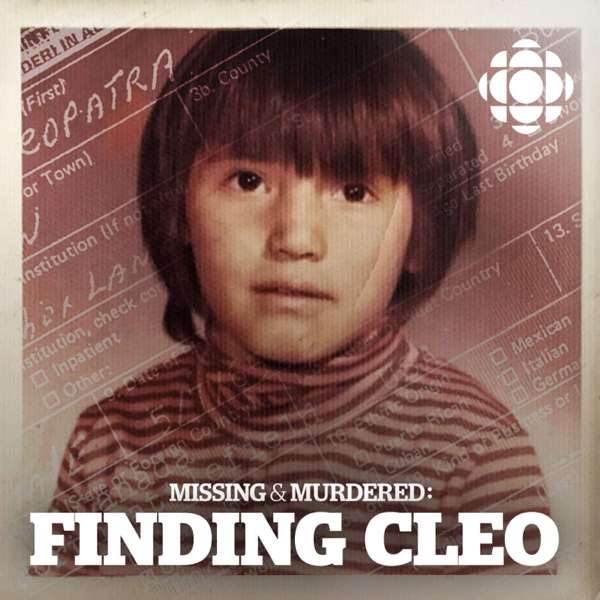
    Missing & Murdered: Finding Cleo

    4

    Missing & Murdered: Finding Cleo News & Politics
    Casefile True Crime

    5

    Casefile True Crime Games & Hobbies
    Code Switch

    6

    Code Switch News
    footer-logo

    Contact Us

    Toll Free: 844-670-7747

    Links

    • Home
    • Top Charts
    • Networks
    • Apps
    • Independents Podcasts
    • Podcast Advertising
    • Podcast News
    • Contact Us
    • About Us
    • Analytics & Insights

    Stay Connected

      Privacy, Terms of Use & Our Code of Ethics Protecting Content Creators Copyrights