TopPodcast.com
Menu
  • Home
  • Top Charts
  • Top Networks
  • Top Apps
  • Top Independents
  • Top Podfluencers
  • Top Picks
    • Top Business Podcasts
    • Top True Crime Podcasts
    • Top Finance Podcasts
    • Top Comedy Podcasts
    • Top Music Podcasts
    • Top Womens Podcasts
    • Top Kids Podcasts
    • Top Sports Podcasts
    • Top News Podcasts
    • Top Tech Podcasts
    • Top Crypto Podcasts
    • Top Entrepreneurial Podcasts
    • Top Fantasy Sports Podcasts
    • Top Political Podcasts
    • Top Science Podcasts
    • Top Self Help Podcasts
    • Top Sports Betting Podcasts
    • Top Stocks Podcasts
  • Podcast News
  • About Us
  • Podcast Advertising
  • Contact
Not in our directory?
Add Show Here
Podcast Equipment
Center

toppodcastlogoOur TOPPODCAST Picks

  • Comedy
  • Crypto
  • Sports
  • News
  • Politics
  • True Crime
  • Business
  • Finance

Follow Us

toppodcastlogoStay Connected

    View Top 200 Chart
    Back to Rankings Page
    Arts

    BULAQ | بولاق

    BULAQ is a book-centric podcast co-hosted by Ursula Lindsey (in Amman, Jordan) and M Lynx Qualey (in Rabat, Morocco). It focuses on Arabic literature in translation and is named after the first printing press established in Egypt in 1820. Produced by Sowt. Hosted on Acast. See acast.com/privacy for more information.

    Advertise
    • Apple Podcasts
    • Google Play
    • Spotify

    Latest Episodes:
    Is It a Beach Book? Jul 14, 2018
    Show notes

    In our last episode before a summer hiatus, we discuss a graphic novel about the life and art of the stars of Arab music and cinema; Egyptian writer Radwa Ashour’s memoir of studying at university in the United States in the 1970s; and the Moroccan writer Ahmed Bouanani’s novel The Hospital, out in English (alongside a new poetry collection, The Shutters) after nearly falling into oblivion.

    Show notes

    • A record-breaking four of the 18 “PEN translates” prizes for 2018 are going to books translated from Arabic. They are: The Book of Cairo, edited by Raph Cormack, with various authors and translators; My Name is Adam by Elias Khoury,translated by Humphrey Davies; Thirteen Months of Sunrise by Rania Mamoun, translated by Elisabeth Jaquette; and The Frightened Onesby Dima Wannous, also translated by Jaquette.
    • More about the great Syrian playwright Saadallah Wannouscan be found at the World Theatre Day website.
    • A Seismography of Struggle: Towards a Global History of Critical and Cultural Magazines is a project of the French National Institute of Art History; an exhibition and talks were recently hosted by Kulte Gallery in Rabat.
    • The Iraqi comix collectivethat was refused Swiss visasis Mesaha,and you can find more about them on their Facebook page.
    • Lamia Ziade’s Ô Nuit Ô Mes Yeux is a stylish, charming illustrated text about the larger-than-life lives of Arab musicians. An excerpt titled “Fairouz in my Grandfather’s Shop,” translated into English by Edward Gauvin, appears in the July 2018 Words Without Borders. Ziade’s Bye Bye Babylon has been translated into English by Olivia Snaije.
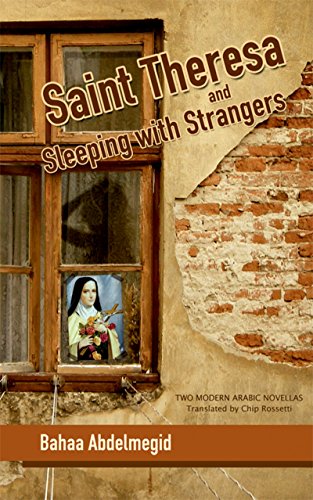
    • Another beach read is Radwa Ashour’s The Journey: Memoirs of an Egyptian Woman Student in America, translated by Michelle Hartman. Other portraits of the US discussed: Tawfiq al-Hakim in The Revolt of the Young, which has been translated by Mona Radwan; Yusuf Idris’s New York 80; Alaa al-Aswany’s Chicago, which was translated by Farouk Abdel Wahab Mustafa; Bahaa Abdelmeguid’s Sleeping with Strangers, translated by Chip Rossetti; and Sayyid Qutb.
    • And—there is some debate over whether this is a beach read—but Moroccan author-filmmaker Ahmed Bouanani’s The Hospital, translated by Lara Vergnaud, and his The Shutters, translated by Emma Ramadan are newly out from New Directions Books, and get a recommendation both from Ursula and from MLQ.

    Hosted on Acast. See acast.com/privacy for more information.


    Hosted by Simplecast, an AdsWizz company. See pcm.adswizz.com for information about our collection and use of personal data for advertising.


    "Neo-Assyrian Trolls" Jul 01, 2018
    Show notes

    We talk to humorist Karl Sharro about the origins story of his Twitter alter-ego Karl ReMarks and about finding the ideal online nemesis. Marcia takes issue with a new book listing the “hundred best novels in translation.”

    Show notes

    • Karl Sharro spoke about Karl ReMarks’ new book, And then God Created the Middle East and Said ‘Let There Be Breaking News’ (and Analysis). The book is forthcoming July 9.
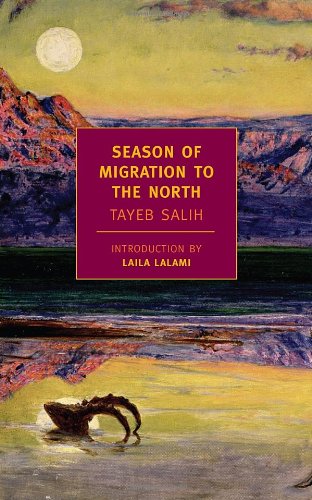
    • Boyd Tonkin’s The 100 Best Novels in Translation was released June 21. The two Arabic novels that made the list were Tayeb Salih’s Season of Migration to the North, translated by Denys Johnson-Davies, and Naguib Mahfouz’s Cairo Trilogy, translated by William Maynard Hutchins, Olive E. Kenny, Lorne M. Kenny, and Angele Botros Samaan. The translation was overseen by Jacqueline Kennedy Onassis, along with Martha Levin, and their notes on the manuscript can be found at the Lilly Library Manuscript Collections.
    • You can read the Amazon press release online about how the mega-corporation has (finally) launched some 12,000 Arabic ebooks into the Kindle system. You can find and purchase them on Amazon.com.

    Hosted on Acast. See acast.com/privacy for more information.


    Hosted by Simplecast, an AdsWizz company. See pcm.adswizz.com for information about our collection and use of personal data for advertising.


    16: Pick Your Team Jun 16, 2018
    Show notes

    In which Ursula and Marcia discuss how much innocence American can claim when abroad, and the urge to write expatriate diaries in one’s twenties; they also talk about the new collection Marrakech Noir; and about the never-ending debate over Classical versus Colloquial Arabic.

    Show notes:

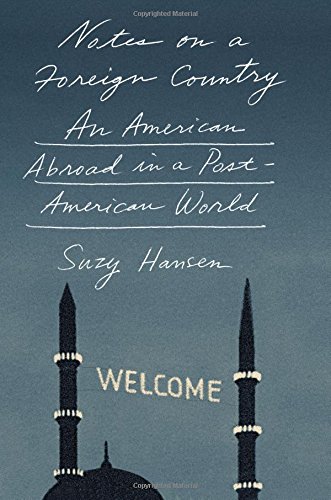
    • Ursula’s “Innocence Abroad” responds primarily to Suzy Hansen’s Notes on a Foreign Country: An American Abroad in a Post-American World.
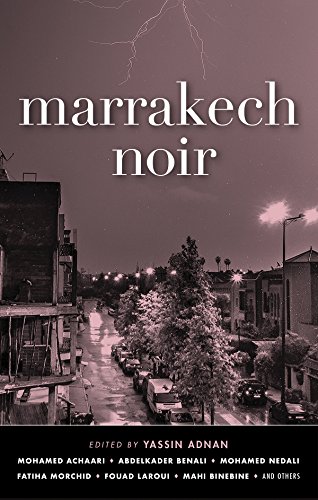
    • Marrakech Noir, ed. Yassin Adnan,is the third Arab city to join the Akashic Books series, following Beirut Noir and published simultaneously with Baghdad Noir. The Marrakesh collection features stories by lesser-known writers like Hanane Derkaoui, whose “A Way to Mecca” has some particularly fun moments, as well as heavyweights like Mahi Binebine, Mohammed Achaari, and Fouad Laroui—whose short-story collection The Curious Case of Dassoukine's Trousers was translated by Emma Ramadan. Fouad and Emma previously talked with MLQ about the collection and about writing in Moroccan Arabic.
    • Hossam Abouzahr, who runs the excellent “Living Arabic” project, also wrote “Standard Arabic is on the Decline: Here’s What’s Worrying About That.” In part, it responds to Elias Muhanna’s much-discussed New Yorker essay on “Translating ‘Frozen’ into Arabic.”
    • Jeremy Harding wrote in the LRB about writing workshops in Gaza and elsewhere in Palestine.
    • Two fun, free Arabic-learning apps for young childrenare “Antura and the Letters” and “Feed the Monster.” The Etisalat Prize for Arabic Children’s Literature also recognizes a “digital book app” category each year.
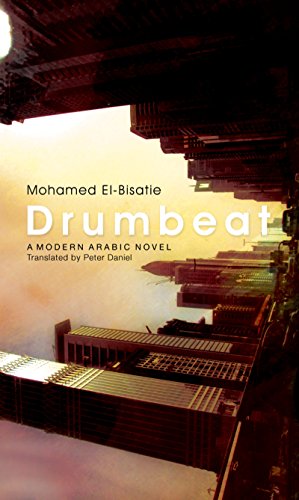
    • Mohamed al-Bisatie’s World Cup novel is Drumbeat. James Murua first had the idea of creating a writers’ team for the World Cup, using the hashtag #AfricanWriterWorldCupSquad.
    Buy on Amazon Buy on Amazon Buy on Amazon

    Pick Your Team Jun 16, 2018
    Show notes

    In which Ursula and Marcia discuss how much innocence American can claim when abroad, and the urge to write expatriate diaries in one’s twenties; they also talk about the new collection Marrakech Noir; and about the never-ending debate over Classical versus Colloquial Arabic.

    Show notes:

    • Ursula’s “Innocence Abroad” responds primarily to Suzy Hansen’s Notes on a Foreign Country: An American Abroad in a Post-American World.
    • Marrakech Noir, ed. Yassin Adnan,is the third Arab city to join the Akashic Books series, following Beirut Noir and published simultaneously with Baghdad Noir. The Marrakesh collection features stories by lesser-known writers like Hanane Derkaoui, whose “A Way to Mecca” has some particularly fun moments, as well as heavyweights like Mahi Binebine, Mohammed Achaari, and Fouad Laroui—whose short-story collection The Curious Case of Dassoukine's Trousers was translated by Emma Ramadan. Fouad and Emma previously talked with MLQ about the collection and about writing in Moroccan Arabic.
    • Hossam Abouzahr, who runs the excellent “Living Arabic” project, also wrote “Standard Arabic is on the Decline: Here’s What’s Worrying About That.” In part, it responds to Elias Muhanna’s much-discussed New Yorker essay on “Translating ‘Frozen’ into Arabic.”
    • Jeremy Harding wrote in the LRB about writing workshops in Gaza and elsewhere in Palestine.
    • Two fun, free Arabic-learning apps for young childrenare “Antura and the Letters” and “Feed the Monster.” The Etisalat Prize for Arabic Children’s Literature also recognizes a “digital book app” category each year.
    • Mohamed al-Bisatie’s World Cup novel is Drumbeat. James Murua first had the idea of creating a writers’ team for the World Cup, using the hashtag #AfricanWriterWorldCupSquad.

    Hosted on Acast. See acast.com/privacy for more information.


    Hosted by Simplecast, an AdsWizz company. See pcm.adswizz.com for information about our collection and use of personal data for advertising.


    15: Alexandria When? Jun 01, 2018
    Show notes

    Inspired by a fiery essay by an Egyptian professor, Ursula and MLQ discuss cosmopolitanism, nostalgia, and literary representations of the city of Alexandria. Marcia also talks about three new books – from Iraq, Southern Sudan and Lebanon/London. She loved two of them.

    Show notes:

    • May Hawas’s essay How Not to Write on Cosmopolitan Alexandria takes as its starting point Lawrence Durrell’s Alexandria Quartet and particularly the first book, Justine.
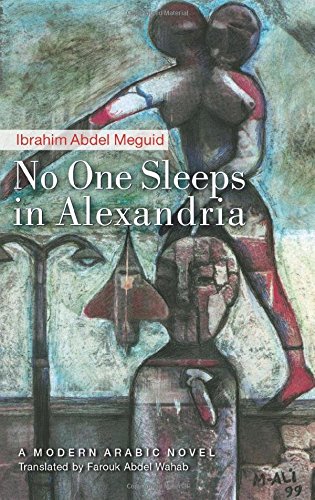
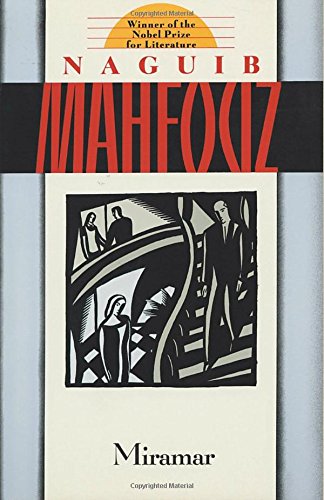
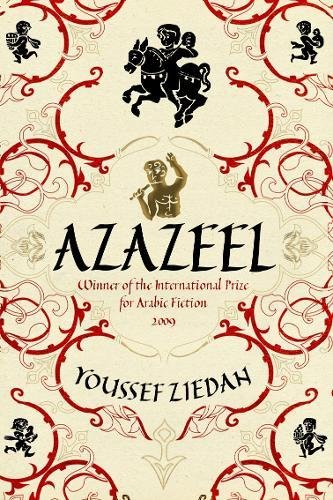
    • The renowned poetry of Constantine P. Cavafy has shaped Alexandria’s literary image and aura. Ibrahim Abdelmeguid is perhaps Egypt’s best-known Alexandria-focused author (read his No One Sleeps in Alexandria, for instance, trans. Farouk Abdel Wahab), although Naguib Mahfouz’s Miramar may the best-known book set in the city. Other major Alexandrian writers include Alaa Khaled and the late Edwar al-Kharrat. Bahaa Abdelmeguid’s St. Theresa, trans. Chip Rossetti, is, in part, about the 1960s expulsions from Alexandria. MLQ admits to not being a fan of Youssef Ziedan’s Azazeel, sorry.
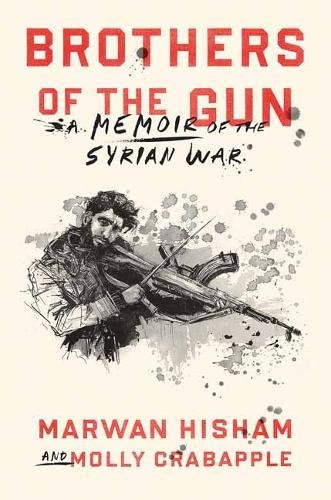
    • Marwan Hisham’s memoir-reportage Brothers of the Gun, with art by Molly Crabapple, came out May 15. It details life under the Islamic State in Raqqa and covers, from a quite different point of view, some of the same ground as DunyaMikhail’s The Beekeper, which we discussed in Episode 8.
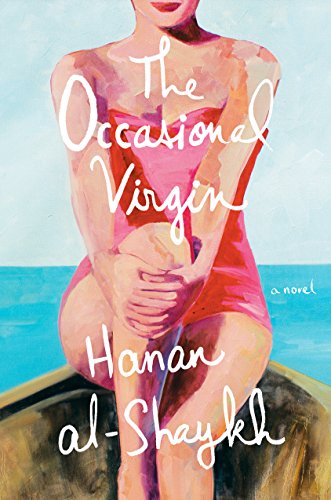
    • Hanan al-Shaykh’s The Occasional Virgin, trans. Catherine Cobham, comes out June 15.
    • Stella Gaitano’s Withered Flowers, trans. Anthony Calderbank, is available in bookshops in Juba, South Sudan. We’ll also see if we can convince them to make it more widely available.
    Buy on Amazon Buy on Amazon Buy on Amazon Buy on Amazon Buy on Amazon Buy on Amazon Buy on Amazon Buy on Amazon Buy on Amazon

    Alexandria When? Jun 01, 2018
    Show notes

    Inspired by a fiery essay by an Egyptian professor, Ursula and MLQ discuss cosmopolitanism, nostalgia, and literary representations of the city of Alexandria. Marcia also talks about three new books – from Iraq, Southern Sudan and Lebanon/London. She loved two of them.

    Show notes:

    • May Hawas’s essay How Not to Write on Cosmopolitan Alexandria takes as its starting point Lawrence Durrell’s Alexandria Quartet and particularly the first book, Justine.
    • The renowned poetry of Constantine P. Cavafy has shaped Alexandria’s literary image and aura. Ibrahim Abdelmeguid is perhaps Egypt’s best-known Alexandria-focused author (read his No One Sleeps in Alexandria, for instance, trans. Farouk Abdel Wahab), although Naguib Mahfouz’s Miramar may the best-known book set in the city. Other major Alexandrian writers include Alaa Khaled and the late Edwar al-Kharrat. Bahaa Abdelmeguid’s St. Theresa, trans. Chip Rossetti, is, in part, about the 1960s expulsions from Alexandria. MLQ admits to not being a fan of Youssef Ziedan’s Azazeel, sorry.
    • Marwan Hisham’s memoir-reportage Brothers of the Gun, with art by Molly Crabapple, came out May 15. It details life under the Islamic State in Raqqa and covers, from a quite different point of view, some of the same ground as DunyaMikhail’s The Beekeper, which we discussed in Episode 8.
    • Hanan al-Shaykh’s The Occasional Virgin, trans. Catherine Cobham, comes out June 15.
    • Stella Gaitano’s Withered Flowers, trans. Anthony Calderbank, is available in bookshops in Juba, South Sudan. We’ll also see if we can convince them to make it more widely available.

    Hosted on Acast. See acast.com/privacy for more information.


    Hosted by Simplecast, an AdsWizz company. See pcm.adswizz.com for information about our collection and use of personal data for advertising.


    14: Less Cute and Safe May 18, 2018
    Show notes

    We discuss Marcia’s recent interviews with professors teaching Arabic literature in translation; an essay by Lebanese novelist Rabih Alameddine’s in which he picks apart “world literature” and foreign writers – such as himself – who act as “tour guides”; and a book that is an ambitious overview of modern art in the Arab world.

    Show notes

    • An overview of the “Teaching with Arabic Literature in Translation” series appeared on the website al-Fanar. The whole series – which will consist nineteen interviewsas of May 21 – can be found on ArabLit. The series will go on hiatus over the summer, but will hopefully be spun into a stand-alone resource.
    • Rabih Alameddine’s“Comforting Myths: Notes from a Purveyor”and takes us from Superman to Joseph Conrad to “the cute other,” with stops at Tayeb Salih’s Season of Migration to the North, translated by Denys Johnson-Davies, Hisham Matar’s The Return, and one of Alameddine’s own novels, which a 2008 New York Times reviewcalled “a bridge to the Arab soul.” As Alameddine has said elsewhere: “What the fuck is the Arab soul?”
    • Modern Art in the Arab World: Primary Documents, co-edited by Anneka Lenssen, Sarah Rogers, and Nada Shabout, is forthcoming June 5 from Duke University Press. The selection of texts, many appearing for the first time in English translation, includes “manifestos, essays, transcripts of roundtable discussions, diary entries, letters, and the guest-book comments[.]” Some can be read online.
    Buy on Amazon Buy on Amazon

    Less Cute and Safe May 18, 2018
    Show notes

    We discuss Marcia’s recent interviews with professors teaching Arabic literature in translation; an essay by Lebanese novelist Rabih Alameddine’s in which he picks apart “world literature” and foreign writers – such as himself – who act as “tour guides”; and a book that is an ambitious overview of modern art in the Arab world.

    Show notes

    • An overview of the “Teaching with Arabic Literature in Translation” series appeared on the website al-Fanar. The whole series – which will consist nineteen interviewsas of May 21 – can be found on ArabLit. The series will go on hiatus over the summer, but will hopefully be spun into a stand-alone resource.
    • Rabih Alameddine’s“Comforting Myths: Notes from a Purveyor”and takes us from Superman to Joseph Conrad to “the cute other,” with stops at Tayeb Salih’s Season of Migration to the North, translated by Denys Johnson-Davies, Hisham Matar’s The Return, and one of Alameddine’s own novels, which a 2008 New York Times reviewcalled “a bridge to the Arab soul.” As Alameddine has said elsewhere: “What the fuck is the Arab soul?”
    • Modern Art in the Arab World: Primary Documents, co-edited by Anneka Lenssen, Sarah Rogers, and Nada Shabout, is forthcoming June 5 from Duke University Press. The selection of texts, many appearing for the first time in English translation, includes “manifestos, essays, transcripts of roundtable discussions, diary entries, letters, and the guest-book comments[.]” Some can be read online.

    Hosted on Acast. See acast.com/privacy for more information.


    Hosted by Simplecast, an AdsWizz company. See pcm.adswizz.com for information about our collection and use of personal data for advertising.


    13: Cancel Everything May 06, 2018
    Show notes

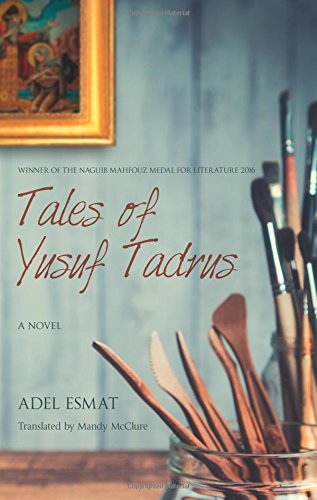
    Ursula and Marcia talk about the novel Tales of Yusuf Tadros – about a Coptic Christian and aspiring artist living in the provinces -- and the playful, genre-bending Kayfa Ta (“How To”) series. They also discuss sexism in literature and whether we can do without the Nobel Prize for Literature.

    Show notes

    Buy on Amazon
    • The Center for Translation Studiesat The American University in Cairo will be celebrating its tenth anniversary in 2020, and to commemorate nine years of CTS lectures—MLQ gave one in 2013—the head of the center, Dr. Samia Mehrez, is bringing together an anthology of essays. The book will be coming out from AUC Press in English, and an Arabic edition will follow.
    • The winner of the International Prize for Arabic Fictionwas Palestinian-Jordanian novelist Ibrahim Nasrallah’s Dog War II. MLQ had predicted a win for Aziz Mohammed’s The Critical Case of ‘K,’ so her streak of incorrect IPAF predictions is unbroken. You can read excerpts from all six shortlisted books in English translation and an additional one from Dog War IIfrom Wen-chin Ouyang.
    • The Naguib Mahfouz Medal-winning Tales of Yusuf Tadros, by Adel Esmat, tr. Mandy McClure, is available from Hoopoe Fiction. You can read an extract of the translation online.
    • The Nobel Prize for Literature has been cancelled for 2018. Tim Parks suggests “The Nobel Prize for Literature Is a Scandal All by Itself” and Ron Charles, at the Washington Post, suggests “The Nobel Prize in literature takes a year off. Let's make it two.” Also: “Junot Díaz withdraws from Sydney Writers' festival following sexual harassment allegations.”
    • You can find the Kayfa Ta project’s Arabic originals and English translations at kayfa-ta.com. That’s where you can download a PDF of Haytham al-Wardani’s How to Disappear translated by Jennifer Peterson and Robin Moger, or in the Arabic.Iman Mersal’s How to Mend: On Motherhood and Its Ghosts is also available in Arabic. Robin Moger’s English translation should be forthcoming somewhere this year.

    Cancel Everything May 06, 2018
    Show notes

    Ursula and Marcia talk about the novel Tales of Yusuf Tadros – about a Coptic Christian and aspiring artist living in the provinces -- and the playful, genre-bending Kayfa Ta (“How To”) series. They also discuss sexism in literature and whether we can do without the Nobel Prize for Literature.

    Show notes

    • The Center for Translation Studiesat The American University in Cairo will be celebrating its tenth anniversary in 2020, and to commemorate nine years of CTS lectures—MLQ gave one in 2013—the head of the center, Dr. Samia Mehrez, is bringing together an anthology of essays. The book will be coming out from AUC Press in English, and an Arabic edition will follow.
    • The winner of the International Prize for Arabic Fictionwas Palestinian-Jordanian novelist Ibrahim Nasrallah’s Dog War II. MLQ had predicted a win for Aziz Mohammed’s The Critical Case of ‘K,’ so her streak of incorrect IPAF predictions is unbroken. You can read excerpts from all six shortlisted books in English translation and an additional one from Dog War IIfrom Wen-chin Ouyang.
    • The Naguib Mahfouz Medal-winning Tales of Yusuf Tadros, by Adel Esmat, tr. Mandy McClure, is available from Hoopoe Fiction. You can read an extract of the translation online.
    • The Nobel Prize for Literature has been cancelled for 2018. Tim Parks suggests “The Nobel Prize for Literature Is a Scandal All by Itself” and Ron Charles, at the Washington Post, suggests “The Nobel Prize in literature takes a year off. Let's make it two.” Also: “Junot Díaz withdraws from Sydney Writers' festival following sexual harassment allegations.”
    • You can find the Kayfa Ta project’s Arabic originals and English translations at kayfa-ta.com. That’s where you can download a PDF of Haytham al-Wardani’s How to Disappear translated by Jennifer Peterson and Robin Moger, or in the Arabic.Iman Mersal’s How to Mend: On Motherhood and Its Ghosts is also available in Arabic. Robin Moger’s English translation should be forthcoming somewhere this year.

    Hosted on Acast. See acast.com/privacy for more information.


    Hosted by Simplecast, an AdsWizz company. See pcm.adswizz.com for information about our collection and use of personal data for advertising.


    Previous 1 15 16 17 18 19 20 Next

    Related Podcasts

    Fresh Air

    1

    Fresh Air Arts
    Twenty Thousand Hertz

    2

    Twenty Thousand Hertz Arts
    The Black Tapes

    3

    The Black Tapes Arts
    Snap Judgment

    4

    Snap Judgment Arts
    Here’s The Thing with Alec Baldwin

    5

    Here’s The Thing with Alec Baldwin Arts
    The NoSleep Podcast – Creative Reason Media Inc.

    6

    The NoSleep Podcast – Creative Reason Media Inc. Arts
    footer-logo

    Contact Us

    Toll Free: 844-670-7747

    Links

    • Home
    • Top Charts
    • Networks
    • Apps
    • Independents Podcasts
    • Podcast Advertising
    • Podcast News
    • Contact Us
    • About Us
    • Analytics & Insights

    Stay Connected

      Privacy, Terms of Use & Our Code of Ethics Protecting Content Creators Copyrights