Amanyangyun: How Heritage Preservation Became a Luxury Experience in Shanghai
Oct 18, 2026
Show notes
Amanyangyun, known in Chinese as 养云安缦, is an Aman resort in Shanghai’s Minhang district. Its defining features are historic houses and camphor trees relocated from Jiangxi, alongside contemporary accommodation and Chinese cultural experiences. For someone choosing an Aman hotel in Shanghai, the appeal lies in spending time within that preserved environment. The commercial interest is equally specific: the property connects accommodation, cultural participation, dining and private residences around a shared identity. Its approach shows how a luxury brand can keep heritage central to daily life. What Makes Amanyangyun Distinctive? Jiangxi Heritage in a Shanghai Setting Aman’s account traces the buildings and trees to Fuzhou in Jiangxi province, where a reservoir project threatened their original setting. The relocation and reconstruction story explains why this Shanghai property carries another region’s architectural history. That distinction matters. The Ming and Qing houses stand in a new setting, with contemporary hospitality built around them. Their value comes from surviving material, craftsmanship and documented provenance. Guests encounter a preservation project whose origins extend well beyond Shanghai. The Room Category Changes the Experience Kerry Hill Architects designed the accommodation around a village arrangement, with outdoor space attached to suites, pavilions and villas. The room names require careful reading: a dynastic name does not automatically indicate a historic building. For example, Aman describes its 160-square-meter Ming Deluxe Pavilion as contemporary. Its private courtyard connects the bedroom and living room. Antique Villas offer different combinations of historic and modern bedrooms, depending on category. A couple seeking a secluded courtyard and a family wanting several bedrooms therefore face different choices. The useful comparison is the actual floor plan, bedroom arrangement and outdoor space. These details determine how the heritage setting fits the stay. Chinese Culture Becomes Something to Practice Nan Shufang, or 楠书房, occupies restored buildings and draws on Chinese scholars’ studios. Aman offers calligraphy, traditional music, incense experiences and guided tea ceremonies there. The tea session includes three varieties, with explanations of their growing regions and processing. This gives visitors something concrete to learn. A restored room becomes a place for conversation and instruction, while the activity supplies context for the objects and architecture around it. This is heritage branding through participation. It depends on knowledgeable hosts and well-designed sessions. The buildings provide the setting; people make their meaning accessible. The programming includes a timed evening gathering. Aman’s 2026 schedule lists evening tea in the Lounge at 6 p.m. through November 30. A specific time and setting make the invitation easy to understand and fit into an evening. Food and Wellness Carry the Brand Experience The regional connection continues at Lazhu, whose menu Aman links to Jiangxi cooking, including its use of spices, fish and tea oil. The restaurant gives the relocated architecture a culinary counterpart. Private dining rooms also provide space for family meals and hosted gatherings. Arva adds another perspective. The MICHELIN Guide’s assessment describes Italian cooking that combines vegetables from the restaurant’s own farm, Italian produce and seafood from across China. This is a documented sourcing connection, although its local purchasing value is undisclosed. The spa’s facilities include bathing suites, a sauna, a cold plunge pool and a Pilates and yoga studio. Together, these offerings let guests organize a stay around food, movement and rest. That is a practical expression of slow luxury: the property provides enough variety to make an unhurried visit worthwhile. The Business Behind the Preserved Village Development and Hotel Operations A September 2026 report credits Shanghai Gushan Investment Management, chaired by Ma Dadong, with the project’s planning, development and construction. These roles should remain separate from claims about current equity ownership, which the reviewed sources do not establish. The commercial offering includes rooms, food, spa services and event venues. Aman lists a ballroom seating up to 224 guests. That creates capacity for celebrations and business gatherings, but venue capacity alone reveals nothing about event bookings or revenue. Private Residences Extend the Relationship The clearest brand extension appears in the residences beside the resort. Aman describes antique and contemporary properties designed by Kerry Hill Architects, measuring approximately 1,397 to 1,814 square meters. Owners receive management and security services, access to resort facilities and the option to join Aman’s rental program. Some residences incorporate historic buildings; others use contemporary construction with a related aesthetic. The commercial logic is a longer relationship with the place. A residential owner can use the dining, wellness and cultural facilities repeatedly. This arrangement connects property ownership with hospitality services, although the published information provides no basis for estimating rental returns or hotel profitability. Chinese Travel Demand and Local Economic Connections A Specific Response to Experience Demand The China Tourism Academy’s report released in May 2026 describes domestic travel becoming shorter, more frequent and more focused on experience and emotional value. These findings describe the domestic tourism market as a whole. Within that context, Amanyangyun offers a specific form of experiential luxury: private space, cultural learning and time away from a crowded itinerary. These features can serve travelers who value those benefits. The available sources do not establish the nationality, income or motivations of the property’s actual guest mix. Training Connects the Hotel to the City Shanghai Business School records the hotel’s participation in its April 2025 hospitality education and recruitment activities. In November 2025, tourism management students visited the property with its human resources director to study its operations and cultural positioning. These activities clearly link to professional training and recruitment. They show how a specialist hotel can become a teaching resource for Shanghai’s hospitality sector. The university reports do not quantify subsequent hires or employment effects. The guest itinerary can extend into the neighboring Yangyun community. Aman directs visitors to Bei TeaHouse, where Kerry Hill’s team adapted a historic building for tea tasting. The connection gives a nearby cultural venue a place within the hotel’s visitor offering. Who Should Choose This Shanghai Aman Retreat? Amanyangyun Shanghai sits at 6161 Yuanjiang Road in Minhang. Its suburban setting suits a stay centered on the property, with selected outings. A packed schedule of central Shanghai meetings, shopping and sightseeing makes transport a larger consideration. Access has attracted experimentation. Shanghai’s government documented a 15-minute helicopter test flight on January 14, 2025, from a Pudong flight base to a park lawn beside the hotel. The report describes a trial and preparations for future operations. It does not establish a regularly bookable airport transfer. The broader service lesson is practical: seclusion creates an access problem that the guest experience must address. Transfer planning deserves the same attention as room selection. What Other Businesses Can Learn Another business can apply this approach when it has a credible cultural asset and the skills to interpret it. The first decision is the activity customers will actually take part in. Staff training, booking arrangements, materials and maintenance then need to support that choice. Amanyangyun shows how cultural preservation can inform a complete service offering. Clear room descriptions, accessible teaching and reliable scheduling deserve as much attention as the origin story. A business should track participation, customer feedback and delivery costs to test the commercial value of its cultural programming. Explore Customer Experience With Ashley Dudarenok Amanyangyun raises a useful question: how can cultural identity shape what customers actually experience? Ashley Dudarenok’s work covers Chinese consumers, customer centricity and the future of retail. Explore her customer experience keynotes and tailored speaking engagements for sessions relevant to your business and audience. Frequently Asked Questions How Many Nights Should You Stay at Amanyangyun? Two nights is a sensible starting point for a resort-focused stay. Aman’s Family Escape offers two or three nights, with the longer option adding transportation to Zhujiajiao Old Town. Which Shanghai Airport Is Closer? Hongqiao is closer: Aman places it approximately 24 kilometers away, compared with 55 kilometers for Pudong. Its transfer guidance estimates about 30 minutes from Hongqiao and 40 to 50 minutes from Pudong, depending on traffic. Is the Hotel Suitable for Children? Yes, the hotel offers a Children’s Discovery Centre with activities for ages five to twelve. Options include lantern making, paper cutting and pottery. Confirm age requirements, supervision and the activity schedule before your visit. Can You Visit Without Booking a Room? Yes, Aman explicitly welcomes nonresident visitors to the restaurants and spa. Contact the reservations team to arrange your visit. A dining or treatment reservation should not be assumed to include unrestricted access to other resort facilities. Does a Stay Include Breakfast? Aman lists daily breakfast among the Ming Deluxe Pavilion’s stay inclusions. Check the written terms for your selected room and booking channel, including the number of guests covered and any charges for additional adults or children. Can You Swim During Winter? The spa page lists a heated indoor pool, while the outdoor pool is closed seasonally from November through April. Confirm pool availability for your dates, since maintenance or operational changes can affect access. What makes Amanyangyun different from other Shanghai luxury hotels? The property combines a small number of rooms with a heritage preservation project. Guests stay in restored antique villas or new suites designed by Kerry Hill Architects, with cultural programming focused on traditional Chinese arts. Does the Hotel Have a Cinema? Yes, the property has a private IMAX cinema, and advance booking is required. Aman includes access in its Ming Deluxe Pavilion benefits. Ask the concierge about screening times, film choices and arrangements for your party. Does Arva Have a Michelin Star? Arva appears in the MICHELIN Guide’s restaurant selection, but its current listing does not display a star. This restaurant listing does not establish a hotel award, so check the named venue and distinction carefully. What activities are available at Amanyangyun? The resort offers calligraphy, painting, tea tasting, and music sessions at its cultural pavilion. The Aman Spa includes treatment rooms, a banya, a hammam, and indoor and outdoor pools. The post Amanyangyun: How Heritage Preservation Became a Luxury Experience in Shanghai appeared first on Ashley Dudarenok.
Its commercial appeal comes from how those experiences fit together. Guests can combine accommodation, a private meeting, dinner and shopping within one development. A visitor can also encounter the brand through a restaurant reservation without booking a room.
That makes the hotel a useful case in premium hospitality: a recognizable international brand translates an expensive city location into experiences with different purposes, access rules and customers.
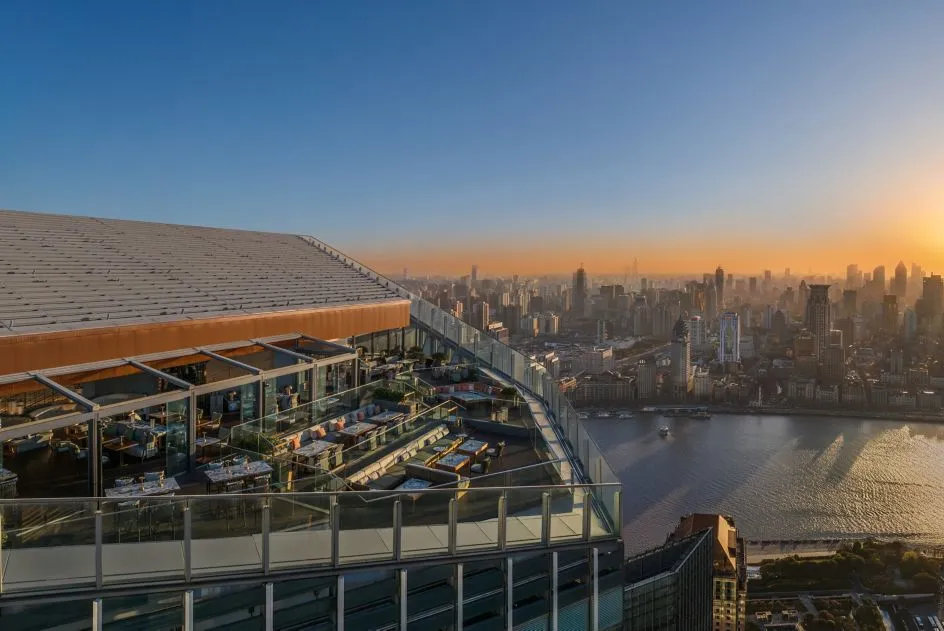
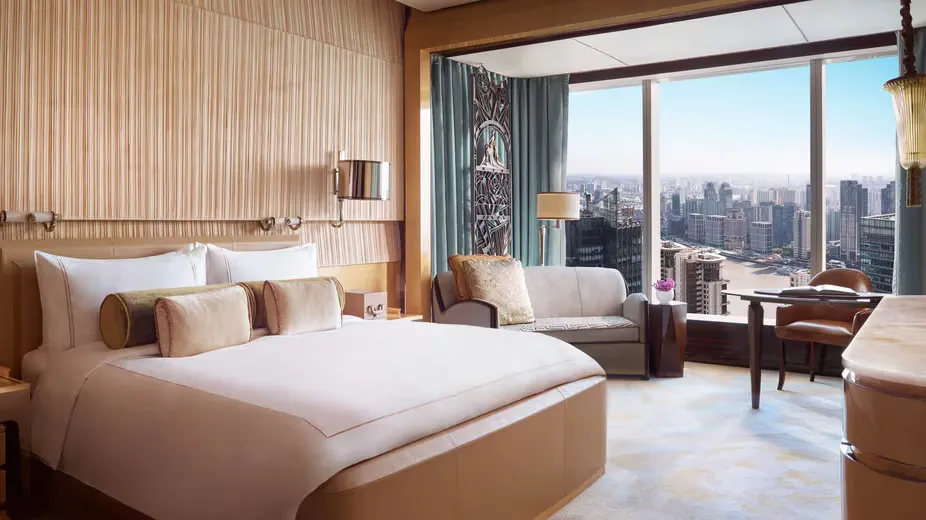
Here, vertical luxury means arranging accommodation, dining and relaxation around that elevated setting. The experience changes with the space, from a private room to a social rooftop terrace.
A specific skyline view deserves the same attention as room size. Guests should confirm the outlook attached to their selected category before paying for it.
Flair and Jin Xuan Serve Different Occasions
Flair Makes the Skyline Social
The hotel places Flair on the 58th floor, overlooking the Oriental Pearl Tower. Its rooftop terrace turns the location into an experience people can share over food and drinks.
Guests booking for the terrace should confirm outdoor seating and the weather plan. A restaurant reservation alone should not be treated as a promise of a particular table.
Forbes Travel Guide describes local visitors mixing with hotel guests at the bar. That gives the brand contact with people outside its overnight customer base. The commercial opportunity is an additional occasion to visit, although public sources do not disclose the bar’s revenue contribution.
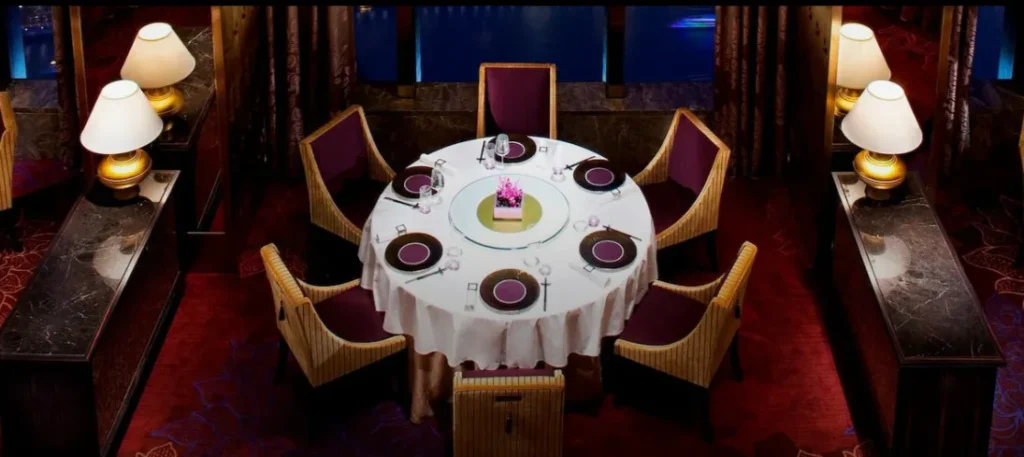
Private dining gives business hosts and families control over the meal setting. Within the same property, guests can choose a public social occasion or a more contained gathering.
The Business Behind Shanghai IFC
The hotel belongs to Sun Hung Kai Properties’ mainland hotel portfolio. The Ritz-Carlton operates within Marriott International’s brand and management system. Property ownership and hotel operations therefore involve different organizations.
The development combines office towers, a luxury shopping mall, the hotel and IFC Residence serviced apartments. The apartments form a separate component of the complex.
The commercial logic is proximity. Office visitors can book accommodation and host meals nearby. Hotel guests can reach retail without planning another journey. These connections create opportunities for spending across the development.
In its 2025/26 annual results, Sun Hung Kai Properties said The Ritz-Carlton Shanghai, Pudong performed strongly, with room rates reaching a historical high as foreign visitor numbers to Shanghai continued to rise.
Service Choices for Different Guest Needs
Club Access Makes the Premium Tangible
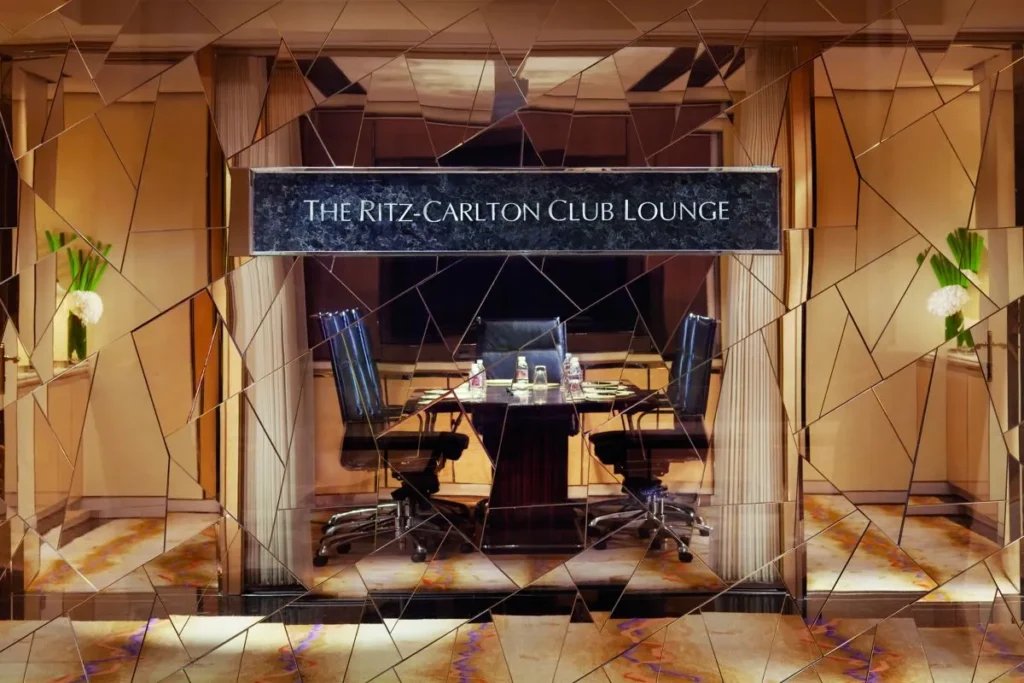
The 49th-floor Club Lounge includes workstations, two meeting rooms and five daily food-and-beverage presentations. The hotel also lists a weekly handmade Chinese noodle experience.
Its Club service includes a dedicated concierge. That setup can simplify a day of appointments, meals and downtime. It expresses the Ritz-Carlton service proposition through time, assistance and controlled access.
The value depends on the itinerary. Someone spending each day away from the hotel may use few of the included meals. A guest returning between appointments has more opportunities to use the lounge and its services.
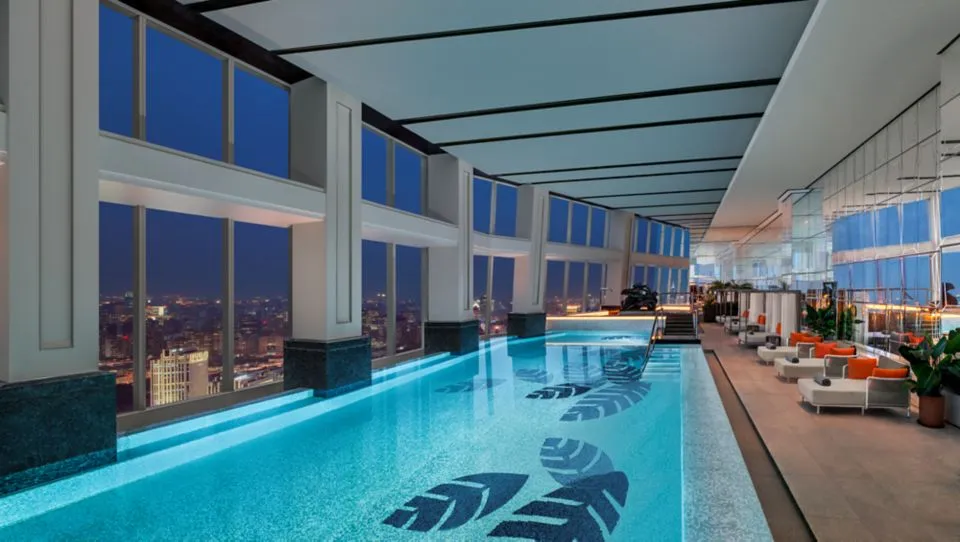
The 55th-floor spa adds another use for a city stay, with treatments and an indoor heated pool. Guests can build in time for relaxation alongside other commitments.
The Hotel’s Connection to Shanghai’s Economy
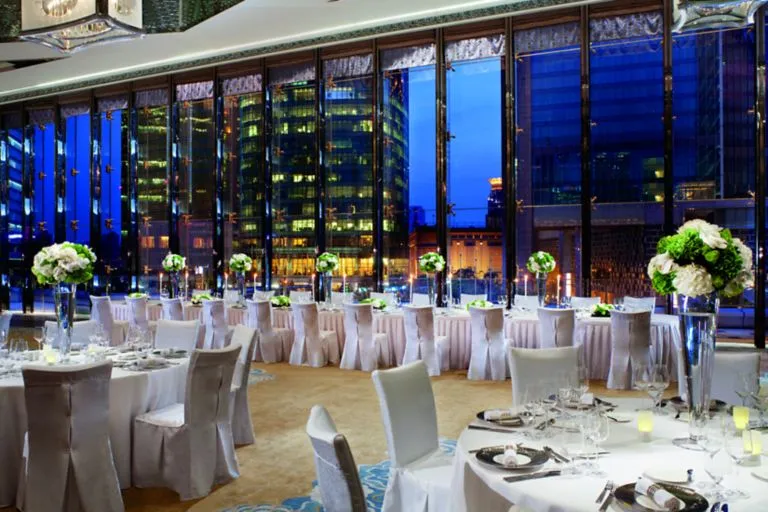
The property also supports business and social events. Its official capacity chart lists a 1,134-square-meter Grand Ballroom with capacity for 700 banquet guests. Meetings and celebrations create demand for catering, accommodation and service work within the hotel.
Those figures describe city demand. The hotel’s economic role is visible through its accommodation, event and dining services, while its specific contribution to local employment or visitor spending remains unquantified in the sources reviewed.
Which Stays Suit the Property?
For Ritz-Carlton Shanghai Pudong guests, the strongest fit is an itinerary centered on Lujiazui business, dining and skyline sightseeing. The hotel is near Lujiazui subway station, and its location suits business travelers with appointments in the financial district.
A Puxi-heavy itinerary requires more cross-river travel. Guests who want to spend most of their stay exploring older neighborhoods should weigh that travel against the tower setting. At Ritz-Carlton Pudong, location is part of the experience and a practical planning decision.
A Customer Experience Lesson Beyond the Hotel
The lesson from The Ritz-Carlton Shanghai Pudong is to connect each premium promise to an operating responsibility. A private lounge needs clear access rules. Personal service needs staff who understand guests. A distinctive view needs an accurate room description.
Other businesses can apply that approach when they can coordinate space, people and booking terms. The customer should understand what the premium buys, and the operating team should have the capacity to deliver it consistently.
Explore Customer Experience in China With Ashley Dudarenok
The Ritz-Carlton Shanghai Pudong shows how location, service and local understanding shape a brand experience. Ashley Dudarenok’s customer experience keynotes explore related questions through her work on Chinese consumers and customer centricity. Her speaking topics offer a starting point for teams examining their own customer journeys.
FAQs
Is The Ritz-Carlton Shanghai Pudong the Same as the Portman Ritz-Carlton?
They are separate hotels. The Pudong property sits in Lujiazui, while The Portman Ritz-Carlton is at Shanghai Centre on Nanjing West Road. Check the full property name and address before confirming accommodation or restaurant reservations.
What Are the Check-in and Check-out Times?
The hotel lists check-in at 3 p.m. and check-out at noon. Ask about an earlier arrival or later departure before booking if your flight schedule requires extra room time, and confirm any applicable charges.
Does Marriott Bonvoy Elite Status Include Club Lounge Access?
Marriott Bonvoy Elite status does not provide complimentary Club Lounge access at this property. Guests can book accommodation with Club privileges, while daily lounge access passes may also be available subject to availability.
Is Breakfast Included in Every Room Rate?
Breakfast depends on the booked rate. The hotel lists breakfast at Scena di Angelo for a fee, so check your package inclusions. Confirm the breakfast venue, eligible guest count and any child charges before paying.
What Does the Hotel Offer Families With Children?
The hotel offers Ritz Kids Night Safari, an in-room camping experience with a tent and themed amenities. Advance reservations are required. Ask about current charges and confirm that your selected accommodation suits your family’s sleeping arrangements.
Are Accessible Rooms and Facilities Available?
The hotel lists accessible rooms and routes to restaurants, meeting spaces and wellness facilities. Contact the property before booking to confirm the specific bathroom layout, room configuration and assistance needed for your stay and arrival.
Does the Hotel Provide an Airport Shuttle?
The hotel does not provide an airport shuttle. It lists private limousine transfers that require reservations. Confirm the airport, passenger count, luggage capacity and full transfer charge directly with the hotel before arranging collection for your arrival.
Can You Visit the Spa Without Staying Overnight?
Yes, the spa accepts guests who are not staying at the hotel. Its published policy requires a minimum two-hour treatment booking guaranteed by a credit card. Confirm availability and which facilities your appointment includes before visiting.
What makes the Ritz-Carlton Shanghai Pudong distinctive?
It occupies the top floors of Shanghai IFC with Art Deco design, Michelin-starred Cantonese dining at Jin Xuan, and Shanghai’s highest rooftop bar, Flair. The vertical configuration places guests above Lujiazui’s financial district.
Can Online Travel Agency Bookings Earn Marriott Bonvoy Points?
Online travel agency bookings generally do not earn stay points under Marriott Bonvoy’s rules. Compare the booking channel, cancellation conditions and included benefits together. A lower advertised price may come with different loyalty entitlements.
Bulgari Hotel Beijing: Bvlgari’s Luxury Brand Extension
Oct 12, 2026
Show notes
Bulgari Hotel Beijing brings Italian design, destination dining and attentive service to a riverside setting in Beijing’s Chaoyang district. Officially styled Bvlgari Hotel Beijing, and known in Chinese as 北京宝格丽酒店, the property has 119 rooms and suites within Genesis Beijing. Its appeal combines access to the capital with space to spend an unhurried afternoon inside the hotel. The business story sits within that experience. A jewelry brand expresses its identity through objects; hospitality extends that relationship through meals, rest, and personal service. Beijing offers a useful case of luxury brand extension because the property gives its Italian identity a specific Chinese setting. What Makes Bulgari Hotel Beijing Distinctive? A Riverside Address With Room to Pause The hotel stands at Building 2, Courtyard No. 8, Xinyuan South Road, in the Embassy District. Its official destination guide places it in a development with offices, shopping, and the Tadao Ando-designed Genesis Art Gallery. This setting gives the stay a particular rhythm. Guests can combine an urban itinerary with gardens and the Liangma River. Forbes Travel Guide’s inspectors single out the outdoor setting as a major strength and recommend the riverside walkway. The address suits a stay built around dining, design and time at the property. For a schedule concentrated on the Forbidden City and Beijing’s historic center, compare transport requirements before booking. The hotel itself describes those landmarks as farther afield. A riverside base and a sightseeing base answer different needs. Jewelry Motifs That Guests Can Live With ACPV ARCHITECTS Antonio Citterio Patricia Viel designed the hotel. The studio’s project description links bronze, silver, and hand-finished details to Bvlgari’s craftsmanship. It also identifies the spiral staircase leading to the ballroom as a sculptural centerpiece. The Serpenti Suite makes that relationship more explicit. According to the hotel’s launch announcement, it debuted on January 9, 2025, around the Year of the Snake. The current suite description notes selected linens and cashmere blankets decorated with snake motifs. The local connection is clear: a Chinese calendar occasion aligned with an established brand symbol. That makes the adaptation coherent. Guests encounter the motif through materials they use, giving experiential branding a practical form beyond a display case. Roman References Inside the Spa The Beijing tourism authority’s June 2025 profile describes a 1,500-square-meter spa with 11 treatment rooms and a 25-meter heated indoor pool. The pool takes inspiration from Rome’s Baths of Caracalla. Here, Italian luxury becomes part of the physical experience of a stay. The Roman reference gives the wellness space a recognizable connection to the brand’s home. For guests, the substantial indoor facilities create a reason to reserve time at the property between city visits. Italian Dining With Independent Recognition Il Ristorante – Niko Romito holds one star in the 2026 Michelin Guide Beijing selection. This distinction recognizes the restaurant’s cooking. The hotel’s accommodation is assessed separately. The restaurant’s official page explains that Romito develops the culinary approach and trains resident chefs. Davide Gessa leads the Beijing kitchen. Guests should understand that distinction when choosing a chef-associated restaurant. The commercial value lies in a repeatable dining identity. The cuisine gives people another reason to visit the property and makes the Italian connection tangible through a meal. Restaurant demand and room demand remain separate questions. The Business Behind the Hotel Several organizations sit behind the experience, with different roles: LayerVerified relationshipLuxury brandLVMH lists Bvlgari among its jewelry houses. Hotel networkMarriott’s 2025 annual filing includes Bvlgari in its luxury hotel portfolio. Local development and entityKPF names Beijing Huadu as the Genesis Beijing project client. An August 2025 Beijing government permit identifies Huadu’s Bulgari Hotel branch as the performance venue. These records establish corporate and local relationships. They leave the property’s current ultimate ownership and individual management agreement unresolved. The broader development helps explain the location strategy. KPF describes offices, residences, retail, hospitality and cultural space sharing the site. In this context, ecosystem strategy means complementary activities within one address: someone can work nearby, meet over dinner and attend an event. The hotel also widens the occasions on which someone can encounter the brand. A visitor can reserve a meal or organize a gathering without arranging an overnight stay. The commercial logic of branded hospitality rests partly on these different entry points. Each service must still earn its place through quality and demand. The public evidence reviewed here does not quantify the hotel’s profitability, repeat bookings, or contribution to jewelry sales. Those outcomes require property-level evidence. Chinese Consumers and the Details of Service In July 2025, China Tourism Academy president Dai Bin noted growing demand for more personal, distinctive travel experiences and greater control over itineraries. His comments concern the wider Chinese travel market, rather than this hotel’s guest profile. For luxury travelers who value privacy and flexibility, the hotel offers in-room check-in, packing assistance and a 24-hour personalized butler. Forbes Travel Guide also reports that guests can begin concierge contact through WeChat before arrival, allowing staff to understand requests in advance. The hotel’s City of Wonders experience extends this approach. The one-to-three-day itinerary includes a discovery passport, sealed clues and activities ranging from tai chi and a guided Great Wall visit to Italian culinary challenges. The experience combines Beijing with the hotel’s Italian identity. The key question for luxury brands is how much of the stay should reflect the global brand and how much should be shaped by the destination. How the Property Connects With Beijing The riverside setting belongs to a wider urban project. A January 2026 Chaoyang government account describes the Liangma River corridor as a connected setting for recreation, tourism and business. That public environment adds to the appeal of staying nearby. The hotel also hosts cultural activities. Its Chinese-language account of the 2026 Yuepu Music Garden Space concert describes a collaboration with Tencent Music Entertainment Group in the ballroom. The hotel reports supporting children’s arts education through charity cakes, purchases of children’s artwork, and suite-related donations. This example shows how hospitality space can host performances and connect accommodation with cultural participation. It documents an activity and a funding mechanism, but does not provide an economic impact figure for Beijing. Strategic Lessons for Global Brands Entering China’s Premium Segment The Bvlgari hospitality model offers several transferable insights for companies considering brand extension into physical experiences within China. At brand level, Bvlgari’s longstanding relationship with Marriott shows how luxury identity can be paired with established hospitality expertise. Scarcity preserves premium positioning. A deliberately limited portfolio creates exclusivity that mass expansion would dilute. The pipeline of new properties remains selective, targeting high-value destinations rather than volume. Local context requires translation, not transplantation. The Beijing property incorporates Chinese-inspired console tables and vases, and the spa offers treatments inspired by Chinese traditional techniques. The design respects the brand’s Italian heritage while acknowledging the host culture. Third-party validation accelerates credibility. Michelin Keys, Condé Nast Gold List recognition, and Forbes five-star ratings provide independent third-party quality signals that a new entrant to hospitality cannot self-generate. These awards function as trust proxies for consumers unfamiliar with the brand’s hospitality capabilities. Explore China’s Customer Experience With Ashley Dudarenok Bulgari Hotel Beijing is one example of how a global brand can translate its identity into a customer experience shaped by its Chinese setting. Similar questions are emerging across China’s luxury, retail and consumer sectors. I work with leadership and innovation teams through keynotes, executive briefings, workshops and strategy sessions focused on Chinese consumers, customer centricity, retail and innovation. Through ChoZan, teams can also examine these shifts through China-focused research, expert dialogues and learning expeditions. If you want to understand what China’s changing consumer and business environment could mean for your organization, explore more of my work and insights on China. Frequently Asked Questions 1. Does Bulgari Hotel Beijing Participate in Marriott Bonvoy? No. Marriott’s current program terms exclude all Bulgari Hotels and Resorts locations. A stay therefore does not earn standard Bonvoy points or qualify for points redemption and program benefits, despite the brand’s Marriott connection. 2. How Large Are the Superior Rooms? The hotel lists its Superior Rooms at 58 square meters. They offer a king bed or two queen beds, plus a black granite bathtub and separate shower. Confirm your preferred bedding when reserving. 3. Can Families Book Connecting Accommodation? Yes. Forbes Travel Guide identifies connected suites that can suit families or groups. Ask reservations to confirm the exact combination, occupancy limits and availability in writing, since connecting accommodation requires a specific room pairing. 4. Can the Hotel Arrange an Airport Arrival Service? Yes. The hotel advertises an Arrive in Elegance package with arrival assistance, luggage help and limousine transport. Confirm the airport, meeting point, eligible room category and package conditions before booking your stay or flight. 5. Does the Hotel Offer Guided Hutong Visits? Yes. Its Hutong Excursion introduces the Wudaoying area, with nearby landmarks including the Lama Temple and Imperial Academy. Ask about guide language, walking requirements, timing and included admissions when arranging the outing through the hotel. 6. Can Guests Take an Italian Cooking Class? Yes. The hotel’s Art of Italian Pasta experience offers a practical workshop with chef Davide Gessa at Il Ristorante – Niko Romito. Confirm dates, group size, age suitability and dietary requirements before reserving a place. 7. Can Visitors Buy Gifts at the Hotel? Yes. Bvlgari Dolci offers Niko Romito’s La Pasticceria collection and chocolates by Gianluca Fusto. These provide food-focused gifting options. Ask the boutique about current selections, packaging, shelf life and any transport considerations before purchasing. 8. Are There Rooms for Smaller Business Meetings? Yes. The hotel lists two meeting rooms of 70 square meters each, which can combine into a larger space. Request capacity figures for your seating layout, alongside equipment, catering and accessibility details, before confirming. 9. How many Bvlgari hotels are there in China? Two. Bulgari Hotel Beijing and Bulgari Hotel Shanghai both received Two MICHELIN Keys in the 2025 rankings and five-star Forbes Travel Guide ratings. 10. What Should I Check in Bvlgari Hotel Beijing Reviews? Check stay dates, room categories and the reviewer’s travel purpose. Recent comments about service consistency and specific facilities are more useful than a score alone. Compare guest accounts with professional assessments and current hotel descriptions. The post Bulgari Hotel Beijing: Bvlgari’s Luxury Brand Extension appeared first on Ashley Dudarenok.
Rosewood Beijing: How Local Culture Became a Luxury Brand Advantage
Oct 09, 2026
Show notes
Rosewood Beijing opened in 2014 as the brand’s first property in China. More than a decade later, it remains one of the clearest examples of how a luxury hotel can use local culture as a commercial strategy rather than a decorative layer. The property sits in Chaoyang District, across from the CCTV Headquarters, and holds a Michelin Two Key rating for exceptional stays. Its approach to Chinese art, residential-style service, and regional cuisine shows how localization can create a distinctive luxury proposition in a market where global brands compete for the same premium consumers. How Rosewood Beijing Applies Sense of Place Rosewood’s October 2025 brand announcement reaffirmed its philosophy of connecting guests with a destination’s people and culture. The company placed greater emphasis on discovery through experiences inside and beyond its properties. The Beijing hotel applies that idea in an urban setting. Michelin’s current listing identifies 283 rooms in Chaoyang, with apartment-style accommodation and Chinese cultural references throughout the property. This creates a useful strategic proposition: a business district hotel can also provide cultural discovery within a guest’s available time. The experience begins inside the property, reducing dependence on a separate sightseeing itinerary. For other brands, localization becomes more useful when it changes operating decisions. A cultural promise should influence what teams commission, prepare, explain, and sell. That requires coordination between design, purchasing, food, and service teams. Each department must deliver a recognizable part of the same promise. Chinese Art Gives the Property a Specific Identity Michelin describes paintings influenced by gongbi brushwork and ink wash traditions, alongside cloisonné metalwork in guest rooms. These are identifiable references within the hotel’s art and accommodation concept. Rosewood’s design description adds a more specific Beijing connection: the geometry of siheyuan courtyards. It also identifies stone, silk, and carved wood among the materials that inform the interiors. Chinese art establishes a national cultural context. Courtyard references connect that context to the city. Guests encounter both through the spaces they use during a stay. For a premium brand, this suggests a practical standard for cultural design. Teams should be able to explain an object’s origin, its relevance, and why it’s placed there. That knowledge gives staff something precise to discuss and gives guests a detail they can remember. Residential Hospitality Supports Everyday Comfort The hotel’s Deluxe Room specification lists 45 to 55 square meters, a king bed or twin beds, and a walk-in wardrobe. Rosewood also describes art and books as part of the room setting. These features give residential hospitality a practical foundation. Space to unpack and a considered room layout affect how comfortably a guest can settle in. Cultural details sit within that daily use. For premium consumers who value privacy and room to relax, the purchase argument can combine personal comfort with a distinctive setting. Service gives that proposition another dimension. Rosewood lists a 24-hour concierge team and personalized butler service for Club Rooms and Suites. These are named services that connect a higher accommodation category with additional staff support. The operating question is how that support reflects individual needs. A guest seeking local dining advice and a guest arranging a private business meal require different recommendations. Staff knowledge determines how well the hotel connects its cultural offer to the purpose of each stay. A brand should assess cultural design alongside seating, storage, lighting, and ease of use. A room can communicate a strong identity while still meeting ordinary needs. The same discipline applies to a retail appointment area or a private dining space. Regional Dining Creates Different Reasons to Visit Country Kitchen Makes Regional Knowledge Visible Rosewood’s Chinese-language Country Kitchen page identifies Beijing and Shandong cooking under chef Zhang Shaogang. It lists hand-pulled noodles, Beijing duck, and dumplings, with an open kitchen and wood-fired oven. The commercial logic extends beyond the overnight guest. A recognizable regional menu can give residents a reason to visit for a meal. Familiar dishes also let diners assess execution against their own experience, making kitchen skill central to the premium proposition. The House of Dynasties Serves Private Occasions The hotel describes The House of Dynasties as a Cantonese restaurant led by chef Tan Shiye, with Zhanjiang specialties, a public dining area, and seven private rooms. Michelin’s restaurant assessment links its decor to Dream of the Red Chamber and its cooking to the chef’s hometown traditions. This adds a different customer occasion: a private meal where both the setting and the food matter. The distinction between northern Chinese and Cantonese cooking also keeps the cultural proposition precise. Regional expertise gives each restaurant a clear identity within the same hotel. The seven private rooms make the offer tangible for a host choosing a venue. The relevant decisions include group size, privacy, menu preferences, and the formality of the occasion. Cultural branding can therefore inform the reservation conversation before a guest arrives. The commercial test is how effectively that conversation produces a suitable booking and a meal the host wants to repeat. Cultural Access Gives Service a Clearer Purpose The hotel currently offers a private tour of Beijing’s 798 Art District, led by an expert guide. The experience focuses on contemporary galleries within the area’s converted industrial setting. This service introduces present-day creative activity into the stay. It also gives luxury service a concrete task: help a guest understand something they may struggle to interpret independently. The potential value lies in selection and explanation. A knowledgeable guide can connect individual works to a wider artistic context and help a visitor make the most of limited time. The hotel therefore needs current local knowledge to keep the service relevant as exhibitions change. For a brand adapting this approach, execution requires clear choices. The team should define the guide’s expertise, the proposed route, the guest’s interests, and what the price includes. Those details make a cultural offer easier to evaluate and purchase. What the Evidence Supports Commercially The reviewed public sources do not isolate culture’s contribution to room rates, profitability, or repeat visits. Those outcomes require property-level evidence. The case supports a coherent positioning argument, while the financial effect remains unquantified. A business applying these lessons should connect each investment with a measurable customer action: Cultural investmentCommercial question to testDistinctive interiorsDo guests name specific design details as a reason for booking?Regional restaurant expertiseDo local diners return, and which occasions bring them back?Guided cultural experiencesHow many guests book, and does revenue cover delivery costs? For Rosewood Beijing, the transferable lesson is to fund the expertise that makes cultural promises credible. A brand entering China should assign responsibility for local research, product choices, and staff knowledge, then test customer response before expanding. Learn From China With Ashley Dudarenok Rosewood Beijing offers one example of how local culture, customer experience, and commercial strategy can work together. China offers many more lessons across hospitality, retail, technology, and consumer engagement. Ashley Dudarenok and the ChoZan team help global leaders understand these developments and determine what is relevant to their own businesses. Companies can work with Ashley through executive keynotes and workshops, tailored China research, strategy sessions, expert dialogues, and China Learning Expeditions. Explore how your team can learn for China and learn from China with Ashley Dudarenok and ChoZan. Book a consultation to discuss the questions most relevant to your business. FAQs 1. Where is the Beijing Rosewood hotel located? The hotel is at Jing Guang Centre, Hujialou, in Beijing’s Chaoyang District. Use its official address when arranging transport, and check your daily destinations before choosing it as your base for a city visit. 2. How can I arrange an airport transfer? The hotel lists a car transfer service, subject to vehicle availability. Contact the concierge with your airport, flight number, arrival time, and passenger count, then confirm the total price and meeting point before travel. 3. What are the check-in and check-out times at Rosewood Beijing? Check-in starts at 3 p.m., and check-out is at noon, according to the hotel’s published policies. Contact reservations about an earlier arrival or later departure, and ask them to confirm availability and any additional charge. 4. How much does a stay cost? The cost depends on your dates, room category, and available rate. Rosewood quotes rooms per night in Chinese yuan, with applicable taxes and service charges. Compare the final total and cancellation terms for your specific stay. 5. Which rooms include Manor Club access? Club Room guests receive Manor Club lounge access, according to the hotel’s Club Deluxe Room description. Confirm the benefits attached to your exact reservation, including guest allowances, meal arrangements, and lounge hours, before completing your booking. 6. Is the hotel suitable for families? Families can consider the hotel’s adjoining rooms and babysitting on request, both listed by Michelin. Ask reservations to confirm the room arrangement, permitted occupancy, children’s ages, and any childcare charges before making a booking. 7. Does Rosewood Beijing allow pets? Yes, pets require advance approval. The published policy allows up to two pets per room, each under 10 kilograms, and lists a CNY 500 nightly room charge. Confirm health-document requirements and restrictions on public areas before arrival. 8. Does the hotel have a spa and indoor pool? Yes, the official amenities page lists Sense, A Rosewood Spa, an indoor swimming pool, and a gym. Ask about treatment reservations, facility hours, and any access conditions when planning your stay or a separate spa visit. 9. Can the hotel host meetings or celebrations? Yes, its event venues include the Grand Ballroom, Pavilion, meeting rooms, and salons. Share your guest count, seating plan, catering needs, and audiovisual requirements so the events team can recommend an appropriate space and quotation. 10. Is there a restaurant dress code? Country Kitchen specifies business casual attire. Check directly with your chosen restaurant about its requirements when reserving, particularly for a private event, so you can plan suitable clothing before arriving. The post Rosewood Beijing: How Local Culture Became a Luxury Brand Advantage appeared first on Ashley Dudarenok.
The Peninsula Beijing: How Heritage, Craft and Technology Shape Luxury in China
Oct 06, 2026
Show notes
The Peninsula Beijing brings together three ideas: a spacious, residential style of stay, direct access to Beijing’s cultural life, and technology that makes daily service easier to manage. At its Wangfujing address, Chinese art and craft appear in the hotel itself and in activities that take guests into the city. The result matters beyond attractive interiors. It shows how a luxury hotel can make its location useful to guests while giving them control over their time and space. What Makes The Peninsula Beijing Distinctive? The hotel opened in 1989 and sits in Wangfujing, within Beijing’s historic center. It lists 230 suites and more than 800 works of contemporary Chinese art, along with an art gallery and studio. That matters because heritage hospitality can fall into a predictable trap. A property can reference local architecture, display Chinese motifs, and still give guests little contact with the culture outside the building. In June 2026, its Peninsula Academy introduced eight immersive excursions ranging from shorter programs to full-day experiences. The program includes the Summer Palace, Tai Chi at the Temple of Heaven, traditional Chinese medicine, contemporary artist studio visits, and other Beijing-focused experiences. How Chinese Art and Craft Shape The Peninsula Beijing The hotel presents art in public areas and through its gallery. In a June 2026 announcement, it identified works by Chinese artists displayed on site. Two commissioned ink paintings by Qin Feng stand beside the grand staircase. Works by Wu Qiong appear in the lobby and Jing restaurant. These examples give visitors specific artists and works to encounter, rather than a broad promise of “local culture.” A 2025 photography exhibition took another approach. The hotel invited Randy and Spencer VanDerStarren to photograph Beijing for Take Your Seat. It displayed the resulting work in its gallery and public spaces, connecting what guests saw inside the property with places across the city. The exhibition was a one-time event, not a permanent feature readers should expect on a future visit. Craft Becomes More Useful When Guests Can See Its Process In 2026, the hotel announced a Peninsula Academy visit to a glazed tile kiln. According to its program description, guests can learn how artisans produce the tiles associated with Beijing’s imperial architecture and observe the firing process. Another Academy activity pairs a local market visit with dumpling making in Huang Ting’s kitchen. Both give guests a way to see materials, methods, and people behind a finished object or meal. That is the stronger commercial idea behind Chinese craftsmanship here. A decorative reference can establish a mood. Access to a working process gives a guest something more specific to understand and remember. The hotel’s published program supports that interpretation, though it does not establish how many guests participate or what effect the activities have on bookings. How Technology Supports the Stay Technology is one of the clearest links between Peninsula heritage and service innovation. The Peninsula Hotels says its in-room technology is developed in-house and can operate the room environment in 11 languages. The group has maintained its own research and technology function since 1985. At the Beijing property, the current hotel overview confirms that suites include the group’s latest in-room technology. Forbes Travel Guide currently describes tablets that control climate, blinds, entertainment, and room service, with additional requests available through the same interface. The key point isn’t the screen itself. Luxury technology succeeds when it reduces small points of friction. A guest who can change the room temperature, close the curtains, request water, or order food without switching between systems gains greater control over the stay. Multilingual interfaces also matter in an international hotel because the technology reduces dependence on translation for routine actions. Human service remains central. Technology handles simple transactions so staff can focus on situations that need judgment, discretion, or personal attention. This division of labor is a stronger model for service innovation than adding technology simply because it looks modern. What the All-Suite Model Actually Delivers The smallest room is a 65-square-meter suite. Each unit separates the living room, bedroom, bathroom, and walk-in closet, supporting longer stays and family travel without requiring upgrades. The Wangfujing Suite adds floor-to-ceiling windows and a tatami-style tea area. Suites currently start at 60 square meters. The hotel also offers larger categories including the 110-square-meter Wangfujing Suite and several two-bedroom suites. The 2017 renovation converted the property from 525 rooms to 230 suites, making suite-style accommodation the hotel’s entry product. What the Food Offering Adds Jing, the hotel’s French restaurant, retained one MICHELIN star in the 2026 Beijing guide, its sixth consecutive year at that level. Huang Ting serves Cantonese cuisine in a courtyard-style setting. Yun Summer Lounge, on the fifteenth floor, reopened in March 2025 with Five Elements cocktails using Chinese liquor bases. The hotel’s 2025 programming extended beyond food. From June to August, it hosted “Take Your Seat,” a photography exhibition with Canadian photojournalists Randy and Spencer VanDerStarren, displayed across the third-floor gallery and lobby. In April, a Miffy-themed afternoon tea marked the character’s seventieth anniversary and cost RMB 688 (US$102.62) for two. These initiatives give guests additional cultural and leisure experiences within the hotel. What The Peninsula Beijing shows about luxury in China The Peninsula Beijing offers a case study in making a place visible through several parts of a stay. Artists’ works appear where guests gather. Craft activities reveal how things are made. Cultural excursions reach into the city. Room controls and attentive service help guests use their time comfortably. Each element has a documented role; claims that the combination increases revenue or changes consumer behavior would require evidence the hotel has not published in the sources reviewed. The strategic takeaway is therefore measured. A hotel can make local identity more convincing when guests can encounter its people, skills, food, and art directly. It can make luxury more useful when room design and technology solve ordinary needs with care. The 2025 MICHELIN Key and What It Signals In October 2025, The Peninsula Beijing received One Key in the MICHELIN Key Hotels ratings. The Peninsula Hong Kong and The Peninsula Shanghai earned Two Keys. The Key system, launched in 2024, evaluates hotels on architecture, service, and contribution to local character, not just amenities. One Key is MICHELIN’s first Key distinction, awarded to hotels it considers to offer a very special stay. The recognition gives the hotel a verified quality signal for international travelers who use the MICHELIN Guide as a filter. What This Means for the Broader Market The Peninsula Beijing’s model matters because it treats heritage as an operating principle, not a marketing theme. The 2017 renovation preserved the building’s exterior and cultural references while meeting BREEAM standards and installing technology that reduces guest friction. The 2025 MICHELIN Key and the hotel’s cultural programming reinforce that position. For hotel operators in China, the lesson is not to copy the all-suite format. Instead, decide what a property can credibly own, then commit to it through capital investment and daily operations. The Peninsula Beijing chose space, privacy, and cultural continuity. That choice shapes every guest interaction, from check-in to the in-room tablet to the afternoon tea service. Explore the China market with Ashley Dudarenok The lessons from The Peninsula Beijing reach well beyond hospitality. Chinese consumer behavior increasingly rewards cultural credibility, relevant experiences, service innovation, and clear value. Ashley Dudarenok works with teams through China market intelligence, executive education, advisory, keynotes, workshops, and learning expeditions. Her work can help teams examine what a China case offers their own customer experience and global expansion plans. Book a consultation to discuss the questions most relevant to your business. FAQs Where is The Peninsula Beijing located? The Peninsula Beijing is at 8 Goldfish Lane in Wangfujing, a central Beijing district near the Forbidden City. The address suits visitors who want access to historic sites and shopping. Check travel times for each planned visit before choosing a hotel. Is The Peninsula Beijing an all-suite hotel? Yes. The hotel describes itself as an all-suite address, but layouts and features vary across accommodation categories. Review the specific room plan before booking, particularly if you need a distinct work area, extra sleeping space, or room to entertain. Can people visit the art gallery without staying at the hotel? Access depends on the exhibition. The hotel stated that its 2025 Take Your Seat exhibition welcomed both hotel guests and the public. That event has ended, so check the terms of the current exhibition before visiting. What is the Peninsula Academy in Beijing? It is the hotel’s program of guided cultural experiences. The eight excursions announced in June 2026 cover subjects including art, food, historic sites, and craft. Ask the hotel which activities run during your dates and what each booking includes. What technology is available in the rooms at The Peninsula Beijing? Suites include iPad-based controls for lighting, curtains, and temperature. Bedside panels support eleven languages. Grand Premier Suites add multimedia docking stations and an all-in-one printer and scanner. Can guests meet artists through the hotel? The Artist Journey announced in 2026 includes visits to participating artists’ studios, where guests can meet creators and view their work. Participation may depend on scheduling. Confirm the artist, location, and format with the hotel when arranging a visit. Does the hotel offer activities for guests who want to stay on site? Yes. The hotel offers tea ceremonies, handicraft workshops, gallery access, wellness activities, and on-demand fitness classes as in-house guest experiences. Since activities can change, request the current schedule and ask which require advance reservations. Is Huang Ting a Beijing cuisine restaurant? Huang Ting serves Cantonese dishes and dim sum, according to the hotel’s 2025 chef profile. Its courtyard-inspired setting references traditional Beijing homes. Guests seeking a particular regional dish should review the current menu or ask the restaurant directly. Does The Peninsula Beijing allow flexible arrival and departure times? The hotel advertises Peninsula Time, which offers arrival as early as 6 a.m. and departure as late as 10 p.m. Confirm eligibility and availability for your reservation directly. What should families check before booking a suite? Ask about the exact sleeping layout, connecting room options, and any child services needed. Suite names alone cannot confirm that a room fits a family’s plans. A 2025 review reports that babysitting required advance notice at the time of publication. The post The Peninsula Beijing: How Heritage, Craft and Technology Shape Luxury in China appeared first on Ashley Dudarenok.
Luxury Hotels in China: 20 Properties Redefining High-End Hospitality
Oct 03, 2026
Show notes
Luxury hotels in China offer several distinct stays: courtyard residences, city towers, garden retreats, mountain resorts, and coastal escapes. These 20 mainland properties merit comparison for how their accommodation, experiences, and services match a trip’s purpose. The difference extends beyond interiors. Separate bedrooms can improve a family stay; regional experiences can justify time at a resort; the right address can simplify a city itinerary. The commercial lesson is equally practical: experiential luxury needs a clear benefit that guests can recognize and book. Luxury Hotels in China for Architecture and Local Culture 1. Mandarin Oriental Qianmen, Beijing Mandarin Oriental Qianmen is a five-star luxury hotel with a very different setup from a typical city hotel. Instead of standard rooms in one building, guests stay in 42 private courtyard houses set within Beijing’s historic hutong neighborhood. Its mix of traditional Chinese architecture, private courtyards, and high-end service makes it feel more like staying in a beautifully restored piece of old Beijing than in a conventional hotel. 2. Capella Shanghai, Jian Ye Li Capella Shanghai, Jian Ye Li is a five-star luxury hotel set inside one of Shanghai’s last remaining clusters of historic shikumen townhouses. Its restored 1930s villas blend traditional Chinese details with French-inspired design, giving guests the feeling of staying in old Shanghai rather than a conventional city hotel. 3. Upper House Chengdu Upper House Chengdu is a luxury boutique hotel set on former temple grounds beside Chengdu’s Daci Temple. One of its most distinctive features is Mi Xun Teahouse, tucked inside a historic courtyard; in 2025, it became the only restaurant in Chengdu to hold a Michelin Green Star, recognized for its sustainability efforts. 4. Yangshuo Sugar House, Guangxi Yangshuo Sugar House is a luxury riverside retreat built inside a restored 1960s sugar factory, surrounded by Guangxi’s dramatic karst mountains. Some of the original factory structures are still part of the hotel—including the old pressing room, boiler rooms, power plant, and molasses tank—giving the property a character you won’t find in a purpose-built resort. Its riverside swimming pool, framed by the old industrial ruins and limestone peaks, is one of its most striking features. City Hotels for Views, Dining, and Daily Routines 5. Bvlgari Hotel Shanghai Bvlgari Hotel Shanghai pairs contemporary glamour with a strong sense of the city’s past. Rising above the Bund, the hotel’s sleek tower is linked to the beautifully restored 1916 Shanghai Chamber of Commerce, creating a striking dialogue between historic Shanghai and modern luxury. With just 82 rooms and suites, it also feels notably intimate for such a landmark city hotel. 6. J Hotel Shanghai Tower Perched near the summit of Shanghai Tower, J Hotel Shanghai Tower turns a stay into a true sky-high experience. Its 165 rooms and suites occupy floors 86 to 98, with sweeping views over the Huangpu River, the Bund and Pudong, while the lobby lounge sits an extraordinary 469 metres above the city. 7. Rosewood Guangzhou Rosewood Guangzhou is a five-star luxury hotel set across the upper floors of the 530-metre CTF Finance Centre, with panoramic views stretching across the city and Pearl River Delta. Its standout feature is the 108th-floor Manor Club, where private lounges and open-air terraces create an elevated sense of exclusivity. For travellers who want dramatic skyline views, refined service and a true sense of occasion, Rosewood Guangzhou is one of the city’s most memorable places to stay. 8. Mandarin Oriental, Shenzhen Awarded two Michelin Keys, this 178-room hotel in Futian occupies the UpperHills complex with views over Lotus Hill Park. Mandarin Oriental, Shenzhen brings a distinctly vertical kind of luxury, occupying the upper floors of the 388-metre UpperHills tower. Its real appeal is the sense of being suspended above the city, with dramatic skyline views, elevated dining and a glamorous rooftop atmosphere. Choose it for a sleek, high-energy Shenzhen stay where the view is very much part of the experience. Garden and Lakeside Retreats 9. Four Seasons Hotel Hangzhou at West Lake Few city hotels feel as closely tied to their setting as Four Seasons Hangzhou, where guests can arrive by traditional wooden boat across West Lake. The experience is calm, romantic and deeply connected to one of China’s most celebrated landscapes. Choose it for an elegant lakeside escape that feels unmistakably Hangzhou from the moment you arrive. 10. Four Seasons Hotel Suzhou Set on a private island in Jinji Lake, Four Seasons Hotel Suzhou offers a rare sense of space and seclusion in the middle of a major city. Villas, gardens and waterfront paths give it the feel of a resort rather than an urban hotel. Choose it if you want the privacy and calm of a retreat without being far from Suzhou’s cultural sights. 11. Amanfayun, Hangzhou Amanfayun’s greatest luxury is its atmosphere: the resort unfolds like a small historic village among tea fields, woodland and ancient Buddhist temples. Rather than feeling polished or showy, it is quiet, contemplative and deeply rooted in its surroundings. Choose it for a stay that feels less like checking into a hotel and more like disappearing into another, slower version of Hangzhou. 12. Amanyangyun, Shanghai Amanyangyun is defined by an extraordinary preservation story: historic houses and mature camphor trees were relocated hundreds of kilometres to save them from destruction. The result is a resort that feels both monumental and deeply personal, with heritage woven into every part of the experience. Choose it for one of Shanghai’s most distinctive luxury stays, where the story behind the property is as memorable as the stay itself. Mountain Resorts With Regional Experiences 13. Six Senses Qing Cheng Mountain, Sichuan Set at the gateway to Qingcheng Mountain, the birthplace of Taoism, Six Senses turns its setting into part of the wellness experience, with Taoist-inspired spa rituals and Tai Chi sessions—including instruction connected to the Qingcheng tradition. It’s also only around 20 minutes from Panda Valley. Choose it for a restorative escape where wellness, mountains and Sichuan’s panda country come together naturally. 14. Rissai Valley, a Ritz-Carlton Reserve, Jiuzhaigou Rissai Valley places 87 standalone villas among the mountains near the UNESCO-listed Jiuzhaigou landscape, with sweeping views across the Minshan range and experiences shaped by local Tibetan culture. The sense of seclusion is exceptional, yet one of China’s most spectacular natural areas is close at hand. Choose it when the destination itself needs to feel as extraordinary as the hotel. 15. Songtsam Linka Retreat Shangri-La, Yunnan Songtsam Linka Retreat sits across a meadow from the magnificent Songzanlin Monastery, with monks, villagers and horses still passing along the nearby pine-forest paths. At roughly 3,300 metres above sea level, the setting brings guests unusually close to the landscapes and everyday rhythms of Tibetan Shangri-La. Choose it for an intimate cultural experience that feels genuinely connected to its surroundings rather than simply inspired by them. 16. Banyan Tree Lijiang, Yunnan Banyan Tree Lijiang sits beneath the dramatic Jade Dragon Snow Mountain, and every villa is positioned to take in mountain views. With historic Shuhe Ancient Town nearby, it offers an easy balance between quiet resort life and exploring Lijiang’s Naxi heritage. Choose it for those unforgettable snow-mountain views—especially if you want privacy without feeling cut off from the region’s cultural highlights. Coastal Resorts With Distinct Guest Experiences 17. Capella Tufu Bay, Hainan Capella Tufu Bay draws on Hainan’s historic connection to the Maritime Silk Road, weaving that story through its landscape, dining, and guest experience. Set amid tropical gardens beside the South China Sea, the resort also offers exceptionally spacious rooms and private-pool villas designed for true seclusion. Choose it for a quieter, more sophisticated side of Hainan, where the beach escape comes with a strong sense of story and place. 18. The Sanya EDITION The Sanya EDITION’s signature feature is its remarkable 4,000-square-metre “Private Ocean”—a vast saltwater lagoon that meets its own crescent-shaped beach. Every one of the hotel’s 501 rooms faces the ocean, while rooftop and adults-only pools add even more ways to experience the waterfront. Choose it for a livelier, more contemporary resort stay where the water itself becomes the centrepiece. 19. Park Hyatt Sanya Sunny Bay Resort Tucked into secluded Sunny Bay, Park Hyatt Sanya feels more like a private seaside estate than a conventional resort, complete with its own lake, white-sand beach and sweeping South China Sea views. One of its most striking features is the 130-metre Sunny Bay Pool, among the longest hotel pools in China. Choose it for understated luxury and genuine privacy—especially if you want Sanya’s tropical beauty without the atmosphere of a busy resort strip. 20. Alila Dong’ao Island Zhuhai Perched on a cliff at the southern tip of Dong’ao Island, Alila Dong’ao Island Zhuhai feels dramatically removed from the mainland despite being less than an hour from Zhuhai by ferry. Its standout infinity pool projects 15 metres over the cliff edge, creating the sensation of floating between the sea and sky. Choose it for a true island escape with dramatic coastal scenery, contemporary luxury and just enough remoteness to feel like a discovery. What These Properties Suggest About Hospitality Strategy The best hotels in China for a particular trip should earn their place through usable benefits. Start with the daily itinerary, then compare the room format, included services, and experiences that justify spending time at the property. For luxury hotels in China, these examples suggest a disciplined approach to premiumization: identify a specific guest need, build the stay around it, and make the added value easy to understand. The hotel features support this interpretation; they do not establish willingness to pay among Chinese luxury consumers. A practical hospitality strategy should test that demand through experience bookings, guest feedback, repeat visits, and delivery costs. Before copying a design concept, establish which part guests value enough to purchase again. Apply China’s Consumer Lessons With Ashley Dudarenok The choices behind luxury hotels in China offer useful questions about Chinese consumer behavior, cultural branding, innovation, and global expansion. Ashley Dudarenok’s work connects those questions with: China market intelligence and advisory for strategic decisions. Executive education through keynotes and workshops. Learning expeditions that connect market observation with business priorities. Book a consultation to explore the implications for your brand. Frequently Asked Questions 1. What should a quote for a luxury hotel in China include? Request the total stay price, room category, occupancy, taxes, service charges, breakfast allowance, and cancellation deadline. Add transfers and planned activities to the comparison, then ask which benefits apply to every guest in the reservation. 2. Are MICHELIN Keys the same as restaurant stars? No. MICHELIN Keys assess hotels, while stars recognize restaurant cooking. A hotel can contain a starred restaurant without holding a Key. When comparing credentials for a stay, check the property’s accommodation distinction and restaurant awards separately. 3. Do luxury hotels in China accept foreign credit cards? Some explicitly list international card networks. Four Seasons Hangzhou at West Lake lists Visa, Mastercard, and American Express. Confirm your card with the specific hotel, including deposit requirements, payment currency, and the process for releasing authorization holds. 4. Can I guarantee early check-in after an overnight flight? A prior-night reservation can secure immediate room access. Four Seasons Hangzhou recommends this approach for early arrivals. Confirm the arrangement directly and provide your arrival time, so staff keep the room available until you reach the hotel. 5. How do I secure connecting rooms for a family? Ask for written confirmation of an internal connecting door, the bed configuration, and the approved occupancy in each room. Specify that proximity alone does not meet the requirement, and clarify cancellation options if the hotel cannot guarantee it. 6. Can I visit a luxury hotel’s restaurant or spa without staying overnight? Yes, at properties that welcome outside visitors. Amanyangyun explicitly invites nonresidents to its restaurants and spa. Book directly and confirm which facilities the booking covers, since a treatment or meal doesn’t grant access to every area. 7. Are Michelin Keys important for booking luxury hotels in China? MICHELIN Keys provide an independent quality signal for hotels and can complement guest reviews when comparing properties. 8. How can wheelchair users assess a property before booking? Request room-specific accessibility details, including doorway widths, bathroom layout, step-free routes, lift access, and vehicle arrangements. Ask for recent photographs or a video walkthrough of the booked room and the routes to dining and leisure facilities. 9. Are there luxury hotels in China outside Beijing and Shanghai? Yes, and their quality is rising. Rissai Valley in Jiuzhaigou earned three Michelin Keys, Park Hyatt Changsha is Central China’s first Key hotel, and Six Senses Qingcheng Mountain holds a Key near Chengdu. 10. How do Chinese luxury consumers choose hotels? Chinese luxury consumers prioritize hedonic value over symbolic status, making experiential and emotional satisfaction the strongest predictor of hotel choice. They research via Xiaohongshu (65% usage) and book spontaneously, with 76% booking within one month of travel 11. Do luxury resorts allow drones or commercial photography? Permission depends on the property and activity. Capella Tufu Bay restricts drone use and commercial photography or filming. Contact the hotel before bringing production equipment, and obtain written approval covering locations, timing, crew size, and any applicable fees. The post Luxury Hotels in China: 20 Properties Redefining High-End Hospitality appeared first on Ashley Dudarenok.
Pechoin: How a Century-Old Chinese Skincare Brand Made Itself Relevant Again
Sep 23, 2026
Show notes
Pechoin made itself relevant again through a coordinated reset: it turned heritage into a usable product asset, reformulated familiar lines around efficacy, invested in research credibility, and rebuilt discovery around China’s social-commerce system. Attractive packaging helped, but it was not the full mechanism.
The deeper change connected cultural identity to formulas, price tiers, livestreaming, and retail execution. That makes the brand a useful case study in heritage brand modernization, not simply nostalgia.
What Pechoin is Today
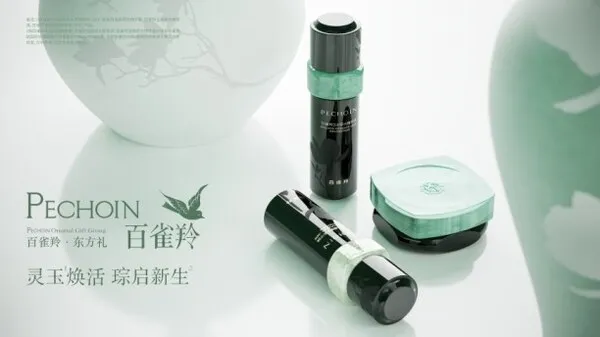
Known in China as 百雀羚, Pechoin traces its origin to Shanghai in 1931. It follows the line from face powder to cold cream, while the blue jar became a strong visual memory cue.
History gives the brand recognition, but age alone cannot secure demand. Chinese skincare brands also compete through ingredients, evidence, content, service, and platform conversion. The archive needed a current reason to buy.
The current portfolio includes heritage moisturizers, anti-aging and brightening care, collagen products, men’s skincare, and cultural gift lines. This range keeps an accessible domestic skincare entry point while testing higher-priced formulas.
How Pechoin Turned Heritage into a Current Product System
The classic Blue Jar Became a Product Platform
The current New Classics range did not discard the blue jar. It updated the formula and the story around it. The official New Classics page presents a 94-year anniversary line with triple skin-related proteins and a “5D glycerin hydration matrix.” Its footnotes state that some ingredient data came from suppliers, while selected product claims came from internal or third-party tests.
That distinction matters. Reformulation gives an old icon a current functional reason to exist. Transparent footnotes also let informed consumers see which statements refer to ingredients, internal testing, or finished-product assessment. They do not turn every claim into independent clinical proof.
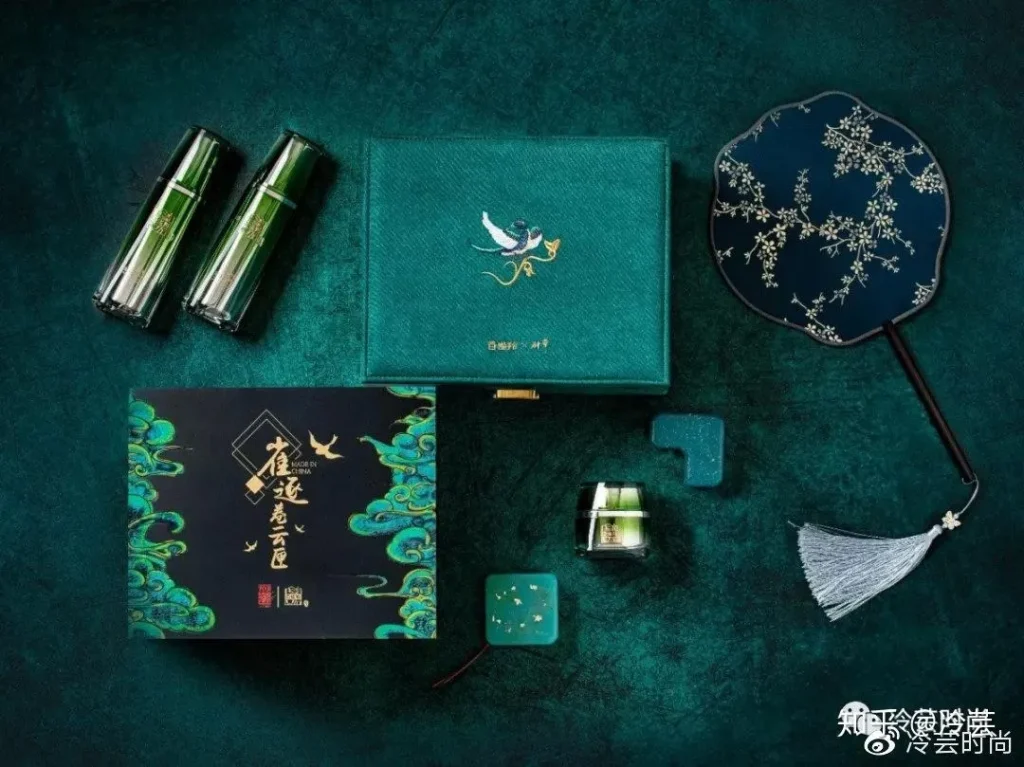
Pechoin also moved the classic into a more selective retail context. In March 2025, Lane Crawford launched a numbered blue-and-white porcelain gift set through its Xiaohongshu store, online shop, and WeChat mini program. Vogue China reported that heritage porcelain artist Wu Yibing designed the jar, which required 42 production steps and firing at 1,300 degrees Celsius.
This was more precise than adding generic Chinese motifs. The brand connected a known package, a named craft tradition, a recognized maker, and a premium retail environment. The commercial role was to make cultural identity collectible and giftable without removing the affordable original from the range.
A Wide Price Ladder Keeps Memory and Aspiration Together
The Heritage Nourishing Facial Cream is RMB 19.90 for 56 grams, and the renewed Exquisite Jade Cream is RMB 360 for 50 grams. The latter references the Liangzhu jade cong and contains botanical extracts, nephrite powder, pearl powder, peptides, and other modern cosmetic ingredients.
These list prices indicate a product ladder, although they do not reveal realized prices, margins, or sales mix. The classic preserves accessibility, while higher-priced lines support beauty premiumization.
The two tiers create tension because low-cost recognition can limit premium perception, while aggressive upgrading can weaken mass appeal.
Pechoin Skincare Moved from Herbal Familiarity to Efficacy Language
The greatest change appears in how the brand describes product value. “Herbal” remains part of its identity, but current communication adds peptides, collagen pathways, barrier support, testing methods, and defined product benefits.
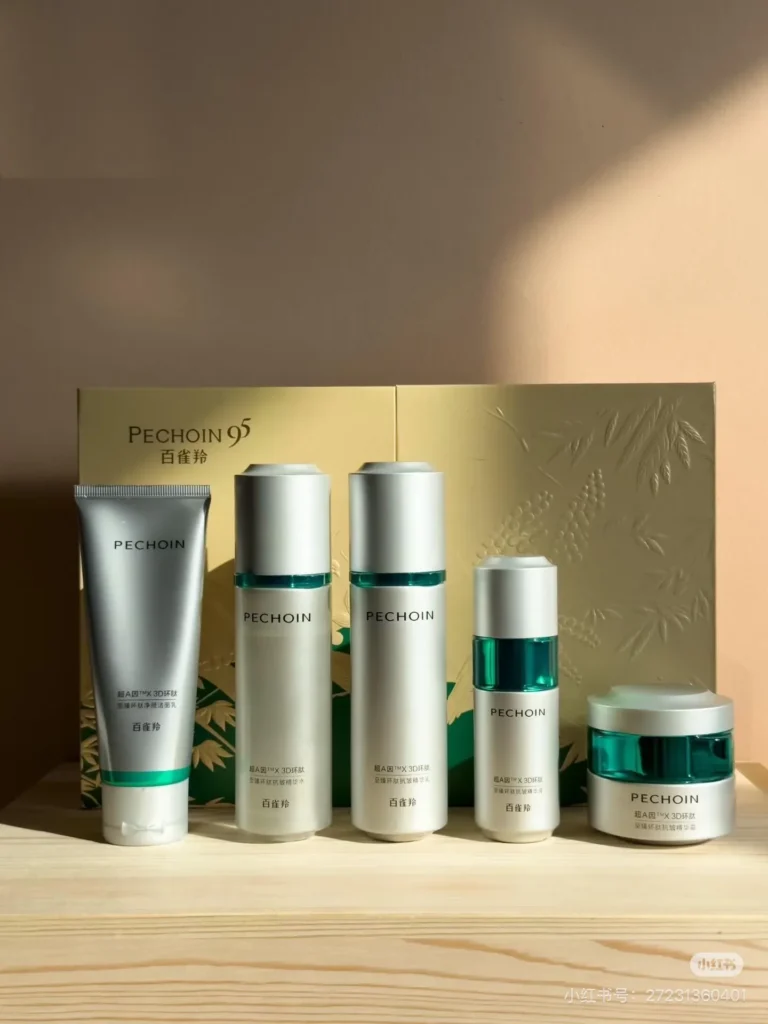
The Super A 2.0 collection combines two cyclic peptides with Ulmus davidiana root extract, described as a botanical retinol. Five products in the renewed six-product line contain the updated complex. The page separates raw-material and in-vitro findings from small finished-product studies, including tests with 30 women over two or four weeks for selected formulas.
In-vitro ingredient results cannot predict outcomes on a person’s skin, and small brand-commissioned tests have limits. The disclosures still show how Pechoin skincare now competes: a mechanism, ingredient system, test type, and stated outcome replace broad promises about traditional Chinese beauty.
Research partnerships add another layer. In June 2025, Pechoin and Ashland announced a collaboration focused on bioavailable raw materials and formulation technology. In July, the International Federation of Societies of Cosmetic Chemists named Pechoin researcher Jun Miao the 2025 Maison G. de Navarre Young Scientist Essay Prize winner for work on skin longevity.
Neither event proves that every product outperforms competitors. Together, they show that skincare R&D has become part of the brand’s operating model and external reputation, not a decorative campaign theme.
Social Commerce Converted Brand Rejuvenation into Reach
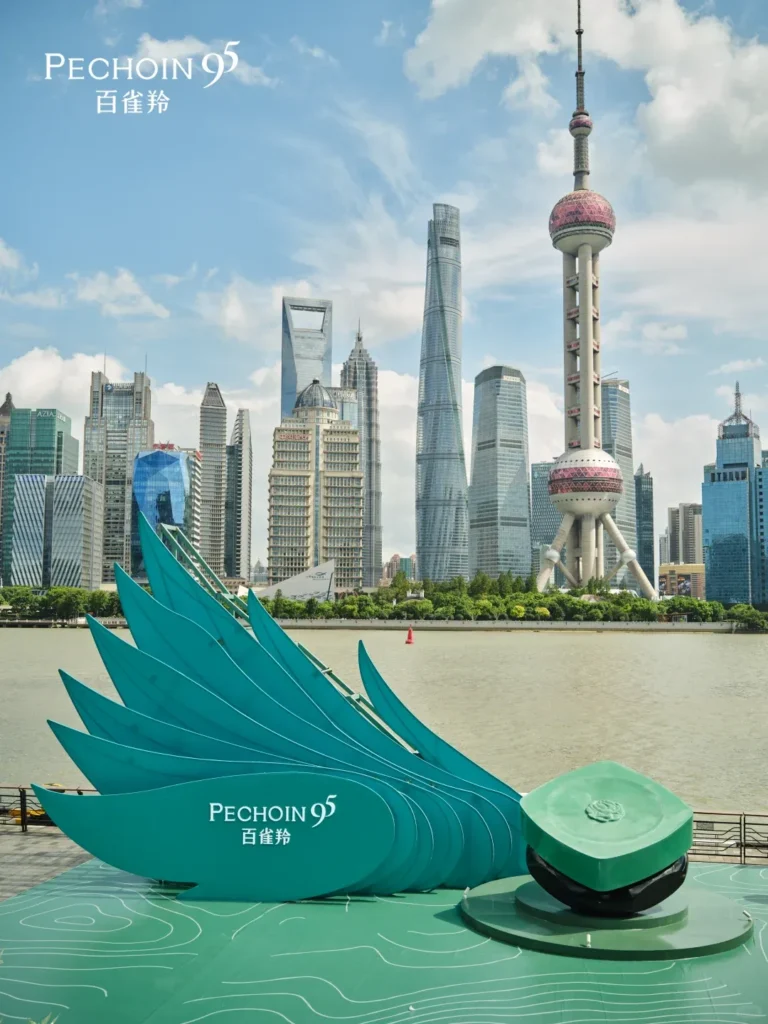
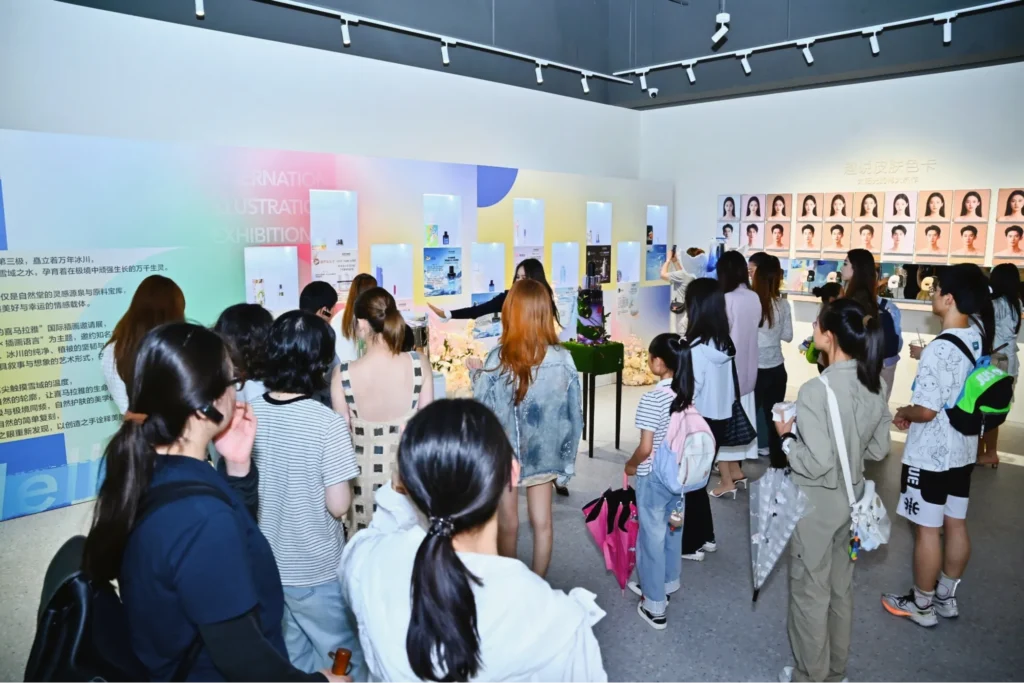
Product renewal required a new distribution and communication system. In a September 2025 Xinhua interview, a company vice president said Pechoin was developing Tmall and Douyin through brand livestreams, KOL collaborations, and educational content. She also cited themed pop-up stores as part of its offline retail work.
The channels serve different jobs. Douyin beauty content can connect discovery, explanation, demonstration, and purchase. Tmall beauty stores capture planned demand. A Xiaohongshu skincare launch can enter design and gifting conversations, while pop-ups make products tangible. This interpretation follows observed activity; Pechoin has not published a full attribution model.
Independent valuation data gives a cautious performance signal. Brand Finance valued the brand at US$3.2 billion in 2026, up 7 percent, and ranked it 13th globally among cosmetics brands. The consultancy attributed much of the momentum to Douyin sales and influencer collaborations.
Brand value is an estimate based on a royalty-relief model, not reported revenue or market share. Its direction is still useful, valuing Pechoin at US$3.0 billion after a 9 percent decline. The next year’s increase supports a recovery reading, but it does not show uninterrupted growth.
Younger Relevance Came from Coordination, Not a Single Campaign
The company says it uses cultural collaborations and celebrity partners to connect with younger consumers. Public evidence does not disclose the age mix of buyers, cohort retention, or repeat-purchase rates. Claims about winning Gen Z beauty consumers should therefore be restrained.
The stronger interpretation concerns coordination. Modern packaging creates attention. Heritage storytelling makes the design ownable. Product reformulation supplies a functional reason to reconsider the brand. Livestream hosts translate technical language, while digital and physical retail provide several purchase paths.
Visual copy alone would miss the strategy. A legacy beauty brand needs recognizable assets, credible product change, suitable price architecture, and channel-specific content. Cultural references without product improvement can feel superficial. Efficacy language without accessible evidence can weaken domestic brand trust.
What Pechoin Still Has to Prove
The company’s current relevance is credible, but several commercial questions remain unanswered. Pechoin does not publicly disclose product-level revenue, repeat purchase rates, customer age distribution, channel profitability, or margins for its premium lines. Public sources also do not establish significant current overseas retail scale.
Its English and French websites, international research links, and global brand ranking support an outward-facing identity. They do not prove successful international expansion. Chinese brands going global face different retailer economics, compliance rules, media systems, and cultural reference points. The Douyin playbook cannot be transferred intact.
The strategic takeaway is specific: heritage becomes valuable when it lowers recognition costs, while current products earn renewed trust. Pechoin linked memory to formulation, proof, price, and distribution. Its next test is to turn attention into repeat demand and translate Chinese cultural confidence for markets that do not share the same memories.
Explore China’s Brand Renewal with Ashley Dudarenok
Pechoin shows how Chinese consumer behavior, cultural branding, product innovation, and social commerce interact. Ashley Dudarenok helps companies examine these shifts through China market intelligence, advisory work, executive education, keynotes, workshops, and learning expeditions.
Book a consultation to discuss what the evidence means for your China strategy or global expansion plans.
Yes. Pechoin, Baique Ling, and 百雀羚 refer to the same Shanghai skincare brand. “Baique Ling” follows Mandarin pinyin more closely, while Pechoin remains the company’s established international brand spelling today.
Does Pechoin skincare use traditional Chinese herbs?
Many formulas contain Chinese botanical extracts such as ginseng, lingzhi, dendrobium, or centella, but ingredients vary across products. Buyers should check each INCI list because the brand also uses peptides, silicones, humectants, and recombinant proteins.
How should consumers read Pechoin efficacy claims?
Check each product-page footnote for the evidence type. Raw-material or in-vitro findings differ from finished-product human testing. Study size, duration, participant profile, measurement method, and the testing laboratory’s identity all affect interpretation.
Does Pechoin make products for sensitive skin?
Some individual products carry gentleness or sensitive-skin claims supported by tests cited on their pages. That does not make every formula suitable for everyone. Review the ingredient list and patch-test a new product first.
Where can shoppers buy Pechoin in China?
The official product pages link to the brand’s Tmall store. Current reporting also confirms Douyin sales and content activity, plus selected launches through WeChat and Xiaohongshu retail channels such as Lane Crawford.
How can shoppers check if a Pechoin product is authentic?
Use the product-verification link on the official Pechoin website and buy through clearly identified official stores or authorized retailers. Packaging alone is not reliable proof because counterfeiters can copy visible design elements.
Does Pechoin sell makeup as well as skincare?
Yes. In March 2026, Pechoin announced a return to color cosmetics with a new face powder and an AI digital model named Bai Ling. The launch extended the brand beyond its current skincare focus.
Is Pechoin already a successful global brand?
Current evidence supports international visibility, multilingual brand presentation, and research relationships. It does not establish broad overseas distribution or sales. Global ranking position measures estimated brand value, so it should not substitute for international operating results.
CHANDO: How Science, Scale and Local Consumer Insight Built a Chinese Skincare Giant
Sep 20, 2026
Show notes
CHANDO became a major Chinese beauty brand by building a coordinated business around affordable skincare. Himalayan ingredients gave it a recognizable identity. Proprietary research, large-scale production, digital commerce, and extensive offline distribution helped turn that identity into a mass-market business.
Its growth shows how a domestic brand can translate local consumer knowledge into products, price points, and retail access that international beauty groups can find difficult to match.
Chinese Cultural Roots Shape CHANDO’s Brand Identity
CHANDO’s official brand story links its identity to Chinese ideas about harmony between people and nature. Its slogan, “你本来就很美,” translates as “You are beautiful just as you are.” This connects its natural-beauty positioning with confidence in individual appearance.
That identity also appears in contemporary creative work. At its June 2026 illustration exhibition in Shanghai, CHANDO Group presented artists’ interpretations of Himalayan mountains, glaciers, and alpine plants. Packaging from products such as Polar Glacier Water and Little Purple Stick Eye Essence served as canvases for artwork.
These collaborations connect CHANDO’s Himalayan identity with Shanghai’s creative community and extend its cultural expression into product design and public experiences.
CHANDO Himalaya Turned a Natural Story into an R&D Platform
CHANDO is the flagship brand of CHANDO Group, formerly JALA Group. The Shanghai company sells skincare, personal care, men’s care, and color cosmetics. Its April 2026 Hong Kong listing application reported 2025 revenue of RMB 5.32 billion.
The Himalayan positioning began with glacier water, alpine plants, minerals, and natural beauty. The stronger commercial move was to connect that origin story with proprietary ingredient development.
The listing filing identifies HiMurchaSin, a yeast ingredient developed from a strain found in the Himalayas, as proprietary. It appeared in 67 formulas, including Himalayan Essence and Time Frozen Essence.
The filing says in-house production costs about 95% less than buying comparable ingredients externally. This company-reported estimate helps explain the commercial value of proprietary research: ingredient ownership gives CHANDO more control over formulation, supply, and production costs.
The group’s current R&D disclosure reports 20 laboratories, 627 patent applications, 292 authorized patents, and more than 230 scientific and technical publications as of September 2026. These figures show the research infrastructure. Evidence for individual formulas and efficacy claims still needs separate assessment.
Research also sits within a much larger commercial budget. CHANDO Group spent RMB 106.2 million on R&D in 2025, equal to 2% of revenue. Sales and marketing costs reached RMB 3.04 billion, or 57.2%. Science supports differentiation, but reaching consumers costs far more.
Hero-Product Iteration Links Science to a Current Skin Concern
The Little Purple Bottle line shows how CHANDO turns research into successive product generations. The sixth-generation Time Frozen Essence had exceeded RMB 2.59 billion in cumulative retail sales by December 2025, according to the listing filing.
In April 2026, the company released the seventh generation with a self-developed peptide called HiMurchaS. CHANDO Group’s 2026 China Beauty Expo report links the product to “fatigue-induced aging,” a concern framed around stress, poor sleep, and reduced cellular energy. The company says it screened more than 2.8 million yeast proteins through an AI computational biology platform.
The filing says product development generally takes three to 18 months and begins with market analysis and consumer insight. Updating a familiar hero line lets the company introduce new ingredients while retaining the recognition built by earlier versions.
Manufacturing Scale Keeps Science Within Mass-Market Price Bands
Ingredient research needs manufacturing capacity to reach consumers at scale. CHANDO operates finished-product facilities in Shanghai, an ingredient fermentation base in Shanghai, and a plant-processing base in Linzhi.
The third phase of its Shanghai cosmetics base began operating in October 2025 with a designed capacity of 8,007 tons a year. Its fermentation facility also began operations in 2025, with an annual ingredient capacity of 1,010.5 tons.
Across the Shanghai cosmetics production base, the filing reported:
Designed capacity of 28,102 tons.
Output of 25,627 tons.
Capacity utilization of 91.2% in 2025.
These figures show substantial use of the production base alongside the addition of new facilities. Managing ingredient processing and finished-product manufacturing gives the group more direct oversight of production schedules, supply availability, and quality consistency.
Online Data and Offline Access Work as One Retail System
Online channels generated RMB 3.70 billion in 2025, equal to 69.5% of group revenue. Directly operated online stores alone contributed 56.5%. The network covers Tmall, Douyin, JD.com, Pinduoduo, Kuaishou, Xiaohongshu, and other platforms.
Offline reach remains substantial. The filing reports more than 64,800 retail sales points and a first directly operated flagship store in Shenzhen, opened in July 2025. Counters and local stores provide trials, advice, and immediate purchase access. E-commerce supports discovery, content, price comparison, and conversion.
Data connects those channels. CHANDO Group reported more than 42.5 million registered members at the end of 2025 and a 30.7% repurchase rate for registered CHANDO members. Its consumer management system combines online and offline records, while its cloud-store system synchronizes inventory and supports pickup or home delivery.
This coordination can help teams allocate stock, tailor membership offers, and connect online demand with local fulfillment. The membership figures indicate the size of the registered audience, although they do not establish loyalty across the entire customer base.
CHANDO Beauty Products Extend the Brand Beyond Facial Skincare
CHANDO shampoo is a smaller part of the portfolio. The current product catalog lists oil-control and volumizing shampoo alongside body wash, hair oils, skincare, masks, makeup, and men’s products. Personal-care revenue rose from RMB 172.6 million in 2024 to RMB 339.8 million in 2025, reaching 6.4% of group revenue.
Expansion into daily-use categories can create more purchase occasions. However, personal care remains a modest revenue contributor compared with the group’s core skincare business.
The strategic question is how far the brand can stretch. Each additional category needs a clear consumer purpose and a credible connection to its Himalayan science positioning. A wider catalog alone does not establish a stronger business.
What L’Oréal’s Stake Says About Global Beauty Competition
L’Oréal held a 6.67% interest in CHANDO Group through Beauty Park, according to the 2026 listing filing. Reuters reported that the stake cost RMB 442 million.
The investment gives an international beauty group financial exposure to a Chinese business with established distribution, smaller-city reach, and local product-development capabilities. It suggests that domestic competitors can also become investment opportunities for global beauty companies.
The stake does not establish a broad operating partnership or demonstrate overseas success. The filing says CHANDO Group has entered North American and Southeast Asian markets, but it does not provide regional revenue or market-share results.
The Strategic Takeaway from CHANDO
CHANDO’s next test is diversification. The group must reduce its 95.3% dependence on one brand while giving newer categories a clear role in the business. International expansion presents another challenge: establishing demand in markets with different consumer expectations, retail structures, and regulations.
For executives studying the company, the useful question is which capabilities can support that next phase. Progress will be easier to judge through revenue contributions from other brands, sustained category growth, and disclosed overseas performance.
Read China’s Beauty Shifts with Ashley Dudarenok
Ashley Dudarenok helps leadership teams interpret Chinese consumer behavior, cultural branding, and innovation to inform their business decisions. Her advisory, executive education, keynotes, workshops, and China learning expeditions connect developments in China with practical questions about products, positioning, and growth.
Book a consultation to explore what China’s beauty market means for your business.
FAQs
Is CHANDO Himalaya the same company as Himalaya Wellness?
No, CHANDO Himalaya is the international branding of China’s CHANDO beauty brand, while Himalaya Wellness is a separate company. Similar references to Himalayan ingredients do not indicate shared ownership, manufacturing, formulas, or distribution.
What does the name CHANDO mean?
The company says CHANDO comes from the transliteration of the Chinese “Chan Dao.” Its Chinese name, Ziran Tang, refers to a place where nature’s power gathers and supports the brand’s natural-beauty positioning.
Does L’Oréal own CHANDO?
L’Oréal is a minority investor, not the controlling owner. CHANDO Group’s 2026 listing application records a 6.67% interest through L’Oréal-owned Beauty Park. The founding family retains control through its holding structure.
Does CHANDO make shampoo?
Yes, CHANDO shampoo is part of the brand’s personal-care range, which includes oil-control, volumizing, and scalp-care products. Buyers should check the exact formula, hair concern, and authorized seller because ranges vary across markets.
Is CHANDO cruelty-free?
The official brand page says it does not conduct animal testing unless applicable law requires it. That qualification matters because regulations can differ across countries, product types, and time periods. Check the latest market-specific policy before purchasing.
Is CHANDO skincare suitable for sensitive skin?
Some CHANDO skincare lines target soothing, hydration, or sensitive-skin needs, but suitability depends on the individual formula and user. Review the full ingredient list, follow the directions, and patch-test before regular use.
How can buyers check if CHANDO beauty products are authentic?
Purchase CHANDO beauty products from official stores or authorized retailers. The company says product codes can provide batch and expiration information. Compare the seller, packaging, code, and local customer-service details before use.
What is CHANDO’s best-selling product?
The company identifies Pure Nutrient Lotion, also known as Bing Ji Shui, as its long-running best seller. Its 2026 filing reported cumulative sales of about 138 million bottles through December
Does CHANDO sell makeup and men’s products?
Yes, the current catalog includes foundation, cushion products, lip color, cleansers, and men’s hydration or oil-control products. Availability differs by country, so the official local catalog gives the most reliable current selection.
Are CHANDO skin care efficacy claims independently proven?
Evidence varies by product and claim. CHANDO reports laboratory research, patents, and clinical validation for certain ingredients, but buyers should not treat group-level R&D totals as proof for every formula or advertised result.
KANS: How Douyin and Anti-Aging Science Built a Chinese Skincare Giant
Sep 18, 2026
Show notes
KANS became a major Chinese skincare brand through a tightly connected system: Douyin created discovery and conversion, the Red Waistline concentrated demand, and peptide research gave the brand a more defensible anti-aging story.
Attractive red packaging helped recognition, but it does not explain the scale. The deeper advantage came from connecting short-form entertainment, livestream sales, online direct distribution, hero-product economics, and consumer-friendly product claims.
That model matters because it shows how a C-Beauty brand can turn content into revenue while building enough scientific substance to support premiumization.
What Is KANS, and Which Country Does It Come From?
KANS is a Chinese cosmetics and skincare brand owned by Shanghai Chicmax Cosmetic Co., Ltd. The brand launched in 2003 and now positions itself around scientific anti-aging for Asian women across age groups, according to Shanghai Chicmax’s 2025 annual report.
The commercial scale is substantial. Shanghai Chicmax reported RMB 7.36 billion ($1.09 billion) in KANS revenue for 2025, up 31.6% from 2024. The brand supplied 80.2% of group revenue. Those figures make KANS cosmetics the parent company’s economic center, rather than one label in a balanced portfolio.
This concentration cuts two ways. It gives Chicmax a clear engine for funding research, content, and new categories. It also exposes the group to changes in Douyin traffic costs, hero-product demand, or consumer interest in peptide-led anti-aging.
How Douyin Turned KANS Into a Content-Commerce System
Douyin did more than give the brand reach. It compressed entertainment, product education, creator endorsement, livestream demonstration, and checkout into one measurable journey.
Mini Dramas Moved Viewers Toward Livestream Checkout
Vogue Business reported in January 2025 that KANS worked with KOL Jiang Shiqi on Douyin mini dramas. A company spokesperson said the stories drew audiences toward livestream sessions and focused investment on one popular skincare product.
That concentration solved a common beauty problem. Consumers need repeated exposure to understand an anti-aging regimen, but conventional ads leave little time for education. Serialized content gave the hero product recurring roles, while livestreams handled explanation, bundles, objections, and conversion.
Platform Leadership Became Measurable Business
KANS led Douyin’s skincare brand ranking in January 2025. Caixin later reported that KANS topped Douyin’s full-year 2025 cosmetics GMV ranking with more than RMB 8 billion, based on Qingyan data.
GMV and recognized revenue are different measures. Douyin GMV records transaction value on the platform, while Shanghai Chicmax’s RMB 7.36 billion ($1.09 billion) figure records KANS revenue under accounting rules. Returns, channel arrangements, and recognition timing can create a wide gap. A combined sales figure would overstate performance.
Online channels produced 93.9% of Shanghai Chicmax revenue, and online direct sales produced 85.4%. The filing attributes direct-sales growth partly to KANS, although it does not disclose a brand-level channel split.
KANS Red Waist Skincare Made Science Easy to Sell
The Red Waist series links a visible product identity with a focused ingredient story. Shanghai Chicmax says the 2025 range centered on cyclohexapeptide-9, or CHP-9. The company also expanded its higher-tier X-Peptide line with an essence, toner, lotion, ampoule, and cleanser.
This is a useful product architecture. The hero line recruits buyers with a memorable color, name, and anti-wrinkle proposition.
A broader regimen then raises basket size and gives the brand more chances to retain customers. The same scientific concept can support several formats without requiring a new message for every SKU.
The Peptide Evidence is Promising but Narrower than the Marketing Story
A 2025 randomized, double-blind, vehicle-controlled study in the Journal of Cosmetic Dermatology compared serums containing 0.002% CHP-9, 0.002% retinol, or vehicle. Researchers enrolled 96 Asian participants, and 91 completed 56 days of twice-daily use.
The CHP-9 group recorded greater improvement than the low-dose retinol group across several measured wrinkle outcomes.
The limits matter. All authors listed affiliations with Shanghai Chicmax and Shanghai Kans Biotech. The trial lasted eight weeks, studied one test serum, and used a 0.002% retinol comparator.
It does not prove that every KANS skincare product delivers the same result. It also does not establish that CHP-9 outperforms the range of retinoid products consumers may encounter at other concentrations.
The commercial value lies in the shift from ingredient naming to a human clinical trial. KANS can cite measured outcomes, while responsible communication should preserve the study’s population, duration, formula, comparator, and company affiliations.
Research and Customer Acquisition Worked Together
Shanghai Chicmax spent RMB 224.7 million ($33.2 million) on R&D in 2025, a 24.9% annual increase. The group also filed 61 patent applications, received 49 patent grants, and published ten research papers across peptide anti-aging, skin repair, and child skincare.
Science did not replace media spending. Group marketing and promotion expenses reached RMB 4.71 billion ($696 million) in 2025, up 42.0%. This company-level figure covers several brands and channel investments, so it cannot serve as a KANS customer acquisition cost. It does show that product evidence and distribution power grew together.
That distinction matters for other Chinese skincare brands. A patented ingredient without sustained consumer education may remain invisible.
Heavy media buying without repeatable product value can create a short sales spike. KANS connected a research asset to a hero SKU, then repeated the message through content and commerce.
Can KANS Grow Beyond Red Waist and Douyin?
The brand added makeup products in 2025 and expanded men’s, haircare, and body-care categories. This makes KANS men part of a broader effort to expand use cases around the master brand. Shanghai Chicmax also built a tiered ambassador roster led by global ambassador Jackson Wang, alongside Liu Haocun, Tian Xuning, and Zhang Hao.
Category expansion can lower dependence on a single anti-aging line. It can also weaken the association between KANS and peptide skincare if new launches lack the same product logic.
A celebrity roster may accelerate awareness, but it does not prove strong overseas demand. Shanghai Chicmax does not report separate international revenue for KANS, so claims that the brand has already achieved global scale would go beyond the public evidence.
The next commercial test is retention. Public filings show revenue, channels, and spending, but they do not disclose brand-level repeat purchase, Douyin customer acquisition cost, or movement from Douyin into Tmall, JD, and offline retail. Those measures would show how much demand persists without continued platform spending.
What a KANS Beauty Products Review Should Examine
A useful review should evaluate the exact formula, rather than transfer the brand’s peptide research to every item.
Product identity: Match the English and Chinese product names, size, batch information, and seller authorization. Regional ranges may differ.
Ingredient relevance: Confirm that the reviewed SKU contains the ingredient connected to the cited study. A range name alone does not verify concentration or formula equivalence.
Evidence quality: Check the test product, participant group, duration, comparator, outcome measures, and researcher affiliations.
Skin fit: Assess texture, fragrance, irritation, hydration, and compatibility with the rest of the routine. Mature skin is not one uniform skin type.
Value: Compare the full regimen cost with the specific concern it addresses. Bundles can raise order value without making every step necessary.
The strategic takeaway is precise. KANS built scale because product, science, content, and checkout reinforced one another. Its next stage depends on proving repeat demand, extending that logic across categories, and translating a China-native commerce model for markets with different platforms, regulations, and skincare habits.
Decode China’s Beauty Growth With Ashley Dudarenok
KANS shows how Chinese brands connect consumer insight, product research, cultural storytelling, and platform commerce. Ashley Dudarenok helps global teams interpret these shifts through tailored keynotes, executive workshops, and China market advisory grounded in first-hand experience.
If your team is assessing Chinese consumers, social commerce, retail innovation, or lessons that can travel beyond China, book a consultation to discuss the questions most relevant to your business.
FAQs
Is KANS skincare from China?
Yes. KANS is a Chinese skincare and cosmetics brand owned by Shanghai Chicmax Cosmetic Co., Ltd. The parent company is based in Shanghai, and its public filings identify KANS as a core scientific anti-aging brand launched in 2003.
Is k.a.n.s the same brand as KANS?
In most searches, k.a.n.s refers to KANS, the Chinese beauty brand. The official English name appears as KANS in Shanghai Chicmax filings and brand materials. Buyers should still verify the seller, packaging, and product name before ordering.
Are KANS skincare products suitable for mature skin?
Some KANS skincare products target wrinkles, firmness, and other concerns associated with mature skin. Suitability still depends on the exact formula, fragrance, texture, sensitivity, and current routine. Check the ingredient list and patch-test a new product first.
What is the KANS Red Waist skincare series?
The KANS Red Waist skincare series is an anti-aging range built around a recognizable red identity and a peptide story. Shanghai Chicmax’s 2025 report names cyclohexapeptide-9 as a core ingredient, but formulas can vary across products.
Does KANS use peptides or retinol?
KANS promotes peptide-centered anti-aging research, including cyclohexapeptide-9. Individual formulas may contain different active ingredients, so consumers should read each INCI list. The 2025 CHP-9 study does not confirm the composition or performance of every retail product.
Is KANS a luxury skincare brand?
KANS is better described as a scaled Chinese scientific anti-aging brand with mass and higher-tier product lines. Its market position varies by range and country, so price, formulation, retailer, and service provide better guidance than a single luxury label.
Where can I buy KANS skincare outside China?
Availability differs by market. Look for an official regional store or an authorized retailer that provides importer details, full ingredient lists, batch information, and a clear return policy. Avoid assuming every marketplace seller has direct brand authorization.
Is KANS men a separate company?
No public filing identifies KANS men as a separate company. Shanghai Chicmax describes men’s skincare as a category developed under the broader KANS brand, alongside haircare, body care, skincare, and makeup expansion during 2025.
Are all KANS products supported by clinical trials?
No public evidence supports that conclusion. A 2025 clinical trial evaluated a specific CHP-9 test serum, not the entire catalog. Product-level proof should identify the finished formula, participant group, study duration, measured outcomes, and research sponsor.
How can I check if a KANS product is authentic?
Buy through an official or clearly authorized seller, then compare the product name, Chinese labeling, ingredient list, size, batch code, seal, and importer information. Contact the regional brand representative if packaging or claims differ from official materials.
PROYA: How R&D and Consumer Insight Built a Chinese Skincare Leader
Sep 15, 2026
Show notes
PROYA became a Chinese skincare leader through a repeatable commercial system: identify a precise skin concern, turn it into a science-led hero product, explain the benefit clearly on Tmall and Douyin, then improve the line with new research. Attractive packaging supports discovery, but research conversion and channel learning explain more of the brand’s scale.
The latest results add an important warning. Growth slowed in 2025 and early 2026, so the next phase will test 珀莱 雅’s ability to reduce flagship dependence and carry Chinese beauty technology into overseas retail.
Why PROYA Matters in China’s Beauty Market
China’s cosmetics category still grew while consumer demand became more selective. The National Bureau of Statistics reported RMB 465.3 billion ($68.7 billion) in 2025 cosmetics retail sales by enterprises above the designated size, up 5.1% year over year.
PROYA Group did not keep pace with that category’s growth. Its 2025 annual report recorded approximately US$1.57 billion in revenue, down 1.68%, and approximately US$221 million in profit attributable to shareholders, down 3.50%. The namesake brand generated approximately US$1.14 billion in main business revenue, down 10.39%, and still represented 72.64% of the total.
Those figures show a large business under pressure. Leadership still needs sharper product choices, less reliance on acquisition, and new growth engines. The brand remains commercially important because it shows how local companies can pair efficacy skincare with rapid product iteration and platform-specific selling.
Consumer Insight Became a Product Architecture
Kantar Worldpanel’s 2025 China beauty analysis found that consumers were placing less weight on brand size and more on personal fit and product experience. Demand was also shifting from single functions toward scenario-led, multi-benefit care. Morning routines favored antioxidants and sun protection, while evening routines leaned toward anti-aging and repair.
The PROYA product plan closely matched that pattern. Its 2025 filing says the Double Effect series added serum, lotion, and cream versions that paired early anti-aging positioning with a whitening claim.
The Ruby series remained an anti-aging franchise and used peptide-led care in its messaging. The company also divided brightening offers across age bands and introduced PROYA MED for repair needs linked to intensive skincare and post-procedure care.
The same logic shaped sun care. The company positioned its Silver Tube product around high protection plus post-sun repair, rather than presenting UV defense as a single benefit. These are company product claims, not independent clinical findings. Their commercial value lies in making a complex routine easier to understand and shop.
Hero products also reduce launch risk. A known series gives new formulas an established identity, while iteration keeps the franchise tied to new concerns. This approach turns consumer insight into a practical brief: define the user, problem, occasion, claim, format, and channel before media spending begins.
How PROYA Turns Skincare R&D Into Marketable Claims
The group spent RMB 216.8 million on R&D in 2025, equal to 2.05% of revenue, and employed 334 R&D staff. The report also listed research centers in Hangzhou, Shanghai, and Paris, plus 303 patents at year-end, including 143 invention patents.
Stronger evidence lies in research conversion. Four self-developed ingredient projects reached industrial application during 2025. The company also completed a regulatory filing for bicyclic octapeptide-68, extending its ingredient innovation work into peptides.
At the 2025 International Federation of Societies of Cosmetic Chemists Congress, the group presented 14 research projects and received a Top 10 Papers of Basic Research award. The company’s announcement says its joint study with Zhejiang University used deep learning to screen natural compounds associated with mitochondrial function and skin aging. The resulting Cellergy pro formulation entered the Energy 2.0 line, according to the same source.
R&D alone did not build the business. PROYA reported an image-promotion expense rate of 44.03% in 2025, compared with a 2.05% R&D expense rate. The two categories serve different purposes and do not form an ROI comparison. They show that scientific credibility, product communication, celebrity reach, and paid distribution still operate together.
Tmall, Douyin, and Xiaohongshu Close the Feedback Loop
Online channels contributed 95.58% of main business revenue in 2025. The company reported that its flagship store ranked first by transaction value in Tmall Beauty for the year, while the brand ranked second in Douyin Beauty. Those are platform rankings disclosed by the company.
Each platform served a distinct role. Tmall combined hero products, gift sets, membership, and major shopping festivals. Douyin linked short video, official livestream commerce, creator broadcasts, and channel-exclusive sets. Xiaohongshu supported longer cultural and social conversations, including a 2025 International Women’s Day live dialogue.
This structure can shorten the time between product launch and commercial response. The filing also describes AI-supported content and advertising optimization on Tmall, but it does not disclose the underlying consumer-research methods or attribution model. That limit matters when evaluating claims about data-led decision-making.
The company describes an omnichannel beauty strategy, yet offline channels supplied only 4.42% of 2025 main business revenue. Department stores can support premiumization and product trial, but e-commerce remains the financial center. Platform traffic costs and algorithm changes therefore remain material operating risks.
PROYA Group Is Building Beyond One Skincare Brand
In May 2026, PROYA paid RMB 351 million ($51.8 million) for an additional 12.6% of Flower Knows, taking its indirect holding to 51%. The same report said Flower Knows generated RMB 1.7 billion ($251 million) in 2025 revenue and would become the group’s second-largest cosmetics brand. The deal gives the portfolio a larger color cosmetics business and reduces reliance on skincare.
International expansion has also moved into physical distribution. Guardian Malaysia included PROYA in its Asian Derma retail range in April 2026. For C-Beauty, this is early channel proof, rather than evidence of broad global scale.
The ambition is much larger. Reuters reported in June 2025 that the group’s ten-year plan targets a place among the global top ten and would require at least RMB 50 billion in annual revenue. That is a management goal, not a forecast.
Recent numbers show the size of the task. First-quarter 2026 revenue fell 2.29% to RMB 2.305 billion ($340 million), while attributable profit declined 6.05% to RMB 366.7 million ($54.2 million). Global growth must therefore add durable demand rather than hide softness in the core business.
What Chinese Beauty Brands Can Learn From PROYA
Translate consumer tension into one clear product promise. Multi-benefit products work when shoppers can still understand the main use case.
Improve recognized franchises instead of replacing them with constant novelty. Hero lines compound memory, reviews, search demand, and retail education.
Treat skincare R&D as an operating capability. Patents matter less than the path from ingredient research to formula, claim, evidence, and repeat purchase.
Separate domestic proof from global readiness. Chinese brands going global need local compliance, retailer trust, relevant claims, and market-specific assortment.
The strategic takeaway is direct: PROYA built its advantage through the speed and discipline connecting consumer insight, science, product, and commerce. Global beauty competition will test the system’s ability to earn trust outside China while the group repairs growth at home.
Explore China’s Consumer and Innovation System With Ashley Dudarenok
PROYA shows how Chinese consumer behavior, cultural branding, scientific innovation, and platform execution connect. Ashley Dudarenok helps global teams turn those signals into decisions through China market intelligence, advisory, executive education, keynotes, workshops, and learning expeditions.
Book a consultation to examine what China’s innovation system means for your brand.
FAQs
What is PROYA skincare?
It is the flagship science-focused brand of Proya Cosmetics Co., Ltd. According to its 2025 annual report, the company positions it for young professional women, mainly in the RMB 200 to RMB 500 band, across online and offline channels.
Is PROYA the same as 珀莱雅?
Yes. PROYA is the English brand name, while 珀莱雅 is the Chinese name used in company filings and local commerce. Both refer to the flagship skincare brand, though the parent company owns a broader beauty portfolio.
What does PROYA cosmetics refer to?
The phrase usually refers to Proya Cosmetics Co., Ltd., the Shanghai-listed parent company behind PROYA and brands such as Timage and Off&Relax. The company develops, produces, and sells skincare, makeup, haircare, and efficacy-focused beauty products.
Is PROYA a luxury brand?
No. The company defines PROYA as popular exquisite skincare with a main price band of RMB 200 to RMB 500. Its premiumization relies on science, hero products, and upgraded retail presentation rather than luxury-house positioning.
What is the PROYA Double Effect series for?
PROYA’s Double Effect series targets early aging and brightening concerns. The company expanded it in 2025 with serum, lotion, and cream versions carrying a whitening claim. Buyers should check the exact formula and local product label.
What is the PROYA Ruby series?
The Ruby series is PROYA’s anti-aging hero line, linked in 2025 marketing to peptide care and firming. Formulas can change across versions and markets, so compare the product number, ingredient list, and authorized seller before buying.
What should buyers know about PROYA sunscreen?
The current Silver Tube line pairs high-protection positioning with post-sun repair messaging. That description reflects the company’s claim, not an independent clinical verdict. Check the local SPF and PA label, application directions, and reapplication guidance.
Where can I buy PROYA products?
PROYA products are available on Tmall, Douyin, Xiaohongshu, and other e-commerce platforms. The brand also distributes through offline retail channels and livestream commerce in China.
Where can I buy PROYA outside China?
Availability remains market-specific. Guardian Malaysia carried PROYA within its Asian Derma range in April 2026. Elsewhere, confirm the seller’s authorization, regional ingredient label, expiration information, and return policy before purchasing imported stock.
Is Proya skincare suitable for sensitive skin?
Suitability depends on the exact formula and your skin condition. Proya skincare includes brightening, anti-aging, sunscreen, and repair products, so review the ingredient list, patch test first, and seek dermatology advice if you have active irritation.

 Our TOPPODCAST Picks
 Stay Connected