TopPodcast.com
Menu
  • Home
  • Top Charts
  • Top Networks
  • Top Apps
  • Top Independents
  • Top Podfluencers
  • Top Picks
    • Top Business Podcasts
    • Top True Crime Podcasts
    • Top Finance Podcasts
    • Top Comedy Podcasts
    • Top Music Podcasts
    • Top Womens Podcasts
    • Top Kids Podcasts
    • Top Sports Podcasts
    • Top News Podcasts
    • Top Tech Podcasts
    • Top Crypto Podcasts
    • Top Entrepreneurial Podcasts
    • Top Fantasy Sports Podcasts
    • Top Political Podcasts
    • Top Science Podcasts
    • Top Self Help Podcasts
    • Top Sports Betting Podcasts
    • Top Stocks Podcasts
  • Podcast News
  • About Us
  • Podcast Advertising
  • Contact
Not in our directory?
Add Show Here
Podcast Equipment
Center

toppodcastlogoOur TOPPODCAST Picks

  • Comedy
  • Crypto
  • Sports
  • News
  • Politics
  • True Crime
  • Business
  • Finance

Follow Us

toppodcastlogoStay Connected

    View Top 200 Chart
    Back to Rankings Page
    Hobbies

    Aquarium Tip Tank Podcast

    A podcast all about tropical fish tanks! This is one of the aquariumtiptank.com media outlets to help you relax and enjoy your home aquarium. We will start by going through the choices, purchases, and setup for a beginner aquarium, and provide many fish tank tips from there! Join us and have fun on this aquarium adventure!

    Advertise
    • Apple Podcasts
    • Google Play
    • Spotify

    Latest Episodes:
    Warning! Wardley Fish Food Recall Apr 02, 2012
    Show notes

    Some fish food flakes are being recalled because they may be contaminated with Salmonella. Read on to make sure you aren’t affected.

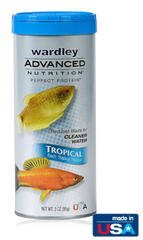
    The Hartz Mountain Corporation is recalling 7,056 1-oz. containers of its Wardley Advanced Nutrition Perfect Protein Tropical Flake Fish Food. The presence of Salmonella was found in one or more containers of the lots specified below during random sample testing conducted by Hartz as a part of their quality control procedures.

    Lot Codes Affected:

    • PP34911
    • PP34912
    • PP35011
    • PP35012

    The product was shipped between December 20, 2011 and March 15, 2012. Consumers who have this product should stop using it immediately and discard the product in the trash. Hartz is fully cooperating with the Food and Drug Administration in this voluntary recall. Customers should contact the Hartz company to get a reimbursement for the purchased product. Full details on the recall can be found here.

    The post Warning! Wardley Fish Food Recall first appeared on Aquarium Tip Tank.


    Aquarium Tip Tank Podcast 004 | Aquarium Myths Debunked! Mar 28, 2012
    Show notes

    Aquarium Tip Tank Podcast 004

    In this episode of Aquarium Tip Tank we debunk 5 myths of owning and maintaining a home aquarium. Included are tips and tricks to keeping your aquarium inexpensive, fun, easy, and maintaining a conservation type of mind.

    Items Mentioned in this Episode:

    • Article: A story about how a couple are setting up the first public aquarium in Falmouth to educate people about marine conservation can be found here.

    Have comments about this episode? Leave them below!

    TJ

    The post Aquarium Tip Tank Podcast 004 | Aquarium Myths Debunked! first appeared on Aquarium Tip Tank.


    Tip of the Day | Start with Less Salt Mix Mar 24, 2012
    Show notes

    Today’s tip of the day from Aquarium Tip Tank will conserve some water and save some money on those water bills! It is much easier to add salt to your saltwater mixture than it is to add water or start all over. So, just start with less sea salt mix than the “recipe” on your salt mix calls for!

    Constantly check your salinity to make sure that you did not add too much of your salt mix. If you do, you may have to add more water to your mixture to dilute more of the salt mix and bring the salinity back down. There are many complications that this could lead to. You may not have any room in your mixture container for more water. If this happens, you’ll have to dump at least some of the water in your mixture container out and now your just wasting water. You also may not have any filtered water left to add to your mixture. If this is the case, then you have to go get your Reverse Osmosis filter out and take the time to filter more tap water.

    The process of adding salt mix to your saltwater should be that you add a little less than what is called for by the manufacturer of the saltwater. Then, you stir and mix the water until all of the salt mix is dissolved and the water is clear again. Testing should be done every time some salt mix is added, but should only be done once all of that salt mix has dissolved and the water is clear again.

    Just add a little bit of your salt mix at a time and you should slowly end up at a salinity that is suitable for your aquarium. If you add salt mix too quickly, you may end up emptying some or all of your water and starting all over!

    Adding saltwater right now? How’s the mixture going? Let us know in the comments below.

    TJ

    The post Tip of the Day | Start with Less Salt Mix first appeared on Aquarium Tip Tank.


    Tip of the Day | Use Hydrometer to test Salinity Mar 23, 2012
    Show notes

    Today’s aquarium tip from Aquarium Tip Tank is just one way to test the saltwater that you are adding to your saltwater aquarium to make sure that it is the correct salinity (or has the right amount of salt)! It is also the cheaper way to test the salinity of your saltwater! Grab a hydrometer for $10 or less from your local fish store or That Fish Place and test your salinity!

    Make sure that you rinse your hydrometer with tap water before every use. Then, just submerge the hydrometer into your saltwater and watch the floating needle rise to point to the salinity of your saltwater. When you’re putting saltwater into your tank for the first time you’ll want to make sure that your salinity is between 1.o23 and 1.025 for a reef aquarium with corals. For a fish only tank the salinity should be between 1.019 and 1.023. If you’re adding saltwater to your tank during a routine water change, make sure you test the water that is currently in your aquarium first. Fish and invertebrates don’t like drastic changes in water quality so try to match the salinity of the new water to that of the water that is currently in your tank. The water that is currently in your tank should be withing the salinity ranges listed above. If not, and you’re trying to raise or lower the salinity of your aquarium water, just do so slowly and with very small differences in salinity from the water in your tank to the water that you are adding. You don’t want to shock and stress the fish and invertebrates of your tank!

    You can use a refractometer to test the salinity of your water, but they are generally about 4 times as expensive. You do get more precise readings with a refractometer, but a hydrometer usually does the trick.

    Making saltwater for your new marine aquarium or for a water change? What is your salinity? What salt mix do you use? Leave your comments below!

    TJ

    The post Tip of the Day | Use Hydrometer to test Salinity first appeared on Aquarium Tip Tank.


    Tip of the Day | RO Filter your Tap Water Mar 22, 2012
    Show notes

    We’ve talked about DE-chlorinating your tap water at Aquarium Tip Tank, but this aquarium tip will help make sure that the water you put in your tank is clean and stable. Fish, corals and invertebrates generally enjoy water conditions that match their natural environment. Well, water from your tap is most likely completely different than the water in your pet fish’s natural environment. The first step to matching natural water conditions is filtering all of the strange chemicals and minerals out of your tap water!

    There are several chemicals that are added to municipal tap water in order to help clean the water and make sure that it is drinkable for humans. Just because it is drinkable does not mean that the water chemistry is suitable for your fish! Tap water may also contain several minerals and bacteria that is not harmful humans, but is different than the minerals and nutrients in the natural environment of your fish. Therefore, it is not safe to add unfiltered tap water to any aquarium.

    The best ways to filter your tap water is to use a reverse osmosis filter. A reverse osmosis filter basically works by forcing your tap water over a semi-permeable filter membrane that removes those chemicals and minerals and leaves some clean water and some dirty waste water. There are several types of reverse osmosis filters available from the inexpensive, portable filter to the very expensive, installation required reverse osmosis filter.

    Remember, when using a reverse osmosis filter you are removing all minerals and chemicals from your tap water. This water is fine to add directly to your aquarium if you are just topping off the evaporated water. However, if you are performing a water change you must add the minerals of your pet fish’s natural water environment. Make sure you use the correct water conditioners or saltwater mixes after you filter your tap water when you are performing a water change.

    Do you use a reverse osmosis filter? Which one? Comment below.

    TJ

    The post Tip of the Day | RO Filter your Tap Water first appeared on Aquarium Tip Tank.


    Tip of the Day | Use Checklists! Mar 21, 2012
    Show notes

    Today’s aquarium tip will help keep things simple, remind you of tasks to perform, and help keep your aquarium clean and healthy! Ever top off the water in your tank, but forget to quickly check the temperature? Ever scrub some of the algae growth off of the sides of your tank, but forget to check the specific gravity of your aquarium water? Most of these tasks don’t take a long time to complete, but maybe they just slipped your mind. An easy way to remember these quick maintenance tasks and make sure everything is happy and healthy is to use checklists!

    Eventually we plan on offering some checklists for download here at Aquarium Tip Tank. Until then, you may be reading a book about aquariums that has some useful checklists in it. Or, you can always quickly make your own!

    A daily check list might just contain a list of tasks like feed fish, check water temperature, check water level, check specific gravity, and clean algae off of aquarium walls. Keeping these checklists electronically would be the best way of doing it so that you don’t use a piece of paper every day of the year. Eventually, the daily checklist entries will turn into your aquarium journal!

    Personally, I think its easier to look at a bullet checklist than it is to open a book every day and search through paragraphs of writing and information to find the reminders of the few, quick tasks that need to be completed to maintain your aquarium. These days, you can keep those lists on your smart phone, and check them off as you complete them. That way, you won’t forget anything and you can be assured that you have done all of the required maintenance to keep your aquarium healthy!

    Do you use checklists? How many? Where do you keep your checklists? Leave a comment below.

    TJ

    The post Tip of the Day | Use Checklists! first appeared on Aquarium Tip Tank.


    Tip of the Day | Only One Angelfish! Mar 20, 2012
    Show notes

    Today’s aquarium tip from Aquarium Tip Tank is just to help you relax and not worry about fish fights! Angelfish are considered to be very territorial and aggressive fish especially toward species of their own kind and sex. Therefore, it would probably be best, especially if you’re a beginner, to keep only one angelfish in your tank!

    Now, this does not mean that there aren’t some species of the Pomacanthidae family that can be kept together under the correct conditions. However, it is not unusual for many angelfish species to fight with their own kind and with others of similar shape, color, and size. Therefore choosing the correct angelfish for the community of fish that you already have, and plan to have in your tank is also important. Some of the medium size species do well with other non-aggressive fish of other non-related species such as Anthias, Blennies, Butterflies, Gobies, and Tile fish. A few of the larger species of angelfish do well with other less-aggressive fish such as Trigger, Hawks, Groupers, Eels, Damsels, and Surgeonfishes. Make note that all of these other species that were listed are either non-aggressive or less aggressive. If taunted, angelfish will normally not back down from a fight.

    What other fish do you keep with your angelfish? Leave a comment!

    TJ

    The post Tip of the Day | Only One Angelfish! first appeared on Aquarium Tip Tank.


    Tip of the Day | Clean your Substrate Mar 19, 2012
    Show notes

    Today’s aquarium tip will help you get keep your tank even cleaner. Do you know where all of that fish waste goes? What about the waste from your plants and invertebrates? That’s correct! All waste that doesn’t get sucked into the mechanical filter eventually succumbs to gravity and ends up in your substrate! In order to clean out your substrate, make sure you use a gravel cleaner and/or stick the end of your siphon tube as far down into your substrate as possible when performing your routine 20% water changes!

    This is a great way to get a lot of those nitrates out of your tank and promote oxygenation. Personally, I start my siphon and immediately stick the tube that I’m using as far down into my substrate as possible. The amount of waste that I pull out of the substrate is amazing, but watch out! If you just let the siphon flow you will suck up all of your substrate down into your waste bucket. Make sure that you have your other, downstream hand on a lower portion of your tube, and crimp off the flow of water before you start losing your substrate. The substrate will then empty back out into the bottom of your tank. Since the waste is a little bit lighter than the substrate it should remain up in the water column of your siphon tube. As soon as all of the substrate is back on the bottom of your tank, release the clamp that you had on the downstream portion of your siphon tube. As long as you have kept the other end of your tube in the water, the flow will re-start and the waste from your substrate will be sucked into your waste bucket. Next, move on to the next spot!

    When I do my water changes, I do this first, going from spot to spot until I’ve gotten down into almost all of the substrate that is in my aquarium. Then, when I’m done cleaning the substrate, I just let the siphon tube vacuum up the rest of the necessary water.

    Do you clean your substrate? Tell us about it. Leave a comment below.

    TJ

    The post Tip of the Day | Clean your Substrate first appeared on Aquarium Tip Tank.


    Tip of the Day | Don’t Lift a Full Aquarium Mar 18, 2012
    Show notes

    Today’s aquarium tip will keep your back healthy for a longer time. It will also provide a way to move your aquarium without damaging your tank. It’s easy, just make sure that you don’t lift a full aquarium! While your at it, make sure you remove all rocks, substrate, decorations, and water and make sure your aquarium is empty if you decide to pick it up off of its stand.

    I know, you might be thinking this is a little bit of overkill. But you’ll be happier removing all of the water, rocks, substrate, and decorations from your tank than you will be if you have to re-seal your tank. Re-sealing your tank may be what is necessary if you don’t empty your tank before lifting it. Any weight on the bottom of your tank will pull at the seams around the edges of the tank that hold the bottom to the sides of the aquarium. It is possible for this gravitational force, even if small, to create a tiny leak in the seam of the sealant that is round the edges and in the corners of your aquarium. If this happens, you’ll have to re-seal that spot, which means re-sealing the entire tank. You’ll end up having to remove everything that is in your aquarium to re-seal the tank anyway.

    If you’re moving your aquarium tank, go ahead and empty it so that you don’t end up creating a leak and having to empty your aquarium anyway.

    Moving soon? Tell us about it. Leave a comment below!

    TJ

    The post Tip of the Day | Don’t Lift a Full Aquarium first appeared on Aquarium Tip Tank.


    Tip of the Day | Buy Healthy Fish! Mar 17, 2012
    Show notes

    Today’s aquarium tip from Aquarium Tip Tank seems pretty obvious doesn’t it? You wouldn’t walk into your Local Fish Store (LFS) and buy a fish that’s belly up and expect to nurse it back to life after putting it in a plastic bag and transporting it home right? Well, included below are a few more tips about selecting some healthy fish from your LFS that might save you some time, money and frustration.

    You know that dead fish that I was just talking about that was belly up in the fish tank at your LFS? Don’t buy anything else that was in the tank with that fish. Its very possible that there is some sort of water condition and/or health problem in that tank that is spreading to all of the other fish. It would be terrible to get home, take the time to adjust your fish to your tank and water conditions, get your new fish into your aquarium, and wake up the next day with that new fish, and possibly several others belly up from whatever disease you brought home from your LFS. This is also a good reason for a quarantine tank, but we’ll get into that in future posts.

    Take some time at your LFS to observe the behavior of the fish very carefully before buying. Do not buy any fish that looks stressed or damaged in any way. Some signs of stressed or damaged fish are cloudy eyes, torn or clamped fins, spots or sores on the body of the fish, a sluggish fish, or a fish that appears to be shivering. If there is one fish in the tank that appears sick, then don’t buy any of the fish from that tank. Also, inspect the tanks at your LFS. Make sure that the tank you select your fish from has clear, clean water. Avoid tanks that have discolored water, or have residue along the tops and sides of the tank. If your LFS has more than one tank with these signs of ignorance, then find another fish store all together.

    All you really have to do is find the fish you want in a clean tank with clear water and make sure that the fish is active, alert, and doesn’t show any signs of being stressed or damaged! Pick that fish out, take that fish home, and enjoy your new pet!

    Find a fish you want to take home for your aquarium? Let us know about it. Leave a comment!

    TJ

    The post Tip of the Day | Buy Healthy Fish! first appeared on Aquarium Tip Tank.


    Previous 1 6 7 8 9 10 Next

    Related Podcasts

    Ham Nation

    1

    Ham Nation Games & Hobbies
    The Brülosophy Podcast

    2

    The Brülosophy Podcast Games & Hobbies
    Good Job, Brain!

    3

    Good Job, Brain! Games & Hobbies
    Making It With Jimmy Diresta, Bob Clagett and David Picciuto

    4

    Making It With Jimmy Diresta, Bob Clagett and David Picciuto Arts
    Waypoint Radio

    5

    Waypoint Radio Arts
    BeerSmith Home and Beer Brewing Podcast

    6

    BeerSmith Home and Beer Brewing Podcast Games & Hobbies
    footer-logo

    Contact Us

    Toll Free: 844-670-7747

    Links

    • Home
    • Top Charts
    • Networks
    • Apps
    • Independents Podcasts
    • Podcast Advertising
    • Podcast News
    • Contact Us
    • About Us
    • Analytics & Insights

    Stay Connected

      Privacy, Terms of Use & Our Code of Ethics Protecting Content Creators Copyrights