Our TOPPODCAST Picks
 Conversations about conflict on an angry planet. Created, produced, and hosted by Matthew Gault and Jason Fields
781951
Support this show http://supporter.acast.com/warcollege.
Hosted on Acast. See acast.com/privacy for more information.

 Stay Connected
Conversations about conflict on an angry planet. Created, produced, and hosted by Matthew Gault and Jason Fields
781951
Support this show http://supporter.acast.com/warcollege.
Hosted on Acast. See acast.com/privacy for more information.


Sometimes it’s good to back up and ask the basic questions: How do we know Iran was even developing nuclear weapons?
On this episode of the show, the Arms Control Wonk Jeffrey Lewis walks us through the history of the Iranian nuclear (weapons and energy) program. It’s got it all: diplomacy, assassinations, cowardly politicians, and uranium fever.
Lewis is a professor at the Middlebury Institute, member of the National Academies Committee on International Security and Arms Control, and former member of the State Department's International Security Advisory Board. He knows the tale well and he’s here to tell it straight.
Support this show http://supporter.acast.com/warcollege.
Hosted on Acast. See acast.com/privacy for more information.
Listen to this episode commercial free at https://angryplanetpod.com
Pauline Shanks Kaurin PhD. was, until recently, the Stockdale Chair for Professional Military Ethics at the U.S. Naval War College. She’d been there since 2018, teaching philosophy and ethics to U.S. military officers and the occasional civilian. Then came Donald Trump, Pete Hegseth, and marching orders she said stifled academic freedom.
So she resigned.
On this episode of Angry Planet, Pauline talks us through her decision and tells us what she saw from the inside of one of the U.S. military’s most lauded academic institutions as the new administration seeks to restrict what’s taught in the classroom.
A Military-Ethics Professor Resigns in Protest
Disgraceful Pardons: Dishonoring Our Honorable
Support this show http://supporter.acast.com/warcollege.
Hosted on Acast. See acast.com/privacy for more information.
You can’t win a war with airpower alone, despite what the U.S. Air Force will tell you. For more than 100 years, the masters of the air have promised that military and political objectives can be achieved if you just let them drop enough bombs.
It’s a theory that’s been tested, and fallen short, many times. Operation Midnight Hammer, the Trump administration’s use of 14 GBU-57A/B Massive Ordnance Penetrators on Iranian nuclear sites, is just the latest test. The promise is that this has set back Iran’s nuclear program (it probably has) but Israel is hoping for much more—regime change in the Islamic Republic.
Time will tell, but I’m not betting on it.
On this episode of Angry Planet we zoom out and talk about the strategy behind airpower in the 21st century. Robert Farley, a Senior Lecturer at the University of Kentucky, is on the show today to give us his thoughts on the Iran strikes, airpower in general, and the lessons to be learned from watching the war in Ukraine.
Strikes on Iran Show the Force, and Limits, of Airpower
Buy Grounded: The Case for Abolishing the United States Air Force
The Five-Ring Circus: How Airpower Enthusiasts Forgot About Interdiction
Support this show http://supporter.acast.com/warcollege.
Hosted on Acast. See acast.com/privacy for more information.
Listen to this episode commercial free at https://angryplanetpod.com
The ocean is vast, beautiful, and lawless. Thousands of miles from any coast, power belongs to those who seize it.
On this episode of Angry Planet, journalist Ian Urbina stops by to discuss the Outlaw Ocean Project and the second season of its incredible podcast. Urbina and his team of investigative journalists are telling stories about human rights, labor, and the environment on the vast swaths of the planet covered in water.
Listen to the Outlaw Ocean Podcast
Inside a migrant detention center in Libya
China: The Superpower of Seafood
Support this show http://supporter.acast.com/warcollege.
Hosted on Acast. See acast.com/privacy for more information.
Listen to this episode commercial free at https://angryplanetpod.com
The futures of the past have curdled into the nightmares of the present. The richest and most powerful people the world has ever known want to colonize mars, live forever, and digitize human consciousness. To make these technological miracles come to pass, they say, will require people to dramatically change the way they live and work. Will it be worth it? Does science even say it’s possible?
On this Angry Planet, astrophysicist and author Adam Becker joins us to explain all the problems with Silicon Valley’s dreams of the future. It’s not a short list. Much of the tech, and even the physics, don’t work the way techno-utopians say it does. Some of the people hawking robot slaves and immortality are chasing the impossible for tragic personal reasons. Others are just trying to sell you something. It’s all the subject of Becker’s new book: More Everything Forever.
Against Life Extension by Francis Fukuyama
More Everything Forever on Bookshop
More Everything Forever on Amazon
Support this show http://supporter.acast.com/warcollege.
Hosted on Acast. See acast.com/privacy for more information.
Listen to this episode commercial free at https://angryplanetpod.com
America loves the Western. Stories about frontier towns, outlaws and lawmen, and—most of all—killing. How did the myth and legend of the gunfighter come to permeate the U.S.? Were there rules to gunfights? How did you become famous by killing people? Did Texas, yes Texas, make all this possible?
We’ll answer those questions in this episode of the show as we discuss the new book The Gunfighters: How Texas Made the West Wild. It’s the work of returning guest (and Texan) Bryan Burrough.
Buy The Gunfighters from an independent bookstore or from Amazon
Support this show http://supporter.acast.com/warcollege.
Hosted on Acast. See acast.com/privacy for more information.
Listen to this episode commercial free at https://angryplanetpod.com
Palantir, Anduril and a suite of other Tolkien-inspired tech nightmares want to integrate artificial intelligence into every aspect of the U.S. military. Both companies have software suites they’re pitching as agents that will help make command decisions during combat. An AI general, if you will.
Yes, that’s a terrible idea.
On this episode of Angry Planet, Cameron Hunter and Bleddyn Bowen will tell us why. Hunter is a researcher at the University of Copenhagen and Bowen is a professor of Astropolitics at Durham University. They’ve just written a paper that skewers the idea that AI will ever be able to make command decisions.
Scientists Explain Why Trump's $175 Billion Golden Dome Is a Fantasy
OpenAI Employees Say Firm's Chief Scientist Has Been Making Strange Spiritual Claims
Eastern Europe Wants to Build a ‘Drone Wall’ to Keep Out Russia
How Palantir Is Using AI in Ukraine
Support this show http://supporter.acast.com/warcollege.
Hosted on Acast. See acast.com/privacy for more information.
Listen to this episode commercial free at https://angryplanetpod.com
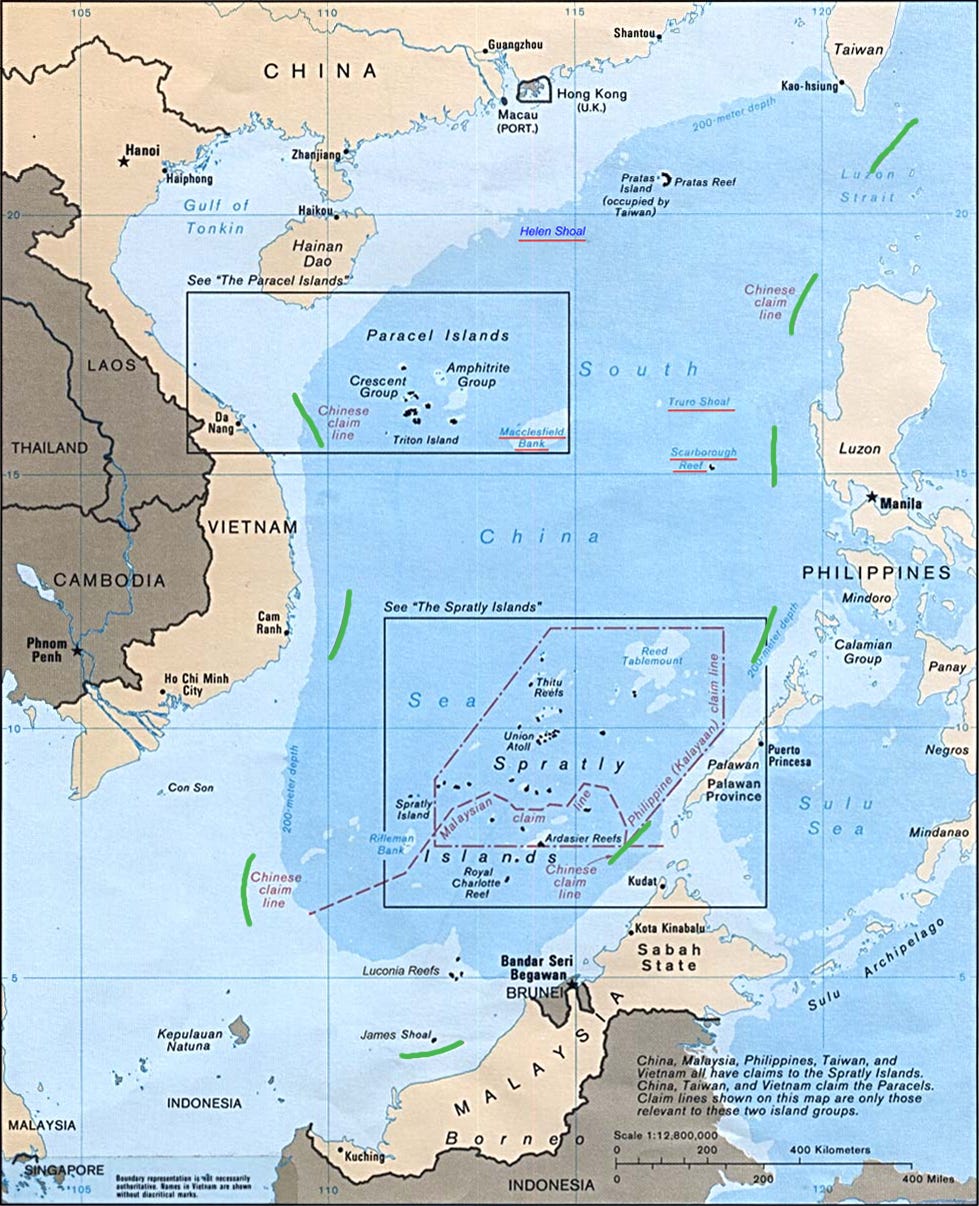
The Pentagon has been trying to pivot to the Pacific for years now. Under President Donald Trump 2.0, who is focused on China, it just might happen. It’s a complicated body of water with dozens of players and a bloody history. One where Beijing is increasingly asserting itself.
Here to walk us through some of it is Angry Planet producer and Honolulu Star-Advertiser reporter Kevin Knodell. He’s just back from the Philippines where he spent two weeks reporting on a joint exercise between the U.S. and its allies in the Pacific.
Hawaii troops forge alliances in Philippines
Army, allies ponder Pacific role
Support this show http://supporter.acast.com/warcollege.
Hosted on Acast. See acast.com/privacy for more information.
Listen to this episode commercial free at https://angryplanetpod.com
Recorded 5/7/25
India and Pakistan have been unhappy neighbors since 1947 and Britain’s decolonization of the subcontinent. They’ve fought four wars and there have been countless skirmishes. As Indian jets streak over Pakistani skies and that Muslim nation threatens retaliation, it’s unclear if this is war or just another blip between nations that plain don’t like each other.
Joining us is Sushant Singh, a man with a background that includes academic, journalist and 20-year veteran in the Indian army. He’s written an article on the situation in Foreign Affairs, and brings us up to date.
More than 20 killed after gunmen open fire on tourists in Indian-administered Kashmir
Support this show http://supporter.acast.com/warcollege.
Hosted on Acast. See acast.com/privacy for more information.
Listen to this episode commercial free at https://angryplanetpod.com
Great power competition has gotten old for President Donald Trump—never one for a fair fight. He’s looking for a little great power collusion instead, dividing the world with his best buds, Vladimir Putin and Xi Jinping. This kind of thing isn’t new, though, Stacie Goddard, a professor at Wellesley, tells us, in fact it’s the 1800s on repeat. Well, look how that turned out… World War I, anybody?
BTW, check out her terrific article on this in Foreign Affairs magazine.
The Rise and Fall of Great-Power Competition
Support this show http://supporter.acast.com/warcollege.
Hosted on Acast. See acast.com/privacy for more information.