TopPodcast.com
Menu
  • Home
  • Top Charts
  • Top Networks
  • Top Apps
  • Top Independents
  • Top Podfluencers
  • Top Picks
    • Top Business Podcasts
    • Top True Crime Podcasts
    • Top Finance Podcasts
    • Top Comedy Podcasts
    • Top Music Podcasts
    • Top Womens Podcasts
    • Top Kids Podcasts
    • Top Sports Podcasts
    • Top News Podcasts
    • Top Tech Podcasts
    • Top Crypto Podcasts
    • Top Entrepreneurial Podcasts
    • Top Fantasy Sports Podcasts
    • Top Political Podcasts
    • Top Science Podcasts
    • Top Self Help Podcasts
    • Top Sports Betting Podcasts
    • Top Stocks Podcasts
  • Podcast News
  • About Us
  • Podcast Advertising
  • Contact
Not in our directory?
Add Show Here
Podcast Equipment
Center

toppodcastlogoOur TOPPODCAST Picks

  • Comedy
  • Crypto
  • Sports
  • News
  • Politics
  • True Crime
  • Business
  • Finance

Follow Us

toppodcastlogoStay Connected

    View Top 200 Chart
    Back to Rankings Page
    Kids & Family

    All Things Breastfeeding Podcast

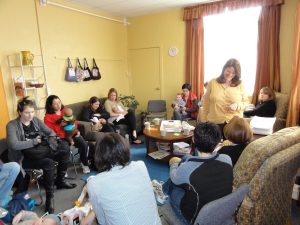
    The All Things Breastfeeding Podcast is for both lactation professionals and new and experienced parents. Barbara D. Robertson, MA, IBCLC, owner of professional lactation education company, LactaLearning, hosts the show. Barbara shares her thoughts and information on All Things Breastfeeding.

    Advertise
    • Apple Podcasts
    • Google Play
    • Spotify

    Latest Episodes:
    All Things Breastfeeding Episode 92: Menopause and Nursing Jan 15, 2025
    Show notes

    Nancy and Barbara discuss a new article that came out in 2024. The study was a large study (20,000 women) in Canada and it looked at the length of breastfeeding, overall years/months of breastfeeding and the onset of menopause. Breastfeeding and women are the terms used in the study so we will be using them here and in the podcast to reflect accurately how the authors used these terms.

    As we age, this becomes more important to us!

    They looked at different lengths of breastfeeding. We discuss the study and what does the term “menopause” mean.

    “We analyzed survey data on 19,783 parous women aged 40 to 65 years at enrollment in the Alberta’s Tomorrow Project (2000–2022), a prospective community-based cohort study in Alberta, Canada. Duration of lifetime lactation across all births was categorized as: <1 month (reference group; 19.8% of women), 1–3 months (12.1%), 4–6 months (11.7%), 7–12 months (18.8%), and ??13 months (37.7%). Women were classified as premenopause, natural menopause (age at 1 year after the final menstrual period), surgical menopause (age at bilateral oophorectomy), or indeterminate menopause (age at premenopausal hysterectomy with ovarian preservation).”

    The results: “In a dose-response manner, longer lactation was associated with reduced risk of natural menopause before age 50 (for ??13 months of lactation, adjusted hazard ratio at age 45: 0.68, 95% CI 0.59–0.78), surgical menopause before age 55 (age 45: 0.56, 0.50–0.63), and indeterminate menopause before age 50 (age 45: 0.75, 0.69–0.82). Longer lactation was associated with lower odds of surgical (adjusted odds ratio 0.54, 95% CI 0.45–0.66) and indeterminate menopause (0.63, 0.55–0.73), compared to natural menopause.”

    So interesting! Just another reason for us to nurse!

    The post All Things Breastfeeding Episode 92: Menopause and Nursing appeared first on The Breastfeeding Center of Ann Arbor.


    All Things Breastfeeding Episode 91: 15 Years of BFCAA! Jan 15, 2025
    Show notes

    The Breastfeeding Center of Ann Arbor (BFCAA) has been operating for more than 15 years!! To celebrate this milestone Jessica and special guest Barb, the original co-host of the podcast, interviewed Barbara on the journey of starting, building, and growing the Center.

    From Barbara: “I opened the center in 2008 as a place for all of families’ nursing needs. We had weekly support groups, consults, classes for families, a human milk depot, and some retail. In 2012 I started offering more professional lactation trainings under BFCAA. I was able

    to combine my two greatest professional loves, education and lactation. I was lucky enough to be joined later on by Jessica Beemsterboer who has a Master’s degree in adult education. The two of us were having such fun! Jessica started as my intern, quickly began teaching with me, and became an IBCLC herself.”

    The pandemic years changed a lot, but we were able to keep the business running, we moved to a new space during that time, Barbara expanded the professional trainings into a separate business, LactaLearning.com, and we added another IBCLC, Veronica Rapin to the team after she completed her internship with us.

    Now, both organizations are thriving. With Jessica and Veronica handling operations of running the Breastfeeding Center of Ann Arbor, Barbara is able to focus more of her time on LactaLearning to train lactation supporters, with all three of us continuing to see clients, and planning to continue to grow and support more families.

    https://traffic.libsyn.com/secure/bfcaa/ATB_Ep_91-_BFCAA15YearUpdate.mp3

    The post All Things Breastfeeding Episode 91: 15 Years of BFCAA! appeared first on The Breastfeeding Center of Ann Arbor.


    All Things Breastfeeding Episode 90: Parent’s Stories with Jamie and Nikki Jan 15, 2025
    Show notes

    Barbara has been honored to work with many families over the past 20 years but Jamie and Nikki were some of her favorites.

    Barbara worked with Nikki when she had the family’s first baby a few years ago. The commitment to nursing was powerful! After a few bumps, things went really well. Fast forward and it was Jamie’s turn to carry the new baby for their growing family. There were more hiccups than with the first baby but after a few months, everything settled down as it usually does.

    Barbara talked with this couple to explore some of the benefits and surprises of nursing babies when you have two moms in the picture. They started out with an idea of how co-nursing might look and watched how it actually evolved.
    They shared a great resource for queer families looking for some tailored birthing and postpartum support. This is a link to the classes offered currently by Liam Kali. The offerings were a little different four years ago, but we took a childbirth class and did an early parenting weekly support group. https://maiamidwifery.com/pregnancy-parenting/
    Enjoy their story!

    If you work with breast/chestfeeding families and who is passionate about lactation support OR a and you want to turn your passion for nursing into professional practice, check out LactaLearning.com and consider following us on social media!

    Instagram @lacta.learning

    Facebook LactaLearning

    The post All Things Breastfeeding Episode 90: Parent’s Stories with Jamie and Nikki appeared first on The Breastfeeding Center of Ann Arbor.


    All Things Breastfeeding Episode 89: ABM 2022 Mastitis Protocol Jan 15, 2025
    Show notes

    Barbara and Nancy discuss the ABM 2022 Mastitis Protocol.

    Both Nancy and Barbara feel this Protocol is a step in the right direction! However, we don’t agree with everything and you can see others feel the same way. Listen and find out!
    The ABM (Academy of Breastfeeding Medicine) Mastitis #36 Protoco replaces Protocols #4, #20, and Engorgement Protocol has been retired. From the Protocol: ”…Scientific evidence now demonstrates that mastitis encompasses a spectrum of conditions resulting from ductal inflammation and stromal edema. If ductal narrowing and alveolar congestion are worsened by overstimulation of milk production, then inflammatory mastitis can develop, and acute bacterial mastitis may follow. This can progress to phlegmon or abscess, particularly in the setting of tissue trauma from aggressive breast massage. Galactoceles, which can result from unresolved hyperlactation, can become infected. Subacute mastitis occurs in the setting of chronic mammary dysbiosis, with bacterial biofilms narrowing ductal lumens.”

    The protocol claims, “Milk stasis has been postulated to be a potential instigating factor for mastitis, although scientific evidence has not proven a causation.” This is one of ideas that really challenges what we have seen in our private practice. A parent misses a feed or a pump, becomes engorged and then seems to have ductal narrowing (what we used to call a plug!) which can lead to mastitis. We will have to wait for more information and research on the subject.

    Level of research- Not all are in agreement

    Not everyone agrees with new Protocol.

    This protocol was heavily influenced by Dr. Katrina Mitchell who is a breast surgeon. We love Dr. Mitchell so don’t get us wrong but she is a breast surgeon so instead of seeing our everyday horses or one off ductal narrowing or mastitis she sees zebras, folks who are in real trouble, all the time! Below are some reactions to the Protocol from others.

        • (Douglas, 2023) https://internationalbreastfeedingjournal.biomedcentral.com/articles/10.1186/s13006-023-00588-8
          • “Clinical Protocol #36 offers some advances in the management of breast inflammation. However, Clinical Protocol #36 also exposes clinicians to two international trends in healthcare which undermine health system sustainability: overdiagnosis, including by over-definition, which increases risk of overtreatment; and antibiotic over-use, which worsens the crisis of global antimicrobial resistance. Clinical Protocol #36 also recommends unnecessary or ineffective interventions which may be accessed by affluent patients within advanced economies but are difficult to access for the global majority. The Academy of Breastfeeding Medicine may benefit from a review of processes for development of Clinical Protocols.”
        • (Baeza et al, 2022) Re: ‘‘Academy of Breastfeeding Medicine Clinical Protocol #36: The Mastitis Spectrum, Revised 2022’’ by Mitchell et al.
          • “Authors state it is an entity necessitating antibiotics or probiotics to resolve—again, no evidence.”
          • “Changing the term ‘‘mastitis’’ to ‘‘mastitis spectrum’’ seems a step backward, as it implies losing scientific accuracy. It disperses the predisposing factors, the illness itself, and its complications under the term ‘‘spectrum.’’ More solid studies on mastitis are needed, but it is an entity that has a clear clinical definition, which we know how to diagnose and manage. Inserting it within a spectrum adds complicated nuances that are not scientifically justified.”
          • Subacute mastitis “This term is not defined in the literature, much less its cause. The articles cited by the authors (no. 19–22) give different clinical symptoms to define it. Reference no. 22 bases its conclusions once more on the mentioned article on candidosis (no. 5), so we have a circular citation wheel based on opinions and no facts. That subacute mastitis is an entity and that it is caused by biofilms in chronic mammary dysbiosis is supported by no evidence.”
          • Lecithin for blebs- Claim no evidence
          • Therapeutic ultrasound for pain- Claim no evidence
          • Probiotics for mastitis- Claim no evidence

    Here are the main take homes from the Protocol. I like that they include the strength of evidence. Listen to the podcast to hear Nancy and Barbara discuss each one.
    All treatments From Protocol #36: “Management of mastitis spectrum disorders includes general strategies that apply to the entire spectrum, as well as condition-specific interventions. Prompt and effective treatment will halt progression in the spectrum. Many of these measures provide not only treatment, but prevention as well.”

      • Treatment suggestions:
        • “Reassure mothers that many mastitis symptoms will resolve with conservative care and psychosocial support.”
          • Level of evidence: 3. Strength of recommendation: C
          • “Assist mothers in identifying ways to decrease stress, increase opportunities to rest, and help resolve early signs of inflammatory mastitis.”
          • “Fourth-trimester care programs represent a holistic approach to postpartum care, including mental health, psychosocial needs, and breastfeeding counseling.”
        • “Educate patients on normal breast anatomy and postpartum physiology in lactation”
          • Level of evidence: 3. Strength of recommendation: C
          • “Many patients experience breast fullness or palpate normal lactational glandular tissue and misinterpret this as ‘‘plugging.’’ They should be reassured that lactating breasts can feel ‘‘lumpy’’ and even painful at times. Although this is uncomfortable, it is not abnormal.
          • Patients should be reassured that infection does not develop in the period of several hours. The pain and redness they may experience in mornings after a long stretch of sleep represents alveolar distention, edema, and inflammation rather than infection.”
        • “Feed the infant on demand, and do not aim to ‘‘empty’’ breasts.”
          • Levels of evidence: 2–3. Strength of recommendation: C
          • “Overfeeding from the affected breast or ‘‘pumping to empty’’ perpetuates a cycle of hyperlactation and is a major risk factor for worsening tissue edema and inflammation.”
          • “In some instances, in which the retroareolar region is so edematous and inflamed that no milk is expressible by infant breastfeeding or hand expression, the mother should not continue to attempt feeding from the affected breast during the acute phase. She can feed from the contralateral breast and return to feeding from the affected breast when edema and inflammation subsides. Edema may resolve more quickly with ice and lymphatic drainage. She should be counseled that a decrease in milk production is expected, but can later be augmented.”
          • “No evidence exists to support ‘‘dangle feeding’’ (i.e., feeding an infant on the floor with the mother hovering above) or other unsafe infant positions.”
        • “Minimize breast pump usage.”
          • Levels of evidence: 2–3. Strength of recommendation: C.
          • “Mechanical breast pumps stimulate breast milk production without physiologically extracting milk as an infant will.”
        • “Avoid the use of nipple shields.”
          • Level of evidence: 3. Strength of recommendation: C
          • “Available evidence does not support the use of nipple shields. Neither safety nor effectiveness has been demonstrated.”
        • “Wear an appropriately fitting supportive bra”
          • Level of evidence: 3. Strength of recommendation: C
        • “Avoid deep massage of the lactating breast.”
          • Levels of evidence: 1–2. Strength of recommendation: B.
          • “The most successful technique approximates manual lymphatic drainage with light sweeping of the skin rather than deep
          • tissue massage.”
          • “It should be noted that gentle compressions during breast pump usage, often termed ‘‘hands on pumping,’’ provide an effect similar to hand expression and is safe if excessive manual force is avoided.”
        • “Avoid saline soaks, castor oil, and other topical products.”
          • Level of evidence: 3. Strength of recommendation: C.
          • “Topical products such as castor oil will not treat this condition and may in fact cause tissue damage particularly if they are combined with massage.”
        • “Avoid routine sterilization of pumps and household items.”
          • Level of evidence: 3. Strength of recommendation: C.
          • “Mastitis is not contagious and does not result from unhygienic practices.”

    Finally, below are their medical interventions.

        • Medical interventions
          • Decrease inflammation and pain
          • Treat associated blebs and avoid “unroofing”
          • Decrease any hyperlactation
          • Utilize therapeutic ultrasound
          • Consider probiotics
          • Look for mood and anxiety disorders and address if needed

    If you work with breastfeeding families who is passionate about lactation support OR a and you want to turn your passion for breastfeeding into professional practice, check out LactaLearning.com and consider following us on social media!

    Instagram @lacta.learning

    Facebook LactaLearning

    The post All Things Breastfeeding Episode 89: ABM 2022 Mastitis Protocol appeared first on The Breastfeeding Center of Ann Arbor.


    All Things Breastfeeding Episode 88: Breastfeeding during Emergencies Jan 15, 2025
    Show notes

    Breastfeeding during emergencies used to be a topic about something that was happening somewhere else to someone else. However, now with the rise in tragedies that are happening everywhere in the world, breastfeeding during emergencies affects all of us. We know these emergency situations are increasing and will continue to do so as time goes by. These could be earthquakes, hurricanes, flooding, drought, or war. As Nancy and Barbara were recording this episode, Florida and the surrounding areas were expecting another hurricane.

    We know that during emergencies, nursing is key to infant health and survival. It provides optimal nutrition and needs no outside resources. A common myth is that the stress of the emergency or lack of resources for parents will negatively affect families. However, even when malnourished and stressed, nursing parents can produce good quality milk for their babies.

    New research also shows that during emergencies a mother’s mental health is positively affected by breastfeeding which also promotes more breastfeeding. Good for babies, good for parents. So, what are some of the barriers to promoting and protecting breastfeeding during emergencies?

    Knowing that providing lactation training to health care workers, relief workers, and families is key for success is at the top of the list. Miss-information is still rampant even among well meaning health care workers and relief workers. Families need accurate medical information and social and emotional support.

    Exclusive nursing, wet nursing, induced lactation, and relactation should be encouraged in emergencies, as even partial milk production can save babies’ lives. Since 2020 studies show that breastfeeding supportive practices in the hospital during emergencies can increase breastfeeding rates.

    New research also shows, surprise, surprise, understanding and addressing specific cultural breastfeeding practices and barriers is important. Providing support to a population that already has high breastfeeding rates is very different than working with families that come from an area of low breastfeeding rates. Even the differences between families from urban areas vs. rural areas and their needs can be dramatic.

    Another recent finding was that facilitating ways to provide breastfeeding privacy is critical to some populations. Being creative is important for this to assess what resources are available and practical. Ideally, families would have a private, safe space to nurse but this isn’t always possible. Aprons, baby carries, and shawls can be helpful here.

    International rules exist on formula distribution. Making sure these are followed is such an important piece for success. The idea that a milk supply is fragile is a common belief and families worry they don’t have enough milk for their babies (even though they often do!) can be reinforced by having lots of formula available vs. breast/chestfeeding support.

    We hope you enjoy our podcast!

    If you are a parent who is passionate about lactation support OR a professional who works with breastfeeding families and you want to turn your passion for breastfeeding into professional practice, check out LactaLearning.com and consider following us on social media!

    Instagram @lacta.learning

    Facebook LactaLearning

    The post All Things Breastfeeding Episode 88: Breastfeeding during Emergencies appeared first on The Breastfeeding Center of Ann Arbor.


    All Things Breastfeeding Episode 87: Parental Leave Jan 15, 2025
    Show notes

    In this episode, Barbara Robertson and Nancy Mohrbacher review recommendations and outcomes of parental leave policies around the world. Paid parental leave varies by country, but the Academy of Breastfeeding Medicine (ABM) has issued a new position statement for maternity leave guidelines, recommending at least 6 months of paid leave.

    Nancy and Barbara dive into some of the details of when mothers return to work, the economic cost of not breastfeeding babies, as well as the long-term health outcomes for women who breastfeed, such as reduced incidences of heart disease and diabetes. Nancy also reviews a study looking at the impact of parental leave on mental health issues, which is such an important topic.

    And keep in mind, it’s not just the length of parental leave that matters – mothers need support for breastfeeding: from their families, their community, their health care providers, and their workplace. And they need that support through all stages of breastfeeding, however long they choose that to be. Parental leave policies can help provide the support that families need to be successful in their breastfeeding journey.

    Resources:

    ABM Position Statement: Paid Maternity Leave—Importance to Society, Breastfeeding, and Sustainable Development – https://abm.memberclicks.net/assets/DOCUMENTS/PROTOCOLS/bettinelli-et-al-2024-abm-position-statement-paid-maternity-leave-importance-to-society-breastfeeding-and-sustainable.pdf

    U.S. Department of Health & Human Services: Business Case for Breastfeeding – https://www.womenshealth.gov/breastfeeding/breastfeeding-home-work-and-public/breastfeeding-and-going-back-work/business-case

    Bartick, 2010. The Burden of Suboptimal Breastfeeding in the United States: A Pediatric Cost Analysis – https://publications.aap.org/pediatrics/article-abstract/125/5/e1048/72534/The-Burden-of-Suboptimal-Breastfeeding-in-the?redirectedFrom=fulltext

    Society for Human Resources Management 2023 Employee Benefits Survey: Executive Summary – https://shrm-res.cloudinary.com/image/upload/v1685728116/Employee%20Benefits/CPR-222434-Employee-Benefits-Executive-Summary-FINAL-for-PUBLICATION.pdf

    Want more information?

    If you are a parent who is passionate about lactation support OR a professional who works with breastfeeding families and you want to turn your passion for breastfeeding into professional practice, check out LactaLearning.com and consider following us on social media!
    Instagram @lacta.learning
    Facebook LactaLearning
    Blog

    If you are a parent and want to learn more from the Breastfeeding Center of Ann Arbor, you can find us at:
    BFCAA.com
    Instagram @breastfeedingcenterannarbor
    Facebook
    Blog & Podcast

    The post All Things Breastfeeding Episode 87: Parental Leave appeared first on The Breastfeeding Center of Ann Arbor.


    All Things Breastfeeding Episode 93: Growth Spurts Jan 02, 2025
    Show notes

    The All Things Breastfeeding Podcast is a program for both lactation professionals and new and experienced parents. Barbara D. Robertson, MA, IBCLC, owner of LactaLearning and The Breastfeeding Center of Ann Arbor and Jessica Beemsterboer, MEd, IBCLC, who works with Barbara, host the show. Barbara and Jessica share their thoughts and information on All Things Breastfeeding.


    All Things Breastfeeding Episode 92: Menopause Jan 02, 2025
    Show notes

    The All Things Breastfeeding Podcast is a program for both lactation professionals and new and experienced parents. Barbara D. Robertson, MA, IBCLC, owner of LactaLearning and The Breastfeeding Center of Ann Arbor and Jessica Beemsterboer, MEd, IBCLC, who works with Barbara, host the show. Barbara and Jessica share their thoughts and information on All Things Breastfeeding.


    All Things Breastfeeding Episode 91: BFCAA 15 Year Update Nov 26, 2024
    Show notes

    The All Things Breastfeeding Podcast is a program for both lactation professionals and new and experienced parents. Barbara D. Robertson, MA, IBCLC, owner of LactaLearning and The Breastfeeding Center of Ann Arbor and Jessica Beemsterboer, MEd, IBCLC, who works with Barbara, host the show. Barbara and Jessica share their thoughts and information on All Things Breastfeeding.


    All Things Breastfeeding Episode 90: Interview with Jamie and Nikki Nov 11, 2024
    Show notes

    The All Things Breastfeeding Podcast is a program for both lactation professionals and new and experienced parents. Barbara D. Robertson, MA, IBCLC, owner of LactaLearning and The Breastfeeding Center of Ann Arbor and Jessica Beemsterboer, MEd, IBCLC, who works with Barbara, host the show. Barbara and Jessica share their thoughts and information on All Things Breastfeeding.


    Previous 1 3 4 5 6 7 15 Next

    Related Podcasts

    Tumble Science Podcast for Kids

    1

    Tumble Science Podcast for Kids Education for Kids
    The Longest Shortest Time: A Women’s Health Show for Everyone

    2

    The Longest Shortest Time: A Women’s Health Show for Everyone Government & Organizations
    Dream Big Podcast for Kids

    3

    Dream Big Podcast for Kids Education for Kids
    Brains On! Science podcast for kids

    4

    Brains On! Science podcast for kids Education for Kids
    The Purrrcast

    5

    The Purrrcast Kids & Family
    The Dog Trainer’s Quick and Dirty Tips for Teaching and Caring for Your Pet

    6

    The Dog Trainer’s Quick and Dirty Tips for Teaching and Caring for Your Pet Education
    footer-logo

    Contact Us

    Toll Free: 844-670-7747

    Links

    • Home
    • Top Charts
    • Networks
    • Apps
    • Independents Podcasts
    • Podcast Advertising
    • Podcast News
    • Contact Us
    • About Us
    • Analytics & Insights

    Stay Connected

      Privacy, Terms of Use & Our Code of Ethics Protecting Content Creators Copyrights