Introduction to Solid State Chemistry is a freshman (first-year) class on the principles of chemistry, with an emphasis on solid-state materials, and their application to engineering systems.
OCW Scholar courses are designed for independent learners who have few additional resources available to them. The courses are substantially more complete than typical OCW courses and include new custom-created content as well as materials repurposed from MIT classrooms. The materials are are also arranged in logical sequences and include multimedia such as video and simulations.
The 2009 University of Chicago Teacher Institute on “Understanding the Global Economy,” provided an interdisciplinary look at how changes in the global economy are affecting numerous aspects of countries around the world. The Institute addressed issues of globalization and its positive and negative effects on issues such as: labor, social rights, and natural resource exploitation and allocation. A general overview of markets, trade and the current global financial crisis was presented. Case studies from around the world were used to illustrate the interconnectedness of societies and their roles in the global economy.
The topics presented could easily and appropriately be incorporated into a wide array of subjects taught, including: history, math, economics, literature, English, biology, environmental science, social studies, anthropology, world studies, and foreign language/culture classes.
Intended primarily for elementary through community college educators (but open to all interested parties), this 3 day workshop explored issues surrounding the Global Economy through a series of presentations, discussions, and small group activities. The topic of the Global Economy was examined through the following daily themes:
* Day 1 – Markets, Trade and Globalization
* Day 2 – Impacts of Globalization
* Day 3 – The Current Global Financial Crisis
Experts from The University of Chicago and other institutions from around the U.S. lectured on these themes. Each day attendees received lessons and resources for curriculum building. In addition, an optional full-day curriculum development workshop was held on June 25th.
This internationally focused conference was presented by The University of Chicago Center for International Studies, in conjunction with the East Asian, Southern Asian, Latin American, East European and Russian Eurasian, and Middle Eastern Area Studies Centers.
Overview of modern scientific cosmology, including discussion of stars, the Milky Way galaxy, black holes, dark matter, the big bang, and evidence for our current understanding of the universe.
This course is comprised of a six-quarter sequence of classes that will explore the essential theoretical foundations of modern physics. The topics covered in this course sequence will include classical mechanics, quantum mechanics, the general and special theories of relativity, electromagnetism, cosmology, and black holes. While these courses will build upon one another, each course also stands on its own, and both individually and collectively they will let students attain the “theoretical minimum” for thinking intelligently about modern physics.
Quantum theory governs the universe at its most basic level. In the first half of the 20th century physics was turned on its head by the radical discoveries of Max Planck, Albert Einstein, Niels Bohr, Werner Heisenberg, and Erwin Schroedinger. An entire new logical and mathematical foundation—quantum mechanics—eventually replaced classical physics. We will explore the quantum world, including the particle theory of light, the Heisenberg Uncertainty Principle, and the Schroedinger Equation.
Discover the marvels of the universe with a Hubble scientist, and find constellations from the view of your backyard. Hubble’s Universe brings these and many other videos to your screen.
Dr. Kiki’s Science Hour is an in-depth exploration of scientific topics ranging from climate change to nanotech. Every week neurophysiologist Dr. Kirsten Sanford talks with leading experts in all areas of scientific research.
Although the show is no longer in production, you can enjoy episodes from the TWiT Archives.
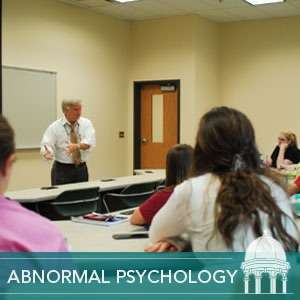
The major historical and contemporary theories of the origin and development of personality are explored, emphasizing the role of the dynamics of personality.
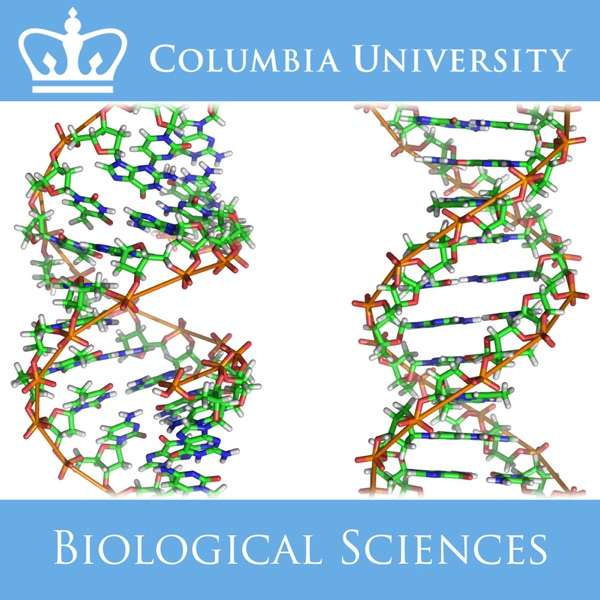
This is this collection of lectures for the Intro Bio course taught at Columbia in the 2011-2012 academic year. Lectures 1-23 correspond to the fall semester while 24-48 correspond to the spring semester. Prerequisites: One year of college chemistry, or a strong high school chemistry background. Recommended as the introductory biology course for biology and related majors, and for premedical students. Fundamental principles of biochemistry, molecular biology, and genetics. Cellular biology and development; physiology of cells and organisms. For supplementary materials, please reference the website for the first semester (https://newcourseworks.columbia.edu/access/content/group/BIOLC2005_001_2011_3/indexo.html) and the second semester (https://newcourseworks.columbia.edu/access/content/group/BIOLC2006_001_2012_1/misc2012/main-menu.html). If you have any questions, please contact the course administrator at: pnt2102@columbia.edu
The astrophysics program at the University of Chicago began with the building of the Yerkes Observatory, in Williams Bay, Wisconsin, where the entire Department was located. By the mid-sixties it had become clear that ties to the intellectual community on campus needed to be strengthened, and there was a shift of the center of mass from Wisconsin to Chicago. All of the academic programs are now on campus. Yerkes still provides laboratory facilities, contains the bulk of the library astronomy holdings outside of Crerar, and offers access to research telescopes and instruments for prototyping and instruction.

 Our TOPPODCAST Picks
  Stay Connected