
This course provides an introduction to the study of sensation and perception. Perception is the active process by which organisms extract information from their surroundings using the computational machinery housed in the brain, spinal cord, and peripheral nervous system.
Podcast Categories: Science
ASTR 103: Introduction to Planetary Astronomy – Complete – Robert Wagner
An introduction to the solar system with an emphasis on the sun, major and minor planets, the earth-moon system, asteroids, comets, meteors, etc.; a study of the physical laws of motion and the properties of light. Course work includes instruction in the use of astronomical instruments; some planetarium shows, along with laboratory exercises, are an important part of this course.
These are mainly pre-recorded lectures in MP3 format for students to review for the class. There will also be some video clips with live lectures to follow.
Science – Video – MIT World

MIT World — A Primary Source of Great Ideas on the Web
Which ideas and innovations can change the world?
MIT World™ answers that question by publishing key presentations by the MIT faculty and guest speakers who are shaping the future. These free, on-demand videos, available 24/7 to viewers worldwide, reflect and extend MIT’s educational mission—to provide the best education in science, technology, and related fields—to engaged learners anytime, anywhere.
More a publication of thought leadership, and less a news site, MIT World aims to capture the pulse and excitement of the range of ideas discussed at MIT every day and share them with the world. A growing archive offers insights on topics ranging from architecture to innovation to technology and sustainability. Cumulatively, these presentations by world-class thinkers and doers map great ideas in the making.
Vetenskapsradions veckomagasin
Vetenskapsradions veckomagasin sänder inte längre nya avsnitt. Lyssna på alla avsnitt i Sveriges Radios app.
Ansvarig utgivare: Magnus Gylje
PSYC 213: Abnormal Psychology – de – Diane Edmond
This course includes the theories and etiology of abnormal behavior and its social significance. Students will understand how symptoms relate to disorders, the techniques for treating those disorders and theories on the causes of those disorders. This is a Core B course.
The podcasts are pre-recorded topics to supplement information provided by your text, the publisher’s website and Faces Interactive. The podcasts are focused on those topics that tend to be confusing or difficult for most students.
If you have comments or suggestions, please forward them to DMEDMOND@HACC.EDU
Astrophysics: Frontiers and Controversies – Audio – Charles Bailyn
(ASTR 160) This course focuses on three particularly interesting areas of astronomy that are advancing very rapidly: Extra-Solar Planets, Black Holes, and Dark Energy. Particular attention is paid to current projects that promise to improve our understanding significantly over the next few years. The course explores not just what is known, but what is currently not known, and how astronomers are going about trying to find out.
This course was recorded in Spring 2007.
Quantum Physics II – Barton Zwiebach
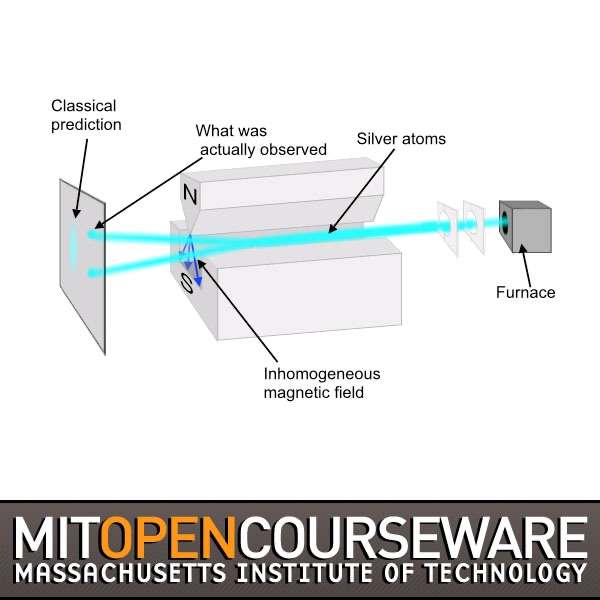
The collection includes twenty six video lectures. Together, this course and 8.06 Quantum Physics III cover quantum physics with applications drawn from modern physics. Topics covered in this course include the general formalism of quantum mechanics, harmonic oscillator, quantum mechanics in three-dimensions, angular momentum, spin, and addition of angular momentum.
Intimate Relationships – UCLA

Families and Couples: Psychology M176: Professor Benjamin Karney lectures on families and couples. This course examines relationships and their connection to individual psychopathology, marital discord, and family disruption.
iBiology – https://www.ibiology.org
Lecturers generously donate their time to prepare these lectures. The project is funded by NSF and NIGMS, and is supported by the UCSF and HHMI.
Free, on-demand lectures: Many universities/colleges have limited access to high profile leaders in biological research. Our goal is to add 45 seminars per year, of similar quality to outstanding lectures that are currently in this library. Access, through web streaming or download, is completely free-of-charge. Please help us keep this resource free by subscribing to the podcasts, giving us a rating, and leaving your comments at the bottom of the collection pages. Thanks!
Targeting a broad audience, our talks start with an extended introduction, making them accessible to non-specialists and students, and then progress to cover current research. Senior scientists and students can view and enjoy these lectures.
Education: our talks are being used by undergraduate and graduate teachers to augment their classroom material. We have now added an education component to this web site (including lecture notes, questions/answers and short video clips for teaching).
International communication: our talks have viewers in 115 countries and they are being internally promoted in several countries as an educational tool and scientific resource.
Immunology / Microbiology – Dr. Earl Beyer
Immunology- Spring, 2015. Text- Kuby Immunology, 7th Ed. Introductory course in Immunology. Geared toward junior/senior undergraduate students who have completed coursework in A & P and Microbiology. Will emphasize Human Immunology. Combination of “live capture” and “background” podcasts.
Microbiology– Course Description: A comprehensive study of the structure and function of microorganisms. Topics include the growth, control, and characteristics of microorganisms. Introduction to microbial genetics, metabolism, chemotherapy, and immunology.
The text book used for Microbiology is Foundations in Microbiology, Kathleen Park Talaro, 7th Edition, ISBN 978 007 337522 9.
Caveat: These podcasts are to be used as an adjunct to the text and lectures. They are not meant as a replacement for those activities.
If you have any suggestions or feedback, please send to erbeyer@hacc.edu or erb14@psu.edu.
 Our TOPPODCAST Picks
  Stay Connected