
This collection includes interviews and discussions on Yale’s research in genetics, the branch of biology that studies heredity and variation in organisms. The Yale Genetics Department is a large, interdisciplinary group of faculty performing basic laboratory research and clinical research, and providing clinical care. Several laboratories are actively engaged in human genetics, cloning genes linked with disease, developing DNA probes and other diagnostic techniques, or studying the epidemiology of inherited disorders.
Podcast Categories: Science & Medicine
Public Health: On the Inside
Public Health: On the Inside takes listeners to the frontlines of public health to meet interesting people working in the field.
Neuroscience – Frontiers of Science – Columbia University
Welcome to Frontiers of Science on iTunes U, a public repository of undergraduate science instructional video materials. These lectures, additional media, activities, problem sets, seminar guides, and other exemplary teaching materials are fully available in the community-based Frontiers of Science Web site at this URL: http://frontiersofsci.org.
All materials have been adapted from Columbia University’s innovative core course, Frontiers of Science (http://www.sciencecore.columbia.edu/).
Intro to Immunology (BIOL 378/380) – Prof. Gregory Beck
An introduction to the principles of immunology including definition of antigens and antibodies, specificity of the immune response, immunoglobin structure, the genetics of immunoglobin synthesis, cellular cooperation in the immune response, mechanism of inflammation, transplantation, diseases associated with responsiveness of the immune system.
Blog – PEM ED Podcast
Modern Physics: The Theoretical Minimum – Einstein’s Theory – Stanford Continuing Studies Program
This course is comprised of a six-quarter sequence of classes that will explore the essential theoretical foundations of modern physics. The topics covered in this course sequence will include classical mechanics, quantum mechanics, the general and special theories of relativity, electromagnetism, cosmology, and black holes. While these courses will build upon one another, each course also stands on its own, and both individually and collectively they will let students attain the “theoretical minimum” for thinking intelligently about modern physics.
Quantum theory governs the universe at its most basic level. In the first half of the 20th century physics was turned on its head by the radical discoveries of Max Planck, Albert Einstein, Niels Bohr, Werner Heisenberg, and Erwin Schroedinger. An entire new logical and mathematical foundation—quantum mechanics—eventually replaced classical physics. We will explore the quantum world, including the particle theory of light, the Heisenberg Uncertainty Principle, and the Schroedinger Equation.
Emergency Medicine Lectures – UCI
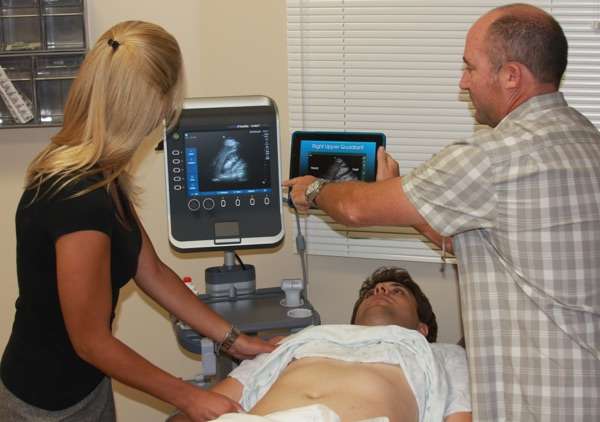
These are the weekly lectures given during the UC Irvine Emergency Medicine residency’s academic forum. We record audio from both the speaker and the audience. This is sync’d with whatever is on the screen (powerpoint or keynote) and exported as a movie file (mp4). You can download these for watching in iTunes, and you can play on new generation iPods, iPhones, and iPads. For the full experience, speakers or headphones are required. The ultrasound lectures are located under their own tab.
Introduction to Biology – Prof. Eric Lander Prof. Robert Weingberg Dr. Claudette Gardel
The MIT Biology Department core courses, 7.012, 7.013, and 7.014, all cover the same core material, which includes the fundamental principles of biochemistry, genetics, molecular biology, and cell biology. Biological function at the molecular level is particularly emphasized and covers the structure and regulation of genes, as well as, the structure and synthesis of proteins, how these molecules are integrated into cells, and how these cells are integrated into multicellular systems and organisms. In addition, each version of the subject has its own distinctive material.
7.012 focuses on the exploration of current research in cell biology, immunology, neurobiology, genomics, and molecular medicine.
Written in Bone: Forensic Files of the 17th Century Chesapeake – Smithsonian Institution National Museum of Natural History
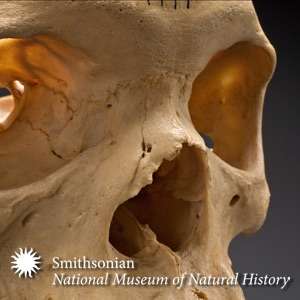
These videos from the Written in Bone exhibition examine history through 17th-century bone biographies, including those of colonists teetering on the edge of survival at Jamestown, Virginia, and those living in the wealthy and well-established settlement of St. Mary’s City, Maryland.
The forensic investigation of human skeletons provides intriguing information on people and events of America’s past. No other inanimate objects make us feel the same passionate curiosity as the remains of once-living, breathing individuals like us. And nothing else can answer our questions in quite the same ways.
Locked-Up: Prison in America – American RadioWorks
Over the last two decades, the number of our American incarcerated has reached an unprecedented peak of more than 2 million. The nation’s swelling inmate population has turned prisons into a $50 billion a year industry. Go behind the bars for an in-depth report from inside the American corrections system.
In Corrections, Inc. explore who prospers in the new prison economy, and how their interests shape who gets locked and for how long. Enter the dark isolation of the Supermax prisons in Locked Down. In Hard Time, follow inmates in North Carolina as they face life after prison.
 Our TOPPODCAST Picks
  Stay Connected