
Podcast Categories: Science & Medicine
Environment/Energy – Video – MIT World

MIT World — A Primary Source of Great Ideas on the Web
Which ideas and innovations can change the world?
MIT World™ answers that question by publishing key presentations by the MIT faculty and guest speakers who are shaping the future. These free, on-demand videos, available 24/7 to viewers worldwide, reflect and extend MIT’s educational mission—to provide the best education in science, technology, and related fields—to engaged learners anytime, anywhere.
More a publication of thought leadership, and less a news site, MIT World aims to capture the pulse and excitement of the range of ideas discussed at MIT every day and share them with the world. A growing archive offers insights on topics ranging from architecture to innovation to technology and sustainability. Cumulatively, these presentations by world-class thinkers and doers map great ideas in the making.
BIOL 111: Human Biology – Ruth Negley
The podcasts are pre-class recordings. They are recorded at conversational speed, with the option to pause while note-taking. The best way to use these podcasts is to first view the PowerPoint presentations and take notes, then listen to the podcasts to fill in with examples.
Advanced Quantum Mechanics – Leonard Susskind
Nutrition Talk – Gerald J. and Dorothy R. Friedman School of Nutrition Science and Policy
Nutrition Talk is a part of the Nutrition Internet Radio Project at the Friedman School of Nutrition Science and Policy at Tufts University.
Friedman Seminar Series – Gerald J. and Dorothy R. Friedman School of Nutrition Science and Policy

Weekly recordings of live seminars presented to the Friedman community in Boston by researchers and practitioners in the field of nutrition.
Animal Science – TN Cattle Lane – Ag Campus
Welcome to the Department of Animal Science iTunesU site!
The Animal Science Update contains timely information on beef cattle, horses, sheep and related 4-H programs as well as departmental news. Extension personnel my use this material as you determine it would compliment your Extension educational program. This material can be used for local news articles, radio programs, newsletters and formulating recommendations.
Advanced Plate Tectonics – 720p – Professor Paul Wessel Dept. of Geology & Geophysics
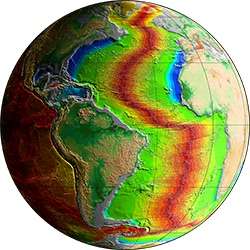
Plate tectonics is the unifying paradigm for Earth Sciences and links phenomena such as past climates, tectonism, volcanic events, and evolution of life. As discussed in our 2009 EOS Trans. AGU article, the Seminar on Advanced Plate Tectonics was offered by the Dept. of Geology & Geophysics in the Schoold of Ocean & Earth Science & Technology in Fall 2008. We examined modeling and analysis techniques used in the kinematic study of plate tectonics, which has seen many technical innovations over the last decade not yet in textbooks. We first reviewed seafloor morphology and its expressions in potential fields, the magnetic anomalies left by seafloor spreading and their interpretation, the status of seafloor and seamount chronology, and use of paleomagnetism. Unlike recent plate motions studied by GPS or VLBI, the analysis of past plate motions requires the use of finite rotations; we thus reviewed the basics (spherical trigonometry, matrix operations for rotations, quaternions, etc.) and proceeded to study techniques used to model relative (RPM) and absolute (APM) plate motions. A novel aspect of this course was eight remote guest lectures by leading experts from around the world. These talks were delivered via Skype or iChat and recorded, merged with the PowerPoint or KeyNote presentations, converted to video podcasts, and made available here in both 480p (iPod, iPhone) and 720p (Apple TV) resolutions.
Human Origins Lectures – Smithsonian Institution National Museum of Natural History
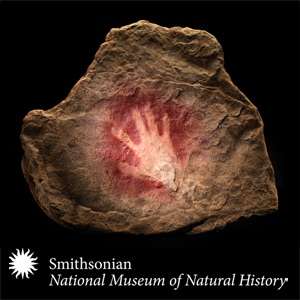
Smithsonian Institution scientists and guest lecturers discuss the evidence for the origin, and evolution of early humans and the climates they lived through, provide interpretations of early human behavior, discuss adaptations, and show the technologies applied to human origins research.
General Pyschology, Winter 2009
A general introduction to the various fields within psychology. Within each of the fields we will discuss theoretical issues and research findings. Critical thinking is encouraged as we explore the methods and content of psychology.
 Our TOPPODCAST Picks
  Stay Connected