
Podcast Categories: Science & Medicine

Audio Podcasts

NASA’s Spitzer Space Telescope is a space-based infrared observatory, part of NASA’s Great Observatories program (which also includes Hubble, Chandra, and Compton). These podcasts offer information about the science discoveries, astronomy, and more.
Animal Science – Plymouth University
Our portfolio covers subject areas that span animal behaviour, wildlife conservation and environmental biology. In collaboration with our partners in other schools, we are well placed to deliver on the University’s key strategic areas of health, biomedicine, environment and sustainability.
Astrophysics Tutorials – Simon Lees

What’s Better This Week?
What’s Better This Week? is a weekly podcast focusing on balancing the practice of Solutions Focused Brief Therapy with the realities and the demands of a clinical environment in the USA.
Explain the Brain
From The Mind Science Foundation (mindscience.org), a little show that asks big questions about our minds, with help from the boldest scientists in neuroscience and psychology. Produced and hosted by public radio reporter Audrey Quinn.
Sociology – Plymouth University
Sociology provides you with a comprehensive understanding of the rapidly changing nature of contemporary society. With a core theme studied at Plymouth of inequalities, difference and diversity, students gain a critical perspective on a variety of social issues.
Talulah – Biophysical Share within a communicative nature.

https://creators.spotify.com/pod/show/talulahhub/subscribe
We are ‘Talulahhub’ ( formerly Rising Mountain), a collaboration with a focus on sound, frequency, vibrations, biophysics and how that manifests in infinite ways. Adventurers, explorers, researchers and passionate hikers, we share insights on biophysics, our natural world, and so much more.
Huge thank you to Feedspot, who selected the Talulah podcast to be in the top 20 quantum physics podcasts. Link to Feedspot: https://podcast.feedspot.com/quantum_physics_podcasts/?feedid=5347336&_src=f1_featured_email
Epigenetics and cellular memory
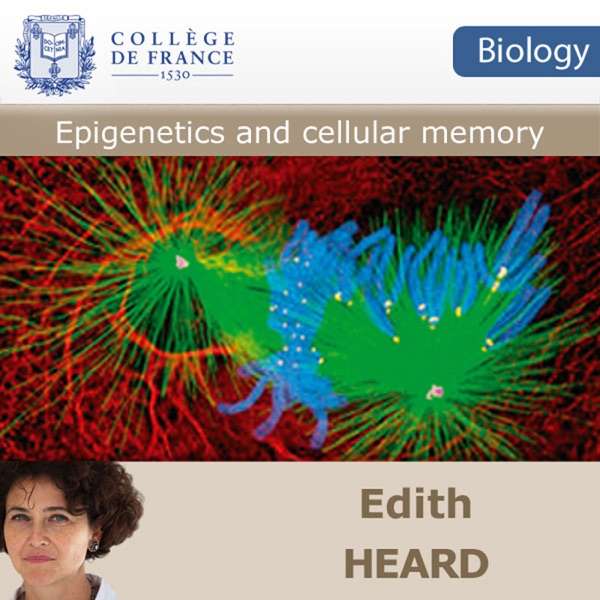
Edith Heard was born on March 5th, 1965 in London (United Kingdom)
She studied Natural Sciences at Cambridge University, graduating in genetics, and then carried out her PhD at the Imperial Cancer Research Fund (London), working on gene amplification in cancer. During her post doc at the Pasteur Institute in Paris, she began her work on the epigenetic process of X-chromosome inactivation. Since 2001 she has led the Mammalian Developmental Epigenetics team at the Institut Curie and has been director of the Unit of Genetics and Developmental Biology Department since 2010.
She has been awarded several prizes and honours, including the Silver Medal of the CNRS in 2008, the Jean Hamburger Prize (Ville de Paris) in 2009, an ERC Advanced Investigator Award in 2010 and the Grand Prix de la FRM in 2011. She was elected as EMBO member in 2005. In 2012, she was appointed Professor of the Collège de France.
Edith Heard has made many important contributions to the emerging field of epigenetics through her work on one of its most classic examples, X-chromosome inactivation. This process entails the silencing of one of the two X chromosomes during early development in female mammals, enabling dosage compensation between the sexes. This phenomenon of chromosome-wide gene silencing that can be stably propagated during cell division, was discovered more than half a century ago and represents a paradigm for epigenetics. The pioneering work of Edith Heard, using X inactivation as a model system, has shed light on epigenetic mechanisms at multiple timescales: over the cell cycle, during development, across generations and in evolution. Her team revealed the dynamics of this epigenetic process during development – being established early on, then rapidly reversed in a subset of cells that give rise to the embryo-proper. This finding had important general implications for the plasticity of epigenetic states in the embryo, in stem cells and during induced pluripotency. It also had implications in cancer, where dedifferentiation is commonly found and epigenetic plasticity seems to be a hallmark. Edith Heard and her colleagues were also the first to discover the evolutionary diversity of events underlying X inactivation, with striking differences in the timing and manner in which this process is set up between even closely related mammals during early embryogenesis. Her group have also made several discoveries on the mechanisms of X inactivation. They have demonstrated the importance of the spatial organization and dynamics of the two X chromosomes in the nucleus during the initiation of X inactivation. They have also defined some of the first changes in the chromatin status of the X chromosome which can be considered as potential epigenetic marks ensuring the cellular memory of the inactive state.
Centre international de criminologie comparée – Université de Montréal
Le Centre international de criminologie comparée (CICC) est un regroupement de chercheurs québécois , canadiens et internationaux travaillant sur les phénomènes criminels, leur contrôle et les différentes modalités d’intervention déployées par les institutions publiques, privées et communautaires pour y faire face. Le CICC constitue le plus important centre de recherche en criminologie dans l’espace francophone et un des principaux centres dans son domaine au niveau international.
Dans le cadre de ses activités scientifiques, le CICC organise des conférences périodiques présentées par des chercheurs, des professionnels et des spécialistes en criminologie en provenance des quatre coins du monde.
 Our TOPPODCAST Picks
  Stay Connected