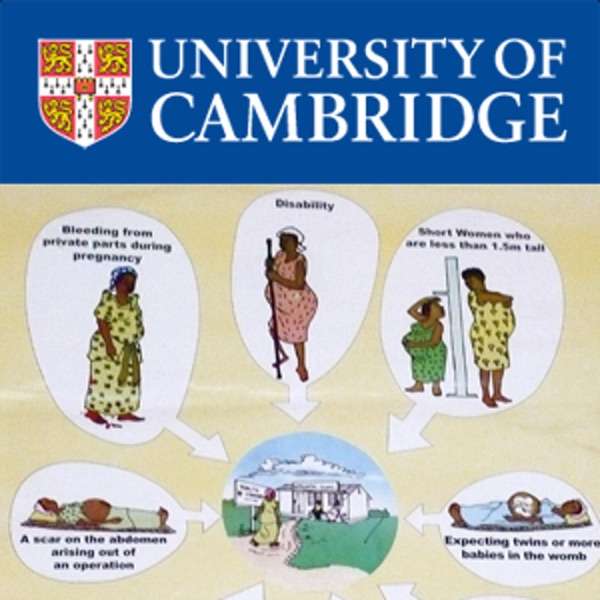
Millennium Development Goal 5 (MDG5) aims to improve maternal health. Unlike other MDGs, few countries are on track to achieve even the first goal of MDG 5, namely, to reduce maternal mortality by 75%. Sub-Saharan Africa suffers from the highest regional maternal mortality rate (MMR) at 640 maternal deaths per 100,000 live births and the annual decline has only been 0.1%. In stark contrast, average MMR in developed countries is 14.
The focus for discussion and action to reduce maternal mortality rates is of necessity largely restricted to the fields of medicine and public health. At the same time, however, there is a spectrum of challenging biological, social and cultural issues that constitute the context within which maternal mortality occurs. In our workshop we plan to break new ground by bringing together those with expertise in current initiatives to reduce MMR with leading researchers in genetics, immunology, obstetric epidemiology, and social and biological anthropology.
The aim of the conference is to provide a forum within which people with very different expertise and experience can explore the latest research findings and see how these could influence understanding and ideas for action to reduce maternal mortality in Africa.
The following two areas, taken together, will form the focus of the conference:
Biological mechanisms determining birth outcomes
The social and historical context for maternal mortality in Africa
We see this as a unique opportunity to bring together those with experience of implementing initiatives aimed at reducing MMR with researchers from different but highly relevant academic disciplines. Our focus on this important issue will enable us to bring together the latest research in fields that all too often do not ‘talk’ to each other. An additional question to be posed in the course of this conversation concerns the very nature of interdisciplinary enquiry. Do we have a language with which to talk meaningfully of the interactions between biology and history? To what extent can basic scientific research inform policy-making?
The Research Centre in Brain, Cognition and Behaviour encompasses excellence in Thinking & Reasoning, Memory, Vision, Behavioural Neuroscience, Language Development, Social Psychology, Health & Wellbeing and Human Factors.

500 million smallholder farmers support over 2 billion people, yet for many, their future looks increasingly uncertain.
What is the way forward for smallholders and for the future of food?
Image courtesy of http://www.irri.org
Conférences organisées à l’université P.M. Curie, ouvertes au public.
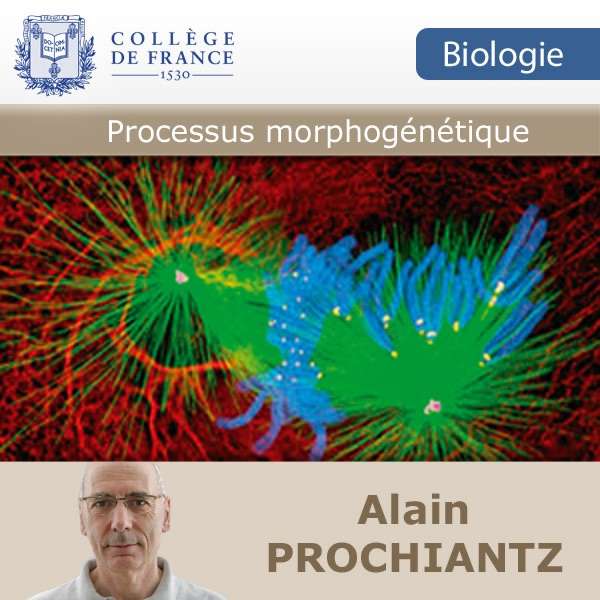
Morphogenetic processes
This laboratory works an a novel signalling mechanism based on the intercellular transport of a specific class of transcription factors. These transcription factors, called homeoproteins, have important morphogenetic functions at all developmental stages. They are also expressed in the adult where they participate in adult physiology. According to recent studies done by this laboratory, this mode of signalling is involved in the patterning of neuronal networks and the regulation of brain plasticity, two key milestones for the proper development of the nervous system.
Conférences organisées à l’université P.M. Curie, ouvertes au public.
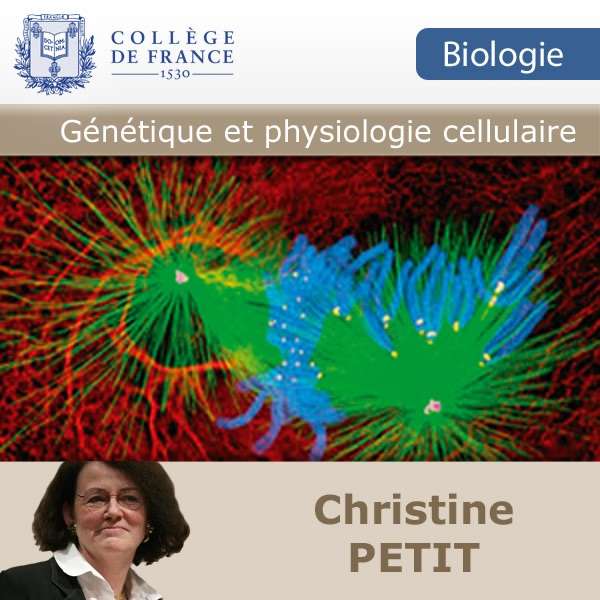
Christine PETIT, Professeure de la chaire de « Génétique et physiologie cellulaire »
La physiologie du système auditif, en particulier celle des premiers relais de traitement des signaux sonores, est assez bien comprise. En revanche, les mécanismes cellulaires et moléculaires qui la sous-tendent échappaient encore à toute caractérisation, au début des années 1990. L’approche génétique que le laboratoire du Professeure Christine Petit en proposa, a permis d’en initier le déchiffrage. Cette recherche adossée à l’identification des gènes dont l’atteinte est responsable de formes précoces de surdité chez l’homme, se développe sous la forme d’études multidisciplinaires. Elle éclaire les bases moléculaires de la formation et du fonctionnement de l’organe sensoriel auditif, notamment de ses cellules sensorielles ainsi que la pathogénie d’un vaste ensemble de surdités héréditaires du sujet jeune. Elle est aussi à l’origine de la découverte de nouvelles propriétés physiologiques du système auditif.
L’objectif de la recherche s’est élargi depuis peu à l’élucidation de la pathogénie de la presbyacousie, surdité neurosensorielle liée à l’âge, et à une approche thérapeutique du syndrome Usher.
Les cours de Christine PETIT portent sur le système auditif, son fonctionnement et ses dysfonctionnements. Ils s’adressent à un public intéressé par les neurosciences, la psychoacoustique, la musique et les troubles de la communication acoustique.
Professor Christine PETIT is holding the chair of ‘Genetics and Cellular Physiology’.
Despite the amazing knowledge gathered on the physiology of the auditory system, especially at the peripheral level, the sensory organ and its innervation, the underlying molecular mechanisms, were escaping characterization. Then, on the grounds of the identification of the genes causative for the early onset forms of deafness in humans pioneered by Professor Christine Petit, her laboratory set off to decipher the cellular and molecular mechanisms of hearing, the way in which the auditory system develops and processes acoustic signals. Crossing the boundaries between medical and basic research fields, multidisciplinary analyses enable this laboratory to decipher the molecular physiology of the sensory organ (especially of auditory sensory cells), the pathogenesis of a large spectrum of inherited deafness forms and also to uncover new physiological properties of the auditory system. Today, its research encompasses additional objectives, such as in particular the treatment of Usher syndrome, using a gene-therapy approach of the retinal defects associated to congenital profound deafness and the elucidation of the pathogenesis of presbycusis, age-related sensorineural hearing loss, in the perspective of preventing and alleviating this very frequent communication disorder.
Every semester the Arnold Sommerfeld Center for Theoretical Physics invites a distinguished theoretical physicist in order to present a short series of lectures with increasing level of specialization. Usually it includes a public talk for a general audience, a theory colloquium and a specialized seminar.
Whilst international corporations are taken to court for complicity in human
rights abuses and the trade in child labour and sweatshops is still a scourge throughout the world, this event asks whether the international approach to corporate social responsibility of the last ten years has worked.
The approach of the last decade has focused primarily on voluntary measures taken by companies and enterprises, and finds expression in codes of conduct and non-binding agreements like the UN Global Compact. The CSR movement originally proposed some measures which should be legally binding on corporations, together with voluntary measures, but this was rejected for a voluntarist approach.
Ten years on we can ask: has this worked?
Areas working in the subject of Mental Health at the University of Plymouth include Social Work, Psychology, Healthy and Social Care Studies, Mental Health, Paramedicine and Nursing. Foundation opportunities including Counselling and Working with Older Persons are available at our Partner Colleges.

 Our TOPPODCAST Picks
  Stay Connected