UPDATE: This Abnormal Psychology course uses the diagnostic criteria presented in the Diagnostic and Statistical Manual of Mental Disorders, Fourth Edition, Text Revision (DSM-IV-TR) published by the American Psychiatric Association in 2000. In May 2013, the APA released a new edition, the DSM-5 which has significantly impacted the multiaxial system presented in this series and has significantly impacted some of the diagnostic categories and diagnoses. An updated podcast series based on the new DSM-5 were made available in Spring 2020.
This course is intended to provide a survey of theories and etiology of abnormal behavior and its social significance; description of symptoms; consideration of techniques of therapy and theories of prevention.
The material in this series related to mental health diagnoses is based on the American Psychiatric Association’s Diagnostic and Statistical Manual of Mental Disorders, Fourth Edition, Text Revision which was published in 2000.
The podcasts presented in this series will include live class recordings of lecture presentations and additional pre-recorded segments that focus on frequently asked questions and concepts that often provide a challenge for many students. These recordings may also be supplemented by PDF files or handouts designed to further enhance the student’s understanding of the field of abnormal psychology. These materials are intended to supplement the traditional classroom approach of my courses and to enhance the student’s learning experience.
Target audience should include current students and others who wish to know more about the topic areas. The materials will not be textbook specific so that they will be useful to others. For HACC students, the purpose is to allow them an opportunity to review or catch up on lectures/class periods that they may have missed or misunderstood. For other learners outside of HACC, the purpose is to supply another resource for their learning that is both entertaining and educational.
The course was originally recorded during the Fall Semester 2010 with some updates as necessary.
Please send any suggestions/feedback to drbailey@hacc.edu.
I hope you enjoy listening and thanks for exploring the world of abnormal psychology with me.

Join the star of Bravo’s Real Housewives Of Dallas, Stephanie Hollman, and her Fabulous G.B.F., Trey Stewart, to hear unique insight on all things Bravo, hot takes on celebrity news, and crazy stories from their personal lives! Every episode is guaranteed to deliver a Weekly Dose of BS to you!

We are Woke WOC Docs, a podcast about the lives of womxn of color in medicine/health justice, including their unique experiences, viewpoints, and struggles in education, research, and practice. We want to reveal the insights we as womxn of color uniquely have on how medicine can transform to end health injustices and be a better institution of health, well-being, and healing.
Subscribe to us on SoundCloud, iTunes, Spotify or our mailing list:
http://bit.ly/subscribewokewocdocs
This course provides an overview of major works of social thought from the beginning of the modern era through the 1920s. Attention is paid to social and intellectual contexts, conceptual frameworks and methods, and contributions to contemporary social analysis. Writers include Hobbes, Locke, Rousseau, Montesquieu, Adam Smith, Marx, Weber, and Durkheim.
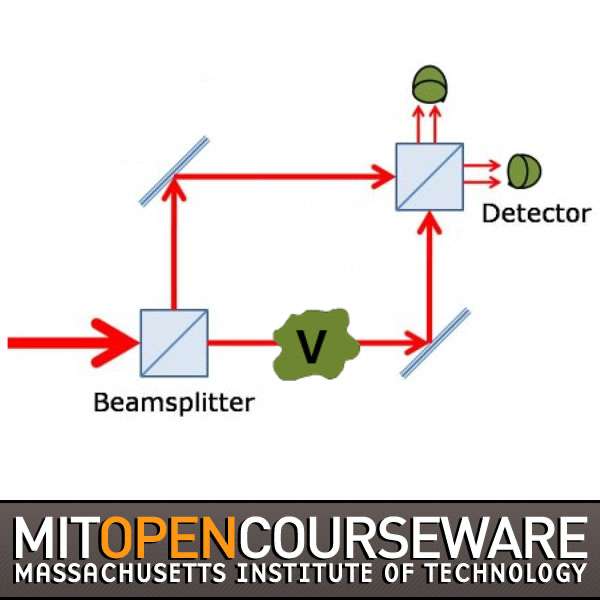
This course covers the experimental basis of quantum physics. It introduces wave mechanics, Schrödinger’s equation in a single dimension, and Schrödinger’s equation in three dimensions.
PEM Currents: The Pediatric Emergency Medicine Podcast is an evidence-based podcast focused on the care of ill and injured children in the Emergency Department. The host is Brad Sobolewski, MD, MEd author of PEMBlog.com and a Professor of Pediatric Emergency Medicine at Cincinnati Children’s and the University of Cincinnati.
Past Time is a podcast that explores how we know what we know about the past. There’s a special focus on the fossil record – it is hosted by two paleontologists – but delving into the story of the past isn’t limited to dry bones. Today’s paleontologists use techniques drawn from other sciences including Physics, Chemistry, Geology, and Biology to figure out what extinct animals were like and how they lived.
Despite the supposedly homogenizing effects of globalization, people continue to be joined together and divided asunder by the languages they speak, the religions they follow, and the ethnic identities to which they belong. Such cultural features all have specific geographies, tied to particular places. But while cultural-geographical terms such as “the Arabic world” and “the Islamic world” are used ubiquitously, many people remain uncertain where such “worlds” are and how they differ from each other.
The purpose of this map-intensive course is to explore the locational dynamics of the world’s languages, religions, and ethnic groupings. We will examine every world region, seeking to understand how places vary from each other with regard to the cultural attributes of their inhabitants. The course will explore the historical forces that have generated cultural diversity, and will carefully examine the processes of contemporary transformation.
This course is presented in enhanced podcast format: the presentation images are synched with the audio track and will display in the album artwork section of your iTunes application. If the album artwork field is not already visible, go to the “View” menu and select “Show Artwork.”
Presented by the Stanford Continuing Studies Program.
Quantum theory governs the universe at its most basic level. In the first half of the 20th century physics was turned on its head by the radical discoveries of Max Planck, Albert Einstein, Niels Bohr, Werner Heisenberg, and Erwin Schroedinger. An entire new logical and mathematical foundation—quantum mechanics—eventually replaced classical physics. We will explore the quantum world, including the particle theory of light, the Heisenberg Uncertainty Principle, and the Schroedinger Equation.
This course is the second of a six-quarter sequence of courses that explores the essential theoretical foundations of modern physics. The topics to be covered include quantum mechanics, the general and special theories of relativity, electromagnetism, cosmology, and black holes. While these courses build upon one another, each course can be taken independently as well. Both individually and collectively they will let students attain the “theoretical minimum” for thinking intelligently about modern physics.
This course is presented by the Stanford Continuing Studies Program.
Discussions of timely topics in clinical medicine, biomedical research, public health, health policy, and more, featured in the Medical News section of JAMA, the Journal of the American Medical Association.

 Our TOPPODCAST Picks
  Stay Connected