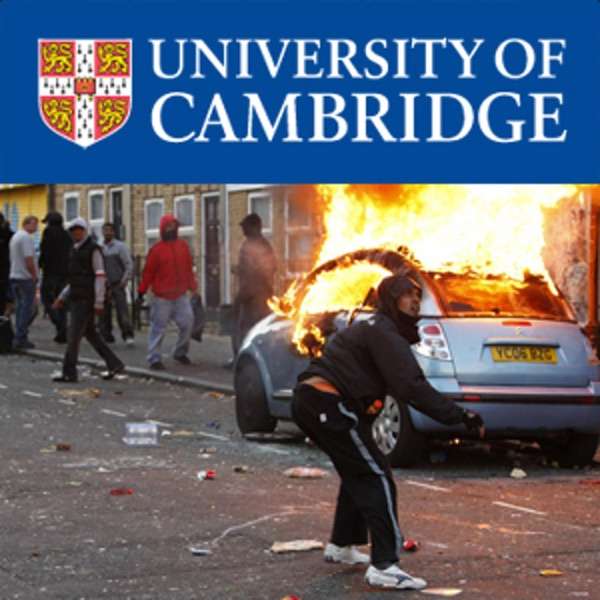
On Thursday 22nd March 2012, the Institute of Criminology at the University of Cambridge held a special public seminar which comprised a panel discussion based on the central topic of “The English Riots in 2011: A Discussion from Different Criminological Perspectives”.
The topics were:
Part 1: Friedrich Lösel: Introduction to the Topic;
Part 2: Ben Crewe: The Riots from a Socio-Cultural Perspective;
Part 3: Lawrence Sherman: The Riots and the Police;
Part 4: Alison Liebling: The Riots from Prisoners’ Perspectives;
Part 5: Loraine Gelsthorpe: The Riots and Criminal Justice/Sentencing;
Part 6: Dexter Dias: Commentary on the Film ‘Riot Went Wrong’;
More information about this seminar, and the Institute generally, can be found at the IOC website at http://www.crim.cam.ac.uk/

NYC’s most dangerous callers to talk radio now have their own show! Podcast of the highly popular broadcast heard LIVE every Friday at 8pm Eastern.
A podcast for the late night idea driven conversationalist. Solving the world’s problems in a single conversation while everyone else is asleep. We cover politics, world events, idiots and winners that shape our day to day lives. We know nothing will change, but we can talk about it.
Larry W. Robinson presents an overview of gospel news, behind-the-scenes reactions, interviews, gospel singing on the spot and voice messages from your favorite gospel artists, artist CD reviews, industry press releases as well as tour and ticketing information. And BEST of all it is FREE!
Listen to the Packer Podcast your source for up-to-date information about what’s going on in the fresh produce industry

Radio Prague International – aktuální vysílání v češtině

Un espacio dedicado a la actualidad informativa de las 63 emisoras de Radio Nacional de España.
Esta conferencia fue impartida por el doctor Adolfo Sánchez Vázquez en la Facultad de Filosofía y Letras de la UNAM, el 30 de noviembre de 2005, en el marco del ciclo Maestros del Exilio Español. Adolfo Sánchez Vázquez nació en Cádiz, España, en 1915. Debido al estallido de la Guerra Civil en su país se vio obligado a exiliarse en México, donde continuó sus estudios y obtuvo el grado de maestro en filosofía en 1955. Desde joven comenzó a desarrollar ideas político-filosóficas que le llevarían a participar en la publicación de diversas revistas. Sus estudios y publicaciones le han hecho digno de reconocimientos como el doctorado Honoris Causa, otorgado por la Universidad de Puebla. Ha sido distinguido con el Premio Nacional de Ciencias y Artes y nombrado investigador emérito del CONACYT y profesor emérito de la Facultad de Filosofía y Letras de la UNAM, donde ha impartido cátedra de tiempo completo desde 1959.
Producción Descarga Cultura.UNAM / Coordinación de Difusión Cultural / UNAM D.R. © UNAM.


 Our TOPPODCAST Picks
  Stay Connected