
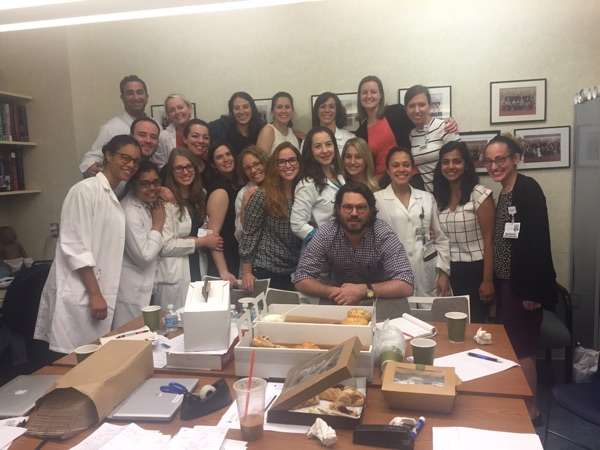
CREOG Review Corner is a podcast to review recent Practice Bulletins and Committee Opinions from the American College of Obstetrics and Gynecology (ACOG). These summaries will help residents to study for annual CREOG testing. It also is a good, fun way to keep up to date for anyone interested in the field of obstetrics and gynecology
Podcast Categories: Health & Fitness
Food Safety – UC Davis
井手口直子のメディカル・カフェ

多職種の人が集い、語らう番組です。パーソナリティは帝京平成大学 薬学部 教授の井手口直子さん。医薬に関する最新の話題について、医療従事者の方をはじめ患者関係者や学生など、幅広いリスナーに向けてお送りします。
Medical Detectives – The University of Edinburgh
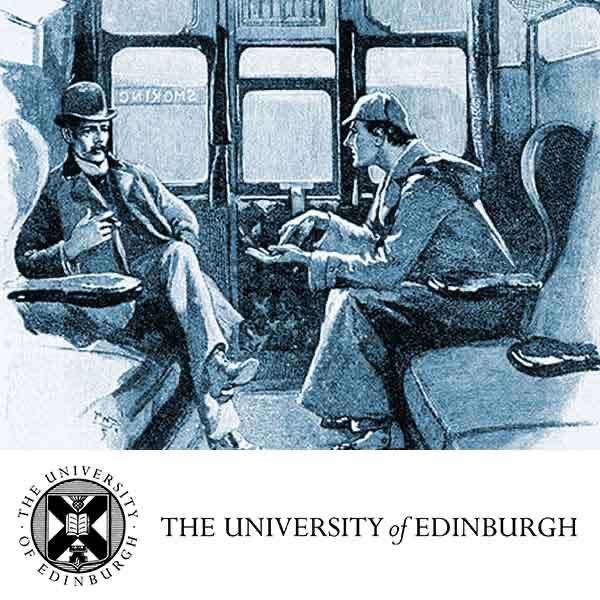
Inspired by Sir Arthur Conan Doyle, the lectures highlight the University’s acclaimed medical research.
Conan Doyle drew inspiration for his character Sherlock Holmes when he was a medical student at Edinburgh.
He based Holmes on the Professor of Medicine Joseph Bell, who was known for his meticulous attention to detail.
Today’s medical sleuths, just like Holmes, must use powers of observation and deduction not only to make the right diagnosis but also to find new treatments.
Biostatistical Applications for Public Health – Lecture – Dr. Mohammed Y Hussain
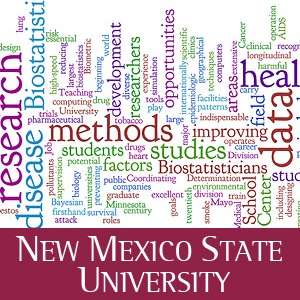
Biostatistical Applications in Public Health deals primarily with quantitative/qualitative methods for the Master of Public Health students including tabular, graphical, and numerical descriptive methods, random sampling, principles of statistical inference, confidence intervals, statistical tests of hypothesis through analysis of variance and regression, categorical data analysis and use of statistical packages for analysis.
Course image adapted from “Biostats wordmap” by Mary Beth Sancomb-Moran and licensed under an Attribution-Noncommercial-Share Alike 2.0 Generic Creative Commons license.
Dentistry – Plymouth University
Through our Bachelor of Dental Surgery (BDS) degree we offer students state-of-the art facilities and are committed to producing dental practitioners with clinical skills of the highest order and a strong sense of social awareness.
Contemporary Issues – Presentations – Aquinas Institute

Listen and watch as we struggle with the difficult topics of our time in light of Faith.
ESMO Open

ESMO Open is the European Society for Medical Oncology’s online-only, peer-reviewed Open Access journal, dedicated to publishing high-quality medical research and educational content from all disciplines of oncology, with a focus on innovative clinical and translational cancer research.
The journal is published by BMJ on behalf of ESMO.
http://esmoopen.bmj.com/
* The purpose of this podcast is to educate and to inform. The content of this podcast does not constitute medical advice and it is not intended to function as a substitute for a healthcare practitioner’s judgement, patient care or treatment. The views expressed by contributors are those of the speakers. BMJ does not endorse any views or recommendations discussed or expressed on this podcast. Listeners should also be aware that professionals in the field may have different opinions. By listening to this podcast, listeners agree not to use its content as the basis for their own medical treatment or for the medical treatment of others.
Medical Laboratory Technology – Fall ’07 – Broome Community College
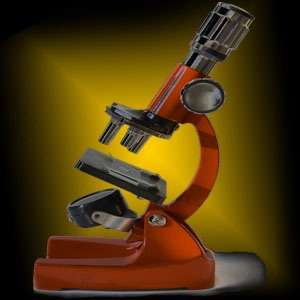
Medical Laboratory Technicians perform biological tests in search of diagnostic clues as evidence of health or disease. In the search for data on a patient’s health, people working in this field may examine specimens through a microscope or perform, for example, the tests necessary to match a donated unit of blood to a patient in need of that unit. They may identify the microorganisms associated with health and disease. They are also competent operators of the computers and complex instrumentation which are used in most areas of today’s laboratories.
The Medical Technician plays a vital role in patient care by performing the full range of laboratory testing in six major areas of the laboratory: Hematology, Immunology, Microbiology, Body Fluids, Blood Banking, and Chemistry. Technicians may choose to advance, by education or experience, to the levels of Medical Technologist or specialist.
Cambridge Language Sciences

Talks from events by Cambridge Language Sciences, a network to develop interedisciplinary research in the language sciences at the University of Cambridge
 Our TOPPODCAST Picks
 Stay Connected