Jung Chicago Radio is home to a variety of podcasts that range from archival seminar recordings, to interviews to discussion on film, fairy tales, and our programs.
Host Patricia Martin explores with guest Peter Demuth, a Jungian analyst, how psychopaths and narcissists construct false selves, their emotional deficits, and why society often rewards their pathology—until individual disorders spiral into collective crises that breach even legal boundaries. Rather than rehashing tired tropes, Demuth strikes original notes on the severest personality disorders, making room for genuine optimism that we can reclaim empathy as our shared human virtue.
Books by Peter Demuth:
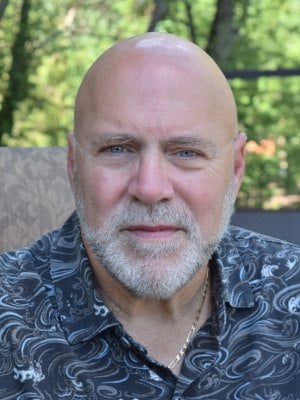
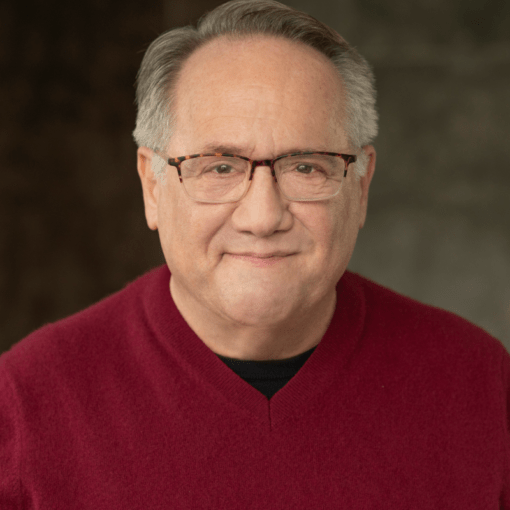
Dr. Peter Demuth is a Clinical Forensic Psychologist & Jungian Psychoanalyst in private practice. He is an international lecturer, as well as an instructor at the C. G. Jung Institute of Chicago and has published numerous papers on such subjects as ego strength, the individuation process, and psychopathy. He is a singer-songwriter with 8 full length albums of original introspective folk-pop music and performs regularly in the greater Chicago area. In December of 2023 he released his first book entitled Monsters in Life and Literature. He lives with his wife Karen, 2 cats, and a Golden Retriever in Evanston, Illinois.
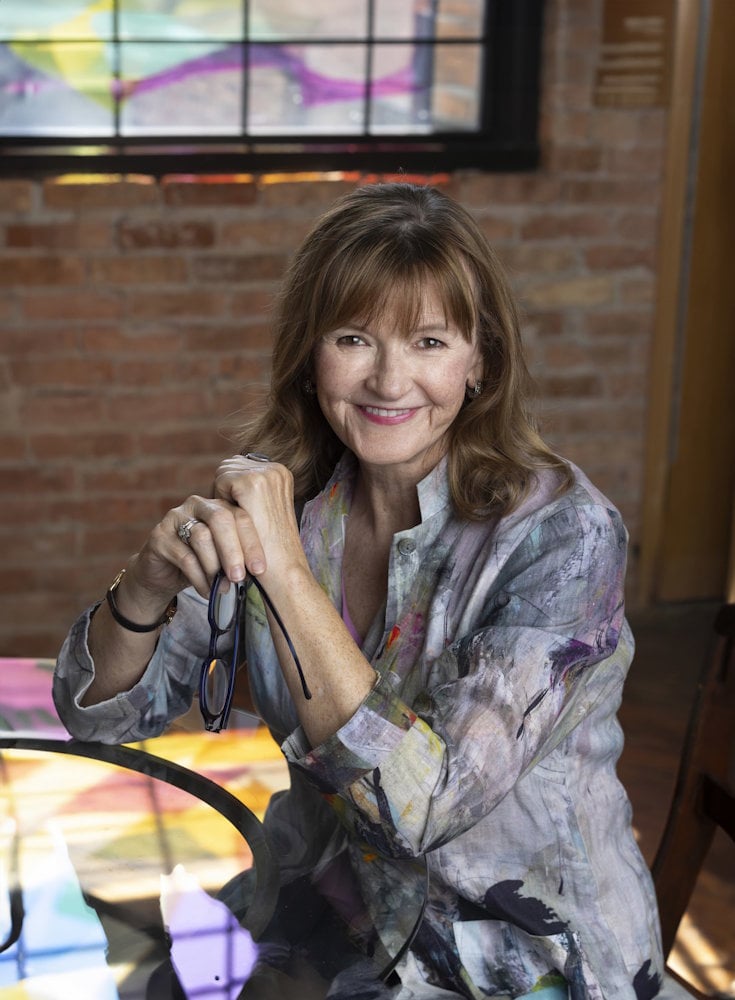
Patricia Martin, MFA, is the host of Jung in the World. A noted cultural analyst, she applies Jungian theory to her work as a researcher and writer. Author of three books, her work has been featured in the New York Times, Harvard Business Review, Huffington Post, and USA Today. She holds an MFA in writing and literature from Bennington College and an MA in cultural studies at the University College, Dublin (honors). In 2018, she completed the Jungian Studies Program at the C. G. Jung Institute Chicago where she is a professional affiliate. A scholar in residence at the Chicago Public Library, for the last decade she’s been studying the digital culture and its impact on the individuation process. Patricia travels the world giving talks and workshops based on her findings and has a private consulting practice in Chicago.
Jung in the World B-Sides | Living as Someone Else: The Hidden Cost of Online Personas with Hilde Lynn Helphenstein (Part 2)
Oct 22, 2025
This episode is part of a new series, Jung in the World B-Sides, where we go off-road to explore the rugged psychological terrain of our current culture.
This episode is part 2 of our interview with Hilde Lynn Helphenstein. Part 1
“Know thyself”—from Socrates to Shakespeare, this wisdom echoed across centuries. But the digital age is turning it inside out. As online influencers rise to fame, persona is overtaking the self. The obsession with self-representation has eclipsed the drive to be true to oneself.
What does it mean to live your life as someone else? In this two-part interview, host Patricia Martin talks with the infamous Jerry Gogosian—real name Hilde Helphenstein—about the hidden psychological costs of her seven-year experiment living as her persona and how she clawed her identity back.
Watch the video of this interview:
https://youtu.be/_EQMW6FI_Sw
Hilde Lynn Helphenstein is a visual artist, digital storyteller, and the creative mind behind @jerrygogosian, a popular satirical Instagram meme account that critiques and comments on the global art world through viral images, videos and text pieces. It has since transformed into a community and platform.
Patricia Martin, MFA, is the host of Jung in the World. A noted cultural analyst, she applies Jungian theory to her work as a researcher and writer. Author of three books, her work has been featured in the New York Times, Harvard Business Review, Huffington Post, and USA Today. She holds an MFA in writing and literature from Bennington College and an MA in cultural studies at the University College, Dublin (honors). In 2018, she completed the Jungian Studies Program at the C. G. Jung Institute Chicago where she is a professional affiliate. A scholar in residence at the Chicago Public Library, for the last decade she’s been studying the digital culture and its impact on the individuation process. Patricia travels the world giving talks and workshops based on her findings, and has a private consulting practice in Chicago.
Jung in the World B-Sides | Living as Someone Else: The Hidden Cost of Online Personas with Hilde Lynn Helphenstein (Part 1)
Oct 14, 2025
This episode is part of a new series, Jung in the World B-Sides, where we go off-road to explore the rugged psychological terrain of our current culture.
“Know thyself”—from Socrates to Shakespeare, this wisdom echoed across centuries. But the digital age is turning it inside out. As online influencers rise to fame, persona is overtaking the self. The obsession with self-representation has eclipsed the drive to be true to oneself.
What does it mean to live your life as someone else? In this two-part interview, host Patricia Martin talks with the infamous Jerry Gogosian—real name Hilde Helphenstein—about the hidden psychological costs of her seven-year experiment living as her persona and how she clawed her identity back.
Watch the video of this interview:
https://www.youtube.com/watch?v=mqN8oLeQQaQ
Hilde Lynn Helphenstein is a visual artist, digital storyteller, and the creative mind behind @jerrygogosian, a popular satirical Instagram meme account that critiques and comments on the global art world through viral images, videos and text pieces. It has since transformed into a community and platform.
Patricia Martin, MFA, is the host of Jung in the World. A noted cultural analyst, she applies Jungian theory to her work as a researcher and writer. Author of three books, her work has been featured in the New York Times, Harvard Business Review, Huffington Post, and USA Today. She holds an MFA in writing and literature from Bennington College and an MA in cultural studies at the University College, Dublin (honors). In 2018, she completed the Jungian Studies Program at the C. G. Jung Institute Chicago where she is a professional affiliate. A scholar in residence at the Chicago Public Library, for the last decade she’s been studying the digital culture and its impact on the individuation process. Patricia travels the world giving talks and workshops based on her findings, and has a private consulting practice in Chicago.
Jung in the World | Approaching Shadow Work with Connie Zweig
Sep 03, 2025
Patricia Martin and Connie Zweig discuss the nature of shadow work. Before doing shadow work, we live an unexamined life – overeating, criticizing yourself or your partner, blaming someone, procrastinating – which leads to uncontrollable, self-sabotaging behaviors.
Patricia Martin, MFA, is the host of Jung in the World. A noted cultural analyst, she applies Jungian theory to her work as a researcher and writer. Author of three books, her work has been featured in the New York Times, Harvard Business Review, Huffington Post, and USA Today. She holds an MFA in writing and literature from Bennington College and an MA in cultural studies at the University College, Dublin (honors). In 2018, she completed the Jungian Studies Program at the C. G. Jung Institute Chicago where she is a professional affiliate. A scholar in residence at the Chicago Public Library, for the last decade she’s been studying the digital culture and its impact on the individuation process. Patricia travels the world giving talks and workshops based on her findings, and has a private consulting practice in Chicago.
Institute Archive | Dreams: Gifts from the Unconscious with June Singer
Jul 30, 2025
The author of the acclaimed introduction to the practice of Jungian psychology, Boundaries of the Soul, June Singer draws from personal and professional experience to discuss the importance of dreams, those gifts from the unconscious which profoundly imbue our conscious lives. This program provides an excellent introduction not only to Jung’s dream theory, but also its application in psychoanalysis—from one of the masters of the art. It was recorded on September 21, 1975.
June Singer, PhD was a major figure in the development of the Jungian movement in the United States. She earned a Ph.D. in Psychology from Northwestern University and completed training as a Jungian analyst in Zurich, Switzerland. During the 1960′s, Dr. Singer founded the Analytical Psychology Club of Chicago, which eventually became the C.G. Jung Institute of Chicago, in order to provide interested individuals an opportunity to study the works of Carl Jung. June Singer was a gifted analyst and a distinguished author and lecturer. Her text, Boundaries of the Soul, is considered to be one of the best introductions to Jungian thought. She also wrote two books about sexuality, and a Jungian study of the poet William Blake.
Jungian Ever After | Orpheus and Euridice – Creativity
Jun 25, 2025
We begin our coverage of Orpheus and Euridice. This episode is primarily focused on the archetypal power of creativity as demonstrated in Edith Hamilton’s telling of the story. We will read Ovid’s version and dig into other elements of the story in the following episode.
This episode we will be reading from:
Metamorphoses, by Ovid. Translation by Mary M. Innes.
We recommend watching part or all of the opera L’Orfeo. You can find a video with English subtitles here.
Our intro/outro music a sample of Seikilos Epitaph with the Lyre of Apollo, by Lina Palera, under an Attribution-NonCommercial-ShareAlike 3.0 International License. You can find the full version at FreeMusicArchive.org.
Jung in the World | Reframing Self and Society in a World on Fire with Laura Tuley and John White
May 20, 2025
Jungian Psychoanalysts Laura Tuley and John White discuss Jungian Analysis in a World on Fire: At the Nexus of Individual and Collective Trauma, a volume of essays, all authored by practicing Jungian psychoanalysts, of which they were the editors. It examines and illuminates ways of working with individual analytic and therapeutic clients in the context of powerful and current collective forces, in the United States and beyond.
Our Spring Fundraising Drive is live! Support this podcast by making a donation today. The first $7,000 in donations will be matched!
Laura Camille Tuley, PhD (USA) is a Jungian Psychoanalyst in private practice in Madison, Wisconsin. She is the co-editor of Jungian Analysis in a World on Fire: At the Nexus of Individual and Collective Trauma (Routledge, 2024) and has contributed to Psychological Perspectives, Exploring Depth Psychology and the Female Self: Feminist Themes from Somewhere, Mothering in the Third Wave, Art Papers, Hypatia, the New Orleans Review and the APA Newsletter on Feminism and Philosophy. Tuley is a faculty member of the New Orleans Jung Seminar of the IRSJA and the co-editor of the “Clinical Commentaries” and “Film and Culture” features of the Journal of Analytical Psychology.
John R. White, PhD‘s training was in philosophy and he was a philosophy professor for twenty years. As he moved into midlife, he began training as a psychotherapist. He has a Masters in mental health counseling from Franciscan University of Steubenville. He is also a psychoanalyst in the tradition of Carl Jung. He is a member of the Interregional Society of Jungian Analysts (IRSJA) and an associate member of the National Association for the Advancement of Psychoanalysis (NAAP). He practices psychotherapy according to psychodynamic, classical Jungian and archetypal approaches and more broadly in all approaches associated with “depth psychology”. Learn more at johnrwhitepgh.org.
Edited by Laura Camille Tuley and John R. White:
Patricia Martin, MFA, is the host of Jung in the World. A noted cultural analyst, she applies Jungian theory to her work as a researcher and writer. Author of three books, her work has been featured in the New York Times, Harvard Business Review, Huffington Post, and USA Today. She holds an MFA in writing and literature from Bennington College and an MA in cultural studies at the University College, Dublin (honors). In 2018, she completed the Jungian Studies Program at the C. G. Jung Institute Chicago where she is a professional affiliate. A scholar in residence at the Chicago Public Library, for the last decade she’s been studying the digital culture and its impact on the individuation process. Patricia travels the world giving talks and workshops based on her findings, and has a private consulting practice in Chicago.
Jung in the World | Jung and the Post-Human Age with Glen Slater
Apr 15, 2025
Our Spring Fundraising Drive is live! Support this podcast by making a donation today. The first $7,000 in donations will be matched!
Jung and the Post-Human Age, with Pacifica professor and author Glen Slater is a deep dive into what digital culture is doing to the human psyche as we internalize the fractiousness of the outer world.
Glen studied psychology and comparative religion at The University of Sydney before coming to the United States in 1992 for doctoral work in clinical psychology. He has been teaching at Pacifica for over twenty years and is currently the Associate Chair of the Jungian and Archetypal Studies specialization. He also teaches in the Mythological Studies program. His publications have appeared in a number of Jungian journals and essay collections, and he edited and introduced the third volume of James Hillman’s Uniform Edition, Senex and Puer, as well as a collection of faculty writings, Varieties of Mythic Experience: Essays on Religion, Psyche and Culture. Beyond his work in Jungian and Archetypal Psychology, he writes on psyche and film as well as the psychology of technology. He lectures internationally in these areas of interest.
Books by Glen Slater:
Patricia Martin, MFA, is the host of Jung in the World. A noted cultural analyst, she applies Jungian theory to her work as a researcher and writer. Author of three books, her work has been featured in the New York Times, Harvard Business Review, Huffington Post, and USA Today. She holds an MFA in writing and literature from Bennington College and an MA in cultural studies at the University College, Dublin (honors). In 2018, she completed the Jungian Studies Program at the C. G. Jung Institute Chicago where she is a professional affiliate. A scholar in residence at the Chicago Public Library, for the last decade she’s been studying the digital culture and its impact on the individuation process. Patricia travels the world giving talks and workshops based on her findings, and has a private consulting practice in Chicago.
We recorded this shortly after the 2024 US election results but, as it took some time to edit, we decided to post on inauguration day (reposted here from the original feed). In a time when self-absorbed billionaires have taken control of government, this episode’s topic feels particularly relevant.
This episode we will be reading from:
Metamorphoses, by Ovid. Translation by Mary M. Innes.
Our intro/outro music a sample of Seikilos Epitaph with the Lyre of Apollo, by Lina Palera, under an Attribution-NonCommercial-ShareAlike 3.0 International License. You can find the full version at FreeMusicArchive.org.
Jung in the World | Jung, The Holy Grail, and The Spirit of Transformation with Paul Bishop
Mar 07, 2025
Our Spring Fundraising Drive is live! Support this podcast by making a donation today. The first $7,000 in donations will be matched!
Patricia Martin and Paul Bishop, author and professor at the University of Glasgow, discuss the mystery of the holy grail, what it meant to Carl Jung, and what it offers us.
Paul Bishop was born in 1967 in Southend-on-Sea. He studied at Magdalen College, Oxford, and he is currently William Jacks Chair of Modern Languages at the University of Glasgow. His books examine the history of ideas and the histories of psychoanalysis and analytical psychology, with particular emphasis on Nietzsche, C.G. Jung, and Ludwig Klages. He has edited Companion volumes for Camden House on Goethe’s “Faust“, Parts One and Two; and on the life and works of Nietzsche. He is currently working on a four-volume project for Chiron Books entitled Jung and the Epic of Transformation, whose first volume is Wolfram von Eschenbach’s “Parzival” and the Grail as Transformation:
Books by Paul Bishop:
Patricia Martin, MFA, is the host of Jung in the World. A noted cultural analyst, she applies Jungian theory to her work as a researcher and writer. Author of three books, her work has been featured in the New York Times, Harvard Business Review, Huffington Post, and USA Today. She holds an MFA in writing and literature from Bennington College and an MA in cultural studies at the University College, Dublin (honors). In 2018, she completed the Jungian Studies Program at the C. G. Jung Institute Chicago where she is a professional affiliate. A scholar in residence at the Chicago Public Library, for the last decade she’s been studying the digital culture and its impact on the individuation process. Patricia travels the world giving talks and workshops based on her findings, and has a private consulting practice in Chicago.
This episode departs from the physicality of Hercules’ deeds to discuss a more spiritual tale of love. Eros and Psyche is in many ways a story in opposition to Hercules. For while he remains emotionally unchanged by the end of his tale, the very core of this love story is emotional development.
Our intro/outro music a sample of Seikilos Epitaph with the Lyre of Apollo, by Lina Palera, under an Attribution-NonCommercial-ShareAlike 3.0 International License. You can find the full version at FreeMusicArchive.org.
James Hollis, PhD was born in Springfield, Illinois, and graduated from Manchester University in 1962 and Drew University in 1967. He taught Humanities 26 years in various colleges and universities before retraining as a Jungian analyst at the Jung Institute of Zurich, Switzerland (1977-82). He is presently a licensed Jungian analyst in private practice in Washington, D.C. He served as Executive Director of the Jung Educational Center in Houston, Texas for many years, was Executive Director of the Jung Society of Washington until 2019, and now serves on the JSW Board of Directors. He is a retired Senior Training Analyst for the Inter-Regional Society of Jungian Analysts, was first Director of Training of the Philadelphia Jung Institute, and is Vice-President Emeritus of the Philemon Foundation. Additionally he is a Professor of Jungian Studies for Saybrook University of San Francisco/Houston. He has written a total of sixteen books, which have been translated into 19 languages. He lives with his wife Jill, an artist and retired therapist, in Washington, DC. Together they have three living children and eight grand-children.
Books by James Hollis:
Patricia Martin, MFA, is the host of Jung in the World. A noted cultural analyst, she applies Jungian theory to her work as a researcher and writer. Author of three books, her work has been featured in the New York Times, Harvard Business Review, Huffington Post, and USA Today. She holds an MFA in writing and literature from Bennington College and an MA in cultural studies at the University College, Dublin (honors). In 2018, she completed the Jungian Studies Program at the C. G. Jung Institute Chicago where she is a professional affiliate. A scholar in residence at the Chicago Public Library, for the last decade she’s been studying the digital culture and its impact on the individuation process. Patricia travels the world giving talks and workshops based on her findings, and has a private consulting practice in Chicago.
Jung in the World | Philosopher L.A. Paul talks about Transformative Experiences
Dec 16, 2024
Paul is the author of “Transformative Experience,” a widely read philosophical investigation of personal change. As a professor at Yale University, she is revitalizing a humanities approach to philosophy that helps us look at ourselves across the ups and downs of individuation.
L.A. Paul is the Millstone Family Professor of Philosophy and Professor of Cognitive Science at Yale University. Her research explores questions about the nature of the self, decision-making, temporal experience, philosophical methodology, causation, causal experience, time and time’s arrow, perception, mereology, constitution, and essence.
She is the recipient of fellowships from the Guggenheim Foundation, the National Humanities Center, and the Australian National University. She is also the author of several books, including Transformative Experience (Oxford University Press, 2014) and Causation: A User’s Guide (Oxford University Press, 2013), which was awarded the American Philosophical Association Sanders Book Prize. In 2020 she received the Dr. Martin R. Lebowitz and Eve Lewellis Lebowitz Prize for Philosophical Achievement and Contribution from the American Philosophical Association and Phi Beta Kappa Society. Her work on transformative experience has been covered in major media venues such as The New York Times, The Wall Street Journal, The New Yorker, The Guardian, The Times Literary Supplement, Slate, the LA Times Book Review, NPR, and the BBC, and explored artistically, in “The Missing Shade of You”, a dance and spoken word performance by the Logos Dance Collective, performed in New York City in 2017 and in the documentary film “Comfort Zone”, about off-piste/extreme skiing in Scotland. She is currently working on a book, under contract with Farrar, Straus and Giroux, about self construction, transformative experience, humility, and fear of mental corruption. Learn more at lapaul.org.
Books by L.A. Paul:
Patricia Martin, MFA, is the host of Jung in the World. A noted cultural analyst, she applies Jungian theory to her work as a researcher and writer. Author of three books, her work has been featured in the New York Times, Harvard Business Review, Huffington Post, and USA Today. She holds an MFA in writing and literature from Bennington College and an MA in cultural studies at the University College, Dublin (honors). In 2018, she completed the Jungian Studies Program at the C. G. Jung Institute Chicago where she is a professional affiliate. A scholar in residence at the Chicago Public Library, for the last decade she’s been studying the digital culture and its impact on the individuation process. Patricia travels the world giving talks and workshops based on her findings, and has a private consulting practice in Chicago.
In this episode we discuss the story of Hercules, the strongest man and perhaps the most well known of Greek heroes. While folks are probably familiar with general highlights of his story, many of the finer details may be surprising. After consuming the entirety of his legend, it’s hard to call it anything else but tragic.
Our intro/outro music a sample of Seikilos Epitaph with the Lyre of Apollo, by Lina Palera, under an Attribution-NonCommercial-ShareAlike 3.0 International License. You can find the full version at FreeMusicArchive.org.
Jung in the World | The Archetype of Masculinity: A Crisis in Men and Boys with Robert Tyminski
Nov 21, 2024
Jungian analyst and author Robert Tyminski brilliantly weaves poignant case studies with Jungian theory and mythology in an interview that meets the urgency of our times when ideas about masculinity are roiling in the Collective.
Robert Tyminski is a certified adult and child Jungian psychoanalyst practicing in San Francisco. He has a doctoral degree in mental health from the University of California at San Francisco and teaches in their Department of Psychiatry. He has an M.B.A. degree from the Haas School of Business at UC Berkeley. For 14 years, he led a non-profit organization devoted to treating troubled children and their families. He is the author of several books, most recently The Psychological Effects of Immigrating, and has published articles in different professional journals on topics about adolescence, addiction, group therapy, social skills development, and dreams. Learn more at roberttyminski.com.
Books by Robert Tyminski:
Patricia Martin, MFA, is the host of Jung in the World. A noted cultural analyst, she applies Jungian theory to her work as a researcher and writer. Author of three books, her work has been featured in the New York Times, Harvard Business Review, Huffington Post, and USA Today. She holds an MFA in writing and literature from Bennington College and an MA in cultural studies at the University College, Dublin (honors). In 2018, she completed the Jungian Studies Program at the C. G. Jung Institute Chicago where she is a professional affiliate. A scholar in residence at the Chicago Public Library, for the last decade she’s been studying the digital culture and its impact on the individuation process. Patricia travels the world giving talks and workshops based on her findings, and has a private consulting practice in Chicago.
Jung in the World | How God Becomes Real with Tanya Luhrmann
Oct 15, 2024
Tanya Luhrmann discusses some of the ways through which invisible forces come to feel alive to us, and change how we think and live.
Tanya Marie Luhrmann is the Albert Ray Lang Professor of Anthropology at Stanford University, with a courtesy appointment in Psychology. Her work focuses on the edge of experience: on voices, visions, the world of the supernatural and the world of psychosis. She has done ethnography on the streets of Chicago with homeless and psychotic women, and worked with people who hear voices in Chennai, Accra and the South Bay. She has also done fieldwork with evangelical Christians who seek to hear God speak back, with Zoroastrians who set out to create a more mystical faith, and with people who practice magic. She uses a combination of ethnographic and experimental methods to understand the phenomenology of unusual sensory experiences, the way they are shaped by ideas about minds and persons, and what we can learn from this social shaping that can help us to help those whose voices are distressing. At the heart of the work is the sense of being called, and its possibilities and burden. She was named to the American Academy of Arts and Sciences in 2003, received a John Guggenheim Fellowship award in 2007 and elected to the American Philosophical Society in 2022. When God Talks Back was named a NYT Notable Book of the Year and a Kirkus Reviews Best Book of the Year. It was awarded the $100,000 Grawemeyer Prize for Religion by the University of Louisville. She has published over thirty OpEds in The New York Times, and her work has been featured in The New Yorker, The New York Review of Books, The Times Literary Supplement, Science News, and many other publications. She is the author of Persuasions of the Witch’s Craft, The Good Parsi, Of Two Minds, When God Talks Back, Our Most Troubling Madness, and How God Becomes Real, and is currently at work on a book entitled Voices.
Patricia Martin, MFA, is the host of Jung in the World. A noted cultural analyst, she applies Jungian theory to her work as a researcher and writer. Author of three books, her work has been featured in the New York Times, Harvard Business Review, Huffington Post, and USA Today. She holds an MFA in writing and literature from Bennington College and an MA in cultural studies at the University College, Dublin (honors). In 2018, she completed the Jungian Studies Program at the C. G. Jung Institute Chicago where she is a professional affiliate. A scholar in residence at the Chicago Public Library, for the last decade she’s been studying the digital culture and its impact on the individuation process. Patricia travels the world giving talks and workshops based on her findings, and has a private consulting practice in Chicago.
Jung in the World launches Season 4: Trailer
Oct 15, 2024
Season 4 of Jung in the World podcast launches this month. Every season is a renewal of our purpose, which is to apply the ideas of Carl Jung to contemporary living. Host Patricia Martin interviews authors, Jungian analysts, philosophers, scientists, and public figures whose work intersects with Jungian theory. This eclectic mix of thinkers opens up the deepest questions of how we become, and go on becoming, ourselves.
Highlights from Season 4 include:
How God Becomes Real, with acclaimed anthropologist and Stanford professor Tanya Luhrmann, who shares insights about how we kindle the presence of gods and spirits and how this effort explains the endurance of faith across time and cultures.
Jungian analyst and author Robert Tyminski discusses The Archetype of Masculinity: A Crisis in Men and Boys. Tyminski brilliantly weaves poignant case studies with Jungian theory and mythology in an interview that meets the urgency of our times when ideas about masculinity are roiling in the Collective.
We re-visit the legend of the Holy Grail with author Paul Bishop, a professor at University of Glasgow, who peels back layers of the Parsifal myth to reveal its meaning in a contemporary context.
Jung and the Post-Human Age, with Pacifica professor and author Glen Slater is a deep dive into what digital culture is doing to the human psyche as we internalize the fractiousness of the outer world.
What it Means to Grow Up, with the esteemed Jungian and author of 20 books, James Hollis, who brings useful, relatable stories, and incisive wisdom that cuts through the haze of our uncertain times.
If you’re new to the podcast, welcome! If you’re already a listener, thank you for tuning in every month!
Patricia Martin, MFA, is the host of Jung in the World. A noted cultural analyst, she applies Jungian theory to her work as a researcher and writer. Author of three books, her work has been featured in the New York Times, Harvard Business Review, Huffington Post, and USA Today. She holds an MFA in writing and literature from Bennington College and an MA in cultural studies at the University College, Dublin (honors). In 2018, she completed the Jungian Studies Program at the C. G. Jung Institute Chicago where she is a professional affiliate. A scholar in residence at the Chicago Public Library, for the last decade she’s been studying the digital culture and its impact on the individuation process. Patricia travels the world giving talks and workshops based on her findings, and has a private consulting practice in Chicago.
This podcast is licensed under a Creative Commons Attribution-NonCommercial-NoDerivatives 4.0 International License. You may share it, but please do not change it, sell it, or transcribe it. Executive Producer: Ben Law Hosts: Patricia Martin, Judith Cooper, Daniel Ross, Adina Davidson, and Raisa Cabrera 2024-2025 Season Intern: Kavya Krishnamurthy Music: Peter Demuth
Jungian Ever After | The Greek Creation Myth
Oct 01, 2024
After an unintentionally extended break we bring you our first story episode of season 2! No pantheon is without its creation story and it seemed an obvious place to start for our season of Greek mythology. We discuss the archetypes of creation stories with some comparisons to biblical creation and… The Big Bang Theory?
Our intro/outro music a sample of Seikilos Epitaph with the Lyre of Apollo, by Lina Palera, under an Attribution-NonCommercial-ShareAlike 3.0 International License. You can find the full version at FreeMusicArchive.org.
Dick Russell is the award-winning author of fifteen non-fiction books, including three New York Times best-sellers. In addition to his biographical trilogy about depth psychologist James Hillman, he has just published The Real RFK Jr: Trials of a Truth Warrior. A recipient of the citizen’s Chevron Conservation Award, Russell is also the eclectic author of Climate In Crisis, Black Genius and the American Experience, Eye of the Whale, and My Mysterious Son: A Life-Changing Passage Between Schizophrenia and Shamanism. Learn more at dickrussell.org.
Patricia Martin, MFA, is the host of Jung in the World. A noted cultural analyst, she applies Jungian theory to her work as a researcher and writer. Author of three books, her work has been featured in the New York Times, Harvard Business Review, Huffington Post, and USA Today. She holds an MFA in writing and literature from Bennington College and an MA in cultural studies at the University College, Dublin (honors). In 2018, she completed the Jungian Studies Program at the C. G. Jung Institute Chicago where she is a professional affiliate. A scholar in residence at the Chicago Public Library, for the last decade she’s been studying the digital culture and its impact on the individuation process. Patricia travels the world giving talks and workshops based on her findings, and has a private consulting practice in Chicago.
This podcast is licensed under a Creative Commons Attribution-NonCommercial-NoDerivatives 4.0 International License. You may share it, but please do not change it, sell it, or transcribe it. Executive Producer: Ben Law Hosts: Patricia Martin, Judith Cooper, Daniel Ross, Adina Davidson, and Raisa Cabrera 2024-2025 Season Intern: Kavya Krishnamurthy Music: Michael Chapman
Jung in the World | Trickster Makes This World: Mischief, Myth and Art with Lewis Hyde
Jun 20, 2024
Renowned mythologist and McArthur genius Fellow Lewis Hyde joins Patricia Martin in a revelatory conversation about the trickster archetype embodied in mythology.
“Lewis Hyde is a poet, essayist, translator, and cultural critic with a particular interest in the public life of the imagination. His 1983 book, The Gift, illuminates and defends the non-commercial portion of artistic practice. Trickster Makes This World (1998) uses a group of ancient myths to argue for the disruptive intelligence that all cultures need if they are to remain lively and open to change. Common as Air (2010) is a spirited defense of our “cultural commons,” that vast store of ideas, inventions, and works of art that we have inherited from the past and continue to enrich in the present.
Hyde’s most recent book, A Primer for Forgetting, explores the many situations in which forgetfulness is more useful than memory—in myth, personal psychology, politics, art & spiritual life.
A MacArthur Fellow and former director of undergraduate creative writing at Harvard University, Hyde taught writing and American literature for many years at Kenyon College. Now retired, he lives in Cambridge, Massachusetts with his wife, the writer Patricia Vigderman. Hyde is a trustee of MacDowell and a founding director of the Creative Capital Foundation.”
Patricia Martin, MFA, is the host of Jung in the World. A noted cultural analyst, she applies Jungian theory to her work as a researcher and writer. Author of three books, her work has been featured in the New York Times, Harvard Business Review, Huffington Post, and USA Today. She holds an MFA in writing and literature from Bennington College and an MA in cultural studies at the University College, Dublin (honors). In 2018, she completed the Jungian Studies Program at the C. G. Jung Institute Chicago where she is a professional affiliate. A scholar in residence at the Chicago Public Library, for the last decade she’s been studying the digital culture and its impact on the individuation process. Patricia travels the world giving talks and workshops based on her findings, and has a private consulting practice in Chicago.
This podcast is licensed under a Creative Commons Attribution-NonCommercial-NoDerivatives 4.0 International License. You may share it, but please do not change it, sell it, or transcribe it. Executive Producer: Ben Law Hosts: Patricia Martin, Judith Cooper, Daniel Ross, Adina Davidson, and Raisa Cabrera 2024-2025 Season Intern: Kavya Krishnamurthy Music: Michael Chapman
Jung in the World | The Inner Realm of Imposter Syndrome: A Jungian Perspective with Susan Schwartz
May 21, 2024
We’ve just launched our Spring Fundraising Drive! We need your help to keep this free podcast, our classes, and our training programs going. Become a supporter by making a donation today!
Imposter Syndrome seems ubiquitous in the collective. This episode explores the psychological underpinnings of the “as-if” personality through a Jungian lens. Host Patricia Martin talks with author and Jungian analyst Susan Schwartz about the inner world of Imposter Syndrome and why the same forces that can disturb personal development, can also provide the impetus to embrace a more complete self. Schwartz draws from her recent book, Imposter Syndrome and The ‘As-If’ Personality in Analytical Psychology.
Susan E. Schwartz, PhD, is a Jungian analyst educated in Zurich, Switzerland and is a licensed clinical psychologist. For many years Susan has been giving workshops and presentations at numerous local, national, community and professional organizations, and lectures worldwide on various aspects of Jungian analytical psychology. She has written several journal articles and book chapters on daughters and fathers, Puella, Sylvia Plath and has co-authored a couple of books, including Imposter Syndrome and The ‘As-If’ Personality in Analytical Psychology.
She is a member of the International Association of Analytical Psychology and the American Psychological Association. Susan maintains a private practice in Paradise Valley, Arizona serving people in the greater Phoenix area, Tuscon, Prescott and Cottonwood, West Valley, Scottsdale and Tempe.
Patricia Martin, MFA, is the host of Jung in the World. A noted cultural analyst, she applies Jungian theory to her work as a researcher and writer. Author of three books, her work has been featured in the New York Times, Harvard Business Review, Huffington Post, and USA Today. She holds an MFA in writing and literature from Bennington College and an MA in cultural studies at the University College, Dublin (honors). In 2018, she completed the Jungian Studies Program at the C. G. Jung Institute Chicago where she is a professional affiliate. A scholar in residence at the Chicago Public Library, for the last decade she’s been studying the digital culture and its impact on the individuation process. Patricia travels the world giving talks and workshops based on her findings, and has a private consulting practice in Chicago.
This podcast is licensed under a Creative Commons Attribution-NonCommercial-NoDerivatives 4.0 International License. You may share it, but please do not change it, sell it, or transcribe it. Executive Producer: Ben Law Hosts: Patricia Martin, Judith Cooper, Daniel Ross, Adina Davidson, and Raisa Cabrera 2023-2024 Season Interns: Claire Weber, Harris Lencz Music: Michael Chapman
Jungian Ever After | Introducing the Greek Pantheon
May 02, 2024
Our first episode of season 2! In a way this is episode 0 because it is an introduction to the members of the Greek pantheon and some of our opinions on them.
Our intro/outro music a sample of Seikilos Epitaph with the Lyre of Apollo, by Lina Palera, under an Attribution-NonCommercial-ShareAlike 3.0 International License. You can find the full version at FreeMusicArchive.org.
Jung regarded his Red Book: Liber Novus as the record of “the numinous beginning, which contained everything.” In his lifetime, Jung only showed this book to a handful of trusted colleagues whom he thought truly grasped the nature of the book’s vivid confrontations with the unconscious. Its publication in 2009, and translation into many languages, now gives us all the opportunity to engage with it. In conversation with Patricia Martin, the internationally respected Jungian scholar George Bright discusses how and why Jung wrote and painted his Red Book, and draws out key themes that help us understand Jung’s encounter with his soul as chronicled in the Red Book. Bright suggests why reading the enigmatic work may be worth the effort in service of our own transformation.
George Bright was educated at Cambridge University and The London School of Economics. He is a Training & Supervising Analyst of the Society of Analytical Psychology and a co-founder of The Circle of Analytical Psychology, a London-based group which provides two-year courses to study Jung’s Liber Novus and Black Books. He has worked in private practice in London for the past 35 years. His 1997 paper Synchronicity as a basis of analytic attitude won the Michael Fordham Prize.
Patricia Martin, MFA, is the host of Jung in the World. A noted cultural analyst, she applies Jungian theory to her work as a researcher and writer. Author of three books, her work has been featured in the New York Times, Harvard Business Review, Huffington Post, and USA Today. She holds an MFA in writing and literature from Bennington College and an MA in cultural studies at the University College, Dublin (honors). In 2018, she completed the Jungian Studies Program at the C. G. Jung Institute Chicago where she is a professional affiliate. A scholar in residence at the Chicago Public Library, for the last decade she’s been studying the digital culture and its impact on the individuation process. Patricia travels the world giving talks and workshops based on her findings, and has a private consulting practice in Chicago.
This podcast is licensed under a Creative Commons Attribution-NonCommercial-NoDerivatives 4.0 International License. You may share it, but please do not change it, sell it, or transcribe it. Executive Producer: Ben Law Hosts: Patricia Martin, Judith Cooper, Daniel Ross, Adina Davidson, and Raisa Cabrera 2023-2024 Season Interns: Claire Weber, Harris Lencz Music: Michael Chapman
Jung in the World | Tell Me Something Beautiful: An Interview with Natalie Goldberg
Mar 08, 2024
Bestselling author and practicing Buddhist Natalie Goldberg joins Patricia Martin in a discussion about the healing properties of writing and how it helped her heal from cancer.
Patricia Martin, MFA, is the host of Jung in the World. A noted cultural analyst, she applies Jungian theory to her work as a researcher and writer. Author of three books, her work has been featured in the New York Times, Harvard Business Review, Huffington Post, and USA Today. She holds an MFA in writing and literature from Bennington College and an MA in cultural studies at the University College, Dublin (honors). In 2018, she completed the Jungian Studies Program at the C. G. Jung Institute Chicago where she is a professional affiliate. A scholar in residence at the Chicago Public Library, for the last decade she’s been studying the digital culture and its impact on the individuation process. Patricia travels the world giving talks and workshops based on her findings, and has a private consulting practice in Chicago.
This podcast is licensed under a Creative Commons Attribution-NonCommercial-NoDerivatives 4.0 International License. You may share it, but please do not change it, sell it, or transcribe it. Executive Producer: Ben Law Hosts: Patricia Martin, Judith Cooper, Daniel Ross, Adina Davidson, and Raisa Cabrera 2023-2024 Season Interns: Claire Weber, Harris Lencz Music: Michael Chapman
Institute Archive | Excerpt: A Fresh Look at the Red Book with George Bright
Feb 26, 2024
This episode is a short excerpt from the first session of our currently-running salon series, “A Fresh Look at The Red Book: Reading the Liber Novus with Jungian Psychoanalysts”. The salon series runs from January through June, and registration remains open. Those who register will receive a link to videos of previous sessions to catch up.
George Bright was educated at Cambridge University and The London School of Economics. He is a Training & Supervising Analyst of the Society of Analytical Psychology and a co-founder of The Circle of Analytical Psychology, a London-based group engaged in the study of Jung’s Liber Novus and Black Books. He works in private practice in London. His 1997 paper Synchronicity as a basis of analytic attitude won the Michael Fordham Prize.
Two Jungian analysts discuss fundamentalism, shadow, and a new way forward. George Didier and Vlado Šolc, authors of the book Dark Religion: Fundamentalism from the Perspective of Jungian Psychology, join Patricia Martin for a conversation about the psychology of religion as a destructive force and why it is important to understand the shadow side of fundamentalism.
Dr. George Didier, III is a clinical psychologist, pastoral psychotherapist and a diplomate Jungian Analyst in private practice in Rockford, Crystal Lake, and Chicago, IL. After graduate studies he was ordained a catholic priest and served the Diocese of Rockford for 10 years. During this time, he also went back to school and earned a doctorate in pastoral psychotherapy. He left the priesthood after 10 years, married and changed careers, going back to school again to earn a doctorate in clinical psychology. After graduation he worked as a psychologist and teacher at the University of Illinois, College of Medicine, Rockford, while developing his private practice. Dr. Didier was a founding member of the Center for Wholistic Counseling at Resurrection, in Woodstock, IL, serving as clinical director of the Center from 1995 to 2007.
Vladislav (Vlado) Šolc (pronounced “Schultz”) is a professional psychotherapist and Jungian analyst practicing in Milwaukee, Wisconsin. Vlado received training from the C. G. Jung Institute of Chicago and Charles University in Prague. He is the author of five depth-psychology-oriented books: Psyche, Matrix, Reality; The Father Archetype; In the Name of God—Fanaticism from the Perspective of Depth Psychology;Dark Religion: Fundamentalism from the Perspective of Jungian Psychologyand most recently Democracy and Individuation in the Times of Conspiracy Theories.
Patricia Martin, MFA, is the host of Jung in the World. A noted cultural analyst, she applies Jungian theory to her work as a researcher and writer. Author of three books, her work has been featured in the New York Times, Harvard Business Review, Huffington Post, and USA Today. She holds an MFA in writing and literature from Bennington College and an MA in cultural studies at the University College, Dublin (honors). In 2018, she completed the Jungian Studies Program at the C. G. Jung Institute Chicago where she is a professional affiliate. A scholar in residence at the Chicago Public Library, for the last decade she’s been studying the digital culture and its impact on the individuation process. Patricia travels the world giving talks and workshops based on her findings, and has a private consulting practice in Chicago.
This podcast is licensed under a Creative Commons Attribution-NonCommercial-NoDerivatives 4.0 International License. You may share it, but please do not change it, sell it, or transcribe it. Executive Producer: Ben Law Hosts: Patricia Martin, Judith Cooper, Daniel Ross, Adina Davidson, and Raisa Cabrera 2023-2024 Season Interns: Claire Weber, Harris Lencz Music: Michael Chapman
Jung in the World | When Psychotherapy Goes Online: The Hidden Virtues of Virtual Therapy with Gus Cwik
Jan 18, 2024
Patricia Martin talks with Jungian analyst Gus Cwik, PsyD, Jungian analyst, about the upside of virtual therapy and what we need to know about its strengths and limitations.
August Cwik, PsyD is a clinical psychologist, hypnotherapist and senior diplomate Jungian analyst in private practice in the Chicago area. After studying Chemistry as an undergraduate, he entered military service and then changed his career path to psychology. After studying with Rosiland Cartwright in the Dream and Sleep Lab at the University of Illinois, Chicago Circle, he was in the first class at the Illinois School of Professional Psychology. He interned at the University of Maryland, School of Medicine, Department of Psychiatry where he trained in hypnotherapy and psychoanalytic psychotherapy and returned to Chicago to begin private practice. He is on the teaching faculty of the Chicago Institute and the Florida and Minnesota Seminars for the Interregional Society of Jungian Analysts. He is an Assistant Editor for the Journal of Analytical Psychology. He is former: Co-Director of Training of the Analyst Training Program in Clinical Supervision and Curriculum and Co-Director of Clinical Training Program in Analytical Psychotherapy (now the JPP/JSP) at the C.G. Jung Institute of Chicago, and Senior Adjunct Faculty at the Illinois School of Professional Psychology. He provides videoconferencing supervision and analysis. He has published on analytic structure, supervision, alchemical imagery, active imagination, dreams, and numerous reviews.
Patricia Martin, MFA, is the host of Jung in the World. A noted cultural analyst, she applies Jungian theory to her work as a researcher and writer. Author of three books, her work has been featured in the New York Times, Harvard Business Review, Huffington Post, and USA Today. She holds an MFA in writing and literature from Bennington College and an MA in cultural studies at the University College, Dublin (honors). In 2018, she completed the Jungian Studies Program at the C. G. Jung Institute Chicago where she is a professional affiliate. A scholar in residence at the Chicago Public Library, for the last decade she’s been studying the digital culture and its impact on the individuation process. Patricia travels the world giving talks and workshops based on her findings, and has a private consulting practice in Chicago.
This podcast is licensed under a Creative Commons Attribution-NonCommercial-NoDerivatives 4.0 International License. You may share it, but please do not change it, sell it, or transcribe it. Executive Producer: Ben Law Hosts: Patricia Martin, Judith Cooper, Daniel Ross, Adina Davidson, and Raisa Cabrera 2023-2024 Season Interns: Claire Weber, Harris Lencz Music: Michael Chapman
Institute Archive | Hero and Heroine: The Mythic Dimension in Times of Transition and Growth with Jean Shinoda Bolen
Dec 19, 2023
Jean Shinoda Bolen leads a workshop which offers an appreciation of how myth, legend, poetry, and contemporary stories provide insights that are meaningful in ordinary life, with particular attention given to those times in a person’s life when major changes are occurring.
It was recorded January 21-22, 1989.
Jean Shinoda Bolen, MD, is a psychiatrist, Jungian analyst, and an internationally known author and speaker. She is the author of The Tao of Psychology, Goddesses in Everywoman, Gods in Everyman, Ring of Power, Crossing to Avalon, Close to the Bone, The Millionth Circle, Goddesses in Older Women, Crones Don’t Whine, Urgent Message from Mother, and Like a Tree with over eighty foreign translations. She is a Distinguished Life Fellow of the American Psychiatric Association and a former clinical professor of psychiatry at the University of California at San Francisco, a past board member of the Ms. Foundation for Women and the International Transpersonal Association. She was a recipient of the Institute for Health and Healing’s “Pioneers in Art, Science, and the Soul of Healing Award”, and is a Diplomate of the American Board of Psychiatry and Neurology. She was in two acclaimed documentaries, the Academy-Award winning anti-nuclear proliferation film Women—For America, For the World, and the Canadian Film Board’s Goddess Remembered. The Millionth Circle Initiative (millionthcircle.org) was inspired by her book and led to her involvement at the UN. She is the initiator and the leading advocate for a UN 5th World Conference on Women (5wcw.org), which was supported by the Secretary General and the President of the General Assembly on March 8, 2012.
This podcast and everything we do is only possible because of donations by generous individuals like you. Contribute to our Fall Fundraising Drive to ensure that we can continue providing free and low-cost educational resources and training. SUPPORT THE INSTITUTE
Author Casper ter Kuile joins Patricia Martin for a lively discussion about how to restore our spirits and communities with everyday rituals.
Casper is the author of The Power of Ritual, the co-founder of The Nearness, Sacred Design Lab and the podcast Harry Potter and the Sacred Text. His work has been featured in the New York Times, Washington Post, Vice, and NPR, and he’s spoken widely on community trends, ritual, and emerging spirituality at the Aspen Ideas Festival, Cannes Lions Festival, Stanford University, and numerous religious institutions.
Patricia Martin, MFA, is the host of Jung in the World. A noted cultural analyst, she applies Jungian theory to her work as a researcher and writer. Author of three books, her work has been featured in the New York Times, Harvard Business Review, Huffington Post, and USA Today. She holds an MFA in writing and literature from Bennington College and an MA in cultural studies at the University College, Dublin (honors). In 2018, she completed the Jungian Studies Program at the C. G. Jung Institute Chicago where she is a professional affiliate. A scholar in residence at the Chicago Public Library, for the last decade she’s been studying the digital culture and its impact on the individuation process. Patricia travels the world giving talks and workshops based on her findings, and has a private consulting practice in Chicago.
This podcast is licensed under a Creative Commons Attribution-NonCommercial-NoDerivatives 4.0 International License. You may share it, but please do not change it, sell it, or transcribe it. Executive Producer: Ben Law Hosts: Patricia Martin, Judith Cooper, Daniel Ross, Adina Davidson, and Raisa Cabrera 2023-2024 Season Interns: Claire Weber, Harris Lencz Music: Michael Chapman
Jung in the World | Image or Art? with Nora Swan-Foster
Nov 15, 2023
Nora Swan-Foster, Jungian Analyst, author, and art therapist, joins Patricia Martin to discuss Jung, the Red Book, art therapy, and the art-making process.
Nora Swan-Foster, MA, ATR-BC, LPC, NCPsyA is a senior training analyst with the Inter-Regional Society of Jungian Analysts (IRSJA), and faculty member with the Memphis-Atlanta Seminar (MAJS). Between her academic role at Naropa University and serving as seminar coordinator for an IRSJA Jungian training seminar in Boulder, Colorado, Nora has been immersed in pedagogical questions regarding the intersections of contemplative art therapy education and Jungian analytic training. She has led workshops and clinical training seminars on a range of Jungian topics and fundamentals, art therapy, and on childbearing issues in the U.S., Europe and Asia. Nora has authored professional articles, chapters and the books Jungian Art therapy (2018) and Art Therapy and Childbearing Issues (2021) (editor). Nora is the former North American Co-Editor-in-Chief for the Journal of Analytical Psychology. Her full-time private consulting practice is in Boulder, Colorado. swanfoster.com.
Patricia Martin, MFA, is the host of Jung in the World. A noted cultural analyst, she applies Jungian theory to her work as a researcher and writer. Author of three books, her work has been featured in the New York Times, Harvard Business Review, Huffington Post, and USA Today. She holds an MFA in writing and literature from Bennington College and an MA in cultural studies at the University College, Dublin (honors). In 2018, she completed the Jungian Studies Program at the C. G. Jung Institute Chicago where she is a professional affiliate. A scholar in residence at the Chicago Public Library, for the last decade she’s been studying the digital culture and its impact on the individuation process. Patricia travels the world giving talks and workshops based on her findings, and has a private consulting practice in Chicago.
This podcast is licensed under a Creative Commons Attribution-NonCommercial-NoDerivatives 4.0 International License. You may share it, but please do not change it, sell it, or transcribe it. Executive Producer: Ben Law Hosts: Patricia Martin, Judith Cooper, Daniel Ross, Adina Davidson, and Raisa Cabrera 2023-2024 Season Interns: Claire Weber, Harris Lencz Music: Michael Chapman
Jungian Ever After | Briar Rose: Awakening & Transformation
Oct 25, 2023
Our final episode of season 1 is a story near and dear to Raisa. This episode gets a lot more personal than some, as we discuss periods of awakening and transformation from various points in our own lives.
The Complete Grimm’s Fairy Tales (Pantheon Fairy Tale And Folklore Library). If attempting to purchase this, be sure it says, “with Padraic Colum (intro) and Joseph Campbell (commentary) and James Scharl (illustr)”. Amazon considers all versions to be the same book, so you could accidentally buy a copy without those key elements.
Our intro/outro music is from Antoni Vivaldi’s The Four Seasons, performed by John Harrison with the Wichita State University Chamber Players. You can find the original at freemusicarchive.org
Bestselling author Jean Twenge reveals the effects of technology on the collective, based on her research on generational differences. Twenge’s interview with Patricia Martin answers the question, “Is the digital age breaking us down or building us up?”.
Patricia Martin, MFA, is the host of Jung in the World. A noted cultural analyst, she applies Jungian theory to her work as a researcher and writer. Author of three books, her work has been featured in the New York Times, Harvard Business Review, Huffington Post, and USA Today. She holds an MFA in writing and literature from Bennington College and an MA in cultural studies at the University College, Dublin (honors). In 2018, she completed the Jungian Studies Program at the C. G. Jung Institute Chicago where she is a professional affiliate. A scholar in residence at the Chicago Public Library, for the last decade she’s been studying the digital culture and its impact on the individuation process. Patricia travels the world giving talks and workshops based on her findings, and has a private consulting practice in Chicago.
This podcast is licensed under a Creative Commons Attribution-NonCommercial-NoDerivatives 4.0 International License. You may share it, but please do not change it, sell it, or transcribe it. Executive Producer: Ben Law Hosts: Patricia Martin, Judith Cooper, Daniel Ross, Adina Davidson, and Raisa Cabrera 2023-2024 Season Interns: Claire Weber, Harris Lencz Music: Michael Chapman
Jung in the World | Drinking from the River of Light: Creativity & Resilience with Mark Nepo
Sep 04, 2023
Bestselling poet Mark Nepo joins Patricia Martin in conversation about our creative lives and nurturing expression to bear witness to the sorrow, depth, and joy of life.
Mark Nepo is a poet, philosopher and a master teacher who has been convening circles and guiding retreats for more than fifty years all over the world. The author of 25 books, Mark has moved and inspired readers and seekers all over the world. A #1 New York Times bestselling author, his numerous award-winning books— including The Book of Awakening, Surviving Storms, and Drinking from the River of Light— have been translated into over twenty languages.
Mark has appeared several times on Oprah Winfrey’s Super Soul Sunday program. In 2015 he was given a Life-Achievement Award by AgeNation. In 2016 he was named one of the 100 Most Spiritually Influential Living People by Watkins: Mind Body Spirit, and was also chosen as one of OWN’s SuperSoul 100, a group of inspired leaders using their gifts and voices to elevate humanity. Mark devotes his writing and teaching to the journey of inner transformation and the life of relationship. He offer readings, lectures, and retreats internationally. For info on his courses, retreats and books, visit: MarkNepo.com, ThreeIntentions.com, and for his current webinars, check out: Live.MarkNepo.com.
Follow Mark on social media: Facebook: @MarkNepo | Instagram: Mark_Nepo
Patricia Martin, MFA, is the host of Jung in the World. A noted cultural analyst, she applies Jungian theory to her work as a researcher and writer. Author of three books, her work has been featured in the New York Times, Harvard Business Review, Huffington Post, and USA Today. She holds an MFA in writing and literature from Bennington College and an MA in cultural studies at the University College, Dublin (honors). In 2018, she completed the Jungian Studies Program at the C. G. Jung Institute Chicago where she is a professional affiliate. A scholar in residence at the Chicago Public Library, for the last decade she’s been studying the digital culture and its impact on the individuation process. Patricia travels the world giving talks and workshops based on her findings, and has a private consulting practice in Chicago.
This podcast is licensed under a Creative Commons Attribution-NonCommercial-NoDerivatives 4.0 International License. You may share it, but please do not change it, sell it, or transcribe it. Executive Producer: Ben Law Hosts: Patricia Martin, Judith Cooper, Daniel Ross, Adina Davidson, and Raisa Cabrera Interns: Claire Weber, Harris Lencz Music: Michael Chapman
Jungian Ever After | Little Red Riding Hood: Sex & Violence
Jul 20, 2023
The story is “Little Red Cap” this time, better known as “Little Red Riding Hood”. We discuss such topics as the 3 faces of the Great Mother, the nature of wolves, and of course our good friend Trickster. Please note that there is also some discussion of rape in this episode, if that is something that will upset you, this may be one to skip.
The Complete Grimm’s Fairy Tales (Pantheon Fairy Tale And Folklore Library). If attempting to purchase this, be sure it says, “with Padraic Colum (intro) and Joseph Campbell (commentary) and James Scharl (illustr)”. Amazon considers all versions to be the same book, so you could accidentally buy a copy without those key elements.
Our intro/outro music is from Antoni Vivaldi’s The Four Seasons, performed by John Harrison with the Wichita State University Chamber Players. You can find the original at freemusicarchive.org
Jungian Ever After | Snow White Part 2: Anima/Animus
Jun 26, 2023
Our part 2 coverage of Snow White discusses Anima/Animus and how it has shaped the way people perceive and project gender roles at varying points in history.
The Complete Grimm’s Fairy Tales (Pantheon Fairy Tale And Folklore Library). If attempting to purchase this, be sure it says, “with Padraic Colum (intro) and Joseph Campbell (commentary) and James Scharl (illustr)”. Amazon considers all versions to be the same book, so you could accidentally buy a copy without those key elements.
Our intro/outro music is from Antoni Vivaldi’s The Four Seasons, performed by John Harrison with the Wichita State University Chamber Players. You can find the original at freemusicarchive.org
We’ve reached 50% of our Spring Fundraising Drive goal of $30,000! We need your support so our podcast, courses, and training programs can continue to education Jungian Analysts and students around the world. Donate
Jungian Analysts Judith Cooper and Daniel Ross discuss Tár, the 2022 film written and directed by Todd Field. It stars Cate Blanchett as Lydia Tár, a renowned conductor who is accused of sexual misconduct.
This episode is a pilot of our transcription process. If you have any feedback about the transcript, please email jung@jungchicago.org.
Judith Cooper, PsyD is a clinical psychologist and diplomate Jungian Analyst in private practice in Chicago. She is a graduate and member of the C. G. Jung Institute of Chicago. She was adjunct faculty at the Illinois School of Professional Psychology (1999-2000), teaching projective testing. She was clinical supervisor (1991-2002) and director of training (1998-2002) of an APA-accredited psychology internship program at a community mental health center in northwest Indiana. She has taught in the Analyst Training Program and lectured on the anima/animus, and the clinical use of film.
Daniel Ross, RN, PMHNP, MSN, MBA has been a nurse for 40 years and in hospice for over 30. As a Psychiatric Mental Health Nurse Practitioner and Jungian Analyst, he brings a medical, psychiatric, and analytical perspective to the field of end-of-life care. He first completed the two-year Clinical Training Program (now the JPP/JSP) at the C. G. Jung Institute of Chicago then went on to complete the Analyst Training Program. He is in private practice in the northwest suburbs working with adults seeking psychotherapy and continues to see hospice and palliative care patients at the end of life. He is Co-Director of the Jungian Psychotherapy Program and Jungian Studies Program at the C. G. Jung Institute of Chicago.
University of Chicago Professor and online game designer Patrick Jagoda, PhD talks with Patricia Martin about ways that online games and new media apply Jungian theory to create emotional bonds with users.
Patrick Jagoda, PhD is a digital media theorist and game designer. He is Professor of English and Cinema & Media Studies at the University of Chicago. Patrick is also the co-founder (with Melissa Gilliam) of the Game Changer Chicago Design Lab and the Transmedia Story Lab, as well as Executive Editor of the interdisciplinary journal Critical Inquiry and the faculty director of the Weston Game Lab. Patrick’s books include Network Aesthetics (2016), The Game Worlds of Jason Rohrer (2016, with Michael Maizels), and Experimental Games: Critique, Play, and Design in the Age of Gamification (2020), and Transmedia Stories (2022). Patrick has co-directed several alternate reality games, including Speculation (2012), the parasite (2017), and Terrarium (2019). Information about his books, essays, and collaborative game projects appears on his website.
Patricia Martin, MFA, is the host of Jung in the World. A noted cultural analyst, she applies Jungian theory to her work as a researcher and writer. Author of three books, her work has been featured in the New York Times, Harvard Business Review, Huffington Post, and USA Today. She holds an MFA in writing and literature from Bennington College and an MA in cultural studies at the University College, Dublin (honors). In 2018, she completed the Jungian Studies Program at the C. G. Jung Institute Chicago where she is a professional affiliate. A scholar in residence at the Chicago Public Library, for the last decade she’s been studying the digital culture and its impact on the individuation process. Patricia travels the world giving talks and workshops based on her findings, and has a private consulting practice in Chicago.
Jungian Ever After | Snow White Part 1: Archetypal Evil
May 02, 2023
Snow White is one of the most recognized fairy tale stories and characters but, as usual, not many people are familiar with the Grimm version. Part one centers around Archetypal Evil and how it taints those who come into contact with it.
The Complete Grimm’s Fairy Tales (Pantheon Fairy Tale And Folklore Library). If attempting to purchase this, be sure it says, “with Padraic Colum (intro) and Joseph Campbell (commentary) and James Scharl (illustr)”. Amazon considers all versions to be the same book, so you could accidentally buy a copy without those key elements.
Our intro/outro music is from Antoni Vivaldi’s The Four Seasons, performed by John Harrison with the Wichita State University Chamber Players. You can find the original at freemusicarchive.org
Fire as a feminine aspect is the central image of this workshop by Jungian analyst and author Jean Shinoda Bolen. Fire takes many forms in our imagination, dreams, metaphors, and in our life experiences. We think of hearth fire, campfire, creative fire, passionate fire, consuming fire, destructive fire, transforming fire, wildfire, Pentecostal fire, fire signs, fiery redheads, fire-breathing dragons and firewalks. We fight fire with fire and go through the fire; our fire is put out, rekindled, and dampened: we can be fired up, flare up, burnt up, and burned out. We tend the fire and keep the homefires burning. Fire as a feminine quality is about spirit, energy, and intensity, about warmth and illumination, about rage and outrage. Inner fire is reflected in our work, in our relationships, and in the activist and feminist stances we take in the world. Using poetry and a guided meditation, Dr. Bolen’s workshop helps the listener gain insights into herself and find her personal symbols.
It was recorded in 1994.
Jean Shinoda Bolen, MD, is a psychiatrist, Jungian analyst, and an internationally known author and speaker. She is the author of The Tao of Psychology, Goddesses in Everywoman, Gods in Everyman, Ring of Power, Crossing to Avalon, Close to the Bone, The Millionth Circle, Goddesses in Older Women, Crones Don’t Whine, Urgent Message from Mother, and Like a Tree with over eighty foreign translations. She is a Distinguished Life Fellow of the American Psychiatric Association and a former clinical professor of psychiatry at the University of California at San Francisco, a past board member of the Ms. Foundation for Women and the International Transpersonal Association. She was a recipient of the Institute for Health and Healing’s “Pioneers in Art, Science, and the Soul of Healing Award”, and is a Diplomate of the American Board of Psychiatry and Neurology. She was in two acclaimed documentaries, the Academy-Award winning anti-nuclear proliferation film Women—For America, For the World, and the Canadian Film Board’s Goddess Remembered. The Millionth Circle Initiative (millionthcircle.org) was inspired by her book and led to her involvement at the UN. She is the initiator and the leading advocate for a UN 5th World Conference on Women (5wcw.org), which was supported by the Secretary General and the President of the General Assembly on March 8, 2012.
Elizabeth Eowyn Nelson, PhD joins Patricia Martin for a lively conversation about the value of Jungian thought in our tech-centric times. Nelson is on the faculty at Pacifica Graduate Institute, where she is a scholar on dreams, technology, and cultural studies. In this episode, she brings a wealth of insight to our contemporary moment, exploring what it means to pursue personal growth in a digital culture.
Elizabeth Eowyn Nelson, PhD has served on the faculty of Pacifica Graduate Institute since 2003. Dr. Nelson’s own research interests have long been addressed to the issues of gender, shadow, and power, with a particular devotion to dangerous women in fiction and fact. She has published several papers and chapters in edited collections and regularly presents at scholarly conferences around the world. Dr. Nelson’s books include Psyche’s Knife: Archetypal Explorations of Love and Power (Chiron, 2012) and The Art of Inquiry: A Depth Psychological Perspective (Spring Publications, 2017), coauthored with Joseph Coppin, which is now in its third edition. She has been a professional writer and editor for more than 30 years, coaching aspiring authors across a variety of genres and styles through her consultancy Wingedfeat.
Patricia Martin, MFA, is the host of Jung in the World. A noted cultural analyst, she applies Jungian theory to her work as a researcher and writer. Author of three books, her work has been featured in the New York Times, Harvard Business Review, Huffington Post, and USA Today. She holds an MFA in writing and literature from Bennington College and an MA in cultural studies at the University College, Dublin (honors). In 2018, she completed the Jungian Studies Program at the C. G. Jung Institute Chicago where she is a professional affiliate. A scholar in residence at the Chicago Public Library, for the last decade she’s been studying the digital culture and its impact on the individuation process. Patricia travels the world giving talks and workshops based on her findings, and has a private consulting practice in Chicago.
Jungian Ever After | Hansel & Grethel
Feb 28, 2023
This underrated fairy tale has a lot more to it than either of us would have guessed. We discuss fear of abandonment, resilience, and how they relate to a few current events as of the show’s recording.
The Complete Grimm’s Fairy Tales (Pantheon Fairy Tale And Folklore Library). If attempting to purchase this, be sure it says, “with Padraic Colum (intro) and Joseph Campbell (commentary) and James Scharl (illustr)”. Amazon considers all versions to be the same book, so you could accidentally buy a copy without those key elements.
Our intro/outro music is from Antoni Vivaldi’s The Four Seasons, performed by John Harrison with the Wichita State University Chamber Players. You can find the original at freemusicarchive.org
What is the impact of technology on the psyche? Author and Wired Magazine columnist Meghan O’Gieblyn talks with host Patricia Martin about consciousness and the self in the machine age, and the implications for living a meaningful life.
Meghan O’Gieblyn writes about spirituality and technology and is the author of God, Human, Animal, Machine (2021) andInterior States (2018), which won the 2018 Believer Book Award for nonfiction. Her essays have appeared in The New Yorker, Harper’s Magazine, Wired,The Guardian, The New York Times, Bookforum, n+1, The Believer, The Paris Review, and elsewhere. She is the recipient of three Pushcart Prizes and her work has been anthologized in The Best American Essays 2017 and The Contemporary American Essay (2021). She also writes the “Cloud Support” advice column for Wired.
Patricia Martin, MFA, is the host of Jung in the World. A noted cultural analyst, she applies Jungian theory to her work as a researcher and writer. Author of three books, her work has been featured in the New York Times, Harvard Business Review, Huffington Post, and USA Today. She holds an MFA in writing and literature from Bennington College and an MA in cultural studies at the University College, Dublin (honors). In 2018, she completed the Jungian Studies Program at the C. G. Jung Institute Chicago where she is a professional affiliate. A scholar in residence at the Chicago Public Library, for the last decade she’s been studying the digital culture and its impact on the individuation process. Patricia travels the world giving talks and workshops based on her findings, and has a private consulting practice in Chicago.
Judith Cooper, PsyD is a clinical psychologist and diplomate Jungian Analyst in private practice in Chicago. She is a graduate and member of the C. G. Jung Institute of Chicago. She was adjunct faculty at the Illinois School of Professional Psychology (1999-2000), teaching projective testing. She was clinical supervisor (1991-2002) and director of training (1998-2002) of an APA-accredited psychology internship program at a community mental health center in northwest Indiana. She has taught in the Analyst Training Program and lectured on the anima/animus, and the clinical use of film.
Daniel Ross, RN, PMHNP, MSN, MBA has been a nurse for 40 years and in hospice for over 30. As a Psychiatric Mental Health Nurse Practitioner and Jungian Analyst, he brings a medical, psychiatric, and analytical perspective to the field of end-of-life care. He first completed the two-year Clinical Training Program (now the JPP/JSP) at the C. G. Jung Institute of Chicago then went on to complete the Analyst Training Program. He is in private practice in the northwest suburbs working with adults seeking psychotherapy and continues to see hospice and palliative care patients at the end of life. He is Co-Director of the Jungian Psychotherapy Program and Jungian Studies Program at the C. G. Jung Institute of Chicago.
Jung in the World | Entering the Path: The Journey of Individuation with Andrea Gaspar Gonzalez and Daniel Ross
Jan 08, 2023
When life is about to branch in a new direction, the unconscious sends us signs and symbols to tell us we’re embarking. This podcast features Jungian analyst Daniel Ross and Andrea Gaspar-Gonzalez, talking with host Patricia Martin about the ways the unconscious cooperates to guide us on the path of individuation. As co-directors of the Jungian Studies/Jungian Psychotherapy Program, they share poignant personal stories to explain the mysterious early signs that a new direction is being called for in the process individuation.
Andrea Gaspar Gonzalez, PsyD is a clinical psychologist practicing in the Chicagoland area, with a focus on the treatment of trauma and sexual abuse. She is a recent Fellow of the Jungian Psychotherapy Program (2018–2020) and graduate of the Jungian Studies Program (2014–2016) at the C. G. Jung Institute of Chicago. Her current research is focused on collective psyche, application of Jung’s theories to the present cultural climate, and re-examining archetype and archetypal material, especially as it relates to the concept of the feminine, from a fourth-wave feminist standpoint.
Daniel Ross, RN, PMHNP, MSN, MBA has been a nurse for 40 years and in hospice for over 30. As a Psychiatric Mental Health Nurse Practitioner and Jungian Analyst, he brings a medical, psychiatric, and analytical perspective to the field of end-of-life care. He first completed the two-year Clinical Training Program (now the JPP/JSP) at the C. G. Jung Institute of Chicago then went on to complete the Analyst Training Program. He is in private practice in the northwest suburbs working with adults seeking psychotherapy and continues to see hospice and palliative care patients at the end of life. He is Co-Director of the Jungian Psychotherapy Program and Jungian Studies Program at the C. G. Jung Institute of Chicago.
Patricia Martin, MFA, is the host of Jung in the World. A noted cultural analyst, she applies Jungian theory to her work as a researcher and writer. Author of three books, her work has been featured in the New York Times, Harvard Business Review, Huffington Post, and USA Today. She holds an MFA in writing and literature from Bennington College and an MA in cultural studies at the University College, Dublin (honors). In 2018, she completed the Jungian Studies Program at the C. G. Jung Institute Chicago where she is a professional affiliate. A scholar in residence at the Chicago Public Library, for the last decade she’s been studying the digital culture and its impact on the individuation process. Patricia travels the world giving talks and workshops based on her findings, and has a private consulting practice in Chicago.
Jungian Ever After | Rumpelstiltskin Part 2: Trickster
Dec 16, 2022
Our 100th episode! It’s fitting that the 100th episode of the Jungianthology Podcast is with our most recent addition, Jungian Ever After. Please join our Holiday Giving Drive to support this free resource accessed by thousands of listeners worldwide.
This second part of our Rumpelstiltskin coverage focuses on the Trickster archetype. We talk about places that Trickster emerges in pop culture before analyzing the ways in which both Rumpel and the miller’s daughter channel trickster energy.
Part one’s story was read last month from Household Tales by Brothers Grimm.
Adina also recommends:
The Complete Grimm’s Fairy Tales (Pantheon Fairy Tale And Folklore Library). If attempting to purchase this, be sure it says, “with Padraic Colum (intro) and Joseph Campbell (commentary) and James Scharl (illustr)”. Amazon considers all versions to be the same book, so you could accidentally buy a copy without those key elements.
On the Psychology of the Trickster Figure. Written by C.G. Jung.
Trickster Makes This World: Mischief, Myth, and Art. Written by Lewis Hyde.
Our intro/outro music is from Antoni Vivaldi’s The Four Seasons, performed by John Harrison with the Wichita State University Chamber Players. You can find the original at freemusicarchive.org
Jung in the World | Exploring the Mystery of Transformation with Murray Stein
Dec 01, 2022
Transformation of the self is mysterious, whether it comes about gradually or suddenly. The essence of the process is buried in the unconscious. In this interview, Murray Stein sheds light on key dimensions of transformation based on his recent book, The Mystery of Transformation. In conversation with host Patricia Martin, they cover topics such as the individuation process, the union of anima and animus, and how the deep work of psychological transformation makes us whole.
Murray Stein, PhD is a Training and Supervising Analyst at the International School of Analytical Psychology Zurich (ISAP-ZURICH). He was the first president of the Chicago Society of Jungian Analysts (1980-85) and has been president of the International Association for Analytical Psychology (IAAP) and President of ISAP-ZURICH. He is the author of Jung’s Map of the Soul, Minding the Self, Outside Inside and All Around and many other books and articles. Four volumes of his Collected Writings have been published to date and two more are currently in preparation. He is presently the president of the Mercurius Prize Committee. He lives in Switzerland and has a private practice in Zurich and from his home in Goldiwil.
Patricia Martin, MFA, is the host of Jung in the World. A noted cultural analyst, she applies Jungian theory to her work as a researcher and writer. Author of three books, her work has been featured in the New York Times, Harvard Business Review, Huffington Post, and USA Today. She holds an MFA in writing and literature from Bennington College and an MA in cultural studies at the University College, Dublin (honors). In 2018, she completed the Jungian Studies Program at the C. G. Jung Institute Chicago where she is a professional affiliate. A scholar in residence at the Chicago Public Library, for the last decade she’s been studying the digital culture and its impact on the individuation process. Patricia travels the world giving talks and workshops based on her findings, and has a private consulting practice in Chicago.
This podcast is licensed under a Creative Commons Attribution-NonCommercial-NoDerivatives 4.0 International License. You may share it, but please do not change it, sell it, or transcribe it. Executive Producer: Ben Law Hosts: Patricia Martin, Judith Cooper, Daniel Ross, Adina Davidson, and Raisa Cabrera Intern: Avery Kirschbaum Music: Michael Chapman
Jungian Ever After | Rumpelstiltskin Part 1: Narcissism and Persona
Nov 21, 2022
Rumpelstiltskin is a character the we love from the show Once Upon a Time, but the original story isn’t commonly consumed. We have split our analysis once more into two parts. This first one covers narcissism and persona while part 2 will focus solely on the Trickster archetype.
The story is read from 6:20 – 13:15
Trigger warning for sexual abuse from 49:50 – 52:10
We’ll be reading from Household Tales by Brothers Grimm
Adina also recommends:
The Complete Grimm’s Fairy Tales (Pantheon Fairy Tale And Folklore Library). If attempting to purchase this, be sure it says, “with Padraic Colum (intro) and Joseph Campbell (commentary) and James Scharl (illustr)”. Amazon considers all versions to be the same book, so you could accidentally buy a copy without those key elements.
Our intro/outro music is from Antoni Vivaldi’s The Four Seasons, performed by John Harrison with the Wichita State University Chamber Players. You can find the original at freemusicarchive.org
Jung in the World | Mythology and the Age of the Heroine with Maria Tatar
Nov 01, 2022
Renowned folklorist and Harvard scholar Maria Tatar joins host Patricia Martin to discuss her latest book, Heroine with 1,001 Faces. In this interview, Tatar unearths the forgotten legacy of the heroine’s quest, which parallels Joseph Campbell’s hero’s journey, and illuminates the social significance of the heroine as an archetype for our times.
Professor Tatar received her Ph.D. from Princeton University. Her teaching and research interests include Weimar Germany, German Romanticism, folklore, children’s literature, and cultural studies. She serves on degree committees in Folklore and Mythology as well as in History and Literature.
The author of books on the Brothers Grimm and on fairy tales (The Hard Facts of the Grimms’ Fairy Tales, Off with Their Heads, Secrets beyond the Door), she has also published Spellbound: Studies on Mesmerism and Literature and Lustmord, which explores sexual violence in the literature, film, and art of the Weimar period in Germany. She is the editor of Classic Fairy Tales, as well as of The Annotated Brothers Grimm and The Annotated Hans Christian Andersen. Enchanted Hunters: The Power of Stories in Childhood was published in 2009 with W.W. Norton. She is a Senior Fellow at Harvard’s Society of Fellows.
Patricia Martin, MFA, is the host of Jung in the World. A noted cultural analyst, she applies Jungian theory to her work as a researcher and writer. Author of three books, her work has been featured in the New York Times, Harvard Business Review, Huffington Post, and USA Today. She holds an MFA in writing and literature from Bennington College and an MA in cultural studies at the University College, Dublin (honors). In 2018, she completed the Jungian Studies Program at the C. G. Jung Institute Chicago where she is a professional affiliate. A scholar in residence at the Chicago Public Library, for the last decade she’s been studying the digital culture and its impact on the individuation process. Patricia travels the world giving talks and workshops based on her findings, and has a private consulting practice in Chicago.
This podcast is licensed under a Creative Commons Attribution-NonCommercial-NoDerivatives 4.0 International License. You may share it, but please do not change it, sell it, or transcribe it. Executive Producer: Ben Law Hosts: Patricia Martin, Judith Cooper, Daniel Ross, Adina Davidson, and Raisa Cabrera Intern: Avery Kirschbaum Music: Michael Chapman
Jungian Ever After | Cinderella Part 2: Envy
Oct 04, 2022
One of the most popular fairy tales, Cinderella, especially as told by Grimm, contains two major themes. So, we’ve split our analysis into 2 parts. This second episode speaks of the dehumanizing power of envy.
There is a brief recap of the story at the 2:00 mark.
We’ll be reading from Household Tales by Brothers Grimm
Adina also recommends:
Cinderella and her Sisters: The Envied and Envying by Ann Belford Ulanov, Barry Ulanov
The Complete Grimm’s Fairy Tales (Pantheon Fairy Tale And Folklore Library). If attempting to purchase this, be sure it says, “with Padraic Colum (intro) and Joseph Campbell (commentary) and James Scharl (illustr)”. Amazon considers all versions to be the same book, so you could accidentally buy a copy without those key elements.
Our intro/outro music is from Antoni Vivaldi’s The Four Seasons, performed by John Harrison with the Wichita State University Chamber Players. You can find the original at freemusicarchive.org
Jungian Ever After | Cinderella Part 1: Grief
Sep 26, 2022
One of the most popular fairy tales, Cinderella, especially as told by Grimm, contains two major themes. So, we’ve split our analysis into 2 parts. This first episode speaks of the healing power of grief, while next month we will discuss the role of envy.
The story reading takes place from 8:06 to 22:48
We’ll be reading from Household Tales by Brothers Grimm
Adina also recommends:
Cinderella and her Sisters: The Envied and Envying by Ann Belford Ulanov, Barry Ulanov
The Complete Grimm’s Fairy Tales (Pantheon Fairy Tale And Folklore Library). If attempting to purchase this, be sure it says, “with Padraic Colum (intro) and Joseph Campbell (commentary) and James Scharl (illustr)”. Amazon considers all versions to be the same book, so you could accidentally buy a copy without those key elements.
Our intro/outro music is from Antoni Vivaldi’s The Four Seasons, performed by John Harrison with the Wichita State University Chamber Players. You can find the original at freemusicarchive.org
In this episode, Patricia Martin talks with author Elaine Mansfield about her years-long relationship with Marion Woodman that began with a workshop. As a nutritionist and women’s health counselor for 25 years, Mansfield sheds light on Woodman’s approach to teaching as more like a transmission- a living experience- that transforms a person, body and soul.
If you’re interested in Marion Woodman, you may like Soul in Exile, available in our store.
Elaine Mansfield writes with a strong sense of place and an intimate connection to nature in her forthcoming memoir. Her writing reflects her 40 years as a student of Jungian psychology, mythology, philosophy, and meditation.
Since her husband’s death in 2008, her work and writing have focused on end-of-life and bereavement issues. She was a nutritionist, exercise trainer, and women’s health counselor for 25 years, wrote extensively about these subjects and taught workshops, classes, and individuals until 2011.
Elaine facilitates bereavement support groups for people who have lost spouses or partners at Hospicare and Palliative Care of Tompkins County in Ithaca, NY and writes for the Hospicare newsletter and website.
She lives on 71 acres of woods, fields, and sunset views bordering the Finger Lakes National Forest in upstate NY where she moved with her family in 1972.
Patricia Martin, MFA, is the host of Jung in the World. A noted cultural analyst, she applies Jungian theory to her work as a researcher and writer. Author of three books, her work has been featured in the New York Times, Harvard Business Review, Huffington Post, and USA Today. She holds an MFA in writing and literature from Bennington College and an MA in cultural studies at the University College, Dublin (honors). In 2018, she completed the Jungian Studies Program at the C. G. Jung Institute Chicago where she is a professional affiliate. A scholar in residence at the Chicago Public Library, for the last decade she’s been studying the digital culture and its impact on the individuation process. Patricia travels the world giving talks and workshops based on her findings, and has a private consulting practice in Chicago.
Thank you to everyone who has shared a little about themselves. If you’d like us to know who you are, click this link, and I’ll read your submission on the podcast!
This podcast is licensed under a Creative Commons Attribution-NonCommercial-NoDerivatives 4.0 International License. You may share it, but please do not change it, sell it, or transcribe it. Executive Producer: Ben Law Hosts: Patricia Martin, Judith Cooper, Daniel Ross, Adina Davidson, and Raisa Cabrera Intern: Avery Kirschbaum Music: Michael Chapman
Jung in the World | What Soul Tells the Body: Marion Woodman’s Discovery with Tina Stromsted
Sep 14, 2022
In this episode, Patricia Martin interviews Tina Stromsted PhD, who was a student of Marion Woodman’s somatic therapy work. Over the years of studying and collaborating with Marion, the two became friends and colleagues. In this interview, Tina opens up about what it was like to work with Marion Woodman, offering rare insight into the practices Woodman developed to help people achieve wholeness, body and soul.
Unfortunately, there was an issue with the video recording so we are not able to share the video of this interview.
For a list of Tina Stromsted’s publications, go here
If you’re interested in Marion Woodman, you may like Soul in Exile, available in our store.
Tina Stromsted, Ph.D., MFT, LPCC, BC-DMT, RSME/T is a Jungian analyst, Board Certified Dance/Movement therapist, Somatic psychotherapist, educator, and author. Past co-founder and faculty of the Authentic Movement Institute in Berkeley, California, she currently teaches at the C.G. Jung Institute of San Francisco, Jung Platform, and as a core faculty member for the Marion Woodman Foundation (MWF). Beginning her work with Marion Woodman in the 1980s, she co-taught the Leadership Training Program and Wellsprings of Feminine Renewal intensives and served on the Board and curriculum committees.
Together with Marion Woodman, Joan Chodorow, and analyst colleagues she introduced Embodied Active Imagination to the International Association of Analytical Psychology (IAAP) Congress, which she continues to host. A founding faculty member of the Women’s Spirituality Program at the California Institute of Integral Studies and former faculty in the Depth Psychology/Somatics Doctoral Program at Pacifica Graduate Institute, she lectures and teaches at universities and healing centers internationally.
Founder of Soul’s Body Center®, Tina’s work supports the development of embodied consciousness. With 45 years of clinical experience and a background in dance and theatre, her numerous publications and webinars explore the integration of body, psyche, soul, culture, community, and nature in healing and transformation. Her private psychotherapy practice is in San Francisco, with international virtual consultation. Tina@AuthenticMovement-BodySoul.com
Patricia Martin, MFA, is the host of Jung in the World. A noted cultural analyst, she applies Jungian theory to her work as a researcher and writer. Author of three books, her work has been featured in the New York Times, Harvard Business Review, Huffington Post, and USA Today. She holds an MFA in writing and literature from Bennington College and an MA in cultural studies at the University College, Dublin (honors). In 2018, she completed the Jungian Studies Program at the C. G. Jung Institute Chicago where she is a professional affiliate. A scholar in residence at the Chicago Public Library, for the last decade she’s been studying the digital culture and its impact on the individuation process. Patricia travels the world giving talks and workshops based on her findings, and has a private consulting practice in Chicago.
Thank you to everyone who has shared a little about themselves. If you’d like us to know who you are, click this link, and I’ll read your submission on the podcast!
This podcast is licensed under a Creative Commons Attribution-NonCommercial-NoDerivatives 4.0 International License. You may share it, but please do not change it, sell it, or transcribe it. Executive Producer: Ben Law Hosts: Patricia Martin, Judith Cooper, Daniel Ross, Adina Davidson, and Raisa Cabrera Intern: Avery Kirschbaum Music: Michael Chapman
Institute Archive | Chrysalis: The Psychology of Transformation with Marion Woodman (Rebroadcast)
Sep 04, 2022
For the second episode of Marion Woodman Month, we’re rebroadcasting the very first episode of Jungianthology, Chrysalis: The Psychology of Transformation. In this lecture, Toronto analyst Marion Woodman explores the body/spirit relationship, the withdrawing of projection, gender issues, and the surrender of the ego to the Self as these themes relate to personal transformation.
If you’re interested in Marion Woodman, you may like Soul in Exile, available in our store.
Thank you to everyone who has shared a little about themselves. If you’d like us to know who you are, click this link, and I’ll read your submission on the podcast!
This podcast is licensed under a Creative Commons Attribution-NonCommercial-NoDerivatives 4.0 International License. You may share it, but please do not change it, sell it, or transcribe it. Executive Producer: Ben Law Hosts: Patricia Martin, Judith Cooper, Daniel Ross, Adina Davidson, and Raisa Cabrera Intern: Avery Kirschbaum Music: Michael Chapman
Jung in the World | Marion Woodman & the Transformative Power of Uncertainty with David Clark
Aug 30, 2022
For the next month, Jung in the World is presenting a weekly series on Marion Woodman, Canadian mythopoetic author, poet, Jungian Analyst, and women’s movement figure. In this episode, Patricia Martin interviews Dr. David Clark, Professor in the Department of English and Cultural Studies and Associate Member of the Department of Health, Aging and Society at McMaster University, and long-time friend of Marion Woodman. In this interview he shares rare insights into Woodman’s approach to life and work.
If you’re interested in Marion Woodman, you may like Soul in Exile, available in our store.
Dr. David Clark teaches courses in critical theory, critical animal studies, Romantic literature, and the history of HIV/AIDS activism. He is a recipient of the President’s Award for Excellence in Graduate Supervision and the McMaster Students Union Teaching Award for Humanities. He was George Whalley Visiting Professor in Romanticism at Queen’s University in 2012 and Lansdowne Visiting Scholar at the University of Victoria in 2013. He has also twice been Visiting Professor at the Centre for the Study of Theory and Criticism at Western University. With Dr. Henry Giroux, he was for many years co-editor of the Review of Education, Pedagogy and Cultural Studies.
Dr. Clark began his career as a scholar of the poetry and engravings of the radical British visionary, William Blake, but subsequently turned towards contemporary critical theory, on the one hand, and late eighteenth-century philosophy (especially Immanuel Kant and Friedrich Schelling), on the other. Dr. Clark has published research on a wide range of subjects, from HIV/AIDS to the surgical separation of conjoined twins to queer theory, and from photographing atrocities to the question of addiction in philosophy to what it means to fall under the gaze of the non-human animal. He also contributes to the online public affairs journal, Truthout, including two interviews conducted by the Public Intellectuals Project: “What does it mean to welcome Omar Khadr? University students and the lesson of hospitality” and “The Canadian university and the war against Omar Khadr.” He is also founder of The Hospitality Project: Five Hundred Letters of Welcome to Omar Khadr.
Three research projects currently preoccupy Dr. Clark: Immanuel Kant and the role of the public intellectual during wartime; the nature of ethical obligations towards animals–human, non-human, and everything in between; and representations of the desecration of corpses of combatants during the Napoleonic Wars.
Patricia Martin, MFA, is the host of Jung in the World. A noted cultural analyst, she applies Jungian theory to her work as a researcher and writer. Author of three books, her work has been featured in the New York Times, Harvard Business Review, Huffington Post, and USA Today. She holds an MFA in writing and literature from Bennington College and an MA in cultural studies at the University College, Dublin (honors). In 2018, she completed the Jungian Studies Program at the C. G. Jung Institute Chicago where she is a professional affiliate. A scholar in residence at the Chicago Public Library, for the last decade she’s been studying the digital culture and its impact on the individuation process. Patricia travels the world giving talks and workshops based on her findings, and has a private consulting practice in Chicago.
Thank you to everyone who has shared a little about themselves. If you’d like us to know who you are, click this link, and I’ll read your submission on the podcast!
This podcast is licensed under a Creative Commons Attribution-NonCommercial-NoDerivatives 4.0 International License. You may share it, but please do not change it, sell it, or transcribe it. Executive Producer: Ben Law Hosts: Patricia Martin, Judith Cooper, Daniel Ross, Adina Davidson, and Raisa Cabrera Intern: Avery Kirschbaum Music: Michael Chapman
Jungian Ever After | Rapunzel
Jul 30, 2022
We begin our Grimm journey with the story of Rapunzel! A tale of irresponsible parents, a tower of isolation with no stairs or door, and the persecutor/protector that exists in all of us.
The story reading takes place from 9:22 to 18:18
We’ll be reading from Household Tales by Brothers Grimm
Adina also recommends:
The Inner World of Trauma by Donald Kalshed
The Complete Grimm’s Fairy Tales (Pantheon Fairy Tale And Folklore Library). If attempting to purchase this, be sure it says, “with Padraic Colum (intro) and Joseph Campbell (commentary) and James Scharl (illustr)”. Amazon considers all versions to be the same book, so you could accidentally buy a copy without those key elements.
Our intro/outro music is from Antoni Vivaldi’s The Four Seasons, performed by John Harrison with the Wichita State University Chamber Players. You can find the original at freemusicarchive.org
We are adding a new show to Jungianthology! Jungian Ever After is a new show co-hosted by Chicago Society of Jungian Analysts member Adina Davidson and Raisa Cabrera. It’s a podcast about fairy tales through the lens of Jungian analysis. Jungian Ever After will be shared on our feed alongside our other shows. They have 7 episodes so far, so it will take a little bit for our feed to catch up with theirs, but we will! If you want to listen to all of their published episodes right now, go to Apple Podcasts, Spotify, or search for “Jungian Ever After” in your favorite podcast app.
Allow us to introduce ourselves and why we’re making this show!
We’ll be reading from Household Tales by Brothers Grimm
Adina also recommends: The Complete Grimm’s Fairy Tales (Pantheon Fairy Tale And Folklore Library). If attempting to purchase this, be sure it says, “with Padraic Colum (intro) and Joseph Campbell (commentary) and James Scharl (illustr)”. Amazon considers all versions to be the same book, so you could accidentally buy a copy without those key elements.
The Warrior is the archetype of self-disciplined, aggressive action. If Warrior energy is not accessed properly, a man may find himself caught up in cruel or self-destructive behavior. The mature Warrior, however, will be energetic, decisive and persevering in reaching his goals. The course is divided into the following four topics:
• The Warrior in myth, folklore and religion • The Warrior’s role in masculine creativity and leadership • Psychopathology of the Warrior • Creating the “Rainbow Warrior”: resources for healing the Warrior
It was recorded in 1989.
Robert Moore, PhD was Distinguished Service Professor of Psychology, Psychoanalysis and Spirituality in the Graduate Center of the Chicago Theological Seminary where he was the Founding Director of the new Institute for Advanced Studies in Spirituality and Wellness. An internationally recognized psychoanalyst and consultant in private practice in Chicago, he served as a Training Analyst at the C.G. Jung Institute of Chicago and was Director of Research for the Institute for Integrative Psychoanalysis and Psychotherapy and the Chicago Center for Integrative Psychotherapy. Author and editor of numerous books in psychology and spirituality, he lectured internationally on his formulation of a neo-Jungian psychoanalysis and integrative psychotherapy. His publications include THE ARCHETYPE OF INITIATION: Sacred Space, Ritual Process and Personal Transformation; THE MAGICIAN AND THE ANALYST: The Archetype of the Magus in Occult Spirituality and Jungian Psychology; and FACING THE DRAGON: Confronting Personal and Spiritual Grandiosity.
Thank you to everyone who has shared a little about themselves. If you’d like us to know who you are, click this link, and I’ll read your submission on the podcast! No need to share any identifying information. This information will not be used for any other purpose.
Jung in the World | Jung, Wonder Woman, and the Psychology of Myth with Laura Vecchiolla
Jun 23, 2022
In this episode, Patricia Martin interviews Laura Vecchiolla, clinical psychologist and graduate of the Jungian Psychotherapy Program at the C. G. Jung Institute of Chicago. Their discussion touches on:
Jung’s obsession with mythology
Mythology – Freud vs Jung
What does archetypal mean?
Image vs story
Wonder Woman
Hero’s journey
Glory seeking vs caretaking
Underestimation of women
Harry Potter/Hermione
Androgynous archetypes
Mainstream representation
Healing mythology
Laura Vecchiolla, PsyD is a 2018 graduate of the Jungian Psychotherapy Program at the CG Jung Institute of Chicago. She is also an active member of the Association for Death Education (ADEC) and she specializes in working with death, dying, and traumatic loss. Laura has always had a great appreciation for the mythopoetic nature of the psyche and the undeniable, surprising, and enduring use of stories in service of individuation and healing and has published several chapters discussing the intersection of pop culture and psychology including pieces on Star Wars, Game of Thrones, Wonder Woman, and Daredevil. Laura stays active in social justice matters, working to make mental health spaces safer and more inclusive for all identities, abilities, and economic statuses. Part of this work entails understanding and dismantling the systems of oppression and privilege within the methods of healing that she uses within her own practice, including analytical and transpersonal psychologies.
Patricia Martin is a cultural analyst, consultant, and the author of three books on cultural trends. As a consultant, Martin has worked on teams at Discovery Communications, Dannon, Microsoft, Ms. Foundation for Women, Oracle, Unisys, The Art Institute of Chicago, and the New York Philharmonic, to name a few. Her work has been featured in the New York Times, Harvard Business Review, USA Today, and Advertising Age. A blogger since 2002, Martin was a regular contributor to Huffington Post during its start-up years. She earned a B.A. in English and sociology from Michigan State University and an M.A. in Irish literature and culture from the University College Dublin. Later, she built a foundation for her cultural analysis by studying Jungian theory and depth psychology at the C. G. Jung Institute of Chicago, where she is currently a Professional Affiliate and member of the program committee. In 2017, she harnessed artificial intelligence to uncover the effects of the internet on our sense of self. A book on her findings entitled Will the Future Like You? is due out later in 2021. Martin speaks worldwide about cultural changes that are shaping the future and the impact of the digital culture on the collective. A native of Detroit, Martin works in Chicago and lives in an ancient forest near the shores of Lake Michigan with her husband and countless deer.
Thank you to everyone who has shared a little about themselves. If you’d like us to know who you are, click this link, and I’ll read your submission on the podcast!
We’ve just launched our Spring Fundraising Drive! You can support this podcast and the Institute by making a donation of any amount. Due to a generous grant from the Chicago Society of Jungian Analysts, the first $5,000 donated will be matched!
Judith Cooper, PsyD is a clinical psychologist and diplomate Jungian Analyst in private practice in Chicago. She is a graduate and member of the C. G. Jung Institute of Chicago. She was adjunct faculty at the Illinois School of Professional Psychology (1999-2000), teaching projective testing. She was clinical supervisor (1991-2002) and director of training (1998-2002) of an APA-accredited psychology internship program at a community mental health center in northwest Indiana. She has taught in the Analyst Training Program and lectured on the anima/animus, and the clinical use of film.
Daniel Ross, RN, PMHNP, MSN, MBA has been a nurse for 40 years and in hospice for over 30. As a Psychiatric Mental Health Nurse Practitioner and Jungian Analyst, he brings a medical, psychiatric, and analytical perspective to the field of end-of-life care. He first completed the two-year Clinical Training Program (now the JPP/JSP) at the C. G. Jung Institute of Chicago then went on to complete the Analyst Training Program. He is in private practice in the northwest suburbs working with adults seeking psychotherapy and continues to see hospice and palliative care patients at the end of life. He is Co-Director of the Jungian Psychotherapy Program and Jungian Studies Program at the C. G. Jung Institute of Chicago.
Thank you to everyone who has shared a little about themselves. If you’d like us to know who you are, click this link, and I’ll read your submission on the podcast!
Jung in the World: Jung, The Mythology of Pan, and Panic Culture: Interview with Ryan Maher
Apr 18, 2022
In this episode, Patricia Martin interviews Ryan Maher, MA, LMHC, LCPC, and graduate of the C. G. Jung Institute of Chicago’s Jungian Psychotherapy Program. In this discussion, they touch on:
Symbolism of the Forest in ancient and modern contexts
Ryan Maher, MA, LMHC, LCPC is a licensed psychotherapist and a graduate of the Chicago School of Professional Psychology where he concentrated his study on the treatment of trauma. Ryan works with individuals and couples navigating significant life changes, personal and relational conflicts, and feelings of purposelessness/lack of meaning. Specific concerns often include: depression, anxiety, grief, spiritual/existential crises, and impulsive/compulsive patterns. Ryan completed a two-year post-graduate training program in Jungian Psychotherapy and is certified in hypnotherapy. He is a member of The Breathe Network, the National Board of Certified Counselors, and the American Counseling Association. He is also an affiliate member of the C. G. Jung Institute of Chicago and presents regularly at The C. G. Jung Center in Evanston, IL. More information about Ryan’s practice at TheInnerWorldTherapy.com.
Patricia Martin is a cultural analyst, consultant, and the author of three books on cultural trends. As a consultant, Martin has worked on teams at Discovery Communications, Dannon, Microsoft, Ms. Foundation for Women, Oracle, Unisys, The Art Institute of Chicago, and the New York Philharmonic, to name a few. Her work has been featured in the New York Times, Harvard Business Review, USA Today, and Advertising Age. A blogger since 2002, Martin was a regular contributor to Huffington Post during its start-up years. She earned a B.A. in English and sociology from Michigan State University and an M.A. in Irish literature and culture from the University College Dublin. Later, she built a foundation for her cultural analysis by studying Jungian theory and depth psychology at the C. G. Jung Institute of Chicago, where she is currently a Professional Affiliate and member of the program committee. In 2017, she harnessed artificial intelligence to uncover the effects of the internet on our sense of self. A book on her findings entitled Will the Future Like You? is due out later in 2021. Martin speaks worldwide about cultural changes that are shaping the future and the impact of the digital culture on the collective. A native of Detroit, Martin works in Chicago and lives in an ancient forest near the shores of Lake Michigan with her husband and countless deer.
Thank you to everyone who has shared a little about themselves. If you’d like us to know who you are, click this link, and I’ll read your submission on the podcast!
Thank you to our 2021 donors who gave at the contributing member level and above, including those who choose not to be acknowledged here: The Arlene M. Feiner Trust, Barbara Annan, Arlo and Rena Compaan, Judith Cooper, Kevin Davis, George J. Didier, Mary Dougherty, Carl and Patricia Greer, Ryan Maher, Patricia Martin, Boris Matthews, Sue Rosenthal, Dyane Sherwood, Deborah P. Stutsman, Lawrence Chad Tingley, Alexander Wayne and Lynne Copp, Gerald Weiner, and Ellen Young. If you would like to support this podcast, click here to join our community of supporters.

Institute Archive | Edith Rockefeller McCormick: Philanthropist, Intellectual, Analyst
Mar 02, 2022
To celebrate International Women’s Day, we are sharing the seminar and panel discussion “Edith Rockefeller McCormick: Philanthropist, Intellectual, Analyst” in its entirety. The first hour is a presentation by Andrea Friederici Ross, author of Edith: The Rogue Rockefeller McCormick, followed by reflections by Kennon McKee, PhD, Jungian analyst and Victoria Drake, PhD, that opens up for general discussion.
Edith Rockefeller McCormick (1872-1932) played a vital role in supporting Carl Jung’s practices and disseminating his writings. In addition to underwriting translations of his work, McCormick provided a physical location for the Psychological Club in Zurich in an effort to bring the Jungian community together. The early years of the Psychological Club were not without problems, as the key players (including Edith and her husband Harold Fowler McCormick) wrestled with how to structure the club. In time, Jung appointed the deeply intellectual McCormick an analyst in her own right and she practiced pro bono in Chicago for the remainder of her life. McCormick’s son Fowler McCormick also had a lasting relationship with Jung, traveling with Jung in the American Southwest, India, and parts of Europe. In this program, author Andrea Friederici Ross will present a biographical sketch of Edith Rockefeller McCormick with a heavy focus on her eight years in Zurich with Jung. Materials shared will include excerpts from correspondence among McCormick family members and Edith’s father, John D. Rockefeller. Following the biographical presentation, analyst Dr. Kennon McKee and academic psychologist Dr. Victoria Drake will join Ross in a discussion about McCormick’s life and interactions with Jung.
It was recorded on January 22, 2022.
Andrea Friederici Ross is the author of Edith: The Rogue Rockefeller McCormick and Let the Lions Roar! The Evolution of Brookfield Zoo. She has been published in Fine Books, Mothering, Sheridan Road, Chicago Agent, Hinsdale Living, and other magazines. Her essays can also be found on the Center for Humans and Nature blog and their “City Creatures” anthology. Her career has been unconventional, including stints as the Operations Manager of the Chicago Symphony Orchestra and as Assistant to the Director of the Chicago Zoological Society. She currently runs the library at the local public school while working on her writing projects. Andrea graduated from Northwestern University with a Bachelor of Arts degree in German Language and Literature. More information is available at friedericiross.com.
Kennon McKee, PhD‘s early work specialized in child psychology, holding positions at the Institute of Juvenile Research at the University of Illinois, and in the High Risk Infancy Clinic at Cook County Hospital where she followed high-risk infants developmentally for the first 6 years of life. After training in analytical psychology, Dr. McKee went into private practice, seeing both children and adults. She is a senior training analyst in the Analyst Training Program.
Victoria C. Drake, PhD is an academic, scholar, writer, editor, educator and social/environmental conservation philanthropist. A Chicago native, she is a graduate of Harvard University followed by Applied Biology graduate work at Cambridge University, UK, University College London, UK (MSc. Studies in Environmental Economics) and Pacifica Graduate Institute (CA): PhD in Jungian Depth (Archetypal) Psychology. As a career international environmental conservationist, social justice advocate and ecopsychologist, she currently serves on the Institute’s Board and as Midwest Regional Alumni Coordinator for Pacifica Graduate Institute. She and her husband also participate in their eight-generation family farm in central Illinois with their three daughters.
Thank you to everyone who has shared a little about themselves. If you’d like us to know who you are, click this link, and I’ll read your submission on the podcast! No need to share any identifying information. This information will not be used for any other purpose.
Thank you to our 2021 donors who gave at the contributing member level and above, including those who choose not to be acknowledged here: The Arlene M. Feiner Trust, Barbara Annan, Arlo and Rena Compaan, Judith Cooper, Kevin Davis, George J. Didier, Mary Dougherty, Carl and Patricia Greer, Ryan Maher, Patricia Martin, Boris Matthews, Sue Rosenthal, Dyane Sherwood, Deborah P. Stutsman, Lawrence Chad Tingley, Alexander Wayne and Lynne Copp, Gerald Weiner, and Ellen Young. If you would like to support this podcast, click here to join our community of supporters.
Judith Cooper, PsyD is a clinical psychologist and diplomate Jungian Analyst in private practice in Chicago. She is a graduate and member of the C. G. Jung Institute of Chicago. She was adjunct faculty at the Illinois School of Professional Psychology (1999-2000), teaching projective testing. She was clinical supervisor (1991-2002) and director of training (1998-2002) of an APA-accredited psychology internship program at a community mental health center in northwest Indiana. She has taught in the Analyst Training Program and lectured on the anima/animus, and the clinical use of film.
Daniel Ross, RN, PMHNP, MSN, MBA has been a nurse for 40 years and in hospice for over 30. As a Psychiatric Mental Health Nurse Practitioner and Jungian Analyst, he brings a medical, psychiatric, and analytical perspective to the field of end-of-life care. He first completed the two-year Clinical Training Program (now the JPP/JSP) at the C. G. Jung Institute of Chicago then went on to complete the Analyst Training Program. He is in private practice in the northwest suburbs working with adults seeking psychotherapy and continues to see hospice and palliative care patients at the end of life. He is Co-Director of the Jungian Psychotherapy Program and Jungian Studies Program at the C. G. Jung Institute of Chicago.
Thank you to everyone who has shared a little about themselves. If you’d like us to know who you are, click this link, and I’ll read your submission on the podcast!
Thank you to our 2021 donors who gave at the Contributing Member level and above: The Arlene M. Feiner Trust, Barbara Annan, Arlo and Rena Compaan, Judith Cooper, Kevin Davis, George J. Didier, Mary Dougherty, Carl and Patricia Greer, Ryan Maher, Patricia Martin, Boris Matthews, Sue Rosenthal, Dyane Sherwood, Deborah P. Stutsman, Lawrence Chad Tingley, Alexander Wayne and Lynne Copp, Gerald Weiner, and Ellen Young. If you would like to support this podcast, click here to join our community of supporters.
Institute Archive | Jung & the Environment with Dennis Merritt
Jan 17, 2022
Many believe we are in the Anthropocene Era, an era marked by the planet-wide influence of our species. The field of ecopsychology emerged in the early 1990s as a belated response from the psychological community to address the cascading effects of human-created environmental damage. Jungian ecopsychology offers one of the best frameworks for analyzing our dysfunctional relationship with the environment—and with each other—through an archetypal analysis of the layers of the collective unconscious. Jung was deeply connected with his native Swiss soil that was reflected in the ecological aspects of his conceptual system and his interest in alchemy as his main symbol system. Ecology begins with our relationship with “the little people” in our dreams and dreams can be used to help us connect deeply to the land using Hillman’s concept of Aphrodite as the Soul of the World. In 1940 Jung foretold a paradigm shift that he labeled a “new age” and “Aquarian Age”. The new paradigm will be based on ecological concepts and reflected in the economic system being developed by the sustainable economists. We must think in these terms as a species if there is any hope of averting a planetary nightmare.
It was recorded on October 1, 2021.
Dennis Merritt, PhD, LCSW grew up on a small dairy farm in Wisconsin where he established a deep connection with the land as reflected in his four volumes of The Dairy Farmer’s Guide to the Universe: Jung, Hermes, and Ecopsychology. He obtained a Ph.D. from Berkeley in insect pathology, microbial control of insect pests, before training at the C. G. Jung Institute in Zurich. He practices as a Jungian analyst and ecopsychologist in Milwaukee, Wisconsin and is a senior analyst in the Chicago Society of Jungian Analysts. More at JungianEcopsychology.com.
Thank you to everyone who has shared a little about themselves. If you’d like us to know who you are, click this link, and I’ll read your submission on the podcast! No need to share any identifying information. This information will not be used for any other purpose.
Jung in the World | C. G. Jung & the Modernist Revolution with Roula-Maria Dib
Dec 22, 2021
During our Holiday Giving Drive we are presenting a series of interviews called Jung in the World. In this episode, Patricia Martin interviews Roula-Maria Dib, creative writer and literary scholar, who views Carl Jung as a modernist and has written about the power of the modernist moment in history to give rise to the discipline of psychology. Her book, Jungian Metaphor in Modernist Literature, creates a new context for understanding Carl Jung’s work and his most important theories: the context of the collective in which he lived. In this discussion, they touch on:
Roula-Maria Dib is the founder and director of Psychreative, a monthly event for creatives with a background in Jungian psychology. Learn more on their Facebook page and watch past sessions on their YouTube channel.
Patricia Martin is a cultural analyst, consultant, and the author of three books on cultural trends. As a consultant, Martin has worked on teams at Discovery Communications, Dannon, Microsoft, Ms. Foundation for Women, Oracle, Unisys, The Art Institute of Chicago, and the New York Philharmonic, to name a few. Her work has been featured in the New York Times, Harvard Business Review, USA Today, and Advertising Age. A blogger since 2002, Martin was a regular contributor to Huffington Post during its start-up years. She earned a B.A. in English and sociology from Michigan State University and an M.A. in Irish literature and culture from the University College Dublin. Later, she built a foundation for her cultural analysis by studying Jungian theory and depth psychology at the C. G. Jung Institute of Chicago, where she is currently a Professional Affiliate and member of the program committee. In 2017, she harnessed artificial intelligence to uncover the effects of the internet on our sense of self. A book on her findings entitled Will the Future Like You? is due out later in 2021. Martin speaks worldwide about cultural changes that are shaping the future and the impact of the digital culture on the collective. A native of Detroit, Martin works in Chicago and lives in an ancient forest near the shores of Lake Michigan with her husband and countless deer.
Thank you to everyone who has shared a little about themselves. If you’d like us to know who you are, click this link, and I’ll read your submission on the podcast!
Operating revenue from combined program tuitions covers only 55% of total expenses; membership dues, store purchases, and donations help bring us closer to covering the financial gap but are not sufficient to close it. Please help us reach our $25,000 goal by joining our community of generous donors on our donor wall and podcastcredits and become a member of the Institute if you aren’t already!
Thank you to our 2020 donors who gave at the Contributing Member level and above: Barbara Annan, Usha and Ashok Bedi, Jackie Cabe Bryan, Eric Cooper and Judith Cooper, Kevin Davis, George J. Didier, Mary Dougherty, James Fidelibus, John Korolewski, Marty Manning, Dyane Sherwood, Deborah P. Stutsman, Debra Tobin, Alexander Wayne and Lynne Copp, Gerald Weiner, Karen West and James Taylor, and Ellen Young. If you would like to support this podcast, click here to join our community of supporters.
Jung in the World | Jung’s Two Personalities & Their Impact on Jungian Thought & Training with Mark Saban
Dec 16, 2021
Mark Saban joins us to talk about the complexity of C. G. Jung’s own personality, and how that has shaped the way Analysts are trained today. They discuss:
Patricia Martin is a cultural analyst, consultant, and the author of three books on cultural trends. As a consultant, Martin has worked on teams at Discovery Communications, Dannon, Microsoft, Ms. Foundation for Women, Oracle, Unisys, The Art Institute of Chicago, and the New York Philharmonic, to name a few. Her work has been featured in the New York Times, Harvard Business Review, USA Today, and Advertising Age. A blogger since 2002, Martin was a regular contributor to Huffington Post during its start-up years. She earned a B.A. in English and sociology from Michigan State University and an M.A. in Irish literature and culture from the University College Dublin. Later, she built a foundation for her cultural analysis by studying Jungian theory and depth psychology at the C. G. Jung Institute of Chicago, where she is currently a Professional Affiliate and member of the program committee. In 2017, she harnessed artificial intelligence to uncover the effects of the internet on our sense of self. A book on her findings entitled Will the Future Like You? is due out later in 2021. Martin speaks worldwide about cultural changes that are shaping the future and the impact of the digital culture on the collective. A native of Detroit, Martin works in Chicago and lives in an ancient forest near the shores of Lake Michigan with her husband and countless deer.
Thank you to everyone who has shared a little about themselves. If you’d like us to know who you are, click this link, and I’ll read your submission on the podcast!
Operating revenue from combined program tuitions covers only 55% of total expenses; membership dues, store purchases, and donations help bring us closer to covering the financial gap, but are not sufficient to close it. Please help us reach our $25,000 goal by joining our community of generous donors on our donor wall and podcastcredits, and become a member of the Institute if you aren’t already!
Thank you to our 2020 donors who gave at the Contributing Member level and above: Barbara Annan, Usha and Ashok Bedi, Jackie Cabe Bryan, Eric Cooper and Judith Cooper, Kevin Davis, George J. Didier, Mary Dougherty, James Fidelibus, John Korolewski, Marty Manning, Dyane Sherwood, Deborah P. Stutsman, Debra Tobin, Alexander Wayne and Lynne Copp, Gerald Weiner, Karen West and James Taylor, and Ellen Young. If you would like to support this podcast, click here to join our community of supporters.
Jung in the World: Jung & the New Generation of Creatives with Jessica Carson
Nov 29, 2021
Carl Jung was known to be endlessly creative and said art is an innate drive within all of us. People who identify as creatives are prone to certain mental health issues that are somewhat specific to their work. In particular, their shadow material is often overlooked in our culture in favor of a more romantic, poetic view of their identities. Author Jessica Carson uses Jungian theory in her book Wired This Way, a guide to the wellbeing of the creative spirit. It helps us understand creatives as more fully complex human beings. In this discussion, they touch on:
Jung’s Writing
Creativity & Creative People
Entrepreneurialism and Business Culture
Integrating Masculine & Feminine Archetypes
Fairy Tales
Shadow
Projection
Tension of Opposites
Cycles of Renewal
Joseph Campbell & the Hero’s Journey
Jessica Carson is the Director of Innovation at the American Psychological Association, the largest organization of psychologists in the United States, an Expert in Residence at Georgetown University, and Founder of The Magnum Opus Academy. Jessica is the author of Wired This Way, an exploration of the light and dark of the creative mind, which bears its own TED talk. With a diverse background in psychology, neuroscience, startups, venture capital, and mindfulness, Jessica’s work sits at the intersection of psychology and creatorship. She has been featured across a range of institutions including Georgetown University, London School of Economics, Columbia Business School, ScaleTech, The Psychiatric Times, Oxford University Press, Thrive Global, StartUp Fest, Society for Psychologists in Management, and many others.
Patricia Martin is a cultural analyst, consultant, and the author of three books on cultural trends. As a consultant, Martin has worked on teams at Discovery Communications, Dannon, Microsoft, Ms. Foundation for Women, Oracle, Unisys, The Art Institute of Chicago, and the New York Philharmonic, to name a few. Her work has been featured in the New York Times, Harvard Business Review, USA Today, and Advertising Age. A blogger since 2002, Martin was a regular contributor to Huffington Post during its start-up years. She earned a B.A. in English and sociology from Michigan State University and an M.A. in Irish literature and culture from the University College Dublin. Later, she built a foundation for her cultural analysis by studying Jungian theory and depth psychology at the C. G. Jung Institute of Chicago, where she is currently a Professional Affiliate and member of the program committee. In 2017, she harnessed artificial intelligence to uncover the effects of the internet on our sense of self. A book on her findings entitled Will the Future Like You? is due out later in 2021. Martin speaks worldwide about cultural changes that are shaping the future and the impact of the digital culture on the collective. A native of Detroit, Martin works in Chicago and lives in an ancient forest near the shores of Lake Michigan with her husband and countless deer.
Thank you to everyone who has shared a little about themselves. If you’d like us to know who you are, click this link, and I’ll read your submission on the podcast!
Operating revenue from combined program tuitions covers only 55% of total expenses; membership dues, store purchases, and donations help bring us closer to covering the financial gap, but are not sufficient to close it. Please help us reach our $25,000 goal by joining our community of generous donors on our donor wall and podcastcredits, and become a member of the Institute if you aren’t already!
Thank you to our 2020 donors who gave at the Contributing Member level and above: Barbara Annan, Usha and Ashok Bedi, Jackie Cabe Bryan, Eric Cooper and Judith Cooper, Kevin Davis, George J. Didier, Mary Dougherty, James Fidelibus, John Korolewski, Marty Manning, Dyane Sherwood, Deborah P. Stutsman, Debra Tobin, Alexander Wayne and Lynne Copp, Gerald Weiner, Karen West and James Taylor, and Ellen Young. If you would like to support this podcast, click here to join our community of supporters.
Jung in the World | Eros and the Archetypal Pursuit of Healing Love with Maci Daye, Certified Sex Therapist
Nov 22, 2021
Love was a great mystery to C. G. Jung. It is thought that his pursuit of love and the feminine aspect of his psyche was an animating force in his famous red book. Maci Daye, trained psychologist, certified sex therapist, and author of Passion and Presence: A Couples Guide to Awakened Intimacy & Mindful Sex. Maci’s work delves into the deep roots of love and why eros is a profound path to individuation.
Maci Daye is an AASECT Certified Sex Therapist, Licensed Professional Counselor, and Certified Therapist and Trainer of Hakomi Mindful Somatic Psychotherapy. Since 2010, she has led her popular retreat series Passion and Presence® in the USA, Europe, and Australia. Shambhala Publications released her book, Passion and Presence: A Couple’s Guide to Mindful Sex and Awakened intimacy in 2020.
Maci has a doctorate in human sexuality from the Parkmore Institute, a master’s degree in human development from Harvard University, and an educational specialist degree in counseling from Georgia State University. She also completed the Level 2 Somatic Experiencing trauma training. Maci aspires to live a contemplative, pleasure-centered life, where her heart is the primary driver. She spends her free time wandering the streets of Mallorca, where she lives with Halko Weiss. You will often find her standing awe-struck by her surroundings or entranced by the sound of sheep bells. She gets her urban fix in Hamburg, Germany, her home away from home.
Patricia Martin is a cultural analyst, consultant, and the author of three books on cultural trends. As a consultant, Martin has worked on teams at Discovery Communications, Dannon, Microsoft, Ms. Foundation for Women, Oracle, Unisys, The Art Institute of Chicago, and the New York Philharmonic, to name a few. Her work has been featured in the New York Times, Harvard Business Review, USA Today, and Advertising Age. A blogger since 2002, Martin was a regular contributor to Huffington Post during its start-up years. She earned a B.A. in English and sociology from Michigan State University and an M.A. in Irish literature and culture from the University College Dublin. Later, she built a foundation for her cultural analysis by studying Jungian theory and depth psychology at the C. G. Jung Institute of Chicago, where she is currently a Professional Affiliate and member of the program committee. In 2017, she harnessed artificial intelligence to uncover the effects of the internet on our sense of self. A book on her findings entitled Will the Future Like You? is due out later in 2021. Martin speaks worldwide about cultural changes that are shaping the future and the impact of the digital culture on the collective. A native of Detroit, Martin works in Chicago and lives in an ancient forest near the shores of Lake Michigan with her husband and countless deer.
Thank you to everyone who has shared a little about themselves. If you’d like us to know who you are, click this link, and I’ll read your submission on the podcast! No need to share any identifying information. This information will not be used for any other purpose.
Thank you to our 2020 donors who gave at the Contributing Member level and above: Barbara Annan, Usha and Ashok Bedi, Jackie Cabe Bryan, Eric Cooper and Judith Cooper, Kevin Davis, George J. Didier, Mary Dougherty, James Fidelibus, John Korolewski, Marty Manning, Dyane Sherwood, Deborah P. Stutsman, Debra Tobin, Alexander Wayne and Lynne Copp, Gerald Weiner, Karen West and James Taylor, and Ellen Young. If you would like to support this podcast, click here to join our community of supporters.
Healing Cinema | The Lives of Others
Nov 04, 2021
Jungian Analysts Judith Cooper and Daniel Ross discuss Florian Henckel von Donnersmarck’s 2006 film The Lives of Others (Wikipedia). They touch on:
Judith Cooper, PsyD is a clinical psychologist and diplomate Jungian Analyst in private practice in Chicago. She is a graduate and member of the C. G. Jung Institute of Chicago. She was adjunct faculty at the Illinois School of Professional Psychology (1999-2000), teaching projective testing. She was clinical supervisor (1991-2002) and director of training (1998-2002) of an APA-accredited psychology internship program at a community mental health center in northwest Indiana. She has taught in the Analyst Training Program and lectured on the anima/animus, and the clinical use of film.
Daniel Ross, RN, PMHNP, MSN, MBA has been a nurse for 40 years and in hospice for over 30. As a Psychiatric Mental Health Nurse Practitioner and Jungian Analyst, he brings a medical, psychiatric, and analytical perspective to the field of end-of-life care. He first completed the two-year Clinical Training Program (now the JPP/JSP) at the C. G. Jung Institute of Chicago then went on to complete the Analyst Training Program. He is in private practice in the northwest suburbs working with adults seeking psychotherapy and continues to see hospice and palliative care patients at the end of life. He is Co-Director of the Jungian Psychotherapy Program and Jungian Studies Program at the C. G. Jung Institute of Chicago.
Thank you to everyone who has shared a little about themselves. If you’d like us to know who you are, click this link, and I’ll read your submission on the podcast!
Thank you to our 2020 donors who gave at the Contributing Member level and above: Barbara Annan, Usha and Ashok Bedi, Jackie Cabe Bryan, Eric Cooper and Judith Cooper, Kevin Davis, George J. Didier, Mary Dougherty, James Fidelibus, John Korolewski, Marty Manning, Dyane Sherwood, Deborah P. Stutsman, Debra Tobin, Alexander Wayne and Lynne Copp, Gerald Weiner, Karen West and James Taylor, and Ellen Young. If you would like to support this podcast, click here to join our community of supporters.
Jung in the World | The Discipline to Stay with the Symbol: Interview with Director of Training Warren Sibilla
Oct 13, 2021
In this episode, Patricia Martin interviews Warren W. Sibilla, Jr, Jungian Psychoanalyst and the new Director of Training for the C. G. Jung Institute of Chicago’s Analyst Training Program. How does someone know they are ready for training? What is the process of development in training like? What does Jungian analysis and study bring to someone’s life and practice?
Dr. Sibilla is an athlete who competes in endurance sports like the Ironman and Spartan Obstacle Race. How has this discipline manifested in Dr. Sibilla’s own analytic practice? Does that lead to a particular framing about the practice of psychology and analysis? In this discussion they touch on:
The Symbol The Unconscious The Self Individuation The Shadow Discipline Analytic Training
The interview was recorded in August 2021, before the current year of the Analyst Training Program began.
Warren Sibilla, Jr, PhD is a Diplomate Jungian Psychoanalyst with a clinical practice in Chicago, IL and South Bend, IN. Dr. Sibilla served as the Director of the Clinical Training Program (2010 – 2014) at the Institute and is the incoming Director of Training for the 2021-2022 year of the Analyst Training Program. He is engaged in the study and practice of Zen Buddhism including authoring a book on the relationship between Zen Buddhism and Analytical Psychology as well as a paper formally exploring Jung’s 1958 dialogue with Japanese Zen Master and Philosopher Hisamatsu. He is author of My Journey to Ironman: Endurance Sports as a Means to Individuation. Dr. Sibilla teaches in the Masters and Doctoral programs at The Chicago School of Professional Psychology and The Institute for Clinical Social Work and facilitates silent contemplative retreats at GilChrist Retreat Center in Michigan.
Dr. Sibilla graduated from the California School of Professional Psychology in 1993. Since earning his Ph.D., he has received a post-doctorate diploma in Object Relations Theory and Practice. Additionally, he has earned the professional title of Psychoanalyst. Finally, he has completed the training to serve as a court appointed Parent Coordinator and Domestic Relations Mediator. He is the President of the Child Development and Psychological Health Center maintaining a private practice specializing in forensic psychology including proficiency with court ordered psychological consultations and assessments with children, adolescents, and adults. He provides psychotherapy and psychoanalysis to children, adolescents, and adults. Finally, Dr. Sibilla provides professional consultation and supervision to many mental health practices and individual clinicians.
Dr. Sibilla is married; he and his wife have four children. In addition to family responsibilities, Dr. Sibilla is an avid triathlete, currently competing in Ironman distance triathlons, marathons, and ultra-distance marathons.
Patricia Martin is a cultural analyst, consultant, and the author of three books on cultural trends. As a consultant, Martin has worked on teams at Discovery Communications, Dannon, Microsoft, Ms. Foundation for Women, Oracle, Unisys, The Art Institute of Chicago, and the New York Philharmonic, to name a few. Her work has been featured in the New York Times, Harvard Business Review, USA Today, and Advertising Age. A blogger since 2002, Martin was a regular contributor to Huffington Post during its start-up years. She earned a B.A. in English and sociology from Michigan State University and an M.A. in Irish literature and culture from the University College Dublin. Later, she built a foundation for her cultural analysis by studying Jungian theory and depth psychology at the C. G. Jung Institute of Chicago, where she is currently a Professional Affiliate and member of the program committee. In 2017, she harnessed artificial intelligence to uncover the effects of the internet on our sense of self. A book on her findings entitled Will the Future Like You? is due out later in 2021. Martin speaks worldwide about cultural changes that are shaping the future and the impact of the digital culture on the collective. A native of Detroit, Martin works in Chicago and lives in an ancient forest near the shores of Lake Michigan with her husband and countless deer.
Thank you to everyone who has shared a little about themselves. If you’d like us to know who you are, click this link, and I’ll read your submission on the podcast!
Thank you to our 2020 donors who gave at the Contributing Member level and above: Barbara Annan, Usha and Ashok Bedi, Jackie Cabe Bryan, Eric Cooper and Judith Cooper, Kevin Davis, George J. Didier, Mary Dougherty, James Fidelibus, John Korolewski, Marty Manning, Dyane Sherwood, Deborah P. Stutsman, Debra Tobin, Alexander Wayne and Lynne Copp, Gerald Weiner, Karen West and James Taylor, and Ellen Young. If you would like to support this podcast, click here to join our community of supporters.
Institute Archive | The Archetype of Sacrifice and the Regulation of Archetypal Energy with Robert Moore
Sep 28, 2021
This workshop links Jung’s alchemical studies and his examination of the archetype of sacrifice to more recent research into the nature and dynamics of grandiose energies in the human psyche. In this program Robert Moore discusses how the decline of ritual containment of these energies in indigenous and traditional cultures has led to an epidemic of increased anxiety, addiction, and violent acting out.
First, Moore introduces the role of the archetype of sacrifice and related techniques of ritual practice in human strategies of coping with the pressures of archetypal energies. Second, he links the failure of these traditional means to our current epidemic of narcissistic acting out. Third, he summarizes the ways in which recent research supports Jung and Edinger on the necessity of the achievement of an ego-Self axis – a conscious and willed sacrificial attitude in the individuation process. Finally, Moore outlines the clinical implications: the ways in which we must be much more specific in our understanding of the structure and dynamics of the ego-Self axis in relation to the analytical task. He discusses the implications of this understanding of sacrifice for our conceptualization of a truly Jungian understanding of a psychoanalytic “cure” – the task of optimizing the analysand’s conscious regulation of archetypal energies. In short, Dr. Moore argues that Jungian Analysis should return to its roots in a manner which draws upon the best in recent interdisciplinary research to build upon Jung’s foundational discoveries.
Robert Moore, PhD was Distinguished Service Professor of Psychology, Psychoanalysis and Spirituality in the Graduate Center of the Chicago Theological Seminary where he was the Founding Director of the new Institute for Advanced Studies in Spirituality and Wellness. An internationally recognized psychoanalyst and consultant in private practice in Chicago, he served as a Training Analyst at the C.G. Jung Institute of Chicago and was Director of Research for the Institute for Integrative Psychoanalysis and Psychotherapy and the Chicago Center for Integrative Psychotherapy. Author and editor of numerous books in psychology and spirituality, he lectured internationally on his formulation of a neo-Jungian psychoanalysis and integrative psychotherapy. His publications include THE ARCHETYPE OF INITIATION: Sacred Space, Ritual Process and Personal Transformation; THE MAGICIAN AND THE ANALYST: The Archetype of the Magus in Occult Spirituality and Jungian Psychology; and FACING THE DRAGON: Confronting Personal and Spiritual Grandiosity.
Thank you to everyone who has shared a little about themselves. If you’d like us to know who you are, click this link, and I’ll read your submission on the podcast! No need to share any identifying information. This information will not be used for any other purpose.
Thank you to our 2020 donors who gave at the Contributing Member level and above: Barbara Annan, Usha and Ashok Bedi, Jackie Cabe Bryan, Eric Cooper and Judith Cooper, Kevin Davis, George J. Didier, Mary Dougherty, James Fidelibus, John Korolewski, Marty Manning, Dyane Sherwood, Deborah P. Stutsman, Debra Tobin, Alexander Wayne and Lynne Copp, Gerald Weiner, Karen West and James Taylor, and Ellen Young. If you would like to support this podcast, click here to join our community of supporters.
Healing Cinema | Rear Window
Sep 10, 2021
In this episode, Jungian Analysts Judith Cooper and Daniel Ross discuss Alfred Hitchcock’s 1954 film Rear Window (Wikipedia). They touch on:
Judith Cooper, PsyD is a clinical psychologist and diplomate Jungian Analyst in private practice in Chicago. She is a graduate and member of the C. G. Jung Institute of Chicago. She was adjunct faculty at the Illinois School of Professional Psychology (1999-2000), teaching projective testing. She was clinical supervisor (1991-2002) and director of training (1998-2002) of an APA-accredited psychology internship program at a community mental health center in northwest Indiana. She has taught in the Analyst Training Program and lectured on the anima/animus, and the clinical use of film.
Daniel Ross, RN, PMHNP, MSN, MBA has been a nurse for 40 years and in hospice for over 30. As a Psychiatric Mental Health Nurse Practitioner and Jungian Analyst, he brings a medical, psychiatric, and analytical perspective to the field of end-of-life care. He first completed the two-year Clinical Training Program (now the JPP/JSP) at the C. G. Jung Institute of Chicago then went on to complete the Analyst Training Program. He is in private practice in the northwest suburbs working with adults seeking psychotherapy and continues to see hospice and palliative care patients at the end of life. He is Co-Director of the Jungian Psychotherapy Program and Jungian Studies Program at the C. G. Jung Institute of Chicago.
Thank you to everyone who has shared a little about themselves. If you’d like us to know who you are, click this link, and I’ll read your submission on the podcast!
Thank you to our 2020 donors who gave at the Contributing Member level and above: Barbara Annan, Usha and Ashok Bedi, Jackie Cabe Bryan, Eric Cooper and Judith Cooper, Kevin Davis, George J. Didier, Mary Dougherty, James Fidelibus, John Korolewski, Marty Manning, Dyane Sherwood, Deborah P. Stutsman, Debra Tobin, Alexander Wayne and Lynne Copp, Gerald Weiner, Karen West and James Taylor, and Ellen Young. If you would like to support this podcast, click here to join our community of supporters.
The Adventure of Being Human: Beyond the Myth of Biological Salvation with Polly Young-Eisendrath
Aug 28, 2021
This episode is the opening lecture of a weekend given by Polly Young-Eisendrath. It contains a 1-hour lecture followed by an hour of Q&A. From the seminar description:
We all sense a connection with the source that underlies our existence, whether or not we recognize it as such and we all wish to identify with something larger than ourselves. Some feel this as a spiritual yearning, while others wish for fame or celebrity or the knowledge of a larger truth. The spiritual isolation and materialism (both economic and philosophical) of our times make it difficult to find trustworthy methods from institutional religions, non-traditional approaches, psychology, or philosophy for seeking knowledge of this source. However, our desire to help others (and ourselves) and our willingness to love deeply and authentically can offer the common ground through which we can find this knowledge, but it requires a dedicated understanding of our own suffering and its transformation.
Instead of seeking such insight into our subjective lives, we Americans embrace popular myths of biological salvation and pharmaceutical soothing. It?s not just that we seek instant solutions to complex problems, rather we have lost our taste for the adventure of human life, replacing it with ideals of economic and biological ?security? and hopes for absolute control of our diet and health.
This program offers a critique of this contemporary myth of biological salvation and presents accounts from psychoanalysis (Jungian and otherwise) and Buddhism of how embracing our limitations can open the path to transformation and lasting contentment.
Building on the presentation The Adventure of Being Human, this workshop investigates the challenges of human life through an exploration of our difficulties with perfectionism, the three types of suffering we encounter, and the ways in which love challenges us to develop a true discipline of our hearts. Among other things, this program explores mythologies, the Human Realm (from Buddhism), the inner critic of perfectionism, the value of the human sciences, and the differences between the two major sciences of subjectivity: psychoanalysis and Buddhism.
It was recorded in October 2001, so there is some discussion of the 9/11 attacks and related issues.
Note: In the Q&A portion, questioners were not microphoned and so the volume was very low. We’ve increased the volume, but they are still somewhat difficult to understand against the background noise, and back-and-forth is somewhat disorienting because of the frequent changes in amplification.
Thank you to everyone who has shared a little about themselves. If you’d like us to know who you are, click this link, and I’ll read your submission on the podcast! No need to share any identifying information. This information will not be used for any other purpose.
Thank you to our 2020 donors who gave at the Contributing Member level and above: Barbara Annan, Usha and Ashok Bedi, Jackie Cabe Bryan, Eric Cooper and Judith Cooper, Kevin Davis, George J. Didier, Mary Dougherty, James Fidelibus, John Korolewski, Marty Manning, Dyane Sherwood, Deborah P. Stutsman, Debra Tobin, Alexander Wayne and Lynne Copp, Gerald Weiner, Karen West and James Taylor, and Ellen Young. If you would like to support this podcast, click here to join our community of supporters.
Jung in the World | Animating Female Archetypes & Telling Women’s Stories: Interview with Elizabeth Lesser
Aug 16, 2021
Best-selling author Elizabeth Lesser sat down with us to discuss her latest book, Cassandra Speaks:When Women are the Storytellers, the Human Story Changes. Elizabeth is the co-founder of the Omega Institute in Rhinebeck, NY. In the interview, Lesser talks about new models of power with host Patricia Martin and explains why feminine archetypes and female myths are so resonant today. Offering bright insights and deep wisdom, Lesser touches on several of Jung’s theories, including anima and animus, and shares a gem-like memory of Jungian analyst Marion Woodman, who led workshops at the Omega Center during its early years. Having Elizabeth Lesser on Jungianthology was profoundly inspiring; and we invite you to listen for yourself. In this interview they touch on:
The Omega Institute The Omega Women’s Leadership Center Archetypes Power and abuse of power Masculine theories of leadership Greek mythology as written by men The myth of Cassandra Marion Woodman Anima/Animus Simone Biles How gender roles are changing Feminist theories and practices of power How “feminine-ist” power is necessary to face contemporary problems
Patricia Martin is a cultural analyst, consultant, and the author of three books on cultural trends. As a consultant, Martin has worked on teams at Discovery Communications, Dannon, Microsoft, Ms. Foundation for Women, Oracle, Unisys, The Art Institute of Chicago, and the New York Philharmonic, to name a few. Her work has been featured in the New York Times, Harvard Business Review, USA Today, and Advertising Age. A blogger since 2002, Martin was a regular contributor to Huffington Post during its start-up years. She earned a B.A. in English and sociology from Michigan State University and an M.A. in Irish literature and culture from the University College Dublin. Later, she built a foundation for her cultural analysis by studying Jungian theory and depth psychology at the C. G. Jung Institute of Chicago, where she is currently a Professional Affiliate and member of the program committee. In 2017, she harnessed artificial intelligence to uncover the effects of the internet on our sense of self. A book on her findings entitled Will the Future Like You? is due out later in 2021. Martin speaks worldwide about cultural changes that are shaping the future and the impact of the digital culture on the collective. A native of Detroit, Martin works in Chicago and lives in an ancient forest near the shores of Lake Michigan with her husband and countless deer.
Thank you to everyone who has shared a little about themselves. If you’d like us to know who you are, click this link, and I’ll read your submission on the podcast! No need to share any identifying information. This information will not be used for any other purpose.
Thank you to our 2020 donors who gave at the Contributing Member level and above: Barbara Annan, Usha and Ashok Bedi, Jackie Cabe Bryan, Eric Cooper and Judith Cooper, Kevin Davis, George J. Didier, Mary Dougherty, James Fidelibus, John Korolewski, Marty Manning, Dyane Sherwood, Deborah P. Stutsman, Debra Tobin, Alexander Wayne and Lynne Copp, Gerald Weiner, Karen West and James Taylor, and Ellen Young. If you would like to support this podcast, click here to join our community of supporters.
Healing Cinema: Gaslight
Jul 14, 2021
This episode is the first in a new series called Healing Cinema. Judith Cooper, PsyD, and Daniel Ross, PMHNP, members of the Chicago Society of Jungian Analysts, discuss films from an Jungian point of view. These informal discussions will be released in parallel with our other episodes (lectures from our archives and interviews by Patricia Martin) and will not be on any particular schedule.
In this episode, Judith and Dan discuss the 1944 film Gaslight (Wikipedia). They mention the fairy tale “Fitcher’s Bird”, so if you want to learn more about that, you can read about it on Wikipedia. They also touch on the following:
Alchemy
Animus/Anima
Beebe, John
Blackbeard fairytale
Hillman, James
Imposter Syndrome
Initiation
Kalsched, Donald
Numinous
Puella
Senex
Splendor Solis
Telos
Transcendent Function
Trauma
Trickster
Judith Cooper, PsyD is a clinical psychologist and diplomate Jungian Analyst in private practice in Chicago. She is a graduate and member of the C. G. Jung Institute of Chicago. She was adjunct faculty at the Illinois School of Professional Psychology (1999-2000), teaching projective testing. She was clinical supervisor (1991-2002) and director of training (1998-2002) of an APA-accredited psychology internship program at a community mental health center in northwest Indiana. She has taught in the Analyst Training Program and lectured on the anima/animus, and the clinical use of film.
Daniel Ross, RN, PMHNP, MSN, MBA has been a nurse for 40 years and in hospice for over 30. As a Psychiatric Mental Health Nurse Practitioner and Jungian Analyst, he brings a medical, psychiatric, and analytical perspective to the field of end-of-life care. He first completed the two-year Clinical Training Program (now the JPP/JSP) at the C.G. Jung Institute of Chicago then went on to complete the Analyst Training Program. He is in private practice in the northwest suburbs working with adults seeking psychotherapy and continues to see hospice and palliative care patients at the end of life. He is Co-Director of the Jungian Psychotherapy Program and Jungian Studies Program at the C. G. Jung Institute of Chicago.
Thank you to everyone who has shared a little about themselves. If you’d like us to know who you are, click this link, and I’ll read your submission on the podcast!
Thank you to our 2020 donors who gave at the Contributing Member level and above: Barbara Annan, Usha and Ashok Bedi, Jackie Cabe Bryan, Eric Cooper and Judith Cooper, Kevin Davis, George J. Didier, Mary Dougherty, James Fidelibus, John Korolewski, Marty Manning, Dyane Sherwood, Deborah P. Stutsman, Debra Tobin, Alexander Wayne and Lynne Copp, Gerald Weiner, Karen West and James Taylor, and Ellen Young. If you would like to support this podcast, click here to join our community of supporters.
Institute Archive | The King Within: A Study in Masculine Psychology
Jul 02, 2021
Of the four male archetypes described by Robert Moore—King, Warrior, Magician and Lover—the King is the central archetype in the mature masculine psyche. Without dis-identification from this archetype—and without a dynamic connection to it—a man will be immobilized by grandiosity, lost in depression, and bereft of a sense of meaning, just order, and connection with the creative springs of the psyche. The course is divided into the following four topics:
• The Sacred King in Myth, Folklore and Religion • The Role of the King in Masculine Selfhood • Psychopathology and the King • Healing the King: Resources from Analysis, Ritual and Human Spirituality
It was recorded in 1989.
Robert Moore, PhD was Distinguished Service Professor of Psychology, Psychoanalysis and Spirituality in the Graduate Center of the Chicago Theological Seminary where he was the Founding Director of the new Institute for Advanced Studies in Spirituality and Wellness. An internationally recognized psychoanalyst and consultant in private practice in Chicago, he served as a Training Analyst at the C.G. Jung Institute of Chicago and was Director of Research for the Institute for Integrative Psychoanalysis and Psychotherapy and the Chicago Center for Integrative Psychotherapy. Author and editor of numerous books in psychology and spirituality, he lectured internationally on his formulation of a neo-Jungian psychoanalysis and integrative psychotherapy. His publications include THE ARCHETYPE OF INITIATION: Sacred Space, Ritual Process and Personal Transformation; THE MAGICIAN AND THE ANALYST: The Archetype of the Magus in Occult Spirituality and Jungian Psychology; and FACING THE DRAGON: Confronting Personal and Spiritual Grandiosity.
Thank you to everyone who has shared a little about themselves. If you’d like us to know who you are, click this link, and I’ll read your submission on the podcast! No need to share any identifying information. This information will not be used for any other purpose.
We’re currently running our annual Summer Sale! Get 20% off everything in our online store through July 14. Use the coupon code SUMMER on the CART PAGE before proceeding to checkout.
Thank you to our 2020 donors who gave at the Contributing Member level and above: Barbara Annan, Usha and Ashok Bedi, Jackie Cabe Bryan, Eric Cooper and Judith Cooper, Kevin Davis, George J. Didier, Mary Dougherty, James Fidelibus, John Korolewski, Marty Manning, Dyane Sherwood, Deborah P. Stutsman, Debra Tobin, Alexander Wayne and Lynne Copp, Gerald Weiner, Karen West and James Taylor, and Ellen Young. If you would like to support this podcast, click here to join our community of supporters.
Jung in the World | Archetypes, Planets, and Glimpses into a New World View with Richard Tarnas
Jun 10, 2021
We were honored to have the best-selling author Richard Tarnas on the podcast. In this interview with host Patricia Martin, he offers compelling insights into the archetypal dynamics now unfolding in the world, and how these coincide with certain major planetary alignments. Tarnas considers how our evolving understanding of the underlying unity of psyche and cosmos has relevance for the profound transformation humanity is currently undergoing, and he looks several years into the future to discuss the implications of major upcoming transits from a Jungian perspective. This interview is full of rich insights delivered with Tarnas’s distinctive warmth and wisdom.
Richard Tarnas is the founding director of the graduate program in Philosophy, Cosmology, and Consciousness at the California Institute of Integral Studies (CIIS) in San Francisco, where he currently teaches. Born in 1950 in Geneva, Switzerland, of American parents, he grew up in Michigan, where he received a classical Jesuit education. In 1968 he entered Harvard, where he studied Western intellectual and cultural history and depth psychology, graduating with an A.B. cum laude in 1972. For ten years he lived and worked at Esalen Institute in Big Sur, California, studying with Stanislav Grof, Joseph Campbell, Gregory Bateson, Huston Smith, and James Hillman, later serving as Esalen’s director of programs and education. He received his Ph.D. from Saybrook Institute in 1976 with a dissertation on LSD psychotherapy, psychoanalysis, and spiritual transformation. From 1980 to 1990, he wrote The Passion of the Western Mind, a narrative history of Western thought from the ancient Greek to the postmodern which became a best seller and continues to be a widely used text in universities throughout the world. In 2006, he published Cosmos and Psyche: Intimations of a New World View, which received the Book of the Year Prize from the Scientific and Medical Network in the UK. Formerly president of the International Transpersonal Association, he is on the Board of Governors of the C. G. Jung Institute of San Francisco. In addition to his teaching at CIIS, he has been a frequent lecturer at Pacifica Graduate Institute in Santa Barbara, and gives many public lectures and seminars in the U.S. and abroad.
Patricia Martin is a cultural analyst, consultant, and the author of three books on cultural trends. As a consultant, Martin has worked on teams at Discovery Communications, Dannon, Microsoft, Ms. Foundation for Women, Oracle, Unisys, The Art Institute of Chicago, and the New York Philharmonic, to name a few. Her work has been featured in the New York Times, Harvard Business Review, USA Today, and Advertising Age. A blogger since 2002, Martin was a regular contributor to Huffington Post during its start-up years. She earned a B.A. in English and sociology from Michigan State University and an M.A. in Irish literature and culture from the University College Dublin. Later, she built a foundation for her cultural analysis by studying Jungian theory and depth psychology at the C. G. Jung Institute of Chicago, where she is currently a Professional Affiliate and member of the program committee. In 2017, she harnessed artificial intelligence to uncover the effects of the internet on our sense of self. A book on her findings entitled Will the Future Like You? is due out later in 2021. Martin speaks worldwide about cultural changes that are shaping the future and the impact of the digital culture on the collective. A native of Detroit, Martin works in Chicago and lives in an ancient forest near the shores of Lake Michigan with her husband and countless deer.
Thank you to everyone who has shared a little about themselves. If you’d like us to know who you are, click this link, and I’ll read your submission on the podcast! No need to share any identifying information. This information will not be used for any other purpose.
Thank you to our 2020 donors who gave at the Contributing Member level and above: Barbara Annan, Usha and Ashok Bedi, Jackie Cabe Bryan, Eric Cooper and Judith Cooper, Kevin Davis, George J. Didier, Mary Dougherty, James Fidelibus, John Korolewski, Marty Manning, Dyane Sherwood, Deborah P. Stutsman, Debra Tobin, Alexander Wayne and Lynne Copp, Gerald Weiner, Karen West and James Taylor, and Ellen Young. If you would like to support this podcast, click here to join our community of supporters.
A Changing God Image: What Does It Mean?
May 19, 2021
with Murray Stein, PhD
Via a generous matching grant from Carl and Patricia Greer, if we can raise $3,000 by May 30, we will receive and additional $3,000 gift. You can help us and double your gift at the same time by making a donation.
When a god image changes, what does it mean? In this program Murray Stein addresses four questions: What is a god image? What does a god image change? How does a god image change? and What does it mean when a god image changes?
Murray Stein, PhD is a training analyst at the International School for Analytical Psychology in Zurich, Switzerland. His most recent publications include The Principle of Individuation, Jung’s Map of the Soul, and The Edinburgh International Encyclopaedia of Psychoanalysis (Editor of the Jungian sections, with Ross Skelton as General Editor). He lectures internationally on topics related to Analytical Psychology and its applications in the contemporary world. Dr. Stein is a graduate of Yale University (B.A. and M.Div.), the University of Chicago (Ph.D., in Religion and Psychological Studies), and the C.G. Jung Institut-Zurich. He is a founding member of the Inter-Regional Society of Jungian Analysts and Chicago Society of Jungian Analysts. He has been the president of the International Association for Analytical Psychology (2001-4), and is presently a member of the Swiss Society for Analytical Psychology and President of the International School of Analytical Psychology, Zurich.
Thank you to everyone who has shared a little bit about themselves. If you’d like us to know about the journey you are on, click this link, and I’ll read your submission on the podcast! No need to share any identifying information. This information will not be used for any other purpose.
Thank you to our 2020 donors who gave at the Contributing Member level and above: Barbara Annan, Usha and Ashok Bedi, Jackie Cabe Bryan, Eric Cooper and Judith Cooper, Kevin Davis, George J. Didier, Mary Dougherty, James Fidelibus, John Korolewski, Marty Manning, Dyane Sherwood, Deborah P. Stutsman, Debra Tobin, Alexander Wayne and Lynne Copp, Gerald Weiner, Karen West and James Taylor, and Ellen Young. If you would like to support this podcast, click here to join our community of supporters.
The Dark Mother & Healing Primal Wounds: Interview with Patricia Vesey-McGrew
May 13, 2021
Patricia Vesey-McGrew, MA, NCPsyA is a supervising and training analyst at the C.G. Jung Institute of New England, where she is a past president. Additionally, she is former Deputy Editor (US) on The Journal of Analytical Psychology and is currently a member of the editorial committee. She has also served on the boards of directors/trustees of NAAP and ABAP. Patricia has presented papers and workshops internationally on a number of topics including The Dead Mother and Power of Dreams. Her most recent publication is a chapter in Jungian Psychoanalysis, Volume Three (Open Court). She has a private practice in Rockport and Cambridge MA.
Patricia Martin is a cultural analyst, consultant, and the author of three books on cultural trends. As a consultant, Martin has worked on teams at Discovery Communications, Dannon, Microsoft, Ms. Foundation for Women, Oracle, Unisys, The Art Institute of Chicago, and the New York Philharmonic, to name a few. Her work has been featured in the New York Times, Harvard Business Review, USA Today, and Advertising Age. A blogger since 2002, Martin was a regular contributor to Huffington Post during its start-up years. She earned a B.A. in English and sociology from Michigan State University and an M.A. in Irish literature and culture from the University College Dublin. Later, she built a foundation for her cultural analysis by studying Jungian theory and depth psychology at the C. G. Jung Institute of Chicago, where she is currently a Professional Affiliate and member of the program committee. In 2017, she harnessed artificial intelligence to uncover the effects of the internet on our sense of self. A book on her findings entitled Will the Future Like You? is due out later in 2021. Martin speaks worldwide about cultural changes that are shaping the future and the impact of the digital culture on the collective. A native of Detroit, Martin works in Chicago and lives in an ancient forest near the shores of Lake Michigan with her husband and countless deer.
Thank you to everyone who shared a little bit about themselves since the last episode. If you’d like us to know who you are, click this link, and I’ll read your submission on the podcast! No need to share any identifying information. This information will not be used for any other purpose.
Thank you to our 2020 donors who gave at the Contributing Member level and above: Barbara Annan, Usha and Ashok Bedi, Jackie Cabe Bryan, Eric Cooper and Judith Cooper, Kevin Davis, George J. Didier, James Fidelibus, John Korolewski, Marty Manning, Dyane Sherwood, Deborah P. Stutsman, Debra Tobin, Alexander Wayne and Lynne Copp, Gerald Weiner, Karen West and James Taylor, and Ellen Young. If you would like to support this podcast, click here to join our community of supporters.
Jung in the World | Learning as a Path to Individuation: Interview with JPP/JSP Directors Adina Davidson & Andrea Gaspar Gonzalez
May 04, 2021
In this episode, Patricia Martin interviews Adina Davidson, PhD & Andrea Gaspar Gonzalez, PsyD, directors of the upcoming Jungian Psychotherapy Program (JPP) and Jungian Studies Program (JSP), about the process of individuation in this cultural moment. It’s a lively discussion about self-development during moments of crisis: What is necessary to integrate painful realizations, and what happens if we don’t? What do we need, as individuals and as groups, to follow the individuation process, rather than retreating into persona? For those interested in the programs, both Adina and Andrea discuss their philosophies of teaching and explain what to expect.
Adina Davidson, PhD is a Jungian analyst practicing in Cleveland, Ohio. She trained at the C. G. Jung Institute of Chicago and graduated in September 2019. She is particularly interested in the ways we personally and collectively make meaning of our lives through telling our stories.
Andrea Gaspar Gonzalez, PsyD is a clinical psychologist practicing in the Chicagoland area, with a focus on the treatment of trauma and sexual abuse. She is a recent Fellow of the Jungian Psychotherapy Program (2018–2020) and graduate of the Jungian Studies Program (2014–2016) at the C. G. Jung Institute of Chicago. Her current research is focused on collective psyche, application of Jung’s theories to the present cultural climate, and re-examining archetype and archetypal material, especially as it relates to the concept of the feminine, from a fourth-wave feminist standpoint.
Patricia Martin is a cultural analyst, consultant, and the author of three books on cultural trends. As a consultant, Martin has worked on teams at Discovery Communications, Dannon, Microsoft, Ms. Foundation for Women, Oracle, Unisys, The Art Institute of Chicago, and the New York Philharmonic, to name a few. Her work has been featured in the New York Times, Harvard Business Review, USA Today, and Advertising Age. A blogger since 2002, Martin was a regular contributor to Huffington Post during its start-up years. She earned a B.A. in English and sociology from Michigan State University and an M.A. in Irish literature and culture from the University College Dublin. Later, she built a foundation for her cultural analysis by studying Jungian theory and depth psychology at the C. G. Jung Institute of Chicago, where she is currently a Professional Affiliate and member of the program committee. In 2017, she harnessed artificial intelligence to uncover the effects of the internet on our sense of self. A book on her findings entitled Will the Future Like You? is due out later in 2021. Martin speaks worldwide about cultural changes that are shaping the future and the impact of the digital culture on the collective. A native of Detroit, Martin works in Chicago and lives in an ancient forest near the shores of Lake Michigan with her husband and countless deer.
Thank you to everyone who shared a little bit about themselves since the last episode. If you’d like us to know who you are, click this link, and I’ll read your submission on the podcast! No need to share any identifying information. This information will not be used for any other purpose.
Thank you to our 2020 donors who gave at the Contributing Member level and above: Barbara Annan, Usha and Ashok Bedi, Jackie Cabe Bryan, Eric Cooper and Judith Cooper, Kevin Davis, George J. Didier, James Fidelibus, John Korolewski, Marty Manning, Dyane Sherwood, Deborah P. Stutsman, Debra Tobin, Alexander Wayne and Lynne Copp, Gerald Weiner, Karen West and James Taylor, and Ellen Young. If you would like to support this podcast, click here to join our community of supporters.
More and more people are beginning to raise the question of whether it is realistic to hope for the continued viability of our home planet. Jungian analyst and author Robert Moore (King, Warrior, Magician, Lover) leads a workshop examining the cross-cultural mythology of the struggle for Cosmos, for a just and peaceful world order, a struggle that has fascinated our forebears for thousands of years.
In addition to analyzing the central characteristics of the mythology of Cosmos, this workshop examines the ties between selfhood and world-making, inner work and outer engagement, personal dreaming and the world future. It concludes with a reflection on the significance of this mythology for our contemporary efforts to envision a viable human and humane future in a sustainable ecological environment.
It was recorded in 1993.
Robert Moore, PhD was Distinguished Service Professor of Psychology, Psychoanalysis and Spirituality in the Graduate Center of the Chicago Theological Seminary where he was the Founding Director of the new Institute for Advanced Studies in Spirituality and Wellness. An internationally recognized psychoanalyst and consultant in private practice in Chicago, he served as a Training Analyst at the C.G. Jung Institute of Chicago and was Director of Research for the Institute for Integrative Psychoanalysis and Psychotherapy and the Chicago Center for Integrative Psychotherapy. Author and editor of numerous books in psychology and spirituality, he lectured internationally on his formulation of a neo-Jungian psychoanalysis and integrative psychotherapy. His publications include THE ARCHETYPE OF INITIATION: Sacred Space, Ritual Process and Personal Transformation; THE MAGICIAN AND THE ANALYST: The Archetype of the Magus in Occult Spirituality and Jungian Psychology; and FACING THE DRAGON: Confronting Personal and Spiritual Grandiosity.
Thank you to everyone who shared a little bit about themselves since the last episode. If you’d like us to know who you are, click this link, and I’ll read your submission on the podcast! No need to share any identifying information. This information will not be used for any other purpose.
Thank you to our 2020 donors who gave at the Contributing Member level and above: Barbara Annan, Usha and Ashok Bedi, Jackie Cabe Bryan, Eric Cooper and Judith Cooper, Kevin Davis, George J. Didier, James Fidelibus, John Korolewski, Marty Manning, Dyane Sherwood, Deborah P. Stutsman, Debra Tobin, Alexander Wayne and Lynne Copp, Gerald Weiner, Karen West and James Taylor, and Ellen Young. If you would like to support this podcast, click here to join our community of supporters.
Jung in the World | Jung’s Theory of Synchronicity & How it Shapes Our Lives: An Interview with Robert Hopcke
Apr 04, 2021
Patricia Martin is a cultural analyst, consultant, and the author of three books on cultural trends. As a consultant, Martin has worked on teams at Discovery Communications, Dannon, Microsoft, Ms. Foundation for Women, Oracle, Unisys, The Art Institute of Chicago, and the New York Philharmonic, to name a few. Her work has been featured in the New York Times, Harvard Business Review, USA Today, and Advertising Age. A blogger since 2002, Martin was a regular contributor to Huffington Post during its start-up years. She earned a B.A. in English and sociology from Michigan State University and an M.A. in Irish literature and culture from the University College Dublin. Later, she built a foundation for her cultural analysis by studying Jungian theory and depth psychology at the C. G. Jung Institute of Chicago, where she is currently a Professional Affiliate and member of the program committee. In 2017, she harnessed artificial intelligence to uncover the effects of the internet on our sense of self. A book on her findings entitled Will the Future Like You? is due out later in 2021. Martin speaks worldwide about cultural changes that are shaping the future and the impact of the digital culture on the collective. A native of Detroit, Martin works in Chicago and lives in an ancient forest near the shores of Lake Michigan with her husband and countless deer.
Thank you to everyone who shared a little bit about themselves since the last episode. If you’d like us to know who you are, click this link, and I’ll read your submission on the podcast! No need to share any identifying information. This information will not be used for any other purpose.
Thank you to our 2020 donors who gave at the Contributing Member level and above: Barbara Annan, Usha and Ashok Bedi, Jackie Cabe Bryan, Eric Cooper and Judith Cooper, Kevin Davis, George J. Didier, James Fidelibus, John Korolewski, Marty Manning, Dyane Sherwood, Deborah P. Stutsman, Debra Tobin, Alexander Wayne and Lynne Copp, Gerald Weiner, Karen West and James Taylor, and Ellen Young. If you would like to support this podcast, click here to join our community of supporters.
The Return of the Archetypal Feminine & the Dawn of the New “Third”
Mar 26, 2021
with Laraine Kurisko, PhD, Jungian Analyst
For this Women’s History Month, we’re sharing the seminar The Return of the Archetypal Feminine & the Dawn of the New “Third” in its entirety. It was recorded on January 4, 2019. From the seminar description:
The archetypal “Feminine” is back, and She’s…”unhappy.” From “Me Too,” to the trial of Larry Nassar, to the rising refusal of young adults to be defined as either “male” or “female,” opting instead for the more neutral pronoun “they,” evidence of profound change is all around us. Neumann and Whitmont tell us that consciousness can be conceived as having evolved through stages, beginning the archetypal Great Mother. Several thousand years ago, this feminine consciousness was repressed in the service of the development of “Masculine” ego consciousness, which has, for better and worse, been accomplished. We now have considerable “ego strength” but no connection to anything beyond it, hence, a good deal of turmoil in a world that feels untethered, without purpose or direction. Both “Feminine” and “Masculine” dominated cultures were necessarily one-sided otherwise each could not have developed. But, what is next? And, what is required of us so that the new “third” can emerge?
In this class we will dive deeply into the bigger story at play here – the deep, archetypal dynamics and the wisdom behind them. We will begin to think about, observe, and imagine, the next phase of consciousness. Rather than simply enacting each stage via identification, we can step back and consciously embrace the gifts and costs of each, for men and women. By holding both in a conscious, creative tension of opposites, we can facilitate the emergence of the Mercurial “Divine Child.”
Laraine Kurisko received her PhD in Clinical-Depth Psychology from Pacifica Graduate Institute in 2000 and Diplomate Jungian Analyst from the C. G. Jung Institute of Chicago in 2016. Prior to beginning Analyst training in Chicago she attended the MN Seminar in Jungian Studies for nine years and the Philadelphia Seminar in Jungian Studies for one year. She has worked as a psychologist since 1987, and is currently in private practice in Eden Prairie. A Canadian by birth, she and her family enjoy their annual pilgrimage to their cottage near Sault Saint Marie, Canada, on the shores of Lake Superior.
PowerPoint: The slides are not available for this seminar.
Thank you to everyone who shared a little bit about themselves since the last episode. If you’d like us to know who you are, click this link, and I’ll read your submission on the podcast! No need to share any identifying information. This information will not be used for any other purpose.
Thank you to our 2020 donors who gave at the Contributing Member level and above: Barbara Annan, Usha and Ashok Bedi, Jackie Cabe Bryan, Eric Cooper and Judith Cooper, Kevin Davis, George J. Didier, James Fidelibus, John Korolewski, Marty Manning, Dyane Sherwood, Deborah P. Stutsman, Debra Tobin, Alexander Wayne and Lynne Copp, Gerald Weiner, Karen West and James Taylor, and Ellen Young. If you would like to support this podcast, click here to join our community of supporters.
Why a Conscious Life Has a Positive End: An Interview with Dan Ross
Mar 04, 2021
This episode I want to try something new. We see statistics that show how many people listen to this podcast, but that doesn’t show us who our listeners are. I’m curious about who listens to this podcast and I think some of you might be interested in what kind of community of listeners you’re a part of. I want to know where you are on your journey, how you found this podcast, and what you are looking for in life. If you’d like to share a little bit of that with us, click this link, and I’ll read your submission on the podcast! No need to share any identifying information. This information will not be used for any other purpose.
In this episode, Patricia Martins interviews Jungian Analyst Dan Ross, RN, PMHNP, about conscious individuation throughout life stages and why it makes for a better death.
Daniel Ross, RN, PMHNP, MSN, MBA has been a nurse for 40 years. He has worked extensively as Director of Clinical Services in the field of home health care and hospice. As a Psychiatric Mental Health Nurse Practitioner, he brings both a medical and psychiatric experience to his work. He currently works part time in the field of Palliative Care and Hospice as a Nurse Practitioner, visiting patients in their home or nursing facility helping them in their transition to hospice. He is also a Jungian Analyst in private practice in downtown Chicago.
Patricia Martin is a noted cultural analyst, author, and consultant. She has published three books on cultural trends. As a consultant, Patricia has helped some of the world’s most respected organizations interpret social signals that have the power to shape the collective. She’s worked with teams at Discovery Communications, Dannon, Microsoft, Unisys, The Art Institute of Chicago, and the New York Philharmonic. Her work has been featured in the New York Times, Harvard Business Review, USA Today, and Advertising Age. She holds an M. A. in literature and cultural studies at the University College, Dublin (honors) and a B.A. in English from Michigan State University. In 2018, she completed the Jungian Studies Program at the C. G. Jung Institute of Chicago, where she is a Professional Affiliate. A scholar in residence at the Chicago Public Library, Patricia has devoted nearly a decade to studying the digital culture and its impact on individuation. She lectures around the world on topics related to the psyche and the digital age, the future of the collective, and the changing nature of individuation, all concepts discussed in her forthcoming book: Will the Future Like You?
Thank you to our 2020 donors who gave at the Contributing Member level and above: Barbara Annan, Usha and Ashok Bedi, Jackie Cabe Bryan, Eric Cooper and Judith Cooper, Kevin Davis, George J. Didier, James Fidelibus, John Korolewski, Marty Manning, Dyane Sherwood, Deborah P. Stutsman, Debra Tobin, Alexander Wayne and Lynne Copp, Gerald Weiner, Karen West and James Taylor, and Ellen Young. If you would like to support this podcast, click here to join our community of supporters.
Madness, Religious Experience, and the Wisdom to Know the Difference
Feb 04, 2021
In the history of humankind, there have always been seeming psychotic features accompanying authentic religious experience, and there have often been apparent religious images and/or identifications associated with psychotic disorders. In our transitioning and liminal culture, what Jung has called the “transcendent function” acts like a balancing pole for those of us who feel “called” to walk the tightrope between madness and religious ecstasy.
This course examines the work of C.G. Jung and others to help develop imaginal strainers to sift the sounds of the many voices which call to us. It explores our perceptions of the presence of the divine in madness and the madness in the divine.
Topics in this program include:
• Varieties of Religious Experience • Varieties of Psychotic Experience • Higher Powers and Deeper Powers: The Transcendent/Immanent Axis • Feeding the Ego-Self Loop
Note: I am away from home through May 2021 so my microphone quality will be less optimal during this time. Thanks for your understanding!
Thomas Patrick Lavin, PhD is a Zürich-trained Jungian analyst who holds a PhD in clinical psychology and a PhD in theology. He was formerly chief clinical psychologist for the U.S. Army in Europe and is a founding member of the CG Jung Institute of Chicago. He is in private practice in Wilmette, Illinois, and consults internationally on typology, spirituality and addictions.
Thank you to our 2020 donors who gave at the Contributing Member level and above: Barbara Annan, Usha and Ashok Bedi, Jackie Cabe Bryan, Eric Cooper and Judith Cooper, Kevin Davis, George J. Didier, James Fidelibus, John Korolewski, Marty Manning, Dyane Sherwood, Deborah P. Stutsman, Debra Tobin, Alexander Wayne and Lynne Copp, Gerald Weiner, Karen West and James Taylor, and Ellen Young. If you would like to support this podcast, click here to join our community of supporters.
Finding Personal Resilience in Changing Times: An Interview with James Hollis
Jan 05, 2021
First, thank you to everyone who participated in our 2020 Holiday Giving Drive. Because of your support, we were able to meet our $25,000 fundraising goal! We could not do this work without you all and appreciate all the support, including those who support the institute in other ways.
James Hollis, PhD was born in Springfield, Illinois, and graduated from Manchester University in 1962 and Drew University in 1967. He taught Humanities 26 years in various colleges and universities before retraining as a Jungian analyst at the Jung Institute of Zurich, Switzerland (1977-82). He is presently a licensed Jungian analyst in private practice in Washington, D.C. He served as Executive Director of the Jung Educational Center in Houston, Texas for many years, was Executive Director of the Jung Society of Washington until 2019, and now serves on the JSW Board of Directors. He is a retired Senior Training Analyst for the Inter-Regional Society of Jungian Analysts, was first Director of Training of the Philadelphia Jung Institute, and is Vice-President Emeritus of the Philemon Foundation. Additionally he is a Professor of Jungian Studies for Saybrook University of San Francisco/Houston. He has written a total of sixteen books, which have been translated into 19 languages. He lives with his wife Jill, an artist and retired therapist, in Washington, DC. Together they have three living children and eight grand-children.
Patricia Martin is a noted cultural analyst, author, and consultant. She has published three books on cultural trends. As a consultant, Patricia has helped some of the world’s most respected organizations interpret social signals that have the power to shape the collective. She’s worked with teams at Discovery Communications, Dannon, Microsoft, Unisys, The Art Institute of Chicago, and the New York Philharmonic. Her work has been featured in the New York Times, Harvard Business Review, USA Today, and Advertising Age. She holds an M. A. in literature and cultural studies at the University College, Dublin (honors) and a B.A. in English from Michigan State University. In 2018, she completed the Jungian Studies Program at the C. G. Jung Institute of Chicago, where she is a Professional Affiliate. A scholar in residence at the Chicago Public Library, Patricia has devoted nearly a decade to studying the digital culture and its impact on individuation. She lectures around the world on topics related to the psyche and the digital age, the future of the collective, and the changing nature of individuation, all concepts discussed in her forthcoming book: Will the Future Like You?
Thank you to our 2020 donors who gave at the Supporting Member level and above: Barbara Annan, Usha and Ashok Bedi, Jackie Cabe Bryan, Eric Cooper and Judith Cooper, Kevin Davis, George J. Didier, James Fidelibus, John Korolewski, Marty Manning, Dyane Sherwood, Deborah P. Stutsman, Debra Tobin, Alexander Wayne and Lynne Copp, Gerald Weiner, Karen West and James Taylor, and Ellen Young. If you would like to support this podcast, click here to join our community of supporters.
Change and Renewal: A Conversation with Jean Shinoda Bolen and Jacquelyn Mattfeld
Dec 18, 2020
This episode is part of an evening with Jean Shinoda Bolen when the Institute was going through a major change. The Institute was about to sell its building in Evanston and eventually split into two entities, the C. G. Jung Institute of Chicago, which would continue the training of Jungian psychoanalysts, and the C. G. Jung Center in Evanston, which would continue the clinic and related programs. This is the context for a lecture by Jean Shinoda Bolen and this conversation with Jacquelyn Mattfeld. It was recorded on April 3rd, 2003. The lecture portion, “Meeting Hecate at the Crossroad: Making Soul-Shaping Decisions”, which came after this conversation, is available in our store.
This free podcast is made possible by your support. Help us continue to provide educational content worldwide by joining our Holiday Giving Drive. This year has been hard on many institutions, and though we have been able to move much of our work online, not everything is able to be done without being in a room together. Your support will help us make it through this difficult period.
Jean Shinoda Bolen, MD, is a psychiatrist, Jungian analyst, and an internationally known author and speaker. She is the author of The Tao of Psychology, Goddesses in Everywoman, Gods in Everyman, Ring of Power, Crossing to Avalon, Close to the Bone, The Millionth Circle, Goddesses in Older Women, Crones Don’t Whine, Urgent Message from Mother, and Like a Tree with over eighty foreign translations. She is a Distinguished Life Fellow of the American Psychiatric Association and a former clinical professor of psychiatry at the University of California at San Francisco, a past board member of the Ms. Foundation for Women and the International Transpersonal Association. She was a recipient of the Institute for Health and Healing’s “Pioneers in Art, Science, and the Soul of Healing Award”, and is a Diplomate of the American Board of Psychiatry and Neurology. She was in two acclaimed documentaries, the Academy-Award winning anti-nuclear proliferation film Women—For America, For the World, and the Canadian Film Board’s Goddess Remembered. The Millionth Circle Initiative (millionthcircle.org) was inspired by her book and led to her involvement at the UN. She is the initiator and the leading advocate for a UN 5th World Conference on Women (5wcw.org), which was supported by the Secretary General and the President of the General Assembly on March 8, 2012.
Jacqueline A. Mattfeld, PhD has advanced degrees in humanistic gerontology, art history and music history. She has been a member of the faculties of Harvard University, M.I.T., Sarah Lawrence College, Brown University and Columbia University. She is Professor Emerita of Arizona State University and past President of Barnard College in New York City. For nearly twenty years she has taught, lectured and written about the theories and experiences of late life development. She was the co-developer of the MA in Gerontology program at Northeastern Illinois University and established the Program in Creative Aging at the Jung Institute of Chicago. From 2000 through 2006 she was the Executive Director and Director of Public Programs of The C. G. Jung Center in Evanston where she served on the Board of Trustees through 2014. She now serves as a Board Member Emeritus.
Thank you to our 2019 Supporter level donors: Bill Alexy, Usha and Ashok Bedi, Circle Center Yoga, Arlo and Rena Compaan, Eric Cooper and Judith Cooper, Lorna Crowl, D. Scott Dayton, George J. Didier, Ramaa Krishnan/Full Bloomed Lotus, Suzanne G. Rosenthal, Deborah Stutsman, Debra Tobin, Alexander Wayne and Lynne Copp, Gerald Weiner. If you would like to support this podcast, click here to donate.
The Power of Language and its Effect Upon Gender Representation
Nov 26, 2020
with Joyce Bogusky, PhD
Today we launch our annual Holiday Giving Drive with this full seminar. We are doing our best to adjust to the realities of the COVID-19 pandemic, but the financial strain is real and we need your help to make it through this difficult time. You can help support this podcast and the existence of the C. G. Jung Institute of Chicago by making a donation.
You can also support us by making a purchase in our online store. Our annual Cyber Sale runs November 25-30. Receive 40% off all audio and video downloads by entering the code CYBER on the CART page before proceeding to checkout.
Jungian analyst Joyce Bogusky considers the work of contemporary women in the fields of linguistics, philosophy, anthropology, psychoanalysis, and feminine psychology, to explore the critical issues and controversies concerning language and its impact on gender representation. Special attention is given to current feminist critiques of language, mechanisms of oppression and self censorship, women’s access to language, and ideological and cultural determinants of expression.
It was recorded on October 29, 1993.
Joyce Bogusky, PhD is a Jungian analyst who has been in private practice in Evanston and Chicago, a professor in the counseling psychology department at Northwestern University, a personal trainer, and a yoga teacher.
Thank you to our 2019 Supporter level donors: Bill Alexy, Usha and Ashok Bedi, Circle Center Yoga, Arlo and Rena Compaan, Eric Cooper and Judith Cooper, Lorna Crowl, D. Scott Dayton, George J. Didier, Ramaa Krishnan/Full Bloomed Lotus, Suzanne G. Rosenthal, Deborah Stutsman, Debra Tobin, Alexander Wayne and Lynne Copp, Gerald Weiner. If you would like to support this podcast, click here to donate.
Stepping Onto the Path: Interview with Director of Training Boris Matthews
Nov 13, 2020
I want to personally introduce our new producer, Patricia Martin. She is a cultural analyst, author, consultant, Professional Affiliate (graduate of our Jungian Studies Program), and member of our Program Committee. This is the first interview she’s doing for us and we are developing plans to do more. I’m grateful that she’s willing to give her own time to help us bring interesting discussions to this podcast. -Ben Law
In this episode, Patricia Martin interviews Boris Matthews, current Director of the Analyst Training Program at the C. G. Jung Institute of Chicago, about his own life journey, his perspective on analysis, education, and individuation, and the program itself.
Note: There was some mysterious background hum that we did our best to remove, but the audio quality is affected somewhat. We will continue to work on improving the audio quality for these interviews.
Boris Matthews, PhD, LCSW, NCPsyA graduated from the C.G. Jung Institute of Chicago, is a member of the Chicago Society of Jungian Analysts, and maintains a practice of analytical psychology in the Milwaukee and Madison, WI, areas. He is particularly interested in working with persons who recognize need to develop a balanced adaptation to the “outside” and to the “inside” worlds, work that involves awareness of the individual’s psychological typology. Dreams, active imagination, and spiritual concerns are integral elements in the analytic work, the ultimate goal of which is to develop a functioning dialog with the non-ego center, the Self. He serves as the Director of Training of the Analyst Training Program, regularly teaches classes for analytic candidates, and conducts study groups.
Patricia Martin is a noted cultural analyst, author, and consultant. She has published three books on cultural trends. As a consultant, Patricia has helped some of the world’s most respected organizations interpret social signals that have the power to shape the collective. She’s worked with teams at Discovery Communications, Dannon, Microsoft, Unisys, The Art Institute of Chicago, and the New York Philharmonic. Her work has been featured in the New York Times, Harvard Business Review, USA Today, and Advertising Age. She holds an M. A. in literature and cultural studies at the University College, Dublin (honors) and a B.A. in English from Michigan State University. In 2018, she completed the Jungian Studies Program at the C. G. Jung Institute of Chicago, where she is a Professional Affiliate. A scholar in residence at the Chicago Public Library, Patricia has devoted nearly a decade to studying the digital culture and its impact on individuation. She lectures around the world on topics related to the psyche and the digital age, the future of the collective, and the changing nature of individuation, all concepts discussed in her forthcoming book: Will the Future Like You?
Thank you to our 2019 Supporter level donors: Bill Alexy, Usha and Ashok Bedi, Circle Center Yoga, Arlo and Rena Compaan, Eric Cooper and Judith Cooper, Lorna Crowl, D. Scott Dayton, George J. Didier, Ramaa Krishnan/Full Bloomed Lotus, Suzanne G. Rosenthal, Deborah Stutsman, Debra Tobin, Alexander Wayne and Lynne Copp, Gerald Weiner. If you would like to support this podcast, click here to donate.
Memories, Dreams Reflections: Exploring the Depths, a 6-Month Online Program
Nov 05, 2020
Arlo Compaan, co-chair of the Institute’s Program Committee and past Director of Training, interviews the facilitators of our new six-month online program Memories, Dreams, Reflections: Exploring the Depths. In this monthly online weekend program, Jungian analysts and experts will introduce the major themes of Analytical Psychology as Carl Jung developed them across his life, beginning in his early 20s and ending in his 80s. Through presentations, facilitated large and small group interaction, and paired experiential exercises, we will explore these themes from Jung’s writings in relationship to the events of his life and then connected to our contemporary experiences.
By following Jung into the depths of his experience, we will deepen our understanding of these themes in our lives:
Adaptation to our inner world and to the outer world
The relationship between spirit and matter
The individual and collective unconscious
The relationship of consciousness (ego) to the Self
Daily life and dream life, images, and symbols
The program will run from January through June, 2021. This interview was recorded in October 2020.
Adina Davidson, PhD is a Jungian analyst practicing in Cleveland, Ohio. She trained at the C G Jung Institute of Chicago and graduated in September 2019. She is particularly interested in the ways we personally and collectively make meaning of our lives through telling our stories.
Andrea Gaspar Gonzalez, PsyD is a clinical psychologist practicing in the Chicagoland area, with a focus on the treatment of trauma and sexual abuse. She is a recent Fellow of the Jungian Psychotherapy Program (2018–2020) and graduate of the Jungian Studies Program (2014–2016) at the C G Jung Institute of Chicago. Her current research is focused on collective psyche, application of Jung’s theories to the present cultural climate, and re-examining archetype and archetypal material, especially as it relates to the concept of the feminine, from a fourth-wave feminist standpoint.
Daniel Ross, RN, PMHNP has been a nurse for 40 years and in hospice for over 30. As a Psychiatric Mental Health Nurse Practitioner, he brings both a medical and psychiatric experience to the field of end-of-life care. He is a Jungian Analyst at the C G Jung Institute of Chicago. Dan works in the field of Hospice and Palliative Care and is in private practice as a psychotherapist in Chicago.
Thank you to our 2019 Supporter level donors: Bill Alexy, Usha and Ashok Bedi, Circle Center Yoga, Arlo and Rena Compaan, Eric Cooper and Judith Cooper, Lorna Crowl, D. Scott Dayton, George J. Didier, Ramaa Krishnan/Full Bloomed Lotus, Suzanne G. Rosenthal, Deborah Stutsman, Debra Tobin, Alexander Wayne and Lynne Copp, Gerald Weiner. If you would like to support this podcast, click here to donate.
In light of the financial difficulties imposed by the pandemic, we are offering our online courses at 40% off our regular fee. You can support our efforts to make education accessible during this time by making a donation.
World mythological traditions present many images of a Great Self that dwells within each human individual. This course examines a number of these images from mythological and spiritual traditions and then turns to a discussion of the psychological basis for this phenomenon. Special attention is given to the implications for our experience of both pathological grandiosity and creative visioning.
It was recorded in 1993.
Robert Moore, PhD was Distinguished Service Professor of Psychology, Psychoanalysis and Spirituality in the Graduate Center of the Chicago Theological Seminary where he was the Founding Director of the new Institute for Advanced Studies in Spirituality and Wellness. An internationally recognized psychoanalyst and consultant in private practice in Chicago, he served as a Training Analyst at the C.G. Jung Institute of Chicago and was Director of Research for the Institute for Integrative Psychoanalysis and Psychotherapy and the Chicago Center for Integrative Psychotherapy. Author and editor of numerous books in psychology and spirituality, he lectured internationally on his formulation of a neo-Jungian psychoanalysis and integrative psychotherapy. His publications include THE ARCHETYPE OF INITIATION: Sacred Space, Ritual Process and Personal Transformation; THE MAGICIAN AND THE ANALYST: The Archetype of the Magus in Occult Spirituality and Jungian Psychology; and FACING THE DRAGON: Confronting Personal and Spiritual Grandiosity.
For the complete series, CLICK HERE. For all of Dr. Moore’s lectures, CLICK HERE.
Thank you to our 2019 Supporter level donors: Bill Alexy, Usha and Ashok Bedi, Circle Center Yoga, Arlo and Rena Compaan, Eric Cooper and Judith Cooper, Lorna Crowl, D. Scott Dayton, George J. Didier, Ramaa Krishnan/Full Bloomed Lotus, Suzanne G. Rosenthal, Deborah Stutsman, Debra Tobin, Alexander Wayne and Lynne Copp, Gerald Weiner. If you would like to support this podcast, click here to donate.
Racism & the Cultural Complex: Welcome to the United States of America (Full Seminar)
Jun 16, 2020
It seems appropriate at this point in time to share a seminar from our store, “Racism and the Cultural Complex: Welcome to the United States of America”, with Anita Mandley, MS, LCPC and Stephanie Fariss, JD, LCSW, in its entirety. It was recorded in the fall of 2015. From the seminar description:
A recent article in The Huffington Post reads: “A white man guns down nine black people in a church in South Carolina. The state’s Confederate battle flag stays waving in the wind the next day. The white man is arrested. He is given a Kevlar jacket. Welcome to the United States of American in 2015.”
It is impossible to imagine how 350 years of slavery, segregation and racism would not have monumental consequences for both White and Black Americans. And yet, many want to believe that electing an African American President has changed all that. Events during the last year have turned that fantastical belief on its head and now more than ever we must work to understand the insidious nature of racism. Depth psychology has an important role to play in this endeavor, especially as we begin to understand how shared historical and cultural trauma experiences lead to cultural complexes in groups and within the psyche of individuals. This course will explore the presence and power of historical and cultural traumas—how the legacy of these traumas impact the brains, bodies and minds of individuals, and how the shared experience of trauma creates cultural complexes that structure emotional experience.
Learning Objectives By participating in this workshop, attendees will be able to: 1) Describe the relationship between historical and cultural traumas and cultural complexes; 2) Explain Post-Traumatic Slavery Syndrome; 3) Define micro-aggression and describe its component parts.
PowerPoint: A PDF of the slides shown in this seminar are available HERE.
Video: A video shown in the seminar is available on YouTube HERE.
Anita Mandley, MS, LCPC is an Integrative Psychotherapist with over 30 years of experience in the field of Mental Health. Anita’s specific areas of special interest and expertise is in working with adults who struggle to manage their moods and those who have had significant experiences of invalidation, including experiences of trauma, violence, abuse, and neglect. The complexity of such experiences necessitates complexity in treatment. Anita’s integrative perspective and treatment approach is based on her belief that you need to treat clients’ distress in the context of their whole self: i.e. body, brain, mind, and spirit. Anita uses the dynamic Collaborative Stage Model, developed by Mary Jo Barrett to organize treatment in a way that increases efficacy, while avoiding the treatment pitfalls of the extremes of chaos and rigidity. Anita leads the Center’s Adult Integrative Trauma Team and Dialectical Behavior Therapy Team. She also does training and consultation for groups and individual clinicians at the Center. She also presents workshops at agencies and in the community on topics such as: Dialectical Behavior Therapy, Complex Post-traumatic Stress Disorder, Post-traumatic Slavery Syndrome, Dissociative Identity Disorder, and Cultural Diversity, among others.
Stephanie Fariss, JD, LCSW is a member of the Chicago Society of Jungian Analysts and a psychoanalyst in Chicago. She has a private practice in the Chicago loop where she sees individuals and couples and runs psychotherapy groups. She has a special interest in the relevance of psychoanalytic thought to social issues such as addictions, race, organizational resilience, politics and animal welfare.
Thank you to our 2019 Supporter level donors: Bill Alexy, Usha and Ashok Bedi, Circle Center Yoga, Arlo and Rena Compaan, Eric Cooper and Judith Cooper, Lorna Crowl, D. Scott Dayton, George J. Didier, the Kuhl Family Foundation, Ramaa Krishnan & Full Bloomed Lotus, Suzanne G. Rosenthal, Deborah Stutsman, Debra Tobin, Alexander Wayne and Lynne Copp, Gerald Weiner.
They Had a Dream (We Have a Dream): C G Jung, MLK, and the Evocative Power of Symbols
May 06, 2020
with Jennifer Leigh Selig, PhD
In continuation of our COVID-19 response, we are sharing another full seminar. You can support our ongoing efforts to provide free and low-cost educational resources during this pandemic by making a donation on our website or a purchase in our audio and video store. We have extended our Stay Connected Sale through May 31st, so you can still get 40% everything in our store (use the coupon code CONNECT on the cart page before checkout).
Jung initially rejected the invitation to write Man and His Symbols, whose intention was to make Jungian psychology understandable to a general audience, but a dream convinced him otherwise. In his dream, he speaks to a multitude of enthralled people who understand everything he says. In this presentation on Chapter 1 of Man and His Symbols, “Approaching the Unconscious,” we’ll explore how two years after Jung completed both his chapter and his life, Martin Luther King, Jr. spoke to a multitude of enthralled people and translated many Jungian concepts into everyday language in his “I Have a Dream” speech. Jung’s chapter is concerned with four major areas—the unconscious, dreams, archetypes, and symbols—all four of which we find illustrated and translated to a general audience in King’s dream speech. We’ll dream the dream forward into the 2020 election and see how leading presidential candidates are working with archetypes and symbols as well, on behalf of the psychological health of the body politic.
A PDF of the PowerPoint shown during the seminar, which includes links to the videos on YouTube, is available HERE . It was recorded on October 4, 2019.
Jennifer Leigh Selig, PhD is the founder and former chair of the Jungian and Archetypal Studies doctoral degree at Pacifica Graduate Institute. She has spent almost two decades researching, writing about, and presenting on Martin Luther King, Jr., including her 2005 title, Integration: The Psychology and Mythology of Martin Luther King, Jr. and His (Unfinished) Therapy With the Soul of America. Her latest books include Everyday Reverence: A Hundred Ways to Kneel , Kiss the Ground, and a co-authored volume titled Deep Creativity: Seven Ways to Spark Your Creative Spirit. jenniferleighselig.com
Thank you to our 2019 Supporter level donors: Bill Alexy, Usha and Ashok Bedi, Circle Center Yoga, Arlo and Rena Compaan, Eric Cooper and Judith Cooper, Lorna Crowl, D. Scott Dayton, George J. Didier, the Kuhl Family Foundation, Ramaa Krishnan & Full Bloomed Lotus, Suzanne G. Rosenthal, Deborah Stutsman, Debra Tobin, Alexander Wayne and Lynne Copp, Gerald Weiner.
Death Panels: Our Cultural Complex Around Death
Mar 31, 2020
with Dan Ross, RN, PMHNP
In recognition of the current COVID-19 pandemic and the crisis affecting our healthcare system, we are sharing a recent seminar by Dan Ross, “Death Panels: Our Cultural Complex around Death”, in its entirety. This seminar was part of our public program series this year, and was recorded on February 28th, 2020.
The Spirit of the Times shapes our heroic attitude toward disease and death. Instead of the initiatory experience that fear of death can provide, we are paralyzed in our fear and cling to images of immortality found in modern medical institutions. The Affordable Care Act’s provision of reimbursing medical practitioners for having end-of-life discussions with patients with life-limiting illnesses constellated a collective panic. The cultural complex distorted these simple end-of-life discussions (brilliantly discussed in the best-selling book by Atul Gawande, Being Mortal) into what were called “Death Panels.” The fear was that a group of professionals would sit around and decide whether we should live or die. What was behind this cultural complex?
When we are forced to engage with the healthcare industry through illness, we are carried along a hero’s journey to treat death as the ultimate evil, and, in the process, we miss the transformative opportunities an encounter with death can provide. How did modern medicine come to carry for us the image of immortality? In this program, we will use myth, literature, and film to explore the Spirit of the Depths to better understand the archetypal underpinnings of modern medicine’s relationship to death and immortality.
PowerPoint slides used in the talk are available HERE
Dan Ross, RN, PMHNP, MSN, MBA has been a nurse for 40 years. He has worked extensively as Director of Clinical Services in the field of home health care and hospice. As a Psychiatric Mental Health Nurse Practitioner, he brings both a medical and psychiatric experience to his work. He currently works part time in the field of Palliative Care and Hospice as a Nurse Practitioner, visiting patients in their home or nursing facility helping them in their transition to hospice. He is also a Jungian Analyst in private practice in downtown Chicago.
Thank you to our 2019 Supporter level donors: Bill Alexy, Usha and Ashok Bedi, Circle Center Yoga, Arlo and Rena Compaan, Eric Cooper and Judith Cooper, Lorna Crowl, D. Scott Dayton, George J. Didier, the Kuhl Family Foundation, Ramaa Krishnan & Full Bloomed Lotus, Suzanne G. Rosenthal, Deborah Stutsman, Debra Tobin, Alexander Wayne and Lynne Copp, Gerald Weiner.
Fanny Brewster, PhD, MFA, LP , was scheduled to be the keynote speaker at this year’s Founders’ Day Symposium on March 21st. The event has since been cancelled due to the COVID-19 pandemic.
She is interviewed by Adina Davidson, PhD. Dr. Davidson is a Jungian Analyst in Cleveland, Ohio, member of the Chicago Society of Jungian Analysts, and recent graduate of our Analyst Training Program.
For more information about our Founders’ Day Symposium, click here.
Thank you to our 2019 Supporter level donors: Bill Alexy, Usha and Ashok Bedi, Circle Center Yoga, Arlo and Rena Compaan, Eric Cooper and Judith Cooper, Lorna Crowl, D. Scott Dayton, George J. Didier, The Kuhl Family Foundation, Ramaa Krishnan & Full Bloomed Lotus, Suzanne G. Rosenthal, Deborah Stutsman, Debra Tobin, Alexander Wayne and Lynne Copp, Gerald Weiner. If you would like to support this podcast, click here to donate.
Rebroadcast: The Fate of Depth Psychology in the New Millenium
Jan 08, 2020
with June Singer and other Analysts
The introduction to this episode is an interview with George Hogenson regarding our upcoming event Opera with an Analyst: Wagner’s Götterdämmerung. This day-long event, at the Lyric Opera of Chicago on April 11th, includes Dr. Hogenson’s presentation on the archetypal dimensions of Wagner’s Götterdämmerung , Colin Ure’s presentation on its musical dynamics, followed by the opera itself. A limited number of tickets are available on our website. If you already have a ticket to the opera, you can also register for the talk only.
As we enter a new decade, I want to again share the recording of the program “The Fate of Depth Psychology in the New Millenium”, held in 1998. It includes introductory remarks by June Singer and a lengthy discussion with panel and audience members. From the original CD jacket:
“As we approach the year 2000, humanity finds itself, as it always will, wrestling with the eternal questions of the meaning of existence and their relationship to spirit and matter. Given the direction of contemporary brain research and science, the growing psychopharmacological approach to mental and emotional disorders, the emergence of managed care, and the economics of psychotherapy and psychoanalysis, we have to wonder what challenges depth psychology will face in the years ahead.
This program takes up this critical question as seven Jungian analysts share their individual visions of the fate that awaits depth psychology in the new millennium. The panel members each present a brief synopsis of his/her vision and then engage with the audience in a lively discussion of their ideas, reactions, and intuitions.”
This episode is the second half of “Gather Up Your Brokenness: Love, Imperfection, & Human Ideals”. The first half was published on November 22nd.
In the poetic tradition of Zen monk and bard, Leonard Cohen, this presentation celebrates our brokenness. Often, we hear about grieving our mistakes, failures, losses and imperfections, but rarely do we learn how to mine them for their richness. Because human beings are naturally broken – with personalities that are largely unconscious, reactive and hard to manage – we have countless opportunities in our relationships and work to see our selves in the cracks of the mirror. This presentation will draw on Carl Jung’s psychology of individuation and on the Buddha’s teachings on awakening to offer a new vision of imperfection with its inherent openings to compassion and love.
PowerPoint slides used in the talk are available HERE
This episode is the first half of “Gather Up Your Brokenness: Love, Imperfection, & Human Ideals”. The second half will be published later this month. NOW LIVE HERE
In the poetic tradition of Zen monk and bard, Leonard Cohen, this presentation celebrates our brokenness. Often, we hear about grieving our mistakes, failures, losses and imperfections, but rarely do we learn how to mine them for their richness. Because human beings are naturally broken – with personalities that are largely unconscious, reactive and hard to manage – we have countless opportunities in our relationships and work to see our selves in the cracks of the mirror. This presentation will draw on Carl Jung’s psychology of individuation and on the Buddha’s teachings on awakening to offer a new vision of imperfection with its inherent openings to compassion and love.
PowerPoint slides used in the talk are available HERE
A note about sound: There were microphone issues that were resolved after a few minutes.
The Analyst Training Program prepares experienced, licensed clinicians to become certified as Jungian psychoanalysts through an in-depth understanding of the theory and practice of analytical psychology grounded in personal analysis and clinical consultation.
The Process of Analytic Training is both educational and transformational, and frequently leads to significant personal development and psychological deepening. The program fosters mutual development and psychological awareness within an intimate learning community of candidates and analysts. Upon graduation, candidates have an appreciation of the symbolic attitude within the interactive field of analysis and a working understanding of transference dynamics within the analytic relationship.
The Curriculum is organized thematically around the reading of Jung’s seminal writings as well as subsequent developments in analytical psychology and psychoanalysis. Courses in theory and practice are likewise organized around major themes that include the structure and complexity of the psyche, the mythic patterns of archetypal potentials and dynamics, the capacity to work with the symbolic meaning of dreams, and a practical grasp of the mutual transformation of analyst and client within the interactive transferential field of analysis. Case seminars, case colloquia, dream practica, and group process ground the thematic and course materials in personal and clinical experience. The curriculum extends over a four-year course of study taught on nine three-day weekends each year.
The Program is designed to make analytic training available to all qualified applicants. The one-weekend-a-month structure allows training to fit into one’s professional life, whether or not you live in the Chicago area. Our location in “the loop” has convenient access to public transportation, both O’Hare and Midway airports, and Union Metra/Amtrak train station. We have discount rates at Club Quarters Hotel and tuition assistance is available to those in financial need. All classes and events are accessible.
Applications to the Analyst Training Program are currently being accepted for the 2020-2021 training year. The deadline to apply is January 15th, 2020. To learn more about the program, the institute, and to download an application, visit our website.
Thomas Moore will be visiting us in October to lead a two-day seminar (registration is open now). As an introduction to Moore’s perspective and voice, we are sharing the first hour of his previous workshop with us, Cultivating Soul, which included two parts:
Part 1: Ageless Soul Thomas Moore will speak about the themes of his book, Ageless Soul, and engage in conversation with attendees and analysts. Ageless soul offers positive and inspiring guidance for becoming a full person as time goes by. Since we are all aging, it is for anyone who has ever thought about getting older. It’s especially valuable for people 50 and over. It seems more difficult than ever these days to deal creatively with aging. This book provides a deep and comprehensive plan that sees aging not as losing capacity but as becoming who you are destined to be, a real human being. It covers key matters, such as:
– the shock of discovering that you’re getting older – how to keep your youth in a deep way – how to manage your sexuality as you age – how spirituality can mature and become more important over time – how to value your life by leaving a conscious legacy for your family and your society – responding well to loneliness and depression – nurturing friendships and community as you get older
Part 2: Care of the Soul in Troubled Times For all of our problems, our times are in many ways better than the past. Throughout history, much has been achieved creatively in very troubled times. This is a time to resist the culture (contemptus mundi) and live your own life of excellence and beauty. It’s a time to assume leadership for change and returning to eternal values. Study the best of lives in our past and be inspired toward creativity and excellence (aréte).
This seminar was recorded on October 28, 2017.
Thomas Moore, PhD is the author of nearly two dozen books on deepening spirituality and cultivating soul in every aspect of life. His book, Care of the Soul, was a #1 New York Times bestseller. Well-known within the Jungian community, he has been a monk, a musician, a university professor, and a psychotherapist. He lectures frequently in Ireland and has a special love of Irish culture. He has a PhD in religion from Syracuse University and has won several awards for his work, including an honorary doctorate from Lesley University and the Humanitarian Award from Einstein Medical School of Yeshiva University. Three of his books have won the prestigious Books for a Better Life awards. He writes fiction and music and often works with his wife, artist and yoga instructor, Hari Kirin. Much of his recent work has focused on the world of medicine, speaking to nurses and doctors about the soul and spirit of medical practice. thomasmooresoul.com
For the full seminar, CLICK HERE. To register for Moore’s upcoming workshop, CLICK HERE.
Facing the Gods: Archetypal Patterns of Existence
Mar 02, 2019
Preparing to Meet the Gods: The Soul Turned Inward with John Van Eenwyk, PhD
Experiencing the archetypes as personified gods and goddesses active in our lives reveals the great powers shaping our moods, choices, and actions. Facing the Gods: Archetypal Patterns of Existence illuminates the Olympian stories that serve as reflecting pools where we, as psychic heirs of Greece, discover ourselves. By recognizing the gods and goddesses at work we can gain release from archetypally determined patterns. It was recorded in 1991. This episode is part one of the series, which includes the following individual lectures:
Preparing to Meet the Gods: The Soul Turned Inward – John Van Eenwyk
Hera – Lois Khan
Hermes – Murray Stein
Demeter and Kore – Lucille Klein
Athena – Anne Avery
Zeus – Lee Roloff
Aphrodite and Eros – James Wyly
Dionysus – Caroline Stevens
Dr. John R. Van Eenwyk received his PhD in religion and psychological studies from the University of Chicago. A clinical psychologist and Training Analyst with the Pacific Northwest Society of Jungian Analysts, he maintains a private practice in Jungian Analysis in Olympia, Washington. He is also an ordained priest in the Episcopal Church and a Clinical Instructor at the University of Washington School of Medicine. The author of Archetypes and Strange Attractors: The Chaotic World of Symbols, he publishes widely and lectures internationally on both Jungian psychology and the treatment of torture survivors.
Breaking the Code of the Archetypal Self: An Introductory Overview of the Research Discoveries Leading to Neo-Jungian Structural Psychoanalysis
Jan 16, 2019
Lecture 1 – Breaking the Code of the Archetypal Self: An Introductory Overview of the Research Discoveries Leading to Neo-Jungian Structural Psychoanalysis
Lecture 2 – Deep Structures and the War of the Psychological Systems
Lecture 3 – Structural Diagnosis: A Neo-Jungian Approach to Understanding Psychopathology
Lecture 4 – Toward a “Structural Cure” in Integrative Psychotherapy: Foundations
Lecture 5 – The Necessary Partnership between Integrative Psychotherapy and Integrative Spirituality: Fundamentals of a Neo-Jungian Postmodern Vision
Robert Moore, PhD was Distinguished Service Professor of Psychology, Psychoanalysis and Spirituality in the Graduate Center of the Chicago Theological Seminary where he was the Founding Director of the new Institute for Advanced Studies in Spirituality and Wellness. An internationally recognized psychoanalyst and consultant in private practice in Chicago, he served as a Training Analyst at the C.G. Jung Institute of Chicago and was Director of Research for the Institute for Integrative Psychoanalysis and Psychotherapy and the Chicago Center for Integrative Psychotherapy. Author and editor of numerous books in psychology and spirituality, he lectured internationally on his formulation of a neo-Jungian psychoanalysis and integrative psychotherapy. His publications include THE ARCHETYPE OF INITIATION: Sacred Space, Ritual Process and Personal Transformation; THE MAGICIAN AND THE ANALYST: The Archetype of the Magus in Occult Spirituality and Jungian Psychology; and FACING THE DRAGON: Confronting Personal and Spiritual Grandiosity.
For the complete series, CLICK HERE. For all of Dr. Moore’s lectures, CLICK HERE.
With the current debate over the nature and content of gender, Jung’s concepts of the anima/animus are being re-examined and, in some cases, reformulated or even discarded as a means of conceptualizing psychological life. It was recorded in 1989.
This lecture is part of the set Views of the Animus, which includes the following lectures:
The four archetypal couples inherent in the Self—the King and Queen, the Warriors, the Magicians, the Lovers—create four distinct psychosocial environments within a relationship. The archetypal dynamics underlying both fulfillment and frustration in human relationships are examined in this seminar recording, with particular focus on marital dynamics and sexual dysfunction.
Robert Moore, PhD was Distinguished Service Professor of Psychology, Psychoanalysis and Spirituality in the Graduate Center of the Chicago Theological Seminary where he was the Founding Director of the new Institute for Advanced Studies in Spirituality and Wellness. An internationally recognized psychoanalyst and consultant in private practice in Chicago, he served as a Training Analyst at the C.G. Jung Institute of Chicago and was Director of Research for the Institute for Integrative Psychoanalysis and Psychotherapy and the Chicago Center for Integrative Psychotherapy. Author and editor of numerous books in psychology and spirituality, he lectured internationally on his formulation of a neo-Jungian psychoanalysis and integrative psychotherapy. His publications include THE ARCHETYPE OF INITIATION: Sacred Space, Ritual Process and Personal Transformation; THE MAGICIAN AND THE ANALYST: The Archetype of the Magus in Occult Spirituality and Jungian Psychology; and FACING THE DRAGON: Confronting Personal and Spiritual Grandiosity.
Dr. Cwik is a clinical psychologist, hypnotherapist and senior diplomate Jungian Analyst in private practice in the Chicago area. After studying Chemistry as an undergraduate, he entered military service and then changed his career path to psychology. After studying with Rosiland Cartwright in the Dream and Sleep Lab at the University of Illinois, Chicago Circle, he was in the first class at the Illinois School of Professional Psychology. He interned at the University of Maryland, School of Medicine, Department of Psychiatry where he trained in hypnotherapy and psychoanalytic psychotherapy and returned to Chicago to begin private practice. He is on the teaching faculty of the Chicago Institute and the Florida and Minnesota Seminars for the Interregional Society of Jungian Analysts. He is an Assistant Editor for the Journal of Analytical Psychology. He is former: Co-Director of Training of the Analyst Training Program in Clinical Supervision and Curriculum and Co-Director of Clinical Training Program in Analytical Psychotherapy at the C.G. Jung Institute of Chicago, and Senior Adjunct Faculty at the Illinois School of Professional Psychology. He provides videoconferencing supervision and analysis. He has published on analytic structure, supervision, alchemical imagery, active imagination, dreams, and numerous reviews.
This course offers a Jungian understanding and healing of addictions by considering the correspondence between Bill Wilson, co-founder of Alcoholics Anonymous, and Carl Jung, whom Wilson praises for being one of the key influences leading to the formation of AA and its 12 Steps. The meaning of addiction within our culture is also examined by utilizing the psychology of narcissism as a key to understanding.
Diagrams used in this talk are not available, but in-depth descriptions of John’s work can be found in his book, Compass of the Soul.
John Giannini, MDiv, LCPC, NCPsyA was a Jungian analyst in private practice in Chicago and Evanston. He holds an MDiv in Religion and Psychology from St. Albert’s College, an MA from the University of Chicago Divinity School, an MBA from Stanford University, and LCPC certification with the State of Illinois. John published articles and lectured widely throughout the U.S. and Canada on the wounded child within and narcissistic/addictive behavior. He is the author of Compass of the Soul, an updated understanding of typology.
For the complete series, CLICK HERE For all of John Giannini’s lectures, CLICK HERE
According to Jung, myth-making is a natural and impersonal potential present in the collective unconscious of all peoples throughout all times. Drawing on the contributions of Jung, Campbell, and Eliade, this course explores the role of myth in human life. Five of the major mythological themes prominent in world mythology are examined in terms of their contemporary psychological and cultural significance:
Mythology of Creation
Mythology of The Divine Child
Mythology of The Hero
Mythology of The Shaman
Mythology of The Apocalypse
This episode is the introductory session for the series, titled “Mythology and Psychology: A Jungian Perspective”.
Robert Moore, PhD was Distinguished Service Professor of Psychology, Psychoanalysis and Spirituality in the Graduate Center of the Chicago Theological Seminary where he was the Founding Director of the new Institute for Advanced Studies in Spirituality and Wellness. An internationally recognized psychoanalyst and consultant in private practice in Chicago, he served as a Training Analyst at the C.G. Jung Institute of Chicago and was Director of Research for the Institute for Integrative Psychoanalysis and Psychotherapy and the Chicago Center for Integrative Psychotherapy. Author and editor of numerous books in psychology and spirituality, he lectured internationally on his formulation of a neo-Jungian psychoanalysis and integrative psychotherapy. His publications include THE ARCHETYPE OF INITIATION: Sacred Space, Ritual Process and Personal Transformation; THE MAGICIAN AND THE ANALYST: The Archetype of the Magus in Occult Spirituality and Jungian Psychology; and FACING THE DRAGON: Confronting Personal and Spiritual Grandiosity.
Most depth psychological theories look backward into the personal history of the individual in order to find the causes for neurotic symptoms, gain insight into their persistence in the present, and diminish their effects in the future. A key feature of Jungian psychology is the addition of a forward focus, a constructive, teleological emphasis on the meaning of symptoms, and the need to discover what the symptom is calling the sufferer to notice and change. This places Jung in a category of psychological practitioners who seek to promote the possible evolution of the person from present status to future transcendence.
Russian spiritual teacher G.I. Gurdjieff sought to bring his students to a place of consciousness that went far beyond what was generally thought of as “being awake”. The core of his teaching, that humankind was unfinished and did not possess a soul but was capable of creating one through intense inner work, created discomfort in his followers and stimulated them to find ways to break through to new levels of awareness – a method he called “the way of the sly one”. P.D. Ouspensky, Gurdjieff’s foremost disciple, also taught about the possible evolution of human consciousness and provided a more systematized interpretation of Gurdjieff’s teachings.
Ken James, PhD maintains a private practice in Chicago, Illinois. His areas of expertise include dream work and psychoanalysis, archetypal dimensions of analytic practice, divination and synchronicity, and ways to sustain the vital relationship between body, mind and spirit. He has done post-doctoral work in music therapy, the Kabbalah, spirituality and theology, and uses these disciplines to inform his work as a Jungian analyst. For more information visit soulworkcenter.org
Bonus: The Fate of Depth Psychology in the New Millenium
Jan 01, 2018
with June Singer and other Analysts
As we enter a new year, it seems right to share the recording of the program “The Fate of Depth Psychology in the New Millenium”, held in 1998. It includes introductory remarks by June Singer and a lengthy discussion with panel and audience members. We hope this event will facilitate reflection as we enter 2018. From the original CD jacket:
“As we approach the year 2000 humanity finds itself, as it always will, wrestling with the eternal questions of the meaning of existence and their relationship to spirit and matter. Given the direction of contemporary brain research and science, the growing psychopharmacological approach to mental and emotional disorders, the emergence of managed care, and the economics of psychotherapy and psychoanalysis, we have to wonder what challenges depth psychology will face in the years ahead.
This program takes up this critical question as seven Jungian analysts share their individual visions of the fate that awaits depth psychology in the new millennium. The panel members each present a brief synopsis of his/her vision and then engage with the audience in a lively discussion of their ideas, reactions, and intuitions.”
Jungian analyst and author Jean Shinoda Bolen leads a workshop for women “who seek to nurture their own creative and spiritual yearnings and find ways of expressing, articulating, and valuing what grows out of their inner life and the life they have lived so far. In the company of other women who know that suffering and joy and life are linked, personas drop away and soul comes forth.” Bolen weaves stories of psyche and goddess that have the power to touch themes and sacred places in the soul, and she leads listeners through a guided meditation, allowing the opportunity for personal symbols and myths to emerge. This tape set is also intended to serve as a model for women interested in forming their own spiritual groups. It was recorded in 1994.
Jungian analyst Murray Stein leads a study of the Bible for its insight into psychological questions about the ego’s proper relation to the self, the ultimate aim of individuation in coniunctio, and encounters with the shadow. The set includes the following lectures:
Origins: The Ego Once- and Twice-Born
Bondage vs. Freedom: Ego in Complex, Ego in Self
Good and Evil: The Problem of Shadow
Individuation: The Journey of Faith
Murray Stein, PhD is a training analyst at the International School for Analytical Psychology in Zurich, Switzerland. His most recent publications include The Principle of Individuation, Jung’s Map of the Soul, and The Edinburgh International Encyclopaedia of Psychoanalysis (Editor of the Jungian sections, with Ross Skelton as General Editor). He lectures internationally on topics related to Analytical Psychology and its applications in the contemporary world. Dr. Stein is a graduate of Yale University (B.A. and M.Div.), the University of Chicago (Ph.D., in Religion and Psychological Studies), and the C.G. Jung Institut-Zurich. He is a founding member of the Inter-Regional Society of Jungian Analysts and Chicago Society of Jungian Analysts. He has been the president of the International Association for Analytical Psychology (2001-4), and is presently a member of the Swiss Society for Analytical Psychology and President of the International School of Analytical Psychology, Zurich.
The psychoanalytic methods of self psychology as developed by Heinz Kohut examine the development and the developmental disturbances of self-esteem and confidence, the formation and malformation of guiding ideals, empathy for the thoughts and feelings of others, initiative and creativity, and even sense of humor and wisdom. Lionel Corbett and Cathy Rives compare and contrast Jung’s theory of the Self, as well as general aspects of Jungian psychology, with Kohut’s self psychology, which is rapidly becoming a mainstream alternative to both classical psychoanalytic drive theory and ego psychology. They also utilize case studies, as well as fairytale and myth analysis, to help illustrate these theories. It was recorded in 1989.
Cathy Rives, MD is a psychiatrist, Jungian Analyst, and Chair of the Clinical Psychology Program at Pacifica Graduate Institute. She is particularly interested in Jungian developmental theory, a way of working analytically that integrates Jungian theory, Object Relations, and Self Psychology. She is also pursuing a new field of study, the law, motivated by a desire to participate more effectively in the field of non-human animal rights.
For the complete series, click here For more seminars by Dr. Corbett, click here For more seminars by Dr. Rives, click here
Individuation, Adaptation, & Psychological Type (Rebroadcast)
Oct 10, 2017
with Boris Matthews, PhD, LCSW.
We are rebroadcasting this episode because it inexplicably disappeared from our iTunes feed.
The work of C.G. Jung offers thoughtful clinicians useful, practical insights into the emotional lives of clients. Yet much of his work remains unknown to many clinicians. The “Jung 101” series, which began with this lecture on September 18, 2015, introduces Jung’s key concepts. In this lecture, Boris Matthews will present Jung’s concept of individuation, explaining why it was so important to Jung and how it applies in today’s clinical setting.
Boris Matthews, PhD graduated from the C.G. Jung Institute of Chicago, and maintains a practice of analytical psychology in the Milwaukee and Madison, WI, areas. He is particularly interested in working with persons who recognize need to develop a balanced adaptation to the “outside” and to the “inside” worlds, work that involves awareness of the individual’s psychological typology. Dreams, active imagination, and spiritual concerns are integral elements in the analytic work, the ultimate goal of which is to develop a functioning dialog with the non-ego center, the Self. He serves on the faculty and various committees of the Institute, regularly teaches classes for analytic candidates, and conducts study groups in Madison as well as by video conference.
PowerPoint: The slides for this talk are available HERE
A shaman is a person who has been forced by fate to take an inner, awe-filled journey which ultimately gives a new form to the person and to the culture. This journey demands sacrifice, isolation from the collective’s expectations, and a particular form of courage which is able to accept new forms of awareness and new forms of the divine.
Every religious tradition has stories of persons who have walked the “shamanic path.” Some religious traditions have called shamans by different names: sage, saint, and Bodhisattva are but a few of these names. There is also the little-discussed Christian shamanic tradition in which C.G. Jung stands, both as a visionary and as a healer of souls. This course uses the writings of C.G. Jung and Marie-Louise von Franz as a basis for discussing the role of the shaman in general and the Christian shaman in particular. It was recorded in 1994.
Thomas Patrick Lavin, PhD is a Zürich-trained Jungian analyst who holds a PhD in clinical psychology and a PhD in theology. He was formerly chief clinical psychologist for the U.S. Army in Europe and is a founding member of the CG Jung Institute of Chicago. He is in private practice in Wilmette, Illinois, and consults internationally on typology, spirituality and addictions.
In this seminar, Dr. Moore stresses that “although it is important that people find and affirm their common human spiritual roots, it is time to realize that tribalism in human culture, politics, and religion must be transcended. Jungian thought may be a vehicle to assist in facilitating that process.”
Robert Moore, PhD was Distinguished Service Professor of Psychology, Psychoanalysis and Spirituality in the Graduate Center of the Chicago Theological Seminary where he was the Founding Director of the new Institute for Advanced Studies in Spirituality and Wellness. An internationally recognized psychoanalyst and consultant in private practice in Chicago, he served as a Training Analyst at the C.G. Jung Institute of Chicago and was Director of Research for the Institute for Integrative Psychoanalysis and Psychotherapy and the Chicago Center for Integrative Psychotherapy. Author and editor of numerous books in psychology and spirituality, he lectured internationally on his formulation of a neo-Jungian psychoanalysis and integrative psychotherapy. His publications include THE ARCHETYPE OF INITIATION: Sacred Space, Ritual Process and Personal Transformation; THE MAGICIAN AND THE ANALYST: The Archetype of the Magus in Occult Spirituality and Jungian Psychology; and FACING THE DRAGON: Confronting Personal and Spiritual Grandiosity.
For the complete series, CLICK HERE. For all of Dr. Moore’s lectures, CLICK HERE.
This seminar examines the ways in which the archetypes of the collective unconscious guide, form, and vitalize our daily existence. We can perceive this archetypal influence subjectively in consciousness and objectively in art and literature. As Jung wrote: “The impact of an archetype, whether it takes the form of an immediate experience or is expressed through the spoken word, stirs us because it summons up a voice that is stronger than our own”. In this seminar works of art from pre-historic times up to the present are examined to see how they both express for us and evoke in us the fundamental archetypes of the human experience.
NOTE: We do not have the images that were used in this seminar, though we know one of them is Hans Holbein’s painting The Ambassadors (below).
During the last thirty years of his life, Jung turned to alchemy as a fundamental resource for depth psychology. In alchemy he found images and thoughts that were uniquely fitted to his perceptions of psychological life and that confirmed his views of the spontaneous activity and directedness of the unconscious. Jungian analyst and author Murray Stein presents an overview of Jung’s work on alchemy to develop an understanding of the relation of alchemical symbols to the analytical process and individuation. The set includes the following lectures:
Commentary on The Secret of the Golden Flower [in CW 13]
Psychology and Alchemy [CW 12, parts 1 & 2]
The Spirit Mercurius [in CW 13]
The Psychology of Transference [in CW 16]
Mysterium Coniunctionis [CW 14, Chap. 6]
Murray Stein, PhD is a training analyst at the International School for Analytical Psychology in Zurich, Switzerland. His most recent publications include The Principle of Individuation, Jung’s Map of the Soul, and The Edinburgh International Encyclopaedia of Psychoanalysis (Editor of the Jungian sections, with Ross Skelton as General Editor). He lectures internationally on topics related to Analytical Psychology and its applications in the contemporary world. Dr. Stein is a graduate of Yale University (B.A. and M.Div.), the University of Chicago (Ph.D., in Religion and Psychological Studies), and the C.G. Jung Institut-Zurich. He is a founding member of the Inter-Regional Society of Jungian Analysts and Chicago Society of Jungian Analysts. He has been the president of the International Association for Analytical Psychology (2001-4), and is presently a member of the Swiss Society for Analytical Psychology and President of the International School of Analytical Psychology, Zurich.
Using as a focal point Jung’s private notes from his 1939–1940 lectures on the Spiritual Exercises of Ignatius of Loyola, Dr. Thomas Patrick Lavin discusses the role of imaginal work in the quest for spiritual and psychological growth. The Spiritual Exercises is viewed as an initiation rite in which a Christian form of active imagination is presented. It was recorded in 1988.
The series is divided into the follow four topics:
Seeing Jung and Ignatius in Their Historical Contexts
Active Imagination and the Ignatian Methods of Prayer
The Anima Christi and the Fundamentum
Ignatius the Psychologist and Jung the Theologian
Thomas Patrick Lavin, PhD is a Zürich-trained Jungian analyst who holds a PhD in clinical psychology and a PhD in theology. He was formerly chief clinical psychologist for the U.S. Army in Europe and is a founding member of the CG Jung Institute of Chicago. He is in private practice in Wilmette, Illinois, and consults internationally on typology, spirituality and addictions.
For the complete series, click here. For more seminars by Dr. Lavin, click here.
Jung called individuation the method by which a person becomes a separate unity or whole. In Jungian psychology, individuation has sometimes been called the goal of the analytic process. This terminology can be misleading since individuation is not a product, but a process in which we are engaged throughout our lives. The mysterious process of individuation is the focus of this course. Engaging lecture and reflection on Jung’s Collected Works provide an understanding of the nature of individuation as well as ways to enhance and foster that process. It was recorded in 1997.
A diagram is referenced is the talk which is probably this one. Though not explicitly described as being between analyst and analysand, the structure is essentially the same.
Ken James, PhD is director of Student Services at the Laboratory School, University of Chicago. His areas of expertise include dream work and psychoanalysis, archetypal dimensions of analytic practice, divination and synchronicity, hypnosis as a therapeutic medium, and Eye Movement Desensitization and Reprocessing. He has done post-doctoral work in music therapy and theology, and uses these disciplines to inform his work as a Jungian analyst. For more information visit soulworkcenter.org
Jung’s theory of psychological types is an attempt to make comprehensible the regular differences between individuals. His concepts of introversion and extraversion, thinking, feeling, sensation, and intuition have gained wide currency since their introduction in 1920. However, applying these concepts to practical situations is often confusing. Dr. Beebe’s new model of typology shows how the eight types relate to complexes that can be recognized in dreams and styles of behavior. The model, which permits the types to be recognized more easily and with more precision, is illustrated with examples drawn from clinical work and works of creative imagination. It was recorded in 1988.
The following diagram outlines Beebe’s framework (click image to enlarge):
John Beebe, MD a physician specializing in psychotherapy, is a Distinguished Life Fellow of the American Psychiatric Association and a past president of the C. G. Jung Institute of San Francisco. He is the author of Integrity in Depth, editor of C. G. Jung’s Aspects of the Masculine, and co-author of The Presence of the Feminine in Film. He is the founding editor of The San Francisco Jung Institute Library Journal (now titled Jung Journal: Culture and Psyche), and a was the first American co-editor of the London-based Journal of Analytical Psychology. An international lecturer, Beebe is widely known for his work on psychological types, the psychology of moral process, and the Jungian understanding of film. Recently he has been engaged in training the first generation of analytical psychologists in China.
For the complete series, click here. For all seminars by John Beebe, click here.
This episode is “Go I Know Not Whither, Bring Back I Know Not What”, part one of the series The Psychology of Fairy Tales.
“Fairy tales are the purest and simplest expression of collective unconscious processes… They represent the archetypes in their simplest, barest, and most concise form … [and] afford us the best clues to the understanding of the processes going on in the collective psyche.” — Marie-Louise von Franz
This series examines the psychological richness of the fairy tale. Each recording in the series focuses on a single fairy tale and explores the tale’s insight into a particular psychological theme and inner logic. It was recorded in 1991.
Lois Khan, PhD was a practicing psychoanalyst in the Chicago area and Tennessee for almost 50 years. She also taught at the University of Chicago, in addition to lecturing as a psychologist throughout the world.
Women’s contributions have been central to the development of Jung’s analytical psychology from its inception to the present. Their contributions include direct collaborations with Jung, amplification and interpretation of his ideas and original theoretical contributions to the field.
This special program includes lectures and discussion to explore the life, work, and influence of six Jungian women who have contributed significantly to the history of analytical psychology. The speakers are practicing analysts who talk about the ways in which these women have personally affected their own psychological and spiritual development and their work with clients. Through personal reflections and reminiscence of the speakers, listeners will come to know and appreciate the contributions of a wide range of Jungian women to the theory and practice of analytical psychology. It was recorded in 2001.
While working extensively with patients suffering from depression, Jungian analyst and psychiatrist David Rosen uncovered helpful clues to understanding this widespread malady. When people feel grief and despair or suffer from suicidal thoughts, they may feel like they are dying inside. In order to regain the will to live, Rosen believes, only a part of them – a false self – needs to die. When the false self is permitted to die symbolically (egocide) through drawing, pottery, writing, or other forms of creative expression, a kind of mourning process is set in motion. When the cycle comes to an end, the person is transformed and experiences new life, a rebirth of purpose and meaning. This workshop focuses on understanding depression and the quest for meaning, discerning the creative potential of suicide, and recognizing and treating depression and suicidal people. Crisis points such as adolescence, mid-life, divorce, and loss of a loved one are discussed. Drawing from actual case material, Dr. Rosen presents the egocide and transformation model, explains how it is applied and how it works, and explores its creative potential. It was recorded in 1994.
David Rosen, MD is a Jungian analyst and psychiatrist in College Station, Texas. He is a McMillan Professor of analytical psychology, professor of psychiatry and behavioral science, and professor of humanities in medicine at Texas A&M University. He is the author of four books, including Transforming Depression: A Jungian Approach to Using the Creative Arts.
Arwind Vasavada (1912-1998) was born and raised in India. In the 1950’s, he traveled to Zurich to study at the Jung Institute and to work in analysis with C.G. Jung. Although he had only a few sessions with Jung, he considered him his guru, a title which Jung himself did not accept in the Indian sense but gave Vasavada nevertheless some important “transmissions,” to put it in the terminology of Hindu tradition. After finishing his training in Zurich, Vasavada returned to India to open an analytic practice. June Singer visited him in India in the early 1970’s and invited him to come to Chicago, an invitation that he gladly accepted. Vasavada lived and worked as a Jungian analyst in Chicago through the 1970’s and 1980’s, and he was a founding member of the Inter-Regional Society of Jungian Analysts and the Chicago Society of Jungian Analysts. He had a strong and dedicated following of students in Chicago until he retired in the early 1990’s and moved to his son’s home in the state of Washington. After that he visited Chicago intermittently until his death (in India) in 1998.
In the 1980’s, analysts Josip Pasic and Murray Stein held a series of discussions with Vasavada in Pasic’s home, where they were filmed for posterity. The dialogues revolved in general around analytical psychology and its similarities with and differences from the traditions of the East (i.e., India). The following is an excerpt from one of these conversations.
For Arwind Vasavada’s lecture on Hinduism, click here.
This episode is part one of the series Myths to Grow By. In his later years, Joseph Campbell defined mythology as a system of energy-evoking and energy-directing symbols which serve four functions for individuals and for the culture: the mystical, the cosmological, the sociological, and developmental functions. This course addresses the personal development aspects of mythological systems, using the writings of Joseph Campbell and others as a guide. Seen in their developmental function, myths are blueprints or road maps to personal growth. To know our own personal myth is to be filled with energy and progressive visions of an attainable goal. To know the myths of a culture is to know the path out the Wasteland. Myths are Daedalus-wings, allowing us to fly out of the labyrinthine pain of our own narrowness. This course explores mythological images and patterns as maps to personal and cultural development. It was recorded in 1995.
Thomas Patrick Lavin, PhD is a Zürich-trained Jungian analyst who holds a PhD in clinical psychology and a PhD in theology. He was formerly chief clinical psychologist for the U.S. Army in Europe and is a founding member of the CG Jung Institute of Chicago. He is in private practice in Wilmette, Illinois, and consults internationally on typology, spirituality and addictions.
For the complete series, click here. For more seminars by Dr. Lavin, click here.
This episode is part one of the series Terror, Evil, and Loss of the Self. In this seminar, Brenda Donahue discusses how survivors of childhood deprivation or physical and sexual abuse routinely describe themselves as freaks, existing outside of normal human relations because they feel evil or bad. This is because the child victim takes the evil of the abuser into him/herself in order to preserve the primary attachment to the parents. This sense of badness or evil becomes a staple of the personality structure, and many survivors spend their lives refusing to be absolved of blame. This course presents basic concepts from analytical psychology and shows how they can be useful in the treatment of post-traumatic stress syndrome. It was recorded in 1994.
Brenda Donahue, RN, LCSW is a Jungian analyst in private practice in the western suburbs of Chicago and author of C. G. Jung’s Complex Dynamics and the Clinical Relationship: One Map for Mystery.
The Religious Functions of the Psyche
Jul 18, 2016
with Lionel Corbett, MD
This episode is part one of the series The Religious Functions of the Psyche. In this seminar, Lionel Corbett reviews developments in self psychology from the point of view of the relationship between the Transpersonal Self and the personal self, a relationship with important implications for our understanding of spiritual growth. Includes discussions of suffering and the experience of the divine. Corbett explores Jung’s view of the innate capacity of the human psyche to have religious experience and to produce religious imagery. It was recorded in 1986.
Lionel Corbett, MD received his Medical Degree from the University of Manchester, England, in 1966; served as a military physician; and became a Member of the Royal College of Psychiatrists in 1974. In the USA, he did fundamental research into the biochemistry of the brain; began one of the first programs in the psychology of aging; was a hospital medical director of in-patient psychiatry; trained as a Jungian analyst at the C. G. Jung Institute of Chicago 1978-1986; helped found a training program for Jungian analysts in Santa Fe, while carrying on a private practice and teaching psychiatry at the University of New Mexico. Dr. Corbett has studied various spiritual disciplines including Christian and Jewish mysticism, Buddhism, Advaita Vedanta, and Yoga and has had a personal meditation practice for 20 years. He now teaches depth psychology at Pacifica Graduate Institute near Santa Barbara, California, where he founded the Psyche and the Sacred program, a highly successful series that integrates spirituality with depth psychology. This program has developed a powerful approach to spirituality that is based on personal experience of the sacred, avoiding all forms of doctrine and dogma. He is the author of 5 books, several training films, and about 40 professional articles. Publications Include: Fire in the Stone: The Alchemy of Desire (essay); Psyche and the Sacred: Spirituality Beyond Religion; The Sacred Cauldron: Psychotherapy as a Spiritual Practice; The Religious Function of the Psyche.
Consciousness: Theory of Ego and Ego Complex
Jun 27, 2016
with Murray Stein, PhD
This episode is part one of the series The Jungian Psyche: A Deeper Look at Analytical Psychology. The course, recorded in 1991, offers a careful exploration of some of Jung’s key theoretical texts. Aimed at giving the advanced student of analytical psychology a greater appreciation of the details of Jung’s theoretical model of the psyche, the class proceeds in a systematic fashion through the basic concepts and considers how they interrelate to form a whole. Suggested readings from Jung’s Collected Works are announced at the start of each class section. During this talk Dr. Stein discusses Jung’s Aion: Researches into the Phenomenology of the Self andPsychological Types, the theory, historical use, and emergence of the term ego, and the theory of complexes.
Murray Stein, PhD is a training analyst at the International School for Analytical Psychology in Zurich, Switzerland. His most recent publications include The Principle of Individuation, Jung’s Map of the Soul, and The Edinburgh International Encyclopaedia of Psychoanalysis (Editor of the Jungian sections, with Ross Skelton as General Editor). He lectures internationally on topics related to Analytical Psychology and its applications in the contemporary world. Dr. Stein is a graduate of Yale University (B.A. and M.Div.), the University of Chicago (Ph.D., in Religion and Psychological Studies), and the C.G. Jung Institut-Zurich. He is a founding member of the Inter-Regional Society of Jungian Analysts and Chicago Society of Jungian Analysts. He has been the president of the International Association for Analytical Psychology (2001-4), and is presently a member of the Swiss Society for Analytical Psychology and President of the International School of Analytical Psychology, Zurich.
Using examples from Zen Buddhism, Warren Sibilla discusses Jung’s idea that the subjective and objective have a complementary relationship, and that this relationship is necessary in clinical practice – objective knowledge alone is not enough.
Warren Sibilla, Jr, PhD is a Diplomate Jungian Psychoanalyst with a clinical practice in Chicago, IL and South Bend, IN. Dr. Sibilla served as the Director of the Jungian Psychotherapy/Studies Program (2010 – 2016) at the Institute and teaches in our Analyst Training Program. He is engaged in the study and practice of Zen Buddhism including authoring a book on the relationship between Zen Buddhism and Analytical Psychology as well as a paper formally exploring Jung’s 1958 dialogue with Japanese Zen Master and Philosopher Hisamatsu. Dr. Sibilla teaches in the Masters and Doctoral programs at The Chicago School of Professional Psychology and The Institute for Clinical Social Work and facilitates silent contemplative retreats at GilChrist Retreat Center in Michigan. More information about Dr. Sibilla is available on his website, wsibilla.com.
PowerPoint: The slides for this talk are available HERE (right-click and click “Save Link As…” to download)
The Father’s Anima as a Clinical and Symbolic Problem
Mar 28, 2016
with John Beebe, MD.
In this lecture, Dr. Beebe explores a neglected area in analytical psychology, the influence of the father’s unconscious upon the later development of the son. Jung’s analytical psychology offers insight into the way a father’s feminine side influences the formation of the anima of the son. It was recorded on February 2nd, 1984 and includes the original introduction by Murray Stein.
John Beebe, MD a physician specializing in psychotherapy, is a Distinguished Life Fellow of the American Psychiatric Association and a past president of the C. G. Jung Institute of San Francisco. He is the author of Integrity in Depth, editor of C. G. Jung’s Aspects of the Masculine, and co-author of The Presence of the Feminine in Film. He is the founding editor of The San Francisco Jung Institute Library Journal (now titled Jung Journal: Culture and Psyche), and a was the first American co-editor of the London-based Journal of Analytical Psychology. An international lecturer is widely known for his work on psychological types, the psychology of moral process, and the Jungian understanding of film. Recently he has been engaged in training the first generation of analytical psychologists in China.
Audio issue: The microphone in the original event was too sensitive, which caused loud distortions when the speaker got too close to it. We have done what we can to make those less obtrusive, but you will still hear them.
Individuation, Adaptation, & Psychological Type
Jan 30, 2016
with Boris Matthews, PhD, LCSW.
The work of C.G. Jung offers thoughtful clinicians useful, practical insights into the emotional lives of clients. Yet much of his work remains unknown to many clinicians. The “Getting to Know Jung” series, which began with this lecture on September 18, 2015, introduces Jung’s key concepts. In this lecture, Boris Matthews will present Jung’s concept of individuation, explaining why it was so important to Jung and how it applies in today’s clinical setting.
Boris Matthews, PhD graduated from the C.G. Jung Institute of Chicago, and maintains a practice of analytical psychology in the Milwaukee and Madison, WI, areas. He is particularly interested in working with persons who recognize need to develop a balanced adaptation to the “outside” and to the “inside” worlds, work that involves awareness of the individual’s psychological typology. Dreams, active imagination, and spiritual concerns are integral elements in the analytic work, the ultimate goal of which is to develop a functioning dialog with the non-ego center, the Self. He serves on the faculty and various committees of the Institute, regularly teaches classes for analytic candidates, and conducts study groups in Madison as well as by video conference.
PowerPoint: The slides for this talk are available HERE (right-click and click “Save Link As…” to download)
Same-Sex Love: Archetypal Reflections
Dec 02, 2015
with Karin Lofthus Carrington, MA, MFT.
Caroline Stevens, Jungian analyst and wise woman of our Jungian community, introduces Karin Carrington, psychotherapist, author, and teacher who shares her reflections and understandings about “same sex love” and “women loving women.”
This presentation on same sex love was a groundbreaking event in February 23, 1991. Karen thanked the Jung Institute for its sponsorship of this historical event during these years of struggle to achieve legal and cultural rights for gay and lesbian people. I think it is safe to say that Karin’s presentation raised the consciousness of many in the audience concerning same sex love.
Karin situates her comments within the political struggle for lesbian and gay rights at that time. In her presentation, she calls for a restorative analytic theory based in a deep understanding of what it means to love a member of one’s own gender for our selves and for the collective.
Karen quotes an early comment by Jung that homosexuality should not be the concern of legal authority – that persons loving people of their own sex should not be outside of the law. She also examines the impact of Jung’s theory of contra-sexuality as well as the work of Robert Hopcke on the subject of same sex love and of Christine Downing on women loving women.
Finally, Karin opens the discussion to include questions about what is our true erotic nature as well as questions that explore the over-valuation of separation and the symbolic quest of the hero within current cultural values.
Karin Lofthus Carrington is a psychotherapist, consultant, writer, and teacher whose work focuses on the interrelationship of psychology, spirituality, and social conscience. She has authored and edited books on this topic including Same-Sex Love and The Path to Wholeness.
Rediscovering the Wisdom of the Earth with China Galland.
One of the most important features of a pilgrimage is its intimate association with nature through the kaleidoscope of changing weather and landscape that one experiences along the way. Fellow pilgrims, strangers at the start, may feel like old friends by the end of a long journey made sleeping under the stars, walking through rain and sun together. All difficulty and differences are endured in service of one uniting spiritual goal: reaching the shrine and receiving the blessings of the deity therein.
Many contemporary pilgrimages to the Black Madonnas in Europe and Latin America echo the earlier, pre-Christian veneration of the earth as the Great Mother. In India and Nepal, Nature herself is still worshipped. One of the greatest tasks before us today is to understand “what it means ‘earthwise’ to be human in the world today,” as Michael McElroy, atmospheric scientist, told the United Nations.
This presentation explores how the experience of pilgrimage and the growing awareness of the Dark Mother can help us to understand more deeply “what it means ‘earthwise’ to be human in the world today.”
China Galland is the award-winning author of Women in the Wilderness and Love Cemetery: Unburying the Secret History of Slaves, internationally recognized authority on the Black Madonna, leader of pilgrimages to sacred sites, wilderness guide, public speaker, and professor-in-residence at CARE/Graduate Theological Union. More information can be found at her website chinagalland.com.
Crones Don’t Whine: Concentrated Wisdom for Juicy Women and Exceptional Men
Sep 01, 2015
with Jean Shinoda Bolen, M.D.
To be a crone is not a matter of age or appearance. Becoming a “crone” is a crowning inner achievement. “Crones Don’t Whine” is the first of thirteen defining qualities of the crone because whining blocks spiritual and psychological development. Crone qualities are those that can be taken to heart and cultivated throughout life; they support authenticity, integrity, soul growth and social activism. While physiology and socialization make it more difficult for most men to develop crone qualities, exceptional men can become crones. Crone development comes through connecting deeply with others and with soul qualities in ourselves. Maturity, wisdom, and compassion develop over time through love and reflection; they are the fruits of consciousness and choice.
Anita Greene, Ph.D. is a Jungian analyst in private practice in Amherst Massachusetts, and a teacher at the C.G. Jung Institute in Boston. She is also a Rubenfeld Synergist who combines gentle body techniques within her analytic work. She lectures widely on the integration of body and psyche.
There is no commentary for this lecture.
There is a short gap in the audio while the cassette was changed.
For more lectures on this topic, visit our web store.
Boundaries of the Soul: The Practice of Jung’s Psychotherapy
Apr 08, 2015
with June Singer, PhD
In this talk June Singer gives an overview of Jungian Psychology, describes how the Jungian relationship to the unconscious differs from other forms of depth psychology, a goes on to discuss archetypal theory, typology, and the ego-Self axis. This talk also includes a question and answer session. Note: During her response to a question, there is a 5-second gap in audio while the cassette was changed.
June Singer, PhD was a major figure in the development of the Jungian movement in the United States. She earned a PhD in Psychology from Northwestern University and completed training as a Jungian analyst in Zurich, Switzerland. During the 1960′s, Dr. Singer founded the Analytical Psychology Club of Chicago, which eventually became the C.G. Jung Institute of Chicago, in order to provide interested individuals an opportunity to study the works of Carl Jung. June Singer was a gifted analyst and a distinguished author and lecturer. Her text, Boundaries of the Soul, is considered to be one of the best introductions to Jungian thought. She also wrote two books about sexuality, and a Jungian study of the poet William Blake.
Early Trauma and Dreams: Archetypal Defenses of the Personal Spirit
Feb 04, 2015
with Donald Kalsched, Ph.D.
Donald Kalsched, PhD is a Clinical Psychologist and Jungian Psychoanalyst in private practice in Albuquerque, New Mexico. He is a senior training analyst with the Inter-Regional Society of Jungian Analysts where he teaches and supervises. His 1996 book The Inner World of Trauma: Archetypal Defences of the Personal Spirit has found a wide readership in both psychoanalytic and Jungian circles and has been translated into many languages. Dr. Kalsched teaches and lectures nationally and internationally, pursuing his inter-disciplinary interest in early trauma and dissociation theory and its mytho-poetic manifestations in the mythic and religious iconography of many cultures.
This episode includes commentary by August Cwik, PsyD. Dr. Cwik is a clinical psychologist, hypnotherapist and senior diplomate Jungian Analyst in private practice in the Chicago area.
An Introduction to Jung’s Life and Work
Jan 03, 2015
Murray Stein presents an historical overview of Jung’s life and work, detailing his relationship with Freud, and discussing reasons for Jung’s increasing popularity and relevance for contemporary society. This seminar was recorded in 1992.
Murray Stein, PhD is a training analyst at the International School for Analytical Psychology in Zurich, Switzerland. His most recent publications include The Principle of Individuation, Jung’s Map of the Soul, and The Edinburgh International Encyclopaedia of Psychoanalysis (Editor of the Jungian sections, with Ross Skelton as General Editor). He lectures internationally on topics related to Analytical Psychology and its applications in the contemporary world. Dr. Stein is a graduate of Yale University (B.A. and M.Div.), the University of Chicago (Ph.D., in Religion and Psychological Studies), and the C.G. Jung Institut-Zurich. He is a founding member of the Inter-Regional Society of Jungian Analysts and Chicago Society of Jungian Analysts. He has been the president of the International Association for Analytical Psychology (2001-4), and is presently a member of the Swiss Society for Analytical Psychology and President of the International School of Analytical Psychology, Zurich.
This episode includes commentary by Peter Demuth, PsyD, Jungian Analyst and member of the Chicago Society of Jungian Analysts in private practice in Evanston, IL. More information about Dr. Demuth can be found at demuthpsychologicalservices.com
Mother Earth Body Self: Therapeutic Process as Return and (Re-) Emergence
Nov 20, 2014
with Sylvia Brinton Perera, MA
Just as earth is source, support, and home to humankind, so the mother’s body is source, support, and home of each infant. When the individual’s primal bond is scarred by basic faults, therapy often involves the female analysand’s falling through the painful wounds of the personal mother complex to meet the archetypal energies and images in deep therapeutic regression. This manifests initially through psychoidal phenomena, intense emotions, and the transferential dynamics of the therapeutic field. Sometimes expressed as shape-shifting images of the body/Self, which are similar to images of the goddess of nature revered since Neolithic times, the regression can enable reconnection to the healing feminine depths and the emergence of a more secure and authentic ego.
Sylvia Brinton Perera, MA, is a Jungian analyst who lives, practices, writes, and teaches in New York and Vermont. On the faculty and board of the Jung Institute of New York, she lectures and leads workshops internationally. Her publications include Descent to the Goddess: A Way of Initiation for Women; The Scapegoat Complex: Towards a Mythology of Shadow and Guilt; Dreams, A Portal to the Source (with E. Christopher Whitmont); Celtic Queen Maeve and Addiction: An Archetypal Perspective; and The Irish Bull God: Image of Multiform and Integral Masculinity.
This episode includes commentary by Peter Demuth, Psy.D., Jungian Analyst and member of the Chicago Society of Jungian Analysts in private practice in Evanston, IL. More information about Dr. Demuth can be found at demuthpsychologicalservices.com
Individuation in Marriage Through Wounding and Healing
Oct 19, 2014
Marriage, life’s greatest intimacy, paradoxically delivers both wounding and healing and challenges to the full our capacities for self-acceptance and self-giving. In this lecture, Dr. Stein examines the mysteries and dynamics of married life.
Murray Stein, Ph.D. is a training analyst at the International School for Analytical Psychology in Zurich, Switzerland. His most recent publications include The Principle of Individuation, Jung’s Map of the Soul, and The Edinburgh International Encyclopaedia of Psychoanalysis (Editor of the Jungian sections, with Ross Skelton as General Editor). He lectures internationally on topics related to Analytical Psychology and its applications in the contemporary world. Dr. Stein is a graduate of Yale University (B.A. and M.Div.), the University of Chicago (Ph.D., in Religion and Psychological Studies), and the C.G. Jung Institut-Zurich. He is a founding member of the Inter-Regional Society of Jungian Analysts and Chicago Society of Jungian Analysts. He has been the president of the International Association for Analytical Psychology (2001-4), and is presently a member of the Swiss Society for Analytical Psychology and President of the International School of Analytical Psychology, Zurich.
This episode includes commentary by Peter Demuth, Psy.D., Jungian Analyst and member of the Chicago Society of Jungian Analysts in private practice in Evanston, IL. More information about Dr. Demuth can be found at demuthpsychologicalservices.com
This recording is the final segment of a series of lectures given by Lionel Corbett and includes a lengthy question and answer period. Themes include: The importance of the archetypes, primitive verses developed ego defenses, pre-egoic states, the storage of trauma in the body, and a discussion of the inner victim-perpetrator dyad which predates Kalsched’s work on the Self-care system. Recorded at the C.G. Jung Institute of Chicago in 1991.
Lionel Corbett, MD trained in medicine and psychiatry in England and as a Jungian analyst at the C.G. Jung Institute of Chicago. Dr. Corbett is a core faculty member at Pacifica Graduate Institute teaching depth psychology. He is the author of The Religious Function of the Psyche and Psyche and the Sacred: Spirituality Beyond Religion. He is co-editor, with Dennis Patrick Slattery, of Depth Psychology: Meditations in the Field and Psychology at the Threshold: Selected Papers.
This episode includes commentary by Peter Demuth, Psy.D., Jungian Analyst and member of the Chicago Society of Jungian Analysts in private practice in Evanston, IL. More information about Dr. Demuth can be found at demuthpsychologicalservices.com
Chrysalis: The Psychology of Transformation
Aug 23, 2014
with Marion Woodman
Toronto analyst Marion Woodman explores the body/spirit relationship, the withdrawing of projection, gender issues, and the surrender of the ego to the Self as these themes relate to personal transformation.