TopPodcast.com
Menu
  • Home
  • Top Charts
  • Top Networks
  • Top Apps
  • Top Independents
  • Top Podfluencers
  • Top Picks
    • Top Business Podcasts
    • Top True Crime Podcasts
    • Top Finance Podcasts
    • Top Comedy Podcasts
    • Top Music Podcasts
    • Top Womens Podcasts
    • Top Kids Podcasts
    • Top Sports Podcasts
    • Top News Podcasts
    • Top Tech Podcasts
    • Top Crypto Podcasts
    • Top Entrepreneurial Podcasts
    • Top Fantasy Sports Podcasts
    • Top Political Podcasts
    • Top Science Podcasts
    • Top Self Help Podcasts
    • Top Sports Betting Podcasts
    • Top Stocks Podcasts
  • Podcast News
  • About Us
  • Podcast Advertising
  • Contact
Not in our directory?
Add Show Here
Podcast Equipment
Center

toppodcastlogoOur TOPPODCAST Picks

  • Comedy
  • Crypto
  • Sports
  • News
  • Politics
  • True Crime
  • Business
  • Finance

Follow Us

toppodcastlogoStay Connected

    View Top 200 Chart
    Back to Rankings Page
    Islam

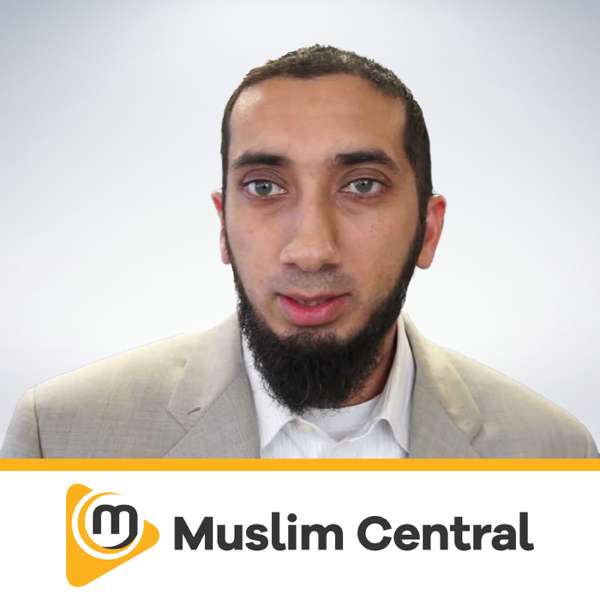
    Yasir Qadhi

    Yasir Qadhi was born in Houston, Texas and completed his primary and secondary education in Jeddah, Saudi Arabia. He graduated with a B.Sc. in Chemical Engineering from the University of Houston, after which he was accepted as a student at the Islamic University of Madinah.

    After completing a diploma in Arabic, he graduated with a B.A. from the College of Hadith and Islamic Sciences.

    Thereafter, he completed a M.A. in Islamic Theology from the College of Dawah, after which he returned to America and completed his doctorate, in Religious Studies, from Yale University. Currently he is teaching at Rhodes College, in Memphis, TN.

    Advertise

    Copyright: Copyright © Muslim Central

    • Apple Podcasts
    • Google Play
    • Spotify

    Latest Episodes:
    Fiqh of Worship 6 Jan 28, 2015
    Show notes

    Shaykh Yasir Qadhi discusses the Sunnah of Salah. To read beyond Rabbana Walakal Hamd. To read more than once the Subhana Rabbi Al Azeem and Subhana Rabbi Al Alaa. Reciting Durood e Ibrahim. Saying any Dua before the Tasleem. To raise the hand for the Takbeer. What are the rulings on the performance of Sujood? What are the mannerisms that are discouraged during Salah? Shaykh Yasir explains the points in the best manner possible.


    Fiqh of Worship 5 Jan 28, 2015
    Show notes

    Shaykh Yasir Qadhi delves deeper into the topic of the Fiqh of Worship and is sure to enlighten us all of the various Arkan of Salah and also the Wajibat. Hence, we get the golden opportunity to make necessary amends in our Salah. Some of the Arkan of Salah: Standing up for the prayer Takbeer Surah Fatihah Ruku Qiyam Sujood Calm and peaceful in every act of the Salah Final Tashahhud Sitting will saying Tashahhud To do in the order above Some of the Wajibat of Salat: To say Subhana Rabbi Al Azeem and Subhana Rabbi Al Alaa in the Ruku and Sujood at least once. To say Sami Allahu Liman Hamida and Rabbana wa lakal Hamd. The first Tashahhud and sitting down in the Tashahhud. To say Rabbighfirli between the two Sujood.


    Fiqh of Worship 4 Jan 28, 2015
    Show notes

    Shaykh Yasir Qadhi divulges details on the topics of Adhan and Iqamah. The status of Adhan and Iqamah is Fard kifayah. The Sunnah of the Adhan and the Qiyamah: Wudu is not a prerequisite for Adhan. The Adhan is not said before the prayer time. The Adhan is said in a slow speed and Iqamah is said in fast speed. Adhan should be given in standing position and in a high place. It is preferable to put your forefingers in your ears when giving Adhan. It is needed to face the Qiblah. During Adhan of Fajr, add the phrase - As Salatu Khayrun Min an Nawm. It is encouraged that the Adhan and Iqamah be said by the same person. The words of the Adhan are shared also by Shaykh Yasir Qadhi and the story of the Adhan is a very interesting one and deserves a listen.


    Fiqh of Worship 3 Jan 28, 2015
    Show notes

    Shaykh Yasir Qadhi discusses in this lecture the factors that break Wudu, how to do Ghusl, when should we do ghusl or the factors that necessitate Ghusl. Factors that break Wudu: Any material coming out of private parts such as stool, urine and wind. When one goes into a state of coma. Eating camel meat. Sleeping about which the different opinions are discussed. Pre seminal fluid. After carrying the dead body. The factors necessitate Ghusl: Ejection of seminal fluid. Wet dreams When a man enters a woman. After her menstrual cycle is over. After one’s death. What is Tayammum? When there is a scarcity of water or absence of water, we wash ourselves without water with pure sand . Tayammum is done for both minor and major impurity. How does one do Tayammum? Shaykh Yasir Qadhi elaborates appropriately. The factors that break Wudu break Tayammum. But if one finds water, then the existing Tayammum is null and void and we should perform Wudu. Shaykh Yasir Qadhi discusses the topic of blood in the case of women. They are of 3 types: Haaiz Nifas Istihaazah Things that are prohibited during this state are also clearly explained. Listen intently.


    Fiqh of Worship 2 Jan 28, 2015
    Show notes

    Shaykh Yasir Qadhi continues his discussion of purification of oneself. Taharah is the removal of spiritual and physical impurities. He also discusses the containers for performing Taharah. Every single container which is pure in itself is allowed to be used for purification except those made of gold and silver. Next in the discussion is the etiquette of using restrooms. Some of them are mentioned below: Do it in seclusion or conceal oneself. Say the Dua before entering the restrooms. Enter the restroom by putting the left foot in. Say Ghufranaka when leaving the restroom. It is prohibited to face the Qibla or turn your back to the Qiblah. Never wash your private parts with the right hand. Wash your private parts an odd number of times. The procedure to perform Wudu is discussed next also citing support from the Qur'an in Surah Maidah, verse 6. Arkan of Wudu: Intention or Niyyah. Washing the face Wash the hands up to the elbows. Wipe the head Wash your feet up to the ankles. Do it in the correct order. The Sunnah of the Wudu: Saying Bismillah when beginning the Wudu. Doing the acts of Wudu three times except the wiping of the head.


    Fiqh of Worship 1 Jan 28, 2015
    Show notes

    Shaykh Yasir Qadhi discusses the different branches of Fiqh in this lecture. Acts of our religion and the consequent Fiqh can be classified into the following categories: Haram Makrooh Mubah Mustahab Wajib The Shaykh starts off with the Fiqh of purification or Tahara. Categories of water: Tahoor fluid - natural water - it is pue in itself and can purify other things. Taahir fluid - it is pure in itself but does not purify other things. Najas fluid - it is impure in itself which implies that it cannot purify anything. We get a detailed explanation of the three types of water from the Shaykh and deserves a fair listen.


    Fiqh of Salah Jan 28, 2015
    Show notes

    Shaykh Yasir Qadhi divulges important details on the Fiqh of Salah in its entirety. First and foremost is discussed the obligatory nature of Salah and how it is a non exception of anybody to perform Salah except that of a menstruating woman. Next, the Shaykh moves on to shed ample light on the different pointers of Salah: The Fiqh of Adhan and the Iqamah rules. Preconditions of Salah - Wudu necessity, performing prayers at the correct timings, covering up of the Awrah as is stated for man and woman,absence of any Najis , facing the Qiblah, intention made for that particular prayer. Timings of Salah Arkan of Salah - Stand if capable of doing so, the beginning Takbir of Allahu Akbar, recitation of the Fatihah, Rukoo, Qiyam, Sajdah, the space between two prostrations, performance of Salah in calmness, the last Tashahhud, the first Tasleem, conduction of the Arkaan in its proper order. Wajibat of Salah. Sunnah of Salah. Factors which make Salah null and void.


    Science of Fiqh 2 Jan 28, 2015
    Show notes

    Shaykh Yasir Qadhi touches base on the science of Fiqh. The concept of Aam and Khas related to Qur'an and Sunnah is explained explicitly citing numerous examples. The point is that there is no contradiction between the two. Mutlaq and Muqayyad - This bears close resemblance to the concepts of Aam and Khas. Listen to the various examples to obtain a clear understanding. Mantuq and Mafhoom - Mafhoom is the opposite of Mantuq. Examples are given aplenty. Mafhoom is only taken when it does not contradict the Fiqh. Haqiqi and Majazi - when a word is used in a primary sense, it is called haqiqi and when it is used in metaphorical sense, it is called majazi. Allah’s attributes and names are all haqiqi. The goal of the Shariah: To protect the religion of Islam, essentials of life, sanity, property and one’s honour which includes children. Those things that are important and make it easy to live but not absolutely essential. Perfection of religion of Islam.


    Science of Fiqh 1 Jan 28, 2015
    Show notes

    Shaykh Yasir Qadhi delves into the topic of Fiqh and Usul Ul Fiqh (science of Fiqh). What is Fiqh? It is the study of the physical rulings of the Sharia with their detailed evidences. What is Usool ul Fiqh? These are the procedures, rules and principles used to derive the Fiqh. Where do we get these Usul Ul Fiqh or what are their sources? The Noble Qur'an The Sunnah - the various forms of Sunnah exhibited by the Prophet ﷺ. They are explained in detail Ijmaa - unanimous consensus Qiyas - analogy Custom and culture


    Fiqh of Divorce Jan 28, 2015
    Show notes

    Shaykh Yasir Qadhi now divulges details on the topic of divorce. Various steps of reconciliation can be made for the saving of a marriage such as advising one another and communicating appropriately. In case of ineffectiveness, one can resort to an open rebellion. Types of divorce : Sunnah way to divorce one’s wife Bidah way of divorce Conditional divorce Vague divorce What is the woman’s right in the matters of divorce? What is meant by Khula? What are the conditions of taking a Khula? Shaykh Yasir also enlightens us about the ways a marriage is broken. Also, the term Iddat is properly explained and the terms and conditions relating to it are explicitly brought to the fore. The next important topic for discussion that is chosen is the matter of the custodian of children in the event of a divorce? What does the Sharia state in this case? Shaykh Yasir Qadhi answers.


    Previous 1 229 230 231 232 233 253 Next

    Related Podcasts

    Mufti Menk – Muslim Central

    1

    Mufti Menk – Muslim Central Islam
    Nouman Ali Khan – Muslim Central

    2

    Nouman Ali Khan – Muslim Central Islam
    الحاج باسم الكربلائي – محرم 1438

    3

    الحاج باسم الكربلائي – محرم 1438 Islam
    الحاج باسم الكربلائي – محرم

    4

    الحاج باسم الكربلائي – محرم Islam
    Bayyinah Institute

    5

    Bayyinah Institute Islam
    القران الكريم كاملا full holly quran

    6

    القران الكريم كاملا full holly quran Islam
    footer-logo

    Contact Us

    Toll Free: 844-670-7747

    Links

    • Home
    • Top Charts
    • Networks
    • Apps
    • Independents Podcasts
    • Podcast Advertising
    • Podcast News
    • Contact Us
    • About Us
    • Analytics & Insights

    Stay Connected

      Privacy, Terms of Use & Our Code of Ethics Protecting Content Creators Copyrights