TopPodcast.com
Menu
  • Home
  • Top Charts
  • Top Networks
  • Top Apps
  • Top Independents
  • Top Podfluencers
  • Top Picks
    • Top Business Podcasts
    • Top True Crime Podcasts
    • Top Finance Podcasts
    • Top Comedy Podcasts
    • Top Music Podcasts
    • Top Womens Podcasts
    • Top Kids Podcasts
    • Top Sports Podcasts
    • Top News Podcasts
    • Top Tech Podcasts
    • Top Crypto Podcasts
    • Top Entrepreneurial Podcasts
    • Top Fantasy Sports Podcasts
    • Top Political Podcasts
    • Top Science Podcasts
    • Top Self Help Podcasts
    • Top Sports Betting Podcasts
    • Top Stocks Podcasts
  • Podcast News
  • About Us
  • Podcast Advertising
  • Contact
Not in our directory?
Add Show Here
Podcast Equipment
Center

toppodcastlogoOur TOPPODCAST Picks

  • Comedy
  • Crypto
  • Sports
  • News
  • Politics
  • True Crime
  • Business
  • Finance

Follow Us

toppodcastlogoStay Connected

    View Top 200 Chart
    Back to Rankings Page
    Islam

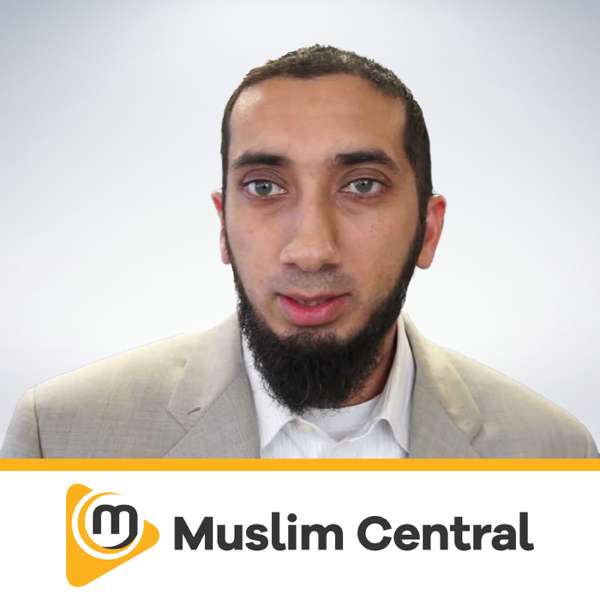
    Yasir Qadhi

    Yasir Qadhi was born in Houston, Texas and completed his primary and secondary education in Jeddah, Saudi Arabia. He graduated with a B.Sc. in Chemical Engineering from the University of Houston, after which he was accepted as a student at the Islamic University of Madinah.

    After completing a diploma in Arabic, he graduated with a B.A. from the College of Hadith and Islamic Sciences.

    Thereafter, he completed a M.A. in Islamic Theology from the College of Dawah, after which he returned to America and completed his doctorate, in Religious Studies, from Yale University. Currently he is teaching at Rhodes College, in Memphis, TN.

    Advertise

    Copyright: Copyright © Muslim Central

    • Apple Podcasts
    • Google Play
    • Spotify

    Latest Episodes:
    Lives Of The Sahaba 66 - Salman Al-Farsi - Part 2 Feb 26, 2018
    Show notes

    In this video, Shaykh Yasir Qadhi elaborates in vivid detail, the life and times of Salman Al Farsi RA and his role in the future of Islam. Continuing from where he left off, when Salman RA reaches Quba, he begins to get very excited about meeting Prophet Muhammad ﷺ and begins his quest to search for the three signs that shall help him identify the Messenger of Allah ﷺ - he does not accept Sadaqah, he accepts Hadiyah and there is a seal that signifies him being Rasoolullah ﷺ. We now gather valid and essential information about the incidents that transpired en route his way to meeting the Prophet ﷺ. This is a majestic and surreal moment for Salman RA and words do not do justice to illustrate his inner emotions and feelings on witnessing this impossible event. Salman RA couldn't participate in the battle of Badr and Uhud because he was bound by the laws of slavery.Then he applied the laws of Mukatibah that were suggested to him by the Prophet ﷺ. But his owner turned out be stingy and set a huge amount for his freedom - 300 date palms should be planted and 40 uqiyah of silver should be given. The Prophet ﷺ heard of this and took it upon himself to plant the date palm seeds one after the other and by the miracle of Allah bestowed in the hands of the Prophet ﷺ, all the trees were healthy and bore fruit. Salman Al Farsi RA true test of his knowledge and experiences of war came during the Battle of khandaq - explicit details have been shared and is worth a listen.a famous Hadith was narrated during this battle which was when the Muhajirun and the Ansars were calling onto Salman RA to join their side of the army which was made into groups to commence the digging of the trench.Rasoolullah ﷺ saw this and announced, “Salman minna Ahlul Bait!” which means that Salman is from Ahlul Bait! What a better honour than this to have been bestowed upon Salman! Salman RA died of khilafat of Uthman RA and there are around 30 Hadith narrated by him. When Salman Al Farsi RA was dying on his deathbed, he said to Sa’d Ibn Waqqas RA,” Do not cry in grief or eagerness for this life, but because Allah’s Messenger ﷺ has recommended that one should only collect what is sufficient as provision for a traveller. However, we did not implement his order. For many interesting tidbits as these, please do listen intently to the video and me mesmerised by the stature of Salman Al Farsi RA in Islam.


    The Fiqh of Umrah Feb 20, 2018
    Show notes

    Shaykh Yasir Qadhi delivers an amazing lecture on the Fiqhs of Umrah. What is Umrah? The explanation given is a beautiful one. Umrah gets rid of sins and poverty just like a furnace gets rid of impurity from iron. Next, the Shaykh discusses the rewards and benefits of Umrah, followed by the Fiqh rulings and most common issues pertaining to Umrah to the house of Allah. The Prophet ﷺ performed four Umrahs in his lifetime - An Umrah during Dhul-Qa'dah; the Umrah of Al-Hudaibiyah, an Umrah with his Hajj, and an Umrah from Al-Ji'ranah when he divided up the war spoils of Hunain. Benefits of Umrah: Expiation of sins Eradication of poverty and attainment of wealth in your life. Jihad of weak people such as elderly and women. Mutamir are the guests of Allah - if they ask, then Allah will give them. Increase the acceptance of Dua Basics of the Fiqh of Umrah: Arkan of Umrah - Ihram, Tawaf, Saee Wajibat of Umrah - entering into Ihram at Meeqat, shaving or trimming of the hair. Sunnah of Umrah What is the Meeqat? What is Ihram from a Fiqhi perspective? The concept of Talbiyah is also pondered upon. It should be said incessantly when in Ihram until one arrives at the Bait al Haram. What should not be done in Ihram? No shaving or cutting hair No cutting nails No perfume No stitched garments for men No garment covering head for men and no wearing Niqab and gloves for women No acts of intimacy What is Tawaf and Saee? Shaykh Yasir Qadhi answers explicitly and also some Hadiths are shared relating to Zamzam. Zamzam is drunk between Tawaf and Saee. Can we do multiple Umrahs? Various positions of Imams are shared and we get a clear opinion on the same.


    The Blessing of Islam: A Message To Born Muslims Feb 20, 2018
    Show notes

    Shaykh Yasir Qadhi delivers a wonderful lecture that deals with a message to born Muslims which is the greatest blessing to have in one’s life and not one to be taken for granted. The Shaykh also shares some amazing stories concerning converts to Islam that he has encountered in his life, in particular, that of an Israeli convert. One of the reasons we love when a person converts to Islam is that we are so happy at the prospect of discovering people who have accepted Islam which we had taken for granted which will entitle him to twice the rewards by Allah SWT as even mentioned in one of the Hadith. It reaffirms our faith in Islam.


    Should Muslims Visit Al-Aqsa? Feb 19, 2018
    Show notes

    Should Western Muslims who have political access to Jerusalem visit Masjid al-Aqsa? Shaykh Dr. Yasir treads on the path to provide fiqhi and an emotional clarification on whether Western Muslims who have political access to Jerusalem should visit Masjid al-Aqsa. A topic that has legal, social, ethical and political ramifications, numerous fatwas have been issued that prohibit Muslims from visiting al-Aqsa and also some scholars who grant permissibility to visit Masjid al-Aqsa. In this talk, the Shaykh acquaints us with the arguments used by a fragment of scholars to prohibit visiting al-Aqsa and responds to them one by one.


    Lives of Sahaba 65 - Salman Al - Farsi Feb 19, 2018
    Show notes

    In this two part video, Shaykh Yasir Qadhi attempts to unravel the life of Salman Al Farsi RA who was a Persian Sahabi. We get acquainted with Salman RA biography and his early life as a Zoroastrian and his tryst with Christianity and his conversion to Christianity. It is just amazing and mind boggling to discover and this is even contemplated upon as to how a boy who grew up in the pinnacle of Persian power and rule would eventually fight against the same Persian people from the Muslim army. Moreover, he is appointed the governor of Madaain and we realise he has now the bastion of power which he had once only seen from far. Allah’s Qadr outdoes everything we can and would have imagined. We also get to know how Salman RA yearned to meet the Prophet ﷺ and which lands him on the land of Amuriyah where the Banu Kalb cheated on their promise and he is sold off as a slave to the nephew of Banu Qurayza. He eventually lands in Medina and he says he is overjoyed at the sight of this city of the Prophet ﷺ. Do listen to the next part in the series to explore the happenings on Salman Al Farsi RA ultimate wish to see the Prophet ﷺ.


    Lives Of The Sahaba 64 - Bilal Ibn Rabah Feb 14, 2018
    Show notes

    Shaykh Yasir Qadhi, in this video, gives testimony to illustrate in front of us the life of one of the greatest human beings to have ever walked the face of this earth and also one of the most magnanimous Sahabas who breathed for the sake of Islam and led a life in the way of Islam with immense grit, determination and conviction - Bilal Ibn Rabah RA. Bilal Ibn Rabah was born to slave parents and he had a tall, lean, fit, dark skinned personality with big lips and nose. He adorned a slight beard and it is reported that he was of the same age as Abu bakr As Siddiq RA. Bilal RA was a slave and he was owned by Umayyah Bin Khalaf. When Umayyah ibn Khalaf discovered that Bilal had converted to Islam, he began a series of persecutions against him at the instigation of Abu Jahl. In this state too, Bilal refused to obey his command and kept repeating "Ahad Ahad" (God is one). Angered by this refusal, Umayyah even sought to torture him by placing him on the hot sand in summer and place boulders on his chest. Such was the sheer Jahiliyyah of the time. When Abu Bakr RA saw this on his way, he reported the matter to Prophet Muhammad ﷺ and he then was instructed to free Bilal RA for a sum of 280 dirhams which was much higher for an ordinary slave. From that day onwards, Bilal RA never left the side of the Prophet ﷺ and accompanied him everywhere he went and in every battle he fought. He married only after the death of Prophet ﷺ and died childless. Bilal RA stood on top of the Kaaba and gave the Adhan after the conquest of Mecca which was the ultimate symbol of faith. Bilal RA is the first ever Muezzin - the possessor of the most loud and beautiful voice for Adhan (hadith shared by the shaykh regarding this) in the history of Islam and he is also the first to have given the Adhan in Medina, in Mecca and in Damascus. Numerous Hadith are said with reference to Bilal RA relating to the city of Medina, Umar RA and many more. Do listen to be acquainted with these great Hadith. After the death of the Prophet Muhammad ﷺ, he was so upset that he vowed never to recite the Adhan ever again since it pained him thinking of the memories of the Prophet ﷺ. He made a concession once on the insistence of Abu Bakr RA in Syria during the battle and he obliged. May Allah unite and reunite us with Bilal RA and the other Sahaba and the Prophet ﷺ in Jannatul Firdaus, Aameen.


    Lives Of The Sahaba 63 - Former Slaves - Part 2 Feb 14, 2018
    Show notes

    This talk sees Shaykh Yasir discussing and extrapolating details on some more mawali in the history of Islam, namely - Shukran, Safeenah,Thawban, Yassar, Salman Al Farsi RA. The female mawla discussed in brief detail are - Safiyyah Bint Huyayy (former slave girl who later on went to become the wife of Prophet ﷺ), Maria Bint qibtiyah (she was an Umm Walad implying that she could not be gifted to anyone else), her sister Sireen (who was given to Hassan Ibn Thabit) and Rayhana. Commencing with Shukran, he participated in the battle of Badr and he was gifted to the Prophet ﷺ by Abdur rahman ibn awf RA. His tryst with fame is that he was amongst the four people who washed the Prophet ﷺ body during his janaza and lowered his body in the Qabar. There is mention of many Hadith narrated by Yasser RA pertaining to Salah on a journey. Yassar RA was a maula who was the shepherd of Rasoolullah ﷺ. He was freed but he continued to be of servitude to the Habib of Allah ﷺ. Another famous maula is Thawban RA who was an Arab and his grave is in Palestine. There are 100 Hadith to his credit that have been narrated by him. Once, the Prophet ﷺ said: “If somebody promises me about something, I will promise him Paradise.” Thawban RA said quickly, “I will.” The Prophet ﷺ said to him, “Do not ask anything from anybody!” After prayer, the Messenger of Allah ﷺ would ask for forgiveness three times and would recite: "Allahumma Antas-Salam wa minkas-salam tabarakta wa Dhal-jalali wal-ikram" (O Allah, You are As-Salam and from You is all peace, Blessed are You O Possessor of majesty and honour)." Another narration by Thawban RA -The Messenger of Allah ﷺ said: 'Adhere to righteousness even though you will not be able to do all acts of virtue. Know that the best of your deeds is Salat and that no one maintains his ablution except a believer.' Another maula of Prophet Muhammad ﷺ was Mahran or Safeenah RA. He was owned by Umm Salamah RA and she freed him and gifted him to the Prophet ﷺ. The story behind his name Safinah is an interesting one where he says, “The Prophet ﷺ and his companions went on a trip. When their belongings became too heavy for them to carry, Muhammad ﷺ told me, ‘Open your garment.’ They filled it with their belongings, then they put it on me. The Messenger of Allah ﷺ told me, ‘Carry it for you are a ship.’ Even if I was carrying a load of six or seven camels while we were on a journey, anyone who felt weak would throw his clothes or his shield or his sword on me so I would carry that, a heavy load. The Prophet ﷺ then told me, ‘You are a ship’ A narration by Safeenah: Hold on, the Khilafah of Abu Bakr RA was two years, and Umar RA was ten years, and Uthman RA twelve years, and Ali RA six years.”The hadith is narrated by Safeenah RA that the Prophet ﷺ said:“The Prophetic khilafah will last for thirty years. Then Allah will give the dominion to whomever He wills.”


    Lives Of The Sahaba 62 - Former Slaves Feb 14, 2018
    Show notes

    In this enlightening video, Shaykh Yasir Qadhi divulges details on the section of society in medieval era of Islam or pre- Islamic era called the Mawali or mamluks or Abds which means slaves. Is Islam, the status of slaves is not the same as what was in the western world. The term mamluk or Abd meant a slave and when he or she was freed, he would be known as a maula.any mistreatment to slaves was strictly forbidden in Islam and the penalty for such a misdeed was to free the slave in question. The Prophet ﷺ is said to have owned 50 - 90 mamluks in his lifetime and the interesting part of this information is that he never ever acquired an abd intentionally : rather it was always that he had been gifted one by his wives, the chieftains or Sahabas or the rulers of other countries. It is also worth mentioning and commendable that the Prophet ﷺ freed all of his Mamluks without exception and they attained the status of maulas. The practice of attaining mamluks was never a practice that was merited for or praised rather numerous instances are seen where great regard has been given to maulas so much so that different Hadith too certify this very aspect. In fact, the only way that mamluks (mostly Non Arabs) could be acquired as per Islam was if they were prisoners of war that had not been ransomed and they too would eventually convert to Islam. A mamluk worth mentioning here is Zayd Ibn Harithah RA who was the first mamluk and he was so loved and adored by the Prophet ﷺ that he chose to remain in servitude to him rather than go back to his parents. Abu Huraira RA narrated, “The Prophet ﷺ said, "Whoever frees a Muslim slave, Allah will save all the parts of his body from the (Hell) Fire as he has freed the body-parts of the slave." There were numerous mamluks at the time of Pre Islamic period and they have been mentioned by name in a book compiled by Imam as - Saliheen.some of them are - Kirkira, hormuz, badam, shukraan and many more. Abu Rafi who was the mamluk of Al Abbas, the uncle of the Messenger of Allah ﷺ, narrates that:i once saw Abu Dhar Al-Ghifari wearing a cloak and his slave was wearing a cloak too. I asked for the reason in similarity between the two cloaks and hue replied, "Once I abused a man and he complained of me to the Prophet. The Prophet ﷺ asked me, 'Did you abuse him by slighting his mother?' He added, 'Your slaves are your brethren upon whom Allah has given you authority. So, if one has one's brethren under one's control, one should feed them with the like of what one eats and clothe them with the like of what one wears. You should not overburden them with what they cannot bear, and if you do so, help them (in their hard job)." For more such amazing Hadith and stories, do listen intently and get a fresh perspective on the status of mulas in Islam.


    Lives Of The Sahaba 61 - Abdullah Ibn 'Amr Ibn Al 'As Feb 14, 2018
    Show notes

    Elaborating on the life and times of Abdullah Ibn Amr Ibn Al As RA - the most ascetic amongst the Sahaba, one among the four Abadilah, Shaykh Yasir Qadhi divulges and discusses various facets associated this great Sahaba . Abdullah Ibn Amr Ibn Al As RA was born when his father Amr Ibn Al As RA was just 12 years old. He was named after his grandfather but his name was changed by the Prophet ﷺ due to its negative connotations and the Prophet ﷺ named him Abdullah saying: ‘The most beloved of names to Allah is Abdullah and Abdur Rahman.’ Abdullah Ibn Amr Ibn Al As RA is famous for primarily keeping a journal of Hadith in the lifetime of the Prophet ﷺ in which he would scribe Hadiths directly from the Prophet ﷺ. But he always sought permission from the Prophet ﷺ to do so and this request was affirmatively granted. Another magnanimous quality of Ibn Amr RA was his ultimate devotion to islam by means of extra Ibadah, memorization of the entire Qur'an in the lifetime of Muhammad ﷺ and recitation of the whole Qur'an in a single night. Also, he would fast everyday without fail and prayed Tahajjud every night. Once, Abdullah Ibn Amr RA asked the Messenger of Allah ﷺ, “O Messenger of Allah! Shall I record everything you say when you are angry or happy?” The Messenger of Allah ﷺ said: “Yes, I do not tell anything but the truth.” This is the ultimate truth since Allah SWT has explicitly stated in the Quran that the Messenger of Allah ﷺ only spoke the truth. Among other great acts was his participation in the battle of Yarmuk and the Battle of Siffin (on the insistence of Prophet ﷺ that he must obey what his father had ordained but avoided fighting of any kind) but his heart only leaned towards matters of knowledge and Qur'an and that was his ultimate calling. There are more than 700 hadiths that have been narrated by him and he is also said to have authored"Al-Sahifa al-Sadiqah" which was a Hadith compilation of glorious repute and understanding and authority. Abdullah ibn Amr RA narrated: The Messenger of Allah SAW said, “Those who are merciful will be shown mercy by the Most Merciful. Be merciful to those on the earth and the One in the heavens will have mercy upon you.” Abu Hurairah Rah said, ‘There is no one more knowledgeable of the sayings of the Messenger ﷺ except Abdullah ibn Amr. He used to preserve them in his heart and I used to preserve them in my heart; but, he used to write them down and I did not.’ Abdullah Ibn Amr RA narrated that, “I memorized the Quran and recited it all in one night. The Messenger of Allah ﷺ said: 'I am afraid that you may live a long life and that you may get bored. Recite it over the period of a month.' I said: 'Let me benefit from my strength in my youth.' He said: 'Recite it in ten days.' I said: 'Let me benefit from my strength and my youth.' He said: 'Recite it in seven days.' I said: 'Let me benefit from my strength and my youth,' but he refused (to alter it any further)." The Messenger of Allah ﷺ also added: "No one properly understands who reads the Quran in less than three days." May Allah SWT bless him and make us one like this great Sahaba.


    Lives Of The Sahaba 60 - Amr Ibn Al 'As Feb 14, 2018
    Show notes

    In this video, we come face to face with the life and times of the famous Sahaba - Amr Ibn Al ‘As RA. Here, we touch base on the three generations of the ‘As - the grandfather, the father and the son. Al-'As ibn Wa'il was the father of 'Amr ibn al-'As . He was a non believer in Islam and died before Hijrah. He had two sons - Amr Ibn Al As and Hisham Ibn Al As. Amr Ibn Al As was a shrewd politician and he had the talent of influencing leaders which was in the best interest of Islam. He fought in every single battle on the wrong side. After the Battle of Uhud, The Prophet ﷺ made dua to Allah to deal with him and Allah then revealed verses in the Qur'an which explicitly revealed that this matter had nothing to do with the Prophet ﷺ and do not decide who goes to heaven or hell. Details are elucidated upon incidents that happened in connection with Amr Ibn Al As especially after the Battle of Khandaq. Amr ibn Al As participated as a New Muslim in the conquest of modern day Palestine and Syria and Battle of Yarmuk and he convinced Umar RA to conquer Egypt via indication of a threat from them. In a hadith narrated by Amr ibn Al-'Aas "When I wished to convert to Islam, I went to the Prophet ﷺ in order to swear my allegiance to him. When he extended his hand to me ,I said,'O Messenger of Allah ﷺ, I will not swear my allegiance to you until you seek forgiveness for me for all of my previous sins!'The Messenger of Allah ﷺ said, 'O 'Amr, do you not know that migration wipes away all of the sins before it?’ In another hadith, the Messenger of Allah ﷺ said: "The people have submitted (to Allah) but 'Amr ibn Al-'As has believed (in Allah)." Once, when he sent a messenger back to Muhammad ﷺ asking for reinforcement during a particular battle, Muhammad ﷺ sent 4000 men, which included Abu Bakr RA and Umar RA, under the leadership of Abu Ubaidah ibn al Jarrah RA.When Abu Ubaidah RA arrived and ascertained his position as commander, he was met with complete opposition by Amr Ibn Al As RA. Abu Ubaidah RA accepted this in the wake of the conversation that had happened between the Messenger of Allah ﷺ where he had been advised to not create barriers based on leadership. For more such anecdotes and also Hadith relating to the death of Amr Ibn Al As RA, please give this video an intent listen.


    Previous 1 208 209 210 211 212 253 Next

    Related Podcasts

    Mufti Menk – Muslim Central

    1

    Mufti Menk – Muslim Central Islam
    Nouman Ali Khan – Muslim Central

    2

    Nouman Ali Khan – Muslim Central Islam
    الحاج باسم الكربلائي – محرم 1438

    3

    الحاج باسم الكربلائي – محرم 1438 Islam
    الحاج باسم الكربلائي – محرم

    4

    الحاج باسم الكربلائي – محرم Islam
    Bayyinah Institute

    5

    Bayyinah Institute Islam
    القران الكريم كاملا full holly quran

    6

    القران الكريم كاملا full holly quran Islam
    footer-logo

    Contact Us

    Toll Free: 844-670-7747

    Links

    • Home
    • Top Charts
    • Networks
    • Apps
    • Independents Podcasts
    • Podcast Advertising
    • Podcast News
    • Contact Us
    • About Us
    • Analytics & Insights

    Stay Connected

      Privacy, Terms of Use & Our Code of Ethics Protecting Content Creators Copyrights