TopPodcast.com
Menu
  • Home
  • Top Charts
  • Top Networks
  • Top Apps
  • Top Independents
  • Top Podfluencers
  • Top Picks
    • Top Business Podcasts
    • Top True Crime Podcasts
    • Top Finance Podcasts
    • Top Comedy Podcasts
    • Top Music Podcasts
    • Top Womens Podcasts
    • Top Kids Podcasts
    • Top Sports Podcasts
    • Top News Podcasts
    • Top Tech Podcasts
    • Top Crypto Podcasts
    • Top Entrepreneurial Podcasts
    • Top Fantasy Sports Podcasts
    • Top Political Podcasts
    • Top Science Podcasts
    • Top Self Help Podcasts
    • Top Sports Betting Podcasts
    • Top Stocks Podcasts
  • Podcast News
  • About Us
  • Podcast Advertising
  • Contact
Not in our directory?
Add Show Here
Podcast Equipment
Center

toppodcastlogoOur TOPPODCAST Picks

  • Comedy
  • Crypto
  • Sports
  • News
  • Politics
  • True Crime
  • Business
  • Finance

Follow Us

toppodcastlogoStay Connected

    View Top 200 Chart
    Back to Rankings Page
    Arts

    Why Make? Podcast

    monthly conversations with makers exploring creativity and why they make

    Advertise

    Copyright: © 2019

    • Apple Podcasts
    • Google Play
    • Spotify

    Latest Episodes:
    Why Make? Episode 51: Aspen Golann Jun 25, 2023
    Show notes

    The long awaited conversation on Why Make? Podcast with artist and maker Aspen Golaan.


    Why Make? Episode 50: Kimberly Winkle May 09, 2023
    Show notes Why Make? Episode 50: Kim Winkle Why Make? Productions

    On this episode of Why Make? we talk with Kimberly Winkle, an arts administrator full time teacher and artist. Kim is a Professor of Art and the Director of the School of Art, Craft & Design at Tennessee Technological University’s Appalachian Center for Craft.

    A native of Oklahoma Kim holds a Bachelor of Fine Art in Ceramics from the University of Oklahoma. She then started her MFA in ceramics at San Diego State University but during her first year was persuaded to take a class in the Applied Design, Furniture and Woodworking program then headed by Wendy Maruyama. Where she then earned her MFA in furniture design.

    Winkle’s work is well known for the elaborate surface markings she uses on her colorful turned and carved forms that she somehow finds time to make while being director of the Appalachian Center for Craft and maintaining a busy teaching schedule.

    Please join us as we find out what inspires maker Kim Winkle!

    Kimberly-Winkle-Kim-working-1-scaled.jpg
    24765860_1.jpg
    Kim-winkle_redstool.jpg
    Screenshot 2023-05-07 at 20-14-23 Near_Afar.png
    Screenshot 2023-05-07 at 20-15-09 Tit for Tat Tables.png
    UCRUfUrs5uBSeb1P.jpg
    b8xIRPZTyOBqohYo.jpg
    Screenshot 2023-05-07 at 20-15-29 Spinner Table.png
    Screenshot 2023-05-07 at 20-16-15 Riff Rattle.png
    Winkle+36.jpg

    The Why Make? Visual Podcast with Wendy Maruyama Apr 07, 2023
    Show notes

    This video episode is part of a new experiment in creating a visual podcast series.Where we color in what our guests are talking about with images of their work and images of work that inspired them. This first episode is from of our in depth conversation with the artist Wendy Maruyama a furniture maker, sculptor and retired educator. The full conversation can be found in episodes 48 and 49 below


    Why Make? Episode 49: Wendy Maruyama Part II Feb 17, 2023
    Show notes

    Why Make Podcast, Wendy Maruyama Episode Part II TranscriptTime Code00:00 Robb HelmkampHello and welcome to Why Make, where we talk to makers from different disciplines about what inspires them to make.With your hosts Robb Helmkamp and. Erik Wolken Erik Wolken. If you would like to learn more about the makers we interview on Why Make please go our website why-make.comRobb HelmkampAnd please help support the Why Make podcast and Why Make productions by making a tax refundable donation to us on Fractured Atlas.Erik WolkenFractured Atlas is our new non profit fiscal sponsor which allows us to access a wide range of funding possibilities including funding available only for non-profitsRobb HelmkampVisit https://fundraising.fracturedatlas.org/the-why-make-project or go to the donate to Why Make page on Why-Make.com 01:03 Robb HelmkampWelcome to our first podcast of the 2023 season of Why Make. This episode is part two of our in depth conversation with the artist Wendy Maruyama.Erik Wolken Wendy Maruyama is a furniture maker, sculptor and retired educator who resides in San Diego California. Wendy’s work has tackled a wide scope topics from traditional furniture forms to exploring her Japanese heritage and the imprisonment of Japanese Americans during WW2 to the issue of endangered speciesRobb HelmkampAs we discuss later in the podcast Wendy was born with significant hearing loss and cerebral palsy and at her request, to aid our listeners, we have included a full transcript of our conversation on our web page for this episode which can be found on the podcast page of why-make.com It can also be found in the episode notes on Apple podcastsErik WolkenPlease join us and take a listen to our wide ranging discussion with one of the more amazing artists in the woodworking field, Wendy Maruyama.02:06 Erik Wolken Moving along Wendy, let's talk about the next phase of your work. Because the next phase of your work use do start to tackle some of your identities in your bodies of work in Turning Japanese, Simple Pleasures and Indulgences & Men in Kimonos you do start to sort of not only address your heritage, but really start to use narrative in your work. What was what was behind all of that? I mean, what do you think was the inspiration behind that? The whole thing that started with Turning Japanese and Men in Kimonos exploring your cultural identity.02:42 Wendy MaruyamaI think the Turning Japanese series the Men in Kimono riff came from my first trip to Japan could be in '92 maybe I can't remember but I'd never been to Japan until the early 90's and like anybody else I was just amazed by what I was seeing over there especially the craft scene. There is such a strong craft heritage in Japan not only with woodworking, ceramics of different styles at the same time some of the fields like textiles really evolved into the modern times to use the unusual fibers and metal in weaving. And then of course, going to downtown Tokyo in the Shibuya District dominated with all this neon stuff, it was very much like Blade Runner if you've seen the movie Blade Runner? It was clearly based on Tokyo. And so there are these two very different aspects of Japan, the old and the very, very, very new high tech side of it. There is a little bit of conflict to you know, I'd be riding on the subway and you can see these Japanese business men reading these pornographic cartoons it was called Manga. I think it was it all these lady with big boobs, it's all cartoons. It was such a flurry of images and so I think some of that was mostly my personal response to what I saw in Japan and I realized that I didn't fit even though I was Japanese American. Japanese descent. I did not fit into that whole culture, I mean, even if I tried. I mean, I'm kind of proud of it from a distance but I realized I don't think like that. So, maybe that was kind of a mixture of sadness and relief in a way. It is a very patriarchal society so there was that and it was kinda just a response to my experiences going to Japan.05:44 Erik WolkenAnd the other interesting thing about that body of work is you begin to introduce using video and still images into it too. And you're really starting to truly experiment with your craft and and I thought that was absolutely wonderful. You know, you reached outside the box, which I think is what we all aim to do as artists. When you first started using video and still images? And where did that come from?06:11 Wendy MaruyamaI'm trying to think. Trying to remember if the Tasmanian Tiger piece was first, I think it was. But anyway, in the Turning Japanese series I started using photo's because I went to a flea market in Kyoto. It's one best thing about Japan! It's amazing what you can find at the flea market. Some love it. If you ever go to Japan, make sure that you go into a big flea market either in Kyoto or Tokyo. The stuff that you find is amazing, but anyway, I came across a box of old black and white photographs of Kabuki actors. And I found out later that in Kabuki theater, women were not allowed to perform. I don't know if that is the case now? But women were not allowed to perform in Kabuki and so the female characters in a Kabuki play were always played by men who were expert at mimicking the feminine movement of women in the story. So all these men I mean all these women in kimono were actually men and they were quite beautiful and alluring and I was just kind of fascinated by that, how these beautiful, these men were. And they were prettier than I was and I thought it be kinda fun to use some of these images. At the same time, I'm a big Japanese sci-fi fan I think that was because that was the first time I saw Japanese people in a movie. It was in a Godzilla movie where you see all these Japanese people running from Godzilla. In one of the Godzilla movies there's these twin fairies (the Shobijin). I don't know if you remember they were sidekicks to Mothra, who was another monster. So I wanted to create this sort of these twin geisha women in the image of this. Oh I don't know, it's amazing about Photoshop, I was taking Photoshop class, and it's amazing how you can make fantastical images using Photoshop. So that was an opportunity to experiment with different media. I tend to jump around from, you know, from subject to subject cause that's the way my life goes. I'm not one to stay with one idea for 40 years, I think I would be bored to death. So it's important for me to just kind of reflect my life through my work. And so hopefully you get an idea what I've been going through by seeing my work in a linear pattern.09:41 Erik Wolken Yes, you definitely see a progression of your work, because then the next body of work you move on to is Executive Order 9066. And the Tag Project. And of course this is referring to, and I'm going to use the correct terminology. This is referring to the incarceration and or imprisonment of the Japanese people on the West Coast of America during World War Two. Just to give you an idea of the scope of this project, and Wendy you can go on to talk about it more, but there were 120,000 Japanese, people of Japanese heritage, imprisoned during EO 9066. And the Tag Project, you printed out a replica of the original tags, these people wore as they were sent to their prison camps. 120,000 tags, that is a mind boggling number.10:38 Wendy MaruyamaThat's a lot of tags. I started this the body of work when I was an artist in residency at SUNY New York, SUNY Purchase that is State University of New York Purchase. I knew that I needed to do this work, but I wasn't really ready until then. I mean it's a really hard topic because my mother's side of the family was deeply impacted by Executive Order 9066 because they were in Los Angeles at the time when Pearl Harbor was bombed and all that happen. But what struck me and kind of made me sort of angry was I was really surprised at how many people didn't even know about this episode in American history, especially on the East Coast and in the south and even now sometimes you run into people who don't even know about it. I think people know, more people know about it now. But even 15 years ago, when I started this project I was running across a lot of people who didn't know, they kind of knew but they didn't really know. And when you tell them how many people were sent away to these prison camps but it's daunting to think about. And so I also thought a lot about the Holocaust too. It doesn't hold a candle to what happened here, but still the fact that Executive Order 9066 happened in this country, this country of freedom and all that. I just really wanted to bring that to the forefront with my work. And I also wanted to get to know more of the Japanese American community. And so one of the first things I did was that I reached out to the local San Diego Japanese American historical society to learn more about Executive Order 9066. And I started talking to a lot of other people who were sent to prison in Poston, which was in Arizona. Most people from San Diego were sent to prison camp in Arizona. And that's when I started to make it into a community project and I would host these tag writing parties we would have different chores people would stamp tags, they would write the names, they would tie, tie them together, there were a lot of processes in for each tag and the only way I was going to be able to do 120,000 tags was to make it a community project. But hopefully make it an educational project, but also social advocacy project. So that people can learn about what happened. And I would show a slide show before we would start working on the tags. I was going to temples and churches and high school classrooms, and college classes, and galleries and museums. So it was kind of a broad outreach and it took 4 years but we did manage to finish all the tags in time for the 70th anniversary of Executive Order 9066.Erik WolkenThat was a massive undertaking, what led you I mean, what led you at the beginning to first think of producing these 120,000 tags?14:54 Wendy Maruyama I must have been crazy, you know. I started out by making just a few tags of people that my family knew. And I was incorporating them into cabinet pieces and for instance this one cabinet had the image of a young Japanese American girl in the back. And the tags were all showed they were under the age of 10 and were sent to camp in 1942. But then a friend of mine, Christine Lee came to visit me in NY and she said, you know, it would be amazing if you could do all 120,000 tags. Now, Christine, kind of, she does this kind of work, you know that that very labor intensive. And at first I thought she was crazy. but then, you know, I thought about it and the impact it would have would be so much more powerful than just seeing a couple of tags here and there. And um I like the idea of art reaching in... You know, I am kind of a shy person and so it is really hard for me to like reach out to strangers and just interact. I think it has a lot to do with my hearing disability,, it kind of forced me to do that. 16:44 Erik Wolken Right. And, and I mean, we'll have pictures of all this up on our website. But um just to paint a picture. So there's two pieces to the Tag Project in EO 9066. So there is the Tag Project, which represents all 120,000 people that were imprisoned, and then... Robb HelmkampIn 10 camps I correct?17:03 Erik WolkenRight. Memorializes, the 10 camps that were mostly over the Southwest, and just amazing images of these places where people were housed for three, four years, and it's an equally intense part of the piece. You know, I would I would encourage people to look into it further. And also there is a great website called www.densho.org, which will help better inform you about the incarceration and imprisonment of people of Japanese, Japanese Americans remember these were Americans, Japanese Americans during World War Two.Robb HelmkampAnd then there's also you've kept quite a blog about the process of the project on your website.17:50 Wendy MaruyamaI did and I feel bad that I haven't really kept it up to date, but it was really to follow the whole process of the tag project. At the same time I wanted to share relevant news articles that were not only about the Executive Order 9066, but just discrimination. I remember working on the tags and this whole outcry with a woman at the UCLA library posted a video of herself complaining about Asian students in the library and she was making fun of the way they talked, shing shong chi chong. But video went viral, and it kind of backfired on her. Discrimination on that level is still alive and well, most people know now. Erik Wolken So moving on to your next advocacy project, because this really is a phase of your life where you're taking on a very much the role of an advocate is the Wildlife Project. Do you want to describe the Wildlife Project a little bit?19:07 Wendy MaruyamaLike I have said before, and I think you know this, I love animals more than people, who are just awful. I started reading too many articles about the demise of the elephant in particular. Poaching for the ivory and it's not only just the elephants, but rhinoceros and tigers, all for the sake of being able to show off someone's wealth. The elephant population was really precariously dropping to the point the danger of becoming extinct. So I wanted to do a whole series of work, kind of highlight this issue. And at the same time, I meet somebody, Elizabeth Kozlowski, who was an independent curator and she wanted me to do an exhibition at the Houston Center for Contemporary Craft, which is where she was working at the time. And so that was the incentive to make a whole body of work about wildlife. Again, you know elephants are big and I wanted to be able make these huge pieces and I had to figure out a way to make them big without making them heavy and difficult to manage. At the time, I was working in a very small studio. And so I came up with the idea of making them out of very thin pieces of wood and sewing them together. When I was in high school, I loved to sew and the fabrication of making a dress or an article of clothing, is very three dimensional and it could be applied very easily to other materials like cardboard and wood and paper. I guess it's like a form of origami, creating volume with these very flat surfaces. So that was how that work came about and then it was accompanied with a bunch of other pieces.Erik WolkenThe other thing that fascinated me about that show is that the other pieces were in different mediums. You did a huge rhinoceros in plaster and then you did a pangolin which I'm not really familiar with what a pangolin is, in rattan It was you still continue to experiment and I just find that wonderful.22:06 Wendy Maruyama It’s fun, you know like I said I think wood working just doing woodworking would really bore me to death. Just some materials they have a different capacity to express a different idea. The thing about glass is that I was able to, I was offered a residency at Pilchuck so it is kind of funny how these opportunities come together and make it possible to integrate projects and so I was able to spend I think it was two weeks or three weeks at Pilchuck and I was given two amazing glass blowers to help me make these tusks and I mean obviously glass was the perfect medium. And it was kind of tricky because you know William Morris, William Morris was a hot glass blower, he's still blowing glass he became known for the very large blown primitive forms. But he also did elephant tusks but it was a different context. He presented them a just large sculptures of beautiful tusks and I wanted to p…

    Full show notes at the publisher

    Why Make? Episode 48: Wendy Maruyama Part 1 Feb 17, 2023
    Show notes

    Why Make Podcast, Wendy Maruyama Episode Part 1 Transcript Time Code00:00 Robb HelmkampHello and welcome to Why Make, where we talk to makers from different disciplines about what inspires them to make.With your hosts Robb Helmkamp and, Erik Wolken Erik Wolken. If you would like to learn more about the makers we interview on Why Make please go our website why-make.comRobb HelmkampAnd please help support the Why Make podcast and Why Make productions by making a tax refundable donation to us on Fractured Atlas.Erik WolkenFractured Atlas is our new non profit fiscal sponsor which allows us to access a wide range of funding possibilities including funding available only for non-profitsRobb HelmkampVisit https://fundraising.fracturedatlas.org/the-why-make-project or go to the donate to Why Make page on Why-Make.com 01:01 Robb HelmkampWelcome to our first podcast of the 2023 season of Why Make. This episode is part one of our in depth conversation with the artist Wendy Maruyama.Erik Wolken Wendy Maruyama is a furniture maker, sculptor and retired educator who resides in San Diego California. Wendy’s work has tackled a wide scope topics from traditional furniture forms to exploring her Japanese heritage and the imprisonment of Japanese Americans during WW2 to the issue of endangered species.Robb HelmkampAs we discuss later in the podcast Wendy was born with significant hearing loss and cerebral palsy and at her request, to aid our listeners, we have included a full transcript of our conversation on our web page for this episode which can be found on the podcast page of why-make.com It can also be found in the episode notes on Apple podcastsErik WolkenPlease join us and take a listen to our wide ranging discussion with one of the more amazing artists in the woodworking field, Wendy Maruyama.02:03 Erik Wolken Okay, are we ready to have a very serious conversation about nothing?Wendy MaruyamaOh, yeah that will be fine by my book.Erik Wolken We'd like to welcome Wendy Maruyama to the Why Make? Podcast.Robb Helmkamp Welcome Wendy. Welcome to Why Make!Wendy MaruyamaThank you! Thank you for having me, you guys.Erik Wolken The question we always start the podcast with is: What is your first memory of making something?02:00 Wendy MaruyamaWell, you know, I can remember when I was maybe four or five years old, my mom used to bring home these little art kits, craft kits, maybe not coloring books. But things that you had to like put together. And I remember very distinctly a paper cutout book where we had to fold them and they were sort of kinetic. I remember I was more interested in the whole fabrication process verses drawing and painting. Although I did draw and paint when I was little, but I preferred punching holes in paper and you know that sort of thing. So I would say that would be my earliest recollection of making stuff.Erik Wolken Right. So you are an active maker. You liked to be involved in the making. You weren't a passive maker.03:47 Wendy Maruyama Right. Got to be more than just a piece of paper and crayons. I want to ...Even if it meant crumpling paper up or stabbing a piece of paper with a dowel rod, or...Robb Helmkamp Not just making marks but making holes in things too, changing the shape of it.Wendy MaruyamaRipping things apart. I remember needle craft stuff too. Like working with yarn and string. And of course you know back in the 50s the kinds of toys one would get would be very much based on gender and I never got the little hammers and the screwdriver kits for kids, you know. I got the sewing kit and the dolls and that kind of thing. So hopefully that changed a little bit now, but I do remember that pretty clearly because I would go to my cousin's house. I had male cousins and they all had the really cool cars (coins?). That wasn't made available to me because I guess mom felt like I needed more of a Homemaking Type Kit.Erik Wolken What was your first introduction and attraction to furniture and woodworking when did that come?05:12 Wendy MaruyamaWell, you… if you want the earliest: I remember in 6th grade camp, we got sent away to some mountain retreat. When we were all in 6th grade and I really kind of hated it because I hate camping and I hate hiking. I am just not into the outdoor scene. But the most fun things I remember… we had to find a piece of wood in the woods and bring it back to craft room and sand it. Make it all pretty and put oil on it. And I remember the transformation of the wood once I sanded it and made it all pretty and put oil on it, kind of magical. I think my mom still has this piece of wood somewhere. I think I saw it on her dresser a couple of years ago. But anyway, so that would be my earliest memory. But then my first piece of furniture happened when I was 19. I was taking a craft class at a junior college that was in San Diego called Southwestern College and they had an excellent craft program. And this would be the 70s and craft was really enjoying a huge revival at that time and so I was taking jewelry and ceramics. The craft class, we didn't really have a woodworking program, but we had a craft class, which introduced us to all sorts of things, like batik and textiles. And so that we did a little bit of ceramics and weaving and then woodworking was the final project and I was really intrigued by the fact that, you know, I was able to use the machines. And the other good thing was that the woman that was teaching class also made furniture. So kind of like wow, you know, Joanne can work in wood! You know, I'm going to learn how to work in wood. So anyway... I made a three legged chair that was really kind of organic, kind of poorly made, but I didn't know what I was doing. We didn't have any machines for doing mortise and tenon and she (Joanne) didn't use joinery in her work. It was kind of a California thing. We used a lot of dowels you know, and I think that was inspired by Sam Maloof who used a lot of dowels to fabricate his furniture and the dowels were decorative of course too. You know were you use contrasting woods with dowels. And back in those days, we were using a lot of leather so I had leather seat and it was uh pretty hippy influenced work. And its funny because I have the chair in my studio now and I want to replace the seat and maybe clean it up a little bit, you know. But anyway, that was my first piece of furniture. That would be 1971 maybe seven? Yeah '71.Robb Helmkamp That's great that you still have it.Erik WolkenYou'll have to send us a picture of that piece. And if it was truly hippie Wendy, you would have macramé the seatWendy MaruyamaOh, maybe.09:26 Erik Wolken Did you know who Sam Maloof was when you were 1909:30 Wendy MaruyamaUm. No I didn't actually. But you know looking back, I remember thinking, "Why did I use dowels?" Oh and it was screwed together. Screws and the dowels were really there too hide the screw head. Anyway, I didn't know Sam's work until I went to San Diego State. I transferred from Southwestern to San Diego State. Now Larry Hunter was my teacher there and he was the one who kind of exposed me to a lot of makers at the time. Wendell (Castle) well, of course, was a biggie and he had a huge Influence on California woodworkers and we had some really amazing woodworkers in California too. Larry Hunter being one of them and Jack Rogers Hopkins who I think is greatly under appreciated for his work. He did some massive stack lamination pieces. Personally I think that he I think he was really the first person to really incorporate stack lamination into furniture. And I think that Wendell started using the same techniques, around the same time, but my feeling is that Jack was really the early pioneer for that method of working.One day I remember seeing a movie not a video, but it was a movie, you know we he had a movie of him building a music stand from start to finish. It was a much different method of construction and stack lamination. That movie was probably made in the late 60’s, 67 maybe. B ut my main influence at that time was Tommy Simpson. I was really just wowed by Tommy's work at that time, you know? So sculptural. And it wasn't merely about woodworking, it was more about fantasy forms that one could make. I think all of his work was made with wood. But, I think could have been interpreted into Paper Mache, plaster, with the kind of forms he was creating with wood. And of course it was all painted. So my first piece of furniture that I did for Larry Hunter was a desk that was very inspired by Tommy Simpson. But it's all made out of chicken wire, plywood and Paper Mache.Erik WolkenAnd this was in a woodworking class you did that? 12:40 Wendy MaruyamaYeah this was a woodworking class. And so I think maybe it was like an introduction and maybe I showed this piece and Larry might have said well it would be faster if you made it out of chicken wire and plywood. You know, you might be able to achieve the form more quickly. So maybe he was trying to you know encourage me to create that form with the little knowledge that I had in woodworking. It was beginning class so it's interesting how he let me do that. If I was teaching a beginning class, I probably would not have said, "Oh make it out of Paper Mache." But uh in hindsight, I wish maybe I could have encouraged that. But, I think I was to deprogramed by the time I started teaching out. I had too many educators that, you know, dictated what woodworking should be and how it should be taught.Erik WolkenSo what were those first what pieces you actually created for him like?14:02 Wendy MaruyamaWell let me tell you, the assignments that I got were so totally different from what most of us are familiar with. And you have to remember this is the early 70's! One assignment was to go out into the woods and be with nature, look around and find something beautiful that was natural. And thinking about it now sounds so crazy. But anyway, so I found a seedpod out in the woods and decided to make a carved hand mirror that was inspired by this seedpod. But that was one assignment. And the second one, was um, I decided to make a music stand or a book stand and I wanted it to emulate a whales tail. You know, when a whale breaches in the ocean and it dives you see that beautiful tail coming out. Well the upper part of my bookstand had a lamp and the tail was really part of that lamp. You know, looking back I'm kind of glad I had those kinds of experiences when I was more naive and perhaps a little more open minded about what furniture could be. There were fewer limitations, if I remember, back in those days.Robb Helmkamp It's really neat to see you incorporating nature into your work already with the whale. I mean, how prescient is that about work that we're going to talk about later in the podcast. But, I think that was one of my most favorite things about living in California was being able to see the whales out in the ocean and go whale watching.16:08 Wendy MaruyamaI agree. Talking about California after having been on the east coast for a while. And then coming back to California the plants are so different here, you know, just sort of otherworldly. The cactus, you know, even the more tropical looking plants that you see, the colors are so different. And I think that had a profound effect on my work. When I returned to California in the in the 80's I really started splashing that paint around. Well, you know, I was free from the indoctrination of the east coast woodworking scene.Robb Helmkamp Ha ha ha haErik WolkenLet's keep on moving on. And let's talk about Mickey Mackintosh. I think that's the first piece that I saw. Was that the first piece you saw Robb?Robb Helmkamp I think it was. When I started at Haywood Community College. My teacher Wayne Rabb talked about and presented some of your work in his slideshows. I remember seeing Mickey Macintosh and just being blown away. You know, not initially, not knowing what to think, but then reading into it and finding out the story behind it. And, you know, I think I tried to make up my own story about it when I first saw it, Erik WolkenSo what is the story behind Mickey Mackintosh?17:37 Wendy MaruyamaThat was made in 1980 or 1981 and I had just graduated from RIT, Rochester Institute of Technology. And I was free, gleefully, free from school and from assignments and the watchfull eyes of Bill Keyser and Doug Sigler. I felt like I could do anything I really wanted. So I decided that I have always loved Charles Rennie Mackintosh chairs. I love the tall back chairs, and I loved Disneyland as a kid. Any opportunity I could get to and get Mom and Dad to take me to Disneyland was just heaven and one of my favorite memories was having one of those Mickey Mouse hats where you would have the big black mouse ears. I think I have an old picture of me wearing that. I thought to myself that would interesting to mash up the two things into one piece. So I said why not and I wanted to take two iconic images and put it into one piece. And that's how Mickey Mackintosh was born. I know a lot of people didn't love it, think of it back in the 80's. I showed that piece at Pritam and Eames in '82 or '83 and it never sold and then it went to another gallery. 30 years later now there has been a lot of interest in the chairs and I have sold so many of them just in the last 10 years. And so I had established there would be an edition of 25 starting in 1981 and so slowly have been pumping out the chairs over the last 40 years, and I just finished the last 10 of the edition which is now in New York City at R and Company Gallery.Robb HelmkampWhen you first came up with the idea were you trying to achieve a mash up?20:20 Wendy MaruyamaI hate making chairs okay. I really hate them. Even now I've tried to make chairs and I keep coming up with the same shtick for years. You know it just is hard to break out of that ubiquitous chair form, with 4 legs and slats and a seat and I kept drawing it over and over and over again and I just couldn't make any progress. And then I was drinking coffee and I put the coffee cup down and it made like a ring on top of my drawing and I thought oh my God that is perfect. So I am going to put those ears and that is how that happened you know. Robb HelmkampThat's perfect!Wendy MaruyamaIt just worked out, it just looked so good, it was the first time I can say oh I loved that piece. I usually don't brag a lot about my work and say oh this is a piece I made I love it's an amazing piece it's the Mickey Mackintosh Chair. That doesn't happen very often you know. Erik Wolken Do you have the original drawing with a coffee cup stain? Erik Wolken One more question about the Mickey Mackintosh chair. You use that industrial Zolotone finish? Was that inspired by the coffee stain as well?21:45 Wendy MaruyamaYou Know, there's not a lot of resources in Smithville Tennessee, there was an auto body supply store on the main drag there, that's the first time I saw a can of um I guess it's called Zolotone. I think it was called splatter paint or truck paint. I think it was made by Napa and it was black with little red and blue speckles. And thought it was the perfect color combination for Mickey Mackintosh. You stepped back and you saw that basically a black chair but if you walked up very close to it you not only saw the red and the blue but you felt the texture. It was smooth. That is how I came up with that surface. It was just serendipity that I came across that paint. Interestingly around the same time one of my colleagues at that time who was Ed Zucca had also discovered that same paint but he was using it in a very different way.Erik Wolken Actually, one more thing about the I lied, I'm gonna ask one more question about the…

    Full show notes at the publisher

    Why Make? Episode 47: James McNabb Dec 09, 2022
    Show notes Why Make? Episode 47: James McNabb Why Make? Productions Download

    On this episode of Why Make we talk with James McNabb a woodworker and artist who grew up in Montville, NJ overlooking New York City. James grew up in a family that was very supportive of his creative endeavors, his mother being a teacher and father a carpenter.

    Early experiences taking woodworking classes in middle and high school led him to pursue his undergrad in woodworking, at the School for American Crafts at the Rochester Institute of Technology. It was as a graduate student at the Indiana University of Pennsylvania, that James discovered the processes and ideas that continue to inform the main body of his work.

    James currently resides in Philadelphia, PA where he produces one of a kind cityscape-inspired wood sculptures that explore the limitless possibilities of the urban landscape and our human relationship to it. Traditional woodworking techniques are combined with experimental mark making to create his own visions of the urban landscape.

    Please join us as we take a walk through the endlessly imaginative mind of James McNabb.

    A2B2B810-8D16-4373-9F6D-329711EB71E4-1.jpg
    image002.png
    IMG_0115.jpeg
    IMG_2638.jpeg
    IMG_0627.jpeg
    IMG_2936.jpeg
    IMG_5195.JPG
    slide-metros3.jpg
    IMG_7489.jpeg
    City-Square.jpg
    wh_220113_12.jpg
    1-13.jpeg

    Find out more about James at his website http://mcnabbstudio.com/

    Time lapse videos from James Mcnabb’s studio


    Why Make? Episode 46, Part 2: Melanie Falick Nov 18, 2022
    Show notes Why Make? Episode 46, Part 2: Melanie Falick Why Make? Podcast Download

    On this episode of Why Make? we resume our conversation with Melanie Falick an independent writer, editor, creative consultant and lifelong maker who lives in the Hudson Valley in New York.

    We continue talking about the creation of her book Making a Life: Working by Hand and Discovering the Life You Are Meant to Live and also find out more about work on her new book, tentatively titled The Maker’s Way.

    Melanie enjoys learning by challenging herself with new things and shares with us the struggle she experienced taking a woodworking class with Peter Korn and allowing herself to be present in a clay workshop with Simon Leach.

    So join us as we dig into the idea of compassionate capitalism, the history of the DIY movement, making for self care and wellness and how making can bring about happiness.

    Please enjoy the second part of our enriching Why Make? conversation with Melanie Falick.

    Beaconites_Melanie-Falick_20-06-03_027-1-e1595358761543.jpg
    COVER. Making a Life.jpg
    Credit-RA-MF-in-KY-making-bag.jpg
    p.300 Quilt. MAKING A LIFE by Melanie Falick.jpg
    p.144 Peter Korn. MAKING A LIFE by Melanie Falick.jpg
    p.73 Harvest Basket. MAKING A LIFE by Melanie Falick.jpg
    making+a+life+screen+shot.jpg
    p.313 Delores. MAKING A LIFE by Melanie Falick.jpg

    Making photos by Rinne Allen and excerpted from Making a Life by Melanie Falick (Artisan Books). Copyright © 2019.

    You can find out more about Melanie at melaniefalick.com and on her Instagram or pick up a copy of Making a Life at great retailers like Indiebound.


    Why Make? Episode 46, Part 1: Melanie Falick Nov 14, 2022
    Show notes

    Why Make Episode 46, Part 1. a podcast conversation with Melanie Falick, an independent writer, editor, creative consultant and lifelong maker .

    You can find out more about Melanie at melaniefalick.com and on her Instagram or pick up a copy of Making a Life at great retailers like Indiebound

    Portrait photo by Christine Ashburn. Making photos by Rinne Allen and excerpted from Making a Life: Working by Hand and Discovering the Life You Are Meant to Live by Melanie Falick (Artisan Books). Copyright © 2019.


    Why Make? Episode 45: Bonus Make! with Zeke Leonard Sep 21, 2022
    Show notes Why Make? Episode 45: Bonus Make! with Zeke Leonard Why Make Download

    In this Bonus Make with Zeke Leonard we get into the nitty gritty of the relationship between making objects and musical instruments and being a musician or just making wonderful noises.

    Bass.JPG
    lugo lounge from petes.jpg
    Intonarumori_013_4fb1fb37a2.jpg
    CC-Singalong-e1531835582205 copy.jpg
    584C1807-CD03-44C5-B264-8B1A41E4CC37_1_105_c.jpeg
    Singing at Erie Canal.jpeg
    Screenshot 2022-09-01 at 07-03-10 Rust O Phone.png
    Zeke Playing Gretsch.JPG
    IMG_4926.JPG
    zeke in his studio.jpg

    Why Make? Episode 44: Zeke Leonard Sep 02, 2022
    Show notes Why Make? Episode 44: Zeke Leonard Why Make ? Download

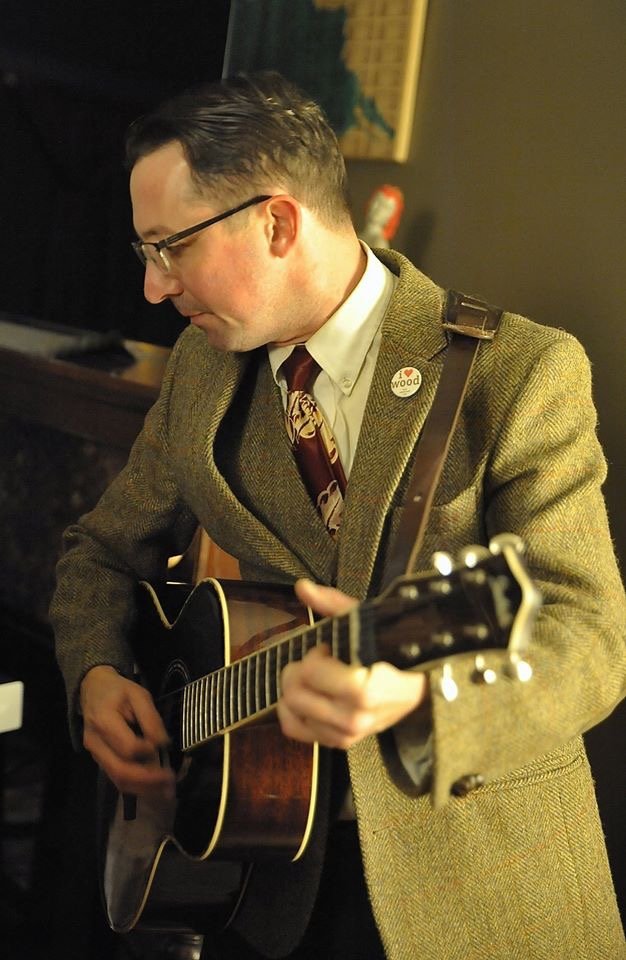
    On this episode we talk with Zeke Leonard, a Syracuse, NY based educator, designer, musician and maker. Born in Charleston, SC Zeke started out early, getting involved in community theater while growing up in Winston Salem, NC. His interest in acting and set design & construction led him to a degree in Set Design at the NC School of the Arts.

    Zeke moved to NYC to follow the dream of a career as a theatrical set designer where he eventually became disillusioned with all the waste created by the making of beautiful things. His realization that a whole pallet of plywood ultimately ended up in the trash bin at the end of each season dramatically shifted Zeke's mindset.

    Following his love of making things by hand and building functional objects Zeke pursued an MFA in Furniture Design at the Rhode Island School of Design and worked as a furniture maker in NYC coop studios until the financial crash of 2008.

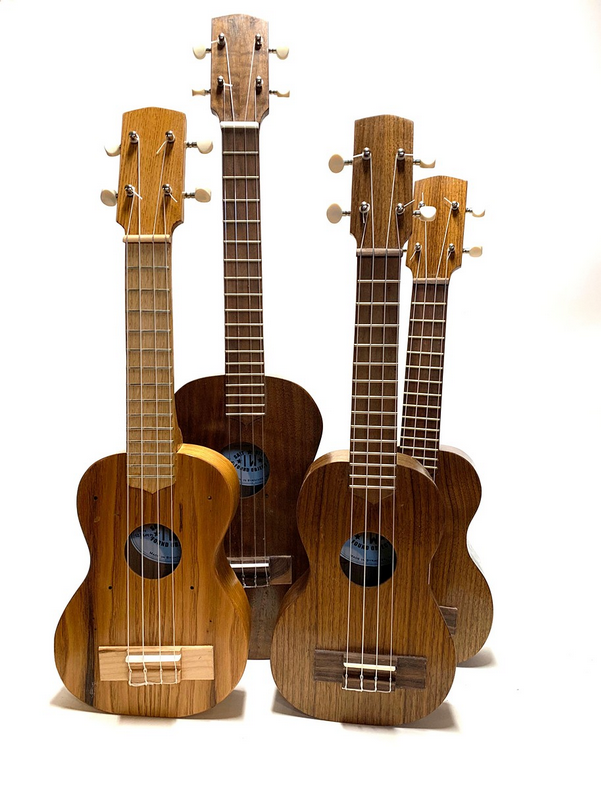
    Zeke now finds his life as an educator in the School of Design at Syracuse University and playing music on his homemade instruments brings him the happiness in community and family he has been searching for.

    We are music lovers here at Why Make? and we started this conversation with Zeke by trading funny stories about late night encounters at the Galax Fiddlers Convention in Galax, VA years ago…

    …and the tail end of one of those tall tales is a wonderful beginning for our conversation with Zeke Leonard!

    Leonard_Headshot.jpg
    Screenshot 2022-09-01 at 07-02-16 Scrap Pile Ukes.png
    Singing at Rally.jpeg
    zeke cigar box guitars.jpeg
    Singing at Rally 02.jpeg
    2021 134-138 Scrap Pile Ukes.jpg
    2020 127 Flamed Maple Skull Tenor.JPG
    Zeke Playing Gretsch.JPG
    Zeke with tool box.jpg
    2018 101 Octavo.jpg

    Find out more about Zeke and his ukes at www.zekeleonard.com follow him on Instagram @zekemakesand even read his blog at www.scfoiw.blogspot.com


    Previous 1 2 3 4 5 6 9 Next

    Related Podcasts

    Fresh Air

    1

    Fresh Air Arts
    Twenty Thousand Hertz

    2

    Twenty Thousand Hertz Arts
    The Black Tapes

    3

    The Black Tapes Arts
    Snap Judgment

    4

    Snap Judgment Arts
    Here’s The Thing with Alec Baldwin

    5

    Here’s The Thing with Alec Baldwin Arts
    The NoSleep Podcast – Creative Reason Media Inc.

    6

    The NoSleep Podcast – Creative Reason Media Inc. Arts
    footer-logo

    Contact Us

    Toll Free: 844-670-7747

    Links

    • Home
    • Top Charts
    • Networks
    • Apps
    • Independents Podcasts
    • Podcast Advertising
    • Podcast News
    • Contact Us
    • About Us
    • Analytics & Insights

    Stay Connected

      Privacy, Terms of Use & Our Code of Ethics Protecting Content Creators Copyrights