TopPodcast.com
Menu
  • Home
  • Top Charts
  • Top Networks
  • Top Apps
  • Top Independents
  • Top Podfluencers
  • Top Picks
    • Top Business Podcasts
    • Top True Crime Podcasts
    • Top Finance Podcasts
    • Top Comedy Podcasts
    • Top Music Podcasts
    • Top Womens Podcasts
    • Top Kids Podcasts
    • Top Sports Podcasts
    • Top News Podcasts
    • Top Tech Podcasts
    • Top Crypto Podcasts
    • Top Entrepreneurial Podcasts
    • Top Fantasy Sports Podcasts
    • Top Political Podcasts
    • Top Science Podcasts
    • Top Self Help Podcasts
    • Top Sports Betting Podcasts
    • Top Stocks Podcasts
  • Podcast News
  • About Us
  • Podcast Advertising
  • Contact
Not in our directory?
Add Show Here
Podcast Equipment
Center

toppodcastlogoOur TOPPODCAST Picks

  • Comedy
  • Crypto
  • Sports
  • News
  • Politics
  • True Crime
  • Business
  • Finance

Follow Us

toppodcastlogoStay Connected

    View Top 200 Chart
    Back to Rankings Page
    History

    Walter Edgar’s Journal

    From books to barbecue, and current events to Colonial history, historian and author Walter Edgar delves into the arts, culture, and history of South Carolina and the American South. Produced by South Carolina Public Radio.

    Advertise

    Copyright: © 2023 South Carolina Public Radio

    • Apple Podcasts
    • Google Play
    • Spotify

    Latest Episodes:
    South Carolina: the Colonial Melting Pot May 09, 2016
    Show notes
    Palmetto Tree
    (iStock)

    (Originally broadcast 02/12/16) - In January and February of 2016 the University Of South Carolina College Of Arts and Sciences’ Institute of Southern presented a series of public conversations with Dr. Walter Edgar and guest scholars: “Conversations on Colonial and Revolutionary South Carolina”. In this first conversation, Dr. Larry Rowland talks with Dr. Edgar about “The Colonial Melting Pot.”

    All Stations: Fri, May 13, 12 pm | News Stations: Sun, May 15, 4 pm


    March on the Ballot Boxes May 01, 2016
    Show notes
    Dr. Martin Luther King, Jr., speaking in Kingstree, SC, May 8, 1966.
    (Moving Image Research Collections, University of South Carolina)

    On Mother's Day 1966, Dr. Martin Luther King Jr. visited Kingstree, South Carolina and gave a remarkable public speech urging the audience of more than 5,000 to exercise their right to vote as a means to pursue social and economic justice. On August 6, 1965—just a eight months prior to Dr. King's speech— President Lyndon Johnson signed into law the Voting Rights Act, allowing the majority of Kingstree's citizens the right to vote.

    On May 8, 2016, a commemoration of this “March on the Ballot Boxes” speech will be held. Michael Allen, Community Partnership Specialist with the National Park Service and a member of the Commemoration Planning Committee will talk about the event. Dr. Bobby Donaldson, professor of history and USC, will help put King’s speech into the context of the Civil Rights Movement of the 1960s.

    All Stations: Fri, May 06, 12 pm | News Stations: Sun, May 08, 4 pm

    Related Links: WIS-TV News coverage and outtakes


    A Life in Journalism: Pulitzer Winner Jim Hoagland Apr 25, 2016
    Show notes
    Journalist Jim Hoagland
    (SCETV)

    In December of 2015, the Pulitzer Prize Board awarded a grant to Humanities SC for From the Jazz Age to the Digital Age: Pulitzer Prize Winners in South Carolina, a program to commemorate the 100th anniversary of the Prizes in 2016 through Pulitzer’s Campfires Initiative. Humanities SC has partnered with SCETV to produce three, 30-minute TV programs spotlighting the state’s Pulitzer winners, hosted by Charles Bierbauer, Dean of the USC College of Information and Communication. The first of these programs, Celebrating Pulitzer Commentary with Kathleen Parker & Jim Hoagland will air on SCETV on May 5.

    This week on Walter Edgar’s Journal, Jim Hoagland talks about his career, including the stories on South African apartheid which won him a Pulitzer for his reporting. He also talks about the commentary on the breakup of the Soviet Union, which won him a second Pulitzer. And he shares his observations about the global political and cultural stories of today.

    All Stations: Fri, Apr 29, 12 pm | News Stations: Sun, May 01, 4 pm


    Scenic Impressions Mar 28, 2016
    Show notes
    Path with Mossy Trees by Hattie Saussy.
    (The Johnson Collection)

    The radical changes wrought by the rise of the salon system in nineteenth-century Europe provoked an interesting response from painters in the American South. Painterly trends emanating from Barbizon and Giverny introduced a visual vocabulary of style, color, and content that was soon successfully adopted by American artists. Many painters in the South took up the stylistics of Tonalism, Impressionism, and Naturalism to create equally picturesque works that celebrated the Southern scene as an exotic other, a locale offering refuge from an increasingly mechanized urban environment.

    In its presentation of some forty paintings created between 1880 and 1940—including landscapes and genre scenes— Scenic Impressions: Southern Interpretations from The Johnson Collection (USC Press, 2015) traces an international aesthetic's journey to and germination in the American South. Martha Severens, co-author with Estill Curtis Pennington, talks with Walter Edgar about the art, its history, and The Johnson Collection.

    All Stations: Fri, Apr 01, 12 pm | News Stations: Sun, Apr 03, 4 pm


    Remembering Pat Conroy: a Conversation with his Family Mar 14, 2016
    Show notes
    Pat Conroy

    Pat Conroy, the beloved author of The Great Santini, The Lords of Discipline and The Prince of Tides, died March 4, among his family, at home in Beaufort, S.C. He was 70 years old. He had announced his diagnosis of pancreatic cancer in early February.

    In 2014, Conroy recorded two remarkable episodes of Walter Edgar's Journal, the second of which "Pat Conroy and Family - The Death of Santini" will be rebroadcast this week.

    In his 2013 memoir, The Death of Santini: The Story of a Father and his Son, author Pat Conroy admits that his father, Don, is the basis of abusive fighter pilot he created for the title role of his novel, The Great Santini, and that his mother, Peg, and his brothers and sisters have all served as models for characters in The Prince of Tides and his other novels. Now, for the first time, Pat gathers with four of his surviving siblings, Kathy, Tim, Mike, and Jim, to talk about the intersection of “real life” and Pat’s fiction, and what it was like to grow up with “the Great Santini” as a father.

    A transcription of this conversation, and others, has been published as Conversations with the Conroys: Interviews with Pat Conroy and His Family (USC Press, 2016)

    All Stations: Fri, Mar 18, 12 pm | News Stations: Sun, Mar 20, 4 pm


    Remembering Pat Conroy: a Conversation About His Reading Life Mar 06, 2016
    Show notes
    Pat Conroy

    Pat Conroy, the beloved author of The Great Santini, The Lords of Discipline and The Prince of Tides, has died. Conroy — who announced last month that he had pancreatic cancer — died, March 4, at his home among his family in Beaufort, S.C. He was 70 years old.

    In 2014, Conroy recorded two remarkable episodes of Walter Edgar's Journal, the first of which will be rebroadcast this week.

    In "A Conversation with Pat Conroy," the author joined Dr. Edgar for an event celebrating the author’s life; his work; and One Book, One Columbia’s 2014 selection of his memoir, My Reading Life (Nan A. Talese, 2010). The conversation was recorded before an audience of over 2000, at Columbia’s Township Auditorium, on the evening of February 27, 2014.

    (This interview was first broadcast on Walter Edgar' Journal on April 4, 2014.)

    A transcription of this conversation, and others, has been published as Conversations with the Conroys: Interviews with Pat Conroy and His Family (USC Press, 2016)

    All Stations: Fri, Mar 11, 12 pm | News Stations: Sun, Mar 13, 4 pm


    The War the South Won Feb 29, 2016
    Show notes
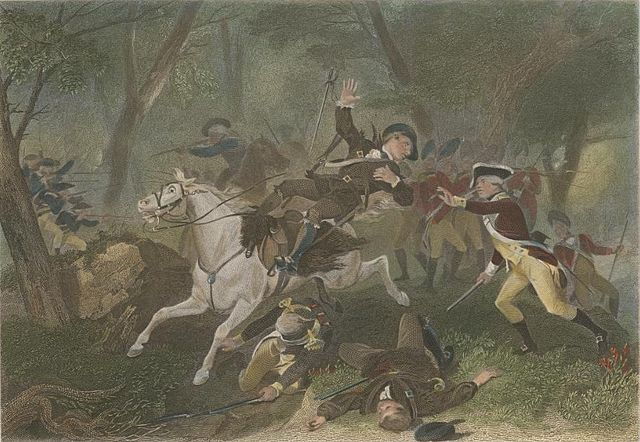
    Engraving depicting the death of British Major Patrick Ferguson at the Battle of Kings Mountain during the American Revolutionary War, October 7, 1780.
    (Chappel, Alonzo, 1828-1887 (artist), Jeens, Charles Henry, 1827-1879 (engraver), Anne S. K. Brown Collection at Brown University)

    General U.S. history courses in many high schools depict the American Revolutionary War as a series of battles in the Northeast--Lexington, Concord, Bunker Hill, etc.--that lead inexorably to British General Charles Cornwallis's surrender of 8,000 British soldiers and seamen to a French and American force at Yorktown, Virginia, October 19, 1781.

    The truth is much more complicated, of course. And a major component of the war, one that paved the way to Yorktown, was the fighting that took place in 1780 - 81 in the South. In essence, according to Dr. Jack Warren and Dr. Walter Edgar, the war was won in the South.

    Earlier this year, the University Of South Carolina College Of Arts and Sciences’ Institute of Southern presented a series of public conversations with Dr. Walter Edgar and guest scholars: “Conversations on Colonial and Revolutionary South Carolina.” In this fourth conversation from the series, Jack Warren, Executive Director of The Society of the Cincinnati, talks with Walter Edgar about “The Revolution in South Carolina.”

    All Stations: Fri, Mar 4, 12 pm | News Stations: Sun, Mar 6, 4 pm


    Harper Lee's "To Kill a Mockingbird" -- Most Influential Southern Novel? Feb 19, 2016
    Show notes
    Harper Lee being awarded the Presidential Medal of Freedom, November 5, 2007.
    (White House photo by Eric Draper via Wikimedia Commons)

    With today's news of the death of Pulitzer Prize-winning novelist Harper Lee, at age 89, we offer two encore episodes of Walter Edgar's Journal, each dealing with her book To Kill a Mockingbird.

    The first is a discussion between two internationally-renowned Southern-literature scholars: Dr. Trudier Harris of UNC and Dr. Noel Polk of Mississippi State University. They talk Dr. Edgar to prior to a televised debate in the SCETV series Take on the South​. The topic: "What was the most influential Southern novel of the 20th century?"

    Prof. Polk chose William Faulkner's Absalom, Absalom. Prof. Harris chose Harper Lee's To Kill a Mockingbird. This episode of the Journal was intended as a companion to the May 2009 installment of the SCETV series Take on the South: "What was the most influential 20th-century Southern novel?"

    The second episode of Walter Edgar's Journal aired in October 2015, and was entitled How Does Harper Lee's "Go Set a Watchman" inform "Mockingbird"? Dr. Robert Brinkmeyer, Director of the Institute of Southern Studies at the University of South Carolina, talks with Walter Edgar about the 2015 release of Lee’s Go Set a Watchmen (Harper Collins, 2015), as well as To Kill a Mockingbird and its place in Southern literature.


    The Carolina Frontier Feb 15, 2016
    Show notes
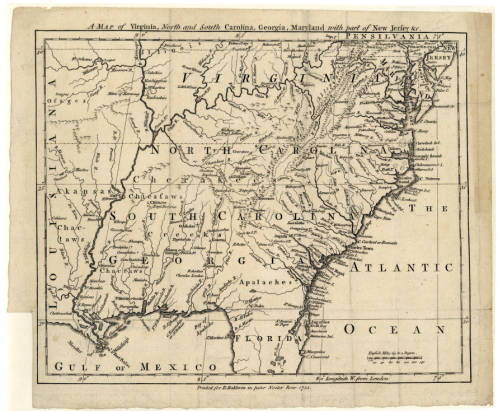
    Early map of Virginia and the Carolinas
    (North Carolina State Archives)

    ​In his book, Carolina in Crisis: Cherokees, Colonists, and Slaves in the American Southeast, 1756 - 1763, (2015, UNC Press) Dr. Daniel J. Tortora, assistant professor of history at Colby College, explores how the Anglo-Cherokee War reshaped the political and cultural landscape of the colonial South. Tortora joins Walter Edgar for a discussion of these events in one of a a series of public conversations, “Conversations on Colonial and Revolutionary South Carolina,” presented earlier this year by the University of South Carolina’s College of Arts and Sciences.

    In their discussion, Dr. Tortora argues that the political and military success of the Cherokees led colonists to a greater fear of slave resistance and revolt and ultimately nurtured South Carolinians' rising interest in the movement for independence.

    All Stations: Fri, Feb 19, 12 pm | News Stations: Sun, Feb 21, 4 pm


    Conversations on Colonial & Revolutionary SC: the Colonial Melting Pot Feb 01, 2016
    Show notes
    Palmetto Tree
    (iStock)

    Earlier this year, the University of South Carolina College of Arts and Sciences’ Institute of Southern presented a series of public conversations with Dr. Walter Edgar and guest scholars: “Conversations on Colonial and Revolutionary South Carolina”. In this first conversation, Dr. Larry Rowland, Distinguished Professor Emeritus of History for the University of South Carolina Beaufort, talks with Dr. Edgar about “The Colonial Melting Pot.”

    All Stations: Fri, Feb 5, 12 pm | News Stations: Sun, Feb 7, 4 pm


    Previous 1 29 30 31 32 33 37 Next

    Related Podcasts

    Dan Carlin’s Hardcore History

    1

    Dan Carlin’s Hardcore History History
    More Perfect

    2

    More Perfect Government
    Casefile True Crime

    3

    Casefile True Crime Games & Hobbies
    The Way I Heard It with Mike Rowe

    4

    The Way I Heard It with Mike Rowe History
    BackStory

    5

    BackStory History
    The Black Dahlia Serial Killers

    6

    The Black Dahlia Serial Killers History
    footer-logo

    Contact Us

    Toll Free: 844-670-7747

    Links

    • Home
    • Top Charts
    • Networks
    • Apps
    • Independents Podcasts
    • Podcast Advertising
    • Podcast News
    • Contact Us
    • About Us
    • Analytics & Insights

    Stay Connected

      Privacy, Terms of Use & Our Code of Ethics Protecting Content Creators Copyrights