Show notes
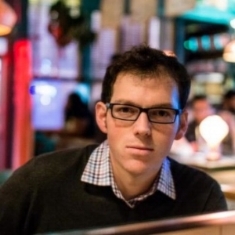
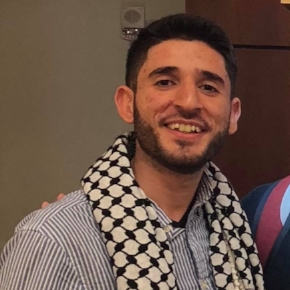
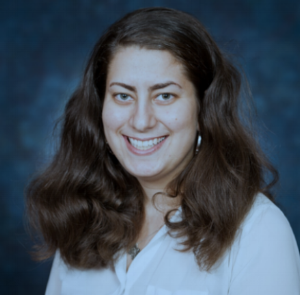
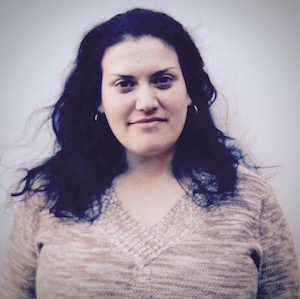
Culture is the only human practice that can actually dig into the root of a trauma and try to undo it in the first place. And this is why people are so afraid of culture, and in particular theatre. ‘Cause when there’s a human being in front of you having an experience, it’s very difficult to ignore them. It’s hard to ignore a play. — Dan Fishback Dan Fishback and Motaz Malhees both made waves in the New York theater scene this fall with plays about Palestine. Motaz performed with the Freedom Theatre of Jenin in "The Siege," at the NYU Skirball Center. Meanwhile, Dan's play "Rubble Rubble" was abruptly and controversially cancelled by the American Jewish Historical Society. In this joint interview, Dan and Motaz talk about their work, and explain why culture is their weapon of choice against the injustices of the occupation. This episode of Unsettled is hosted by Max Freedman. Original music by Nat Rosenzweig. Recorded at The 'cast Sound Lab in Brooklyn, New York on November 6, 2017. Edited for length and clarity by Ilana Levinson. Photo credit: Sammy Tunis Dan Fishback is a playwright, performer, musician, and director of the Helix Queer Performance Network. His musical “The Material World” was called one of the Top Ten Plays of 2012 by Time Out New York. His play “You Will Experience Silence” was called “sassier and more fun than 'Angels in America'” by the Village Voice. Also a performing songwriter, Fishback has released several albums and toured Europe and North America, both solo and with his band Cheese On Bread. Other theater works include “Waiting for Barbara” (New Museum, 2013), “thirtynothing” (Dixon Place, 2011) and “No Direction Homo” (P.S. 122, 2006). As director of the Helix Queer Performance Network, Fishback curates and organizes a range of festivals, workshops and public events, including the annual series, “La MaMa’s Squirts.” Fishback has received grants for his theater work from the Franklin Furnace Fund (2010) and the Six Points Fellowship for Emerging Jewish Artists (2007-2009). He has been a resident artist at Kelly Writers House at the University of Pennsylvania, the Hemispheric Institute at NYU, the Kimmel Harding Nelson Center, Yaddo, the MacDowell Colony, and BAX/Brooklyn Arts Exchange, where he has developed all of his theater work since 2010. Fishback is a proud member of the Jewish Voice for Peace Artist Council. He is currently developing two new musicals, “Rubble Rubble” and “Water Signs,” and will release a new album by Cheese On Bread in 2018. Motaz Malhees is a Palestinian actor born in 1992. He received his professional training in Stanislavsky, Brecht and Shakespeare at The Freedom Theatre in Jenin Refugee Camp (Palestine), and in Commedia dell’Arte at Theatre Hotel Courage in Amsterdam (Holland). Motaz has trained with internationally acclaimed directors such as Juliano Mer-Khamis and Nabil Al-Raee (The Freedom Theatre), Di Trevis (Royal Shakespeare Company), Thomas Ostermeier (Schaubühne Theatre), and Katrien van Beurden (Theatre Hotel Courage). His stage credits with The Freedom Theatre include: “Alice in Wonderland” (2011), “What Else – Sho Kman?” (2011), Pinter’s “The Caretaker” (2012), “Freaky Boy” (2012), “Courage, Ouda, Courage” (2013), “Suicide Note from Palestine” (2014), “Power/Poison” (2014), and most recently “The Siege” at the NYU Skirball Center. Motaz has also acted in films, including: “Think Out of the Box” (2014, dir. Mohammad Dasoqe), which screened in Palestine, Germany and Mexico; and “Past Tense Continuous” (2014, dir. Dima Hourani). As a versatile actor, Motaz has performed in multilingual plays as well as in scripted, devised, physical, epic and fantasy theatre. Motaz also produces and performs in short films about social issues in Palestine, which have received a wide following on social media platforms. Having grown up in Palestine, and experienced the economic and political hardships of life under occupation, Motaz has been actively interested in acting since he was nine years old. He lives through theatre, and believes in the potential of art to transform people’s ideas and lives. REFERENCES "Arna's Children" (dir. Juliano Mer-Khamis, 2004) "The Life and Death of Juliano Mer-Khamis" (Adam Shatz, London Review of Books, November 2013) "Center for Jewish History Chief Comes Under Fierce Attack By Right-Wingers" (Josh Nathan-Kazis, Forward, September 6, 2017) "Jewish Center Faces Backlash After Canceling Play Criticized as Anti-Israel" (Jennifer Schuessler, New York Times_, _October 11, 2017) Program note by Oskar Eustis for "The Siege" at NYU Skirball Center (October 2017) Indiegogo campaign for Dan Fishback's "Rubble Rubble" "Return to Palestine"(The Freedom Theatre, 2016) in Arabic without subtitles Theatre of the Oppressed NYC Housing Works "All Your Sisters" (Cheese On Bread, 2017) danfishback.com @motazmalhees thefreedomtheatre.org TRANSCRIPT DAN: So many people warned me against making work like this. And yeah, I got canceled, but in the process, I have tremendously powerful friends now that I didn't make before. MOTAZ: Doesn't it make you stronger after they cancel it? DAN: Yeah, of course. Yeah. MOTAZ: Didn't it make you more like want to do it? DAN: Oh, yeah. MOTAZ: That's a good thing, then. [MUSIC: Unsettled theme by Nat Rosenzweig] MAX: Welcome to Unsettled. My name is Max Freedman, I’m one of the producers of Unsettled and your host for today’s episode. Now when I’m not working on this podcast, I’m a theater artist, and I know how hard it can be to make a life in the theater and get your work out there. However hard you think it is, imagine you’re trying to tell stories about the occupied West Bank. Enter Dan Fishback and Motaz Malhees. Dan and Motaz both made waves in the New York theater scene this fall with plays about Palestine. Motaz was in New York performing with the Freedom Theatre of Jenin in “The Siege,” a play about the Israeli siege of the Church of the Nativity in Bethlehem, during the Second Intifada. Dan, on the other hand, made waves because of a play that didn’t happen, rather than one that did. His play, “Rubble Rubble,” was supposed to go up at the American Jewish Historical Society, but they cancelled it. I’ll let him tell you why -- and what happened next. Dan and Motaz didn’t know each other before, but I had the privilege to get them in the same room to talk about their work and as you’ll hear, they had a lot in common. In preparation for this interview, I dug through years of old journals and found my entry from the day I first met Motaz, when I was in Jenin, three summers ago. Really big and underlined a few times, I had written two words: CULTURAL RESISTANCE. So that’s our theme for today. Quick note: besides the three of us, at one point you’ll hear the voice of my co-producer Ilana Levinson. I think that’s all you need to know, so, let’s get started! MAX: Welcome to Unsettled. Uh, why don't you start by introducing yourselves? MOTAZ: Eh, first of all I am so happy to be here with you guys that's before I introduce myself. I am Motaz Malhees, so I am an actor from Palestine, I used to work with the Freedom Theatre since 2010. I do a lot of politics theatre but also the same time I do also for community, I do like for kids show. But I feel like, whatever needs, I give, like...it’s not important the type of theatre I do. But nowadays I'm freelance, and I work like with all theatres in Palestine, my country, because I don't want to be just involved with one place -- even that's I always say that the Freedom Theatre, that's my place and my home. DAN: I’m Dan Fishback, I’m a...I make performance and music and theatre in New York, I’ve been here since 2003 -- I don't know, what do you want to know? MAX: Where’d you grow up? DAN: Oh my gosh! I grew up in a pretty normal American Reform Jewish family, outside Washington, DC in Maryland. In a family that...was essentially a liberal Zionist family, although I don't think they would have necessary articulated themselves like that, they just imagine themselves being normal. And I heard growing up, “If only the Palestinians were nonviolent, then they would get what they want. Because they're asking for something reasonable, but it's because they're violent that things are problem....that that's the reason why there's a problem.” And like, the older people around me as I was growing up were always saying, “If only there was a Palestinian Gandhi” -- that was like the refrain, over and over again. And now I find myself 36 years old, going back to my communities and being like, “There’s this huge non-violent Palestinian movement! And it’s international and we can be part of it, it’s boycott, and blah blah blah.” And everyone’s like, “Oh no, no no, this makes us uncomfortable too.” I'm like, “This is what you were begging for my whole childhood! And now it’s here! Why aren’t you excited? Why aren't you as excited as I am?” That’s where I’m from. MOTAZ: That’s cool. DAN: And it’s an honor to be here with Motaz, whose performance in “The Siege” was absolutely amazing. MOTAZ: We not sure, but there is like people who really want to bring it back to the U.S. again, because it was a really successful show like for the Skirball Theatre, even like they almost sold out. MAX: Let me back you up a second, because, I want you to imagine that I have never heard of “The Siege,” have never heard of the Freedom Theatre. Can you tell me -- tell me what it was, tell me what it is. MOTAZ: “The Siege” it's a story about the invasion happened in 2002 in Palestine. There was like eh...invasion for the whole West Bank: in Jenin, in Nablus, all the cities. Like, one of them was Bethlehem, and in Bethlehem there was like a group of fighters, freedom fighters, who fight and defend back from their homeland. They have like many guns defending themselves, and they have in the other side -- the Israeli side -- there is tanks, Apache, Jeeps, all kind of guns you can imagine your life, heavy guns. And they were like around 45 fighters, 250, 245 civilian -- priests, nuns, children, women, and men, from both different religions -- who’s like stuck inside the Nativity Church for 39 days. With the like first five days they have food, after that they have no food. And they surrounded with around 60,000 soldiers from the Israeli army. They want, like, to finish it. So they, they have pressure, they don't wanna -- even the fighters, says khalas, it’s enough. Their people are suffering, their families are suffering outside because of that. So, they sent them like a paper, they have to write their names, the number of their IDs they have, and their signature. So, the fighters sign on it, and they know that's thirteen going to Europe and twenty-five are going to Gaza. They don't know even where they going. So, they sent them to exile the same day. DAN: When my friends and I were leaving the theatre, all we were talking about is, we were so curious about what their lives would be like after fifteen years of exile and we couldn’t wrap our minds around it. MOTAZ: I know one of them is personally, and he told me a lot about it. And it’s really important to bring this piece because of one reason: they didn't choose. Even they signed the paper that say they have to go to exile, but like they was under pressure, and they thought it's temporary and that they would return. And eh, I know how much they are really broken from inside. They never show this to people.But from inside, if you know them personally, they are really broken, and they just...all they want, just to see like at least their families. Some of them, they can’t. Their family, like they can't get the visa to go to visit them -- like, for example, the two guys, Rami Kamel, and Jihadi Jaara who living in Dublin, they haven't seen their families at all. One of them, like Jihadi he have a son that's his wife give birth like after one week he was sent to exile. He didn't even touch his son, he's fifteen years old, like...at least, like, okay, you don't want to send him back to Palestine. Let his family visit him! Like, this is the minimum of humanity. And eh...a really important point we have like always to say: those people was in their homeland, they was in their own city, and they fight back. They didn't went to...yeah, to Tel Aviv to fight, or to somewhere inside Israel, to fight the people over there. They was fighting the…defending themselves from the Israeli army. MAX: How did you get started with the Freedom Theatre? MOTAZ: Woo hoo! Since I was like, eh…fourteen I heard about it, or thirteen -- and I was dreaming about to be in there cause I’m, since like eight, nine, I start doing acting. It's like something I really love from inside, like I really really want to be an actor. Not because like I wanted a name. Because I can hold the stories, I can share stories for all over the world, I enjoy it, it's something beautiful and strong in the same time. So when I was sixteen, I heard about the hip-hop workshop, dance hip-hop workshop in the Freedom Theatre. So I went there and I apply for it, and I get involved with the workshop, and the last few days Juliano just came and he said, “We open a new class for theatre.” MAX: Juliano, who Motaz just mentioned, is Juliano Mer Khamis, who started what is today, the Freedom Theatre. Real quick, I want to tell you the remarkable story of the Freedom Theatre of Jenin. During the First Intifada, Juliano’s mother, a Jewish Israeli Communist named Arna Mer, came to Jenin, where she helped to establish housing and educational programs for children in the refugee camp there -- and eventually a children’s theatre called The Stone. Arna died of cancer in 1995, and during the Second Intifada, the Stone Theatre was destroyed. Arna’s son Juliano returned to Jenin for the first time since his mother’s death in the immediate aftermath of the Battle of Jenin, and made an incredible film called "Arna’s Children" -- Motaz will tell you more about this in a bit, but it’s on YouTube and I highly recommend it. It was after finishing this film that Juliano returned again to Jenin to found the Freedom Theatre. In 2011, Juliano was assassinated, but the Freedom Theatre has persisted. Alright -- back to Motaz. MOTAZ: So I get involved and I put myself in that place since 2010. And it’s been like around...now, now you could say like eight years almost. It is...hard and eh, good in the same time. It is, ‘cause you face emotion, a lot of different emotion. But I love it. It's like, it’s become my home now. I’m always there. Even if I have nothing, I go pass by drinking coffee there like, chill, see what's going on, if they need help or something, because I'm part of the family. MAX: Well we met because I went to visit the Freedom Theatre. And you were just hanging around and we sat there and talked for an hour. MOTAZ: Yeah yeah. MAX: Alright, so, Dan. DAN: Yeah. MAX: Tell me about your work and particularly tell me about “Rubble Rubble” and the genesis of that project. MOTAZ: I wanna hear about it. DAN: Well I've been working for the past decade on a trilogy of plays that sort of explore the inner life of the Jewish left in the United States over the past century. And this last play, “Rubble Rubble,” which I've been developing for the past few years, starts in the West Bank in an Israeli settlement. And you find this family that I've been writing plays about -- which is a very far leftist socialist radical family -- you see that that family has split off, and there's like a right-wing side of the family that has become settlers. And the left-wing anti-Zionist member of their family trav…
Full show notes at the publisher 
 Our TOPPODCAST Picks
  Stay Connected