Season 2: Halloween Mini Episode: The Memphis U.S. Marine Hospital
Nov 01, 2022
Show notes
Submitted for the approval of the Midnight Society, I call this story, the Tale of the Memphis U.S. Marine Hospital.
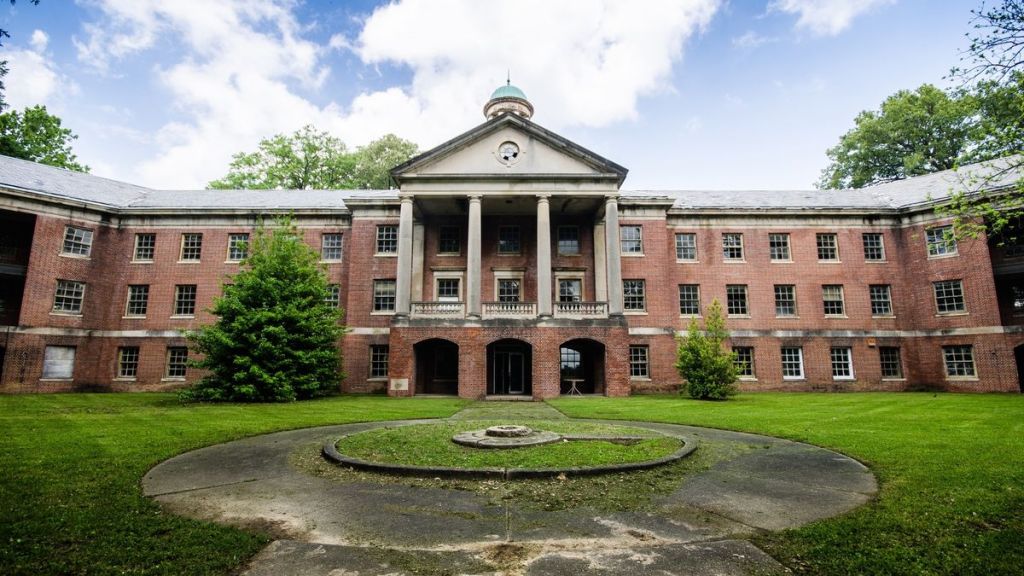
The year was 1798 and President Adams decreed there needed to be a hospital for the sick, injured, and disabled maritime men. This Marine Hospital cared for the seamen who worked on the Mississippi River. Unfortunately, the original plot of land, in Napoleon Arkansas, washed away when the river changed course and the new hospital was built in Fort Pickering, south of Memphis in 1884. It consisted of a stable, two wards, the surgeon’s house, nurses’ quarters, and an executive building. This hospital was the city’s first federally-funded public health facility and the only government hospital in the area at that time. It remained so until after WWI.
Not only did the hospital treat those who worked the river, it also served Civil War Veterans and Yellow Fever victims. The hospital played a vital role in trying to find a cure for Yellow Fever.
Be sure to come back for season three which is all about Yellow Fever and learn why this sickness had such an impact on our city and why we wanted to find a cure.
In the 1930s, the Works Progress Administration built a new hospital building on the site, moving the remaining original buildings 300 feet to the west. Over the years, the facility was used by the Coast Guard, active military, public health officials, cadets from state maritime activities, Army Corps of Engineers, and government employees injured in the line of duty.
The hospital closed in the 1960s and part of the grounds were leased to the Metal Museum in 1979. As recently as the 1990s, the grounds were used to house Desert Storm soldiers. Sadly, the hospital sat derelict until a developer decided to purchase the buildings and land in 2003. It wasn’t until almost 20 years later that anything was done with it after that.
So what about the spooky parts?
So a little history as to what happened in the area now known as French Fort.
Battles of the Civil War raged along the Mississippi River in the area around where the Marine Hospital was to sit. The Confederate army set up camp in the area and turned one of the ceremonial mounds into an artillery bunker. The Union army then quickly overtook the area and turned it into a camp. Battles mean tragic death and tragic death generally means restless spirits.
Since its inception, over 100,000 soldiers were treated at the hospital and 40,000 died there. There were also over 10,000 deaths from Yellow Fever.
So it’s fair to say, from all the death that occured on the land as well as in the hospital itself, there is bound to be some paranormal activity.
We watched an episode of Ghost Asylum for research and while it was a little campy, what ghost hunting show isn’t, they seemed to get a lot of evidence of spirit activity.
Supposedly, a civil war soldier by the name of Henry Wood haunts the second floor of the hospital, wandering the hallways.Maybe he was a soldier killed in battle and couldn’t find his way home. Or maybe he was a former soldier that was treated at the hospital but succumbed to an illness and since he was well cared for at the hospital, he just stuck around.
There was also a presence felt in the basement. One of the investigators was talking to the spirits and he felt something pass behind him. The basement housed the morgue, which assuredly is haunted. Or at least I think it would be. All of the lives that were lost passed through that room. But there was also something more strange down there, cages. The cages were apparently used for keeping the yellow fever victims separated.
They cleaned up the recordings from the basement investigations and when one of the guys asked, “did they keep you in here to die”, they heard a response saying something along the lines of “kept us caged”, indicating that they did cage them in to die.
I’m not really sure what they thought a cage would do, maybe just keep people from running out and spreading the disease further? It was definitely not going to keep the disease from spreading to other people in the basement.
During the two nights they spent at the hospital, they were able to catch several shadow figures on camera and the EVP meters were going crazy as the group talked to the spirits. They set up a laser beam light that when the beam was “broken” it would beep. This laser light was tripped several times while they were grouped together trying to communicate with the spirits. And probably the most entertaining, at one point, they lit a cigarette and watched it burn as if someone was taking a drag off of it.
From the looks of what evidence the ghost hunters were able to find, there are many souls still wandering the hospital and not afraid to show themselves to those who are looking for them.
ooooohhhh….spooky!
In 2019, almost two decades after the property was sold, the area which contained the main hospital and nurses quarters were renovated as luxury apartments. The Marine Residence, as of today, has a few vacancies for rent.
Can you imagine living in a renovated hospital, which has been practically proven to be haunted?!? I mean, I think it’d be amazing, but I wonder how regular people feel about it. Haha!
I wonder if the Ghost Asylum guys were able to trap Henry?
From watching the show, it didn’t seem like Henry liked them too much. It seemed he was trying to get his ghostie friends to stay at the hospital with him.
Maybe we should interview some residents and see if any of them have had any night time visitors?
If you get a chance, watch the episode of Ghost Asylum, we found it on amazon for like $3, but be aware, we warned you of the campiness.
We’ve also posted a Youtube video of someone just walking through the hospital before it was renovated. You don’t see any spirits, but you can get an idea of what it looked like before it was renovated.
It looks like it could have been the location for the American Horror Story Asylum season.
It does, but now it looks like fancy apartments. Check out the Marine Residence if you’re looking for a new place to live. We’d love to know if it’s haunted by their spirits of the past.
**Photos on this site are for informational purposes only and constitutes Fair Use under Section 107 of the US Copyright Law. We do not own the rights to these photos. **
Season 2: Episode Ten: The Sultana Disaster: Part 2
Oct 01, 2022
Show notes
It’s April, 1865… The Sultana has been docked in Vicksburg, MS, preparing to load far more passengers than the steamer is equipped to hold. The passengers are almost entirely Union soldiers who are being paroled from the Cahaba or Andersonville Confederate prison camps, in which they have experienced hellish living conditions – not to mention already having experienced the unimaginable horrors of battle. The Sultana’s chief engineer, Nathan Wintringer, has learned from a local boilermaker R.G. Taylor that substantial repair needs to happen to one of the steamer’s boilers, and Taylor refuses to sign off on its departure from Vicksburg until the necessary repairs have been made. Wintringer finally convinces Taylor to only patch the boiler, with the promise that the full repair will be done when the steamer is finally docked in St. Louis. The steamer is hastily being prepped for its journey north, skipping over pretty much anything that might make the journey comfortable for its passengers, and orders are being delivered to load all of the 1,400 passengers presumed to be awaiting transport, which will severely overload the steamer. This order comes, in part, from an attempt at personal monetary gain, and part from misinformation passed along about the actual number of potential passengers present at that time in Vicksburg. The federal government was offering to pay $5 per enlisted man and $10 per officer for any vessel willing to transport the parolees up the Mississippi on their way back home. Colonel Ruben Hatch – Chief Quartermaster of the Union Army in Vicksburg, promised J. Cass Mason – Captain of the Sultana, as many paroled prisoners as he could supply, presumably in exchange for a cut of the profits. Hatch already had a sordid history in regards to accepting kickbacks and bribes during his time in service, and would eventually be relieved of his duties for that exact thing. Captains George Williams and Frederic Speed seemed to be determined to expedite the Sultana’s passenger loading by whatever means necessary, but their haste had a cost. Bedrolls, wrapped together with personal care items, were meant to be distributed to each paroled prisoner loaded onto the Sultana. This process was started, but quickly seen as something that might delay the steamer’s loading and departure, risking their personal monetary gain. Since the bedrolls were not prepared ahead of time, they were not able to use the distribution of those items as a gauge of how many people had been loaded onto the steamer. This is not the sole reason for the overloading of the Sultana – no, THAT was a volatile mixture of greed, incompetence, and negligence – but this certainly contributed. So, finally the Sultana is fully loaded, or rather – OVERloaded, and powered by compromised boilers, prepared to depart from Vicksburg. This steamer, with its maximum passenger capacity of fewer than 400, was now carrying around 2,500 passengers – most of them paroled prisoners of war. More than a few times, opportunities arose for them to pass off some of their passengers to other steamers that left the Vicksburg docks at less than capacity – opportunities which were tragically passed up for personal gain. The prisoners aboard the Sultana were in great spirits upon departing Vicksburg, thinking they were out of harm’s way – many of them singing songs, dancing, laughing, and sharing with each other the many things that they were going to do upon their arrival at their homes. Their spirits were not dampened, even by the limited rations of hard bread and salted meat they were given to eat aboard the vessel. When Captain Mason ordered a stop at Helena, Arkansas to bring on more supplies, a photographer who was stunned by the massive number of people aboard the Sultana, took a very famous photograph of the steamer. When the passengers noticed their picture being taken, many of them rushed to the side of the vessel in an attempt to participate in the photo. This shift in weight very nearly toppled the Sultana. This photograph is not only the only known picture of the Sultana from its last trip, but the last known photograph of the passengers on board. The Sultana docked for the final time at 6:30PM on April 26th, 1865 in Memphis. This happened to be the same day that John Wilkes Booth was killed by Union troops in Virginia. Some of the soldiers decided to head to a local saloon while the ship was being unloaded in Memphis, while some of them stayed aboard. The Sultana even picked up a few passengers during its short stop in Memphis. One of them, the fantastically-named yet unlucky Epenetus W. McIntosh, was actually meant to make the rest of his journey on the Henry Ames, another passenger vessel docked at Memphis, but he returned too late after a quick trip into town and the steamer had already departed. He then boarded the Sultana, having no idea that only a short while later he would be battling the currents of the Mississippi River. The Sultana departed from Memphis at around 11:00 on the evening of the 26th, heading just across the river to a coaling station in Hope, Arkansas where she was loaded with 1,000 bushels of coal. A soldier named George Downing had gone into Memphis to visit friends, but was too late returning, and he watched as the Sultana pulled up to the coaling station across the river. He had been sent a few dollars by family members, which he obtained in Vicksburg, and he used that money to hire a skiff to take him across the river where he boarded the doomed steamer, placing himself, unknowingly, right back in harm’s way. The Sultana left the coaling station at 1:00AM on the 27th, headed north toward Cairo, Illinois. The Mississippi River was flooded pretty badly in April of 1865, having no levee system to manage its flow, and at parts just north of Memphis, measured up to 4 miles across. The Sultana’s pilot, George Kayton, navigated through the dark waters as the passengers slept, unaware of the danger that lay ahead. So, we should talk a bit about the layout and structure of the Sultana, just to further prove how ill-suited the steamer was for the load it was carrying. Kayton piloted the vessel from the pilothouse, which was the top level of the steamer’s superstructure. Below him were the main deck, the boiler deck, and the hurricane deck. The hurricane deck also housed the texas deck, holding the crew’s quarters, on which the pilothouse sat. Because of the size of the steamer’s superstructure, with its many levels, the walls and floors of each level had to be built with flimsier, lightweight wood in order to reduce the weight. The massive number of passengers aboard the Sultana on this trip were making the floors of each level sag tremendously. If anything were to happen to the main supports of the superstructure, each level would likely collapse. The upper decks were also coated with paint containing turpentine, benzine, and other combustibles. One author referred to the upper levels of the Sultana as “an orderly pile of kindling wood.” So, the Sultana, prepped for fiery terror as much as a boat could be, proceeded up river at its 9 MPH cruising speed. Many of the passengers were resting soundly, some for the first time in ages, bringing the Sultana’s deck to a haunting lull. At a little before 2:00 in the morning on April 27th, as the steamer began to round a bend in the river just 7 miles north of Memphis, three of the Sultana’s four boilers erupted, making a sound, as described by a witness, like “a hundred earthquakes.” The force of the explosion propelled many passengers into the air, landing them in the cold, turbulent waters of the Mississippi River, with only debris to cling to. Many others were trapped under the collapsing decks, and some who were closer to the boilers were killed instantly. Those that were lucky enough to survive the initial explosion, and found themselves in the frigid, muddy water, found that their luck was quickly fading as they struggled to paddle through the turbulence. Some held on for dear life to fragments of the steamer’s deck, severed wooden railings, or even horses which had been jettisoned from the steamer and were also struggling to stay afloat. To add insult (or rather, more injury) to injury, shortly after the initial explosion, a deluge of boiling water from the steamer’s boilers rained down on the survivors, burning, blinding, and even killing some of them. One survivor of the explosion described the event by saying, “The agonizing shrieks and groans of the injured and dying were heart-rendering, and the stench of burning flesh was intolerable and beyond any power of description.” Let’s keep in mind two factors that were at play during this horrible event that made it massively worse. The first is this… Aside from times when the river is super high due to heavy rain, we Memphians are used to seeing the Mississippi river at a width of about a half mile, or a little more. Well, parts of the river used to be much wider, especially without our modern interstate system and bridges that connect us to the other side of the river. The second factor is that a large number of these passengers could not swim. It was reported that the Sultana was midstream when the explosion happened, which means that the ejected passengers could very well have been more than a mile from either shore. The passengers that were thrown from the steamer, or had the chance to jump – and who were lucky enough not to be hit by the boiling water, flaming debris, or humans or animals (dead or living) – had a slim chance of finding something to cling to which was buoyant enough to allow them to paddle to safety. Those who couldn’t reach any floating debris were left to rely on their own strength, endurance, survival instincts, and determination to make the long swim to shore through the turbulent current of the Mississippi. Many did not make it. While we don’t have the time to go into the stories of the individual survivors, there are many, and they all paint a very vivid picture of the horrific scene that unfolded. You should check out the main source for this episode,The Sultana Tragedy: America’s Greatest Maritime Disaster by Jerry O. Potter for more stories from the lucky few that survived this terrible event. For a first-hand account from a survivor, written by the survivor, check out The Loss of the Sutana, by Chester D. Berry William Alwood, shipmate of the steamer Bostonia II, noticed a glow as he rounded the riverbend at Memphis, first thinking it was a building fire in the city. When he realized he was looking instead at a vessel that was on fire, his captain gave orders to lower the steamer’s yawl and it headed toward the Sultana’s wreckage to assist with rescue. Other vessels – the Silver Spray, the Marble City, the Essex, the Tyler, the Grossbeak, and the Rose Hambleton – followed suit over the next early morning hours, and the rescue attempt was fully underway. The Sultana finally came to rest against Chicken Island, just upriver from Mound City, AR. As the sun rose, the rescue attempts continued and more and more survivors began washing up on the shores. Some of the survivors, stranded in trees, or clutching the driftwood that took them to safety, celebrated by singing together and laughing. Some men – a group of 25 or so – had actually survived on the bow of the Sultana, but they sustained very serious burns and other injuries. However, as this area finally caught fire, these men were forced to move to an approaching raft a few at a time and were transported to safety. Wounded survivors were taken in and treated at local hospitals such as the Gayoso and Overton hospitals, and others were transported to The Soldiers Home, a military hospital, which is now known as the Hunt-Phelan Home. Hunt-Phelan is on the east end of Beale St, just past Danny Thomas. In the recent past, the home had been used for a wedding venue, but I believe it is currently shut down. You can still drive by it though. Memphians who were affected by the news of the explosion on the Sultana, responded in a very compassionate and charitable way. Some began collecting food, clothing, and living essentials for the survivors, along with money for lodging and supplies. Others reacted in-kind by volunteering to assist in funeral preparations, preparing the bodies of the dead or simply offering up their homes for survivors. Many of the survivors who were heading toward Camp Chase for parole after the war were soon placed in the last location they would want to be after surviving a steamer catastrophe… another steamer. Understandably, some were panicked about being back on a water vessel on the same stretch of river. I can’t imagine what kind of post-traumatic stress this caused, but I think I might have to huddle somewhere on the steamer, far away from its boilers, and stay there for the duration. As the body recovery efforts began, they quickly realized that it was going to be very difficult to identify many of the dead, as they really had no possessions on them, and what paperwork the paroled soldiers may have had with them at the beginning of the trip would certainly have been destroyed during the explosion, or afterwards by the elements. Due to the condition of some of the bodies after sitting in freezing river water or being burned in the blast, many identifying features simply were no longer visible. Some of the dead were placed in two long trenches near the site of the Sultana’s wreckage at the head of Chicken Island. Most of the unidentified or unclaimed bodies were buried in Elmwood Cemetery. When the National Military Cemetery was built in 1867, most of the military dead were reburied there from Elmwood. Most of those graves, sadly, only read “Unknown US Soldier.” A monument was erected in 1989 in Elmwood Cemetery, near the unmarked graves of a few of the Sultana’s victims. The total number of deaths that occurred from the Sultana disaster is a bit unclear. It will always be an approximation due to the varying data on how many people were loaded onto the Sultana in the first place, along with shoddy record-keeping methods available at the end of the Civil War. The original report, in 1865, estimated the death toll at 1,238, based on a total passenger count of 2,021. However, the Sultana could have had as many as 2,500 people loaded on it. The official death toll, reported by the Customs Department at Memphis, is 1,547. However, the number is more likely to be upwards of 1,800 dead. Regardless of however many it was, every one of them was preventable, unnecessary, and a result of greed of personal gain. When investigations began into the cause of the explosion, many theories came to light, and people began scrambling to explain away their culpability. The pilot of the Sultana, George Kayton, testified before the investigative board that, in his opinion, the fires on the steamer could have been extinguished if the fire buckets had not been blown off the ship by the explosion, which was ridiculous. He also said that the steamer was fully stocked with life preservers… Unfortunately, the Sultana was fully stocked with a whopping 76 life preservers. Even if the ship had the appropriate number of passengers on board, 377 or so, 76 life preservers are still nowhere near enough. The subject of bribery came up in the investigation as well, with Hatch’s chief clerk testifying that two competing steamboat lines were offering 50 cents a head to secure the army’s contract to transport the prisoners from Cahaba and Andersonville. It was also said that after Hatch learned about the possibility of somewhere between 2,000 and 2,500 passengers waiting to be loaded onto the Sultana, that he made no attempts to verify whether or not his vessel could safely manage that load. Hatch testified that he was not in charge of the prisoner transfer, and that he would have put no more than 1,500 people on the Sultana if it had been in his power. This conflic…
Season 2: Episode Nine: The Sultana Disaster: Part 1
Dec 17, 2021
Show notes
If you were to mention the word “Titanic” to a random stranger today, and asked them to tell you what that word means to them, there’s a very high chance that you would get one of the following responses from them… That Celine Dion song that was overplayed to death… “I’m the king of the world” “Paint me like one of your French girls” There was totally room for Jack on that plank of wood, and Rose basically caused his death… Ooooorrrr, big boat that hit an iceberg, and due to arrogance and poor planning, lots of dead folks The point is, people would know that it had something to do with the deadliest maritime disaster that they are probably aware of. Well, little do they know that there was another water vessel tragedy that was even more deadly than the Titanic. On April 27th, 1865, the SS Sultana floated north on the Mississippi River loaded with almost 2300 passengers, many of which were Union soldiers that were recently liberated from Confederate prison camps. At approximately 2:00 in the morning, the recklessly overloaded SS Sultana exploded just north of Memphis, Tennessee, becoming the worst maritime disaster in US history. Side note, since I was curious and looked it up… the deadliest maritime disaster in world history was the wartime sinking of the German military transport ship, the Wilhelm Gustloff during WWII, by a Soviet sub. This disaster had an estimated loss of around 9,400 people. Jeez… Nine thousand four hundred people… Anyway, I thought that was interesting… and really SAD. So… on with the story. The SS Sultana was a paddle steamer, built in Cincinnati, Ohio. It was built originally for Captain Preston Lodwick, at a price of $60,000, and launched on January 3rd, 1863. The name “Sultana” is derived from the original Arabic word for a wife, mother, or sister of a sultan. Just as a little superstition side-note, this name was not exactly attached to good maritime fortune… three other ships had been made before this one with the same name. All three previous ships were destroyed in accidents. This was not connected to a common builder or designer or anything of the sort. It was merely a coincidence. The Sultana was one of the largest business steamers ever built for its time. It was 260 feet in length, with a 42 foot beam (that’s the width at its widest point), and had a hold that went 7 feet deep. Its weight was registered at 1,719 tons. The steamer held a regular route between New Orleans and St. Louis as a trade vessel. The steamer had a carry capacity of 1,000 tons, making it ideal for transporting trade cargo. In addition to the cargo area, it could accommodate 76 cabin passengers and 300 deck passengers. So, that means that its largest capacity for passenger transport, with all safety measures in place, would be 376 passengers. Keep those numbers in mind… At that time, however, the Sultana only had two lifeboats and 76 life preservers, as it was only set up to carry cargo, not passengers. On the deck of the Sultana were four high-pressure tubular boilers, measuring 18 feet in length and 46 inches in diameter. These boilers were smaller and lighter than the boilers found on conventional steamers, but were made to produce steam more efficiently. The Sultana’s engines powered two water wheels that were each 34 feet in diameter, which were mounted on the sides of the steamer. The cabin of the steamer featured a long, narrow saloon, lined on each side by a row of staterooms. Each stateroom was luxuriously-furnished, and the saloon was stocked with fine china and glassware. The vast majority of the passengers aboard the Sultana on its last trip up the Mississippi were Union soldiers that had been captured in battle by the Confederacy, but as the war was coming to a close, they were now being paroled from the Cahaba, AL and Andersonville, GA prison camps. Most of them had seen horrific carnage on the battlefield, but even still, they were ill-prepared for what they were about to experience. Most of the soldiers that were imprisoned in Cahaba and Andersonville were actually captured in the second half of 1864, meaning that many of them spent an entire year in those prison camps. Quite a few of these soldiers traveled on foot during an unseasonably cold winter between their capture and imprisonment, so they were already malnourished, frostbitten, and otherwise extremely ill from exposure before they ever even reached the prison camps. There was an official prisoner exchange during the Civil War, which called for even, man-for-man exchanges of all captured soldiers, and these soldiers could return to their units. The soldiers remaining after the even exchanges happened were to be paroled, and they were not to take up arms again until they were formally exchanged. By the end of 1863, the Union leadership all but halted the existing prisoner exchange between the Union and Confederate armies. By 1864, no prisoners were being exchanged at all. Because of the cancellation of this exchange, the populations within the prison camps soared to entirely unmanageable numbers. For example, Cahaba ended up housing more than 3,000 prisoners by the end of the war, when it was set up to house only about 500. This overcrowding, combined with extremely unsanitary living conditions, tainted water supplies, flooding (which bred mosquitos, fleas, and horrible bouts of dysentery), malnourishment, and even violence, gave most Civil War prison camps very high mortality rates – most of them between 12% and 15%. The horrible conditions within the prison camps during the civil war ended up claiming the lives of more than 26,000 Confederate soldiers and nearly 23,000 Union soldiers in total. A soldier during the Civil War had better odds of survival fighting on the battlefield than he had as a prisoner of war. The creation of this system of prison camps has been called one of the greatest tragedies of the Civil War. These prisons did not reflect the image that is conjured now, when we think of what a prison looks like. Most of each of these two prisons were completely open to the elements. Cahaba was a repurposed cotton warehouse, with one wooden structure that provided only a basic shelter for a small percentage of the prisoners. Each prisoner at Cahaba had only about 6 square feet of space to himself. Cahaba’s chief surgeon, R.M. Whitfield reported the physical layout of the prison consisted of “a brick wall covered by a leaky roof, with 1600 feet of open space in its center, four open windows, and earth for the floor.” Conditions were decidedly worse for a while in February of 1865, when torrential rains caused the nearby Alabama river to flood Cahaba’s grounds. This basically took the inhabitable ground space away from nearly everyone in the prison camp. They were left to stand in freezing water (it was February, afterall), while the Confederates in charge of the grounds floated around the prison camp in boats. Eventually, able prisoners were allowed to leave the camp to collect driftwood, so they could stack it into platforms above the surface of the water. Of course, this didn’t work for many of the men imprisoned there, so 700 men were taken to Selma, leaving 2,300 to tough it out in the flooded prison camp. Andersonville was merely a plot of land and it had no structure of any kind for the prisoners, apart from the cloth tents used for housing. This 27 acre plot was surrounded by a 20 foot high pine stockade, and around the main stockade were additional wooden fences, 16 feet and 12 feet in height. Within these walls lived as many as 33,000 prisoners, which, if we do some approximation, would give each man a little less than 4 square yards of living space. However, it wasn’t even that much, because of uninhabitable areas containing swamp or disposed human waste. Medical care was slim, when available, and when it was, there was nowhere to provide a sanitary environment for medical treatment and procedures. For these prisoners, the smallest cut, splinter, or sunburn could turn gangrenous and result in amputation or even death. At Andersonville, some of the prisoners shared a theory that the people providing medical treatment were actually executioners in disguise. When they had to inoculate a large group of men in 1864 for smallpox, the prisoners accused them of incolulating them with poison due to the large number of deaths and amputations (from other illnesses such as scurvy, gangrene) that followed the vaccinations. Quote from John Ransom, a prisoner at Andersonville: “Here we have the very worst kind of water. Nothing can be worse or nastier than the stream drizzling its way through this camp and for air to breathe, it is what arises from this foul place. On all four sides of us are walls and tall trees and there is apparently no wind or breeze to blow away the stench, and we are obliged to breathe and live in it. Dead bodies lay around all day in the boiling sun by the dozen and even hundreds, and we must suffer and live in this atmosphere. It’s too horrible for me to describe in fitting language.” Crime was also quite prevalent in the prison camps. The Confederacy couldn’t spare trained soldiers to guard the prison camps, so often they ,were guarded by young boys or old men who were either too afraid, too apathetic about their guard duties, or just not capable enough to actually venture into the stockade to maintain order. This left the prisoners mostly alone to defend themselves against crimes ranging from theft, to assault, and even murder. So, as the Civil War began to come to a close, these Confederate prison camps began to trade their prisoners for soldiers that had been captured by the Union forces. Beginning in late March of 1865, these prisoners were paroled and then travelled by way of train, steamer, or even on foot, and would eventually end up in Vicksburg, Mississippi. This was the designated holding point for all released prisoners from east of the Mississippi River while they waited to be shipped north for full release. This trip, which for some lasted most of a full month, was extremely difficult, especially for those on foot. A soldier from the Indiana Infantry, upon witnessing a large group of paroled prisoners travelling by foot, recounted of the scene, “Coming like cattle across an open field were scores of men who were nothing but skin and bones. Some hobbling as best they could and others being helped by stronger comrades. Every gaunt face with its staring eyes told the story of suffering and privation they had gone through, and protruding bones showed through their scanty, tattered garments. One might have thought that the grave and the sea had given up their dead.” Once in Vicksburg, the prisoners were housed at Camp Fisk, also known as Four Mile Camp, and they were to await their transfer by steamer and train to Camp Chase near Columbus, Ohio, where they would receive their official release and discharge from the army. While many of the soldiers were at Camp Fisk, events were unfolding near Appomattox, Virginia that would bring about the end of the Civil War. So, finally the Sultana itself comes into the story. Captain James Cass Mason, who was piloting the steamer on its fateful trip down the Mississippi River, had essentially sunk everything he owned into his investment in the Sultana. Because of this, Mason was likely driven by more than the usual entrepreneurial desire for profits. Let’s provide a little background on this J. Cass Mason fellow, since he was such a gem. In March of 1864, Preston Lodwick – the man for whom the Sultana was built, sold the steamer to three investors for $80,000… so, a $20,000 profit on a steamer that had already been in use for a year. Good job, Preston! So, while Mr. Lodwick was making it rain from the sale of the steamer, J. Cass Mason – now three-eighths owner of the Sultana – was named its captain and master because at only 34 years old, he was already skilled in navigating the Mississippi river. Mason had also already been owner and operator of a few more steamers… He lost the command of one of his vessels, the Rowena, when it was seized by the US Navy. On board the Rowena, with Mason at the helm, officers found 200 ounces of quinine that was bound for the Confederate-controlled city of Tiptonville, TN, along with 3000 pairs of Rebel uniform pants. The contraband and the steamer were seized and put to use by the Navy. Mason had heard, in advance of his landing in Vicksburg, that the US military was offering $5 per enlisted man and $10 per officer for the transporting of prisoners at that time. This type of return on investment was desperately needed by Mason, as he was in financial straits. He had decided that he would do whatever he could to ensure that the Sultana would be carrying a large number of prisoners when it left the Vicksburg docks to head north. When Captain Mason landed in Vicksburg on its normal run downriver to New Orleans, about three days before the trip north, he met with Colonel Ruben B. Hatch to try and secure a guarantee of a full load of prisoners upon his return north. Let’s set the stage a bit for this character, who played a large part in contributing to the disaster on the Sultana. Hatch, who began his military service in 1861, at the age of 41, had been charged with defrauding the government during his time as a quartermaster in Cairo, Illinois. He would purchase large amounts of lumber from Chicago area lumber dealers on behalf of the government at the approved rate, but demand that the dealers fill out the receipts at a higher rate. He would then pay the dealers at the lower rate and distribute the remaining funds among himself and two other men. Unfortunately for him, these lumber dealers had more integrity than he assumed they would and they turned him in. During this fraudulent operation, he was also keeping a public and a private set of books. This private set of books, after his attempt to discard them into the Ohio River, washed onto the bank and were discovered. He was immediately arrested for his fraudulent dealings against the US government. However, somehow – after much back-and-forth on the reliability and validity of the proof against him – a few letters vouching for his integrity and innocence made their way to Abraham Lincoln from ranking military officials. These were enough to convince Lincoln to assemble a civilian commission to review the evidence against Hatch and decide on his innocence or guilt. Although the evidence was strong, the commission cleared him of all guilt and he was returned to active duty shortly thereafter. So, that sets the tone for the unsavory dealings happening while the Sultana was being boarded for the last time. So, when the Sultana left New Orleans for the last time, Mason’s chief engineer, Nathan Wintringer, had received reports that the boilers on the Sultana had been patched and repaired on their two previous trips south. When Wintringer noticed steam escaping from a crack in the middle larboard boiler (larboard is an older term, meaning the port, or left side of a boat), he was insistent that no progress be made past Vicksburg until the necessary repairs had been completed. They even travelled the rest of the way to Vicksburg at a lower speed so as to not put strain on the already questionable boilers. While the Sultana was making its way slowly up the river toward Vicksburg, General Charles Dana – one of the people that assisted in Hatch being released after defrauding the government as mentioned earlier – was ordering Captain Frederic Speed to make sure that 1,000 soldiers were loaded onto each steamer that was docking at Vicksburg. Keep in mind that I earlier mentioned that the Sultana could only comfortably, safely – or legally – carry a maximum of 376 passengers. The Sultana finally docked in Vicksburg at 8:45am on April 23rd. At this point, the Sultana’s engineer – Nathan Wintringer – sought out a local boilermaker, R.G. Taylor, to examine and repair the…
Season 2: Episode Eight and 1/2: Halloween Shorts
Oct 29, 2021
Show notes
Hey everyone and welcome back to Unearthed Memphis!
I’m Alan and I’m Tara
We hope you enjoyed our last episode about Memphis Hoodoo and the St. Paul Spiritual Holy Temple. I did! I’m still googling things about it. It’s just so fascinating!
We even got a facebook thank you from the Secret History of Memphis Hoodoo Author, Tony Kail, for mentioning his book.
Admittedly, I got a little low key excited. Haha! After I read the comment, I looked at his Facebook page and found out there is a conjuring shop on Summer Ave. We’re going to have to check them out soon!
In our last episode, we talked about the Elmwood Cemetery Cinema Event. Well, we went and it was fantastic. The first film they showed was a filmed version of this year’s Soul of the City tour. Since we missed it, I’m glad we got to see the film. The actors did a great job, as always. Hopefully next year we won’t have quite so much going on and we can make it to the tour.
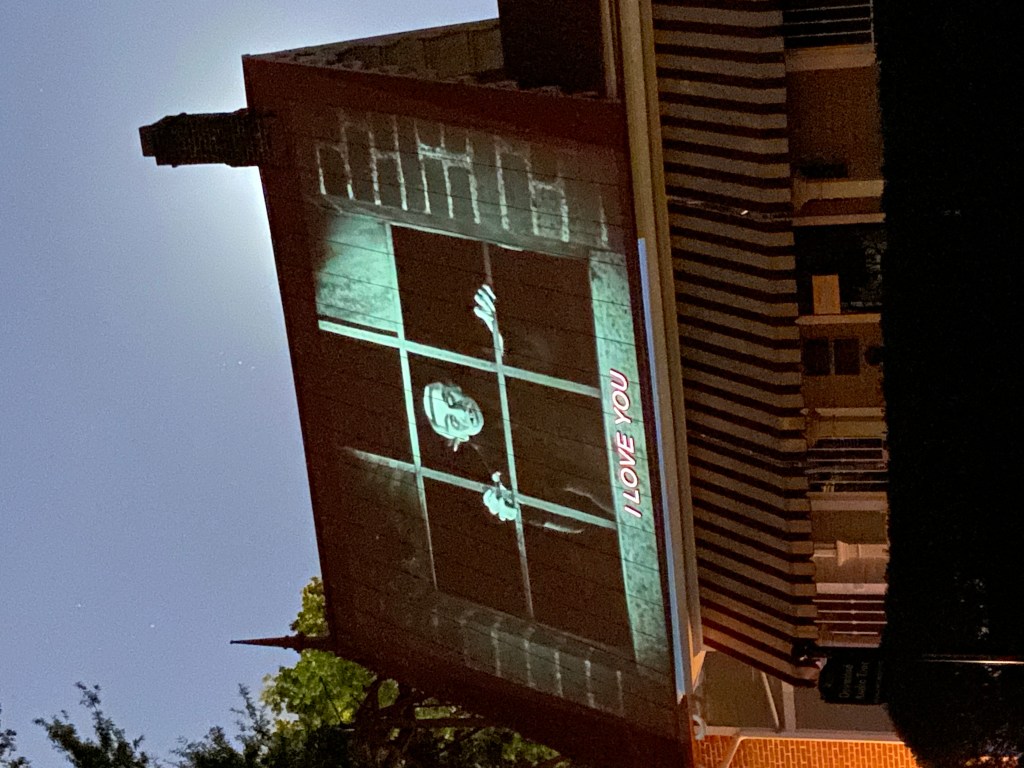
Then we watched the original 1922 version of Nosferatu. I hadn’t ever seen it all the way through.
And I hadn’t seen it since college, so my memory of it is a little foggy.
Turns out, it was far more comedic that I remembered. Being that it is a silent film, there are title pages and subtitles (at least in this version) and some of them linger over multiple scenes. Tara took the most amazing picture of one of those scenes. We previously posted it on our social media, but we’ll add it to this page for your viewing pleasure. It’s still making me laugh thinking about it.
The stage makeup and exaggerated expressions made for some entertaining moments as well. But it really was a great film for its time, a truly classic horror film that I think everyone should watch.
But I am glad technology progressed like it has.
Alright, I know what you’re thinking… yall, two episodes in one month, don’t tease us!
I know, but it’s spooky season and we wanted to get in a little more spooky before the month was over.
So, we thought we’d do some Halloween shorts. We found a few stories that didn’t have quite enough info for a standalone episode, but we didn’t want to not tell them.
We want to give a shout out to another great local author, Laura Cunningham. She has two books, Haunted Memphis and The Ghostly Tales of Memphis, that we used for some of our research. Definitely check them out.
The first story is about Claude Pugh and the Court Square Fountain.
A little backstory on Court Square. The park is located between Main and Second Streets at Court Avenue. The plan for the park was to have the courthouse built in it, but no courthouse was ever built there. The park, however, has existed there since the early 1800s and it did eventually become home to the first school house.
The Court Square fountain was built in 1876. Hebe, the Greek mythology cupbearer to the gods, stands tall atop the fountain. The Hebe Fountain, as it is actually called, is cast iron, 20 feet tall, and weighs about 7000 lbs. Originally, the basin of the fountain was 6.5 feet deep and filled with fish, turtles, and allegedly, an alligator at one time. It also had no fence around it. Clearly a safe place to be. Nothing bad could possibly happen…
Noooo… nothing bad at all…I don’t know about you, but if there were no sea creatures in it, that sounds like a great place to go swimming! Or get tetanus…
Well, in 1884, a 10 year old little boy named Claude Pugh was possibly thinking the same thing… swimming, not tetanus. While sitting on the edge playing with his toy boat, he leaned over too far and fell in. Apparently, algae coated the stones in the fountain and little Claude couldn’t get his footing. After struggling to stay afloat, I’m guessing he couldn’t swim, he went under and never came back up. According to The Memphis Daily Appeal, the park was full of people but no one went to help save him. The paper was not afraid to put those folks on blast. This quote is from their article, “Stalwart men stood silently by with staring eyes and gaping mouths. Their hearts must have been made of stone, and the milk of human kindness in their breasts sour whey. More consideration would have been given a dumb beast”.
A fireman finally showed up and it took 15 minutes to recover him. Claude Pugh drowned on August 26, 1884 and is buried in Elmwood.
In 1980, the fountain was renovated. The basin was filled in so that it would not be so deep and a fence was erected around it so that hopefully no one else would suffer the same fate as Claude Pugh.
Even today, people still bring toy boats and ducks to little Claude at the fountain. They say his spirit still lingers there. Apparently, if you put the toys in the water, they’ll move about like they’re being pushed, but if you ask Claude to move the toys to you, they’ll change direction and come to you. Even a 100 years later, the 10 year old little boy still just wants to play.
I’ve been to that fountain numerous times but I haven’t ever put any toys in it. We may have to do that and see what happens.
Next up is a story that takes place in one of our favorite places to visit…Overton Park.
Overton Park, in Midtown Memphis, is a 342-acre public space that includes paved trails, a nine-hole golf course, it houses the Memphis Zoo, the Brooks Museum, our wonderful outdoor concert venue the Levitt Shell, and it is really just a fantastic place to be outside in the world. Overton Park also happens to be the home to Rainbow Lake, a concrete-lined, 2-acre lake that used to have arcing spray fountains with colored lights installed in the middle of it, which created a rainbow-like effect when they were turned on… hence the lake’s name.
At some point in the 1960s, although I couldn’t pin down even an approximate date, a woman’s body was recovered from Rainbow Lake. It was determined that she had been stabbed to death, but some sources say that she was drowned. I’ve also heard the detail that this horrific act was perpetrated by her husband. She was wearing a blue dress or nightgown when she died.
According to many people throughout the years since this tragic event, the spirit of this woman, still clad in her blue dress or nightgown, has never really left Rainbow Lake. Countless park goers have claimed to see a lady in a lightly-glowing blue dress walking in the area surrounding the lake, while some have claimed to see her rising out of, or even floating above the water. Others have seen flashing blue lights floating around the lake. When people happen to see the lady in blue, some say that she has an arm outstretched to them as in a plea for help, or an effort to fend off her killer. Sadly, she vanishes when anyone makes an effort to approach her.
Oooooh… this is a story I’ve heard a lot over the years, but I’ve never been over at the lake after dark.
This next one is about a place I have parked in front of for years and was always jealous of the person who lived there because I thought it would be such a cool house. Now that I’ve researched it, I’m even more jealous of the people who live there.
The Hotel Pontotoc is located on Pontotoc between Main and Front Street. Built in 1906, the hotel had 18 bedrooms and nine bathrooms on three floors (this includes the basement). During its time, Pontotoc was a hotel, a boarding house, a bordello, and a club before it’s current resident purchased it in 1980.
The building was a thriving hotel when Dan Touliatous and his family owned it. Several Memphis Greeks would spend their time there, eating, drinking, and relaxing. It was also one of the places actors and Vaudevillians would stay while in town. The creator of the Crystal Shrine Grotto in Memorial Gardens, Dionicio Rodriguez resided there while he worked on that project. And then there was the story that this was the place that Elvis “got lucky” for the first time.
Clearly this place has a long history and I imagine a lot of stuff happened there, but where do the ghosts come in? The story I read was that allegedly the hotel’s caretaker liked to come home drunk and make a lot of racket. This annoyed those staying at the house. Apparently, one morning the lodgers awoke to a terrible smell, like something had been charred. Upon investigation, they found the caretaker at the bottom of the basement stairs, burned to a crisp.
Did the patrons finally get fed up with his disturbing behavior and push him down the stairs into the boiler, or did he just drunkenly fall down the stairs and accidentally end up in the boiler? We will never know, but it is said that his spirit still resides at the hotel. He doesn’t hang out in the basement though, apparently he likes to reside in his former room on the second floor. Legend has it, that’s why the owner hasn’t renovated it, because he won’t let her. It’s also rumored that you can still smell the burning smell in the basement.
Memphis Magazine did an interview with the current owner and she said that while she’s sure there are spirits in her home, why wouldn’t there be because so much has happened at the hotel, there is nothing malicious. She gets a positive vibe from her home.
She did mention, however, that the story of the caretaker dying has a little bit of truth to it. But he actually lived next door and was carrying coal to the boiler room and there was a fire and he died when his clothes caught fire. She said that there is no burning smell in the basement.
Also, she hasn’t renovated the second floor because she just hasn’t gotten around to it.
So, from the horse’s mouth, while the Hotel Pontotoc has spirits, the alleged hauntings you may hear on a ghost tour are not totally accurate.
The McCoy Theatre at Rhodes College was not always the performing arts center it is today. It was actually the sorority house for their chapter of the Zeta Tau Alpha sorority. Urban legend has it that a young woman named Annie was distraught after not winning a bid to join the sorority. This led Annie to take her own life by hanging herself from one of the rafters in the sorority house.
School officials refuse to corroborate this claim, insisting that there was never a suicide in or around the Zeta Tau Alpha sorority house. There is also no substantial evidence to support this, as this particular ZTA chapter folded in the mid-70s and was in dire need of membership by its end. I even read that their sorority’s picture for the 1975 yearbook was taken with the 17 members gathered around a black hearse. Seems like they knew they were on their way out… Or there was a side-hustle of some sort happening?
The school’s insistent stance on the building’s history hasn’t stopped the legend from doing what legends tend to do… grow.
For many years, students have reported claims of disembodied voices in the theatre, items moving with no apparent cause or force, images of a young woman – presumably Annie – in the mirror when nobody was present, lights flickering or moving around the building… and they even attribute some unlucky happenings in the theatre to Annie.
It has become a Rhodes theatre tradition to “invite” Annie to the opening performance of any show, in hopes that it will bring good luck to the run… or prevent bad luck anyway. Allegedly, there was a time that they did forget to invite Annie to one of their shows, and the entire run had to be canceled due to an ice storm. So, Annie might actually be able to control the weather too? Who knows… I thought Pudge controlled the weather.
Thanks for listening to our Halloween shorts episode! We hope you enjoyed it!
We hope everyone has a safe and Happy Halloween!
And as always…
Don’t forget to listen to our next episode on your favorite podcast listening app!
Also, if you get a chance, we’d love for you to like and subscribe, leave us a review, share us on social media!
Check out our website at unearthedmemphis.com, Instagram @unearthedmemphis, Facebook at Facebook.com/unearthed901, Twitter @unearthed901 or drop us an email at unearthedmemphis@gmail.com. We love to hear from everyone! Questions, comments, suggestions, corrections, or just chatter is appreciated and enjoyed!
Disclaimer: We are not historians, we are simply two people who are interested in memphis history. We have done research and are trying to provide accurate history as best we can. There is a possibility some of these statements are incorrect, but we have tried to verify all the info so that we are not putting out any untrue info. To the best of our knowledge, what we are saying is correct, but let us know if you have any things to add or correct. In the show notes, you will find links to the articles we used and book titles, etc to gather our information.
Cunningham, L. (2021). The ghostly tales of Memphis the ghostly tales of Memphis. Arcadia Children’s Books.
Haunted Memphis Laura Cunningham
Cunningham, L. (2009). Haunted Memphis. The History Press.
Season 2: Episode Eight: Memphis Hoodoo & St. Paul’s Spiritual Holy Temple
Oct 16, 2021
Show notes
Since it’s spooky season, I thought we could talk a little about a Memphis urban legend… What do you think is one of the most well known urban legends? I’d probably say, Voodoo Village. That’s exactly what I was thinking. And I think pretty much everyone who grew up here or has lived here for any amount of time has heard about or even ventured out to the community known to locals as Voodoo Village. So what are some of the rumors you’ve heard about this place? I’ve heard that when you drive there, they pull a school bus behind your car so you can’t leave. They come out and chase you with bats and machetes. There are dead animals hanging from trees. There are weird yard art objects and masonic and voodoo symbols all around the property. It’s all just very strange and spooky. I’ve heard all those things too, and even believed them for a very long time. Admittedly, I was too freaked out to actually go all the way there to see for myself. I believe it was my friend Neeraj and I who ventured that way late one night, but we eventually turned around and came home. But years later, I had read a little about the so called “Voodoo Village” and learned it was actually called St. Paul’s Spiritual Holy Temple. I have also read it as St. Peter’s, but I do believe it’s St. Paul’s. As it turns out, the history behind St. Paul’s is more complicated than we thought. To understand it, we have to start with Memphis’s beginnings. But I promise we’ll get back to it. Most of the information I got for this episode was from a book by Tony Kail called, appropriately, “A Secret History of Memphis Hoodoo”. This really is a fantastic book. It’s informative and a quick read. It made me want to dig deeper into the subject, thus this episode’s topic. It’s a really cool book. I suggest checking it out. You can find it in the local section at Novel. Memphis is known by many names. The Bluff City. The Home of the Blues. The Birthplace of Rock n Roll. The Cotton Capital of the World. The BBQ Capital of the World. But it’s also called Mojo City. The word “mojo” comes from an object used within the practice of Hoodoo. Memphis’s Hoodoo history is not extremely well known or frankly understood, that is of course, unless you’re actually in the know. So we started this episode talking about voodoo and now we’re talking about hoodoo. What is the difference? Voodoo (Vodou), meaning spirit, is considered a religion or religious practice. It is similar to Hoodoo, and in one video I watched, it said that Hoodoo was born out of Voodoo. It was brought from Africa, through Haiti, and then to America during the slave trade. It is a blend of Catholicism and African cultural and traditional beliefs. The type of voodoo we are going to be talking about for this episode is what is generally practiced in New Orleans. There is structure and hierarchy in Voodoo. There is one God, but they do not interfere with life. But there are numerous spirits that do, and they call these spirits Loa or Lwa. Each Loa has its own area of life that it is responsible for, for example agriculture or money. Practitioners connect with these spirits when they need their assistance. There are priestesses and priests in Voodoo. A popular Voodoo priestess was Marie Laveau. She made a name for herself by helping people from all walks of life in New Orleans. She was a hairdresser by day, but her other “side hustle” was to help people achieve their desires through her voodoo practice. She was known to help black, white, rich and poor people. And even in her death, she is still helping people. There is a rumor that if you make a wish on her grave, and your wish comes true, you owe her a present. I, admittedly, made a wish on her tomb, and while it took some years, that wish did come true. So I actually owe her a present the next time we’re in New Orleans. I’m sure many people have heard of this famous Voodoo Priestess. She is widely known and any time you speak of New Orleans or Voodoo, her name comes up. She’s also an integral part of season 3 of American Horror Story. She’s played by the amazing Angela Bassett. So now any time I picture Marie Laveau, I see Angela Bassett. While there is a popular misconception that voodoo is evil, those who practice it say it is not. There are many spirits in voodoo, and if you don’t treat them with respect, you may regret that decision, but there is no version of a devil in this religion. Objects are not inherently good or bad, it’s what you do with them. For example, a voodoo doll can be made of a person and it can be used for healing, centering, and focusing. But it can also be used to inflict pain on others, which is what is most commonly thought of when you say voodoo doll. Voodoo has rituals, ceremonies, and healers. They also have practices such as goat and fowl sacrifices in some of these rituals and ceremonies. I saw a video of a spiritual medium ceremony that involved a community invoking a spirit to take the life of a person, then that person, who appears lifeless, was stored (for lack of a better word) for 3 days with no food or water, and then the community tried to resurrect them (for they were “dead” or at least comatose) in order for that person to become a spiritual medium. Apparently, in the video I watched, their ceremony worked because it appears the girl came back to life. You may notice this practice feels a lot like the Christian crucifixion story. So Voodoo is practiced as a religion and appears not to be quite so hush hush. Whereas Hoodoo takes practices from Voodoo, but is generally practiced quietly. The history of Hoodoo comes from many African cultural traditions and religious practices. Hoodoo is considered folk magic. It was brought to America during the slave trade. The enslaved people who were brought to America were from many different nations in Africa, most having varying traditions and languages. Even though they had differences, they blended together their cultures in an effort to have a sense of self and camaraderie. While on these Southern plantations, the enslaved people would take the practice of Christianity and blend it with their beliefs. And thus Hoodoo was born. In Hoodoo, there is the belief that herbs and roots have power. Practitioners believe that ancestors give you power. You must connect to your ancestors to receive power. This practice is handed down from generation to generation. It is spiritually based, but it is not a religion. Hoodoo is also known as rootwork or conjuring. On plantations, there were some enslaved people who were known to have spiritual abilities. They would provide healing and other magical services, such as protection from harm. Over time, the practice of Hoodoo focused on love, luck, fate, and prosperity, as well as healing and protection. Those who practiced were not widely known to the public. It was and still is, generally spread by word of mouth. These are some commonly held concepts for rootworkers and conjurers. -a supreme being- there is a higher “god” that is all powerful or all knowing -spirits of the dead- practitioners honor the dead, asking for protection or guidance. They will use graveyard dust and coffin nails to connect to the dead. They can also call on the dead to haunt or create mischief for the living. -rituals & magic- practitioners do rituals for good harvests, for healing, for protection, money, and then sometimes for more nefarious things. In the rituals, healers may use bones, shells, and stones to figure out the source of one’s ailment or plight. -power of herbs- much like the name rootworkers implies, they rely on plants, roots, and herbs to be used as medicines. Those can also be carried or worn to provide protection. -amulets and charms- one word that is used for such things is fetishes, from the Portuguese word fetico, meaning “made”. These fetishes are objects that represent deities and contain a spirit or power. There are also gris-gris or mojo bags. These were bags that contained herbs, animal bones, feathers, or stones. The objects are then placed in the bags and then blessed. Many of the bags hold a spirit called “mooya” or the soul of a person. This is done by putting something in the bag that belongs to the owner, like hair, nails, or skin. It’s believed that the word “mojo” came from the word mooya. After everything is put in the bag, it is “fed” with alcohol, blood, or other liquids to nourish the spirit. Once the bag has its spiritual energy in it, it can then be used to either protect or harm. Another object practitioners like to use was a nail. They were used to try to nail down something, for instance nailing a curse down to stop it from happening. So there is the difference between Voodoo and Hoodoo. They are similar but not as interchangeable as one may think. When did Hoodoo come to Memphis? The earliest practice of Hoodoo in Memphis was seen in the early to mid 1800s on the Hildebrand plantation in what is now Whitehaven. The estate had 29 enslaved people living in five quarters. Years later, artifacts that were removed from the slave quarters reflected African folk practices. For instance, one object that was found was a dime with a hole drilled in it and that could be worn as a necklace to keep away evil. Coins like this were found on other plantations in Mississippi as well. There were also metal hand charms found and these were used to keep away the evil eye, and to ward off sickness and bad luck. These types of charms were also found in Nashville, St. Louis, and Mississippi. Rootwork was seen in the mid 1850s. Those with spiritual abilities would take the bark from certain trees and roots from certain plants and grind them up to make medicines for other enslaved people. By the time Yellow Fever hit in 1878, exasperated white doctors were using some of the same roots as rootworkers to help their patients. Those who held these spiritual abilities went by many names, some we’ve mentioned, rootworker or conjurer, but also goofer doctor, trick doctor, or healer. They could be male or female and were supernaturally called. Those with physical deformities were oftentimes seen as gifted with powers. So if you were to visit a rootworker, you may notice they had a prominent birthmark or speech impediment. Many of those who were “called” apprenticed with established practitioners. Now we’ll get into some stories about Memphis’s Hoodoo culture. In 1872, a former enslaved person, Rans Darden, lived on Neshoba Plantation, a community for emancipated enslaved people, in Germantown. He had a cabin, small garden, and livestock. One day he was bit by a dog, so he went to Collierville to buy a “madstone” or bezor for us Harry Potter fans, that was supposed to cure sickness from bites. He started feeling better for about a month but then he began to get sick again. He went to a medical doctor but was unable to be cured, so his friends contacted an African American doctor who worked with animals. Dr. Pigee, as he was called, determined he had been conjured and that was causing his illness. The doctor blamed Darden’s neighbor. Apparently, Darden and his neighbor had argued over one of Darden’s pigs eating the neighbors crops. Darden’s condition got worse and he began to cry and scream uncontrollably. Members of the community thought he was going mad and they blamed Darden’s neighbor. When they felt things had gone far enough, the locals decided to hunt down Darden’s neighbor and punish him. After 300 blows from a leather whip, the neighbor died. Darden’s condition still worsened and he later passed. An autopsy was performed and his cause of death was not a conjure, but hydrophobia caused by rabies. Side note, if you want to listen to a really great podcast episode about rabies and what it does to a person who contracts it, This Podcast Will Kill You has a great one. I highly recommend it. I also highly recommend not getting rabies and if you do or think you might get it from an animal bite, go to the hospital immediately. Hoodoo had been blamed for several wrong doings in Memphis in the late 1800s. Another story is about a family feud between two neighboring families. The Strong family had lost a child to a mysterious illness. The mother practiced Hoodoo and used a mojo bag to connect with a spirit who told her the identity of the person that was responsible for her child’s death. When the Strong family accused the woman of killing her child, she and other family members denied it. Unfazed by the denial, the mother and her family engaged in verbal and physical abuse against the accused family, which resulted in fighting between the two. Eventually the matter was taken to court and all parties involved were placed under bond. The Memphis Turtles (the baseball team that in a roundabout way helped start our zoo because of their mascot Natch the Bear) supposedly owed their winning ability to Memphis Hoodoo. Allegedly, the manager had their home plate dug up and taken to a local cemetery and placed in a vault with mummies, overnight. It was then brought back to the stadium, and before being replaced on the ground, four leaf clovers, horseshoes, the hide of a black cat, and several jack rabbit hind legs were buried underneath it. Apparently, this was done to break any conjure that would have stopped the Turtles from winning. I guess that luck only lasted a short time as the Memphis Turtles only played from 1909 to 1911. Reverand Harry Hyatt, who was for all intents and purposes a cultural anthropologist, came to Memphis to document Hoodoo culture. He interviewed numerous people about their practices and found that Memphis has a rich Hoodoo culture. One man he interviewed had to consult the spirits to see if Hyatt was safe to talk to. He made a bag filled with graveyard dirt, a lodestone (a naturally magnetic stone), broom straws, and some herbs. He then fed it with wintergreen oil. He would then ask the bag if Hyatt was safe to speak with. He told it to swing if “yes” and stand still if “no”. The bag began to swing, so the man was comfortable talking with him. There was one rootworker that Hyatt continued to hear stories about on his journey. Caroline Dye. Now Dye didn’t live in Memphis, she resided in Newport, AR about 90 miles from Memphis. She became so popular that she had a special train line known as the Caroline Dye Special that would take passengers straight to her home. Aunt Dye, as she became known, had hundreds of people coming to visit her daily. W.C. Handy even wrote about her in a few of his songs. The gyspy woman in “St. Louis Blues” was referring to Dye. He also mentions her by name in “Sundown Blues”. “I’m going to Newport. I’m going there to see Aunt Caroline Dye.” Will Shade of the Memphis Jug Band also wrote a song about her, it was called Aunt Caroline Dyer Blues. So why was Caroline Dye so popular? Dye learned of her abilities as a child and would help numerous people in her community. Her reputation grew from there. She would help anyone in her community that needed help. Black, white, rich, and poor would come to her for services. She helped local businessmen with their financial decisions. She would use a deck of cards to receive guidance from the spirits. She was great at locating lost things too, she even located a person once. And while most revered Dye as a talented seer, there were always some naysayers. But she’d end up telling those people something about themselves that no one else would know, and it usually convinced them. Her reputation as a seer, as well as a good businesswoman, lasted until her death. In our previous episode, we talked about the many Blues artists that played on Beale St. Turns out, most of those musicians practiced Hoodoo themselves. Artists such as Bessie Smith, Muddy Waters, Bo Diddly, Memphis Minnie, and Ma Rainey II (Lillie Mae Glover) all had songs about Hoodoo. Glover was approached one night by a young girl who was being beaten by her boyfriend. Glover told her girl to get a pai…
Season 2: Episode Seven: Lorenzo Pacini & Pee Wee’s Saloon
Aug 15, 2021
Show notes
This episode came from an idea in a book I saw at Novel, our wonderful locally owned and operated bookstore. While browsing in the Local Memphis section, I saw this book, “Memphis Castles – Former Homes and Stories of Prominent Memphians.” And as I was flipping through the pages, I saw my sister’s house. I immediately took a picture and sent it to her and she was extremely excited her house was something special. And I was jealous. So why is her home special? Well, it was once owned by a man named Lorenzo Pacini, an immigrant from Valdottavo, Italy. He arrived in Memphis in 1887, after hearing stories his father told about the city. His father, Amanze, had been through Memphis in the 1840s and described it as a grand, romantic place. Lorenzo knew he had to go to Memphis. So, after he got out of the Italian army, he made his way here. Lorenzo Pacini When Pacini arrived in Memphis, he needed a job, like ya do. And he found one at Pee Wee’s Saloon on Beale Street. Fun fact, the sign outside Pee Wee’s said P. Wee’s because the sign man misspelled it. Pee Wee’s was owned by Vigelio (I’ve also read Virgillo or Virgelio or Vigello) Maffei, a man who stood about 4.5 feet tall, nicknamed Pee Wee. He arrived in Memphis from Italy, via New York City in the 1870s. He started out working as a bartender at the Gallina Exchange. Let’s tangent to the Gallina Exchange Building for a moment. Charles Gallina was a 31 year old judge in Shelby County with a love of horse racing. Apparently, he won so much money betting on horses, he decided to use that money to build a magnificent building on Beale Street. The three story building would house a saloon and gambling hall, a second floor courtroom, a 20 room hotel, and his family would occupy the third floor. The saloon was open 24/7, so patrons could have fun all day and night. The business thrived for years but eventually, Gallina would pass away and the building would go to family members. When it was sold, it became various shops until a fire broke out and destroyed the inside. And then a windstorm took down all but the front. You can now find the facade of the Gallina Exchange Building, supported by metal beams, outside of Silky O’Sullivans. Gallina Exchange then and now Alright, back to PeeWee… according to legend, he started out with only a dime in his pocket and managed to gamble his way to make enough money to open his own saloon in 1884. The original location was the corner of Hernando and Beale, but eventually moved to 317 Beale. Naming the saloon after himself, Pee Wee’s was THE hangout for musicians and gamblers at the time, as it was also open 24/7. Along with the actual bar up front, in the back there were billiards and card and dice tables, as well as a cigar stand. Even though most saloons on Beale had gambling, there were still periodic raids by the police. In an effort to protect themselves, Pee Wee set up a warning system. He had a front doorman who was a lookout with a buzzer under his shirt. If they saw anyone suspected of being the fuzz, they alerted the staff. He also had men that played dominos all day watching out as a backup. Pee Wee’s was, in fact, raided one time, but they ended up letting everyone off the hook. After Pacini had worked for Pee Wee for a while, he found his way into the family business by marrying Pee Wee’s daughter (I’ve also read sister, but it makes more sense that it was his daughter) and he ended up running the saloon with his brother Angelo. Eventually, Pee Wee headed back to Italy in 1913 and he let the brothers continue his legacy. Originally called Beal Avenue (Beal without the ‘e”), what we now know as Beale Street, was created in 1841 by Robertson Topp, a former military man. The west end of the street had merchant shops and the east end was residential. The middle part of the street was where you’d find the saloons and brothels, some venues more seedier than others, giving rise to the nickname “the underworld”. People would come up from working on the River, and patronize the shops and saloons on Beale. The area began attracting musicians, mostly African American acts, to perform. In the late 1870s, Yellow Fever hit Memphis and those who didn’t die from the disease, fled the city. We lost so many people, Memphis lost its charter and became a tax district. (hold tight for episodes on the Yellow Fever, they are coming) But after 1878, thanks to Robert Church, a former slave, Memphis got its charter back and we became a city again. Church bought up numerous businesses on Beale and the surrounding area and he became the South’s first African American millionaire (fear not, there will be a lengthy episode on him too). Church renovated buildings, started the first bank for African Americans and owned by African Americans, built the First Baptist Church on Beale (the first church built for and by African Americans), and built Church Park, an auditorium where numerous musical acts played and politicians would frequent to speak to Memphians. Beale Street was home to many black owned shops, restaurants, clubs, and of course, the Memphis Free Speech, our very own Ida B. Wells newspaper’s headquarters. Beale Street was a place where black people could thrive economically and equally in a time when there was so much racial injustice. According to famous Memphis historian, Jimmy Ogle, “It was a place where runaway slaves or free slaves could congregate. We were a sanctuary city.” Many black Memphians lived, worked, and played on Beale Street.But for many inhabitants of the area, having a good time did not entail frequenting the sort of saloons and clubs that gave Beale its reputation as “the underworld.” In 1934, George W. Lee, a Civil Rights leader, wrote, “Beale is more than just a little street prowled by midnight marauders and seductive concubines. The working people are on parade, going nowhere in particular, just out strolling, just glad of a chance to dress up and expose themselves on the avenue after working hard all week.”As you can tell, music was and still is paramount to Beale Street and it’s legacy. Pee Wee’s was popular with black musicians. Pacini welcomed them in and let them use it like their headquarters. The musicians would store their instruments in the coat closets and used his phone, extension 2893, to book gigs. One of the more famous musicians to do his business at Pee Wee’s was orchestra leader, William Christopher Handy. He would sit at the bar and compose music. The first composed blue’s song was called, “Mr. Crump”, which Handy wrote as a campaign song for E.H. Crump. Apparently, Boss Crump never heard the actual lyrics to the song, which was probably for the best because the song did not really flatter him. Later on, the lyrics were changed and the song became “The Memphis Blues”. W.C. Handy W. C. Handy, now known as the “Father of the Blues” went on to compose numerous other blues songs, supposedly dedicating “The St. Louis Blues” to the Pacini brothers. Apparently, Pacini enjoyed Handy’s music so much, he helped him out financially when he needed it, so that he could continue to print and copyright his songs. Handy wrote of Beale Street, “I’d rather be here than anywhere I know”, in his song “The Beale Street Blues”. Blues was born on Beale Street. Musicians flocked to the juke joints to play this new style of music. Since many of the musicians couldn’t afford traditional instruments, they played on what they could find, like washboards and jugs. If you’re not familiar with the instrument, by blowing across the mouth of a glass or stoneware jug, and buzzing your lips, you can get a deep, bass guitar-ish sound. The best popular reference for this would be Jim Henson’s Emmet Otter’s Jug Band Christmas – a favorite from my childhood. Many famous blues musicians got their start on Beale Street, in large part to Pee Wee’s Saloon. Muddy Waters, Robert Johnson, Ma Rainey, Rufus Thomas, Bessie Smith, Alberta Hunter, Bobby “Blue” Bland, Memphis Minnie McCoy, and of course, Riley “Blues Boy” King just to name a few. While Handy and other blue’s artists were going on to success, Prohibition was looming over the saloons on Beale St. By 1920, the US had cracked down on alcohol and unfortunately that meant Pee Wee’s had to close its doors, for good. Pacini did not dwell on his loss though, he and his brother joined with Anselmo Barrasso to run the Palace Theatre, just down the street from Pee Wee’s, at 324 Beale. The Palace became the largest African American Vaudeville theatre on the circuit. The shows were extremely popular, so much so that on Thursday nights, Pacini set up the Beale Street Ramblers. This was a special showing at midnight that was for white people. They could pay .75 cents and, in a turn of events, could sit in the balcony and listen to “black music”. Nat D. Williams hosted a weekly amatuer night at the theatre in 1935. B.B. King participated in the contest, competing for $1.00. You’ll, hopefully, remember Williams from our First in Memphis episode. He was a high school teacher turned D.J. for WDIA, the first radio station programmed for African Americans. Lorenzo Pacini passed away in 1939 but the Palace Theatre continued to thrive until 1962 when Beale Street fell into despair. In 1968, Beale Street was put on the National Registry of Historic Places. But it wasn’t until the late 1970’s and early 80s did Beale Street see it’s revival. In 1977, Congress passed an act officially naming Beale Street the Home of the Blues. In 1983, the Beale Street redevelopment group reopened its first club in almost two decades. And today, you can find all kinds of nightclubs, restaurants, and gift shops, including A. Schwabs, the oldest business in Memphis, opened in 1876. Schwabs motto is “if you can’t find it at Schwabs, you’re better off without it.” They’re not lying. You can find clothes, food, gifts, an interesting assortment of head wear, milkshakes, and also see a collection of Beale Street memorabilia. Head gear for days… Beale is the only street in Tennessee you can legally drink on the street. So you can enjoy a Big Ass Beer while watching the Beale Street Flippers mesmerize you with their acrobatics before you head in to watch some blues music at the Juke Joint or the dueling pianos at Silkys. Pee Wee’s Saloon is now Tin Roof, a music venue and restaurant. It was previously home to the Hard Rock before it moved down the street. There’s a historic marker outside the restaurant dedicated to the history of Pee Wee’s Saloon. In true Unearthed: Memphis fashion, we found a little bit of haunted history surrounding the former Pee Wee’s Saloon. Supposedly, when construction crews renovated the building, they just took Pee Wee’s and shoved it into the basement. Now, I’m not sure if that means, they literally dropped the first floor into the basement and demolished the rest of it to rebuild or they just didn’t haul things off and put everything into the basement. Regardless, I can imagine that means that the spirits that may have been residing at the saloon, still do. Why would there be spirits at Pee Wee’s? Because it was a saloon, things did get rowdy from time to time, like at pretty much any place you go where there is drinking and gambling. If someone ended up meeting their untimely demise, it was likely their body would be dumped in a nearby bayou. Like spirits do, I guess they just went back to the last place they enjoyed themselves. So the haunting…well, at one point in the saloons’ history, it became a recording studio. Apparently, sound engineers would hear unexplained noises and see ghostly apparitions. And then after it became a restaurant and music venue, apparently patrons have been bumped into when no one was near, they’ve heard rowdy brawls, when there were no fights happening, or they’ve heard gunshots over the music. The gunshots though, I mean, it’s Memphis, that could actually be happening… Needless to say, the building could very well be haunted. However, I have been to that location when it was Hard Rock, numerous times in the dining room and backstage, and have not felt any weird vibes, but I haven’t been to the basement, so maybe…we should venture down there and sneak a peek and see if we can find any Pee Wee patrons of the past. I think that could be a lot of fun! What a story! Big thanks to Tara’s sister, for unknowingly living in a house with a cool history. Well, the previous owner had a cool history, but it led us down the path of the birthplace of the blues and Beale Street. One of the most iconic streets in our history and I’m just going to say it, the world. We hope you enjoyed this story we unearthed! And as always… Don’t forget to listen to our next episode on your favorite podcast listening app! Also, if you get a chance, we’d love for you to like and subscribe, leave us a review, share us on social media! Check out our website at unearthedmemphis.com, Instag**Photos on this site are for informational purposes only and constitutes Fair Use under Section 107 of the US Copyright Law. We do not own the rights to these photos. **ram @unearthedmemphis, Facebook at Facebook.com/unearthed901, Twitter @unearthed901 or drop us an email at unearthedmemphis@gmail.com. We love to hear from everyone! Questions, comments, suggestions, corrections, or just chatter is appreciated and enjoyed! Disclaimer: We are not historians, we are simply two people who are interested in memphis history. We have done research and are trying to provide accurate history as best we can. There is a possibility some of these statements are incorrect, but we have tried to verify all the info so that we are not putting out any untrue info. To the best of our knowledge, what we are saying is correct, but let us know if you have any things to add or correct. In the show notes, you will find links to the articles we used and book titles, etc to gather our information. **Photos on this site are for informational purposes only and constitutes Fair Use under Section 107 of the US Copyright Law. We do not own the rights to these photos. ** https://www.thebesttimes.com/entertainment/leisure_and_looking_back/memphis-visitor-impacts-music/article_cc48f630-4b95-11eb-8b37-c328e9f092ee.htmlhttps://www.newspapers.com/image/?clipping_id=5573154&fcfToken=eyJhbGciOiJIUzI1NiIsInR5cCI6IkpXVCJ9.eyJmcmVlLXZpZXctaWQiOjcwNDU1MzkxLCJpYXQiOjE2MjY5Njc4MjYsImV4cCI6MTYyNzA1NDIyNn0.pJDeCcYWLeccKEvecFoBQJmlTrUE9wiNw7A9LCK7Jaohttps://www.newspapers.com/image/?clipping_id=5573182&fcfToken=eyJhbGciOiJIUzI1NiIsInR5cCI6IkpXVCJ9.eyJmcmVlLXZpZXctaWQiOjM2NjEwMjA2LCJpYXQiOjE2MjY5Njc4MzEsImV4cCI6MTYyNzA1NDIzMX0.a9DUQSiGGqep88ZnUongqSd0AnQKf4oN1ccO3g-xz0Ehttp://www.historic-memphis.com/memphis-historic/moguls/moguls.htmlhttps://www.google.com/url?sa=t&rct=j&q=&esrc=s&source=web&cd=&cad=rja&uact=8&ved=2ahUKEwjG0fDEgPfxAhUKUt8KHfmZDPM4ChAWMAB6BAgHEAM&url=https%3A%2F%2Fwww.pressreader.com%2Fusa%2Fthe-commercial-appeal%2F20140912%2F284219463750531&usg=AOvVaw1AJgJ9ZpURNwurnGaXR8BJhttps://books.google.com/books?id=yAidBAAAQBAJ&pg=PT147&lpg=PT147&dq=lorenzo+pacini+pee+wee+saloon&source=bl&ots=UZroFzxk9q&sig=ACfU3U1_jTI4RNYsqR1EA8ufKPWMys6Kqw&hl=en&sa=X&ved=2ahUKEwjsoqn4gvfxAhUIT98KHavHAEsQ6AEwEXoECBMQAw#v=onepage&q=lorenzo%20pacini%20pee%20wee%20saloon&f=falsehttp://cinematreasures.org/theaters/14229https://memphismagazine.com/culture/beale-street-dynasty/https://www.706unionavenue.nl/80658537http://stunningcunning.blogspot.com/2014/04/the-gallina-exchange-building.htmhttp://www.historic-memphis.com/memphis-historic/movietheaters/palace.htmlhttp://historic-memphis.com/memphis-historic/beale/bealestreet.htmlhttps://storyboardmemphis.org/memphis-heritage-keystone/beale-street-home-of-the-blues/https://en.wikipedia.org/wiki/Beale_Streethttps://www.wmcactionnews5.com/2019/05/15/memphis-history-beale-street/https://civilrightstrail.com/attraction/beale-street-histor…
Season 2: Episode Six: 1969 Miss Memphis Review
Jun 29, 2021
Show notes
We have to thank a supporter/friend that we’ve yet to meet, Jerry, who sent us kind of a suggestion for this topic. On one of his daily walks, he took a picture of a plaque on the side of the Evergreen Theatre. It was commemorating the 1969 Miss Memphis Review pageant. Having not ever heard of this, we decided we’d investigate and thus it became our Pride Month episode. The Miss Memphis Review, which later came to be known as the Miss Gay Memphis, began as a protest to the city ordinance that banned crossdressing. But let’s take a step back in time to talk about the aforementioned theatre location before we get to the pageant. The current Evergreen Theatre has gone through a few owners and name changes over the years. We’ll start at the beginning, in 1927 (or 1928), the Ritz Theatre was built as a 900 seat movie theatre. It showed mainstream films and foreign films. It remained so until around 1955, when there was a fire and it was damaged. When rebuilt, it became known as the Memphis Guild Art Theatre. It was still showing foreign films but by the 60s, when Bill Kendall began running it, the shows became a little edgier. The Guild Theatre showed what people would consider arthouse films. They were foreign films, LGBTQ films, and other films the city considered illegal “smut”. Kendall was known for bringing eccentric movies to his theatres, he had another theatre on Highland that had midnight showings of the most controversial films, actual gay films. The flamboyant cinephile was even indicted on several indecency charges, luckily they were eventually dropped. Bill Kendall So who was William “Bill” Kendall? Well, we know he was born in Memphis and attended Southwestern College, which is now Rhodes. He was also a WWII veteran. I can only imagine what it would be like to be a gay soldier during WWII. According to a Memphis Flyer article, he was unafraid to be loud and proud about being gay. When Kendall managed the Guild, it became, as he called it, a safe space for self expression. Clearly, he was not afraid to show movies that were considered controversial. When he showed “I Spit on Your Grave”, it caused “one of the most hotly contested obscenity cases in Memphis.” I’ve not ever seen that movie, so I looked up the plot to see what all the hubbub was about. That being said, look up the 1959 film, not the 70s film because that is a waaaay different story. According to the TMC website this is the synopsis of the film… Joe Grant is a vengeful light-skinned black man who leaves Memphis (MS) and moves to a small town in New Jersey after his brother is brutally lynched for attempting to marry a white woman. Joe’s skin is so light that he is able to pass himself off as Caucasian and find work in a local bookstore. To get revenge on white society, Joe seduces a rich young white girl and then plots her death. At the same time, Joe discovers that the bookstore where he works is a front for an extortion ring. A short time passes and he finds himself falling in love with the girl. She too loves him until she learns that he is of African descent. Knowing this complicates matters (she is engaged to another man), but loving him just the same, she suggests they run away together to avoid the blackmailers. After Joe is beaten by the blackmailers, he decides this is a good idea and together the lovers flee. Back in town, the girls enraged fiance organizes a posse loudly claiming that Joe has abducted the girl and plans to rape her. Tragedy ensues just as the fugitive lovers are about to cross the Mason-Dixon Line. It doesn’t seem too scandalous to me, but the 60s were a different time. So in an odd twist of events, the outcome of showing this movie did, however, put an end to Tennessee’s obscenity law that had been in place for 106 years. Guess they didn’t think it too scandalous either. Ok, so back to the theatre and Mr. Kendall stirring up some “good trouble”. In Memphis during the 60s, it was illegal for men to wear women’s clothing as well as participate in gross, violent, or vulgar behavior (aka same sex dancing) and those caught doing so could be arrested. But there was one night of the year, the crossdressing ordinance was not enforced…Halloween. So on October 31, 1969, Kendall hosted the very first Miss Memphis Review. He was smart in his planning too. He invited a bunch of “real girls” who were all dolled up for the evening, just in case the place got raided. During that time period, if you were arrested for crossdressing, the papers would be all over it, printing your name, your employer, and all your business on the front page. Some people wouldn’t risk going to the event because there was a chance, if it was raided, they would get fired and lose their livelihood. But for those who dared to venture, they would get to make history at the first drag show in Memphis. It was Memphis’ first version of a Pride parade, and as historian Vincent Astor called it “Memphis’ Stonewall”, and it went off without a hitch! For those who don’t know about Stonewall or the Stonewall Riots, this is what happened. They started June 28, 1969 in the wee hours of the morning. A gay club, the Stonewall Inn, in Greenwich Village, New York was raided by the police. The patrons and staff were aggressively removed from the bar, which in turn, sparked a riot among the patrons and neighborhood residents. The gay community was tired of being mistreated and harassed for just being who they where. Much like in Memphis, NYC had laws against “homosexuality” and “gay behavior”. For the longest time, bars weren’t allowed to sell alcohol to gay people because then the gays would gather and that was disorderly. I’m not even sure what that means. That’s not really an adjective I would use to describe the gay community but maybe that’s just me. The next six days saw violent protests against the police. But for all it’s distruction, this act pushed forwarded revolution for the LGBTQ community and led to numerous gay rights organizations, which to this day continue to fight for the right to live openly, without fear. It really was a defining moment for LGBTQ community. If you had heard people say “well Stonewall was a riot,” it’s basically saying, yes it was destructive, but it led to positive changes for the LGBTQ community. Back to Memphis. The Memphis Flyer did a great article in 2019 on the 50 year anniversary and commemorative Miss Memphis Review plaque unveiling. One of the people that attended the pageant was John Parrott, he was interviewed by the Flyer and described the details of the night. “The pageant, it WAS really more of a pageant than a drag show, got started late around 10pm, maybe 12am. There was an emcee, a piano, an organ, a dayglo painted palm tree, and 18 contestants. They came out dressed in evening gowns or whatever attire that particular category required.” At the end of the night, Jimmy “Candace” Cagle was crowned Miss Memphis. Thankfully there were no raids that night and everyone had a grand time. The Miss Memphis Review sparked its own revolution in Memphis. This event was considered a major turning point in Memphis when gay and lesbian people were able to gather, celebrate, and connect without fear. The gay community was becoming more couragous. By 1975, there were five gay bars in town, Gaiety, the first Memphis LGBTQ newspaper, was published, and the Queen’s Men took over the pageant, renaming it the Miss Gay Memphis Pageant. In 1976, the Metropolitan Community Church welcomed “gays and straights of faith” to their church. The city held it’s first Pride event called Gay Day at the Park, in Audobon Park. And Memphis State University (now University of Memphis) founded its first Gay Student Association. Gay Day at the Park Big things were happening in Memphis, history was being made. So now that we know a bit of how Pride was started in Memphis, we thought we’d take you through some of the milestones of the LGBTQ+ community in Memphis since that time. Mid South Pride, as well as OUTMemphis (although that part of their website isn’t working right now) have timelines of Pride through the years. We’ll go over some dates that were mentioned that highlighted some of the major events. We mentioned already about the first Pride event in 1976, Gay Day at the Park. Then in June 1980 there was a gay river cruise on the Memphis Queen II. It was called the Party on the River: A Gay Cruise. In 1981, the greatest year in my opinion, the first Pride march was organized by the Memphis Gay Coalition. It started in Peabody Park and would head to Overton Park to rally at the Shell. The marches continued about 2 years before they were discontinued. That same year, the Gay Pride River Ride began and it continued for 20 years. The first Gay Fest was organized in 1987 by the Gay Coalition and thrived for about 4 years. In 1990 the Memphis Gay and Lesbian Community Center, now OUTMemphis, organized the Gay Expo which continued for several years. In 1991, the US and Memphis as well, began to see the African American Gay community beginning to become more public. Welmore Cook, Theodore Kirkland and Ernest Hopkins, founders of DC Black and Lesbian Gay Pride Day began to raise funds for the organizations that provided services to black American effected by HIV/AIDS as well as to help provide information to help prevent HIV/AIDS. Memphis Black Pride was started by Terrell Buckner in the mid to late 90s. Unfortunately, there is currently not a wealth of knowledge about the black LGBTQ community history, but OUT and Mid South Pride are working with historians to provide more information. They are aware of the lack of information being told from black LGBTQ perspective and are trying to rectify that. Memphis Pride Inc began in 1993 and received its charter in 1994. 1994 saw its first real, planned Pride Parade. The theme of the parade was Together with Pride. The route started at Madison and McNeil and went down to Peabody and Cooper. 1995 was the first year of the Party with a Purpose, a Pride festival. The first Memphis Pride Flag was designed in 1997. The parades and festivals continued in various locations in Midtown until 2001, when they moved to Riverside Drive for a year. It did eventually move back to Midtown though. Memphis Pride disbanded in 2003, which made way for Mid South Pride in 2004. Mid South Pride held its first Mid South Pride festival in June 2004. The theme was “Show Us Your Pride”. In 2008, a new Pride flag was unveiled and it has been at the front of every Pride parade since. In 2011, the Pride parade moved back downtown, to Robert Church park and the attendance doubled to about 8000 people. It was also the first time the organization made any money. The next year they began to transition to a 501c3 (non profit) status. By 2014, the LGBTQ community began to reach out to the Memphis community and host family centered events at parks, Redbirds games, and the Zoo. In 2017, the Pride Festival became known as Memphis Pride Fest, which hosted 3 days worth of events. In 2018, the festival moved again to Tom Lee Park and over 23,000 people were in attendance. The parade ran from Tom Lee Park down Beale Street. The Mighty Lights, the company that runs the colored lights on the Harahan (or the old bridge as it’s lovingly called) and Hernando Desoto Bridge (or you may know it as the new bridge/the M bridge/the bridge with the giant “crack” in it that is currently shut down), pay tribute to the LGBTQ community with a Pride themed light show every year during the festival. Over 30,000 people came to the Pride Parade in 2019. This year was the first time the City Mayor (Jim Strickland) attended. It also broke records with over 2,200 participants and 103 units including church groups, high school & college groups, senior groups, performing arts groups, city employees, local non-profits, businesses, and national brands. October 31, 2019, a marker was placed on the Evergreen Theatre on Poplar, the site of the first Miss Memphis Review. According to the OutMemphis website, it was said of the event “the public is invited. Costumes are welcome, drag is not mandatory but encouraged, bad drag will be tolerated.” It was a time to celebrate Bill Kendall for being an early pioneer for the LGBTQ community. It was a time to be proud and tell Memphis’ Pride history, to celebrate Memphis’ Stonewall. Memphis filmmaker Mark Jones was quoted as saying, “Let’s be honest, there’s been gay folks getting together since 1819 in Memphis, but it’s all been hush-hush and in secret. The Miss Memphis Review was the first time it happened in public. It’s the 50th anniversary. So, we need to honor that.” The plaque reads “To protest a city ordinance that banned crossdressing, members of the gay community organized a public drag pageant on October 31, 1969. They named the event the Miss Memphis Review. With a wide array of Memphis residents appearing publicly in Halloween costumes, this was the only day of the year when the crossdressing ordinance was not enforced. The first review took place at this site, then known as the Guild Art Theatre. The Guild’s format was primarily foreign and art films. Bill Kendall, its flamboyant longtime manager, fought repeatedly with the Memphis Board of Censors as films shown at the Guild became more daring and controversial. The first pageant was held without incident. Its organizers considered it a turning point in the decrease of harassment of gay men and lesbians in Memphis. The event later became known as the Miss Gay Memphis Pageant. Sadly, Bill Kendall passed away in April of 2013 in Atlanta. He died of natural causes at age 88. The Guild Theatre became Circuit Playhouse in the late 70s. I’m pretty sure I saw The Lion, The Witch, and the Wardrobe there in 2nd grade, so 1988? And then it became the Evergreen Theater, which currently plays my favorite movie, The Rocky Horror Picture Show (see it all comes back around) once a month. It also hosts CazaTeatro, the bilingual theatre group, events. Friends of George’s is also one of their resident theatre companies. It was founded in 2010 to produce a reunion for a historic Memphis drag bar known as George’s Disco. The original George’s Disco opened in 1969 on Madison St. in midtown Memphis. It went through various incarnations before finally closing its doors in the late 1980’s. George’s Reunion, held in 2010, brought over 1200 people together to celebrate this iconic Memphis place. In doing so, its organizers decided to forge ahead to continue creating entertaining events and shows. In the process, they have raised over $60,000 for special causes and organizations including: The Memphis Gay & Lesbian Community Center Friends for Life Planned Parenthood Theatreworks Tennessee Equality Project Foundation The Metamorphosis Project Choices Alzheimer’s and Dementia Services of Memphis, Inc. We actually did a live version of Clue through the Friends For Life organization. It was at Annesdale Mansion. It was a lot of fun! I was Ms. White and Alan was Professor Plum. We were terrible at it, but it was a lot of fun. Now we’ve come to 2020 in our timeline- Covid happened. Pride became virtual but there were still over 30,000 people participating on various social media platforms. Now in 2021, Pride is back, with social distancing restrictions in place, of course. They also live streamed these events for people who couldn’t join in in person. I watched a few of the events and they seemed like a lot of fun! That is a lot of history packed into a short 50 years… but Memphis is stepping up and stepping out. I’m proud of our city and the support they have for the LGBTQ+ community. There is definitely still work to be done, but it’s getting there. Organizations such as Mid South Pride and OUTMemphis provide events, education, as well as help for those who are in need. OUTMemphis has a monthly calendar that provides information on their events, which by the looks of it has something happe…
Season 2: Episode Five: Amro Music turns 100 years old!
May 24, 2021
Show notes
So today we’re going to cover a topic that hits really close to home for us… and by that, we mean that it helps to literally pay for us to live in our home. We are, of course, talking about a place of employment. We are both gainfully employed by fantastic, privately-owned, local companies that have rather long histories. And both companies are hitting huge milestones this year and next. Memphis Dermatology, where Tara works, will hit 50 years this next year… That’s an amazing achievement for any privately-owned business! I’m sure you’ll hear us talk more about them in the future. Tara has been with them for 13 years now, so it’s a regular topic in our conversations anyway. Alan’s place of employment for the past 16 years, Amro Music Store hit a gigantic milestone this past month. And that is the topic of our episode! As of April 10th of this year, Amro Music has been open, and owned and operated by the same family, for one hundred years! Wow… such an amazing accomplishment! We went to their 100 year celebration a few weekends back and it was a lot of fun. It’s amazing to me when companies are able to withstand the test of time. Someone is doing something right. One of the reasons we try to mostly buy local is because most local companies give back to their communities and Amro is no exception. From what I know, as a previous band kid, and what I have heard from other band parents and children, if you want to be taken care of, you go to Amro. They are a pillar in the Midsouth music community. Amro Music is the largest band, orchestra, and piano retailer in the Mid-South, and is actually one of the largest in the nation as well. They began renting musical instruments for student use more than 50 years ago, and they now supply a large majority of the band and orchestra instruments found in school programs in the Mid-South. Amro is widely respected for its long history of service to music education and Mid-South musicians, the high quality of its employees, its involvement in and assistance to the local music community, and its long-term stability as a business. Amro is also one of the most prominent piano retailers in the Mid-South, providing pianos and organs for both rental and purchase, with a highly qualified team of experts to help people find the perfect instrument for their home or institution. Amro has also been a Steinway & Sons piano dealer since 1964. Being a Steinway dealer is a big deal… not every dealer gets to represent Steinway pianos. They’re the only concert piano manufacturer whose products are still handmade in the United States. And didn’t Steinway make a fancy 100 year celebratory piano for y’all to have in your showroom? They did! I think that’s pretty cool…they must like you guys a lot… So how does a company that serves so many communities, take care of all of those customers? Well, Amro has 8 educational representatives, many of whom have formal music education training and years of teaching experience, that regularly visit most of the schools in the mid-south. They provide support for the band and orchestra programs within their respective territories, providing advice, product support, and basically anything else to make sure that the students and directors have everything they need to succeed in their instrumental music learning and teaching efforts. They are an amazing resource for both new and seasoned music educators. Additionally, an in-store team of band and orchestra experts, known as Director Services (this is what I (Alan) do at Amro) act as a music educator call center to provide support for school music educators, as well as the Amro educational representatives (so the ed reps can spend more time out in the field actively helping school music programs, and not have to deal with smaller details, which are way more difficult to deal with from a vehicle). I know being a teacher can be stressful, so I imagine band directors and other music educators are probably extremely thankful to have someone in their corner that’s just a phone call away and knowledgeable of their needs. It reminds me of that scene in The Office when Jim and Dwight are on a sales call and Dwight calls the big box store and it just rings and rings and Jim calls Dunder Mifflin and Kelly answers immediately and cheerfully. That’s what happens when you call you, right? Yep! You’re like the Kelly Kapoor of Amro! Maybe a little less bubbly, though. How many schools would you say Amro deals with on a regular basis? All in all, I’m not sure exactly how many school music programs we deal with on a regular basis. It’s not an easy number to keep track of, but it is a LARGE number of school programs… somewhere around 600. Our educational representatives cover a territory that reaches 7 states. We visit or cater to programs in Tennessee, Mississippi, Arkansas, Kentucky, Missouri, Illinois, and Alabama… so Amro has a very long reach outside of Shelby County. So, Amro’s pretty awesome… and they have had a huge impact on this region’s music community in the last century. And since this IS a history podcast, how about we keep to form and get to talking about some history? Before we get into the history, we have to acknowledge the wonderful Averwater Family, who own Amro Music – and in particular, CJ Averwater, the president of Amro Music – for allowing us to use historical archive recordings of the company’s founder, Mil Averwater, and the rest of theAverwaters, telling the story of Amro’s beginnings. Amro has an amazing history anyway, but being able to share it with all of you, straight from the mouth of the founder and his successors, is a really special thing. So, thank you very much to the Averwater family for allowing us to use these wonderful recordings. So, Amro Music’s story begins when Mil Averwater and his business partner Frank Moorman were on a temporary layover in Memphis, on their way to Los Angeles. Here’s Mil Averwater, telling us about how Amro landed in Memphis. Mil “I went to work when I was about 16 years old for the Procter & Gamble Company, in the engineering department. Of course, I’d taken classical music for about seven years, through a teacher who was also connected to the Cincinnati Conservatory, and I just quit taking those lessons, and I took one of the short courses in popular music at Leffingwell School down in the heart of Cincinnati. After studying down there and teaching down there, they made a teacher out of me. I worked with those for about 6 or 7 months, I decided to start my own business. I thought I was capable enough to do it. Well, there were a number of studios in Cincinnati. So, I went to Louisville and tried to find a place in Louisville, but we couldn’t find a decent location. So, we decided then we were going to go on to California. I had a partner by the name of Frank Moorman. We were on a train and we hit Memphis, and I said, “Well, this looks like a good sized town,” and Frank Moorman got cold feet anyway. And he didn’t want to go any farther, because he wanted to be closer to home, see. So we decided to stop over here, and we spent a few days, and we found a location. We decided we’d try it out here. And that’s how we came to Memphis.” Amro opened its first studio on the second floor of 166 S. Main Street in downtown Memphis. (That’s right where Main Street becomes the walking and trolly only section) The music lesson business was slow early on, and in order to drum-up business (music pun intended), they would throw open the windows of their second floor studio and play to attract passersby, and when they were coaxed upstairs by the musical sounds, Mil would offer them a 30-lesson package. After a while, as enrollment in the studio increased, other teachers were added to the faculty to teach lessons on different instruments such as banjo, guitar, and saxophone. In the 1920’s, jazz became a very popular genre of music, and it was most popular with the younger generations of the time. In order to latch on to that popularity, Mil Averwater wrote a jazz piano method in 1923 called “The Amro System of Popular Jazz.” The book was used by many pianists to learn jazz techniques. Let me just take a moment to say how cool it would be to have lived during the time when jazz was becoming popular?!? Now don’t get me wrong, that was not an easy time for people, but I would be all about pulling out my flapper dress and heading to a speakeasy to listen to jazz all night. The Great Depression was a hard time for everyone in the United States, but Mil took a different approach to perpetuating his business, resorting to bartering in lieu of monetary payment. Here’s Mil’s son and second generation owner, Bob, to tell us about that time: “Back during the depression… he kept things going, in some cases, by accepting eggs or whatever… vegetables, from his students. Some of them paid in produce, so to speak. When the war started, musical instruments were not readily available, so he advertised and bought as many instruments as he could, and those were refurbished and put back to good use. This is when things really began to grow – after the war. Schools came back and wanted to reorganize their bands, and this is what we did. We started bands, or reorganized old bands that had folded up during the war.” So, at this point, Amro was fully in the business of instrument sales. It was, at first, just an accommodation for students, but quickly became the financial mainstay of the business. As the popularity of school bands grew, the need arose for more instruments in students’ hands, which led Amro to introduce their first instrument trial rental program. Mil and his crew began to beat the pavement (or, gravel back then), visiting schools in the surrounding states to muster in rental business from the areas. They would even stay some nights in band directors’ houses. Here’s Mil’s grandson, Pat, a 3rd generation owner and the current Chairman of Amro Music, sharing some background, and talking about the appearance of a new type of competition for the company: “So I remember as a young boy, riding to Amro my dad in his car… parking in the back alley back there at 71 Union, and there were three parking places. One for my dad, and the other one was for Vernon Drane, and then the third spot was for our piano truck to back up to the back door. And you’d go in the old, big heavy metal doors, and you’d step into the building, and it had the old wooden, creaky floors, and no insulation in between the floors. The repair shop was down below us, and every footstep could be heard throughout the whole building. It was just this long store that took up the entire city block. And you know, back in those days, you didn’t have computer systems… you didn’t have point of sale software. In fact, their inventory was taken on the little index cards, where each card was the serial number of an instrument, and when somebody rented that instrument, you wrote their name at the bottom of a list and as they returned the instrument, you crossed their name out and waited for the next person. At 71 Union, any parking was done on the city streets. It was downtown, and while downtown was very vibrant during, you know, the 30’s, the 40’s, and even the 50’s, the suburban shopping malls started coming into play, and so people just weren’t driving all the way downtown anymore.” “Soon after that, the toll-free numbers came out. You know, the 1-800 numbers, and the catalogs that came out, and so now all the national competitors became somewhat local competitors because anybody could pick up the telephone and call and get a price on the same product that you’re selling. That was a new challenge, and we’d never experienced anything like that, and it required new solutions to combat all of that.” Mil’s three children, Bob, Ron, and Joy, all three came to work for the family business, which opened a path to succession once Mil decided to retire. During that time, food and other life essentials, shopping, and even entertainment were becoming more accessible and closer to home for suburban dwellers. The introduction of satellite stores helped to accommodate those customers that weren’t traveling to the city center to shop as much any longer, as Memphis continued to grow and stripmalls became the norm. In 1960, a new branch was opened at the southwest corner of Poplar and Highland. Shortly thereafter, another branch was opened in Whitehaven. From left to right: Chip, Bob, Mil and CJ in front Upon Mil’s retirement in 1968, Amro Music was a full-line dealer of musical instruments and gear of almost every type… wind and string instruments, guitars, drum sets, digital pianos, live sound equipment… you name it, Amro had it. The company was incorporated and passed along to the next generation of Averwaters, with Bob Averwater named as president and Ron Averwater named vice president. With the continual growth that Amro was experiencing, along with the growth of the suburban areas, the need arose for yet another branch in Raleigh. In 1981, Amro made one more move, when the main, downtown branch of Amro Music relocated into its current home at 2918 Poplar Avenue. Since that time, the satellite branches have all closed, and the company has redefined its focus in recent years, with a strong lean toward music education. The company has now been handed off to the fourth generation of Averwaters, and the growth just keeps… well, growing. Here’s Nick Averwater, 4th generation owner and current Vice President, on Amro’s focus on education: “You know, over time, I think Amro has adapted to the different markets – you know, of course, when The Beatles came on scene, everybody suddenly started selling a lot of electric guitars and doing that… But at our core, I think we have always been in touch with the music educator. I mean, it started with Mil, our founder, who he himself was a music educator, and that has just been central to our focus through the years – continuing to offer those services and products that music educators need, whether it’s in their home or in their classroom. And so today we benefit from being one of the largest single-location retailers in the country, and again I attribute that primarily to our focus on the needs of the educator as well as our customer – and having a great team here at Amro Music.” Left to right: Nick, Pat, CJ So now, we’ll steer a little away from the history of Amro, and look at something that is pretty amazing… Let’s look at how a music store can actually survive for 100 years, and still be in a position of growth today. There are many reasons, of course. The first thing that comes to mind is Amro’s focus on education… and we’re not only talking about school band and orchestra students, although they’re an essential part of the focus. Amro also puts a large amount of effort toward helping music educators, as their mission statement makes clear. “Our mission is to spread the joys and benefits that making music provides to the community by providing resources to music educators that allow them to spend more time working with young musicians and less time on busy non-teaching activities.” I’m lucky enough to be an integral part of this effort… My job at Amro is almost entirely to build and maintain relationships with music educators, and to provide a home base of sorts for nearly anything that they might need to make their jobs (and lives) easier. Another reason for Amro’s success and longevity is this… Amro has consistently been innovative in their response to adversity. Mil’s decision to accept goods and services in lieu of payment during the Great Depression is a perfect example. In the past year or so, Amro has once again proved themselves to be industry leaders and innovators during adversity, concerning their response to the COVID-19 pandemic. Not only did every department find ways to adapt their approach, offering products to cater to a whole new set of needs, like PPE products, instrument be…
Season 2: Episode Four: History of Memphis Breweries
Apr 26, 2021
Show notes
Most Memphians will agree on one fact about their home city. Memphis has great tasting water. The water supply in Memphis comes from natural reservoirs hundreds of feet below the ground, and most of that water lies in sand aquifers that sit between layers of clay. The sand acts as a natural filter, slowly removing many of the water’s impurities. While all water contains at least small levels of contaminants, Memphis water has very low levels of fluoride, nitrate, lead, and copper. According to a Memphis Light Gas & Water report from 2015, there’s actually no detectable lead at all in Memphis’s source water. The water is so pure when it comes from the wells that it only has to be aerated to eliminate iron and dissolved gasses. After that, it is filtered, chlorinated, and fluoridated. I’m realizing that “filtered, chlorinated, and fluoridated” sounds like something that happens to hashbrowns at the worst Waffle House restaurant in existence. “Scattered, smothered, and covered” sounds way better… and I think that’s also a Hootie and the Blowfish album. The addition of fluoride and chlorine is a legal requirement for public drinking water, so that our teeth don’t rot out of our heads. Because the layers of clay protect it, groundwater from Memphis is ideal for many industrial uses. And it also makes some really great beer… It also makes for really great tasting distilled spirits, but that’s a subject for a later episode. Don’t worry, we’ll get there. We’re very much looking forward to doing “research” on how good bourbon tastes when it’s made from Memphis water. So, brewing in Memphis began in 1877, when G.H. Herbers organized the “Memphis Brewing Company,” located at the intersection of Tennessee and Butler streets in Downtown Memphis. In 1890, the brewery was acquired by J.W. Schorr, Casper Koehler, and the brewery was expanded to the structure that stands today. The name was then changed to “Tennessee Brewing Company,” and they began using water from Memphis’s naturally-filtered sand aquifer to produce their beer. The first beer that was marketed by Tennessee Brewing was a Pilsner, but at that time, most breweries did not name their beers – they were known by their type instead. Ads from around 1890 list the brewery’s offerings as Pilsener, Export, Tennessee Pale, Bavarian, and Budweiser (which must have been a reference to the Bohemian style of beer made in Budweis in the Czech Republic since the 13th century, not the Budweiser brand name). Employing more than 1,500 workers, and producing more than 250,000 barrels per year, Tennessee Brewing Company became a titan in the brewing industry. By 1903, they had become the largest brewery in the south. Unfortunately, Prohibition took its toll on the Tennessee Brewing Company, closing its doors for more than a decade – but all was not lost. For a couple of years, the brewery tried to stay open acting as an icehouse and by brewing and bottling a drink called “NIB,” which stood for Non-Intoxicating Beverage. If you’ve ever tasted O’Douls or any of the other “near beer” beverages, you’ll understand why that didn’t work out for them. They’re kinda gross. When Prohibition ended, and producers of alcoholic beverages were given the greenlight to reopen, John Schorr, the son of J.W. Schorr, got the brewery back up and running at full capacity. Their best-selling beer for many years was called “Goldcrest,” and in 1938 it was renamed “Goldcrest 51” to honor more than 51 years of success in the industry. Goldcrest was a bottled beer until 1947, when they switched to cans. (and Tara grumbles…) The Tennessee Brewing Company closed its doors for the last time in 1954. The building remained vacant for just more than 50 years, when it was bought by a developer to keep it from suffering the wrath of the wrecking ball. That would have been a sad thing, if that would have happened. It’s such a beautiful building. The building was purchased in 2014 by developer Billy Orgel, and has now been completely renovated, but with the facade intact, into a beautiful group of apartments. I would imagine that some of those apartments would have an amazing view, judging from the fact that the back side of the building is right on the bluff. Side note, we recently had breakfast at an adorable new place, just across the street from the Tennessee Brewery, called “By the Brewery.” They have some really tasty breakfast fare including biscuit sandwiches, grits, homemade pickles, and some great exclusive coffees made for them by J. Brooks. The people were really nice, and the food was fantastic. They’re kind of tucked away, but easy to find if you just head toward the brewery. Check out our Instagram for a picture of the deliciousness we ate there. Tennessee Brewery started the brewing trend in Memphis, but it took a while for it to become the booming industry it is today. We’re going to talk about the history of the more recent breweries that have taken the city by storm in the last decade. But first, we’ll start with an oldie that I remember from childhood. In 1971, Schlitz opened a large brewery on Raines Rd in Southeast Memphis. About 10 years later, Stroh bought out Schlitz and took over their brewery. In 1990, Coors found that Memphs water was just as good as Colorado water and purchased the brewery. They survived until 2007 when the brewery was bought out by City Brewing, a Wisconsin based brewery. Aptly named Blues City Brewery, the brewery produces up to 100,000 barrels of Craft Brew Alliance products. The brewery’s customers provide the recipes for their brands and Blue’s City makes and packages the product. Although they didn’t set out to be a contract brewer of others products, it happened to work out well for the company. The Memphis location was large and more centrally located allowing for increased volume and shorter travel time to various places. We both grew up in the Hickory Hill area, not far from the now Blues City Brewery, but I knew it as the Coors Belle. Part of me vaguely remembers going there for a tour, but I can’t be certain I didn’t just make that up. We drove past it a lot, so I could have just dreamed that up. Fast forward to the 1990s. What a decade…oh the pictures we have from those years…the fashion, hairstyles, music, it was amazing. Haha… But better than that was the start of Memphis beer brewing. First up is Boscos & Ghost River. Until I did this research, I had no idea they were connected. I’ve been to Boscos numerous times and we even skipped school to go there after one of our AP tests to have lunch at the one in Germantown. Of course at that age we couldn’t drink the beer, but I was aware they brewed their own beer. And as a legal adult, I’ve indulged in several of their brews, having no idea that’s where Ghost River started. “Memphis water is like starting with a blank canvas. When we brew a beer, there’s nothing we have to take out of the water. Memphis is a unique beer brewing location because the water supply is very pure and clean.” That’s a quote by Jerry Feinstone. Jerry Feinstone and Chuck Skypeck opened Boscos Kitchen and Brewery in Germantown in December of 1992. Prior to 1992, there was a state law, long held in place since Prohibition, stating that an establishment could not manufacture, distribute, and sell beer from the same location. Luckily, thanks to help from Steve Cohen, that law was struck down and Boscos was a go! The Germantown location stayed open for 10 years and in 2002, it opened a second location in Overton Square. The Midtown location proved to be more successful, consistently staying busy. And it is still there today, of course. We’ve eaten there many times. Boscos brews 50 styles of beer a year, adjusting the menu seasonally. Ghost River Brewery in Downtown Memphis In 2007, Feinstone and Skypeck were ready to step it up and opened the first craft brewery in Memphis. They’d been brewing on a small scale for the restaurant for several years, and then decided to find a place they could make about 2000 barrels a year. In 2008, Ghost River expanded and they were then able to produce up to 12,000 barrels a year. Ghost River identifies as an American craft brewer, meaning it is small scale in production, independently owned and controlled, and utilizes traditional brewing ingredients. They have about 3 or 4 beers in regular rotation and then a few seasonal ones that get thrown in the mix as well. Being supporters of their city, Feinstone and Skypeck connected their brewery to our city in a few different ways. The name Ghost River comes from a part of the Wolf River known as the “ghost section”. It is one of the main areas that our aquifer is recharged and it’s a beautiful part of the river. The brewery also supports the Wolf River Conservatory by donating proceeds from every barrel sold to the conservatory. Ghost River Brewery is located at 827 S. Main and is open Wednesday thru Sunday with varying hours. Kudos to Feinstone and Skypeck for being the pioneers of craft brewing in our city! Wiseacre OG on Broad & Wiseacre HQ on BB King Next up is Wiseacre Brewery and it has probably my favorite beer in the city, a coffee stout called Gotta Get Up to Get Down. It’s my favorite even though you can only buy it in stores in a can. Explanation of aforementioned gumble…I have a ridiculous aversion to drinking beer from cans, and I will refrain from telling everyone why because I don’t want people to hate me, but thankfully I’ve got loads of pint glasses for at home consumption. While researching the different breweries in Memphis, I found that their website has probably the best description of their history. With a map of the US and a little side map of Europe, the picture leads you on a trip through the education and accolades of the brains behind Wiseacre Brewery. Devin Bartosch, head brewer, and his brother Kellan, certified cicerone (equivalent of a sommelier) spent their youth studying all things beer. Devin attended the World Brewing Academy in Chicago and Doemens Academy in Germany, while Kellan headed to Sierra Nevada Brewing Co, obtaining his cicerone certification before becoming a columnist for beer magazines and websites. Wiseacre’s original taproom on Broad Ave opened in June 2013. It was the city’s first taproom. This location served the brewery well, but with their brews becoming ever more popular, they needed more room. Opening in June 2020, the downtown location is 4 times the size of the Broad Ave location. Where Broad is a windowless warehouse, with a decent size outdoor space, the new location on BB King, is bright and airy with the ability to host 300 people inside and 800 outside. They also have an in-house pizzeria called Little Bettie, which is operated by Andy Ticer and Michael Hudman of the well-known Andrew Michael Italian Kitchen. Broad Ave can produce up to 20,000 barrels a year, whereas the new location is equipped for up to 80,000 barrels a year. Wiseacre HQ (what the new location is lovingly called) has first class technology that helps keep beer fresher longer, a cleaner flavor, and an increased number of cans that can be filled per minute, ensuring maximum amount production. Of course Wiseacre Broad, Wiseacre OG, won’t close because it’s their original home, but they will be using it to brew more “esoteric” and experimental beers that take more time and effort. Wiseacre OG is located at 2783 Broad Avenue and is open 7 days a week. Wiseacre HQ is located at 398 S BB King Blvd and also open 7 days a week. Check out their website for hours and special events. Memphis Made Brewery in Cooper Young Memphis Made, which was the first local brewery that we ever went to, has been a staple in Cooper Young for almost 8 years. Memphis Made Brewery has fan favorites on tap year round, but always throws in a special or limited edition brew for customers to enjoy. Drew Barton, President and head brewer, and Andy Ashby, VP and Sales/Marketing, started Memphis Made in 2013 with the idea that fresh beer is the best beer. The taproom in Cooper Young opened in November of 2014. Barton went to North Carolina to pursue brewing, starting as a delivery driver and making his way up to head brewer. He left NC in 2010 to move back home to Memphis and started working towards making Memphis Made a reality. Ashby found his footing in the beer world as a bartender at the Flying Saucer during summers home from college. Then he moved to London and tended bar at a local pub. It was there that he realized beers that were made closer to home, were ultimately better tasting. Upon returning to Memphis, he helped found the Cooper Young Beerfest, which features only craft breweries that were located no more than a days drive from Memphis. In 2013, he left his day job, a journalist for various MidSouth publications, to help start Memphis Made Brewery with Barton. The brewery, located in an old warehouse with entry through a garage loading dock door, has daily food trucks and allows outside food deliveries. Don’t forget to take your obligatory photo in front of the I love Memphis mural in the parking lot. In late 2019, there was talk of a second location opening in the Edge District, on Madison. We’ll be crossing our fingers that may still come to fruition, as it will provide a bigger tap room and outdoor space. Memphis Made is located 768 Cooper St, It’s open Wednesday thru Sunday with varying hours. We have had a lot of Memphis Made beer, seeing as we both have lived in Cooper Young in the past. I think our favorite beer there is called Soulful Ginger, which is a saison that’s barrelled with candied ginger. During Halloween they brew Soulless Ginger, which is a higher gravity version. It’s delicious! High Cotton Brewery in the Edge District Unique in its situation, High Cotton Brewery is relatively small compared to its friends in the brew business, but the quality more than makes up for it. According to Ryan Staggs, co owner/co founder, “We currently operate a seven-barrel brew house, which is a relatively small volume if compared to other Memphis operations. Our small brew house affords the luxury of producing a lot of variety without committing to a large volume or sacrificing our regular production schedule. It also allows us to experiment more regularly and, hopefully, hone in on the next regularly produced beer.” High Cotton opened its doors June 14, 2014 in the Edge District, just adjacent to downtown. Ross Avery, Ryan Staggs, Brice Timmons, and Phil Massey joined forces and decided to open their taproom in conjunction with Edge Alley, a restaurant next door, to ensure they will always have food on site and be able to sell their product. Admitting they have no formal brew schooling, the partners know they have something special to offer the community. According to their website their success comes from a meticulous selection of ingredients, painstaking process of trial and error, and ruthlessly critiquing the fruits of our labor. On their opening day, the owners thought they’d have about 150 people show up to the festivities, but they had over a 1000 and essentially shut down the street. Memphians love good beer and a place to drink it that lets them socialize with their community. High Cotton is located at 598 Monroe Ave and is open Tuesday thru Sunday, hours vary. I think one of the first times we went to High Cotton was after we ate at Edge Alley, which we thoroughly enjoy. Their taproom is great to hang out with friends, even if it is smaller, it’s intimate and inviting. We greatly enjoy having a beer there. Meddlesome Brewery in Cordova This next brewery is the only one we haven’t actually been to…yet. It really isn’t for any other reason that it’s on the opposite side of town. Rest assured, we will try it. We’ve heard nothing but good things about it. And they have a beer called 201 Hoplar, which is a fantastic name. (for those of you listening from outside Memphis, or just didn’t catch the reference, 201 Poplar hap…
Season Two: Episode Three: Memphis’s Oldest Eateries
Mar 22, 2021
Show notes
Opening in the 1890s, the Bon Ton Cafe has been operating in some form or fashion in downtown Memphis. Apparently the cafe was originally a saloon in the late 1800s, but was then turned into a restaurant in 1904. Tony Angleos and Charlie Skinner, two cousins who immigrated from Greece, opened the first manifestation of the Bon Ton Cafe, called The Hole in the Wall. This eatery was located behind the original location of the Peabody Hotel on Monroe. In 1923, the cousins renamed and reopened the Bon Ton Cafe, as it is known today. Apparently Elvis really liked to visit and perform in the basement. The cousins owned the restaurant for 41 years before selling in 1945. Now, you’ll notice on the plaque, which will be posted on the website, that it says The Hole in the Wall opened in 1911. But like any good history retelling, dates are going to be a bit dodgy. The Bon Ton Cafe was purchased and reopened in 1950 (or 1945 as I have also read) by the Zambelis family. Mike Zambelis, also a Greek immigrant, took over the cafe and their breakfast and lunch specials have been staples in the downtown community ever since. When Mike passed away in 1998, his son Sam took over the business. Sam kept his father’s legacy alive by running the restaurant exactly like his father did, like a family dining room. Bon Ton was a place where you could get good food and have good conversation, and according to one member of the “Breakfast Club”, a group of people that had been eating breakfast there for decades, it’s a place where they figured out how to “solve the world’s problems, if only anyone would listen”. Sam Zambelis suddenly passed away in 2008 and the restaurant closed for a few years. In 2011, the Bon Ton Cafe was reopened by Mac Edwards, the previous owner of McEwans. This time, Ewards added dinner to the menu. According to Edwards, breakfast will be nice and sunny, lunch is all business, and dinner will have the lights turned down low for a sexy vibe. You can get a nice, inexpensive dinner, but also high quality spirits. He also wanted to support the local community by providing a farm to table philosophy, buying as much as he could from local vendors. Currently the Bon Ton Cafe is doing private events and catering. Next up is the actual oldest still operating restaurant in Memphis. This also surprised me because I had always heard it was another restaurant, but we’ll get to that later. The Little Tea Shop is located at 69 Monroe Ave and is open Monday through Friday, 11am to 2pm. This lunch only cafe is another staple in downtown Memphis. The Little Tea Shop was opened in 1918 by Lillie Parham and Emily Carpenter. They wanted to have a place where their friends could come get lunch while they were having an outing downtown. The ladies served finger sandwiches and made change out of a shoebox at the front of the shop. Obviously at the time, two women owning and running a business wasn’t terribly common. Originally, the shop was located in the basement of the Memphis Cotton Exchange Building. While the men were upstairs conducting business, their wives could shop downtown and then come in for a light snack and socializing before heading home to do whatever wives of wealthy cotton traders did. In 1935, the shop was relocated to its current location. It’s said there was no disruption to the service either. After closing time one day, the employees packed everything up and moved it down the street. They were serving lunch the next day like nothing had ever happened. The ladies sold their shop in 1946 to an amatuer golfer named Vernon Mortimer Bell. Bell had quite the legacy in Memphis. After purchasing the Little Tea Shop, he opened up The Knickerbocker restaurant in East Memphis. He also started the Danver’s food chains. Years later, his daughter Sara opened Mortimer’s on Perkins off Sam Cooper. He, along with Danny Thomas, helped found what was to become the FedEx/ St. Jude Golf Classic. And just to throw in some other trivia, his son, Chris, was a founding member of the band Big Star. During the years that Bell owned it, the restaurant turned into a place where the business people went to dine. It’s where probably every city changing idea was hashed out over lunch. The Little Tea Shop was another eatery where everyone felt welcome, like they were coming home for dinner. Former Mayor Wharton once said it was a level playing field, everyone had respect for one another. You hung up your differences at the door and when you came in, everyone was the same. Eventually Bell sold the restaurant to his daughter Sara, who ran it for a few years before selling it to the Laucks in 1982. The story of the Laucks is really the story of the American dream. Suhair Maher, a Palestinian immigrant, was working at La Baguette when she met James Laucks, a local businessman. Apparently impressed by her restaurant business skills, he asked her to run the new cafe he had just purchased And he subsequently asked her to be his wife. Together they ran the Tea Shop until he passed away in 2012. Suhair created a welcoming, inclusive environment with amazing Southern comfort foods. To this day, you’ll be hard pressed to find someone who hasn’t eaten at the Little Tea Shop. From judges, lawyers, politicians, businessmen, musicians, and tourists, everyone who is anyone has stopped in to have some cornbread sticks with Miss Sue. She is a true Memphian at heart. When asked how she, a muslim Palenstinian immigrant learned how to make catfish and greens, she quickly stated that she was from South Jeruselum. You’ll often find her donning her Grizzles cap and running from table to table greeting folks like your grandma would when you come to see her for lunch. Family photos and Memphis memorabilia are plastered on the walls. Miss Sue says that her place is not a restaurant, it’s a home away from home. It’s where friends meet. You feel like you’re not rushed to hurry up and eat and then leave. It’s home. The Little Tea shop is currently closed due to the pandemic, but hopefully soon Miss Sue will be able to reopen and invite her family members back home for lunch. Now to the restaurant I thought was the oldest Memphis eatery. The Arcade. It missed the date by probably less than a year. But technically they are the oldest, serving food for more than 3 hours a day, restaurant. So there’s that. We won’t steal all their glory. The Arcade opened its doors in 1919. Speros Zapatos, an immigrant from Greece, purchased the Paris Cafe at 540 Main Street and renamed it the Arcade Cafe. Originally, the building was a small, one story wooden structure with pot belly stoves to cook the food. Because the restaurant was located across from the train station, business was booming! The restaurant was open 24/7 for any and all who wanted or needed a home cooked meal. In 1925, Zapatos tore down the original structure and built a new one from brick in the Greek revival style. 100 Year Anniversary Celebration In the 1950s, Speros’ son, Harry, took over the business and transformed it into the 50s style diner you see today. The next two decades were some of the busiest times for the diner. The intersection of Union and GE Patterson was so crowded, there was a police officer directing traffic 24 hours a day. Elvis became a regular at the restaurant during this time. He was there so often, he even had his own booth. Even today, you can enjoy the King’s favorite meal, the peanut butter and banana sandwich. The late 60s and 70s, as we’ve mentioned before, were a sad time for downtown Memphis. People were moving to the suburbs and not many businesses survived. The Arcade, and Earnestine and Hazel’s across the street, were just a few of the places that still had that notorious Memphis grit and grind mentality, even back then. 1968, after Dr. King was assassinated, was the first time that the restaurant closed its doors in the evenings. But the diner continued to serve up breakfast and lunch specials for the patrons willing to venture down to see them. Unfortunately, Speros passed away in 1994. The restaurant was sold the following year, but the new owner only managed to keep it open until 1996. The younger generation of Zapatos couldn’t let their legacy come to an end, so Harry Jr reopened the restaurant in 2002. The diner still serves classic favorites, but has added some new tasty treats to the menu. And their mission is still the same, “make people happy”. Several movies have also filmed in this historic location. You can find shots of the cafe in movies such as Mystery Train, Great Balls of Fire, The Client, Walk the Line, 21 Grams, Elizabethtown, and The Firm. It has also been featured on the Food Channel and the Travel Network. Currently the restaurant is open 7 days a week from 7am-3pm, but occasionally it’s open for dinner a few nights a week too. If you’ve not made a trip to the Arcade, what are you waiting for?!? This is your invitation. Give the oldest cafe in Memphis a try. And last, but certainly not least, is Memphis’s oldest tavern, The Green Beetle. I know it’s really old because Big Daddy used to eat there and if he were alive, he’d be almost 106. Big Daddy was my daddy’s daddy and was a young man when he used to go there and hang out. So I asked my dad if he told him any stories about his days hanging out there. And my dad told me a story that Big Daddy and some friend were there drinking and playing cards when a lady came up and asked Big Daddy if he wanted to sleep with her and he said no thank you, he wasn’t sleepy. Ahahaha! Amazing. The Green Beetle was opened at 325 Main Street in 1939 by an Italian immigrant, Frank Liberto and his wife Mary. He also opened Frank’s next door, which was a liquor store. The tavern was a hit with patrons, serving up a delicious burger and good beer that kept everyone happy. Celebrities like Elvis, Hank Williams, Sr, and Desi Arnez would even hang out sometimes. For roughly 20 years or so, business thrived. But like every other establishment in the 1960s, The Green Beetle was not spared from the plight of downtown. What was once a respectable place to have good food and drinks became a dive bar. Frank couldn’t keep good help and he decided to sell the business in 1971. But one of the coolest things, I think, that he did was put in the deed that any establishment at 325 Main St had to be named The Green Beetle. According to his grandson, as to how it got such an interesting name, he said that Frank had always wanted a place called The Green Beetle, no other reason than that. Over the next 40 years, the Beetle changed hands a few times before Frank’s grandson decided to buy it and continue his family’s legacy. In 2011, Josh Huckaby was approached by the building’s owner to see if he’d like to purchase the establishment. Without hesitation, Huckaby moved back to Memphis (he had been managing several restaurants at a casino in West Virginia) and readied the bar to reopen. When Huckaby took over, he wanted to keep the late night feel, but spruce up the place so it was no longer a dive bar. The front has been opened up with big windows and the floor space was opened too by removing the booths and bringing in tables. A long bar along one side was replaced with bar tables and stools. He’s kept some of the original aspects of the bar though. There’s leatherwork on the walls and original signage with vintage foods and prices still kept intact. The big Frank burger and grandma’s lasagna are staples on the menu, as well as other Italian inspired Southern fare and his sister’s homemade cake. A new sign hangs at The Green Beetle, which has become their new motto: “Have a beer here; your grandfather did.” And true to our nature, I found an article about how the oldest tavern in Memphis has a ghost story of its own. I can’t help it. I don’t seek them out, they just find me. A paranormal investigation was set up in the bar and the investigators said they made contact with the spirit of a charming, handsome, lively spirited grey haired man. Is this the spirit of Josh’s grandfather, Frank? I’m sure he’s more than ecstatic that his grandson has revitalized his once beloved restaurant. They also said there is the spirit of a lady in the bar. They believe she is displeased with all the loud music. The bar goes through a lot of wine glasses because whenever she visits, the glasses fly off the shelves and break. The investigators believe the spirit is of a lady who lived in an apartment upstairs who died from hitting her head. So not terribly nefarious spirits, just a bit spirited. We hope you enjoyed listening to the stories we’ve unearthed. We hope they have made you as equally hungry as they have made us. And we hope you go out and try these Memphis staples. They’ve survived a hundred years, so they must be good. https://www.thegreenbeetle.com/https://www.memphisflyer.com/WeSawYou/archives/2020/07/09/little-tea-shop-documentary-premieres-july-10th-on-wknohttps://www.commercialappeal.com/story/news/2020/07/03/memphis-restaurant-little-tea-shop-documentary/3285393001/https://dailymemphian.com/subscriber/article/15362/the-story-of-the-little-tea-shop-and-the-woman-whohttps://www.youtube.com/watch?v=_ZnhEknF_Rghttps://www.memphisflyer.com/memphis/a-documentary-on-little-tea-shop-is-in-the-works/Content?oid=21380463https://www.tastingtable.com/dine/national/the-little-tea-shop-memphis-diner-ownerhttps://www.americanroadmagazine.com/diner-days/little-tea-shop-memphis-tennesseehttps://www.findagrave.com/memorial/29366882/sam-k_-zambelishttps://www.findagrave.com/memorial/8815743/vernon-mortimer-bellhttps://readtheplaque.com/plaque/the-hole-in-the-wallhttp://foodiememphis.blogspot.com/2011/09/i-want-to-introduce-you-to-my-friend.htmlhttps://www.southernspiritguide.org/a-spirited-retirement-memphis/https://www.memphisflyer.com/memphis/family-tradition/Content?oid=3025615https://www.bizjournals.com/memphis/stories/2005/08/29/smallb1.htmlhttps://carryitlikeharry.com/memphis-the-city-of-music/https://farragutlife.com/100th-anniversary-of-the-arcade-restauranthttps://arcaderestaurant.com/Dowdy, G. Wayne. Lost Restaurants of Memphis. American Palate, 2019. **Photos on this site are for informational purposes only and constitutes Fair Use under Section 107 of the US Copyright Law. We do not own the rights to these photos. **

 Our TOPPODCAST Picks
  Stay Connected