TopPodcast.com
Menu
  • Home
  • Top Charts
  • Top Networks
  • Top Apps
  • Top Independents
  • Top Podfluencers
  • Top Picks
    • Top Business Podcasts
    • Top True Crime Podcasts
    • Top Finance Podcasts
    • Top Comedy Podcasts
    • Top Music Podcasts
    • Top Womens Podcasts
    • Top Kids Podcasts
    • Top Sports Podcasts
    • Top News Podcasts
    • Top Tech Podcasts
    • Top Crypto Podcasts
    • Top Entrepreneurial Podcasts
    • Top Fantasy Sports Podcasts
    • Top Political Podcasts
    • Top Science Podcasts
    • Top Self Help Podcasts
    • Top Sports Betting Podcasts
    • Top Stocks Podcasts
  • Podcast News
  • About Us
  • Podcast Advertising
  • Contact
Not in our directory?
Add Show Here
Podcast Equipment
Center

toppodcastlogoOur TOPPODCAST Picks

  • Comedy
  • Crypto
  • Sports
  • News
  • Politics
  • True Crime
  • Business
  • Finance

Follow Us

toppodcastlogoStay Connected

    View Top 200 Chart
    Back to Rankings Page
    True Crime

    True Crime Reporter

    Follow Investigative Reporter Robert Riggs into the darkest corners of the criminal mind.

    Advertise

    Copyright: ©2020 True Crime Reporter, LLC

    • Apple Podcasts
    • Google Play
    • Spotify

    Latest Episodes:
    Solving The Toughest Cold Case Murders With Forensic Genetic Genealogy May 08, 2023
    Show notes

    The Golden State Killer got away with 12 murders, 50 rapes, and more than 100 burglaries for over forty years before being caught. DNA evidence from his crime scenes never matched DNA samples in the FBI’s CODIS databases because he had never been arrested for murder or rape. Eventually, investigators uploaded the profile to genealogy sites and identified a relative on the killer’s family tree. It led to the conviction of James DeAngelo, a 72-year-old former police officer. I’m investigative reporter Robert Riggs from inside the crime scene tape reporting how DNA analysis, called Forensic Genetic Genealogy, also known as FGG, is solving cold cases once thought unsolvable. You can learn more about the Golden State Killer case in my episode titled How Cold Case Investigator Paul Holes Unmasked The Golden State Killer, dated April 25th 2022. In my second episode about Forensic DNA, Dr. Suzanne Bell, who served on the National Commission of Forensic Science (NCFS), returns with more insight on the subject. She coauthored Understanding Forensic DNA and emphasizes that DNA does not solve cases by itself. DNA results are always part of an extensive investigation. At the end of our interview, Dr. Bell also provides advice on how to get into forensic science. It’s attracting large numbers of women. Here’s our discussion about forensic genetic genealogy.


    The Power of Forensic DNA: Bringing Killers and Sexual Predators to Justice Apr 25, 2023
    Show notes

    Sitting across the desk from a DNA profiler, she told me that I was leaving a trail of cells in her office that would lead back to me, especially if I committed a crime there. The rapid advancement of science and technology makes DNA evidence a powerful investigative tool for catching killers and rapists, solving cold cases, identifying missing persons, and clearing the innocent. I’m investigative reporter Robert Riggs here to take you inside the crime scene tape to look at how DNA plays a central role in the judicial system. The first use of DNA typing for a criminal investigation occurred in 1986 in England. DNA evidence identified the killer of two 15-year-old girls and cleared an innocent, mentally challenged suspect who had confessed to one of the murders. Police conducted a DNA dragnet by collecting thousands of samples from men in the village around the crime scenes. I recommend watching Code of a Killer to learn more. It’s a three-part British police drama television series that tells the true story of the case, and I have placed a link to a story in the Guardian about the case. DNA analysis has come a long way since then. To bring us up to date, I asked Dr. Suzanne Bell to take me back to biology and chemistry class to help me understand the advances in science and technology. Dr. Bell is an Emeritus Professor and Chair of the Department of Forensic and Investigative Sciences at West Virginia University. She coauthored Understanding Forensic DNA with John M. Butler. This is the first of a two-part interview series with Dr. Bell.


    The Enduring Fascination of Bonnie and Clyde: A Love Story Gone Wrong Apr 11, 2023
    Show notes

    Bonnie Parker and Clyde Barrow were two of the most notorious outlaws in American history, forever linked to the public consciousness. They were young, daring, and dangerous, and they captured the imagination of a country struggling through the Great Depression. But behind the legend lay the harsh reality of their lives, a story of poverty, violence, and desperation. They met in Dallas, Texas, and were immediately drawn to each other. Together, Bonnie and Clyde embarked on a crime spree that would capture the nation's attention and make them both into legends. They robbed banks, gas stations, and stores across the South and Midwest, always staying one step ahead of the law. The outlaw lovers became folk heroes to many Americans who were struggling to survive amid the Great Depression, seen as modern-day Robin Hoods who were sticking it to the wealthy and powerful. Today, Bonnie, pictured in a beret and flapper-style dress with a cigar stuck out the side of her mouth, would be described as a rebellious fashionista. Clyde wore suits and ties with a fedora cocked on his head. The glamorous image captured in photographs of the outlaw couple taken by members of their gang riveted American newspapers. But for Bonnie and Clyde, the fame came at a cost. They were constantly on the run, never able to settle down and live a normal life. They always looked over their shoulders, afraid the law would catch up. As their crimes became more violent and their notoriety grew, Bonnie and Clyde began attracting the attention of law enforcement agencies nationwide. Texas Ranger Frank Hamer hunted them for staging a deadly escape from the Eastham Prison Farm. Their day of reckoning came on May 23, 1934, in Louisiana, where Ranger Hamer lured them into a deadly ambush. Crowd Gathers Outside McKamy Campbell Funeral Home In Dallas Clamoring To See The Open Casket Holding Bonnie Parker in May 1935 More than fifty thousand people came to see their open caskets at two funeral homes in Dallas. In death, the legend of their crimes and love affair grew, immortalized in magazines, books, and movies. Investigative reporter Robert Riggs separates facts from fiction in this episode. For listeners who want to learn more, he recommends Bonnie and Clyde: The Making Of A Legend by Dallas journalist and author Karen Blumenthal. Bonnie and Clyde Death Scene (1934) This footage captures scenes of the aftermath of the shootout with police that killed the infamous outlaw couple, Bonnie and Clyde on May 23, 1934. They were ambushed by a posse of six officers led by legendary Texas Ranger Frank Hamer.


    A Shocking Failure of Justice: A Serial Rapist And Serial Killer Murder Six Teens Apr 04, 2023
    Show notes

    Texas Death Row Inmates Called Them The “Macs.” Kenneth McDuff and Jerry McFadden. Two violent psychopaths hated and feared by fellow death row inmates. Two killers with a lust for randomly abducting, raping, and murdering young people. Suzanne Harrison Gena Turner Bryan Boone Two killers whose victims would still be alive if Texas had kept them behind bars. In this episode, investigative reporter Robert Riggs takes listeners inside the crime scene tape of one of Texas' most brutal killers. Jerry "Animal" McFadden He called himself "The Animal."


    Inside the Minds of Death Row Inmates: A Terrifying Journey Into Evil Mar 28, 2023
    Show notes

    Jerry "Animal" McFadden Pastor Wayne Whiteside says, “there are people that seem to be hell-bent on being held bound.” Whiteside knows of what he preaches after ministering to prison inmates for thirty-nine years. He spent the last 24 years talking with death row inmates in Texas, Arkansas, Louisiana, Oklahoma, and Mississippi. Whiteside says he has looked evil in the eye and seen nothing but empty souls. He has come face to face with the worst of the worst of serial killers who inflicted unimaginable pain and suffering on their victims. Whiteside holds an unusual perspective on capital punishment. He has witnessed 30 executions and was present as a chaplain inside the Texas death chamber for one execution. Two hours before a lethal injection started flowing, one killer confessed to Whiteside the murder of a young convenience clerk and solved a 17-year-old cold case. Our episodes often take listeners inside the crime scene tape. This episode is truly a journey into darkness. At its end, Pastor Whiteside shares advice about how to keep yourself safe from men with a lust for murder. Note: We have shared photographs of some inmates Whiteside discusses in this episode, including Jerry “The Animal" McFadden.” L. to R. Pastor Wayne Whiteside & Rolando Ruiz (Executed on March 7, 2017) on Texas Death Row Texas executed hitman Ronaldo Ruiz late Tuesday night, 25 years after he killed a San Antonio woman for $2,000. L. to R. Luis Salazar (executed March 11, 2009) & Pastor Wayne Whiteside on Texas Death Row Victim's Family Says Killer's Execution “Wasn't Difficult” Jerry "Animal" McFadden ANIMAL MCFADDEN DNA SOLVES 40-YEAR-OLD MURDER CASE Notorious serial rapist and murderer of 3 East Texas Teenagers trigger one of Texas' biggest manhunts Mass Killer Douglas Feldman Interviewed By Investigative Reporter Robert Riggs on Texas Death Row (Executed July 31, 2013) Death Row Interview With The Mass Killer Known As The "Terminator" Serial Killer Kenneth Allen McDuff AKA "The Broomstick Killer" “Freed To Kill” Serial Killer Kenneth Allen McDuff is the Broomstick Killer Episode 2 – Season 1


    Women Who Kill: This Bank Robber Viciously Shot Her Victim In The Back Feb 17, 2023
    Show notes

    Jerry and Dava Truett lived well beyond their means in the small central Texas town of Kosse. They owned a lake house and a speed boat. They drove a pair of expensive pickup trucks and numerous recreational vehicles. Townfolk thought they were receiving oil and gas money from their farmland or had an inheritance. How Did They Live Such An Extravagant Lifestyle On Small-Town Wages? The small community of 500 people confronted the cold-blooded truth about the couple's lifestyle when 52-year-old Michael Wells was murdered inside the First State Bank of Kosse. Sue and Michael Wells (Slain President of First State Bank of Kosse Williams was the bank's president and a beloved community leader. He arrived early one morning before the bank opened to meet with a customer. A 68-year-old business owner wanted to find out why thirty thousand dollars was missing from his account. Before they could meet, Williams was gunned down. The bank's vault was still locked. No money was missing from it. But in the aftermath of this tragedy, an FBI audit discovered that $700,000 was missing from elderly customers' accounts. What happened to all of that money? In this episode of the True Crime Reporter® Podcast investigative reporter Robert Riggs takes you inside the crime scene tape with a case from former federal prosecutor Bill Johnston. It will leave you wondering if you can trust anyone. LINK to previous bank robbery episodes mentioned: This Bank Gets Robbed Everyday With Former FBI Agent Don Bentley The High School Gang That Graduated To Cold Blooded Murder 95


    “To Catch A Predator” — Chris Hansen Reports How Children Are At Risk On Social Media Dec 06, 2022
    Show notes

    Chris Hansen, the journalist who created the televised series To Catch A Predator, warns that the problem of adults preying on children for sex is growing at an alarming rate. The National Center for Missing and Exploited Children has reported that during the peak of the pandemic, inappropriate contacts between adults and children, predatory contacts, as well as the transmission of inappropriate material between adults and children shot up nearly 900%. Indicative of the problem is the case of the former Virginia police officer accused of “catfishing” a teenage girl and murdering her grandparents and her mother. “Catfishing” is a form of online deception in which someone pretends to be a different person. Firefighters discovered the teen's family inside their burning home in Riverside, California. 28-year-old Austin Edwards, the ex-cop, was killed in a shootout with San Bernadino County Sheriff’s deputies. The teenage girl was not harmed. Hansen and investigative reporter Robert Riggs have encountered predators throughout their respective journalism careers. The journalism community has honored Chris Hansen with 10 Emmys and 5 Edward R. Murrow reporting Awards. Chris has broken stories worldwide and is launching a new series, True Crime Nation, on the TruBlu Streaming Network. His To Catch A Predator series is now called TAKEDOWN. In this episode of True Crime Reporter®, Riggs and Hansen go inside the crime scene tape to remind parents that predators live online and that they need to have a conversation with their children about how to stay safe online and on social media.


    How A Single Hair Caught A Killer Nov 01, 2022
    Show notes

    The previous episode showed how homicide detectives solved 50-year-old cold cases. They analyzed old evidence using new DNA extraction technology pioneered by Othram, a forensic genealogy lab in Texas. Othram provided new leads by finding relatives of suspects on genealogy databases. As revolutionary as that seems, it was just a few years ago that the FBI pioneered the use of mitochondrial DNA in a Texas murder case. Mitochondrial DNA is handed down from mother to child, so it can only tell you about your maternal ancestors. In a landmark case, former U.S. prosecutor Bill Johnston used the mitochondrial DNA from a single hair to send a killer to prison for the rest of his life. Here’s the backstory of how he did it.


    Murderers Can Run, But They Can’t Hide From Their Forensic DNA Genealogy Oct 27, 2022
    Show notes

    14-year-old Stephanie Anne Isaacson left her father’s apartment in North Las Vegas on June 1, 1989. She walked through an empty sandlot, her usual shortcut, to the Eldorado High School. The ninth grader never attended her 7:30 AM class at Eldorado High School. Later that evening, officers found her body under a piece of discarded carpet in a sandlot that Isaacson used to take a shortcut to school. Stephanie was the victim of a blitz attack. Her black shirt was pulled up, and her jeans pulled down. Her shoes and other belongings were missing. The freshman with shoulder-length brown hair who had last been pictured with a wide grin in her prom picture had been sexually assaulted, bludgeoned, and strangled to death. Investigators had little to go on besides a tiny drop of semen found on the dead girl's shirt. They made numerous attempts to test the evidence but could not identify the killer. Las Vegas Metropolitan Police investigators never gave up. In late 2021, they submitted a DNA sample of a mere 15 human cells to Othram, a forensic genealogy lab in the Woodlands, a suburb of Houston. DNA Analyst at Othram Examines Bone From An Unidentified Crime Victim Othram’s DNA extraction technology found a relative of the alleged killer in a genealogy database that law enforcement has the consent to search. Forensic genealogy led Las Vegas detectives to Darren Marchand, who had never been listed among suspects. Darren Marchand But Marchand had committed suicide at the age of 29, six years after the murder. Issacson’s 32-year case represents the tip of the iceberg of a silent mass disaster–a quarter million cold cases languishing across the United States. But as we say in Texas, there is a new sheriff in town: a DNA lab built to solve cold cases.Investigative Reporter Robert Riggs takes listeners of the True Crime Reporter® podcast inside Othram’s facility near Houston to find out how its trailblazing technology solves cases once thought to be unsolvable. Link to the episode about how Othram helped solve the 47-year-old murder of Carla Walker Robert Riggs 14-year Stephanie Anne Isaacson left her father’s apartment in North Las Vegas early on the morning of June 1, 1989. She walked through an empty sandlot, her usual shortcut, to the Eldorado High School. The ninth grader never made it to her 7:30 AM class. Her choir teacher noticed Stephanie missing during lunch, but her absence was not reported. When she didn’t return home by 4:30 that afternoon, her father, a Staff Sergeant at nearby Ellis Air Force Base, called the police. He and his friends saddled up horses at the base’s stable and started to search the small desert area that Stephanie regularly cut through to school. Four hours later, they found his daughter’s school books and keys strewn along a trail. Investigators launched a helicopter and a ground search. Later that evening, officers found a zigzag path where she had been dragged to foilage. A police dog picked up the scent of her body under an orange piece of discarded carpet. Stephanie was the victim of a blitz attack. Her black shirt was pulled up, and her jeans pulled down. Her shoes and other belongings were missing. The freshman with shoulder-length brown hair who had last been pictured with a wide grin in her prom picture had been sexually assaulted, bludgeoned, and strangled to death. Investigators had little to go on besides a tiny drop of semen found on the dead girl's shirt. They made numerous attempts to test the evidence and, in 2007, obtained the DNA profile of the likely killer. Police uploaded it into the FBI database called CODIS, the Combined DNA Index System. CODIS, which became operational in 1999, contains the profiles of individuals convicted of certain crimes. However, if an offender has not been convicted in recent years, it’s unlikely that their DNA is cataloged in the system. Issacson’s killer had never been convicted, and her murder remained a cold case for 32 years. Las Vegas Metropolitan Police investigators never gave up. In late 2021, they submitted a DNA sample of a mere 15 human cells to Othram, a forensic genealogy lab located in the Woodlands, a suburb of Houston. In contrast, a full DNA profile for CODIS contains 20 core markers–or points on the human genome required for an exact match. Othram’s DNA extraction technology can detect hundreds of thousands of markers to identify distant genetic family relationships. In the case of Stephanie Issacson, they found a relative of the alleged killer in a genealogy database that law enforcement has the consent to search. Forensic genetic genealogy led Las Vegas detectives to Darren Marchand, who had never been listed among suspects. But Marchand had committed suicide at the age of 29, six years after the murder. Kristen Mittelman, the Chief Development Officer of Othram, says the Issacson case is the tip of the iceberg of a silent mass disaster. Little attention or money is being focused on solving an estimated quarter of a million cold cases in the United States. “You know, it has really struck me after all these years that a lot of people have gotten away with murder, and multiple murders. It really is a scandal. It's shameful when you look at it.” Othram’s lab is nestled in a gleaming 25,000-foot office building on a serene campus north of Houston. DNA analysts work inside glass-walled sterile environments. It’s not unusual to see human skulls and bones resting on lab tables. Outside the labs, some of the company's 50 employees peer into computer screens studying gene sequencing. A classroom is often filled with Texas Rangers and detectives from across the country who receive training in forensic genealogy. David Mittelman, Othram’s founder, built the facility from the ground up to specialize in solving cold cases. The lab utilizes the world’s most powerful DNA sequencing technology. David and Kristen met at the Baylor College of Medicine, where they studied gene therapy. David earned a Ph.D. in molecular biophysics, and Kristen a Ph.D. in genetics and biophysics. The privately held company has received $18 million in funding from the Gigafund, a venture fund known for its large investments in companies like SpaceX. Announcements that Othram helped crack another cold case have become weekly events. Fort Worth Cold Case detectives solved the abduction, rape, and murder of 17-year-old Carla Walker after it had gone cold for nearly five decades. Othram matched DNA from Walker’s clothing to a relative of the killer profiled on a genealogy database. Cold case investigators Jeff Bennett and Leah Wagner identified 78-year-old Glen McCurley, who was listed among the original suspects. McCurley pleaded guilty after two days of testimony in his capital murder trial in August 2021. Kristen Mittelman says it was the first time genetic genealogy evidence had ever made it to a courtroom. “I see that often people commit these horrible crimes and then live a very normal life in the middle of our society. Carla Walker's murderer lived a mile away from the crime scene and had a wife and children. I’ve noticed this in these cases.” Othram has received federal grants to help clear a backlog of cold cases. A test to identify a perpetrator cost upwards of seven thousand dollars, and five thousand to identify the remains of a body. Las Vegas philanthropist Justin Woo donated money for the testing in the Stepanie Isaccson case. It helped police connect the DNA of Darren Marchand to her murder. At the time, he was the married father of a two-year-old daughter with a son on the way, Three years earlier, the then 20-year-old Las Vegas man had been arrested for the strangulation murder of a 24-year-old woman. But the case was dismissed because of a lack of evidence. He died by suicide in 1995. At the time of Issason’s murder, Marchand was awaiting sentencing for open and gross lewdness for exposing himself to five women. Two months after the murder, he was discharged from probation. In the wake of the Carla Walker case, Detective Jeff Bennett created the FWPD Cold Case Support Group, a nonprofit foundation to accept tax-deductible donations to help solve Fort Worth’s backlog of 1,000 cold cases. Mittelman stresses that Othram’s forensic genealogy findings only provide a new lead in cold cases. She praises investigators she has worked with for their dogged persistence. “These cases do not play out like a television police drama. The detectives have thought about this case every single day. It's become part of who they are, part of their families, part of their lives, part of their dialect. The families of these victims have become part of their life.” Robert Riggs is a Peabody Award-winning investigative reporter and creator of the True Crime Reporter® Podcast. He is the Executive Producer of Freed To Kill, the chilling documentary about serial killer Kenneth McDuff featured on Fox Nation.


    Heat2: The Hollywood Shootout In Which Life Imitates Art Sep 20, 2022
    Show notes

    As I stood in the LA office of the FBI’s bank robbery coordinator, veteran FBI Agent Bill Rehder pointed to a wall plastered with bank surveillance photos. 33-year veteran FBI Agent Bill Rehder Ran The FBI Bank Robbery Squad In Los Angeles Rehder ticked off the nicknames of a rogue’s gallery of serial bank robbers. The baby bandits, the big nose bandit, the big ears bandit, the skunk bandit, the ponytail bandit, the grandpa bandit. Hello, I’m Robert Riggs with a story from inside the crime scene tape at what was the bank robbery capital of the world in the 1980s and 90s. Los Angeles, California. I met Bill Rehder in 1997 while doing a series of stories about the upsurge in violent bank robberies across the United States. Bank tellers were being shot, and customers were taken hostage. California’s takeover bank robbery epidemic was spreading across the nation. Rehder, who spent most of his 33 years with the FBI on the bank robbery squad, dispatched agents to the scenes of robberies. Twenty-eight in one day alone. After he retired, Rehder wrote a book about his favorite cases titled Where the Money Is: True Tales From the Bank Robbery Capital of the World. He also provided technical advice for Leonardo DiCaprio in the movie Catch Me If You Can. Rehder advised how actor Tom Hanks should dress and talk like an FBI agent did in the 1960s and 70s. And what a bullpen looked like back in those days when button-down FBI agents worked together in an open office at their desks. Rehder assigned wanted bank robbers colorful nicknames based on their appearance, clothing, MO, or unusual habits. For example, the Spiderman Bandit didn’t scale walls. Rather, spider web-like tattoos on his forearms earned him the nickname. The colorful and quirky nicknames helped generate more news coverage and tips by creating a picture in people’s minds. Rehder told me that the tradition of assigning memorable nicknames dated back to Jack The Ripper, who killed and mutilated prostitutes in late 19th Century London. As Rehder and I scanned the wall, he stopped dead on a surveillance photo of two bank robbers clad head to toe in black body armor and armed with assault rifles. Rehder dubbed the pair “The Hi Incident Bandits.” A few months earlier, they had shot up two banks in the San Fernando Valley. With an ominous foreshadowing, Rehder told me they were not just dressed for a bank robbery but for a confrontation. Indeed a month later, the two heavily armed gunmen dubbed “The Hi Incident Bandits” by Rehder shot it out with police after robbing a bank in North Hollywood. The running gun battle lasted 44 minutes. The pair were armed with thousands of rounds of ammunition and fully automatic assault rifles. Wounded officers lay bleeding, pinned down. Armed with 9mm pistols and 38 caliber revolvers, the police were no match. An order crackled across police radio transmissions to shoot for the head as officers realized their rounds were bouncing off the robber's body armor. In the end, both robbers were killed, and twelve police officers and eight bystanders were wounded. It was a case of life imitating art. Two years earlier, the movie Heat featured a similar paramilitary-style robbery and shootout in LA. Written and directed by Michael Mann, Heat is a classic American crime film. It pits Al Pacino as an LAPD detective against Robert De Niro, who plays a career thief and the gang's leader. Mann has teamed up with award-winning author Meg Gardiner to write a suspenseful novel titled Heat 2. It tells the character's back story in the years before and after the iconic movie. Meg Gardiner is my guest on this episode of True Crime Reporter®. She is a New York Times bestselling author of sixteen thrillers. Her previous novel, The Dark Corners of the Night, features FBI profiler Caitlin Hendrix, which is in development by Amazon Studios for a television series.


    Previous 1 5 6 7 8 9 14 Next

    Related Podcasts

    Up and Vanished

    1

    Up and Vanished News & Politics
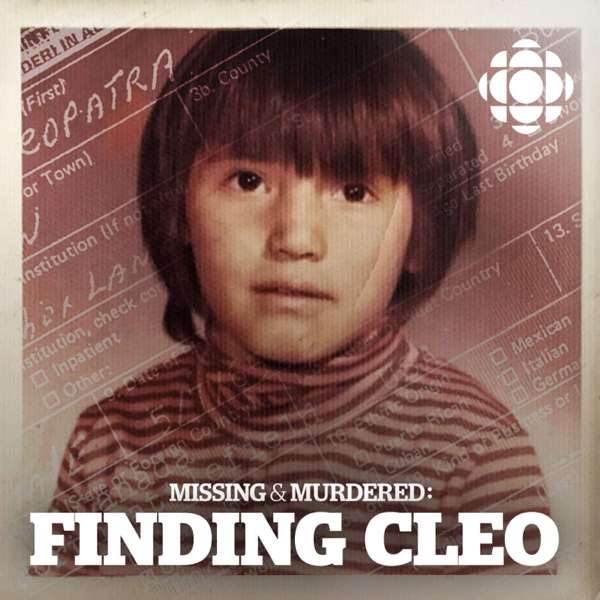
    Missing & Murdered: Finding Cleo

    2

    Missing & Murdered: Finding Cleo News & Politics
    My Favorite Murder with Karen Kilgariff and Georgia Hardstark

    3

    My Favorite Murder with Karen Kilgariff and Georgia Hardstark Comedy
    Casefile True Crime

    4

    Casefile True Crime Games & Hobbies
    True Crime Garage

    5

    True Crime Garage News
    The Black Dahlia Serial Killers

    6

    The Black Dahlia Serial Killers History
    footer-logo

    Contact Us

    Toll Free: 844-670-7747

    Links

    • Home
    • Top Charts
    • Networks
    • Apps
    • Independents Podcasts
    • Podcast Advertising
    • Podcast News
    • Contact Us
    • About Us
    • Analytics & Insights

    Stay Connected

      Privacy, Terms of Use & Our Code of Ethics Protecting Content Creators Copyrights