TopPodcast.com
Menu
  • Home
  • Top Charts
  • Top Networks
  • Top Apps
  • Top Independents
  • Top Podfluencers
  • Top Picks
    • Top Business Podcasts
    • Top True Crime Podcasts
    • Top Finance Podcasts
    • Top Comedy Podcasts
    • Top Music Podcasts
    • Top Womens Podcasts
    • Top Kids Podcasts
    • Top Sports Podcasts
    • Top News Podcasts
    • Top Tech Podcasts
    • Top Crypto Podcasts
    • Top Entrepreneurial Podcasts
    • Top Fantasy Sports Podcasts
    • Top Political Podcasts
    • Top Science Podcasts
    • Top Self Help Podcasts
    • Top Sports Betting Podcasts
    • Top Stocks Podcasts
  • Podcast News
  • About Us
  • Podcast Advertising
  • Contact
Not in our directory?
Add Show Here
Podcast Equipment
Center

toppodcastlogoOur TOPPODCAST Picks

  • Comedy
  • Crypto
  • Sports
  • News
  • Politics
  • True Crime
  • Business
  • Finance

Follow Us

toppodcastlogoStay Connected

    View Top 200 Chart
    Back to Rankings Page
    Science & Medicine

    This Sustainable Life

    Do you care about the environment but feel “I want to act, but if no one else does, it won’t make a difference,” and “But if you don’t solve everything, it isn’t worth doing anything”?

    We are the antidote! You’re not alone. Hearing role models overcome the same feelings to enjoy acting on their values creates meaning, purpose, community, and emotional reward.

    Want to improve as a leader? Bestselling author, 3-time TEDx speaker, leadership speaker, coach, and professor Joshua Spodek, PhD, MBA, brings joy and inspiration to acting on the environment. You’ll learn to lead without relying on authority.

    We bring you leaders from many areas — business, politics, sports, arts, education, and more — to share their expertise for you to learn from. We then ask them to share and act on their environmental values. That’s leadership without authority — so they act for their reasons, not out of guilt, blame, doom, gloom, or someone telling them what to do.

    Guests include:

    • Dan Pink, 40+ million TED Talk views
    • Marshall Goldsmith, #1-ranked leadership guru and author
    • Frances Hesselbein, Presidential Medal of Freedom honoree, former CEO of the Girl Scouts
    • Elizabeth Kolbert, Pulitzer Prize-winning author
    • David Allen, author of Getting Things Done
    • Ken Blanchard, author of The One Minute Manager
    • Vincent Stanley, Director of Patagonia
    • Dorie Clark, bestselling author
    • Bryan Braman, Super Bowl champion, Philadelphia Eagle
    • John Lee Dumas, top entrepreneurial podcaster
    • Alisa Cohn, top 100 speaker and coach
    • David Biello, Science curator for TED

    Hosted on Acast. See acast.com/privacy for more information.

    Advertise
    • Apple Podcasts
    • Google Play
    • Spotify

    Latest Episodes:
    470: Sustainable Activities: I'm learning singing (my mortifying "before" recording) Jun 06, 2021
    Show notes

    The average American watches 5 hours of TV per day. Many fly or drive around for fun. If we want to pollute less, will we lose the ability to enjoy ourselves?

    I've written before how Vincent Stanley's commitment to turn off his computer Friday mornings and Nicola Pirulli's walking me through The Spodek Method led to me turning off all my electronics and practicing singing daily. Since starting, I've missed a couple days, but have loved the results.

    Until recently I only sang songs, nothing attempting to learn, just to enjoy. Now I'm moving to voice exercises. I resisted doing them partly because I need to use my computer to play the recordings so decided to relax that constraint the days I practice my exercises. I expect that doing them enough will improve my singing. For now, here is the "before" version of my practicing beginner voice exercises.

    When I listened after, I was mortified at my inexperienced voice. I have a long way to go. But I expect that practice will make perfect, or better, and it will be hard to imagine I sounded like this.

    It begins with a story I think you'll like. Listen the exercises at your own risk, but I recommend turning off your power and seeing what you find to replace screens and burning fossil fuels. You'll be bored, maybe mortified, but it's not what you give up. It's what you replace it with.

    • The recording I got the exercises from

    Hosted on Acast. See acast.com/privacy for more information.


    469: The Science Book of the Decade: Energy and Human Ambitions on a Finite Planet, by Tom Murphy Jun 02, 2021
    Show notes

    I didn’t think of how small my building’s elevators were when I bought a sofa after moving into my current apartment. It didn’t fit. The deliverymen tried to bring it up the stairs too. They made the first landing, but couldn’t make the turn to go up the next flight.

    They had to take it back. I ended up paying a $300 restocking fee plus big tips for the deliverymen’s extra efforts. Plus I lost weeks with no sofa. Now I know my home’s limits. Living within them is no problem when I know them, only when I didn’t. A few minutes of measurement and geometry could have saved me that trouble and improved my life.

    Can homo sapiens’ elevator, also known as Earth, fit us all in? As with my sofa, maybe a bit of calculation is worth saving the trouble of finding out if our sofa can fit. We’re past the point of eyeballing it. Our sofa is civilization and billions of lives.

    I doubt even those who study sustainability most can answer Important questions like

    • Can fusion save us? Will it?
    • What works between solar, wind, nuclear, geothermal, and other options? What doesn’t? Why not?
    • What unintended side-effects are we missing?
    • Do we risk losing civilization? If so, how great is the risk?
    • If we take the gloves off, can geoengineering and other last-ditch efforts work?
    • How hard will saving it be?
    • What do we have to do to make it?

    These questions have answers, whether we find them out or not. There are a lot of books on the environment. I’ve read a lot of them. Most just describe our situation and what will happen if we don’t fix it. Some talk about what we can do, but they don’t help us understand. They don’t describe the patterns, just the results or instruction. We have to trust the writer.

    We’ve all heard to eat less meat. How much less? Will all the things they tell us to do solve the problems? How can I tell? What if I don’t eat less meat? Between eating meat or not, why can’t I see any difference in the world? Should I bother trying or just enjoy life to the max?

    We’re just told the problems and what to do. Maybe school should have taught us but it didn’t. After decades of poor science education, few teachers know how to teach science. They spout facts and instruction. Most analysis and activism is done without context or knowing nature’s patterns, based on feelings. Some envision a world of 10 billion thriving, others a collapse well before.

    Sustainability leadership is my life passion and frankly I don’t find most resources on the environment useful or readable. From the IPCC report Greta Thunberg gave to Congress to An Inconvenient Truth to articles suggesting “one little thing you can do for the environment,” they describe results and tell us what to do. They don’t help us understand beyond “coral reefs are bleaching” and oversimplifications like “CO2 acts like a blanket.” We have to take their word things like biodiversity is good and pollution is bad.

    Even knowing all the data doesn’t tell us the patterns. Will buying an electric vehicle matter? Does flying matter? How much? Enough to save lives? How can I tell, or do I have to take your word for it? Most of all, what about when they clash with other values? What if someone else says jobs or energy security is more important? Is there conflict? If so, how do we resolve it? What if we don’t want to emit greenhouse gases but our mother is sick, flying distance away? Or we feel our job depends on it? What about someone else saying the economy depends on my buying more stuff?

    Only knowing data but not patterns, we can’t think or decide for ourselves. We throw up our hands. For generations we’ve said we’d act and in fact we have, yet we keep lowering Earth’s capacity to sustain life and society. Could our ignorance be causing our attempts at solutions to augment the problems? Might our current attempts at solutions be exacerbating the problems. Are we on a road to hell paved with good intentions?


    A New Hope

    Tom Murphy’s new book, Energy and Human Ambitions on a Finite Planet, changes all that. It empowers us to understand, think, and act for ourselves.

    Murphy earned his PhD at Caltech and teaches at UC San Diego. A decade ago he started the Do The Math blog, where he did more than answer the questions above. He showed how he found the answer so you can too, so you can think for yourself. I called it the best site on the internet (tied with Low Tech Magazine).

    Murphy’s sofa-doesn’t-fit-in-the-elevator moment came in 2006, shortly after moving to San Diego, considering the value of his home. He wrote:


    I pored over articles on the matter, and found two camps. One camp provided rafts of alarming quantitative analysis of the peril: sub-prime lending, soaring price-to-income ratios, unprecedented unaffordability by average families, vulnerability to any weakness in other sectors. The other camp said that the housing market was manifesting a new normal, that San Diego’s universal appeal would prevent a price drop, that scary lending practices were easily skirted by re-financing before interest payments ballooned. I chose to go with the quantitative analysis over the hand-wavy platitude-based set of beliefs, and am glad that I did.

    He sold at the height of the market. On seeing the success of applying quantitative analysis over hand-wavy platitude-based opinion to life, instead of moving to finance like many physicists, he applied it to the environment. He saw hand-wavy platitude-based beliefs and couldn’t stand it. He began applying physics to how we create energy, population, and so on in Do the Math.

    To the chagrin of his dedicated audience, since 2015, he posted only once. He told me on one of his appearances on my podcast that he had answered the most important questions so didn’t have more to write.

    But he wasn’t done. The blog was an unorganized string of posts. He taught a course to non-science undergraduates on the subject, called Energy and the Environment. He used the course to compile his posts, polish them, and make a self-contained comprehensive book. As far as I know, the only one like it, possibly because mathematics is the language of nature, so equations abound, but he explains them, so people who haven’t taken science or math classes since high school can follow.

    Showing the math means we don’t have to take his word for it. We can do the math too and think, judge, and act for ourselves. No matter our politics, age, industry, etc, we can access this book equally. The environment involves many branches of science, including physics, astronomy, chemistry, biology, systems, and more, as well as fields including engineering, history, politics, philosophy, and more. Murphy brings them together like no other resource I’ve found. Many will shy away from devoting the time that the gravity of our environmental situation demands, but for enabling and empowering every reader to understand, think, judge, and act for themselves, I consider Energy and Human Ambitions on a Finite Planet the science book of the decade.

    I’ve read and watched a lot of books, videos, and articles. For reference, I consider Sustainability Without the Hot Air by Caltech-trained Cambridge physicist David MacKay the science book of the previous decade, and Limits to Growth: The 30-Year Update, the science book of the decade before that, by Donella Meadows, Dennis Meadows, and Jørgen Randers. (A video of David MacKay after his book led me to avoid flying, not as a burden but to increase my enjoyment of nature and connection to humans.) Read these three books, and you understand our environment.

    But wait, there’s more. Murphy has acted on his findings in his personal life. He didn’t just use an electric car or unplug appliances before doing so was cool, he measured his results and shared how doing so affected his relationships with his wife, peers, and students. He shares his life and profession. This book doesn’t teach raw information, it shares a lifestyle.

    I’m not saying the book is easy, only that I find it the most valuable book or resource on the most important area humans have faced as a species, and I’ve read and watched many.

    Murphy’s book is glorious. He writes about the wonder of nature, our genius in harnessing it, its limitations, and our folly at not measuring the sofa before trying to jam it into the elevator, or believing the self-serving interests suggesting a “new normal” without justification.

    The math is accessible to a non-science undergraduate. To someone with a PhD in physics like me, it is a symphony—pure joy when you understand it, even more when your study it. Beethoven didn’t write his Ninth for one hearing. Yo-Yo Ma has to study pieces and even with my PhD, I have to take time to understand its equations and application. I learn each time I read Murphy. You will too. The payoff is worth it for aesthetic pleasure alone. There are practical benefits to understanding the patterns: unlike Beethoven, the fates of civilization and millions of species, including our own, depend on our understanding and behavior.

    Learning math and physics here is like learning biology and chemistry when you start gardening or sports. You don’t need to start with anything. You won’t reach your potential, but you won’t get injured either. You’ll learn by doing. Any gardener will soon learn about species and seasons. Lifting weights taught me anatomy and diet. Sailing will teach you tides and fluid dynamics.


    Math doesn’t give answers. It doesn’t have values. People Do.

    Humans have values. What we consider good, bad, right, and wrong stands outside math and science. Euclid derived all of Euclidean geometry from five axioms but he had to start with them. Likewise, math lets you get from your values to what to do but it doesn’t tell you your values.

    Engineers often think math tells you answers. They promote nuclear power for not emitting CO2 or electric vehicles because they are more efficient, but do our deepest values include avoiding CO2 emissions and efficiency?

    Murphy describes how nuclear fission and fusion work, their hurdles to implementation, and so on, but then treats the science and technology as only the starting point to decide their value. Most analyses and people confronted with waste and pollution see more efficient sources and less polluting sources as the solution. Obviously, they pollute less, right? Not so fast. You have to do the math. What patterns have we followed before? If we follow them again, what will happen? People familiar with systems may expect systems to behave differently than their elements alone. Murphy does the math and suggests clean fission and fusion would compound our problems. Don’t believe him? You can do the math yourself, but if you just feel confident based on hopes, dreams, and fantasies, you’ll benefit most from his book.

    Most science books tell you results of experiment or predict some outcome based on some model. The IPCC reports, for example, tell you our best understanding of our climate measurements and where, given our patterns, we’ll end up or could end up if we change our behavior. The results show lots of numbers. They do math but they don’t enable you to do math. Books like the Uninhabitable Earth describe such predictions in prose, again not enabling you to do math.


    Who Should Read It

    After generations of this nation denigrating science, math, nature, and education of them, I’m under no preconceptions of how popular this book will become. People feel guilty thinking and talking about the environment when their responsibility comes into play. Still, everyone can understand it. You’ll love it when you work through it.

    Every policymaker, CEO, and media programmer will benefit their audiences from knowing this book. Even if leaders don’t read it enough to understand it, this book enables them to have on staff or retainer someone who understands the math from doing it. That leader can choose not to talk in equations. He or she may even wave his or her hands and speak in platitudes, but can start from understanding, not ignorance.


    Why You’ll Love the Math

    I wrote how mathematics is the language of nature and that Murphy’s book is a symphony. The video below of a master class will illustrate what I mean (and put a big smile on your face, there are more of his videos here). Ben Zander is a conductor, musical director of the Boston Philharmonic Orchestra, and bestselling author. He speaks sometimes in English but other times through the piano. Because music is the language of music. Zander can’t communicate in English the sound and meaning of music where a few notes on the piano communicate everything.


    https://youtu.be/b2S-OjTb4nU


    As music communicates music, equations describe nature. I know people more fluent in music will hear more than I do from Zander, but I love what I hear and value hearing what I can. You will gain as much reading Energy and Human Ambitions on a Finite Planet.


    Enjoy the book!

    Here is a video Tom and some peers made of the book:

    https://youtu.be/2fbOWhJy7So

    Hosted on Acast. See acast.com/privacy for more information.


    468: Alexandra Paul, part 2: How to Reduce Something (Wasteful) You Enjoy, to Improve Your Life Jun 02, 2021
    Show notes

    Alexandra's commitment illustrates a result I keep finding. People who have acted to live sustainably the most already find new ways to act more than people who haven't. People who haven't done much, or acted for extrinsic reasons like an article suggested "one little thing you can do for the environment" instead of intrinsic, say they can't think of anything.

    I conclude that reducing polluting is skills you learn, not a target you reach. As with all skills, mastery brings joy, self-awareness, satisfaction, and expectation of more success through more practice. Alexandra has been mastering these skills for decades and shows mastery in this episode. How does mastery show in sustainability? In this case, I heard her having fun, connecting with people, learning, and enjoying the process.

    When last we heard from her, she shared how much she loved a particular hummus. She and her husband ate a container a day. A plastic container, that is, meaning a pile of plastic that would exist for centuries, maybe millennia, before breaking down.

    Yet anyone can make hummus. Why not her? She could get the ingredients as well as anyone, maybe better ones. She committed to making hummus from scratch.

    The challenge resonated with me since avoiding packaged food started my journey of acting, which led to finding pressure cooking chick peas beat the texture and flavor of canned. Plus my mom makes amazing hummus and baba ganoush. Alexandra shares how she got advice from me and a chef friend for her results.


    EDIT: At a reader's request, here are my mom's recipes, quoting her email to Alexandra

    Humus

    Put about 2 cups of cooked chickpeas into food processor

    Add juice of one lemon...

    Tahini (about a teaspoon or so)

    Add olive oil...I am guessing that I use about 1/4-1/3 cup olive oil, maybe more? Add several cloves of garlic (I do chop before adding; start with less, you can always add)

    Add salt (really important for flavor, cannot skimp....)

    Process until smooth; may have to stop and push down the sides. Start with less oil and add as you process to get the right consistency

    Taste and adjust whatever needs adjusting.

    ===========


    Baba Ganoush (Israeli style)

    I start with medium size eggplant and zap for a couple of minutes in microwave, just to get the inside a bit warm.

    Grill eggplant over an open flame burner (don't know how to do this with electric burners)

    Stay with the eggplant; you will have to turn it often to get all sides cooked. Don't worry about charring; that only adds flavor. Use a skewer or long tined fork to check for interior doneness.

    Remove and let cool on a plate.

    Carefully pick off (and discard) charred skin; don't worry, though, if you miss specks (adds to the flavor)

    Remove to chopping board (mine is wooden)

    Start chopping the eggplant; as you do, add some salt, minced garlic, olive oil, juice of lemon (to taste)


    Hosted on Acast. See acast.com/privacy for more information.


    467: Frederick Lane, part 1: The Rise of the Digital Mob Jun 02, 2021
    Show notes

    A topic making among the most headlines these days are digital mobs and their justice reacting to what people say. I've touched on it somewhat in this podcast and on my blog and I feel the risk teaching at NYU, which has kept me from expressing myself as openly as I could in the past. Another way of looking at this phenomenon is that we have become more vigilant about respecting groups that society hasn't stood up to before.

    We all see it. We all have opinions. Frederick approaches the phenomenon from a less partial, legal standpoint: what is going on? What risks are there? Who faces them? How can we respond? How should we respond for what reasons? How is technology changing our discourse?

    What do Janet Jackson and Justin Timberlake have to do with it?

    What was appearing on Jon Stewart's Daily Show like?

    A reason I wanted to bring him on was to learn his views on my talking about abolition, a movement we can learn from, and attraction coaching, which informed my leadership practice. So I got to ask him his experienced views.

    • My episode on his podcast: Cybertraps

    Hosted on Acast. See acast.com/privacy for more information.


    466: Shaun Donovan: New York City Mayoral Candidate May 29, 2021
    Show notes

    Shaun Donovan is running for Mayor of New York City. Technically not a national or global position, but in practice it is. Many call it the second hardest job in America. Most New York City mayors affect the nation and world.

    With a city this size, there are many issues. I focus on two: leadership, which means character and social and emotional skills, and sustainability.

    Regarding leadership, character, and what motivated him, I heard Shaun share vulnerability. I’m impressed, considering his experience in the White House and beyond, and how many politicians share prepared messages more than themselves. I’ll share his bio and then our conversation.

    Regarding sustainability, I asked him about litter, biking, farmers markets, and more.


    • Shaun for NYC: Shaun's campaign page

    Hosted on Acast. See acast.com/privacy for more information.


    465: Markus Pukonen, part 1: Around the World With No Motors May 27, 2021
    Show notes

    My friend bought a sailboat, I mentioned to him my goal of sailing off North America, he told me about this guy posting weekly videos of circumnavigating the planet without using motors. I watched a bunch of videos. I had to learn more.

    He's "traveling in one consecutive journey around the world by as many motor less means as possible, including rowing, swimming, kayaking, standup paddleboarding, sailing, running, biking, skiing, skateboarding, velomobiling, walking backwards, and pogosticking. Friends and fellow adventurers join for support throughout the journey and help to create change through communication, education, and entertainment."

    I caught him in India soon to sail to Africa.

    People describe my behavior as extreme. Extremely fun! Actually, it’s more like most humans. Most westerners are extreme in our dependence, separation from family, separation from nature, obesity, addiction, heart disease, diabetes, working long hours, and so on. From their extreme position, normal me looks extreme.

    I keep going further because I find role models like Markus. Can you guess if he’s miserable or having the time of his life? I think you know the answer, but listen to find out how.


    • Routes of Change, with videos, blogs, and everything
    • Markus's YouTube channel

    Hosted on Acast. See acast.com/privacy for more information.


    464: Resilience: Six months with the fridge unplugged May 22, 2021
    Show notes

    Here are the notes I read from for this episode:

    • 6 months with fridge unplugged
    • Mom's advice, her fridge
    • 2 articles: Vietnam and power grid safety
    • Extreme? Extreme fun
    • 200,000 years
    • "Heirloom tomatoes" used to be "tomatoes"
    • Connect with people
    • Off grid in Manhattan?
    • Solar battery
    • Why LeBron practices free throws
    • To become world class you have to practice the basics
    • Otherwise you don't know what you're talking about and lose credibility

    Hosted on Acast. See acast.com/privacy for more information.


    463: Brad Hoylman, part 1: From New York Senator to Manhattan Borough President May 20, 2021
    Show notes

    Brad isn't just a longtime elected legislator, he's also a neighbor who represents me. Most campaigning politicians speak in talking points. Maybe for being neighbors, maybe just out of his personality, I heard him opening up and sharing about the man behind the campaign.

    We spoke about what motivates him, his vision, New York City, Greenwich Village, and government leadership. He spoke thoughtfully, with reflection on political topics but also other personal ones, like the environment, drugs, and drug dealers and use in our "back yard,"---that is, Washington Square Park. I would have expected a politician to dodge some of those questions.

    Here is Brad Hoylman, the person behind the campaign.

    I hope our conversation helps lead to New York City legislating decreasing the supply of plastic and packaging choking our oceans and air.

    • Brad's campaign page

    Hosted on Acast. See acast.com/privacy for more information.


    462: Bill Ryerson, part 3: The biggest impact you can make May 19, 2021
    Show notes

    Heartwarming is the best word to describe Bill's experience that I can think of.

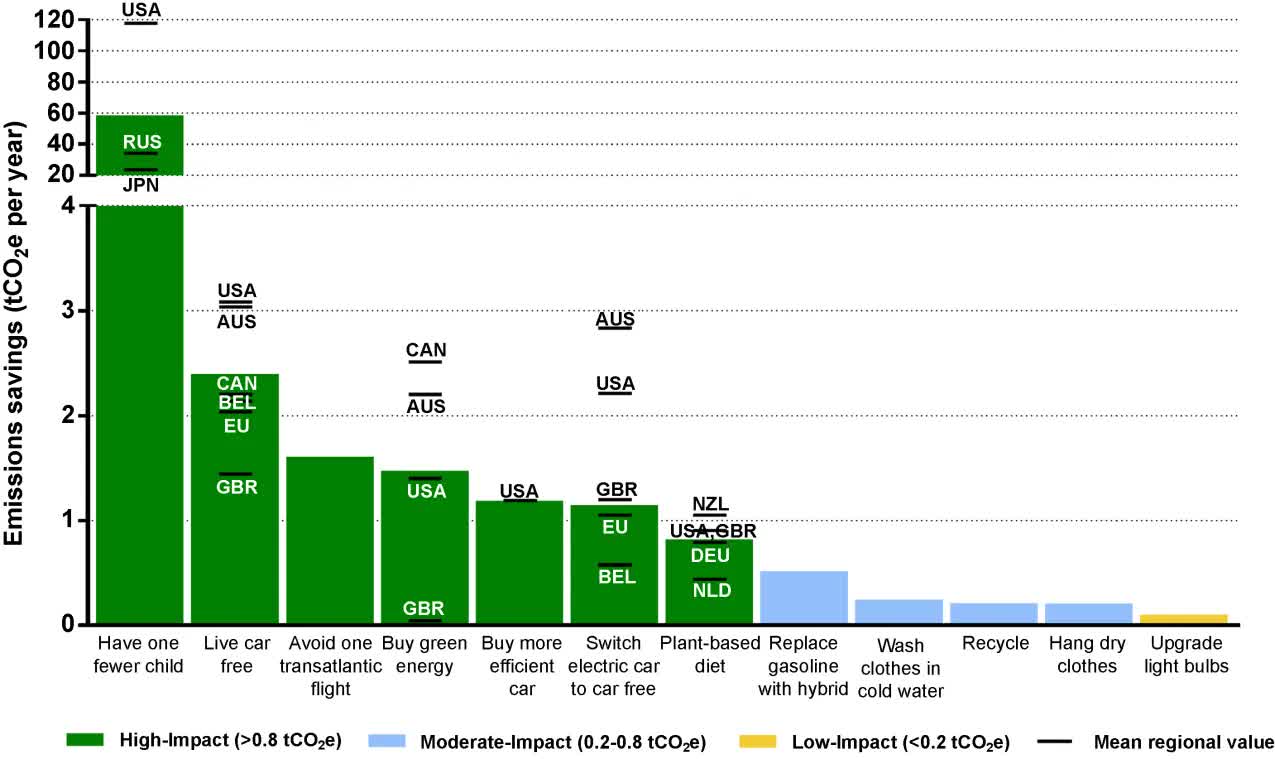
    In today's episode, Bill and I start by talking about the incomparably larger impact of having fewer kids, especially in a country that pollutes as heavily as the U.S.

    Then we talked about Bill exploring his snowy yard with his grandson. The opportunity to do so was there for years, but he didn't act. You'll hear how he loved it.

    What natural experience might be sitting waiting for you to discover and enjoy?

    Hosted on Acast. See acast.com/privacy for more information.


    461: 24 Hours With No Electrical Power (After) May 16, 2021
    Show notes

    My notes I read from:

    What I did:

    • Kathryn Garcia in Washington Square Park
    • Farmers market (compost, oregano)
    • Ride to Brooklyn
    • Grain de Sail sail boat
    • Visit with friend
    • Calisthenics by candlelight
    • Wake up, no clock
    • Think, reflect, calm
    • Meet to pick up garbage

    Notes on no power:

    • 29 to 30 hours since recording last episode, 26 with circuit breaker for apartment disconnected
    • Less of a big deal than I expected, though the fridge already being off probably lessened effect
    • Temptation
    • Time
    • Darkness
    • Light
    • Outdoors
    • Eating
    • Calm, relaxed
    • My values

    Hosted on Acast. See acast.com/privacy for more information.


    Previous 1 38 39 40 41 42 87 Next

    Related Podcasts

    The Joe Rogan Experience

    1

    The Joe Rogan Experience Comedy
    Casefile True Crime

    2

    Casefile True Crime Games & Hobbies
    Invisibilia

    3

    Invisibilia Personal Journals
    Reply All

    4

    Reply All Games & Hobbies
    Science Vs

    5

    Science Vs Science
    Science Friday

    6

    Science Friday Astronomy
    footer-logo

    Contact Us

    Toll Free: 844-670-7747

    Links

    • Home
    • Top Charts
    • Networks
    • Apps
    • Independents Podcasts
    • Podcast Advertising
    • Podcast News
    • Contact Us
    • About Us
    • Analytics & Insights

    Stay Connected

      Privacy, Terms of Use & Our Code of Ethics Protecting Content Creators Copyrights