TopPodcast.com
Menu
  • Home
  • Top Charts
  • Top Networks
  • Top Apps
  • Top Independents
  • Top Podfluencers
  • Top Picks
    • Top Business Podcasts
    • Top True Crime Podcasts
    • Top Finance Podcasts
    • Top Comedy Podcasts
    • Top Music Podcasts
    • Top Womens Podcasts
    • Top Kids Podcasts
    • Top Sports Podcasts
    • Top News Podcasts
    • Top Tech Podcasts
    • Top Crypto Podcasts
    • Top Entrepreneurial Podcasts
    • Top Fantasy Sports Podcasts
    • Top Political Podcasts
    • Top Science Podcasts
    • Top Self Help Podcasts
    • Top Sports Betting Podcasts
    • Top Stocks Podcasts
  • Podcast News
  • About Us
  • Podcast Advertising
  • Contact
Not in our directory?
Add Show Here
Podcast Equipment
Center

toppodcastlogoOur TOPPODCAST Picks

  • Comedy
  • Crypto
  • Sports
  • News
  • Politics
  • True Crime
  • Business
  • Finance

Follow Us

toppodcastlogoStay Connected

    View Top 200 Chart
    Back to Rankings Page
    Natural Sciences

    The Stem Cell Podcast

    A podcast dedicated to culturing knowledge in stem cell research. Brought to you by STEMCELL Technologies.

    Advertise
    • Apple Podcasts
    • Google Play
    • Spotify

    Latest Episodes:
    Ep. 332: Live Show at the Stem Cell and Developmental Biology Early Career Symposium Oct 13, 2026
    Show notes

    Guest:

    In this special episode recorded live in Seattle, Washington at the Allen Institute for the Early Career Development Symposium. Dr. Crystal Rogers, Associate Professor at the UC Davis School of Veterinary Medicine, and Dr. Ariel Waisman, CONICET Investigator at FLENI in Argentina, explore the unique career transitions and systemic challenges faced by early-career scientists. They discuss overcoming imposter syndrome, navigating funding cuts, and adapting to new leadership responsibilities. Emphasizing the importance of strong mentorship, scientific communication, and community, they highlight how peer support and resilience are essential for sustaining scientific progress in today’s economic landscape.

    Photo Reference: Courtesy of Drs. Crystal Rogers and Ariel Waisman

    Subscribe to our newsletter!

    Never miss updates about new episodes.

    Subscribe

    Ep. 331: “How the Heart Takes Shape” Featuring Dr. Lika Drakhlis Sep 29, 2026
    Show notes

    Guest:

    Dr. Lika Drakhlis is a Junior Group Leader at Hannover Medical School. She discusses how her lab uses human pluripotent stem cells to develop complex, multi-tissue organoids that model the co-development of the heart, vasculature, and foregut. She also explores how these models reveal the spatial organization and cellular interactions that shape early heart development, and how they can be used to study congenital disease and develop more human-relevant alternatives to animal models.

    Featured Products and Resources:

    • Improve your skills in hPSC culture and maintenance with this free, on-demand course.
    • Learn about organoid cultures from the expertsby visiting the STEMCELL Technologies’ Organoid Information Hub.

    The Stem Cell Science Round Up

    Building a Human–Mouse Cortex – Human cortical organoids extensively integrate into the mouse brain, forming functional neural circuits that enable behavioral studies of human neurodevelopment and disease.

    Connecting the Central and Peripheral – Self-organizing neural organoids recreate the coordinated development of the spinal cord and peripheral sensory nervous system, enabling studies of development, disease, and drug effects.

    Tracing the Brain’s Origins – Lineage tracing and stem cell models reveal two distinct neural progenitors that separately give rise to the forebrain/midbrain and hindbrain.

    Engineering Stem Cells for Bone – A first-in-human trial suggests that engineering patients’ own mesenchymal stem cells to better home to bone may provide a safe and durable approach to treating osteoporosis.

    Photo Reference: Courtesy of Dr. Lika Drakhlis

    Subscribe to our newsletter!

    Never miss updates about new episodes.

    Subscribe

    Ep. 330: “Decoding Cell Fate” Featuring Dr. Yonatan Stelzer Sep 15, 2026
    Show notes

    Guest:

    Dr. Yonatan Stelzer is a Principal Investigator at the Weizmann Institute of Science. He discusses how his lab combines developmental biology, epigenetics, and single-cell technologies to understand how cells acquire distinct identities during embryonic development. He also explores building quantitative models that track development across space and time, how extracellular signals and epigenetic mechanisms shape cell fate, and the opportunities and limitations of using AI to uncover the underlying logic of biology.

    Featured Products and Resources:

    • Get a free wallchart on the derivation and applications of hPSCs.
    • Subscribe to ESC & iPSC News to receive all of the latest research, news, jobs, and events in ESC & iPSC research.

    The Stem Cell Science Round Up

    Stem Cells Drive Spinal Stenosis – Researchers identified tendon/ligament stem cells and showed that their abnormal differentiation contributes to ligament thickening and lumbar spinal stenosis.

    Building Better Bones – Engineered vascularized callus organoids act as temporary biological templates that promote blood vessel formation and regeneration of large bone defects.

    Regenerating Beta Cells – Loss of ALDH3B2 converts human pancreatic duct cells into insulin-producing β-like cells capable of improving blood glucose in diabetic mice.

    Controlling Organ Size – A Hippo–IGF2 signaling pathway controls organ growth and liver regeneration, with IGF2 restoring impaired regenerative capacity in aged mice.

    Photo Reference: Courtesy of Dr. Yonatan Stelzer

    Subscribe to our newsletter!

    Never miss updates about new episodes.

    Subscribe

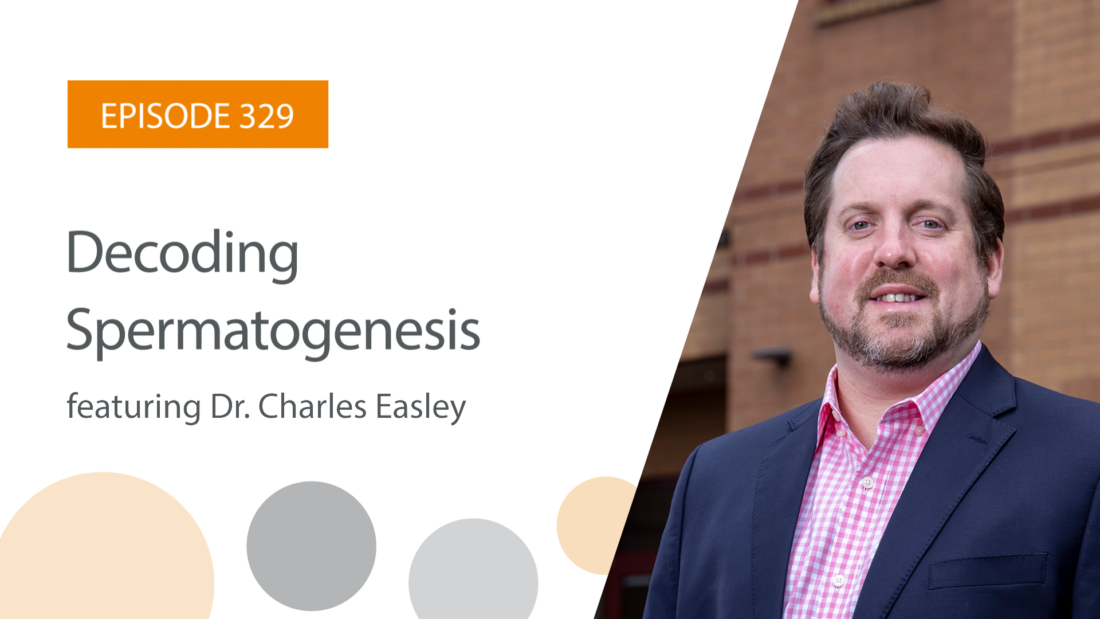
    Ep. 329: “Decoding Spermatogenesis” Featuring Dr. Charles Easley Sep 01, 2026
    Show notes

    Guest:

    Dr. Charles Easley is an Associate Professor and Associate Dean for Research at the University of Georgia. He discusses how his lab uses pluripotent stem cells and in vitro models of spermatogenesis to investigate how environmental exposures affect male fertility. He also explores efforts to generate functional sperm from stem cells, develop regenerative therapies for male infertility, and use human-based models to advance drug discovery and male contraception.

    Featured Products and Resources:

    • Take your human pluripotent stem cell cultures further with mTeSR™ Plus from STEMCELL Technologies.
    • Save time and keep current with ESC & iPSC News, a free bi-weekly newsletter covering all of the latest research and news.

    The Stem Cell Science Round Up

    Tracking Brain Organoid Maturation – Scientists have found that human brain organoids cultured for five years continue to mature and retain a molecular memory of time spent in culture.

    Oligodendrocytes and Cognitive Aging – Changes in oligodendrocytes and reduced NRF2 signaling are linked to cognitive decline during aging, identifying a potential therapeutic target.

    Maturing iPSC-Derived Cardiomyocytes – Generating tetraploid iPSCs produces cardiomyocytes with more mature molecular, metabolic, and functional properties than conventional iPSC-derived cardiomyocytes.

    Embryo Mechanics and Fertility – Reproductive aging increases embryo contractility and alters tissue mechanics, reducing the ability of embryos to implant successfully.

    Photo Reference: Courtesy of Dr. Charles Easley

    Subscribe to our newsletter!

    Never miss updates about new episodes.

    Subscribe

    Ep. 328: “Modeling Human Microenvironments” Featuring Dr. Abdullah Khan Aug 18, 2026
    Show notes

    Guest:

    Dr. Abdullah Khan is an Associate Professor of Tissue Engineering at the University of Oxford and a Group Leader at the MRC Weatherall Institute of Molecular Medicine. He discusses how his lab engineers complex human tissue models to study the cellular interactions that drive development, aging, and disease. He also explores how multi-organoid systems can model interactions between tissues such as the bone marrow and heart, and how these platforms could advance disease modeling, drug discovery, and preclinical research.

    Featured Products and Resources:

    • Get a free wallchart on the derivation and applications of hPSCs.
    • Subscribe to ESC & iPSC News to receive all of the latest research, news, jobs, and events in ESC & iPSC research.

    The Stem Cell Science Round Up

    Rescuing hPSC Differentiation – A chemical chromatin restoration approach reverses differentiation defects in human pluripotent stem cells, restoring their ability to generate diverse cell types and brain organoids.

    A Tumor Organoid Atlas – Patient-derived tumor organoids reveal cancer-specific gene dependencies and therapeutic vulnerabilities, providing a resource for advancing precision oncology.

    Mapping New Cancer Vulnerabilities – CRISPR screening of organoids and spheroids expands the Cancer Dependency Map, revealing cancer vulnerabilities and molecular subtypes missed by traditional cell lines.

    Building Better Cancer Models – A large collection of next-generation cancer models captures much of the genetic and epigenetic diversity of patient tumors, creating a resource for studying cancer biology and treatment response.

    Modeling Heart Valve Disease – Human iPSC-derived valve assembloid models heart valve development and reveals how mechanical forces and fluid flow shape valve formation and disease.

    Heart Valves in the Lab – Stem cell-derived 3D heart valve tissues recapitulate key features of valve maturation and provide a human platform for studying inflammation and calcific valve disease.

    Photo Reference: Courtesy of Dr. Abdullah Khan.

    Subscribe to our newsletter!

    Never miss updates about new episodes.

    Subscribe

    Ep. 327: “The iPSC Revolution” Featuring Dr. Shinya Yamanaka Aug 05, 2026
    Show notes

    Guest:

    Nobel Laureate Dr. Shinya Yamanaka is the Director Emeritus of the Center for iPS Cell Research and Application (CiRA), President of the CiRA Foundation, Professor at Kyoto University, and Senior Investigator at the Gladstone Institutes. 20 years after the discovery of iPSCs, he discusses how his lab is advancing iPSC therapies toward the clinic while continuing to investigate the basic mechanisms underlying pluripotency, stem cell biology, and translation initiation. He also shares his vision for the future of regenerative medicine, the ethical challenges posed by emerging stem cell technologies, and the opportunities created by combining iPSC with advances such as CRISPR and organoids.

    Featured Products and Resources:

    • Get a free wallchart on the directed differentiation of hPSCs.
    • Subscribe to STEMCELL Sceince News to stay current with the latest research and news in the fields of immunology and cell biology.

    The Stem Cell Science Round Up

    Elephant iPS Cells – Researchers have generated the first induced pluripotent stem cells from Asian elephants, providing a new platform for conservation and disease research.

    Epigenetic Cell Counter – Intestinal stem cells use an epigenetic division-counting mechanism to precisely control cell fate decisions during tissue maintenance.

    Reversing Bone Marrow Aging – Long-term vitamin C supplementation partially reverses age-related changes in primate bone marrow and hematopoietic stem cell function.

    Human Heart Atlas – A comprehensive atlas of human cardiac organoids reveals how signaling molecules regulate heart function and identifies pathways linked to heart failure.

    Photo Reference: Courtesy of Dr. Shinya Yamanaka.

    Subscribe to our newsletter!

    Never miss updates about new episodes.

    Subscribe

    Ep. 326: “ISSCR 2026: On the Ground” Jul 21, 2026
    Show notes

    Guest:

    In July 2026, we attended ISSCR 2026, the annual meeting of the International Society for Stem Cell Research, in Montreal. We spoke with delegates about their research, the scientific advances that stood out to them, and the emerging trends shaping the future of stem cell biology. They also reflect on their own conference highlights and the unique opportunities that meetings like ISSCR provide for collaboration, networking, and scientific discovery.

    Featured Products and Resources:

    • Strengthen reproducibility in your research with “Applying the ISSCR Standards for Research”

    Subscribe to our newsletter!

    Never miss updates about new episodes.

    Subscribe

    Ep. 325: “Live at ISSCR 2026: Scaling and Manufacturing of PSC-Derived Therapies” Featuring Drs. Michael May and Janet Rothberg Jul 14, 2026
    Show notes

    Michael May and Janet Rothberg

    Guest:

    In this special episode recorded live in Montréal, Canada at ISSCR 2026, Dr. Michael May, President and CEO of the Centre for Commercialization of Regenerative Medicine (CCRM), and Dr. Janet Rothberg, Senior Director of Process and Analytical Development at CCRM, explore how stem cell discoveries can be translated into commercially viable therapies through scalable manufacturing, company creation, investment, automation, and artificial intelligence. They emphasize the importance of considering manufacturing, quality control, market selection, reimbursement, and the evolving standard of care much earlier in the development process. They also share their vision for a future in which robust bioprocessing, better use of data, and improved regulatory and reimbursement models make iPSC-derived therapies more affordable and widely accessible.

    Photo Reference: Courtesy of Drs. Michael May and Janet Rothberg

    Subscribe to our newsletter!

    Never miss updates about new episodes.

    Subscribe

    ISSCR 2026: Day 4 Jul 12, 2026
    Show notes

    Guest:

    In July 2026, Daylon and Arun attended the International Society for Stem Cell Research’s (ISSCR) annual meeting in Montreal, and recorded daily episodes discussing highlights of the previous 24 hours. Here is the final of four episodes from the meeting, where they discuss the challenges of making advanced cell and gene therapies accessible, the latest progress in organoids and regenerative medicine, and the importance of balancing ambitious clinical goals with rigorous scientific evidence. They also reflect on the meeting’s broader themes, from the enduring role of developmental biology and patient advocacy to the achievements of award recipients and the growing integration of new technologies such as AI, machine learning, and advanced imaging in stem cell research.

    Featured Products and Resources:

    • Get a free wallchart showing how organoids are used as model systems to study infectious diseases, cancer, congenital disorders, and tissue regeneration.

    Subscribe to our newsletter!

    Never miss updates about new episodes.

    Subscribe

    ISSCR 2026: Day 3 Jul 11, 2026
    Show notes

    Guest:

    In July 2026, Daylon and Arun attended the International Society for Stem Cell Research’s (ISSCR) annual meeting in Montreal, and recorded daily episodes discussing highlights of the previous 24 hours. Here is the third of four episodes, where Daylon and Arun discuss advances in synthetic biology, organoid engineering, regenerative medicine, developmental biology, and AI-driven approaches to stem cell research. They also reflect on inspiring plenary talks covering topics from pregnancy-associated tissue adaptation and lung development to AI-powered drug discovery, while sharing their excitement about conversations with conference delegates and the rapidly evolving future of the field.

    Featured Products and Resources:

    • Strengthen reproducibility in your research with Applying the ISSCR Standards for Research, a free, on-demand training course.

    Subscribe to our newsletter!

    Never miss updates about new episodes.

    Subscribe

    1 2 3 37 Next

    Related Podcasts

    Science Friday

    1

    Science Friday Astronomy
    Radiolab

    2

    Radiolab Documentary
    BrainStuff

    3

    BrainStuff Natural Sciences
    StarTalk with Neil deGrasse Tyson

    4

    StarTalk with Neil deGrasse Tyson Games & Hobbies
    Radiolab

    5

    Radiolab Documentary
    Stuff To Blow Your Mind

    6

    Stuff To Blow Your Mind Life Sciences
    footer-logo

    Contact Us

    Toll Free: 844-670-7747

    Links

    • Home
    • Top Charts
    • Networks
    • Apps
    • Independents Podcasts
    • Podcast Advertising
    • Podcast News
    • Contact Us
    • About Us
    • Analytics & Insights

    Stay Connected

      Privacy, Terms of Use & Our Code of Ethics Protecting Content Creators Copyrights