We explode gender norms by exploring their incredible variety across time. For example, did you know the Nazis encouraged young girls to bear a child out of wedlock for the Fatherland? Or that pre-contact Hawaii had no such thing as marriage? Or that ancient Romans had no concept of orientation, only a vague sense of “preference” for one sex or the other? That’s the kind of stuff we’ll be covering in this show. We explore the entire spectrum, from male to female and everything in-between, and from straight to gloriously twisted.
History of Sex is made with Jetpack Podcast. Full show notes and every episode at https://historyofsexpod.com/
Today, female toplessness is taboo in Western culture, but did you know that until quite recently indeed, showing nip was normal? Not only was it normal, but it was often the height of fashion. Noble women and even queens all sported this particular wardrobe choice. So, when did this begin, and how did it come to be taboo? We find out in this showcase episode from Dead Ideas.
Don’t forget to subscribe, rate, and review. Support the show on Patreon at www.patreon.com/btnewberg. Research, writing, editing, and production by B. T. Newberg. Logo Design by Rachel Westhoff. Additional credits, references, and more at www.historyofsexpod.com.
When Nip Slips Were Normal - Showcase, Feat. Dead Ideas
May 02, 2022
Show notes
Today, female toplessness is taboo in Western culture, but did you know that until quite recently indeed, showing nip was normal? Not only was it normal, but it was often the height of fashion. Noble women and even queens all sported this particular wardrobe choice. So, when did this begin, and how did it come to be taboo? We find out in this showcase episode from Dead Ideas.
Don't forget to subscribe, rate, and review. Support the show on Patreon at www.patreon.com/btnewberg. Research, writing, editing, and production by B. T. Newberg. Logo Design by Rachel Westhoff. Additional credits, references, and more at www.historyofsexpod.com.
“If you go to the Sears Tower and stand very close and look up, it overwhelms the sky. But if you go across town, you may only see the very top of it. Many times, we make a choice to go close to pain. Just stay there and know that at any time, all you have to do is thank the building for being there, turn and walk away.”
– Alexandra Billings
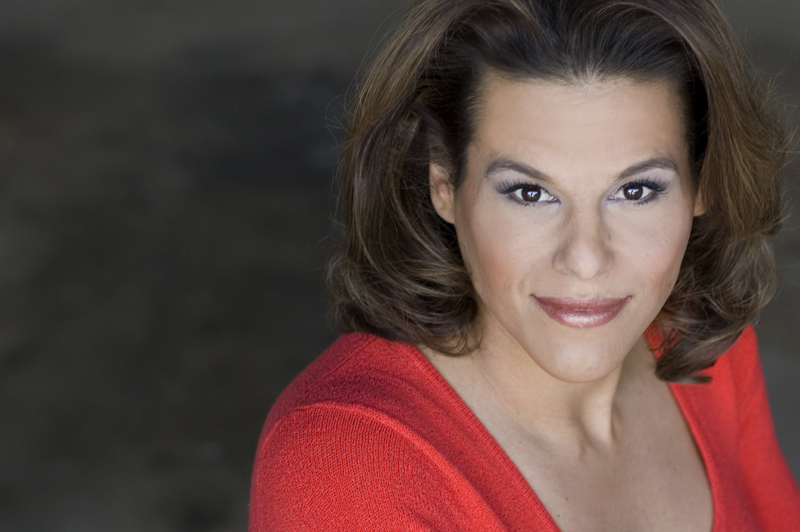
What would it be like to live through almost the entire recent history of the transgender movement, from near-complete marginalization in the 1960s to glimmers of mainstream acceptance in the present? Alexandra Billings, who plays Davina on the hit TV show Transparent, did just that. We talk to her about her new memoir This Time For Me, which tells one person’s experiences from the 60s through today.
Featuring a rendition of “Over the Rainbow” by pianist Christopher-Joel Carter, IV.
Don’t forget to subscribe, rate, and review. Support the show on Patreon at www.patreon.com/btnewberg. Research, writing, editing, and production by B. T. Newberg. Logo Design by Rachel Westhoff. Additional credits, references, and more at www.historyofsexpod.com.
Alexandra Billings
(Partial) Transcript
Today, the Transgender movement has hit mainstream culture in a big way. But it wasn’t always like that.
What would it be like to live through almost the entire recent history of the transgender movement, from near-complete marginalization in the 1960s to glimmers of mainstream acceptance in the present?
Today we’re talking to Alexandra Billings, who did just that.
Billings plays the character Davina on the hit TV show Transparent, and has just published her memoir This Time For Me. It’s hot off the presses, hitting shelves just this last weekend. I highly recommend you pick up a copy because it tells one person’s experiences from the 60s through today.
We catch up with Alexandra and talk about some of her struggles, but our conversation quickly turns into much more. She is an actress, a teacher, and a person who frankly has endured some hard times in her life – prejudice, assault, drug addition, HIV, family rejection, and more. Yet she has worked through that pain and emerged as someone who can convey it in a way that perhaps can help others.
Alexandra Billings tells us about coming to terms with herself, writing about her experiences on the show Transparent, and carrying pain while still walking proud.
That’s what we’re talking about in today’s interview episode. I’m B. T. Newberg, and this is The History of Sex.
[music]
According to the inside flap of Billings’ new book:
“Alexandra Billings is an actor, singer, author, teacher, and activist who has appeared on numerous television shows, including Amazon’s Emmy and Golden Globe Award-winning Transparent. Billings, who has been acting since 1968, has also performed across the United States in hundreds of plays and musicals. … Every role played by Billings is thought to be a first for an out Transgender human.” (Billings and Gordon, p. 433)
And in addition, we must of course add that she is now the author of the new book This Time For Me: A Memoir.
Folks, there is a lot of history in this book. A little later, I’ll be sharing a few select quotes – not too much, but just enough to give you a taste of that history. But first, talking to Billings, I wanted to concentrate on big picture stuff, starting with a connection with our current series Sex in the Wild West.
Let’s check in with her now.
[Interview, part 1]
So, folks, there you can already see a glimpse of some of the difficulties that Billings has had to face. She addresses the question with a bit of a humble flair I guess you could say, not going into too much detail. However, she pulls no punches in her book. I’m not going to give away too much, but I would like to give you a taste of the sort of history you can find inside its pages. So, here are a few suggestive selections through the decades:
We begin in the 1960s, a time of great upheaval for many minority groups. The 60s saw the Civil Rights Movement, and the Stonewall Riots. But the time had not yet come for some, like young Alexandra:
“Being transgender requires careful planning, devious escapes, and fabulous costumes. In the 1960s, being me was illegal, both on the streets and in my living room.” (p. 13)
Then, as the decades wear on:
“Back in the early days of drag, especially in the late 70s and early 80s, when we were first coming out of the darkness and into the mainstream, female impersonators were just that – they were required to impersonate females.” (p. 92)
Meaning, in public perception at the time, it was still about entertainment, and about pretending to be someone else instead of being yourself. For the average person, the idea that a person could, deep down, be anything other than their assigned sex was still to come.
And even into the 1980s, there were laws that enforced that perception:
“The 80s were the time of the woman. Those shoulder pads took up most of the space we weren’t allowed into. … It was still illegal to be Transsexual, and walking across the street dressed in what the law deemed ‘female attire without the presence of two articles of male clothing’ was punishable by a short stay in jail.” (p. 113)
And later Billings would in fact get arrested on this very charge. This sounds like one of those laws that might still be on the books from some dark age long past but no longer actually enforced, but no – it was still actively enforced. When the police officer asks to see her two articles of male clothing, Billings shoots backs, “What, you mean like tube socks?” And shortly finds herself in jail.
That was what the 80s could be like for someone like her. Not exactly the Breakfast Club.
The 80s was also of course the time when people started getting sick:
“It was a plague, you see, and no one knew how you got it. … There were no vaccines and no information. And no one survived it.” (p. 154)
What we know today as AIDS started out being called GRID, which stood for Gay-Related Immune Deficiency, a name that not only unfairly characterized the disease as a problem exclusively for non-heterosexuals, but also ignored Trans folks in the process. Yet Billings buried her friends just the same.
As the 80s became the 90s, public perception continued to mischaracterize the Trans community:
“I grew up and was living in a time when gender was specific, and what I grew into was defined as a Man Who Became a Woman.” (p. 180)
“I was hired at a time before the word ‘Transgender’ existed, I was still labeled a pre-op Transsexual (who was in fact lying about being pre-op).” (p. 193)
But later in the 90s, terms began to change. “Transsexual” came to refer specifically to those who desired gender confirmation surgery. When Billings’ friend told her the new umbrella term was “transgender”, she exclaimed:
“‘Sounds like a detergent.’” (p. 211)
Then came the turn of the millennium. By then, the public had become aware that AIDS was a problem for everyone. And with that, AIDs charities became all the rage:
“I knew it when I sat down to watch the Oscars. It was in the early 2000s, and two very famous women walked out onstage flaunting their fancy red ribbons. The pins sparkled and had tiny gold tips. I remember thinking, ‘Boy, those ribbons look really good with those outfits.’” (p. 316)
I think I detect more than a hint of sarcasm in those words. As Billings suffered the symptoms of the disease first-hand, in mainstream culture, AIDS charity had become fashionable, even trivialized.
In the 2010s, things finally began to shift for the Trans community. Laverne Cox graced the cover of Time magazine, and Trans awareness was finally becoming widespread.
Yet challenges remained. For example, in 2015, when applying for a full-time faculty position at a university, Billings was told:
“Transgender is not a legitimate category for a minority hire.” (p. 375)
And despite all the forward strides made in the 2010s, Billings nevertheless puts her frustration into words:
“Trans women are under attack. It’s 2016 and we’re still being murdered and hunted and eradicated from most every conversation. We are here and we are Americans and yet, even now, even as far as we’ve come, we’re still a fetish and we’re still a choice.” (p. 402)
At the same time, the 2010s brought us a television experience that brought to life the struggles of people just like Billings – the TV show Transparent. Suddenly, mainstream audiences could relate. Billings herself played no small part in that, starring as Davina, friend and mentor of sorts for the main character Maura, played by Jeffrey Tambor.
However, the show ultimately ran aground of controversy. After four full seasons, accusations of sexual harassment were brought forward against Tambor by multiple Transgender women on the show, and the fifth and final season was one feature-length episode without Tambor.
Now, Billings was not one of those who brought forward allegations, but she was there, she saw the sort of things that went on, and she doesn’t doubt the allegations. She tells about this in her book. I won’t give details, but I did ask her about the experience of writing that difficult chapter about her time on the set.
[Interview, Part 2]
Folks, you can tell that Billings is a teacher, the way she encapsulates her points in visual metaphors. No doubt there are many of you out there who can relate to the experience of carrying pain. I know it hits home for me.
But ultimately, let me tell you, what it felt to me talking to Billings, and I think you could hear that for yourself here… it doesn’t seem like she feels the weight of the world on her shoulders. Perhaps she did, but not anymore.
And I think, maybe there’s something there that all of us can learn from.
[music]
Well, that’s all we’ve got for you today, folks. I hope you learned something today. I certainly did. Thank you so much to Alexandra Billings for talking with us today. Everyone, be sure to go out and grab a copy of her memoir This Time For Me, available now.
Oh, and happy birthday to her too. Sixty beautiful years. For all the pain and struggle, she wears it well.
Next month, hopefully, fingers crossed, we’ll start telling the other side of the Wild West, the perspective of its native inhabitants, for whom the experience was of course very different. We’ll be focusing specifically on the Lakota, Dakota, and Nakota tribes. What was sex and gender like in their culture, and how did that change over time as their land was taken, and they struggled to make their way in a new, very different world? And what was it like for those of tribal third genders, now summed up as Two-Spirit traditions? Perhaps among them there were some who could find common ground with Alexandra Billings. But they were also very different from any modern Western gender category, not reduceable to any single LGBTQ+ analogy, and varied greatly from tribe to tribe. We’ll be getting into all of that in the coming months as we explore the other side of the Wild West.
Folks, if you like what we’re doing here on this show, you can support us by subscribing, rating, and reviewing on Apple Podcasts or wherever you get your podcasts. You can also pledge on Patreon where $5 a month gets you a portrait drawn in the time period and culture of your choosing. I’ll make you look awesome, I promise. Just go to www.patreon.com/btnewberg. That’s patreon.com/btnewberg.
Alright, folks, I’ll see you next time. I’m B. T. Newberg, and this is The History of Sex.
[music]
References
Billings, Alexandra, and Gordon, Joanne. This Time For Me: A Memoir. New York: Topple, 2022.
This Time For Me: An Interview with Transparent Star Alexandra Billings
Apr 04, 2022
Show notes
What would it be like to live through almost the entire recent history of the transgender movement, from near-complete marginalization in the 1960s to glimmers of mainstream acceptance in the present? Alexandra Billings, who plays Davina on the hit TV show Transparent, did just that. We talk to her about her new memoir This Time For Me, which tells one person’s experiences from the 60s through today.
Featuring a rendition of "Over the Rainbow" by pianist Christopher-Joel Carter, IV.
Don't forget to subscribe, rate, and review. Support the show on Patreon at www.patreon.com/btnewberg. Research, writing, editing, and production by B. T. Newberg. Logo Design by Rachel Westhoff. Additional credits, references, and more at www.historyofsexpod.com.
Was the West Gay? – Sex in the Wild West
Mar 07, 2022
Show notes
https://archive.org/download/ho-s-70-byzantine-court-eunuchs/HoS64YesTheWestWasGay.mp3 Were there queer folks in the Wild West? We address comments made by actor Sam Elliot about the “evisceration of the American myth” by the new Western film The Power of the Dog, and take a look at the hard evidence for queer folks on the frontier. Don’t forget to subscribe, rate, and review. Support the show on Patreon at www.patreon.com/btnewberg. Research, writing, editing, and production by B. T. Newberg. Logo Design by Rachel Westhoff. Additional credits, references, and more at www.historyofsexpod.com. Transcript [clip: The Power of the Dog trailer] Were there gay folks in the Wild West? Well, that’s a silly question. Of course, there were. It’s just a matter of how secretive they had to be. But that silly question was ignited last week in a Twitter firestorm over the 2021 film The Power of the Dog, from the trailer of which we just heard a clip. The film stars Benedict Cumberbatch as a ranch cowboy in Montana in 1925. The plot revolves around tension between Cumberbatch’s tough, hardened, masculine character and a young, thin, somewhat effeminate boy played by Kodi Smit-McPhee. The film raises questions of what it meant to be a man in the American West, and what desires were and were not allowed there. The film won three Golden Globes for Best Motion Picture, Best Director, and Best Supporting Actor. But last week famed Western actor Sam Elliot went on Marc Maron’s podcast and gave a slightly different take: [clip from WTF with Marc Maron] Marc: Did you see Power of the Dog, did you see that movie? Sam: Yeah, you wanna talk about that piece of sh–? Marc: You didn’t like that one? Sam: F— no. Whew! Yup. And Elliot goes on to drop no less than 21 f-bombs in describing this film. He laments its homoerotics, quoting a critic: Sam: There was a review, not a review but a clip, and it talked about the ‘evisceration of the American myth.’ And I thought, what the f—.” The critic in question, Monahla Dargis, was actually praising the film with that phrase, but Elliot takes it in a decidedly different direction: Sam: The evisceration of the American West, I mean they made it look like… What are all those dancers in New York that wear bowties and not much else? Remember them from back in the day? Marc: Oh, the Chippendales? Sam: Yeah, that’s what all these f—ing cowboys in that movie looked like. Marc: I think that’s what the movie’s about. Sam: Yeah, well… Huh. Okay. So, these comments ignited a Twitter firestorm, with some folks calling Elliot homophobic and others saying no, he’s just being honest. You can probably guess which side I’m on in that fight, but I’m less interested in condemnations and more interested in what the guy even means by these comments, and what that means for our perceptions of the Wild West. Because, first of all, seriously, I don’t know where Elliot gets this Chippendales thing. I thought the film’s homoerotics were relatively subdued by 2022 standards. I don’t wanna give anything away, so I’ll just leave it at that, but I don’t know what he’s talking about. Anyway, I’m more intrigued by this critic’s phrase the “evisceration of the American myth”, what Elliot thinks that means, and why depiction of a homoerotic relationship might be so eviscerating that it causes him to drop 21 f-bombs. Because if he means unfaithfulness to what the West was really like, that’s one thing. That’s history. We can look at historical records and see if there really were folks who loved others of the same sex. But if he means what he says – the American myth – well, I tell you what, he’s kinda got a point. Because the American myth, in which modern American masculinity is rooted, is that the wilderness of the West toughened a guy up and made him a man, specifically a straight man. Yet this movie shows a tough-as-nails cowboy in the rough Montana wilderness who nevertheless does not fit that mold. Yes, Mr. Elliot, that is the evisceration of the American myth. If that’s what you mean, then you and the critic you were quoting, well, you have a point. But also… sorry to break it to you, Mr. Elliot: yes, the West was gay. How gay was it? What was it like for men who loved other men, or for women who loved other women? That’s what we’re talking about in today’s episode. I’m B. T. Newberg, and this is The History of Sex. [music] I’d like to thank our Patreon patron Amy Schmelzer for making this episode possible. Hey folks, this is part of our ongoing series Sex in the Wild West. I’ve been hard at work on our installment looking at the West from Native American perspectives, and was planning to run a showcase episode from my other podcast Dead Ideas today, but then I was alerted to Sam Elliot’s timely comments which have been blowing up on Twitter. Thank you to listener and friend Jon for bringing this to my attention. So, I thought it’s time we set the record straight on what the west was really like for same-sex desire. Now, I did address this in the first episode of our series, where I confessed to having a difficult time finding actual hard evidence of homosexual relationships. However, since then I have found more. I want to give credit to a great youtuber by the name of Kaz Rowe who did an episode on this and gave some examples I’d overlooked. Also, historian Peter Boag, who we heard from quite a bit in our episode on cross-dressers in the West, catalogs quite a few examples of what could be considered same-sex desire. I say “could be considered” only because in the case of historical cross-dressers it’s often unclear what they would have considered their own sex to be. In some cases, they may have been perfectly comfortable with their assigned sex, in others not so much. And in the latter case, would they have considered their relationships same sex or opposite sex? It gets unclear. But that really only becomes a problem if we try to apply our own 21st century lens to an era that didn’t share our same sexual categories. What is ultimately more important is who these folks were and how they lived their lives in the Wild West. So, that’s what we’re going to focus on today. So, let’s see some of these examples, and discover whether or not The Power of the Dog gets it right, historically speaking, and what that means for the “evisceration of the American myth.” The Gay West What was it really like for those who loved others of the same sex in the Wild West? Well, first off, it is unlikely that it was some kind of gay free-for-all. Sam Elliot’s imagined Chippendales dancer scene was neither in the movie nor in historical reality. Although same-sex desire did exist, one still had to be circumspect. This is illustrated in our first story, which features an Easterner who travels to the Rocky Mountains and provides us an impression of the attitude encountered there. Historian Peter Boag writes: “Earl Lind, who sometimes went by the alter ego Jennie June, found ‘the adolescent cowboys and miners of the Rockies the most prejudiced against effeminate males’ he had ever come across. A self-described homosexual from New York City who also took great satisfaction in dressing as a woman, Lind explained that sometime around the turn of the twentieth century, his news-business employers dispatched him to the Rockies ‘to write up an unusual affair transpiring’ there. He traveled ‘in a caravan with fifty men of the roughest type, cowboys, miners, etc.’ Although he went entirely dressed as a man, he could not altogether hide his effeminate nature. Soon his fellow travelers ‘began to heap up insults, particularly taking pains to refer to me within my hearing by the obscene term most often used by roughs for a girl-boy” (Boag, 2011, p. 81). Lind does not provide what that obscene term was, indicating it was likely a curse word deemed unsuitable for print. So far, this depiction fits with that in The Power of the Dog, as well as with most of Western history in Europe and the Americas, where the primary motive for ridicule was unmanliness, not necessarily un-straightliness. Gender presentation was more important than who you had sex with for most of Western history, and Lind suffers specifically for appearing effeminate. Nevertheless, after Lind flashed his national journalistic credentials, he was treated with a bit more kindness, but soon found the limits of that respect: “He eventually befriended one Wyoming cowboy, who claimed to have traveled with the Buffalo Bill show, and who confided all manner of personal information in him. Lind finally felt comfortable enough to confess his sexuality and gender proclivities. Much to his ‘surprise and almost to my death,’ Lind explained, his friend ‘jilted me with an unparalleled display of horror’” (p. 81). It is interesting here that Lind even considered confiding in the Wyoming man, which speaks to the relative freedom he was used to back in New York as well as the potential freedom he expected to find at least among friends out West. Nevertheless, he miscalculates, and is harshly rejected. Whether it is specifically the homosexuality or the cross-dressing that incites horror is not clear, as the two are lumped together in Lind’s account. In general, the American West was one of the last eras where sexuality was an act, not an identity, and presenting masculinely was more important than who you slept with. However, modern sexual identities were already being formulated among sexologists in Germany and England in the late 19th century, precipitating a shift in public perception as the era of the cowboy was drawing to a close at the turn of the century. Regardless, same-sex love among men did take place, and one notable example is the one mentioned in our first episode. William Drummond Stuart, a Scotsman who traveled the American West extensively in the 1830s, commissioned a pair of buffalo-themed wooden chairs which are now on display at the Autry Museum. The chairs likely commemorate the intimate relationship he enjoyed in the American West with French Canadian Antoine Clement (Ng). Another story of note regards Joseph Gilligan of Denver, reported on in 1895. When Gilligan became the subject of a burglary and forgery investigation, authorities discovered in his hotel room a wardrobe of women’s clothing and accoutrements, as well as a certain booklet: “The police uncovered a booklet kept by Gilligan containing the names of prominent Denver men and tell-all letters of a sexual nature. The press quoted from the letters, specifically pointing out the ‘endearing terms’ contained therein and that were exchanged between men” (Boag, 2011, p. 82). Of particular interest is an additional comment made in the papers: “‘Gilligan is very girlish in his actions and his talk but does not appear to worry over the publicity of his life and seems to gather sympathy from the fact, as he tells it, that Denver has others like himself’” (p. 82). Again, it’s not entirely clear if this refers to the girlishness or the sexuality, but in either case it is noteworthy that Denver seemed to boast something of a queer community. Some places may even have had enough of a community to support male brothels. According to historian Chris Packard: “A recent search of the Dodge City Police Court Docket, 1885-1888, reveals evidence of male prostitutes arrested during a sweep of what were termed ‘houses of ill-fame and assignation.’ On the same night, both ‘Howard Hines’ and ‘John Smith’ paid a $5.00 fine plus $7.50 court costs for being ‘an inmate of a house of ill fame’: language that is identical to that used for [female prostitutes] ‘Myrtle Glover’ and ‘Mabel Watson.’ Other men arrested on the same date were charged with ‘vagrancy’ and fined $10.00. Why did the court single out Hines and Smith from other men arrested that night and convict them of identical crimes as two female prostitutes? Why did Hines and Smith pay the fines and admit their guilt? The dearth of historical evidence should not be construed as the absence of it.” (Packard, p. 16) If Dodge City, Kansas, did, in fact, have a male brothel, that suggests a base of clientele sizable enough to support it. On the other hand, that community might not have been large enough for its members to feel truly free, even in their own gathering spots. Most frontier towns were not big enough to support the kind of protective anonymity one might find in, say, London, Paris, or Berlin at this time. As historian William Benneman relates: “Only Philadelphia was large enough to provide men-loving men with the anonymity of numbers. In rural areas among the lower classes it might be possible for two men to live their lives together working the same farm or pursuing the same craft, but in more urban areas, especially among the socially prominent (whose stories are the ones most likely to be preserved in surviving documents), heterosexual marriage was the only acceptable goal” (Benemann, p. xvi). Benneman seems to be considering Philadelphia a frontier town here, as coastal cities like New York and Boston were certainly much larger at the time. Nevertheless, the point stands: frontier towns were vanishingly small in comparison, and could not provide the cover of anonymity. Thus, gay communities, if they existed, would likely have been quite clandestine, and you might have been more likely to encounter same-sex love among the sort of rural, subdued, private relationships featured in The Power of the Dog. A few other examples are worth noting. Eva Lind, not to be confused with the Earl Lind mentioned earlier, cross-dressed as a woman in Colfax, Washington Territory, in the 1880s, and received numerous offers of marriage, reportedly even committing to one man (Boag, p. 79). Similarly, another cross-dresser known as George Todd of Omaha, Nebraska, was arrested in 1891 for attempting to “make a mash on his own sex” (p. 79). So far, we’ve dwelled upon men who loved other men, or those assigned male who loved men. But the West was also home to women who loved other women, and those assigned female who loved women. First, there was Shirley Martin, who dressed in masculine attire. Historian Peter Boag writes: “Lake City, Iowa’s Shirley Martin, whom papers interestingly reported to have had a feminine appearance, nevertheless dated women, having taken them to picture shows and other amusements as well as having treated them to ice cream. Although in a 1912 news article Martin claimed never to have received a proposal of marriage, she all the same asserted that ‘I might have won a wife if I had tried very hard though’” (Boag, 2011, p. 46). Then there was a certain Blanche (we don’t know her last name), from Aspen, Colorado. An 1889 article reports that the 28-year-old Blanche proposed to marry her 17 year-old cousin, Belle. Apparently it was a one-sided affair, though, and the younger girl complained. Boag writes that Blanche: “‘hugs and kisses and squeezes me nearly to death. She won’t let me out of her arms after we go to bed, and presses me so close to her I can hardly breathe. She says if I don’t marry her she will kill me, and talks so strange I have grown afraid of her.’ When questioned by her uncle, Blanche responded calmly that she indeed loved Belle and ‘just as strong as the love of man ever was for woman… and I am ready to prove it with my heart’s blood’” (p. 43). Another was Denver’s John Hill. A 1911 article declared that for two years he had been “doing the work of a man and never shirking when it was grinding and heavy; wearing the clothes of a man; bearing the name of a man; making love to a young woman with true masculine ardor” (p. 56). A startling about-face then occurred, however, when Hill went to prove up his homestead claim. As he had taken out the claim in his given name, which matched his assigned sex of female, he was obliged to change into female attire, causing quite a surprise to the locals. He later told a newspaper, “It was the only thing to do. A woman wou…
Was the West Gay? - Sex in the Wild West
Mar 07, 2022
Show notes
Were there queer folks in the Wild West? We address comments made by actor Sam Elliot about the "evisceration of the American myth" by the new Western film The Power of the Dog, and take a look at the hard evidence for queer folks on the frontier.
Don't forget to subscribe, rate, and review. Support the show on Patreon at www.patreon.com/btnewberg. Research, writing, editing, and production by B. T. Newberg. Logo Design by Rachel Westhoff. Additional credits, references, and more at www.historyofsexpod.com.
No Home on the Range? The Black Cowboy’s Short-lived Glory – Sex in the Wild West
Feb 07, 2022
Show notes
https://archive.org/download/ho-s-70-byzantine-court-eunuchs/HoS63BlackCowboys.mp3 Is it just me, or does the image of the cowboy feel Whiter than White? Yet, in actual history, 1 out of 4 cowboys was Black. The Wild West was surprisingly welcoming in some ways to African Americans, except when it came to interracial sex. And sex may be why it now feels like cowboys were all one skin tone. How did fears of miscegenation ultimately lead to the whitewashing of the Western genre? Don’t forget to subscribe, rate, and review. Support the show on Patreon at www.patreon.com/btnewberg. Research, writing, editing, and production by B. T. Newberg. Logo Design by Rachel Westhoff. Additional credits, references, and more at www.historyofsexpod.com. Transcript [clips from Django Unchained] Is it just me, or does the image of the cowboy feel Whiter than White*? I mean, to me at least, when I see a movie like Django Unchained, from which we just heard clips, it feels like reversing the genre. It’s turning it on its head when Jamie Foxx goes all cowboy lead slinger. (lead slinger: a gunfighter) Yet, in actual history, 1 out of every 4 cowboys was Black (Hunter, p. 153). It wasn’t just Black and White either. Perhaps around 12% of cowboys were Mexican (Porter, p. 112). So, the image of the cowboy as Whiter than White is simply not right. A movie like Django Unchained feels like reversing the genre by foregrounding a Black cowboy, but in terms of actual history, it’s not a reversal at all. It’s arguably more accurate. For example, there was renowned wrangler Nat Love, who wrote in his autobiography: “Mounted on my favorite horse, my long horsehide lariat near my hand, and my trusty guns in my belt and the broad plains stretching away for miles and miles, every foot of which I was familiar with, I felt I could defy the world. What man with the fire of life and youth and health in his veins could not rejoice in such a life?” (Love, p. 68-69) I mean, does it get any more cowboy than that? One in four was Black, but that’s not all. In addition, the typical cattle-handling outfit was mixed. You heard me right: the typical outfit was mixed. It’s not like there were 3 all-White outfits for every all-Black outfit, and the numbers come out in the average or something. No, no, no. All-Black outfits did exist, but they were the exception, not the rule. Mixed outfits were the norm (Porter, p. 112). So, Black cowboys were not only common, but they rode side-by-side with their White counterparts. And while it is true that Black cowboys struggled to achieve the highest rank of trail boss or ranch boss, they filled most every other position. And believe it or not, in most outfits, White and Black cowboys even received equal pay (Porter, p. 121). How could that be? I mean, we’re talking about a time right after the Civil War. Two seconds before, African American slaves had received no pay at all. And the Emancipation Proclamation did not mandate equal pay; that had to wait till 1964, and we are still struggling to achieve it in practice even today. So, how could there be a job with equal pay so soon after the Civil War, and out of all the places, how could that place be the land of the supposedly Whiter-than-White cowboy, the Wild West? As historian Kenneth W. Porter summarily declares, African Americans “enjoyed greater opportunities for a dignified life there than anywhere else in the United States” (p. 124-125). That just doesn’t fit the received image of the frontier, does it? Now, there was discrimination on the frontier, even among cowboys. But that discrimination played out in interesting ways. In this highly masculine profession, there was relatively little discrimination out on the trail, where men were among other men, and what mattered most was skill and being a straight arrow. (straight arrow: an honest, forthright person) But when cowboys rode into town, it was a different story. In the presence or potential presence of White women, suddenly things flipped upside down (Porter, p. 123). Anxieties about miscegenation, or interracial coupling, turned the surprisingly-mixed West into a segregated society in town. Moreover, this same miscegenation-phobia only increased as the frontier closed at the end of the 19th century, reaching a fever pitch in the early 20th century – just as Western films started appearing. And then what do you suppose happened to the image of the cowboy? What’s going on here? Did miscegenation fears whitewash the Western genre? Is that how the cowboy became Whiter-than-White? What was the West really like for men and women of African descent, and how were their stories forgotten? That’s what we’re talking about in today’s episode. I’m B. T. Newberg, and this is The History of Sex. [music] I’d like to thank our Patreon patron Tim Szeliga for making this episode possible. Folks, this is the fourth episode in our ongoing series, Sex in the Wild West. We’ve looked at the American frontier from several different angles already: men, women, and even cross-dressers. Now it’s time to tackle race, because as we’ve already seen in our introduction, race and sex get tangled up rather quickly. Just as we saw in our earlier series Sex in the Third Reich, where Nazi racial policy hinged upon Nazi sexual policy, so too was race and sex bound up together intimately in the American Wild West. Now, race of course covers not just Black and White, but also Native Americans, Chinese Americans, Mexican Americans, and a whole lot more. Today, we’re going to focus primarily on African Americans, but tensions reverberated across the racial landscape. Whitewashing the Western We’ve been fed corral dust, folks. (corral dust: lies and tall tales) It seems the Western genre has been whitewashed. I mean, maybe it’s just me. Maybe I’m showing my bias when I say it feels like the cowboy is Whiter than White, but I don’t think it’s just me. Here’s a Quora forum where someone asks exactly the same question: “Why do people think that cowboys were all white?” (Quora) And here’s a Guardian article entitled “Where Have All the Black Cowboys Gone?” (Billson). So, I don’t think it’s just me. There really is a sense out there that cowboys were all one skin tone. So why would this be? Well, of course, there are many reasons. For one thing, you know, modern racial identities in America have chosen to foreground certain aspects and let others fade. Parts of Black culture today, like hip hop, tend to project a very urban streets kind of lifestyle even though there are rural Black folks too, and parts of White culture, like Country Western music, tend toward the opposite. So, the idea of a Black cowboy kinda runs contrary to stereotypical assumptions these days. That’s certainly part of it. But I think there’s more to it. Much more, in fact. I think the Western genre itself has been whitewashed. But what do I mean by “whitewashed”? Well, I don’t mean Black cowboys have been absent from films. They haven’t; rather, somehow they’ve been made invisible. See, unlike male-to-female cross-dressers, Black cowboys were not excised from the silver screen. On the contrary, they are there in spades. With a quick google search, I managed to turn up nearly 40 Western movies and TV shows featuring Black characters, and even that list is nowhere near complete. What’s more, they’re not just modern flicks like Django Unchained or the very recent 2021 film The Harder They Fall, which features a nearly all-Black cast. Here’s one from 1939 entitled The Bronze Buckaroo starring Herb Jeffries: [Clip from The Bronze Buckaroo: “Gun, I wanna send a message and I don’t want no answers” “Special delivery. You found the right address”] (50:49) Truth be told, Black cowboys have appeared in Westerns all throughout the 20th century. Yet, it doesn’t feel that way. Why? Well, one problem is Black characters have often been given minor roles peripheral to the plot. Or they’ve been sidekicks. Or comic relief. Quantity is not quality when it comes to representation in film. However, that’s not always the case. There have been prominent examples where the quality was there. For example, in the 1992 film Unforgiven, Morgan Freeman fights side by side with Clint Eastwood, gets just as much screen time, and feels like a main character on equal footing. Further back, Woody Strode starred in the 1960 film Sergeant Rutledge with no White counterpart as co-star. And all the way back in 1922, there was already a silent film, now lost, called The Bull-Dogger, starring Black cowboy Bill Pickett as himself. That’s right, he was an actual real cowboy from the Wild West, and he starred as himself in this silent picture. And yet, somehow, even at that time, Black cowboys were apparently already invisible. This is poignantly illustrated by a story recalled by actor-singer Herb Jeffries in the 1994 documentary Midnight Ramble. Sometime in the early to mid-1930s, while on tour in Cincinnati, Jeffries came across a young Black boy who was a fan of silver-screen cowboy Tom Mix. The boy, however, was in tears. Here’s how Jeffries tells it: [clip from Midnight Ramble: “We called him over, and said ‘Hey, did those guys hit you?’ He said ‘No, they’re my friends.’ We said ‘Then what are you crying about?’ And he said, ‘Well, we’re playing cowboy and I wanna be Tom Mix, and they won’t let me be Tom Mix because Tom Mix ain’t Black.’ … Little Black children cannot relate in a cowboy picture. Who can they be?”] Who can they be? They were playing cowboys, and the boy couldn’t be Tom because already, in the eyes of these children, Black folks couldn’t be cowboys. Already in the mid-1930s, cowboys were Whiter than White. This was just 40 years after the closing of the frontier. A quarter of all cowboys had been Black, and yet just four decades later, they were forgotten. And remember this was just one decade after Bill Pickett starred as himself in the flesh, and yet it seems audiences could not see him. The Black cowboy was already invisible. For these children, cowboys were Whiter than White. Now, after this experience, Herb Jeffries determined to make cowboy flicks for Black children, and starred in many with titles like Harlem on the Prairie, Two-Gun Man from Harlem, and the one we heard a moment ago, The Bronze Buckaroo. No doubt this bolstered the self esteem of many a Black child. Yet it was clear that these movies were made for a Black audience. When it came to general audience movies, the Black cowboy continued to fade away. Often, Black historical figures were outright replaced by White characters. For example, the Lone Ranger, who appeared in radio as early as 1933, was likely inspired by real-life deputy marshal Bass Reaves, who was – you guessed it – Black (Burton, p. 14). Nevertheless, the series hero was not presented that way. Now, this was radio mind you, so I suppose there was some leeway for the imagination, but the voice actor was not Black, and when the Lone Ranger did finally appear in film in 1938, he looked just as those children expected: Whiter than White. Likewise, the 1951 film Tomahawk told the story of Black frontiersman Jim Beckwourth, yet the actor was White. And 1956’s The Searchers, quite possibly the greatest Western movie of all time, was inspired by Black Texan Britt Johnson, yet who was the star? John Wayne. So, that’s what I mean by “whitewashed.” It’s not that Black cowboys were not there in the films, but that their presence became invisible. That’s how we arrived at a point where even when a film does feature a Black lead, like Morgan Freeman in The Unforgiven, Denzel Washington in The Magnificent Seven, Will Smith in Wild Wild West, and so many others, you just don’t think of them when you think of cowboys. Through a combination of marketing to niche audiences, low-quality character roles, outright replacement by White actors, Black cowboys have become invisible. The White-skinned cowboy is such an automatic assumption that a Black-skinned cowboy feels like reversing the genre. It was true in the 1930s, and it’s true today. The Western has been whitewashed. The Black West So, what exactly was it that was forgotten through this whitewashing process? What was the Wild West really like for Black men and women? First off, I should be clear by what I mean when I say “cowboy.” Up till this point, I’ve been using it in the rather loose in the cinematic sense to mean pretty much any gun-toting character of the Western genre. But now I want to narrow that to the much more specific historical sense of the profession of cattle-handling on the frontier. It’s in this sense that 1 out of 4 cowboys were Black. That statistic comes from a study by the Trail Drivers Association, which found from the 1860s to the 1880s there were around 5000 workers in the range-cattle industry, and up to 25% of those workers were African American (Hunter, p. 153). It’s also in that specific cattle-handler sense that they received equal pay, as historian Kenneth Porter relates: “Strange though it may seem, there is no clear-cut evidence that Negro cowhands were generally or seriously discriminated against in the matter of wages” (p. 121). Strange indeed. The cowboy trade was one of the few opportunities of the day where Black men could earn pay equal to their White counterparts. To be fair, the playing field was not perfectly even. It was rare, for example, that a Black cowboy was ever promoted to the highest rank of trail boss or ranch boss (Porter, p. 118). Also, some sources suggest they might be given harder tasks, like breaking horses for example Porter, p. 114). Finally, few were gunslingers, as they might suffer greater consequences for shooting a White man (Porter, p. 122). So, it’s not like the playing field was perfectly even. However, it was more even than in many other professions of the day. So, why were there so many Black cowboys, and how were they able to obtain such relatively equal terms? Well, first of all, after the Civil War, droves of Black folks found themselves newly free and eager to make their way. The frontier represented the same thing to them as it did to others: opportunity. When Reconstruction denied the 40 acres and a mule promised to freed slaves, many looked West. A whole movement called the “Exodusters” migrated West to Kansas, and even greater zeal brought families to the so-called “Promised Land” of Oklahoma (Flamming, p. 74-79). And in Kansas, Oklahoma, and elsewhere, they founded Black towns with Black mayors, Black sheriffs, Black businesspeople, Black everything. The all-Black town in the movie The Harder They Fall is not revisionist history; that’s entirely accurate. Black folks settled the West no less than anyone else. And they did so for opportunity. The second was demand for labor. On the frontier, labor was scarce and employers could not necessarily afford to be choosy. Consequently, Black folks often stood a better chance of getting hired. The final reason was high-demand skills. Black people often had skills that were especially valuable on the frontier. Many had previously worked with cattle on plantations, and some were excellent hands at horses as well. For example, Addison Jones was famous for breaking wild horses, a dangerous job called “topping” (Porter, p. 116). These were valuable skills in high demand. Another skill many African Americans brought to the frontier was cooking. That may not sound too glorious, but actually the cook was highly regarded. The quality of food was often what attracted cowboys to one outfit over another, so employers regularly paid cooks higher wages, sometimes up to twice the salary of an ordinary cowhand (Porter, p. 117). Thus, due to opportunity, labor demands, and valuable skills on offer, African Americans headed West no less than others. The real cowboy trade was by no means Whiter than White. It was every bit a mixed-race affair with Black folks not just present but typical. But not all Black folks in the West…
No Home on the Range? The Black Cowboy’s Short-lived Glory - Sex in the Wild West
Feb 07, 2022
Show notes
Is it just me, or does the image of the cowboy feel Whiter than White? Yet, in actual history, 1 out of 4 cowboys was Black. The Wild West was surprisingly welcoming in some ways to African Americans, except when it came to interracial sex. And sex may be why it now feels like cowboys were all one skin tone. How did fears of miscegenation ultimately lead to the whitewashing of the Western genre?
Don't forget to subscribe, rate, and review. Support the show on Patreon at www.patreon.com/btnewberg. Research, writing, editing, and production by B. T. Newberg. Logo Design by Rachel Westhoff. Additional credits, references, and more at www.historyofsexpod.com.
Cowboy Cross-dressers – Sex in the Wild West
Jan 03, 2022
Show notes
https://archive.org/download/ho-s-70-byzantine-court-eunuchs/HoS62CowboyCrossdressers.mp3 Calamity Jane, Little Joe Monahan, and Mrs. Nash… What was life like for those who dared to cross-dress in the Wild West? Why were their stories twisted to fit an emerging American mythos in the 20th century? And what does that say about how we view cross-dressing today? Don’t forget to subscribe, rate, and review. Support the show on Patreon at www.patreon.com/btnewberg. Research, writing, editing, and production by B. T. Newberg. Logo Design by Rachel Westhoff. Additional credits, references, and more at www.historyofsexpod.com. Transcript [Ballad of Little Jo trailer clips] The West was no place for a woman. And so, what’s a girl to do, but become a man? Or at least, that’s what we are led to believe by Westerns like the 1993 film The Ballad of Little Jo, from whose trailer we just heard clips. The film tells the story of Little Joe Monahan, born Johanna Monahan, a real-life cowboy who dressed, worked, and lived as a man. Why? Well, according to the movie trailer, to survive. “Throughout history, society has driven women to make difficult decisions in the name of survival” – that’s what it says. But a look at the life of the real Little Joe reveals Joe was pretty much accepted by locals, and no one was even very surprised when Joe’s secret was discovered upon death. They always kinda suspected it. So, that’s odd. The movie makes it seem like the West was such a rough place, such a man’s world, that a women might have to become a man just to get by. But as we learned in our last episode in this this series, the West was actually a surprisingly progressive place for women. Yes, it was rough, and yes, it could be violent, including violence against women. At the same time, however, the scarcity of women gave them power, because their skills were in demand. Women could actually do quite well in the West because they were women, not in spite of it. Nor is Little Joe the only person who’s received this treatment in Westerns. The same happened to Charley Parkhurst, Sammy Williams, and many other historical figures who cross-dressed in the West. Films, books, and news articles going all the way back to the turn of the century, just after the closing of the frontier, have altered the stories of dozens of real-life frontier folk to depict cross-dressing as necessary to survive, despite evidence to the contrary. Why would they do that? It gets stranger still. See, it wasn’t just women who cross-dressed as men in the West, but also men who cross-dressed as women. Historian Peter Boag presents nearly as many cases of male-to-female cross-dressing as female-to-male in the historical record, yet this is almost entirely absent from Westerns. Women cross-dressing as men get portrayed as needing to do so for survival, while men cross-dressing as women barely get portrayed at all. Hmm. And then we come to the most famous frontier cross-dresser of all, Calamity Jane, who in almost every portrayal is depicted as dressing in men’s clothes on a daily basis and looking awkward as a fish out of water when made to put on a dress. Yet a look at the real life Calamity Jane reveals she didn’t actually cross-dress all that often, seems to have identified quite comfortably as female, wore a skirt and bustle more often than not, and by all accounts cut a swell doing it. (cut a swell: to present a fine figure) That’s authentic frontier lingo for you there. Calamity Jane seems to have been far more normal than we’ve been led to believe. Why would Westerns depict her as more transgressive than she was, while others get depicted as less so or not depicted at all? What’s going on here? What is being erased in this most American of genres, the Western? And what does it say about our sense of Americanness today? That’s what we’re talking about in today’s episode. I’m B. T. Newberg, and this is The History of Sex. [music] I’d like to thank our Patreon patron Nora for making this episode possible. Folks, when this show started a little over two years ago, our very first teaser episode began by invoking anxieties some feel about the emphasis on diversity in sex and gender today: [clip: “It makes you long for a time when men were men and women and were women, and nothing could be more clear, right?”] Ever since, every episode has proven that there never was such a time. From hunter-gatherers, to ancient Sumer, to Greece and Rome, to the Vikings, to Victorian England, it was never that simple. Sex and gender norms are not written in stone, they change, and they’re always fuzzy, always complicated. The diversity today just feels new because our culture is finally waking up to that fact. But it’s easy to say well sure, that was Greece, or that was Rome. It’s much harder when it’s your own culture. And for Americans, it’s especially hard – not only because we are internationally renowned for thinking we are the exception to every rule, but also because we have built up an entire mythos for ourselves about how the frontier made us tough, made us “real men”, not like those effeminate Europeans with their fancy cities and decadent luxuries. That idea may sound today like stretching the blanket. (stretching the blanket: telling a tall tale) Maybe it is stretching the blanket to say the frontier makes us special, but the idea was taken seriously in the late 19th and much of the 20th century, and it was propagated through news, books, and movies. Now, I’m not saying this is some kind of consciously-planned effort to remake America, like some kind of Illuminati conspiracy. For the most part it was probably unconscious assumptions biasing editors, authors, and filmmakers. But it could at times be quite deliberate. For example, Teddy Roosevelt deliberately re-engineered his public image along these very lines. As historian Peter Boag writes: “Smarting from snide remarks about his effete fashion sense, and mindful of his squeaky voice and asthmatic and underdeveloped body, in the 1880s Roosevelt purchased two ranches in the Dakota badlands and spent considerable time there making over his physique, his tenor, his health, his clothing, and his image. … He then published extensively about his western experiences, lavishing details on how the frontier transformed him into a manly hero akin to the cowboy” (p. 152). So that was quite deliberate. It’s no joke. This was a real shift in American culture. As Peter Boag explains: “Myths of the West and of the frontier worked hand-in-hand with period anxieties about cross-dressing and about strong and independent women to produce… a heterosexualized and gender normalized version of the birth of the modern American nation” (Boag, p. 104-105). Roosevelt was responding to that new version of America’s birth, which was already in the air in his time. And he contributed to it by reshaping himself in a very public way. This idea then made its way into scholarship in 1893 when historian Frederick Jackson Turner put forward his “frontier thesis” that America was born in and indelibly shaped by the wilderness of the frontier. And from there, it’s history. Ever since, American news, books, and films, especially those of the Western genre, have been reshaping American manliness to fit this image, consciously or not. From Louis L’Amour to John Wayne to Clint Eastwood, the rough-riding cowboy now lies at the heart of American masculinity. Or at least White masculinity; we’ll have a look at how minorities got excluded from this later in this episode. But for the majority culture, as the story goes, it was the frontier wilderness itself that toughened a man up into a regular curly wolf. (curly wolf: a real tough guy, a dangerous man) Okay, so what does this have to do with cross-dressers in the West? Well, to reshape America as born on the frontier, the tale of the frontier had to be told, but certain very visible elements of it had to massaged to fit the story. If you’ve got this idea that men were men and women were women, and the frontier made it so, then what do you do with women who dressed as men, or men who dressed as women? How do you take those stories and make them support this American mythos? Well, it seems that American editors, authors, and filmmakers found a way. Cross-dressing on the Frontier Cross-dressing happened a fair amount in the Wild West. And when I say that, I’m mainly talking about settlers. If you include the native inhabitants of the frontier lands, it was especially common, even downright institutionalized, depending on the tribe. Many Native American tribes had third gender traditions, such as the winkte of the Lakota and Dakota, nádleeh of the Navajo, hwame of the Mohave, and many more. These third gender traditions often included dressing in the clothing opposite the sex assigned at birth. We will touch lightly on these traditions today, but each of them have such distinct cultural contexts that they deserve an episode in their own right, so we will wait for our episode on Native Americans in the West to go into depth. Nevertheless, I want to acknowledge at the outset that there is a larger context here. Among settlers on the frontier, cross-dressing was not institutionalized, but it was surprisingly frequent. I say surprising not because it happened any more frequently there than elsewhere, but rather because the West has been made out to be this place of manly-manliness. But no, it happened just as often as in any other place. Historian Peter Boag, in his book Re-dressing America’s Frontier Past, presents close to 100 historically-verified examples, in about roughly equal numbers for female-to-male and male-to-female cross-dressers. This was not infrequent. And yet, portrayals in news, books, and films have spun the image of the West as a place where such people shouldn’t have existed, and if they did, there must be some explanation. And that is how we arrive at the Western genre where women dressing as men appear in abundance but do in order to survive, whereas men dressing as women almost never appear at all, or only in very special circumstances. See, if the frontier wilderness toughens you up and demands you become a “real man” in order to survive, then maybe it demands women do the same. The narrative of women dressing as men in order to survive fits hand-in-glove with the mythos of American masculinity. Boag calls this the “progress narrative”, part of the American mythos that eased 20th-century anxieties about cross-dressing and non-normative sexual and gender expression. As “progress” came to the West, the frontier closed, and its dangers were tamed, the need to cross-dress in order to survive evaporated with it, leaving it comfortably in the past, a blip in history. Nevermind that it still went on as much as it ever did; the important part was that a troubling phenomenon right at the focal point of American history had been explained. On the other hand, what was not so easy to explain by the progress narrative was men dressing as women. It just didn’t make any sense: if the wilderness demanded you become a “real man” to survive, even if you were a woman, then why would any man become a woman? It undermined the narrative, and so such folks had to be excised from the story. That’s why in Western cinema you see gals in chaps all the time, but you almost never see chaps in bustles. It’s all about this American mythos that we were made tough and manly by the frontier. This, in turn, is but the American version of a much larger pattern seen across cultures. For example, we saw in our Viking gender benders series how women who took up arms like men could earn respect, while men who took up the womanly art of sorcery were reviled. See, in a patriarchal culture, the male sphere has higher status, so women attempting to enter that sphere can be explained as an attempt to gain higher status. However, men who debase themselves by entering the lower-status female sphere is far more troubling. And that’s still with us today. When you see Sharon Stone as a gunslinger in pants in The Quick and the Dead, it probably doesn’t even stand out to you as cross-dressing, even though it would have been. That’s how far we’ve come. But if you saw Clint Eastwood in a dress, it would definitely stand out to you. That’s how far we have yet to go. This is the larger pattern we’re seeing here in the Wild West as well, just tailored to serve a particular purpose in American myth-making. So, how did this happen, and what was the West really like for cross-dressers? We’re going to find out, but first we should back up and get a quick primer on what cross-dressing is. Defining Cross-dressing Okay, so let’s begin with our quick primer. As we heard in our earlier episode “Wolves in Women’s Clothing” from our Sex in the Third Reich series, cross-dressing refers to wearing clothing associated with a sex different from your own or from that assigned at birth. It used to be called transvestitism, but that term is now considered outdated and possibly derogatory. The preferred term today is cross-dressing. This is typically thought of in binary terms, divided into female-to-male, where an assigned-female person wears the clothes of a male, and male-to-female, where the opposite is the case. However, the binary breaks down when you consider nonbinary folks, or intersex folks, or dress that is androgenous, or dress that mixes clothing from both sexes. I mean, is that technically cross-dressing? It gets fuzzy. The best takes I’ve seen recently online are “cross-dressing is when you dress outside your gender category,” or even just “It’s cross-dressing when I want it to be.” So, essentially, we just have to acknowledge that the categories here are blurry at best and evolving along with the preferences of the community. Now, within that community, there are folks who attempt to appear so much like another gender that others would never suspect, and this is called “passing.” Others make no such attempt, leaving it clearly obvious that cross-dressing is happening. It’s important to note that none of this necessarily implies anything about sexuality or gender. It may go along with homosexual or bisexual desire, but need not; heterosexuals may cross-dress as well. Likewise, it may go hand-in-hand with a transgender identity, as seems to possibly have been the case with Little Joe Monahan. Indeed, cross-dressing is often an expression of transgender identity. On the other hand, cross-dressers may be entirely comfortable with their assigned sex, as seems to have been the case with Calamity Jane. So, in short, cross-dressing, sexuality, and gender are three separate concepts. In the Venn diagram in our minds, we have to picture three different circles that overlap partially but not entirely. Finally, we should also talk about pronouns. Today, a person’s preferred pronouns are theirs to decide, but when it comes to historical figures, they didn’t have that choice in their day and we can’t go back and ask them what they’d have preferred if they did. So, the best we can do is make a judgment call. I’ll generally attempt to use the pronouns that seem to match how they tended to present themselves to the world, but it’s really anyone’s call. Alright, with that quick primer, let’s talk about how cross-dressing in the Wild West has been portrayed by editors, authors, and filmmakers. Consciously or unconsciously, they adopted different strategies depending on who they were writing about. We’ll look at three specific cases: first, women who cross-dressed as men, such as Little Joe Monahan, then men who cross-dressed as women, and finally Calamity Jane, who didn’t actually cross-dress that much but has been made to do so in the Western genre ever since. Through these cases, we’ll see how cross-dressing was transformed to support the notion that American manliness was forged on the frontier. That’s what we’re going to look at in just a moment. But first,…
Cowboy Cross-dressers - Sex in the Wild West
Jan 03, 2022
Show notes
Calamity Jane, Little Joe Monahan, and Mrs. Nash... What was life like for those who dared to cross-dress in the Wild West? Why were their stories twisted to fit an emerging American mythos in the 20th century? And what does that say about how we view cross-dressing today?
Don't forget to subscribe, rate, and review. Support the show on Patreon at www.patreon.com/btnewberg. Research, writing, editing, and production by B. T. Newberg. Logo Design by Rachel Westhoff. Additional credits, references, and more at www.historyofsexpod.com.

 Our TOPPODCAST Picks
 Stay Connected