Grace or Money: Rediscovering the Gift of Grace in an Age of Greed – 1011
Feb 02, 2026
Justin Pack’s Grace or Money: Rediscovering the Gift of Grace in an Age of Greed is a provocative and timely exploration of two fundamentally different ways of understanding the world: the divine “order of grace” and the human-made “order of money.” Drawing from scripture, anthropology, and philosophy, Pack challenges the modern assumption that scarcity is natural, arguing instead that God created a world of abundance meant to be shared. Through engaging analysis of ancient societies, biblical teachings, and contemporary economic systems, he reveals how our obsession with meritocracy and wealth distorts relationships, erodes integrity, and blinds us to the generosity woven into creation. With wit and clarity, Pack exposes how money—far from being a neutral tool—breeds thoughtlessness and even “BS,” turning life into a game of status and calculation.
At once a celebration of grace and a critique of capitalism’s spiritual emptiness, Grace or Money calls readers to rediscover a more life-giving order rooted in gift and community. Whether reflecting on his own Latter-day Saint upbringing, unmasking the myths of progress, or examining the moral hazards of meritocracy, Pack offers a compelling vision of how rejecting the logic of money can heal our societies and souls. For anyone seeking a deeper understanding of faith, justice, and what it means to truly flourish, this book is a bracing, hopeful invitation to choose grace over gain.
Covenant Power: Transform Fear into Faith through the Power of Jesus Christ 1009
Jan 30, 2026
In Covenant Power, teacher Sharla Goettl uses captivating storytelling to bring key endowment principles to life, presented in the imagined voices of the scriptural figures who taught each principle best, such as Peter, Eve, Nephi, & Mormon. Through these stories, you’ll gain an understanding of how the endowment prepares us to receive Christ’s covenant power. They also highlight connections between the scriptures and the endowment. God designed temple covenants to enable lasting success, calm deep fears, and build steady confidence.
This book teaches how each covenant you make helps you to connect with Christ’s power:
– Law of Obedience: The action of seeing Christ’s power – Law of Sacrifice: Embrace the process to gain Christ’s power – Law of the Gospel: Learn how to retain Christ’s power – Law of Chastity: Discover the key to increase in Christ’s power – Law of Consecration: An opportunity to share Christ’s power
Be inspired by the endowment through this unique reading experience—one that will testify of Christ’s firm foundation built upon covenant guarantees. Whether you are preparing for the endowment or eager to learn more, Covenant Power will empower your love and knowledge of the temple.
The Juvenile Instructor Office – Craig Smith – 1008
Jan 28, 2026
Part history, part annotated bibliography, and wholly enlightening, this book also provides an extensive catalog of the office’s diverse publications—from Sunday School cards to bound catechisms and spiritual treatises. Ideal for historians, bibliophiles, and anyone interested in the intersection of faith, media, and regional identity, The Juvenile Instructor Office offers fresh insights into how one press helped define the literary voice of a people. It’s a vital addition to the study of both American religious publishing and Utah’s cultural development during a pivotal era.
Craig S. Smith is a retired archaeologist living in the Salt Lake Valley. He is an avid book collector mainly focused on Utah and the Mormons, and especially interested in nineteenth-century printing in Utah. He has collected items published by the Juvenile Instructor Office for the past twenty-five years.
Sourdough and the Savior – Ganel Lyn Condie – 1007
Jan 26, 2026
You’re trying to figure out what you should do next. How can you make sense of a heartbreaking loss? How can you look ahead after things end unexpectedly? With every unanswered question, you lose yourself a little more. Author Ganel-Lyn Condie was facing a myriad of tough situations like these when she decided to learn how to make sourdough bread—and in the process gained a deeper love and trust of the Savior. Sourdough and the Savior: The Breads of Life is much more than a primer on how to make sourdough bread. It is a conversation about identity, faith, loss, transitions, and a powerful testimony of how the Savior meets us where we’re at. The reader will learn: – How to recognize when the Lord succors us – How to share our unique spiritual gifts to bless those around us – How to grow closer to the Savior The insights and wisdom Ganel-Lyn offers are for every heart and soul, not just those in the kitchen. Each chapter blends helpful baking tips with a delightful narrative of her journey, creating a riveting and relatable story readers will enjoy.
Hearken, O Ye People: The Historical Setting of Joseph Smith’s Ohio Revelations – Mark Staker –
Jan 22, 2026
More of Mormonism’s canonized revelations originated in or near Kirtland than any other place. Yet many of the events connected with those revelations and their 1830s historical context have faded over time. Barely twenty-five years after the first of these Ohio revelations, Brigham Young lamented in 1856: “These revelations, after a lapse of years, become mystified [sic] to those who were not personally acquainted with the circumstances at the time they were given.” He gloomily predicted that eventually the revelations “may be as mysterious to our children . . . as the revelations contained in the Old and New Testaments are to this generation.” Now, more than 150 years later, the distance between what Brigham Young and his Kirtland contemporaries considered common knowledge and our understanding of the same material today has widened into a sometimes daunting gap.
Mark Staker narrows the chasm in Hearken, O Ye People by reconstructing the cultural experiences by which Kirtland’s Latter-day Saints made sense of the revelations Joseph Smith pronounced. This volume rebuilds that exciting decade using clues from numerous archives, privately held records, museum collections, and even the soil where early members planted corn and homes. From this vast array of sources he shapes a detailed narrative of weather, religious backgrounds, dialect differences, race relations, theological discussions, food preparation, frontier violence, astronomical phenomena, and myriad daily customs of nineteenth-century life. The result is a “from the ground up” experience that today’s Latter-day Saints can all but walk into and touch. Mark Lyman Staker was a senior researcher in the Church History Department of the LDS Church when this was written. He received his PhD in cultural anthropology from University of Florida. For more than fifteen years, Mark has been involved in historic sites restoration and nineteenth-century expressions of the Latter-day Saint experience. He received the J. Talmage Jones Award of Excellence for an Outstanding Article on Mormon History from the Mormon History Association, and he has been involved in numerous museum exhibits. He and his wife, Kimberly, are the parents of seven children and live in West Bountiful, Utah.
Standout – Ben Kjar – Tanner Christensen – 1005
Jan 19, 2026
Standout tells the inspiring story of Ben Kjar, born with Crouzon Syndrome, a rare craniofacial disorder. From birth, doctors warned that his life would be dominated by limitations, bullying and harsh scrutiny. Despite that prognosis, Ben yearned for an ordinary life free from judgment and harassment.
However, each experience of adversity, including relentless bullying and a series of painful surgeries, ignited a fire within him. Wrestling became his proving ground, a place where he learned to transform his facial difference into a source of power. Determined to succeed, he pushed himself relentlessly, breaking through physical, social, and even romantic barriers that once seemed insurmountable.
But as unexpected challenges arose and ridicule resurfaced, Ben found himself at a defining crossroads: fade into the background of a “normal” life, or fully embrace his difference and boldly stand out.
When did you first ditch out on church AoN 1003
Jan 15, 2026
00:00Introduction and Musical Nostalgia
00:59First Concert Experience: Cheap Trick
05:14Skipping Church: Personal Stories
07:53Caffeine and Conference Adventures
10:17Faith and Fellowship at Conferences
12:54Sports Talk: BYU Basketball and Rivalries
16:47Wrap-Up and Transition to Articles of News
18:37Boating Accident and Legal Implications
23:19Missionary’s Sudden Death
27:31Security Concerns in Rexburg
40:20The Dark Side of Wellness Gurus
42:35The Controversial Mormon Doctor
45:30Dora Young: A Life of Rebellion
49:49Celebrating America’s 250th Anniversary Through Service
54:14The Church’s Lease with Utah Valley University
58:11MrBeast and the Church: A Partnership Under Scrutiny
01:01:08Remembering Dean Jesse and His Legacy
Petroglyph Returned – Brad Parry – 1002
Jan 13, 2026
A 1,200-year-old piece of history has finally returned home. In a significant act of cultural repatriation, a 2,500-pound boulder bearing ancient Fremont petroglyphs was restored to its original mountainside location near the Utah-Idaho border this past December.
The artifact, created by ancestors of the Shoshone people, had spent nearly 80 years sitting in the yard of a chapel belonging to The Church of Jesus Christ of Latter-day Saints in Tremonton. Church members originally removed the rock from its natural setting in the 1940s, a decision attributed to a lack of understanding regarding its sacred nature at the time.
Its return marks the culmination of a multi-year collaborative effort between the Northwestern Band of the Shoshone Nation, the Utah State Historic Preservation Office, and the Church. Tribal leaders view the restoration as a vital step toward historical accuracy and cultural healing.
A Delicate Restoration Before the rock could be returned, it underwent a careful preservation process. Conservators worked to remove decades of lichen growth using a gentle combination of soap, water, bamboo, and steam, successfully revealing the intricate ancient engravings beneath.
Once cleaned, the massive stone was airlifted by helicopter to an undisclosed location in the mountains. There, members of the tribe gathered for a private, sacred ceremony to welcome the ancestor rock back to the land where it was originally carved.
Fatal Shooting – Dark Horse Candidate – AoN 1001
Jan 12, 2026
Fatal Shooting at Salt Lake City Meetinghouse
The Story: A tragic shooting occurred in the parking lot of a meetinghouse on Redwood Road during a funeral, leaving two men dead and six wounded.
Why it’s first: It is a violent event on church property involving the death of members. It touches on issues of safety at houses of worship.
Key Detail: The victims were part of Utah’s Tongan community. The Tongan population in Utah is significant; per the 2020 Census, Utah has the largest Tongan population of any state, with over 18,000 residents identifying as Tongan alone or in combination with other races.
Angle: Focus on the tragedy of violence interrupting a “celebration of life” and the community response.
Funeral of President Jeffrey R. Holland & Leadership Changes
The Story: Following President Holland’s passing in late 2025, his funeral is set, and President Dieter F. Uchtdorf has been named Acting President of the Quorum of the Twelve.
Why it’s important: This is a major shift in the “ecclesiastical org chart.” With President Oaks now President of the Church and Holland passing, the leadership dynamic changes significantly.
Visual Aid: Because the hierarchy has shifted rapidly (Nelson passing, then Holland passing), a visual aid helps the audience visualize the new seniority.
“The Next Apostle” Speculation
The Story: With the vacancy left by President Holland, there is speculation on who President Oaks will call next.
Angle: Discuss the Op-Ed suggesting “history making” picks like a Black apostle or someone from a non-traditional background (like a sports coach, though that is unlikely). This is great engagement fodder for listeners.
Dissolving the Temple Square Mission
The Story: After 30 years, the all-female Temple Square Mission is ending. Sisters from surrounding missions will now rotate in.
Why it matters: This is the end of a specific cultural era. The Temple Square sisters were a unique fixture of Church headquarters.
Angle: The shift toward “hybrid” missionary work (tours + traditional proselytizing) and the hiring of paid guides to assist.
2026 Mission Leadership Assignments
The Story: 188 new mission presidents and companions called; 55 newly created missions.
Angle: The sheer volume of new missions indicates the growth or reorganization efforts previously announced by the late President Nelson.
Love is Blind Villain “Disowned”
The Story: Kacie McIntosh, a cast member on Season 9, claims her LDS family “shunned” her due to her appearance and discussion of sex on the show.
Why it matters: This hits the intersection of pop culture and “faith crisis/family dynamics” that resonates with many listeners.
Angle: The tension between reality TV fame and conservative religious family values.
The “Mysterious” Youth Vote (Data Heavy)
The Story: Young Latter-day Saints are identifying less as Republicans, though they still lean conservative on social issues.
The Stats:
40% of LDS voters aged 18-29 identify as Republican.
35% identify as Democrat.
25% identify as Independent.
Despite the shift in labels, 56% of older Gen Z/Young Millennial members still supported the Republican presidential candidate in 2024.
BYU “Hot Mic” Moment
The Story: BYU player Therrian Alexander III was caught swearing on a hot mic during the Pop-Tarts Bowl.
Angle: A lighthearted but debated topic—the pressure on BYU athletes to represent the “Honor Code” perfectly on national TV versus the reality of high-stakes sports.
Ruby Franke & Jodi Hildebrandt Update
The Story: An update on the aftermath of the abuse case. Kevin Franke has remarried; Ruby is still in prison; Shari Franke has written a memoir.
Why it matters: This story gripped the Mormon internet (and the world). The update provides closure on the family’s attempt to heal.
The Three Nephites – Jill Terry Rudy, Eric A. Eliason, Julie Swallow, Christopher James Blythe 999.9
Jan 07, 2026
Stories of encounters with the Three Nephites, immortal saint-like figures, dominate the folklore of the Latter-day Saint tradition. The authors of this volume use hundreds of legends collected by the renowned folklorist William A. Wilson from across a lifetime of research, study, and interviews to focus on the different themes exhibited by the Three Nephites and show that LDS culture, beliefs, and values are embodied by and through the Three Nephites. Each chapter focuses on a different theme from Three Nephites lore. “Vanishing Hitchhiker Nephites” addresses stories of the Nephites’ travels. “The Worldwide End of the World” considers the Nephites as harbingers of the Second Coming. “Proclaiming-the-Gospel Stories” examines the interactions of the Three Nephites with missionaries. “Mix-ups, High Jinks, and Jokes” explores Nephite stories aimed at getting laughs. “That Your Joy Might Be Full” analyzes the types of service the Three Nephites render and reflects on the connection to the Church’s injunction to serve others. A one-of-a-kind collection, The Three Nephites allows readers to see the extent that this supernatural legend has played in Latter-day Saint lore.
Hope and Healing in the Hebrew Bible – Michael Huston – 999.8
Jan 06, 2026
The Hebrew Bible is hard for modern Latter-day Saints to read and understand. Not only was it written thousands of years ago in a world foreign to the modernity we live in, but we also read it through two thousand years of accumulated Christian understanding and two hundred years of LDS understanding. But even if we can’t read it as it was originally written, in Hope and Healing in the Hebrew Bible: What Ancient Texts Can Teach Modern Readers, Michael Huston shows us how to capture and understand the power and awe of the Hebrew Bible. After reading this book, I’m excited to reread the Bible. I have new tools for seeing the parts I’m familiar with with new eyes and finding value in the parts I’m less familiar with.
The Gridiron Gospel: Faith and College Football in Twentieth-Century America 999.7
Jan 05, 2026
From the game’s early days, college football and a strain of muscular Christianity built a mutually reinforcing culture that taught lessons in America’s dominant religious, gendered, and racial belief systems. Christians of many denominations embraced the game to shape and reshape their faith to meet the changing social demands of the twentieth century. Hunter M. Hampton analyzes the impact of football on Christian college campuses. Baptists and Latter-day Saints, Evangelicals and Roman Catholics sought spiritual and personal meaning on the gridiron. Fans watched the action to find God’s lessons for them. Wins and losses expressed the divine will while the game’s popularity offered a potent way to evangelize non-believers. Hampton also investigates the sport’s place in providing a stage for fostering Christian manhood, male community, gender dominance, and on-the-field displays of heroic savagery that served a higher purpose. Provocative and engaging, The Gridiron Gospel looks at the All-American fusion of physical and spiritual muscle.
Kerry received his B.S. from BYU in Psychology with a Hebrew minor. As an undergraduate he spent time at the BYU Jerusalem Center for Near Eastern Studies in the intensive Hebrew program. He received an M.A. in Ancient Near Eastern Studies from BYU and his Ph.D. from UCLA in Egyptology, where in his final year he was named the UCLA Affiliates Graduate Student of the Year. He taught courses in Hebrew and Religion part time at BYU and the UVSC extension center, as well as in history at Cal Poly Pomona and UCLA. He also taught early morning seminary and at the Westwood (UCLA) Institute of Religion.
His first full time appointment was a joint position in Religion and History at BYU-Hawaii. He is the director of the BYU Egypt Excavation Project. He was selected by the Princeton Review in 2012 as one of the best 300 professors in the nation (the top .02% of those considered). He was also a Visiting Fellow at the University of Oxford for the 2016-17 academic year. He has published 13 books, over 60 peer reviewed articles, and has done over 75 academic presentations. He and his wife, Julianne, are the parents of six children and one grandchild, and together they have lived in Jerusalem while Kerry has taught there on multiple occasions. He has served as the chairman of a national committee for the American Research Center in Egypt and serves on their Research Supporting Member Council and on the Board of Governors. He has also served on committees for the Society for the Study of Egyptian Antiquities, and has served on their Board of Trustees and as Senior Vice President of the organization, with a brief stint as interim president.
He has been the co-chair for the Egyptian Archaeology Session of the American Schools of Oriental Research. He is also a Senior Fellow of the William F. Albright Institute for Archaeological Research. He serves on the BYU Studies Quarterly Editorial Board. He is involved with the International Association of Egyptologists, and has worked with Educational Testing Services on their AP World History exam.
Salt Lake Temple – Scott Marianno – 999.5
Dec 31, 2025
Scott D. Marianno is a historian and writer for the Church History Department of The Church of Jesus Christ of Latter-day Saints. He received an MA in history from Utah State University in 2015 and a BA in history from Brigham Young University in 2011. He writes on race and religion in the American West and on twentieth-century Mormonism.
The Evolution Project – Picking Up Your Missionary – Bryan Hurd – 999.4
Dec 31, 2025
The Evolution Project, founded by Bryan J. Hurd, is a men’s personal growth initiative focused on intentional living, vulnerability, and authentic masculinity through transformative experiences, retreats, and community, helping men break through societal masks, confront inner shadows, and build deeper connections, not a therapy replacement but a space for support and sharing life’s challenges. Hurd uses his own journey, including challenges with mental health, to guide other men in finding self-awareness, brotherhood, and purpose, emphasizing experience over just discipline.
Allen D. Haynie read a letter by the first presidency
“in a recent meeting of the First Presidency of the Church, a decision was made that, when directed by the First Presidency, the announcement of the construction of a new temple should be made on location by a member of the Quorum of the Twelve Apostles or a member of an Area Presidency.”
“such an announcement by a member of an Area Presidency has never occurred before. Tonight will be the first.”
A Church lawyer says the church is willing to risk the chance that the temple construction would need to be demolished: “Buildings get torn down all the time.”
The Language of Heaven – Dr. Trina Boice – 996
Dec 15, 2025
What if the key to unlocking the Bible’s deepest truths lies in a language spoken millennia ago? In The Language of Heaven: Hebrew Words Every Latter-day Saint Should Know to Better Understand the Bible, Covenants, and God, you’ll learn the sacred words of Hebrew that illuminate the scriptures like never before. Focusing on a new Hebrew word for every week of the year, the book contains entries that include the word’s definition, various scripture references, and spiritual insights to deepen your knowledge of the Savior and God’s covenants.
Each chapter also features:
A story in the Bible that illustrates the selected Hebrew concept The unique connection to Latter-day Saint doctrine A quote from a Church leader that provides deeper understanding of the Hebrew word Jewish fun facts that add additional insights Questions for personal reflection and family discussion
Reading this book will not only increase your knowledge of the ancient Bible language, but it will help you to fully grasp Bible history and gain a richer understanding of the stories within. Knowing the Hebrew language provides greater insight into God’s plan, the role of the Savior, and what our covenants really mean. Readers will deepen their relationship with their Savior, Jesus Christ, and better understand His love for them, all through the power of words. So, grab your Bible and this inspirational book for an exciting, deep dive into the scriptures that will strengthen your faith in new ways!
Holiness to the Lord: Latter-day Saint Temple Worship – Jonathan Stapley – 993
Dec 07, 2025
Temple worship has always been difficult for Latter-day Saints to discuss. A culture of privacy governs how they talk about it. Holiness to the Lord is a path breaking study of what church members have experienced in their temples, from the 1830s to the present. Now available for preorder, Holiness to the Lord:
Elucidates the religious work of LDS temples.
Documents the generational shift in temple practices over time.
Incorporates a never-before-seen body of archival records.
Provides new insight into the relationships between Latter-day Saint conceptions of priesthood, gender, and race.
Offers pioneering information about LDS temple practices outside of devotional and generalized material.
Max discussed his new book, “Wakara’s America,” which explores the life and significance of Wakara, a prominent Ute leader in the 1840s. He explained that Wakara was known by different names in various regions, reflecting his extensive travels and interactions with diverse communities. Max, a historian of American religion at the University of Nebraska, shared his fascination with Latter-day Saint history and culture, which led him to research Wakara’s role in the American West and his interactions with early Mormons. He highlighted the need to tell Wakara’s story from his perspective, offering a more nuanced understanding of their complex relationship.
Wakara: The Forgotten West’s Thief
Max discussed Wakara, a Native American figure from the 1840s who was known as the greatest horse thief of the American West. He enslaved thousands of Paiutes and used his knowledge of the West to create maps that were later used by John C. Fremont and the Latter-day Saints. Max highlighted the importance of Wakara’s contributions to the American West, despite his being largely unknown due to his Native American heritage. Richie expressed surprise at learning about Wakara’s actions and the historical context, emphasizing the need to acknowledge and understand such figures’ roles in shaping history.
Understanding Historical Narratives Complexity
Max and Richie discussed the complexity of historical narratives, emphasizing the importance of a more nuanced understanding of historical figures and events. Max highlighted the need to recognize the implications of one’s own family history and suggested that acknowledging past actions can lead to better future decisions. They agreed to continue their discussion about the interactions between the Latter-day Saints and Native Americans in the Great Basin and Salt Lake Valley in the next segment. Richie also reminded listeners to contact the Cultural Hall with feedback or suggestions for future guests and discussions.
Brigham Young’s Utah Journey Myths
Max and Richie discussed the complexities of human beings and the challenges of categorizing individuals as purely good or bad. They explored the origins of the Latter-day Saints’ journey to Utah, focusing on Brigham Young’s Vanguard Company and the mythology surrounding their entry into the Salt Lake Valley. Max explained that while the story of Brigham Young declaring the area to be the “right place” is part of the origin myth, there is no concrete evidence to support this claim. They also discussed Brigham Young’s meeting with Jim Bridger, where Bridger warned about the Utes’ presence in the area, leading to a change in the Mormons’ planned route.
Wakara and Brigham Young’s Complex Relationship
Max discussed the complex relationship between Wakara, a Native American leader, and Brigham Young, the leader of the Mormons. Wakara helped Brigham settle in the Salt Lake Valley and was invited to the first Pioneer Day celebration in 1849. However, Wakara also used the Mormons to displace his rivals, leading to the extermination of the Timpanogos people in 1850. Max explained that Wakara’s slavery practices were different from the chattel slavery in the American South, as they were more about re-establishing bonds of peoplehood and connection to the land. Despite this, Wakara was baptized a Latter-day Saint in 1850 and led his followers into baptism.
Wakara’s Mormon Conversion and Alliances
Max discussed Wakara, a Native American leader who was baptized and later ordained as a Mormon priest, which the Mormons viewed as a conversion. Richie questioned whether Wakara’s involvement with the Mormons was a strategic move for power or a genuine conversion. Max explained that Wakara’s adoption of Mormonism was more about forming kinship networks and alliances rather than a complete conversion, and he placed his daughters in Mormon households to strengthen these bonds. Max also highlighted that Wakara’s descendants, including some who may not be aware of their Native American heritage, have been identified through DNA and genealogical research.
Brigham Young’s Native American Policies
Max discussed the historical relationship between Brigham Young and Wakara, a Native American leader who was among the first Native American priesthood holders in Utah in 1851. He explained how Wacara, despite being illiterate, was given a traveling paper by George A. Smith to trade with Mormon settlers, though this was part of a broader context of Native American slavery and indentured servitude in early Utah. Max argued that Brigham Young’s policies led to conflicts with Native Americans, which he referred to as “Brigham’s War,” rather than the traditionally named “Walker War,” and traced Brigham’s ancestry back to participants in the King Philip’s War, highlighting a pattern of settlers taking Native American land and controlling the narrative of their conflicts.
Understanding the Walker War Narrative
Max discussed the historical narrative surrounding the Walker War, emphasizing how conflicts are often named after Native Americans despite being initiated by settlers. He highlighted Brigham Young’s role in naming the war and the subsequent peace parlay with Walker, which ended with Walker’s death under mysterious circumstances. Max also touched on the broader themes of American expansionism, the mistreatment of Native American remains, and the potential for a more sustainable and balanced relationship with the land. He expressed hope for a return to indigenous ways of understanding and interacting with the environment, citing recent developments around the Great Salt Lake.
In this episode, Richie T Steadman and Taylor Westbrook discuss a variety of topics including their experiences at a recent live show, aspirations for podcasting and stand-up comedy, and the dynamics of dating. They also delve into church experiences, the appointment of a new apostle, and the implications of artificial intelligence within the church. The conversation touches on declining birth rates, workplace culture, and the balance of religious expression in professional settings, emphasizing the need for community and awareness in these discussions.
Elias – An Epic of the Ages – Dr. Reid Neilson – 984
Nov 16, 2025
Orson F. Whitney’s Elias—An Epic of the Ages stands as Mormonism’s most ambitious literary achievement, a sweeping poetic retelling of the plan of salvation and the Restoration. First published in 1904 and refined in Whitney’s 1914 edition, the ten-canto epic draws upon scripture, history, and inspired imagination to place the life and mission of Jesus Christ at the center of a cosmic narrative that spans premortality, the Savior’s mortal ministry, the apostasy, and the dispensation of the fulness of times. In the tradition of Milton’s Paradise Lost and Dante’s Divine Comedy, Whitney sought to give his faith a literary monument equal to its spiritual grandeur—an epic in which doctrine, history, and prophecy meet in verse.
This new critical edition, edited by Reid L. Neilson, presents the definitive text of Whitney’s 1914 revision alongside rich historical context, literary analysis, and contemporary responses that situate Elias in the cultural and religious landscape of turn-of-the-century Mormonism. Both a devotional masterpiece and a literary artifact, Elias—An Epic of the Ages invites modern readers to encounter Whitney’s soaring vision anew.
Dr. Neilson joined the BYU faculty in August 2022, when he began leading as the assistant academic vice president for religious scholarly publications, a newly created position at the university. He oversees three organizations on campus: the Neal A. Maxwell Institute for Religious Scholarship, the Religious Studies Center, and BYU Studies.
Prior to rejoining the faculty at BYU, Dr. Neilson and his wife, Shelly, served as the leaders of the Washington DC North Mission. Before his mission presidency, Neilson was appointed Assistant Church Historian and Recorder of the Church in 2015. He also worked as the managing director of the Church History Department from 2010 to 2019.
Infinite Contingencies – Michael Hawkins PhD – 983
Nov 12, 2025
While there is peace and simplicity in Latter-day Saint doctrine, there are also many complexities that leave many with thought-provoking questions. Infinite Contingencies invites all to explore these complexities, and it shows that gospel discussions can spark discovery, challenge assumptions, and deepen faith.
Through rigorous scholarship and deeply personal insights, Michael Hawkins, PhD, takes you on a journey through some of the most thought-provoking topics in Latter-day Saint theology and practice.
Infinite Contingencies will guide readers through:
The Problem of Perfection – Why our understanding of righteousness may need a paradigm shift
Charity Isn’t Fair – The radical implications of Christ’s love
The Transgression Test – How the Fall of Adam and Eve reshapes our understanding of agency
Theory of Translation – What the mechanics of revelation mean for scripture and prophecy
Achievement as Spiritual Practice – How Aristotle, Indiana Jones, and gospel living intersect
This book will challenge your perspective, expand your faith, and ignite new gospel discussions. Whether you are a lifelong scholar or a curious seeker, Infinite Contingencies will equip you with new tools for exploring the mysteries of eternity.
Imagining and Reimagining the Restoration – Robert A. Rees 982
Nov 07, 2025
In Imagining and Reimagining the Restoration, Robert A. Rees embarks on an imaginative and profound exploration of Latter-day Saint theology and culture. Through essays, poems, and midrashic interpretations, Rees sheds new light on foundational doctrines, the roles of prophetic imagination, and the divine narratives within the Restoration. He reexamines figures like Joseph Smith and Heavenly Mother, urging readers to embrace a creative and expansive faith perspective that transcends mere tradition.
This captivating work brings readers into a visionary discourse that emphasizes the power of imagination as a spiritual gift. With poetic interludes and scholarly insight, this volume is a transformative invitation to both imagine and reimagine faith, theology, and cultural belonging.
Tad and Kathryn Callister Replay of 586 The Cultural Hall
Oct 15, 2025
Jesus Christ is the Master Teacher, and we have been commanded to follow His example, acquiring not only His attributes but also His teaching skills. As we do so, we invite the Spirit into our lives in the fullest measure possible. In Teaching with Power, beloved author Tad R. Callister and his wife, Kathy, explain that the goal of every gospel teacher is much more than giving a masterful lesson or an entertaining, never-to-beforgotten presentation; it is to make our students better—to inspire them to become more like Christ. When we understand this purpose, then the questions we ask, the discussions we lead, and the invitations we extend will all be designed to further this objective. This book will help you more effectively meet the true goal of teaching: helping those we teach become converted disciples of Jesus Christ.
Tad R. Callister was serving in the Presidency of the Seventy and as a member of the Second Quorum of the Seventy in The Church of Jesus Christ of Latter-day Saints when he was called as Sunday School General President in April 2014. Brother Callister received a BS in accounting from Brigham Young University, a JD from the University of California-Los Angeles, and an MS in tax law from New York University Law School. He spent most of his professional career practicing tax law. He is the author of the best-selling books The Infinite Atonement, The Inevitable Apostasy, and The Blueprint of Christ’s Church He and his wife, Kathryn Louise Saporiti, are the parents of six children.
Jesus Christ as a Mentor with Dwain Schallenberger 971
Oct 03, 2025
1. Through His Life and Example (The Model)
Jesus’s life, as recorded in the Gospels, provides a perfect, living model for Christian conduct, character, and priorities. He modeled:
Servant Leadership: By washing His disciples’ feet, He taught that true greatness comes through humble service (John 13:1-17).
Integrity and Action: He matched His words with His deeds, demonstrating honesty, courage, and faithfulness in every situation.
Prayer and Devotion: He consistently withdrew to pray, showing the necessity of a constant, personal relationship with God the Father.
Compassion and Love: His interactions with all people—the poor, the sick, the outcast, and His followers—demonstrated unconditional love and grace.
Christians are called to “put on the Lord Jesus Christ” and to be “imitators of God, as beloved children” (Romans 13:14; Ephesians 5:1).
2. Through His Teachings (The Instruction)
Jesus’s teachings provide the foundational wisdom, principles, and vision for Christian life and maturity.
The Scriptures: His words, recorded in the New Testament (especially the Gospels), and the rest of the Bible (which He affirmed), serve as the primary source of instruction and guidance. The Bible is used for “teaching, rebuking, correcting and training in righteousness” (2 Timothy 3:16-17).
Casting Vision: He cast the vision of the Kingdom of God, inspiring His followers with a greater possibility for their lives (e.g., the Sermon on the Mount, Matthew 5-7).
Deliberate Coaching: He challenged and held His disciples accountable, providing specific coaching on their behavior and beliefs.
3. Through the Holy Spirit (The Presence)
After His ascension, Christ sent the Holy Spirit, who acts as the believer’s immediate, ever-present guide and coach.
The “Helper” or “Comforter”: Jesus promised the Holy Spirit would “teach you all things and bring to your remembrance all that I have said to you” (John 14:26).
Spiritual Transformation: The Spirit conforms believers to the likeness of Christ (sanctification), continually working to develop Christlike character.
Guidance and Conviction: The Spirit guides Christians in daily decisions and convicts them of sin, prompting a return to righteous living.
4. Through the Church (The Community)
Christ established the Church (the Body of Christ) to continue His work and facilitate growth.
Delegated Authority: Jesus commissioned His followers to “go and make disciples,” which is the essence of mentoring (Matthew 28:19-20).
Spiritual Gifts and Leaders: Christ gave gifts to the church (apostles, prophets, evangelists, pastors, teachers) “to equip the saints for the work of ministry, for building up the body of Christ, until we all attain to the unity of the faith and of the knowledge of the Son of God, to mature manhood, to the measure of the stature of the fullness of Christ” (Ephesians 4:11-13).
Emphasis on the Full Name: A sustained and formal effort was launched to encourage members, media, and the public to use the full, correct name of the Church: The Church of Jesus Christ of Latter-day Saints, and to avoid using unofficial nicknames like “Mormon” and “LDS.” This included changing the names of Church entities like the Mormon Tabernacle Choir to The Tabernacle Choir at Temple Square.
New Church Symbol: A new symbol was introduced to visually emphasize Jesus Christ, showing a representation of the Christus statue beneath the name of the Church.
2. Temple and Ordinance Changes
Temple Building Acceleration: President Nelson announced an unprecedented number of new temples across the globe (over 168 new temples as of his 100th birthday in 2024), more than any other Church president in history.
Civil Marriage and Sealing Waiting Period Eliminated: The requirement for couples in the United States and Canada to wait one year between their civil marriage and their temple sealing was discontinued.
Witnesses for Ordinances: Policies were changed to allow:
Any endowed member with a temple recommend (men or women) to serve as a witness for temple sealings (marriages).
Any baptized Church member (including women, youth, and children) to serve as a witness for baptisms in and out of the temple.
Temple Ceremony Adjustments: Changes were made to the temple endowment ceremony to simplify the language, clarify the doctrine, and emphasize the equal partnership between men and women in the covenant relationship with God.
Temple Recommend Questions: The interview questions for a temple recommend were revised to clarify understanding of temple covenants and prepare members more fully.
3. Organizational and Program Changes
Two-Hour Sunday Meeting Block: The standard Sunday meeting schedule was reduced from three hours to two hours to emphasize “home-centered, Church-supported” gospel learning.
Come, Follow Me Curriculum: A new, unified curriculum, Come, Follow Me, was introduced for home study and coordinated with Sunday classes, reinforcing the home-centered approach to gospel learning.
Ministering Program: The Home Teaching and Visiting Teaching programs were retired and replaced with Ministering, a new, flexible, and more personalized approach to caring for Church members and their families.
Priesthood Quorum Restructuring: The high priests quorum in each ward was discontinued. High priests (except those serving in a Stake Presidency or Bishopric) were combined with the Elders Quorum, with the goal of strengthening the Elders Quorum as the presiding quorum in the ward.
Children and Youth Program: The Church discontinued its century-long affiliation with the Boy Scouts of America and replaced all existing youth programs (Scouting, Personal Progress, Duty to God) with a new, globally consistent Children and Youth program focused on personal goal-setting, gospel learning, and service.
Ward Young Women Class Names: The use of class names (Beehives, Mia Maids, Laurels) was discontinued, and class organization became flexible, often based on age.
Bishop as Young Men President: The Bishop and his counselors now serve as the Young Men presidency in the ward; the separate ward Young Men presidency was discontinued.
4. Policy Adjustments (LGBTQ+ Focus)
Reversal of the 2015 Policy: The 2015 policy that had designated same-sex marriage as apostasy and barred baptism for children living with same-sex parents (without First Presidency approval) was reversed in April 2019. The new policy allows for the baptism of children of same-sex parents without First Presidency approval and removes the designation of apostasy for same-sex couples.
Guidelines on Transgender Members: Church leaders issued updated guidelines clarifying that gender transition is considered a serious matter that may result in Church discipline, while affirming love and respect for all individuals.
5. Missionary Program
Weekly Communication: Full-time missionaries were granted permission to communicate with their families weekly (via text, phone, or video chat), instead of only on Christmas and Mother’s Day.
Service Mission Option: The option for young people to serve as “service missionaries” (living at home and serving locally) was expanded.
6. General and Administrative
New General Authority Seventy and Apostle Appointments: Continued to diversify the general leadership by calling Apostles and General Authority Seventies from increasingly diverse international backgrounds.
Partnership with the NAACP: An ongoing, formal working relationship was established with the National Association for the Advancement of Colored People (NAACP) to promote education, humanitarian aid, and service.
Global Church Handbook: A fully revised and simplified Church Handbook (for leaders) was released, emphasizing principles and doctrine over rigid procedures.
COVID-19 Pandemic Response: Led the Church through the global pandemic, including suspending meetings, closing and then reopening temples, and encouraging vaccination and public health measures.
Use of claret cup cactus flower as well as Indian paintbrush, cliffrose blossoms and peach blossoms with crimson, amber, green and pale pink hues found in desert canyon landscapes
But, a couple of weeks later, the same judge that ruled in favor the the construction ordered a halt in construction until there is a ruling from Utah Supreme Court
Willamette Valley Oregon Temple
Listener question about completion and open house speculation
Hear Hymn – This Little Light of Mine – 966
Sep 17, 2025
A Light in the Darkness
Imagine standing in complete darkness. No moon, no stars, no lamps. Just silence and shadows pressing in around you. Then, someone lights a single candle. It is small, flickering, fragile—but suddenly the darkness is not absolute anymore. You can see. You can breathe. You can hope.
That simple image captures the enduring power of the hymn This Little Light of Mine. On the surface, it’s a children’s song with a playful melody. But its story is deeply tied to America’s long struggle with slavery, freedom, and equality. This little song of light has carried generations through both private devotion and public protest.
For me, that image of light has always been more than symbolic. I’ve had moments in my life—times of anxiety, discouragement, or uncertainty—when I felt like I was standing in that same heavy darkness. And while I never heard a literal candle strike in those moments, I have felt the power of even the smallest bit of light: a kind word from a friend, a scripture that surfaced in my mind, a hymn that reminded me that Christ is near. It never takes much. Just a spark is enough to remind me that the darkness isn’t final.
And let’s be honest—This Little Light of Mine is one of those songs almost everyone knows. Chances are you sang it in school, at church, or in some group where the words came out half-shouted, half-sung, but always with a kind of joyful abandon. Because it’s so familiar, we’re tempted to think of it as just a children’s tune—simple, lighthearted, and nothing more. But that’s where we’d be wrong. Beneath that playful melody lies a story rooted in resilience and hope, one that reaches far beyond the circle of childhood sing-alongs.
That’s why This Little Light of Mine resonates so deeply with me. It’s not just a children’s song—it’s a declaration that I still have a flame to carry. Even if it’s small, even if it feels fragile, it matters. And maybe that’s the point. The smallest light can still push back the deepest dark.
Born in Hardship, Preserved in Memory
The hymn arose out of African American oral traditions before slavery was abolished in 1865. For families held in bondage, songs carried hope, memory, and faith when little else could.
Francis A. Clark later recalled:
“From earliest childhood I heard [this and other] songs, sung by my elders (who had all their lives been held in slavery …) as they gathered, almost nightly, in our home and in the homes of our kindred and friends.”
In 1937, Clark published some of these songs from memory, including an early version of This Little Light of Mine. What began in the shadows of slavery was preserved and handed down as a testimony of resilience.
A Freedom Song for a Nation
In the decades after Clark’s publication, the song grew in popularity. By the 1960s, it became one of the anthems of the Civil Rights Movement. Protesters sang it in marches, rallies, and even jail cells. Verses were often adapted to reflect personal trials or community struggles, making it what came to be called a “freedom song.”
The simple call to let one’s light shine became a collective declaration: even when faced with hatred or violence, the light of justice and dignity would not be extinguished.
This was not just a children’s hymn anymore. It was a national hymn of endurance, tying the story of faith to the wider American story of liberty for all.
The Gospel of Light
The spiritual depth of this hymn is inseparable from scripture. Christ Himself said:
Matthew 5:14–16 – “Ye are the light of the world… let your light so shine before men.”
3 Nephi 18:24 – “Hold up your light that it may shine unto the world.”
Doctrine and Covenants 50:24 – “That which is of God is light.”
The hymn testifies of three eternal truths:
Jesus Christ brings light to everyone in the world.
When we follow Him, His light grows brighter in us.
We can share His light through kindness, love, and justice.
In scripture and in history, light is more than a metaphor—it is liberation, clarity, and courage.
Music That Multiplies Light
Part of what makes This Little Light of Mine powerful is its musical simplicity. Its melody is accessible, easy to sing for children and adults alike. Its flexible structure allows endless variations. That openness made it both a teaching song in homes and churches, and an anthem that could be carried into the streets.
One voice singing about light is powerful. A whole congregation—or a whole march—singing together multiplies that light until it cannot be ignored.
Why It Still Matters
Even today, This Little Light of Mine calls us to action. Its message is not only personal (“I will let my light shine”) but also communal (“We will let our light shine”). It reminds us that faith is not hidden; it is meant to make a difference in the world.
In our own lives, that might look like:
Showing kindness in small, unnoticed ways.
Choosing honesty in difficult moments.
Standing up for those who cannot stand up for themselves.
Singing together in faith and hope.
The hymn invites us to ask: Where am I shining light today? Where can I bring Christ’s brightness into someone else’s darkness?
Questions to Consider
How does knowing this hymn’s roots in slavery and the Civil Rights Movement change how you hear it?
Why is light such a universal symbol for both spiritual and social freedom?
In what ways can we “let our light shine” on behalf of others in need?
What role does music play in sustaining us through struggle?
Sources & Further Reading
This Little Light of Mine – Lyrics, sheet music, and recordings (ChurchofJesusChrist.org)
Related Gospel Study Guides: Jesus Christ, Charity
I’ve shared before that I struggle with anxiety. Like many, it’s been a constant part of my life, and when I don’t handle it well, it can severely hinder my growth.
Picture yourself on a small boat, waves swelling around you, wind tearing at the sails. Fear creeps in—until suddenly, the storm stills. The quiet after the chaos is unforgettable. I’ve felt something like that after long, exhausting weeks on the road for work—when the meetings are finally over, the airports fade behind me, and I step back into the quiet of home. In that stillness, I’m reminded how the Savior calms not just seas, but hearts.
There’s a line from today’s hymn that captures that feeling perfectly:
“Because He calmed the storm, I’m not afraid.”
This line from Shawna Edwards’s hymn Because reminds us that even though storms still rise in our lives, we are not alone. The One who spoke peace to the sea speaks peace to us.
When Shawna Edwards returned to college at age forty-five to finish her music degree, she didn’t expect her first songwriting assignment to produce a hymn that would reach so many. But when asked to write a song on any subject, her choice was immediate and clear: she wanted to write about Jesus Christ. The result was Because—a hymn that testifies of the blessings that flow from the Savior’s life, His atoning sacrifice, and His love.
Shawna Belt Edwards is a Christian songwriter whose music has become beloved across the Latter-day Saint community and beyond. A wife, mother, and grandmother from Orem, Utah, she returned to Brigham Young University in her mid-forties to complete a degree in Commercial Music, graduating in 2009.
Her hymns and gospel songs—including Because—have reached millions worldwide. Her YouTube channel, Shawna Edwards Music, features lyric videos and performances that together have earned more than 60 million views. With a strong following online and thousands of monthly listeners on streaming platforms, her songs are sung in churches, schools, and homes across the globe.
Edwards describes herself simply as a disciple of Jesus Christ. She writes music to share her faith and to help others feel closer to Him. Whether through Easter anthems, Christmas carols, or hymns of gratitude, her work consistently points to the Savior as the source of hope, love, and life.
A Song Born in the Classroom
The verses of Because came to Edwards quickly. Each one draws a parallel between something the Savior did and the comfort or guidance we receive in our lives:
“Because He walked the path, I know the way.”
“Because He calmed the storm, I’m not afraid.”
The chorus becomes an expression of everlasting gratitude: He gave us “ev’rything He had to give.” Yet when it came time to close the song, Edwards found herself struggling. How could she summarize the all-encompassing blessings that come through Jesus Christ?
The solution was found in the simplest of phrases:
“I breathe, I see, I hope, I love, I live.”
Because He walked the path, I know the way.
Because He calmed the storm, I’m not afraid.
Because He made the lame to walk and caused the blind to see
And blessed the children one by one, I feel His love for me.
And I will praise forever
The Savior of the world,
And I will sing together
With all the Saints on earth.
Because He gave to me ev’rything
He had to give,
I breathe, I see, I hope, I love, I live.
2.
Because He died for me, I’ll live again.
Because He is my Friend, I’ll follow Him.
Because He fills the world with light, I’m filled with hope and peace.
And when He comes to earth again, I’ll kneel before His feet.
And I will praise forever
The Savior of the world,
And I will sing together
With all the Saints on earth.
Because He gave to me ev’rything
He had to give,
I breathe, I see, I hope, I love, I live.
Theological Themes in the Text
At its core, Because is a hymn of testimony. It proclaims that our strength, our hope, and even the most ordinary aspects of life are gifts that come because of Him.
Three principles are highlighted alongside the hymn:
Jesus Christ loves each of us.
Our faith in Him grows as we learn of His life and teachings.
We show our love by following Him.
The structure of the hymn reinforces these truths. Each verse begins with “Because,” reminding us that everything we are and everything we have ties back to the Savior’s acts of love.
Musical and Poetic Features
While the music is not analyzed in technical terms in the provided account, the literary qualities of the text stand out. The repetition of “Because” sets a rhythm that feels like testimony bearing. The progression from specific scriptural events—walking the path, calming the storm—to the elemental blessings of life itself creates a sweeping movement from story to eternity.
The hymn ends with a striking simplicity: not abstract doctrine, but the physical and emotional realities of being alive. Breath, sight, hope, love, life—every gift is traced to Him.
Anchored in Scripture
The message of Because resonates deeply with scripture:
1 John 4:19 — “We love him, because he first loved us.”
Alma 38:9 — “There is no other way nor means whereby man can be saved, only in and through Christ.”
Mosiah 3:5–7, 10–11 — A prophecy of the Savior’s suffering and triumph.
Romans 8:38–39 — Nothing can separate us from the love of God in Christ.
2 Nephi 33:6 — Nephi’s rejoicing in Christ.
These passages reflect the same conviction Edwards captured in her song: every blessing in mortality and eternity comes because of Jesus Christ.
Modern Reflection
What makes Because powerful is not just its origin story but its application in daily life. The hymn encourages us to connect our everyday experiences—walking, breathing, hoping, loving—with the Savior’s sustaining presence.
It also points outward. If our faith and love are grounded in Him, then discipleship means helping others to learn of Jesus Christ. Sharing His love, much like sharing a song, becomes a natural expression of gratitude.
“Because He walked the path, I know the way.”
That line invites us to consider our own path and how we might walk it more faithfully by following Him.
Resources
[Hymn page: Because] (please provide URL for linking)
Related Gospel Study Guides in Gospel Library:
Jesus Christ
Mortal Ministry of Jesus Christ
Faith in Jesus Christ
Sources & Further Reading
Hymn background text provided (“Because,” Shawna Edwards, ChurchofJesusChrist.org hymn page).
Scriptures as listed with the hymn.
Outline – Hear Hymn: Because
1. Opening Hook
Edwards’s return to college and her first songwriting assignment.
Immediate decision to write about Jesus.
2. Hymn Context
Composer: Shawna Edwards.
Origin: college songwriting class.
Central idea: blessings that come because of Jesus.
3. Doctrinal Themes
Parallel verses connecting Christ’s acts with our blessings.
As I write, my heart is with my own family. My sister-in-law and my brother are grieving the loss of her sister, who passed away just yesterday. Their sorrow is fresh, and I find myself turning again to words that have comforted countless mourners across the centuries.
If there is a single scripture that seems to appear in nearly every film or television scene of a funeral, it is Psalm 23. The moment is almost familiar: mourners gathered, heads bowed, and the words spoken in the timeless cadence of the King James Bible.
It has become almost a cultural shorthand for grief, but rightly so. Psalm 23 may be one of the most read and recited passages in all of scripture. It speaks to the living as well as the dying, offering assurance of God’s presence in every valley.
Here it is in full, from the King James Version:
Psalm 23 (KJV) 1 The Lord is my shepherd; I shall not want. 2 He maketh me to lie down in green pastures: he leadeth me beside the still waters. 3 He restoreth my soul: he leadeth me in the paths of righteousness for his name’s sake. 4 Yea, though I walk through the valley of the shadow of death, I will fear no evil: for thou art with me; thy rod and thy staff they comfort me. 5 Thou preparest a table before me in the presence of mine enemies: thou anointest my head with oil; my cup runneth over. 6 Surely goodness and mercy shall follow me all the days of my life: and I will dwell in the house of the Lord for ever.
These verses hold together both sides of human experience: the still waters of peace and the shadow of death, the paths of righteousness and the presence of enemies. In every setting, the Good Shepherd remains close.
Few passages of scripture are as beloved or as widely recognized as Psalm 23. Its opening words—“The Lord is my shepherd”—have carried peace to worshipers for centuries. Set to song in countless traditions, this psalm has been both a private prayer and a public hymn of faith.
In The Lord’s My Shepherd, the words of Psalm 23 are joined to a tune of quiet assurance, creating a hymn that links seventeenth-century Scotland with modern worshipers across the world.
Origins in the Scottish Psalter (1650)
The text of this hymn comes from the Scottish Psalter of 1650, a landmark collection that sought to translate the psalms faithfully from Hebrew while making them singable in English. Accuracy mattered more than poetic flourish, yet the translators still needed to shape the language into rhyming, metrical lines.
Sometimes that required unusual word order. For instance, verse 3 of this hymn reads “me comfort still” instead of the more familiar “still comfort me,” chosen to rhyme with the previous phrase “fear no ill.” These adjustments kept the psalms close to their original meaning without layering on extra commentary.
The result was a text that is direct, spare, and faithful—a psalm in song form, ready for congregational voices.
What Is the Scottish Psalter?
The Scottish Psalter of 1650 is a collection of the 150 Biblical Psalms translated into metrical, rhyming English verse for congregational singing. It was the result of a prolonged process of revision initiated by the Westminster Assembly and refined by the General Assembly of the Church of Scotland, with the goal of aligning the text as closely as possible to the original Hebrew. Shaftesbury Sq RPC+14The 1650 Psalter+14gracechapeltn.com+14
In essence: the Scottish Psalter is a historically rooted, singable version of the Psalms designed for fidelity to the Bible and ease of corporate worship—and it continues to be valued across centuries for both its accuracy and accessibility.
James Leith Macbeth Bain and World War I (1915)
Two and a half centuries later, as World War I spread across Europe, Scottish minister and composer James Leith Macbeth Bain turned again to Psalm 23. Having grown up singing from the Scottish Psalter, he found its message of calm and safety especially poignant in a time of conflict and suffering.
In 1915, Bain composed a new melody for the familiar words. The tune, soon known as Brother James’s Air, matched the psalm’s gentle assurance with flowing, peaceful lines. It offered comfort in an age shadowed by loss and uncertainty.
This tune has since carried the words of Psalm 23 into new generations, reminding listeners of divine guidance even in the darkest valleys.
A New Home in Hymns—For Home and Church
The Lord’s My Shepherd now appears for the first time in a Church-published hymnal, Hymns—For Home and Church. Its inclusion signals both the enduring strength of Psalm 23 and the lasting value of Bain’s musical setting.
Doctrinal Themes in the Text
The hymn teaches eternal truths with clarity:
Christ as the Good Shepherd. Like the sheep of Psalm 23, we are led, protected, and gathered by Him (John 10:14).
God’s divine plan. The Shepherd’s care is purposeful, guiding us back to the Father (1 Nephi 22:25).
Healing and mercy. In Christ’s presence, fear is replaced with comfort, and wounds with restoration.
“If we follow our Good Shepherd, Jesus Christ, He will lead us back to the Father.”
Musical and Worship Significance
Brother James’s Air is gentle and lyrical, its rising and falling lines suggesting both movement and rest. The melody never overwhelms; instead, it underscores the psalm’s assurance of safety. In congregational singing, it carries the text in a way that feels both intimate and communal—an invitation to trust.
Cultural Echoes of Psalm 23
The words of Psalm 23 extend far beyond one hymn tune. They have become woven into the fabric of Western culture:
Royal occasions. Another setting of this psalm, the Crimond tune, was sung at the wedding of Princess Elizabeth and Prince Philip in 1947 and at Queen Elizabeth II’s state funeral in 2022.
Popular music. Phrases from the psalm echo through unexpected places—Coolio’s Gangsta’s Paradise (“as I walk through the valley”), Pink Floyd’s Sheep, and even heavy-metal tracks by Megadeth.
Classical and choral works. Composers such as John Rutter (The Lord Is My Shepherd, part of his Requiem) and Leonard Bernstein (Chichester Psalms) have reimagined its text for choir and orchestra.
Funerals and film. The psalm is one of the most frequently read passages at Christian funerals and often appears in film portrayals of grief or hope. It is also integral to Jewish prayer, sung during Shabbat meals and recited at times of mourning.
This wide embrace shows how Psalm 23 transcends time, genre, and even faith tradition, offering language of comfort that resonates far beyond its original setting.
Modern Application and Reflection
Today, singing The Lord’s My Shepherd can bring the same peace it offered to worshipers in 1650 and to those enduring the trenches of 1915. In our own valleys—whether of grief, anxiety, or uncertainty—the Good Shepherd’s presence is steady.
As you listen or sing this hymn, consider:
When have you felt Jesus Christ extending love and guidance as your Shepherd?
Why can you trust Him to lead you, even when the way ahead is unclear?
How might you help others hear His voice of comfort?
Resources & Further Reading
The Lord’s My Shepherd – Hymn Page (lyrics, sheet music, recordings)
Psalm 23; 1 Nephi 22:25; John 10:14
Outline: Hear Hymn – The Lord’s My Shepherd
Opening Hook
Introduce the timeless comfort of Psalm 23.
Note how this hymn connects centuries of worshipers—from 1650 Scotland to modern congregations.
Origins in the Scottish Psalter (1650)
Background on the psalter’s purpose: faithful Hebrew translation + singable English.
Example of inverted word order (“me comfort still” vs. “still comfort me”) to preserve rhyme.
Emphasis on accuracy over embellishment.
James Leith Macbeth Bain and World War I (1915)
Brief sketch of Bain as Scottish composer and minister.
His choice to set Psalm 23 to a new melody amid wartime suffering.
The birth of Brother James’s Air and its legacy as a tune of hope.
Publication in Hymns—For Home and Church
Note this is the first time the hymn appears in a Church-published hymnal.
What that signals about its enduring message and musical worth.
Doctrinal Themes in the Text
Christ as the Good Shepherd leading us safely home.
God’s divine plan for our lives.
Healing, comfort, and mercy through faith and repentance.
Tie directly to the cited scriptures: Psalm 23, 1 Nephi 22:25, John 10:14.
Musical and Worship Significance
The gentle character of Brother James’s Air.
How the tune reinforces the psalm’s themes of peace and assurance.
Cultural Echoes of Psalm 23
Contrast with the Crimond tune, used at royal occasions (e.g., Queen Elizabeth II’s funeral).
Appearances in pop and secular music: Coolio’s Gangsta’s Paradise, Pink Floyd, Megadeth.
Choral and classical adaptations: John Rutter’s The Lord Is My Shepherd, Bernstein’s Chichester Psalms.
Frequent presence in film, funerals, and Jewish worship—showing its broad cultural reach.
Modern Application and Reflection
How believers today can draw strength from this hymn in times of trial.
Questions for reflection/podcast tie-in.
Resources & Further Reading
Link to hymn page (lyrics, sheet music, recordings).
Bad Marriage Advice – Monica Tanner – 949
Jul 08, 2025
For years, I believed all the wrong things about love. I thought if I just followed the rules, we’d be happy forever. But real connection? It doesn’t come from clichés, it comes from skills. I’ve helped thousands of couples move from stuck and disconnected to deeply seen, safe, and passionately in love again. With tools rooted in Relational Life Therapy, my mission is simple: to help you build a marriage that actually works… One that feels playful, powerful, and deeply fulfilling. Whether you’re in a rough patch or just want more spark, you’re in the right place.
Monica Website
A Guide to Latter-day Saint Covenants and Rituals – Derek Hutchins
Jul 02, 2025
For Latter-day Saints, the temple is the pinnacle experience on the “Covenant Path”, or road to salvation in the Celestial Kingdom. Dozens of new temples are being announced each year, and members around the world are gaining access to these holy structures, and yet a shroud of secrecy still hangs over the details of the ceremonies that occur therein. The oft heard idiom repeated whenever questions are posed about the temple is that it is “sacred, not secret.” This stigma has unfortunately led to many members feeling confusion, discomfort, lack of connection, or even not being adequately prepared to make the covenants they are there to make, as they were not aware of the terms of the covenants beforehand. We can do more to prepare our members for the temple experience, and we can start by talking about it.
In this book, Derek Hutchins endeavors to clearly prepare readers for and walk them through temple ceremonies, step by step, without using direct quotes from temple ceremonies and avoiding those few key words which members covenant not to reveal. The other covenants of salvation are explored as well, for example many male church members make the Oath and Covenant of the Priesthood — but do they truly understand what they have committed to do? The book also delves into the history of temple ordinances and how they have evolved over time, helping those preparing to go through the temple understand the ancient context from which these ceremonies were born. With this unofficial temple preparation text, Latter-day Saints can learn what to expect within temple walls and build a foundation of temple service that will last the rest of their lives — and beyond.
Derek Hutchins is a lifelong member of The Church of Jesus Christ of Latter-day Saints. He served a two year mission in Rio de Janeiro, Brazil, and is currently serving as the Elders Quorum President in his ward. He writes primarily fiction. His Mormon Horror novella, The Resurrection Box, published under the alias Declan Hyde, was nominated for Best Novel by the Association for Mormon Letters in 2022. This is his first nonfiction book.
Mom Got Jesus Wrong, Hallelujah! – Heather Frazier – 944
Jun 18, 2025
Heather Frazier is a parenting coach, speaker, and host of the Pivot Parenting podcast, which has been helping thousands of families since 2019. Heather’s journey started in a very relatable place: she was a stay-at-home mom until her youngest started first grade and, as she puts it, “the TV was taking up too much of my time with no good ROI.” That sparked what some might call a midlife crisis—but she calls it a revelation. She went back to school, discovered coaching, and never looked back.
Since then, Heather’s been a recurring guest on ABC4’s Good Things Utah, featured in Best Holistic Life Magazine (which reaches over a million readers), and invited to speak to parents, teens, educators, and faith communities alike. Her coaching practice supports both individuals and groups, helping well-meaning parents navigate the rollercoaster of raising teens with more peace, clarity, and confidence.
She added “author” to the mix in 2023. Heather’s second book, Mom Got Jesus Wrong, Hallelujah!, is a fictional journal from a 23-year-old woman untangling faith, family, and identity after growing up under rigid religious expectations. It’s already sparking powerful conversations— pre order your copy and get fantastic bonuses.
5.87-acre site located at the intersection of Avenida de la Cantera and Avenida Real Escondido in the Reserva Territorial la Hacienda neighborhood of Chihuahua (edge of the city)
Alan Collier – Experienced but not an Expert – 939
Jun 03, 2025
Alan B Collier is a 7th-8th generation Latter-day Saint who grew up in Western North Carolina as the fifth of ten children. He served a mission in Arizona and Mexico. Alan graduated BYU-Provo in Construction Management. In his career, Alan worked almost 20 years for one of the Intermountain West’s largest contractors and then equally as long as the owner of a general contracting firm. His first exposure to church construction began as a deacon listening to a brother talk about building the first branch meetinghouse in western NC. Alan has since been associated with hundreds of new builds, remodels, and maintenance projects for The Church across North America, including projects as large as the Conference Center and as simple as repairing a carpet run in a local meetinghouse. He has contracted with Church Meetinghouse Facilities, Special Projects, Seminaries, Welfare, Priesthood, as well as with private equity divisions of The Church.
Alan also serves on a various non-profit boards, manager at several running events, and is vice president of his homeowner association. He was a chaplain for The Church at the 2010 and 2013 National Jamborees. Alan currently serves on the Mesa Temple Events Committee and in his spare time is a hiker, kayaker and cyclist.
Cynthia Collier grew up in Salt Lake City in a family that enjoyed the performing arts. She studied philosophy, English, and music at Brigham Young University, and has taught music and theater in schools. Over the past 25 years she has been involved in writing and directing live productions for the Church of Jesus Christ of Latter-day Saints, including Savior of the World at the Conference Center Theater in Salt Lake City, and the Nauvoo and British pageants in Nauvoo, Illinois. She has served in the Church as a teacher, in various music callings, and in presidencies in wards and stakes. She most recently served with her husband as a branch minister at the University of Utah and Huntsman Hospitals in Salt Lake City. She is married to Eric Collier and is a mother and grandmother.
The Pageants Celebrate a Great Legacy of Faith
The pageants are filled with authentic hymns and folksongs, lively dances, and tender moments that share the joy these early Church members found in living Christ’s gospel. Through words taken from journals, sermons, and historic records of the period, the pageants invite all to feel the powerful testimonies of these faithful Christians.
The Nauvoo Pageant is Narrated by Parley P. Pratt and emphasizes the prophetic mission of Joseph Smith and honors the sacrifice, faith and courage of the Saints who gave their all to build a city and a temple to their God. See a video Glimpse of the Nauvoo Pageant.
The British Pageant is Narrated by a character named Arthur Ashton and it explores events surrounding the beginning of the Church in the British Isles and the impact of the British members’ abiding faith and deep love for one another and the Savior. See a video Glimpse of the British Pageant.
With over 35 years of experience as a financial advisor, I’m dedicated to helping Golfer Dads like you achieve financial success, ensuring a brighter future for your family. I specialize in guiding you through practical tips and engaging exercises that not only build wealth, but use it to strengthen what matters most… your family.
Are you ready to be the hero your children look up to? “Trust It” is your go-to resource for parents, grandparents, and caregivers passionate about raising amazing kids and cultivating a thriving family environment. Join us as we share essential skills and traits to help you earn the title of “Parent of the Year.” “Daddy of the Year”
Lower 120 ft steeple to 68 feet (same as meetinghouse)
Change name from McKinney to Fairview
Shut off lights from 11pm to 5am
A design representative said the new application accepted the substantial burden of decreasing the height and size from 4 instruction rooms to 2 because of growing membership in the area.
He also said the church was not open to changing the name because the church has 1 congregation in Fairview and 10 in McKinney.
The Lord Spoke Her Name The Remarkable Story of Vienna Jaques in the Restoration 929
May 10, 2025
The only woman mentioned by name in the Doctrine and Covenants besides Emma Smith, Vienna lived a simple yet extraordinary life. From her conversion in Boston to her role in the first baptisms for the dead and on into the settlement of Salt Lake City, Vienna played an important part in the growth of the Church during the nineteenth century witnessing many significant moments in church history. Historian Brent M. Rogers shows through meticulous research Vienna’s journey as a single woman within the early Church, detailing the unsung life of this little-known but remarkable woman.
Brent M. Rogers is a historian and documentary editor for The Joseph Smith Papers. He earned a BA with honors in history from San Diego State University, an MA in public history from California State University, Sacramento, and a PhD with emphasis in nineteenth-century United States history from the University of Nebraska–Lincoln. Brent is the author of “A ‘distinction between Mormons and Americans’: Mormon Indian Missionaries, Federal Indian Policy, and the Utah War,” Utah Historical Quarterly, 82.4 (Fall 2014): 250-271, which won the Western History Association’s 2015 Arrington-Prucha Prize for Best Article on the History of Religion in the West.
The Winningest NCAA Coach – Anson Dorrance – 927
May 06, 2025
He was the head coach of the women’s soccer program at the University of North Carolina from 1979 to 2024. He has one of the most successful coaching records in the history of athletics. Under Dorrance’s leadership, the Tar Heels have won 21 of the 41 NCAA Women’s Soccer Championships. The Tar Heels’ record under Dorrance stood at 809-67-36 (.887 winning percentage) over 33 seasons at the end of the 2017 season. He has led his team to a 101-game unbeaten streak and coached 13 different women to a total of 20 National Player of the Year awards.
Personal Scripture Study for the Win – 913
Apr 09, 2025
Justin Dyer is a Professor of Religious Education at Brigham Young University. He received his Ph.D. in human and community development from the University of Illinois at Urbana-Champaign, and was a postdoctoral fellow at Auburn University. He teaches classes on religion and family as well as graduate statistics. He has conducted research on incarcerated fathers and their families and he currently researches how religion, family, and mental health influence each other. He is particularly interested in Latter-day Saint mental health and how being LGBTQ+ and a Latter-day Saint influences mental health. He has published over 60 academic studies. His research has won several awards including BYU’s Young Scholar Award. He holds the college of Religious Education’s Moral Education Professorship and is a Fellow with the Wheatley Institute at BYU.
Michael A. Goodman is a Professor of Religious Education at Brigham Young University. He also serves as the RSC’s Associate Publications Director and the Editor of the Religious Educator journal. He has worked for the Church Educational System since 1989 and was the manager of CES College Curriculum before joining the Department of Church History and Doctrine in 2007. He holds a bachelor’s degree in journalism with a public relations, a master’s degree in information technology, and a PhD in marriage, family, and human development. He is a coinvestigator on the Family Foundations of Youth Development longitudinal research project. His research focus is on adolescent and family faith development and mental health outcomes with a special emphasis on suicidality. He has been married to Tiina Anita Goodman from Lahti, Finland, since 1985.
909 Christian Nationalism I Dr. Christina Littlefield
Mar 28, 2025
The myth of a Christian America fuels a powerful political force sure of its moral superiority and intent on implementing a Christian nationalist agenda. Richard T. Hughes and Christina Littlefield draw on discussions of civil religion and forms of nationalism to explore the complex legal and cultural arguments for a Christian America. The authors also provide an in-depth examination of the Bible’s words on the “chosen nation” and “kingdom of God” that Christian nationalists quote to support the idea of the US as a Christian nation.
A timely new edition of the acclaimed work, Christian America and the Kingdom of God spotlights how the centuries-long pursuit of a Christian America has bred an aggressive white Christian nationalism that twists faith, unleashes unchristian behavior, and threatens the nation.
Dr. Christina Littlefield (PhD, Divinity Faculty at the University of Cambridge, England) is an associate professor with a dual appointment in religion and journalism at Pepperdine University. Her first book, Chosen Nations: Pursuit of the Kingdom of God and its Influence on Democratic Values in Late-Nineteenth Century Britain and the United States (Fortress, 2013) examines the good, bad and ugly in American and British civil religion at the peak of Protestant dominance in both countries. Her second book, Christian America and the Kingdom of God: White Christian Nationalism from the Puritans through January 6, 2021, forthcoming in 2024 from University of Illinois, updates the work of Richard T. Hughes to show how often Christians have behaved in unChristian ways in their pursuit of a Christian America.
Specializing in church history, journalism history, sociology of religion and theology and ethics, Littlefield’s interdisciplinary work looks at the intersection of religion, politics, media and culture. Her current historical research focuses on the social gospel and muckraking era of the late nineteenth and early twentieth centuries.
Littlefield’s former investigative work as a reporter for the Las Vegas Sun led to the indictment, conviction and jail time of a community college vice president who was using college materials, equipment and employees to build his ranch estate. Littlefield primarily covered higher education and religion during her four years at the Sun.
In a world of mass connectivity and social media, the core needs of genuine connection and identity are lost within the superficial landscape of current platforms — particularly for families. Capture the powerful, impactful experiences of your life and share them privately with your own family members. Create private family groups, share family stories and photos, connect to your ancestors, explore your family stories, and learn from the past to help strengthen the future. Together by FamilySearch is specifically designed to strengthen your family past, present and future. Strengthen family ties with Together by FamilySearch.
Former Utah Congresswoman Mia Love’s Brain Cancer Is ‘No Longer Responding’ to Treatment, Daughter Says
Love, 49, the first Black female Republican elected to Congress, was diagnosed with glioblastoma in 2022
Mia Love, the first Black Republican woman elected to Congress, is no longer responding to treatment for an aggressive and malignant brain tumor known as glioblastoma, with which she was diagnosed in 2022.
But the prognosis recently took a different turn. Her daughter Abigale wrote in a March 1 post on Love’s account on X, “Many of you are aware that Mom has been fighting GBM brain cancer. Sadly her cancer is no longer responding to treatment and the cancer is progressing.”
“We have a shifted our focus from treatment to enjoying our remaining time with her. I am building an archive of special memories with Mia. Please send your pictures, videos and memories to me at MiaLoveMemories@gmail.com.
****From 2011****
Ludmya “Mia” B. Love is the first black woman to serve as a city mayor in Utah. (and future President of the United States of America) Mia’s parents were immigrants from Haiti and she first started investigating the Church of Jesus Christ of Latter Day Saints to get the inside track on what her sister was doing.
It’s all about Agency! You have the choice to listen to this episode or not. But I will make you this promise if you do, you will be inspired by Mia’s view of responsibility and agency.
Blair Treu is a DGA director/producer with a global portfolio spanning feature films, TV, documentaries, and corporate projects. He’s worked with top talent, earning industry awards. His credits include Disney Channel films, “Chicken Soup for the Soul,” “Little Secrets,” “Power Rangers,” “Meet the Mormons” (a top-grossing documentary), and the Book of Mormon Series. His latest project is the documentary “Sharing Aloha,” set for release in 2025.
This 95-minute feature documentary dives behind the scenes for a rare look into one of Hawaii’s most popular (and least understood) tourist stops… It’s a backstage, unscripted exploration of what it means for young Pacific Islanders to preserve and pass on the culture of their ancestors even as the winds of tourism in Hawai’i (both over-tourism, and the pushback against it) shift and change, potentially threatening the foundation upon which they stand — and dance, chant and (sometimes nail-bitingly) perform.
It follows characters each standing at a crossroads: a young dancer struggling with his body image… another walking the razor-fine line between family obligations and performance expectations… a leader who shines onstage but is unsure of her place off it… and a star performer trying to prove to his parents that he’s not a failure after all.
“Sharing Aloha” explores what it means to seek out your place in the world when one audition determines the role you’ll play in determining how — and if — you and your culture are seen at all.
902 Shall I have Pleasure – Zachary McLeod Hutchins
Mar 11, 2025
Shall I Have Pleasure? An Answer for Sarah explores the complex relationship between faith, desire, and the pursuit of joy through a spiritual and philosophical lens. Drawing from religious narratives, scriptural analysis, and theological insights, the book delves into how pleasure is perceived within Christian traditions, particularly among members of The Church of Jesus Christ of Latter-day Saints. Through reflective anecdotes, historical context, and doctrinal interpretations, the author challenges the tension between spiritual duty and sensory enjoyment, encouraging readers to reconcile divine purpose with the pursuit of happiness.
Rooted in scripture and enriched by personal storytelling, this thought-provoking work invites readers to reconsider long-held beliefs about pleasure and self-denial. By examining biblical stories like Sarah’s incredulous laughter at the promise of joy in old age, as well as Christ’s compassionate acceptance of human love and generosity, the book offers a fresh perspective on living a life of spiritual fulfillment that embraces joy as an essential part of divine intent. Through this lens, Shall I Have Pleasure? becomes a call to rediscover pleasure as a God-given gift intertwined with human purpose and eternal potential.
Zachary McLeod Hutchins is Professor of English at Colorado State University, where he teaches courses in early American literature and religion. As a native of New England, he spent many early summers in Sharon, Vermont, the birthplace of Joseph Smith, and developed an interest in early American history. After serving a mission for the Church of Jesus Christ of Latter-day Saints, he completed a BA in English at Brigham Young University and received his MA and PhD degrees in early American literature from the University of North Carolina at Chapel Hill. He is the author or editor of a half dozen books, including The Best Gifts: Seeking Earnestly for Spiritual Power.
898 Jonathan Tavernari – BYU and Professional Basketball Player
Feb 28, 2025
Jonathan Tavernari is from São Paulo, Brazil. His mom is a legendary coach in Brazil & taught him to play basketball. JT grew up Catholic, but converted to the Church at 18. He was a McDonald’s All-American Honorable Mention at Bishop Gorman High School in Las Vegas. Played 4 years at BYU & graduated as the winningest player & all time leader in 3pt shots made. He’s the 1st player in program history to play in 4 consecutive NCAA tournaments & to finish all 4 seasons ranked in the Top 25. Jonathan was awarded the Mountain West Freshman of The Year in 2007 & ESPN 6th Man of The Year in 2010, his senior year. After graduating from The Marriott School of Business, he played professionally for 10 years in Europe & also represented Brazil in World Championships, Olympic Games and International competition. He married his college sweetheart, Kiri Anne, in 2009 in the Salt Lake Temple and they have 2 sons, Xander 12 and Zion 4.
895 Sam Brunson – Between the Temple and the Tax Collector
Feb 24, 2025
The founding and development of the Church of Jesus Christ of Latter-day Saints run parallel to the rise of the modern tax system and administrative state. Samuel D. Brunson looks at the relationships between the Church and various federal, state, local, and international tax regimes.
The church and its members engage with the state as taxpayers and as members of a faith exempt from taxes. As Brunson shows, LDS members and the Church have at various times enacted, enforced, and collected taxes while also challenging taxes in the courts and politics. Brunson delves into the ways LDS members used their status as taxpayers to affirm themselves as citizens and how outsiders have attacked the Church’s tax-exempt status to delegitimize it. Throughout, Brunson uses the daily interactions between the Latter-day Saints and taxation to explain important and inevitable holes in the wall between church and state.
Enlightening and informed, Between the Temple and the Tax Collector provides general readers and experts alike with a new perspective on a fundamental issue.
892 Sierra Larson -Chaplain in the US Air Force Reserve
Feb 18, 2025
Sierra Larson is a chaplain in the USAF, a Private Practice therapist, and is currently the Stake Relief Society President for the Church of Jesus Christ of Latter-day Saints in the Brandon Stake.
She married her husband, Joe Larson, in the Saint Louis Temple in 2017, and together they have three children. Her connection to the Church began when her grandmother converted in 1979 in Chicago Heights, Illinois. She was baptized at the age of eight in Goose Creek, South Carolina.
Sierra is continually amazed at how the Lord has helped her develop talents and gain an education that enables her to serve. Her spiritual journey led her to serve a mission in Santiago, Dominican Republic, an experience that strengthened her dedication to Jesus Christ and deepened her commitment as His disciple. After her mission, she pursued a Master’s in Social Work and became a Licensed Clinical Social Worker. She currently operates a Telehealth practice, specializing in treating trauma.
In 2024, Sierra became a chaplain in the United States Air Force, and in 2023, she earned a Master’s in Divinity with a focus on Spiritual Leadership. Beyond her professional and spiritual pursuits, she enjoys traveling, tacos, Audrey Hepburn movies, Christian rap music, and dancing.
Sierra cohosts the podcast Guiding Light with Jenna Carson, where they aim to empower and uplift people spiritually and mentally.
Sierra feels deeply grateful for these opportunities to serve. In every endeavor she has undertaken, she has relied on the Lord to lead and guide her. She firmly believes that as members focus on ensuring that people are seen and valued, our community of Christ will grow.
891 The Revised and Expanded Teachings of the Prophet Joseph Smith
Feb 10, 2025
The Revised and Expanded Teachings of the Prophet Joseph Smith: Compared with the Earliest Known Manuscripts offers readers not only a preservation of Joseph Fielding Smith’s original compilation but also a side-by-side comparison with the primary sources that it was based on. With modern scholarship shedding new light on these sources, the updated volume allows readers to explore both the Prophet Joseph Smith’s revelatory insights and the historical context in which his teachings were first shared. This balanced approach honors the enduring legacy of the original Teachings while encouraging deeper exploration and understanding of their origins.
Alonzo L. Gaskill is a professor of World Religions at Brigham Young University, where his research and writing has focused primarily on the many religious traditions of the world, temple ritual and symbolism, and various scriptural topics. Reared in Independence, Missouri (as a practicing member of the Greek Orthodox Church), Professor Gaskill converted to The Church of Jesus Christ of Latter-day Saints during his college years. He served a full-time mission to Great Britian one year after his baptism. Upon his return, he earned degrees in Philosophy, Theology/World Religions, and Biblical Studies, and briefly taught Seminary and Institute, but has spent the majority of his nearly four-decade career as a professor of World Religions at Brigham Young University.
Richard G. Moore was raised in Salem, Utah. He served as a missionary in Japan. Rich received his Bachelor’s and Master’s degrees from Brigham Young University in American History and a doctorate in Education from the University of the Pacific. He taught seminary in Arizona and Utah, was an institute director in California. He also taught at the Utah Valley Institute and at BYU. He retired from the Church Educational System after teaching for 38 years. Rich is the author of several books and articles. He is married to Lani Mousley and they have three children and nine grandchildren.
Drilled 46 holes in the 6 towers from top to the base isolator foundation with diamond drill bits. Cables installed and tightened to attach walls to the foundation
Machine shop trailer installed on the top of the temple
882 Walk With Christ – Personal Pictures with Jesus
Jan 10, 2025
I’m a mom of 4 babies, love house projects and playing the piano! I started with weddings 9 years ago and then got hooked to everything else shortly after. I love birth and romanticizing life through photo and video. I’m so happy to be serving the greater Salt Lake area! I have been a full time Photographer and Videographer for 9 years and feel so blessed that I get to create these heirloom photos and videos to be looked back on for generations to come.
The lot belonged to the Catholic Church and was sold off. A hospital and cemetery was located here and archeological digs have produced many artifacts 300+ years old.
Nathan Kitchen served as president of Affirmation: LGBTQ Mormons, Families & Friends from 2019 through 2022. Before his term as president, he sat on Affirmation’s board of directors and co-founded Fathers in Affirmation, a peer support group for queer fathers. He is currently the chair of the board of directors for Flourish Therapy, a leading nonprofit that provides culturally competent and affordable care for LGBTQIA+ individuals, families, and friends. Nathan served a mission for the Church of Jesus Christ of Latter-day Saints in Alabama, graduated from BYU–Provo, earned his Doctor of Dental Medicine from Southern Illinois University, and completed a general practice residency at the University of Iowa Hospitals and Clinics. He is currently in private practice in Mesa, Arizona.
He has been a speaker at BYU–Provo, Utah Valley University, and Eastern Illinois University about the queer/Latter-day Saint intersection and how to better support the queer Latter-day Saint experience. He is also a certified QPR suicide prevention trainer. Nathan is the proud father of five children and grandfather of four grandchildren. He lives in Gilbert, Arizona with his husband, Matthew Rivera. In his free time, Nathan likes to travel with his husband, read a wide variety of books, and, of course, hold his grandbabies!
870 THE Not So Secret Lives of Real “Mormon” Wives
Nov 26, 2024
The Not-So-Secret Lives of REAL “Mormon” Wives was conceived, researched, written, edited and published less than 70 days after Hulu/Disney released the eight episodes of Season 1 of their unscripted reality show, The Secret Lives of Mormon Wives on September 6, 2024. This docudrama showcases self-proclaimed “Mormon” wives in often salacious settings not in harmony with the well-known tenets and commandments followed by devout members of the Christian faith, The Church of Jesus Christ of Latter-day Saints.
The Not-So-Secret Lives of REAL “Mormon” Wives features first-person accounts of eight self-proclaimed, devout Latter-day Saint wives/mothers, each successful businesswomen and contributors to society in their own right, and each sharing their own story in their own voices in this new book, including their testimonies of Jesus Christ.
The Eight Co-Authors of The Not-So-Secret Lives of REAL “Mormon” Wives
Fernanda Böhme (a Rio de Janeiro, Brazil native) She’s also a co-founder of the eponymously named Böhme, a fashion-forward women’s clothing brand with 14 retail outlets and an online store.
Ganel-Lyn Condie (a popular motivational speaker, lupus warrior, and mother of two children);
Kimberly DowDell (a well-known YouTube, Instagram, and TikTok influencer, Down Syndrome advocate, a top Zumba instructor, and mother of four children);
Shayla Egan (a passionate marathon runner, a temporal and spiritual preparedness leader, and a mother of four children);
Esther Jackson-Stowell (a Nigeria princess [literally] and convert to the LDS Church, a realtor and real estate professional, a mother of three children and a frequent foster parent);
Caroline Melazzo (a native of Brazil, a Portuguese- and English-language podcaster, a real estate agent, and a mother of three children);
Allison Hong Merrill (a Taiwan native and convert to the LDS Church, a Wall Street Journal bestselling and award-winning author of both Chinese- and English-language books and articles, and a mother of three children, with one grandchild); and
Kerry Owen (a native of England, a poverty and food insecurity advocate, founder of Feed the Need in New Zealand and the Utah-based nonprofit, Reach Out Today, awarded the Member of the New England Order of Merit by Queen Elizabeth II, and a mother of five children).
Richie and Verlin, hosts of the Cultural Hall podcast, discuss a wide range of topics including upcoming changes to the show, personal experiences with finances and travel, reflections on church history and current events, and humorous anecdotes about church culture. They delve into Lavina’s excommunication story and the church’s handling of her posthumous readmission, Richie’s fictional White House appointment, and the recent election results. They also touch on Elder Holland’s health, the Book of Mormon Musical, mission policy changes, and the possibility of serving at Church historical sites. Their conversation is casual and wide-ranging, reflecting their personal interests and perspectives on faith and life.
On September 13, 2017, less than two weeks after her wedding, 21-year-old Lindi Marcusen’s life was changed forever. That Wednesday morning Lindi was involved in a head-on collision with a Ford F350 towing a backhoe. Her little car didn’t stand a chance as it was torn in half. Lindi’s right leg was amputated at the scene, she suffered a traumatic brain injury, and the rest of her body was battered and broken. The doctors weren’t sure if she was going to make it, but Lindi is a fighter.
After weeks in the ICU, months in the hospital, and many miracles, Lindi was finally well enough to go home to Spokane, Washington where she began the grueling journey of physical therapy. She had to learn how to walk again. How to get up and sit down. How to function and be able to live her life. It was tough.
It was during these grueling months of physical therapy that Lindi was introduced to the idea of the Paralympics and competing, and this gave her hope. Lindi had been a high-level gymnast from elementary school through high school and had competed in body-building competitions while in college, so Lindi was really drawn to the idea of participating in athletic competitions at a high level. First, she just needed to learn how to walk.
With grit and determination, Lindi learned how to walk again. Then she got special prosthetics and learned how to run and to long jump. It was a long road, but since Lindi had grown up spending hours every day pushing her body to the extremes, driving herself seemed natural. And she loved it.
Lindi joined ParaSport Spokane and started competing in events. And she kept getting better as she pushed her limits. In 2022, Lindi became the T63 National Long Jump Champion. In 2023 Lindi became the National Champion in the T63 100-meter sprint and the Long Jump silver medalist. Then in 2024 Lindi set the American record in the T63 100-meter on her way to qualifying for the 2024 Paris Paralympics.
Lindi’s record time for the 100-meter sprint was 14.95 seconds, a far cry from the 44 seconds that she ran in her first 100-meter race. And she’s still pushing. She has her sights set on breaking the world record next. She’ll have a shot at it at the Paris Paralympics games.
“Instead of building the destination, build yourself for the journey. You can’t ever rely on knowing what will come your way, but what you can rely on is building the skills to emotionally, mentally, and physically adapt to find yourself in a grounded state connected to your Divine Power.” Lindi Marcusen
865 Jason Smyth – The Fastest Paralympian on the Planet
Nov 11, 2024
Jason, a lifelong member of The Church of Jesus Christ of Latter-day Saints from Northern Ireland, concluded his remarkable athletic career this past March. Despite being legally blind due to Stargardt’s disease, he competed at the highest levels of Paralympic sport (T13 classification) and even in elite non-paralympic events. Known for his incredible speed, Jason was once dubbed “The Fastest Paralympian on the Planet,” a title earned by shattering world records at both the 2008 Beijing and 2012 London Paralympics. He retires with an undefeated record, leaving behind an inspiring legacy of achievement.
864 Nate Oman – Law and the Restoration
Nov 07, 2024
Nathan B. Oman is the Rita Anne Rollins Professor of Law at William & Mary Law School. He was educated at Brigham Young University and Harvard Law School. Oman has spent much of his career studying Latter-day Saint legal history and the place of law in the Restoration, publishing works for both a scholarly audience and for active Latter-day Saints. Within the Church, he has served in bishoprics, high councils, as a regional director of public affairs, a seminary teacher, and — most importantly — as ward librarian. He lives in Williamsburg, Virginia with his wife. They have two children and a dog.
Law and the Restoration: Law and Latter-day Saint Thought and Scripture is a comprehensive exploration of the intricate relationship between legal principles and the doctrines of The Church of Jesus Christ of Latter-day Saints. Author Nathan B. Oman delves into the profound ways in which Mormon theology intersects with legal concepts, offering readers a detailed analysis of church doctrines, their authority, and their implications for members’ daily lives. In doing so, Oman addresses foundational questions about the nature of church authority, the role of personal judgment, and the dynamic interplay between divine law and secular legal systems. The book is not just an academic treatise but a thoughtful discourse aimed at elucidating how Mormons navigate complex moral and legal landscapes in their quest to reconcile faith with modern societal norms.
Each chapter in Law and Latter-day Saint Thought and Scripture serves as a deep dive into specific aspects of Mormon doctrine and its legal ramifications. From the examination of Nephi’s actions in the Book of Mormon to the contemporary debates surrounding same-sex marriage and civil disobedience, Oman provides a balanced and respectful analysis that seeks to understand rather than critique. This book is an invaluable resource for scholars, legal practitioners, and anyone interested in the intersection of religion and law, providing a rich narrative that underscores the ongoing dialogue between faith and jurisprudence within the Latter-day Saint tradition.
Law and the Restoration: Law and Latter-day Saint History is a profound exploration of the intricate legal history of The Church of Jesus Christ of Latter-day Saints. In this first of two volumes, Nathan B. Oman delves into the unique intersection of law and religion, uncovering how legal frameworks have shaped and been shaped by the experiences of Latter-day Saints. Through a series of meticulously researched essays, Oman reveals the profound impact of legal conflicts and developments on the growth and identity of the Church. From the early struggles for legal recognition and the battles over polygamy to the establishment of corporate entities and the role of religious courts, this book offers a comprehensive and enlightening narrative of the Church’s legal journey.
Oman’s scholarly work extends beyond mere historical recounting; it situates the Mormon legal experience within the broader context of American legal history. By examining the ways in which the Latter-day Saints navigated the legal challenges posed by a predominantly Protestant legal system, Oman provides invaluable insights into the broader themes of religious freedom, church-state relations, and legal pluralism. Each chapter is a testament to the resilience and adaptability of the Church, highlighting pivotal moments and key figures who influenced its legal standing.
862 The Carpenter Movie – Garrett Batty and Daz Crawford
Nov 01, 2024
An adopted viking orphan becomes a carpenter’s apprentice to Jesus. The orphan, Oren, fights as a side hustle. His experience training as a carpenter with Jesus as his mentor changes his lifestyle.
Daz Crawford was born in Liverpool, England. Having a disrupted childhood with no mother or father to speak of. Coming from a broken family Daz turned something negative in his young life to a positive and successful career in sports. He joined the Royal Air Force and through his training he learned team work and sportsmanship. Crawford traveled extensively in the Royal Air Force including the Falkland Islands, Germany, Italy and the Desert Storm Campaign. He became successful playing National League Basketball (UK) and becoming ranked 10th in the world as an amateur boxer. He was then invited to join the Seoul Olympic Team representing England.
Daz spent years searching for his father and when found, began a personal and challenging journey reuniting with him. After only knowing him a few years his father passed away. He returned to London and started a modeling career. As an extra in a film he got the acting bug and took part in drama workshops challenging his emotions & vulnerability and found a new Daz Crawford. He studied at the “Madder Market Theatre” in Norwich England and then onto the “Actors Centre” in London and at the “LA Actors Centre” studying the “Meisner Technique”.
Garrett Batty is an independent film producer and director known primarily for his involvement in faith-based content. In 2013 Batty wrote, produced, directed and edited The Saratov Approach, about two American missionaries kidnapped in Russia. The award-winning thriller grossed 2.1 million at the domestic box office and made Batty an indie director to watch. In 2015 Batty wrote, produced, directed, and edited Freetown, filmed entirely in Africa. The film received domestic and international theatrical releases and was nominated for 11 Ghana Film awards – Ghana’s equivalent to the Academy Awards. Batty has since produced and directed pilots for See the Good (BYUtv), Let’s Get Epic (VidAngel), and directed the feature-length Vietnam doc The Journey Home, starring Jon Voight, produced by Go Films. He has produced and directed several successful commercial campaigns including “Stories of Change” for Mitsubishi Electric, and “Meet the Missionaries” for The Church of Jesus Christ of Latter-day Saints. In 2019 Batty wrote, directed, and edited the period western, Out of Liberty, distributed by Samuel Goldwyn Films. Batty has worked in over 30 countries but normally works from home so he can be near his wife and their four children.
“A temple in a city named for the Savior is less important than having the temple dedicated in a place where ‘so many wonderful people have the Savior — ‘Salvador’ — written in their hearts.’”
Laurie Lee Hall’s growing-up years were defined by the conflict between her physical condition as a boy and her inherent identity as a girl. Unable to explain or resolve her gender dysphoria, she committed to living her adult life as a male. She joined the Church of Jesus Christ of Latter-day Saints, eventually becoming chief architect of its temples and an ecclesiastical leader. In her church and community, rigid adherence to gender roles is not only the norm, but the defining issue of a faith that doctrinally declares one’s gender as an “eternal identity.” Against this traditional backdrop, Hall finally received spiritual confirmation and personally accepted that she was transgender and always had been. In this remarkable memoir, Laurie Lee details how she risked everything to live true to her long-suppressed gender identity.
Through the power of lived experience, Laurie Lee’s story affirms the reality of gender identity and the strength and joy of self-acceptance.
857 This Abominable Slavery with W. Paul Reeve and Christopher Rich
Oct 16, 2024
This Abominable Slavery places these debates within the context of the nation’s growing sectional divide and contextualizes the meaning of these laws in the lives of Black enslaved people and Native American indentured servants. In doing so, it sheds new light on race, religion, slavery, and unfree labor in the antebellum period.
W. Paul Reeve is the chair of the History Department and Simmons Chair of Mormon Studies at the University of Utah where he teaches courses on Utah history, Mormon history, and the history of the U.S. West. His book, Religion of a Different Color: Race and the Mormon Struggle for Whiteness, (Oxford, 2015) received three best book awards. He is author of Let’s Talk About Race and Priesthood, published by Deseret Book in 2023 with a foreword by Darius Gray. He is Project Manager and General Editor of an award-winning digital database, Century of Black Mormons, designed to name and identify all known Black Latter-day Saints baptized into the faith between 1830 and 1930. The database is live at www.CenturyofBlackMormons.org.?utm_source=rss&utm_medium=rss With Christopher Rich Jr., and LaJean Purcell Carruth, he is the author of This Abominable Slavery: Race, Religion, and the Battle over Human Bondage in Antebellum Utah. The primary source documents upon which the narrative history is based are publicly available at www.ThisAbominableSlavery.org.?utm_source=rss&utm_medium=rss
Christopher Rich is a PhD candidate at the University of Utah. He has a BA in history from Brigham Young University, a JD from the University of Virginia School of Law, and an LLM from the Judge Advocate General’s Legal Center and School. He spent 11 years as a Judge Advocate in the United States Army and continues to serve as a Reservist. He lives in Cottonwood Heights, UT with his wife and two children.
The Prophet Joseph Smith is dead, killed by a mob. Enemies of the young LDS Church think it will die with Joseph. In fact that danger is a real possibility. The crisis is undeniable, and the saints in Nauvoo are in chaos. Following in the successful wake of the feature film Witnesses (2021), The Interpreter Foundation announces “Six Days in August”. That title refers to the extraordinarily important period in August 1844 when Sidney Rigdon and the Quorum of the Twelve Apostles, led by Brigham Young, stated their respective claims for leadership of the Church of Jesus Christ of Latter-day Saints following the martyrdom of Joseph and Hyrum Smith. The Saints had never before experienced the death of a president of the Church; this was uncharted territory. The film introduces a young, much lesser-known Brigham Young with gifts, fortitude and skill-sets as well as a history of hard work, sacrifice and service that uniquely prepared him to lead at that exact time. Opens October 10.
851Hear Hymn Behold the Wounds in Jesus’ Hands #1016
Oct 04, 2024
Behold the Wounds in Jesus’ Hands #1016
Hymn Overview
Title: Behold the Wounds in Jesus’ Hands
Composers: John V. Pearson (lyrics), David R. Naylor (music)
Year Written: 1997 (lyrics), 1998 (music)
Key Line: “Behold the wounds in Jesus’ hands, the marks upon His side.”
Historical Context:
Previous Hymnbook Editions: This hymn was not part of earlier hymnbooks and made its debut through the Church Music Submission program in 1998.
Original LDS Hymnbook: It wasn’t included in the original hymnbook compiled by Emma Smith.
Origin: Written by two members of the LDS Church, the hymn reflects the tradition of personal compositions that deeply center on the Savior’s life and Atonement.
Cultural and Religious Significance
Commonality Outside LDS Culture: This hymn is primarily recognized within the LDS community and is not commonly found in other Christian hymn traditions.
Central Theme: The Atonement of Jesus Christ, inviting worshippers to reflect on His suffering and the love expressed through His sacrifice.
Doctrinal Content: It beautifully aligns with LDS doctrine, using vivid imagery to highlight the significance of the Savior’s Atonement.
Hymn Selection Criteria:
Increases faith in and worship of Heavenly Father and Jesus Christ: The hymn encourages deep reverence for the Savior’s ultimate sacrifice.
Teaches core doctrine with power and clarity: The clear focus on the wounds of Christ emphasizes the core belief in His Atonement.
Invites joyful singing at home and at church: While contemplative, the hymn inspires heartfelt worship.
Comforts the weary and inspires faith: It offers solace by inviting believers to remember the Savior’s love and suffering.
Unifies Latter-day Saints: Its inclusion in hymn collections helps unify members through shared expressions of devotion.
Inclusion Rationale
New Inclusion: Though it’s a newer addition to the hymnbook, it feels like it’s always belonged. Its powerful message about the Atonement and beautifully composed music make it a perfect fit for both personal and communal worship.
Impact and Reception
Community Feedback: The hymn has been well-received in worship settings and has become a meaningful part of Church events, especially in meetings focused on the Savior’s Atonement.
Worship Impact: Its profound lyrics and melody make it ideal for Sacrament meetings, Easter services, or any setting centered on the Savior’s Atonement.
Additional Notes
Interesting Facts: The hymn emerged from the Church Music Submission program, emphasizing the Church’s commitment to encouraging member contributions to its musical heritage.
Personal Observations: Although this hymn is new, there’s an undeniable sense of familiarity to it, especially in its musical setting. I can’t quite place where I’ve heard it before, but it feels like it’s been part of the hymn tradition for a long time. This sense of familiarity might be why it resonates so deeply with many listeners, making it feel instantly recognizable and comforting.
This exploration provides an insightful look at the hymn’s significance and why it resonates so powerfully, even for those hearing it for the first time.
Behold the wounds in Jesus’ hands,
The mark upon His side,
Then ponder whom He meant to save
When on the cross He died.
We cannot see the love of God,
Which saves us from the Fall,
Yet know that Christ from wood and nails
Built mansions for us all.
Behold the outstretched hands of Christ—
Our Lord, who came to save—
Whose love and grace redeem our souls
And lift us from the grave.
Though we are bruised whene’er we stray,
His guiding hands caress.
He washes and anoints with oil,
And in His arms we rest.
Behold the wounds in Jesus’ hands.
Look to your Lord and live.
He yearns to bless you with His love
And all your sins forgive.
Oh, empty is the heart of man
When it is filled with sin.
Come, open wide your broken heart
And let your Savior in!
Behold His wounded hands and feet!
Come touch, and see, and feel
The wounds and marks that you may know
His love for you is real.
Then as you fall to worship Him
And wash His feet with tears,
Your Savior takes you in His arms
And quiets all your fears.
The words “Christ from wood and nails built mansions for us all” are a poetic expression that reminds us of the Savior’s Crucifixion and His gift of eternal life. The Lord told His disciples: “In my Father’s house are many mansions. … I go to prepare a place for you” (John 14:2).
Title and Number: “Come, Lord Jesus,” Song Number 1018 from “Hymns—For Home and Church.”
First Line or Key Line: N/A (The specific lyrics aren’t provided here, but this hymn’s title suggests a theme of inviting the Savior’s presence.)
Historical Context:
This hymn was first featured in the Church production “Savior of the World: His Birth and Resurrection” in 2000.
The music was composed by David A. Zabriskie in 2000.
Composers: The hymn was a collaborative effort, with contributions from David Warner, Cynthia Collier, Erik Orton, Dennis Packard, Sherry Wadham, Timothy Wadham, and David Zabriskie1.
Year Written: 2000
History and Inspiration
“Come, Lord Jesus” was written specifically for the Church’s musical drama production Savior of the World: His Birth and Resurrection, which premiered in November 2000 at the Conference Center Theater in Salt Lake City1. The production was created under the direction of the First Presidency and the Quorum of the Twelve Apostles, aiming to depict the birth and resurrection of Jesus Christ through music and drama.
Why It Was Written
The hymn was composed to capture the anticipation and longing for the Savior’s return, reflecting themes of hope, redemption, and the Second Coming. It serves as a poignant reminder of the Savior’s promise to return and reign, encouraging believers to prepare spiritually for His coming1.
Publication History
While “Come, Lord Jesus” was initially part of the Savior of the World production, it has since been included in various Church music collections and has been performed in numerous Church meetings and events1. However, it was not part of the traditional hymnbook until its recent inclusion in the new global hymnbook project2.
This hymn’s rich narrative and its connection to a significant Church production make it an excellent topic for your podcast. It offers a unique perspective on how the Church uses music and drama to convey important doctrinal themes.
Cultural and Religious Significance
Is this hymn common outside the LDS culture?
Given its origins in a specific LDS Church production, “Come, Lord Jesus” is unique to LDS culture and not widely known outside of it.
Central Theme and Doctrine:
The theme likely centers on inviting Jesus Christ’s presence, reflecting on His role as Savior and Redeemer.
Fulfillment of Church’s Hymn Selection Criteria:
Increase faith in and worship of Heavenly Father and Jesus Christ: The hymn directly calls for the presence of the Savior, fostering a sense of anticipation and devotion.
Teach core doctrine with power and clarity: It reinforces the doctrine of Christ’s role as Redeemer and the longing for His return.
Invite joyful singing at home and church: It originates from a musical production, suggesting it is both moving and joyful.
Comfort the weary and inspire endurance in faith: The hymn’s theme of inviting Christ’s presence could bring comfort and hope to listeners.
Unify Latter-day Saints and others worldwide: As a part of a church-wide musical production, it has the potential to be a unifying piece.
Inclusion Rationale
Why is it now included?
The inclusion in the 2024 hymnal suggests that the hymn has gained importance in LDS worship, possibly due to its connection to the “Savior of the World” production, which highlights significant events in Christ’s life.
Impact and Reception
As it was part of the “Savior of the World” production, it has likely resonated with members familiar with that performance. Its impact on worship services could be significant, especially in settings focusing on themes of Christ’s return and redemption.
Additional Notes
Interesting Facts: The hymn is unique in that it comes from an LDS Church production, adding a multimedia aspect to its history.
This analysis aligns with the Hear Hymn segment framework. If additional insights, such as testimonies or multimedia renditions, become available, they could enrich this discussion further.
849 Hear Hymn God’s Gracious Love #1013
Oct 02, 2024
Retraction from Andrew Mair
I want to offer a sincere correction and apology regarding the information I shared in this episode about the hymn “God’s Gracious Love,” Hymn #1013. In preparing for that episode, I took notes across several sources. Unfortunately, I inadvertently included details about the wrong hymn and then, moving too quickly, compiled those notes using AI assistance without properly reviewing the final content. As a result, much of the information I shared about the origin, authorship, and background of the hymn was incorrect.
Most notably, while I referenced the beloved LDS composer Sally DeFord and attributed this hymn to her, “God’s Gracious Love” is not one of her compositions. This error is entirely mine, and I deeply regret the confusion it may have caused.
Please disregard the commentary shared in that episode and refer to official Church resources or the published hymnbook for accurate information about this and other hymns. Sally DeFord continues to be an extraordinary contributor to sacred music, and I regret any misattribution that may have misrepresented her work.
Thank you for your understanding and continued support as I strive to share meaningful and accurate reflections.
— Andrew Mair
Hymn Overview
Title and Number: “God’s Gracious Love,” Hymn #1013
Composer/Lyricist: Sally DeFord, a renowned LDS composer
Sally DeFord is a prolific and beloved composer within the LDS community. Born in 1959 in Eugene, Oregon, she has made a significant impact on LDS music through her beautiful and inspiring compositions1. Much like Janice Kapp Perry, DeFord has become a household name among Church members due to her extensive catalog of choral, duet, solo, and instrumental music.
Key Points About Sally DeFord:
Prolific Composer: DeFord has written a wide range of music that is both creative and spiritually uplifting. Her works are known for their beauty and emotional depth.
Accessibility: One of the most remarkable aspects of DeFord’s contributions is that she offers her compositions and arrangements for free on her website. This generosity makes her music accessible for solos, small group numbers, and ward choirs, regardless of budget constraints.
“The Lord has placed me in circumstances that currently don’t demand extra income, he has inspired the creators of technology to produce programs that I can use to publish the music without the assistance of typesetters, and he has given me a gift that I did nothing to earn. Sharing seems logical.” -Sally Deford
Influence: Her music has proliferated throughout LDS culture, becoming a staple in many Church meetings and events. Her arrangements are often used in worship services, making her a significant figure in the Church’s musical life.
DeFord’s dedication to sharing her talents freely has endeared her to many, and her music continues to inspire and uplift members of the Church worldwide.
Year Written: 2024
First Line/Key Line: A notable line could be: “In mercy’s arms, I find my rest, embraced by God’s gracious love.”
Historical Context
This is a new addition to the LDS hymnbook and has not been part of any previous editions. Sally DeFord is well known for her sacred compositions, with many of her works reflecting deep themes of faith and devotion.
The hymn was specifically written to emphasize the boundless, unconditional love of God and aims to remind believers of His ever-present mercy and grace.
Cultural and Religious Significance
While Sally DeFord’s compositions are recognized widely among LDS communities, this particular hymn is not as common outside LDS culture. However, it holds universal themes that many Christians might relate to, especially the concepts of divine love and grace.
Central Theme: God’s unconditional love, mercy, and grace. The hymn underscores the transformative power of divine love, resonating deeply with core Christian teachings.
Church Hymn Selection Criteria:
Increase faith in and worship of Heavenly Father and His Son Jesus Christ: The hymn clearly speaks of God’s love, inviting worshipers to reflect on His divine grace.
Teach core doctrine with power and clarity: The message of God’s love is foundational in LDS teachings, and this hymn reinforces that doctrine.
Invite joyful singing at home and church: Its melody and lyrics lend themselves to uplifting, heartfelt singing, suitable for both personal worship and congregational settings.
Comfort the weary and inspire people to endure in faith: With its emphasis on God’s gracious love, it provides reassurance and comfort.
Unify Latter-day Saints and others throughout the world: The hymn’s universal message of love can resonate with believers across different cultures and denominations.
Inclusion Rationale
Why It Was Included: Being one of the newer hymns, “God’s Gracious Love” brings a fresh perspective to worship while emphasizing timeless truths. Its focus on God’s love aligns with the ongoing effort to expand the hymn repertoire with music that speaks to contemporary faith experiences while reinforcing core doctrines.
Impact and Reception
Initial Reactions: Though it’s a recent addition, the hymn has quickly gained popularity among members of the LDS Church, appreciated for its heartfelt message and beautiful melody. Its themes of divine love make it especially impactful in worship services and personal devotion.
Potential Impact: This hymn is likely to be used in a variety of settings, from sacrament meetings to family home evenings, due to its comforting message and ease of learning.
Additional Notes
Sally DeFord’s work has long been celebrated in LDS music circles, and this hymn is no exception. Her inspiration stems from a deep desire to share the gospel, and “God’s Gracious Love” stands as a testament to that mission.
A potential multimedia element could include exploring performances of this hymn, which are likely to appear in the LDS Gospel Library or other platforms as its popularity continues to grow.
Title and Number: “This is the Christ,” Hymn #1017.
Composers and Lyricists: The lyrics were written by James E. Faust, a member of the First Presidency of The Church of Jesus Christ of Latter-day Saints at the time, and Jan Underwood Pinborough, who collaborated to craft the words. The music was composed by Michael Finlinson Moody in 1995.
Key Lines: A notable line from the hymn is the repeated phrase, “This is the Christ,” which serves as a powerful affirmation of faith in Jesus Christ as the Savior.
Historical Context:
This hymn was not included in previous LDS hymnbooks, making its appearance in the new hymnbook a significant addition.
Since it was composed in 1995, it wasn’t part of the original LDS hymnbook compiled by Emma Smith or earlier editions.
Cultural and Religious Significance
Presence Outside LDS Culture: This hymn is relatively unique to The Church of Jesus Christ of Latter-day Saints and is not commonly found outside the LDS tradition.
Central Theme and Doctrine: The hymn centers on the testimony of Jesus Christ as the Savior. It portrays the story of Christ’s ministry, Atonement, and the witness that He is indeed the Messiah. It strongly emphasizes the core LDS doctrine of Jesus Christ as the Redeemer.
Fulfillment of Hymn Selection Criteria:
Increase faith in and worship of Heavenly Father and His Son Jesus Christ: The hymn invites worshippers to reflect on and bear testimony of Jesus Christ.
Teach core doctrine with power and clarity: It clearly teaches the doctrine of Christ’s Atonement, divinity, and mission.
Invite joyful singing at home and church: With its powerful melody and lyrics, it inspires reverence and joy.
Comfort the weary and inspire endurance in faith: The message of Christ’s love and sacrifice offers comfort and strength.
Unify Latter-day Saints and others throughout the world: It serves as a unifying testimony of Christ’s divinity.
Inclusion Rationale
Why is it included in the new hymnbook?
Given that it wasn’t part of previous hymnbooks, its inclusion likely reflects a desire to add more modern compositions that bear witness to Jesus Christ. As the Church emphasizes Christ-centered worship, “This is the Christ” fits well with this goal.
Impact and Reception
Initial Reactions/Feedback: The hymn has often been praised for its deep, spiritual message and the powerful combination of lyrics and music. It is commonly performed in General Conferences and other church settings, and it has resonated deeply with many members of the Church.
Potential Impact on Worship Services and Personal Study: This hymn is likely to enhance worship experiences by inviting deep reflection on Jesus Christ and His role as Savior. It can be used effectively in sacrament meetings, devotionals, and personal study to reinforce testimonies of Christ.
Additional Notes
Interesting Fact: James E. Faust, one of the lyricists, served as a member of the First Presidency, lending an added layer of spiritual significance to the hymn’s message. Michael Finlinson Moody, the composer, served for many years as a music chairman for the Church, contributing significantly to the development of LDS music.
“This is the Christ” is a hymn that holds a special place in the hearts of many members of The Church of Jesus Christ of Latter-day Saints. It was written by James E. Faust, a member of the First Presidency, and Jan Underwood Pinborough, with music composed by Michael Finlinson Moody in 19951.
The hymn was created to express a deep testimony of Jesus Christ and His divine mission. James E. Faust, who was deeply moved by the Savior’s sacrifice and love, wanted to convey these profound feelings through music. The lyrics reflect a personal witness of Christ’s divinity and His role as the Redeemer of mankind.
The primary purpose of “This is the Christ” was to provide a powerful, musical testimony of Jesus Christ that could be shared in worship services and personal devotion. The hymn aims to strengthen faith and provide comfort by focusing on the Savior’s atoning sacrifice and His love for all humanity1.
Since its creation, “This is the Christ” has been included in various Church publications, such as the Ensign magazine and the Church’s music library. It has been performed in numerous Church meetings and events, becoming a beloved hymn among members.
This hymn beautifully encapsulates the core belief in Christ’s divinity and His central role in the plan of salvation, making it a powerful addition to the new LDS hymnbook.
They heard a voice, a voice so mild.
It pierced them through and made their souls to quake.
They saw Him come, a man in white,
The Savior, who had suffered for their sake.
They felt the wounds in hands and side,
And each could testify: This is the Christ.
This is the Christ, the holy Son of God—
Our Savior, Lord, Redeemer of mankind.
This is the Christ, the Healer of our souls,
Who ransomed us with love divine.
I read His words, the words He prayed
While bearing sorrow in Gethsemane.
I feel His love, the price He paid.
How many drops of blood were spilled for me?
With Saints of old in joyful cry
I too can testify: This is the Christ.
This is the Christ, the holy Son of God—
Our Savior, Lord, Redeemer of mankind.
This is the Christ, the Healer of our souls,
Who ransomed us with love divine.
After His Resurrection, Jesus Christ visited a group of faithful people in the ancient Americas who were awaiting His prophesied appearance. Verse 1 refers to that sacred event (see 3 Nephi 11). Verse 2 describes how we feel today as we read about His great atoning sacrifice.
Marion Duff Hanks (1921–2011) was one of the most beloved and influential leaders of The Church of Jesus Christ of Latter-day Saints in the twentieth century, serving as a general authority (senior leader) for forty years. He was also a leader of national import. As a recognized expert on the needs of youth, five US presidents appointed him to their President’s Council on Physical Fitness and Sports. Hanks also served as an executive leader of Rotary International and the Boy Scouts of America.
Author Richard Hanks draws on previously un-available primary sources—journals, correspondence, notebooks, and recordings—to share this first and only authorized biography of his father. Hanks traces his father’s influence as he advocated for numerous changes in the institutional church, including humanitarian efforts, refugee relief services, missionary community service, a focus on mercy for the sinner, and a churchwide emphasis on “coming unto Christ.” A Renaissance man, Duff Hanks felt comfortable mingling with presidents and world leaders and speaking from pulpits and podiums to huge audiences and on television. But he found his greatest joy in assisting the individual, encouraging each in their personal search for happiness. Once, when asked about his goals, he replied, “My strongest desire is to qualify to be a friend of Christ.”
Richard D. Hanks is an author and retired senior business executive, having served at several of the largest multinational companies in the world, including Marriott, PepsiCo, and Price Waterhouse. Also a successful serial entrepreneur, he was named by Ernst & Young as Entrepreneur of the Year in 2010. Rich obtained his bachelor’s degree from Brigham Young University and his MBA from Northwestern University and taught as an adjunct professor at Cornell for ten years. He has served as a board director of profit and nonprofit organizations and as an in-demand public speaker and well- regarded lecturer at many universities.
Rich and his wife, Liz, raised their family in Texas, Maryland, and Utah, and now reside in Salt Lake City. He is active in his faith, having served as a missionary in Scotland, a youth leader, a bishop, and a mission president in Alabama. Rich loves being with his family, and in his spare time enjoys sports and woodworking. He adores his wife, Liz, loves their three terrific children and their spouses, and spoils his eleven grandchildren.
Rooms that are mostly preserved and restored: Celestial room, two original sealing rooms, the large assembly room on the fifth floor, the four stone spiral staircases in each corner tower and most of the terrestrial room (veil room).
Rooms with significant changes: Endowment rooms, Baptistry
New North Annex will be over 100,000 sq ft, have two new baptistries, and 20 sealing rooms (total of 22, up from 13).
The second wave of new hymns has been added to The Church of Jesus Christ of Latter-day Saints’ global hymnbook as part of a multi-year rollout. This batch of nine new hymns includes beloved Christian standards and original Latter-day Saint compositions. These hymns will soon be available in multiple languages, helping unify the Church worldwide. Here’s a quick overview of the new hymns::
1010. Amazing Grace
Author: John Newton (1772)
Composer: William Walker (arranger of the modern version)
Overview: One of the most recognized Christian hymns globally, praising God’s grace and mercy.
Significance: Bridges faiths and cultures, reflecting the transformative power of grace. A global Christian hymn now officially part of the LDS hymnbook.
1011. Holding Hands Around the World
Author: Janice Kapp Perry (Lyrics by Bonnie Hart Murray)
Composer: Janice Kapp Perry
Scripture Reference: 1 Corinthians 12:12-14 – Unity in the body of Christ.
Overview: A modern Latter-day Saint hymn celebrating unity, service, and global brotherhood.
Significance: Embodies the Church’s global mission and focus on bringing the Saints together, ideal for General Conference and worldwide devotionals.
1012. Anytime, Anywhere
Author/Composer: Angie Killian
Scripture Reference: Matthew 28:19-20 – The Great Commission.
Overview: Encourages members to live their faith and serve wherever they are.
Significance: A reminder of daily devotion and faith in action, fitting the Church’s focus on consistent discipleship.
1013. God’s Gracious Love
Known in some Hymnbooks as “Day by Day” using the “Fist Lines rule.
Author/Composer: Lina Sandell-Berg
Scripture Reference: 1 John 4:9-11 – God’s love through His Son.
Overview: Reflects on God’s love, inviting worshippers to feel His presence.
Significance: Central to Christian teachings, offering comfort and faith, especially during personal trials.
Offer grace and quote this Hymn? In a movie?
1014. My Shepherd Will Supply My Need
Author: Isaac Watts
Composer: Traditional American Folk Tune
Scripture Reference: Psalm 23 – “The Lord is my shepherd; I shall not want.”
Overview: A reflective piece based on Psalm 23, expressing trust in God’s guidance.
Significance: Common across Christian denominations, providing comfort and fitting for moments of reflection and meditation.
1015. Oh, the Deep, Deep Love of Jesus
Author: Samuel Trevor Francis
Composer: Thomas John Williams
Scripture Reference: Romans 8:38-39 – Christ’s love that nothing can separate us from.
Overview: Explores the vastness of Christ’s love and sacrifice.
Significance: Resonates deeply with LDS doctrine on Christ’s atonement, likely to be used in meditative settings.
1016. Behold the Wounds in Jesus’ Hands
Author: David R. Naylor
Composer: David R. Naylor
Scripture Reference: Zechariah 13:6, 3 Nephi 11:14 – “Behold the wounds in my side.”
Overview: Focuses on Christ’s atonement and the symbols of His sacrifice.
Significance: A deeply doctrinal hymn, encouraging contemplation of Christ’s love and suffering, suitable for sacrament and Easter services.
1017. This Is the Christ
Authors: James E. Faust and Jan Pinborough
Composer: Michael F. Moody
Scripture Reference: John 1:29 – “Behold the Lamb of God.”
Overview: A personal testament of the divinity of Jesus Christ.
Significance: Originally written for the LDS Church, highlighting Christ’s role as Redeemer. Frequently performed in General Conference, it is beloved for its doctrinal depth.
1018. Come, Lord Jesus
Author/Composer: David A. Zabriskie, 2000
Scripture Reference: Revelation 22:20 – “Even so, come, Lord Jesus.”
Overview: Looks forward to Christ’s second coming and encourages spiritual preparation.
Significance: Aligns with LDS teachings on preparing for the Second Coming, commonly used in special services or devotionals.
Text: From the Church production Savior of the World: His Birth and Resurrection, 2000; alt.
Music: David A. Zabriskie, 2000
Summary:
This collection of hymns brings together globally recognized Christian standards like “Amazing Grace” and “My Shepherd Will Supply My Need” with original LDS compositions such as “This Is the Christ” and “Behold the Wounds in Jesus’ Hands.” The Church’s decision to include both reflects a desire to connect with the broader Christian world while deepening its doctrinal hymns. Each hymn aligns with the Church’s five hymn selection criteria: increasing faith in Christ, teaching core doctrines, inviting joyful singing, providing comfort, and unifying members worldwide.
Tune in to our upcoming Hear Hymn segment for an in-depth discussion of each of these additions!
842 Secret Lives of Mormon Wives Review
Sep 06, 2024
“The Secret Lives of Mormon Wives” is a reality TV series that follows a group of Mormon mom influencers in Utah as they navigate the aftermath of a swinging sex scandal that made national headlines.
The show explores:
Faith and Community: How the scandal impacted the women’s relationship with their faith and the Mormon community
Friendship: The strain the scandal put on the women’s friendships and how they rebuild their relationships
Reputation: The challenges the women faced in repairing their public image and dealing with online scrutiny
Family: How the scandal affected the women’s families and marriages
Empowerment: The women finding their own voices and making choices that prioritize their own happiness and well-being
The show offers a glimpse into the lives of these women as they navigate complex issues of faith, family, and friendship in the wake of a very public scandal. It also highlights how social media has changed the landscape for Mormon women and mothers, offering them new opportunities for connection and self-expression, but also exposing them to new vulnerabilities.
In this episode of the Cultural Hall we interview Jenna Carson, a chaplain endorsed by the Church of Jesus Christ of Latter-day Saints. Jenna shares her journey to becoming a chaplain, starting with her unexpected call to study religion at Harvard Divinity School. She openly discusses the challenges she faced, including imposter syndrome and the church’s initial refusal to endorse her due to her divorce. Jenna emphasizes her unwavering faith in Jesus Christ and her commitment to serving others, regardless of their beliefs. She also highlights the importance of recognizing the human element within the church and embracing the ongoing restoration. The interview concludes with Jenna expressing her deep love for Jesus and her desire to emulate Mother Teresa’s example of selfless service.
Alleges the city council misrepresented building restrictions from an interlocal agreement and was involved in a conflict of interest with the church’s law firm donating to their campaigns
Josh Dennis, a 10-year-old boy, got lost in a mine during a scouting trip. The search for him went on for five days, with hundreds of people involved. John Skinner, whose grandfather used to be the superintendent of the mine, felt compelled to help in the search, but was repeatedly turned away by the authorities. On the fifth day, he finally got into the mine and, with the help of a rescue team, found Josh alive. Josh later said that he felt protected and calm during his ordeal, and that he saw angels with him. His rescue was seen as a miracle by many, and it had a profound impact on the lives of those involved in the search, as well as on Josh’s family and community.
Due to regs, women couldn’t go pro till they were 18, unlike men
She took it to court and won
Signed with the Thorns thereafter
Now 20 teens are pro
Didn’t make Olympic team due to injury
I’ve had a lot of firsts and a lot of hard situations that I put myself into to get to where I am today, and I really think the backbone of all of that has been my ability to have my faith and just really believing everything happens for a reason and that the decisions I feel motivated to make and compelled to make, I feel like there is a reason behind those things…There may be expectations from other people, but they’re never expectations that I haven’t already put on myself. I’m a very ambitious person.”
“With all the Sunday games that’s not always applicable, but just making any moments I can in my day to kind of like ground myself, I think that’s important…The nice part about it is, obviously, like my faith can, it’s always with me, and so it’s not something that like I feel I have to necessarily attend something to feel (it).”
Stephanie “Steph” Rovetti, 32, played a pivotal role in securing USA’s historic bronze medal in rugby sevens at the 2024 Paris Olympics. Her contributions, including a crucial role in the winning try, helped elevate the team from previous Olympic finishes.
Rovetti’s journey from the basketball courts of BYU to the rugby pitch is a testament to her athleticism and determination. A scrumhalf on the U.S. team, she showcased her skills in every match, starting against formidable opponents like Brazil, France, and New Zealand.
This San Diego resident and Reno native made her Olympic debut in Paris, leaving an indelible mark on USA Rugby Sevens history.
Church Participation of Individuals Who Identify as Transgender
Key Points:
Guidance for Local Leaders: This document supplements the policy in General Handbook, 38.6.23, offering guidance to local leaders on supporting individuals who identify as transgender while upholding Church doctrine.
General Guidelines: Leaders should seek spiritual guidance, treat individuals with love and respect, consider the needs of all involved, ensure Church doctrine is not undermined, and seek counsel from higher authorities when needed.
Preferred Names and Pronouns: While official records reflect biological sex, preferred names and pronouns are a matter left to individuals, their families, and Church members. Local leaders should not dictate how members address each other.
Gender-Specific Meetings and Activities: Individuals attend meetings and activities that align with their biological sex at birth. Exceptions, which should be rare, require approval from the Area Presidency.
Overnight Activities: For gender-specific activities, individuals attend based on their biological sex. For non-gender-specific activities, individuals transitioning away from their biological sex leave at night and are released to the care of a parent or guardian.
Callings and Assignments: Individuals transitioning away from their biological sex are not called to gender-specific roles, teaching positions, or work with children or youth. They may receive other callings that allow them to serve and progress.
Restrooms: Restrooms should provide a private and safe environment. Individuals transitioning away from their biological sex should use single-occupancy restrooms when available. If not, leaders counsel with the individual to find a solution, such as using a restroom that aligns with their biological sex or their inner sense of gender with privacy ensured.
Remember: These show notes provide a summary of the key points in the document. It’s essential to refer to the original text for complete information and context.
833 Leading Gen Z w/ Dr. Eric Kirby Esq.
Aug 20, 2024
Embrace collaborative leadership models: To effectively connect with Gen Z, it’s essential to embrace shared leadership models. Gen Z, along with other young adults, craves inclusion and engagement through active participation, often expressing skepticism toward traditional hierarchies and favoring flexible organizational structures.
Revitalize the church experience: Rather than being confined by tradition, churches should embark on a journey of reimagining to meet the evolving needs of congregants across generations.
Embrace technology for outreach: In the digital age, technology stands as a powerful tool for connecting with Gen Z.
Deliver authentic teaching and discipleship: Gen Z exhibits a genuine desire for spiritual growth and authenticity, seeking meaningful relationships and mentors on their faith journey.
Cultivate a listening and learning culture: To connect with Gen Z, churches should become a listening and learning community, similar to how businesses understand and adapt to changing demographics.
Organize meaningful community events: Recognizing Gen Z’s emphasis on lifestyle balance and enjoyment, churches have a unique opportunity to model a genuine, abundant life.
Implement research initiatives: Measuring impact and staying attuned to the evolving needs of Gen Z is critical for the churches’ effectiveness.
Dr. Eric Kirby is an Assistant Professor at Southern Utah University, bringing 20+ years of leadership experience from various sectors. His expertise spans law, construction, higher education, and entrepreneurship. He has co-authored a book on retention in higher education and co-hosts a podcast on innovative leadership. His research interests include student success and leadership development. He is a recipient of numerous awards for his contributions to education and leadership.
When asked about being an Olympian and his successes Mantz answers, “who am I? I am a child of God, a member of his church and a disciple of Jesus Christ.”
Rooks
Mosiah 4:27
for it is not requisite that a man should run faster than he has strength. And again, it is expedient that he should be diligent, that thereby he might win the prize
“With Jesus Christ we know that we can win or prevail”
“Throughout my career, and especially over the past week, I’ve heard the phrase ‘everything happens for a reason’ more times than I can count. In the midst of struggle and adversity, it can be incredibly difficult to hear, let alone believe. Yet I do believe it. I am a child of heavenly parents who love and care for me deeply, not just in terms of my successes and failures, but in the essence of who I am. From a divine perspective, the significance of my family and my faith far surpasses any Olympic triumph or basketball game. Our worth—mine and everyone’s—remains constant. No victory or defeat can diminish it. We find strength in smiling through the challenges because these experiences shape and strengthen us. With God on our side, we can endure and persevere. Ultimately, when we stay focused on being disciples of Jesus Christ, the outcome is glorious.”
Found comfort in Alma 26. Don’t boast but find strength in the Lord instead.
Ran at the back of the pack for much of the race. During the final lap, he pulled to first place until the final 80 m and was edged out by defending Olympic champion from Morocco.
African runners dominate. Rooks served in Uganda.
US has won two medals since 1984. He is now the third American. Former BYU runner Brian Diemer won the bronze medal in 1984.
“We stand ready to support the 2034 Olympic Games in welcoming athletes, volunteers and visitors from around the world. The Church is committed to efforts that make Salt Lake a host city that embodies values of service, cooperation and mutual respect.”
“Going to the Olympics as an out athlete means a lot to me,” Rovetti told Outsports. “You go and represent all communities you are a part of and that representation on the world stage matters. Coming from a religious background, I hope to be a representation of courage to be your true authentic self”
Barely qualified 1 day before cut off after failing beforehand.
“As I focus my life on Jesus Christ and continue to become like Him, I have been able to have a better perspective on why I run and why I choose to compete,” Corrigan said. “It’s that I want to get better and that’s my ultimate goal.”
Clayton Young, “A marathon is very simple. It’s 42.2 kilometres (26.2 miles), one foot in front of the other. The gospel is also very simple. But at the end of the day, both can be very tough.”
Conner and Clayton were trackmates at BYU
Mantz served in Ghana
Young served in NC
“I love how running is essentially breaking down your body one day so you can change and become a better runner the next day,” reflected Young. “In this life, we’re here to learn and to grow. We’re here to stretch and break down our spiritual bodies almost every day in order to change and become better because of it. It’s not going to happen overnight. With running, it’s literally step by step. It’s the same thing with the gospel.”
Bishop Causse, Peter Vidmar (2x gold medalist in gymnastics and a third in 1984, YM Advisory Council) and Jimmer.
7/21
“Only one person’s going to win a gold medal at the Olympic Games. I don’t know that Heavenly Father plays favorites in terms of who wins and who loses. He simply wants His children to discover their capacity. That’s what I learned in sport. The gospel gave me that perspective. I’m simply there to do the best that I can do.” –Vidmar
“You’re going to deal with difficult things in your life,” Fredette said. “You have to decide which road you want to take. Sometimes the right road is the hard road. But if you have faith and pursue it, you will be able to receive the blessings that you are supposed to receive.”
“It doesn’t matter if you’re working a 9-to-5 job, or if you’re a stay-at-home mom, or if you’re an athlete winning a national championship—God cares about you. He knows you. He knows what’s important to you. And He genuinely cares. He wants you to have happiness and joy in your life.”
Started playing rugby professionally in Samoa. After mission he was recruited to Romania to play for 5 years. Now back in Australia playing for the Wallabies.
Tried to get on the NFL radar but hadn’t played enough “footy” because of his mission.
3 teens repping USA in world championships (not olympics)
From TX and UT
Sam goes on a mission to Peru soon
Self reffed sport
“You have to be super honest while you are playing. Integrity is a huge thing, and ‘spirit of the game’ is a huge part of the sport,” he said, which places the responsibility for fair play on every player.
824 Hear Hymn – #1003 It is Well With My Soul
Jul 11, 2024
Hymn Overview – #1003 It Is Well with My Soul
Author: Horatio G. Spafford (1828-1888) First Line/Chorus: “When peace, like a river, attendeth my way, when sorrows like sea billows roll; whatever my lot, Thou hast taught me to say, It is well, it is well with my soul.”
Historical Context:
This hymn has not been a part of previous editions of the LDS hymnbook.
The hymn was written in 1873 by Horatio G. Spafford, a Presbyterian layman.
The tune, named “Ville du Havre” after the ship that sank, was composed by Philip Bliss, a well-known hymn writer and Gospel singer.
The hymn is inspired by Spafford’s personal tragedies, including the loss of his fortune in the Great Chicago Fire of 1871 and the subsequent deaths of his four daughters in the sinking of the S.S. Ville du Havre.
Cultural and Religious Significance
Commonality Outside LDS Culture: Yes, it is a widely known hymn in various Christian denominations and is often sung during times of distress and funerals.
Central Theme: The hymn deals with themes of peace and trust in God’s plan despite life’s difficulties. It reflects a deep personal faith and submission to God’s will, even in the face of profound grief.
Doctrine Taught: Trust in God, peace in Christ, resilience through faith, and the assurance of divine care.
Criteria for Hymn Selection:
Increase faith in and worship of Heavenly Father and Jesus Christ: The hymn reflects deep faith in God’s providence.
Teach core doctrine with power and clarity: It teaches about finding peace and solace in Christ amidst trials.
Invite joyful singing at home and church: While the hymn is often associated with somber occasions, its message of peace can be comforting and uplifting.
Comfort the weary and inspire endurance in faith: The hymn is a source of comfort and inspiration, particularly in times of personal loss and hardship.
Unify Latter-day Saints and others worldwide: Its universal message of faith and trust can resonate with a broad audience.
Inclusion Rationale
Reason for Inclusion: While this hymn has not been in previous LDS hymnbooks, its powerful message and widespread recognition make it a valuable addition. Its themes align with the core values of comfort, faith, and resilience, which are central to the LDS faith.
Reintroduction: Not applicable as this hymn has not been in previous versions.
Impact and Reception
Community Reactions: As the hymn has not yet been included in the LDS hymnbook, there is no specific feedback from the LDS community. However, its universal message and familiarity in broader Christian contexts suggest it would be well received.
Potential Impact: This hymn could have a significant impact on worship services, offering comfort and a sense of solidarity during times of personal and communal trials.
Additional Notes
Interesting Facts: The hymn was penned during Spafford’s voyage to meet his grieving wife after the loss of their daughters. His ability to express such profound faith in the midst of personal tragedy has inspired countless others.
The melody was specifically composed by Phillip Paul Bliss for the lyrics and was named Ville du Havre, after the stricken vessel carrying the Spafford family.
Personal Stories: Including testimonies from church members who have found solace in this hymn could enhance its relevance and emotional impact.
Multimedia Elements (Optional)
Performances: Links to performances of “It Is Well with My Soul” from the LDS Gospel Library or other approved sources.
Visuals: Images related to the hymn’s history, such as pictures of the S.S. Ville du Havre or portraits of Horatio G. Spafford.
Sources
Kenneth W. Osbeck, Hymn Stories (1982), for the historical context and details of the tragedies that inspired the hymn.
Additional information on the hymn’s background and Spafford’s biography from various hymnology sources.
It Is Well with My Soul: A Hymn of Unshakable Faith
Horatio G. Spafford, a prosperous young lawyer from Chicago, seemed to have it all. His life was characterized by a thriving legal practice, a loving family, and a strong Christian faith. Among his friends were notable evangelists, including Dwight L. Moody, a fellow Chicagoan who would leave a lasting impact on the Christian world.
But Horatio’s life took a devastating turn. In 1871, the Great Chicago Fire consumed much of the city, and with it, Spafford’s substantial real estate investments along Lake Michigan’s shoreline. His fortune evaporated overnight. As if echoing the trials of Job, Spafford’s young son had died shortly before the fire, compounding his grief. But the most heart-wrenching chapter of his life was yet to unfold.
Seeking a respite for his weary family and intending to join Moody in his evangelistic campaigns in Great Britain, Horatio planned a European trip for his wife and four daughters in 1873. Unexpected business delays forced him to stay behind in Chicago, but he sent his family ahead, expecting to follow shortly.
Tragedy struck on November 22 when the S.S. Ville du Havre, the ship carrying his family, was struck by an English vessel and sank within twelve minutes. Days later, Spafford received a heart-wrenching telegram from his wife, Anna, which read, “Saved alone.” All four of their daughters had perished in the disaster.
Overwhelmed with grief, Horatio set sail to join his bereaved wife. As his ship passed near the spot where his daughters had died, Spafford was inspired to write the hymn that would resonate with millions: “It Is Well with My Soul.” The opening lines capture his profound faith amidst unimaginable sorrow:
“When peace, like a river, attendeth my way, when sorrows like sea billows roll; whatever my lot, Thou hast taught me to say, It is well, it is well with my soul.”
Despite his personal tragedies, Spafford’s faith remained unshaken. He and Anna had more children—another daughter, Bertha, born in 1878, and a son, Horatio, born in 1880, who tragically died of scarlet fever. After the birth of their daughter Grace in 1881, the Spaffords moved to Jerusalem, drawn by a deep spiritual connection to the Holy Land. There, they established the American Colony, a utopian society dedicated to philanthropy among Jews, Muslims, and Christians.
The Colony thrived for decades, engaging in benevolent activities and fostering a spirit of unity among different faiths. In the 1950s, it transformed into the American Colony Hotel, playing a significant role in the peace talks between Palestine and Israel, which led to the Oslo Peace Accords of 1983.
Cultural and Religious Significance
“It Is Well with My Soul” transcends the boundaries of its origin, being a beloved hymn across various Christian denominations. Its themes of peace and trust in God’s plan resonate deeply, offering comfort and solace during times of distress and mourning. The hymn’s central message is one of unwavering faith and submission to God’s will, no matter the circumstances.
Inclusion in the LDS Hymnbook
While “It Is Well with My Soul” has not been included in previous editions of the LDS hymnbook, its powerful message and widespread recognition make it a valuable addition. The hymn aligns perfectly with the LDS Church’s criteria for hymn selection:
Increasing faith in and worship of Heavenly Father and Jesus Christ: The hymn reflects deep trust in God’s providence.
Teaching core doctrine with power and clarity: It conveys the peace that comes from faith in Christ.
Inviting joyful singing at home and church: While often associated with solemn occasions, its message can be uplifting and comforting.
Comforting the weary and inspiring endurance in faith: It serves as a source of comfort and inspiration in times of personal loss and hardship.
Unifying Latter-day Saints and others worldwide: Its universal message of faith and trust can resonate with a broad audience.
Impact and Reception
The hymn, with its universal appeal and profound message, is likely to be well-received within the LDS community. Its inclusion in worship services can provide comfort and a sense of solidarity, especially during challenging times.
This poignant story was featured by the Tabernacle Choir at Temple Square during their annual Christmas concert, with actor Hugh Bonneville narrating the tale of Spafford and his family’s trials. The powerful performance left audiences deeply moved, highlighting the enduring impact of Spafford’s faith and resilience.
“It Is Well with My Soul” is more than just a hymn; it is a story of faith triumphing over tragedy. Horatio Spafford’s legacy, encapsulated in this powerful hymn, continues to inspire and comfort millions around the world. Its inclusion in the LDS hymnbook will undoubtedly enrich worship experiences, offering a poignant reminder of the peace that faith in God can bring, even in the midst of life’s fiercest storms. The touching narrative shared by Hugh Bonneville at the Tabernacle Choir’s Christmas concert underscores the timeless relevance of this hymn’s message.
At 6-foot-11, Filipowski can dribble, pass, shoot, run either side of a pick-and-roll, he sets great screens, is a good cutter, reads the floor well and can pick-and-pop. He has a great NBA frame and as he fills it out, he has potential to become a strong player at the rim, but he does need to develop a bit to be able to play against stronger players in the post.
In his second season with the Blue Devils, Filipowski averaged 16.4 points, 8.3 rebounds and 2.8 assists per game while shooting 34.8% from 3-point range — which was a big increase over his shooting numbers from his freshman season when he hit on just 28.2% of his treys.
From the United States, there are six Latter-day Saint athletes so far who are planning trips to Paris: marathoners Conner Mantz and Clayton Young; steeplechasers Kenneth Rooks, James Corrigan and Courtney Wayment; and Jimmer Fredette in 3-by-3 basketball.
During the 2020 Olympic and Paralympic Games in Tokyo, Japan, 15 athletes from eight countries with ties to The Church of Jesus Christ of Latter-day Saints competed in the Olympics with five winning medals.
In the Paralympic Games, 12 athletes from seven countries competed and three athletes won medals.
“Are not two sparrows sold for a farthing? and one of them shall not fall on the ground without your Father. But the very hairs of your head are all numbered.”
Matthew 10:29-31
Key Lines: “I sing because I’m happy, I sing because I’m free, for His eye is on the sparrow, and I know He watches me.”
Historical Context: Composed in 1905 by Charles H. Gabriel and Civilla D. Martin. The hymn draws its inspiration from Matthew 10:29-31, emphasizing God’s omnipresence and care for all creatures, providing assurance to believers of His constant vigilance.
Early in the spring of 1905, Dr. Martin and her husband were staying in Elmira, New York. During their stay, they developed a deep friendship with a couple named Mr. and Mrs. Doolittle, who were true saints of God. Mrs. Doolittle had been bedridden for nearly twenty years, and her husband, an incurable cripple, had to use a wheelchair to get to and from his business. Despite their afflictions, the Doolittles led joyful Christian lives, providing inspiration and comfort to all who knew them. One day, while visiting the Doolittles, Dr. Martin’s husband remarked on their bright hopefulness and asked them the secret to it. Mrs. Doolittle’s reply was simple: “His eye is on the sparrow, and I know He watches me.” The beauty of this simple expression of boundless faith deeply moved Dr. Martin and her husband. The hymn “His Eye Is on the Sparrow” was the result of that experience.
Cultural and Religious Significance
Commonality Outside LDS Culture: This hymn is well-known in many Christian denominations and is particularly popular in African American gospel music traditions. Numerous artists have performed it, and it has been featured in various films and television shows, showcasing its widespread appeal.
Theme and Doctrine: The central theme is trust in God’s care and providence. It teaches the doctrine of God’s omnipresence and His attentive care for all His creations, aligning with the biblical reassurance that God is mindful of every living being.
Hymn Selection Criteria:
Increase faith in and worship of Heavenly Father and Jesus Christ: Emphasize trust in divine care.
Teach core doctrine with power and clarity: Clear message about God’s vigilance and care.
Invite joyful singing at home and at church: Uplifting and reassuring melody and lyrics.
Comfort the weary and inspire people to endure in faith: Provides comfort through its message of divine care.
Unify Latter-day Saints and others throughout the world: Its popularity across various Christian denominations fosters unity.
Inclusion Rationale
If newly included, its universal message of divine care and its popularity outside the LDS tradition make it a strong candidate for inclusion.
If it was previously included and then removed, its reintroduction could be due to renewed appreciation of its comforting message and widespread appeal.
Impact and Reception
Initial Reactions: Positive feedback from the LDS community is anticipated due to the hymn’s comforting message and its familiarity to many members through various Christian and gospel music contexts.
Impact on Worship Services and Personal Study: Likely to enhance worship experiences by providing a familiar and comforting hymn that encourages trust in God’s care.
Additional Notes
Interesting Facts: The hymn has been widely recorded by artists such as Mahalia Jackson, Ethel Waters, and Whitney Houston, among others. Its inclusion in popular culture underscores its impact and the powerful message it conveys.
Personal Stories: Many individuals have shared testimonies of finding comfort in this hymn during times of personal struggle, reinforcing its message of divine reassurance.
Multimedia Elements
Links to Performances: Available through LDS Gospel Library and other platforms.
Visuals: Images of sparrows and scenes reflecting God’s care and presence.
By providing both historical context and exploring its cultural and religious significance, this overview offers a comprehensive understanding of “His Eye Is on the Sparrow” within the framework for the ‘Hear Hymn’ segment.
Discovering “His Eye Is on the Sparrow”
As we explore the hymns featured in the new LDS hymnbook, “His Eye Is on the Sparrow” (#1005) emerges as a hymn of deep comfort and faith. Its soothing melody and reassuring lyrics invite us to trust in God’s constant care, a message that resonates universally across various Christian traditions.
A Glimpse into the Hymn’s History
Composed in 1905 by Charles H. Gabriel and Civilla D. Martin, “His Eye Is on the Sparrow” draws its inspiration from Matthew 10:29-31. The hymn’s creation was inspired by a profound experience in Elmira, New York, where Dr. Martin and her husband were staying early in the spring of 1905. During their stay, they befriended Mr. and Mrs. Doolittle, a couple whose unwavering faith and joy despite severe physical ailments left a lasting impression. When asked about the secret to their hopeful outlook, Mrs. Doolittle simply replied, “His eye is on the sparrow, and I know He watches me.” This simple yet powerful expression of faith moved Dr. Martin deeply, leading to the creation of this beloved hymn.
Beyond LDS Culture: A Universal Hymn
“His Eye Is on the Sparrow” is particularly popular in African American gospel music traditions and has been performed by numerous artists, including Mahalia Jackson, Ethel Waters, and Whitney Houston. Its inclusion in various films and television shows further underscores its widespread appeal and cultural significance. One of my favorites is the version from the movie *Sister Act 2*, performed by Tanya Blount and Lauryn Hill.
The central theme of the hymn is trust in God’s care and providence. It beautifully teaches the doctrine of God’s omnipresence and attentive care for all His creations, aligning perfectly with the biblical reassurance that God is mindful of every living being.
Why This Hymn? The Church’s Criteria for Hymn Selection
The Church’s hymn selection process emphasizes pieces that foster worship, teach core doctrines, and inspire joy and unity. “His Eye Is on the Sparrow” excels in all these areas:
Increase Faith and Worship: The hymn emphasizes trust in divine care, fostering faith and worship.
Teach Core Doctrine with Power and Clarity: Its clear message about God’s vigilance and care resonates deeply.
Invite Joyful Singing: The uplifting and reassuring melody and lyrics make it ideal for joyful singing at home and in church.
Comfort the Weary and Inspire Endurance: The hymn’s comforting message provides solace and encouragement.
Unify Believers: Its popularity across various Christian denominations fosters a sense of unity.
Welcoming a Timeless Hymn
The inclusion of “His Eye Is on the Sparrow” in the LDS hymnbook brings a hymn with a universal message of divine care and trust. Its familiarity and comforting lyrics make it a strong candidate for inclusion, appealing to a broad audience both within and outside the LDS tradition.
The Hymn’s Impact on Worship
The addition of “His Eye Is on the Sparrow” is anticipated to be warmly received, especially given its comforting message and widespread recognition. Its presence in worship services and personal study is likely to enhance the spiritual experience by encouraging trust in God’s care and providing solace during times of personal struggle.
Interesting Tidbits
The hymn has been widely recorded by a range of artists, including Mahalia Jackson, Ethel Waters, and Whitney Houston. Its inclusion in popular culture highlights the powerful message it conveys. Many individuals have shared personal testimonies of finding comfort in this hymn during challenging times, reinforcing its message of divine reassurance.
Experience the Hymn
For those eager to experience “His Eye Is on the Sparrow,” you can find renditions in the LDS Gospel Library or enjoy a beautiful YouTube performance. Visuals associated with the hymn’s theme often include images of sparrows and scenes reflecting God’s care and presence, further enriching the experience.
In summary, “His Eye Is on the Sparrow” is a hymn of comfort and faith, beloved across various Christian traditions. Its message of God’s omnipresence and attentive care makes it a powerful addition to the LDS hymnbook. As we sing this hymn, we join a global chorus of believers who trust in the divine care that watches over every sparrow, and by extension, each one of us.
817 Second Class Saints with Matt Harris
Jun 20, 2024
Dr. Matt Harris is a specialist in US history with a particular focus in religion and the law, church and state, American religious history, civil rights, and Mormon Studies. He received a BA and MA in history from Brigham Young University and an MPhil and PhD, also in history, from the Maxwell School of Citizenship and Public Affairs at Syracuse University.
He is the author of numerous books and articles, including The Mormon Church and Blacks: A Documentary History (Univ. of Illinois Press, 2015), Thunder on the Right: Ezra Taft Benson in Mormonism and Politics (Univ. of Illinois Press, 2019), “Watchman on the Tower”: Ezra Taft Benson and the Making of the Mormon Right (Univ. of Utah Press, 2019) and (with Newell G. Bringhurst) The Mormon Church and its Gospel Topics Essays: The Scholarly Community Responds (Univ. of Utah Press, 2019). He is currently at work on three book-length manuscripts: “The Long Awaited Day”: Blacks, Mormons, and the Lifting of the Priesthood and Temple Ban, 1945-2018; J. Reuben Clark and the Making of Modern Mormonism (Univ. of Illinois Press); and Hugh B. Brown: Mormonism’s Progressive Apostle (Signature Books). His article “Mormonism’s Problematic Racial Past and the Evolution of the Divine-Curse Doctrine,” published in The John Whitmer Historical Society Journal, won the Vera Jean and J. Talmage Jones Award from the Mormon History Association in 2014. His work has been featured on CSPAN and various social media outlets.
“For behold, I, God, have suffered these things for all, that they might not suffer if they would repent; But if they would not repent they must suffer even as I; Which suffering caused myself, even God, the greatest of all, to tremble because of pain, and to bleed at every pore, and to suffer both body and spirit—and would that I might not drink the bitter cup, and shrink—Nevertheless, glory be to the Father, and I partook and finished my preparations unto the children of men.”
Doctrine and Covenants 19:16–19
Composer: Melanie F. Hoffman Year of Composition: 2007 Notable Performances: Clair Ryann Crosby’s rendition at 3 years old, featured on her family’s YouTube channel, The Crosbys, which has garnered around 19 million views. The video can be found here.
Key Line: “Jesus climbed the hill to the garden still, His steps were heavy and slow.”
Historical Context
Melanie F. Hoffman composed “Gethsemane” in 2007. She and her husband Roger have dedicated over 35 years to writing sacred music, feeling that their compositions are often divinely inspired. The couple is also known for “Consider the Lilies” and their involvement in the “Scripture Scouts” project.
Melanie Hoffman described the creation of “Gethsemane” as a spontaneous and rapid process, emphasizing its importance in teaching children about Jesus Christ’s life and Atonement.
Cultural and Religious Significance
Commonality Outside LDS Culture: While “Gethsemane” is deeply rooted in LDS culture, its theme of Christ’s atonement makes it universally relatable to Christians worldwide. However, its widespread recognition outside LDS circles is limited.
Central Theme and Doctrine:
Theme: The hymn focuses on the solemnity and significance of Christ’s atonement in the Garden of Gethsemane.
Doctrine Taught: The Atonement of Jesus Christ, a central tenet of LDS belief, highlighting His suffering and sacrifice.
Fulfillment of Church’s Criteria for Hymn Selection:
Increase faith in and worship of Heavenly Father and His Son Jesus Christ: The hymn directly addresses Christ’s suffering and sacrifice, enhancing worship and reflection on His atonement.
Teach core doctrine with power and clarity: It clearly teaches the doctrine of the Atonement, making it accessible to children and adults alike.
Invite joyful singing at home and at church: The melody and message encourage personal and communal singing, particularly during Easter.
Comfort the weary and inspire people to endure in faith: By focusing on Christ’s sacrifice, it offers comfort and motivation to those facing challenges.
Unify Latter-day Saints and others throughout the world: Its message of Christ’s universal atonement can unify believers in their shared faith.
Inclusion Rationale
Speculative Inclusion Reason:
Why It Might Be Included Now: Given its profound message and popularity, especially among children, “Gethsemane” could be included to enhance the hymnbook’s focus on core doctrines like the Atonement and to provide a hymn that resonates deeply during Easter and other times of reflection on Christ’s sacrifice.
Impact and Reception
Initial Reactions: The hymn has been positively received within the LDS community, particularly highlighted by the viral video featuring Clair Ryann Crosby. This performance has significantly amplified the hymn’s reach and impact, making it a beloved piece, especially among families and children.
Potential Impact on Worship: Its inclusion in worship services can deepen the congregation’s reflection on the Atonement, particularly during the Easter season. It also provides an accessible way for children to understand and appreciate this fundamental doctrine.
Additional Notes
Interesting Facts:
The Hoffmans often feel their music is divinely inspired, a sentiment that resonates with many of their listeners.
The hymn “Gethsemane” was composed spontaneously and quickly, a process Melanie Hoffman describes as almost effortless, underscoring its spiritual significance.
Multimedia Elements:
Video: Clair Ryann Crosby’s performance on The Crosbys’ YouTube channel has approximately 19 million views, showcasing the hymn’s emotional and spiritual impact.
This comprehensive look at “Gethsemane” provides insight into its background, significance, and reception, making it a valuable addition to the LDS hymnbook.
“And behold, there shall a new star arise, such an one as ye never have beheld; and this also shall be a sign unto you. And behold this is not all, there shall be many signs and wonders in heaven. And it shall come to pass that ye shall all be amazed, and wonder, insomuch that ye shall fall to the earth.”
Helaman 14:5–7
Composer: Lorin Farrar Wheelwright Year of Composition: 1959 Key Lines: “The heavens with light o’erflowing A story of love will tell. A new star will shine in glory When Jesus comes on earth to dwell.” Historical Context:
Composer’s Background: Lorin Farrar Wheelwright, born on December 20, 1909, was a distinguished musician, educator, and publisher. He studied at the McCune School and the University of Utah, earning advanced degrees from the University of Chicago and Columbia University. His contributions to LDS music are substantial, including founding Pioneer Music Press. He served on the Sunday School general board and as an associate editor for The Instructor magazine. He passed away on November 4, 1987.
Lorin Farrar Wheelwright wrote several hymns and songs for The Church of Jesus Christ of Latter-day Saints, including:
“O Love That Glorifies the Son” (#295)
“Help Me Teach With Inspiration” (#281)
“Oh, May My Soul Commune with Thee” (#123)
“Come, All Ye Saints and Sing His Praise” (included in previous Church hymnals)
“Mother, I Love You” (included in the Primary Children’s Songbook)
Cultural and Religious Significance
Commonality Outside LDS Culture: “Starbright” is primarily known within the LDS community and is not commonly found outside this culture.
Central Theme and Doctrine: The hymn focuses on the anticipation of the signs of Christ’s birth from the perspective of Book of Mormon believers, teaching faith in prophetic signs and the joy of Christ’s coming.
Hymn Selection Criteria:
Increase faith in and worship of Heavenly Father and His Son Jesus Christ: The hymn reflects the faith of believers awaiting Christ’s birth, reinforcing the importance of prophetic fulfillment and divine guidance.
Teach core doctrine with power and clarity: It emphasizes the doctrine of Christ’s birth and the signs that heralded this event as recorded in the Book of Mormon.
Invite joyful singing at home and at church: Its simple, evocative melody and hopeful lyrics make it suitable for children’s singing both in worship services and at home.
Comfort the weary and inspire people to endure in faith: The hymn provides comfort by recounting the fulfillment of divine promises, encouraging endurance and faith.
Unify Latter-day Saints and others throughout the world: By focusing on a unique Book of Mormon narrative, it strengthens a shared identity and belief among LDS members.
Inclusion Rationale
Why It’s Now Included:
Unique Focus: “Starbrite” enriches the hymnbook by introducing a perspective from the Book of Mormon, offering a fresh narrative not extensively covered by other hymns.
Cultural Enrichment: It adds to the diversity of hymn narratives, particularly those aimed at children, enhancing the teaching of Book of Mormon stories through music.
Impact and Reception
Initial Reactions: The inclusion of “Starbrite” is likely to be well-received due to its child-friendly focus and the emotional connection it fosters with the Book of Mormon stories.
Potential Impact:
Worship Services: The hymn can be used in Primary programs and Christmas celebrations, providing a joyful and anticipatory atmosphere.
Personal Study: Families and individuals may find it a valuable addition to their musical repertoire, particularly for teaching children about the Book of Mormon.
Additional Notes
Interesting Facts:
Composer’s Influence: Lorin F. Wheelwright’s multifaceted contributions to music, education, and publishing within the LDS community highlight his importance as a cultural figure.
Historical Accuracy: All information provided is verified through historical records and publications related to Wheelwright’s life and works.
811 Jeni Brockbank – Healing In Christ’s Light
Jun 01, 2024
Jeni Brockbank lives with her six children in Northern Utah. She delights in applying the gospel of Jesus Christ to everyday life, loves to floating on lazy rivers, snuggling her children, and having long lunches with amazing friends. Jeni loves the color red because it reminds her that she is individually important to her Heavenly Father.
Buy the Book
The new batch of hymns for the LDS church in “Hymns for Home and Church” offers a rich blend of traditional favorites, newly composed pieces, and beloved classics, enhancing the spiritual and worship experience. Here are the highlights of the selected hymns
**Come Thou Fountain of Every Blessing** – A cherished Christian hymn from 1758, greatly requested for its return. It has been popular among Latter-Day Saints but was omitted from the 1985 hymn book, sparking a renaissance over the last two decades. It’s celebrated for its classic appeal and deep spiritual resonance.
**When the Savior Comes Again** – Newly composed by Lane Johnson, who teaches choral composition at BYU. This hymn is noted for its beautiful melody and is expected to become a favorite due to its uplifting message about the Second Coming.
**It Is Well with My Soul** – Authored by Horatio Spafford in 1876 amidst personal catastrophe, including financial ruin and the tragic loss of his daughters at sea. This hymn is a powerful testament to maintaining faith in God despite overwhelming adversity.
**I Will Walk with Jesus** – A 2019 children’s song by Steven P. Shank that quickly gained popularity in primary programs and sacrament meetings. It is designed to inspire young listeners to follow Christ’s teachings and walk his path.
**His Eye Is on the Sparrow** – Composed in 1905 by Charles H. Gabriel and Civilla D. Martin, this hymn draws from Matthew 10 to emphasize God’s omnipresence and care for all creatures, assuring believers of His constant vigilance.
**Think a Sacred Song** – A playful and reverent children’s hymn from 2013 by Marlene Summers Merkling, encouraging young singers to express their faith through joyful singing.
**As Bread Is Broken** – Introduced in 2018 by Steven A. Reynolds, this new composition for sacrament meetings focuses on themes of spiritual sustenance and communion with Christ.
**Bread of Life, Living Water** – Annette W. Dickman’s 2011 composition integrates deep Latter-Day Saints theological elements, such as the atonement, with sacramental worship, enhancing the spiritual experience during the sacrament.
**Gethsemane** – Popularized by a viral video, Melanie F. Hoffman’s 2007 composition captures the solemnity and significance of Christ’s atonement in Gethsemane, making it particularly poignant during Easter celebrations.
**Hail the Day That Sees Him Rise** – A traditional hymn by Charles Wesley from 1739, celebrated for its joyous “Alleluia” chorus, which powerfully commemorates the resurrection of Jesus Christ.
**He Is Born, the Divine Christ Child** – This traditional French carol has been part of the Christian Christmas repertoire since 1812, celebrating the birth of Christ with a lively and joyful melody.
**What Child Is This** – A profound Christmas hymn set to the melody of “Greensleeves.” Written in 1867, it combines a historical English tune with a text that captures the awe and wonder of the nativity scene.
**Starbrite** – Composed by Lauren F. Wheelwright in 1959, this children’s song from the perspective of the Book of Mormon believers waiting for the signs of Christ’s birth enriches the Latter-Day Saints hymnal with its unique focus on Book of Mormon narratives.
Track race (~7.5 laps), jumping 28 hurdles and 7 water pits
BYU grad
Won NCAA champs in 2022
Broke school record
5th best in US
Qualifications in Oregon on June 27
Missed quals last time due to poor finish
“I would say the thing that’s on my mind as it comes up is faith over fear. That was my motto, ‘Faith over fear,’ going into that race…whether I make a team or I don’t, having faith in the process and having fun with the journey of it.”
Title and Number: “Amazing Grace,” Number to be assigned in the upcoming LDS hymnbook.
First Line or Chorus: “Amazing grace! How sweet the sound / That saved a wretch like me!”
Historical Context:
“Amazing Grace,” one of the most recognized hymns globally, was penned by John Newton in 1772. Newton, a former slave trader who became an Anglican clergyman, wrote the hymn as a testimony to his own transformation and the redeeming power of God’s grace. The hymn reflects Newton’s deep repentance and gratitude for salvation, with lyrics capturing the essence of his journey from sin to redemption.
Purpose and Message:
The hymn’s purpose is to highlight the transformative power of grace and forgiveness. It speaks to the theme of personal redemption, offering hope and solace to those who feel lost or burdened by guilt. The melody associated with “Amazing Grace,” often set to “New Britain,” evokes a sense of peace and reassurance.
Controversies and Criticisms:
Criticism of “Amazing Grace” in relation to John Newton’s life mainly revolves around his history as a slave trader before his conversion. Despite Newton’s eventual remorse and active role in the abolitionist movement, some critics highlight the paradox of a hymn on grace and redemption being authored by someone who was once complicit in such a dehumanizing trade. Critics argue that the legacy of his involvement in the transatlantic slave trade casts a shadow on the hymn, suggesting that it reflects a sense of guilt rather than genuine transformation.
However, defenders emphasize Newton’s later work, such as his collaboration with William Wilberforce to end the British slave trade, as evidence of his true repentance and reform. They argue that “Amazing Grace” serves as a testament to the power of God’s grace to transform even the most sinful lives, and that Newton’s life exemplifies the hymn’s message of redemption and change.
Christian Community: The hymn’s vivid portrayal of human sinfulness, expressed in phrases like “saved a wretch like me,” has sparked some debate. Some critics argue that this language is too harsh, while others believe it accurately conveys the depth of repentance.
LDS Community: Although widely accepted and loved within the Christian world, “Amazing Grace” hasn’t historically been included in LDS hymnbooks. This absence has been a topic of discussion, with some suggesting that its exclusion might be due to doctrinal nuances or differing interpretations of grace. However, its anticipated inclusion in the upcoming LDS hymnbook and its performance in the recent LDS General Conference signify a shift in its reception within the LDS Church.
Previous Hymnbook Inclusions: “Amazing Grace” has not been included in previous LDS hymnbooks.
Inclusion in Emma Smith’s Original Hymnbook: It was not included in the original hymnbook compiled by Emma Smith.
Origin: Written by John Newton, a former slave trader turned abolitionist, in 1772. The melody most commonly associated with it, “New Britain,” was likely derived from an American folk tune.
Cultural and Religious Significance:
Commonality Outside LDS Culture: Extremely popular in Christian communities worldwide, “Amazing Grace” is sung across various denominations and has been covered by numerous artists in both sacred and secular contexts.
Central Theme and Doctrine: The hymn emphasizes redemption and God’s grace, portraying the transformative power of divine forgiveness and mercy.
Hymn Selection Criteria:
Increase Faith in Jesus Christ: Directly emphasizes the grace of Christ that redeems individuals.
Teach Core Doctrine: Highlights the theme of redemption and the availability of God’s grace to all.
Invite Joyful Singing: Its melody is uplifting, and the lyrics resonate deeply with people.
Comfort and Inspire: Offers hope and assurance to those who feel lost or burdened.
Unify the Saints: Well-known across Christian denominations, fostering a sense of unity.
Inclusion Rationale
Speculated Inclusion Reasons: Despite not being in previous editions, “Amazing Grace” has a global reputation for emphasizing themes of forgiveness and redemption, aligning well with LDS teachings.
Impact and Reception
Initial Reactions: Its anticipated inclusion has sparked positive reactions, as evidenced by its historic performance at the recent LDS General Conference, marking its debut in this setting.
Musical Setting
The tune most commonly associated with “Amazing Grace” is known as “New Britain.” Its origins, like many hymn tunes, are somewhat obscure and interwoven with the folk music traditions of early America.
Origin and Evolution:
Early Variations: The melody of “New Britain” first appeared in print in the early 19th century. It is believed to have originated from the British Isles, likely Scotland or England, and was brought to America where it was adapted and evolved through oral tradition.
Appalachian Influence: The melody gained popularity in the Appalachian region of the United States, where it was preserved and shaped within the musical traditions of the area. This region’s rich musical heritage, characterized by a blend of European and African musical elements, played a significant role in shaping the version of the tune known today.
First Association with “Amazing Grace”: The tune was first paired with John Newton’s text in William Walker’s shape-note tune book, “Southern Harmony,” published in 1835. This pairing was serendipitous but proved to be remarkably enduring. The format of the shape-note singing, which was designed to facilitate communal singing and teaching, helped spread “New Britain” widely across the United States.
Characteristics of the Tune:
Musical Structure: “New Britain” is composed in a simple and repetitive structure, making it easy to learn and sing. Its pentatonic scale contributes to its hauntingly beautiful and evocative quality, which complements the profound themes of redemption and forgiveness in Newton’s lyrics.
Emotional Impact: The tune’s ability to evoke deep emotional responses has made “Amazing Grace” a popular choice not only in religious settings but also in secular and ceremonial contexts, such as memorials and public gatherings.
The enduring popularity of “New Britain” with Newton’s text has allowed “Amazing Grace” to become a symbol of solace and spiritual healing, transcending its origins to become one of the most iconic hymns in American musical and cultural history.
Additional Notes
Interesting Facts: John Newton’s life, which inspired the hymn, reflects a profound transformation from his former life to becoming an abolitionist.
Multimedia Elements
Performances: Recordings from the General Conference performance can be found in the LDS Gospel Library.
Visuals: Images of John Newton, historical representations of the hymn’s evolution, and its various adaptations across cultures can provide context.
Roy A. Clouser is Emeritus Prof of Philosophy and Religion at The College of New Jersey. His BA in philosophy was from Gordon College (summa cum laude), and his BD in theology (summa cum laude) was from the Reformed Episcopal Seminary. He began graduate school at Harvard in the History and Philosophy of Religion, where most of his work was with Paul Tillich. After only one year, his advisor warned him that the future of the program was in doubt and recommended that he transfer to the University of Pennsylvania. His MA and PhD in philosophy are both from Penn. On the way to the PhD he had over fifteen dissertation conferences with Herman Dooyeweerd of the Free University of Amsterdam, on whose work he did the first PhD dissertation in the US.
Throughout his 35 years at The College of New Jersey Clouser’s courses were always given an A rating, both by his students and every peer review. According to every evaluation, it was obvious that he loved to teach and that his students loved his teaching. In 1997 his course on Science and Religion won a Templeton Course Award. He also won an award for being one of The College of New Jersey’s six most outstanding faculty members.
He is the author of two books in the philosophy of religion. The first book, The Myth of Religious Neutrality, was nominated by Notre Dame Press for the American Academy of Religion Book Award and the Grawemeyer Award in Religion. It is still in print. The second book was a popular work titled Knowing with the Heart, which is also still available. In addition to the books, Clouser has published twenty-seven refereed journal articles or book chapters.
Once he had finished seminary, Clouser supported himself and his schooling by serving two congregations. While at Gordon and Harvard, he served as Minister-in-Charge of the Evangelical United Brethren Church of Central Square, Cambridge. While at Penn, he served as Asst. Pastor of St. Andrews Methodist Church of Cherry Hill, NJ.
Clouser’s interest in religion began at an early age, when he began questioning his parents, church officials, guest speakers at his church, and anyone else who seemed interested, as to how we can know that scripture comes from God. It was the desire to answer that question that impelled him to seminary and to write his PhD dissertation in the philosophy of religion.
The ultimate outcome of that search is his new book: Can We KNOW God Is Real?
805 Hear Hymn – Come Thou Fount of Every Blessing
May 11, 2024
Come Thou Fount of Every Blessing Overview
Title: Come, Thou Fount of Every Blessing
Key Lines: “Come, Thou Fount of every blessing; Tune my heart to sing Thy grace.”
Historical Context: This hymn was not in the original LDS hymnbook compiled by Emma Smith but has been included in various Christian hymnals since its creation. Written by Robert Robinson in 1758, it has a profound historical significance, reflecting a period of revival and spiritual awakening. The melody most commonly associated with it, Nettleton, is named after evangelist Asahel Nettleton, who was influential during the Second Great Awakening.
Cultural and Religious Significance
Commonality Outside LDS Culture: “Come, Thou Fount” is widely beloved in many Christian denominations and has been featured in numerous hymnals across different faiths, evidencing its universal appeal and the shared value of divine grace.
Central Theme and Doctrine: The hymn speaks to the human soul’s yearning for grace and the joy found in divine love and guidance. It underscores themes of redemption, continual spiritual seeking, and the acknowledgment of God’s hand in all things.
Hymn Selection Criteria Fulfillment: This hymn beautifully illustrates several of the church’s hymn selection criteria, particularly in increasing faith in Heavenly Father and Jesus Christ, teaching core doctrine with clarity, and inviting joyful singing both in church and at home.
Inclusion Rationale
“Come, Thou Fount of Every Blessing” has a fluctuating history within LDS culture, marked by its presence and absence in official hymnals. Although it was notably absent from the 1985 LDS hymnbook, leading to its perceived “reintroduction” at various times through local congregational music choices and special events, specific details about its official reintroduction into LDS culture, such as inclusion in official church materials or hymnals, would require up-to-date information on recent hymnal revisions or announcements by The Church of Jesus Christ of Latter-day Saints.
Despite not being in the 1985 hymnbook, “Come, Thou Fount” remained popular in LDS culture through other means, such as performances by the Tabernacle Choir at Temple Square and inclusion in various LDS music collections. This ongoing popularity reflects a form of cultural reintroduction outside the official hymnal.
Mack Wilberg’s arrangement of “Come, Thou Fount of Every Blessing” has become a beloved rendition by The Tabernacle Choir at Temple Square, captivating audiences with its unique musical interpretation.
Mack Wilberg is renowned for creating arrangements that provide a fresh perspective on traditional hymns, making them resonate deeply with Choir members and listeners worldwide (Tabernacle Choir).
His work on “Come, Thou Fount of Every Blessing” is particularly celebrated for its emotional depth and for enhancing the hymn’s message of divine grace and guidance.
After not being included in the 1985 edition of the LDS Hymnal, Mack Wilberg’s arrangement reintroduced this hymn to the LDS culture.
The church announced plans for a new hymnbook in 2018, aiming to create a more unified global hymnal. If “Come, Thou Fount” is included in this upcoming hymnbook, that would mark its official reintroduction. However, without current details on the contents of this new hymnbook, it’s challenging to specify an exact date or context for its reintroduction.
Impact and Reception
The hymn has been well-received by LDS members and those of other faiths alike, cherished for its beautiful melody and profound lyrics. Its messages of divine grace and continuous seeking for spiritual guidance have made it a favorite in personal and congregational worship settings.
Additional Notes
Interesting Fact: The line “Prone to wander, Lord, I feel it, Prone to leave the God I love” poignantly reflects the human condition and Robinson’s own life, as he experienced various religious convictions over his lifetime. This line resonates with many for its honesty and vulnerability.
There is a touching legend about Robert Robinson, who wrote the hymn “Come Thou Fount”. Though it cannot be verified historically, it tells of a moment in Robinson’s later years that he often recalled. While riding in a stagecoach, he overheard a woman humming his hymn. When he asked her what she thought about it, he became deeply emotional and revealed that he was the hymn’s author. He expressed a yearning for the emotions he once experienced and lamented, “I would give a thousand worlds, if I had them, to enjoy the feelings I had then”.
We only have confirmation of the Hymn “Come Thou Fount of Every Blessing” as it was announced as being one of the first 12 hymns that will be coming to the Gospel Library in May 2024
Known Hymns:
Come Thou Fount of Every Blessing
Speculated Hymns:
Come Thou Fount of Every Blessing
Analysis of Hymns that were sung at teh 2024 April General Conference Not Currently in the LDS Hymnbook
1. I Know That My Savior Loves Me
Description: A contemporary song often used in Primary, focusing on Jesus Christ’s love.
Ever in the LDS Hymnbook? No.
Author: Tami Jeppson Creamer and Derena Bell.
Probability of Inclusion: High due to its popularity among children and its clear message aligning with LDS teachings.
2. Amazing Grace
Description: A widely beloved hymn that celebrates salvation through Jesus Christ.
Ever in the LDS Hymnbook? No.
Author: John Newton, composed in 1779.
Probability of Inclusion: Low, given its theological nuances that differ from LDS doctrine.
3. His Eye Is on the Sparrow
Description: A hymn about God’s watchful care, often used for comfort.
Ever in the LDS Hymnbook? No.
Author: Civilla D. Martin and Charles H. Gabriel, written in 1905.
Probability of Inclusion: Low, due to its general Christian context and limited use in LDS settings.
4. Softly and Tenderly
Description: An inviting hymn used in evangelical contexts.
Ever in the LDS Hymnbook? No.
Author: Will L. Thompson, composed in 1880.
Probability of Inclusion: Low, due to its style and typical evangelical use, which differ from the structured LDS approach to hymns.
Ken is the author of several books, including 21 Days to Success through Networking, 21 Days to Success with LinkedIn, Marriage Advice to my Daughter, It’s a Conspiracy, his less-than-helpful grammar book, Irregardless, and Surviving the Boss from Hell. He is especially proud of his short book, The Chocolate Cake Phenomenon, which teaches that chocolate cake is spiritual.
Ken currently works coaching motivated new managers who struggle with their relationship with their boss. He is also an elders quorum instructor, which he thinks is the best calling in the Church.
Ken is married father of five children (who were conveniently born in alphabetical order: Allison, Brendan, Carissa, Dallton, and Eddison) and a lifelong member of the Church of Jesus Christ of Latter-day Saints. He met his wife, Marcene, in their BYU freshman ward, and they married only four months after Ken returned from his mission to Lisbon, Portugal.
Click on a title or cover image to check out his books.
***Rebroadcast*** In Memoriam Episode 326 Melissa Inouye
Apr 25, 2024
If you would like to donate to her family with costs associated with her illness and passing, visit their GO FUNDME.
With her unique mix of humor and candor, empathy and idealism, Inouye draws upon her academic training in Chinese history and religious studies, her rich cultural heritage, her experiences raising a family in an international setting, her tangle with cancer, and her resilient faith in the gospel of Jesus Christ to unfurl vibrant reflections on the enduring question of what it means to be a Latter-day Saint today.
Here are some of her remarkable writings. CROSSINGS is the book she talked about on her visit to The Hall. Click a cover to learn more, or visit her AMAZON AUTHOR PAGE to see them all.
798 David Ostler – Healing our Divides
Apr 22, 2024
David B. Ostler has lived and served on four continents as a bishop, stake president, mission president, and director of a Church historical site and visitors' center. He wrote Bridges: Ministering to Those Who Question and Healing Our Divides: Answering the Savior’s Call to Become Peacemakers. He is a retired business executive who managed domestic and international businesses focused on improving health care. With Rachelle, they have six wonderful children, some of whom no longer believe in Latter-day Saint teachings. They split their time between Northern Virginia and Midway Utah.
For many of us, faith and hard work are often seen as the keys to overcoming challenges. But what does it look like to stay faithful when “more faith” and “more work” do not make things better? What does one say when one cannot express praise? How do we maintain connection to God from within our pain? In Even in the Darkest Hour: Lament As a Path to God, Michael Huston illustrates how a close relationship with God is premised on authenticity: including sincere, faithful expressions of our frustration, anger, and pain. With captivating insight and drawing from a rich scriptural history, Michael Huston helps us to understand that lament—faithfully taking our complaints to God—has the power to transform us, our families, and our communities by anticipating deliverance and opening the possibility for newness in our lives.
Michael Huston currently resides in central Maryland. He received degrees from Utah State University (Logan, UT), American University (Washington, DC), and Wesley Theological Seminary (Washington, DC). Though he spent much of his youth west of the Mississippi, he has lived on the east coast for more than twenty years. He and his wife have four children. You can find him as Wonder Annotated on Instagram and Facebook.
793 Escape from Germany TC Christensen
Apr 10, 2024
“Escape from Germany,” is the true recounting of a miraculous yet unsung WWII event, releasing in theaters April, 2024. Hitler’s army was rapidly closing borders in August of 1939 while eighty-five American missionaries were serving their church inside Germany. As the German military preparations escalated, word came to speedily move those LDS missionaries to safety in adjacent countries. Taken from the personal diaries of those missionaries, this riveting story is a testimony that God truly leads and protects His servants, opens doors, and provides timely inspiration. The harrowing escape of these missionaries from Nazi Germany as World War II started is one of the most remarkable but little-known events in the history of The Church of Jesus Christ of Latter-day Saints.
T.C. Christensen is an American cinematographer, film director, and writer best known for his work on IMAX films and true, historical movies including 17 Miracles, Ephraim’s Rescue, The Fighting Preacher and The Cokeville Miracle. Christensen is also a member of the American Society of Cinematographers. Christensen lives with his wife Katy where he continues to be schooled in the fine arts of putting dirty dishes in the dishwasher and closing drawers all the way.
790 Scott Christopher – A Marvelous Work
Apr 01, 2024
Scott Christopher is a veteran film, television, stage, and voice actor as well as an author, speaker, corporate trainer and lifelong humorist. Scott is currently the host of the exciting new series, “A Marvelous Work,” on the Scripture Central YouTube channel. He is the father of five, grandfather of two, and husband to one. They live in an empty nest in the Nashville area.
789 Easter Sunday Andrew Skinner and Kerry Muhlestein
Mar 31, 2024
In this episode Andrew Skinner and Kerry Muhlestein discuss the events of Easter Sunday. They revel in the reality of the resurrection, and explore the profound witnesses we have of that blessed event.
Find Kerry Muhlestein’s other TCH interviews and books here:
Some of Kerry Muhlestein’s books below (click the covers).
Kerry Muhlestein is a Professor of Ancient Scripture at BYU with a Ph.D. in Egyptology and Hebrew Language and Literature from UCLA. He is the Director of the BYU Egypt Excavation Project. He hosts the podcast The Scriptures Are Real.
He is also the author of many books, including Learning to Love Isaiah, which helps us understand Isaiah in the Bible and in the Book of Mormon.
He has also written extensively about the Abrahamic Covenant and the Book of Abraham. He has six children and one grandson.
Andrew C. Skinner was a professor of ancient scripture at Brigham Young University when this was written. Born and raised in Colorado, he earned his BA degree in history from the University of Colorado. He then earned an MA degree from the Iliff School of Theology in Jewish studies and a ThM degree from Harvard in biblical Hebrew. He did graduate work at Hebrew University in Jerusalem. He earned a PhD from the University of Denver in Near Eastern and European history specializing in Judaism.
Skinner taught for four years at Ricks College and has filled three assignments at the BYU Jerusalem Center for Near Eastern Studies, where he served as a faculty member and taught Near Eastern studies. He has served as director of the Neal A. Maxwell Institute for Religious Scholarship, dean of Religious Education, and chair of the Department of Ancient Scripture. He is the author or coauthor of over one hundred publications, including Jerusalem: The Eternal City; New Testament Apostles Testify of Christ; Discoveries in the Judaean Desert: The Unidentified Fragments from Qumran Cave 4 (an analysis of all the unidentified Hebrew and Aramaic Dead Sea Scroll texts); Scriptural Parables for the Latter Days; and Gethsemane.
788 Holy Saturday Andrew Skinner and Kerry Muhlestein
Mar 30, 2024
In this episode Andrew Skinner and Kerry Muhlestein discuss the events of Holy Saturday. They cover the burial of the Savior, and also the things we know He did while His body was in the tomb but His spirit was in the Spirit World.
Find Kerry Muhlestein’s other TCH interviews and books here:
Some of Kerry Muhlestein’s books below (click the covers).
Kerry Muhlestein is a Professor of Ancient Scripture at BYU with a Ph.D. in Egyptology and Hebrew Language and Literature from UCLA. He is the Director of the BYU Egypt Excavation Project. He hosts the podcast The Scriptures Are Real.
He is also the author of many books, including Learning to Love Isaiah, which helps us understand Isaiah in the Bible and in the Book of Mormon.
He has also written extensively about the Abrahamic Covenant and the Book of Abraham. He has six children and one grandson.
Andrew C. Skinner was a professor of ancient scripture at Brigham Young University when this was written. Born and raised in Colorado, he earned his BA degree in history from the University of Colorado. He then earned an MA degree from the Iliff School of Theology in Jewish studies and a ThM degree from Harvard in biblical Hebrew. He did graduate work at Hebrew University in Jerusalem. He earned a PhD from the University of Denver in Near Eastern and European history specializing in Judaism.
Skinner taught for four years at Ricks College and has filled three assignments at the BYU Jerusalem Center for Near Eastern Studies, where he served as a faculty member and taught Near Eastern studies. He has served as director of the Neal A. Maxwell Institute for Religious Scholarship, dean of Religious Education, and chair of the Department of Ancient Scripture. He is the author or coauthor of over one hundred publications, including Jerusalem: The Eternal City; New Testament Apostles Testify of Christ; Discoveries in the Judaean Desert: The Unidentified Fragments from Qumran Cave 4 (an analysis of all the unidentified Hebrew and Aramaic Dead Sea Scroll texts); Scriptural Parables for the Latter Days; and Gethsemane.
787 Good Friday Andrew Skinner and Kerry Muhlestein
Mar 29, 2024
In this episode Andrew Skinner and Kerry Muhlestein discuss the events of Good Friday. They talk about the Savior’s trials, and about His suffering on the cross, and His death.
Find Kerry Muhlestein’s other TCH interviews and books here:
Some of Kerry Muhlestein’s books below (click the covers).
Kerry Muhlestein is a Professor of Ancient Scripture at BYU with a Ph.D. in Egyptology and Hebrew Language and Literature from UCLA. He is the Director of the BYU Egypt Excavation Project. He hosts the podcast The Scriptures Are Real.
He is also the author of many books, including Learning to Love Isaiah, which helps us understand Isaiah in the Bible and in the Book of Mormon.
He has also written extensively about the Abrahamic Covenant and the Book of Abraham. He has six children and one grandson.
Andrew C. Skinner was a professor of ancient scripture at Brigham Young University when this was written. Born and raised in Colorado, he earned his BA degree in history from the University of Colorado. He then earned an MA degree from the Iliff School of Theology in Jewish studies and a ThM degree from Harvard in biblical Hebrew. He did graduate work at Hebrew University in Jerusalem. He earned a PhD from the University of Denver in Near Eastern and European history specializing in Judaism.
Skinner taught for four years at Ricks College and has filled three assignments at the BYU Jerusalem Center for Near Eastern Studies, where he served as a faculty member and taught Near Eastern studies. He has served as director of the Neal A. Maxwell Institute for Religious Scholarship, dean of Religious Education, and chair of the Department of Ancient Scripture. He is the author or coauthor of over one hundred publications, including Jerusalem: The Eternal City; New Testament Apostles Testify of Christ; Discoveries in the Judaean Desert: The Unidentified Fragments from Qumran Cave 4 (an analysis of all the unidentified Hebrew and Aramaic Dead Sea Scroll texts); Scriptural Parables for the Latter Days; and Gethsemane.
786 Holy (or Maundy) Thursday Andrew Skinner and Kerry Muhlestein
Mar 28, 2024
In this episode Andrew Skinner and Kerry Muhlestein discuss the events of Holy (or Maundy) Thursday. The discuss the powerful events and teachings at the Last Supper, and then explore the profound suffering of Gethsemane.
Find Kerry Muhlestein’s other TCH interviews and books here:
Some of Kerry Muhlestein’s books below (click the covers).
Kerry Muhlestein is a Professor of Ancient Scripture at BYU with a Ph.D. in Egyptology and Hebrew Language and Literature from UCLA. He is the Director of the BYU Egypt Excavation Project. He hosts the podcast The Scriptures Are Real.
He is also the author of many books, including Learning to Love Isaiah, which helps us understand Isaiah in the Bible and in the Book of Mormon.
He has also written extensively about the Abrahamic Covenant and the Book of Abraham. He has six children and one grandson.
Andrew C. Skinner was a professor of ancient scripture at Brigham Young University when this was written. Born and raised in Colorado, he earned his BA degree in history from the University of Colorado. He then earned an MA degree from the Iliff School of Theology in Jewish studies and a ThM degree from Harvard in biblical Hebrew. He did graduate work at Hebrew University in Jerusalem. He earned a PhD from the University of Denver in Near Eastern and European history specializing in Judaism.
Skinner taught for four years at Ricks College and has filled three assignments at the BYU Jerusalem Center for Near Eastern Studies, where he served as a faculty member and taught Near Eastern studies. He has served as director of the Neal A. Maxwell Institute for Religious Scholarship, dean of Religious Education, and chair of the Department of Ancient Scripture. He is the author or coauthor of over one hundred publications, including Jerusalem: The Eternal City; New Testament Apostles Testify of Christ; Discoveries in the Judaean Desert: The Unidentified Fragments from Qumran Cave 4 (an analysis of all the unidentified Hebrew and Aramaic Dead Sea Scroll texts); Scriptural Parables for the Latter Days; and Gethsemane.
785 Holy (or Spy) Wednesday Andrew Skinner and Kerry Muhlestein
Mar 27, 2024
In this episode Andrew Skinner and Kerry Muhlestein discuss the events of Holy (or Spy) Wednesday. The talk about how we don’t know very much about what happened on this day, and explore the possibility that the Last Supper may have taken place on Wednesday, rather than Thursday.
Find Kerry Muhlestein’s other TCH interviews and books here:
Some of Kerry Muhlestein’s books below (click the covers).
Kerry Muhlestein is a Professor of Ancient Scripture at BYU with a Ph.D. in Egyptology and Hebrew Language and Literature from UCLA. He is the Director of the BYU Egypt Excavation Project. He hosts the podcast The Scriptures Are Real.
He is also the author of many books, including Learning to Love Isaiah, which helps us understand Isaiah in the Bible and in the Book of Mormon.
He has also written extensively about the Abrahamic Covenant and the Book of Abraham. He has six children and one grandson.
Andrew C. Skinner was a professor of ancient scripture at Brigham Young University when this was written. Born and raised in Colorado, he earned his BA degree in history from the University of Colorado. He then earned an MA degree from the Iliff School of Theology in Jewish studies and a ThM degree from Harvard in biblical Hebrew. He did graduate work at Hebrew University in Jerusalem. He earned a PhD from the University of Denver in Near Eastern and European history specializing in Judaism.
Skinner taught for four years at Ricks College and has filled three assignments at the BYU Jerusalem Center for Near Eastern Studies, where he served as a faculty member and taught Near Eastern studies. He has served as director of the Neal A. Maxwell Institute for Religious Scholarship, dean of Religious Education, and chair of the Department of Ancient Scripture. He is the author or coauthor of over one hundred publications, including Jerusalem: The Eternal City; New Testament Apostles Testify of Christ; Discoveries in the Judaean Desert: The Unidentified Fragments from Qumran Cave 4 (an analysis of all the unidentified Hebrew and Aramaic Dead Sea Scroll texts); Scriptural Parables for the Latter Days; and Gethsemane.
784 Holy Tuesday Andrew Skinner and Kerry Muhlestein
Mar 26, 2024
In this episode Andrew Skinner and Kerry Muhlestein discuss the events of Holy Tuesday. They talk about finding the fig tree withered, and more of the Savior’s teachings at the temple, including His lament over the temple and how that led to His great prophecy about its destruction and the Last Days.
Find Kerry Muhlestein’s other TCH interviews and books here:
Some of Kerry Muhlestein’s books below (click the covers).
Kerry Muhlestein is a Professor of Ancient Scripture at BYU with a Ph.D. in Egyptology and Hebrew Language and Literature from UCLA. He is the Director of the BYU Egypt Excavation Project. He hosts the podcast The Scriptures Are Real.
He is also the author of many books, including Learning to Love Isaiah, which helps us understand Isaiah in the Bible and in the Book of Mormon.
He has also written extensively about the Abrahamic Covenant and the Book of Abraham. He has six children and one grandson.
Andrew C. Skinner was a professor of ancient scripture at Brigham Young University when this was written. Born and raised in Colorado, he earned his BA degree in history from the University of Colorado. He then earned an MA degree from the Iliff School of Theology in Jewish studies and a ThM degree from Harvard in biblical Hebrew. He did graduate work at Hebrew University in Jerusalem. He earned a PhD from the University of Denver in Near Eastern and European history specializing in Judaism.
Skinner taught for four years at Ricks College and has filled three assignments at the BYU Jerusalem Center for Near Eastern Studies, where he served as a faculty member and taught Near Eastern studies. He has served as director of the Neal A. Maxwell Institute for Religious Scholarship, dean of Religious Education, and chair of the Department of Ancient Scripture. He is the author or coauthor of over one hundred publications, including Jerusalem: The Eternal City; New Testament Apostles Testify of Christ; Discoveries in the Judaean Desert: The Unidentified Fragments from Qumran Cave 4 (an analysis of all the unidentified Hebrew and Aramaic Dead Sea Scroll texts); Scriptural Parables for the Latter Days; and Gethsemane.
783 Holy Monday Andrew Skinner and Kerry Muhlestein
Mar 25, 2024
In this episode Andrew Skinner and Kerry Muhlestein discuss the events of Holy Monday. They talk about the cursing of the fig tree and the Savior’s teachings in the temple, including teachings about hypocrisy.
Find Kerry Muhlestein’s other TCH interviews and books here:
Some of Kerry Muhlestein’s books below (click the covers).
Kerry Muhlestein is a Professor of Ancient Scripture at BYU with a Ph.D. in Egyptology and Hebrew Language and Literature from UCLA. He is the Director of the BYU Egypt Excavation Project. He hosts the podcast The Scriptures Are Real.
He is also the author of many books, including Learning to Love Isaiah, which helps us understand Isaiah in the Bible and in the Book of Mormon.
He has also written extensively about the Abrahamic Covenant and the Book of Abraham. He has six children and one grandson.
Andrew C. Skinner was a professor of ancient scripture at Brigham Young University when this was written. Born and raised in Colorado, he earned his BA degree in history from the University of Colorado. He then earned an MA degree from the Iliff School of Theology in Jewish studies and a ThM degree from Harvard in biblical Hebrew. He did graduate work at Hebrew University in Jerusalem. He earned a PhD from the University of Denver in Near Eastern and European history specializing in Judaism.
Skinner taught for four years at Ricks College and has filled three assignments at the BYU Jerusalem Center for Near Eastern Studies, where he served as a faculty member and taught Near Eastern studies. He has served as director of the Neal A. Maxwell Institute for Religious Scholarship, dean of Religious Education, and chair of the Department of Ancient Scripture. He is the author or coauthor of over one hundred publications, including Jerusalem: The Eternal City; New Testament Apostles Testify of Christ; Discoveries in the Judaean Desert: The Unidentified Fragments from Qumran Cave 4 (an analysis of all the unidentified Hebrew and Aramaic Dead Sea Scroll texts); Scriptural Parables for the Latter Days; and Gethsemane.
In this episode, Kerry Muhlestein and Andrew Skinner discuss what the Holy Week is, and why it is important, and why we should commemorate it. They talk about the traditions of other faiths and how it can and should be meaningful for Latter-day Saints. They then explore the meaning, and power of Palm Sunday, and how it can affect us today.
Some of Kerry Muhlestein’s books below (click the covers).
Kerry Muhlestein is a Professor of Ancient Scripture at BYU with a Ph.D. in Egyptology and Hebrew Language and Literature from UCLA. He is the Director of the BYU Egypt Excavation Project. He hosts the podcast The Scriptures Are Real.
He is also the author of many books, including Learning to Love Isaiah, which helps us understand Isaiah in the Bible and in the Book of Mormon.
He has also written extensively about the Abrahamic Covenant and the Book of Abraham. He has six children and one grandson.
Andrew C. Skinner was a professor of ancient scripture at Brigham Young University when this was written. Born and raised in Colorado, he earned his BA degree in history from the University of Colorado. He then earned an MA degree from the Iliff School of Theology in Jewish studies and a ThM degree from Harvard in biblical Hebrew. He did graduate work at Hebrew University in Jerusalem. He earned a PhD from the University of Denver in Near Eastern and European history specializing in Judaism.
Skinner taught for four years at Ricks College and has filled three assignments at the BYU Jerusalem Center for Near Eastern Studies, where he served as a faculty member and taught Near Eastern studies. He has served as director of the Neal A. Maxwell Institute for Religious Scholarship, dean of Religious Education, and chair of the Department of Ancient Scripture. He is the author or coauthor of over one hundred publications, including Jerusalem: The Eternal City; New Testament Apostles Testify of Christ; Discoveries in the Judaean Desert: The Unidentified Fragments from Qumran Cave 4 (an analysis of all the unidentified Hebrew and Aramaic Dead Sea Scroll texts); Scriptural Parables for the Latter Days; and Gethsemane.
780 Sean Donnelly – LDS Church Growth in Africa
Mar 20, 2024
Sean Donnelly is an Area Relations Manager based in SLC. He supports the teams in all aspects of public relations, government relations and communication efforts. He chairs the Africa government relations sub-committee in the USA. He is the managing editor of Africa Newsroom.
Sean has lived and worked in 9 countries, and in prior life worked for a US listed company for 9 years in the UK office as a senior manager of large departments.
He also spent 20 years in management consulting in diverse industries across Europe and Africa, focused mainly on executive development and organizational effectiveness, marketing and strategy and was running his own company.
He served with his wife as mission leaders in Madagascar and interim mission leaders in the Congo. He is a fluent French speaker. He was a sought-after motivational speaker and later author of a top-selling personal effectiveness book in South Africa. He combines years of corporate experience with a strong academic understanding, he has an MBA from Bond University Australia. His outstanding competence is people leadership and organizational effectiveness in emerging market economies. He now has vast experience working in international areas and at headquarters for the Church.
He joined The Church in 1983 and went on mission 11 months later to Switzerland, Geneva. He served as a Bishop at age 29, Stake Presidency, Mission President twice, Stake Audit Chairman etc. He has travelled to most of the countries in Africa many times, he understands intimately the socio-economic and political context, and most important how to work with the people and politics in Africa.
He is married to Dianne, and together they enjoy nature conservation, wildlife photography, outdoors and life.
From His agony in Gethsemane to His death on the cross, the Savior’s selfless acts in His final days in mortal life afford us an unparalleled gift: the opportunity for an eternity spent with those we love, most especially our Heavenly Parents.
In this moving exploration of the biblical account of Holy Week, Dr. Kerry Muhlestein illuminates the powerful theme of eternal unification achievable only through the Atonement of Jesus Christ.
This Easter, find the hope, healing, and wholeness made available through the incomparable sacrifice and Resurrection of the Savior of the world.
Find Kerry Muhlestein’s other TCH interviews and books here:
Kerry Muhlestein is a Professor of Ancient Scripture at BYU with a Ph.D. in Egyptology and Hebrew Language and Literature from UCLA. He is the Director of the BYU Egypt Excavation Project. He hosts the podcast The Scriptures Are Real.
He is also the author of many books, including Learning to Love Isaiah, which helps us understand Isaiah in the Bible and in the Book of Mormon.
He has also written extensively about the Abrahamic Covenant and the Book of Abraham. He has six children and one grandson.
The church was looking at the possibility of letting go one third of staff in 2025. Financial transparency with graphs!
COC Employees were offered the option of a position in Independence, Missouri, USA, including a relocation package, or continued employment in their current location through September 2024 with a severance package at that time.
The COC retains historic sites in Plano, IL, Lamoni, IA, and Independence MO.
The LDS church will provide the temple up to six times a year for meetings and gatherings. – What other groups will be allowed? – 2024 Mormon History Association in June.
Brigham Young and the 12 wanted to sell the Nauvoo and Kirtland Temples to finance the move to the west.
Temple belonged to Joseph Smith at time of death, ownership is disputed and the temple is sold on the steps of the courthouse to settle his debts. Sells for $150 in 1860 and it eventually gets sold to Joseph Smith III. Several people try to use/buy/sell the temple, but are prevented due to the cloudy chain of title.
JS III attempts to sell the temple again, but the RLDS presiding bishop sues him (as well as John Taylor) in 1875 and tries to argue that the temple belongs to the church because the deed is only good for the land under the temple.
Judge dismissed the case, but indicated that the RLDS Church was the true successor of the Joseph Smith church because the LDS church had gone rogue, citing polygamy and Adam-God Doctrine.
Although ownership remained disputed, the RLDS continued to use it and make repairs. By 1901, the ownership of the temple was made clear under the doctrine of adverse possession (“squatters rights” – more than 20 years of use).
Without this care, the temple would have likely fallen into disrepair.
Has never visited the Kirtland Temple, but is mourning with those that are sad. Loves the Independence Temple role it plays fulfills the purposes of the mission of the church.
“Cultural trends affecting church participation are beyond our control,” “we are exploring new ways to convey our mission, but change takes time.”
The sale was the only asset that could help change our trajectory in some parts of the world.
The $192.5M will not cover projected decline in contributors, but it will cover income loss during the next 4-5 years and give time for leaders to develop more income streams.
Recently recognized with the Sidney Freedman Craftsmanship Award by the Precast/Prestressed Concrete Institute for demonstrating the versatility and aesthetic possibilities of precast concrete on the exterior.
Howard Parr worked as a photojournalist in the luxury watch industry for nearly a decade. He found a photography project featuring ovarian cancer survivors in partnership with top-Swiss brand Jäeger Le-Coultre. His painting and photography can be found in collections throughout the world. Howard is co-founder of an auto finance software company with his wife of 25 years, and co-founder of non-profit PeakU, mitigating dating and violence with a multi-level curriculum for elevating healthy relationships. He and his wife are grateful to live in Utah and enjoy Mountain biking, skiing and Hiking with their dogs.
775 AoN Church of Jesus Christ of Latter-day saints Acquires Kirtland Temple
Mar 05, 2024
The Church of Jesus Christ of Latter-day saints has acquired the Kirtland Temple, Nauvoo Mansion House, Red brick store among other numerous artifacts for 192.5 Million Dollars
Cover Picture By John Hamer at the English Wikipedia, CC BY-SA 3.0, https://commons.wikimedia.org/w/index.php?curid=221768&utm_source=rss&utm_medium=rss
Richard Bernard is an experienced teacher, speaker, and unabashed technology geek. Because of his dyslexia, Richard has struggled his entire life to find how to manage his time and to study and understand the scriptures. He found the answer in technology and came to see that what he learned is applicable to everyone. He loves technology and has been teaching its use since the mid-’80s.
He and his wife, Amy, served a two-year service mission at the Missionary Training Center in Provo, Utah, helping missionaries to study the scriptures effectively.
He is passionate about the Gospel Library and journaling and has been a guest speaker worldwide and a speaker at BYU Education Week and RootsTech. (thebusylatterdaysaint.com)
Richard is a busy grandfather to 34+ grandchildren, from his late and current wives. He has had several careers including a professional musician with the Israel Philharmonic Orchestra, and insurance salesperson, and an ASL teacher.
He is currently serving an indefinite mission in the Priesthood Family Department of the Church of Jesus Christ of Latter-day Saints, with the responsibility of helping members worldwide to engage in daily scripture study and to use the Gospel Library as a tool to enhance gospel knowledge. You can find out more about Bro. Bernard at thebusylatterdaysiant.com.
Have suggestions for future guests? Reach out at contact@theculturalhall.com
He was called in April 2021 to serve an indefinite mission in the Priesthood and Family Department and speaks for ward and stake devotionals, family home evenings, youth conferences, Relief Society and Priesthood firesides, and one-on-one instructions on how to study the scriptures and incorporate the Gospel Library in their daily study. He can be reached at rbernard@churchofJesusChrist.org
Zachary Wright was born in American Fork, UT. He served his mission speaking Spanish in North Carolina and the Dominican Republic. He currently attends BYU studying psychology, but loves writing, and studying LDS theology and history. His biggest desire is to help other people bring them closer to each other, and ultimately bring people closer to God. He has recently become a part of a new critical thinking podcast on FAIR called Me, My Shelf, & I, with fellow hosts Jennifer Roach and Sarah Allen.
As early as Primary, you may have absorbed this confusing message: “God loves us…but He’s so disappointed in you.”
For a religion that preaches hope, the message of “do more” often seems to win out.
With so many programs, assignments, callings, commandments, standards, and honor codes, how can you keep up?
The adversary highlights the shame you feel when you constantly fall short. Do you feel only heaviness as you consider the Latter-day Saint path to exaltation? How can God not be disappointed in someone like me?
The gospel was never meant to be exhausting, and God has never been disappointed in you.
God isn’t frustrated with you, and He isn’t looking to condemn you. Many are trying to gain strength by doing more, but true strength is found in turning to God.
Kurt Francom is the founder and executive director of Leading Saints and manages the day-to-day efforts of Leading Saints and is the host of the podcast. Kurt graduated from the University of Utah in 2008 with a degree in Business Marketing. He ran a web development company for 5 years before focusing on Leading Saints full-time. Kurt currently lives in American Fork, Utah with his lovely wife Alanna. They are blessed to have three children. Kurt has served as a full-time missionary (California Sacramento), as a bishop, 1st counselor in a stake presidency, and elders quorum president.
Michael Austin is the Provost and Vice President for Academic Affairs at Snow College in Ephraim, Utah. He is the author of 8 books, including Rereading Job, Buried Treasures, and, most recently, The Testimony of Two Nations: How the Book of Mormon Reads and Rereads the Bible.
The neighborhood group failed to prove irreparable harm if construction proceeds.
Temple can still be demolished in the event the lawsuit prevails.
Judge wrote that “concerns about the temple are based on nothing more than their individual subjective opinions” that come from “just the claims of a few neighbors.”
The Church will experience irreparable harm if there is a stay due to the expense of delaying construction, storing the modules, and the impinging of religious liberty if church members can’t worship freely.
768 Latter-day Saint Perspectives on Atonement
Feb 12, 2024
The Church of Jesus Christ of Latter-day Saints and other Christians have always shared a fundamental belief in the connection between personal salvation and the suffering, death, and resurrection of Jesus Christ. While having faith in and experiencing the atonement of Christ remains a core tenet for Latter-day Saints, some thinkers have in recent decades reconsidered traditional understandings of atonement.
In Latter-day Saint Perspectives on Atonement, Deidre Nicole Green and Eric D. Huntsman edit a collection that brings together multiple and diverse approaches to thinking about Latter-day Saint views on this foundational area of theology. The essayists draw on and go beyond a wide range of perspectives, classical atonement theories, and contemporary reformulations of atonement theory. The first section focuses on scriptural and historical foundations while the second concentrates on theological explorations. Together, the contributors evaluate what is efficacious and ethical in the Latter-day Saint outlook and offer ways to reconceive those views to provide a robust theological response to contemporary criticisms about atonement.
Deidre Nicole Green is Assistant Professor of Latter-day Saint/Mormon Studies at the GTU, where she offers courses on Christian theology and philosophy of religion. Her research focuses on constructive feminist theology and philosophy of religion, drawing on the thought of Søren Kierkegaard to respond to contemporary issues in these disciplines. She is co-editor with Eric D. Huntsman of Latter-day Saint Perspectives on Atonement. Prior to joining the GTU in 2022, Green was a postdoctoral researcher at the Neal A. Maxwell Institute for Religious Scholarship, Brigham Young University. She has held research fellowships in Copenhagen and Zürich and conducted ethnographic research in Botswana, Rwanda, and South Africa.
Eric D. Huntsman received his BA in Classical Greek and Latin from Brigham Young University and his MA and PhD in Ancient History from the University of Pennsylvania. He joined the BYU faculty in 1994 in Classics and Ancient History, and then transferred to Religious Education in 2003, becoming a full professor of Ancient Scripture in 2015. From 2012 to 2012, he served as the coordinator of the Ancient Near Eastern Studies program in the Kenndy Center, and he has been serving as an associate director for academics at the BYU Jerusalem Center for Near Eastern Studies since 2022. His publications focus on the New Testament Gospels, especially John, and on the Infancy and Passion Narratives (that is, Christmas and Easter!). Eric serves in the Provo Temple and sings with the Tabernacle Choir, and he and his wife Elaine are the parents of two children, Rachel and Samuel.
At the heart of the gospel is a radical message of hope: we are capable of unlimited development, of becoming even as Christ is. But what does this path of transformation look like and feel like in practice? For centuries, so much of Christianity has focused on what to believe. Thomas McConkie redirects this conversation to the simple but potent practices we can engage in body, heart, mind and spirit—awakening us to a greater measure of the Sacred right here and now. “At-one-ment” becomes a spiritual reality in which we can all participate, not just a historical event in which a select few believe.
In a clear and elegant sequence, McConkie describes ancient and modern approaches to awakening the mind, purifying the heart and healing the body, as well as common challenges that come up along the way. Whatever the reader’s personal beliefs, this book is intended to complement their worldview and provide practical, actionable steps toward realizing a greater fullness of all that they are meant to become.
After his long and successful career as a coach and a high school administrator, Mark Hugentobler was “sentenced” to prison by his local school board. He became academy principal within the Central Utah Correctional Facility in Gunnison, Utah. Arriving at the “Island of Misfit Toys” he soon recognized that his perceptions of the prison system were completely inaccurate. He found a world without hope. He came to realize that the Department of Corrections was not, as most people think, doing all they could to help “correct” inmates. It became clear that the system was dysfunctional and was in fact helping inmates become better criminals rather than helping them become better people. He came to realize that most of those incarcerated there would readily receive help and wanted to change but could only do so by exercising extreme personal effort, overcoming countless obstacles present in the current system.
He soon identified the vast, unexplored opportunities to help inmates: providing hope and purpose through education. He also gained the viewpoint of seeing prison life through an inmate’s eye, realizing the true story of life behind bars. During his eight years “down” he saw enrollment in the prison academy jump from 200 to nearly 1,200 students and enacted, firsthand, a model of the change that is possible in a broken system. If only someone would listen.
George Handley is a professor of Interdisciplinary Humanities at Brigham Young University. His training is in Comparative Literature, focusing on the literatures of the Americas. His publications include two books on inter-american themes: “Postslavery Literatures in the Americas” (Virginia 2000), which is a study of the representation of slavery and family history in novels from the U.S. and the Caribbean, and “New World Poetics: Nature and the Adamic Imagination of Whitman, Neruda and Walcott” (Georgia, 2007), which is a critique of the imagination of nature in inter-american poetry. (hum.byu.edu)
In George’s most recent book, Lowell L. Bennion: A Mormon Educator, he examines Bennion’s work against the background of a changing institution that once welcomed his common-sense articulation of LDS ideas and values but became discomfited by how his thought cast doubt on the Church’s beliefs about race and other issues. (press.uillinois.edu) Handley and his wife, Amy, have four children and live in Provo.
Email us and let us know your thoughts at contact@theculturalhall.com
Darren Parry is the Chairman of the Northwestern Band of the Shoshone Nation. He also serves on the Board of Directors for the American West Heritage Center, the Utah State Museum board, and he serves on the Advisory Board of the Huntsman Cancer Institute. He teaches Native American History at Utah State University.
Darren is working to create the Boa Ogoi [Big River] Cultural Interpretive Center, an educational center that will share the story of the Bear River Massacre.
2 On January 29, 1863, the U.S. Army attacked the Shoshone encamped at the Bear River, near present-day Preston, Idaho, and slaughtered 250 to 500 Shoshone people, including women and children. Public reports of this massacre were officially given by the U.S. Army and by Latter-day Saint settlers, but the Shoshone survivors also kept a history. (byustudies.byu..edu)
760 Hidden in Hollywood – Mike and Grace Winder
Jan 18, 2024
In his new book, Mike seeks out the gospel principles to be found in cinema. There are topics and quotes from sci-fi, romance, thrillers, the classics, action films, westerns, and more. Although a compilation of wonderful quotes is certainly enjoyable and entertaining, it’s the thoughtful commentary tying it all together with gospel insights that completes the book’s purpose.
Mike Winder is the author of 14 published books and holds an Honors BA in History and an MBA from the University of Utah. Active in public affairs, Mike served four years as a West Valley City Councilman, four years as West Valley City Mayor, and six years as a legislator in the Utah House of Representatives. Today, Mike Winder is city manager of Millcreek, Utah, and involved with the boards of both Friends of Traditional Banking and St. Mark’s Hospital.
Mike and his sweetheart Karyn just celebrated their 25th wedding anniversary. They are the proud parents of four: Jessica (married to Cory Lee), Michael, John, and Grace—the latter whom helped her dad as the research assistant for this book.
Grace Winder is a high honor roll student at Granger High School taking AP and Concurrent Enrollment classes. Co-captain of the Granger Swim Team, she is also on the Varsity Track Team and a member of West Valley City’s Youth City Council. Grace’s hobbies include piano playing, singing, traveling, and spending time with family and friends. She also takes care of her two bunnies, Daisy and Stormy, whom she loves dearly.
January 6th: Full Church office Building Plaza, North Main street Plaza, Northwest plaza (north of tabernacle, new restroom building) Full Main Street Plaza (February)
92 Flag poles, with 91 flags from the official U.N. Recognized countries. (rotating every three months placed alphabetical)
758 Joseph Spencer – A Word In Season
Jan 13, 2024
Joseph M. Spencer is a philosopher and an associate professor of ancient scripture at Brigham Young University. He is the author of seven books and dozens of articles and book chapters. He has served as the editor of The Journal of Book of Mormon Studies, the associate director of The Latter-day Saint Theology Seminar, and a vice president of The Book of Mormon Studies Association. He edits, with Matthew Bowman, the book series Introductions to Mormon Thought.” He, his wife Karen, and their five children live in Provo, Utah.
Emylee McIntyre is a mother, member of the Church of Jesus Christ of Latter-Day Saints, podcaster, and life coach. For many years, Emylee has dealt with depression. Medication and the tools she has learned have helped her find joy and overcome many challenges. She now uses these tools to help coach others in finding joy in their lives, specializing in depression coaching for moms. (limitlessfemalecoaching.com)
Defining the “top stories” for the LDS Church in 2023 can be subjective, as different perspectives prioritize different events. However, based on various news sources and discussions within the community, here are 10 significant stories from 2023, categorized for clarity:
Positive Developments:
Temple Boom: President Nelson announced a staggering 35 new temple locations through the year, significantly expanding the church’s global footprint and solidifying his focus on temple worship.
Humanitarian Aid: The church continued its robust humanitarian efforts, exceeding $1 billion in donations and impacting areas from malnutrition relief to disaster response.
Increased Transparency: Continued historical document releases, including Spencer W. Kimball’s diaries and the final volumes of the Joseph Smith Papers, fostered greater transparency and engagement with church history.
Missionary Success: A rise in missionary service, particularly young women, indicated renewed enthusiasm and commitment to sharing the gospel message.
Community Outreach: Various church departments and initiatives collaborated with organizations like UNICEF, furthering interfaith dialogue and humanitarian partnerships.
Challenges and Controversies:
Temple Costs: Leaks regarding the Pocatello Idaho Temple fueled discussions about the escalating cost of temple construction and its potential impact on other church resources.
Heber Valley Temple Controversy: The proposed Heber Valley Temple location ignited community backlash and concerns about environmental impact and lack of local consensus.
Social Media Debates: Issues like LGBTQ+ inclusion and women’s roles in the church continued to provoke online debate and highlight existing theological and cultural tensions.
Media Scrutiny: Church policies and practices faced increased scrutiny from mainstream media outlets, prompting ongoing dialogues on transparency and public relations.
Doctrinal Discussions: Internal discussions on interpretations of church doctrine, particularly surrounding the Adam-ondi-Ahman site and other historical topics, continued to evolve and challenge members’ perspectives.
It’s important to remember that these are just a selection of significant stories, and various individuals within the church might prioritize them differently. The key is to approach these topics with critical thinking, openness to diver
Jane Saavedra lives in Elko, Nevada with her husband and three children. One of her sons is, in Jane’s words (which is a great term), medically complicated. He was born with Crouzon Syndrome, which is a genetic syndrome where the seams of the skull fuse abnormally (chop.edu)
Jane’s sister Kim recommended Richie talk with Jane, as she is a wonderful example of perserverance, kindness, and acceptance the differences in others.
Richie and Jane discuss the need for kindness, acceptance, discussing with children in primary and at home the need for openly discussing differences and welcoming others.
752 Ross Palfreyman – Joy in the Brambles
Dec 24, 2023
Ross Palfreyman is an author, a natural storyteller, and a former attorney who has taken a lifetime of faith and biblical study and turned it toward an important and timely reflection on the role of service and joy in our lives. In his book, Joy in the Brambles, Ross shows us how to navigate the dense thickets of choices we are faced with day to day. He gives us a compass that points us toward joy as our sacred connection to God and shows us that joy consists in service and an orientation toward others.
Jeff McCullough is an Evangelical pastor who has spent the last year learning everything there is to know about Latter-day Saints and the Church. (Sarah Griffin, LDS Living)
Pastor Jeff created a YouTube channel to chronicle his journal called Hello Saints. On his YouTube page, Jeff says that his channel is devoted to fighting criticism with curiosity as he invites dialogue between Christians and Mormons. Are Mormons Christians? What do Christians and Latter-day Saints agree and disagree about? (YouTube.com/hellosaints)
Pastor Jeff released his first video in March of 2022. To his surprise (but not his wife’s) his videos now receive hundreds of thousands of views. To continue his journey, Jeff and his family have moved to Utah, and feels that his work is far from done. “Until and unless I feel that more people are getting in the game to maintain this space and to build bridges, I want to remain here. . . . I really feel that the ability to courageously and patiently stand in tension is so critical for truly meaningful relationships and a pursuit of truth,” Jeff says. “I think that’s where God works.” (LDS Living)
749 Romney: A Reckoning by McKay Coppins
Dec 11, 2023
McKay Coppins
McKay Coppins is a staff writer at The Atlantic where he covers politics, religion, and national affairs. He is the author of The Wilderness: Deep Inside the Republican Party’s Combative, Contentious, Chaotic Quest to Take Back the White House, a book about the battle for the future of the Republican Party, and he has been a visiting fellow at the University of Chicago’s Institute of Politics. He won the Aldo Beckman Award from the White House Correspondents Association for his coverage of the Trump presidency, and the Wilbur Award for religion journalism. He lives near Washington, DC, with his wife and children. (Simonandschuster.com) He was previously a reporter for BuzzFeed News, where he covered two presidential campaigns, and Newsweek, where he co-authored a cover story on Mitt Romney and Mormonism. (isoj.org)
Few figures in American politics have seen more and said less than Mitt Romney. An outspoken dissident in Donald Trump’s GOP, he has made headlines in recent years for standing alone against the forces he believes are poisoning the party he once led. Romney was the first senator in history to vote to remove from office a president of his own party. When that president’s supporters went on to storm the U.S. Capitol, Romney delivered a thundering speech from the Senate floor accusing his fellow Republicans of stoking insurrection. Despite these moments of public courage, Romney has shared very little about what he’s witnessed behind the scenes over his three decades in politics—in GOP cloakrooms and caucus lunches, in his private meetings with Donald Trump and his family, in his dealings with John McCain, George W. Bush, Barack Obama, Joe Biden, Mitch McConnell, Joe Manchin, and Kyrsten Sinema. Now, exclusively for this biography, Romney has provided a window to his most private thoughts.
Based on dozens of exclusive interviews with Romney, his family, and his inner circle as well as hundreds of pages of his personal journals and private emails, this in-depth portrait by award-winning journalist McKay Coppins shows a public servant authentically wrestling with the choices he has made over his career. In lively, revelatory detail, the book traces Romney’s early life and rise through the ranks of a fast-transforming Republican Party, and exposes how a trail of seemingly small compromises by political leaders has led to a crisis in democracy.
Ultimately, Romney: A Reckoning is a redemptive story about a flawed politician who summoned his moral courage just as fear and divisiveness were overtaking American life. (mckayaldencoppins.com)
Leah Sottile is the author of When the Moon Turns to Blood: Lori Vallow, Chad Daybell and a Story of Murder, Faith and End Times. As a freelance journalist, her features, profiles, investigations and essays have been published by the Washington Post, The New York Times Magazine, Rolling Stone, Outside, The Atlantic and High Country News. She is the host of the podcasts Burn Wild and Two Minutes Past Nine, produced with the BBC, and the National Magazine Award-nominated series Bundyville.
Sottile’s National Magazine Award-nominated Bundyville podcast is paired with a textual longform journalism version at Longreads.com and was produced in collaboration with Longread and Oregon Public Broadcasting.
Both the podcast and textual version of Bundyville investigate conflicts over public lands in the American West, federal jursidiction over them, the Bundy ranching family’s involvement in a 2014 armed standoff with federal officials in Nevada and the 2016 armed occupation of the Malheur National Wildlife Refuge in Oregon, and the myriad cast of associated characters in the world of patriot, milita, anti-government, religious, and state-seperatist movements.
Leah got her start the music editor for the Spokane Washington alt-weekly newspaper The Inlander, where she won the 2011-2012 Mental Health Reporting award. (Leah Sottile – Wikipedia) She has since had her investigations and essays have been featured by the Washington Post, The New York Times Magazine, Playboy, Outside, The Atlantic, Vice and several others. She is currently the T. Anthony Pollner Distinguished Professor at the University of Montana School of Journalism. (reddcenter.byu.edu)
Darin Scott is an American actor, writer, and director of English, Scottish, and German decent, born in the small town of Vernal, Utah. Most of his childhood and adolescence (12 years) was spent in Vancouver, Washington. A month before Scott’s seventeenth birthday, his father died of a heart attack. As the youngest and last of five children in the home, Scott became the man of the house.
The school stage is where Scott’s passion for acting began but he was also very into sports. After playing college football at Brigham Young University-Idaho, Scott finished his BA at the University of Utah. His football days led to his first acting role in the Disney film “Going To The Mat,” working with Khleo Thomas as the football jock, “Yardley”. The following year, Scott booked another role in Disney’s “Halloweentown High,” where he worked with Academy Award Nominated, Debbie Reynolds, as well as Teen Choice Nominated, Lucas Grabeel. Scott read for the role of Wylie in Disney’s “Buffalo Dreams” and had the director all but convinced until he was asked his age (being 25 at the time). Though Scott is typically cast in younger roles, in this case, the director took Scott’s age a bit too literally. Scott took a few roles in independent films and then landed a lead role in Discovery Channel’s “I Shouldn’t Be Alive.”
In spite of his brewing film success, with a young family, Scott relocated to California to pursue a law degree. Shortly after moving, he booked a role in “127 Hours” where he worked with Golden Globe Winner (and Academy Award Nominated), James Franco. Although the role turned out to be smaller than anticipated, as the entire wedding scene was cut from the final edit, it did steer Scott from law school. He withdrew after one semester to attend Playhouse West Acting School in North Hollywood. While studying there, he booked roles in a number of films, including the title role of the mountain man scout Ephraim Hanks in “Ephraim’s Rescue,” where he showed his ability to carry a film. Later, Scott was also direct-cast as a younger character version of Emmy-Nominated, John Heard, in “Counting For Thunder.” Not letting his law background go to waste, Scott followed by landing a supporting role as the lead Defense Attorney in “Just Let Go,” where he worked opposite Emmy-Nominated Henry Ian Cusick and Sam Sorbo (Jenkins). Scott continued his success working opposite Teen Choice Winner, Josh Lucas, in Kevin Costner’s acclaimed, Emmy-Nominated and Golden Globe winning series, “Yellowstone”.
Scott is also the writer and director of over 30 commercials and short films, including the third all-time highest crowdfunded short film on Kickstarter in 2017, “Reign of Judges: Title of Liberty.” In late 2021, Scott made his feature directorial debut, writing, directing, and starring in “The Oath,” based on his award-winning short film, “Reign of Judges: Title of Liberty,” also starring Billy Zane, Karina Lombard, and Eugene Brave Rock. “The Oath” is set to release in theaters in 2023.
Let us know what you think about this or any episode!
Stephen worked for over five years as the editor of “Washington Technology,” and is a former journalist for “Deseret News,” covering national security issues and the defense industry. (SteveLesueurl.com)
“The Wild Bunch was the largest and most notorious band of outlaws in the American West. Led by two gunmen better known by their aliases, Butch Cassidy (Robert LeRoy Parker) and Kid Curry (Harvey Logan), the Wild Bunch was an informal trust of thieves and rustlers that preyed upon stagecoaches, small banks, and especially railroads from the late 1880s to the first decade of the twentieth century.”(Metmuseum.org, author unknown)
Gerrit Dirkmaat is an associate professor of Church History and doctrine at Brigham Young University. He has worked as a writer and historian for the church history department, working on the Joseph Smith Papers. In addition to his work for BYU and on various journals and academic boards, Gerrit hosts a church history podcast called “Standard of Truth,”
Click here to read “The Standard of Truth” quote by Joseph Smith.
Watch the video of this interview on YouTube or become a Patreon Saint to watch it on Facebook.
Click here to read the Church of Jesus Christ’s statement regarding the Joseph Smith daguerreotype.
Dustin Grabau serves Wasatch County as the County Manager. After graduating from BYU with a master’s in public administration, Dustin was employed by Provo City. After completing a six-year tenure there ending as the Budget Officer, he joined Wasatch County in 2019 as the Assistant County Manager. After serving as the Interim County Manager for six months, he was appointed the County Manager in January 2022. Dustin and his wife are from Houston, Texas, and now reside in Heber City with their five children.
Dustin’s email is DGrabau@wasatch.utah.gov.
At the time the lack of Moroni was attributed to the absence of a tower. There was no tower because the temple looked very tall next to the buildings around it (semiurban feel)
At the time it was described as harkening back to the Cardston/Laie/Mesa style with flat roofs. Similar to Solomons’s Temple.
Nearly all parking underground, two housing buildings, Olive Trees in the Gardens – former site of a Meetinghouse and institute building.
Community opposition and Law suites slowed progress
Temple approved in April 2002
Temple Announced for Manhattan in 2002
Efforts to built were quietly halted in 2006
Sometimes temple sites change:
Tegucigalpa Honduras
Tooele (Erda) Utah
Southwest Salt Lake Valley
Not an officially announced temple
When President Hinckley announced a temple in Daybreak (Oquirrh Mountain), he mentioned that the church had had an additional temple site in the southwest of the valley.
Probably the site next to the meetinghouse on Juniper Crest Road in Herriman.
Temple announcements come in the form of “Announce our plans to build,” not a temple shall be built.
Visited the Border Wall; called it a symbol of division
The wall “is a sign of individual problems and challenges, but here at the temple you are in a place of peace,” “The Spirit and your love for one another have no borders.”
“in a world with a lot of walls, we need to continue to build bridges.”
“The spreading of the restored gospel did not stop at political or social boundaries; it expanded on both sides of the Rio Grande.”
5 Stakes in Texas
4 Stakes on the Mexican Side are not assigned to the temple
paid tribute to John Davis, a widower with three children, who arrived in Modesto in the winter of 1905; he and his posterity formed the foundation of the Church in the area
Modesto Mayor Sue Zwahlen:
“Please come often to the temple grounds and feel the peaceful surroundings”
New Visitors Center site plan submitted to the city, working to improve the plans for the streets.
24,000 square feet with 240 seat theater, interactive experiences, stained-glass depiction of Jesus Christ, windows facing the temple, exhibits telling the story of Nauvoo, artifacts from the original temple, a relocated cutaway model
120 parking spaces with shared access for the Catholic Church and elementary school
The “Good Ship Zion” represents The Church of Jesus Christ of Latter-day Saints and all the good it can bring into our lives. But not everyone feels welcome and secure in the boat. Instead of putting the responsibility on others to get comfortable – or to figuratively stop rocking the boat – we can all work in our circles of influence to improve the Good Ship Zion for everyone, as we journey together to the safe harbor of God’s presence. “It’s just a really big boat.” This book addresses:
Loving members who are “foyer sitters”
Is it okay to turn down a calling?
Ministering to those with church-generated pain or trauma
How should we treat those who leave the Church?
Supporting members dealing with death
Better support for single Latter-day Saints
Supporting couples in their decisions about children.
Through the power of storytelling, former YSA bishop Richard Ostler invites all of us to listen, learn, and love so we can do our part to make the Church more welcoming. This book – which is supportive of the Church, its leaders, and doctrine – is an extension of Ostler’s enormously popular podcast Listen, Learn & Love, and his previous two books. Visit his website.
“The First Presidency of The Church of Jesus Christ of Latter-day Saints has commissioned former Assistant Church Historian and Recorder Richard E. Turley Jr. to write a new biography of the Prophet Joseph Smith. The book will be called “Joseph the Prophet.”
President Dallin H. Oaks of the First Presidency made the announcement at the end of his keynote remarks at the seventh annual Joseph Smith Papers conference in the Conference Center Theater in Salt Lake City on Friday, September 15, 2023.
“With the completion of the Joseph Smith Papers [in June 2023], a firm foundation has been laid on which additional works can be solidly built,” President Oaks said.
The new biography will take years to complete. Teams aiding on the project include Church History Department scholars, including many who worked on the Joseph Smith Papers volumes and who collectively have already devoted decades of study to the Prophet. Staff and volunteers of the Family History Department are also contributing their skills in local research and building databases to help answer important questions. Professors from BYU have joined seasoned legal scholars and interns from the J. Reuben Clark Law School to study the legal papers of Joseph Smith and his family.
The biography will rely on the research of these and other scholars, who are expected to generate a number of publications with detailed findings on which the biography can then rely. The biography itself will be written as a narrative for a general audience and is expected to garner a wide readership.
He has served as the managing director of the Church Historical Department (as it was then called) when the Joseph Smith Papers were launched in June 2001 and served as chair of the project’s editorial board, as well as a volume editor. He was managing director of the Family History Department when FamilySearch was launched and later served as managing director of the Church’s Public Affairs and Communication Departments.” (Church Newsroom)
Part 3 Richard Bushman
Renowned historian Richard Lyman Bushman presents a vibrant history of the objects that gave birth to a new religion. He’s perhaps best known for Joseph Smith: Rough Stone Rolling, but he’s at work on a commissioned book about Joseph Smith with new information and a lens of his prophetic calling.
According to Joseph Smith, in September of 1823 an angel appeared to him and directed him to a hill near his home. Buried there Smith found a box containing a stack of thin metal sheets, gold in color, about six inches wide, eight inches long, piled six or so inches high, bound together by large rings, and covered with what appeared to be ancient engravings.
Exactly four years later, the angel allowed Smith to take the plates and instructed him to translate them into English. When the text was published, a new religion was born. The plates have had a long and active life, and the question of their reality has hovered over them from the beginning. Months before the Book of Mormon was published, newspapers began reporting on the discovery of a “Golden Bible.” Within a few years over a hundred articles had appeared. Critics denounced Smith as a charlatan for claiming to have a wondrous object that he refused to show, while believers countered by pointing to witnesses who said they saw the plates.
Two hundred years later the mystery of the gold plates remains. In this book renowned historian of Mormonism Richard Lyman Bushman offers a cultural history of the gold plates.
Bushman examines how the plates have been imagined by both believers and critics–and by treasure-seekers, novelists, artists, scholars, and others–from Smith’s first encounter with them to the present. Why have they been remembered, and how have they been used? And why do they remain objects of fascination to this day? By examining these questions, Bushman sheds new light on Mormon history and on the role of enchantment in the modern world.
Michael Benjamin has been providing therapy to children, adolescents, and their families for over 20 years. He earned both his Masters and Bachelors degrees in Social Work from Brigham Young University in Provo, Utah. In addition to treating mood, anxiety, grief/loss, ADHD, and disruptive behaviors, Michael has specialized training in working with children and adolescents who are experiencing PTSD and/or attachment issues. He has also taught numerous parenting courses. Prior to becoming a therapist, Michael worked as a child protective services worker and youth deputy probation officer.
Michael has presented at dozens of local and national workshops, seminars, teacher inservices, and conferences on topics including trauma, attachment, parenting, children’s mental health, integrated behavioral health, and cultural considerations in healthcare. As an adjunct faculty, he has also taught social work courses in the Masters of Social Work program at Winona State University.
Michael has lived and traveled extensively throughout the world and is fluent in Spanish. A few highlights of Michael’s humanitarian travels include providing psychological first aid to child victims of the 2004 tsunami in Sri Lanka and working with orphans in Peru and Guatemala.
Michael enjoys spending time with his wife and four children while camping, traveling, or playing board games. His favorite place to go for both outdoor adventures and tranquility is the Boundary Waters Canoe Area. When Michael has free time, he enjoys reading, running, listening to music (Broadway musicals and Latin music are his favorites), and watching a good movie.
Gaylamarie G. Rosenberg is an adjunct professor in the Department of Church History and Doctrine at Brigham Young University. She earned BS and MS degrees in education and family sciences/family life education and human development from BYU. She has been teaching classes on relationships and religion since 1991 and currently teaches the Eternal Family course. Gaylamarie and her husband, John, are the parents of two daughters. Currently serves as Relief Society president in her ward in Lindon.
After WWII, US servicemen arrived in Okinawa (Such as Neal Maxwell & Boyd Packer.)
One Japanese Stake and one English district on the Ryukyu islands.
“There are nearly 2,000 Japanese and American members who worship at various churches throughout Okinawa each Sunday”
It is fitting that we have members of both the American and Japanese communities here today. Church members in Okinawa have served side by side for over seventy years.
Arches and windows are inspired after Shurijo Castle, Nakagusuku Castle, and Sogenji Temple.
“Floral band that connects the arches alludes to the traditional karamon gate.” Exterior includes fountain palms, sago palms and Chinese hibiscus, as well as a traditional rock garden.
Similar to the modular temples with 9 little oxen heads, and a flex ordinance room for sealings/endowments
Art Glass inspired by Bingata Artwork style originating in Okinawa
“made from three panes of painted glass, each pane painted with a different design, giving the art glass a different appearance depending on whether it is viewed from outside or inside.”
Outer pane: features a green and lavender floral pattern.
Center panel is painted with blue and lavender flowers with green leaves, very similar to bingata flowers.
Inner panel: dark blue drape descending from the top.
Grand staircase with indoor rock garden
“origami inspired piece; the second floor folds down to the first floor and appears to float from the adjacent wall. The elements are precisely aligned and paired to make the stair visually as light as possible.
““During this time, the LDS Church representatives from Salt Lake City expressed that any further delay in the permit issuance would result in construction setbacks and significant financial losses, necessitating them to take legal action in federal court to recover damages and legal expenses.”
Mayor: “The City of Cody has always been committed to fiscal responsibility and safeguarding the interests of our residents. Engaging in a protracted legal battle does not align with our values, and we have a responsibility to be prudent stewards of taxpayer dollars.”
725 Connor Boyack – The Cultural Hall
Sep 22, 2023
Connor Boyack has won awards, spoken on a lot of stages, and many people have said nice things about me, but he takes the most pride in the impact his work has on others: the child who learns how the world really works through our Tuttle Twins books; the elderly woman whose medicine is no longer banned; the ex-convict whose life is no longer ruined by the government for years after release; or the hustling teenager who launches their entrepreneurial venture.
He’s addicted to changing the world for the better, one life at a time. He says he does so primarily through the non-profit he founded, Libertas Institute, which he describes as “one of the country’s most impactful think tanks that helps reform policies in my home state and across the nation.”
Temple dedicated in sections from January to April, baptisms and endowments begin with Wilford Woodruff.
Temple endowment first transcribed by Brigham Young and Wilford Woodruff (first president) in this temple after being passed down by word of mouth since Joseph Smith
First endowments performed for the dead
Fully dedicated by Daniel Wells in April, Brigham Young speaks briefly, dies in August.
“Wilford Woodruff records that almost 25,000 baptisms for the dead; 12,000 endowments; and 3,800 sealings were completed in the temple during the first year.”
Woodruff records a vision of world leaders and later performs their temple work in Fall 1877
1878: temple struck by lightning and new spire is constructed
This temple became exclusive for ordinances instead of for public meetings.
Shaun Barrowes was a Top 30 Contestant on American Idol, Season 7, received an Emmy Nomination for his song, “Army of Kings,” and has performed with Janelle Monae, Imagine Dragons, Lindsey Stirling and many others. He recently worked with Jackie Chan when he wrote the theme song for Jackie’s USA Green Heroes tour. His original song released in 2019, “Being Awesome,” has received over 380 Million views on YouTube.
Shaun Barrowes’ ludicray journey began when he launched his debut album, Big Bang Theory, a bombastic, jazz-fusion album. After years of rejection in Los Angeles, commonly known as “paying your dues,” Shaun Barrowes found new purpose with his music when he wrote the love ballad, “When I Take Your Hand.” This became the anthem for many weddings across the nation as brides flew Shaun to their weddings to perform for their first dance.
This kickstarted a new phase in Shaun’s career, as he hit the pavement and toured the USA. His small but growing audience encouraged him to audition for American Idol, a brand new TV show at the time. It took seven seasons before Shaun Barrowes was finally convinced. He auditioned and made it to the Top 30 before being cut and seeing his Idol journey come to an end. But this validation from the three original judges only stoked the fire, as Shaun immediately returned to the road with new opportunities.
He went on to write the theme song for Epic Games’ Shadow Complex, one of the games they released before their famed Fortnite. He then won the Slice the Pie songwriting contest for his original song “I Still Loved You.” During his touring, he had the privilege of performing with Janelle Monae, Brian McKnight, Lindsey Stirling, Imagine Dragons, the Doobie Brothers, and many others.
His Live for Music Tour in the 2010s brought his music to hundreds of high schools across the US and Italy, as tens of thousands of choir and band kids performed his songs. He was the featured guest performer at Drum Corps International in Indianapolis, and again for Bands of America and the Fame Show Choir National Championship.
In 2018, he produced the Reel Sessions series that eventually took him and a dozen artists to London to record at the world-famous Abbey Road studios.
Shaun worked with Jackie Chan in 2019, writing the theme song for his Green Heroes US tour, and then with the Ninja Kidz, writing and producing their theme song, Being Awesome.
For four years, 2018-2022, Shaun Barrowes has been hard at work writing his very first novel, a young adult fantasy series, The Paradise Planets. A musical series with a 9-song album and a graphic audiobook featuring 25+ voice actors, this proves to be the most ambitious project of Barrowes’ career.
Learn more about his book series, which has a soundtrack, at Paradise Planets.
The audio is worth getting, or you’ll miss half the point! Get the audio version of the first book in his series The Fallen from Paradise.

 Our TOPPODCAST Picks
  Stay Connected



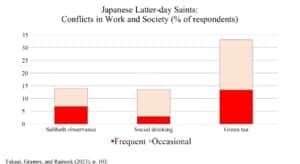
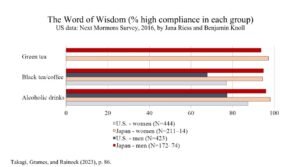
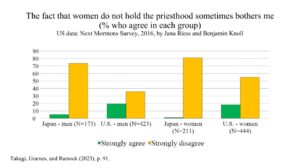
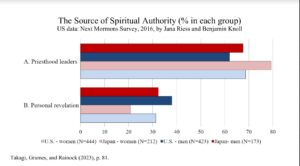
 Ken is the author of several books, including



 For many of us, faith and hard work are often seen as the keys to overcoming challenges. But what does it look like to stay faithful when “more faith” and “more work” do not make things better? What does one say when one cannot express praise? How do we maintain connection to God from within our pain? In


 ABOUT THE BOOK:
 He soon identified the vast, unexplored opportunities to help inmates: providing hope and purpose through education. He also gained the viewpoint of seeing prison life through an inmate’s eye, realizing the true story of life behind bars. During his eight years “down” he saw enrollment in the prison academy jump from 200 to nearly 1,200 students and enacted, firsthand, a model of the change that is possible in a broken system. If only someone would listen.
 Joseph M. Spencer is a philosopher and an associate professor of ancient scripture at Brigham Young University. He is the author of seven books and dozens of articles and book chapters. He has served as the editor of The Journal of Book of Mormon Studies, the associate director of The Latter-day Saint Theology Seminar, and a vice president of The Book of Mormon Studies Association. He edits, with Matthew Bowman, the book series Introductions to Mormon Thought.” He, his wife Karen, and their five children live in Provo, Utah.