TopPodcast.com
Menu
  • Home
  • Top Charts
  • Top Networks
  • Top Apps
  • Top Independents
  • Top Podfluencers
  • Top Picks
    • Top Business Podcasts
    • Top True Crime Podcasts
    • Top Finance Podcasts
    • Top Comedy Podcasts
    • Top Music Podcasts
    • Top Womens Podcasts
    • Top Kids Podcasts
    • Top Sports Podcasts
    • Top News Podcasts
    • Top Tech Podcasts
    • Top Crypto Podcasts
    • Top Entrepreneurial Podcasts
    • Top Fantasy Sports Podcasts
    • Top Political Podcasts
    • Top Science Podcasts
    • Top Self Help Podcasts
    • Top Sports Betting Podcasts
    • Top Stocks Podcasts
  • Podcast News
  • About Us
  • Podcast Advertising
  • Contact
Not in our directory?
Add Show Here
Podcast Equipment
Center

toppodcastlogoOur TOPPODCAST Picks

  • Comedy
  • Crypto
  • Sports
  • News
  • Politics
  • True Crime
  • Business
  • Finance

Follow Us

toppodcastlogoStay Connected

    View Top 200 Chart
    Back to Rankings Page
    Music

    The Barry Sax Show

    Barry Cockcroft is your host on this podcast with interviews featuring guest saxophonists from around the world. In this show, he explores the stories behind these great musicians with telling insights into how they got started and the ongoing development of their careers. . We explore the stories behind these great musicians with telling insights into how they got started and the ongoing development of their careers.

    Advertise

    Copyright: copyright © Barry Cockcroft

    • Apple Podcasts
    • Google Play
    • Spotify

    Latest Episodes:
    Lars Mlekusch – Swiss Saxophonist & Conductor – 12 Aug 22, 2018
    Show notes

    About Lars Mlekusch: Lars Mlekusch is a saxophonist, conductor and educator. He was appointed a professor of saxophone and chamber music at the Music and Arts University of Vienna at the age of 26, and since 2015 he is the saxophone professor at the Zurich University of the Arts. Lars Mlekusch has performed throughout the world as a soloist, with orchestras or in chamber music. For ten years he was a regular guest saxophonist of the Klangforum Wien and has been the saxophone soloist of the Vienna based ensemble PHACE. He has been invited to teach masterclasses at many renowned institutions such as the Paris Conservatoire, Conservatorium of Amsterdam, Chopin University of Music Warsaw, Royal College of Music London, Bejing Central Conservatory and leading universities across the United States. He has been on the faculties of the European Saxophone University Gap and the Arosa Music Academy. He was a jury member at many international competitions such as the International Adolphe Sax Competition in Dinant, the Jean-Marie Londeix Competition in Bangkok. Following his career as a saxophonist, he is now pursuing a career as a conductor. As such he has appeared at Konzerthaus Wien, the Cité de la Musique Strasbourg and the National Concert Hall Taipei. He is the Artistic Director and conductor of the MIT saxophone ensemble in Taiwan. Lars Mlekusch is the founder and Artistic Director of both the Vienna International Saxfest and the Zurich International Saxfest. He is a Selmer Paris Artist. Show Notes: Starting the saxophone because it is golden, different to the black clarinet. Learning with my teacher's teacher's teacher. Working with Marcus Weiss. Boring scales and a lot about music. Becoming curious about composers. Studying as far away as possible. Master's with Fred Hemke at Northwestern University. Recommending students to study abroad. Private study with Claude Delangle and Arno Bornkamp. Giving masterclasses with Tim McCallister and Christian Wirth. Founding the Vienna Saxophonic Orchestra. Performing withsoloist ensemble Phace. Teaching without being systematic. Living with focal dystonia. Canceling a big concert for the first time. Advancing a career in conducting. Studying with Emilio Pomarico. Improvisation is something significant that every musician should try at least. Keeping kids creative. The subtle art of avoiding answering questions. Remaining in the moment. Dissemination of saxophone knowledge through social and other media.


    Richard Ingham – English Composer and Saxophonist – 11 Aug 15, 2018
    Show notes

    About Richard Ingham: Richard Ingham has had an extensive career as a performer, composer and educator. He has given solo saxophone recitals and chamber concerts throughout UK, North America, Asia and Europe. Numerous composers have written works have for him, and he has played by invitation at every World Saxophone Congress since 1985 (in Washington DC, Tokyo, Pesaro, Valencia, Montreal, Minneapolis, Ljubljana, Bangkok, St Andrews, Strasbourg and Zagreb). In 2012 was the Artistic Director of the acclaimed 16th World Saxophone Congress in St Andrews, Scotland. He is a Yamaha artist, conducted the National Saxophone Choir of Great Britain for several years and has composed many original works. He studied at the University of York, specialising in clarinet and contemporary music. Later he studied at Leeds Metropolitan University and the University of Leeds, both in aspects of music technology. A brief but inspirational period was spent at Bloomington University, Indiana, studying saxophone with Eugene Rousseau. Richard has been teaching for 40 years, always alongside his performing and composing career. He teaches saxophone (classical and jazz), chamber music performance, jazz performance, and history of 20th-century music. His jazz courses at the University of St Andrews have been running for 24 years. He was the editor and contributing author of the Cambridge Companion to the Saxophone (Cambridge University Press, 1999), widely regarded as the leading book on the subject. Show Notes: Informal lessons to get started. Cross boundaries and dipping toes into different kinds of music. Subtle marketing from a man of great integrity. Summer courses in Bloomington, Indiana with Eugene Rousseau. The UK is more encouraging than destructive. The influence of contemporary clarinet music. Examination boards influencing the development of the UK saxophone. Kids growing up would listen to pop music and that's where they would hear a saxophone. Playing Boulez's Dialogue de l'Ombre Double Having a composing break for almost 20 years. A career as a series of accidents. Teaching at the University of Aberdeen. The development of the saxophone in China. Having time to prepare before stepping on stage.


    Gerard McChrystal – Irish Saxophone Soloist – 10 Aug 07, 2018
    Show notes

    Gerard McChrystal comes from Derry, Northern Ireland. He studied at the Royal Northern College of Music, Manchester and later at The Guildhall School, London and with Frederick Hemke at Northwestern University in Chicago. Gerard has performed in over 35 countries, recorded numerous albums and has worked with orchestras including Philharmonia, BBC Scottish Symphony Orchestra, BBC Concert Orchestra, National Symphony of Ireland, Stuttgart Staatsorchester and the Orchestra of San Francisco Ballet. Gerard was artistic director of the British Saxophone Congress in London and he has served as an adjudicator at the 5th Adolphe Sax International Saxophone Competition in Dinant, Belgium. Gerard is Professor of Saxophone at Trinity Laban Conservatoire, London. Show Notes: A lot of my career was an accident. I was a really serious clarinet player but I was always number two. I loved to play along with my dad’s record player, especially Baker Street. Working with John Harle at the Guildhall School of Music. Studying with Frederick Hemke at Northwestern University. It was tough growing up in Derry, Northern Ireland. I thought I knew everything and I knew virtually nothing. My life has been a beautiful zig-zag. I wish what I knew then what I know now. To practise you have to get rid of your ego. I learn things under tempo and let adrenaline take me over the line. You must a program a piece in a concert for a reason. I like pieces that are virtually impossible to play, I like the challenge. I have played Ku Ku over 100 times, it is a real party piece. The first performance of a piece is just an introduction. Make sure that you play pieces that you really know. We are running a program with 50% male and 50% female composers. I love getting guests in to work with my students. A love of travelling and touring, food, the larger human experiences. John Harle’s contribution to the saxophone in the UK. I like to be antisocial before walking on stage. The great energy of the Apollo Quartet. We are in trouble when we don’t know we are making mistakes.


    Carrie Koffman – American Saxophone Soloist & Teacher – 09 Jul 02, 2018
    Show notes

    Carrie Koffman is Associate Professor of Saxophone at The Hartt School at the University of Hartford and Lecturer of Saxophone at the Yale School of Music. She has appeared at numerous World Saxophone Congresses, the SaxArt International Saxophone Festivals in Italy, the International Clarinet and Saxophone Festival in China and several North American Saxophone Alliance National Conventions. Carrie is a graduate with high honours from the University of Michigan where she studied with Donald Sinta and also the University of North Texas where she studied with James Riggs and Eric Nestler. Carrie regularly appears as a chamber musician, and clinician and has been a featured soloist with numerous orchestras and bands including the Fairfax Symphony Orchestra and the Hartford Symphony Orchestra. Committed to new music, Carrie has commissioned and premiered around 50 compositions. Her recording projects comprise twelve commercially available CDs, and she has an ongoing recording and performing series entitled "Pink Ink" that is dedicated to promoting the music of living women composers. Show Notes: Getting started playing tuba parts on the contra-alto clarinet. Learning with Donald Sinta at the University of Michigan. The most charismatic person met to this day. Building playing from the ground up. Studying jazz improvisation as a classical saxophonist. Getting jobs early. Interpretation as a function of improvisation. Juggling multiple teaching positions. Changing practice routines as your playing matures. Learning and then teaching Kripalu Yoga. Using Pranayama breathing techniques in playing. Touring internationally with the Transcontinental Saxophone Quartet. Working with living composers. Removing tension from playing for a long and healthy career. 50% technique, 50% repertoire approach to practising. The importance (and possible addiction) of recording. Skydiving to learn about letting go.


    Sebastian Pottmeier – German Baritone Saxophonist of Alliage Quintet – 08 May 21, 2018
    Show notes

    After graduating from Hanover University of Music and Drama, German saxophonist Sebastian Pottmeier continued his studies in Bordeaux, France in the prestigious class of Marie Bernadette Charrier and Jean-Marie Londeix. He has appeared at several world saxophone congresses including performances with the International Saxophone Ensemble under the direction of Jean-Marie Londeix. Since 2003, Sebastian has taught at the University of Music in Cologne, Germany. Sebastian has built a significant career in chamber music. For 15 years he has been a founding member of Alliage Quintett, one of the most creative and successful ensembles in Europe. A consummate musician with significant tours and broadcasts, Sebastian has recorded a dozen chamber music albums and continues to perform throughout the world. Show Notes: I played my first concert without having heard the saxophone played by a professional saxophone player. Music comes first. Don't take yourself so important. The important is not you; it's the music. Students have their time taken with too many activities. You must help students discover what they can do after their studies. Chamber music is an excellent career path. There are not enough jobs for music teachers in Germany. I could never play a note without musical interest. Scales are not the best way to warm up. Playing without quality breathing is nothing. I don't practise anything that I did as a student anymore. Baritone saxophone is my first choice. It is very important for members of a chamber music group to really know each other. We were bored with traditional saxophone quartet repertoire. We try to be serious, even if we are not so serious. Music is individual and personal. If I just had one hour to practise, I would just play low notes. The worst case is music is without phrasing. To find a concert, you need a recording. Working on the combination with an acoustic instrument and electronic.


    Daniel Gauthier – Canadian Founder of Alliage Quintet – 07 May 07, 2018
    Show notes

    Canadian Daniel Gauthier has performed throughout the world as a concerto soloist and as soprano saxophonist with the internationally acclaimed group, Alliage Quintet. He founded this ensemble in 2004, and together they have recorded seven albums including several for SONY Classical. After studying in Montreal and Bordeaux, Daniel Gauthier completed his studies in Canada earning his doctoral degree. He has presented masterclasses in major European music capitals and has also served as a jury member in many international saxophone competitions. Daniel has been an elected member of the International Saxophone Committee, he held the first saxophone professorship in Germany and since 2003 has been teaching at the Cologne Faculty of Music. During Daniel’s recent tour with Alliage in Australia, I was able to catch up with him for an entertaining conversation full of laughs and insight. Show Notes: I came to the saxophone in a completely different way. A music lesson was $3. I met Jean-Marie Londeix at a summer camp. I moved to France for one year. I was selling croissants during the day and in the evening learning Denisov by memory. I decided to go back to Canada and to maybe even quit the music. I got the job as the first saxophone professor in Germany. Three cultures are all part of my way to make music now. I was very focused on new music, contemporary music because Londeix was very forceful about that. We are musicians because we want to go on stage and not play in our living room for ourselves. It was not an option for me to repeat what other peoples have done. It’s more interesting for me to work in a group. Try to find what you are and what you want to do. Jean-Marie Londeix is the one who opened to a new dimension of the repertoire. If you have something to say, be patient enough to wait until that time comes, and it will happen. Touring with Sabine Meyer. I would like very much to get some original repertoire for the quintet.


    Dragan Sremec – Artistic Director of the 18th World Saxophone Congress – 06 Apr 30, 2018
    Show notes

    Dragan Sremec is a professor of saxophone and the vice-dean at the Zagreb Music Academy. He is the founder of the Zagreb Saxophone Quartet, and for many years he was the principal saxophonist with the Zagreb Philharmonic and the Croatian Radio Television Symphony Orchestra. Dragan was the first ever graduate in saxophone from the Zagreb Academy in 1981 and went on to study in Paris with Daniel Deffayet and with Dr Eugene Rousseau at the IU School of Music. He has performed as a soloist and as a member of the Zagreb Saxophone Quartet in the prestigious halls of many European countries, the USA, South America and Asia. He played with all major orchestras in Croatia and Slovenia, with the Orchestra of the French Republican Guard, the US Navy Band and many more. He made many solo recordings for Croatian Radio and Television, and with his quartet, he has recorded 11 albums. He has premiered over fifty works by foremost Croatian and Slovenian composers, and currently, Dragan is artistic director of the 2018 World Saxophone Congress, hosted in Zagreb, Croatia. In this episode: My life is a series of coincidences. Too old for violin and piano, the guitar is already full of candidates. Saxophone, play the saxophone. My professor Nochta was a great teacher and musician. I got a Fulbright grant to study with Eugene Rousseau. Deffayet was very polite, very gentle with me. Be open to knowledge. The bloody war started. Almost 30 years with the Zagreb Saxophone Quartet. When you practise a lot, you don’t need a lot of warm-ups. Just practise. If you don’t have a goal, you’re just stalling. The World Saxophone Congress. Avoiding a secluded kind of saxophone sect that nobody knows.


    Philippe Geiss – French Crossover Saxophonist – 05 Apr 16, 2018
    Show notes

    A musician of international repute, French saxophonist and composer Philippe Geiss has given concerts and masterclasses all over the world. Excelling in diverse disciplines, he has mastered a repertoire that extends from classical to improvised music. He is in great demand as a composer, with a catalogue ranging from solo pieces to symphonic repertoire. He is published by Billaudot, Robert Martin and Leduc. Philippe is Professor at the Strasbourg Conservatory and the Strasbourg Superior Music Academy / Haute École des Arts du Rhin, as well as a guest professor at the Senzoku Gakuen College of Tokyo. He is a member of the scientific committee of LabEx-GREAM at Strasbourg University. Philippe Geiss is a valued member of the International Saxophone Committee, in which role he masterminded the artistic direction of SaxOpen – the 17th Congress and World Festival of the Saxophone – in Strasbourg in 2015. In this wide-ranging interview, listen to Philippe describe how he wanted to play the trombone and his mother bought him a saxophone In France, students learn the saxophone from age 6. Kids should have fun practising and learn something at the same time. We need to find some way to have people motivated to keep practising. The very boring mechanical exercises. My teacher's 12 copy-paste students. Ivan Roth, had fun playing jazz. Jerry Bergonzi called me crazy. Last teacher was Jean-Marie Londeix. You learn to master your body, your mind and your stress. Weeks really working hard at a restaurant, and after that, I decided to stay with the saxophone. You have to decide what you will practise because you do not have enough time. Taking care of my body. Some people play better when they read, some other people play better when they memorise. Tips on coming back from a jazz embouchure to a classical embouchure. Five years with Zulu musicians from South Africa. Learning and studying traditional music from different countries. Travelling makes you understand that we are really on a small planet. You have to learn to listen, to sample, and to respect different origins and traditions. For a long period time, I didn't think about my career. Doing around 250 concerts each year. The first thing about improvisation, especially teaching improvisation, is don't say improvisation. Things worked well because I learned to trust my colleagues. Open your mind to different cultures and don't only practise your saxophone.


    Lev Pupis – Passionate Slovenian Saxophonist – 04 Apr 08, 2018
    Show notes

    Lev Pupis is a Slovenian saxophonist, teacher at the Conservatory in Ljubljana and is a senior lecturer at the University of Music and Performing Arts in Graz, Austria. After a brilliant graduation in 1998 at the University of Music in Vienna, he studied saxophone in France with Jean-Yves Fourmeau and Vincent David. Lev is a multifaceted and versatile artist. He plays both as a soloist and as co-founder of the 4saxess quartet. He is the artistic director of Emona Music Festival, the international woodwind competition and runs the internationally recognised AS Festival each year in the scenic town of Bled, Slovenia. He has performed as soloist with orchestras in Graz, Ljubljana, Maribor, Belgrade, and Vienna and since 2015 he has been an elected member of the International Saxophone Committee. In this episode, you will hear: why starting saxophone was a coincidence - why nobody liked to hear Lev’s performances with piano - Not a typical education for a classical saxophonist - Practising like hell in early years. - Studying abroad is an essential step. Curiosity led to Gap, the European saxophone summer university. - In Gap, I learned was that I’m a nobody. We have to leave the nest to really grow up. - Respect is my secret weapon. - Is the saxophone a tool or a toy? - Our country is very, very, very small, but the sax community is big. - Thoughts on memorisation. - The romantic style is my most natural language of expression. - Opportunity and intuition, they are my kind of words. - Be brave. - If we share music, not just show music, then we can really go far. - An obligation to leave a trace on the saxophone world. - The Slovenian saxophone school is recognised throughout the world. - The importance of collaboration. - If we don’t understand the mistake, that is the mistake. - Never think that you are the best. - The saxophone is really the instrument of the future, and its time is still to come.


    Claude Delangle – French Saxophone Master – 03 Apr 01, 2018
    Show notes

    Soloist, researcher, and pedagogue, Claude Delangle is one of the greatest contemporary saxophonists and he stands out as the master of the French saxophone. Considered a profound interpreter, he also has enriched the saxophone repertoire by collaborating with the most renowned composers, including Berio, Boulez, Takemitsu, and Piazzolla as well as supporting many younger composers. Since 1986, he has been saxophonist with Ensemble intercontemporain, and has appeared as soloist with prestigious orchestras worldwide including London BBC, Radio France, Radio of Finland, Berlin Philharmonic and the Australian Chamber Orchestra amongst many others. Passionate for his instrument, he has worked closely with Musical Acoustic Laboratories of the University of Paris 7. The results of his research on the specific acoustics of the saxophone have helped him further his collaboration with living composers. He has recorded many albums for BIS, Deutsche Grammophon, Harmonia Mundi, Erato and Verany including popular repertoire through to the most avant-garde works. After obtaining several 1st prizes at the Paris Conservatoire, Claude Delangle was appointed professor in 1988, where he has created the most prestigious saxophone class in the world. Learn more about Claude Delangle: He was happy because at 9 years, he was too old to play the violin. On hearing the saxophone for the first time - I have to play that instrument. When we grow up with something, it feels natural. My teacher Daniel Deffayet did not play during lessons. Serge Bichon’s teaching was very tough. I had been told that I would not learn anything at the Paris Conservatoire. Students today are exposed to too many ideas too early. Sometimes I try to sing some tunes I listen to in an elevator. Began teaching at the Paris Conservatoire at age 31. The main job of a teacher is just listening, very, very carefully. 10 years to begin something, 20 years to develop it and 30 years to realise that it could be done differently. We shouldn’t be proud but we should be confident. What I like most about travel is meeting new students. Try everything with no expectations. Students play music that is too difficult too early. When we love something, we learn very easily. Playing in a duo for 40 years. Learning the most by making recordings. Music is the art of time. We now have the time to experiment with new things. Working with composers has been the key point of my career. I use improvisation in teaching. Love of technology. The biggest mistake one can make is to believe there is only one right way. Practising as little a possible on the day of a performance. When you know something from memory, you just know it. The Solitary Saxophone recording. Learning music is practising and playing chamber music. Working with a dancer. The human part of my life has been the most important.


    Previous 1 2 3 4 Next

    Related Podcasts

    Twenty Thousand Hertz

    1

    Twenty Thousand Hertz Arts
    NPR Music

    2

    NPR Music Music
    Here’s The Thing with Alec Baldwin

    3

    Here’s The Thing with Alec Baldwin Arts
    Drink Champs

    4

    Drink Champs Music
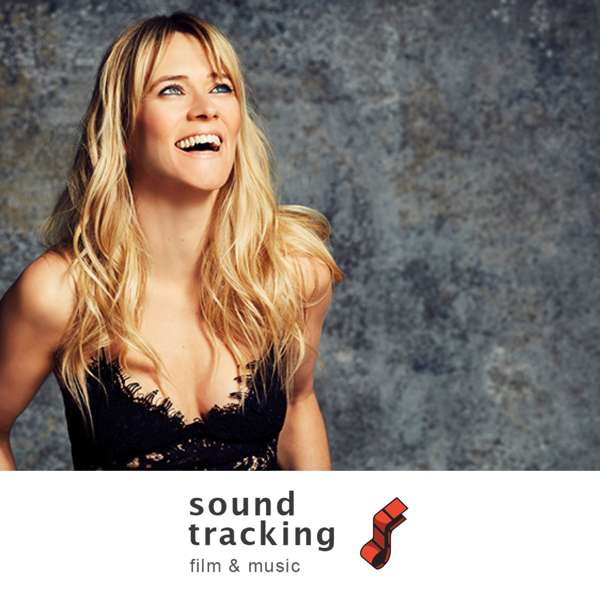
    Soundtracking with Edith Bowman

    5

    Soundtracking with Edith Bowman Music
    Red FM Bauaa

    6

    Red FM Bauaa Music
    footer-logo

    Contact Us

    Toll Free: 844-670-7747

    Links

    • Home
    • Top Charts
    • Networks
    • Apps
    • Independents Podcasts
    • Podcast Advertising
    • Podcast News
    • Contact Us
    • About Us
    • Analytics & Insights

    Stay Connected

      Privacy, Terms of Use & Our Code of Ethics Protecting Content Creators Copyrights