TopPodcast.com
Menu
  • Home
  • Top Charts
  • Top Networks
  • Top Apps
  • Top Independents
  • Top Podfluencers
  • Top Picks
    • Top Business Podcasts
    • Top True Crime Podcasts
    • Top Finance Podcasts
    • Top Comedy Podcasts
    • Top Music Podcasts
    • Top Womens Podcasts
    • Top Kids Podcasts
    • Top Sports Podcasts
    • Top News Podcasts
    • Top Tech Podcasts
    • Top Crypto Podcasts
    • Top Entrepreneurial Podcasts
    • Top Fantasy Sports Podcasts
    • Top Political Podcasts
    • Top Science Podcasts
    • Top Self Help Podcasts
    • Top Sports Betting Podcasts
    • Top Stocks Podcasts
  • Podcast News
  • About Us
  • Podcast Advertising
  • Contact
Not in our directory?
Add Show Here
Podcast Equipment
Center

toppodcastlogoOur TOPPODCAST Picks

  • Comedy
  • Crypto
  • Sports
  • News
  • Politics
  • True Crime
  • Business
  • Finance

Follow Us

toppodcastlogoStay Connected

    View Top 200 Chart
    Back to Rankings Page
    Natural Sciences

    The Amp Hour

    The Amp Hour is a weekly conversation about electronics and the people who design them.

    Advertise

    Copyright: Copyright © The Amp Hour Electronics Podcast 2020

    • Apple Podcasts
    • Google Play
    • Spotify

    Latest Episodes:
    Can't We All Just Get Arduino? - Tardiloquent Trademark Tirade Mar 26, 2015
    Show notes
    • Chris is traveling and thinking about his portalab once again. This may require a set of modular test equipment built into the case. https://www.youtube.com/watch?v=gIEeyKCg_2c
    • Perhaps a "MIDI for control surfaces" for portable test equipment would be a good solution going forward?
    • Dave's intern, also named Dave, has been working out well. He has been using SolidWorks to design a case for a project. 3d design skills continue to be valuable in the marketplace.
    • New CAD makers have been entering the market. Extremely well funded OnShape has a browser based CAD tool (similar to Upverter) that has been in development for 3 years. Perhaps this is the future?
    • Chris has been learning Autodesk Fusion 360, also free to use for new folks
    • Giving away student licenses seems like a no brainer. Dave's intern learned Altium and Solidworks because it was free to students. Chris mentioned that small companies may struggle even giving away their software.
    • Chris wrote about using Github and KiCad together. This continues to be a good tool combination.s
    • The Arduino group has been embroiled in trademark legal issues. Read about it from Massimo here or from the court documents here.
    • This has interesting implications in the (open) hardware industry as people/companies will likely:
      1. Get more paranoid about up front agreements.
      2. Innovate and collaborate less openly because of potential downsides.
    • Mooooore consolidation in the electronics industry
      • Microsemi is acquiring Vitesse
      • Cypress is acquiring Spansion
    • You can dream up new circuits...using psychedelics? Chris has used a floatation tank to think about control system problems.
    Thanks to BusinessSarah for the Venn diagram picture

    An Interview With Chuck Peddle - Charismatic Chipmaking Coryphaeus Mar 20, 2015
    Show notes

    Welcome Chuck Peddle, inventor of the 6502 and the father of the personal computer revolution!

    • A lot of Chuck's timeline can be seen on the Commodore history site and on his wiki page
    • The 6502 was used in seminal personal computers like the PET, the Atari 2600, the original Nintendo, the C64 and the Apple II.
    • Chuck started thinking about distributed intelligence (vs centralized) with cash registers. In a similar manner, Exxon wanted centralized gas station payment terminals.
    • The early intelligent terminal systems used 8K shift registers from National Semiconductors.
    • Motorola started making high end controller chips for the Viatron CRT screens.
    • Intel was making the 4004 / 8008 for calculator chips.
    • Bennett was at Motorola making the 6800 and called Chuck (at GE) to come work with him on it.
    • They added the PIA - a universal I/O device (with Bill Mensch)
    • After the 6800 was threatened by a low cost device, they let Chuck go and he moved over to MOS technology (spelled out letter by letter) to start working on the 6502. The 6501 was a game - it was a version like the 6800 to help test out the market.
    • The VIA replaced PIA and the packaging went from ceramic to plastic to help save on cost. The price was $25 vs $300 (for the 6800).
    • They started selling them one at a time at a show (for $25). Steve Jobs came and bought one to start working on their first computer. Jobs/Woz had a contract with Atari to make a game. Chuck credits Breakout as the first non-violent video game.
    • The KIM-1 can be considered the first single board computer.
    • When the Apple-1 didn't work, they asked Chuck to bring the development system and come help troubleshoot their system.
    • Chuck bet Bill Gates in Albuquerque who made basic for 6502.
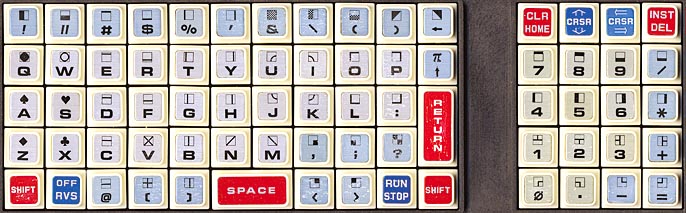
    • Started development on the Commodore PET, which was named to sound "friendly". It also influenced the ascii standard. After the first 127 alpha numeric characters, there are a bunch of the PET drawing characters.
    • The PET had support for an IEEE-488 bus (HPIB/GPIB)
    • That year CES was in Chicago with a -50 windchill. It was so cold that Vegas came in and lobbied to move to their city (and it never came back to Chicago).
    • Adam Osborne book on how to get a CRT to work (also famous for "The Osborne Effect").
    • In 1975 Commodore bought MOS technology, which was originally started by Allen Bradley.
    • Commodore gave up on calculator biz when TI sued for $1M and then the Japanese companies introduced low cost LCD calculators.
    • In the Computer Boutique at a Dallas show, they gave demos in a basement. They also took pre-orders for the PET for $550 a piece and there was a line out the door.
    • Later that year, Radio Shack came out with the TRS-80. It failed because it was too low on memory and could only run TinyBasic. It used a Z80 processor instead of at 6502.
    • Tramiel offered to buy Apple but Markel had funded Apple so they turned it down.
    • Woz said users wanted to program assembly and he wrote a compiler called SWEET16, but that flopped. Eventually they licensed and put BASIC on the Apple machines. They paid a lot more than Commodore and Radio Shack paid double that when they finally extended their memory.
    • Clive Sinclair and his computing company debuted the ZX80 for $99.
    • Tramiel asked Chuck to design a machine to kill the Apple when they got a call from the Grass Valley Group, part of Atari.
    • When Chuck wanted to build an MSDOS machine with power, Tramiel fired him for it. He started Sirius Systems Technology and with his team won "Computer of the year" four times.
    • Sylar, Stark and Patterson are all credited by Chuck as being crucial to getting computers off the ground. They worked with floppy disks, CRT screens and hard disks..
    • CP/M was the dominant operating system before DOS. For a while, Sirius shipped machines with both CP/M and MSDOS.
    • Chuck has a 1962 patent on hard drive zoning that is still referenced.
    • When Sirius included a 5 MB hard drive, Gates said he couldn't do MS DOS on the new machine. Sirius did it and added it as a contribution to DOS (Dave thought it was v2).
    • IBM had to redesign and came out with the XT.
    • These days Chuck has been working on new tech that uses not fully utilized DRAM or Flash die. They have a patent to pair up bad chips and make a good chip. Then they started buying bad silicon and repairing dram from Micron.
    • The real invention is taking bad flash and using it. You can view the patent here. They are hoping this will provide super quick memory and low cost computing in the near future, especially on new platforms like Windows 10.
    • Dave pointed out that Win10 will be free to upgrade, even if it's a pirated copy.
    • Chuck's company has a factory in Sri Lanka, where they require high school education (at the country gov't level) or else the parents get punished. This is similar to Singapore's system.
    • Chcuk thinks that China will continue to up their innovativeness. He points to Lenovo, whose stated goal was to be innovators.
    • 3D printers and robots interest Chuck as new Macro trends.
    • The Computer History museum has a program where they record videos of industry experts called "Oral Histories" of Silicon Valley, including one of Chuck!
    • During a brief (and ill advised) stint at Apple, Chuck worked with Jobs on the Lisa.
    • The conversation about education led Chuck to talk about Apprenticeship and the need for skilled workers in the future.
    Wowsa, that was another marathon show! How could we consider stopping though?

    Many thanks to former guest Bil Herd for introducing us to Chuck!


    Compare and Contrast Tech Entitlement - Worldly Working Wonks Mar 12, 2015
    Show notes
    • Working distance can have a large effect on real estate prices and stress from commute times. Self driving cars may change the nature of this.
    • Many of the places Chris has worked have been in the suburbs because of the tax benefits for larger manufacturing facilities.
    • Dave has been experiencing shipping delays because of the weather in the US, especially going through JFK.
    • On "Still Untitled: The Adam Savage Project" (part of Tested) they talked about the demise of Radio Shack. https://www.youtube.com/watch?v=WcrD0uVxpTw
    • Logistics are amazing, especially things like Kiva systems, which Amazon bought for $750M. https://www.youtube.com/watch?v=6KRjuuEVEZs
    • The Hackaday Prize for 2015 was announced. Dave will be a judge again and the theme this year is "improving the world".
    • Element14 has done something similar in the past with an "Eco Prize" though Dave thinks there were probably fewer entries.
    • Chris found a document that details the 50 breakthroughs necessary to move humanity forward. Many of these are not electronics related but are very important humanitarian tools that will improve the lives of millions.
    • One example is "eradicating mosquitos" because they spread malaria, which reminded Chris of the MAKE magazine cover that showed a mosquito shooter (from Nathan Myhrvold's company).
    • Recently Bill Gates drank water drawn directly off of a waste treatment plant, which was smaller and more portable than in the past. https://www.youtube.com/watch?v=bVzppWSIFU0
    • Dave hears a lot about Sydney water because his wife is a water scientist. In the past people have refused the water because it was directly processed from waste, though it was all a psychological problem.
    • We had forgotten about the Google contest for a super compact power supply, the little box challenge, the prize for which is $1M. It is due in January of 2016.
    • On the other end of the spectrum, Apple had an event for their new products showing off the ridiculous prices people pay for technology (like a $10K watch).
    • Apple will be using the USB Type C connector on new Mac Books, which should drive the standard forward. After the show was recorded, Google announced they will be using them as well on Google Chromebooks and Android phones.
    • While this seems like a unifying standard, Dave brings up the xkcd about n+1 standards.
    • We don't particularly enjoy talking about the cultural aspect of Apple, but it's impossible to ignore their role in the electronics supply chain (for things like driving standards). They also use their cash to throw their weight around by buying up entire factories worth of parts.
    • Speaking of huge money in electronics, Freescale and NXP will be merging (really NXP buying Freescale) for a combined company worth $40B. Former guest and former silicon insider Vincent Himpe had some thoughts about the merger on the forum.
    • Jen asked on twitter where we see the industry in 5/10/20 years. With the increased consolidation, Chris thinks there will be less competition and by extension, less innovation. Chris also predicts that Intel will eventually split off its foundry business to compete with the other giants like TSMC.
    • The fabless + foundry model changes a lot of things, namely that smaller upstarts and fabless companies can come in and disrupt big old companies (like Freescale) without as much capital. Chris thought Freescale was done for when they switched to ARM because they didn't have anything to compete on.
    • Chris got a t-shirt that is an updated version of Never Trust The Autorouter:
    https://twitter.com/Chris_Gammell/status/575086575194890240
    • Dave is looking at motor drives. Chris things the "big stuff" is the area with the most interesting problems right now.
    • Don't forget we have a Patreon page...you can donate on a per-show basis; if we don't produce, you don't pay.
    • Chris will be at the ECEDHA (ECE department heads assoc) next week, talking to all the profs that are in charge of curriculum. Should be fun!
    Thanks to Nikokahkonen for the wonky (modified) picture of the birds

    An Interview with Colin O'Flynn - Aspirated Adamantine Attacks Mar 05, 2015
    Show notes

    Welcome, Colin O’Flynn creator of the ChipWhisperer!

    • The ChipWhisperer won 2nd place in the Hackaday Prize.
    • There is a new version called the ChipWhisperer lite, currently on Kickstarter. It's also capable of breaking security, it can do a side channel attack on AES256. This is called sidechannel analysis using power analysis.
    • Smart cards are credit cards with chip and pin security.
    • Colin got started designing gimbaled cameras. He also worked at Atmel low power wireless division.
    • Currently, Colin is a PhD candidate at Dalhousie University in the EE program (specializing on cyber security). He received some funding from the Canadian research council.
    • The AES algorithm encryption works 8 bits at a time.
    • The ChipWhisperer is capable of cracking an encrypted bootloader. It could also send messages to an IoT device that only accept encrypted packets.
    • This was initially used for stealing satellite tv and other content plays.
    • Chris thinks it would be easier to detect stealing by Statistical Process Control.
    • Colin did some manufacturing in China. Because they were manufactured by hand, making 5-10 was a good deal.
    • For high frequency stuff, users can use a downconverter to measure GHz clocks (only need MHz of bandwidth).
    • The full ChipWhisperer has a PLL on board.
    • Dave suggests using spread spectrum to further confuse someone trying to hack a device.
    • The target market for the CW is hobbyists up to people that are creating embedded devices.
    • The HW has a Spartan6 (for ADC handling) and a SAM3 (for USB handling).
    • Colin does training at Black Hat.
    If you're designing embedded devices, you should definitely have the ChipWhisperer Lite in your toolbox, support the Kickstarter today!

    Old Books, New Tricks - Iterant Inscription Irrationality Feb 27, 2015
    Show notes
    • Chris was at Analog Aficionados last Sunday and had a great time meeting his idols. One was author Sergio Franco, another was former guest Ron Quan!
    • Dave will be getting an early copy of The Art of Electronics (vol 3)! Chris wants an ebook so that it's easily searchable, even if it does have a great index.
    • Chris hates the state of college textbooks, his wife has been getting ripped off because of shady practices.
    • There are some amazing interviews on the Stanford Silicon Genesis project, where they interview veterans of the industry.
    • Dave has torn down a 250k hard drive before. Chris talked to someone who rebuilt one of the original hard drives, the IBM RAMAC (we think, could be a different one).
    • Hard drives aren't going anywhere. Both guests Vincent Himpe and Bob Davidson have worked on them before.
    • Dave has noticed an uptick in entrepreneur behavior in Australia, including pitch competitions.
    • The Spark Electron was just announced on Kickstarter. They are running their own service provider in order to keep costs low and remove contracts.
    • This new board is akin to what Larry Sears did with Hexagram many years ago.
    • The color Pebble was also announced on Kickstarter and broke many records. Former guest Andrew Witte is still there and designing in the new color screens that kratz9 found on reddit for us.
    • Dave tore down his Keithley 2400 which he got in an auction score. We also discussed using current limited supplies to protect a 100K board. https://www.youtube.com/watch?v=DJ2nzvX2gBc
    • The Cosmac Elf is an interesting looking kit which uses the ancient CDP1802. We question the value of learning old stuff and to what level. It seems coding assembly would be enough.
    • Dave's assistant is starting soon!
    • Robert from Fedevel Academy did a tour of the new Altium Circuit Studio.
    Many thanks to Tom 7 for the picture of the books

    An Interview with Joe and Mark Garrison - Subtly Spelling SayLeeAy Feb 19, 2015
    Show notes

    Welcome Mark and Joe Garrison from Saleae!

    • The idea for Saleae started back in 2005. Prior to it becoming a day job, Joe worked at LeapFrog (not leapmotion).
    • Saleae now has 9 employees, 3 of which are sw devs.
    • The new pro logic family was started using crowdfunding.
    • Chris didn't like this idea when he heard about it because he thought Saleae was a much bigger company.
    • There is a great picture of all the members of the team on the about page.
    • Dave mentioned the Osborn (computer) effect. The 1st rule of sales: sell what you have
    • Cashflow is super important in business, especially hardware. Saleae got "Net30" from a few distributors but it didn't always cover the entire part order.
    • When Apple started, they were able to finagle ridiculous payment terms (Net90 payments for parts, asking for Net10 for payment from customers)
    • One thing that is lacking for hw companies is good forecasting software. They ended up writing "Saleae ERP" to deal with it.
    • Saleae does use some CMs, even though there is a desire to bring production in house. It seems like a good idea because you pay per placement and the Logic Pro 8 has 500 parts (!).
    • When attempting the in house manufacturing with a new pick and place, they didn't realize the problems they would have with certain parts. Specifically the 0201 parts. There are also BGA parts on board that didn't cause too many issues.
    • Their PnP machine was from Mancorp (who work with addafruit, sparkfun, pololu). Saleae was asking for tighter specs that the equipment wasn't quite able to hit, causing havoc for production schedules.
    • For manufacturing in house, Joe recommends:
      • Find other CMs building similar products.
      • Build a board on the machine before buying.
      • Lease instead of buy if you decide to jump in.
    • The main problem with the 0201 parts was tombstoning (when a part goes up on one end). This can be cause by things like:
      • Pad size variations.
      • Uneven paste.
      • Unoptimized heat profiles in the reflow oven.
      • Slight misplacement of parts.
    • Saleae had a vapor phase instead of a traditional reflow oven.
    • Distributors like Avnet gave them bonded inventory, allowing payment upon receipt (freeing up cashflow).
    • One of the key points of differentiation is the software: it is built for user friendliness and optimizes for an abundance of resources. The logic triggering is in software.
    • A few years ago Saleae decided to go cross platform and programming switched from C# to C++.
    • A large problem with the original Logic and Logic16 was counterfeiting cloning in China. It was due to using the common FX2 chipset but having a great software built on top of it. They prefer Saleae over an open source alternative like SigRok.
    • Instead of taking the FTDI (and other logic analyzer on the market) route of bricking the counterfeit device, Saleae is hands off with counterfeiters, requesting that customers buy the real thing.
    • The price of a clone design was about 1/10th the price of a Saleae product.
    • The key crack was in the bitstream for the FPGA. 2 fans of the company reverse engineered the FPGA over a year's time and replaced the bitstream in the software loader. There was a post detailing how they did it on Chinese forums.
    • Saleae attempted to push a change to the firmware to see how fast it got fixed in China. It took 48 hours.
    • The new Logic and Logic Pro family has many more devices to prevent easy clones, including inside the FPGA.
    • The FPGA is rather full, actually: The Logic Pro 8 has 2 slices left on the FPGA (a Spartan6 LX9)
    • At the beginning of development they were attempting to use an IIR filter on the analog signals. In the end, they used a CIC filter.
    • The sampling is done with a Hittite chip with 8 ADCs internally running at 50msps. Hittite was recently bought by ADI.
    • Mark learned FPGAs in 2009 and programs the devices in VHDL (because he was learning that at the time).
    • The key to learning the difference between VHDL/verilog is understanding the delta cycle.
    • The FPGA clocks mostly at 200MHz and has some higher SERDES clocking onboard for the ADCs.
    • On the higher end models they use an FX3 to talk USB3.0. It has a 32bit bus running at 100MHz.
    • Most pins on the Spartan6 can be used with a SERDES module internally (with differential signaling). On higher end Spartan6 parts there are transceivers that can do high speed stuff (6 Gsps+).
    Many thanks to Mark and Joe for being on the show. It was a great lesson in manufacturing, test equipment, software development and building products!

    Image courtesy of Saleae.com


    Questioning Everyday Prototyping - Verrucose Vehicle Vitilitigation Feb 12, 2015
    Show notes
    • Dave has a dead car. He will likely be getting the Mitsubishi Miev (which he has gotten a tour in before). It has a range of 150K. https://www.youtube.com/watch?v=M8P4w9hnKls
    • Dave says he would rather get a Holden/Chevy volt because it has a built in engine. Chris thought that Bob Simpson talked about a 2 stroke motor that could charge the battery bank on his car.
    • mPower is a startup that wants to use plugged in cars to help balance the grid.
    • Batteries are still the thing holding back electric cars and startups don't seem to be making any breakthroughs.
    • Thunderf00t, a controversial YouTuber and chemist PhD, recently followed through on his assertion that sodium doesn't chemically explode...it turns out that it is a coloumbic charge release. https://www.youtube.com/watch?v=LmlAYnFF_s8
    • On the EEVblog forum, they were talking about how to measure the charge from something like this.
    • The Voltera just released on Kickstarter. It's a great looking project, we were questioning how much it would get used in prototyping (because of turnaround times).
    • Bolt and yCombinator just announced a partnership. They will open a second location in San Francisco.
    • Macrofab is a new service out of Houston TX that automates assembly using an online interface. It looks low cost and friendly. It seems similar in scope to Circuithub (Andrew Seddon was on the show in the past) but with more automation on the assembly side, not just the sourcing.
    • Dave did a breadboard build using the VCP200. https://www.youtube.com/watch?v=kFth9K_IvwA
    • The VCP200 is a MaskROM chip using the 68HC04. Chris found Dave the datasheet.
    • It reminded Dave of the PIC16C84 which was UV erasable.
    • Dave wrote a video overlay program into 1K of memory.
    • The Raspberry Pi 2 has an issue with a xenon flash.
    • Shahriar did a 3 part video with LeCroy involving their 100 GHz scope. https://www.youtube.com/watch?v=U3w_EWgGQuk
    • We found out the RISC-V (Rocket Cores) processor has been taped out in 28 and 45 nm silicon.
    • We like the schematic tattoos!
    • The analog aficionados dinner is coming up on February 22nd.
    Thanks to Don Graham for the picture of the jalopy

    An Interview with Matt Richardson - Raspberry Risorgimento Regent Feb 05, 2015
    Show notes

    Welcome Matt Richardson, the first US member of the Raspberry Pi Foundation!

    • The foundation has about 15 people in various roles (hardware, admin, education, outreach).
    • There are now approximately 4.5 million Raspberry Pi's in the world! Dave was curious how many were orphaned but Matt says "they don't expire".
    • The official add-on boards are called HATs. Adafruit coined the term "Plates" for a similar concept.
    • The Model B+ moved from a smaller connector to a 40 pin connector, with much more pin fanout from the chip.
    • Each HAT has an EEPROM onboard to tell the Broadcom chip how to configure the pins.
    • Matt has published a wide range of projects on his portfolio site. Some of the best known are the awesome button and the enough already projects.
    • He has also attended the sketching in hardware conference, which seems to fit Matt's skillset well.
    • While working at MAKE and before joining Raspberry Pi, Matt attended the NYU ITP program.
    • It was at ITP that he developed the descriptive camera. That uses a BeagleBone, a webcam and an interface to Mechnical Turk. In high pressure, long duration showcases of the project, Matt redirected the images to his partner, who supplied funnier than normal descriptions of the things being captured.
    • Matt's focus has been on implementing other technology blocks, which gave him a good view on how people interact with technology, specifically the UI.
    • Dave mentioned that engineers used to pay a fortune for GUI library ($10K+) for something like an 8086 PC104 board, because it was worth it to have something that works.
    • Matt did a bike lamp project that tells you how fast you're going using a Raspberry Pi and a picoprojector.
    • As an author, Matt has written (and co-written) 3 books
      • Getting Started With Raspberry Pi
      • Getting Started With The BeagleBone
      • Getting Started With The Intel Galileo
    • Just a few days ago, the Raspberry Pi 2 was announced!
    • It has a quadcore, ARMv7, 900 mhz processor and averages about 6x faster processing if multithreading is possible. It is moving from the Broadcom 2835 to the 2836.
    • Since it uses the ARMv7 instruction set, it can run things like Ubuntu and Windows 10. Previously the most popular distro was a custom one called Raspian.
    • It also enables interesting new applications like using Robot OS (ROS). That can only run on an ARMv7.
    • The new board uses the same B+ header but has some small physical differences.
    • The hardware is not open source, but the foundation is working on opening up the software used in the graphical side of things.
    • The main focus was on low cost (hitting a $35 price point) and the tradeoff is using high volume chips that are not open to the public. This is similar to Bunnie's take on the MediaTek chipsets (and how he got around it).
    • Matt will be working on getting the RPi into the US education system, which is very fragmented. There is a good footprint in the UK. They run workshops for teachers called PiCademy.
    • The board can work as a great gateway for people into electronics. Students enjoy running Minecraft on it using a port called Piper.
    • How low can you go? Rip off some headers and slightly change the functionality and the Model A costs $20.
    • There is also a more commercially viable piece called the compute module. It is on a SO-DIMM card and is meant for low volume applications as engineers transition over from using the main board to more custom hardware. There was a Kickstarter called Otto that did just that.
    • Chris talked about the viability of using a common computing platform for something like Contextual Electronics, where all of the software could be preloaded onto a Raspberry Pi, removing variation.
    • The RPi can run KiCad smoothly. Matt talked about wanting to design a HAT on a Raspberry Pi, have it cut out by an Othermill or similar (controlled by an RPi) and then have the parts placed by a device that uses the RPi.
    • There are some classes that are working on bare metal programming, using assembly to program the RPi. This is happening at the U of Cambridge (and online!) and Chris thought he heard of something similar at Stanford.
    • After some confusion from Chris, Dave explained the register set isn't needed for assembly because there are standard ARMv7 instruction sets.
    • Matt and others from the foundation will be at SXSW this year.
    • If you are interested in talking about education and partnerships, get in touch with Matt on twitter as @MattRichardson or reach him via email at (well, listen to the end of the show to find out)

    We'll Believe It When We See It - Hiring Hypercatalectic Helpelp Jan 29, 2015
    Show notes
    • Chris is currently at DesignCon showing off Parts.io.
    • Contextual Electronics is also underway and the first project is doing a simple layout to get everyone acclimated with the tools.
    • Dave just hired his first lab assistant from a great pool of candidates! This should hopefully free Dave up to do more hardware builds.
    • Someone tweeted to us about printed 7400 series electronics.
    • The 3rd Edition of The Art of Electronics is now available for pre-order!
    • In the US, there are restrictions on when credit cards can be charged for a crowdfund campaign (30 days). This doesn't seem to be the case in Australia.
    • There was a conference in mid January about the open source RISC V processor. They just added the videos yesterday!
    • Dave predicts there will never be a successful open source processor.
    • Chris was interested in the Clay Christensen book "The Innovator's Solution", a followup to "The Innovator's Dilemma".
    • Dave agrees with his favorite pundit that Yahoo! should spend all the money they raised from the Alibaba IPO funding other companies and good ideas. Chris thought this sounded like the often discussed "spray and pray" method of investing in companies.
    • Dave did a rant about free energy devices https://www.youtube.com/watch?v=hoqF3gjLIyI
    • The new DARPA robot for their Robotics Challenge now has a battery pack and has been redesigned for everything above the knee.
    • Dave really enjoys this history of atomic power. He likes the book, "The making of the atomic bomb".
    • Once the new assistant starts, Dave may attempt a portalab like Chris built last year for having at home. This would be like a "bug-out bag", but for electronics

    Glass and Gongkai GSM - Unzymotic Ursidae Upbuilding Jan 22, 2015
    Show notes

    Glass is dead. Long live Glass? Chris predicts it will come back for industrial uses. Before it’s demise, the Glass team announced they would be dumping the OMAP and instead going with an Intel. Dave thinks that this home robot kickstarter is a waste of resources; in the 80s everyone though you’d have a home robot. Chris thinks Glass and home robots are technologies looking for a solution. Narrative is an example of a more subtle technology that has similar effect. Dave wanted to have a lifelogging audio app/device. He also thinks that Smartwatches will become terminal devices, like a 70s mainframe. Contextual Electronics just relaunched. The first project will be a “cart” for making a surplus smartphone into a telepresence robot. This idea blossomed out of Chris and Dave talking about a “Kickstarter” campaign to have a “Telepresence bear”. Screw Kickstarter, we want to sign up our next project to the new crowdfunding campaign: WorkHarder Speaking of people who do tons of things, Bunnie and Xobs did some amazing work with the Gongkai phone plans from China. They did work trying to find ways to open up the MediaTek MT6260. Seeed Studio sells the LinkIt-ONE, which has a range of MediaTek chips on board, including GSM and Wifi. Dave has developed a GSM module in the past for the Altium Nano board. The SpaceX rocket landing wasn’t a failure, it was a spectacular looking bit of progress. Dave was amazed about the 2004 beagle 2 recently being found. Satellites are powered by RTGs, these can provide 62W. Chris likes thinking of satellites to exemplify how all “grounds” are just relative references. Dave recommends the secret life of physicists by Lawrence Krauss Mantras can help you learn and internalize electronics. The Cirqoid is a new PCB milling machine that has other functions. We don’t care about the other stuff as much. There are lots of PCB tools in 2015 so far, the Voltera was the printer that won the Hardware Battlefield. The KeySweeper is kind of terrifying: It is build into an AC charger and can sniff packets of a bluetooth keyboard and transmit them home over GSM. Radioshack is just about dead. Reading about how they treat their employees, it doesn’t seem that big of deal. Forrest Mims (former guest of the show) wrote about the Altair 8800 recently on the Make blog. Chris will be at DesignCon next week showing off Parts.io. Stop by to take a picture of Chris looking miserable.


    Previous 1 50 51 52 53 54 76 Next

    Related Podcasts

    Science Friday

    1

    Science Friday Astronomy
    Radiolab

    2

    Radiolab Documentary
    BrainStuff

    3

    BrainStuff Natural Sciences
    StarTalk with Neil deGrasse Tyson

    4

    StarTalk with Neil deGrasse Tyson Games & Hobbies
    Radiolab

    5

    Radiolab Documentary
    Stuff To Blow Your Mind

    6

    Stuff To Blow Your Mind Life Sciences
    footer-logo

    Contact Us

    Toll Free: 844-670-7747

    Links

    • Home
    • Top Charts
    • Networks
    • Apps
    • Independents Podcasts
    • Podcast Advertising
    • Podcast News
    • Contact Us
    • About Us
    • Analytics & Insights

    Stay Connected

      Privacy, Terms of Use & Our Code of Ethics Protecting Content Creators Copyrights