How to Get Clients Online – 41 Proven Ways [#31 is Rare]
Sep 25, 2023
Show notes
Rebekah lost her job last week so, she decided she wanted her own online business but she had one problem. She didn’t know how to get clients online. Her background and experience spanned 20 years working for Fortune 500 companies in her capacity as Human Resources Director. So, the idea of doing any kind of sales and marketing for a business was foreign to her altogether. However, she knew that for her business to make money she needed to figure out how to get clients fast. Let me know if you find these relatable at all. You’ve always wanted to start your own business but wondered how to make it work The whole 9 to 5 job scene is no longer appealing The fear of failure at a business venture is keeping you stuck in that cubicle Getting that first client would really boost your confidence by 1,000% If only you knew how to navigate the digital marketing world effectively to find paying clients. In this post, you’ll learn practical ways to get clients online that would say yes to you even though you don’t have experience as an entrepreneur. How to Build Trust and Authority Before diving into the process of finding clients for your new business let’s talk about building trust. Believe it or not, the number one reason why potential clients may not say yes to you is because they don’t trust you. You’re probably thinking, well Alvern, I don’t trust me either so why should my potential clients? The truth is the only difference between you and the person who has been in business for 3-10 years is that they are more confident than you. Yes, confidence is the thing that separates those who book clients and those who don’t. So, how do you get clients to trust you? Did you know that potential clients will “check you out” before deciding to have an initial chat? Since this is the case it is important for you to give them something to chew on by creating 2-3 social media profiles. This helps you to establish an online presence. Here’s what you can do, choose a business name and then… Create an Instagram profile for your business Publish a Facebook business page Create a simple one-page website (use a Canva template) Right now it may all seem quiet because you don’t have any content published yet but hang tight because we’ll look at that next. What Content to Publish on Social Media? When you’re just starting in business it’s really difficult to figure out everything on your own. One of those things includes knowing what to post on social media also known as content marketing. The number one tip I’m going to give you next is going to change your life forever (well almost) and here’s why. Most solopreneurs complain that social media feels like a constant content hamster wheel where you have to post fresh content daily. However, I can tell you that 3 times a week is fine. The secret to coming up with 365 days of content ideas is this… Write down the top 12 topics in your niche. If you get stuck remember that you can always use ChatGPT to help you complete the list. Now that you have the list head over to Answer the Public, type each topic and take note of the top 30 questions for each one. At the time of creating this resource, you could create a free account and get 3 free searches a day. There’s also the option to get a lifetime account for only $79. What to Do With Those Questions from Answer the Public? Now that you have the questions be sure to grab the one with the highest searches. You can choose to do all the questions focused on a specific topic in one month or place them in a spreadsheet and shuffle them. For each question create content suitable for each social media type. Here’s an example of what I mean. One of the questions on the topic of lead generation was, how to generate leads with Facebook Ads. I can map out the content like this… A carousel on Instagram Also, a Reel outlining the same question Repurpose that Reel on TikTok as well as my personal profile A simple post on my Facebook business page Create a blog post and podcast episode Repurpose the carousel and caption as a post on LinkedIn As you can see, one question can lead to several pieces of content by type. Your Ideal Client If you’re one of my existing blog readers or podcast listeners you should know by now the importance of focusing on your ideal client. Are you unsure as to who your ideal customer or target audience is? If yes, figure out who is the person you would like to serve, I struggled with this for a few years too. It was only after working with a few clients that I got to know who my people are in real life. Recently I discovered that you can reverse engineer the process of finding your ideal clients using artificial intelligence. Once you have an idea about what you want to offer you can find your ideal client avatar as follows. Head over to ChatGPT and create an account if you don’t already have one. Tell ChatGPT your profession or area of specialisation and ask it to give you a list of services you can offer (I did this pretending to be Rebekah and I got a list of 17 services) Next, pick one of the services listed and ask ChatGPT to outline a program for that specific service (I chose HR Strategy + Planning and asked ChatGPT for a program outline) The next step is to ask ChatGPT who it thinks the ideal client is for the program (I did it again for Rebekah and got a list of company types by business stage) Finally, ask ChatGPT to create a specific client avatar for the program ( I did this for Rebekah and got back the screenshot below) As you can see creating a client avatar is now easier to create thanks to artificial intelligence. Your Client Sales Funnel Just before I go into a lot of details about how to find clients it’s important that you have a system in place for client acquisition. The reason for this is that every potential client is at different stages of their decision-making process so you’ll need to nurture them along the way. Here’s an example of what the different stages of your client’s journey will look like. One other important thing to note is that it is a lot easier to convert leads into sales if your prospective clients are problem-aware. If you need help understanding what I mean then take a look at this diagram below. When someone is problem aware you don’t need to spend a lot of time educating them about their problem before you can introduce your solution. Now that you know who your target market is and what content you need to provide at each stage of their journey let’s look at how to find them. How to Find Clients Online You probably already know this but there are so many ways to find clients online because it all depends on your niche and your potential clients. The first step, ask yourself, where do your clients hang out? What resources do they use to find solutions? Knowing this will help you save a lot of time and money. Write a shortlist of the top 5 places where you believe your client is hanging out. Let’s look at a list of ways to find clients online. 41 Ways to Get Clients Online Whether you are doing freelance work or a virtual assistant or you just started a side hustle looking for client work or freelance clients. You are going to find these techniques valuable to your situation. No matter what business model you have or maybe you have an established small business and you considering pivoting into offering something for service providers there’ll be something here for you too. If you enjoy cold pitching by writing cold emails or messages, I’ll talk about a powerful tool that you can use. 1. Instagram Content Suppose your business is focused on offering services related to Instagram like social media management, social media strategy, Reels creation and editing, etc. on a number of social media platforms. The best platform for you to publish content regularly is Instagram. Even if you don’t offer any offers, products and services related to Instagram you can still get clients on this platform by focusing on Reels and carousel posts. Your content should offer scroll-stopping value so that you can attract engagement and get visits to your profile as well as link clicks. If all else fails you can also use Gary Vee’s $1.80 rule and use the One Dollar Eighty service to implement it. 2. TikTok Videos Oh my, a few years ago when TitTok was new on the scene everyone thought that it was a platform only for young people. Now here we are and it is considered mainstream because of the fact that you don’t have to dance to get your point across. So, how do you win on TikTok? Find 3-5 accounts that resonate with your audience and take note of their handles. Take a look at their last 10-20 videos and what you’re looking for are those videos that receive a higher amount of engagement than usual. Look at the type of caption as well as the number of hashtags used and make your own version. 3. Facebook Profile Until recently I always believed that I couldn’t use my Facebook personal profile to build awareness of my business. One day, I published a Reel that got over 2,000 views which really surprised me. Since then I switched to the professional or creator mode and I’ve been getting great engagement on my content. Of course, there are a ton of other things you’ll need to do which you’ll be able to find in this training here. By the way, this is very different from a Facebook page or business page. 4. Eventbrite I’ll be honest, I never saw Eventbrite as a place to find clients until I saw a 60-minute training on how effective this can be. It does require you to host a recurring training at a basic level over a period of 6 weeks. A good example of this would be “Introduction to Social Media Management”. As you do this over time you’ll build up a following on Eventbrite. After hosting the training you can have a call to action for viewers to book some time in your calendar to discuss their requirements further. 5. Facebook Ads Did you just cringe at the thought of running Facebook Ads? Lol!! Yes, there are a lot of people who had terrible experiences with running Facebook Ads but I can assure you that this stuff works. There are two different ad campaigns that would get you results fast. The secret to getting results using Facebook advertising is to start with a lead magnet. Using Facebook Lead Ads and a budget of $300 to $500 a month you’ll be able to grow an email list of 300 leads every month. I’ve created an entire resource on Facebook lead ads here. An alternative method to get clients fast is by using Messenger Ads but you really need to know your target clients very well. 6. Webinars Depending on where you are in business webinars also called masterclasses are a great way to get new clients. This type of resource is only good if your offer is over $500. It does involve setting up a high-converting funnel around the webinar to include follow-up emails but it certainly does work. You’ll need to have an offer that’s already been validated in order for webinars to truly bring revenue into your business. 7. Workshops Think of workshops as a way that help your clients get a quick win around a specific corner of your business. For example, if you teach people how to become a 5-figure food blogger then your workshop will focus only on a small part of it like food photography for beginners. Workshops are a great way to give potential clients a taste of what it’s like to work with you and it could be part of your larger value ladder. 8. Pinterest Organic Marketing So many people continue to underestimate the power of Pinterest. Yes, it’s not like how it used to be during the years of 2010 to 2019 but I still get potential clients visiting my blog from Pinterest every single day. You need to keep in mind that it takes 3-4 months for a pin to really get into its groove and then from there onwards it will keep delivering traffic year after year. Using Tailwind to help you schedule your pins can save you a lot of stress and anxiety. Also, remember that you can get potential clients from Tailwind communities too. 9. Pinterest Ads (Promoted Pins) If your clients hang out on Pinterest and you are running an event like a 5-day challenge using promoted pins can be a great way to get more sign-ups in a short timeframe. What’s great about promoted pins is that you have the ability to target potential clients by keyword. In terms of campaign objectives, you can target by awareness, consideration or conversion (see screenshot). Equally, there are also exciting options available when it comes to targeting. Currently, the available options include. Audience list Interest and keywords Demographics Placement and tracking It’s important that you set up your Pinterest pixel in order to target an existing audience or even a lookalike audience of people who engage with your website or blog. 10. Blogging If you want to build authority over a long period, let’s say 5-10 years then starting a blog is such a great way to create impact that moves the needle. Depending on your marketing strategy, you can have a blog with about 20 blog posts that are very high quality answering the top 20 questions in your niche. There are some business models where a blog is one of their main sources of income which means they’ll need to blog 3-5 times a week. Whichever option you decide is best for your business remember that getting clients from blogging only happens when you have a funnel implemented to grow your email list. 11. Podcasting Oh my, starting a podcast can be quite scary because unlike a blog you’ll have to show up regularly and people will hear your voice. The great thing about having a podcast is that you get to decide what kind of style you would like to implement. These styles include: Solo Interview Co-host Story-telling Bite-sized Panellist In other words, you can get really creative when it comes to creating episodes. You can also decide to do it in seasons and you can also dictate the frequency. When I first started my podcast in 2017 I was terrified that I would run out of content and I was doing it once a week. Here I am 6 years later and I’m doing it once every 2 weeks and I haven’t run out of things to say yet. Lol!! 12. Guest podcasting On the flip side of this coin is the idea of becoming a guest on other people’s podcasts. The one thing disliked about having guests on my show was the post-production. It took so much time. However, being a guest is easy, you just show up, answer questions and get exposure to other people’s audience. You can do this 2-3 times a week for 50 weeks of the year. Of course, you’ll need to have an amazing story, hack or success to share. It’s important to have an easy way for listeners to reach out to you or join your email list. 13. Guest blogging Being a guest on someone else’s blog isn’t as easy as being interviewed on a podcast. Guest blogging will require you to create a unique piece of content that would resonate with another person’s audience. Many blogs that accept guest posts will also have a list of requirements for you to follow so that you can abide by their rules. Depending on the blog, there’s a chance that you will not be able to share links to an offer. Sometimes all you’ll get is a link to the home page of your website. 14. YouTube Videos One of the strategies that continue to grow your list on autopilot year after year is having your own YouTube channel. Yes, I know that you are cringing at the thought of creating videos every single week. There’s also the fact that you’ll need to edit those videos in such a way that will grow your channel. At the end of the day, video marketing is not for everyone but if you can do it then it will be worth the effort, especially after getting your first 1,000 subscribers. 15. Display Ads A huge shortcut to getting your content seen on YouTube is display ads. This type of ad is created inside the Google Ads platform and it allows you to display your video in front of other people’s organic videos on YouTube. When you are setting up the c…
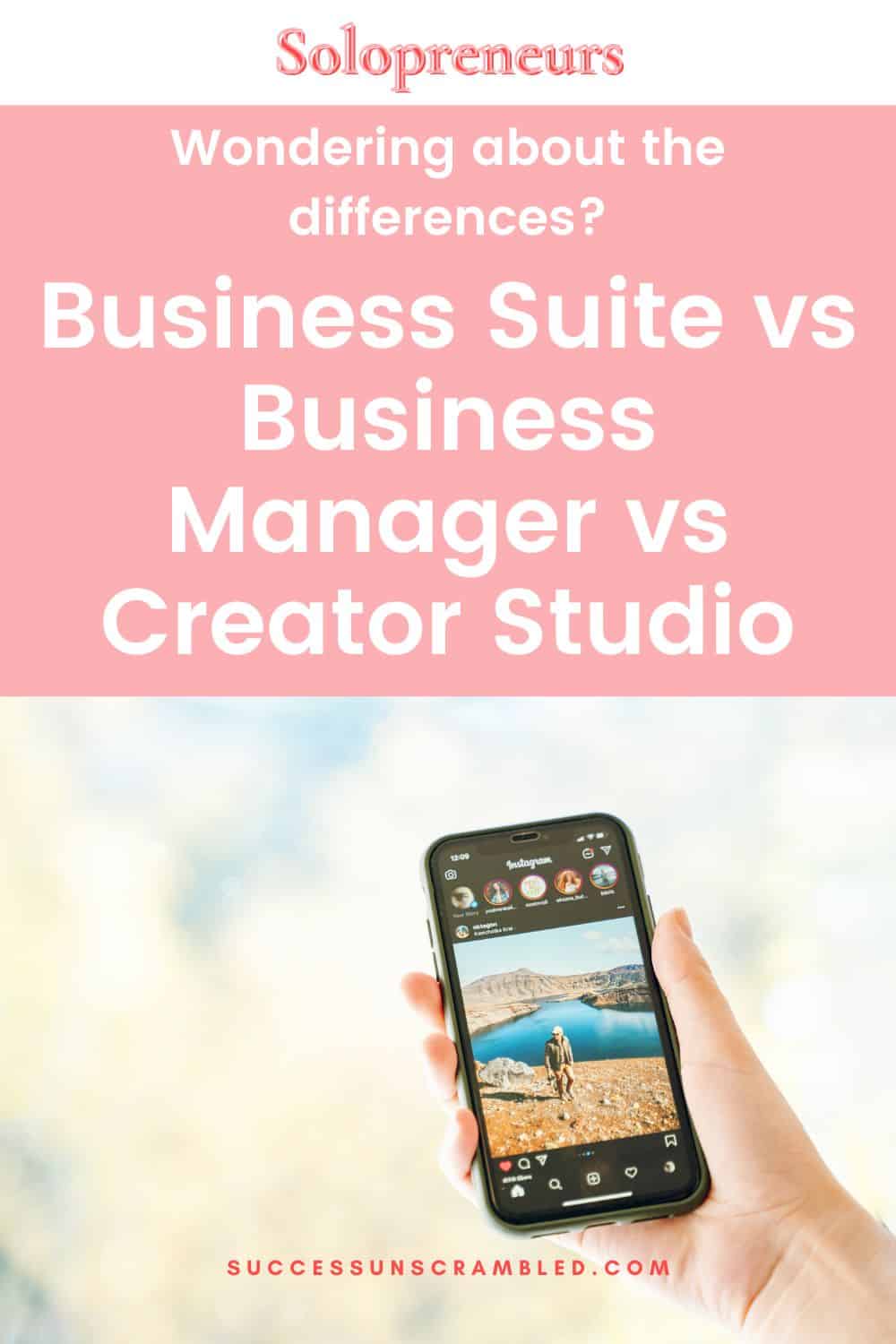
Facebook: Business Suite vs. Business Mgr vs Creator Studio
Sep 11, 2023
Show notes
It was 2020 and Julie got very confused about the Facebook Business Suite vs. Facebook Business Manager platforms.
While she was quite familiar with the platform this new addition to the Facebook family left her quite baffled.
As if the health restrictions weren’t bad enough Julie thought that this change was adding injury to insult.
As a business owner if you are looking to streamline social media management on Facebook then you’re probably familiar with the Facebook Business Page and the various tools available.
For growth, any Facebook advertiser or content creator must identify the right tool.
I’ve been playing this game for over a decade and have seen so many people struggling to figure out which tool is right for them. It’s like trying to choose between pizza toppings – so many options, so little time.
If you’re feeling lost in the jungle of Facebook tools, fear not!
In this resource, you’ll discover how to conquer the social media world and Facebook, its undisputed king and you’ll be able to pick the perfect tool for your needs.
It’s like a battle royale between two heavyweight boxers, Facebook Business Suite vs. Business Manager. And just for kicks, I’ll throw in Creator Studio as a wildcard contender. Don’t worry, you’ll come out on top.
Facebook Business Suite – Info Guide
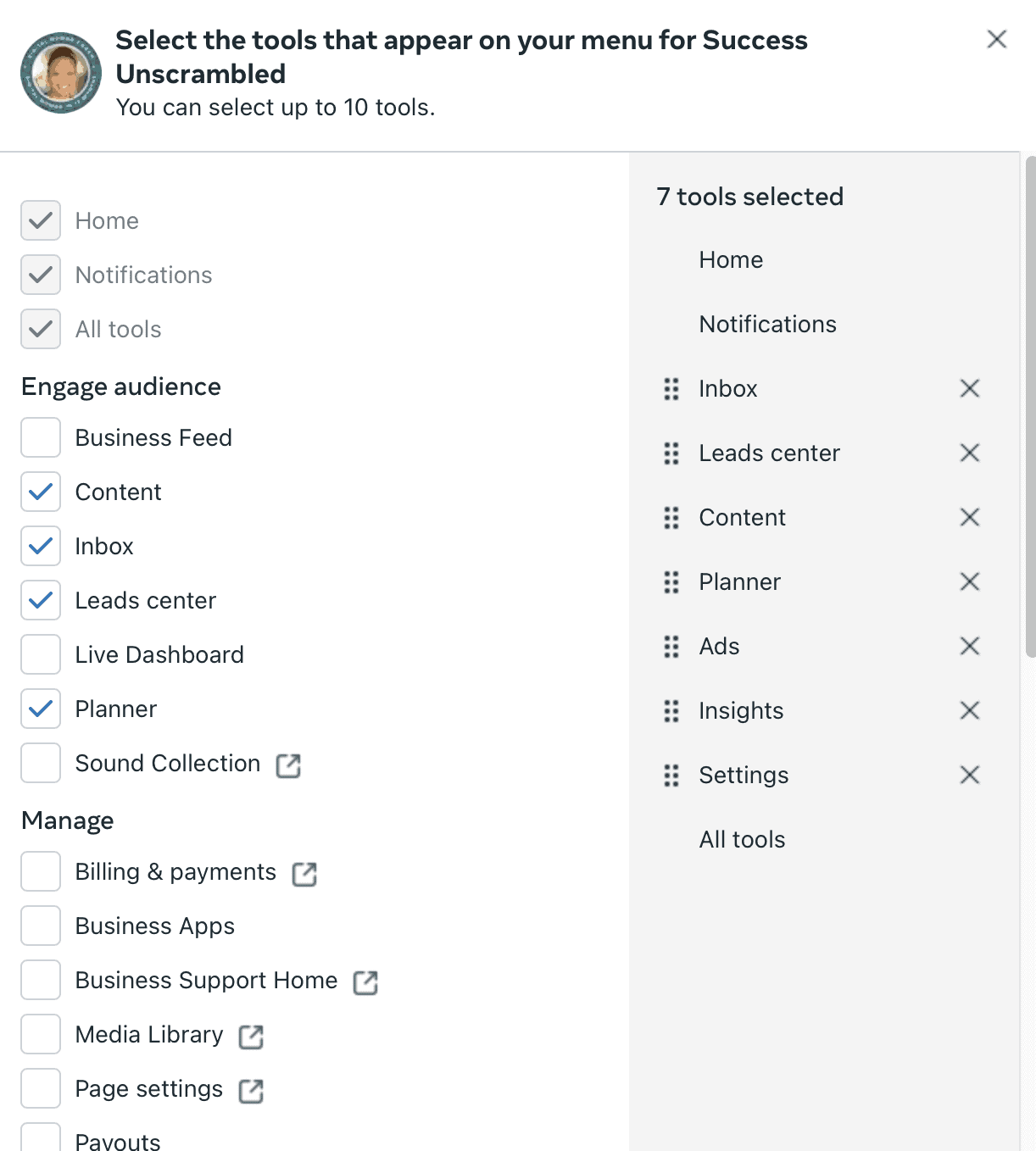
Facebook Business Suite (now Meta Business Suite), is like assembling the ultimate team members of social media superheroes to help small business owners conquer the world of social media management.
Launched in 2020, Facebook Business Suite is the ultimate sidekick that integrates the Facebook Pages Manager app and the Instagram app, creating a powerful force for businesses to manage their accounts on the go.
It’s like Gamora and her sister Nebula teaming up to conquer the galaxy but for social media.
Facebook Business Suite was designed to replace Facebook Business Manager. Let’s face it, FB Business Manager can be as complicated as trying to solve a Rubik’s cube blindfolded, especially for small businesses with limited resources.
Facebook Business Suite, on the other hand, is user-friendly and accessible for businesses of all sizes. The new interface with powerful features is as easy to use as playing a game of Monopoly with your family.
You can access Facebook Business Suite on both desktops and via mobile app, giving businesses the flexibility to manage their accounts from anywhere. And you can schedule posts and stories on both Facebook and Instagram in advance.
This game-changer feature allows businesses to plan and organize their social media content like a pro.
Facebook Business Suite also offers a range of additional tools that can help businesses improve their social media strategy. These include ad management tools, audience targeting options, and insights into the performance of their content.
With these great tools, businesses can gain a deeper understanding of their audience, create more engaging content and ultimately drive more traffic and sales to their website. It’s like having a secret weapon in your back pocket.
Facebook Business Manager – Info Guide
Compared to the sleek and user-friendly Facebook Business Suite and Creator Studio, Business Manager feels like a clunky relic from a bygone era. It’s not as powerful as its newer counterparts, and let’s be real, it’s just for managing page settings and assets.
And don’t even get me started on the way Business Manager handles ads. It is like trying to swim upstream in a river full of obstacles.
It’s an outdated way of managing ads that can leave even the most experienced marketers scratching their heads.
It’s mainly intended for managing page settings and assets, like who has access to your page and what permissions they have. If you’re looking for a simple way to manage your page and assets, Facebook Business Manager might be a good fit.
For a few businesses, it would be the best tool if they wanted to have a separate Facebook business account and Instagram business account rather than having everything combined in one platform.
But if you’re looking to take your social media game to the next level, it might be worth checking out some of the newer and more powerful tools available.
Facebook Creator Studio – Info Guide
Facebook Creator Studio is a hub for all your content creation needs. It’s like having a video assistant that helps you launch, test, and analyze your videos across Facebook and Instagram pages. Plus, it’s loaded with royalty-free tracks and sound effects to make your videos pop!
If you’re all about monetization, Creator Studio has tools that help you earn money from your videos. With ad breaks, you can earn money by showing short ads during your videos. And if you’re all about those Instant Articles, Creator Studio can help you monetize those too.
As per the latest update, the tools from Creator Studio are packing their bags and heading over to the new and improved Meta Business Suite.
But don’t worry, you’ll still have access to all the amazing new features that allow you to create, manage, and monetize your content, now all in one convenient location. You should also get ready to say goodbye to the Instant Articles feature after mid-2023.
Facebook Business Suite vs. Business Manager
The classic battle of Facebook Business Suite vs. Business Manager is like a fight between a fancy, high-tech robot and a clunky old car.
Business Suite is all like, “Look at me, I can schedule posts and manage multiple platforms!” while the Business Manager is like, “Eh, I’m just here to manage your page settings and ads.”
It’s like the difference between a smooth, easy ride and a bumpy, pothole-filled road. But hey, at least they both are great online business assets and get you where you need to go.
Why Facebook Business Suite Is Better Than Business Manager
Let me tell you why you should embrace the improved and new Facebook Business Suite with open arms. Facebook Business Suite is the superhero of social media management, leaving Facebook Business Manager in the dust.
Its user-friendly interface and detailed Insights dashboard give you the tools to target your audience effectively and make your business shine. And just like the Wasp suit, Facebook Business Suite is designed to help you navigate the digital landscape with ease.
It is like having a personal spy on your social media activity, providing you with all the juicy information you need to target your audience effectively.
The new unified inbox collects all your social media messages across all meta platforms in one place.
The content calendar view is like having a personal assistant who never complains about being overworked, allowing you to schedule your Facebook and Instagram posts with ease.
And let’s not forget about better ad management, Facebook Business Suite’s main interface is like having a superpower that allows you to create and manage the most epic ads that will make your competition weep in envy.
So if you’re serious about Facebook marketing and growing your business name, you should upgrade to Facebook Business Suite.
Why You Should Switch To Facebook Business Suite
As a small business owner, managing your social media presence can be as stressful as watching a horror movie in the dark.
With Facebook Business Suite’s new layout and home screen, managing your social media platforms has never been easier.
Facebook Business Suite also features a detailed Insights dashboard that will help you understand your potential customers. Plus, its unified inbox will make sure you never miss a message from your customers.
And if that’s not enough to convince you, how about the fact that Facebook Business Suite works like robot scheduling posts in advance? No more getting up at 3 a.m. to post memes.
Let’s not forget about the better Facebook ads manager, which is more powerful than a superhero on steroids.
How To Switch Back To Business Manager From Facebook Business Suite
While Facebook Business Suite provides several useful features, some businesses may require the Business Manager. Especially if they aim to focus on Facebook pages and ad accounts.
If you want to switch back to Business Manager from Facebook Business Suite, you can do so by following these simple steps:
Look for the ‘Give Feedback’ option in the menu located on the bottom left-hand side of your sidebar.
Once you have located ‘Give Feedback’, click on it, and you will see the button to switch back to Business Manager.
Click on the ‘switch’ button and confirm if you would like to switch.
After confirmation, you will be asked to provide feedback. Click on the ‘your feedback’ option and write a summary of your reason for switching.
Finally, press ‘done’, and the screen will refresh, giving you access to the Business Manager.
Facebook Business Suite vs. Facebook Creator Studio
Facebook Business Suite and Facebook Creator Studio are like two siblings with different personalities. Business Suite is the responsible one, while Creator Studio is the free-spirited one.
Business Suite is the ultimate multitasker, managing both your Facebook and Instagram accounts seamlessly. Creator Studio, on the other hand, is the perfect playground for content creators to unleash on Facebook.
Both tools offer content scheduling, but Business Suite takes it to the next level by allowing you to post stories on Facebook and Instagram.
Creator Studio, on the other hand, can only post stories on Facebook, making Instagram feel like a neglected child.
If you’re looking to make some money, Creator Studio is the way to go as it offers monetization options for your content.
However, if you’re running a business and managing a shop, Business Suite is the one for you.
Conclusion
So, which tool to pick to grow your business Facebook page? Facebook Business Suite vs. Business Manager is like Iron Man vs. Captain America.
Business Suite’s Iron Man is new, shiny, and feature-packed. Business Manager’s Captain America is dependable, sturdy, and gets the job done. It may not have all the bells and whistles, but it’s still useful for social media account management.
And then there’s Creator Studio, sleek, stylish, and deadly effective for content creators.
Launch, test, and analyze your videos like a pro with royalty-free tracks and sound effects that can make your content sound as catchy as a chart-topping song.
Monetization tools are also included, making earning from your content a breeze.
Choosing the right tool depends on your needs. For a serious business owner, the new Business Suite is a good idea with accessibility to all new tools.
Business Suite is the new kid on the block, with a modern design, detailed insights dashboard, and better ads management.
The Business Manager, on the other hand, is more like the trusty old workhorse that gets the job done.
Need help with Facebook Ads? Feel free to book some time in my calendar here to discuss your requirements.
How Much To Spend On Facebook Ads [Real Example Included]
Aug 28, 2023
Show notes
Aoife broke out in a cold sweat because she wondered how much to spend on Facebook Ads. In the past, she dabbled with Facebook Ads spending $600+ with very little return on that investment. You see, Aoife saw many entrepreneurs and small business owners who publish stellar results from their Facebook Ads campaigns. This has never been her experience but it would be lovely if she could finally crack the code and get significant results for her business. Facebook is one of the most powerful tools that allow businesses to quickly and easily create targeted campaigns to reach their desired customers. With its growing popularity, it is important to remember that there is no one-size-fits-all solution. I have come across many marketers feeling nervous about Facebook ads’ costs and budgets. Many get iffy with thoughts of how much to spend on Facebook Ads and what is a good daily Facebook ads budget. In this comprehensive guide, you will learn how much to spend on your Facebook Ads in order to get the best results. In the end, you will have a better understanding of how to allocate budget and run effective and successful Facebook Ads. How Much To Spend On Facebook Ads – Budgeting Guide For 2023 With the right Facebook Ads strategy, you can reach your target audience and grow your business. But how much should be spent on Facebook Ads? The answer depends on your budget, size, industry, and goals. To work out optimal spending, it’s important to set a budget that is realistic and achievable. If you’re ready to start advertising on social media, don’t be intimidated by the Facebook cost. You can start small with just $1 per day and start seeing results. This approach works for those who have a limited budget and want to test the waters before diving in. Before you start looking at allocating more money, here’s a step-by-step guide that you can use. Step 1: Determine Your Monthly Facebook Advertising Budget When it comes to determining your monthly Facebook advertising budget, the key is to start small and adjust as you go. There are a number of factors that would lend to good results. For example, a lead generation campaign using the most relevant ads can be achieved at the lowest cost. To be more specific Facebook lead ad cost is surprisingly low per lead compared to other objective types. You’ll want to consider how much you can realistically afford to spend. Another way to look at it is what is your lifetime budget. A good starting point is to allocate 5%-10% of your overall advertising budget to Facebook and Instagram ads. This will give you the flexibility to experiment and learn from the campaigns. Once you’ve allocated a budget, it’s important to track your results. This will give you an idea of how effective your campaigns are and how much you should be spending. Try using different budget strategies for different campaigns. For example, you can use a cost-per-click (CPC) pricing model for campaigns that focus on conversion rates, and a cost-per-thousand impressions (CPM) for campaigns that focus on brand awareness. With the right budget and strategies in place, you can ensure that Facebook Ad campaigns are working for your business. Step 2: Consider The Size Of Your Brand & Average Product Cost When it comes to deciding how much to spend on Facebook Ads, the size of your brand and the average cost of your product are two important factors to consider. Small business owners tend to have a much lower budget than larger brands and hence may not be able to afford the same amount of advertising. The cost of your product will also play a role in how much you spend on Facebook Ads. If you’re selling a premium product, you may need to invest more money in ads in order to reach the right customers. On the other hand, if your product is more affordable, you may be able to get away with a lower Facebook ad budget. Ultimately, you need to consider the size of your brand and the average cost of your product when deciding how much to spend. Step 3: Distribute Your Facebook Ad Spend Based On Objectives If you’re looking to maximize your Facebook ad spend, the key is to know how much money to put into each of your objectives. This helps you to better target the right audiences and get the best results for your money. Generally, it is recommended to allocate a budget based on outcomes. For instance, if you want to increase brand awareness, aim for a higher budget for reach and high-frequency ad sets. One example of brand awareness is traffic campaigns which require the implementation of a Facebook pixel. These ad types are normally used by big brands to warm up an account. If you want more conversions, allocate more money to conversions. Additionally, you can create audiences for each objective and analyze how much you should be spending based on their performance. The key is to use the data to make informed decisions and stay flexible. A good starting point is to allocate 1/3 of your budget towards lookalike audiences, which will help you quickly build an audience. Lookalike audiences are based on existing customers, so you can be sure that you’re connecting with people who are likely interested in your product or service. With another 1/3 of your budget, you can target interests and behaviours, which will ensure that you’re reaching people who are likely to take action. This could be anything from people who have recently moved house to avid gamers. Finally, the last 1/3 of your budget should be used for retargeting campaigns, which allow you to reach out to people who have already interacted with your business. This is a great way to drive conversions and maximize ad spend. So there you have it – a strategic way to distribute your Facebook Ad spend. Step 4: You Can Start Small With Just $1 Per Day You can start with a small budget of just $1 per day and go from there. You can experiment with different ads, find out what works for your target audience, and slowly increase your budget as you go. Plus, you don’t have to commit to a long-term contract – you can pay as you go and adjust your budget at any time. However, do bear in mind that conversion campaigns would have a higher cost when compared to lead generation objectives. Step 5: Pass The “Learning Phase” With 50 Conversions Per Week Figuring out how to run effective Facebook ads can be a daunting task. And one of the biggest hurdles is getting past the learning phase, where you’ll likely spend a lot of money with no return. To ensure you get the most out of your Facebook ad campaigns, it’s important to set a tangible goal. A good place to start is aiming for 50 conversions per week. This will give you a baseline number to measure your success and help you get a better grasp of how much to spend. With some trial and error, you’ll be able to identify an easy way to reach 50 conversions per week. After that, scaling up your ad spend to get even more conversions is just a matter of tweaking your ad spend, content and targeting. So don’t be afraid to take the plunge and reach for those 50 conversions per week goal. However, keep an eye on your conversion rate. Also, your landing page and ad creatives can have a significant effect on your total conversions per week. Step 6: You Can Scale To $20/Per Day/Per Ad Set With the right strategy, you can scale your ad spend up to $20 per day per ad set. This means that you could be spending $20 a day on each ad set, with potentially unlimited returns. But don’t jump into this too quickly. You need to have a plan in place to ensure that you’re spending money wisely. To start, you should have a clear understanding of your target audience and the type of ads that will be most effective. Once you have that data, you can create a budget, and experiment with different ad sets and spending levels. You can then adjust your spending levels according to performance. Step 7: Identify Your Winning Ad Sets & Scale More Identifying your winning ad sets and scaling more is essential to success on the platform. With a successful ad set, you will be able to get more out of your ad budget and maximize ROI. To identify winning ad sets, you should start by testing with different creatives and targeting options. Once you have found a winner, you can then scale up your budget and increase the reach of your ads. Pay close attention to your Facebook ad campaign metrics and optimize the ad sets that are performing well. Step 8: Always Have ROI In Mind Whenever you decide to spend money on marketing, always have a return on investment (ROI) in mind. This means that for every dollar you spend, you should be getting back more than a dollar in sales. How much you spend on Facebook ads should always depend on the ROI you expect to get from them. Of course, the amount you spend on Facebook ads should also depend on your budget. Setting a budget and sticking to it is a must when it comes to online advertising. But you should also make sure that the budget you have set is realistic and achievable. That way, you can ensure that you’re always getting a good return on your investment. 5 Things To Avoid When Spending Money On Facebook Ads 1. Not Spending Enough Not spending enough is one of the biggest things to avoid when spending money on ads. The cost of Facebook ads can quickly add up, so it’s important to budget for your campaign goals. But it’s also important to spend enough to see results. If you don’t spend enough, your ads may not get the reach or engagement they need. Too often, businesses fail to invest enough in their Facebook Ads campaigns, resulting in minimal returns. The key is to set a realistic budget and adjust it as needed. 2. Quitting Too Soon Quitting too soon is one of the biggest things to avoid when spending money on Facebook ads. It’s easy to become discouraged when you’re not seeing the results you want right away, but it’s important to remember that it takes time and effort to see success. Before you give up, make sure you’ve given your campaign a fair chance. You may need to adjust your strategy or tweak your targeting to get the results you want. It’s also important to be patient – results don’t come overnight. Don’t be afraid to experiment. 3. Choosing the Wrong Type Of Campaign & Objective One of the most common mistakes is choosing the wrong type of campaign and objective. When selecting your campaign type, you should make sure it aligns with your goals. For example, if your goal is to increase brand awareness, then a Reach campaign would be appropriate. If your goal is to generate sales, then a Conversion campaign would be more suitable. You should choose an objective that is directly related to the action you want people to take, such as clicking on a link or making a purchase. Making the wrong choice can result in your ad not being seen by the right people or not achieving the desired results. 4. Not Analyzing The Data Analyzing the data is one of the most important things to do when spending money on Facebook Ads. Not doing so can result in a huge waste of time and money. It’s essential to understand your data in order to gain insights, make adjustments, and optimize your campaigns. Without analyzing the data collected from your ads, you won’t know what’s working and what’s not. You won’t be able to identify patterns, which can help you better target your audience. If you’re not analyzing the data, you’ll be blindly spending on ads without any real understanding of what’s driving your results. So, it’s important to set aside time each day to review your data and make adjustments. 5. Not Calculating The Marginal Profitability Another important thing to avoid when spending money on Facebook ads is not calculating the marginal profitability. It’s easy to get lost in the glitz and glamour of the ads and be tempted to spend more than you need to. But, if you don’t pay attention to the marginal profitability of your ads, you could end up overspending and not seeing the return on investment that you wanted. Marginal profitability refers to the rate at which your profits increase, or decrease, with each additional dollar you spend on a campaign. Calculating it will help you make sure you’re spending your money wisely and not wasting your budget. Marginal Profitability Example Let me give you a practical example of marginal profitability. Let’s say you are running a conversion campaign for a smaller item like a digital planner priced at $17. Initially, you were getting conversions when you were spending $20 a day, however over time you increased your budget to $35 a day and this is what happened. At $20 a day, you were generating 3 sales a day but after increasing your budget to $35 a day you now make 4 sales. Doing the math you realise that at $20 a day, you make $17×3 = $51 but a budget of $35 a day only yields $17×4=$68. In this case, it would be better to return to a budget of $20 a day because your profit is better at this level. The other option is to set up upsells in the backend so that you can increase your profitability. How Much to Spend on Facebook Ads – Real Example Recently I wanted to test a lead magnet I created and use it as a basis for growing my email list. Like any entrepreneur, I have several options to test the effectiveness of a lead magnet. These options include organic marketing and paid marketing. I did not have a lot of time to use organic marketing so I opted for Facebook Lead Ads. So, with $200 in hand, I decided on a budget of $10 a day for 2 weeks. Here are the results that I got. 159 leads with an average cost per lead of $1.26 cent. It means that I now have 150 more people on my email list. I’m also running a 5-day challenge to see if any of these will convert into long-term clients. People Also Ask Is $5 a Day Enough for Facebook Ads? The answer is yes and no. It depends on what type of ad you’re running and what your goals are. For example, if you’re just looking to increase brand awareness and reach more people, then $5 a day is probably enough. However, if you’re looking to drive more conversions or sales, you will need to spend a bit more. That said, with $5 you can still test out different strategies and see what works best. Keep an eye on the analytics and adjust your campaigns accordingly, you can slowly increase the budget and get better results. What Is a Good Daily Budget for Facebook Ads? Figuring out a good daily budget for Facebook Ads can be tricky. Your total budget will depend on your overall marketing goals, as well as your cash flow. If you’re just getting started with Facebook Ads, a good rule of thumb is to start with a minimum budget and then bump it up. The best budget for your Facebook Ads will depend on your goals. Are FB Ads Worth It in the 21st Century? With so many businesses competing for customers, advertising on Facebook has become an increasingly popular way to reach potential customers. But are Facebook ads still worth it in the 21st Century? The answer is a resounding yes! Facebook ads offer powerful targeting options and can be used to reach a wide range of different audiences. Plus, they are relatively inexpensive and easy to customize. So with the right strategy, it’s possible to get a good return on your investment. Conclusion Facebook Ads help to reach new customers and build your brand. But it is important to know how much to spend on Facebook Ads. First, you need to set a budget that you can afford to pay. Once you have a budget, you can determine how much to spend on different types of ads, such as boosting posts, running event campaigns, or targeting new users. You can also create audiences for each type of ad and analyze how much you should be spending based on their performance. This way, you can make the most of your Facebook Advertising budget and take your business to the next level. Improve your return on Facebook ad spending by leaving it to someone who can help. Book a call in my calendar here to learn more.
The Ultimate Facebook Ad Frequency: How Much Is Too Much?
Aug 14, 2023
Show notes
Picture this: you’ve spent countless hours crafting the perfect Facebook ad for your business. You’re convinced it will boost your sales, and can’t wait to see the results. But after a while, you notice something strange. The same people keep seeing your ad over and over again in their Facebook feed. They’re starting to get annoyed, and they are leaving negative feedback. So, what’s going on? Well, my friend, it seems you’ve encountered the issue around Facebook ad frequency. And if you’re not careful, it can hurt your campaign more than it helps. But what is Facebook ad frequency, and how much is too much? Let’s dive deep into the world of Facebook ad frequency, and I’ll share with you some practical tips to make sure your ads stay fresh and relevant to your target audience. What Is Facebook Ad Frequency, And Why Does It Matter? What exactly is Facebook ad frequency, and why should you care? Facebook ads frequency is the average number of times your ad has been shown to each person in your target audience. It’s crucial because if you have a higher frequency, people might experience ad fatigue, leading to lower engagement, higher costs, and a potentially negative perception of your brand. On the other hand, maintaining an optimal frequency can be beneficial for ad recall, particularly for a potential user or new user who is not yet familiar with your brand. A well-managed frequency number helps ensure your target audience sees your ad enough times to remember your message and associate it with your brand. By striking the right balance, you can optimize your campaigns for better ad recall without overwhelming your audience or causing high ad fatigue. This can help you achieve higher engagement and conversions, making your advertising efforts more effective and efficient. Managing Your Facebook Ad Frequency Managing your Facebook ad frequency is about finding the right balance between reaching your Facebook user audience and not overexposing them to your ads. It can be tricky to master, but here are some best practices to help you manage your ad frequency effectively: Monitor your ad frequency regularly to ensure it stays within an optimal range. The optimal frequency varies, but it should be around1 to 3 per ad set Adjust your ad targeting to reach a broader audience size if your frequency gets too high. Rotate your ad creatives to keep your ad quality fresh and engaging. Another thing you can do is use the frequency cap feature to limit how often your ads are shown. Understanding Facebook Ad Frequency Cap Now that you know what Facebook ad frequency is and why the frequency metric is important, let’s talk about how you can control it using the Facebook ad frequency cap. There are a couple of ways to set frequency depending on your needs and the features available. First thing, if you are creating a campaign, Facebook Ads Manager only allows setting frequency caps for awareness campaigns. You’ll be able to find that option when clicking the show more options under bid control. The default frequency cap is 1 impression every 7 days, but you can edit it to whatever number you’d like. Another option is to create automated rules. To do this, you’ll need to: Open the Facebook Ads Manager. Highlight the specific campaign where you’d like to implement the rule. Click the Rules drop-down button beside campaign tags in the main menu, select Create a New Rule, and click Custom Rule. Provide a name for the rule, and decide if it should apply to all active campaigns or only the selected one. Select the action for the rule to perform. You have three options: turn on the campaign, turn off the campaign, or send a notification only. Set up the desired frequency cap and time range for the rule under Conditions. Unfortunately, this option does not enforce a strict frequency cap, as it is limited to, for example, only turning off the campaign if a specific cap is met. However, it can be useful. Qualified Facebook advertisers may have access to reach and frequency buying functionality. If you do, you’ll be able to play around with the ad frequency of your campaign in the Custom option under Reach and frequency balance. You can then toggle the Increase average frequency option to turn it on. And that’s it! Now you’ve set a frequency cap to help prevent ad fatigue and keep your ads relevant to your audience. Facebook Ad Frequency: How Much Is Too Much? Now that we’ve talked about setting caps, you’re probably asking yourself: how much Facebook ad frequency is too much? And in reality, there is no one-size-fits-all answer. It really depends on various factors like your industry, audience, and campaign goals. However, a general rule of thumb, recommended bySocial Media Today, is between 1.8 and 4 views on average of an ad. But that is an estimated metric, and it is essential to take into account other data points, such as ad impressions, the length of your campaign, and your advertising objectives. Understanding the relationship between these factors will help you tailor your campaigns to reach the right audience without oversaturating them with content. However, If your frequency exceeds that, it might be time to consider adjusting your strategy. Finding The Optimal Facebook Ad Frequency Remember that your ideal frequency may vary depending on your specific goals and the audience you’re targeting. By analyzing the performance of your ads and monitoring key metrics, you can adjust your strategy to achieve the best results for your unique situation. Ultimately, striking the right balance will help you maximize the effectiveness of your Facebook advertising efforts. Finding the optimal Facebook ad frequency can be tricky. To help you along, here are some ideas to consider: Test different frequency caps and monitor their impact on your campaign performance. Analyze your ad relevance diagnostics (we’ll dive into this in the next section) to identify areas for improvement. Keep an eye on your ad’s performance metrics, such as click-through rate, cost per click, and return on ad spend, as they can indicate if your ad frequency is too high or too low. In today’s digital world, the average internet user bumps into many ads daily. That’s why it’s important to find the optimal ad frequency that ensures your particular ad stands out without overwhelming your unique users. Remember that too many ad impressions can lead to negative comments and a less effective frequency for your campaign. Alrighty, now that we’ve covered the importance of finding the right balance in ad frequency, the next step is to explore the Facebook Relevance Score. What Is Facebook Relevance Score: When It Increases And When Plummets? Facebook Relevance Score is a metric that measures the overall quality and relevance of your ads to your target audience. A higher score means your ad is more relevant and engaging, which can lead to better results and lower costs. Your relevance score can increase when your ad content resonates well with your audience, and it can plummet when your ad is poorly targeted or not engaging enough. Relevance Score vs. Facebook Ad Frequency Understanding the relationship between Relevance Score and Facebook ad frequency is essential. A higher ad frequency can lead to ad fatigue, causing your relevance score to decrease. On the other hand, a low frequency may not give you enough exposure to your target audience, which can also negatively impact your relevance score. Finding the right balance between ad frequency and relevance is crucial for a successful campaign. 3 New Metrics For Facebook Relevance Score In 2019, Facebook decided to shake things up a bit and replace the old relevance score with three new metrics to give you a clearer picture of your ad performance: Quality Ranking: This important metric compares your ad’s perceived quality with other ads competing for the same audience; Engagement Rate Ranking: Your ad’s expected engagement rate measured up against other ads, and lastly; Conversion Rate Ranking: Ranks your ad’s expected conversion rate against ads with the same optimization goal but still competing for that audience’s attention. These diagnostics are like your personal ad performance detectives. They help you spot your ad campaigns’ strengths and weaknesses. By checking out your ad’s quality, engagement, and conversion rankings, you can determine if tweaking your ad’s presentation, post-click experience, or targeting will make it even better. In some cases, it could be a less obvious issue, like targeting the wrong audience, that has a major effect on your campaign. 💡But don’t get too hung up on sky-high relevance diagnostic rankings. High rankings are nice, but they don’t guarantee mind-blowing results. Focus on improving low rankings and use these diagnostics to fix underperforming ads rather than aiming for perfection in every aspect. With Facebook’s ad platform always changing, staying in the loop with the latest metrics and diagnostic tools is important. This way, you can optimize your Facebook ad campaign like a pro and get the best possible results. For instance, understanding different ways to analyze the number of impressions, link clicks, and average cost can help you fine-tune your frequency campaign and cater to larger audiences. So, always be on the lookout for the best way to keep your Facebook ads in tip-top shape and ensure they resonate with your target audience. 8 Tips To Lower Facebook Ad Frequency & Increase Relevance Score Now that you know the importance of managing your Facebook ad frequency, let’s explore some tips to help you lower your ad frequency and increase your relevance score. 1. Set up frequency rules when you create your Facebook campaigns When building your Facebook campaigns, don’t forget to establish frequency rules. This proactive approach helps you manage your ad frequency and ensures your audience, including new users and potential customers, doesn’t feel overwhelmed by your ads. 2. Know your target audience (cold vs. warm) Understanding whether you’re targeting a cold or warm audience is crucial. Adjust your ad frequency depending on your audience’s familiarity with your brand. Remember, warmer audiences may tolerate higher frequencies. 3. Use the Facebook Pixel to create custom audiences By implementing the Facebook Pixel, you can create custom audiences based on user interactions with your website. This allows you to target those who are more likely to be interested in your ads, improving your ad’s relevance 4. Create Lookalike audiences A lookalike audience is a targeting tool that finds users similar to your existing customers, increasing the chances of your ads resonating with them. To create one, select a source audience, such as a custom audience or website visitors. Facebook then generates a new audience based on shared traits, helping you maintain lower ad frequency while enhancing your ads’ relevance and effectiveness. This strategy lets you reach a broader audience while ensuring your ads are shown to people likely interested in your offerings. 5. Exclude targeting converted and uninterested people Avoid targeting people who have already converted or shown disinterest in your ads. This helps reduce ad fatigue, keeps your ad frequency in check, and allows you to focus on more interested users. 6. Select the best placement (news feed vs. side placement) The right placement can lower your ad frequency while increasing engagement and relevance. You can choose automatic placements or experiment with different placements and ad types to find what works best for your campaign. Be aware of banner blindness, when people naturally ignore website ads, like banners and pop-ups, because they’re focused on the main content instead. 7. Consider Campaign Budget Optimization Embrace Campaign Budget Optimization to allocate your budget effectively across ad sets. This helps you maintain a healthy ad frequency while maximizing results, especially over the course of a couple of weeks or the entire campaign duration. 8. Consider A/B split testing with different ad variations Try A/B split testing with various ad variations to discover what works best for your target audience. By experimenting with different ads, you can maintain a lower frequency while keeping your ads fresh and engaging on the social platform. With these tips in hand, lowering your Facebook ad frequency and increasing your relevance score should be a breeze. Put these strategies into action and watch your ad campaigns become more effective, driving the results you desire. People Also Ask I’ve gathered some frequently asked questions about Facebook ad frequency for you that I will quickly answer in this section. What is the best frequency for Facebook ads? The ideal frequency for Facebook ads varies depending on your campaign objectives and audience. Generally, a frequency of 1 to 3 is considered good. When you keep the frequency in this range, you ensure that your ads aren’t overwhelming your audience yet still reaching them effectively. However, monitoring your ad performance and adjusting as needed is essential, as every campaign is unique. Can you set ad frequency on Facebook? Yes, you can set an ad frequency cap in Facebook Ads Manager for specific types of campaigns, like brand awareness. What Facebook frequency is too high? A high Facebook ad frequency varies depending on the campaign and the audience. However, when the frequency surpasses 6 or more, it may start to become counterproductive. A high frequency could lead to ad fatigue, causing your audience to lose interest or even develop negative feelings toward your brand. It’s crucial to keep an eye on your ad frequency and make adjustments to maintain its effectiveness. Key Takeaways On Facebook Ad Frequency Understanding and managing Facebook ad frequency is essential for your advertising campaigns’ success. A good frequency range is typically between 1 and 3, although it can vary depending on your specific campaign and audience. Setting an ad frequency cap in Facebook Ads Manager for certain campaigns helps control ad exposure. Additionally, Facebook’s ad relevance diagnostics, such as Quality Ranking, Engagement Rate Ranking, and Conversion Rate Ranking, can assist in refining your ad performance. To lower your Facebook ad frequency and increase your ad relevance score, follow tips like setting up frequency rules, knowing your target audience, using the Facebook Pixel, creating lookalike audiences, and more. Optimizing ad frequency and relevance will enhance your campaign’s performance by effectively reaching your target audience. So, dive in and review your current Facebook ad campaigns or start with these valuable tips to create successful Facebook ads. Remember, that you can book some time in my calendar if you need help with Facebook ads. I’m here to help you navigate the ever-changing world of Facebook advertising. Best of luck!
The Facebook Lead Ads Cost Guide – How Much Per Lead
Jul 31, 2023
Show notes
Kimberly heard a lot about Facebook lead ads cost and she was wondering if it will work for her business model. As a new course creator Kimberly was finding it difficult to figure out what marketing strategy to use to achieve her goals. While Udemy and Coursera look like attractive options because they have an existing audience. Kimberly knew straight away that these course marketplaces are not the best solution for her dream life. Let me know if you can relate to these points. You’ve enrolled in several coaching programs that promised visibility but didn’t deliver You don’t have an existing audience to promote your course After spending $1,000s on resources you’re wondering if to throw in the towel All you need to see is a silver lining behind your current dark cloud If only there was a way to grow a targeted email list of potential students quickly and simply with a minimum budget of $1,000/month. In this post, you’ll learn how Facebook lead ads can be a breath of fresh air and how they can generate leads for you while you sleep at a very good price. What is Facebook Lead Ads In case you are brand new to Facebook advertising and wondering why you haven’t heard about it before this is for you. One of the best ways to explain Facebook lead ads is to show you what it looks like and how it works. However, before doing that here’s a brief explanation. Facebook lead ads are a form of advertising specifically designed to generate qualified leads for businesses. The reason it is called Facebook lead ads is because the lead generation occurs on the Facebook platform itself. It means that people viewing the ad will be given the opportunity to enter their details to obtain the offer without having to leave Facebook. So, everything occurs on the platform. How is it Possible to Generate Leads Without Leaving Facebook When you are logged into Meta Business Suite and you click on Ad Manager you’ll see the opportunity to create a campaign. After clicking ‘Create’ at the campaign level you’ll see a list of objectives to choose from which will determine your ad type. Choosing leads as your campaign objective will give you a list of possible results that you’ll receive from running this type of campaign. Notice the four options given include: Calls Instant forms Conversions Post engagement It is important to note the conversions in this particular case refer to you generating leads on your own web property. As opposed to getting them to sign up via Facebook. ‘Instant forms’ is the not-so-popular name for Facebook lead ads. What Does the Lead Ad Form Look Like? After creating your ad set and creatives you’ll see the option to customise your Instant form before publishing your Facebook ad. As you can see Facebook is pretty thorough in that they’ve included an area for Privacy policy which is very crucial. This is because you’ll be collecting personal details or contact information like an email address. The key to getting high conversion rates on these forms is to remember that people are busy so the less you ask them the more leads you’ll get. Although a Facebook pixel isn’t required to run an instant forms campaign you’ll still need a link to your privacy policy page. This leads us to the next question, the ad. What Does a Lead Ad Look Like? If you’re wondering how different a lead ad looks compared to regular ads the answer might surprise you. A Lead ad looks very much the same as regular ads with the only difference being the call to action at the bottom. Typically the call to action would be to download the free resource that you will be offering them in exchange for their details. Here’s an example of one such ad as it would appear on Facebook Of course, this resource would not be complete if I fail to include what Instagram ads look like so here you go. I bet just seeing these two examples just gave you lots of ideas about how you can do the same in your business. Where Do the Leads Go After People Complete Their Details When your potential clients complete the form Facebook saves them inside a CSV file which you can manually download daily. I know what you’re thinking, isn’t that a lot of hassle? Well, the good news is that there are several ways for you to automate the lead collection process. Depending on what you are using as your email service provider you can integrate it directly with Facebook or you can use a third-party platform. The two third-party platforms that integrate with Facebook instant forms are Zapier and Make.com. If you decide to use Zapier then you’ll need to use the paid version but you can use the free version of Make. You also have the option of using ActiveCampaign because they have a direct integration with Facebook Lead Ads. Using ActiveCampaign’s direct integration means that you’ll need to upgrade to the Plus plan so it would set you back $75/month on the monthly plan. Yes, it does require some technical ability to know what you’re doing but many of these solutions have step-by-step training on YouTube. Any direct or third-party integration also gives you the ability to deliver the freebie or item that you promised in the ad. How Much Do Facebook Lead Ads Cost? If you’re wondering about how much Facebook lead ads will cost for you I may not be able to tell you precisely. However, I can tell you what the typical range is for a lead ad that’s performing as it should. A normal lead cost can be $1.50 each if your ad is performing in the good range. An excellent ad can cost 0.30 cents to 0.99 cents each! I’ll cover what are the telltale signs that you have the ability to get this lead ad cost shortly. These figures do not apply to webinar leads or lead generation that is done on your own web property like a website or landing page. How Much Do 1,000 Facebook Ads Cost? When you set up a lead ad campaign normally Facebook charges per impression (not per lead or per click). However, you can see in the report based on the leads you receive the cost per result or per lead. In other words, if your campaign doesn’t generate any leads at all you still get charged per impression. If your campaign is overperforming then this actually works well in your favour because the cost per 1,000 impressions (CPM) should be $20 or less. It means that if you’re only paying $1 per lead then every 1,000 people who see your ad 20 will sign up for your freebie. This represents a conversion rate of 2% which is quite good. Anything less than 1.5% means that your copy may need to be improved. How Much Should I Spend a Day on Facebook Ads? Specifically as this resource to Facebook lead ads, the suggested budget is $10 – $15 a day. When you first set up your campaign to get it approved you can start with $10 a day. After it has been approved wait about 3-4 days and check to see how it’s performing. If your cost per lead is $1.50 – $2.00 each then check other statistics like your CPM, CTR and CTR Link-Click-Through-Rate. Here’s a good rule of thumb to follow. CPM -> should be less than $30 CTR all -> should be 4% or higher (if not, change the image) CTR Link-Click-Through-Rate -> should be 1.5% or higher (if not, fix copy) If all of these are bad it could be the freebie itself or the audience. This is the reason why people hire a Facebook ad manager to figure all this out for them. Do you need help from a Facebook Ads Manager or Strategist? Book some time in my calendar here. Is $5 Enough for Facebook Ads? Yes, I’ve used a strategy where I had Facebook ads running for $5 a day and I got results. If you start off at $10 or $15 per day and you find your winning combination of image, copy, freebie and audience then here’s what you can do. Every 1-2 days reduce your budget gradually by $2.50 a day. In other words, you start at $15 then reduce the budget to 12.50, then $10, then $7.50 and so on until you get to $5 a day. What was very surprising is that Facebook still delivered 10 -12 leads a day when my budget was $15 and $10 a day. I enjoy testing Facebook Ads just to see if the daily budget actually makes a difference. One of my coaches would say if you give Facebook $50 to spend in a day they will do it and give you the same result as $10 a day. Lol!!🤣 What is Better Google Ads or Facebook Ads? The honest truth is that it depends on a combination of things. Here’s that list of things. Your niche/audience The goal of your campaign How much you are hoping to spend The offer Your funnel I know that it’s not the answer you are expecting but the competition on Google Ads can be very high depending on your niche. It can also be very low if your niche is less competitive. My advice is to start with Facebook and when your campaign is proven and generating results then you can move it to Google Ads. Why is my Cost Per Lead So High on Facebook? If you are using Instant Forms on Facebook then check the following stats in your reports. CPM – if it’s less than $25 then leave it. CTR all – if this figure is less than 4% then try split testing with a new image CTR Link-Click-Through-Rate – this figure should be 1.5% or higher if not then create a new ad with new ad copy Be sure that the form is as easy to complete as possible If all of these are terrible then either your audience or your freebie needs changing or both. Do you need help figuring it all out and you would like someone else to manage it for you? If yes, book some time in my calendar to discuss your options. Alternatively, you can visit the Facebook Ad Library for inspiration on how you can improve your ads. How Do You Calculate Lead Cost? Bearing in mind the fact that Facebook charges per 1,000 impressions we’ll use this as our main metric to calculate lead cost. The best way to demonstrate this is by choosing a budget. So, let’s say you have a budget of $100 and after one week that budget is used up and you look inside your campaign and see that you have 70 leads. Here’s the formula to calculate your lead cost. Total ad spend divided by total leads generated. So, $100/70 = $1.43. It means that your cost per lead is $1.43 each. Most likely your total impressions would be somewhere between 4,000 and 5,000 if all the other stats were within range. When Is It Okay to Pay More Per Lead There will come a time when your campaign is performing really well and you decide to capture the leads on your own web property. This could be a landing page or website where you have a funnel set up. You’ll already know the customer lifetime value of your offer based on the history of your lead ad Facebook campaigns. Let me explain what I mean by this statement. For example, you run lead generation campaigns for 12 months and you notice that when you spend $300/month on ads you get 10 customers who spend $97/month each. These customers stay with you on average for 10 months which means the long-term value of each customer is $970. So, let’s break it down a bit. You spend $30 to acquire a customer who spends $970 with you. It means that you’ll probably be willing to spend up to 50% of that $970 figure to acquire a lead because you know that your funnel works. In that case, spending up to $485 per lead is normal practice if you know that the return on ad spend is $970. What is a Good Monthly Budget for Facebook Ads If you are running a Facebook lead ads campaign then you can expect to spend between $10 and $15 a day. I would normally advise my clients to budget for a minimum of $300/month to spend on Facebook lead ads. The reason for this is that every new ad has to go through a learning phase so that Facebook can figure out the right people in your audience for the ad. Facebook lead ads cost is dictated by a combination of copy, target audience, freebie, image and budget. It’s important to remember that there are other businesses bidding for the attention of the same audience that you chose. Therefore, the person with the highest bid and the most relevant ad wins. Is Facebook Ads Still Worth it Today? Yes, because if you sit and think about it for 60 seconds here’s what you need to consider. Facebook has 2.95 billion monthly active users that’s almost 3 billion Facebook users which means that your potential customer is hanging out there every day. The chances of you getting into your car and driving around your neighbourhood to find your precise potential customers and only paying $2 or less per lead is slim. Instead, you can sit at your computer and use that gas money to create a Facebook campaign for $100 and already you’ll be able to generate high-quality leads for your business. The average cost-per-click is between $0.50 and $1.50 which is quite good compared to Google Ads which could be $3-$5 without any results at all. It means the cost of advertising on Facebook is still relatively attractive today even for a small business on a shoestring budget. Because Facebook is a social media platform it continues to gather information on its users day after day which means better results for everyone. How to Set Up a Lead Ads Campaign step-by-step? First, you’ll need to have a Facebook Business page already live as well as access to Meta Business Suite. Head over to Ads Manager and create a campaign Select the objective labelled ‘Leads’ and give your campaign a name The next section is your ad set where you choose your conversion location (should be Instant Forms) and set your daily budget. Choose your audience location, age group, gender and audience interest and use the recommended placements. Select your Facebook page and Instagram account and choose a single image. My advice would be to have at least two formats of your single images; one square and the other 9:16 or vertical. Write your copy in the section labelled ‘Primary text’ feel free to let it reflect your personality (I like to add emojis). Choose your call to action and spend time customising your form (the thank you section of the form is a great place to add a call to action like ‘follow me on Instagram – with a link) When you are happy click publish bearing in mind that it’s not possible to edit the form after it has been published. The integration with third-party tools can be done after the form is published and while you wait for your campaign to be approved. To get the most out of your time setting up the ad have your ad copy, images and form content ready or pre-written before you create the campaign. Don’t Become Complacent It’s important to remember that your Facebook ads can experience ad fatigue which means your potential audience no longer sees the ad. For this reason, it’s advisable to create new images and ad copy frequently. Keep testing them every week to remain fresh. A clever way to do this is by going to the Facebook ad library to look at what others in your niche are doing. Read their ad copy and look through their images for inspiration so that you can come up with your own version that works. I have over 100 best-performing ad examples in my library that I use as a resource to pull from with my clients. So, it’s a good idea for you to collate a list of 50 ad examples as your go-to when you need to switch things up a little. I’m not a copywriter but I also have swipe files with high-performing ad copy that I use as a resource with my clients. If you need help with your Facebook ads here’s the link to book some time in my calendar. Summary As a small business, you can keep the cost of Facebook advertising low by choosing a campaign goal of instant forms also known as Facebook lead form ads. The beauty of this campaign type is that you can target different audiences with custom questions (less is more). This campaign type also helps build brand awareness apart from generating great lead quality. After some time you can create a lookalike audience from your winning campaign and use that lead data to attract leads inside a sales funnel. What I really like about Facebook lead ads is that you tend to get a new lead within 24 hours of the campaign being approved. The secret to finding winning Facebo…
Facebook Ad Automation: What Nobody is Telling You
Jul 17, 2023
Show notes
As a course creator Edith heard a lot about Facebook ad automation and she wondered if this would work for her business. After launching her program 12 months ago Edith is always on the lookout for ways to drive more leads to her sales funnels. So far, she has tried Facebook ads, organic Pinterest marketing and organic social media campaigns to generate leads. Recently, I attended a social media conference and the hottest topic among the delegates was Facebook ad automation. It was surprising to note that with its ability to target specific new audiences and drive engagement, Facebook’s automated ads can play a major role in driving sales and increasing reach. With this guide, you can learn how to create and manage effective Facebook automated ads that will help you reach your desired audience and maximize return on investment. From selecting the right ad format and targeting options to optimizing campaigns to get maximum results, I’ll walk you through the process. What Are Facebook Automated Ads – 4 Top Benefits Facebook ad automation has revolutionized the way businesses reach their target audiences. These are created and managed entirely through the Facebook Ads Manager. With automated Facebook ad campaigns, you can set up and launch an ad in minutes, even if you don’t have any ad creation or management experience. Facebook automated ads can be used for a variety of purposes, including boosting brand awareness, lead generation (via Facebook lead ads) and driving traffic to your website. They are highly customizable, you can select the ad format, choose a targeting strategy and create a custom ad that gets desired messages across to the right people. With the help of sophisticated artificial intelligence (AI), businesses can now create customized personalized ads. This essentially speeds up the ad creation process. This helps them maximize their ad spend and get the most out of their campaigns. Automated ad campaigns run on a budget-spending model and are optimized to get you the best return on investment. Personalized Audience Targeting Based On Your Page When it comes to marketing, Facebook’s automated ads are a game changer. With the ability to target an audience based on data and activity associated with your page, you can reach the right people with the right message at the right time. This means that your ads are more likely to be seen by interested parties. Plus, with advanced audience segmentation, you can create custom audiences based on age, location and other profile information. This aids in helping you tailor messages accordingly. What’s more, you can track the performance of your campaigns in order to make adjustments and maximize results. Facebook automated ads are a powerful tool for any business, and they can help you gain more leads, customers and profits. Quick Tip: It is advisable that you have an established Facebook ad account with a history of running ads before choosing to use Facebook Ad automation. Multiple Ad Versions For A/B Testing (up to 6 different versions) If you’re looking to get the most out of your ad campaigns, Facebook automated ads with multiple ad versions for A/B testing are a must. You can test six different versions with different images, ad copy, or even targeting the right audience. This is an incredibly powerful tool as it helps optimize your ad campaigns and get the most out of your budget. With this feature, you no longer have to guess which version of your ad will get the highest conversions. Instead, you can make metrics-driven data decisions. Suggesting Changes & Other Useful Notifications Facebook automated ads are easy to set up and manage, and they allow you to target specific types of customers. But did you know that Facebook also offers suggestions for changes to your ads? With this feature, you can get real-time feedback on what’s working and what’s not. You can also get notifications when an ad has finished running or when an ad has reached its budget. This is incredibly helpful for tracking your ad performance and getting the most out of your campaigns. Not only that, but you can also create automation rules to pause ads when they reach certain thresholds or when you have new promotions. Recommending Optimal Budget For Best Results Facebook automated ads are the perfect tool for businesses looking to maximize their ad budget. With this feature, you can easily set a budget and let Facebook’s AI-driven algorithms do the rest. Facebook will analyze your campaigns and recommend optimal budget levels for each ad, helping get the most out of your budget. This means no more guesswork or wasted money on ineffective campaigns. The best part? It’s all automated, so you don’t have to worry about making changes. Just sit back and watch as your ad budget works and delivers the best results. How To Start With Facebook Ad Automation and Automated Ads Automated Facebook ads can be a great way to reach a larger audience and increase brand recognition. Setting up Facebook automated ads doesn’t have to be complicated. By following a step-by-step process, you can get your campaigns up and running in no time. Step 1 To create an automated ad campaign, log into your Facebook account and go to your Facebook Page. Click the Promote button right below your profile name. You will be directed to the Facebook Ad Center. Click Get Started with Automated Ads. Facebook ad automation will now help you create a more personalized plan. You would need to enter a few business details including location, website, contact etc. Once done you can choose your Ad creatives. Step 2 Once ready, you would be required to choose your target audience, daily budget and your business goal. Just complete the payment process and voila, all set! Promote now! Plus, you can track the performance of your ads with detailed analytics, giving insights you need to optimize your campaigns. You’ll be able to see how many people are engaging with your ad, how many clicks you get, and even how much money you’re making on each click. The 4 Key Differences Between Facebook Automated Ads & Boosted Posts Facebook automated ads and boosted posts are two of the most popular ways to promote your business on the platform. While they may seem similar on the surface, there are a few key differences between them. Firstly, automated ads are created using a specific set of targeting criteria. You can specify who you want to target by age, location, interests, and other factors. With boosted Facebook posts, you can only boost a post that has already been published to your page. Secondly, with automated ads, you can set up multiple campaigns each with different objectives and targeting options. With simple boosted posts, you only have one campaign per post. Thirdly, automated ads are much more customizable. You can choose from a variety of ad formats, such as carousel ads, video ads, and story ads. With boosted posts, you only have the option of a single image or video. Finally, automated ads have a much more advanced reporting system. You can track impressions, conversions and other metrics. With boosted posts, you can only see basic performance stats. Facebook Automated Ads Boosted Posts Suited for targeted leads & traffic Suited for awareness campaigns Require some level of experience Can be made quickly without any experience by clicking the boost button Personalized targeting with automated suggestions Limited targeting Offer more customizations Offer fewer customizations Low risk of wasting money Some risk of wasting money due to weak optimization Understanding Facebook Automated Rules Facebook automated rules are a great way to maximize the effectiveness of your Facebook ads. By setting up automatic rules, you can customize ad targeting to reach your desired audience. The triggers that you add to each rule are called conditions. It is possible to set more than one requirement for a rule. Every condition must be satisfied for the campaign, ad set, or ad to be triggered by the rule. If multiple conditions need to be met for an action to take place, then create a distinct rule for each set condition. You can also set rules to adjust your ad budgets, bids and ad placements. This allows you to optimize campaigns for better performance. With automated rules, you can automatically turn campaigns on and off, set up notifications for when campaigns hit certain thresholds and much more. Automated rules give you the power to easily and quickly optimize Facebook campaigns, making them more effective. With a few clicks, you can make sure that ads are reaching the right people and that your budget is being spent wisely. Facebook Ad Automation – 5 Benefits For You & Your Business 1. It Saves Time By Automating Complex Tasks If you’re looking for a way to save time and energy when it comes to marketing your business, you should definitely consider Facebook automated ads. This tool allows you to automate complex tasks, making creating and managing ads much simpler and quicker. 2. Provides Better Reports & Insights As an advertiser, you know how important it is to monitor the performance of your campaigns. With automated ads, you can analyze in real-time, track key performance metrics, and create more targeted ads based on these insights. Plus, you can check out the performance of your campaigns over a set period of time and make necessary adjustments. In addition, Facebook’s automated ads provide comprehensive reports and insights that can be used to make informed decisions about future campaigns. 3. Doesn’t Require a Lot Of Experience With automated ads, you don’t need a wealth of experience. All you need is to set a budget, choose a target audience, and set the parameters for your campaign. From there, Facebook will do the rest, bringing you targeted leads and interested customers. It’s an incredibly efficient way to reach your desired audience in no time. Plus, you can always adjust settings to maximize results. Quick Tip: While a wealth of experience isn’t required to set up automated Facebook ads it’s really important that you find winning creatives, copy and audiences before using this strategy. 4. Generates Qualified Leads For Your Business Facebook automated ads are a great way to generate more qualified leads for your business. With these ads, you can target specific audiences and tailor messages to the interests of your potential customers. 5. Has a Lower Risk Of Wasting Your Money Facebook automated ads are a great way to maximize your marketing budget without wasting money. Using automated ads, you can target them to a specific audience and set a daily budget. This way, you can be sure that ads are reaching the right people and that you’re not overspending. Plus, the automated system allows you to monitor in real-time to make changes on the fly. Best Tools For Facebook Ad Automation In 2023 As the world of digital marketing continues to evolve, so do tools and technologies used for ad automation. In 2023, there are some great ones available to help businesses save time and money. AdEspresso AdEspresso is an amazing subscription-based tool for businesses looking to get the most out of their Facebook ads. The interface is easy to use and integrates with Facebook Business Manager making it perfect for beginners and experts. You can create, test, and optimize ads in no time. You can also use detailed analytics to track the performance of campaigns and make adjustments. They offer a 14-day free trial to play with a digital marketing platform that allows users to create and manage automated Facebook ads with ease. AdBraze AdBraze is an exciting new platform that offers automated Facebook ads. It allows users to quickly and easily create and manage ads that can be targeted to specific audiences. With AdBraze, you can create professional-looking ads in an incredibly short amount of time. You can also track the performance of your ads and adjust them. This Facebook ad automation tool also integrates with other popular platforms like Google Analytics, so you can monitor performance. They do offer a 7-day trial and have flexible plans for all kinds of businesses. Revealbot Revealbot is the perfect tool for businesses wanting to get the most out of their Facebook automated ads. You can automate your ad campaigns to save time and money. The platform also offers powerful features like real-time reporting, performance tracking and split testing. It also easily integrates with existing ad accounts. Best of all, Revealbot is incredibly user-friendly, so anyone can set up and manage campaigns hassle-free. It offers a free 14-day trial along with two months free with annual plans AdRoll With AdRoll, you can create powerful campaigns that run on platforms like Google and Facebook. Creating campaigns is easy and user-friendly. You can create ads for all kinds of campaigns, from brand awareness to retargeting, and you can also customize with dynamic creative for maximum effectiveness. With AdRoll’s powerful analytics, you can keep track of how your campaigns are performing and adjust. SocialPilot If you’re looking for a way to take your social media marketing to the next level, then you need to check out SocialPilot. This amazing platform offers a wide range of Facebook automation tools to help build an effective social media presence. From automated posts to content curation to analytics and reports, SocialPilot has it all. The best part is the automated Facebook ads. You can track the results of your campaigns in real-time. Facebook Ad Automation – FAQ Can Facebook Ads Be Automated? The answer is a resounding yes! Facebook ads can be automated, and it can be a powerful tool for businesses. Automating your ads on Facebook allows you to target specific audiences, test different variations, and manage more efficiently. What Is Facebook Ads Automation? Facebook Ads automation is a powerful tool for businesses looking to take advantage of the massive reach of the platform. With Facebook Ads automation, you can set up targeted campaigns that reach the right people at the right time. Are Facebook Automated Ads Worth It? A definite yes! Facebook automated ads are an incredibly valuable tool for businesses of all sizes. With automated ads, you can target specific audiences, optimize your budget, and track the performance of your campaigns. What’s more, you can set up automated ads with just a few clicks. How Much Do Facebook Automated Ads Cost? The great news is that they don’t cost an arm and a leg. Facebook automated ads are designed to be affordable for businesses of all sizes. You can start running automated ads for as little as $2 per day. Key Takeaways Facebook automated ads are an excellent way to maximize the reach of your business while saving time and energy. With automated ads, you can easily create, target, and launch campaigns without too much stress. Automated ads are easy to set up and can be tailored to target your ideal customer. Automated ads are also great for budgeting, as you can set daily or lifetime budgets and have Facebook take care of the rest. Would like to know more about how to use Facebook Ad automation and make the most out of your budget. Book some time in my calendar here to find out how I can help you.
How To Lower the Cost Of Social Media Advertising In 8 Steps
Jul 03, 2023
Show notes
One afternoon I along with my 3 friends decided to step out for lunch. On the way, Sophie asked me to stop at a new Italian restaurant. She had seen an amazing advertisement and great reviews on Instagram and finally, we had Italian that afternoon. This is the power of social media advertising. It has revolutionized the way we communicate, build relationships and find new customers. Social media advertising is a great way to reach a large audience and promote your business, but the cost of social media advertising could make a hole in your pocket. This guide provides a detailed overview of the cost of social media advertising and how you can make the most of your budget. Social Media Advertising Glossary If you’re new to the game of advertising, navigating the complex language and terminology of the industry can be a huge challenge. Following is a comprehensive guide to the social media advertising glossary, to help you understand the lingo used by industry professionals and ensure that you’re well-equipped to take advantage of all the different platforms. CPC (Cost-per-click) – The amount you’ll pay for ad placement when your ad is clicked PPC (Pay-per-click) – The amount you pay for the clicks your ads get, meaning you only pay when someone actually clicks your ad. CPM (Cost Per Mille) – Also known as Cost per Thousand Impressions, is an amount you pay when your ad is shown a certain number of times. CPL(Cost Per Lead) – The amount where you only pay when someone clicks on your ad and takes action, such as signing up for your newsletter or filling out a contact form. CPV (Cost-per-view) – You pay for every view generated by your ad. This means you don’t have to worry about clicks or impressions, you only pay for the views that actually count. CPA (Cost Per Action) – Also known as cost per acquisition. This is the amount you pay for every user that clicks on your ad, visits your website, or even makes a purchase. CTR (Click-through rate) – The CTR is a measure of how many people are clicking on your ad. This number will vary based on the type of ad you’re running and the platform on which you’re running it. ROI (Return on investment) – ROI is the return on the money you spend, so you can determine whether your investment is worth it or not. ROAS (Return on Ad Spend) – is very focused on the return on ad spend for a specific ad campaign. It is different from ROI because it only considers the cost of the ad but excludes other fees like copywriting, graphic design, ad management etc. The formula to calculate ROAS is Revenue/Ad Spend Social Media Advertising – Budget’s Guide When it comes to social media advertising, budgeting is not only important but a challenge as well. I like to think of myself as your personal budget guide when it comes to social media advertising! To start off, the cost of social media advertising depends on the platform you’re using and the type of ad you’re creating. To narrow down marketing platforms for your business, you need to have clarity on the monthly budget vs the bidding options on different platforms. Before you review the average CPC and CPM on various platforms, it is advisable to set a budget and focus on tailoring your campaigns to reach the target audience more effectively. Minimum Ad Budgets For Different Social Media Platforms Facebook = $1/day for impressions, $5/day for clicks Instagram = $1/day for impressions,$5/day for clicks Linkedin = $2 /click, $10 /day Twitter = No minimum Youtube = $10/ day Pinterest = $2.00 for impressions, $0.10 for clicks TikTok = $50/day for campaigns, $20/day for ad groups Average CPC For Different Social Media Platforms Facebook = $0.97 Instagram = $3.56 Linkedin = $5.26 Twitter = $0.38 Youtube = $3.21 Pinterest = $1.50 TikTok = $1.00 Average CPM For Different Social Media Platforms per 1000 impressions Facebook = $7.19 Instagram = $7.91 Linkedin = $9.68 Twitter = $6.59 Youtube = $6.46 Pinterest = $30 TikTok = $10 Monthly Ad Spend For Different Social Media Platforms Facebook = $200 to $1500 Instagram = $200 to $1500 Linkedin = $300 to $1500 Twitter = $200 to $1500 Youtube = $200 to $1500 Pinterest = $200 to $1500 TikTok = $200 to $1500 CPC vs. CPM vs. Monthly Social Advertising Costs – Table Comparison Social Media Platform Average CPC Average CPM per 1000 impressions Monthly Ad Spend Facebook $0.97 per click $7.19 $200 to $1500 per month Instagram $3.56 per click $7.91 $200 to $1500 per month Linkedin $5.26 per click $6.59 $300 to $1500 per month Twitter $0.38 per click $6.46 $200 to $1500 per month Youtube $3.21 per click $9.68 $200 to $1500 per month Pinterest $1.50 per click $30 $200 to $1500 per month TikTok $1.00 per click $10 $200 to $1500 per month Bidding Options For Different Social Media Platforms Facebook = CPC, CPM, CPL, CPA Instagram = CPC, CPM, CPL, CPA Linkedin = CPC, CPM, CPS, CPO Twitter = CPC, CPM, CPE, CPF, CPD Youtube = CPC, CPM, CPV, CPA Pinterest = CPC, CPM TikTok = CPC, oCPM, CPV, CPM How To Start With Social Media Advertising – 8 Practical Steps Social media advertising is becoming increasingly popular for businesses, but it is not free. You need to set a budget, as the cost of social media advertising can vary depending on the platform you’re using and the type of ads you’re running. But don’t worry – there are plenty of cost-effective ways to get started. 1. Identify Your Audience Knowing your target audience is a key step in creating an effective campaign. Too often, people jump in without really knowing who they’re targeting, and the result is an ineffective ad campaign. Before you start, ask yourself, who are you trying to reach? Once you know who you’re targeting, you can tailor your content, language, and visuals to speak directly to them. You can also use tools such as Google Analytics or Facebook Insights to get more detailed information about your audience. 2. Select Your Social Media Platform – Start Small! When it comes to social media advertising, it’s best to start small and work your way up. Trying to manage too many platforms at once can be overwhelming, so it’s important to focus on one at a time. Once you’ve got a decent number of followers, you can start producing content and running campaigns. 3. Look at Industry Benchmarks Industry benchmarks can give you an idea of what’s possible for your budget and what kind of return on investment you can expect. They can also provide a sense of direction and insight on how to structure your campaigns and allocate your resources. Take a look at the Facebook Ad Library to see what others like you are doing in terms of Ad copy and creatives. 4. Educate Yourself With Relevant Knowledge You’ve heard time and time again that knowledge is power, and it’s especially true when it comes to social media advertising. If you want to get started with your own campaigns, the best way to do it is to educate yourself. There are plenty of resources to help you out. With a little bit of research and practice, you’ll be ready to hire someone to run a successful social media advertising campaign for you in no time! 5. Don’t Forget the Organic Strategy and Organic Data Don’t forget organic strategy and organic data when you’re learning how to start with social media advertising. Sure, paid advertising campaigns have their place, but organic social media activity is important too. It’s all about building relationships with your customers and potential customers, so it’s important to focus on what brings people to your page. Organic data can also help you to better target your paid campaigns. 6. Consider Split-testing If you’re looking to start with social media advertising, consider split-testing different copy, creatives and audiences. Split-testing is a great way to test out different strategies and see which one works best for your business. The concept is simple, create two versions of an ad and then test them against each other to see which one performs better. You can test different things, like the headline, the image, the copy, and more (only changing one item at a time). 7. Refresh and Update Your Creatives Refreshing and updating your creatives is a great way to keep your social media advertising campaigns feeling fresh. The first step is to assess what kind of creatives you need for the campaign. This could include images, videos, GIFs, or interactive content. Once you’ve identified, you can start creating or sourcing. It is important to remember that the goal of your campaign is to engage with your audience, so make sure your creative is indeed creative and eye-catching! You can then start testing them across different platforms. 8. Always Keep Mobile in Mind From smartphones to tablets to wearables, mobile technology is increasingly becoming an integral part of people’s lives. As a result, it’s essential to ensure that your business stays ahead of the curve. This means optimizing content for smaller screens and creating ads that are easy to read and engage with. 7 Factors That Influence The Cost of Social Media Advertising Social media advertising can be a great tool to reach new customers and grow your business. But understanding the factors that influence the cost of social media advertising can help you better understand how to lower the cost of your campaigns. I. Size of your audience The size of your audience is one of the main factors that influence the cost of a social media ad. The larger the audience (100 million), the more expensive it will be to run a successful ad campaign. That’s why it’s important to start narrowing down to build up your audience over time. You can do this by targeting specific groups with relevant content and by running targeted ads. So if you’re looking to maximize your ROI, it pays to define your audience first. II. Location Location plays a major role in the cost of social media ads. Different countries, states, and cities all have different costs associated with running a social media campaign. Factors such as the size of the population, the competitiveness of the market, and the rate of ad saturation all influence the cost of social media ads. For example, running a campaign in a major metropolitan area may cost more than running a campaign in a smaller city. The size of the target audience can also affect the cost. It is important to identify the right location based on your business. III. Demographics Demographics are one of the most important factors to consider when it comes to the cost of social media ads. Knowing the age and gender of your target audience can help you tailor your content to appeal to them. Income and occupation can help you determine the type of people who are more likely to purchase your products or services. IV. Season Seasons play an important role in determining the cost of social media ads. The competition for ad space during the holiday season is usually much higher than the rest of the year. This leads to higher prices for ads, as companies are willing to pay more to get the word out about their products and services. As the holiday season approaches, the cost of ads will likely go up, especially for popular social media platforms like Facebook, Twitter, and Instagram. It’s also important to keep in mind that the cost of ads can vary depending on the time of day and day of the week. Ads placed during peak times or on weekends usually cost more than ads placed during off-peak times. Quick note: It’s important that you keep your Facebook ad running 24/7 to get the best return on investment so peak and off-peak don’t apply to Facebook Ads. V. Industry The industry is a major factor that influences the cost of social media ads. Different industries have different levels of competition, which can affect the cost of social media ads. For example, a highly competitive industry like the automotive industry will have a higher cost per click than a less competitive industry like the pet food industry. A larger target audience will require more ad impressions in order to reach the desired number of people, which will increase the overall cost. VI. Ad Relevancy Ad relevancy is an important factor when it comes to social media advertising. Ads that are relevant to the target audience will have a higher chance of success. Another factor is ad placement. Ads should be placed in appropriate locations on the platform to be seen by the right people. The quality of the ad itself is important. Ads should be engaging, well-designed, and contain relevant content. VII. Ad Quality The quality of an ad is one of the most important factors that influence the cost of running a social media ad. The higher the quality of the ad, the more effective it is likely to be. A few things that affect the quality of an ad on Facebook include the domain name, and the legal features around the website associated with your domain name like privacy policy, terms and conditions, etc. Another important factor is how people are engaging with your ad. How To Lower Cost Of Social Media Advertising – 8 Easy Steps Social media advertising is becoming an increasingly popular way for businesses to reach their target market. However, it can be costly, especially for small businesses with limited budgets. Fortunately, there are some ways to lower the cost of social media advertising. 1. Choose a Less Expensive and Narrow Audience One of the best ways to lower the cost of social media advertising is to narrow down your audience. By narrowing your target audience to a specific demographic or location, you can get more bang for your buck and limit your ad spend. You can also use features like A/B testing to determine which ads are successful and which are not. A quick tip: Your audience size shouldn’t be smaller than 500,000 if you’re running a lead Ad campaign. 2. Tailor Your Ads to Your Ideal Buyer Persona Tailoring your ads to your ideal buyer persona is essential for effective social media advertising. Knowing who your ideal customer is and what they need will allow you to craft compelling and effective ads. You’ll also want to make sure you are targeting the right audiences on the right networks. 3. Focus on user retention User retention is essential to the success of any business. It costs much less to keep a customer than to acquire a new one. That’s why it’s important to focus on user retention, finding ways to keep customers engaged and coming back for more. One way to do this is to lower the cost of social media advertising. By using re-targeting ads and optimizing your campaigns, you can reach the right people at the right time without breaking the bank. You can also use customer feedback to improve your campaigns and create personalized experiences that will keep customers coming back. Finally, don’t forget the value of offers and discounts. 4. Reduce Your Ad Frequency This means not bombarding your audience with ads all the time. Instead, you should be strategic when it comes to targeting and timing. Aim to target the right audience at the right time, and you’ll be able to get more out of your ad budget. You can also look at reducing the frequency of your ads by running them in segments. This way, you’ll be able to test different strategies and see which ones work best. By taking the time to optimize your ads, you can make them more effective and lower your overall cost. Yes, your potential audience may need to see content from you 67 times before taking action but limit your ad frequency to 1.5 times. 5. Set a Campaign Budget Setting a campaign budget is a great way to make sure your money is working for you. You can do this by making a list of all your expenses and then subtracting any income you make. This will give you an idea of how much you have to spend each month. Once you have this figure, you can start setting a budget for yourself. 6. Cap Your Bids One of the best ways to lower the cost of social media advertising is to cap your bids. By capping your bids, you can control the amount of money you are willing to p…
How to Build an Online Community [That’s Active + Engaged]
Jun 19, 2023
Show notes
Anna felt stranded, she heard that growing a community on social media is a great way to generate a consistent income online. But she wondered, how to build an online community that is engaged. A few years ago, Anna made a first attempt at building an engaged group on social media but it went quiet pretty quickly. This time she wants to do it right so that she can have over 1,000 engaged group members in 90 days. As you know, social media has become a part of our everyday lives. Whether we’re talking about posting pictures and updates on Facebook, tweeting about our latest activities on Twitter, or sharing funny memes on Instagram, social media has become a major source of entertainment and information. Social media platforms are also powerful tools for connecting people and building community. Platforms such as Twitter, Facebook, and Instagram bring people together. Facebook groups in particular are great online communities. If you want the students in your online course to be able to connect and learn from each other you are probably interested in how to build an online community. But building an online community isn’t always easy. This guide will walk you through the steps needed to build an online community. What Is an Online Community? An online community is a group of individuals who share common interests and goals. The members of an online community may be connected through a website, blog, forum, Facebook group, or any other form of digital communication. Online communities provide a platform for individuals to interact and collaborate around specific topics. They also allow businesses to connect with customers and prospects. For course creators, online communities serve as a powerful learning tool. Facilitating connection between your students and allowing them to learn from each other improves the overall learning process. Your vibrant online community can also drive sales of your online course. Why Build Your Own Online Community? As a course creator, the online community you create will be focused on bringing your students together. This has obvious benefits for your students in the form of a space for them to ask questions about course procedure or content, and to learn from each other. However, it also has benefits for your online training business including turning satisfied students into brand ambassadors. Creating an online community can ultimately increase the money you make from selling online lessons. Students who actively engage in your online community are more likely to find that they receive a benefit from your course. This will lead them to purchase further courses and increase your revenue. Happy students will also help you reach a larger audience. If they are happy with the benefit they have received from your course, and from being with like-minded people in your shared space, they can refer new people to your online platform. Your online community will also afford you the opportunity to present yourself as a leader in your field with the social proof of a large online community behind you. The students engaging with you in your community will also feel a connection to you and be more likely to refer others to your course. Social networks and blog posts can only take you so far. Having real people see and attest to your expertise is great for content creators to showcase their abilities. Online communities will not only highlight your strengths and build brand loyalty but also point out your weaknesses. Don’t worry! This is a good thing. Taking the temperature of your online community and finding the content your students are struggling with allows you to improve your course offerings. Students in your community will also be able to point out any potential technical glitches. Your engaged community can be your first line of quality assurance. Main Types of Online Communities for Entrepreneurs There are a wide variety of online communities on the internet. They range from meme-sharing groups to communities for professionals in a geographic area. There are two main types of community groups that will be of interest to course creators that we will highlight below. Learning Communities: What Is It? Learning communities are built around, well, learning. You would create this online community around your course. You could even consider a membership community. Benefits: Improved student outcomes. Student success benefits not just the student in terms of knowledge gained, but also you as a course creator. Students who have succeeded are happy students who will buy more courses and refer friends. The benefits of an online community have been shown to improve test scores and course completion rates. Fast social learning. In online communities, students can learn from each other. They can also receive faster answers to their questions. Peer support is also a great accountability feature. A great example of a post for your new community could be an accountability partner post. This post would allow students to find someone they can partner with to ensure they keep on track in their courses. Course ideas. When you pay attention to what your students are discussing and what they need you might get an idea for a new course! You can anticipate your students’ needs and create a course to meet them. Your group members will help you to help them. Finding out what students need will require you to stay engaged in your community. Brand Communities: What Is It? Brand communities are built around businesses. Though learning is your business you could consider a brand community if you offer a variety of courses. This is a place where fans of your teaching style can engage with you and others and stay tuned for more course offerings. It can be a great complement to your business’s social media presence. Benefits: Customer retention. Building an online community for your brand will increase loyalty toward your online learning brand. Loyalty is built through engagement and through quick responses to customer inquiries in the community. Online communities are a great place to improve customer service. Members can ask important questions and receive quick answers from the community. You can also respond to these posts and follow up as needed. Product feedback. Your brand community will be filled with your fans and they make ideal targets to test new ideas. As you trial ideas and offerings with them you can gather feedback and improve the product. In this case, your business goals are met via your in-house focus group, your online community! A Guide to Building a Successful Online Community Now that you understand the value of building an online community around your course or your online learning brand it is time to learn the steps to do it. If you find that you need further guidance after you’ve read through the steps you can schedule a call to discuss it with me. The best option always is to just get started! Define the Purpose and Goals of Your Own Community What type of online community do you want to grow? Online communities can have more than one purpose but it is best practice to identify the main purpose of your community. While you want to leverage your community to increase course sales this will not necessarily be done by marketing to your community but rather by the members feeling that they are receiving value from the community. The best way to ensure students find value in your community is by building a great community. You want it to be a space where people can come together around a shared interest. Where they can learn from their peers and share their successes. You might also use your community as a space for people to find employment if your courses are geared toward career change or the business world. Build a valuable community rather than focusing exclusively on how you can improve your sales. The goal of your community should be based on meeting the needs of your online course students. You also want to increase their engagement in the community. It is best to define a few key performance indicators (KPIs) to make sure you can track whether you are meeting your goal. This will keep you and your community focused. By tracking you can also find what is and isn’t working for students and tweak it to improve their experience. Determine Your Ideal Community Members Before you begin your community you will need to establish who will be in it. Determining the members will help decide the tone and direction of the community. As an online course creator, you have a few options. You can opt to have only currently enrolled students in your community. This creates an online community focused on learning and your course content. Your online community would like a study group where students can seek answers from each other and hold each other accountable for reaching goals. If you opt to only have current students in your group consider having another place for them to move once they complete the course. This keeps them engaged with you and your content. You can also allow students who have completed your course into the community. The community can remain focused on your subject matter but will probably have a larger scope. Allowing former members lends itself to job or opportunity posts. Former students can also ask expansion questions. Since they have mastered your content they can bring additional ideas from the field to the community. This could give you ideas for additional courses! They can also help current students if they are so inclined. Perhaps most importantly to you, they can decide to enrol in additional courses. A big consideration is whether you want to open your online community to potential students. An online community can be a great place to convert potential students into students. However, it might not mesh with the feeling of the group to have someone not enrolled, or previously enrolled, in the course in the community. You would also need to ensure that your community has rules against posting course content in the group. While having potential students as members of the group would be done with an eye to entice them to join, you don’t want to give them the whole course for free. Create Guidelines and Rules for the Community Alas, the internet is not free of conflict. To avoid your online community becoming a troll party it is imperative for you to set up rules and guidelines that govern the behaviour of both your community members but also your moderators. By setting clear expectations for everyone involved in the community-building process you can do your part to create a peaceful corner of the internet. A key thing that your rules should address is that rude behaviour is not allowed. Draw a line between debate and harassment. While your subject matter may lend itself to passionate debate you don’t want community members crossing the line. Set rules regarding language, personal attacks, and doxing. You will also need to specify that discrimination of any kind will not be tolerated. Learning is for everyone after all. The scope of topics allowed in the community should be clearly defined to keep the group cohesive and everyone on the same page. Off-topic personal discussions can help build a sense of community but you will need to consider their downsides. They can derail the group from its main focus and possibly create conflict by bringing up contentious issues. Defining the topics allowed means that everyone will remain on the same page. A possible solution to this is to specify a specific post or day per week for off-topic comments. This will give your group the feel of an in-person community without clogging group members’ feeds with things unrelated to the subject they are learning about. How moderators will handle digression from the rules, whether it be a rude comment or an off-topic post, should also be defined. You can consider warnings for first offences, post-deletion, or group bans depending on the severity of the offence. Choose Your Online Community Platform When considering creating an online community your mind might jump straight to a Facebook group. While Facebook groups are a powerful player in online communities they aren’t the only show in town. Consider all of your options before settling on one. Free Community Platforms Free community platforms are great because, well, they are free. These include the ubiquitous Facebook group and also other communities like subreddits and LinkedIn groups. They have the advantage of being easy to start up. No coding or WordPress plug-ins are required! They are a great option if you need to get an online community started quickly. Besides being free and easy these platforms offer the benefit of a built-in user base. Your students probably already have a Facebook account and can connect with your community easily. As opposed to hosting your own community, where students will have to create new log-ins and learn a new platform. If you decide to allow potential students in your group you draw them in through their searches on the platform. Branded Community Platforms Building a branded online community will involve building your own site. Once you’ve built your platform you can offer it for a membership fee as opposed to free community platforms which are always free for your members. Another benefit of the branded community platform that might make it worth investing in is that you completely control the experience. You can ensure your students are focused on your content and each other rather than being distracted by ads. If you do run ads you can decide their placement and keep the revenue generated from them. Determine Key Players in the Community If you are currently running your online course creation business solo, congratulations you have found your key community player. It is you! You will be the main admin of your group and be responsible for fostering it and helping it grow. It is an important role but can also be fun! If managing the community becomes too cumbersome you can consider hiring a community manager for your Facebook group. This person would be responsible for monitoring the group for issues and engaging in posts in addition to you. If that is not within your budget you can reach out to your community and see if there are any volunteers to moderate the group to keep it a great space for everyone. Do you run a larger business that already has separate roles? Then consider who should be engaged in the group and what their role will be. If you have customer support they should be a part of the community to answer questions. Sales should be a part of the team for marketing purposes. If there will be multiple team members in their group clearly define their roles and make sure they are invested in fostering a community spirit. Set Up and Create Your Community Once you have considered the above, it is time to create your community. If creating a branded community platform you will need to design and build the site. If you are hosting on a free community platform, customise it to the degree the site allows. Make sure you have a cover photo that quickly reflects the group if using Facebook groups for example. You will want to ensure that any membership questions you might require are posted. Also, have your rules and guidelines somewhere clear and accessible. Test your community for glitches. You want to launch your new community to be a seamless process. Increasing Community Involvement Once you have begun your online community it is time to fill it with students and start developing connections. In the beginning, you might need to engage in more posting to give students something to engage with and prompts to respond to. Once the community has had time to establish itself your members will begin generating content. You will need to stay involved however to moderate and to ensure the goals of the group are being met. Some ideas to get the ball rolling include themed daily posts like Mond…
How Much Can You Make Selling Online Courses?
Jun 05, 2023
Show notes
Melinda was excited because she found out that it was possible to generate income online by selling courses. However, she had lots of other questions that needed answers. The most obvious question is this. How much can you make selling online courses? The answer depends on several factors such as your niche, audience size, business model and competitiveness of your field. There are thousands of online course providers offering anything from basic English lessons to advanced programming skills. If you want to start earning some extra cash, then you should consider starting your own online course. The e-learning market is growing and is a great source of potential revenue. You can sell your courses through multiple platforms, including Udemy, Teachable, Skillshare, and CreativeLive. Each has its pros and cons, and you’ll need to decide which suits your style and target audience. You can scale up as you go to reach more students and create additional courses to increase your potential revenue. In this post, you’ll learn how much you can make from online course sales and other tips and tricks. Is It Possible To Earn Money Selling Online Courses? Yes, it is possible to sell online courses for profit. There are several ways to do this, such as through Amazon, Clickbank, Udemy, Teachable, Skillshare, and others. The key to making money from these platforms is to create high-quality courses that teach something valuable and useful. Your educational content should have real value. You can opt to create your course on a course creation platform or WordPress site and market it through social media ads or Google Ads. Great options for generating revenue if you do not already have a built-in audience to whom to sell your course. Another option for earning money from selling an online course is to utilize an online course marketplace like Udemy. Potential students visit these sites seeking out online courses which can reduce your marketing pressure. A downside might be the competitiveness of offerings and the low cost of courses on these sites. Additional marketing outside the platform and creating a stellar brand reputation is the best option for helping you manage these downsides. How Much Revenue Can You Expect From an Online Course? Income in the course creation field can vary widely. Course creators might make only a thousand dollars a year from a course while others might be raking in more than a hundred thousand dollars a year in passive income. Several factors go into what end of the spectrum you might find yourself on. 1. Marketing Effort First, how much effort you put into marketing your course is going to have a huge impact on how much return on investment you will see. To get people to purchase your course they need to see it and for them to see it you are probably going to need to show it to them in the form of an ad, social media post, Pinterest pin or blog post. Your advertising style and strategy are going to depend on factors personal to you but rest assured putting effort into marketing will pay off. Once people have found your online course you want them to go beyond browsing. The percentage of viewers who become students is your conversion rate. The higher your conversion rate the higher your revenue. Bear in might that the lowest acceptable conversion rate when it comes to online marketing is 1%. 2. Addressing the Pain One way to increase your conversion rate is to offer students value and a compelling reason to buy. They want to learn new skills via the online education industry. Your job is to make sure your digital courses appeal to them by offering value and quality. It’s important that your course helps your students move away from pain and towards pleasure and that you address these points in your sales page copy. 3. Price Point The third factor that goes into determining how much you can make from selling online courses is the price point. While it stands to reason that the higher you sell your course for, the more you will make, you can’t set the price so high you have no students. You have to strike a delicate balance between a lower price that doesn’t reflect the quality of your course material and a higher price that discourages conversions. Choosing an ongoing membership instead of a one-time payment can make the price point attractive. Additionally, consider any fees or advertising costs of revenue the platform you choose to host on will take. 4. The Numbers Here’s an example when it comes to figuring out how much revenue you can expect from your online course. Course prices can range between $97 to $997 on the low end. In the mid-range category, you’ll be looking at $1,297 to $4,997. When it comes to high-end aka high ticket course prices you can expect to see $5,997 to $19,997+. Therefore how much revenue you can expect will be calculated as follows: Number of enrolled students x course price So if your program sells for $997 and you get 10 sales a month then your annual revenue will be as follows: 120 x $997 = $119,640 These revenue figures exclude expenses and other overhead costs. How To Increase the Value of an Online Course As we laid out before, your earnings for an online course will equal the number of potential students who view it times your conversion rate times your price point. To increase all three of the numbers you should consider the aspects which I’ll cover shortly to launch a successful online course. Brand’s Recognition Do you already have a successful blog or a sizable social media following? If yes, then you are halfway there by already having a company or personal brand. If not, no worries. You can start building a brand today and working toward a large audience. For those that already have a brand, whether it be personal or professional, consider how you can leverage it to sell your online course to your target market. If your course is not related to what you are currently posting, start to move your posts in the direction of your course to begin establishing your brand’s relation to the topic. Your brand is one of the most powerful marketing tools you possess. If you are starting from scratch, it is a good idea to build your brand with your online learning course sales in mind. Start accumulating followers that are interested in your course idea and you can convert them to students when you launch a course. Make your new social media platform a lead magnet. Your Level of Knowledge Teachers should know something about what they intend to teach and that applies to you too. Choose a topic that you can educate your students about. A topic to display your expertise. You don’t have to know every single little thing about the topic you choose for your online course but you should know more than the Average Joe. Potential students want to know that their teacher knows what is up. If adding a certification or brushing up on your skills will benefit you, do it! If potential students are more likely to convert when they see your additional training that will only increase your revenue. Investing in your personal development is one of the best things you can do to establish your expertise in the field. The Depth of the Subject of Your Course The topic of your course is understandably going to have an impact on your revenue. In the formula mentioned previously the larger the number of students you can get to enrol in your course offerings the larger your income. A Case Study Your topic is going to affect the course enrollment. However, you should not change your topic away from an area in which you are qualified to one in which you are just going to fill a trend in online learning. Sticking to what you know best is going to create more income for you in the long run than any trend will. If your topic has a high rate of interest you will also find that you are probably not the first to offer a course on the subject. So, though the number of people that view your course might be high they might not be converting to students but rather opting for other courses. You can remedy this by offering value and quality. Include a case study of what your potential student’s journey looked like before enrolling in your course as well as their results after taking the program. What’s Included Give students a reason to buy your course rather than browsing through another twenty additional options. You can do this by creating a sales page that establishes your course is created by an expert(you!) and offer value via things like free digital downloads, a live coaching component and other bonuses. You know from experience that browsing becomes exhausting. Converting potential students into students benefits not just you but also them by allowing them to end their search and move on to learning. If your topic is more niche perhaps you will have fewer people viewing your course but it creates opportunities for you elsewhere. You can increase your price point if options are limited. When you are the only show in the town you have a bit of power over the price of admission. You might also see a high student conversion rate since students are so excited to finally find a course offering about their interests. Especially, if students need to develop a skill for their job or business that’s not available online. An online course that will help them will encourage them to purchase yours if it meets that need. Your Target Audience Your target students are the people who will ultimately decide how much you earn from your online course. You need to understand and cater to them to increase your revenue. Consider hosting a webinar or challenge to establish yourself in your field and find out from potential students what they are looking for in a course. You can use the webinar to tease your eventual course as well. You can take their feedback and use it to create marketing strategies for your course and set your price point. As valuable as your knowledge you have to meet market demand. Hosting a webinar also means that you will collect the email addresses of the attendees. You can use that later to convert these interested people into students when your course is ready to launch. Be sure to offer them a freebie or discount for getting in early and helping you with the course creation process. Market Size and Competition You aren’t the first person to create an online course and it would be silly to pretend you are. Take the time to consider the other players in the market. Understand the dynamics of pricing and how much you might expect to make from an online course. You have all the tools and skills you need to create a course on any topic and should not be discouraged by the competition. Rather leverage your knowledge of the competition to make your online course even better. If you scope out the competition you might also be able to find gaps in what they are offering. With that knowledge, you can fill that gap with your course. Advertise to potential students that your course covers x, y, and z. Create value and increase your student conversion rate. If you have noticed that other courses are missing an essential piece of the puzzle other students have probably noticed too. Assure them that they are in good hands with you and that they will get all the pieces to complete their learning puzzle. How to Make More Money as an Online Course Creator Determine Your Ideal Price Point Just like Goldilocks, you want your course to be priced just right. Not too high and not too low. An overly expensive course will drive off potential students and negate any gains that might be made from increasing the price of the formula. Price it too low and you are giving away your valuable time, effort, and knowledge for less than it is worth. Market research is key to striking the perfect balance. Create an Effective Sales Page Once you have gotten students interested in your online course through marketing you need to convince them to purchase the course. Your sales page is the ideal place to offer that last push. You are selling a high-quality product and you can use your sales page to highlight that. Include testimonials and reviews related to your subject. You can highlight your experience in the field. You can offer students a bonus for signing up now! Create a sense of urgency and offer value. You have a lot of tools at your disposal to get browsers to convert to students and increase your online course income. Create a High-Converting Sales Funnel Once you have created your sales page you need to funnel your potential students to it. You can create a sales funnel via effective social media marketing that grows your following. You can use your email list to direct students to your sales page and create excitement. Start teasing the course before it launches and start a countdown. Make it something they cannot miss! To grow your email list offer freebies that require a potential student to sign-up with their email address. You could create a free newsletter that offers value to readers to start getting names on your email list if you don’t already have a list at your disposal. If you hosted a webinar to gather information from students those attendees are prime potential student conversions. Reach back out to them and get them enrolled in your online course. Invest in the “Right” Marketing Strategy There are many ways to advertise in the 21st century. Take the time to identify the one that works best for what you are offering. Set your budget and invest in tools like Facebook Ads or Google Ads. Perhaps try a less conventional advertising strategy like Podcorn, a marketplace where podcasts can present offers for you to sponsor their podcasts. The options for marketing are as limitless as the internet. With a little thought and investment, you will be on your way to a large online course revenue in no time. Persistence and consistency are key. Develop More Courses! It might be counterintuitive, but creating more courses can be a way to not only create more revenue from online courses through the volume of sales from additional offerings but also to increase the sales you are making from existing courses. Consider creating a mini-course or planner and offer it at a low price point to increase interest in your larger course. People like a deal and once they see the real expertise and opportunity for growth your courses give them they will be excited to move on to your offerings at a higher price point. Students might also be attracted to what they see as a series of courses since it means there is a way to continue to learn if they enjoy what they get from the course they are purchasing. This lends itself well to fields that naturally progress in difficulty like learning to code. Which Online Courses Are the Most Profitable? The most profitable online course is the one that you are able to successfully create and market. Having said that, there are topics that tend to generate more interest than others: Business and Entrepreneurship People seem to always be interested in working for themselves. These courses remain popular for people with a business idea and a dream and also those looking to scale up their existing business. Entrepreneurship isn’t something one completes and thus there will always be a demand to learn more about it. Computer and IT Learning to code is popular and not without reason. Coders are some of the most in-demand people in the job market. It is no wonder people are flocking to online coding courses since it is a skill that can bring you gainful employment without a degree. Web Design Though a sub-niche of computers it is worth mentioning on its own. It remains one of the most popular subsegments of online learning in the computer field, If you have a talent for graphic design this can be a great course to create. Do not be discouraged if your field isn’t above. Any high-quality online course can generate good revenue if marketed well. What Is the Cost of Creating an Online Course? J…
How to Sell Courses on Amazon – 5 Clever Hacks [#5 is a Gem]
May 22, 2023
Show notes
Melli was browsing the self-improvement section on Amazon when she had a question, how can she sell courses on Amazon? As a personal development coach who has seen it all, Melli wanted to help as many people as possible. She knew very well that reading a self-improvement book or listening to an audiobook is only hitting the top of the iceberg. Her potential students needed someone to walk them through that transformation while holding their hands. However, she had no idea if it is even possible to sell courses on Amazon. Like Melli, if you are creating an online course, Amazon has to come to mind as a place to sell it. You can buy cat food, a trampoline, and your wedding dress on Amazon. Why shouldn’t you consider adding your online course to their myriad options? Amazon sellers have access to millions of customers via the Amazon platform. Though you might be worried there is too much competition, by following best practices you can sell profitable products via the Amazon marketplace. If you want to know how to sell your detailed course on Amazon you’ll find it requires thinking outside the box. Amazon is very user-friendly for both its customers and its sellers. However, they do not allow online courses to be sold as we might traditionally think of them. In this post, you’ll learn clever ways to get your course marketed on Amazon as well as how to sell other digital products on the platform as needed. Can You Sell Your Online Course on Amazon? Amazon does not allow third-party vendors (that’s you!) to sell traditional online courses on Amazon. Selling digital products on Amazon is limited to Amazon’s partners which are limited to other large corporations like Sony or Microsoft. You will see digital codes for the latest Switch games for sale on Amazon for example. You are considering selling your online course on Amazon due to its customer base. Amazon developed that customer base due to its sterling reputation. It has that reputation because it offers quality products. Your online course will be of the highest quality I’m sure but you know you can’t trust others. Amazon can’t risk having its site clogged, and reputation degraded, by low-quality course offerings and can’t take the time to verify each course. They are running a huge global conglomerate. You understand. Pros and Cons of Selling Courses on Amazon While you can’t sell online courses on Amazon directly, which some might consider a con, there are ways to get your online course content on Amazon and reach students. Given that Amazon is still an option to deliver your digital product we should consider the pros and cons of using Amazon. Pros of Selling Your Online Course on Amazon: Amazon is the world’s largest online retailer. You want to reach your students and the odds are good they have an Amazon account. Utilising the Amazon website is a great opportunity to find your future successful students. Amazon has great customer service. If you are having trouble with your account you can easily reach a representative for help. The responsiveness of Amazon makes them a great business partner. They also handle sensitive data well. Marketing costs with Amazon are low. With their large user base, you already have potential students in your marketplace from the beginning. They are already searching Amazon for products they are interested in like your online course! Amazon also has built-in marketing tools like sponsored products and Lockscreen ads if you are so inclined. Cons of Selling Your Online Course on Amazon: You can’t sell online courses on Amazon. This might seem like an insurmountable con but there are options. You can convert your content into an ebook or upload a course video to Prime Direct Video. The competition on Amazon can seem like a huge con. While Amazon, as a retail giant, does have many sellers there is no reason you can’t succeed. You can improve your ranking on Amazon by excelling in a few different areas. Offer great customer service. These are your students so this is something you should already be doing. You want your students to keep learning with you as you offer more courses. Fulfil orders in a timely manner. Later we will discuss in more detail ways of selling digital products on Amazon, one of which is by converting them to physical products. If you opt to sell your course on CDs or DVDs you can improve your place in Amazon search results by shipping your orders promptly. Have competitive prices. Amazon rewards sellers who offer good deals. As much as Amazon is known for being a reliable retailer they are also well known for providing great value. If you price your product in a way that aligns with their values they will reward you with a better spot in the search results than the competition. Ways You Can Sell Your Course on Amazon 1. Convert It to an Ebook For Amazon KDP If your online course is largely in text format, or your course idea lends itself to the written word, you can convert it into an ebook to sell your course on Amazon. Amazon’s Kindle Direct Publishing (KDP) is a powerful tool that allows you to sell your ideas on Amazon. Using this method allows students access to your great courses on Amazon’s website. With KDP you’ll upload your text, set your pricing and royalty share, and design your cover. From there, students can purchase your online course as an ebook or as a physical book. One of Amazon’s greatest selling points in this regard is that you do not have to bulk order as a self-publisher. They’ll print on demand. As for how much you’ll make from selling your course on Amazon as a book, you can earn a 70% royalty fee per purchase. This is only if you set your pricing between $2.99 and $9.99. Outside of that range, the royalty fee is only 35%. You also have a ceiling of $200. Carefully consider the price point your potential students will be comfortable with when choosing between higher royalties or a higher purchase point. A clever way to overcome the issue of low prices is to break your big course into 10-20 mini-courses and refer your reader to the next book as part of a series. If you’re wondering what people are searching for right now on Amazon KDP you can use this clever tool to help you spy out potential opportunities. 2. Convert Your Course Into a Video for Prime Video Direct If your course is mostly in video format why reinvent the wheel? Sell your online course on Amazon as a video. Amazon’s Prime Video Direct is waiting for you! This is also a great option if you already have video content on YouTube, your website, or in reels. As always, Amazon is concerned with quality control on this platform as they are with their others. Your video will be screened to ensure that it is HD quality. If your course is just an idea make sure you invest in equipment that will meet this standard. If you have an existing course you are hoping to convert for Amazon review your videos to ensure they are up to snuff. Amazon will pay you based on the time customers spend streaming your content. If people purchase or rent your video via Amazon video direct you will also receive a piece of the action. 3. Convert Your Course Into an Audiobook for Audible Audible is another excellent option for selling your online course on Amazon. If you already have the text or created a book for KDP, it is a pretty simple option as well. Potential customers might also like the convenience of learning about your specific subject while doing tasks like driving or washing the dishes. If you offer good value Audible can be the right place for small business owners to become an Amazon success. While you always have the option of recording your Audible book to retain a greater share of the sales, Amazon can also provide a narrator for you. This option is simple and removes the stress of worrying about recording equipment. It also helps you avoid the dreaded question, “Does my voice really sound like that?!” With Amazon’s narration services, you’ll receive 20% of sales. Paying Amazon a production fee is also an option. Though it is an upfront cost you can keep a larger amount of revenue as you sell your course. You receive 40% of the sales if you give Amazon exclusive distribution rights or 25% otherwise with the production fee model. 4. Sell Courses on Flash Drives, DVDs, and CDs Amazon might not allow third-party digital sales but they do allow third-party sales of physical items. You can consider selling your online course on Amazon via DVDs, CDs, or even a flash drive. Setting up these product listings might seem like a lot of hard work but they can be a great way to get the best products to your students. After you set up your Amazon listing you will be an amazing selling machine. This does require you to invest in the physical items. You will also need to add trips to the post office into your day. Another option is taking advantage of Fulfilled By Amazon (FBA) to reduce your involvement. With FBA you ship Amazon a box of products and they take care of shipping it out to your students as they purchase. Amazon will take a larger share of your sales for the convenience but you avail yourself of their years of experience shipping packages on a regular basis. Starting your Amazon FBA journey can be a ticket to freedom from the post office. It’s important to note that Amazon will charge a significant warehousing fee if your physical product is not sold out after 12 months. 5. Zapier Integration Another clever hack is via integration with Zapier from four popular course platforms; Kajabi, Clickfunnels, Teachable and Thinkific. Of course, you will not have the ability to upload your entire video course to Amazon but through an integration with Zapier, it is possible to sell your course via Amazon. After purchase, there’ll be a trigger that will deliver logins to your course via your integration with Teachable or Thinkific. All you need to make this happen is an account with Zapier and Thinkific or Kajabi or one of the others as well as a Seller Central account with Amazon. Bear in mind that people can complain to Amazon customer service if they are not happy with your course content. Is Selling Courses on Amazon Allowed? As we’ve discussed Amazon is concerned with quality control. As you might have experienced during your time on the internet, not everyone is looking out for the good of others. There is no Nigerian prince who needs to send you a bank transfer because their aunt has a terminal illness. Given that the internet has some shady characters you can see how Amazon might be concerned about low-quality courses flooding their site. You would never do such a thing of course. Since you are all about selling digital products on Amazon that are of high quality, you can take advantage of one of the options discussed previously to get your content out there on Amazon. These different ways allow your online business to place new products on the various Amazon marketplace platforms. How Do I Get Started Selling Digital Products on Amazon? First things first, do you have an Amazon account? If you are one of the five people that don’t, create an Amazon seller account. From there navigate to the site for the route you are choosing Audible, KDP, Amazon Seller Central, or Prime Direct Video. From there you’ll need to sign a contract with Amazon to begin selling. You will also need to fill in tax information if it is applicable based on your country. Once the pesky paperwork is out of the way you can upload your content and begin selling your online course on Amazon. If you are opting to sell your online course on Amazon via a physical item you will also need to set up a system for your stock. Amazon rewards timely product shipment so make sure you have a system in place to manage this. Also, consider taking advantage of the Fulfilled By Amazon service and shipping a box of your products to Amazon. They will handle the distribution for you. Is There Any Advantage To Using Amazon Over Other Platforms? The advantage of using Amazon is its large customer base. Everyone and their uncle is on Amazon. They also have a reputation for delivering quality products. The same reason you cannot sell your online course directly on Amazon is the same reason people might trust buying it as an ebook from the Amazon store. Amazon also has a wide array of features and great customer support for sellers. One feature that stands out is the ability to add people to your account. If you have a partner or a Virtual Assistant you can add them to your Amazon account, so they can help with uploading ebooks or shipping CDs, without dealing with them logging in and out of your account or having to share account details. They don’t need to know about your midnight Amazon shopping binges. Where Can I Sell My Courses Besides Amazon? Amazon is a great platform for selling your online course “in disguise” but if the workarounds do not appeal to you there are other options. They may not have the number of potential students that Amazon has but they are geared toward selling online courses. Udemy is a popular online course marketplace where you can both create and sell your digital product as an online course. They have a large market share and their browsers are looking for online courses. These factors make Udemy an attractive option for online course creators. Another option is selling your course via your own website. You can create a course on Kajabi or iSpring Suite and then market it via your website and social media. Interested students can then click through to a landing page to purchase your online course. Though this relies on you to seek out potential students it is still a great option for online course creators. What Is the Best Way To Sell a Course? The most important part of selling an online course is understanding your student. Why is a student going to take your online course and where would they be looking for it? Someone taking a course for personal versus professional development would be two different types of students who would be approaching the process differently. Once you understand your student you can select the platforms that will appeal to them. You can also use this understanding to create your marketing campaign. Whether you are selling your course on Amazon or another platform you will need to advertise to drive students to your product. The best course is a course with students. Conclusion You aren’t creating online courses for nobody to take them. You want students. That is why you are considering Amazon, the largest online retailer on the globe. Amazon didn’t become number one without some quality control measures which, unfortunately, means you can’t sell your online course as an online course there. There are plenty of ways to work within Amazon’s framework to get your content out there as we’ve discussed. You can create an ebook, upload a video to Amazon’s Prime Direct Video, create an Audible book, or sell your digital product on a physical item like a CD. You have options and Amazon is a great platform to work with. If you are considering launching your online course via Amazon and want some guidance you can book a call with me to go through these options and select the one that works best for you and your students.

 Our TOPPODCAST Picks
  Stay Connected