TopPodcast.com
Menu
  • Home
  • Top Charts
  • Top Networks
  • Top Apps
  • Top Independents
  • Top Podfluencers
  • Top Picks
    • Top Business Podcasts
    • Top True Crime Podcasts
    • Top Finance Podcasts
    • Top Comedy Podcasts
    • Top Music Podcasts
    • Top Womens Podcasts
    • Top Kids Podcasts
    • Top Sports Podcasts
    • Top News Podcasts
    • Top Tech Podcasts
    • Top Crypto Podcasts
    • Top Entrepreneurial Podcasts
    • Top Fantasy Sports Podcasts
    • Top Political Podcasts
    • Top Science Podcasts
    • Top Self Help Podcasts
    • Top Sports Betting Podcasts
    • Top Stocks Podcasts
  • Podcast News
  • About Us
  • Podcast Advertising
  • Contact
Not in our directory?
Add Show Here
Podcast Equipment
Center

toppodcastlogoOur TOPPODCAST Picks

  • Comedy
  • Crypto
  • Sports
  • News
  • Politics
  • True Crime
  • Business
  • Finance

Follow Us

toppodcastlogoStay Connected

    View Top 200 Chart
    Back to Rankings Page
    Natural Sciences

    Science Quickly

    Host Rachel Feltman, alongside leading science and tech journalists, dives into the rich world of scientific discovery in this bite-size science variety show.

    Advertise

    Copyright: © Scientific American, a Division of Springer Nature America, Inc.

    • Apple Podcasts
    • Google Play
    • Spotify

    Latest Episodes:
    Unpacking the Brain’s Role in Inventing Your Perception Sep 12, 2025
    Show notes

    Human brains don’t just perceive reality—they invent it. In this episode of Science Quickly, cognitive neuroscientist Daniel Yon speaks with host Rachel Feltman about how perception is an active process of prediction in which the brain constructs theories about the world that can sometimes lead us astray. Drawing from his book A Trick of the Mind, he reveals why this “hallucination” of reality is not a flaw but a fundamental feature of how we navigate the world.


    Recommended Reading

    A Trick of the Mind. Daniel Yon. Grand Central Publishing, 2025

    The Neuroscience of Reality


    E-mail us at sciencequickly@sciam.com if you have any questions, comments or ideas for stories we should cover!

    Discover something new every day: subscribe to Scientific American and sign up for Today in Science, our daily newsletter.

    Science Quickly is produced by Rachel Feltman, Fonda Mwangi, Kelso Harper and Jeff DelViscio. This episode was edited by Alex Sugiura. Shayna Posses and Aaron Shattuck fact-check the show. The theme music was composed by Dominic Smith.

    Learn more about your ad choices. Visit megaphone.fm/adchoices


    How a Tick Bite Can Make You Allergic to Meat Sep 10, 2025
    Show notes

    A tick bite can trigger a rare allergy to red meat and animal products, forcing major lifestyle changes. Scientist Lee Haines joins host Rachel Feltman to break down what causes alpha-gal syndrome, why it’s spreading and how to spot the signs.


    Recommended Reading

    Red Meat Allergy Caused by Tick Bite Is Spreading—And Nearly Half of Doctors Don’t Know about It

    This Tick Can Make You Allergic to Meat, and It’s Spreading

    “A Red Meat Allergy from Tick Bites Is Spreading—And the Lone Star Tick Isn’t the Only Alpha-Gal Carrier to Worry About,” by Lee Rafuse Haines, in the Conversation.Published online August 5, 2025

    Haines’s profile at the Conversation

    Haines’s profile at the University of Notre Dame’s Office of Media Relations


    E-mail us at sciencequickly@sciam.com if you have any questions, comments or ideas for stories we should cover!

    Discover something new every day: subscribe to Scientific American and sign up for Today in Science, our daily newsletter.


    Science Quickly is produced by Rachel Feltman, Fonda Mwangi, Kelso Harper and Jeff DelViscio. This episode was edited by Alex Sugiura. Shayna Posses and Aaron Shattuck fact-check the show. The theme music was composed by Dominic Smith.

    Learn more about your ad choices. Visit megaphone.fm/adchoices


    Marsquakes, Vaccine Politics and Mammoth Microbiomes Sep 08, 2025
    Show notes

    This week’s roundup dives into Mars’s lumpy mantle, a nasal spray that may help prevent COVID and the growing confusion around vaccine access in the U.S. Plus, researchers link phone use while on the toilet to hemorrhoid risk, uncover ancient mammoth microbiomes and explain why squirrels’ thumbnails matter more than you think.


    Recommended Reading

    Can You Get a COVID Vaccine This Year? Here’s What We Know

    Experts Warn of Growing Threats amid CDC Resignations

    New Nasal Vaccines Offer Better Protection from COVID and Flu—No Needle Needed


    E-mail us at sciencequickly@sciam.com if you have any questions, comments or ideas for stories we should cover!

    Discover something new every day: subscribe to Scientific American and sign up for Today in Science, our daily newsletter.


    Science Quickly is produced by Rachel Feltman, Fonda Mwangi, Kelso Harper and Jeff DelViscio. This episode was edited by Alex Sugiura. Shayna Posses and Aaron Shattuck fact-check the show. The theme music was composed by Dominic Smith.

    Learn more about your ad choices. Visit megaphone.fm/adchoices


    Inside the Turmoil at the CDC Sep 05, 2025
    Show notes

    In this episode of Science Quickly, host Rachel Feltman is joined by associate editor for health and medicine Lauren J. Young to unpack the growing unrest at the Centers for Disease Control and Prevention following the departure of the agency’s director Susan Monarez. As criticism mounts against Secretary of Health and Human Services Robert F. Kennedy, Jr.—including a scathing essay from nine former CDC leaders and a resignation demand from more than 1,000 past and current HHS staffers—the episode explores what these developments mean for the future of public health leadership in the U.S.


    Recommended Reading

    CDC’s Leadership Is in Chaos—Experts Warn of Public Health Risks

    “Kennedy Is Endangering Every American’s Health,” by Richard Besser et al., in New York Times; September 3, 2025

    “HHS Employees Demand RFK Jr. Resign for ‘Compromising the Health of This Nation,’” by Meg Tirrell, in CNN Health. Published online September 3, 2025


    Join the #SciAmInTheWild photography challenge for a chance to win a one-year Unlimited subscription to Scientific American—plus an exclusive bundle of gadgets and gear to level up your next adventure. See the rules for entry here.


    E-mail us at sciencequickly@sciam.com if you have any questions, comments or ideas for stories we should cover!

    Discover something new every day: subscribe to Scientific American and sign up for Today in Science, our daily newsletter.


    Science Quickly is produced by Rachel Feltman, Fonda Mwangi, Kelso Harper and Jeff DelViscio. This episode was edited by Alex Sugiura. Shayna Posses and Aaron Shattuck fact-check the show. The theme music was composed by Dominic Smith.

    Learn more about your ad choices. Visit megaphone.fm/adchoices


    Hurricane Forecasting 101 Sep 03, 2025
    Show notes

    Meteorologists have made big strides in predicting hurricane paths, but many people still misinterpret the forecast maps. In this episode, senior news editor for sustainability Andrea Thompson joins host Rachel Feltman to unpack what those maps actually show—and why staying informed as a storm evolves is more important than ever.


    Recommended Reading

    How to Decode a Hurricane Forecast


    Join the #SciAmInTheWild photography challenge for a chance to win a one-year Unlimited subscription to Scientific American—plus an exclusive bundle of gadgets and gear to level up your next adventure. See the rules for entry here.

    E-mail us at sciencequickly@sciam.com if you have any questions, comments or ideas for stories we should cover!

    Discover something new every day: subscribe to Scientific American and sign up for Today in Science, our daily newsletter.

    Science Quickly is produced by Rachel Feltman, Fonda Mwangi, Kelso Harper and Jeff DelViscio. This episode was edited by Alex Sugiura. Shayna Posses and Aaron Shattuck fact-check the show. The theme music was composed by Dominic Smith.

    Learn more about your ad choices. Visit megaphone.fm/adchoices


    Katrina Was Predicted: Revisiting Warning Signs 20 Years Later Aug 29, 2025
    Show notes

    Twenty years after Hurricane Katrina devastated New Orleans, Scientific American revisits the storm’s tragic legacy and the scientific warnings that went unheeded. Senior editor Mark Fischetti shares his experience reporting on the city’s vulnerability years before the levees broke, and our senior Earth and environment editor Andrea Thompson reflects on how hurricane preparedness has changed since.


    Recommended Reading

    See the Restore the Mississippi River Delta website

    Drowning New Orleans

    Protecting New Orleans

    “They Saw It Coming,” by Mark Fischetti, in the New York Times; September 2, 2005


    Join the #SciAmInTheWild photography challenge for a chance to win a one-year Unlimited subscription to Scientific American—plus an exclusive bundle of gadgets and gear to level up your next adventure. See the rules for entry here.


    E-mail us at sciencequickly@sciam.com if you have any questions, comments or ideas for stories we should cover!

    Discover something new every day: subscribe to Scientific American and sign up for Today in Science, our daily newsletter.


    Science Quickly is produced by Rachel Feltman, Fonda Mwangi, Kelso Harper and Jeff DelViscio. This episode was edited by Alex Sugiura. Shayna Posses and Aaron Shattuck fact-check the show. The theme music was composed by Dominic Smith.

    Learn more about your ad choices. Visit megaphone.fm/adchoices


    The Deep Sea’s Mysterious Oxygen Source Aug 27, 2025
    Show notes

    Trillions of potato-sized rocks scattered across the deep ocean floor are rich in metals such as cobalt and copper—making them a target for mining companies eager to fuel the clean-energy transition. But recent research suggests these rocks may also be supporting marine life in ways scientists are only beginning to understand. In this episode, scientist and journalist Clare Fieseler and filmmaker Jason Jaacks join host Rachel Feltman to explore the surprising science behind these deep-sea rocks and the environmental stakes of harvesting them.

    Recommended Reading

    A ‘Dark Oxygen’ Mystery Is Unfolding at the Ocean Bottom—But Undersea Mining Giants May Soon Move In

    Join the #SciAmInTheWild photography challenge for a chance to win a one-year Unlimited subscription to Scientific American—plus an exclusive bundle of gadgets and gear to level up your next adventure. See the rules for entry here.

    E-mail us at sciencequickly@sciam.com if you have any questions, comments or ideas for stories we should cover!

    Discover something new everyday: subscribe to Scientific American and sign up for Today in Science, our daily newsletter.


    Science Quickly is produced by Rachel Feltman, Fonda Mwangi, Kelso Harper and Jeff DelViscio. This episode was edited by Alex Sugiura. Shayna Posses and Aaron Shattuck fact-check the show. The theme music was composed by Dominic Smith.

    Learn more about your ad choices. Visit megaphone.fm/adchoices


    Science’s Greatest 180s Aug 25, 2025
    Show notes

    Science doesn’t always get it right the first time—and that’s part of the journey. In this anniversary episode, we explore how ideas about nerve damage, sustainable materials and alien life have done a full 180.

    Recommended Reading

    Celebrating 180 Years of Scientific American

    180 Years of Standing Up for Science

    How Scientists Finally Learned That Nerves Regrow

    Proof That Adult Brains Make New Neurons Settles Scientific Controversy

    Plastics Started as a Sustainability Solution. What Went Wrong?

    The Search for Extraterrestrial Life Is a Roller Coaster of Hope and Disappointment

    Join the #SciAmInTheWild photography challenge for a chance to win a one-year Unlimited subscription to Scientific American—plus an exclusive bundle of gadgets and gear to level up your next adventure. See the rules for entry here.

    Email us at sciencequickly@sciam.com if you have any questions, comments or ideas for stories we should cover!

    Discover something new everyday: subscribe to Scientific American and sign up for Today in Science, our daily newsletter.

    Science Quickly is produced by Rachel Feltman, Fonda Mwangi, Kelso Harper and Jeff DelViscio. This episode was edited by Alex Sugiura. Shayna Posses and Aaron Shattuck fact-check the show. The theme music was composed by Dominic Smith.

    Learn more about your ad choices. Visit megaphone.fm/adchoices


    Could Peanut Allergies Be Cured? Aug 22, 2025
    Show notes

    Peanut allergies have surged dramatically in recent decades, and scientists are still working to understand why. In this episode, journalist Maryn Mckenna, who recently authored an article on the subject, and host Rachel Feltman explore the latest research on causes, treatments and prevention strategies.

    Recommended Reading

    Can Peanut Allergies Be Cured?

    Join the #SciAmInTheWild photography challenge for a chance to win a one-year Unlimited subscription to Scientific American—plus an exclusive bundle of gadgets and gear to level up your next adventure. See the rules for entry here.

    Email us at sciencequickly@sciam.com if you have any questions, comments or ideas for stories we should cover!

    Discover something new everyday: subscribe to Scientific American and sign up for Today in Science, our daily newsletter.

    Science Quickly is produced by Rachel Feltman, Fonda Mwangi, Kelso Harper and Jeff DelViscio. This episode was edited by Alex Sugiura. Shayna Posses and Aaron Shattuck fact-check the show. The theme music was composed by Dominic Smith.

    Learn more about your ad choices. Visit megaphone.fm/adchoices


    Nature’s Sexual Spectrum Breaks the Binary Aug 20, 2025
    Show notes

    Biologist Nathan Lents joins Science Quickly to explore the vast sexual diversity found across the animal kingdom. His new book, The Sexual Evolution: How 500 Million Years of Sex, Gender, and Mating Shape Modern Relationships, challenges the binary framework that has long shaped biological research, arguing for a more accurate and inclusive view of sex and gender. From alternative reproductive strategies to overlapping traits, this episode reveals how nature defies neat categories—and why science should, too.

    Recommended Reading

    Here’s Why Human Sex Is Not Binary

    This Backyard Bird Has a Lot to Teach Us about Sex Variability

    The Sexual Evolution: How 500 Million Years of Sex, Gender, and Mating Shape Modern Relationships, by Nathan Lents. Mariner Books, 2025

    Join the #SciAmInTheWild photography challenge for a chance to win a one-year Unlimited subscription to Scientific American—plus an exclusive bundle of gadgets and gear to level up your next adventure. See the rules for entry here.

    E-mail us at sciencequickly@sciam.com if you have any questions, comments or ideas for stories we should cover!

    Discover something new everyday: subscribe to Scientific American and sign up for Today in Science, our daily newsletter.

    Science Quickly is produced by Rachel Feltman, Fonda Mwangi, Kelso Harper and Jeff DelViscio. This episode was edited by Alex Sugiura. Shayna Posses and Aaron Shattuck fact-check this show. The theme music was composed by Dominic Smith.


    Learn more about your ad choices. Visit megaphone.fm/adchoices


    Previous 1 14 15 16 17 18 198 Next

    Related Podcasts

    Science Friday

    1

    Science Friday Astronomy
    Radiolab

    2

    Radiolab Documentary
    BrainStuff

    3

    BrainStuff Natural Sciences
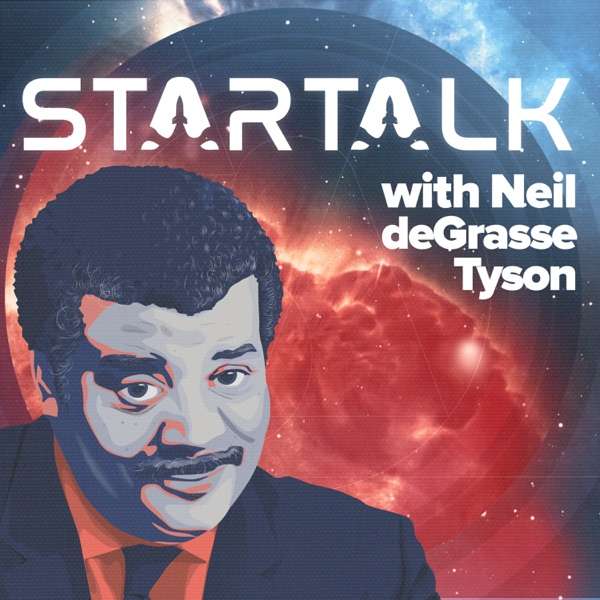
    StarTalk with Neil deGrasse Tyson

    4

    StarTalk with Neil deGrasse Tyson Games & Hobbies
    Radiolab

    5

    Radiolab Documentary
    Stuff To Blow Your Mind

    6

    Stuff To Blow Your Mind Life Sciences
    footer-logo

    Contact Us

    Toll Free: 844-670-7747

    Links

    • Home
    • Top Charts
    • Networks
    • Apps
    • Independents Podcasts
    • Podcast Advertising
    • Podcast News
    • Contact Us
    • About Us
    • Analytics & Insights

    Stay Connected

      Privacy, Terms of Use & Our Code of Ethics Protecting Content Creators Copyrights