TopPodcast.com
Menu
  • Home
  • Top Charts
  • Top Networks
  • Top Apps
  • Top Independents
  • Top Podfluencers
  • Top Picks
    • Top Business Podcasts
    • Top True Crime Podcasts
    • Top Finance Podcasts
    • Top Comedy Podcasts
    • Top Music Podcasts
    • Top Womens Podcasts
    • Top Kids Podcasts
    • Top Sports Podcasts
    • Top News Podcasts
    • Top Tech Podcasts
    • Top Crypto Podcasts
    • Top Entrepreneurial Podcasts
    • Top Fantasy Sports Podcasts
    • Top Political Podcasts
    • Top Science Podcasts
    • Top Self Help Podcasts
    • Top Sports Betting Podcasts
    • Top Stocks Podcasts
  • Podcast News
  • About Us
  • Podcast Advertising
  • Contact
Not in our directory?
Add Show Here
Podcast Equipment
Center

toppodcastlogoOur TOPPODCAST Picks

  • Comedy
  • Crypto
  • Sports
  • News
  • Politics
  • True Crime
  • Business
  • Finance

Follow Us

toppodcastlogoStay Connected

    View Top 200 Chart
    Back to Rankings Page
    Education

    Pure Dog Talk

    Pure Dog Talk is the VOICE of Purebred Dogs. We talk to the legends of the sports and give you tips and tools to create an awesome life with your purebred dog. From dog shows to preservation breeding, from competitive obedience to field work, from agility to therapy dogs and all the fun in between; your passion is our purpose. Pure Dog Talk supports the American Kennel Club, our Parent, Specialty and All-Breed Clubs, Dog Sports, Therapy, Service and Preservation of our Canine Companions.

    Advertise

    Copyright: © Laura Reeves, PureDogTalk, Inc

    • Apple Podcasts
    • Google Play
    • Spotify

    Latest Episodes:
    717 — Showing Dogs on a Shoestring Budget Dec 15, 2025
    Show notes

    Showing Dogs on a Shoestring Budget

    Smart Strategies for Budget-Friendly Success in the Conformation Ring

    Pure Dog Talk is the voice of purebred dogs. We bring you conversations with legends of the sport and offer practical, actionable guidance for creating an extraordinary life with your purebred dog. In this episode, host Laura Reeves dives into a timely and essential topic: how to show dogs effectively without breaking the bank.

    Introduction: Making Dog Shows Work in Expensive Times

    Dog shows are more plentiful than ever—but the costs are rising. Entry fees, fuel, lodging, grooming supplies, and time away from work or family can quickly turn a joyful hobby into a financial strain. Showing on a shoestring doesn’t mean cutting corners—it means strategizing, choosing wisely and investing where it matters most.

    As Laura says, “Your passion is our purpose.”
    These tips will help you maximize results while minimizing expenses.

    1. Start With a Clear Goal

    Before entering a single show, determine exactly what you want to accomplish:

    • Finishing a Championship
      You must attend shows with reliable breed entries.

    • Earning a Grand Championship
      Prioritize majors and competition.

    • Ranking in Breed or Group Standings
      Breed rankings require breed entries; group rankings require competitive groups.


    “You can’t make a plan until you make a goal.”

    Knowing your goal drives every decision—from which shows to attend to how far you should travel.

    2. Research Shows and Judges Like a Pro

    Not every show is equal, and not every judge appreciates the same breed style.

    Tools to Use

    • InfoDog— view historical entries in your breed and region

    • AKC Judges Directory— review judges’ assignment histories and past results


    Understanding which judges favor your dog’s strengths can save hundreds of dollars in wasted entries.

    “Don’t write a judge off forever—just write them off for that particular dog.”

    Make informed entries. Your wallet will thank you.

    3. Build a Support Network

    Showing is more affordable—and far more enjoyable—with a team.

    Benefits of a “Dog Show Crew”

    • Share travel and lodging costs

    • Split grooming space

    • Help hold dogs and support each other in the ring

    • Enjoy camaraderie rather than showing alone


    The Pure Dog Talk Patrons Group is an excellent place to build these relationships.

    “Your enjoyment of dog shows increases when you have people to hang out with—and it saves you money.”

    4. Train and Groom on a Schedule

    Showing an untrained or poorly conditioned dog is one of the most expensive mistakes exhibitors make.

    Create a grooming and conditioning routine—put it in your phone like any other appointment:

    • Tuesday:full groom, brush-out, trim, or strip

    • Weekly:training sessions

    • Before shows:conditioning, coat checks, toenails, ring readiness


    “If it’s not on your calendar, you probably won’t do it.”

    A competitive dog is a cost-effective dog.

    5. Travel Strategically for Better Returns

    Sometimes the best show for your goals is not the closest one.

    A single well-planned trip can be more effective—and cheaper—than several local shows with no results.

    “One productive road trip is often less expensive than four local shows that get you nothing but indigestion.”

    Avoid unreliable online judge-rating sites and seek guidance from trusted mentors or experienced breeders.

    6. Consider a Professional Handler—Strategically

    Hiring a handler does not mean outsourcing your dog’s entire career. Often, sending a dog with a professional for a single weekend or a short campaign can achieve goals that would otherwise take years.

    Choose only handlers who are:
    ✔ Members of the Professional Handler Association
    ✔ Participants in the AKC Registered Handler Program

    “Sometimes a handler can get things done that you simply can’t—and it pencils out.”

    This can be the most cost-effective route when targeted wisely.

    7. Start With a Good Dog—and Don’t Rush Puppies

    Entering a dog that isn’t competitive wastes money and sets everyone up for frustration.

    Laura’s advice for puppies:

    • Show in4–6 monthsfor exposure

    • Skip regular conformation until the dog is mature and competitive

    • Use that time to do obedience, rally, scent work, or socialization


    “Bring your dog out when it is competitive and ready to win.”

    Waiting until two or three years old is often the smartest path—especially in breeds that mature slowly.

    8. Trim the Extras: Save on Small Expenses

    Small savings add up quickly:

    • Skip expensive post-show dinners

    • Bring food and supplies

    • Share hotel rooms

    • Use thesuperintendent’s direct entry optionwhen possible to avoid online fees (save $4–$5 per entry)


    “You can pay for multiple entries with the money you save by skipping one fancy dinner.”

    9. Learn by Helping: Side Gigs With Handlers

    Many handlers welcome help and are willing to teach exhibitors who show interest.

    You might assist with:

    • Holding dogs

    • Walking dogs

    • Setting up and tearing down

    • Grooming prep

    • Ring support


    In return, you gain invaluable hands-on experience.

    “Handlers will spend enormous time teaching you if you show interest—and they always need help.”


    716 – Hunting for Raccoons and Ribbons with Border Terriers Dec 08, 2025
    Show notes

    Hunting for Raccoons and Ribbons with Border Terriers

    [caption id="attachment_14799" align="alignleft" width="376"] Karen Fitzpatrick with one of her Meadowlake Border Terriers.[/caption] Host Laura Reeves is joined by Karen Fitzpatrick from Meadowlake Border Terriers to talk about hunting raccoons and ribbons. “My background honestly was straight hunting,” Fitzpatrick said. “I hunted long before I ever bought a Border. I started here in the US and then started hunting in the UK, met people there. I just love the hunting aspect of Border Terriers. “Border Terriers are still very high on the list for hunting instinct and actually are still made to do the job they were bred to do. “In the middle of winter, we did a lot of barn hunting, and that was just literally clearing out haylofts of raccoons. In this deep, deep snow like today, you would hit a big barn, cut a few terriers loose in a loft and woo, come on. It was crazy. “We did a lot of in ground hunting during the spring and fall, but we tried to not do too much in the spring, mostly because of a lot of groundhogs having babies. Fall is the better time because they're big and fat and getting ready to hibernate and the holes are bigger.” Fitzpatrick has produced 170 champions and 12 best in show winning Border Terriers, including the top winning bitch in the breed. She was named AKC’s Sport Breeder of the Year in 2014 and Terrier Breeder of the Year in 2018, one of a handful of breeders honored in both conformation and performance. “They have to be able to function and do their job and my belief, back then as it is today, they can be beautiful and still do their job and that is what I have absolutely brought through and I will continue it.”

    715 – Whelping Box Foundations with Dr. Marty Greer Dec 01, 2025
    Show notes

    Whelping Box Foundations with Dr. Marty Greer

    Host Laura Reeves is joined by Dr. Marty Greer to discuss whelping box foundational elements. From heat sources to bedding to disinfecting, this is “must have” information for all breeders. “All whelping boxes will have a heat source and a surface that's easy to keep clean and disinfected,” Greer said. “We’ve used the whelping nest as a heat source. There's other companies now that make them and if you don't have electricity they make them propane powered. They make them powered on DC batteries so you can get alternative sources and it might not be a bad idea to have that as an alternative source if you normally have electricity but you're in an area that may have frequent outages and you're expecting puppies.” The heat source should NOT be a heat lamp due not only to fire danger but to the inherent dryness of the environment they create, which can reduce necessary hydration for the puppies. “You want to make sure that you're disinfecting,” Greer said, “and you're using the right disinfectant with the right dilution or concentration. If it's required to be rinsed that you rinse. So read the label directions and don't mix Clorox with anything else. Don't mix your stuff. “So first you're going to have this surface that's heated and you're going to have a disinfectant surface and then you need something absorbent. Because even when the female is cleaning up after the puppies, puppies still will have urine, they'll have stool. And so you need something absorbent, especially in the first 3 or 4 weeks. “If I cannot tell you anything else, please, no newspaper, no shredded paper. Traction. There's nice fleeces that you can put in the box, those work well. I like the absorbency of the repeat pads, and they're a lot easier to launder than the big fleeces. The fleeces, you have to go to the laundromat if they're really huge, because they won't fit in your typical washer and dryer. And then what I put on top of those is I'll put an absorbent material down, like the Repeat pads that Revival has. And then I put down bath mats.”

    714 – “God Loves a Terrier” with Vandra Huber Nov 24, 2025
    Show notes

    “God Loves a Terrier” with Vandra Huber

    [caption id="attachment_14655" align="alignleft" width="523"] Dr. Vandra Huber, McVan Scottish Terriers.[/caption] Host Laura Reeves is joined by Terrier expert Vandra Huber for an overview of this plucky, feisty, fun group of dogs. Huber gave herself a Scottish Terrier as a college graduation present. Forty five years later her many claims to fame include co-ownership of Peggy Sue, Ch. Gaelforce Post Script, piloted by Maripi Wooldridge to Best in Show at Westminster Kennel Club in 1995. Ch. McVan's To Russia With Love, Knopa, won Best in Show at Crufts in 2015 handled by Rebecca Cross, who had been campaigning her in the United States. “Terrier comes from the word terra,” Huber noted. “So these are dogs that do have jobs, just like other groups of dogs, have specific jobs. And the work that terriers perform relates to earth functions. So we have everything from the short -legged terriers who have to be a bit tenacious, okay, maybe a lot tenacious, to go into burrows … think about if you went into a burrow or even saw a badger. If you drag that badger out with your teeth and get out of a burrow and bring it back. “Or then we have the smooth fox terrier whose job is to accompany individuals on the hunt and to be clever enough to round up that fox and alert the hunter as to where that fox is hiding. And yes, they are a little bit sly too. “And then we go to the larger terriers, coated terriers, I'll add, and their work is usually more above ground. So the shorter the legs the more into the earth they go. “You've got to think that most terriers come from the British Isles so you've got rocky terrain, you've got grass, you've got burrows to dig in and oh yes Scotties and these short -legged tears are extremely good as mousers and in digging up any tulips you might plant… “They are awesome squirrel hunters. So a terrier, when it is playing into its natural instincts, you also have to be a little tough because, like a cat, they're going to bring that dead prey to you very proudly. It could be a bunny. It could be a squirrel. So many of those types of creatures are fair game because most of the terriers believe they are bigger and stronger than almost anything else.”

    713 – Westminster KC 150th Anniversary with Don Sturz Nov 17, 2025
    Show notes

    Westminster KC 150th Anniversary with Don Sturz

    Host Laura Reeves is joined by WKC president Don Sturz to discuss the upcoming 150th anniversary of the iconic dog show. “Last year, we all kind of looked at this return to New York City, going into a new venue, the Javits Center, coming back to Madison Square Garden with new teams of people and spaces, we really kind of viewed that as a dress rehearsal and we were very open to it being like a learning experience. And I think what happened was it actually ended up being opening night,” Sturz said. From more sinks in the benching area to more bleachers around the rings, Sturz walks through the nitty gritty behind the scenes of the show venues. “In the Marketplace Hall, which is where the Westminster Merch store is, that hall is probably the one where we put the most effort into. In that one, there was so much more space there than what we thought we had. And so we've brought in more vendors,” Sturz said. “We're trying to have more activations in that room to engage spectators. There's going to be a historical and immersive installation in there, which will kind of take you through the history of Westminster and all the moments that will be really, really beautiful, I think. And I think with this addition of sponsors and vendors and activations and engagement and photo ops we’re kind of just taking it to another level. “We just shot a new Best of Breed winner video because that process is changing. (Previously) the Best of Breed winners filled out a card and took it to the Superintendent and got their MSG wristbands. “This year it's going to be different. Westminster will have our own best of breed table outside the superintendent’s office. So the card will be the same and you'll fill out the information, but you'll go to this desk, someone will be there to take that information and put it into a live doc that will be shared with MSG. You will get your credentials at the ramp at MSG because there was a lot of confusion for people, you know, as far as like who had the wristband. “We're really encouraging people to come as your team, come together, because you're all going to get your wristbands together. So that's a little different. And so this video will explain all of that.”

    712 – Junior Showmanship Regional Events Starting in 2026 Nov 10, 2025
    Show notes

    Junior Showmanship Regional Events Starting in 2026

    Host Laura Reeves is joined by Mari-Beth O’Neill, vice president of sports services at the American Kennel Club, to discuss the planned Junior Showmanship Regional events for 2026. “I've always had that sort of dream that there would be something happening in each part of the country for the juniors,” O’Neill said. “And especially for the ones who may not be able to make it to Orlando, to the AKC National Championship or to Westminster. So, let's do something that's more local." Junior Criteria for Entry:
    • The Junior must reside in the region
    • The Junior will have earned three first place wins in an Open Class with competition in the prior 12 months ending 3 months prior to the date of the event

    Requirements for a club to host a Regional Junior Showmanship Event:
    • Use of a Superintendent
    • Should there be an entry fee, it should not exceed the regular event fee
    • The Junior Regional must be held in conjunction with an all-breed event
    • AKC will offer $1,000 in Scholarship funds for Best Junior to be matched by the club

    Clubs are encouraged to take part in this exciting opportunity to support the next generation of exhibitors by hosting a Regional Junior Showmanship Event in conjunction with their all-breed show in 2026. To be considered, please submit a Request for Consideration Form by December 5, 2025, to juniors@akc.org.

    711 – Identifying Split Cycles and Silent Seasons Nov 03, 2025
    Show notes

    Identifying Split Cycles and Silent Seasons

    Dr. Marty Greer joins host Laura Reeves to discuss split cycles and silent seasons in our bitches. Both are frustrating for breeders but they are not the same situation. “Silent heats and split seasons are not the same,” Greer said. “There are some bitches that fail to ovulate. They (likely) have a cystic ovary and that will cause them to have an initial indication that they look like they're in heat, but then they don't persist and they don't ovulate. “And then there are silent heats, which are kind of the opposite where the bitches come into heat, their ovaries do all the things they're supposed to do. Their hormones do all the things they're supposed to do, but they just don't tell you that they're in heat. They either keep themselves really, really clean or they just don't have much discharge. And there's really not a correlation between small amount of discharge and not having a normal ovulatory cycle. “So (a silent season) doesn't mean you have an infertile bitch. It doesn't mean that she can't get pregnant. It just means you have to be a little bit more strategic about how you manage her. And then we really have to talk about the nutrition. We have to talk about housing. You have to have at least 14 hours a day of full spectrum light. So if your dogs are in crates with crap stacked on top of it or they're in a room that doesn't have adequate lighting, they're not going to have normal cycles. If you're not feeding them the right kind of diets, they're not going to have normal cycles. If you've got them on weird supplements, they're not going to cycle normally. “Lots of things can cause a bitch to just pop out of season. And then four to six weeks later, she'll actually be back in season. The bloody discharge will go away and then it comes back. A dog that doesn't ovulate, the bloody discharge persists normally. If it's a split heat, normally the bloody discharge goes away, and then it comes back four to six weeks later, and then you go merrily on your way and breed her.”

    710 – Harnessing Youth to Build New Clubs Oct 27, 2025
    Show notes

    Harnessing Youth to Build New Clubs

    [caption id="attachment_14619" align="alignleft" width="297"] Ellie Ovrom with her Drent and her All American dog.[/caption] Host Laura Reeves is joined by Ellie Ovrom, Drentsche Patrijshond enthusiast, who has helped found two brand new clubs with just five years involved in the sport. “As I got more interested in purebred dogs and in performance sports,” Ovrom said, “I got involved with existing clubs and organizations around me, or in the case of the breed club, the national club, and as I was getting involved, I started to realize that some of the way that things were being done was not necessarily in alignment with my values and interests. “And not only that, but I was making connections with other folks in those organizations who felt very similarly. And rather than lean into conflict, which is I think unfortunately what ends up happening a lot in dog clubs, we realized that there's space for all of us and we just want to enjoy the dogs.” A project manager by trade, Ovrom noted that “a lot of the key skills of a project manager align really well with working in dog clubs or any volunteer organizations, frankly. It's a lot of managing process and managing people. So particularly in founding two new nonprofit organizations, we had to figure out OK, what is needed, in what order and how do we do this most efficiently and most effectively and try our best to get it right the first time. We don't always, but we try to get it right the first time, every time. “Nobody's getting paid for this. We're all doing it because we love it. And but people are busy. They have lives, they have families, they have their real jobs. How do you capitalize on people's skill sets and their passion without burning them out and building community at the same time? “I think we've had things that have worked and things that have not worked, but recognizing that the intent of everybody is good is, I think the basic approach that I try to take is everyone's doing their best or wants to do their best. How can you help people achieve that is what I try to do.”

    709 – Adam Levy’s Secrets to Success of Top-Level Dual Dogs Oct 20, 2025
    Show notes

    Adam Levy’s Secrets to Success of Top-Level Dual Dogs

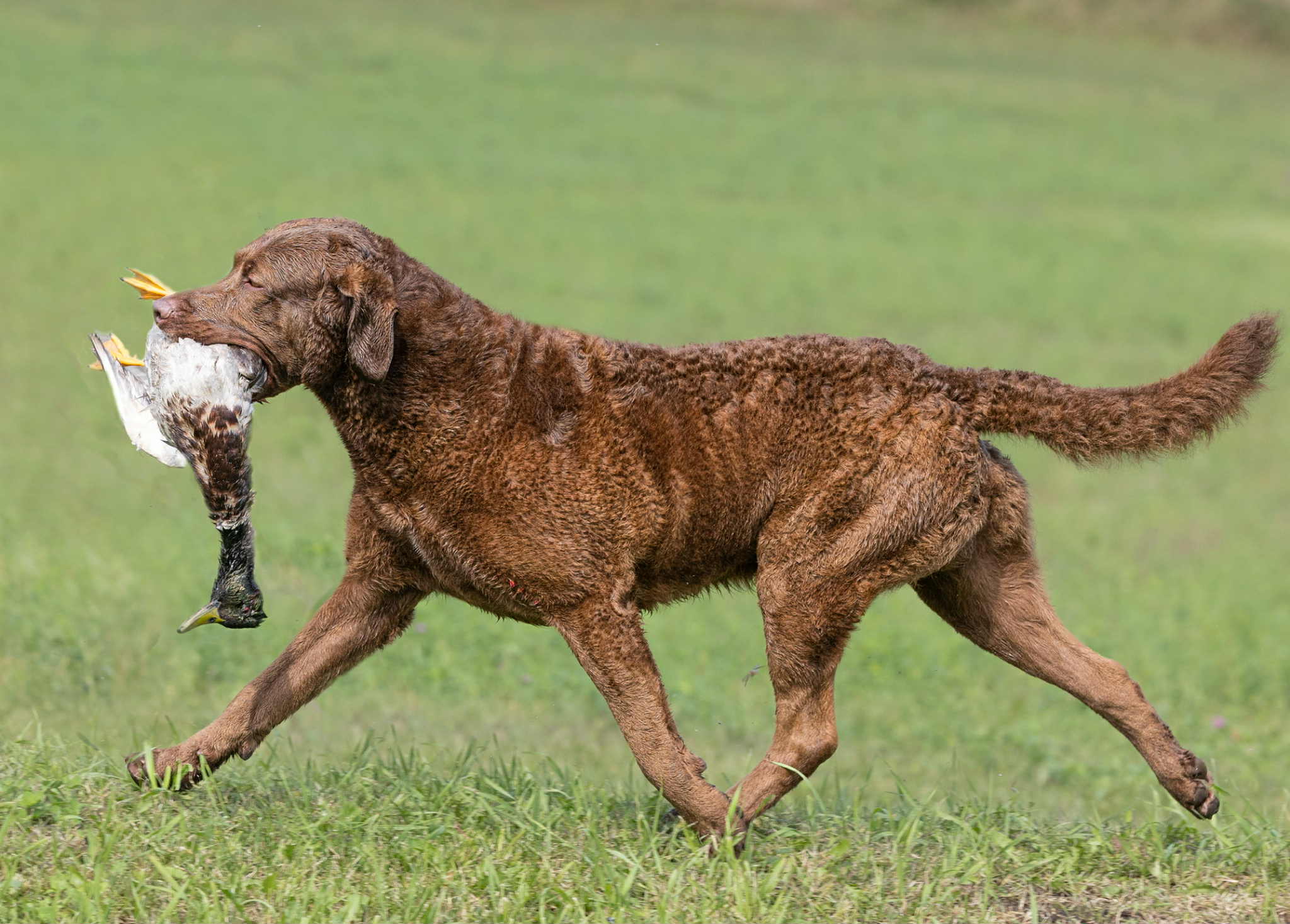
    [caption id="attachment_14601" align="alignleft" width="322"] Adam Levy and Devon Kipp Levy work magic emphasizing the dual dog.[/caption] Host Laura Reeves is joined by Adam Levy, breeder of Chesapeake Bay Retrievers, to talk dual dogs, retriever tests and what it takes to be successful at the top. Levy started in Chessies 16 years ago. In that time he has bred five BIS winners, including two with MH titles and field trial points. Working with his business partner Andrew Barbouche, Levy operates Next Generation Gundog Training in Minnesota. “Just because a dog is pretty or well put together or just because a dog has got a master hunter title, doesn't mean the dog should be bred, doesn't mean that it should really keep producing forward,” Levy said. “I don't mind a soft dog,” Levy noted. “I don't think that is a bad thing. As long as you have some grit behind you, I don't care if you have to kind of slow everything down and get them through the yard, as long as they have some good grit to them and they have that desire for themselves. “I won't take a quitter. A dog that wants to quit is just a big no-no for me and a dog that just doesn't look good doing the job that you've asked them to do. You know, we have to remember that the standard was meant to be able to have a dog that can last long. “I wanna be hunting with my 10-year-old dog. I don't want to be fighting through injuries because I've hunted this dog. I was just in Canada and we shot 1000 birds over a couple days. I want to be able to hunt that dog every day without it being sore or breaking down. So being able to be structurally sound and being able to have the brain to do the job that you asked them to do, those are must haves for me. [caption id="attachment_14602" align="alignright" width="348"] Levy focuses on dogs with the structure and the brains to work all day.[/caption] “And being able to have the willingness to “cut” a dog from a program because they're not that. And I think that's the hardest thing for breeders nowadays or people that can't have large numbers of dogs, they don't want to cut the one or two dogs that they have living in their house. And so I think that's where we kind of get stuck in mediocrity sometimes. Levy married Devon Kipp Levy in 2021. This powerhouse couple combines the field and show elements of their dual dogs in an enviable manner. “Devon is somebody that has such a great eye and is so talented hands on with a dog. I really get to see what a dog really looks like to their full potential with her. And I think it's definitely taken the breeding program to heights at a faster rate that I could have ever imagined. And it doesn't even have to do with the ribbons or winning. It's just being able to really see a dog move properly and watching a dog, you know, what they really look like. And being able to talk about those things.

    “Emotion needs to come out of breeding. And we should love our dogs and our dogs should be our pets and sleeping in our bed and love our dogs like they’re our own family. But when it comes to breeding, you need to take the emotion out of it.
    “You have to make the right decisions for your breeding program and for the breed. That's the hardest thing. (People think) “it's the best dog I ever had so I want to breed him.” Just because he's the best dog that you've ever had doesn't mean that it's going to help advance the breed.”

    708 – Veterinarian and Author Joins Fight to Support Responsible Breeders Oct 13, 2025
    Show notes

    Veterinarian and Author Joins Fight to Support Responsible Breeders

    [caption id="attachment_14594" align="alignleft" width="248"] Dr. Nancy Kay, veterinarian and author, encourages clients to source their new dog from responsible breeders.[/caption] Host Laura Reeves is joined by veterinarian and author Dr. Nancy Kay to discuss her fight to support responsible breeders. Kay said that when she’s talking to clients about how to find a responsible breeder, she advises them, “If you're speaking with a breeder over the phone or online, first and foremost, the breeder insists that you come visit. They want you there. It's not necessarily about looking at their dogs, but that breeder wants to size you up. “They're not willing to sell one of their puppies to just anyone. They'll have more questions for you than you actually have for them. So once you're there, the breeder will speak very highly about her breed. She’s passionate about the breed that she adores, and she wants to enhance the breed through future breeding. So, she'll tell you all about the breed. She'll talk to you about all the health issues that the breed is at risk for. They'll show you all the health clearances on parents, as well as probably the aunts and the uncles and the grandparents. She'll ask you to sign a contract and most responsible breeders, part of the contract is if you ever need to rehome this puppy, I'm the first you call. “When you sign on with a responsible breeder, you're kind of becoming part of her family. She's going to want to keep tabs on your pup. If your pup develops a health issue, she's going to want to be the first one to know about it, second in line to your veterinarian, because if there's a problem, she wants to know about it. I mean, it is such an important relationship, the breeder and the puppy buyer and the veterinarian, the puppy buyer’s veterinarian.” Check out Kay's book Speaking for Spot.

    Previous 1 4 5 6 7 8 21 Next

    Related Podcasts

    Making Sense with Sam Harris

    1

    Making Sense with Sam Harris Education
    Grammar Girl

    2

    Grammar Girl Education
    Good Life Project

    3

    Good Life Project Education
    Explain It to Me

    4

    Explain It to Me Education
    Team Never Quit

    5

    Team Never Quit Comedy
    Optimal Living Daily – Personal Development and Self-Improvement

    6

    Optimal Living Daily – Personal Development and Self-Improvement Alternative Health
    footer-logo

    Contact Us

    Toll Free: 844-670-7747

    Links

    • Home
    • Top Charts
    • Networks
    • Apps
    • Independents Podcasts
    • Podcast Advertising
    • Podcast News
    • Contact Us
    • About Us
    • Analytics & Insights

    Stay Connected

      Privacy, Terms of Use & Our Code of Ethics Protecting Content Creators Copyrights