
 Our TOPPODCAST Picks
  Stay Connected
Pure Dog Talk is the VOICE of Purebred Dogs. We talk to the legends of the sports and give you tips and tools to create an awesome life with your purebred dog. From dog shows to preservation breeding, from competitive obedience to field work, from agility to therapy dogs and all the fun in between; your passion is our purpose. Pure Dog Talk supports the American Kennel Club, our Parent, Specialty and All-Breed Clubs, Dog Sports, Therapy, Service and Preservation of our Canine Companions.
- Home
- Top Charts
- Top Networks
- Top Apps
- Top Independents
- Top Podfluencers
- Top Picks
- Top Business Podcasts
- Top True Crime Podcasts
- Top Finance Podcasts
- Top Comedy Podcasts
- Top Music Podcasts
- Top Womens Podcasts
- Top Kids Podcasts
- Top Sports Podcasts
- Top News Podcasts
- Top Tech Podcasts
- Top Crypto Podcasts
- Top Entrepreneurial Podcasts
- Top Fantasy Sports Podcasts
- Top Political Podcasts
- Top Science Podcasts
- Top Self Help Podcasts
- Top Sports Betting Podcasts
- Top Stocks Podcasts
- Podcast News
- About Us
- Podcast Advertising
- Contact


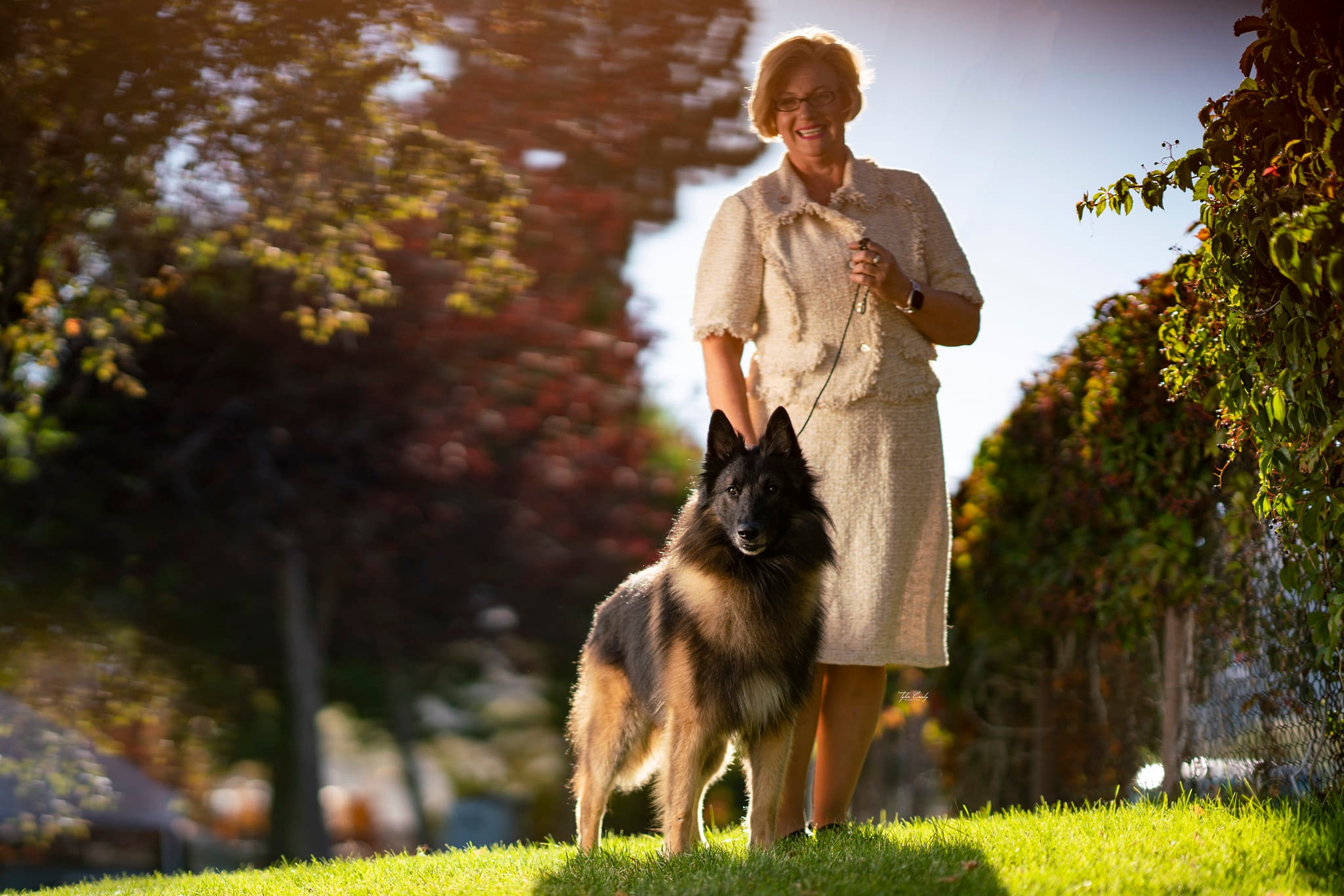 Karyn Cowdrey, BlackFyre Handling Services.[/caption]
start of life in the ring. I shouldn't have to hand them off to a total stranger.
Karyn Cowdrey, BlackFyre Handling Services.[/caption]
start of life in the ring. I shouldn't have to hand them off to a total stranger.
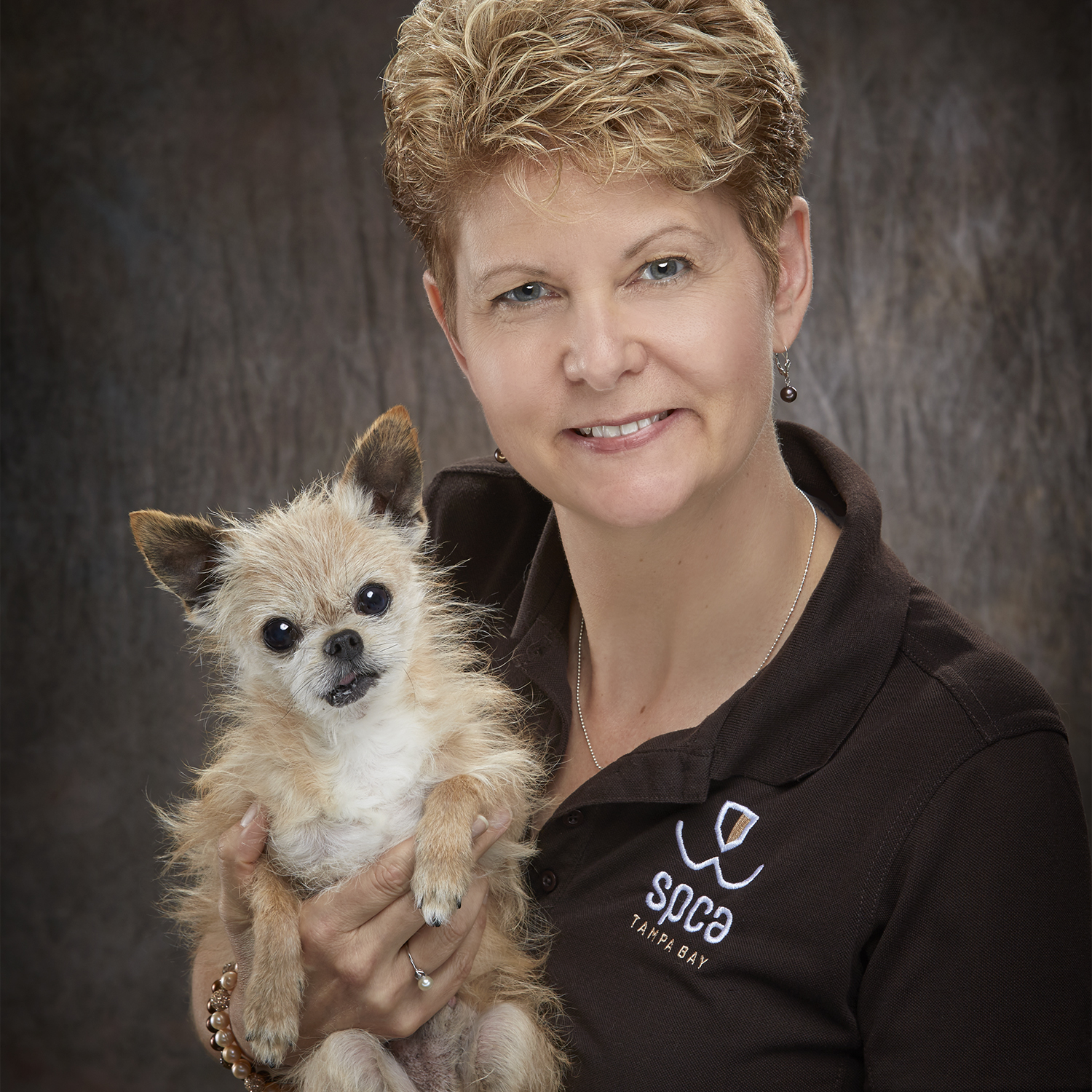 Martha Boden, CEO SPCA Tampa Bay[/caption]
“I started to get a feeling for what a puppy distributor did,” Boden said. “And then as we were having these conversations, Chris started talking to me about Canine Care Certification and I thought, ‘Wait a second. This is not something that my world has been talking about at all. Like why are we not aware of this amazing thing that's happening at one of the best veterinary colleges in the country?’
“And I realized again working through Chris and getting a chance to learn that it was still kind of in its early stages. And so I thought, okay, well, I want to understand more about it. I want to understand more about these standards. And I also want to understand, because Chris is bringing animals into my community, he knows something because he provides puppies to two of those six stores, he knows something about the world I live in. And I thought, if there's an opportunity to partner with somebody who's this closely involved with animals that are coming into my community, I should figure out what it is.
“So Chris brought, I think his entire management team to Florida. And we talked very frankly about, would there be an opportunity to partner and how it needed to be something that was a win for both of our organizations, and all of the people that we touch. And we just started brainstorming about what that might look like.
“And the first thing that came out of my COO's mouth that I think made us all kind of stop on our tracks was she said, ‘You keep talking about a good breeder. Well, I've never seen one, because I don't get called in when a breeder is doing a great job. My team gets called in when it's a disaster. So forget any marketing that somebody might be doing. I've been there, I have walked through, you know, overwhelming facilities where, you know, there's all kinds of horrific things happening all around us. That is all I know. So Chris and your team, you're going to have to help me understand what a good breeder is.’
“And that really just opened the floodgates. So we basically all agreed, all right, let's get to know each other. Let's figure out who we are and what language we use and how we might be able to work together.
Martha Boden, CEO SPCA Tampa Bay[/caption]
“I started to get a feeling for what a puppy distributor did,” Boden said. “And then as we were having these conversations, Chris started talking to me about Canine Care Certification and I thought, ‘Wait a second. This is not something that my world has been talking about at all. Like why are we not aware of this amazing thing that's happening at one of the best veterinary colleges in the country?’
“And I realized again working through Chris and getting a chance to learn that it was still kind of in its early stages. And so I thought, okay, well, I want to understand more about it. I want to understand more about these standards. And I also want to understand, because Chris is bringing animals into my community, he knows something because he provides puppies to two of those six stores, he knows something about the world I live in. And I thought, if there's an opportunity to partner with somebody who's this closely involved with animals that are coming into my community, I should figure out what it is.
“So Chris brought, I think his entire management team to Florida. And we talked very frankly about, would there be an opportunity to partner and how it needed to be something that was a win for both of our organizations, and all of the people that we touch. And we just started brainstorming about what that might look like.
“And the first thing that came out of my COO's mouth that I think made us all kind of stop on our tracks was she said, ‘You keep talking about a good breeder. Well, I've never seen one, because I don't get called in when a breeder is doing a great job. My team gets called in when it's a disaster. So forget any marketing that somebody might be doing. I've been there, I have walked through, you know, overwhelming facilities where, you know, there's all kinds of horrific things happening all around us. That is all I know. So Chris and your team, you're going to have to help me understand what a good breeder is.’
“And that really just opened the floodgates. So we basically all agreed, all right, let's get to know each other. Let's figure out who we are and what language we use and how we might be able to work together.
 “And so we went into it with a very open mind, but not a whole lot of preconceived notions notions other than this kind of idea that, hey, wait a second, the Canine Care Certified Standards do require an adoption pathway for retiring adults and gosh, one thing we're actually pretty good at is placing adult dogs with individuals that want to move them into their home. So that started a year -long journey.”
Listen in for the rest of this heart warming story about a truly staggering partnership to improve the lives of ALL dogs. Please take a moment to complete the survey Boden mentioned
“And so we went into it with a very open mind, but not a whole lot of preconceived notions notions other than this kind of idea that, hey, wait a second, the Canine Care Certified Standards do require an adoption pathway for retiring adults and gosh, one thing we're actually pretty good at is placing adult dogs with individuals that want to move them into their home. So that started a year -long journey.”
Listen in for the rest of this heart warming story about a truly staggering partnership to improve the lives of ALL dogs. Please take a moment to complete the survey Boden mentioned 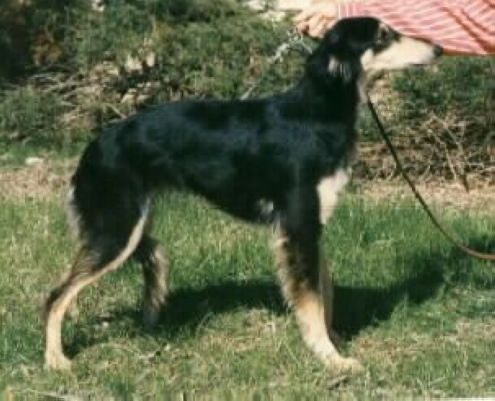 Kristull Amalie - LHW (1984) from Francie Stoll's A litter.[/caption]
Yeah. So Silken Windhounds, we're going back to the very beginning. We're looking at around the 1980s.
Our breed founder is Francie Stoll. She had a pretty extensive history in Borsoy before she decided to take on this project of making a new breed. So in the early 1980s, she actually got the first dogs that she would use to produce Silkens from Walter Wheeler. Walter Wheeler was well known in the Whippet community for having his long -haired Whippets.
So Walter Wheeler claims that he had, you know, purebred long -haired Whippets. You know, whether that is really true, we don't really know. We, as Silken People, we say that they were lurchers. We very strongly believe that there were some Sheltie hiding back there because in Silken, we have CEA and MDR1, herding breed, you know. So that's what our suspicion is. We call them our lurchers.
So Francie got several of these long -haired Whippets from Walter Wheeler. Some of them were in Whelp, and she used those to start making her own thing. I mean, it wasn't until about 1985 that she says her first litter of Silken Windhounds were born.
This was when she had added in some Borzoi and she finally created the vision of what she was looking for. And really what she was looking to produce with these lurchers and adding the Borzoi and the little bit of the whippet history is that she's looking for a medium -sized, very elegant, very easy sighthound. You know, just looking to fill that niche for something a little bit smaller, but not quite Italian greyhound sized. So that was really what she was just looking to produce.
And the D litter, the Kristull D litter, is what she says was her first production of Silkens. She made it. This is what she's looking for. And she took that and continued to breed on from there.
So this is fascinating to me. Is she doing inbreeding, linebreeding, and how is she accomplishing or how is the breed today accomplishing? What is this? 30 years later, the consistency that you expect to see from a purebred dog?
Yes, there was a lot of linebreeding. Mostly there were studs used several times. You know, we're talking upwards of like 7, 8, 9, 10, 11 times. We've got dogs being used. So it was primarily a lot of linebreeding on line breeding in the beginning. But eventually, we were able to create enough diversity to we're sending Silkens out to Europe. We've got Silkens in Canada. We've got other breeders participating. You know, once it kind of got bigger than Francie, that's when, and this is, you know, only the late 90s. That's when we're starting to add more.
We're creating the breed and we're able to take this and really just continue to breed on to what Francie has produced. And I really think that very early on, they were breeding true. You know, you look at a very early picture of a silken windhound and I can look at that even as a project dog and say,
"That looks like a silken."
[caption id="attachment_12484" align="alignleft" width="424"]
Kristull Amalie - LHW (1984) from Francie Stoll's A litter.[/caption]
Yeah. So Silken Windhounds, we're going back to the very beginning. We're looking at around the 1980s.
Our breed founder is Francie Stoll. She had a pretty extensive history in Borsoy before she decided to take on this project of making a new breed. So in the early 1980s, she actually got the first dogs that she would use to produce Silkens from Walter Wheeler. Walter Wheeler was well known in the Whippet community for having his long -haired Whippets.
So Walter Wheeler claims that he had, you know, purebred long -haired Whippets. You know, whether that is really true, we don't really know. We, as Silken People, we say that they were lurchers. We very strongly believe that there were some Sheltie hiding back there because in Silken, we have CEA and MDR1, herding breed, you know. So that's what our suspicion is. We call them our lurchers.
So Francie got several of these long -haired Whippets from Walter Wheeler. Some of them were in Whelp, and she used those to start making her own thing. I mean, it wasn't until about 1985 that she says her first litter of Silken Windhounds were born.
This was when she had added in some Borzoi and she finally created the vision of what she was looking for. And really what she was looking to produce with these lurchers and adding the Borzoi and the little bit of the whippet history is that she's looking for a medium -sized, very elegant, very easy sighthound. You know, just looking to fill that niche for something a little bit smaller, but not quite Italian greyhound sized. So that was really what she was just looking to produce.
And the D litter, the Kristull D litter, is what she says was her first production of Silkens. She made it. This is what she's looking for. And she took that and continued to breed on from there.
So this is fascinating to me. Is she doing inbreeding, linebreeding, and how is she accomplishing or how is the breed today accomplishing? What is this? 30 years later, the consistency that you expect to see from a purebred dog?
Yes, there was a lot of linebreeding. Mostly there were studs used several times. You know, we're talking upwards of like 7, 8, 9, 10, 11 times. We've got dogs being used. So it was primarily a lot of linebreeding on line breeding in the beginning. But eventually, we were able to create enough diversity to we're sending Silkens out to Europe. We've got Silkens in Canada. We've got other breeders participating. You know, once it kind of got bigger than Francie, that's when, and this is, you know, only the late 90s. That's when we're starting to add more.
We're creating the breed and we're able to take this and really just continue to breed on to what Francie has produced. And I really think that very early on, they were breeding true. You know, you look at a very early picture of a silken windhound and I can look at that even as a project dog and say,
"That looks like a silken."
[caption id="attachment_12484" align="alignleft" width="424"]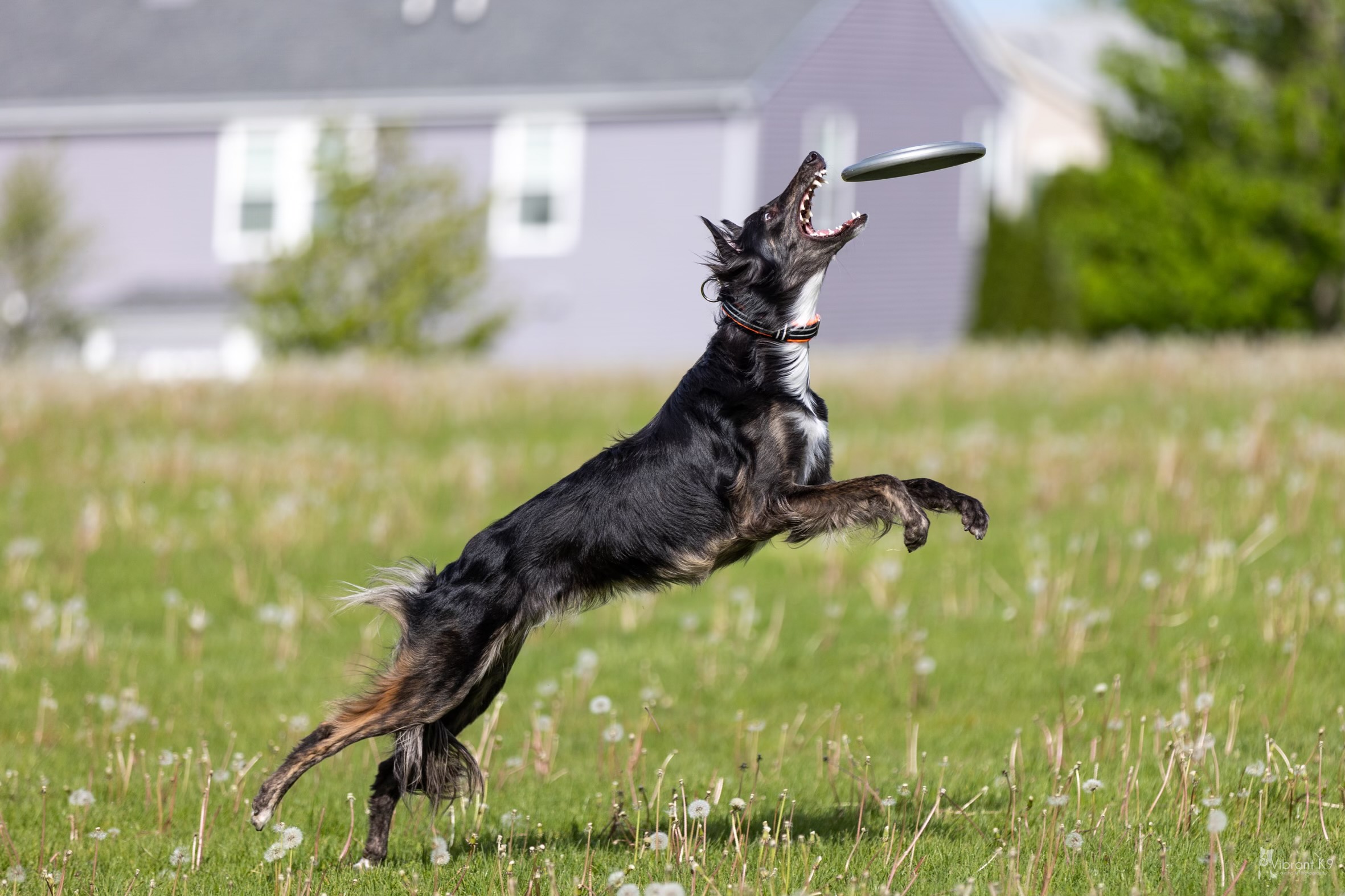 Most Silken Windhound enthusiasts enjoy competing in various sports with their dogs.[/caption]
And so what makes a silken windhound its breed? So the ones that I've seen, I'm kind of like, "Is that an ugly Borzoi? What are we doing?" Right? So talk to me about what makes them their specific breed. What is their breed type?
Yeah. So I think what makes a silken a silken is that size -wise they should be, and typically are, much smaller than a Borzoi. We're talking about with the size slightly bigger than a Whippet, slightly smaller than a Borzoi. They have very long, easy to maintain coat. Personality -wise, they're a little more human -oriented, a little more biddable, willing to work. We do have silken, there's a range. So we have your more sight -hound typical silken where we're talking like, not a lot of repetition, the training session should be short and sweet. And then we also have silken, and I've met several, I have a couple that are just like almost border collie -like, and they're willing this to work, like just drill and drill and drill.
Interesting. So you see that herding bit coming through.
Yes. And it's surprising, you know, how much that really seems to, even still, because Sheltie was only ever what was behind Walter Wheeler's dogs. There has never been any direct cross with Sheltie to Whippet, to Whippet, to Borzoi, like that's never been in the history of a silken windhound. So it's just that little bit way back when, and it still really seems to ring true today.
A little bit goes a long way with those guys.
Yeah. Literally.
So you have a club, you have a parent club, yes?
Yes. We have the International Silken Windhound Society. This was founded in 1999. That is kind of where we started to lock everything in. So we've got the breed club that's been produced. We've accepted a breed standard, and now we're kind of really making things officially official.
And do you compete with your dogs in UKC, I think, yes?
Yes. Yep. So we gained UKC recognition or acceptance in 2011. That's our primary venue for conformation. Some time in the last 10, 15 years.
Yeah. Okay. All right. That's good. And is there a desire amongst your group of fanciers to compete at the AKC level? Is this something you expect to take forward and to FSS, miscellaneous, and work your way up?
Yes. Yes. Very much much so. I would say a very good chunk of exhibitors in the breed are hoping for AKC acceptance.
Listen in for the rest of this fascinating coversation....
Most Silken Windhound enthusiasts enjoy competing in various sports with their dogs.[/caption]
And so what makes a silken windhound its breed? So the ones that I've seen, I'm kind of like, "Is that an ugly Borzoi? What are we doing?" Right? So talk to me about what makes them their specific breed. What is their breed type?
Yeah. So I think what makes a silken a silken is that size -wise they should be, and typically are, much smaller than a Borzoi. We're talking about with the size slightly bigger than a Whippet, slightly smaller than a Borzoi. They have very long, easy to maintain coat. Personality -wise, they're a little more human -oriented, a little more biddable, willing to work. We do have silken, there's a range. So we have your more sight -hound typical silken where we're talking like, not a lot of repetition, the training session should be short and sweet. And then we also have silken, and I've met several, I have a couple that are just like almost border collie -like, and they're willing this to work, like just drill and drill and drill.
Interesting. So you see that herding bit coming through.
Yes. And it's surprising, you know, how much that really seems to, even still, because Sheltie was only ever what was behind Walter Wheeler's dogs. There has never been any direct cross with Sheltie to Whippet, to Whippet, to Borzoi, like that's never been in the history of a silken windhound. So it's just that little bit way back when, and it still really seems to ring true today.
A little bit goes a long way with those guys.
Yeah. Literally.
So you have a club, you have a parent club, yes?
Yes. We have the International Silken Windhound Society. This was founded in 1999. That is kind of where we started to lock everything in. So we've got the breed club that's been produced. We've accepted a breed standard, and now we're kind of really making things officially official.
And do you compete with your dogs in UKC, I think, yes?
Yes. Yep. So we gained UKC recognition or acceptance in 2011. That's our primary venue for conformation. Some time in the last 10, 15 years.
Yeah. Okay. All right. That's good. And is there a desire amongst your group of fanciers to compete at the AKC level? Is this something you expect to take forward and to FSS, miscellaneous, and work your way up?
Yes. Yes. Very much much so. I would say a very good chunk of exhibitors in the breed are hoping for AKC acceptance.
Listen in for the rest of this fascinating coversation.... 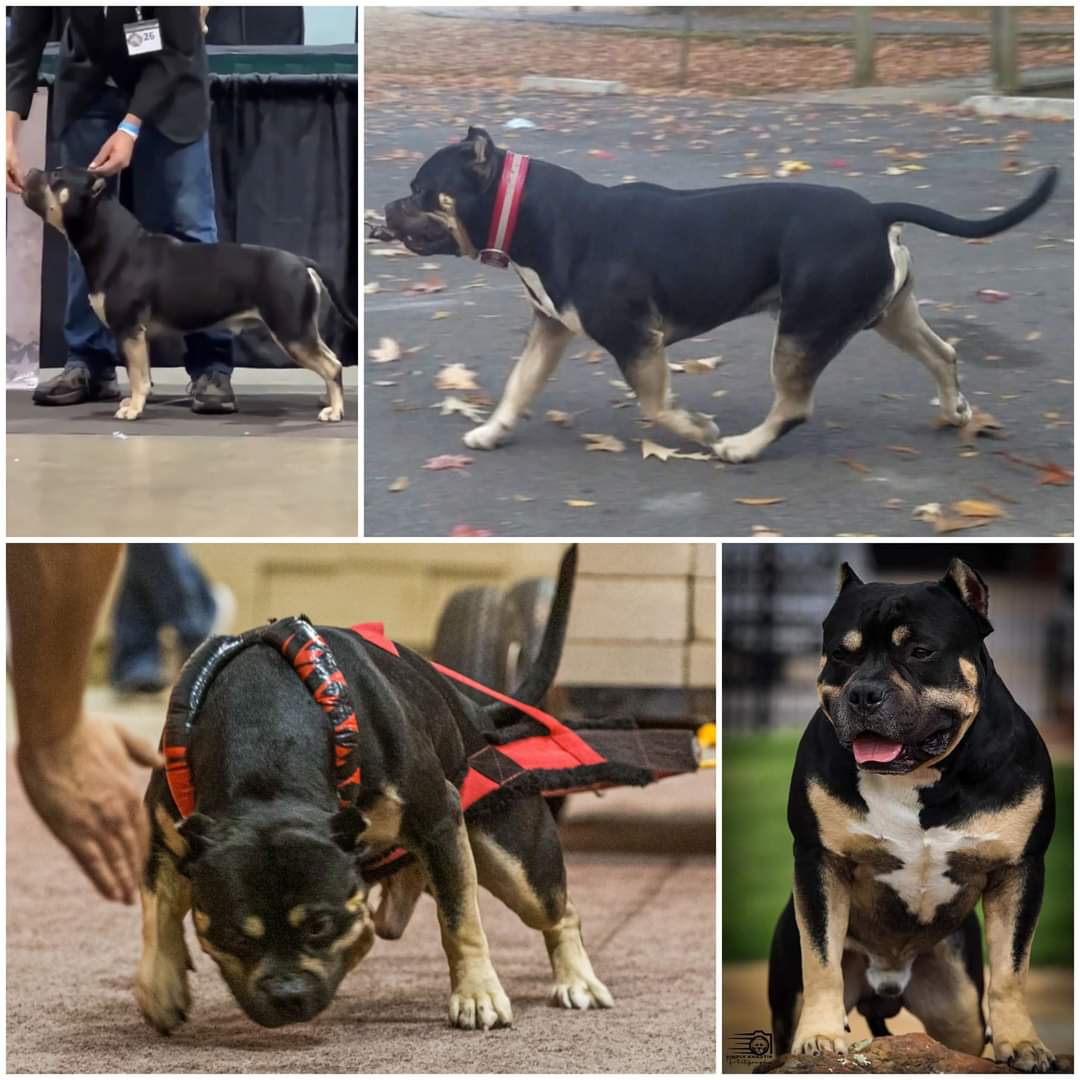 MBIS/MRBIS TDBIS MSDBIS VBIS R1 STAR3 RACEN URO1 AP2 VPA UWPO UGWPCH IC-GRCH INT-BCH DGCH ArK9s Noschitt Sherlock DNA-VIP NTD SPOT-ON[/caption]
“But I think that American Bullies fill a really important spot. There are people out there that want to have a bigger dog, a little bit bigger than medium size, that can do all of the really fun sports, but they really don't want a working dog. Or maybe they don't want the attitude of a terrier, or they don't want to deal with the baying of a scent hound or the quirks that come with the sight hound. You know, whatever it may be. But they want to sport dog. Or they want a dog that can go on three-mile hikes with them or go swimming at the lake and they're like, well, do I get a small dog or do I just go with some of the things I don't enjoy as much and I think American Bullies do fill that space really well.
“They're very easy to train. They're incredibly handler oriented. They're absolutely in love with their people, to the point where they've never met a stranger. Protective is definitely not on their list. A lot of people will see them. They're like, oh, they're guardians. They're 100% not guardians. They're not going to protect you. That burglar coming in the house is their best friend. They're super outgoing, they're fun loving and they love to try everything you know, anything you could do. They're excited to do it.”
“The official listing of founding breeds for the American Bully are the American Staffordshire Terrier, the American Pitbull Terrier, Old English Bulldog and English bulldog.
[caption id="attachment_12480" align="alignleft" width="307"]
MBIS/MRBIS TDBIS MSDBIS VBIS R1 STAR3 RACEN URO1 AP2 VPA UWPO UGWPCH IC-GRCH INT-BCH DGCH ArK9s Noschitt Sherlock DNA-VIP NTD SPOT-ON[/caption]
“But I think that American Bullies fill a really important spot. There are people out there that want to have a bigger dog, a little bit bigger than medium size, that can do all of the really fun sports, but they really don't want a working dog. Or maybe they don't want the attitude of a terrier, or they don't want to deal with the baying of a scent hound or the quirks that come with the sight hound. You know, whatever it may be. But they want to sport dog. Or they want a dog that can go on three-mile hikes with them or go swimming at the lake and they're like, well, do I get a small dog or do I just go with some of the things I don't enjoy as much and I think American Bullies do fill that space really well.
“They're very easy to train. They're incredibly handler oriented. They're absolutely in love with their people, to the point where they've never met a stranger. Protective is definitely not on their list. A lot of people will see them. They're like, oh, they're guardians. They're 100% not guardians. They're not going to protect you. That burglar coming in the house is their best friend. They're super outgoing, they're fun loving and they love to try everything you know, anything you could do. They're excited to do it.”
“The official listing of founding breeds for the American Bully are the American Staffordshire Terrier, the American Pitbull Terrier, Old English Bulldog and English bulldog.
[caption id="attachment_12480" align="alignleft" width="307"]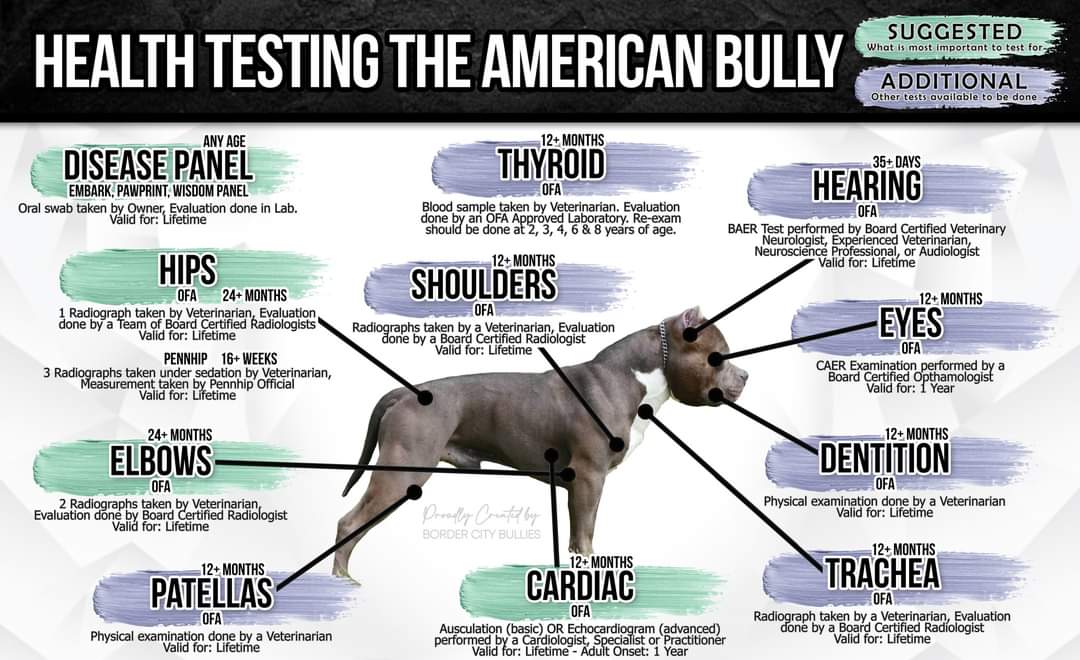 Health testing for the American Bully. Infographic by Anissa Shotbolt.[/caption]
“I think they really took traits from each of these breeds and really focused on making a dog that could be calm enough and low drive enough to be with a young family, with young kids, or even a first time pet owner. Removing a lot of the dog aggression to the point where we do not want to see any dog aggression in American Bullies at all. We don't want to see prey drive. You should be able to have your American Bully with anything and everything. They should be gentle with children. They should be biddable, easy companions. There shouldn't be anything that makes them difficult for first time pet owner. These are really important traits for this breed that I feel like the founding breeds maybe fell a little bit short on.”
Health testing for the American Bully. Infographic by Anissa Shotbolt.[/caption]
“I think they really took traits from each of these breeds and really focused on making a dog that could be calm enough and low drive enough to be with a young family, with young kids, or even a first time pet owner. Removing a lot of the dog aggression to the point where we do not want to see any dog aggression in American Bullies at all. We don't want to see prey drive. You should be able to have your American Bully with anything and everything. They should be gentle with children. They should be biddable, easy companions. There shouldn't be anything that makes them difficult for first time pet owner. These are really important traits for this breed that I feel like the founding breeds maybe fell a little bit short on.” 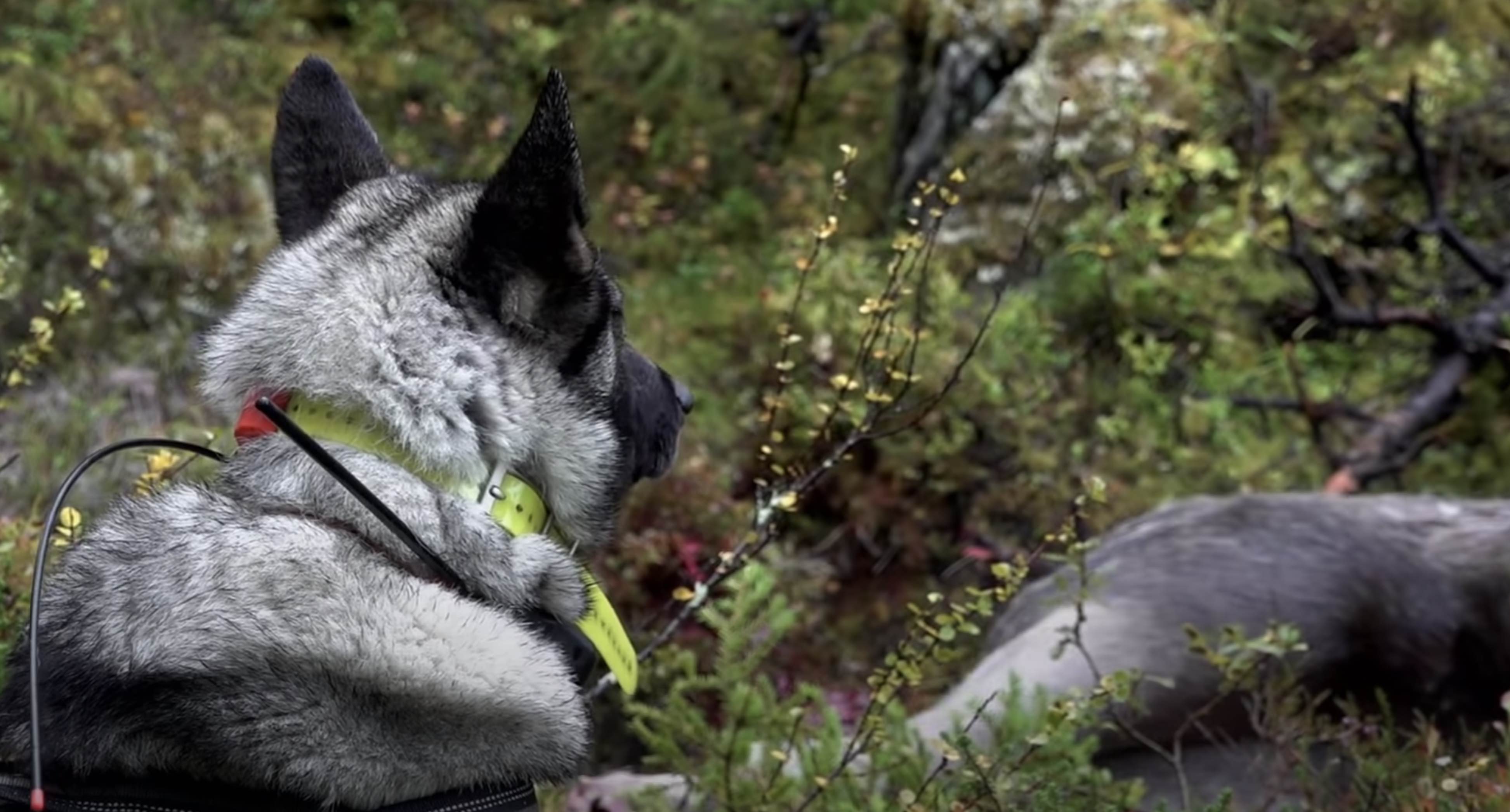 This Norwegian Elkhound tracked down a wounded moose that was hit by a car so it could be humanely dispatched.[/caption]
“The other one is with a very long leash, 5-6 meters. And let me just explain a little bit why we do that in Norway. Norway is a tiny country compared to the United States and we have distinct areas that we are allowed to hunt. In these areas you can hunt a certain number of mooses. OK and these dogs? They run far. And the and a moose doesn't always stop (in the confined area). So, if you have small areas, it's very helpful to have a leash because then you can control it a lot more and you can search a whole area.
“They locate the moose from a quite a long distance. They are incredible, their ability to do this. Then they located, they run over to it and hopefully they are able to get the moose to turn around towards them. To defend themselves. This is an old, old instinct that moose have from wolves and bears. And then the dog barks. From old times before the GPS trackers, the hunter hears that noise. And that was their GPS.”
This Norwegian Elkhound tracked down a wounded moose that was hit by a car so it could be humanely dispatched.[/caption]
“The other one is with a very long leash, 5-6 meters. And let me just explain a little bit why we do that in Norway. Norway is a tiny country compared to the United States and we have distinct areas that we are allowed to hunt. In these areas you can hunt a certain number of mooses. OK and these dogs? They run far. And the and a moose doesn't always stop (in the confined area). So, if you have small areas, it's very helpful to have a leash because then you can control it a lot more and you can search a whole area.
“They locate the moose from a quite a long distance. They are incredible, their ability to do this. Then they located, they run over to it and hopefully they are able to get the moose to turn around towards them. To defend themselves. This is an old, old instinct that moose have from wolves and bears. And then the dog barks. From old times before the GPS trackers, the hunter hears that noise. And that was their GPS.” 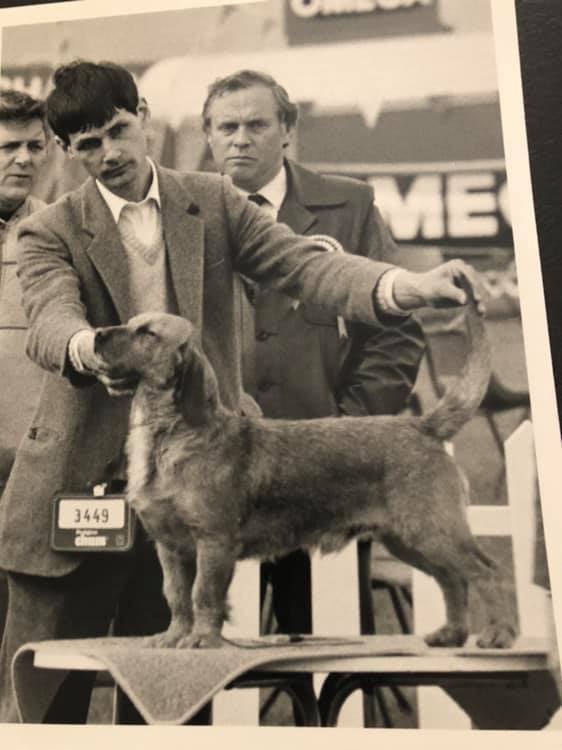 Frost with Merrick, Varon Aymeric at Dehra born in quarantine at Ryslip kennels.[/caption]
Fauves, like many European breeds, were nearly lost due to the World Wars and had to be reconstructed from just a handful of breeding stock, Frost said.
In France, the breed is a rabbit hunting hound and the French are very proud of the breed’s hunting ability. They are kept as pack hounds in their native land and as a result are very good with other dogs.
“(The Fauves are) very sweet tempered,” Frost observed. “I found them more so even than the (PBGV). I never experienced a fight with my Fauves.”
These short-legged hounds carry a short, hard, dense wire coat, less profusely furnished than the distant cousin the PBGV. Minimal, low maintenance grooming is required for Fauves with correct coats.
“It’s a breed that needs activity,” Frost noted. “Like all pack hounds, they just need a companion. They are great with kids. The breed is a bit more people-focused than many scent hounds.”
[caption id="attachment_12431" align="alignleft" width="308"]
Frost with Merrick, Varon Aymeric at Dehra born in quarantine at Ryslip kennels.[/caption]
Fauves, like many European breeds, were nearly lost due to the World Wars and had to be reconstructed from just a handful of breeding stock, Frost said.
In France, the breed is a rabbit hunting hound and the French are very proud of the breed’s hunting ability. They are kept as pack hounds in their native land and as a result are very good with other dogs.
“(The Fauves are) very sweet tempered,” Frost observed. “I found them more so even than the (PBGV). I never experienced a fight with my Fauves.”
These short-legged hounds carry a short, hard, dense wire coat, less profusely furnished than the distant cousin the PBGV. Minimal, low maintenance grooming is required for Fauves with correct coats.
“It’s a breed that needs activity,” Frost noted. “Like all pack hounds, they just need a companion. They are great with kids. The breed is a bit more people-focused than many scent hounds.”
[caption id="attachment_12431" align="alignleft" width="308"]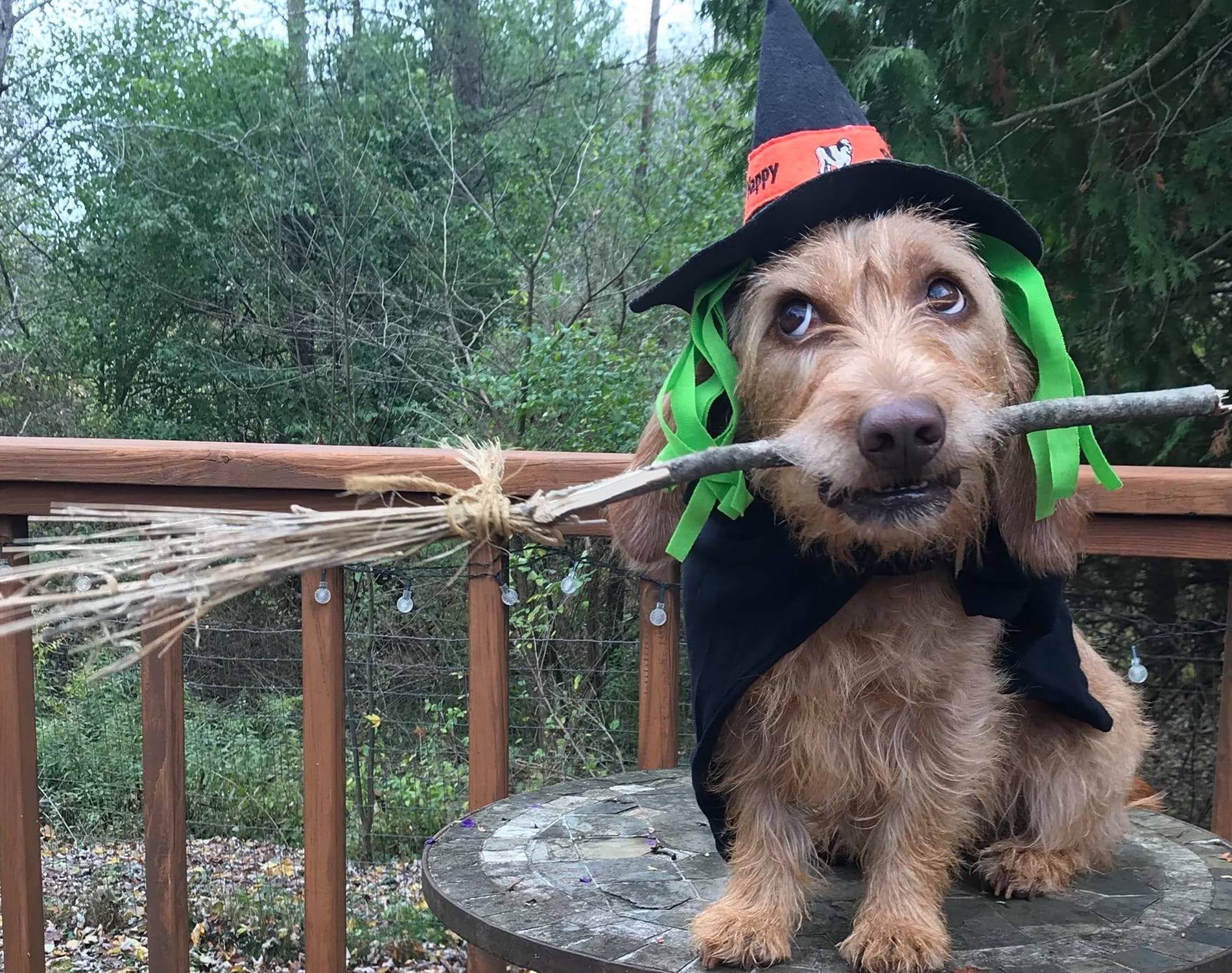 Fauves are generally biddable and people oriented.[/caption]
“This is still a hound,” Frost said. “It still can be “deaf”, you can’t trust them to come when called every time. They are still being hunted and worked full time in Europe. So that prey drive is still close to the surface.”
Fauves are generally biddable and people oriented.[/caption]
“This is still a hound,” Frost said. “It still can be “deaf”, you can’t trust them to come when called every time. They are still being hunted and worked full time in Europe. So that prey drive is still close to the surface.” 




