TopPodcast.com
Menu
  • Home
  • Top Charts
  • Top Networks
  • Top Apps
  • Top Independents
  • Top Podfluencers
  • Top Picks
    • Top Business Podcasts
    • Top True Crime Podcasts
    • Top Finance Podcasts
    • Top Comedy Podcasts
    • Top Music Podcasts
    • Top Womens Podcasts
    • Top Kids Podcasts
    • Top Sports Podcasts
    • Top News Podcasts
    • Top Tech Podcasts
    • Top Crypto Podcasts
    • Top Entrepreneurial Podcasts
    • Top Fantasy Sports Podcasts
    • Top Political Podcasts
    • Top Science Podcasts
    • Top Self Help Podcasts
    • Top Sports Betting Podcasts
    • Top Stocks Podcasts
  • Podcast News
  • About Us
  • Podcast Advertising
  • Contact
Not in our directory?
Add Show Here
Podcast Equipment
Center

toppodcastlogoOur TOPPODCAST Picks

  • Comedy
  • Crypto
  • Sports
  • News
  • Politics
  • True Crime
  • Business
  • Finance

Follow Us

toppodcastlogoStay Connected

    View Top 200 Chart
    Back to Rankings Page
    Government

    Policy Career Guides

    Actionable, expert advice on policy careers in AI, biosecurity, and emerging technologies. Learn how to break into US policy, where you can make a difference, and strategies to advance your career.

    Narrations of emergingtechpolicy.org guides by the Horizon Institute for Public Service.

    Advertise

    Copyright: © 2025 All rights reserved

    • Apple Podcasts
    • Google Play
    • Spotify

    Latest Episodes:
    “Policy cover letters” by Horizon Institute for Public Service Jan 01, 2025
    Show notes

    Home / Tips & resources / Policy cover letters Contents ▾ Tips & Resources Updated 8th Jul 2026 6 min read Share Policy cover letters This guide explains how to write effective cover letters for US policy positions (e.g. congressional offices, think tanks, state legislatures). Your cover letter should strategically complement your resume, providing color

    ---

    Outline:

    (00:44) Format: How to structure your cover letter

    (01:30) Sections

    (03:22) Content: What to include

    (05:47) Writing: Tone, word choice, and style

    (07:16) Strong cover letter examples

    (07:20) Early-career example

    (10:13) Mid-carer example

    (14:06) Using AI to improve your cover letter

    (15:33) Further resources

    (15:39) Notes

    ---

    If you’re interested in pursuing a career in emerging technology policy, complete our Policy Career Interest Form, and we may be able to match you with opportunities suited to your background and interests.

    The original text contained 4 footnotes which were omitted from this narration.

    ---

    First published:
    February 19th, 2026

    Source:
    https://emergingtechpolicy.org/tips/policy-cover-letters


    “Policy resumes” by Horizon Institute for Public Service Jan 01, 2025
    Show notes

    Home / Tips & resources / Policy resumes Contents ▾ Tips & Resources Updated 8th Jul 2026 8 min read Share Policy resumes This guide explains how to write a resume for US policy roles (e.g. Congress, think tanks, state legislatures), including advice on resume formatting, content, and writing. Policy resumes generally follow standard resume

    ---

    Outline:

    (00:54) Format: How to make your resume look professional

    (02:55) Sections

    (06:59) Content: What experiences to include

    (08:44) Writing: How to draft strong bullet points

    (10:54) Resume bullet examples

    (11:44) Using AI to improve your resume

    (12:50) Further resources

    (12:56) Notes

    ---

    If you’re interested in pursuing a career in emerging technology policy, complete our Policy Career Interest Form, and we may be able to match you with opportunities suited to your background and interests.

    The original text contained 3 footnotes which were omitted from this narration.

    ---

    First published:
    February 19th, 2026

    Source:
    https://emergingtechpolicy.org/tips/policy-resumes

    ---

    Images from the article:

    Resume bullet point breakdown showing action verb

    Apple Podcasts and Spotify do not show images in the episode description. Try Pocket Casts, or another podcast app.


    “Technical standards and evaluations” by Horizon Institute for Public Service Jan 01, 2025
    Show notes

    Home / Policy levers / Technical standards and evaluations Contents ▾ Policy Levers Updated 3rd Jun 2026 42 min read Share Technical standards and evaluations Overview Technical standards—shared expectations for definitions, performance of products and systems, and testing—underpin nearly all aspects of technology and manufacturing globally. Evaluations check whether those expectations are being met through

    ---

    Outline:

    (00:10) Overview

    (02:16) Why does the government use technical standards and evaluations?

    (04:39) Technical standards and evaluations basics

    (04:44) What are technical standards?

    (06:56) What are evaluations?

    (08:37) The lifecycle of standards and evals

    (09:43) Who makes standards?

    (12:28) How US agencies adopt and use standards

    (15:44) Standards & evaluations for emerging technology

    (16:29) AI

    (17:49) Standards bodies

    (18:55) Third-party evaluation organizations

    (20:26) Governance and coordination bodies

    (22:17) Major recent developments in AI standards and evaluations

    (24:27) Major AI-related standards & evaluations

    (24:55) Biosecurity and life sciences

    (27:33) Laboratory and clinical standards organizations

    (29:05) Biosecurity governance and dual-use risk organizations

    (31:46) Major bio-related standards

    (32:14) Major recent developments in biosecurity standards and evaluations

    (34:28) Why (not) work on technical standards & evaluations?

    (34:45) The case for impact

    (36:52) The case for professional growth

    (38:07) Limitations

    (40:17) How does the USG engage with standards? Who's involved?

    (41:59) Agencies creating standards themselves

    (44:32) Examples of agency-created standards in emerging tech

    (49:07) Agencies participating in external (non-governmental) standard-setting bodies

    (50:07) Examples of NIST engaging with ANSI and ISO

    (51:47) Agencies or legislators adopting or referencing external standards

    (53:33) Examples of agencies referencing voluntary standards

    (55:19) Working on standards & evals: types of roles and career opportunities

    (56:03) Preparing for standards & evals roles

    (01:01:00) Appendices: Day-in-the-life

    (01:01:00) Day in the life: Stories from people working on technical standards

    (01:03:41) Further reading

    (01:03:46) Notes

    ---

    If you’re interested in pursuing a career in emerging technology policy, complete our Policy Career Interest Form, and we may be able to match you with opportunities suited to your background and interests.

    The original text contained 7 footnotes which were omitted from this narration.

    ---

    First published:
    March 29th, 2026

    Source:
    https://emergingtechpolicy.org/policy-levers/technical-standards-and-evaluations

    ---

    Images from the article:

    Timeline showing NIST AI RMF development from July 2021 to January 2023.

    Apple Podcasts and Spotify do not show images in the episode description. Try Pocket Casts, or another podcast app.


    “Federal R&D funding” by Horizon Institute for Public Service Jan 01, 2025
    Show notes

    Home / Policy levers / Federal R&D funding Contents ▾ Policy Levers Updated 3rd Jun 2026 51 min read Share Federal R&D funding Overview Federal R&D funding—public dollars allocated by the US government to support scientific and technological progress—is among the strongest policy tools for shaping national innovation. Spawned out of Cold War ambitions to

    ---

    Outline:

    (00:10) Overview

    (01:39) Why does the government invest in R&D?

    (04:39) Federal R&D funding basics

    (05:37) Department of War funding categories

    (08:56) Funding models and mechanisms

    (12:37) Federal R&D funding and emerging technology

    (16:22) Major recent developments in AI R&D funding

    (21:43) Major recent developments in bio R&D funding

    (24:54) Why (not) work on federal R&D funding?

    (25:00) The case for impact

    (28:20) The case for professional growth

    (30:11) Some tradeoffs

    (33:28) The funding process: Who's involved?

    (35:11) Budget and policy direction setting

    (35:55) The White House

    (38:59) Congress

    (41:47) External groups (think tanks, nonprofits, industry groups, etc.)

    (44:58) Grant-making and program execution

    (46:55) Conducting the actual R&D

    (49:31) Coordination

    (52:08) Oversight

    (54:04) Working on R&D funding: types of roles and career opportunities

    (54:41) Preparing for R&D funding roles

    (58:38) Appendices: Day-in-the-life & a brief history of federal R&D funding

    (58:45) Day in the life: Stories from people working on federal R&D funding

    (01:02:29) Federal R&D funding: A brief history

    (01:08:02) Further reading

    (01:08:07) Notes

    ---

    If you’re interested in pursuing a career in emerging technology policy, complete our Policy Career Interest Form, and we may be able to match you with opportunities suited to your background and interests.

    The original text contained 36 footnotes which were omitted from this narration.

    ---

    First published:
    February 14th, 2026

    Source:
    https://emergingtechpolicy.org/policy-levers/federal-rd-funding

    ---

    Images from the article:

    Three pie charts showing funding sources for basic research, applied research, and development in 2022.Line graph titled Pie chart titled

    Apple Podcasts and Spotify do not show images in the episode description. Try Pocket Casts, or another podcast app.


    “Export controls” by Horizon Institute for Public Service Jan 01, 2025
    Show notes

    Home / Policy levers / Export controls Contents ▾ Policy Levers Updated 3rd Jun 2026 39 min read Share Export controls Overview Export controls are regulations that restrict which goods, technologies, and services can be sold or transferred to foreign countries, entities, or individuals. The US government primarily uses export controls to protect national security

    ---

    Outline:

    (00:09) Overview

    (01:32) Why does the government use export controls?

    (02:24) Export control basics

    (03:07) What gets controlled

    (04:22) How controls work

    (06:20) Key screening lists

    (09:44) Controls beyond US borders

    (11:25) Unilateral and multilateral controls

    (12:32) Export controls and emerging technology

    (13:26) The AI compute supply chain and why it matters for export controls

    (16:36) Major recent developments in AI-related export controls

    (22:10) Major recent developments in bio-related export controls

    (24:41) Why (not) work on export controls?

    (24:46) The case for impact

    (26:25) The case for professional growth

    (28:17) Factors limiting the effectiveness of some export controls

    (31:07) The export controls process: Who's involved?

    (33:29) Strategy and agenda-setting

    (34:05) Congress

    (36:35) White House and coordinating agencies

    (38:50) External groups

    (42:57) Regulatory development, license review, and enforcement

    (43:39) Developing controls

    (45:38) License review

    (47:16) Enforcement

    (49:20) Oversight

    (51:34) Working on export controls: types of roles and career opportunities

    (51:59) Preparing for export control work

    (54:48) Appendices: Brief history of export controls

    (54:54) Brief history of US export controls

    (57:43) Further reading

    (57:49) Notes

    ---

    If you’re interested in pursuing a career in emerging technology policy, complete our Policy Career Interest Form, and we may be able to match you with opportunities suited to your background and interests.

    The original text contained 16 footnotes which were omitted from this narration.

    ---

    First published:
    April 10th, 2026

    Source:
    https://emergingtechpolicy.org/policy-levers/export-controls

    ---

    Images from the article:

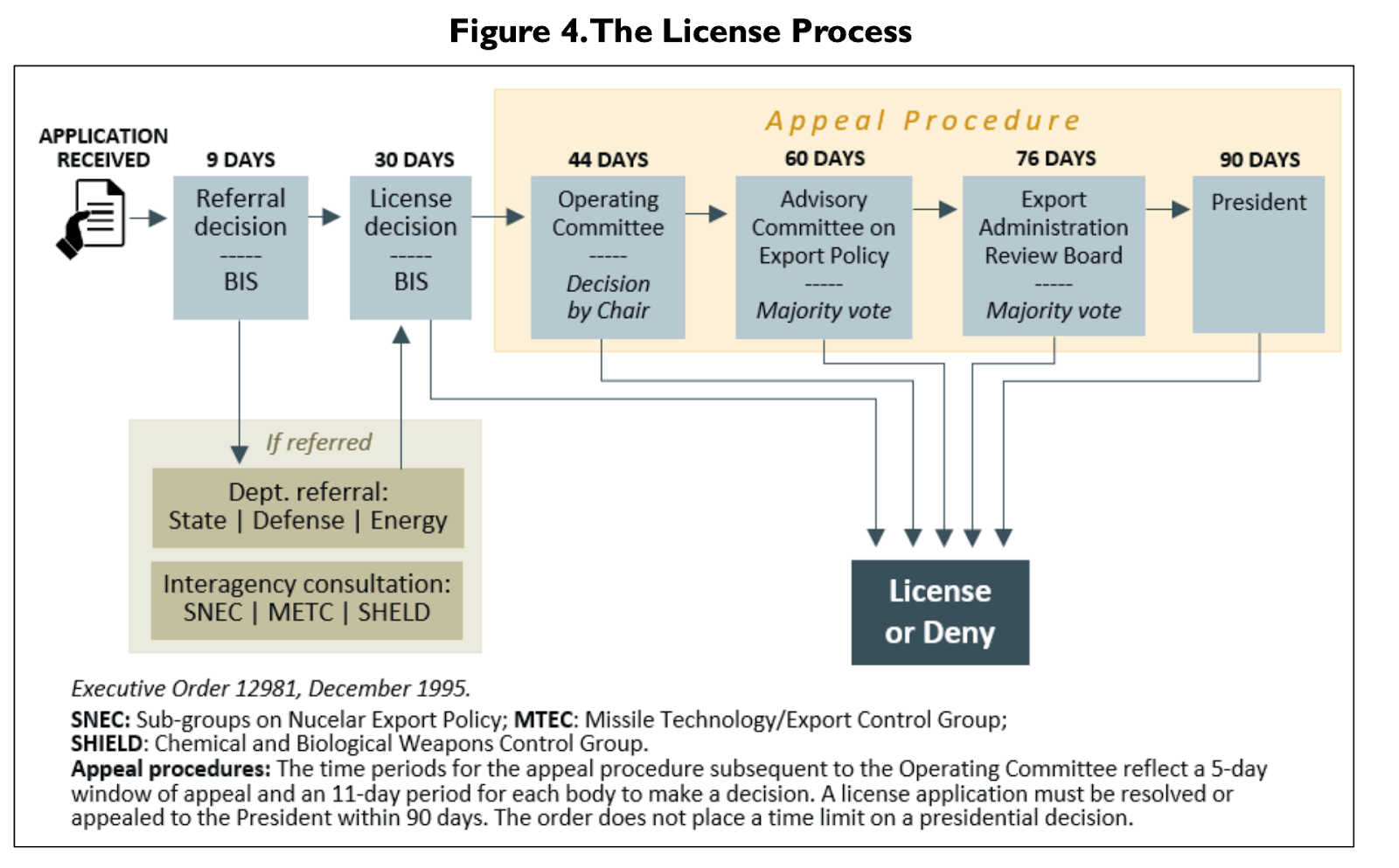
    Flowchart titled Flowchart titled

    Apple Podcasts and Spotify do not show images in the episode description. Try Pocket Casts, or another podcast app.


    “Political campaigning” by Horizon Institute for Public Service Jan 01, 2025
    Show notes

    A political campaign is an organized effort to elect candidates to public office or pass ballot initiatives such as constitutional amendments, legislative referenda, or local ordinances.

    ---

    Outline:

    (02:04) Campaign types, organization, and roles

    (02:09) Campaign types

    (04:47) Primary and general election campaigns

    (07:42) Competitive campaigns and partisan campaign committees

    (10:31) Legislative campaigns

    (13:21) Executive campaigns

    (14:08) Judicial campaigns and ballot initiatives

    (15:28) Organization and roles

    (17:45) Campaign finance

    (18:47) Working on a transition team

    (21:31) Campaign timelines

    (23:40) Personal fit: Pros & cons to campaign work

    (23:56) Pros

    (24:55) Building experience, skills, and networks

    (26:13) Career advancement

    (30:23) Civic engagement

    (31:22) Cons

    (34:45) Testing your fit for campaign work

    (36:09) Getting a political campaign role

    (36:56) Choosing a campaign: a framework and tool

    (38:54) Additional considerations for choosing a campaign

    (42:30) Typical campaign salary

    (43:40) Finding a job and the hiring process

    (45:14) Preparing for an interview

    (46:44) What comes next: post-campaign employment

    (51:33) Transitioning from campaigning to post-campaign work

    (52:51) Further reading

    ---

    If you’re interested in pursuing a career in emerging technology policy, complete our Policy Career Interest Form, and we may be able to match you with opportunities suited to your background and interests.

    ---

    Last updated:
    January 31st, 2025

    Source:
    https://emergingtechpolicy.org/pathways/political-campaigning

    ---

    Images from the article:

    Apple Podcasts and Spotify do not show images in the episode description. Try Pocket Casts, or another podcast app.


    “National Institute of Standards and Technology (NIST)” by Horizon Institute for Public Service Jan 01, 2025
    Show notes

    The National Institute of Standards and Technology (NIST) is a non-regulatory agency in the Department of Commerce that serves as the US national measurement institute.

    ---

    Outline:

    (00:11) Overview

    (01:39) Background on NIST

    (03:26) Organizational structure

    (07:27) NIST and AI standards

    (09:35) NIST and bio standards

    (11:32) Working at NIST

    (13:10) Further reading

    ---

    If you’re interested in pursuing a career in emerging technology policy, complete our Policy Career Interest Form, and we may be able to match you with opportunities suited to your background and interests.

    The original text contained 6 footnotes which were omitted from this narration.

    ---

    Last updated:
    December 28th, 2025

    Source:
    https://emergingtechpolicy.org/institutions/executive-branch/national-institute-of-standards-and-technology

    ---

    Images from the article:

    Created based on source __T3A_LINK_IN_POST__

    Apple Podcasts and Spotify do not show images in the episode description. Try Pocket Casts, or another podcast app.


    “Advanced Research Projects Agencies (ARPAs)” by Horizon Institute for Public Service Jan 01, 2025
    Show notes

    ARPAs are specialized R&D funding entities designed to accelerate technological breakthroughs across national defense, intelligence, energy, and health.

    ---

    Outline:

    (00:11) Overview

    (02:40) Organization

    (04:48) The ARPA model

    (10:45) Personal fit: Why (not) work at an ARPA

    (11:01) Advantages

    (12:45) Disadvantages

    (15:20) The ARPAs and emerging technology R&D

    (15:56) Defense Advanced Research Project Agency (DARPA)

    (19:08) Intelligence Advanced Research Projects Activity (IARPA)

    (21:06) Advanced Research Projects Agency for Health (ARPA-H)

    (22:21) Advanced Research Projects Agency-Energy (ARPA-E)

    (23:50) Types of roles

    (28:50) How to get an ARPA job

    (29:30) Early- and mid-career opportunities

    (30:03) PM roles

    (34:56) Researching ARPA programs relevant to emerging technology

    (36:56) Further reading

    ---

    If you’re interested in pursuing a career in emerging technology policy, complete our Policy Career Interest Form, and we may be able to match you with opportunities suited to your background and interests.

    The original text contained 15 footnotes which were omitted from this narration.

    ---

    Last updated:
    May 14th, 2025

    Source:
    https://emergingtechpolicy.org/institutions/executive-branch/arpas

    ---

    Images from the article:

    Org chart sketched from publicly available sources; not an official agency diagramOrg chart sketched from publicly available sources; not an official agency diagramSource __T3A_LINK_IN_POST__Source __T3A_LINK_IN_POST__ (from 2016)

    Apple Podcasts and Spotify do not show images in the episode description. Try Pocket Casts, or another podcast app.


    “Department of Energy (DOE)” by Horizon Institute for Public Service Jan 01, 2025
    Show notes

    DOE oversees energy policy, scientific research, and the nuclear arsenal, being the largest US government funder of physical science research. It significantly contributes to science and technology development and policy, including AI and biosecurity, particularly via its national labs.

    ---

    Outline:

    (00:10) Overview

    (01:50) Background on DOE

    (03:55) Organizational structure

    (06:14) DOE and AI policy

    (07:47) Advances in the national labs

    (09:06) Major recent AI-related developments at DOE

    (14:10) DOE offices working on AI policy and research

    (14:30) DOE and biosecurity policy and research

    (17:09) 2022. National Biodefense Strategy and Implementation Plan

    (17:44) Major recent biosecurity-related developments at DOE

    (20:59) DOE offices working on biosecurity policy and research

    (21:20) Working at DOE

    (23:25) Further reading

    ---

    If you’re interested in pursuing a career in emerging technology policy, complete our Policy Career Interest Form, and we may be able to match you with opportunities suited to your background and interests.

    The original text contained 1 footnote which was omitted from this narration.

    ---

    Last updated:
    January 16th, 2025

    Source:
    https://emergingtechpolicy.org/institutions/executive-branch/department-of-energy

    ---

    Images from the article:

    Source: USASpendingSource: DOE. DOE also oversees 17 national laboratories, which are government-owned but contractor-operated (see our guide).

    Apple Podcasts and Spotify do not show images in the episode description. Try Pocket Casts, or another podcast app.


    “Why (not) work at a think tank? (Part 1)” by Horizon Institute for Public Service Jan 01, 2025
    Show notes

    Think tanks are useful launching pads for careers in public service. This article explains how think tank work can allow you to contribute to policy change and enhance your professional development.

    ---

    Outline:

    (00:12) About this guide

    (01:57) Key takeaways

    (03:06) Focus on DC think tanks

    (04:03) Why might you (not) want to work at a DC think tank?

    (05:05) Contributing to policy change

    (08:05) Limitations to think tank contributions

    (09:49) Professional development

    (10:19) Building a network, including mentors and sponsors

    (12:52) Increasing your understanding of the policy world

    (15:47) Building policy-relevant skills

    (16:50) Gaining a valuable policy credential and becoming a recognized expert

    ---

    If you’re interested in pursuing a career in emerging technology policy, complete our Policy Career Interest Form, and we may be able to match you with opportunities suited to your background and interests.

    The original text contained 2 footnotes which were omitted from this narration.

    ---

    Last updated:
    January 13th, 2024

    Source:
    https://emergingtechpolicy.org/institutions/think-tanks/1-what-and-why


    Previous 1 6 7 8 9 10 Next

    Related Podcasts

    Inside Strategic Coach: Connecting Entrepreneurs With What Really Matters

    1

    Inside Strategic Coach: Connecting Entrepreneurs With What Really Matters Business
    WSJ Your Money Briefing

    2

    WSJ Your Money Briefing Business
    FORTUNE Unfiltered with Aaron Task

    3

    FORTUNE Unfiltered with Aaron Task Business
    FORTUNE OnStage Presents: The Most Powerful Women

    4

    FORTUNE OnStage Presents: The Most Powerful Women Business
    Slate Money

    5

    Slate Money Business
    In The Dark – The New Yorker

    6

    In The Dark – The New Yorker Business News
    footer-logo

    Contact Us

    Toll Free: 844-670-7747

    Links

    • Home
    • Top Charts
    • Networks
    • Apps
    • Independents Podcasts
    • Podcast Advertising
    • Podcast News
    • Contact Us
    • About Us
    • Analytics & Insights

    Stay Connected

      Privacy, Terms of Use & Our Code of Ethics Protecting Content Creators Copyrights