The Future Of American Chestnuts In Mason County, This West Virginia Morning
Oct 15, 2026
Show notes
On this West Virginia Morning, in Mason County, West Virginia, new data center developments are changing local landscapes and communities. One of the computing campuses is also threatening a special stand of trees. Reporter Andrea “River” Peterson reports.
Also, the Federal Energy Regulatory Commission (FERC) has rejected a proposal from energy grid operator PJM that would have prioritized other customers over data centers.
And, state educational leaders are taking action on school funding issues.
West Virginia Morning is a production of West Virginia Public Broadcasting, which is solely responsible for its content.
Support for our news bureaus comes from Shepherd University and Marshall University School of Journalism and Mass Communications.
Eric Douglas produced this episode.
Listen to West Virginia Morning weekdays at 7:49 a.m. on West Virginia Public Broadcasting or subscribe to the podcast and never miss an episode. #WVMorning
The Best Time To Get Vaccinated Against Respiratory Illnesses, This West Virginia Morning
Oct 14, 2026
Show notes
On this West Virginia Morning, the changing colors of the leaves and the dropping temperatures of fall bring with them calls to get vaccinated against the flu. But in recent years, that call to action has expanded. Reporter Chris Schulz spoke with Dr. Brian Huggins, Monongalia County health officer and medical director, about when to get vaccinated.
West Virginia Morning is a production of West Virginia Public Broadcasting, which is solely responsible for its content.
Support for our news bureaus comes from Shepherd University and Marshall University School of Journalism and Mass Communications.
Maria Young produced this episode.
Listen to West Virginia Morning weekdays at 7:49 a.m. on West Virginia Public Broadcasting or subscribe to the podcast and never miss an episode. #WVMorning
Obesity Rates In W.Va. On The Decline, This West Virginia Morning
Oct 13, 2026
Show notes
On this West Virginia Morning, it’s not often that we associate West Virginia's obesity rates with good news – but data released last month from the nonprofit Trust for America's Health (TFAH) finds West Virginia is one of just two states nationwide to show a significant drop in adult obesity rates. Assistant News Director Maria Young caught up with Takisha Dawan Everett, executive vice president of TFAH, to find out what's causing the decline – and whether it's likely to continue.
Also, voters in Harrison County will see a new kind of levy on their ballots Nov. 3.
And, a fraternity on the West Virginia University (WVU) campus in Morgantown has just a few more days to respond to a suspension handed down Friday following allegation of hazing.
Finally, the Public Service Commission of West Virginia (PSC) is currently working on rules for the energy used to supply data centers, and a state senator wants to make sure ratepayers are protected.
West Virginia Morning is a production of West Virginia Public Broadcasting, which is solely responsible for its content.
Support for our news bureaus comes from Shepherd University and Marshall University School of Journalism and Mass Communications.
Maria Young produced this episode.
Listen to West Virginia Morning weekdays at 7:49 a.m. on WVPB Radio or subscribe to the podcast and never miss an episode. #WVMorning
A WARN Notice In Kanawha And The Flatwoods Monster, This West Virginia Week
Oct 10, 2026
Show notes
On this West Virginia Week, a mine operation in Kanawha County gets a WARN Notice, three Wyoming County Schools will remain closed until next week, and we learn the origins of the Flatwoods Monster.
Bill Lynch is our host this week. Our theme music is by Matt Jackfert.
West Virginia Week is a web-only podcast that explores the week's biggest news in the Mountain State. It's produced with help from Bill Lynch, Chris Schulz, Eric Douglas and Maria Young.
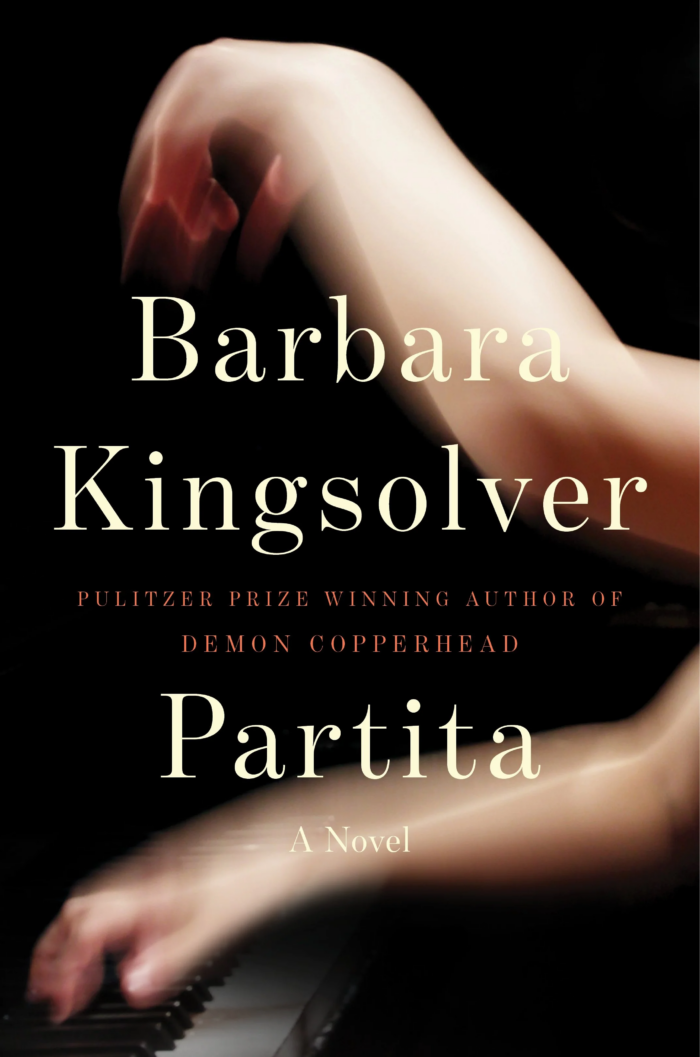
The cover of Barbara Kingsolver's new novel, Partita. Courtesy of Harper Collins
Barbara Kingsolver is one of Appalachia’s foremost writers. She’s written a string of bestsellers, like The Poisonwood Bible, and developed a devoted readership around the world. Her 2022 novel, Demon Copperhead, won the Pulitzer Prize.
Kingsolver has a new book out. It's called Partita. It tracks Livia, a middle-aged woman in Tennessee, as she receives a call from an old lover that brings up memories of her youth and threatens to disrupt the life she’s built since then. It’s a story about young, obsessive love, mature love and the love of art — in Livia’s case, music.
Host Mason Adams met with Kingsolver at her home outside Abingdon, Virginia, a couple weeks before her new novel was set to publish.
Fighting Kudzu In Western North Carolina
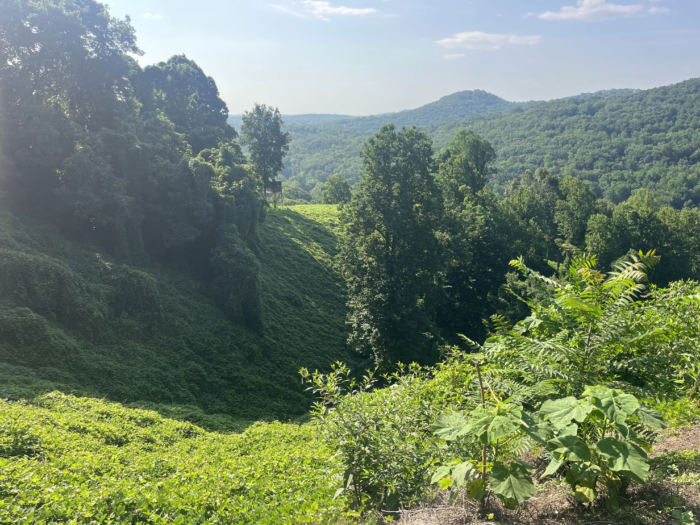
The Kudzu Warriors work in the Norman Wilder Forest in Polk County, North Carolina, every week. On June 29, they made it to this hilltop, which overlooks other property covered in kudzu. Photo Credit: Eliza Benbow/West Virginia Public Broadcasting
Generations ago, kudzu was introduced to Appalachia to help control erosion and provide forage for cattle. But then, it kind of just took over. Kudzu is an invasive plant that chokes out native greenery. Some people are fighting back.
Folkways Reporter Eliza Benbow spent time with the kudzu warriors in western North Carolina.
Burrowing Beetles Threaten Pawpaw Season
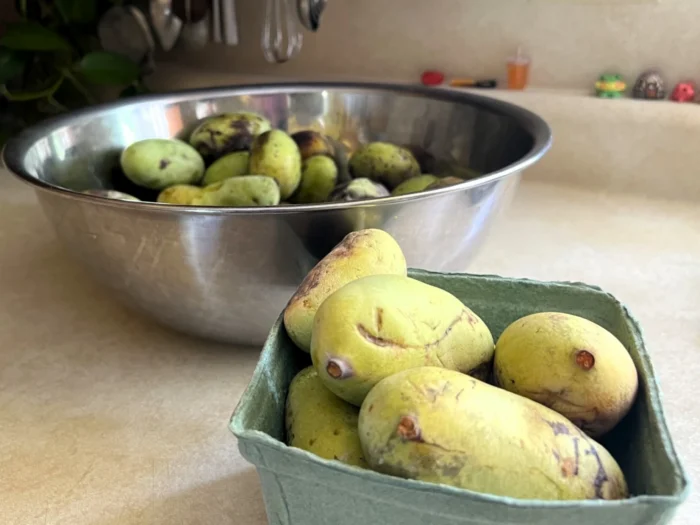
Pawpaws are the largest fruit native to North America. They ripen in Ohio from late August to early October. Photo Credit: Erin Gottsacker/The Ohio Newsroom
We are currently in that very narrow window that is pawpaw season. The fruit can be found throughout the eastern part of the U.S., but especially here in Appalachia. It’s a hardy tree, resistant to some common garden nuisances like rabbits and deer, but a threat from an invasive beetle has emerged.
The Ohio Newsroom’s Erin Gottsacker spoke with Chris Chmiel, a farmer who grows and processes pawpaws.
Radio Quiet Zones In W.Va. Constrains Emergency Crews, First Responders
The radio quiet zone sprawls over nearly 13,000 square miles in West Virginia, Virginia and Maryland. Because of sensitive government work, use of technology most of us take for granted, like microwave ovens or wireless phone service, is limited there.
A cell phone can’t place a call or access the internet.
The restrictions complicate how modern firefighters, police and first responders in the area can do their jobs.
A new federal study highlights the problem. WVPB’s Maria Young spoke with Rick Gillespie with Pendleton County, West Virginia, Emergency Management, which is in the zone.
Bridge Day BASE Jumping
Every October, hundreds of BASE jumpers head to the New River Gorge Bridge in West Virginia. They come to leap from the 876-foot tall bridge, pull their parachutes and aim for the banks of the river below.
In 2024, high school students Dylan Neil and Noah Fox spoke with BASE jumper Marcus Ellison, who helps organize the event.
--
Our theme music is by Matt Jackfert. Other music this week was provided by Blue Dot Sessions, John Blissard and John Inghram.
Bill Lynch is our producer. Abby Neff is our associate producer. Our executive producer is Eric Douglas. Irina Zhorov is our editor. Our audio mixer is Patrick Stephens. We had help this week from Folkways Editor Molly Born.
You can send us an email: InsideAppalachia@wvpublic.org.
Inside Appalachia is a production of West Virginia Public Broadcasting.
Appalachian Author Barbara Kingsolver Talks New Book ‘Partita,’ This West Virginia Morning
Oct 09, 2026
Show notes
On this West Virginia Morning, Barbara Kingsolver is one of Appalachia’s foremost writers. She’s written a string of bestsellers, like The Poisonwood Bible and Demon Copperhead, which won her the Pulitzer Prize. Inside Appalachia’s Mason Adams met Kingsolver at her home outside Abingdon, Virginia, to talk art, writing and her latest book, Partita. We listen to an excerpt from that interview.
Also, state officials are speaking out against a proposal to end landline phone service in West Virginia.
West Virginia Morning is a production of West Virginia Public Broadcasting which is solely responsible for its content.
Support for our news bureaus comes from Shepherd University and Marshall University School of Journalism and Mass Communications.
West Virginia Morning is produced with help from Bill Lynch, Chris Schulz, Eric Douglas and Maria Young.
Eric Douglas is our news director. Teresa Wills is our host. Maria Young is our producer.
Listen to West Virginia Morning weekdays at 7:49 a.m. on West Virginia Public Broadcasting or subscribe to the podcast and never miss an episode. #WVMorning
‘Us & Them’ Explores Challenge To Stay Or Go, Part 2, This West Virginia Morning
Oct 08, 2026
Show notes
On this West Virginia Morning, West Virginia has seen the largest population decline in the nation - nearly 1.5% - and many of those leaving are young people. In an episode that aired last month, Us & Them host Trey Kay heard from some young people who think they may stay in the state to launch their futures. This month, Kay talks with those who say living their dreams may well require moving away from the Mountain State. We listen to an excerpt from the latest Us & Them.
And, three schools in Wyoming County will remain closed until next week after a mysterious skin infection has affected dozens of students.
West Virginia Morning is a production of West Virginia Public Broadcasting, which is solely responsible for its content.
Support for our news bureaus comes from Shepherd University and Marshall University School of Journalism and Mass Communications.
Maria Young produced this episode.
Listen to West Virginia Morning weekdays at 7:49 a.m. on WVPB Radio or subscribe to the podcast and never miss an episode. #WVMorning
Us & Them: Stay Or Go — Part 2: The Goers
Oct 08, 2026
Show notes
West Virginia continues to lose young people. In the past five years, the state's population has dropped by nearly 1.5% — the largest decline in the nation. Only two of the state's 55 counties saw population growth, and demographic projections from West Virginia University anticipate further population loss in the years ahead.
In the second of two Us & Them episodes exploring young West Virginians considering their future, host Trey Kay talks with those looking beyond the state's borders — along with some who remain deeply conflicted about leaving.
In some cases, Kay talks with people who don’t see a way to follow their chosen career path in West Virginia. Others are looking for greater social, cultural or political diversity. And some love the state deeply but question whether the infrastructure, opportunities and communities they will need are available to them.
Their choices raise a larger question: What would it take for West Virginia to convince its young people they are needed here?
This episode of Us & Them is presented with support from the Greater Kanawha Valley Foundation’s Narrative Change Grant.
Subscribe to Us & Them on Apple Podcasts, YouTube Music, Spotify, the NPR app and wherever you get your podcasts.
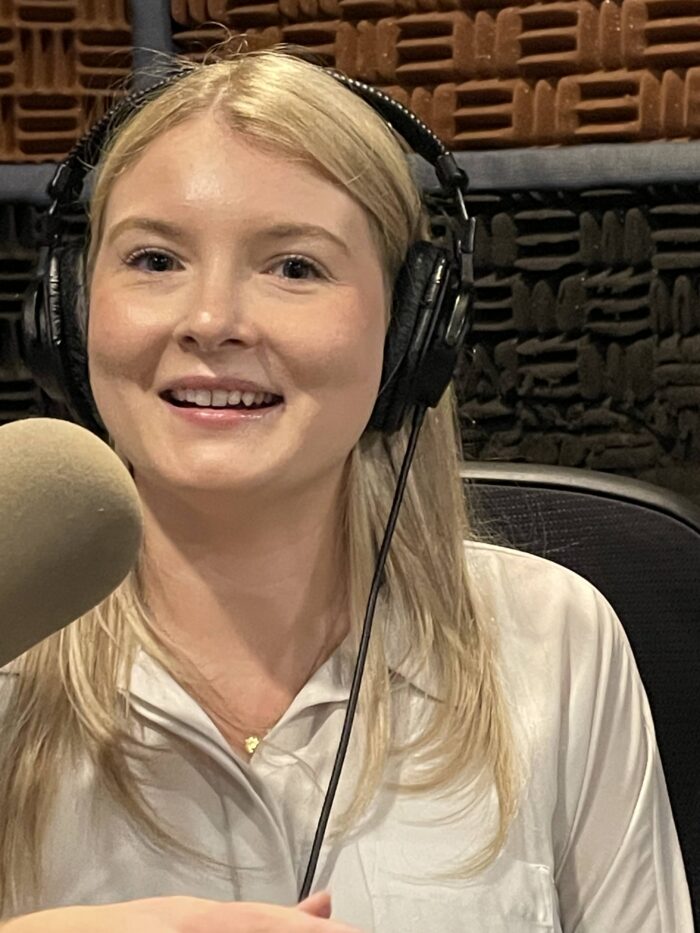
Lilly Barickman, 25, is interviewed at West Virginia Public Broadcasting in Charleston, West Virginia. A Wheeling native and Marshall University graduate, Barickman is senior manager of communications and engagement for the West Virginia Chamber of Commerce. With family roots in the state stretching back generations, she says she wants to build her own career as part of West Virginia’s continuing story. Photo Credit: Trey Kay/West Virginia Public Broadcasting
“I did the math somewhat recently and on my dad’s side I believe I’m about an eighth-generation West Virginian, so it goes way back. … I am building a career here. I’d love to be a part of that legacy — the legacy that is West Virginia. You look at so many families that have that generational history right here in the state.”
— Lilly Barickman
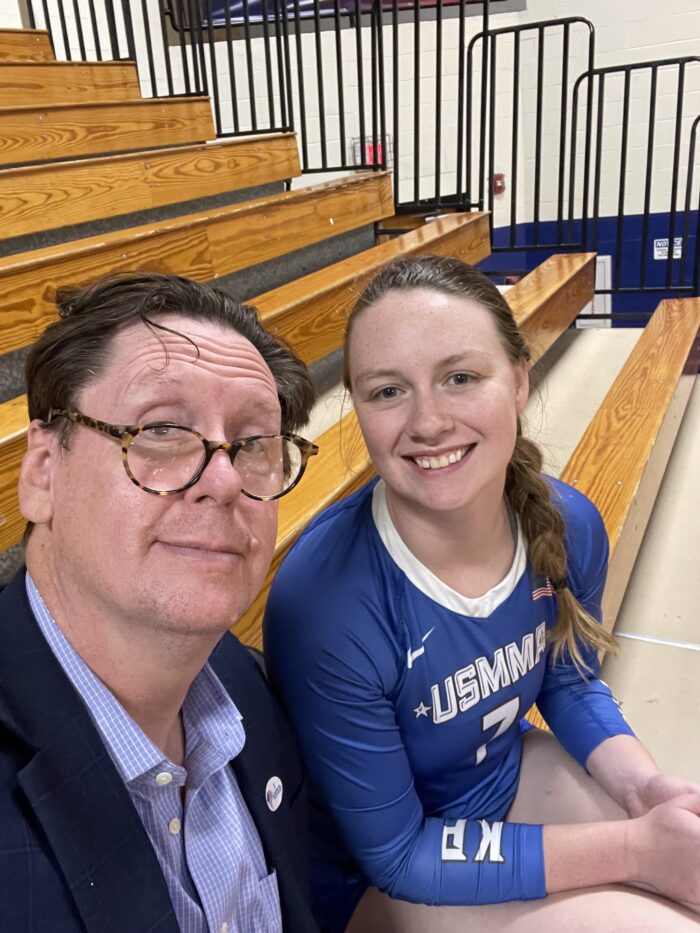
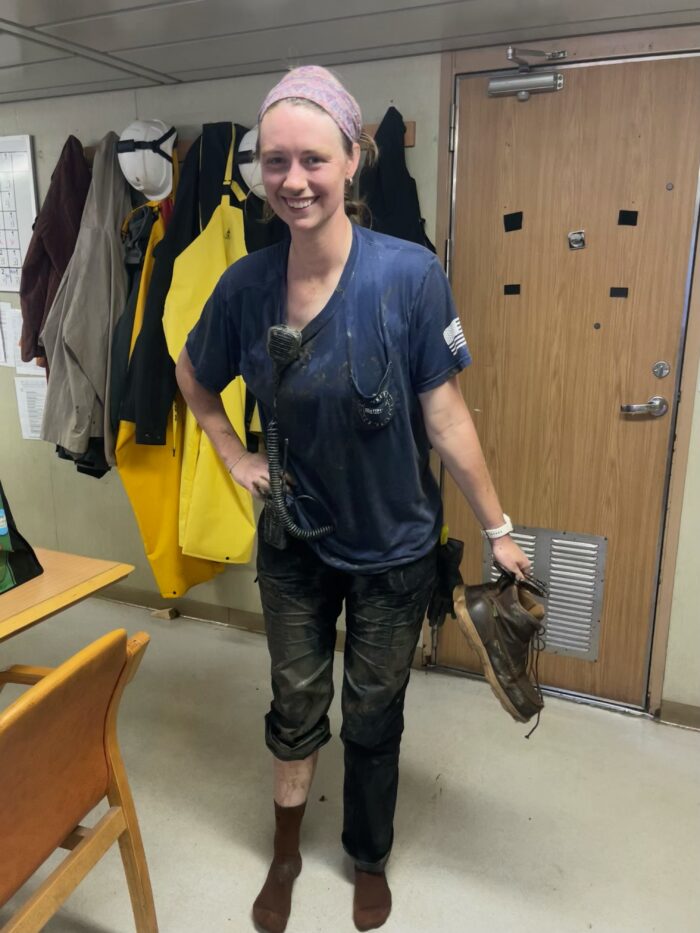
Us & Them host Trey Kay, left, and his niece, Elizabeth Kay, are pictured in Newburgh, New York, in 2024, when Elizabeth was playing volleyball for the United States Merchant Marine Academy. Kay later graduated from the academy and now works as a third mate aboard oil tankers while serving as an ensign in the U.S. Navy Reserve. Photo Credit: Trey Kay/West Virginia Public BroadcastingElizabeth Kay, is pictured aboard an oil tanker after a work shift. Kay works aboard commercial vessels as she travels to international ports. A native West Virginian who now lives in Charleston, South Carolina, she says her work and travel have deepened her emotional connection to Appalachia and the state she still considers home. Photo courtesy of Elizabeth Kay
“No one has ever asked me to, to come back or stay when I was leaving. ... They were, everyone was kinda like, ‘Yeah, go see the world.’ And I’ve, I haven’t... That’s a really interesting way you put it ’cause I have never thought of it that way. But yeah, we’re, we’re kinda—we’re ran up through the pipeline, we’re spit out, and everyone’s like, ‘Go, go have a great life somewhere else.’ ... If somebody asked me to come back and asked me to, like, have a life here and they thought that I would be an asset to the community, I would, I would consider it.”
— Elizabeth Kay
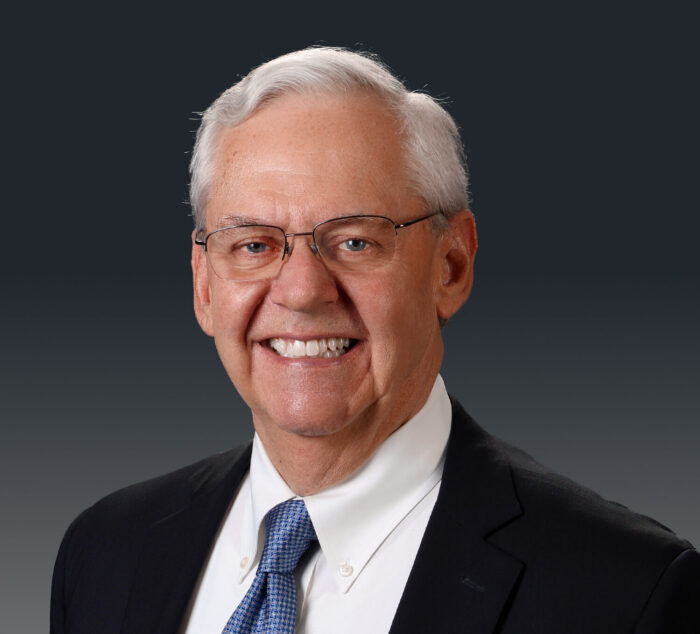
Steve Roberts, president of the West Virginia Chamber of Commerce, says West Virginia's long-term economic future depends on investments designed not merely to address today's problems, but to create opportunities for the next generation. In Us & Them'sStay or Go reporting, Roberts says that population loss is forcing state leaders to confront questions about population demographics, economic growth and what kind of West Virginia they want to build for the future. Photo courtesy of the West Virginia Chamber of Commerce
“Investments are really all about the future. They're not so much about the present. I think in West Virginia, leaders were reacting to either the past or the current, but were not really — some leaders — thinking about the future. Because we lived in, in the period of the 1950s and ’60s and into the ’70s, West Virginia had a bifurcated economy. We had the haves and the have-nots, and the haves were doing very well.
I think the reason you and I are having this conversation today is because the haves are now concerned about what kind of state we have. One of the reasons we can perhaps get some things done in West Virginia that we couldn't get done previously is because the people who basically are in charge are looking around and saying, ‘Oh my gosh, what happened? People are leaving. We're not seeing the growth we wanna see. What can we do to turn that around? What can we do to change that?’”
— Steve Roberts
Sarah Armstrong Tucker, West Virginia's chancellor of higher education and the state's community and technical college system, says young people increasingly approach higher education with a clear eye toward cost, career prospects and how quickly a degree or credential can lead to a job. Tucker says West Virginia needs to do a better job showing young people the opportunities available to them — and asking what would make them want to build their lives here. Photo courtesy of the West Virginia Higher Education Policy Commission
“I mean, I think it would be wonderful if all of the adults in the state of West Virginia had those conversations with students. I mean, I really think that that is a missing, a missing piece. I think we have a lot of kids who are connected to their phones and their devices, and I think a lot of those kitchen table conversations that used to happen don't necessarily happen anymore. I think that, as I mentioned before, I think that as adults, we sort of have a duty to say to them, you know, ‘Here are all of your opportunities, and tell me what are your, what are your sticking points? What makes you not want to stay? What are, you know, what are the things that you're looking at that you think sound better someplace else?’ And then see if we can do something about changing West Virginia to make it be a place that maybe more of them want to stay.”
— Sarah Armstrong Tucker
Chase Moss, 18, is a West Virginia University political science student from Gilmer County. He left West Virginia at 16 to attend George Mason University in Northern Virginia before returning to study at WVU. Moss says he loves West Virginia and can imagine staying, but questions whether the state's economy, infrastructure, health care, educational system and political climate will allow him to build the future he wants. Photo Credit: Trey Kay/West Virginia Public Broadcasting
“If you're looking at it from a very, very rational, logical point of view, there's very few reasons to stay in West Virginia, and I think that that's horrible. Last time I spoke to you over the phone, I described it as like a bad relationship where it's like you don't wanna leave because you love it, but you probably should leave.
I could see myself staying here. I could see myself going. I don't think outside the Appalachians, but somewhere like western Maryland, southwestern Virginia, kind of southwestern Pennsylvania, the broader area. I could see myself going somewhere like that.”
— Chase Moss
Catherine Ellis, a Boone County native and recent graduate of West Virginia State University, plans to leave West Virginia for New Mexico, where she has lined up work as an event manager. Ellis, the first person in her family to earn a bachelor's degree, says career opportunities are a major reason for leaving, but politics and a desire to experience different communities and cultures also shaped her decision. Photo courtesy of Catherine Ellis
“Although it would be very difficult to leave my family, I feel like I've always been raised to want to follow and do whatever I wanted to do, and I think there's not a lot of opportunities for what I want to do here in West Virginia. I want to experience different cultures. I want to live in different places. There's not a lot of variety in West Virginia to experience that, and I also want more job opportunities. I really wanna work in project management. I like to be a part of something bigger.”
— Catherine Ellis
How To Effectively Use AI, This West Virginia Morning
Oct 07, 2026
Show notes
On this West Virginia Morning, recently, News Director Eric Douglas saw a presentation as part of the Higher Education Policy Commission's STAR lecture series with Professor Ali Al-Sinayyid. He’s an Assistant Professor and director of the West Virginia State University Cybersecurity Innovation Center.
Last week, we aired the first part of Douglas’ interview with Professor Ali about what is AI. In the second part of that interview, Al-Sinayyid discusses the best way to use AI to get what you want – while avoiding fabricated or false answers that seem real.
And, recent cuts to the Affordable Care Act’s premium tax credits have caused more than 10% fewer West Virginians to apply for healthcare coverage. Next Saturday, West Virginia Health Right will host its third annual #WeCareWV Day, a free walk-in medical, dental and vision clinic for anyone in need.
West Virginia Morning is a production of West Virginia Public Broadcasting, which is solely responsible for its content.
Support for our news bureaus comes from Shepherd University and Marshall University School of Journalism and Mass Communications.
Maria Young produced this episode.
Listen to West Virginia Morning weekdays at 7:49 a.m. on WVPB Radio or subscribe to the podcast and never miss an episode. #WVMorning
Understanding The Do’s and Don’ts Of Medical Testing, This West Virginia Morning
Oct 06, 2026
Show notes
On this West Virginia Morning, direct-to-consumer tests like full-body scans are marketed as a way to catch diseases early and establish a baseline. But there are financial, physical and psychological risks to all medical tests — and in some cases, not getting a test could be better for your health. From the Appalachia + Mid-South Newsroom, HealthQ hosts Cara Anthony and Blake Farmer speak with UCSF Cardiologist Dr. Rita Redberg.

 Our TOPPODCAST Picks
 Stay Connected