TopPodcast.com
Menu
  • Home
  • Top Charts
  • Top Networks
  • Top Apps
  • Top Independents
  • Top Podfluencers
  • Top Picks
    • Top Business Podcasts
    • Top True Crime Podcasts
    • Top Finance Podcasts
    • Top Comedy Podcasts
    • Top Music Podcasts
    • Top Womens Podcasts
    • Top Kids Podcasts
    • Top Sports Podcasts
    • Top News Podcasts
    • Top Tech Podcasts
    • Top Crypto Podcasts
    • Top Entrepreneurial Podcasts
    • Top Fantasy Sports Podcasts
    • Top Political Podcasts
    • Top Science Podcasts
    • Top Self Help Podcasts
    • Top Sports Betting Podcasts
    • Top Stocks Podcasts
  • Podcast News
  • About Us
  • Podcast Advertising
  • Contact
Not in our directory?
Add Show Here
Podcast Equipment
Center

toppodcastlogoOur TOPPODCAST Picks

  • Comedy
  • Crypto
  • Sports
  • News
  • Politics
  • True Crime
  • Business
  • Finance

Follow Us

toppodcastlogoStay Connected

    View Top 200 Chart
    Back to Rankings Page
    Government & Organizations

    People Behind the Science Podcast Stories from Scientists about Science, Life, Research, and Science Careers

    Are you searching for great stories to ignite your curiosity, teach you to perform better in life and career, inspire your mind, and make you laugh along the way? In this science podcast, Dr. Marie McNeely introduces you to the brilliant researchers behind the latest scientific discoveries. Join us as they share their greatest failures, most staggering successes, candid career advice, and what drives them forward in life and science.

    <![CDATA[Our website with show notes]]

    Greetings science fans!

    We’re elated to welcome you to People Behind the Science where we explore the lives and experiences of the people behind the research and scientific discoveries of today.

    People Behind the Science’s mission is to inspire current and future scientists, share the different paths to a successful career in science, educate the general population on what scientists do, and show the human side of science.

    In each episode, a different scientist will guide us through their journey by sharing their successes, failures, and passions. We are excited to introduce you to these inspiring academic and industry experts from all fields of science to give you a variety of perspectives on the life and path of a scientist.

    Our esteemed guests will tell you:

    what motivates them and how they balance their competing responsibilities
    how they worked through some of the most challenging times in their careers
    advice to help you through your own journey through life and science

    Our Podcast

    People Behind the Science is a podcast focused on the people doing fascinating research through interviews with top scientists. We are proud to have interviewed so many inspiring scientists, including U.S. National Academy scientists like Josh Sanes, Nick Spitzer, Lou Muglia, Jacob Israelachvili, Gene Robinson, Larry Squire, John Dowling, James Berger, and David Spergel, as well as popular scientists in the media like Donna Nelson (science advisor for the TV show Breaking Bad) and Jack Horner (science advisor for the Jurassic park movies). We are honored to have shared their amazing stories with people in all 50 states in the USA and in over 120 countries across the world.

    Advertise

    Copyright: © People Behind the Science

    • Apple Podcasts
    • Google Play
    • Spotify

    Latest Episodes:
    713: Combining Chemistry and Biology to Develop New Research Tools and Therapeutics - Dr. David Liu Jun 19, 2023
    Show notes

    Dr. David R. Liu is the Richard Merkin Professor and Director of the Merkin Institute of Transformative Technologies in Healthcare, vice-chair of the faculty at the Broad Institute of MIT and Harvard, the Thomas Dudley Cabot Professor of the Natural Sciences at Harvard University, and a Howard Hughes Medical Institute (HHMI) investigator. In addition, he is the founder or co-founder of several biotechnology and therapeutics companies, including Beam Therapeutics, Prime Medicine, Editas Medicine, Pairwise Plants, Exo Therapeutics, Chroma Medicine, Resonance Medicine, and Nvelop Therapeutics. David's research integrates components of biological evolution with chemistry to enable the development of new types of therapeutics and to better study biology. Through chemistry, they can change the structure of a molecule in order to change its function in anticipated ways. They also harness the power of cycles of natural selection to evolve molecules with desired tailor-made properties. Outside of science, David's hobbies include photography, making wooden vessels using a wood lathe, growing bonsai trees, and exploring electronic art and other homemade art projects. He enjoys blending creativity and intellectual pursuits to create something surprising and beautiful. He completed his undergraduate education at Harvard College, majoring in chemistry. He was awarded his PhD in organic chemistry from UC Berkeley, and he joined the faculty at Harvard University afterwards. He has been an HHMI investigator since 2005. Over the course of his career, David has received numerous awards and accolades, including being named the 2022 King Faisal Prize Laureate in Medicine and receipt of the Ronald Breslow Award for Biomimetic Chemistry, the American Chemical Society David Perlman Award, ACS Chemical Biology Award, the American Chemical Society Pure Chemistry Award, the Arthur Cope Young Scholar Award, and other prestigious awards for his research and teaching. In 2016 and 2020, he was named one of the Top 20 Translational Researchers in the world by Nature Biotechnology, and he was named one of Nature's 10 researchers in 2022. In addition, he is an elected Member of the U.S. National Academy of Sciences, the U.S. National Academy of Medicine, and the American Association for the Advancement of Science. In this interview, David shares more about his life and science.


    712: Dr. Lynne Maquat: Understanding Cellular and Molecular Pathways that Contribute to Human Disease Jun 12, 2023
    Show notes

    Dr. Lynne Maquat is the J. Lowell Orbison Endowed Chair and Professor of Biochemistry and Biophysics in the School of Medicine and Dentistry, Director of the Center for RNA Biology, and Chair of Graduate Women in Science at the University of Rochester. Research in Lynne's lab focuses on human diseases and what causes diseases in our cells. She is working to understand how cells function normally, determine what causes diseases, and develop treatments for diseases. In particular, she has been studying a process in cells that causes about one third of all inherited diseases, like cystic fibrosis and Duchenne muscular dystrophy, as well as one third of all acquired diseases, including cancer. Lynne has a Labrador retriever whom she loves taking on walks through the lovely parks and woods in Rochester, New York. She also enjoys exercising through yoga, lifting weights, and doing cardio. She received her BA in Biology from the University of Connecticut and her PhD in Biochemistry from the University of Wisconsin-Madison. Lynne conducted postdoctoral research at the University of Wisconsin-Madison, and she worked as a faculty member at the Roswell Park Cancer Institute for 19 years before joining the faculty at the University of Rochester. Lynne has received numerous awards and honors during her career, including the International RNA Society Lifetime Achievement in Science Award, the Canada Gairdner International Award, the William Rose Award from the American Society of Biochemistry and Molecular Biology, the Athena Award from the Women's Council of the Rochester Business Alliance, a MERIT Award from the NIH, the Presidential Diversity Award from the University of Rochester, the RNA Society Lifetime Achievement Award in Service, and many others. She was also named a Member of the U.S. National Academy of Sciences, a Fellow of the American Association for the Advancement of Science, a Fellow of the American Academy of Arts and Sciences, and a Batcheva de Rothschild Fellow of the Israel Academy of Sciences and Humanities. Lynne discusses her experiences in life and science with us in this interview.


    711: Researching RNA Regulation of Reproduction in Plants - Dr. Blake Meyers Jun 05, 2023
    Show notes

    Dr. Blake Meyers is a Member Principal Investigator at the Donald Danforth Plant Science Center and a Professor in the Division of Plant Sciences at the University of Missouri. The focus of Blake's research is on small RNAs in plants. His lab studies how RNAs are used to regulate the complex machinery of cells, particularly in the context of plant reproductive biology. When he's not conducting research in the lab, Blake loves to travel both for work and for fun. Blake strives to balance his family life with his science, and he also enjoys reading cookbooks and experimenting in the kitchen at home. He received a B.A. in Biology from the University of Chicago, and went on to receive his MS and PhD in Genetics from the University of California, Davis. Afterwards, Blake completed postdoctoral fellowships at Dupont Genomics and at the University of California, Davis. Before accepting his current positions, Blake was the Edward F. and Elizabeth Goodman Rosenberg Professor and Chair of the Department Plant and Soil Sciences of the University of Delaware. Blake is here with us today to tell us all about his journey through life and science.


    710: Investigating Carbon Capture Solutions from Cars to Coal-Fired Power Plants - Dr. Jennifer Wilcox May 29, 2023
    Show notes

    Dr. Jennifer Wilcox is an Associate Professor in Chemical and Biological Engineering at the Colorado School of Mines and an Investigator within the Clean Energy Conversions Laboratory there. The research in Jen's group focuses on carbon capture and trace metal pollution. On the carbon capture side, she tries to better understand and reduce CO2 emissions from coal and gas-fired power plants. In terms of trace metals, the most common source of trace metals like mercury in the fish we eat is burning coal in coal-fired power plants. Jen's research examines how to capture trace metals and reduce their emission into the environment. Outside of science, Jen keeps busy spending time with her family including her husband and daughter. She also loves being active outdoors through hiking, running, and bicycling. She received her bachelor's degree in mathematics from Wellesley College and her PhD in chemical engineering from the University of Arizona. She served on the faculty at the Worcester Polytechnic Institute and at Stanford University before joining the faculty at the Colorado School of Mines. Jen has received numerous awards and honors, including an Army Research Office Young Investigator Award, an American Chemical Society Petroleum Research Fund Young Investigator Award, and an NSF CAREER Award. She also was awarded the Stern Award for Distinguished Paper from the Journal of the Air and Waste Management Association. Jen is with us today to tell us all about her life and science.


    709: Examining How the Brain Controls Our Thoughts and Actions to Reach Our Goals - Dr. Tim Buschman May 22, 2023
    Show notes

    Dr. Tim Buschman is Associate Professor of Psychology and Neuroscience at Princeton University. He studies a process called cognitive control, a process in the brain that allows you to control your own thoughts and actions toward achieving your goals. There are a lot of factors that can influence cognitive control that must be integrated to direct your behavior. He uses animal models to better understand aspects of cognitive control, and his work has relevant applications for improving machine learning and artificial intelligence as well as developing new treatments for neurological diseases that impact cognitive control. When he's not in the lab, Tim enjoys spending time outdoors with his family. In particular, they have been doing a lot of hiking, and Tim finds it a great activity for stimulating thoughts and drawing out his creativity. He received his B.S. in Biology from the California Institute of Technology, and Tim was then awarded a Postbaccalaureate Intramural Research Training Award (IRTA) to conduct research at the National Institute of Mental Health's Laboratory of Neurophysiology. Next, he completed his PhD at the Massachusetts Institute of Technology. Tim remained there to conduct postdoctoral research before joining the faculty at Princeton University. He was awarded the NIH Director's "New Innovator" Award in 2014, and he holds multiple patents related to his research. In our interview, Tim shares more about his life and science.


    708: Tales of Ion Detection: The Making of a Mass Spectrometry Mastermind - Dr. Charles Hohenberg May 15, 2023
    Show notes

    Dr. Charles Hohenberg is a Professor of Physics at Washington University in St. Louis. In the lab, Charles does mass spectrometry of noble gases like Krypton and Xenon. He designed and built his own mass spectrometer which is one of the best in the world. With this instrument, Charles measures noble gas isotope ratios in various sources. A major focus is studying meteorite samples to understand early solar system processes. Charles has always been a tinkerer, and he often spends his free time working on various projects around the house. For example, one of Charles' hobbies is woodworking. He built his own kitchen table and several other pieces of furniture. He received his PhD in Physics from the University of California, Berkeley and has been on the faculty at Washington University since 1970. Charles has received many awards and honors during his career, including election as Fellow of the Meteoritical Society and a Fellow of the St. Louis Academy of Science. He has been awarded the NASA Principal Investigators Award, the NASA Exceptional Achievement Award, and recently the James B. Eads Award honoring engineering or technology from the St. Louis Academy of Science. Charles is here with us today to tell us all about his journey through life and science.


    707: Applying Analytical Chemistry Approaches to Better Understand Chemicals of Concern - Dr. Diana Aga May 08, 2023
    Show notes

    Dr. Diana Aga is the Henry M. Woodburn Chair and a State University of New York (SUNY) Distinguished Professor in the Department of Chemistry at the University at Buffalo. She also serves as the Director of RENEW (Research and Education in eNergy, Environment and Water) Institute at the University at Buffalo. Diana is an environmental chemist. She studies sustainable agriculture and pollutants such as the "forever chemicals" (Per- and Polyfluorinated Substances (PFAS)) that we frequently encounter in our everyday lives. When it's warm outside, Diana enjoys biking and hiking, and when it's cold she spends more time indoors watching movies. Cooking is another one of Diana's hobbies, and she is particularly fond of making Filipino food, creatively reusing leftovers, and recreating restaurant favorites at home. Diana received a B.S. degree in agricultural chemistry from the University of the Philippines, Los Baños and her PhD in analytical chemistry from the University of Kansas. Afterwards, she conducted postdoctoral research at the Swiss Federal Institute of Aquatic Science and Technology. Diana worked on the faculty at the University of Nebraska at Kearney and then in industry at Bayer before joining the faculty at the University at Buffalo. She has received numerous awards for her research, teaching, and mentoring, including the SUNY Chancellor's Award for Excellence in Scholarship and Creative Activities, the Koh Lectureship Award in Science from the Philippine-American Academy of Science and Engineering, the Jacob F. Schoellkopf Medal of the Western New York Chapter of the American Chemical Society (ACS), a National Science Foundation CAREER Award, the Menzie Environmental Education Award from The Society of Environmental Toxicology and Chemistry, and the Excellence in Graduate Student Mentoring Award from the University at Buffalo. Diana has also been named a Fulbright Fellow, an Alexander von Humboldt Foundation Research Fellow, an ACS Fellow, and an ACS AGRO Fellow. In this interview, Diana shares more about her life and science.


    706: Using Algorithms to Automate Decision-Making in Energy Management, Automobiles, and Manufacturing - Dr. Andrew Alleyne May 01, 2023
    Show notes

    Dr. Andrew Alleyne is the Ralph and Catherine Fisher Professor in the Department of Mechanical Science and Engineering at the University of Illinois at Urbana-Champaign, as well as the Director of the National Science Foundation Engineering Research Center on Power Optimization for Electro-Thermal Systems (POETS) headquartered there. He is an engineer who works on control systems, which provide an automated way of making decisions. They take in relevant information and use algorithms to make correct decisions based on the information gathered. Andrew's group designs algorithms that make the best decisions possible with the information available to keep systems stable and performing well. When not doing science, he spends much of his time with his wife and two sons. This translates to a lot of driving back and forth to soccer games, but also going on road trips and having fun together. Andrew grew up in Jamaica and came to the United States when he was in high school. He received his B.S. in Engineering degree in Mechanical and Aerospace Engineering from Princeton University. He went on to study Mechanical Engineering at the University of California, Berkeley where he was awarded his M.S. in Engineering and Ph.D. degrees. In 1994, Andrew joined the faculty at the University of Illinois at Urbana-Champaign where he remains today. Andrew has received many awards and honors throughout his career, including an NSF CAREER award, the Xerox Award for Faculty Research, a Fulbright Fellowship, and the SAE International Ralph R. Teetor Educational Award. In addition, Andrew was also named a Fellow of the American Society of Mechanical Engineers, and he has received their Gustus Larson Award, Charles Stark Draper Award for Innovative Practice, and Henry Paynter Outstanding Investigator Award. Andrew has joined us today to talk about his experiences in life and research.


    705: Engineering New Enzymes and Predicting the Biochemical Activity of Proteins - Dr. Mary Jo Ondrechen Apr 24, 2023
    Show notes

    Dr. Mary Jo Ondrechen is Professor of Chemistry and Chemical Biology at Northeastern University. In the lab, Mary Jo uses theory and computation to better understand how molecules work. In particular she works on enzymes which are proteins that catalyze chemical reactions. Mary Jo and her team also develop methods and theories to interpret genomic data, and they work on the computational side of drug discovery, helping medicinal chemists develop new drugs, treatments, and diagnostics. When she's not at work, you can often find Mary Jo out running, tending to her vegetable garden, and cooking. She is also interested in herbs, spices, and medicinal plants. She earned her bachelor's degree in Chemistry from Reed College, and she was awarded her PhD in Chemistry and Chemical Physics from Northwestern University. Afterwards, Mary Jo completed a postdoctoral fellowship at the University of Chicago and subsequently a NATO Postdoctoral Fellowship at Tel-Aviv University in Israel. She joined the faculty at Northeastern University in 1980. Mary Jo was awarded the Outstanding Native American Student Mentor in 2018 from the Society for Advancement of Chicanos/Hispanics & Native Americans in Science (SACNAS), and she has been dedicated to advocacy and activism for underrepresented communities in science and society, as well as conservation and stewardship of the Earth. In our interview, she shares more about her life and science.


    704: Navigating the Seas of Change Studying Ocean Acidification and Marine Ecosystems - Dr. Tessa Hill Apr 17, 2023
    Show notes

    Dr. Tessa Hill is an Associate Professor in the Department of Earth and Planetary Sciences at the University of California, Davis. She is part of the Bodega Ocean Acidification Research group there at the Bodega Marine Laboratory. Research in Tessa's lab focuses on the ocean and the impacts of climate change on environments in the ocean in the past, present, and future. Outside of work, Tessa, her husband, and their two children spend a lot of time gardening, skiing, hiking, camping, and going on vacations together. Additionally, Tessa is a long-distance runner, so she enjoys running half and full marathons. Tessa received her B.S. in Marine Science from Eckerd College and her Ph.D. in Marine Science from the University of California, Santa Barbara. Next, Tessa was awarded a University of California President's Postdoctoral Fellowship at UC Davis before joining the faculty there. Tessa has received many awards and honors during her career, including the Presidential Early Career Award for Scientists and Engineers, as well as an NSF CAREER Award. She is also a Fellow of the California Academy of Sciences, an American Association for the Advancement of Science Leshner Public Engagement Fellow, and a panelist on the West Coast Ocean Acidification and Hypoxia Panel. Tessa is with us today to tell us about her journey through life and science.


    Previous 1 16 17 18 19 20 30 Next

    Related Podcasts

    The Joe Rogan Experience

    1

    The Joe Rogan Experience Comedy
    More Perfect

    2

    More Perfect Government
    Casefile True Crime

    3

    Casefile True Crime Games & Hobbies
    Reply All

    4

    Reply All Games & Hobbies
    You Must Remember This

    5

    You Must Remember This Games & Hobbies
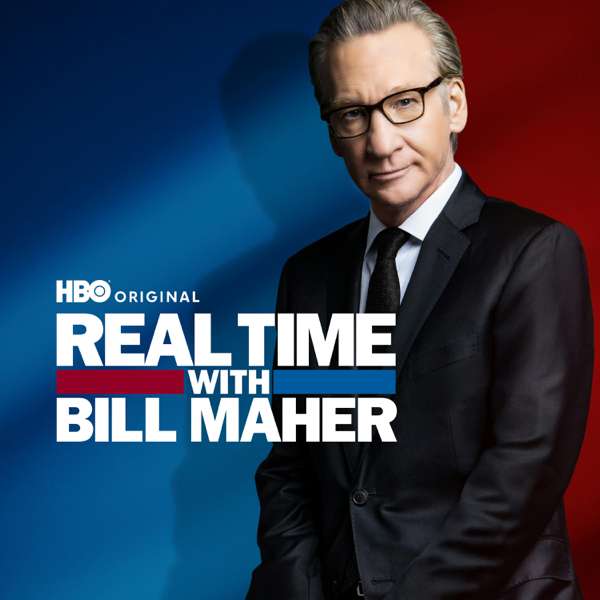
    Real Time with Bill Maher

    6

    Real Time with Bill Maher Games & Hobbies
    footer-logo

    Contact Us

    Toll Free: 844-670-7747

    Links

    • Home
    • Top Charts
    • Networks
    • Apps
    • Independents Podcasts
    • Podcast Advertising
    • Podcast News
    • Contact Us
    • About Us
    • Analytics & Insights

    Stay Connected

      Privacy, Terms of Use & Our Code of Ethics Protecting Content Creators Copyrights