TopPodcast.com
Menu
  • Home
  • Top Charts
  • Top Networks
  • Top Apps
  • Top Independents
  • Top Podfluencers
  • Top Picks
    • Top Business Podcasts
    • Top True Crime Podcasts
    • Top Finance Podcasts
    • Top Comedy Podcasts
    • Top Music Podcasts
    • Top Womens Podcasts
    • Top Kids Podcasts
    • Top Sports Podcasts
    • Top News Podcasts
    • Top Tech Podcasts
    • Top Crypto Podcasts
    • Top Entrepreneurial Podcasts
    • Top Fantasy Sports Podcasts
    • Top Political Podcasts
    • Top Science Podcasts
    • Top Self Help Podcasts
    • Top Sports Betting Podcasts
    • Top Stocks Podcasts
  • Podcast News
  • About Us
  • Podcast Advertising
  • Contact
Not in our directory?
Add Show Here
Podcast Equipment
Center

toppodcastlogoOur TOPPODCAST Picks

  • Comedy
  • Crypto
  • Sports
  • News
  • Politics
  • True Crime
  • Business
  • Finance

Follow Us

toppodcastlogoStay Connected

    View Top 200 Chart
    Back to Rankings Page
    Government & Organizations

    Ongoing History of New Music

    Ongoing History of New Music looks at things from the alt-rock universe to hip hop, from artist profiles to various thematic explorations. It is Canada’s most well known music documentary hosted by the legendary Alan Cross. Whatever the episode, you’re definitely going to learn something that you might not find anywhere else. Trust us on this.

    Advertise

    Copyright: © 2022 Curiouscast

    • Apple Podcasts
    • Google Play
    • Spotify

    Latest Episodes:
    The Tragically Hip's "Saskadelphia" May 26, 2021
    Show notes

    On Saturday, August 20, 2016, tens of millions of Canadians watched and listened to the final Tragically Hip concert from Kingston…given Gord Downie’s illness, we knew that was the last time we’d see the band perform together live…

    That was followed by one of the saddest days in the history of Canadian music…. October 17, 2017, the day Gord Downie died…one tweet summed up everything: “Canada closed: death in the family”…

    So that was it, then…after more than 30 years, the most Canadian rock band of all time was done…all we had were the music and the memories…

    But what if we were wrong about that?...what if, somewhere, there was a trove of unreleased material that no one knew existed?...and what if a strange confluence of events led to that cache of music—songs that no one (even the band) had heard for decades—being found and released?...and what if those long-lost songs were really, really good?...

    To answer those questions: yes, there was a stash of unheard songs…yes, their rediscovery was the result of an accident…and yes, they are really, really good…

    The result was essentially a brand new Tragically Hip album that brings fans back to the band’s glory years of the early 90s…it’s like a time machine…the hip are together playing great—and Gord is back…

    The new record is called “Saskadelphia”…we’ll hear all these once-missing tragically hip songs: how they were made, what happened to them, and how they were finally found…

    Learn more about your ad choices. Visit megaphone.fm/adchoices


    A Requiem for Daft Punk May 19, 2021
    Show notes

    It takes a special kind of band to obscure their appearance…but if you can do it right, then it moves from being a silly gimmick to an important piece of your identity, image, and brand.…

    When Kiss came along in the early 70s with their Japanese kabuki-inspired makeup, it wasn’t that far out…they came from New York where there was a glitter scene that had a lot of guys wearing make-up…kiss just took it to an extreme: The Demon, Star Child, Spaceman, and Catman…

    It worked--eventually…Kiss has sold 100 million albums…there was that period after 1983 when they wiped off the greasepaint and showed their faces to everyone, but that’s not what the fans wanted, and they eventually brought it all back…

    A more contemporary example is Slipknot…their masks have been an essential part of their identity since the band started up in 1995…it started with the clown wearing a clown mask for the band’s first gig shortly before Halloween that year…the rest of the guys thought it was dumb at first, but then they all joined in…

    Fans now keep close tabs on each member’s mask, parsing what each new iteration—and they can change or be updated almost yearly—might mean…

    There are other mask-wearing bands: the residents with their eyeball heads…any number of dark metal bands from Scandinavia like Ghost and Lordi…Pussy Riot (largely to keep their identity hidden from the authorities)…then there’s Gwar, who have taken it to a completely different level entirely with their alien costumes…and deadmaus has had his big mouse head for years…there are tons of others, but you get the idea…

    This brings me to Daft Punk…from 1993 until their breakup in February 2021, they acted like robots with elaborate helmets that completely obscured their identity…we knew they were French, and we knew their real names…but beyond that, they were a cool mystery that we played along with…

    Now that they’re done, though, it’s time to dig through their history…what the hell was Daft Punk all about?...and why did they matter so much?...here is their requiem…

    Learn more about your ad choices. Visit megaphone.fm/adchoices


    Big Bands from Small Towns Apr 28, 2021
    Show notes

    Let me say from the outset that I have nothing against small towns…I grew up in one myself…population: 2000…it was in the middle of the Canadian prairies…the nearest big city was Winnipeg…after that, you had to go at least 500 miles before you hit any major population centre…

    I also want to make sure to let you know that I think living in a small town is a not bad idea…it’s not…it can be a wonderful, low-stress, low-cost secure existence…a lot of the people I went to school with still live in my small town…

    But there are those who want out, people who want to experience more of the world…they find their lot dull, a dead-end, too far from where the action is…but how to escape?...that’s the problem…

    One way would be to just buy a bus ticket and hit the highway…you could join the armed forces…or maybe you could form a band, write song songs and become world famous…yeah, that’ll never happen…or could it?...

    There’s this old saying that all you need to change the world—your world—is three chords and an attitude…and it doesn’t matter where you’re from…you can be from the smallest town the map—even a town too small to be on a map—but if you get in with the right bunch of people and manage to pull together some good songs, who knows what might happen?...

    Here…let me give you some concrete examples…you don’t have to be from L.A. or London or some other big city…you can be from—wherever…these are some big, big bands who actually came from small, small towns…

    Learn more about your ad choices. Visit megaphone.fm/adchoices


    The Post-Punk Explosion Part 7: All the rest Apr 21, 2021
    Show notes

    The original punk rock explosion of the 1970s was two things…first, it was a major reset for rock’n’roll…think of it as a great musical decluttering…

    Punk of the 70s wasn’t revolutionary…it was reactionary…the music was stripped back, and everyone went back to the basics…very important…

    Second, there was an attitude shift…one of the central tenets of punk was that if you had the guts to say something, then do it…and if no one wanted to help you, well, then do it on your own…

    Taken together, these two principles resulted in what can be described as the big bang for what would later be called “alternative music”…punk set off chain reactions of new ideas, new sounds, new attitudes, new fashion, new belief systems, and generally new ways of doing things…

    The gloves were off, rules were broken, concepts were explored, and unintended consequences happened…we now look back on this as the great post-punk explosion of the late 70s and early 80s, an era that created so many of the basic foundations of the music we hear today…

    There was new wave, technopop and all its subsets…industrial music, goth, and a revival of ska…those are the major post-punk genres…but there was more…a lot more…

    Learn more about your ad choices. Visit megaphone.fm/adchoices


    The Post-Punk Explosion Part 6: Ska Apr 14, 2021
    Show notes

    Every once in a while, music enters a state of flux where the direction of everything is, shall we say, undefined…we see and hear change but we’re not quite sure what it all means just yet…something is coming—but what?...

    All bets are off, the rulebook has been declared invalid, and everyone is off doing their own thing…

    I’ll give you an example…in mid-to-late 1950s Britain, popular music was evolving and mutating very quickly…in the midst of imported American rock’n’roll records, the skiffle craze, and various flavours of folk music, some young people rejected contemporary sounds in favour of something known as “trad jazz”…

    This was a revival of something close to Dixieland jazz from New Orleans, which emerged around the same time as world war 1…that meant music made with trumpets, the trombone, clarinet, the banjo, upright bass, and drums…the new acts mined the more pure, more authentic sounds of the past, hoping to be inspired again…

    And for a while, it worked…trad jazz was a thing until sometime in the 60s…everyone from pop songs to nursery rhymes were fair game for trad jazz arrangements…

    I’ll give you another example—and it’s tangentially related to British trad jazz…it also has its roots in Dixieland but took a detour through the Caribbean before appearing in central Britain at the end of the 1970s…

    That was also a time when the direction of music seemed undefined…on the bright side, it also meant that nothing was off-limits or out of bounds…it was the post-punk era…popular music had been shaken up by punk so much that people were more willing than ever to find new paths…

    This is part 6 of the post-punk explosion…it’s the time of Ska…

    Learn more about your ad choices. Visit megaphone.fm/adchoices


    The Post-Punk Explosion Part 5: Goth Apr 07, 2021
    Show notes

    On April 10, 1815, a volcano erupted in the central part of the Indonesian archipelago…Mount Tambora blew up, ejecting nearly 200 cubic kilometres of debris into the atmosphere…all that dust circled the earth, blocking out a significant amount of sunlight…

    That blockage was so severe that the average temperature dropped almost a full degree…the result was that 1816 has gone down in history as “the year without a summer”…

    There were food shortages and famines and outbreaks of disease…and not only was it cold, but huge storms battered much of Europe…

    That summer, four artsy types were holed up at mansion called Villa Diodati near Geneva, Switzerland…to entertain themselves on through these dark, cold, wet, rainy days, these people drank, had sex, and took opium…and they tried to outdo each other by coming up with the best horror story…

    One of them, John William polidori, came up with “The Vampyre” about undead bloodsuckers 80 years before Bram Stoker wrote “Dracula”…meanwhile, 22-year-old Mary Shelley, conjured up the idea of a mad scientist who created a new being by sewing together the parts of dead people…she called her story “Frankenstein”…

    These two stories—imagined during the year without a summer, caused by the biggest volcanic eruption in 1300 years—created the foundation of gothic fiction, a type of horror that endures today…novels, movies, comic books, fashion styles, and yes, music…

    In fact, the music part of this equation has blown up to the both where Goth music culture is one of the biggest musical subcultures the planet has ever seen…and that explosion happened in the wake of the original punk era of the 1970s…

    This is the post-punk explosion part 5: Goth…

    Learn more about your ad choices. Visit megaphone.fm/adchoices


    The Post-Punk Explosion Part 4: Alt-Dance Mar 31, 2021
    Show notes

    Dancing is as old as the human race…not long after we started walking on two legs, we found a groove and have been moving to the music ever since…

    Fast-forward several million years and we find that wherever there’s music, there’s dancing that goes along with it…okay, maybe they didn’t exactly bust a move to medieval hymns in the gothic cathedrals, but there had to be at least some swaying going on…

    We can’t help but move to the music….scientists have documented connections between the aural cortex and the movement centres of our brain…the millisecond we hear music, the motor cortex lights up, indicating a relationship between music, emotion, and the need to move in time with the music…in other words, we seem to be pre-wired to dance…not dancing (or at least moving to music) is unnatural…

    This caused some problems with some rock fans in the 1970s…dancing was seen as uncool, unless you were pogoing or slam-dancing to a punk band…and when disco came along—the most uncool music and scene of all—dancing was almost a crime…what were you, some disco weirdo?...

    Fortunately, that moratorium on dancing did not last long…the music and music fans needed to evolve to another level…and when that happened, dancing became not just okay but it was cool once again…

    This is a look at how that happened in the years immediately following the punk rock of the 1970s…it’s part four of the post-punk explosion—and it’s all about alt-dance…

    Learn more about your ad choices. Visit megaphone.fm/adchoices


    The Post-Punk Explosion Part 3: Industrial Mar 24, 2021
    Show notes

    By the time we got to the mid-70s, rock had organized itself so that were rules…you did things this way and not that way…then came punk…

    One of the great gifts of punk rock was a reminder that you didn’t always have to follow the rules…once this attitude took hold, things began to fragment, metamorphosize and mutate at an increasingly rapid rate…

    The stratification and segmenting was astonishing…once punk began to cool, the environment it created coalesced into what became known as new wave, an approach that redefined what rock could sound like…

    Then new wave itself began to fragment, thanks to technology…the new cheaper, portable, and more powerful synthesizer was a godsend…you really didn’t have to know much about music to operate one…you just fiddled around until you found some cool sounds and then organized those sounds into a song…

    Like the original punks, attitude and a willingness to put your music out there was more important than musical ability—except this time, you did it with this new technology…synths instead of guitars…this was the foundation of what came to be known as techno-pop, which blew up at the end of the 70s…

    And it didn’t take long for techno-pop to separate into different strands which appealed to different people…some burned out quickly…new variants emerged for a while and then disappeared…and then there were the mutations that turned into something robust and enduring to the point where they still exist today…

    This episode is about one such strand that survived the post-punk explosion of the late 70s and early 80s…we call it “industrial music”…and word of warning: this show is going to be very intense, very loud, and very heavy…

    Learn more about your ad choices. Visit megaphone.fm/adchoices


    The Post-Punk Explosion Part 2: Techno-Pop Mar 17, 2021
    Show notes

    For the longest time, the sounds of rock were made with voice, guitars, bass, drums, and keyboards like piano and organ…there were plenty of ways to manipulate the sounds of those instruments: effects pedals, studio tricks, happy accidents that happened when you least expected them…

    And for a couple of decades, this was plenty to work with…we discovered all sorts of techniques to create sounds that no one had ever heard before…

    But when engineers started messing with electricity in new ways, it became possible for musicians to create sounds that not only we’d never heard before but never imagined hearing…this resulted in an explosion of new, amazing music that was based mostly (if not entirely) on electronic sounds…

    Experimentation started in the 60s…these sounds worked their way into prog-rock in the 70s…and at the very end of that decade, the technology had become cheap enough for young musicians in the last months of the original punk rock scene to adopt these music-making machines as their own…

    I’m talking about synthesizers, of course…and as bands in sharp suits and skinny ties released spikey new wave pop songs, another group went all-in with synths…and in the post-punk era—which is to say the late 70s and early 80s—we had the era of era of techno-pop…here’s how that happened…

    Learn more about your ad choices. Visit megaphone.fm/adchoices


    The Post-Punk Explosion Part 1: New Wave Mar 10, 2021
    Show notes

    If you’ve been around enough, you may remember those special times when you know that you’re in a middle of music history being made…

    You might be old enough to remember the early 90s…so much new and cool music—led by grunge but supported by all manner of alternative music—came out in ’91, ’92, ’93, ’94, and ’95 that you just knew you were in the midst of a very special time…

    It felt that not a day went by without there being a new song, a new artist, a new sound, and a new scene worth checking out…it was the alternative revolution—and it was awesome… and so much of it seemed directed at and just perfect just for you…

    But that was hardly the first time something like this happened…those who were teenagers in the middle 50s knew they were part of something special during the birth of rock’n’roll…

    The history of the 1960s was largely written in the music of that decade…starting with the Beatles in 1964, every day seemed to bring something new, exciting, and groundbreaking…

    If you were tied in with punk in the 70s, there was a sense among you and your friends that it was a really special time for music…

    But what i want to talk about is the era that came immediately after punk…punk changed the way people looked at music, breaking down artistic, social, and demographic barriers…basically, a new generation of musicians ripped it rock and started again…that’s punk in a nutshell…

    But that attitude didn’t end with the original punk rock explosion…instead, we saw an unstoppable chain reaction with resulted in sounds and styles and scenes that could not have been possible without punk…

    These sounds weren’t punk, but you could tell by listening that something like punk had to have happened for this music to exist…

    We now call this the post-punk era…and this period of time—roughly from 1978 through to the middle 80s—created the foundations for the alternative revolution in the 90s and beyond…

    This is the post-punk explosion part 1…and we begin with this thing called “new wave”…

    Learn more about your ad choices. Visit megaphone.fm/adchoices


    Previous 1 31 32 33 34 35 55 Next

    Related Podcasts

    The Joe Rogan Experience

    1

    The Joe Rogan Experience Comedy
    More Perfect

    2

    More Perfect Government
    Casefile True Crime

    3

    Casefile True Crime Games & Hobbies
    Reply All

    4

    Reply All Games & Hobbies
    You Must Remember This

    5

    You Must Remember This Games & Hobbies
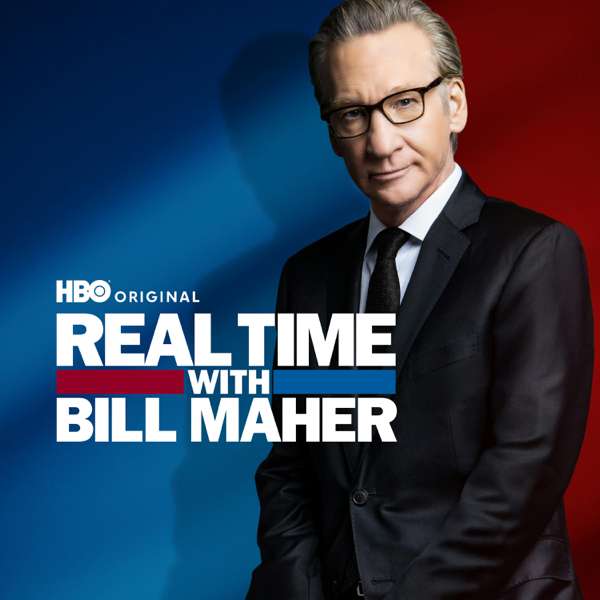
    Real Time with Bill Maher

    6

    Real Time with Bill Maher Games & Hobbies
    footer-logo

    Contact Us

    Toll Free: 844-670-7747

    Links

    • Home
    • Top Charts
    • Networks
    • Apps
    • Independents Podcasts
    • Podcast Advertising
    • Podcast News
    • Contact Us
    • About Us
    • Analytics & Insights

    Stay Connected

      Privacy, Terms of Use & Our Code of Ethics Protecting Content Creators Copyrights