TopPodcast.com
Menu
  • Home
  • Top Charts
  • Top Networks
  • Top Apps
  • Top Independents
  • Top Podfluencers
  • Top Picks
    • Top Business Podcasts
    • Top True Crime Podcasts
    • Top Finance Podcasts
    • Top Comedy Podcasts
    • Top Music Podcasts
    • Top Womens Podcasts
    • Top Kids Podcasts
    • Top Sports Podcasts
    • Top News Podcasts
    • Top Tech Podcasts
    • Top Crypto Podcasts
    • Top Entrepreneurial Podcasts
    • Top Fantasy Sports Podcasts
    • Top Political Podcasts
    • Top Science Podcasts
    • Top Self Help Podcasts
    • Top Sports Betting Podcasts
    • Top Stocks Podcasts
  • Podcast News
  • About Us
  • Podcast Advertising
  • Contact
Not in our directory?
Add Show Here
Podcast Equipment
Center

toppodcastlogoOur TOPPODCAST Picks

  • Comedy
  • Crypto
  • Sports
  • News
  • Politics
  • True Crime
  • Business
  • Finance

Follow Us

toppodcastlogoStay Connected

    View Top 200 Chart
    Back to Rankings Page
    Arts

    Mouthful

    Mouthful places teens and youth at the center of important conversations, adding their voices and perspectives to the discussions that surround our daily lives at home, in the workplace, and in the community. From sexuality and gender to policing and addiction, each episode focuses on a new topic inspired by a student-written dramatic monologue. We listen to the monologue performed by a professional actor, talk to the teen about why they wrote it, and then journey out into the community to broaden the conversation.

    Advertise
    • Apple Podcasts
    • Google Play
    • Spotify

    Latest Episodes:
    Pretension Detention Apr 10, 2018
    Show notes

    A monologue questioning the value of a classroom discussion starts a conversation about learning. Featuring conversations with Ericka Morris , a former teacher and curriculum specialist, Tamir D. Harper , a senior at Science Leaderships Academy and co-founder of UrbEd, and Brooke Sexton , Artistic Director of YesAnd! Collaborative Arts.

    Click here to read a transcript of this episode.

    “ I know I signed up for an AP English class, but I thought AP stood for Advanced Placement, not Analytical Professionals or Absolutely Pretentious. ”
    — from "Pretension Detention" by Erin Orth ![Pretension Album.png](https://static1.squarespace.com/static/58a484743e00be2284446832/t/5acb77f603ce649b2a629476/1523930882845/Pretension+Album.png?format=1000w) * * *

    further reading & resources

    Learn more about Tamir D. Harper and check out his non-profit UrbEd.

    Find out what programs YesAnd! Collaborative Arts has coming up at their home in Germantown.

    Check out Philly's Teacher Action Group (TAG) and follow their page for information about upcoming events.

    about the performer

    Emily.jpeg

    EMILY MOYLAN—

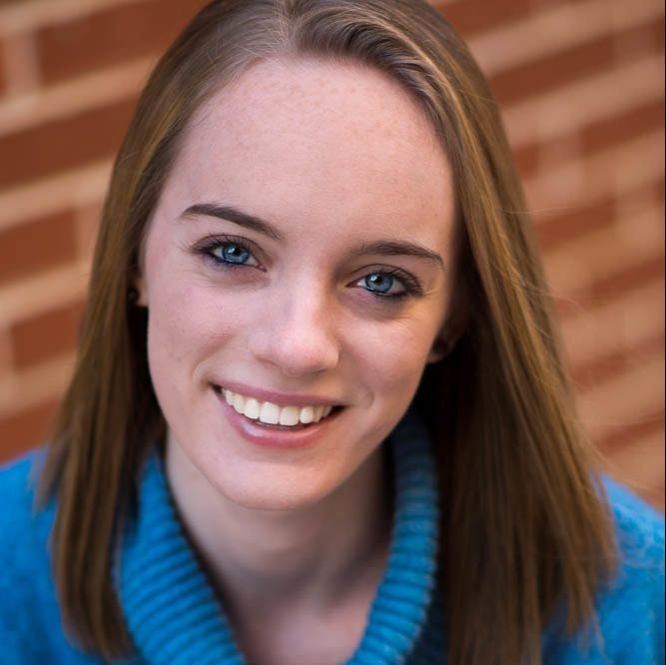
    Emily is a local actor, teaching artist, and stage manager. She received her B.A. in Theatre with a minor in English from Temple University. Her involvement with Philly Young Playwrights began in 2013 when she was an actor in the New Voices Festival. Since then, she has worked with PYP in many capacities, and now serves as the 2017-2018 Teaching Artist Apprentice.

    Outside of her work with PYP, she has worked as an actor with companies like Revolution Shakespeare, Tempest in a Teapot Co., and Prime Theatre Syndicate. As a stage manager, she has worked with Peoples Light and Theatre Co., Delaware Theatre Company, The Bearded Ladies, and Upper Darby Summer Stage.

    When she's not working within the Philadelphia theatre community, Emily helps countless high school students cram for the SAT/ACTs at Huntington Learning Center in Springfield.

    2018 Mouthful Monologue Festival

    Featuring 18 monologues written by middle school and high school students from throughout Greater Philadelphia. April 13-21 at the Drake Theater in Center City Philadelphia. Find out more and reserve your Pay What You Decide tickets here.

    "Pretension Detention" was directed by Mitchell Bloom.

    Royalty Free Sounds provided by ZapSplat.com and Soundbible.com.

    Additional music by Lee Roosevere via FreeMusicArchive.org.


    Addiction Apr 03, 2018
    Show notes

    A monologue written from the perspective of a cigarette starts a conversation about addiction. Featuring conversations with Charmira Nelson, who wrote the monologue while struggling with a secret addiction to cigarettes when she was a junior in high school, and "John," a recovering addict and member of Narcotics Anonymous.

    Click here to read a transcript of this episode.

    “You can’t get enough of me. I’m the reason you live everyday. We give each other life.”
    — from "Addiction" by Charmira Nelson ![Addiction Album.png](https://static1.squarespace.com/static/58a484743e00be2284446832/t/5abd1cf40e2e72a3458eb8b3/1523283719710/Addiction+Album.png?format=1000w) * * *

    further reading & resources

    Charmira Nelson performs a poem with the Philadelphia Youth Poetry Movement in 2011.

    If you need immediate help for yourself or a loved one, call NA's local help line (215)NAWORKS

    To learn more about Narcotics Anonymous, visit: NA.org (NA World Service) or NAworks.org (Greater Philadelphia Region)

    Read "By Young Addicts For Young Addicts," an NA pamphlet that gives you greater insight into what NA might look like for you, written by other young people.

    To read personal accounts about the opioid epidemic here in Philadelphia, check out "Philly's Overdose Epidemic" on Philly.com.

    Read about the Food and Drug Administration's current crackdown on stores and online sites selling e-cigarettes to underage buyers.

    about the performer

    JayleneClarkOwensHeadshot.jpg

    JAYLENE CLARK OWENS—

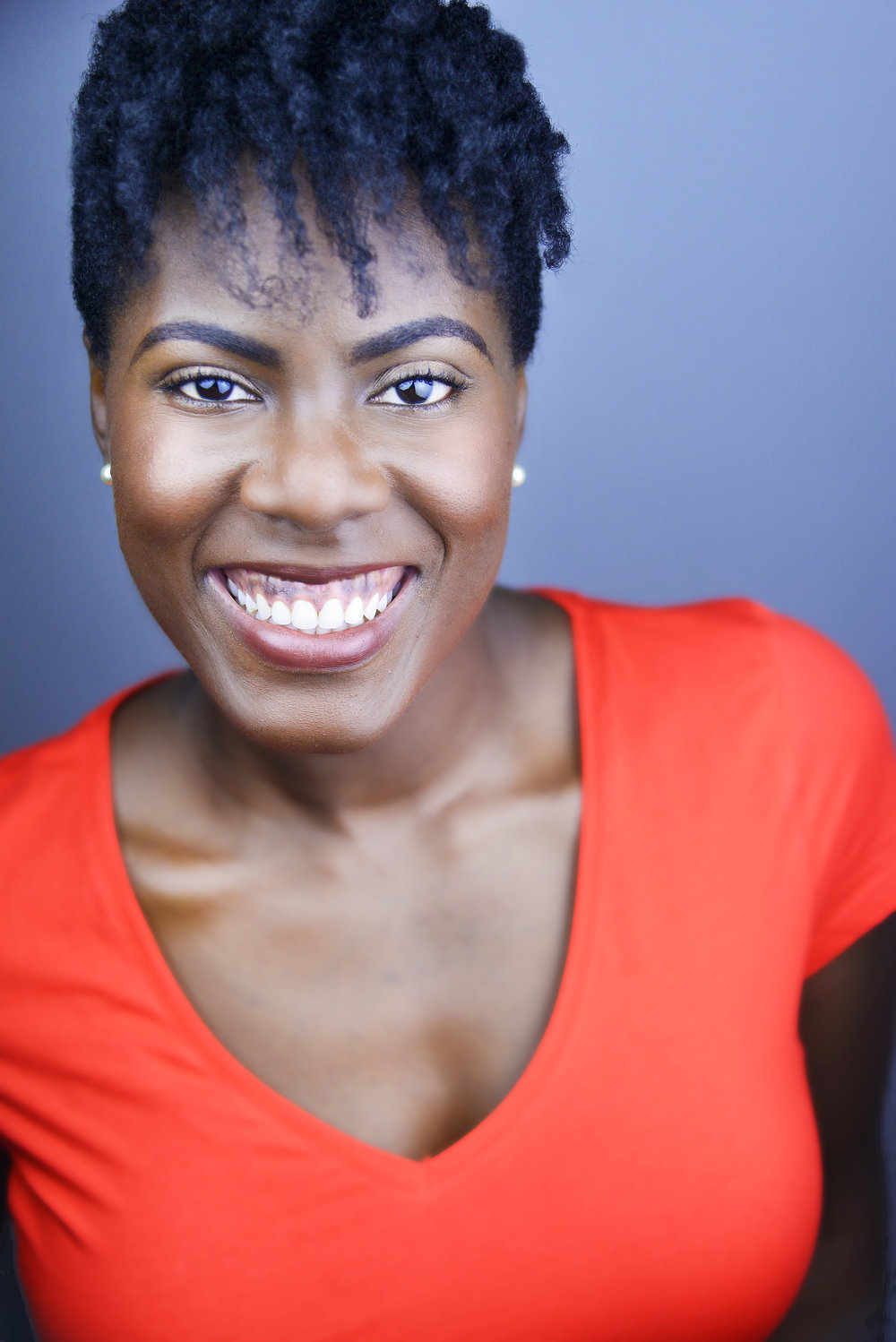
    Jaylene Clark Owens is a Philly resident from Harlem, NY. She is an AUDELCO and Barrymore Award winning actress, as well as a highly acclaimed poet. Owens is a first place Apollo Theater Amateur Night winner for her poetry. She is the Executive Director of Harlem KW Project, LLC, which is the theatrical company she created with three other women to create the AUDELCO-award winning play about gentrification in Harlem, Renaissance in the Belly of a Killer Whale. Education: BFA Ithaca College. Recent theatre credits include: The Revolutionists (Theatre Horizon), WHITE (Theatre Horizon), An Octoroon (The Wilma Theater)._ _She is a Company Member for The Wilma Theater’s acting company, Hothouse. Up next: Passage (The Wilma Theater). JayleneClarkOwens.com.

    2018 Mouthful monologue festival

    Featuring 18 monologues written by middle school and high school students from throughout Greater Philadelphia. April 13-21 at the Drake Theater in Center City Philadelphia. Find out more and reserve your Pay What You Decide tickets here.

    "Addiction" was directed by Mitchell Bloom.

    Royalty Free Sounds provided by ZapSplat.com and Soundbible.com.


    Orange Paper LIVE SHOW Jul 25, 2017
    Show notes

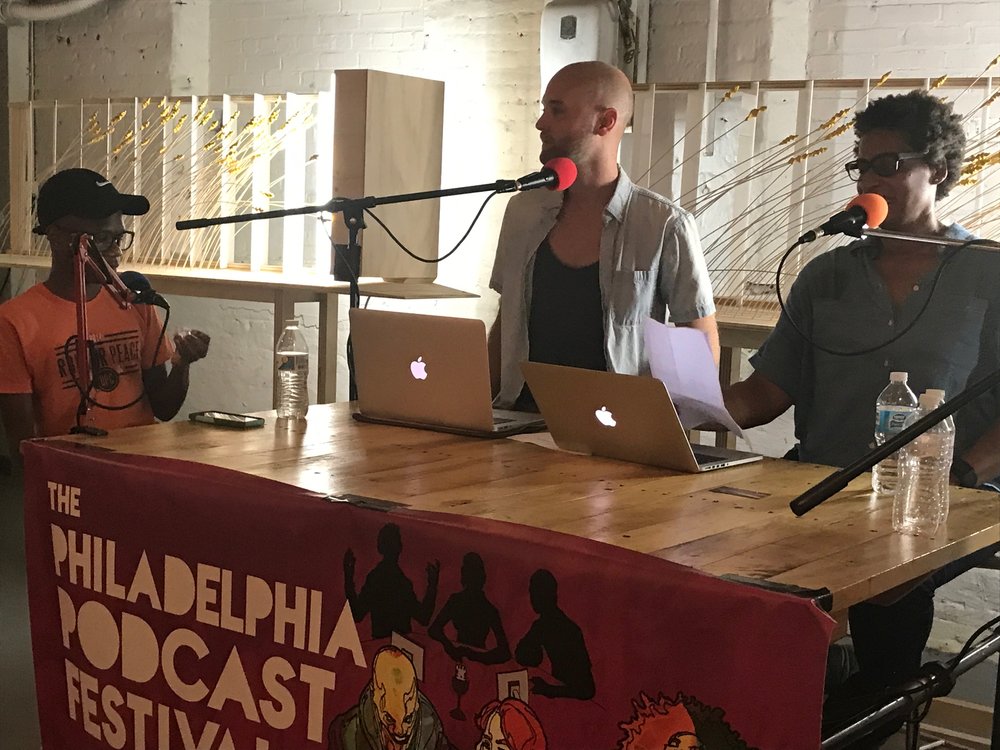
    A monologue about a young man and his family facing eviction starts a conversation about housing instability, youth homelessness, and aging out of the system. Featuring conversations with Selena Ortiz, a young woman currently in the system, and Dr. Nikia Owens, the Director of Income and Financial Stability Community Impact at the United Way of Greater Philadelphia and Southern New Jersey.

    Click here to read a transcript of this episode.

    “The orange paper on my door shocked me. I looked at the orange paper and read it five times. Then to make sure I read it five more times. We were getting evicted, and there was nothing to do about it.”
    — from "Orange Paper" by Branden Hall ![](https://static1.squarespace.com/static/58a484743e00be2284446832/t/59765d00f5e23149f354391c/1500929304934/?format=1000w) * * *

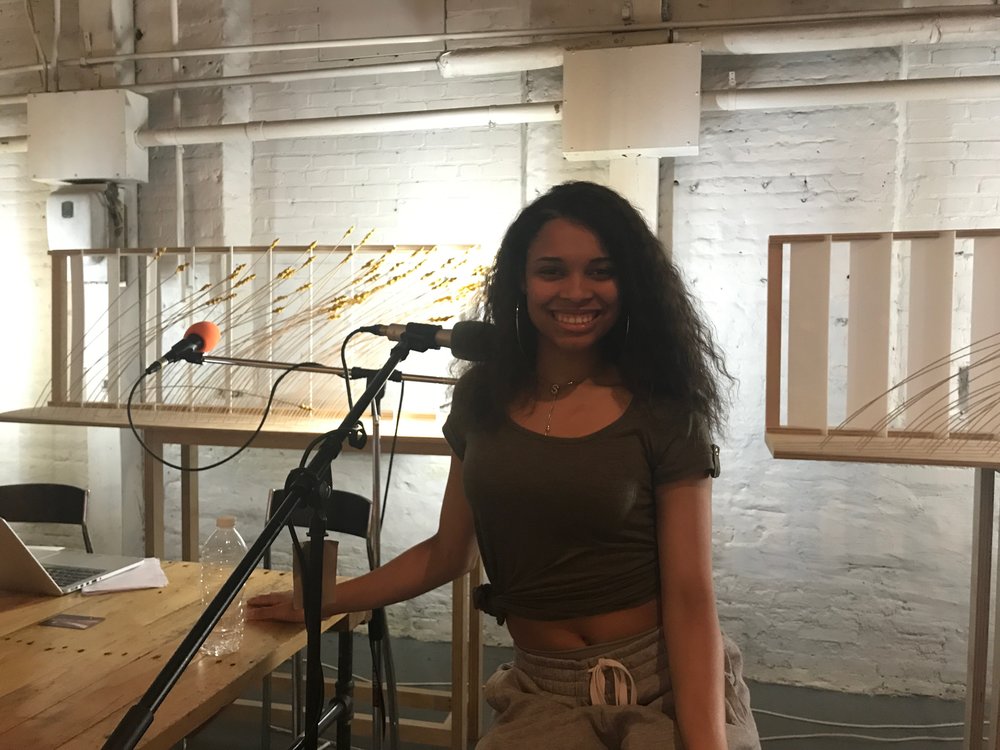
    Selena Ortiz recently turned 18. She is approaching her final days in a 30 day shelter. After that, she's not sure where she'll be able to go.

    "The most difficult thing I'm up against in the present moment is temptation. Temptation to not give up, temptation to not keep moving forward... Every time I take three steps forward, I feel like I take five steps back."

    Though she recently graduated from high school and is enrolled at the Community College of Philadelphia, she has none of her records and only recently acquired her Social Security card. Without her birth certificate, Selena is unable to open a bank account.

    Selena's story is not uncommon. It is sobering. But it is not uncommon.

    On this episode of Mouthful, Selena shares her story, and we talk to Dr. Nikia Owens, whose work at the United Way of Greater Philadelphia and Southern New Jersey is dedicated to income and housing instability. It's a personal conversation, with first person accounts of the systemic challenges and issues facing youth and their families in the City of Philadelphia.

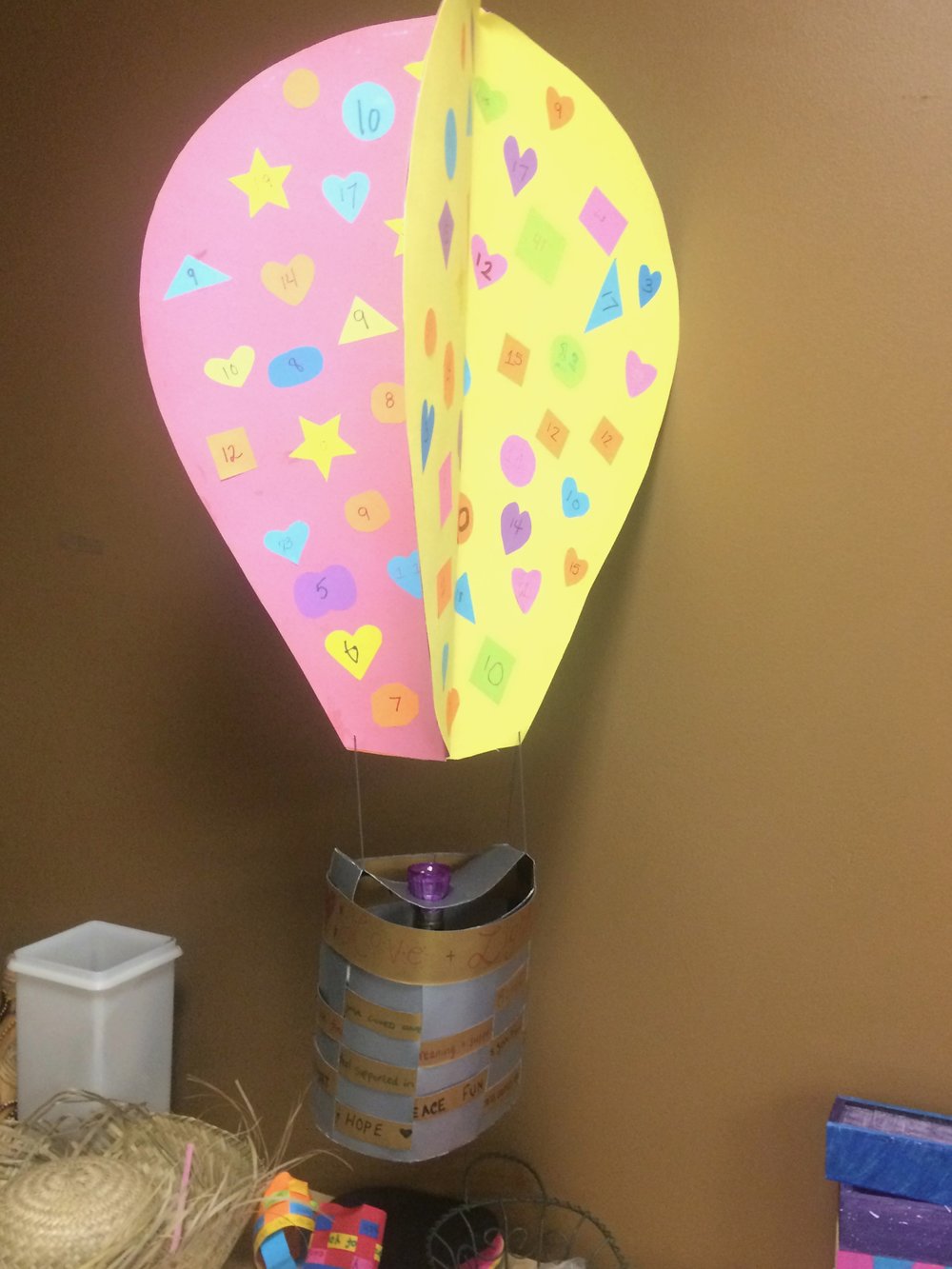
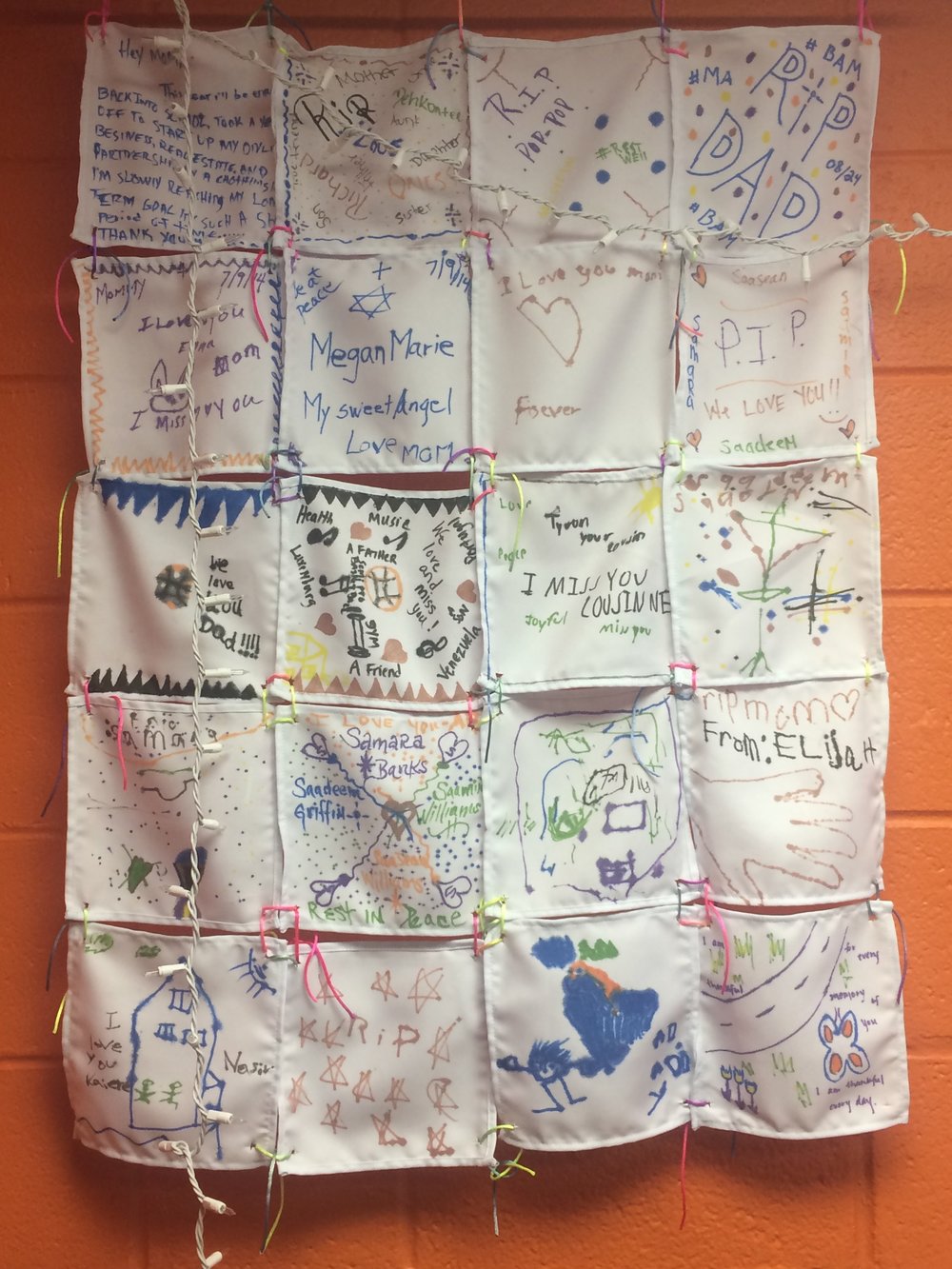
    D173C61E-5E78-4B87-8B08-FA10D5A4902C.JPG
    3F1A921D-8BAD-4C6A-83CF-20A5FDA572BF.JPG
    DB6051A5-92FB-458A-8595-AF8B06BC6D73.JPG
    AC63AFF7-B7C5-4E4E-ACD2-B8E520FA3F7B.JPG
    78F7F676-2C26-4F4D-A578-6587773ACEA3.JPG
    F33B2FE9-2B54-424F-A36C-464417C40EE9.JPG
    IMG_2545.JPG.jpeg
    IMG_2547.JPG.jpeg
    3839FA65-0FAF-4648-9883-CEF514932A1F.JPG

    further reading & resources

    If you need housing assistance or other resources , dial 211, Metro United Way's help referral service. A trusted and caring call specialist will listen to the full scope of your issue and connect you immediately to the right source.

    For information about becoming a foster parent in Philadelphia, check out "General Steps to Foster Family Care" via Philadelphia's Department of Human Services.

    The People's Emergency Center provides support for families in need as well as resources for independent living. Their website includes a variety of resources and information to connect those in need with help, support, and safety.

    Youth Emergency Servicesoffers immediate housing and respite to youth facing housing insecurity or are unable to safely live with family.

    Read "Philly women shatter broken foster child image" from Metro Philly, profiling the stories of four women who have become foster care advocates after moving through the system themselves as young people.

    For a deeper understanding of some of the systemic issues perpetuating income and housing instability, check out this article about the increasing lack of affordable housing in Philadelphia from Jacobin Magazine.

    Click here to learn more about Philadelphia Young Playwrights.

    Commentary

    “Listening to Selena’s story made me appreciate what I have.”
    — Trinity Williams

    Read rising high school senior Trinity Williams' take on the live show here.

    "Orange Paper" by Branden Hall is performed by Yannick Haynes under the direction of Mitchell Bloom


    Autism Speaks Jun 20, 2017
    Show notes

    A monologue about a sister saying goodbye to her severely autistic older brother starts a conversation about autism spectrum disorder. Featuring conversations with Lisa Gardner, a mechanical engineering student whose monologue was written at a time when her relationship with her brother was particularly challenging; and Dr. Kate Wallis, a pediatrician who specializes in youth with autism spectrum disorder.

    Click here to read a transcript of this episode.

    “I want to love you. I just don’t know how. Because when are parents are gone. I’ll be the only person who can take care of you.”
    — from "Autism Speaks" by Lisa Gardner ![Autism Speaks Album.png](https://static1.squarespace.com/static/58a484743e00be2284446832/t/594807c6be65940bfef07a09/1522340112249/Autism+Speaks+Album.png?format=1000w) * * *

    the conversation

    Kate Wallis, MD, MPH is a pediatrician and a fellow in developmental-behavioral pediatrics. She began working with individuals with Autism Spectrum Disorder and other developmental disabilities during high school as a camp counselor in a special recreation program. She earned her undergraduate degree from the University of Pennsylvania, with a major in Health and Societies and a minor in Hispanic Studies. She studied abroad in Spain, where she continued to work with kids with Autism Spectrum Disorder. She completed medical school and simultaneously earned her Master in Public Health degree from Stony Brook University School of Medicine. She completed residency in pediatrics at NYU School of Medicine and Bellevue Hospital before moving to Philadelphia for fellowship. Dr. Wallis has long been interested in understanding disparities in the identification and care of children with Autism Spectrum Disorder and other developmental disabilities. She believes deeply in her role as an advocate for her patients and their families.

    Kate Wallis, MD, MPH is a pediatrician and a fellow in developmental-behavioral pediatrics. She began working with individuals with Autism Spectrum Disorder and other developmental disabilities during high school as a camp counselor in a special recreation program. She earned her undergraduate degree from the University of Pennsylvania, with a major in Health and Societies and a minor in Hispanic Studies. She studied abroad in Spain, where she continued to work with kids with Autism Spectrum Disorder. She completed medical school and simultaneously earned her Master in Public Health degree from Stony Brook University School of Medicine. She completed residency in pediatrics at NYU School of Medicine and Bellevue Hospital before moving to Philadelphia for fellowship.

    Dr. Wallis has long been interested in understanding disparities in the identification and care of children with Autism Spectrum Disorder and other developmental disabilities. She believes deeply in her role as an advocate for her patients and their families.

    further reading & resources

    An introduction to autism that aims to raise awareness among young non-autistic audiences, to stimulate understanding and acceptance in future generations. It is intended to be viewed, discussed and shared widely by anyone but especially teachers and parents. http://amazingthingshappen.tv/

    Autism Speaks is packed with information, resources, studies, and links.

    Read about an upcoming Netflix series, Atypical, a coming of age story that centers on a young man with autism, to be released on August 11.

    Click here to learn more about Philadelphia Young Playwrights.


    Diagnosis Jun 13, 2017
    Show notes

    A monologue about a young woman at the therapist following the death of her brother starts a conversation about grief, death of a sibling, and loss. Featuring conversations with Taliya Carter whose monologue draws upon her interest in psychology as well as from her own personal experiences of sibling death; and Darcy Walker Krause, the Executive Director of The Center for Grieving Children in Philadelphia.

    Click here to read a transcript of this episode.

    “Are you really asking that? How else do you think I would be feeling, that was my brother! It felt like my apart of my soul was ripped out and stomped on.”
    — from "Diagnosis" by Taliya Carter ![](https://static1.squarespace.com/static/58a484743e00be2284446832/t/593ed1e56a4963cde6cf42a5/1497289207890/?format=1000w) * * *

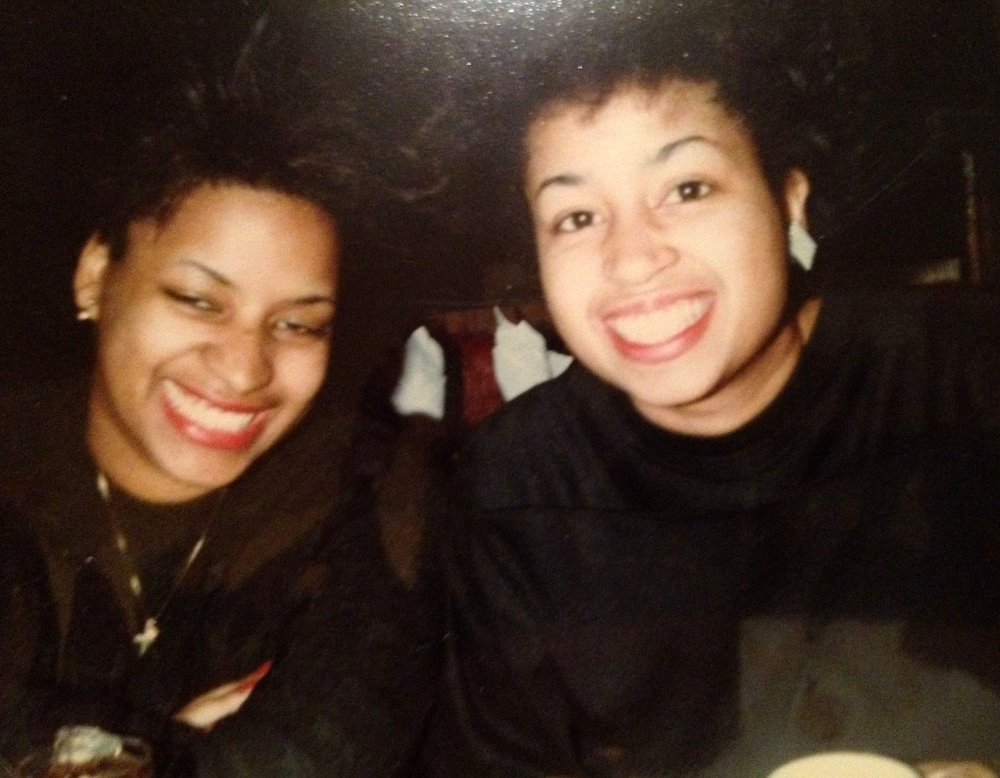
    This episode of Mouthful strikes a personal chord for host Yvonne Latty. When she first heard "Diagnosis" by Taliya Carter, a monologue about the death of a sibling, Yvonne was deeply moved. Her sister, Margie, died when they were in their 20s.

    Yvonne, left, with her late sister Margie, shortly before she was killed in a car accident.

    Yvonne, left, with her late sister Margie, shortly before she was killed in a car accident.

    The loss of a loved one is a painful experience. The loss of a sibling is a very specific type of loss, one that is often not spoken about or considered in the immediate aftermath of a death. "Someone once told me its like you lose the witness to your childhood," Yvonne said, recounting Margie's death in an interview with Darcy Walker Krause, Executive Director of The Center for Grieving Children in Philadelphia.

    "I think the one thing I feel that I could say is universal [about grief] is that you never get over it," Ms. Krause said from her office in the Center's East Falls home. "There’s never a closure, there’s never an end. Especially I think for a young person who loses somebody because you go through so many stages of life where you should’ve had that person or expected that person to be around."

    The pain, confusion, and anger of that kind of loss is at the center of Taliya Carter's monologue "Diagnosis," which this week's episode is built around. For Taliya, who will soon graduate from The Workshop School in Philadelphia and who wants to become a behavioral psychologist, loss is the starting point for healing: "I know everybody goes through something but I always want to be the type of person to find a way to help... if I was going through something and if I was in anybody’s situation, I would want somebody to help me, so why not start off helping other people."

    the conversation

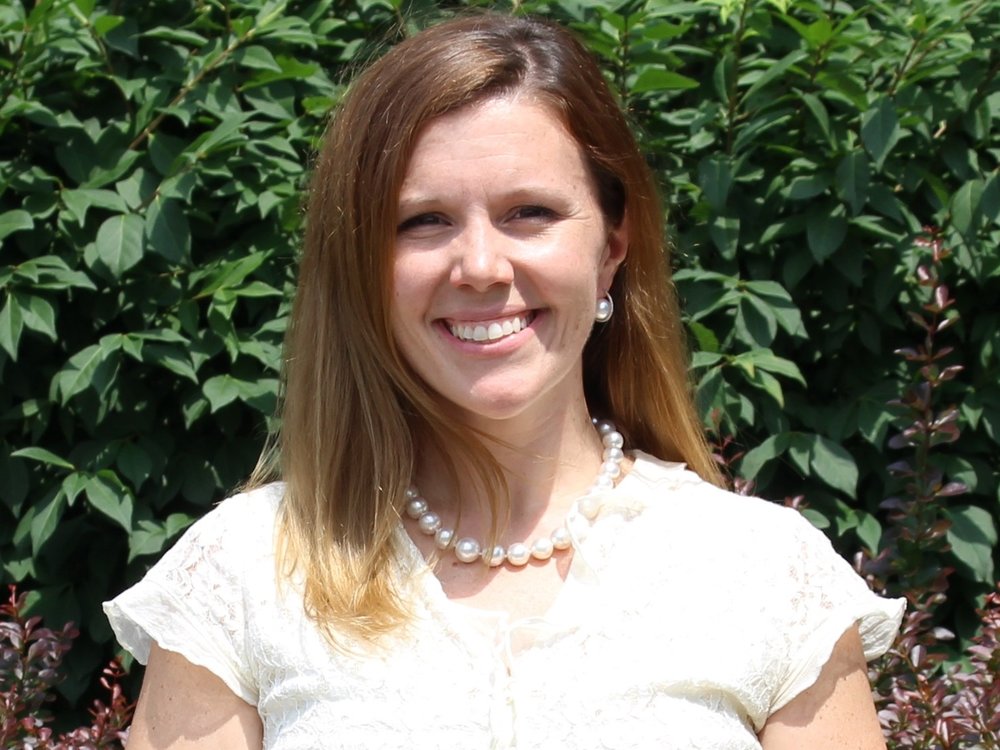
    Darcy Walker Krause,  J.D., LSW, C.T.  is the Executive Director of The Center for Grieving Children in Philadelphia. A graduate of the University of Pennsylvania School of Social Policy and Practice and Duke University School of Law, Darcy is a passionate advocate for grieving children and families.  Having lost her mother at 15, Darcy knows the loss experience intimately.  It is this loss that led Darcy to work in childhood bereavement.  Prior to joining the Center, Darcy worked as the Sibling Bereavement Project Coordinator at Peter’s Place in Radnor, Pennsylvania. Before this, Darcy practiced law in private practice for five years. Through her professional and research experience, Darcy focuses on a variety of facets of the loss experience, including the peer support model, the role of attachment in grief, trauma-based models of intervention, and ways of fostering resiliency in youth.  Because of this work and interest, Darcy has been a guest lecturer at the University of Pennsylvania and been published by the Philadelphia Daily News.  An active member of the Association for Death Education and Counseling, Darcy won the 2012 Student Paper award for her paper entitled Creating and Fostering Attachment through Mentorship: The Role of Secondary Attachments as an Intervention for Parentally-Bereaved Children,” which she presented at the annual conference.

    Darcy Walker Krause,** J.D., LSW, C.T. **is the Executive Director of The Center for Grieving Children in Philadelphia. A graduate of the University of Pennsylvania School of Social Policy and Practice and Duke University School of Law, Darcy is a passionate advocate for grieving children and families. Having lost her mother at 15, Darcy knows the loss experience intimately. It is this loss that led Darcy to work in childhood bereavement. Prior to joining the Center, Darcy worked as the Sibling Bereavement Project Coordinator at Peter’s Place in Radnor, Pennsylvania. Before this, Darcy practiced law in private practice for five years.

    Through her professional and research experience, Darcy focuses on a variety of facets of the loss experience, including the peer support model, the role of attachment in grief, trauma-based models of intervention, and ways of fostering resiliency in youth. Because of this work and interest, Darcy has been a guest lecturer at the University of Pennsylvania and been published by the Philadelphia Daily News. An active member of the Association for Death Education and Counseling, Darcy won the 2012 Student Paper award for her paper entitled Creating and Fostering Attachment through Mentorship: The Role of Secondary Attachments as an Intervention for Parentally-Bereaved Children,” which she presented at the annual conference.

    connections

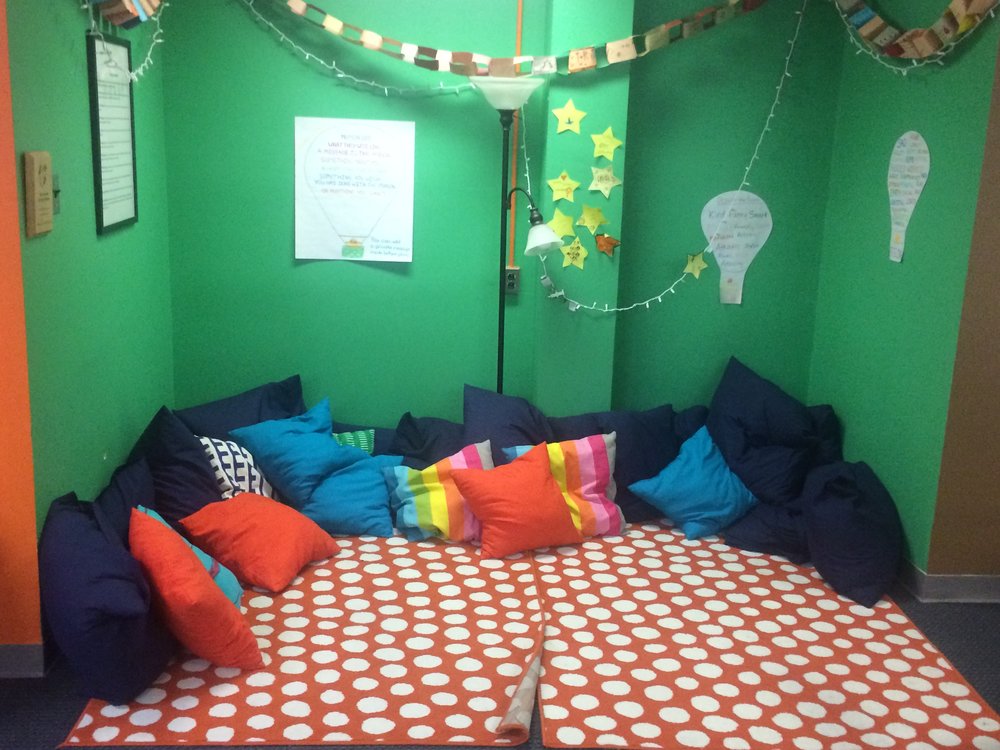
    The Center for Grieving Children helps children grieving a death to heal and grow through their grief while strengthening families, communities and professionals’ understanding of how best to respond to their needs. Their mission includes serving as a training and resource center for professionals and others who interact with grieving children and teens. The Center's programs offer free peer support groups for children and teens ages 5-18 who have experienced the death of someone significant in their lives. Peer support and a caring adult presence help to reduce the feelings of isolation and loneliness that children often experience after death. The Center has multiple locations around the city of Philadelphia.  The Center was founded in 1995 by the Bereavement Program at St. Christopher’s Hospital for Children and incorporated as an independent nonprofit in 2000. Our main office is located in East Falls, PA with various Center-Based locations throughout the city of Philadelphia. The Center is supported through individual donations, grants, and corporate sponsorships.

    The Center for Grieving Children helps children grieving a death to heal and grow through their grief while strengthening families, communities and professionals’ understanding of how best to respond to their needs. Their mission includes serving as a training and resource center for professionals and others who interact with grieving children and teens.

    The Center's programs offer free peer support groups for children and teens ages 5-18 who have experienced the death of someone significant in their lives. Peer support and a caring adult presence help to reduce the feelings of isolation and loneliness that children often experience after death. The Center has multiple locations around the city of Philadelphia.

    The Center was founded in 1995 by the Bereavement Program at St. Christopher’s Hospital for Children and incorporated as an independent nonprofit in 2000. Our main office is located in East Falls, PA with various Center-Based locations throughout the city of Philadelphia. The Center is supported through individual donations, grants, and corporate sponsorships

    further reading & resources

    The Center for Grieving Children has a great list of resources related to grief and loss on their website, here.

    This document, "Sibling Death and Childhood Traumatic Grief," from The National Child Traumatic Stress Network includes a ton of information about childhood grief and sibling death, including an extensive reading list for children of various ages.

    Click here to learn more about Philadelphia Young Playwrights.

    "Diagnosis" was performed by Claris Park, directed by Christina May for the 2017 Young Voices Monologue Festival.

    For Margie.


    Better Technology, Horrible Connection Jun 06, 2017
    Show notes

    A monologue about a relationship turned sour because of a cell phone starts a conversations about technology, social media, and communication. Featuring conversations with a group of high school students from the Academy at Palumbo and tech life expert Stephanie Humphrey.

    Click here to read a transcript of this episode.

    “We live in a generation where we can’t speak without abbreviation. All this wrong we have we can fix but this time we can’t use auto correct.”
    — from "Better Technology, Horrible Connection" by Brandon Dejesus ![Better Technology Album (2).png](https://static1.squarespace.com/static/58a484743e00be2284446832/t/59360ba2be6594e28ba7e8b7/1496714170301/Better+Technology+Album+%282%29.png?format=1000w) * * *

    If you’re reading this, chances are social media was not a huge part of your high school experience.

    That may be a gross generalization, but let’s go with it.

    Imagine folding a digital reality into the already fraught social dynamics of middle school and high school.

    “Do you like me, check ‘yes’ or ‘no’” written on a piece of paper passed across the classroom under the watchful eye of a teacher has nothing on “likes” on Instagram and “streaks” on Snapchat. Yes, streaks.

    “It’s basically Snapchatting a person every day,” a student at the Academy of Palumbo told us. “It’s like a little fire thing that pops up and it shows how long you guys have been doing that.”

    Her longest streak? 300 days.

    Of course not every social media interaction, including streaks, is romantic in nature, but again, let’s go with it. Imagine one day, suddenly, your crush doesn’t Snapchat you. Out of nowhere, your streak is gone, and the relationship is thrown into unfamiliar territory: digital silence.

    But is that really all that different from what teenagers having been doing since the beginning of time?

    Tech-life expert Stephanie Humphrey thinks not: “I think the overarching thing that parents and adults need to understand is that nothing has really changed about the way that kids interact with each other on a fundamental level. They just have better tools than we did back in the day if you will.”

    the conversation

    Tech-Life Expert Stephanie Humphrey merges her passion for lifestyle media with in-depth tech expertise to show everyday people how empowering, enriching and fun technology can be. Stephanie is driven by the sole purpose of connecting people, particularly those underrepresented in technology, with the tech know-how to transform their worlds. Stephanie is proud to say that she has realized her dream of becoming a nationally syndicated media personality as the current technology contributor to ‘The Harry Show’ , hosted by Harry Connick, Jr, as well as a frequent guest on NewsOne with Roland Martin on TV One . Stephanie has also contributed her tech-life expertise to national media outlets including Al-Jazeera America, HuffPostLive , TheGrio.com , and BlackEnterprise.com . She is an on-air tech contributor to Fox 29’s “Good Day Philadelphia” (WTXF) where she delivers tech news. Stephanie was also the technology writer for EBONY.com and a contributor to EBONY magazine , where she provided readers with the latest in apps, gadgets, and social media. She was the originator of the popular “Tech2 Go” column on TheRoot.com , and was most recently the spokesperson for HP, Inc. on the QVC shopping channel . And Stephanie uses social media to help hundreds of people understand tech basics with her weekly 60-Second Tech Break on Instagram & Twitter. Clips of some of Stephanie’s work can be viewed on her YouTube channel .    Helping students is the passion that drives Stephanie, and she has channeled this motivation into a seminar called ‘Til Death Do You Tweet’ . The seminar, tailored to either students or parents, helps them understand the potential negative consequences of online behavior - especially through social media - and gives helpful advice on how young people can maintain a positive reputation in cyberspace. Stephanie is inspired by an innate curiosity to know why things work and an entrepreneurial spirit, which was the spark that started her on her present journey into tech-life media. Her expertise is built upon nearly a decade as a Senior Systems Engineer at Lockheed Martin and engineering degrees from Florida A&M University and the University of Pennsylvania.

    Tech-Life Expert Stephanie Humphrey merges her passion for lifestyle media with in-depth tech expertise to show everyday people how empowering, enriching and fun technology can be. Stephanie is driven by the sole purpose of connecting people, particularly those underrepresented in technology, with the tech know-how to transform their worlds.

    Stephanie is proud to say that she has realized her dream of becoming a nationally syndicated media personality as the current technology contributor to ‘The Harry Show’ , hosted by Harry Connick, Jr, as well as a frequent guest on NewsOne with Roland Martin on TV One. Stephanie has also contributed her tech-life expertise to national media outlets including Al-Jazeera America, HuffPostLive , TheGrio.com , and BlackEnterprise.com. She is an on-air tech contributor to Fox 29’s “Good Day Philadelphia” (WTXF) where she delivers tech news. Stephanie was also the technology writer for EBONY.com and a contributor to EBONY magazine , where she provided readers with the latest in apps, gadgets, and social media. She was the originator of the popular “Tech2** Go” column on TheRoot.com , and was most recently the spokesperson for HP, Inc. on the QVC shopping channel . And Stephanie uses social media to help hundreds of people understand tech basics with her weekly 60-Second Tech Break** on Instagram & Twitter. Clips of some of Stephanie’s work can be viewed on her YouTube channel.

    Helping students is the passion that drives Stephanie, and she has channeled this motivation into a seminar called ‘Til Death Do You Tweet’. The seminar, tailored to either students or parents, helps them understand the potential negative consequences of online behavior - especially through social media - and gives helpful advice on how young people can maintain a positive reputation in cyberspace.

    Stephanie is inspired by an innate curiosity to know why things work and an entrepreneurial spirit, which was the spark that started her on her present journey into tech-life media. Her expertise is built upon nearly a decade as a Senior Systems Engineer at Lockheed Martin and engineering degrees from Florida A&M University and the University of Pennsylvania.

    further reading & resources

    For tons of resources for parents, guardians, and educators about all things media and technology, check out Common Sense Media.

    Watch the trailer for the documentary Screenagers and check out the resources and screening information on their website.

    Read this article from NYMag's The Cut about how social media can taint adult friendships.

    Consider the sometimes eerie ways social media and technology are beginning to blur the line between reality and fiction in this article from The Atlantic.

    Click here to learn more about Philadelphia Young Playwrights.

    commentary

    “We should always remember to focus on what’s important in the real world and not what’s important on our phone!”
    — Trinity Williams

    Read rising high school senior Trinity Williams' take on Episode Eight here.

    "Better Technology, Horrible Connection" is performed by Adbul Sesay under the direction of Christina May for the 2017 Young Voices Monologue Festival.

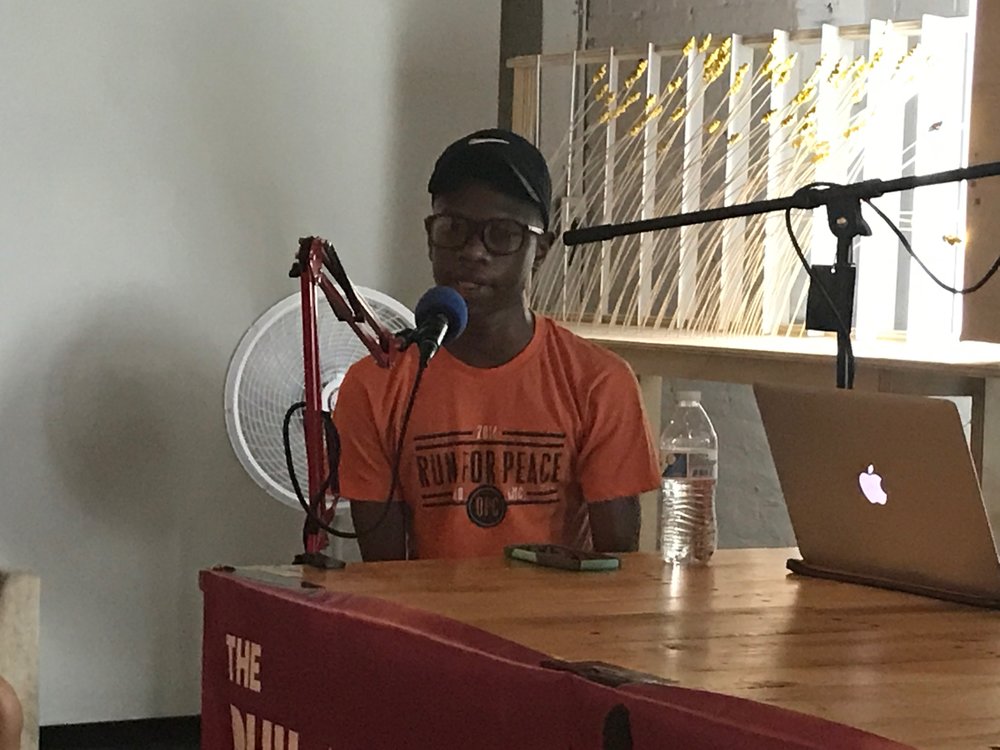
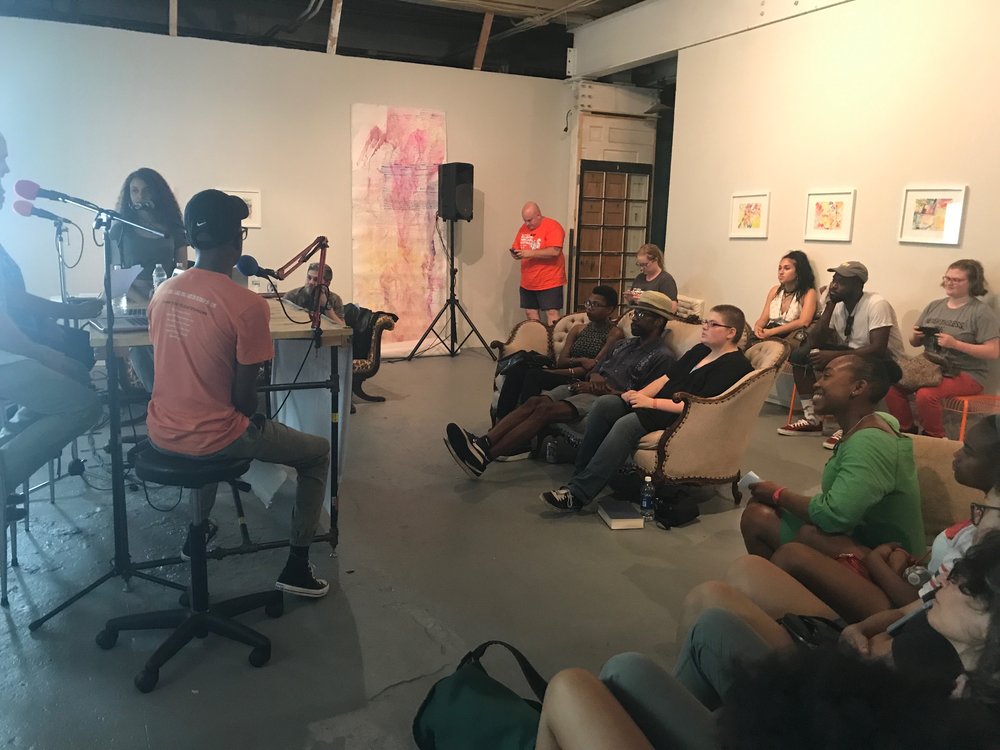
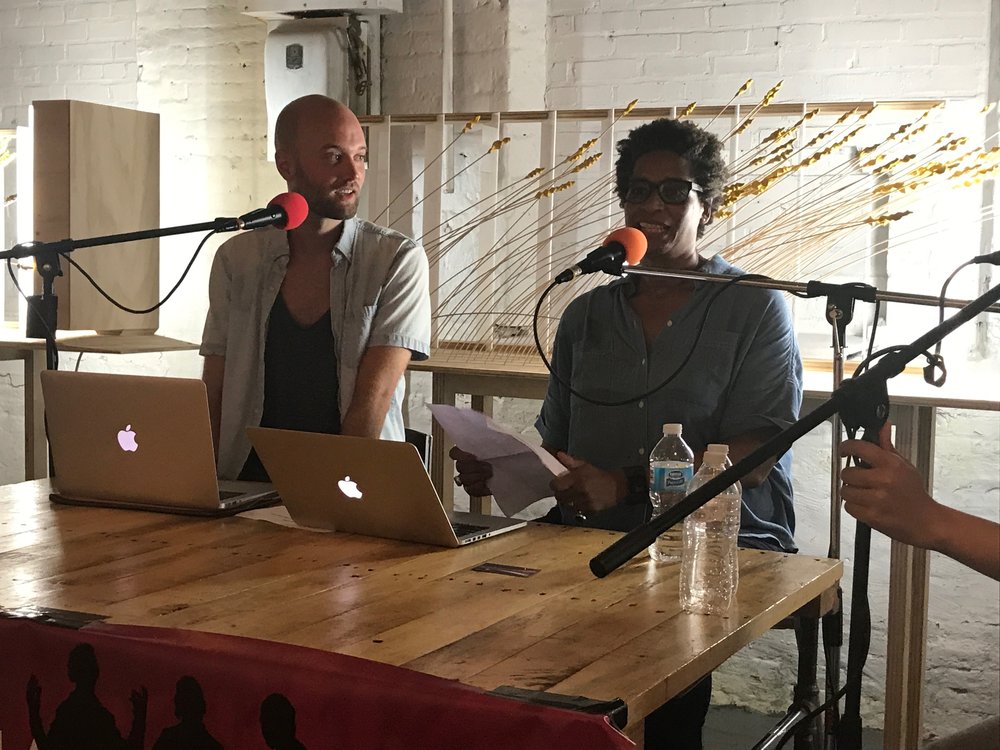
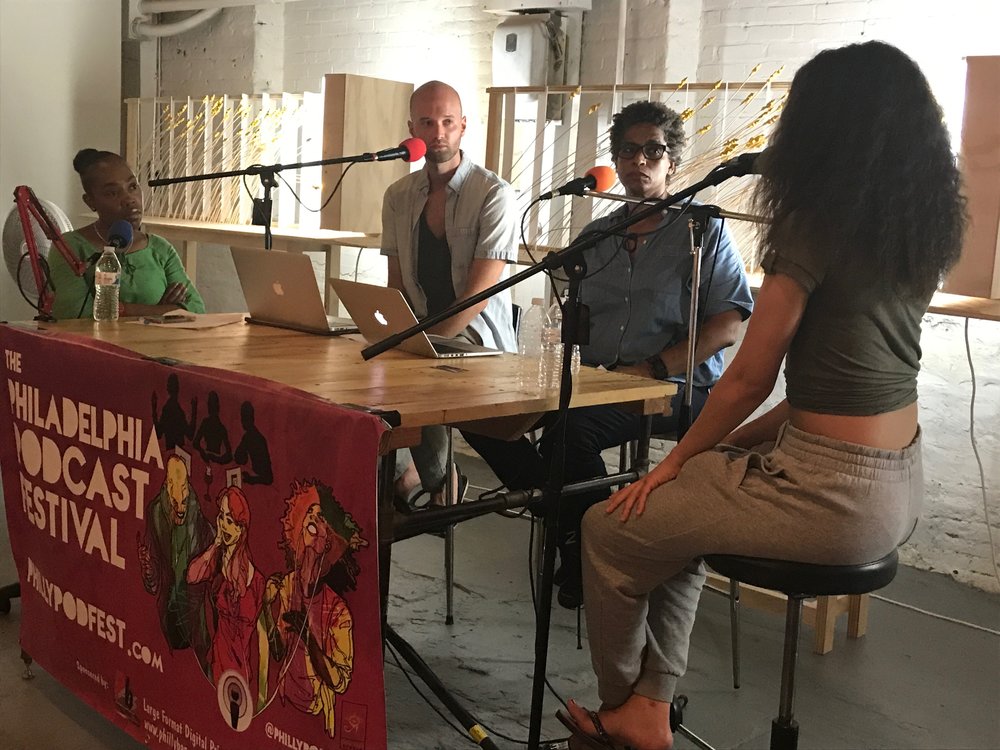
    Mouthful will be featured as part of the Fifth Annual Philadelphia Podcast Festival this summer! Mark your calendars for Sunday, July 23rd at 6 pm when we will be having a live show at the Kitchen Table Gallery in Kensington.


    Fine Dining May 30, 2017
    Show notes

    A monologue about a fast food worker starts a conversation about jobs. Featuring a conversation with Chekemma Fulmore-Townsend, President & CEO of the Philadelphia Youth Network, man on the street interviews, and worst job experiences from the production team.

    Click here to read a transcript of this episode.

    “Yes, I understand that if you don’t get the USDA recommended dose of greasy burger meat every day you break out in hives, but hives are not really the purview of my department.”
    — from "Fine Dining" by Owen Fox ![](https://static1.squarespace.com/static/58a484743e00be2284446832/t/592888b917bffce55c42aa00/1495828723372/?format=1000w) * * *

    Remember your first job?

    Was it your worst job?

    “I always say I don’t have a worst job, but I do have jobs that did not give me as much energy,” Chekemma Fulmore-Townsend told us in an interview. Chekemma is the President and CEO of the Philadelphia Youth Network, a nonprofit that connects young people to meaningful employment and educational opportunities. “When I was in college I folded t-shirts at a local place called Steve and Barry’s. And while folding t-shirts did not give me energy... I learned a lot about myself.”

    For current middle school and high school students, summer vacation is just around the corner. All across the city, region, and country, students and teachers alike are counting down the days until the final bell rings, and school lets out.

    Once that bell rings, though, many students will walk out of the school and into a job, from one kind of learning to the next. For them, summer vacation means time away from school, but it doesn’t necessarily mean time off.

    Summer is a time to get your feet wet in the job pool.

    the conversation

    Chekemma Fulmore-Townsend is President & CEO of the Philadelphia Youth Network (PYN).  In 2016, Chekemma was recognized by the White House as a Champion of Change. As President and CEO of PYN, she draws on her experience in research, social work, and systems change to lead the creation of coordinated systems that promote academic achievement, economic opportunity and personal success. Before her appointment as President and CEO, Chekemma served in various capacities throughout the organization. Most recently, as PYN's Vice President of Program Services, she led a team accountable for program design, implementation, evaluation, compliance, and continuous improvement. Prior to her work at PYN, Chekemma, served at the Philadelphia Workforce Development Corporation as the Senior Director of the Emerging Workforce, fusing data-driven decision-making with solid project management to implement and improve adult and youth workforce programs. As a leader, Chekemma seeks to inspire passion, commitment and collaboration. She believes that improving lives requires hard work, courageous partners and time for laughter. She lives in the Greater Philadelphia area, and is a proud wife and mother of two daughters. Chekemma holds her B.A. in Psychology and Master of Social Work from the University of Pennsylvania.

    Chekemma Fulmore-Townsend is President & CEO of the Philadelphia Youth Network (PYN).

    In 2016, Chekemma was recognized by the White House as a Champion of Change. As President and CEO of PYN, she draws on her experience in research, social work, and systems change to lead the creation of coordinated systems that promote academic achievement, economic opportunity and personal success.

    Before her appointment as President and CEO, Chekemma served in various capacities throughout the organization. Most recently, as PYN's Vice President of Program Services, she led a team accountable for program design, implementation, evaluation, compliance, and continuous improvement. Prior to her work at PYN, Chekemma, served at the Philadelphia Workforce Development Corporation as the Senior Director of the Emerging Workforce, fusing data-driven decision-making with solid project management to implement and improve adult and youth workforce programs.

    As a leader, Chekemma seeks to inspire passion, commitment and collaboration. She believes that improving lives requires hard work, courageous partners and time for laughter. She lives in the Greater Philadelphia area, and is a proud wife and mother of two daughters.

    Chekemma holds her B.A. in Psychology and Master of Social Work from the University of Pennsylvania.

    connections

    The Philadelphia Youth Network (PYN) is an intermediary organization that works with cross-sector partners to expand access to services for underserved young people ages 12-24. Founded in 1999, PYN was among the first organizations in the country to systematically increase connections between formal education and employment preparation. Using a collective impact approach, PYN unites leaders and resources to create new solutions to complex, large-scale social problems. Since 1999, PYN has secured more than $500 million from public and private sources, managed more than 200 contracts with community-based organizations to create a coordinated youth service system, and created high-quality opportunities for more than 160,000 young people.

    The Philadelphia Youth Network (PYN) is an intermediary organization that works with cross-sector partners to expand access to services for underserved young people ages 12-24.

    Founded in 1999, PYN has secured more than $500 million from public and private sources to create high-quality opportunities for more than 160,000 young people with more than 200 community-based organizations.

    Click here to learn more about Philadelphia Young Playwrights.

    commentary

    “I am very grateful for this once in a lifetime experience and for all I have learned.”
    — Trinity Williams

    Read rising high school senior Trinity Williams' take on Episode Seven here.

    "Fine Dining" was performed by Tiffany Bacon


    Not Ready May 23, 2017
    Show notes

    A monologue about a young black man encouraging his friend to pursue higher education starts a conversation about black male engagement. Featuring a conversation with "The Tribe," four young black men whose bond helped them thrive at Philadelphia's academically rigorous J.R. Masterman School.

    Click here to read a transcript of this episode.

    ““I’m the young boul of the group, and I’m setting the example for yall. I’m supposed to be looking up to y’all, but instead I feel like y’all are relying on me to make it. I’d rather make it with y’all, together, as the gang that we are.”
    ”
    — from "Not Ready" by Rashaan Brooks Jr. ![imgres.png](https://static1.squarespace.com/static/58a484743e00be2284446832/t/5923194ba5790ac7d929bbf1/1495472485759/imgres.png?format=1000w) * * *

    It’s the end of May, which means two things in Philadelphia: festivals and graduations. All over the city, thousands of people, young and old, are clogging traffic with their flowing graduation gowns and smiling families, navigating their way through crowded, closed streets hosting festivals of all kinds.

    It’s an exciting time that will continue on well into June, when high school graduation season kicks off, sending even more smiling faces out of auditoriums and into the sun-drenched streets.

    Graduations are a time of celebration. They are a time to acknowledge hard work and determination. They are rites of passage.

    For Rashaan Brooks, Jr., Gary Williams, Maurice Scott, and Rayshawn Johnson, the next couple of weeks will mark a clear transition from one chapter of their lives into the next. All four young men, who call themselves “The Tribe,” will graduate from the academically rigorous Masterman on June 19th. In the fall, they will begin their studies at college: three of them are going to the University of Pittsburgh, while the fourth, Rayshawn, is headed to Yale.

    “I think college is very important, especially for black men,” Rashaan said in an interview the week before prom. “Because quite honestly a lot of people in this country don’t want us to go to college. They don’t want us to graduate high school at that.”

    On this week’s episode of Mouthful, a weekly podcast that places young people at the center of important issues, we talk to The Tribe about their friendship: how it helped them excel in school, surpass expectations, and set a visible example for other young black men.

    In the City of Philadelphia, less than one third of young black men graduate from high school. For The Tribe, the realities behind that statistic became a personal mission.

    the conversation

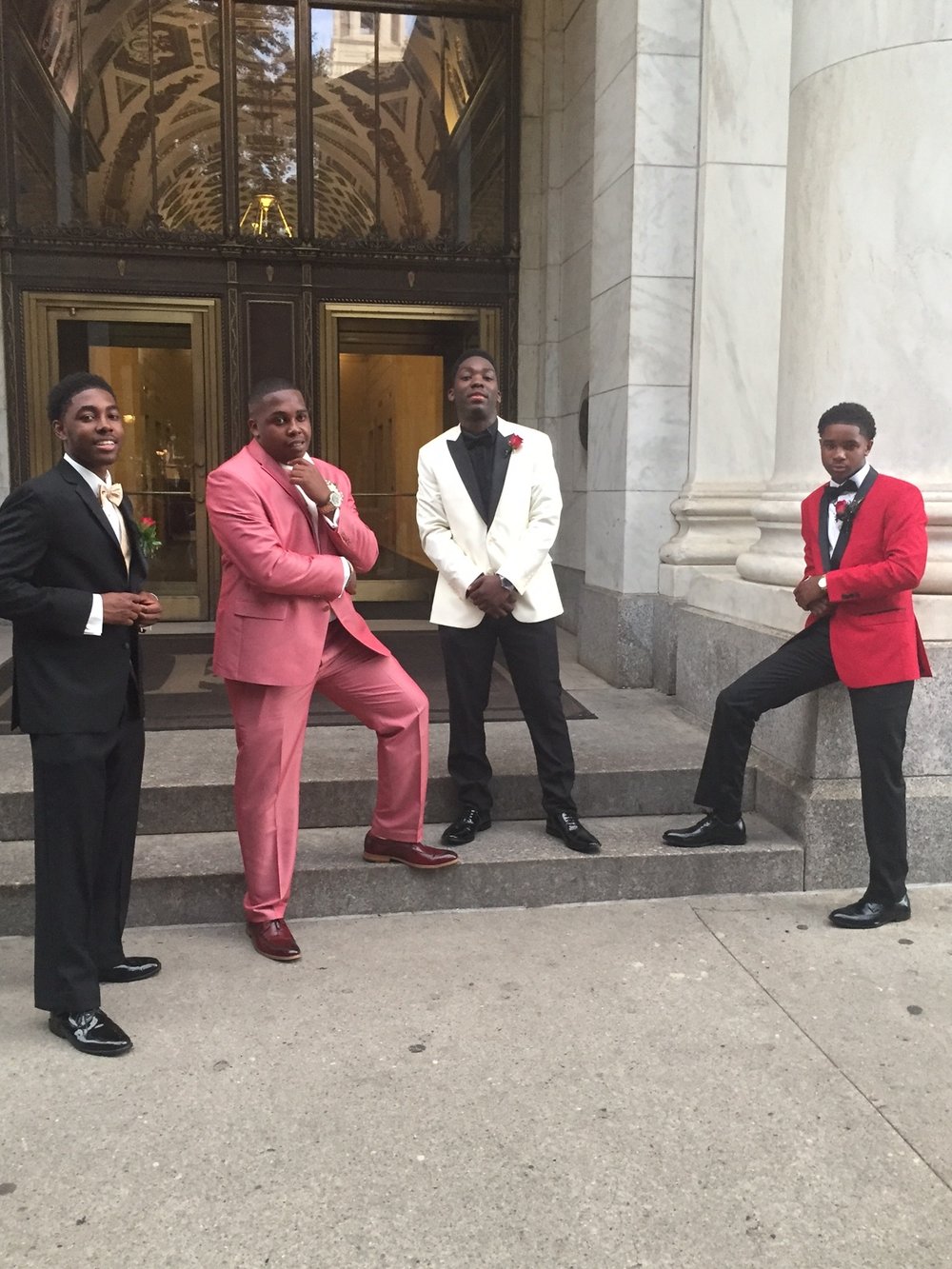
    "The Tribe"--Gary Williams, Maurice Scott, Rayshawn Johnson, and Rashaan Brooks, Jr (left to right)--leaned on each other to navigate the challenges and opportunities of growing up and going to school at the academically rigorous J.R. Masterman School in Philadelphia. Consistently ranked as one of the top high schools in the state and even in the country, Masterman prepares its students for success after graduation. The Tribe is no exception: Gary, Maurice, and Rashaan are all headed to the University of Pittsburgh, and Rayshawn is going to Yale.

    The Tribe's time at Masterman wasn't strictly spent studying. The young men all play prominent roles in the schools African American Culture Committee, a club dedicated to fostering and growing the school's black student population. Rashaan, Gary, Maurice, and Rayshawn were four of just seven black young men in their grade of 108 students.

    Further reading & resources

    Dig into the Schott Foundation for Public Education's report about black male engagement and graduation rates around the country and check out actions steps and further insights into the systemic challenges facing young black males

    Check out the many ways that Rutgers University-Newark has opened their doors and supported their students to achieve a graduation rate for black students that is far above the national average.

    Explore Scholly, a "scholarship-matching platform" that connects students, black males and otherwise, to lists of targeted scholarships uniquely suited to each individual.

    Click here to learn more about Philadelphia Young Playwrights.

    "Not Ready" is performed by Carlo Campbell


    Extended Play: Stop & Frisk May 16, 2017
    Show notes

    On April 15th, 18-year-old Dubois Stewart was on his way home from community service. A police car pulled up behind him. He was stopped and frisked. “I was terrified.” Dubois said in an interview with Mouthful for our episode on community policing. “I’d never been stopped and frisked before. I seriously thought I wouldn’t go away unharmed because of all the cases I’d recently heard of police brutality between black young males and police officers in general.” Two weeks later on April 29th, 15-year-old Jordan Edwards was shot and killed by police in Balch Springs, Texas. He was unarmed, sitting in the passenger seat of a car. According to The Guardian, black males aged 15-34 were nine times more likely than other Americans to be shot and killed by police in 2016. To date, more than 110 black people who have been killed by police in 2017. For today’s episode of Mouthful, a weekly podcast that puts young people at the center of important conversations, we’re doing something different. We’re revisiting our conversation with Dubois and his mom, Vashti, in the wake of the stop and frisk. In Vashti’s words, “We can’t normalize injustice and by telling people the story we keep the conversation going.” Photo: Denise Allen the conversation A full transcript of our conversation with Dubois and Vashti, at their home in Germantown: Yvonne: Alright, so. Tell us what happened. Dubois: Okay, um, I was coming home from community service at SquashSmarts, um it was like the first time in a few months that I’d ridden my bike, and I saw this car like, tailing me halfway down a block, and I didn’t think much of it, um I didn’t notice it until like a siren came on and then they told me to stop. Um, I was pretty scared. I’d never been stopped and frisked before. Um, they got out of the car they told me well the first officer tried to start a conversation with me to make it easier, but it, it was scary nonetheless. He asked me to take out my identification, so I reached into my bag but the other cop behind him reached for his gun, and the other one was like actually just let me take it off for you um and it was at this point that they finally decided to tell me why the stopped me and this was because they had seen a suspect who looked just like me or rather they said looked similar to me and wanted to know if I knew anything about him or if I’d seen him anywhere. And of course I didn’t, um and of course the only thing in common was our dread locks. Everything else was different. This was a grown man. I don’t even have any facial hair, and they questioned me for like 15 more minutes while his friend ran my ID through the records, and when they realized I didn’t know anything they let me go. Yvonne: How did that make you feel? “I was terrified... I seriously though I wouldn’t go away unharmed.” Dubois: I was terrified. I’d never been stopped and frisked before. I seriously thought I wouldn’t go away unharmed. Um. Because of all the cases I’d recently heard of police brutality between black young males and police officers in general. Yvonne: And how do you feel about this? Vashti: Um I was in New York City when this happened. Um I was at a friend’s wedding from school. I got home at 1 in the morning and I was really excited to tell Dubois “yeah like this is why college is so cool because you keep these friends for life.” And it was 1 o'clock when I knocked on his door cause I could tell he was up and he said “how was it” and I told him and I said well how was your weekend and he said well I got stopped and frisked for the first time and I… like… I I I I was speechless I was I wanted to I was fighting to not cry and he said “Don’t cry” and I I said well why didn’t you call me and of course I know why he didn’t call me and I said well did you did you I couldn’t even ask him the details I couldn’t even bear to hear the details but he said you know it was a black cop and a white cop and I told them that I hadn’t been stopped before and they seemed to be you know nice about that and um you he said I... I said did it helped that we practiced because we actually did. Um after Mike Brown was killed in Ferguson that summer, Dubois was going into 11th grade and I said to him listen I, we, you know, it’s not a question of if this is going to happen it’s a question of when this is gonna happen and I want you to be prepared so we need to practice like what you would do in this situation. And he, he he was really angry at me, I remember that, it was one of the first times I felt like a failure as a parent. Um, Dubois’ father was killed in a car accident the year before, so you know this would’ve been the conversations that we would’ve been having with him together and it was just me. And he pretty much said to me in that conversation you know and I’m paraphrasing, but like is this how adults like is this the solution adults have for this injustice is to prepare us to like be violated? Is that like, is that kind of like the best you can do? And he pretty much said, you know if this is the way I have to live I’d rather not live this way. And I was just like, all I could say is just I need you to come home. Like when this happens, I need to know I’ve given you every opportunity to come home to me. So we have to do it. And so that night when he he said it helped that I um that we did this you know. You know I could at least feel like I had done the best I could do with that. But it was terrifying. It wasn’t until the next morning that it really really hit me that he could that it could’ve gone badly. It could’ve gone really badly. For no reason. Nothing that he had done. And it’s ironic because the week before we were on the baseball field, we were celebrating his acceptance to the University of Penn, we got that news on a Thursday and here it is it’s like Saturday morning it’s not even a week later and it’s like his official acceptance letter into like this next phase of his life is being stopped and frisked by the police. Because he’s black. Because he has locks. Um. Because he’s a young man. It’s just crazy. Really crazy. And I, I called my brother in New York because Dubois I said you know what do you want to do and he goes I’m not leaving the house for the rest of the week and I was like, well you know, we can’t, we can’t do that, and also you need to tell people because we can’t normalize injustice so by telling people by telling the story we keep the conversation going. So that, yeah, but it’s still like, it shakes me to the core, really. It’s a you know it’s every parents worst nightmare. It just is. **Yvonne: ** Why didn’t you tell your mother? Dubois: Why didn’t I tell her? Um, I did tell her. Like the first thing she asked me when she came in. Yvonne: Why didn’t you call her? Dubois: Um, I didn’t call her because I was tired. The first thing I did when I got home was go to bed. And when I woke up it was already like 12 in the morning. And I guess, also, I didn’t want to tell her unless it was in person. Yvonne: Congratulations! Penn! Dubois: Thank you. Yvonne: What are you going to major in? Dubois: Environmental Science. Yvonne: You must be so proud. Vashti: I’m really proud! I’m excited, I’m proud, I’m scared, I’m clingy, I’m get out, I’m all of the things. I’m all of the things. But I’m really I’m really proud of him. He worked hard and he deserves everything. Yvonne: I mean when you hear something like this happening to someone like your son who is so smart and handsome and has everything going for him it’s super scary. Vashti: It is. It is. It’s just, people, you know the way that the news treats these things, it’s always the young man’s fault or the young woman’s fault. They always somebody always did something they looked a way they had a record they moved too quickly you know they looked threatening. My son you know is 18, I mean you see him, like you know he’s still becoming into his 18 year old body. He still could easily pass for like 16, 15. So you know you know and you know as a parent like I said it wasn’t a question of it if was a question of when. Somewhere in the back of your mind you tell yourself oh if they dress a certain way if they speak a certain way if they you know go to high school everyday if they get into college if they’re this if they’re smart all these things and the truth of the matter is it doesn’t matter. It doesn’t matter, and that’s… you know, I you know Denise Allen did this project a couple years ago and one of the things I said in talking about this same situation is that… you don’t um, you know, we, the trauma to the children is huge and it’s stays with you. My brother spoke to to Dubois and talked about the importance of sharing this experience with other people who have had this experience. Um so that you can manage the trauma of it, because it’s traumatizing. And then as a mom it’s just like your worst fear. And so now it’s happened and so now you live with the realization that it can happen again and it could happen again and then you live you live with that and you just live with that um. Yvonne: How do you feel about the police? Dubois: Um, I never really had a opinion of them. They’d always been villainized in the news as these terrible people but um I knew their job was hard and I also knew that while there were some bad seeds there were some good seeds. Like our next door neighbor has been a police officer for like 10 or 15 years now. I don’t know, but um. He’s one of the nicest people I’ve ever met and even when I was stopped and frisked the guy who stopped and frisked me was conscious enough to realize that this wasn’t something that should be taken lightly and treated me as such. Yvonne: Cause in the monologue that we’re featuring basically you have a woman who is answering the door and the cop is there and so clear that there’s a lot of tension in the community and that’s sort of like one kind of tension and this here is an example of another kind. Vashti: Yeah I mean… I um while I have not villainized the police to my children I have told my children to be careful around the police. I don’t you know I’ve not raised my children to believe that police officers are natural allies, which is for me a survival mechanism for my three children. I have a daughter and I have two sons. Um, and I you know as a mom and as a black woman, I you know when I see police officers I don’t, I don’t feel especially safe, um, and it you know that’s as a result of like sort secondary trauma right like what I’ve seen what I’ve heard but not what I’ve personally experienced. But you know now that this has happened it’s just all the more right like all the more all the more fear all the more all the more concern, um. “I mean we all worry about the safety of our children, but to raise children and live with the possibility that they could not come home to you because of an encounter with a police officer... it’s actually mind blowing.” And yeah the tension in our community it’s real. It’s real. It’s, yeah, you want to feel like to think as a mother and this is one thing I’ve said to white mothers: that you’ve never really have to think about in this way, I mean we all worry about the safety of our children, but to like raise children and um live with the possibility that they could not come home to you because of an encounter with a police officer is just like it’s actually mind blowing, it’s really mind blowing. Like you can’t you know and where you have to put that in your soul and in your spirit so that you can let them become young adults. Because the instinct is like… my instinct was his, like you don’t wanna go out there you don’t have to go! [laughter] You can stay home forever! I know that that’s no way to live. Um, but because I want him to live, I really struggled when he walked out that door on Tuesday and he was going to spend the day he was going to multi-cultural weekend or week or whatever it was at Penn’s campus, cause like, I was like, you know there will be police officers on campus and they’ll be policing you, and you know, you’re going to be a student there. And like, so that roller coaster that emotional roller coaster ride of like oh I did this thing like that everybody’s proud of and told me I should do and I did it and then this thing and then like okay then I get to go and do this thing! And it’s just like my heart breaks as a human being as a mom, um, yeah it’s heartbreaking. Mitchell: What’s Squash Marts? [laughter] Dubois: Um, Squash Smarts is a non-profit organization up here that teaches um underprivileged kids from around the area squash. And squash is like not a sport you would see colored people playing because of how expensive it is and um how bougie the sport is. So um, it’s really nice. Mitchell: Do you play? Dubois: Yes, I do. Mitchell: How often, I’m not really super familiar with squash, is it an outdoor thing? Dubois: It’s indoors. You can play all year. Mitchell: Okay, so I was gonna say how often do you… I didn’t know if it was like now it’s spring, so now you can start doing it or… Dubois: Um so normally I do it like 5 or 6 days a week but I’m also playing baseball right now, so 4 is the most I can get. Mitchell: I wonder like and I don’t know, we don’t need to talk for another 45 minutes or 4 hours um, how does it get better? What, I know you’ve said a couple times you need to tell the story and you need to share it, and that seems like a piece of “here’s a thing I can do” um, but and yesterday coming from this interview with the superintendent of law enforcement whose been there for 53 years it’s like so many things, what where do you begin? And I just wonder, where for the two of you that starts. You know? Like what is it? Is it the make up of the police force? Is it just, I don’t even know you, know what I mean? What, where does it sort of start to become better? Vashti: What do you think Dubois? Dubois: Um, I don’t know. I guess um I don’t think it gets better immediately. Progress isn’t a straight line. And before we reform the police department, we would have to reform our opinion of the police itself. Because in the eyes of the black community the latino community the colored community in general um. Police are to be feared. And that can’t be that can’t be changed unless they see a story that differs from what they’ve already seen in the news and everywhere else. And the police themselves they have to I guess I’d like to see a system in which they don’t allow certain officers certain rights because some of them really just use their powers to their advantage and I don’t think those people deserve to be on the streets policing us if they can’t police themselves. Vashti: I mean I agree, but I also think, I just think we have to be honest about the history, right. The history of policing goes back to um you know after emancipation right. Um basically the first police forces were organized to capture black folks who weren’t able to get jobs. You know they were identified as vagrants, so, the history of what policing has meant to black people persists because it’s never not been that. You know policing is about protecting the interests of states and cities, property. And you know black people are sort of seen as the natural threats to the economy. Um and not as valuable in this economic system. And therefore dispensable. And, you know how do we change that? There’s so much that we would have to change that under girds that that police is just symptomatic of the larger problem of institutional and systemic racism, right? So, and that system is driven by economics. It is really about money. And you know until we can imagine how we can untangle that, I don’t think we can impact any of the rest of the things. That produce what seems like quote unquote just racism. Racism is an elaborate sort of like distraction from you know economic disempowerment of so many people. Not just black people. But black folks in particular. Like we are the scapegoat for so m…

    Full show notes at the publisher

    Pedestals May 09, 2017
    Show notes

    A monologue about a young black woman who is expelled from school for standing up to racism starts a conversation about the high expectations and double standards imposed on students of color in majority-white institutions. Featuring an interview with Angela Antoinette Bey, whose life growing up in Southwest Philadelphia looked very different than the private high school she attended, and an honest conversation with two mother/daughter duos who share the experience being de facto representatives of diversity in mostly white spaces.

    Click here to read a transcript of this episode.

    “Dear Black Girl: You’ll come to this private institution with stars in your eyes. You’ll be fooled, used, and abused, so long as you can stand it. And when you finally speak out, you’ll be disappointed.”
    — from "Pedestals" by Angela Bey ![Pedestals.png](https://static1.squarespace.com/static/58a484743e00be2284446832/t/59108918e58c62a5ff793868/1494255907896/Pedestals.png?format=1000w) * * *

    In a perfect world every child would receive a quality education. Instead, our nation continues to face an outstanding achievement gap between white and non-white students.

    For decades, the children of poor minorities have been expected to attend their respective neighborhood public schools without choice. These schools are historically known to have less than their private counterparts. Less resources, less rigor, lesswhite students and less opportunity for future upward mobility.

    Upward mobility is the explanation for why many minority parents who have accumulated more wealth and education tend to choose private schooling for their children over public schools, often with the aid of vouchers and scholarships offered by the private institutions.

    Many of these families eventually discover that these allocations come with a great cost. There are current inquiries to determine the true design of opportunities for students of color to attend private schools. Were these opportunities created to benefit these students or to use them as adornments? It is hard to believe the answer not to be the latter when these institutions continue to fall short at supporting minority students both emotionally and socially.

    Getting faces of color to fill private school classrooms is only half the battle. Real work and genuine interest are needed in order to stop the ultimate outcome of students of colorlosing out when attending private schools.

    the conversation

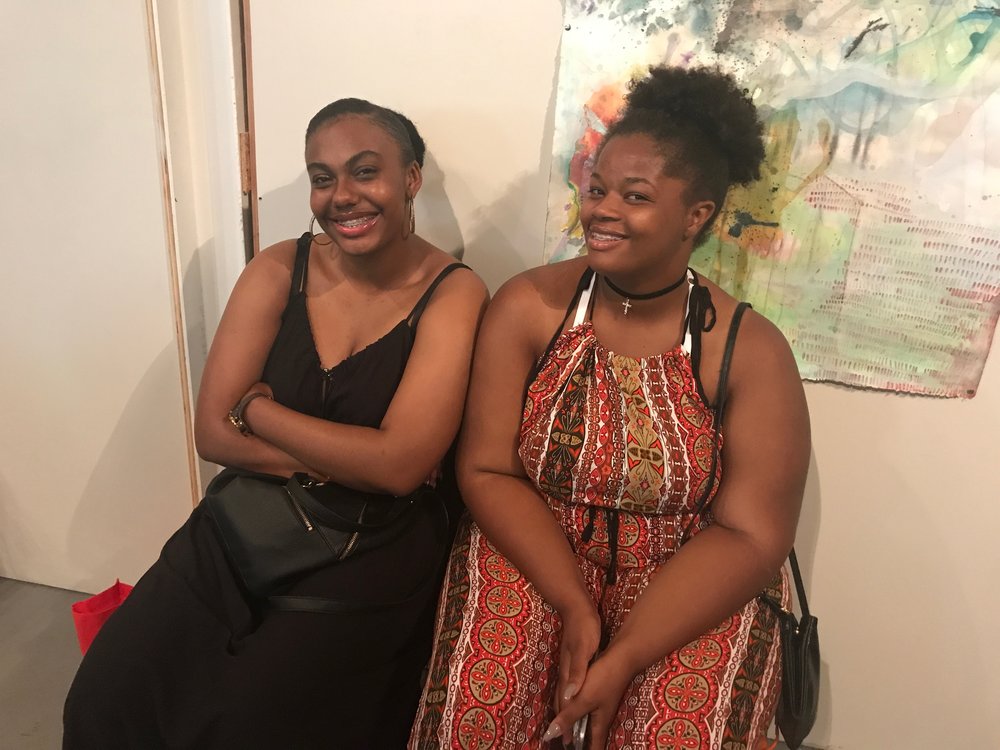
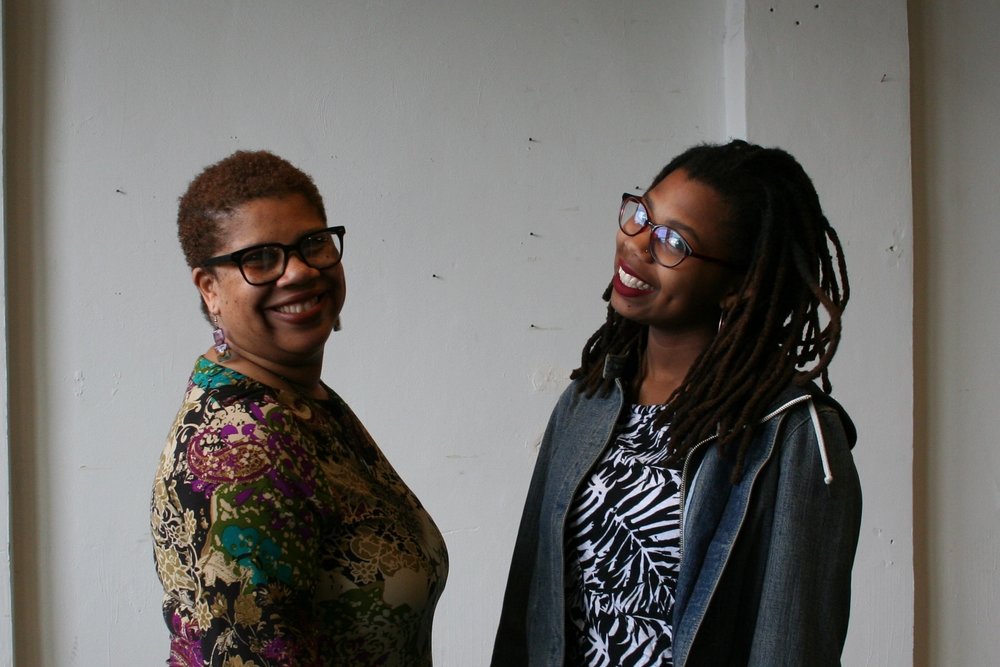
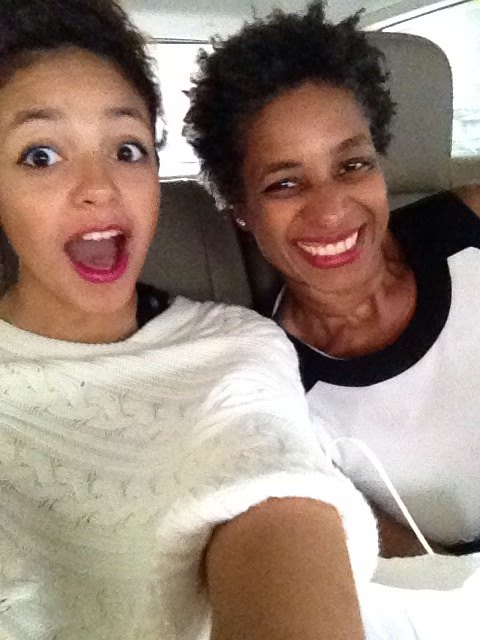
    Nola Latty (left) is a senior at Friends Select School, where she is an active member of the theater program and numerous other clubs and activities. Her play

    Nola Latty (left) is a senior at Friends Select School, where she is an active member of the theater program and numerous other clubs and activities. Her play "Y2K" recently won the Mary Margaret Longaker '27 Playwriting Competition. This fall, Nola will attend the Tisch School for the Arts at New York University to study acting.

    Yvonne Latty is a producer and host of Mouthful. She is an award-winning journalist and documentarian. Her documentaries Sacred Poison and Home have been screened internationally. She is the author of We Were There: Voices of African American Veterans, f__rom World War II to the War in Iraq (Harper Collins/Amistad 2004) and In Conflict: Iraq War Veterans Speak Out on Duty, Loss and the Fight to Stay Alive (Polipoint Press 2006). In Conflict was developed into a successful Off-Broadway play. She was an award-winning urban reporter for the Philadelphia Daily News for 13 years.

    Olivia Haynes (right) is a senior at William Penn Charter School. As a filmmaker, Olivia has worked with the Scribe Video Center, the Pulitzer Center for Crisis Reporting, and the Blackstar Film Festival. This fall, she will attend Goucher College to study art history and anthropology. Lisa Nelson-Haynes is the Executive Producer of Mouthful and Executive Director of Philadelphia Young Playwrights. Before joining Young Playwrights in 2016, Lisa was the associate director at the Painted Bride Art Center, where she ran the Center’s educational outreach and residency programs, marketing and communications departments and managed contractual relationships with artists. She is also a nationally recognized expert in digital storytelling through her work as a facilitator with Storycenter, which uses the art of first-person narrative as a tool for education, advocacy and community-building.

    Olivia Haynes (right) is a senior at William Penn Charter School. As a filmmaker, Olivia has worked with the Scribe Video Center, the Pulitzer Center for Crisis Reporting, and the Blackstar Film Festival. This fall, she will attend Goucher College to study art history and anthropology.

    Lisa Nelson-Haynes is the Executive Producer of Mouthful and Executive Director of Philadelphia Young Playwrights. Before joining Young Playwrights in 2016, Lisa was the associate director at the Painted Bride Art Center, where she ran the Center’s educational outreach and residency programs, marketing and communications departments and managed contractual relationships with artists. She is also a nationally recognized expert in digital storytelling through her work as a facilitator with Storycenter, which uses the art of first-person narrative as a tool for education, advocacy and community-building.

    Further reading & resources

    Check out this video put together by Olivia Haynes and a number of her classmates at William Penn Charter that digs into her black male classmates' experiences at school.

    Click here to learn more about Philadelphia Young Playwrights.

    "Pedestals" was performed by Nia Benjamin under the direction of Steve Gravelle

    Anne Hoffman helped produce and edit "Pedestals"

    Digital content support from Kiarah Cannady


    Previous 1 2 3 Next

    Related Podcasts

    Fresh Air

    1

    Fresh Air Arts
    Twenty Thousand Hertz

    2

    Twenty Thousand Hertz Arts
    The Black Tapes

    3

    The Black Tapes Arts
    Snap Judgment

    4

    Snap Judgment Arts
    Here’s The Thing with Alec Baldwin

    5

    Here’s The Thing with Alec Baldwin Arts
    The NoSleep Podcast – Creative Reason Media Inc.

    6

    The NoSleep Podcast – Creative Reason Media Inc. Arts
    footer-logo

    Contact Us

    Toll Free: 844-670-7747

    Links

    • Home
    • Top Charts
    • Networks
    • Apps
    • Independents Podcasts
    • Podcast Advertising
    • Podcast News
    • Contact Us
    • About Us
    • Analytics & Insights

    Stay Connected
      Privacy, Terms of Use & Our Code of Ethics Protecting Content Creators Copyrights