TopPodcast.com
Menu
  • Home
  • Top Charts
  • Top Networks
  • Top Apps
  • Top Independents
  • Top Podfluencers
  • Top Picks
    • Top Business Podcasts
    • Top True Crime Podcasts
    • Top Finance Podcasts
    • Top Comedy Podcasts
    • Top Music Podcasts
    • Top Womens Podcasts
    • Top Kids Podcasts
    • Top Sports Podcasts
    • Top News Podcasts
    • Top Tech Podcasts
    • Top Crypto Podcasts
    • Top Entrepreneurial Podcasts
    • Top Fantasy Sports Podcasts
    • Top Political Podcasts
    • Top Science Podcasts
    • Top Self Help Podcasts
    • Top Sports Betting Podcasts
    • Top Stocks Podcasts
  • Podcast News
  • About Us
  • Podcast Advertising
  • Contact
Not in our directory?
Add Show Here
Podcast Equipment
Center

toppodcastlogoOur TOPPODCAST Picks

  • Comedy
  • Crypto
  • Sports
  • News
  • Politics
  • True Crime
  • Business
  • Finance

Follow Us

toppodcastlogoStay Connected

    View Top 200 Chart
    Back to Rankings Page
    Other

    Mormon Discussions Podcasts – Full Lineup

    Navigating Mormonism One Episode At A Time

    Advertise

    Copyright: © Intellectual Property Copyright Bill Reel 2017

    • Apple Podcasts
    • Google Play
    • Spotify

    Latest Episodes:
    Find Out What REALLY Happened At Sunstone 2026! Aug 14, 2026
    Show notes

    RFM and Bill Reel host an august panel of Sunstone Symposium presenters and attendees, as they tell us fun and fascinating stories about what goes on behind the scenes of Sunstone! Join us! Mormon Studies were never so much fun!

    The post Find Out What REALLY Happened At Sunstone 2026! appeared first on Mormon Discussions Podcasts - Full Lineup.


    LDS Church Lawsuit Gets Pushback From ACLU & EFF Aug 14, 2026
    Show notes

    Tonight on Mormon Newscast, our lead story centers on a significant development in the LDS Church’s trademark and copyright lawsuit against Mormon Stories Podcast. The ACLU of Utah and the Electronic Frontier Foundation (EFF) have filed amicus briefs supporting Mormon Stories, raising concerns about the implications of the Church’s lawsuit for free expression, criticism, and online speech. We’ll break down what these organizations are arguing, why they decided to enter the case, and what their involvement could mean going forward. We’ll also cover several stories pointing toward the continuing challenge of Latter-day Saint disaffection and what may be driving younger generations—particularly women—away from the Church. Along the way, we’ll examine the controversy involving a Mormon beauty queen, the arrest of an LDS leader in Russia, and an Arizona court decision tossing out a child sexual abuse case against the LDS Church. We’ll also look at the Church’s newly announced Sunday School and Sunday meeting changes. Church leaders are emphasizing a more Christ-centered, home-centered approach with shorter classes and greater participation from members. Is this another meaningful step toward decentralization and member autonomy—or does the substance of authority remain largely unchanged even as the structure evolves? Finally, we pause to acknowledge two recent deaths in the broader Mormon community. We remember Carol Lynn Pearson, whose writing, poetry, advocacy, and willingness to confront difficult issues within Mormonism influenced generations of Latter-day Saints and former Latter-day Saints. We’ll also acknowledge the tragic death of 27-year-old LDS apologist Chandler “Chuck” Hendry, creator of Restored Truth, whose growing influence was evident in the considerable grief and affection expressed throughout the LDS apologetic community following his passing. Tonight on Mormon Newscast — August 10, 2026. News, context, analysis, and the Mormon stories behind the headlines.

    The post LDS Church Lawsuit Gets Pushback From ACLU & EFF appeared first on Mormon Discussions Podcasts - Full Lineup.


    Mormon Church Wins Arizona CSA Case: RFM: 469 Aug 09, 2026
    Show notes

    Kolby Reddish and RFM used their combined legal education, experience and acumen to break down and analyze the recent Arizona Supreme Court Case dismissing the lawsuit against the LDS Church for covering up child abuse in its ranks. If you’re wondering what the hell happened in Arizona, this discussion by two “Mormon Legal Eagles” should be just what you are looking for!

    The post Mormon Church Wins Arizona CSA Case: RFM: 469 appeared first on Mormon Discussions Podcasts - Full Lineup.


    The Church as an abusive Father Figure: My Response to Larry Corbridge Aug 07, 2026
    Show notes

    How Does A Black Eye Work at Ryder Sidaway blog
    The Church as an Abusive Father — Revisited
    A response to Elder Lawrence E. Corbridge

    I originally wrote this piece more than a decade ago, when I was still an active, believing member of the Church and trying to make sense of the troubling things I was discovering about Mormonism.
    https://mdpodcast.org/2016/05/church-farther-figure/

    Recently, Elder Lawrence E. Corbridge suggested that even if your ward were like Alcatraz and your bishop were like Darth Vader, you stay.

    Hearing that brought this old post immediately to mind, so I dusted it off and made a few minor updates.

    What strikes me now is that I think the analogy I used back then was even more accurate than I realized. In some ways, I underestimated the dysfunction because I was still living inside the family system and trying to make the relationship work. Mormonism is much farther in my rearview mirror today, and distance has allowed me to see some things more clearly.

    Which is why Elder Corbridge’s comments land so differently for me today.

    If your bishop really is behaving like Darth Vader and your ward really does feel like Alcatraz, perhaps the healthiest advice isn’t “Stay.” Perhaps the first question should be: Why would God require you to remain in an unhealthy relationship simply because the institution insists that leaving is not an option?

    With that, here is the piece I wrote all those years ago, viewed now through somewhat different eyes.

    The Church as an Abusive Father

    Years ago, an acquaintance explained that he didn’t understand me. He saw my willingness to speak openly about problematic Church issues as being “critical of the Church” and therefore placing me on the wrong side. If I felt that way, he suggested, perhaps I should consider leaving.

    He explained that the Church, to him, was like a spouse whom he loved dearly—someone whose flaws and weaknesses he was willing to look past and accept in the name of the greater good. I got it. We often accept, protect, and defend the people we love. His analogy actually helped me understand his perspective.

    But the Church never felt like a spouse to me. Then it hit me. The Church, for me, was much more like a parent. And not just any parent. It increasingly felt like an abusive father—a father who had done real good in my life, whom I genuinely loved, but who was also deeply dysfunctional and desperately needed help, accountability, and encouragement to change.

    Stay with me while I work through this.

    I love my dad. He is a huge part of who I became, and I owe him a great deal. While he fell short in many areas, he was also there for me at important moments in my life. Those positive experiences don’t excuse harmful behavior, but they do allow me to acknowledge two things at once: my father did tremendous good in my life, and my father also caused harm.

    Early in my life, my father could do no wrong. I placed him on a pedestal and saw him as one of the greatest things that had ever happened to me. What kid doesn’t idealize Dad? Dad taught me right from wrong. He taught me the value of hard work. I felt validated by him and sought his affection and approval. When I was doing well in Church, I seemed to earn his approval and those proverbial pats on the back.

    The problem was that I didn’t really know about some of his other behaviors. Or perhaps more accurately, I didn’t know how to interpret them.

    Looking back, I had actually seen glimpses. I simply brushed them aside. I told myself they weren’t really indicators of his character. Sometimes I ignored them completely. Other times I dismissed accusations against him as false, distorted, or “anti-Mormon.” I even blamed and shamed some of the people who spoke badly about my father. They claimed he had done and said things I simply knew couldn’t be true.

    So I defended him. For years.

    Then, as time went on, I began hearing stories from some of his other children. They told me Dad had hurt them. Some of the harm was physical. Some was emotional. Some was sexual and psychological. Some of his children weren’t accepted for who they were, and some were subjected to efforts to change fundamental aspects of themselves.

    Others were taught to distrust siblings who had discovered troubling things about Dad. Dad sometimes pitted his children against one another by suggesting that certain siblings were too intellectual, had a feminist agenda, were gay, had been deceived, were offended, wanted to sin, or simply lacked faith.

    Some of his children developed deeply unhealthy relationships with sexuality because of the ways Dad taught them to think about their bodies, purity, masturbation, intimacy, and worthiness. Some internalized messages that their sexual “virtue” was worth more than their lives. And some experienced devastating shame because they came to believe that something fundamental about themselves made them unacceptable to God.

    When I was young, much of this abuse seemed invisible. Later it seemed negligible, and then inconvenient. Eventually, I couldn’t honestly pretend it wasn’t serious.

    Dad quietly moved past a few of these behaviors over the years. But even in those instances, he rarely stood in front of his children and simply said, “We were wrong. We hurt you. We are sorry.” And some of the behaviors that marginalize and harm his children continue even today.

    Eventually, I could no longer turn a blind eye to the way Dad demeaned some of his children who developed questions and doubts after discovering troubling things about his history. These were often the very same children who had once been extraordinarily faithful.

    But then they discovered Dad’s life history. They discovered that the story Dad had told them about who he was, what he had done, and how he came to be was sometimes very different from the historical record.

    Dad didn’t seem particularly comfortable talking openly about those things. And when some of his children refused to stop asking uncomfortable questions, Dad sometimes distanced himself from them, disciplined them, or cut them off from the family.

    While I loved my dad, eventually I stopped trusting him as the ultimate source of truth. He had disappointed me too many times. That didn’t mean he never had wisdom. On occasion, he did. But I could no longer assume that because Dad said something, it was therefore true. There were simply too many instances where that had not been the case.

    Dad became one voice among many that I consulted for wisdom, advice, and enlightenment.

    For a long time, I still wanted his company. Some of my siblings distanced themselves from Dad for their own health and inner peace. Others visited only occasionally or on holidays. I kept showing up every weekend.

    But something had changed. I no longer saw him as the hero I once had.

    I also became troubled by some of my siblings who continued defending Dad’s behavior, explaining it away, or deliberately remaining ignorant of his abuses because they loved him too much to let go of the image they had constructed of him. For some, it seemed easier to shame the siblings who spoke about the abuse than to confront the possibility that Dad might not be exactly who he told us he was.

    I understood that. There were days when I desperately wished I could go back to seeing him the way I once had. But I couldn’t. Once you see something, you cannot simply decide that you didn’t see it. There was no going back.

    Some of us tried talking with Dad. We tried helping him understand the hurt he had caused. But Dad seemed remarkably reluctant to apologize. At times, a small part of him would acknowledge that “there may have been things said or done that were not in harmony with our values, principles, or doctrine.”

    But what seemed far more difficult was simply saying: We were wrong. We harmed people. We taught things as God’s truth that weren’t true. The people harmed by those teachings deserved better from us.

    For years, Dad demanded that I follow him. He taught me never to choose a path contrary to what he required and taught, and for years I obeyed.

    Eventually, after coming to grips with Dad’s flaws, mistakes, contradictions, and harmful behavior, I decided I could no longer follow him blindly simply because he was Dad. I reached a place where I would follow him when my conscience told me he was right and dissent when what he required violated my conscience, evidence, reason, or my understanding of what was morally good.

    Dad occasionally softened this by telling me that I could seek answers from God when I struggled with something he required. But there was a catch. I was permitted to ask God. I just wasn’t really permitted to receive an answer different from Dad’s.

    And to be clear about the analogy here, Dad isn’t God. Dad is the Church. But Dad claims to speak for God, and when God and Dad appeared to disagree, somehow the problem was always assumed to be with me.

    That need to be right—and the expectation that his children should follow him regardless—only increased my skepticism that everything Dad said actually came from God.

    I eventually discovered that Dad had taught things in the past with absolute certainty, only to reverse himself years later. Things once presented as doctrine became policy. Things once taught as God’s will became the opinions of men. Things once defended as eternal became temporary. Yesterday’s certainty quietly became today’s disavowed teaching.

    Yet somehow Dad’s authority was never supposed to be questioned.

    You might read all of this and think I hated my Dad. I didn’t.

    When I originally wrote this piece, he was still a gigantic part of my life. And even today, I still relate to the label “Mormon.” I didn’t wish him harm. Quite the opposite. I wanted desperately for him to recognize the hurt he had caused some of his children, to apologize, to repent, and to change. I mean, wasn’t that what he taught me to do?

    And I still believe minor flaws shouldn’t be placed under a microscope. Every human being is imperfect, and every organization composed of human beings will make mistakes.

    But there is a line between imperfection and dysfunction.

    There is a difference between making mistakes and constructing systems that protect the institution from accountability for those mistakes. There is a difference between occasionally hurting someone and teaching the person who was hurt that their job is to remain loyal to the person or institution hurting them.

    And this is where Elder Corbridge’s recent comments bring this old analogy roaring back to life for me.

    If Dad tells you, “Even if this house feels like Alcatraz, stay,” and “Even if the person Dad placed over you behaves like Darth Vader, stay,” I no longer hear devotion in that message. I hear something disturbingly familiar.

    The relationship itself has been made non-negotiable.

    Think about what that means. The quality of the relationship doesn’t determine whether you should remain in it. The behavior of the authority figure doesn’t determine whether you should remain. Apparently even the psychological cost doesn’t determine whether you should remain.

    You remain because Dad says leaving Dad is not an acceptable option.

    Today, after having finally left the house myself, that troubles me even more than it did when I originally wrote this. Because when I first wrote this analogy, I was still trying to stage an intervention. I was essentially standing in Dad’s living room saying, “Dad, we love you. Please listen to us. Please acknowledge what you’ve done. Please change.”

    Today, I recognize something I couldn’t fully see then. Sometimes the healthiest response to an abusive family system isn’t getting the abusive parent to finally understand you. Sometimes it is recognizing that you are allowed to leave the house.

    You are allowed to establish boundaries and decide how much contact you want. You are allowed to take the good things your family gave you without pretending the harmful things weren’t harmful. And you don’t owe someone continued access to you simply because they call themselves your father.

    That doesn’t require hatred, and it doesn’t require pretending nothing good ever happened.

    In fact, one of the things I still value about my Mormon experience is precisely how much good it gave me. The Church took me in when I was 17 years old, using and selling drugs and making a lot of bad choices. It helped me discover my worth and develop discipline. It cultivated my love of learning and truth seeking. It helped me develop communication and leadership skills. It gave me opportunities to serve people and introduced me to relationships and experiences that profoundly shaped my life.

    Those things are real. Leaving Mormonism did not require me to rewrite my past and pretend that none of the good happened.

    But neither does gratitude require me to pretend the harm wasn’t real.

    That is perhaps the biggest thing that has changed for me since I first wrote this. Back then, I ended by essentially telling Dad, “I love you. You’re still my Dad. I’m staying. I believe your best days are ahead.”

    Today, more than a decade later, Mormonism is much farther in my rearview mirror. Strangely enough, distance hasn’t made me see the Church as less dysfunctional. If anything, it has allowed me to recognize forms of institutional, spiritual, psychological, sexual, and relational harm that I couldn’t fully see while I was still inside the system trying to preserve my relationship with it.

    I can appreciate what Mormonism gave me without granting it authority over me. I can be grateful for parts of my upbringing without moving back into the house. And I can love many of the people who still live there without believing they are obligated to stay there.

    So perhaps Elder Corbridge and I simply arrive at very different conclusions from his analogy.

    If your ward feels like Alcatraz and your bishop acts like Darth Vader, I don’t think the obvious moral lesson is “Stay.”

    I think that is precisely when healthy people begin asking harder questions: Why does this relationship require my unconditional loyalty? Why is leaving treated as morally suspect regardless of how I am being treated? Why does the institution get to determine the conditions under which I am permitted to withdraw my participation?

    And perhaps most importantly, if this really is God’s kingdom on earth, why should I expect it to operate like an abusive family system in which the one option I am never permitted to seriously consider is leaving?

    I couldn’t ask that question clearly when I first wrote this.

    I can now.

    The post The Church as an abusive Father Figure: My Response to Larry Corbridge appeared first on Mormon Discussions Podcasts - Full Lineup.


    “You Will Stay” – When Loyalty Matters More Than Abuse ! Aug 07, 2026
    Show notes

    Can a church become so important that no amount of bad leadership, toxic culture, or personal harm should ever cause someone to leave? Recently, Elder Lawrence Corbridge made a striking statement: “Darth Vader could be your bishop. The culture could be like Alcatraz… If you see the Church as the kingdom of God on earth, then you will stay.” At first glance, this sounds like a call for faith. But beneath the surface lies a powerful psychological framework—one that asks members to separate their lived experience from their evaluation of the institution itself. In this popup Newscast, Radio Free Mormon, Rebecca Bibliotheca, & Bill Reel, examine why this way of thinking can be deeply unhealthy, how it shifts accountability away from institutions and onto individuals, and why it mirrors patterns commonly found in high-demand groups.

    We’ll explore questions like:
    • When does loyalty become unhealthy?
    • Should abuse or toxic leadership count as evidence about an institution?
    • Why do some organizations teach people to distrust their own experiences?
    • How does this mindset contribute to spiritual abuse, learned helplessness, and institutional protection?
    • Would we accept this reasoning from a corporation, a political party, a marriage, or a therapist?

    Rather than simply criticizing one Church leader, this episode investigates the psychology of institutional loyalty and asks whether truth should ever require us to ignore reality. Whether you’re an active Latter-day Saint, someone navigating faith transition, or simply interested in the psychology of belief and high-demand organizations, this conversation offers a thoughtful framework for evaluating one of the most consequential questions anyone can ask: Should commitment to an institution ever come before evidence, experience, and conscience? Join the conversation below: Do you think Elder Corbridge’s statement reflects healthy faith—or unhealthy institutional loyalty? What was your reaction when you first heard it?

    #Mormonism #LDS #ExMormon #FaithCrisis #ReligiousTrauma #Psychology #SpiritualAbuse #HighDemandReligion #MormonDiscussion #MormonNewscast

    The post “You Will Stay” – When Loyalty Matters More Than Abuse ! appeared first on Mormon Discussions Podcasts - Full Lineup.


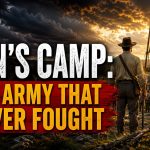
    Zion’s Camp: Turning Failure Into Faith Aug 07, 2026
    Show notes

    What if one of the most important events in early Mormon history never actually accomplished what it set out to do? In 1834, Joseph Smith organized nearly 200 armed men and led them almost 900 miles across the American frontier with one stated objective: redeem Zion and restore the Saints to their lands in Jackson County, Missouri. They marched. They trained. They carried muskets and swords. They expected confrontation. But they never fought a battle. Instead, they encountered political resistance, internal dissent, a violent storm many viewed as miraculous, a devastating cholera outbreak that claimed fifteen lives, and a revelation that abruptly ended the expedition. So what happened? More importantly… how did what appeared to be a failed mission become one of the greatest success stories in Mormon history? In this episode of Mormonism Live, Bill Reel and Radio Free Mormon take a deep dive into the complete story of Zion’s Camp—from the revelations that launched it to the theological reinterpretation that followed its collapse.

    Along the way we examine:
    • The promise to redeem Zion in D&C 103
    • Why hundreds of Saints believed they were going to reclaim Jackson County
    • Joseph Smith as “Commander in Chief of the Armies of Israel”
    • Governor Daniel Dunklin and the political realities of Missouri
    • The famous Fishing River storm—miracle or coincidence?
    • The deadly cholera outbreak that followed D&C 105
    • Why the mission was suddenly called off
    • The psychological and theological shift from “the prophecy failed” to “the people weren’t ready”
    • How Zion’s Camp became the proving ground for the future Twelve Apostles and Seventy

    This episode also explores a broader question that reaches far beyond Mormonism: How do religious movements reinterpret unmet expectations while preserving confidence in prophetic leadership? Whether you’re a believing Latter-day Saint, a former member, a student of history, or simply interested in the psychology of belief, Zion’s Camp offers one of the most fascinating case studies in early American religious history.

    📚 Primary sources used include: Joseph Smith Papers Project Doctrine & Covenants 101, 103, and 105 John Whitmer’s History John Corrill’s A Brief History of the Church of Christ of Latter Day Saints Contemporary journals, letters, meeting minutes, and financial records from 1833–1835
    #Mormonism #LDSHistory #JosephSmith #ZionsCamp #MormonismLive #ChurchHistory #ReligiousHistory #FaithCrisis #MormonStudies #DoctrineAndCovenants #ExMormon #Religion #History

    The post Zion’s Camp: Turning Failure Into Faith appeared first on Mormon Discussions Podcasts - Full Lineup.


    BYU Professor Arrested Over ai Images Jul 28, 2026
    Show notes

    On tonight’s show, our lead story is the BYU Adjunct Professor who was recently arrested on charges of using AI to create CSA images. This and much more on tonight’s Mormon Newscast!

    The post BYU Professor Arrested Over ai Images appeared first on Mormon Discussions Podcasts - Full Lineup.


    Jodi Hildebrandt Wasn’t an Anomaly: The Danger of Mormon Therapists Jul 26, 2026
    Show notes

    Jodi Hildebrandt is not just the story of one deeply harmful therapist. She is a warning sign about what can happen when mental health care stops being guided by professional ethics, evidence-based treatment, and client well-being—and instead becomes filtered through rigid Mormon beliefs about sin, obedience, sexuality, shame, and worthiness. In this episode, Bill Reel examines the broader problem of Mormon health professionals who practice through a religious lens rather than a clinical one. The issue is not that a therapist happens to be Mormon. The issue is when Mormon ideology overrides sound therapeutic care—when a counselor’s loyalty to Church culture, moral judgment, patriarchy, sexual repression, or “saving the family” becomes more important than the emotional safety and autonomy of the client sitting in front of them. Using Jodi Hildebrandt as a case study, this episode explores how spiritual abuse can be repackaged as therapy, how vulnerable clients can be manipulated under the language of healing, and why Mormon-informed therapy can sometimes function less like treatment and more like ecclesiastical control with a license on the wall. This episode also includes two interviews: one with a former client of Jodi Hildebrandt, and another involving a different therapist whose Mormon worldview appears to have caused serious harm in a very different way. If you’ve ever wondered where the line is between faith-informed counseling and outright therapeutic abuse, this conversation is for you.

    If anyone needs extra support as they work through their faith deconstruction, Bill Reel is a certified Somatic Informed Trauma Coach and you can look into his work at https://awakenandthrive.org/

    #MormonDiscussion #JodiHildebrandt #LDS #ExMormon #Therapy #MentalHealth #ReligiousTrauma #SpiritualAbuse #Mormonism

    The post Jodi Hildebrandt Wasn’t an Anomaly: The Danger of Mormon Therapists appeared first on Mormon Discussions Podcasts - Full Lineup.


    Mormon Endowment’s Earliest Historical Form ! Jul 26, 2026
    Show notes

    What did the Nauvoo Temple endowment look like in its earliest form? In this episode of Mormonism Live, Bill Reel and Radio Free Mormon examine one of the earliest published firsthand accounts of the Nauvoo Temple ceremony: Catherine Lewis’s 1848 narrative. Written only a few years after the events it describes, Lewis’s account provides a remarkable window into the temple rituals, secrecy, and theological ideas circulating during the Nauvoo period.

    Together we’ll explore:
    The earliest known form of the Mormon endowment Washing and anointing ordinances
    New names, signs, tokens, and the veil
    The Garden of Eden drama and progression through the kingdoms
    How Lewis connects temple secrecy with plural marriage
    Heber C. Kimball’s role in her narrative
    The Law of Adoption and priesthood authority
    Early teachings surrounding Native Americans and “white and delightsome”
    How Lewis’s account compares with William Clayton, the Nauvoo Expositor, John C. Bennett, Martha Brotherton, and other contemporary sources

    We’ll also examine Catherine Lewis herself—what we know, what we don’t know, and how historians evaluate the credibility of an early eyewitness whose account repeatedly intersects with other Nauvoo-era evidence. Whether you’re interested in Mormon history, the development of temple worship, or the origins of plural marriage, this episode takes a careful, source-based approach to one of the most significant primary documents from the Nauvoo period.

    If you enjoy this work and would like to support Mormonism Live and the work of Mormon Discussion Inc., please consider making a tax-deductible donation: https://donorbox.org/mormonism-live

    Looking for one-on-one support as you navigate a faith transition, religious trauma, or life after a high-demand religion? Bill Reel’s trauma-informed coaching: https://www.awakenandthrive.coach

    If this episode was valuable, please: Subscribe to the channel
    Like the video
    Leave a comment with your thoughts
    Share it with someone interested in Mormon history
    #MormonismLive #MormonHistory #JosephSmith #NauvooTemple #TempleEndowment #PluralMarriage #Polygamy #HeberCKimball #WilliamClayton #RadioFreeMormon #BillReel #LDSHistory #ChurchHistory #MormonDiscussion #FaithTransition

    The post Mormon Endowment’s Earliest Historical Form ! appeared first on Mormon Discussions Podcasts - Full Lineup.


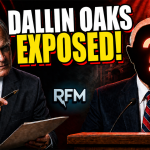
    Dallin Oaks Exposed: RFM: 468 Jul 26, 2026
    Show notes

    President Dallin Hoaks has gone on record giving us every reason we need to not trust what he says. In this episode, Radio Free Mormon brings the receipts, showing that the current president of the LDS Church is the kind of guy who will try to get you to believe something, even when he knows it isn’t true. That is quite the allegation! And RFM more than backs it up in this remarkable episode!

    The post Dallin Oaks Exposed: RFM: 468 appeared first on Mormon Discussions Podcasts - Full Lineup.


    Previous 1 2 3 4 5 50 Next

    Related Podcasts

    The One You Feed | Personal Growth, Emotional Resilience & Purpose

    1

    The One You Feed | Personal Growth, Emotional Resilience & Purpose Education
    The Atheist Experience

    2

    The Atheist Experience Christianity
    Mormon Stories Podcast

    3

    Mormon Stories Podcast Christianity
    Alan Watts Podcast

    4

    Alan Watts Podcast Other
    David C. Smalley

    5

    David C. Smalley Other
    [지대넓얕] 지적 대화를 위한 넓고 얕은 지식

    6

    [지대넓얕] 지적 대화를 위한 넓고 얕은 지식 Other
    footer-logo

    Contact Us

    Toll Free: 844-670-7747

    Links

    • Home
    • Top Charts
    • Networks
    • Apps
    • Independents Podcasts
    • Podcast Advertising
    • Podcast News
    • Contact Us
    • About Us
    • Analytics & Insights

    Stay Connected

      Privacy, Terms of Use & Our Code of Ethics Protecting Content Creators Copyrights