TopPodcast.com
Menu
  • Home
  • Top Charts
  • Top Networks
  • Top Apps
  • Top Independents
  • Top Podfluencers
  • Top Picks
    • Top Business Podcasts
    • Top True Crime Podcasts
    • Top Finance Podcasts
    • Top Comedy Podcasts
    • Top Music Podcasts
    • Top Womens Podcasts
    • Top Kids Podcasts
    • Top Sports Podcasts
    • Top News Podcasts
    • Top Tech Podcasts
    • Top Crypto Podcasts
    • Top Entrepreneurial Podcasts
    • Top Fantasy Sports Podcasts
    • Top Political Podcasts
    • Top Science Podcasts
    • Top Self Help Podcasts
    • Top Sports Betting Podcasts
    • Top Stocks Podcasts
  • Podcast News
  • About Us
  • Podcast Advertising
  • Contact
Not in our directory?
Add Show Here
Podcast Equipment
Center

toppodcastlogoOur TOPPODCAST Picks

  • Comedy
  • Crypto
  • Sports
  • News
  • Politics
  • True Crime
  • Business
  • Finance

Follow Us

toppodcastlogoStay Connected

    View Top 200 Chart
    Back to Rankings Page
    Courses

    Melissa & Lori Love Literacy ® | Science of Reading for Teachers

    Melissa & Lori Love Literacy® is a science of reading podcast for teachers who want to understand how reading really works and what that means for classroom instruction.

    Each month, Melissa & Lori explore topics in reading instruction by talking with researchers, authors, and classroom teachers who are bringing reading research into their classrooms.

    Melissa & Lori are like the teachers next door, now behind the mic. They learn alongside listeners and ask the same questions educators everywhere are asking: What does the research say about reading? What does strong literacy instruction actually look like in real classrooms? Through these conversations, the podcast helps bridge the gap between reading research and day-to-day teaching.

    Episodes explore topics including phonemic awareness, phonics, fluency, vocabulary, comprehension, writing, spelling, reading intervention, and other key areas of structured literacy instruction.

    Melissa & Lori help teachers think through what reading research can look like in their own classrooms.

    Advertise

    Copyright: © 2024 Melissa & Lori Love Literacy ™

    • Apple Podcasts
    • Google Play
    • Spotify

    Latest Episodes:
    Ep. 180: Teaching the Alphabet with Shayne Piasta Jan 26, 2024
    Show notes

    Shayne Piasta discusses best practices for teaching alphabet knowledge. She tells us what the research suggests about teaching letter names and sounds, why teaching a letter of the week may not be the most effective approach, and an order to teach letters. The best part? She shares concrete ideas and strategies for classroom practice.

    Takeaways

    • Teach both letter names and sounds simultaneously.
    • Consider the acrophonic principle, where the letter name gives clues to its sound.
    • Avoid teaching letters of the week and consider a faster pacing for letter instruction.
    • Be intentional about the order of teaching letters, considering children's names and frequency of letters in text.
    • Use differentiated instruction and embedded mnemonics for effective alphabet instruction.

    Resources

    • Handbook on the Science of Early Literacy
    • The Science of Early Alphabet Instruction, chapter 7
    • Ohio State University Alphabet Learning and Instruction research and articles
    • Ohio State University Early Literacy and Learning Lab
    • Episode 164: Misconceptions About Learning to Read with Carolyn Strom

    Looking for more literacy support and resources? Explore all of our podcast episodes, free listening guides, and classroom tools at literacypodcast.com.

    Interested in bringing Melissa & Lori Love Literacy to your school or event? Email us at literacypodcast@greatminds.org.


    Ep. 179: The RAND Reading Model with Hugh Catts Jan 19, 2024
    Show notes

    Summary
    In this episode, the hosts discuss the RAND Model, a heuristic for thinking about reading comprehension. The model was developed in the late 1990s by the RAND Corporation in response to a need for more research on comprehension. The model considers three main components: the reader, the text, and the purpose or activity of reading. It emphasizes the active role of the reader in constructing meaning from the text and highlights the importance of text complexity, coherence, genre, and the context in which reading takes place. The hosts also explore the challenges of measuring reading comprehension and suggest a curriculum-based assessment approach.

    Takeaways

    • The RAND Model is a heuristic for thinking about reading comprehension that considers the reader, the text, and the purpose or activity of reading.
    • Text complexity, coherence, genre, and the context in which reading takes place are important factors in comprehension.
    • Measuring reading comprehension with standardized tests can be challenging due to the complexity of the construct.
    • A curriculum-based assessment approach that measures comprehension within specific disciplines may provide a more accurate and fair assessment of reading ability.

    Resources

    • Ep. 177: The Five Pillars of Reading with Hugh Catts
    • Ep. 178: The Simple View and Scarborough’s Reading Rope with Researcher Hugh Catts Five Pillars of Reading with Hugh Catts
    • Follow researcher Hugh Catts on Twitter (or X)
    • A Heuristic for Thinking About Reading Comprehension, or the RAND Model
    • ICYMI: Ep. 118: Rethinking Reading Comprehension with Researcher Hugh Catts

    Looking for more literacy support and resources? Explore all of our podcast episodes, free listening guides, and classroom tools at literacypodcast.com.

    Interested in bringing Melissa & Lori Love Literacy to your school or event? Email us at literacypodcast@greatminds.org.


    Ep. 178: The Simple View and Scarborough’s Reading Rope with Hugh Catts Jan 12, 2024
    Show notes

    Summary
    In this episode, Hugh Catts discusses two popular reading models: the Simple View of Reading and Scarborough's Reading Rope. The Simple View of Reading highlights the importance of word recognition and language comprehension in reading comprehension. It emphasizes that if a child struggles in one area, it will affect their overall reading comprehension. Scarborough's Reading Rope provides a more detailed breakdown of the components involved in reading, including background knowledge, vocabulary, language structures, verbal reasoning, strategies, and literacy knowledge. Both models help educators understand the complexity of reading and the interaction between different components.

    Takeaways

    • The Simple View of Reading emphasizes the importance of word recognition and language comprehension in reading comprehension.
    • Scarborough's Reading Rope provides a more detailed breakdown of the components involved in reading.
    • Both models highlight the complexity of reading and the interaction between different components.
    • Effective reading instruction should focus on developing both word recognition and language comprehension skills.

    Resources

    • Ep. 177: The Five Pillars of Reading with Hugh Catts
    • Follow researcher Hugh Catts on Twitter (or X)
    • The Simple View of Reading
    • Scarborough’s Reading Rope
    • ICYMI: Ep. 118: Rethinking Reading Comprehension with Researcher Hugh Catts


    Looking for more literacy support and resources? Explore all of our podcast episodes, free listening guides, and classroom tools at literacypodcast.com.

    Interested in bringing Melissa & Lori Love Literacy to your school or event? Email us at literacypodcast@greatminds.org.


    Ep. 177: The Five Pillars of Reading with Hugh Catts Jan 05, 2024
    Show notes

    Summary

    In this episode, the hosts discuss the five pillars from the National Reading Panel and their history. They explore the confusion that can arise from viewing these pillars as a model of how reading works. The role of fluency and the importance of differentiating instruction for the five pillars are also discussed. The conversation concludes with a reevaluation of the five pillars and a key takeaway to look beyond them. The next episodes will cover three other reading models.

    Takeaways

    • The five pillars from the National Reading Panel are phonemic awareness, phonics, fluency, vocabulary, and comprehension.
    • The five pillars should be viewed as interconnected and treated differently in instruction.
    • The actual chapters of the National Reading Panel focus on alphabetics, fluency, and comprehension.
    • It is important to look beyond the five pillars and consider other reading models.


    Resources

    • Follow researcher Hugh Catts on Twitter (or X)
    • The National Reading Panel Report
    • The Five Pillars of Reading Graphic
    • The Narrow View of Reading, Alan Kamhi
    • The Narrow View of Reading Promotes a Broad View of Comprehension, Hugh Catts
    • ICYMI: Ep. 118: Rethinking Reading Comprehension with Researcher Hugh Catts

    Looking for more literacy support and resources? Explore all of our podcast episodes, free listening guides, and classroom tools at literacypodcast.com.

    Interested in bringing Melissa & Lori Love Literacy to your school or event? Email us at literacypodcast@greatminds.org.


    #1 2023 Countdown: Ep. 143: Maximizing Small Group Reading Instruction Dec 29, 2023
    Show notes

    FROM MARCH 10, 2023
    Today we’ll be talking to a team of authors about a recent article they published on small group instruction, titled Maximizing Small-Group Reading Instruction. We ask and answer important questions about small group instructional time: What is the appeal of small group reading instruction? Why has it been popular? What does the research say? What do we need to know about effective small-group reading instruction? What are some best practices?

    Resources

    • Maximizing Small-Group Reading Instruction
    • Dr. Neena Saha’s Reading Research Recap of this research
    • What Should Small Group Instruction Look Like? Tim Shanahan
    • Reinterpreting the development of reading skills Scott Paris
    • Applying New Visions of Reading Development in Today's Classrooms Kay Stahl
    • Text Project with Freddy Hiebert
    • Choice Words: How Our Language Affects Our Children’s Learning by Peter Johnston

    Looking for more literacy support and resources? Explore all of our podcast episodes, free listening guides, and classroom tools at literacypodcast.com.

    Interested in bringing Melissa & Lori Love Literacy to your school or event? Email us at literacypodcast@greatminds.org.


    Episode 176: Quick Q&A: Why Shouldn’t We Level Students and What Should We Do Instead? Dec 26, 2023
    Show notes

    Why shouldn’t we level students?

    Professor and researcher Kristin Conradi-Smith from episode 143 says, “We lack research for differentiation by text levels.There's simply no support for it.” Teaching with a leveled reading, sometimes known as guided reading, approach isn’t the most effective way to teach or learn to read.

    Instead, we can

    • Support students’ access to complex texts through scaffolds and building knowledge using language comprehension.
    • Use students' prior knowledge and match that knowledge to text topic demands.
    • Read text sets - a group of texts on the same topic - to build students’ knowledge and vocabulary.
    • Practice and model oral reading fluency, rearead, and use comprehension strategies.

    Resources

    • Episode 143: Maximizing Small Group Reading Instruction
    • Matt Burns F&P BAS and LLI Research
    • Matt Burns Leveling Students: Why we do it, why we shouldn’t, and what we should do instead
    • Tim Shanahan Should We Teach at Reading Level?
    • Tim Shanahan blogs What does the Easter bunny have in common with the independent reading level?
    • Tim Shanahan presentation Science of Reading Levels
    • Dr. Kristen Schrauben Science of Reading What I Should Have Learned in College Private Facebook Group Presentation Giving Up F&P

    Looking for more literacy support and resources? Explore all of our podcast episodes, free listening guides, and classroom tools at literacypodcast.com.

    Interested in bringing Melissa & Lori Love Literacy to your school or event? Email us at literacypodcast@greatminds.org.


    #2 2023 Countdown: Ep. 142: Structured Literacy in Small Group Time Dec 22, 2023
    Show notes

    FROM FEBRUARY 24, 2023
    In today’s episode, we discuss the structure and content of the literacy block. How can we teach using structured literacy in small groups? Kinder teacher Casey Jergens and author Natalie Wexler join us to connect theory and practice. Casey previously taught using a guided (leveled) reading approach with lots of small group time. In recent years, he’s switched to focus on Tier 1 instruction aligned to structured literacy, which supports access for all students.

    Resources

    • Elementary Classrooms Are Too Noisy For Kids To Learn by Natalie Wexler
    • Casey’s Twitter Handle
    • Natalie Wexler’s Twitter Handle

    Looking for more literacy support and resources? Explore all of our podcast episodes, free listening guides, and classroom tools at literacypodcast.com.

    Interested in bringing Melissa & Lori Love Literacy to your school or event? Email us at literacypodcast@greatminds.org.


    Episode 175: Quick Q&A - What Does Research Say About Small Group Reading Instruction? Dec 19, 2023
    Show notes

    What does the research say about small group reading instruction?

    Resources

    • Episode 142: Structured Literacy in Small Group Time
    • Episode 143: Maximizing Small Group Reading Instruction
    • Maximizing Small Group Reading Instruction (Conradi-Smith, Amendum, Williams, 2022)
    • Differentiated Literacy Instruction: Boondoggle or Best Practice? (Puzio, Colby, Nichols, 2020)
    • Meta-Analyses of the Effects of Tier 2 Type Reading Interventions in Grades K-3 (Wanzek, et. al, 2016)

    Looking for more literacy support and resources? Explore all of our podcast episodes, free listening guides, and classroom tools at literacypodcast.com.

    Interested in bringing Melissa & Lori Love Literacy to your school or event? Email us at literacypodcast@greatminds.org.


    #3 2023 Countdown: Ep. 153: Fluency Instruction and Assessment with Jan Hasbrouck Dec 15, 2023
    Show notes

    FROM JULY 7, 2023
    Today we talk about fluency and assessment with Jan Hasbrouck. She shares tips and tricks for how to to best assess and teach fluency. She also debunks frequent fluency misunderstandings and explains the scientific evidence that underlies the Hasbrouck-Tindal Oral Reading Fluency Chart.

    Note: During the podcast, we mentioned we would link Jan’s previous studies on ORF. But… we want to make sure the most recent information (Fluency Norms Chart 2017 Update) is the one that is prioritized for instructional use, so we’ve linked that to avoid confusion.

    Resources

    • Hasbrouck-Tindal Oral Reading Fluency Chart
    • Fluency Norms Chart (2017 Update)
    • Developing Fluent Readers by Jan Hasbrouck, Reading Rockets
    • Understanding and Assessing Fluency by Jan Hasbrouck, Reading Rockets
    • Tim Rasinski Multidimensional Fluency Rubric
    • NAEP Fluency Scale
    • What Does “Below Basic” Mean on NAEP Reading?

    Looking for more literacy support and resources? Explore all of our podcast episodes, free listening guides, and classroom tools at literacypodcast.com.

    Interested in bringing Melissa & Lori Love Literacy to your school or event? Email us at literacypodcast@greatminds.org.


    Episode 174: Unpacking the Knowledge Matters Review Tool with Sue Pimentel and Barbara Davidson Dec 12, 2023
    Show notes

    Is your district adopting a new English language arts/literacy curriculum? Have you wondered how to tell if an ELA curriculum is “knowledge-building?” Today we’ll be talking to Barbara Davidson and Sue Pimentel about a new curriculum review tool from Knowledge Matters which can be a helpful guide when navigating the curriculum adoption process.

    Resources

    • Knowledge Matters Campaign Curriculum Review Tool
    • Marilyn Jager Adams Advancing Our Students’ Language and Literacy
    • Melissa and Lori Love Literacy podcast Episode 170: All About Read Alouds
    • Scaling the "Dinosaur Effect"

    Looking for more literacy support and resources? Explore all of our podcast episodes, free listening guides, and classroom tools at literacypodcast.com.

    Interested in bringing Melissa & Lori Love Literacy to your school or event? Email us at literacypodcast@greatminds.org.


    Previous 1 11 12 13 14 15 36 Next

    Related Podcasts

    Coffee Break French

    1

    Coffee Break French Courses
    EconTalk

    2

    EconTalk Courses
    TED Talks Education

    3

    TED Talks Education Courses
    The Torch: The Great Courses Podcast

    4

    The Torch: The Great Courses Podcast Courses
    LSE: Public lectures and events

    5

    LSE: Public lectures and events Courses
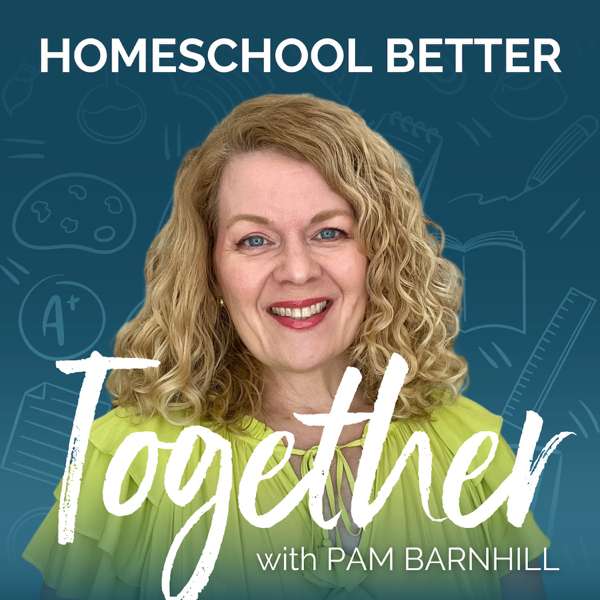
    Homeschool Better Together

    6

    Homeschool Better Together Courses
    footer-logo

    Contact Us

    Toll Free: 844-670-7747

    Links

    • Home
    • Top Charts
    • Networks
    • Apps
    • Independents Podcasts
    • Podcast Advertising
    • Podcast News
    • Contact Us
    • About Us
    • Analytics & Insights

    Stay Connected

      Privacy, Terms of Use & Our Code of Ethics Protecting Content Creators Copyrights