TopPodcast.com
Menu
  • Home
  • Top Charts
  • Top Networks
  • Top Apps
  • Top Independents
  • Top Podfluencers
  • Top Picks
    • Top Business Podcasts
    • Top True Crime Podcasts
    • Top Finance Podcasts
    • Top Comedy Podcasts
    • Top Music Podcasts
    • Top Womens Podcasts
    • Top Kids Podcasts
    • Top Sports Podcasts
    • Top News Podcasts
    • Top Tech Podcasts
    • Top Crypto Podcasts
    • Top Entrepreneurial Podcasts
    • Top Fantasy Sports Podcasts
    • Top Political Podcasts
    • Top Science Podcasts
    • Top Self Help Podcasts
    • Top Sports Betting Podcasts
    • Top Stocks Podcasts
  • Podcast News
  • About Us
  • Podcast Advertising
  • Contact
Not in our directory?
Add Show Here
Podcast Equipment
Center

toppodcastlogoOur TOPPODCAST Picks

  • Comedy
  • Crypto
  • Sports
  • News
  • Politics
  • True Crime
  • Business
  • Finance

Follow Us

toppodcastlogoStay Connected

    View Top 200 Chart
    Back to Rankings Page
    Education

    Mastering Business Analysis

    Your key to advancing your career as a Business Analyst and beyond

    Advertise

    Copyright: © MasterClass 247 LLC

    • Apple Podcasts
    • Google Play
    • Spotify

    Latest Episodes:
    MBA139: Thin Slicing Problem Analysis Oct 17, 2017
    Show notes

    In this episode, Adrian helps us stay out of rabbit holes and avoid developing solutions that don’t address the real opportunity through thin slicing problem analysis.

    

    After listening to this episode, you'll understand:

    • How to avoid rabbit holes and stay focused on solving the real problem
    • What it means to thin slice problems and why it’s helpful
    • How to use the ‘Who, What, Why” approach to avoid implementing the wrong solution
    

    Show Notes

    Rabbit holes . . . we’ve all been there. We go down the wrong path with a solution that won’t meet our customers’ needs.

    When stakeholders fall in love with a solution, they get trapped by the Solution Illusion. They push forward with something that users don’t want. We need to answer the ‘why’ question to understand the problem we’re trying to solve.

    Thin Slicing Problem Analysis

    By taking a thin slice through the ‘why, what, and how’ leads you to discover answers without going down rabbit holes.

    The ‘why’ is the problem we’re trying to solve. It may include a problem statement and success metrics. The ‘what’ is what needs to change in order to solve the problem. This may include use cases or a context diagram. It’s a slice of the high level requirements.

    The ‘how’ is the high level solution approach. This isn’t specific solutions, just the solution approach.

    By thin slicing, we start with just enough of the ‘why, what, and how’ to validate that we’re going after the right problem. We then iterate as the project progresses and you get closer to the details.

    This slicing encourage divergent thinking before narrowing options with convergent thinking.

    By shifting left and getting involved earlier in the project process, we can help ensure the organization is going after the right opportunities. Even if we’re dropped in the middle of a project, we should validate the problem space and solution space.

    Listen to the full episode to understand why you need to get involved earlier in the project and how to iterate on your problem discovery.

    http://traffic.libsyn.com/masteringbusinessanalysis/MBA139.mp3

    Z

    Your Homework

    We need to work to left shift and get involved earlier in projects. When a BA is involved early in projects, we not only smooth the way forward for the project, we may discover that there’s not even a viable project at all and we can focus our effort elsewhere.

    Links mentioned in this episode:

    • Adrian’s blog
    • Adrian’s book, Be a Great Problem Solver
    Adrian Reed

    Adrian Reed

    Principal Consultant at Blackmetric Business Solutions

    Adrian is Principal Consultant at Blackmetric Business Solutions, providing business analysis consultancy and training solutions to a range of clients in varying industries. He is the former President of the UK chapter of the IIBA and speaks internationally on topics related to business analysis and business change.

    • X
    • LinkedIn

    Thank you for listening to the program

    To get more valuable content to enhance your skills and advance your career, you can subscribe on iTunes and other podcatchers.

    Also, reviews on iTunes are highly appreciated! I read each review and it helps keep me motivated to continue to bring you valuable content each week.

    .Subscribe on iTunes Listen on Google Play Music Available on Stitcher Radio Subscribe on Android

    The post MBA139: Thin Slicing Problem Analysis appeared first on Mastering Business Analysis.


    Lightning Cast: The Many Uses of a SIPOC Oct 10, 2017
    Show notes

    In this Lightning Cast, we explore the many applications of a SIPOC and how it can help you on your next project.

    A Lightning Cast is a shorter form episode modeled after lightning talks. You’ll get valuable content in 8 minutes or less.

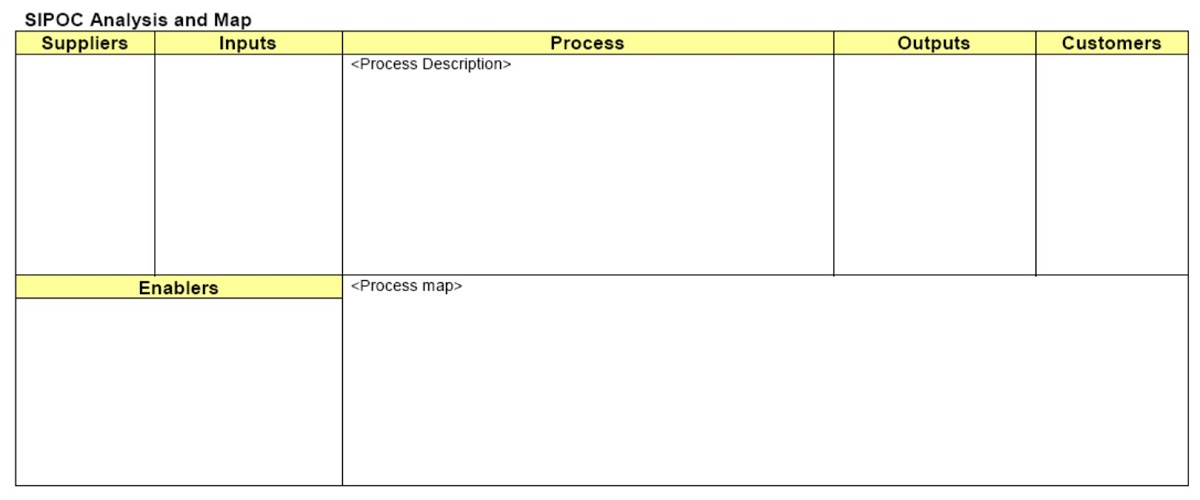
    One of the most valuable but underused tools is a SIPOC. The acronym SIPOC stands for Suppliers, Inputs, Process, Outputs, and Customers.

    The SIPOC diagram is a tool for creating a visual representation of a business process. However, it’s different from process flow diagram and has several uses beyond a simple process diagram.

    The SIPOC is usually associated with Six Sigma as a tool you can use as part of a process improvement project, but it’s so much more.

    Let’s look at the components of the SIPOC . . .

    Imagine a document with five columns; one for suppliers, one for inputs, process, outputs, and one for customers. Let’s start in the middle with the process.

    In the process column, we’re looking for the high-level business process. We want to describe that process in seven steps or less. It should be very high level with no decisions.

    With an understanding of the high level process, we can identify what inputs are necessary for the process to be successful. From there, you can identify the suppliers are required to get those inputs.

    Now that we have the suppliers, inputs, and high level process, we can turn our attention to the other side and identify the outputs of that process. From there, we identify which customers will use those outputs.

    When you create a SIPOC in this way, it’s a great tool to understand the upstream and downstream impacts of a process change or process improvement initiative.

    In addition to process improvement initiatives, a SIPOC is a great scoping tool and can be used to identify requirements.

    While people often start with the process, you can also use a SIPOC to define a new process starting with the customer. Start by identifying your target customers and determine what outputs or outcomes would be valuable. Next, determine what process is needed to deliver those outputs or outcomes. Finally, identify the inputs needed and the suppliers of those inputs.

    SIPOC template

    Listen to the full episode for examples of how to use a SIPOC, why it makes a great scoping tool, and how you can use it to find small slices upon which you can iterate to develop great products.

    http://traffic.libsyn.com/masteringbusinessanalysis/MBALC007.mp3

    Thank you for listening to the program

    To get more valuable content to enhance your skills and advance your career, you can subscribe on iTunes and other podcatchers.

    Also, reviews on iTunes are highly appreciated! I read each review and it helps keep me motivated to continue to bring you valuable content each week.

    .Subscribe on iTunes Listen on Google Play Music Available on Stitcher Radio Subscribe on Android

    The post Lightning Cast: The Many Uses of a SIPOC appeared first on Mastering Business Analysis.


    MBA138: Building a Believable Business Case Oct 03, 2017
    Show notes

    In this episode, Randy Radic shares his process and tips for building a realistic business case to make sure your organization is moving forward with the right initiatives.

    

    After listening to this episode, you'll understand:

    • The key components to a meaningful business case
    • How to make your business case more believable
    • What’s different about business cases in Agile
    • How to find often overlooked costs to make your business case more reliable
    

    Show Notes

    In simple terms, a business case is the justification to undertake a project, program, or initiative. It clearly spells out the benefits, what it’s going to cost, and what the return on the investment is.

    A business case provides insight as to whether or not your organization should undertake an initiative.

    Steps in Building a Believable Business Case

    To create a business case with appropriate stakeholder and sponsor buy-in, start with the benefits. From there, you can determine the cost and calculate return on investment.

    Start discussions with stakeholders to build a consensus around benefits. Get clarity around the problem or opportunity and expected benefits of the solution. Do this before discussion the system functions needed to achieve those benefits.

    Once you have consensus about the benefits, look at the technology, process, and people changes needed. This leads you to the cost component of the business case.

    The Benefits

    Often, sponsors don’t believe business cases because the benefits are unrealistic. There are three categories of benefits.

    With for-profit organizations, either the organization will increase revenue, reduce cost, or meet some regulation that they’re not currently fulfilling. There are also other nontangible factors to consider such as brand and reputational risk.

    Often, those soft benefits can be quantified through discussions with stakeholders. If you are unable to quantify soft benefits, you should still note them in your business case.

    One important thing to do is to be realistic about when the benefits will be realized.

    The Costs

    Once the benefits are understood and agreed upon, you need to identify the associated costs.

    One way to define the cost associated with the initiative is to hold a workshop to identify potential solutions and understand the cost with each proposed solution. That includes developing an understanding of the features that will enable the desired benefits and the technology, people, and process changes needed.

    For technology, you may need to consider options such as build versus buy and include licensing cost, hardware, labor to build or modify the software, facility cost, ongoing maintenance, etc.

    Listen to the full episode to discover often overlooked costs you should consider, how to get the most accurate effort estimates, what kind or return calculations to use, and how business cases differ in Agile environments.

    http://traffic.libsyn.com/masteringbusinessanalysis/MBA138.mp3

    Z

    Your Homework

    If you’re working on a technology project, think about what needs to change in terms of people and process, not just technology.

    Links mentioned in this episode:

    • Online Business Systems website: OBSglobal.com
    • Win tickets to BA World Chicago 2017
    Randy Radic

    Randy Radic

    Sr. Consultant at Online Business Systems

    Randy is a Senior IT / Business practitioner with over 20 years of IT project portfolio management, enterprise business analysis, and business transformation experience with major corporations in private and the public sectors in Canada and US. His industry experience includes consulting, oil and gas, telecommunications, insurance, and government.

    • LinkedIn

    Thank you for listening to the program

    To get more valuable content to enhance your skills and advance your career, you can subscribe on iTunes and other podcatchers.

    Also, reviews on iTunes are highly appreciated! I read each review and it helps keep me motivated to continue to bring you valuable content each week.

    .Subscribe on iTunes Listen on Google Play Music Available on Stitcher Radio Subscribe on Android

    The post MBA138: Building a Believable Business Case appeared first on Mastering Business Analysis.


    Lightning Cast: Stay in Your Lane Sep 26, 2017
    Show notes

    In this Lightning Cast, we explore whether or not business stakeholders and technology teams should stay on their own lanes and not cross over to other areas.

    A Lightning Cast is a shorter form episode modeled after lightning talks. You’ll get valuable content in 8 minutes or less.

    I recently attended a dinner for conference advisory board meeting and a colleague of mine mentioned that people should stay in their lanes. What exactly does that mean?

    It means that stakeholders should stay out of the technology solution space and stick with defining the business problem. Technology teams should also stay out of the business spaces and do what they do best; creating valuable technology solutions that meet the business needs.

    That concept has some merit. When stakeholders stay in their lane, they won’t dictate technology solutions. That allows the technology teams and engineers to use their creativity, so the solution is technically feasible and we can explore multiple options.

    If technology stays in their lane and out of the business lane, they stay focused on the scope of the problem or opportunity and avoid gold plating and unnecessary features that customers won’t use.

    This also means that other teams such as Information Security should stick to what they do best; ensure that data is safe. Legal should stick to what they do best; reviewing information to ensure compliance with the laws and provide input.

    If everyone stays in their lanes, there is no crossover and in no accidents. But I think there’s another way.

    What if instead of everyone staying in their lane, we get the right people in the right seats on the same bus. That way we are all headed to the same destination together.

    There will be no finger-pointing that this person did not give me what I need or we’re waiting on that person. We would work together as one cohesive unit. We would have the alignment we need to get to the same destination together and the autonomy within our own seats to do what we do best.

    Having alignment means that we’re all headed in the same direction will the same vision of the goal. Autonomy means that we have the freedom and flexibility to be able to perform our jobs however we choose to perform them as long as we’re all reaching the same goal.

    We need high alignment and high autonomy. That allows us to create great solutions to the right problems while using our creativity to get things done our own way.

    Instead of everyone staying in their lane, let’s get in the same lane . . . as long as we’re in the same vehicle heading towards the right destination together.

    How can you create that sense of alignment, autonomy, and collaboration within the team so that everyone is open to sharing knowledge and working toward that same destination together?

    Listen to the full episode to explore this tricky question.

    http://traffic.libsyn.com/masteringbusinessanalysis/MBALC006.mp3

    Win Tickets to Business Analyst World Chicago

    Business Analyst World ChicagoEnter to win one of two 2-day symposium tickets to Business Analyst World in Chicago on November 13 and 14. Join me and past guests Kupe Kupersmith, “Bob the BA” Prentiss, Lora McCoy, and others.

    Be prepared to learn new skills and grow in your career.

    Enter to Win

    Thank you for listening to the program

    To get more valuable content to enhance your skills and advance your career, you can subscribe on iTunes and other podcatchers.

    Also, reviews on iTunes are highly appreciated! I read each review and it helps keep me motivated to continue to bring you valuable content each week.

    .Subscribe on iTunes Listen on Google Play Music Available on Stitcher Radio Subscribe on Android

    The post Lightning Cast: Stay in Your Lane appeared first on Mastering Business Analysis.


    MBA137: Challenges with User Stories – with Mike Cohn Sep 19, 2017
    Show notes

    In this episode, author, trainer, and Agile thought leader Mike Cohn joins us to help you overcome the challenges with User Stories.

    

    After listening to this episode, you'll understand:

    • Why a simple concept like User Stories is so difficult to get right
    • The types of challenges teams face when applying User Stories
    • How to overcome User Story challenges
    • What’s better than #NoEstimates
    

    Show Notes

    Successfully applying User Stories and getting value from their use is a big challenge for many teams. It’s a simple concept, yet difficult to master.

    Perhaps it’s because of our prior training that User Stories are hard to get right. We’ve been taught all along that we need to know all of the details before we can move forward. This is one of the biggest challenges with User Stories.

    To be successful, we need to make a mindset shift. A shift from documentation to conversations and from big design upfront to small increments.

    Listen to the full episode to hear all of Mike’s advice on succeeding with User Stories, how to overcome some of the challenges, what he thinks of technical and job stories, and how he feels about #NoEstimates

    http://traffic.libsyn.com/masteringbusinessanalysis/MBA137.mp3

    Z

    Your Homework

    Get started with User Stories. The only way to get better at it after training is through practice.

    If you’re already using User Stories, seek out feedback as to the size and clarity of your stories. Then adjust based on that feedback.

    Links mentioned in this episode:

    • Mike’s website Mountain Goat Software
    • BetterUserStories.com – Mike’s User Story training
    Mike Cohn

    Mike Cohn

    Mike Cohn is the author of User Stories Applied for Agile Software Development, Agile Estimating and Planning, and Succeeding with Agile. Mike is a co-founder of the Agile Alliance and Scrum Alliance. Through his company, Mountain Goat Software, Mike Cohn specializes in helping companies adopt and improve their use of agile processes and techniques to build extremely high-performance teams. Mike is also the author of the popular and well-regarded course, www.BetterUserStories.com.

    • X

    Thank you for listening to the program

    To get more valuable content to enhance your skills and advance your career, you can subscribe on iTunes and other podcatchers.

    Also, reviews on iTunes are highly appreciated! I read each review and it helps keep me motivated to continue to bring you valuable content each week.

    .Subscribe on iTunes Listen on Google Play Music Available on Stitcher Radio Subscribe on Android

    The post MBA137: Challenges with User Stories – with Mike Cohn appeared first on Mastering Business Analysis.


    MBA136: What the IIBA Can Do for You – Part2 Sep 12, 2017
    Show notes

    In part 2 of this episode, Ken Fulmer, CEO and President of the International Institute for Business Analysis (IIBA), joins us to discuss some new initiatives at the IIBA and how the IIBA can help you advance your skills and grow in your career.

    

    After listening to this episode, you'll understand:

    • What the Global Thought Leadership Program is all about and how you can participate
    • What the latest BA Salary Survey reveals
    • How your local IIBA chapter can help you
    

    Show Notes

    Professional associations are a great resource for developing your skills and growing in your career. For Business Analysts, there’s no better association than the International Institute for Business Analysis (IIBA).

    The IIBA has several initiatives available to better support people in the analysis field.

    Global Thought Leadership Program

    The Guide to the Business Analysis Body of Knowledge (BABOK) is the gold standard for business analysis and the IIBA continues to improve and extend the knowledge areas.

    Through the Global Thought Leadership Program, the IIBA dives deeper into areas such as strategic business analysis, design thinking, digital, artificial intelligence, data analysics, and more. By bringing together teams of experts in each area, the IIBA goes further into each knowledge area to develop a deeper understanding and bring that knowledge to members to help them achieve better business outcomes.

    This program expands the role and the reach of the Business Analyst and prepares us for the future. It also allows interested members of the community to contribute, learn, and grow.

    The Competency Model version 3.0

    While version 3.0 of the Core Competency Model is part of the BABOK, the IIBA is developing a self-assessment based on that model to help you understand your strengths and development areas.

    The assessment will show you not only your skill in each competency area, but also the depth of understanding.

    Additionally, the IIBA is developing a competency model that goes beyond the individual and identifies the capabilities of the enterprise.

    Salary Survey

    The latest version of the annual salary survey is now available and it shows some interesting facts. The survey is based on responses from approximately 5,300 people within the global business analysis community.

    For the first time, we see evidence that certifications result in a higher pay level. People with certifications earn about 11% more than those without certifications.

    The survey also shows an increase in hybrid roles. Business Analysts are frequently involved in project management, testing, business architecture, change management, and more.

    While the gender pay gap is an issue in most industries, this year’s salary survey shows that on average, females in Business Analysis roles earn more than men. The survey also details expected future salary increases for the role.

    Listen to the full episode to hear how to get involved in the Global Thought Leadership Program, how the IIBA is partnering with other professional associations to share knowledge and deal with hybridization of roles, and the new salary survey.

    http://traffic.libsyn.com/masteringbusinessanalysis/MBA136.mp3

    Z

    Your Homework

    Get a copy of the Agile Extension from the IIBA’s websiteand read it. It contains a lot of useful information to help you to be effective in an Agile environment.

    Get involved in the Global Thought Leadership Program. To express your interest in participating, send an email to administration@iiba.org or info@iiba.org.

    Links mentioned in this episode:

    • IIBA Website – IIBA.org
    • Webinars from the IIBA

    IIBA®, BABOK® Guide and Business Analysis Body of Knowledge® are registered trademarks owned by International Institute of Business Analysis.

    Ken Fulmer

    Ken Fulmer

    CEO and President of IIBA International

    Ken is the President and CEO of the International Institute for Business Analysis. The IIBA is a global professional association for business analysis that’s expanding its expertise to new digital and leading edge practices to continue to apply analysis to both individual practitioner capability and to assist organizations in achieving better business outcomes.

    • X
    • LinkedIn

    Thank you for listening to the program

    To get more valuable content to enhance your skills and advance your career, you can subscribe on iTunes and other podcatchers.

    Also, reviews on iTunes are highly appreciated! I read each review and it helps keep me motivated to continue to bring you valuable content each week.

    .Subscribe on iTunes Listen on Google Play Music Available on Stitcher Radio Subscribe on Android

    The post MBA136: What the IIBA Can Do for You – Part2 appeared first on Mastering Business Analysis.


    MBA135: What the IIBA Can Do for You Sep 05, 2017
    Show notes

    In this episode, Ken Fulmer, CEO and President of the International Institute for Business Analysis (IIBA), joins us to discuss some new initiatives at the IIBA and how the IIBA can help you advance your skills and grow in your career.

    

    After listening to this episode, you'll understand:

    • How the new version of the Agile Extension to the BABOK is more useful than ever
    • What the new Competency Model is all about and how to use it
    • How the IIBA’s Mentoring Program can help you and your career
    • What the Global Thought Leadership Program is all about
    

    Show Notes

    Professional associations are a great resource for developing your skills and growing in your career. For Business Analysts, there’s no better association than the International Institute for Business Analysis (IIBA).

    The IIBA has several initiatives available to better support people in the analysis field.

    New Version of the Agile Extension to the BABOK

    Version 2.0 of the Agile Extension was developed in conjunction with the Agile Alliance. The new version of the Agile Extension looks beyond the project level and includes broader planning horizons.

    The planning horizons include the strategic level and shows you how to do analysis and remain agile as situations and organizational priorities change. Of course, it also includes the delivery horizon at the project level. At each planning horizon, the IIBA’s Agile Extension shows you the tools and methods to use in that context.

    The main purpose of the Agile Extension to the BABOK is to show you how analysis fits across all of the planning horizons and ensure the fundamentals are included to ensure delivery of the right things and achieve the desired business outcomes.

    Mentoring Program

    Earlier this year, the IIBA launched a pilot version of their mentoring program. The program is focused on two audiences: individuals seeking mentoring to grow in their careers, and mentoring into chapter role positions to strengthen the leadership capabilities of each chapter.

    The mentoring program helps improve the way we are perceived as a profession and how we interact in our community to be more influential. We want Business Analysts to be seen as leaders.

    BA as a Leader

    To help Business Analysts to be perceived as leaders, the IIBA has recently held a series of webinars to develop leadership skills. This will also be part of a one-day seminar at the Building Business Capabilities (BBC) Conference in November 2017.

    The intention is to roll this program out to local chapters for their members in order to lift the image of the profession.

    Based on analysis of surveys, the IIBA developed their Global Thought Leadership program. This program helps explore areas outside of traditional analysis work.

    Based on today’s evolving business environment, the Global Thought Leadership program explores areas such as strategic business analysis, design thinking, and big data.

    This allows practitioners to develop a deeper understand these emerging areas and make recommendations and lead transformational change to achieve better business results.

    Listen to the full episode to hear more about the IIBA’s new vesion of the Agile Extension to the BABOK, the mentoring program, the Global Thought Leadership program, and other benefits (even if you’re not a member).

    http://traffic.libsyn.com/masteringbusinessanalysis/MBA135.mp3

    Links mentioned in this episode:

    • IIBA Website – IIBA.org
    • Webinars from the IIBA

    IIBA®, BABOK® Guide and Business Analysis Body of Knowledge® are registered trademarks owned by International Institute of Business Analysis.

    Ken Fulmer

    Ken Fulmer

    CEO and President of IIBA International

    Ken is the President and CEO of the International Institute for Business Analysis. The IIBA is a global professional association for business analysis that’s expanding its expertise to new digital and leading edge practices to continue to apply analysis to both individual practitioner capability and to assist organizations in achieving better business outcomes.

    • X
    • LinkedIn

    Thank you for listening to the program

    To get more valuable content to enhance your skills and advance your career, you can subscribe on iTunes and other podcatchers.

    Also, reviews on iTunes are highly appreciated! I read each review and it helps keep me motivated to continue to bring you valuable content each week.

    .Subscribe on iTunes Listen on Google Play Music Available on Stitcher Radio Subscribe on Android

    The post MBA135: What the IIBA Can Do for You appeared first on Mastering Business Analysis.


    Lightning Cast: Flip the Script in Your Job Search Aug 29, 2017
    Show notes

    In this Lightning Cast, Ryland Leyton helps us to flip the script during a job search to find the right opportunity.

    A Lightning Cast is a shorter form episode modeled after lightning talks. You’ll get valuable content in 8 minutes or less.

    Flip the script on your employment search and how you approach looking for work.

    We typically have a script in our head that says “I hope I get this job” or “I’m really qualified for this job”. It’s always about hoping that they offer a job to us.

    Stop being someone you hope they will give a job to. Instead, think of yourself as a consumer of employment services. You are considering the package of goods and services that the employer is giving you in exchange for your time and your work.

    In your original script, you believe that you will do work and in exchange, you will receive a paycheck. The payment and benefits being offered are commodities that you can likely get at many places. What else distinguishes this employer for you?

    Do they have high quality management? What are the management services you will receive as part of the basket of opportunity in front of you? Is the supervisor someone you will be able to learn from?

    Consider the position, organization size, and culture, and how they match with your personal goals.

    What does the job offer you? If you’re exchanging your time, you want to make sure you’re exchanging it for the right things.

    Flip the script and stop coming from a place of scarcity. Come from a place of abundance.

    Listen to the full episode to hear Ryland’s job search advice and how to find the right opportunity for you.

    http://traffic.libsyn.com/masteringbusinessanalysis/MBALC005.mp3

    Thank you for listening to the program

    To get more valuable content to enhance your skills and advance your career, you can subscribe on iTunes and other podcatchers.

    Also, reviews on iTunes are highly appreciated! I read each review and it helps keep me motivated to continue to bring you valuable content each week.

    .Subscribe on iTunes Listen on Google Play Music Available on Stitcher Radio Subscribe on Android

    The post Lightning Cast: Flip the Script in Your Job Search appeared first on Mastering Business Analysis.


    MBA134: Distinguishing Yourself in Your Career Aug 22, 2017
    Show notes

    In this episode, Ryland Leyton shows us how to distinguish ourselves in interviews and in our career.

    

    After listening to this episode, you'll understand:

    • How to answer interview questions to demonstrate your skills and knowledge
    • What answers interviewers are really looking for
    • How using archetypes can distinguish you in interviews and in your career
    

    Show Notes

    How do you differentiate yourself from other candidates interviewing for the same position? Ryland will help you to not only ace your interview for a Business Analyst position, he’ll show you how to use the same approach to be recognized as a high performer throughout your career.

    Listen to the full episode to understand how to distinguish yourself both in interviews and as your career progresses.

    http://traffic.libsyn.com/masteringbusinessanalysis/MBA134.mp3

    Z

    Your Homework

    Take some time to think about what your value proposition is. Try to find a way to describe the reason someone should hire you in just a few sentences. If you can do that, you’re in a good position to build the rest of the conversation you’ll have with an interviewer.

    Links mentioned in this episode:

    • Ryland’s website RylandLeyton.comThe Agile Business Analyst by Ryland Leyton
    • Ryland’s book, The Agile Business Analyst: Moving from Waterfall to Agile
    • Previous episode with Ryland, The Agile Business Analyst
    • Chicago Business Analysis Development Day (ChiBADD)
    Ryland Leyton

    Ryland Leyton

    Lead Business Analyst

    Ryland Leyton is a Certified Business Analysis Professional and Lead Business Analyst at Aptos Retail. He’s also an agile coach for the Atlanta IIBA nonprofit volunteer program and a frequent presenter at industry conferences. Ryland is the author of The Agile Business Analyst: Moving from Waterfall to Agile.

    • Facebook
    • X
    • LinkedIn

    Thank you for listening to the program

    To get more valuable content to enhance your skills and advance your career, you can subscribe on iTunes and other podcatchers.

    Also, reviews on iTunes are highly appreciated! I read each review and it helps keep me motivated to continue to bring you valuable content each week.

    .Subscribe on iTunes Listen on Google Play Music Available on Stitcher Radio Subscribe on Android

    The post MBA134: Distinguishing Yourself in Your Career appeared first on Mastering Business Analysis.


    Lightning Cast: Brainstorming – You’re Doing It Wrong! Aug 15, 2017
    Show notes

    In this Lightning Cast, we discuss brainstorming. You’ll realize that brainstorming doesn’t work – at least not the way you’re doing it. There’s a better way.

    A Lightning Cast is a shorter form episode modeled after lightning talks. You’ll get valuable content in 8 minutes or less.

    Critical to the success of any organization is the ability to creatively problem-solve and innovate. To do this, many people turn to brainstorming.

    The problem is most people do it wrong. Even worse, there have been many studies that show that brainstorming doesn’t even work.

    Let’s start with what we mean by brainstorming. The technique of brainstorming was introduced by advertising executive Alex Osborn in the 1950s. Osborn’s version of brainstorming has four rules:

    1. Focus on quantity by generating as many ideas as possible;
    2. Defer judgment by not criticizing or filtering ideas;
    3. Welcome unusual or innovative ideas; and
    4. Combine ideas and improve them

    To start brainstorming, you identify the problem or situation that requires an innovative solution. You then get a group of people together to focus on the problem and shout out potential solutions. The facilitator records what people say so that the information is visible to everyone. Upon hearing or seeing other people’s ideas, you generate new ideas.

    After the ideation portion, the group that thinks critically about the ideas to identify the most feasible solutions.

    The premise is that together we can share our collective creative abilities and come up with more and better ideas than working alone. The diversity of thought leads to higher-quality solutions and better engagement by participants since they are all involved in coming up with a solution.

    Unfortunately, Alex Osborne was wrong. There are plenty of studies that show that brainstorming leads to fewer ideas than working alone and that brainstorming can actually make groups less creative.

    Why doesn’t brainstorming work?

    One reason is because of what we call social loafing. That means that individuals in a group tend to put forth less effort than working alone. There’s a tendency to be more of a bystander than a strong contributor.

    Social anxiety is another reason that brainstorming fails. It’s the fear of what others will think of your idea. This is especially true for introverted or less confident individuals.

    Another issue is what we refer to as regression to the mean. This means that the diversity levels and creativity, skill, and knowledge in the group leads to just average thinking. The solutions from the most creative members will end up being at the same level as less creative members of the group. You’ve probably seen this in sports or other challenging competitions where if you practice with someone less skilled than you are, your competence level decreases/

    Another problem with brainstorming is what we call ‘production blocking’. Because you shout out ideas one at a time and a facilitator needs to record those ideas, there is a delay in the free flow of ideas. Often when that happens, ideas that come in your head in a fleeting moment disappear and the number of creative ideas is limited,

    Additionally, people often do brainstorming incorrectly when they fail to share the goal early. Often when you go into a brainstorming session, people are invited to the meeting without a clear idea what the goal or the problem they’re trying to solve is. This is really problematic for introverts because we like to think of ideas beforehand. Give people some time to think about the problem and let their subconscious mind work on the idea.

    Other failures of brainstorming are the result of poor facilitation. Inexperienced facilitators may let the more outspoken people dominate the conversation. You need to make sure everyone has a voice and is free to express their opinions.

    Also, the group may begin judging and filtering ideas which restricts the free flow of information. This is especially true if managers or other leaders are in the room.

    Finally, there’s often bias in selecting ideas. As you conclude your divergent idea generation and begin to select the ideas that are most feasible, there’s often a bias. I want my solution to be one that’s selected.

    If brainstorming doesn’t work, what does work?

    There two approaches that I like to use: Brain Swarming and Brain Writing.

    Brain Swarming was created by Dr. Tony McCaffrey and the approach is to start with the goal or problem statement which is made visible at the top of a whiteboard. You then list any resources that are available to address a problem at the bottom of the whiteboard. After the group understands the resources and the problem statement, they work independently by writing down their own ideas on Post-It notes.

    Some people in the group will be big picture thinkers and start top-down by looking at the problem statement, helping to break that down further. The analytical, bottom-up thinkers will begin with the resources and start building those up to see how they could solve the problem. When the top-down thinkers in the bottom-up thinkers come together, that’s where the great solutions are formed.

    By working independently and making things visible on the board as you write ideas on Post-Its, you get diversity of thought without all of the judgment and bias associated with it.

    Similar to brain swarming, Leah Thompson from the Kellogg School of Management recommends a technique that she calls Brain Writing. Essentially, after everyone understands the goal or problem statement, each person in the group writes their own ideas silently on Post-It notes. After the ideas are written down, they’re all collected and the facilitator puts them all up on the wall. You then review all of those ideas and do multiple rounds of this individual writing. That way, people are able to spark new ideas and combined ideas to form new innovative solutions.

    You can then take those ideas and bring in a new group to look at those ideas and identify which ones are most feasible. Bringing in a different group helps eliminate some of the judgment bias.

    Brainstorming can generate a lot of ideas, but they might not be the right ideas. Instead, start using techniques and methods that help generate better and more useful ideas.

    Listen to this lightning cast to understand better ways of creative problem solving.

    http://traffic.libsyn.com/masteringbusinessanalysis/MBALC004.mp3

    Thank you for listening to the program

    To get more valuable content to enhance your skills and advance your career, you can subscribe on iTunes and other podcatchers.

    Also, reviews on iTunes are highly appreciated! I read each review and it helps keep me motivated to continue to bring you valuable content each week.

    .Subscribe on iTunes Listen on Google Play Music Available on Stitcher Radio Subscribe on Android

    The post Lightning Cast: Brainstorming – You’re Doing It Wrong! appeared first on Mastering Business Analysis.


    Previous 1 12 13 14 15 16 28 Next

    Related Podcasts

    Making Sense with Sam Harris

    1

    Making Sense with Sam Harris Education
    Grammar Girl

    2

    Grammar Girl Education
    Good Life Project

    3

    Good Life Project Education
    Explain It to Me

    4

    Explain It to Me Education
    Team Never Quit

    5

    Team Never Quit Comedy
    Optimal Living Daily – Personal Development and Self-Improvement

    6

    Optimal Living Daily – Personal Development and Self-Improvement Alternative Health
    footer-logo

    Contact Us

    Toll Free: 844-670-7747

    Links

    • Home
    • Top Charts
    • Networks
    • Apps
    • Independents Podcasts
    • Podcast Advertising
    • Podcast News
    • Contact Us
    • About Us
    • Analytics & Insights

    Stay Connected

      Privacy, Terms of Use & Our Code of Ethics Protecting Content Creators Copyrights