Our TOPPODCAST Picks
  Stay Connected
Let’s Science! is a podcast that explores the wonders of science with curiosity, clarity, and joy. Each episode breaks down scientific discoveries, natural phenomena, and everyday science topics in an accessible and engaging way — from space and biology to technology and the world around us. Hosted by an enthusiastic panel from Australia, the show celebrates science as a path to understanding creation and our place within it. If you enjoy learning how things work and asking big questions about the universe, Let’s Science! makes discovery fun and approachable.
- Home
- Top Charts
- Top Networks
- Top Apps
- Top Independents
- Top Podfluencers
- Top Picks
- Top Business Podcasts
- Top True Crime Podcasts
- Top Finance Podcasts
- Top Comedy Podcasts
- Top Music Podcasts
- Top Womens Podcasts
- Top Kids Podcasts
- Top Sports Podcasts
- Top News Podcasts
- Top Tech Podcasts
- Top Crypto Podcasts
- Top Entrepreneurial Podcasts
- Top Fantasy Sports Podcasts
- Top Political Podcasts
- Top Science Podcasts
- Top Self Help Podcasts
- Top Sports Betting Podcasts
- Top Stocks Podcasts
- Podcast News
- About Us
- Podcast Advertising
- Contact


 Telescopes have now given us our first image of the supermassive black hole at the center of our galaxy. Caroline Knight tells us how we discovered there was a black hole there and the amazing story of how this incredible image was made.
 Before the Big Bang Theory was widely accepted, there were many theories to explain how the universe began. Lindsay Sant and Lino Saubolle discuss five alternative theories that were advanced prior to the currently accepted theory and why they all ultimately failed to explain the universe's origins.
 We revisit the historic new James Webb Space Telescope and its first amazing discoveries and then Caroline explains to Lindsay and Lino some astronomical terms like redshift.
 The Thylacine, aka the Tasmanian Tiger or Tassie Tiger, is extinct, but as Caroline tells Lindsay and Lino, scientists now think it may be possible to bring them back. How is that possible? Will they still be the same animal? And is it moral and ethical to do so even if we can?
 Even dinosaurs got sniffles! Caroline tells Lindsay and Lino about a new discovery that shows that some sauropods show evidence of having had respiratory infections. Then Lindsay discusses an exploration of how close we could be to building a real USS Enterprise starship.
 Getting better all the time! Caroline explains to Lindsay and Lino how the quality of antibodies from COVID-19 vaccines improve over time, what antibodies are, and what they do in us. Plus an update on a recent story about a rocket crashing into the Moon.
 The International Space Station has been humanity's outpost on the edge of space for more than 20 years, but now its end date has been set. Caroline Knight and Lindsay Sant discuss the history of the ISS, its accomplishments, the date set for its retirement, and where it will end up.
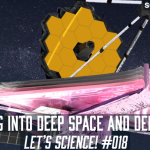 The James Webb Telescope is the newest science asset in space and will look deeper into the universe than ever before. Lindsay and Lino discuss the amazing discoveries it's expected to make in its lifetime. Plus they discuss an old SpaceX rocket heading for a collision with the Moon.
 Why do we feel so sleepy after eating that holiday meal of turkey? Caroline tells Lindsay and Lino that it's not as simple as tryptophan making you sleepy. Plus why that uniquely Australian and New Zealander dish of pavlova can be so fluffy, why peppermint candy canes make your mouth feel cold, and why flambé doesn't burn the pudding.
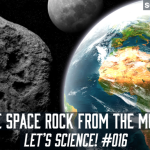 That's no moon! Caroline tells Lindsay and Lino that astronomers have discovered a quasi-moon companion of Earth that may in fact be a piece of the Moon that broke off from it eons ago. Plus NASA's mission to defend our planet from killer space rocks.