TopPodcast.com
Menu
  • Home
  • Top Charts
  • Top Networks
  • Top Apps
  • Top Independents
  • Top Podfluencers
  • Top Picks
    • Top Business Podcasts
    • Top True Crime Podcasts
    • Top Finance Podcasts
    • Top Comedy Podcasts
    • Top Music Podcasts
    • Top Womens Podcasts
    • Top Kids Podcasts
    • Top Sports Podcasts
    • Top News Podcasts
    • Top Tech Podcasts
    • Top Crypto Podcasts
    • Top Entrepreneurial Podcasts
    • Top Fantasy Sports Podcasts
    • Top Political Podcasts
    • Top Science Podcasts
    • Top Self Help Podcasts
    • Top Sports Betting Podcasts
    • Top Stocks Podcasts
  • Podcast News
  • About Us
  • Podcast Advertising
  • Contact
Not in our directory?
Add Show Here
Podcast Equipment
Center

toppodcastlogoOur TOPPODCAST Picks

  • Comedy
  • Crypto
  • Sports
  • News
  • Politics
  • True Crime
  • Business
  • Finance

Follow Us

toppodcastlogoStay Connected

    View Top 200 Chart
    Back to Rankings Page
    True Crime

    Late Edition: Crime Beat Chronicles

    Late Edition: Crime Beat Chronicles, a product of Lee Enterprises, is a collection of limited anthology style episodes exploring true stories as told by journalists from regional newspapers around America.

    Advertise

    Copyright: © 2021 Lee Enterprises

    • Apple Podcasts
    • Google Play
    • Spotify

    Latest Episodes:
    Arrest made in Susan Negersmith homicide case, but there's a twist | Chapter 3 May 02, 2023
    Show notes

    Welcome back to Late Edition Crime Beat Chronicles, a Lee Enterprises podcast with host Nat Cardona. On this podcast, you’ll hear true crime stories as told by journalists from regional newspapers across the country.

    For the next series of episodes, we will be diving into the 1990 cold case murder of Susan Negersmith in Wildwood, New Jersey. You’ll hear from reporters, past and present, who covered the case as it has unfolded throughout the years and the many twists and turns along the way.

    Susan Negersmith was a 20 year-old woman from Carmel, New York. She was visiting Wildwood, New Jersey, on Memorial Day Weekend with friends in 1990. She said goodbye to her friends in the evening of Saturday, May 26, and by the early hours of Sunday morning, Susan’s partially clothed body was found behind a dumpster near a Wildwood restaurant. Her death was originally ruled accidental, although there were signs of a struggle.

    An important thing to note about Susan Negersmith’s weekend trip with friends to Wildwood: this area is a destination for a debaucherously good time. Tourists flock there in the warm weather months to party hard. There’s a boardwalk packed with restaurants and bars packed with people from all over. Drinking heavily is a main activity. The reputation of the area for all of these things quickly comes into play in the early days of the investigation ... at the expense of solving Susan’s case in a timely fashion.

    And for more on that, we are joined by Bill Barrow, a reporter at the Press of Atlantic City who has largely taken on following the case in recent years following Yvette Craig. Bill talks about how the case evolved in recent years and where the case stands now following the arrest of Jerry Rosado, a Millville, New Jersey, man accused of sexually assaulting Negersmith.

    However, a motion for dismissal was made on Rosado’s behalf on the grounds that his sexual assault charge exceeded the statute of limitations governing crimes in 1990, when Negersmith’s body was found.

    Rosado was released from the Cape May County jail March 30, a day after the appellate panel published their opinion siding with the defense. We'll have more details on that in the fourth episode.

    Read more about the case

    • Cape May County judge dismisses charges against man accused in Negersmith cold case (April 20, 2023)
    • Man charged in Wildwood cold case released following case dismissal (March 30, 2023)
    • DNA used to break a 30-year stalemate in Wildwood cold case (April 18, 2022)
    • After 32 years, Millville man accused of attacking Susan Negersmith (April 8, 2022)
    • Negersmith family finds new champion in pursuit of justice (May 31, 2015)
    • Family still holds out hope on 25 anniversary of death (May 29, 2015)
    • From the archives: Complete coverage from 1990-2023

    See omnystudio.com/listener for privacy information.


    Juggling facts and hearsay in the Susan Negersmith homicide investigation | Chapter 2 Apr 17, 2023
    Show notes

    Welcome back to Late Edition Crime Beat Chronicles, a Lee Enterprises podcast with host Nat Cardona. On this podcast, you’ll hear true crime stories as told by journalists from regional newspapers across the country.

    For the next series of episodes, we will be diving into the 1990 cold case murder of Susan Negersmith in Wildwood, New Jersey. You’ll hear from reporters, past and present, who covered the case as it has unfolded throughout the years and the many twists and turns along the way.

    Before we hear from one of the original reporters on the Negersmith case, we need to head down to the Jersey Shore more than 30 years ago.

    Susan Negersmith was a 20 year-old woman from Carmel, New York. She was visiting Wildwood, New Jersey, on Memorial Day Weekend with friends in 1990. She said goodbye to her friends in the evening of Saturday, May 26, and by the early hours of Sunday morning, Susan’s partially clothed body was found behind a dumpster near a Wildwood restaurant. Her death was originally ruled accidental, although there were signs of a struggle.

    An important thing to note about Susan Negersmith’s weekend trip with friends to Wildwood: this area is a destination for a debaucherously good time. Tourists flock there in the warm weather months to party hard. There’s a boardwalk packed with restaurants and bars packed with people from all over. Drinking heavily is a main activity. The reputation of the area for all of these things quickly comes into play in the early days of the investigation ... at the expense of solving Susan’s case in a timely fashion.

    And for more on that, we are joined once again by Yvette Craig. She was a reporter at the Press of Atlantic City in the early 90s and closely covered Susan Negersmith’s case from day one.

    Read more about the case

    • Man charged in Wildwood cold case released following case dismissal (March 30, 2023)
    • DNA used to break a 30-year stalemate in Wildwood cold case (April 18, 2022)
    • After 32 years, Millville man accused of attacking Susan Negersmith (April 8, 2022)
    • Negersmith family finds new champion in pursuit of justice (May 31, 2015)
    • Family still holds out hope on 25 anniversary of death (May 29, 2015)
    • From the archives: Complete coverage from 1990-2023

    See omnystudio.com/listener for privacy information.


    Susan Negersmith case went from accidental death to suspected homicide | Chapter 1 Apr 04, 2023
    Show notes

    Welcome back to Late Edition Crime Beat Chronicles, a Lee Enterprises podcast with host Nat Cardona. On this podcast, you’ll hear true crime stories as told by journalists from regional newspapers across the country.

    For the next series of episodes, we will be diving into the 1990 cold case murder of Susan Negersmith in Wildwood, New Jersey. You’ll hear from reporters, past and present, who covered the case as it has unfolded throughout the years and the many twists and turns along the way.

    Before we hear from one of the original reporters on the Negersmith case, we need to head down to the Jersey Shore more than 30 years ago.

    Susan Negersmith was a 20 year-old woman from Carmel, New York. She was visiting Wildwood, New Jersey, on Memorial Day Weekend with friends in 1990. She said goodbye to her friends in the evening of Saturday, May 26, and by the early hours of Sunday morning, Susan’s partially clothed body was found behind a dumpster near a Wildwood restaurant. Her death was originally ruled accidental, although there were signs of a struggle.

    An important thing to note about Susan Negersmith’s weekend trip with friends to Wildwood: this area is a destination for a debaucherously good time. Tourists flock there in the warm weather months to party hard. There’s a boardwalk packed with restaurants and bars packed with people from all over. Drinking heavily is a main activity. The reputation of the area for all of these things quickly comes into play in the early days of the investigation ... at the expense of solving Susan’s case in a timely fashion.

    And for more on that, we are joined by Yvette Craig. She was a reporter at the Press of Atlantic City in the early 90s and closely covered Susan Negersmith’s case from day one.

    Read more about the case

    • Man charged in Wildwood cold case released following case dismissal (March 30, 2023)
    • DNA used to break a 30-year stalemate in Wildwood cold case (April 18, 2022)
    • After 32 years, Millville man accused of attacking Susan Negersmith (April 8, 2022)
    • Negersmith family finds new champion in pursuit of justice (May 31, 2015)
    • Family still holds out hope on 25 anniversary of death (May 29, 2015)
    • From the archives: Complete coverage from 1990-2023

    See omnystudio.com/listener for privacy information.


    What is so appealing about true-crime shows? | Bonus episode Mar 17, 2023
    Show notes

    Welcome back to Late Edition: Crime Beat Chronicles. We’re currently working on the next set of episodes that will look at the 1990 death of 20-year-old Susan Nesersmith in Wildwood, New Jersey.

    Until then, please go back and listen to past seasons if you have not already.

    Lee Enterprises produces other podcasts such as The Ethical Life, a program that focuses on the intersection of ethics and modern life. The show is hosted by Scott Rada, Lee Enterprises social media manager, and Richard Kyte, director of the Ethics Institute at Viterbo University in La Crosse, Wisconsin.

    A recent episode of The Ethical Life is of particular interest to listeners of Late Edition: Crime Beat Chronicles as it looks at the appeal of true-crime programs.

    True crime is one Hollywood’s most successful genres. Recently, Netflix aired a 10-part series about Jeffery Dahmer, the Milwaukee serial killer, and it was a huge hit. But the sister of one of Dahmer’s victim’s said it’s sad that the producers are making money off of the tragic events that happened more than three decades ago.

    Richard Kyte and Scott Rada discuss why true crime is so popular and why such disturbing stories have a strong appeal.

    A link to the episode “What is so appealing about true-crime shows?” is available here.

    Listen now and subscribe to The Ethical Life: Apple Podcasts | Google Podcasts | Spotify | Stitcher | RSS Feed | Omny Studio

    See omnystudio.com/listener for privacy information.


    Forensic meteorology uses weather data for legal cases | Bonus episode Feb 28, 2023
    Show notes

    Welcome back to Late Edition: Crime Beat Chronicles. My name is Terry Lipshetz, and I’m one of the behind-the-scenes producers of the program.

    We’re currently working on the next set of episodes that will look at the 1990 death of 20-year-old Susan Nesersmith in Wildwood, New Jersey. Until then, please go back and listen to past seasons if you have not already.

    Lee Enterprises produces other podcasts, including Across the Sky, a program dedicated to all things weather and climate. A recent episode is of particular interest to listeners of Late Edition: Crime Beat Chronicles as it takes you behind the scenes into forensic meteorology.

    We have broken out a segment of that episode that focuses on the research conducted that can be used as evidence in depositions and even inside the courtroom.

    Forensic meteorologist Sherilyn Patrick, Director of Forensic Services for WeatherWorks in Hackettstown, New Jersey, provides insight. For the full episode search for “Need weather information for a lawsuit? Call a forensic meteorologist” under the Across the Sky podcast on all major podcasting hosts.

    Listen now and subscribe to Across the Sky: Apple Podcasts | Google Podcasts | Spotify | RSS Feed | Omny Studio

    See omnystudio.com/listener for privacy information.


    Chapter 5: 'Monsignor Francis J. O'Connor deserves justice' — Who killed the monsignor? Feb 14, 2023
    Show notes

    Late Edition: Crime Beat Chronicles is a true crime podcast that pairs dramatic readings of articles with interviews conducted with journalists who covered the stories.

    For this set of episodes we're looking at a multi-part series from the Buffalo News Watchdog Team of Lou Michel, Dan Herbeck, and Mike McAndrew that launched Friday, Jan. 20, about a decades old murder of a Catholic Priest. The homicide went unsolved amid vague rumors of a cover-up.

    Read more: Keep up with the series as the articles are published

    Day 1: 'Father isn't coming': All was silent at the Sisters of St. Joseph Motherhouse when the first few nuns filed into the small chapel and bowed their heads in prayer. It was 6:30 a.m. on March 13, 1966. But O'Connor, expected to arrive soon to perform the 7 a.m. Mass, never appeared. Read more

    Day 2: Three boys discover a body in Scajaquada Creek: The dead man's wallet was missing, but officers discovered he was Monsignor Francis J. O’Connor, 44, one of the most prominent priests in the Buffalo Catholic Diocese. Read more

    Day 3: His Impala is found, and police zero in on homicide: It took more than 14 hours before police located O’Connor’s 1966 gray, four-door Chevy Impala. It was parked just over 1 mile away from where his body was found in an upscale neighborhood, two blocks north of Delaware Park, when it was found at 3:20 a.m. Monday, March 14, 1966. The possibility of suicide was soon replaced by homicide. Read more

    Day 4: A rising star's death is a 'staggering blow' to Catholic community: Monsignor Francis J. O’Connor rose from humble roots to become one of Buffalo’s most influential priests, making his murder all the more shocking to the deeply Catholic community of the 1960s. For more than half a century, his unsolved murder has generated all kinds of speculation about the identity and motive of the killer or killers. Theories have included speculation about his sexual orientation to suggestions that O'Connor heard a confession about a sin so terrible that it put him in grave danger. Read more

    Day 5: A 57-year-old box of evidence reveals a case that goes cold: Inside a tiny interrogation room at the Buffalo Police homicide bureau, journalists, for two days, read and reread files, took extensive notes and compared details in reports. It became clear that what started out as a massive investigation involving dozens of detectives was suddenly halted without an explanation provided in the official reports or to the public. Read more

    Day 6: Renowned sleuth Leo Donovan oversaw murder investigation: Leo J. Donovan was no stranger to headline-making murder cases. By the time he retired in 1985, he had served as the chief of the Buffalo Police homicide squad longer than anyone in the department’s history. During his 21 years in that position, Donovan headed investigations into about 4,000 unexplained deaths and homicides, including some of the most notorious crimes in Buffalo over the past century. But he was a relative newcomer to high-profile cases in 1966. Read more

    Day 7: A diocese journalist emerges as a suspect: Buffalo homicide detectives took a special interest in a young reporter for the Catholic Diocese newspaper after his boss was murdered. A day after Monsignor Francis J. O’Connor’s body was found floating in Scajaquada Creek on March 13, 1966, detectives interviewed Robert Armbruster. He told them he was physically attracted to the priest, but had fantasized about taking an ax to his head, according to 56-year-old police reports obtained by The Buffalo News. Read more

    Day 8: Detectives chased tips around the clock after murder: Though so much of the work conducted by detectives would lead to dead-ends, the 56-year-old homicide file The Buffalo News reviewed in 2022 reflects meticulous police work was being carried out early in the probe. Read more

    Day 9: Did his sexuality have anything to do with his murder?:None of the Buffalo police reports on the unsolved murder of Monsignor Francis J. O’Connor identify him as being gay. But it is clear that homicide detectives wanted to know 57 years ago if homosexuality had anything to do with the crime. In reports on the 1966 case, detectives said they received information from fellow officers suggesting they look at criminals known to rob gay men and investigate gay bars for possible leads. Read more

    Day 10: A priest becomes a suspect in the monsignor's murder: The 56-year-old reports obtained by The Buffalo News revealed for the first time that the Rev. John D. Lewandowski was considered a suspect by police. And while the reports do not say why, there are clues that suggest reasons for focusing on Lewandowski. Read more

    Day 11: Priest suspected in murder was accused of molesting boys: Decked out in a skin-tight wrestler’s uniform and high-top boots, Rev. John D. Lewandowski in the 1960s would sometimes hold weekend training sessions where he would teach wrestling moves to adolescent and teenage boys. But according to some of the seven men who decades later filed Child Victims Act lawsuits accusing Lewandowski of sexual abuse, the priest used the wrestling sessions to connect with victims he molested. They also recalled that Lewandowski told them he knew how to use wrestling moves to kill someone. Read more

    Day 12: A trip to Bemus Point to fingerprint and interview wayward priest: Thirteen days after the murder of Monsignor Francis J. O’Connor, two of Buffalo's top homicide investigators traveled 70 miles through a snowstorm to conduct a highly unusual interview. Buffalo police homicide squad Chief Leo J. Donovan and Sgt. John C. Rapp visited a retreat house run by the Buffalo Catholic Diocese in Bemus Point, a popular vacation spot on Chautauqua Lake. There they would interview the Rev. John D. Lewandowski. Donovan’s six-page account of the interview, dated March 26, 1966, is among the most fascinating reports in the O’Connor case file. Read more

    Day 13: Diocese secretly used Bemus Point mansion to house molester priests: In 1966, Buffalo priests who were accused of sexually abusing children did not have to worry about being arrested. Instead, some were sent for a time out in the lap of luxury – a stately mansion in this beautiful vacation community, on a property with lush, rolling lawns, tennis courts and a gorgeous view of Chautauqua Lake, a Buffalo News investigation has revealed. The mansion served as the Buffalo Diocese's secret place of confinement for at least two molester priests in the 1960s. Read more

    Day 14: Suddenly, the murder investigation ends: For the first month, the Buffalo Police Department threw everything they had at solving the 1966 murder of Monsignor Francis J. O’Connor. Detectives were brought in from precincts all over Buffalo to help the Homicide Squad find a killer. FBI agents, State Police and the New York City Police Department were consulted. But then, the investigation was suddenly shut down, with no arrests or explanation. Read more

    Day 15: Former prosecutor links a monsignor to murder: Buffalo’s Catholic Diocese has never seen another priest like Monsignor Franklin M. Kelliher, the former amateur boxing champion and professional wrestler who acted as the unofficial disciplinarian for priests who misbehaved. Priests who drank to excess, gambled, stole money, molested children, had affairs or engaged in other crimes or frowned-upon behavior were taken to Kelliher for physical punishment, according to two police sources and several retired priests who spoke to The Buffalo News. Read more

    Day 16: Could a Buffalo bishop shut down a murder investigation?: Bishop James A. McNulty left no doubt who was the boss during the nine years he spent in charge of Buffalo’s Catholic Diocese. But was he powerful enough to stop Buffalo police from investigating the murder of one of his priests? Did he? Nearly 57 years later after the death of Monsignor Francis J. O'Connor, with Bishop James A. McNulty and everyone in his inner circle long dead, questions remain about the former bishop and whether he had a role in ending the police investigation into the still unsolved homicide. Read more

    Day 17: What became of two suspects in unsolved murder?: Two brothers of Robert Armbruster, who was once a suspect in the unsolved 1966 murder of Monsignor Francis J. O’Connor, say he was a fragile, lovable man incapable of violence. The nieces and nephews of Rev. John D. Lewandowski, who also was once a suspect in the murder, declined to talk about their uncle. Read more

    Day 18: Family left in the dark about why murder went unsolved: The murder of Monsignor Francis J. O'Connor has remained unsolved, but an investigation by The Buffalo News has found that two Buffalo Diocese employees, including a priest, Rev. John D. Lewandowski, were among several suspects in the March 13, 1966, slaying. But that was something never shared with the O’Connor family, said Sharon Bottini, O’Connor’s closest living relative. Read more

    We certainly encourage you to subscribe to Late Edition Crime Beat Chronicles wherever you get your podcasts to catch all our upcoming coverage of the series as well as keep an eye on Buffalo News for the articles as they publish starting this weekend.

    'Late Edition: Crime Beat Chronicles' is a product of Lee Enterprises, a leading provider of local news, information and advertising in 77 U.S. markets and communities. The program is hosted and recorded by Nat Cardona with additional production from Lee Enterprises.

    See omnystudio.com/listener for privacy information.


    Chapter 4: Sexual abuse accusations against a suspect — Who killed the monsignor? Feb 07, 2023
    Show notes

    Late Edition: Crime Beat Chronicles is a true crime podcast that pairs dramatic readings of articles with interviews conducted with journalists who covered the stories.

    For this set of episodes we're looking at a multi-part series from the Buffalo News Watchdog Team of Lou Michel, Dan Herbeck, and Mike McAndrew that launched Friday, Jan. 20, about a decades old murder of a Catholic Priest. The homicide went unsolved amid vague rumors of a cover-up.

    Read more: Keep up with the series as the articles are published

    Day 1: 'Father isn't coming': All was silent at the Sisters of St. Joseph Motherhouse when the first few nuns filed into the small chapel and bowed their heads in prayer. It was 6:30 a.m. on March 13, 1966. But O'Connor, expected to arrive soon to perform the 7 a.m. Mass, never appeared. Read more

    Day 2: Three boys discover a body in Scajaquada Creek: The dead man's wallet was missing, but officers discovered he was Monsignor Francis J. O’Connor, 44, one of the most prominent priests in the Buffalo Catholic Diocese. Read more

    Day 3: His Impala is found, and police zero in on homicide: It took more than 14 hours before police located O’Connor’s 1966 gray, four-door Chevy Impala. It was parked just over 1 mile away from where his body was found in an upscale neighborhood, two blocks north of Delaware Park, when it was found at 3:20 a.m. Monday, March 14, 1966. The possibility of suicide was soon replaced by homicide. Read more

    Day 4: A rising star's death is a 'staggering blow' to Catholic community: Monsignor Francis J. O’Connor rose from humble roots to become one of Buffalo’s most influential priests, making his murder all the more shocking to the deeply Catholic community of the 1960s. For more than half a century, his unsolved murder has generated all kinds of speculation about the identity and motive of the killer or killers. Theories have included speculation about his sexual orientation to suggestions that O'Connor heard a confession about a sin so terrible that it put him in grave danger. Read more

    Day 5: A 57-year-old box of evidence reveals a case that goes cold: Inside a tiny interrogation room at the Buffalo Police homicide bureau, journalists, for two days, read and reread files, took extensive notes and compared details in reports. It became clear that what started out as a massive investigation involving dozens of detectives was suddenly halted without an explanation provided in the official reports or to the public. Read more

    Day 6: Renowned sleuth Leo Donovan oversaw murder investigation: Leo J. Donovan was no stranger to headline-making murder cases. By the time he retired in 1985, he had served as the chief of the Buffalo Police homicide squad longer than anyone in the department’s history. During his 21 years in that position, Donovan headed investigations into about 4,000 unexplained deaths and homicides, including some of the most notorious crimes in Buffalo over the past century. But he was a relative newcomer to high-profile cases in 1966. Read more

    Day 7: A diocese journalist emerges as a suspect: Buffalo homicide detectives took a special interest in a young reporter for the Catholic Diocese newspaper after his boss was murdered. A day after Monsignor Francis J. O’Connor’s body was found floating in Scajaquada Creek on March 13, 1966, detectives interviewed Robert Armbruster. He told them he was physically attracted to the priest, but had fantasized about taking an ax to his head, according to 56-year-old police reports obtained by The Buffalo News. Read more

    Day 8: Detectives chased tips around the clock after murder: Though so much of the work conducted by detectives would lead to dead-ends, the 56-year-old homicide file The Buffalo News reviewed in 2022 reflects meticulous police work was being carried out early in the probe. Read more

    Day 9: Did his sexuality have anything to do with his murder?:None of the Buffalo police reports on the unsolved murder of Monsignor Francis J. O’Connor identify him as being gay. But it is clear that homicide detectives wanted to know 57 years ago if homosexuality had anything to do with the crime. In reports on the 1966 case, detectives said they received information from fellow officers suggesting they look at criminals known to rob gay men and investigate gay bars for possible leads. Read more

    Day 10: A priest becomes a suspect in the monsignor's murder: The 56-year-old reports obtained by The Buffalo News revealed for the first time that the Rev. John D. Lewandowski was considered a suspect by police. And while the reports do not say why, there are clues that suggest reasons for focusing on Lewandowski. Read more

    Day 11: Priest suspected in murder was accused of molesting boys: Decked out in a skin-tight wrestler’s uniform and high-top boots, Rev. John D. Lewandowski in the 1960s would sometimes hold weekend training sessions where he would teach wrestling moves to adolescent and teenage boys. But according to some of the seven men who decades later filed Child Victims Act lawsuits accusing Lewandowski of sexual abuse, the priest used the wrestling sessions to connect with victims he molested. They also recalled that Lewandowski told them he knew how to use wrestling moves to kill someone. Read more

    Day 12: A trip to Bemus Point to fingerprint and interview wayward priest: Thirteen days after the murder of Monsignor Francis J. O’Connor, two of Buffalo's top homicide investigators traveled 70 miles through a snowstorm to conduct a highly unusual interview. Buffalo police homicide squad Chief Leo J. Donovan and Sgt. John C. Rapp visited a retreat house run by the Buffalo Catholic Diocese in Bemus Point, a popular vacation spot on Chautauqua Lake. There they would interview the Rev. John D. Lewandowski. Donovan’s six-page account of the interview, dated March 26, 1966, is among the most fascinating reports in the O’Connor case file. Read more

    Day 13: Diocese secretly used Bemus Point mansion to house molester priests: In 1966, Buffalo priests who were accused of sexually abusing children did not have to worry about being arrested. Instead, some were sent for a time out in the lap of luxury – a stately mansion in this beautiful vacation community, on a property with lush, rolling lawns, tennis courts and a gorgeous view of Chautauqua Lake, a Buffalo News investigation has revealed. The mansion served as the Buffalo Diocese's secret place of confinement for at least two molester priests in the 1960s. Read more

    Day 14: Suddenly, the murder investigation ends: For the first month, the Buffalo Police Department threw everything they had at solving the 1966 murder of Monsignor Francis J. O’Connor. Detectives were brought in from precincts all over Buffalo to help the Homicide Squad find a killer. FBI agents, State Police and the New York City Police Department were consulted. But then, the investigation was suddenly shut down, with no arrests or explanation. Read more

    Day 15: Former prosecutor links a monsignor to murder: Buffalo’s Catholic Diocese has never seen another priest like Monsignor Franklin M. Kelliher, the former amateur boxing champion and professional wrestler who acted as the unofficial disciplinarian for priests who misbehaved. Priests who drank to excess, gambled, stole money, molested children, had affairs or engaged in other crimes or frowned-upon behavior were taken to Kelliher for physical punishment, according to two police sources and several retired priests who spoke to The Buffalo News. Read more

    Day 16: Could a Buffalo bishop shut down a murder investigation?: Bishop James A. McNulty left no doubt who was the boss during the nine years he spent in charge of Buffalo’s Catholic Diocese. But was he powerful enough to stop Buffalo police from investigating the murder of one of his priests? Did he? Nearly 57 years later after the death of Monsignor Francis J. O'Connor, with Bishop James A. McNulty and everyone in his inner circle long dead, questions remain about the former bishop and whether he had a role in ending the police investigation into the still unsolved homicide. Read more

    Day 17: What became of two suspects in unsolved murder?: Two brothers of Robert Armbruster, who was once a suspect in the unsolved 1966 murder of Monsignor Francis J. O’Connor, say he was a fragile, lovable man incapable of violence. The nieces and nephews of Rev. John D. Lewandowski, who also was once a suspect in the murder, declined to talk about their uncle. Read more

    Day 18: Family left in the dark about why murder went unsolved: The murder of Monsignor Francis J. O'Connor has remained unsolved, but an investigation by The Buffalo News has found that two Buffalo Diocese employees, including a priest, Rev. John D. Lewandowski, were among several suspects in the March 13, 1966, slaying. But that was something never shared with the O’Connor family, said Sharon Bottini, O’Connor’s closest living relative. Read more

    We certainly encourage you to subscribe to Late Edition Crime Beat Chronicles wherever you get your podcasts to catch all our upcoming coverage of the series as well as keep an eye on Buffalo News for the articles as they publish starting this weekend.

    'Late Edition: Crime Beat Chronicles' is a product of Lee Enterprises, a leading provider of local news, information and advertising in 77 U.S. markets and communities. The program is hosted and recorded by Nat Cardona with additional production from Lee Enterprises.

    See omnystudio.com/listener for privacy information.


    Chapter 3: Digging deeper into the police reports - Who killed the monsignor? Jan 31, 2023
    Show notes

    Late Edition: Crime Beat Chronicles is a true crime podcast that pairs dramatic readings of articles with interviews conducted with journalists who covered the stories.

    For this set of episodes we're looking at a multi-part series from the Buffalo News Watchdog Team of Lou Michel, Dan Herbeck, and Mike McAndrew that launched Friday, Jan. 20, about a decades old murder of a Catholic Priest. The homicide went unsolved amid vague rumors of a cover-up.

    Read more: Keep up with the series as the articles are published

    Day 1: 'Father isn't coming': All was silent at the Sisters of St. Joseph Motherhouse when the first few nuns filed into the small chapel and bowed their heads in prayer. It was 6:30 a.m. on March 13, 1966. But O'Connor, expected to arrive soon to perform the 7 a.m. Mass, never appeared. Read more

    Day 2: Three boys discover a body in Scajaquada Creek: The dead man's wallet was missing, but officers discovered he was Monsignor Francis J. O’Connor, 44, one of the most prominent priests in the Buffalo Catholic Diocese. Read more

    Day 3: His Impala is found, and police zero in on homicide: It took more than 14 hours before police located O’Connor’s 1966 gray, four-door Chevy Impala. It was parked just over 1 mile away from where his body was found in an upscale neighborhood, two blocks north of Delaware Park, when it was found at 3:20 a.m. Monday, March 14, 1966. The possibility of suicide was soon replaced by homicide. Read more

    Day 4: A rising star's death is a 'staggering blow' to Catholic community: Monsignor Francis J. O’Connor rose from humble roots to become one of Buffalo’s most influential priests, making his murder all the more shocking to the deeply Catholic community of the 1960s. For more than half a century, his unsolved murder has generated all kinds of speculation about the identity and motive of the killer or killers. Theories have included speculation about his sexual orientation to suggestions that O'Connor heard a confession about a sin so terrible that it put him in grave danger. Read more

    Day 5: A 57-year-old box of evidence reveals a case that goes cold: Inside a tiny interrogation room at the Buffalo Police homicide bureau, journalists, for two days, read and reread files, took extensive notes and compared details in reports. It became clear that what started out as a massive investigation involving dozens of detectives was suddenly halted without an explanation provided in the official reports or to the public. Read more

    Day 6: Renowned sleuth Leo Donovan oversaw murder investigation: Leo J. Donovan was no stranger to headline-making murder cases. By the time he retired in 1985, he had served as the chief of the Buffalo Police homicide squad longer than anyone in the department’s history. During his 21 years in that position, Donovan headed investigations into about 4,000 unexplained deaths and homicides, including some of the most notorious crimes in Buffalo over the past century. But he was a relative newcomer to high-profile cases in 1966. Read more

    Day 7: A diocese journalist emerges as a suspect: Buffalo homicide detectives took a special interest in a young reporter for the Catholic Diocese newspaper after his boss was murdered. A day after Monsignor Francis J. O’Connor’s body was found floating in Scajaquada Creek on March 13, 1966, detectives interviewed Robert Armbruster. He told them he was physically attracted to the priest, but had fantasized about taking an ax to his head, according to 56-year-old police reports obtained by The Buffalo News. Read more

    Day 8: Detectives chased tips around the clock after murder: Though so much of the work conducted by detectives would lead to dead-ends, the 56-year-old homicide file The Buffalo News reviewed in 2022 reflects meticulous police work was being carried out early in the probe. Read more

    Day 9: Did his sexuality have anything to do with his murder?:None of the Buffalo police reports on the unsolved murder of Monsignor Francis J. O’Connor identify him as being gay. But it is clear that homicide detectives wanted to know 57 years ago if homosexuality had anything to do with the crime. In reports on the 1966 case, detectives said they received information from fellow officers suggesting they look at criminals known to rob gay men and investigate gay bars for possible leads. Read more

    Day 10: A priest becomes a suspect in the monsignor's murder: The 56-year-old reports obtained by The Buffalo News revealed for the first time that the Rev. John D. Lewandowski was considered a suspect by police. And while the reports do not say why, there are clues that suggest reasons for focusing on Lewandowski. Read more

    Day 11: Priest suspected in murder was accused of molesting boys: Decked out in a skin-tight wrestler’s uniform and high-top boots, Rev. John D. Lewandowski in the 1960s would sometimes hold weekend training sessions where he would teach wrestling moves to adolescent and teenage boys. But according to some of the seven men who decades later filed Child Victims Act lawsuits accusing Lewandowski of sexual abuse, the priest used the wrestling sessions to connect with victims he molested. They also recalled that Lewandowski told them he knew how to use wrestling moves to kill someone. Read more

    Day 12: A trip to Bemus Point to fingerprint and interview wayward priest: Thirteen days after the murder of Monsignor Francis J. O’Connor, two of Buffalo's top homicide investigators traveled 70 miles through a snowstorm to conduct a highly unusual interview. Buffalo police homicide squad Chief Leo J. Donovan and Sgt. John C. Rapp visited a retreat house run by the Buffalo Catholic Diocese in Bemus Point, a popular vacation spot on Chautauqua Lake. There they would interview the Rev. John D. Lewandowski. Donovan’s six-page account of the interview, dated March 26, 1966, is among the most fascinating reports in the O’Connor case file. Read more

    Day 13: Diocese secretly used Bemus Point mansion to house molester priests: In 1966, Buffalo priests who were accused of sexually abusing children did not have to worry about being arrested. Instead, some were sent for a time out in the lap of luxury – a stately mansion in this beautiful vacation community, on a property with lush, rolling lawns, tennis courts and a gorgeous view of Chautauqua Lake, a Buffalo News investigation has revealed. The mansion served as the Buffalo Diocese's secret place of confinement for at least two molester priests in the 1960s. Read more

    Day 14: Suddenly, the murder investigation ends: For the first month, the Buffalo Police Department threw everything they had at solving the 1966 murder of Monsignor Francis J. O’Connor. Detectives were brought in from precincts all over Buffalo to help the Homicide Squad find a killer. FBI agents, State Police and the New York City Police Department were consulted. But then, the investigation was suddenly shut down, with no arrests or explanation. Read more

    Day 15: Former prosecutor links a monsignor to murder: Buffalo’s Catholic Diocese has never seen another priest like Monsignor Franklin M. Kelliher, the former amateur boxing champion and professional wrestler who acted as the unofficial disciplinarian for priests who misbehaved. Priests who drank to excess, gambled, stole money, molested children, had affairs or engaged in other crimes or frowned-upon behavior were taken to Kelliher for physical punishment, according to two police sources and several retired priests who spoke to The Buffalo News. Read more

    Day 16: Could a Buffalo bishop shut down a murder investigation?: Bishop James A. McNulty left no doubt who was the boss during the nine years he spent in charge of Buffalo’s Catholic Diocese. But was he powerful enough to stop Buffalo police from investigating the murder of one of his priests? Did he? Nearly 57 years later after the death of Monsignor Francis J. O'Connor, with Bishop James A. McNulty and everyone in his inner circle long dead, questions remain about the former bishop and whether he had a role in ending the police investigation into the still unsolved homicide. Read more

    Day 17: What became of two suspects in unsolved murder?: Two brothers of Robert Armbruster, who was once a suspect in the unsolved 1966 murder of Monsignor Francis J. O’Connor, say he was a fragile, lovable man incapable of violence. The nieces and nephews of Rev. John D. Lewandowski, who also was once a suspect in the murder, declined to talk about their uncle. Read more

    Day 18: Family left in the dark about why murder went unsolved: The murder of Monsignor Francis J. O'Connor has remained unsolved, but an investigation by The Buffalo News has found that two Buffalo Diocese employees, including a priest, Rev. John D. Lewandowski, were among several suspects in the March 13, 1966, slaying. But that was something never shared with the O’Connor family, said Sharon Bottini, O’Connor’s closest living relative. Read more

    We certainly encourage you to subscribe to Late Edition Crime Beat Chronicles wherever you get your podcasts to catch all our upcoming coverage of the series as well as keep an eye on Buffalo News for the articles as they publish starting this weekend.

    'Late Edition: Crime Beat Chronicles' is a product of Lee Enterprises, a leading provider of local news, information and advertising in 77 U.S. markets and communities. The program is hosted and recorded by Nat Cardona with additional production from Lee Enterprises.

    See omnystudio.com/listener for privacy information.


    Chapter 2: 'Father isn't coming' - Who killed the monsignor? Jan 24, 2023
    Show notes

    Late Edition: Crime Beat Chronicles is a true crime podcast that pairs dramatic readings of articles with interviews conducted with journalists who covered the stories.

    For this set of episodes we're looking at a multi-part series from the Buffalo News Watchdog Team of Lou Michel, Dan Herbeck, and Mike McAndrew that launched Friday, Jan. 20, about a decades old murder of a Catholic Priest. The homicide went unsolved amid vague rumors of a cover-up.

    Read more: Keep up with the series as the articles are published

    Day 1: 'Father isn't coming': All was silent at the Sisters of St. Joseph Motherhouse when the first few nuns filed into the small chapel and bowed their heads in prayer. It was 6:30 a.m. on March 13, 1966. But O'Connor, expected to arrive soon to perform the 7 a.m. Mass, never appeared. Read more

    Day 2: Three boys discover a body in Scajaquada Creek: The dead man's wallet was missing, but officers discovered he was Monsignor Francis J. O’Connor, 44, one of the most prominent priests in the Buffalo Catholic Diocese. Read more

    Day 3: His Impala is found, and police zero in on homicide: It took more than 14 hours before police located O’Connor’s 1966 gray, four-door Chevy Impala. It was parked just over 1 mile away from where his body was found in an upscale neighborhood, two blocks north of Delaware Park, when it was found at 3:20 a.m. Monday, March 14, 1966. The possibility of suicide was soon replaced by homicide. Read more

    Day 4: A rising star's death is a 'staggering blow' to Catholic community: Monsignor Francis J. O’Connor rose from humble roots to become one of Buffalo’s most influential priests, making his murder all the more shocking to the deeply Catholic community of the 1960s. For more than half a century, his unsolved murder has generated all kinds of speculation about the identity and motive of the killer or killers. Theories have included speculation about his sexual orientation to suggestions that O'Connor heard a confession about a sin so terrible that it put him in grave danger. Read more

    Day 5: A 57-year-old box of evidence reveals a case that goes cold: Inside a tiny interrogation room at the Buffalo Police homicide bureau, journalists, for two days, read and reread files, took extensive notes and compared details in reports. It became clear that what started out as a massive investigation involving dozens of detectives was suddenly halted without an explanation provided in the official reports or to the public. Read more

    Day 6: Renowned sleuth Leo Donovan oversaw murder investigation: Leo J. Donovan was no stranger to headline-making murder cases. By the time he retired in 1985, he had served as the chief of the Buffalo Police homicide squad longer than anyone in the department’s history. During his 21 years in that position, Donovan headed investigations into about 4,000 unexplained deaths and homicides, including some of the most notorious crimes in Buffalo over the past century. But he was a relative newcomer to high-profile cases in 1966. Read more

    Day 7: A diocese journalist emerges as a suspect: Buffalo homicide detectives took a special interest in a young reporter for the Catholic Diocese newspaper after his boss was murdered. A day after Monsignor Francis J. O’Connor’s body was found floating in Scajaquada Creek on March 13, 1966, detectives interviewed Robert Armbruster. He told them he was physically attracted to the priest, but had fantasized about taking an ax to his head, according to 56-year-old police reports obtained by The Buffalo News. Read more

    Day 8: Detectives chased tips around the clock after murder: Though so much of the work conducted by detectives would lead to dead-ends, the 56-year-old homicide file The Buffalo News reviewed in 2022 reflects meticulous police work was being carried out early in the probe. Read more

    Day 9: Did his sexuality have anything to do with his murder?:None of the Buffalo police reports on the unsolved murder of Monsignor Francis J. O’Connor identify him as being gay. But it is clear that homicide detectives wanted to know 57 years ago if homosexuality had anything to do with the crime. In reports on the 1966 case, detectives said they received information from fellow officers suggesting they look at criminals known to rob gay men and investigate gay bars for possible leads. Read more

    Day 10: A priest becomes a suspect in the monsignor's murder: The 56-year-old reports obtained by The Buffalo News revealed for the first time that the Rev. John D. Lewandowski was considered a suspect by police. And while the reports do not say why, there are clues that suggest reasons for focusing on Lewandowski. Read more

    Day 11: Priest suspected in murder was accused of molesting boys: Decked out in a skin-tight wrestler’s uniform and high-top boots, Rev. John D. Lewandowski in the 1960s would sometimes hold weekend training sessions where he would teach wrestling moves to adolescent and teenage boys. But according to some of the seven men who decades later filed Child Victims Act lawsuits accusing Lewandowski of sexual abuse, the priest used the wrestling sessions to connect with victims he molested. They also recalled that Lewandowski told them he knew how to use wrestling moves to kill someone. Read more

    Day 12: A trip to Bemus Point to fingerprint and interview wayward priest: Thirteen days after the murder of Monsignor Francis J. O’Connor, two of Buffalo's top homicide investigators traveled 70 miles through a snowstorm to conduct a highly unusual interview. Buffalo police homicide squad Chief Leo J. Donovan and Sgt. John C. Rapp visited a retreat house run by the Buffalo Catholic Diocese in Bemus Point, a popular vacation spot on Chautauqua Lake. There they would interview the Rev. John D. Lewandowski. Donovan’s six-page account of the interview, dated March 26, 1966, is among the most fascinating reports in the O’Connor case file. Read more

    Day 13: Diocese secretly used Bemus Point mansion to house molester priests: In 1966, Buffalo priests who were accused of sexually abusing children did not have to worry about being arrested. Instead, some were sent for a time out in the lap of luxury – a stately mansion in this beautiful vacation community, on a property with lush, rolling lawns, tennis courts and a gorgeous view of Chautauqua Lake, a Buffalo News investigation has revealed. The mansion served as the Buffalo Diocese's secret place of confinement for at least two molester priests in the 1960s. Read more

    Day 14: Suddenly, the murder investigation ends: For the first month, the Buffalo Police Department threw everything they had at solving the 1966 murder of Monsignor Francis J. O’Connor. Detectives were brought in from precincts all over Buffalo to help the Homicide Squad find a killer. FBI agents, State Police and the New York City Police Department were consulted. But then, the investigation was suddenly shut down, with no arrests or explanation. Read more

    Day 15: Former prosecutor links a monsignor to murder: Buffalo’s Catholic Diocese has never seen another priest like Monsignor Franklin M. Kelliher, the former amateur boxing champion and professional wrestler who acted as the unofficial disciplinarian for priests who misbehaved. Priests who drank to excess, gambled, stole money, molested children, had affairs or engaged in other crimes or frowned-upon behavior were taken to Kelliher for physical punishment, according to two police sources and several retired priests who spoke to The Buffalo News. Read more

    Day 16: Could a Buffalo bishop shut down a murder investigation?: Bishop James A. McNulty left no doubt who was the boss during the nine years he spent in charge of Buffalo’s Catholic Diocese. But was he powerful enough to stop Buffalo police from investigating the murder of one of his priests? Did he? Nearly 57 years later after the death of Monsignor Francis J. O'Connor, with Bishop James A. McNulty and everyone in his inner circle long dead, questions remain about the former bishop and whether he had a role in ending the police investigation into the still unsolved homicide. Read more

    Day 17: What became of two suspects in unsolved murder?: Two brothers of Robert Armbruster, who was once a suspect in the unsolved 1966 murder of Monsignor Francis J. O’Connor, say he was a fragile, lovable man incapable of violence. The nieces and nephews of Rev. John D. Lewandowski, who also was once a suspect in the murder, declined to talk about their uncle. Read more

    Day 18: Family left in the dark about why murder went unsolved: The murder of Monsignor Francis J. O'Connor has remained unsolved, but an investigation by The Buffalo News has found that two Buffalo Diocese employees, including a priest, Rev. John D. Lewandowski, were among several suspects in the March 13, 1966, slaying. But that was something never shared with the O’Connor family, said Sharon Bottini, O’Connor’s closest living relative. Read more

    We certainly encourage you to subscribe to Late Edition Crime Beat Chronicles wherever you get your podcasts to catch all our upcoming coverage of the series as well as keep an eye on Buffalo News for the articles as they publish starting this weekend.

    'Late Edition: Crime Beat Chronicles' is a product of Lee Enterprises, a leading provider of local news, information and advertising in 77 U.S. markets and communities. The program is hosted and recorded by Nat Cardona with additional production from Lee Enterprises.

    See omnystudio.com/listener for privacy information.


    Chapter 1: 'Whispers of a cover-up' - Who killed the monsignor? Jan 18, 2023
    Show notes

    Late Edition: Crime Beat Chronicles is a true crime podcast that pairs dramatic readings of articles with interviews conducted with journalists who covered the stories.

    For this set of episodes we're looking at a multi-part series from the Buffalo News Watchdog Team of Lou Michel, Dan Herbeck, and Mike McAndrew that launches Friday, Jan. 20, about a decades old murder of a Catholic Priest. The homicide went unsolved amid vague rumors of a cover-up.

    Before that series kicks off, though, we want to set the stage with Dan Herbeck's article from 2018 which acts as something of a primer for the series:

    • Cold Case: Whispers of cover-up remain decades after priest's murder

    We certainly encourage you to subscribe to Late Edition Crime Beat Chronicles wherever you get your podcasts to catch all our upcoming coverage of the series as well as keep an eye on Buffalo News for the articles as they publish starting this weekend.

    'Late Edition: Crime Beat Chronicles' is a product of Lee Enterprises. It is produced and edited by Chris Lay, with interviews produced and recorded by Nat Cardona.

    See omnystudio.com/listener for privacy information.


    Previous 1 2 3 4 5 7 Next

    Related Podcasts

    Up and Vanished

    1

    Up and Vanished News & Politics
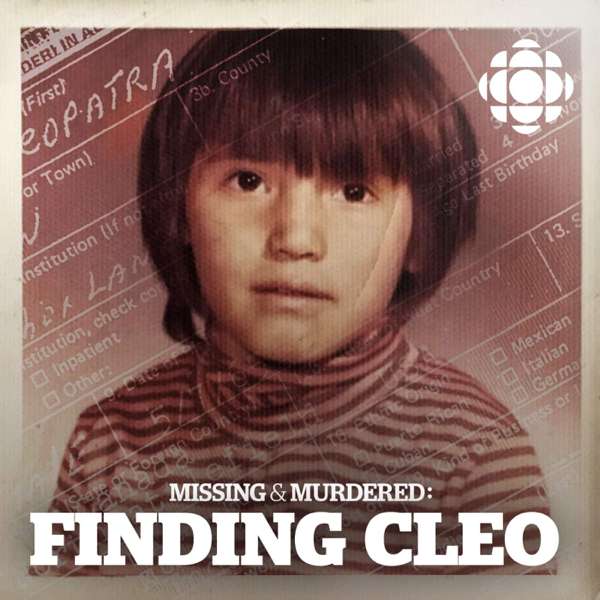
    Missing & Murdered: Finding Cleo

    2

    Missing & Murdered: Finding Cleo News & Politics
    My Favorite Murder with Karen Kilgariff and Georgia Hardstark

    3

    My Favorite Murder with Karen Kilgariff and Georgia Hardstark Comedy
    Casefile True Crime

    4

    Casefile True Crime Games & Hobbies
    True Crime Garage

    5

    True Crime Garage News
    The Black Dahlia Serial Killers

    6

    The Black Dahlia Serial Killers History
    footer-logo

    Contact Us

    Toll Free: 844-670-7747

    Links

    • Home
    • Top Charts
    • Networks
    • Apps
    • Independents Podcasts
    • Podcast Advertising
    • Podcast News
    • Contact Us
    • About Us
    • Analytics & Insights

    Stay Connected

      Privacy, Terms of Use & Our Code of Ethics Protecting Content Creators Copyrights