Measles: To Vaccinate or Not?
Mar 17, 2025
Show notes
On this week’s show, Beth talks with Brianne Barker, Associate Professor of Biology and Director of Undergraduate Research at Drew University. Dr Barker studies innate immune responses – these are the initial, non-specific actions taken by the immune system – to fight off retroviruses such as HIV (the AIDS virus). We discuss the measles virus, how it gets into cells, travels through the body to cause its many symptoms, which can be long-lasting and even lethal, and its frightening ability to wipe out, or erase, much of the accumulated memory of the immune system to previous infections. For an even deeper dive into this dangerous virus, you can hear Dr Barker and other virologists go into greater detail here.
Executive Producer: Beth Bennett Show Producer: Beth Bennett Additional Contributions: Susan Moran Engineer: Jackie Sedley
Listen to the show:
This Ordinary Stardust: A Scientist’s Path from Grief to Wonder
Mar 11, 2025
Show notes
We speak with Environmental Scientist Alan Townsend about his new book, This Ordinary Stardust: A Scientist’s Path from Grief to Wonder. It chronicles what happened when his family received two unthinkable, catastrophic diagnoses: his 4-year-old daughter and his brilliant scientist wife developed unrelated, life-threatening forms of brain cancer. As he witnessed his young daughter fight during the courageous final months of her mother’s life, Townsend – a lifelong scientist – was indelibly altered.
Executive Producer: Beth Bennett Show Producer: Shelley Schlender Hosts: Joel Parker and Shelley Schlender Engineer: Joel Parker
Listen to the show:
Train Wolves AND Humans to Coexist
Mar 04, 2025
Show notes
Source: patrice schoefolt / PexelsOn today’s show, Beth speaks with two experts on animal behavior and training about the wolf reintroduction project in Colorado – wins and losses. Mary Angilly is an advocate for force-free, evidence-based training in dogs and other animals. For decades Marc Bekoff has researched animal behavior, cognitive ethology (the study of animal minds), behavioral ecology, and compassionate conservation, and he has written extensively on human-animal interactions and animal protection.They have collaborated on essays involving problems faced by both wolves and humans in reintroduction projects. In this episode, they discuss some interesting and innovative solutions.
Executive Producer: Beth Bennett Show Producer: Beth Bennett Additional Contributions: Susan Moran Engineer: Jackie Sedley
Listen to the Show:
Tom Cech: The Catalyst
Feb 25, 2025
Show notesTom Cech’s New Book
The Catalyst: RNA and the Quest to Unlock Life’s Deepest Secrets CU Boulder Nobel Prize-Winning Scientist Tom Cech says that RNA has long been the biochemical backup singer that slaves away in the shadows of the diva. In his new book, The Catalyst, Cech puts RNA in the spotlight, along with dazzling and determined scientists who’ve been helping us learn more about RNA.
Tackling Landfill Methane Emissions
Feb 18, 2025
Show notes
Landfill photo credit: iStock
Tackling CH4 emissions from landfills (start time: 5:59) Methane is an extremely potent greenhouse gas, and its emissions have been rising recently in the U.S. The largest source of methane emissions is oil and gas production, followed by livestock farming. The third largest source of methane emissions is landfills. Food scraps, yard debris, paper and cardboard products and other carbon-based detritus that pile up in landfills release methane and other chemicals as they decompose in the soil. As part of the state’s goal of slashing greenhouse gas emissions, the Colorado Department of Public Health and Environment is developing new, and stricter, rules that will require landfill operators to do more to monitor and capture methane emissions. KGNU host Susan Moran interviews Clay Clarke, director of the Climate Change Program at CDPHE; and Madison Hall, an associate with the Rocky Mountain Institute‘s US Program. For info on the Feb. 26 final public hearing on the methane rule, click here.
Show Host/Producer: Susan Moran Engineer: Jackie Sedley Executive Producer: Beth Bennett Headline Contributors: Beth Bennett, Joel Parker
Listen to the show here:
How a Soil Bacterium Can Affect Mental and Physical Health
Feb 10, 2025
Show notes
On today’s show, Beth speaks with CU scientist Christopher Lowry. Dr. Lowry’s research program at CU Boulder focuses on understanding stress-related physiology and behavior with an emphasis on the microbiome-gut-brain axis. He describes his recent finding that exposure to a harmless soil bacterium protects mice from the weight gain and inflammation stemming from a diet much like the average American one, that is, high in fat and sugar. You can also hear about another CU Boulder group’s recent finding on the protective role that being in ‘greenspaces’ can provide.
Decarbonizing Cement Production
Feb 04, 2025
Show notes
Concrete mixer truck
Tackling Cement’s Huge Carbon Footprint (start time: 0:58) It’s hard to imagine modern society without a key material that so many structures depend on–cement. Think of our houses, apartment and office buildings, hospitals, parking lots, bridges, and, increasingly, massive data centers of big-tech companies. But that societal glue of sorts comes with a big climate price tag. Cement production accounts for more than 7 percent of global greenhouse gas emissions. That’s way less than the amount from coal and oil & gas production, but roughly double the emissions from aviation. So, finding ways to reduce the carbon footprint of cement could go a long way toward curbing the momentum of climate change and its impacts. But some players in the industry, as well as in state and federal governments, are making strides to clean up the cement industry’s act. In this week’s How On Earth, host Susan Moran interviews Anish Tilak, a civil and environmental engineer who is a a manager of the Carbon-Free Buildings program at RMI (founded as Rocky Mountain Institute); and Cory Waltrip, a senior manager at the startup Sublime Systems, in Somerville, Mass.
Host / Show Producer: Susan Moran Engineer: Jackie Sedley Executive Producer: Beth Bennett
Listen to the show here:
Gang Science – David Pyrooz
Jan 28, 2025
Show notes
Gang Violence in Aurora last summer
CU Boulder Criminologist David Pyrooz explains the science of understanding gang violence. He shares why immigrant gangs such as Tren de Aragua catch so much media attention, even though they represent only a small part of national gang violence. Pyrooz also shares what drives gangs, ways to reduce gang violence, and his personal work with the City of Aurora Project SAVE (SAVE is short for “Stand Against Violence Every Day.)
Executive Producer: Beth Bennett Show Producer/Engineer: Shelley Schlender
What’s Up with the Polio Vaccine?
Jan 22, 2025
Show notes
Today on How on Earth, Beth speaks with Professor Vincent Racaniello of the Columbia University Medical Center. He has been studying viruses, particularly the polio virus, for over 40 years. Professor Racaniello is passionate about teaching virology to the World. His virology lectures can be found on YouTube. He blogs and produces the podcast ‘This Week in Virology’. We cover the history of the different polio vaccines and why the oral vaccine has contributed to the resurgence of the disease in underdeveloped populations in for example, Africa, and recently, Gaza. But it’s popping up here, in the developed nations also. You’ll also hear from How On Earther Tom Yulsman speaking with author and photographer Jon Waterman about his recent book on the effects of climate change in the Arctic.
Executive Producer: Beth Bennett Show Producer: Beth Bennett Additional Contributions: Tom Yulsman Engineer: Jackie Sedley
Listen to the Show:
Tackling PFAS, From Wastewater to Tap Water
Jan 14, 2025
Show notes
Credit: USEPA
Tackling “forever chemicals” in tap water (start time: 6:11): In this week’s science show we discuss the scientific findings and societal implications of a new study showing of dangerous PFAS (per- and polyfluoroalkyl substances) in treated wastewater that ends up in the drinking water of more than 20 million Americans. We also explore the public health risks of these cancer-causing and otherwise toxic compounds–found in so many consumer products, including water-resistant clothing–and what’s being done on the national, state and local fronts to protect source water and our health. Listen to host Susan Moran’s interview with Kate Dunlap, the drinking water quality manager for the City of Boulder; and Bridger Ruyle, a research assistant professor of environmental engineering at New York University and lead author of the new PFAS study.
Show Producer/Host: Susan Moran Engineer: Jackie Sedley Executive Producer: Beth Bennett Headline contributors: Beth Bennett, Joel Parker

 Our TOPPODCAST Picks
 Stay Connected


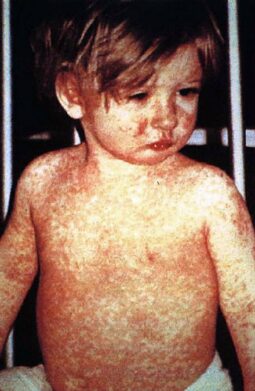 On this week’s show, Beth talks with




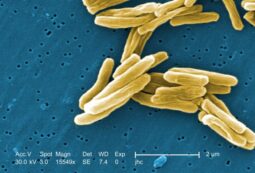 On today’s show, Beth speaks with CU scientist Christopher Lowry. Dr. Lowry’s research program at CU Boulder focuses on understanding stress-related physiology and behavior with an emphasis on the microbiome-gut-brain axis. He describes his


 Today on How on Earth, Beth speaks with Professor Vincent Racaniello of the Columbia University Medical Center. He has been studying viruses, particularly the polio virus, for over 40 years. Professor Racaniello is passionate about teaching virology to the World. His virology lectures can be found on YouTube. He






