Science of Deathbed Visions
Apr 16, 2024
Show notes
Dr. Christopher Kerr
The Science of Deathbed Visions Many people have visions and dreams as they near the end of their life in which they reunite with loved ones who have gone before them. What can science tell us about these mysterious and common experiences? And how do they affect those who have them? These are questions that Chris Kerr, a hospice physician and neurobiologist, set out to answer through research decades after he witnessed his dying father having one when Kerr was an adolescent. Dr. Kerr, is the Chief Medical Officer and Chief Executive Officer of Hospice & Palliative Care Buffalo. He was featured in a recent New York Times magazine article . He is also the author of the book Death is But a Dream: Finding Hope and Meaning in End-of-Life Dreams.
Host: Susan Moran Producers: Susan Moran, Shelley Schlender Executive Producer: Shelley Schlender
Listen to the show here:
Colorado – The Quantum State
Apr 09, 2024
Show notes
Corban Tillemann Dick c Maybell Quantum
Colorado – The Quantum State: We speak with Corban Tillemann-Dick about how Colorado has emerged as a world leader in Quantum Technologies. Tillemann-Dick will speak at CU-Boulder’s Conference on World Affairs, Thursday, 10:30, at the UMC Central Ballroom. Tillemann-Dick heads up Elevate Quantum, a consortium of over 85 quantum-focused organizations in Colorado and the Mountain West. He’s also the founder and a CEO of the Denver company, Maybell Quantum. It’s named after the tiny town of Maybell, Colorado, which holds the record for the coldest temperature ever recorded in Colorado – Minus 61 Degrees Fahrenheit. Maybell Quantum honors the little town’s record-breaking cold with a refrigerator the company calls “The Icebox” Quantum computers can only operate at the incredibly cold temperature of -441 F. Maybell Quantum’s Icebox” is designed to help quantum processors stay that supercold – which is one of the many keys to unlocking the quantum breakthroughs up ahead.
Show Producer, Executive Producer and Host: Shelley Schlender Additional Contributions: Pam Johnson
Show Producer and Host: Joel Parker Executive Producer: Shelley Schlender
Listen to the show:
Colorado River: new deals, old tensions
Mar 26, 2024
Show notes
Lake Mead’s water level Credit: Research Gate
Colorado River: Promise and Peril (start time: 6:28) For more than two decades the Colorado River has been shrinking, afflicted by climate change-induced drought, population growth, and water politics. Some 40 million people living in seven states, and 30 tribes, depend on the river. The Upper Basin — Colorado, Utah, Wyoming and New Mexico– have been at odds with Lower Basin states – California, Nevada and Arizona — over who should do more to cut back on water use. Meanwhile, here in Colorado, cities and towns on the Front Range have been clashing with those on the Western Slope over water from the river. After all, Front Range cities get almost half of their water from the Western Slope, through transmountain diversions. In this week’s show, host Susan Moran interviews two journalists who have been covering water issues in the West. They recently produced a feature on a surprising new water-rights purchase that could ease west-vs-east tensions, while giving endangered fish a leg up. Alex Hager is a reporter covering the Colorado River Basin for KUNC and many NPR network stations. Luke Runyon is co-director of The Water Desk, an initiative of the Center for Environmental Journalism at CU Boulder. Previously he was managing editor and a reporter at KUNC.
Host/Producer: Susan Moran Engineer: Sam Fuqua Headline contributors: Joel Parker, Shelley Schlender Executive Producer: Joel Parker
Listen to the show here:
Astronomy Highlights: Habitable Worlds Observatory, Impostor Phenomenon
Mar 19, 2024
Show notes
Executive Producer: Joel Parker Show Producer and Host: Joel Parker Additional Contributions: Shelley Schlender
Listen to the show:
SOLO: Building a Remarkable Life of Your Own
Mar 13, 2024
Show notes
Peter McGraw cc Glenn J. Asakawa Copyright: University of Colorado
In this Spring Pledge Drive show, we talk with CU-Boulder professor and behavioral economist Peter McGraw about his new book, Solo: Building a Remarkable Life of your own. The book is also available through KGNU for listeners who give a donation to support this non-commercial, community radio station.
Executive Producer: Joel Parker Show Producer/Engineer: Shelley Schlender Hosts: Shelley Schlender/Susan Moran
Astronomy Highlights: 3D Astronomy, AI in Astrophysics
Mar 05, 2024
Show notes
Executive Producer: Joel Parker Show Producer and Host: Joel Parker
Listen to the show:
Deep-sea Coral Reefs // Mineral-Mining
Feb 27, 2024
Show notes
This week’s How On Earth offers two features:
Deep-sea Coral photo credit: NOAA
Deep-sea coral reef discovery (start time: 0:58) Scientists recently discovered and mapped the largest known deep-sea coral reef in the world. It’s located up to 200 miles off the U.S. Atlantic Coast, and it’s larger than Vermont. The news comes as a bright spot for oceans and marine life, when ocean acidification related to global warming, as well as overfishing, have been destroying coral reefs around the world. Contributing host Kara Fox interviews Kasey Cantwell, the operations chief for the Expeditions and Exploration Division of the National Oceanic and Atmospheric Administration, about the big discovery and its implications.
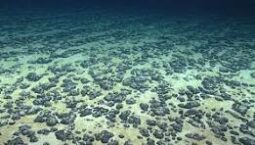
Deep-sea mineral nodules photo credit: NOAA
Deep-sea mining: promises and perils (start time: 10:48) Exploratory mining of the ocean floor for minerals began decades ago. Although commercialization remains elusive, some some companies are moving rapidly to exploit the seabed for commercial use. They aim to harness critical minerals – manganese, nickel, copper, cobalt and others – for use in the production of electric vehicle batteries, cell phones, wind turbines, etc. Some scientists, environmentalists, a regulatory body, and even some auto and tech companies, have called for at least a temporary ban on seabed mining, out of concern about its impact on marine life. Host Kara Fox interviews Farah Obaidullah, founder of the conservation group The Ocean and Us, and editor of a book of the same name, about seabed mining.
Hosts/Producers: Kara Fox, Susan Moran Engineer: Sam Fuqua Executive Producer: Joel Parker
Listen to the show here:
Sleepless not just in Seattle
Feb 20, 2024
Show notes
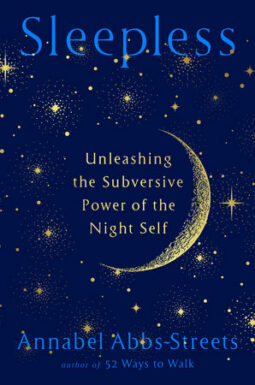
In this week’s show Beth speaks with author Annabel Abbs-Streets about her new book, SLEEPLESS: Unleashing the Subversive Power of the Night Self, in which she dives into both the science of sleep and sleeplessness, and a new perspective on life after midnight.
Executive Producer: Joel Parker Show Producer: Beth Bennett
Listen to the show:
Myths and Facts about Plastic Recycling
Feb 14, 2024
Show notes
This week on How on Earth Beth speaks with Mattie Matsch, deputy director of Boulder’s Eco-Cycle. We spoke about the challenges of recycling plastics. As consumers, it’s vital to be aware of these challenges and the limitations they impose on the types of plastic we can toss in the barrel for pickup.
Executive Producer: Joel Parker Show Producer: Beth Bennett Engineer: Sam Fuqua

 Our TOPPODCAST Picks
 Stay Connected


 In this episode of How on Earth, we talk about the upcoming

 Habitable Worlds Observatory (starts at 5:15)



 NASA Headquarters in the

 In this week’s show Beth speaks with author
 This week on How on Earth Beth speaks with Mattie Matsch, deputy director of





